
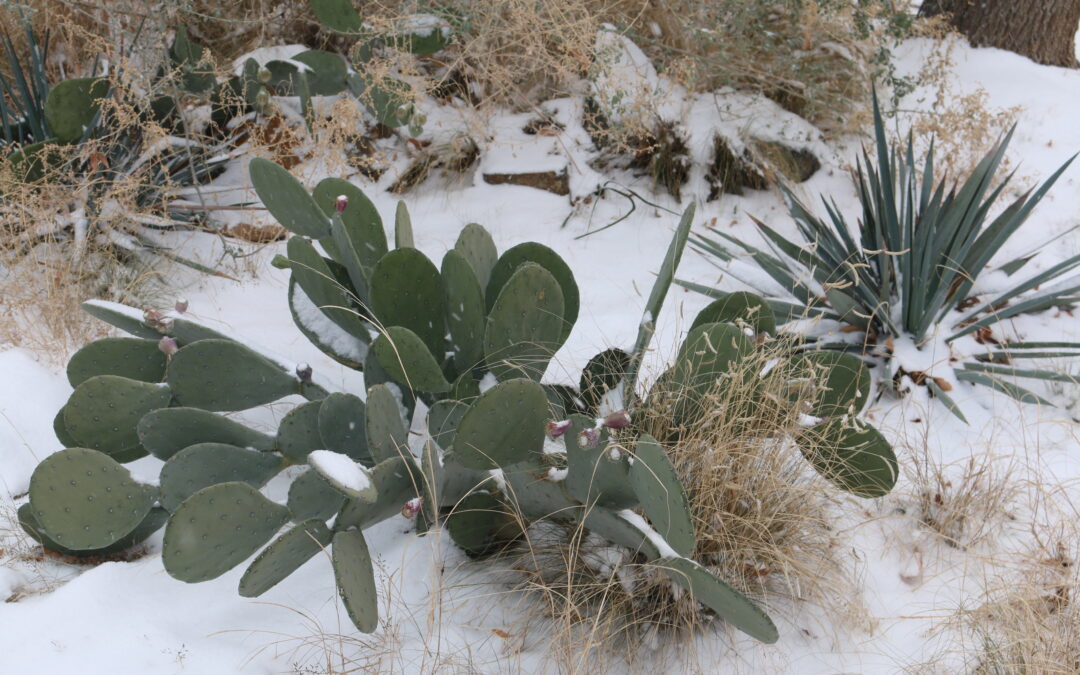
We reached out to local plant nurseries and landscape experts to find out what they recommend NOT planting this fall and winter.
Why does timing of plant installation matter? A plant’s first season in the ground is all about building roots. Warm-season plants grow roots actively only when the soil is warm, and that growth slows dramatically as soil temperatures drop in late autumn. A plant set out in late October or November goes into winter with little more than the roots it came with from the nursery. In Albuquerque, that small root system then faces hard freezes, drying winds and low winter humidity. Without established roots to draw up water, these plants can dry out or freeze back, and many struggle to make it to spring.
One category of plants not to plant are those from hot desert ecosystems, such as those native to southern New Mexico and the Chihuahuan and Sonoran deserts, along with Mediterranean natives. These plants are well adapted to heat and drought, but the newly planted roots struggle in cold winters.
The same is true for flowering perennial plants and warm-season grasses, which put on most of their root growth when soils are warm. Install these in the spring so they have a full growing season to establish.
Agaves, yuccas, cacti and succulents are another group that thrive best after settling into the garden during the warmer part of the year, so wait until spring to plant them as well.
Avoid planting broadleaf evergreens (live oaks, Arizona rosewood, Texas mountain laurel) in late fall. Their leaves keep losing moisture all winter, so they need more time to grow and establish a robust root system before facing winter winds and freezing temperatures.
Skip tender shrubs prone to winter dieback (butterfly bush, autumn sage, blue mist) until spring. Even established plants of these types often die back in a cold winter; young fall- and winter-planted ones may not come back at all.
Don’t plant borderline-hardy varieties in fall. If a plant is rated hardy only to the edge of our cold-hardiness zone (Zone 7a and 7b), give it the entire spring and summer season to root in and become established.
Below is a list of plants NOT to plant in the late fall and winter. Of course, there are caveats to this list. Some cultivars might be more cold hardy than others. Some microclimates around the landscape will have slightly different exposure to sun, wind, heat, humidity and precipitation that affect a plant’s needs. Pay attention to specific conditions in the planting spot as a few degrees here or there can make a difference for a plant.
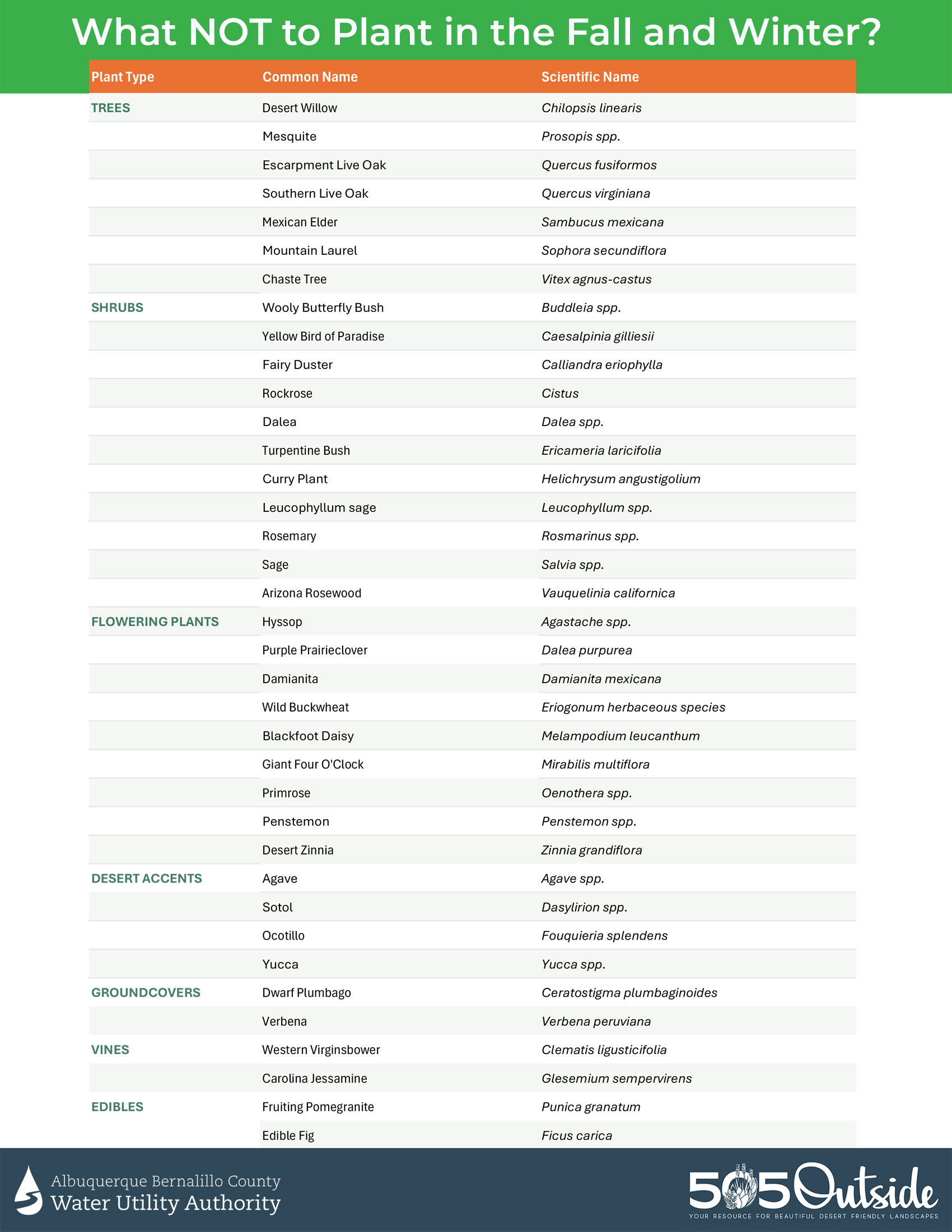
So, what CAN you plant in fall? Autumn and winter are excellent times to plant cold-hardy trees, deciduous shrubs, spring-blooming bulbs and plants not on the above list. These plants are able to take advantage of cool and moist conditions by growing roots so the plant is ready to take off over the next season.
Already planted something from the list above this fall? Don’t panic. Spread a layer of mulch over the root zone (gravel mulch works best for cacti and succulents, 3-4” of shredded wood chip mulch is best for all others), water deeply on mild days when the soil is dry and, if practical, cover the plant with frost cloth during hard freezes.
Remember, plants are living organisms, and each may respond differently to conditions in your landscape. Use this list as a general guide to what to plant and when, helping you grow healthy, long-lived plants. A little patience now can mean stronger roots, fewer losses and a more beautiful landscape next year!
Learn More Here:
Ornamental Grasses and How and When to Use Them
Great Natural Areas to Visit this Fall for Respite and Inspiration

Have a question about the article or anything else? [email protected]