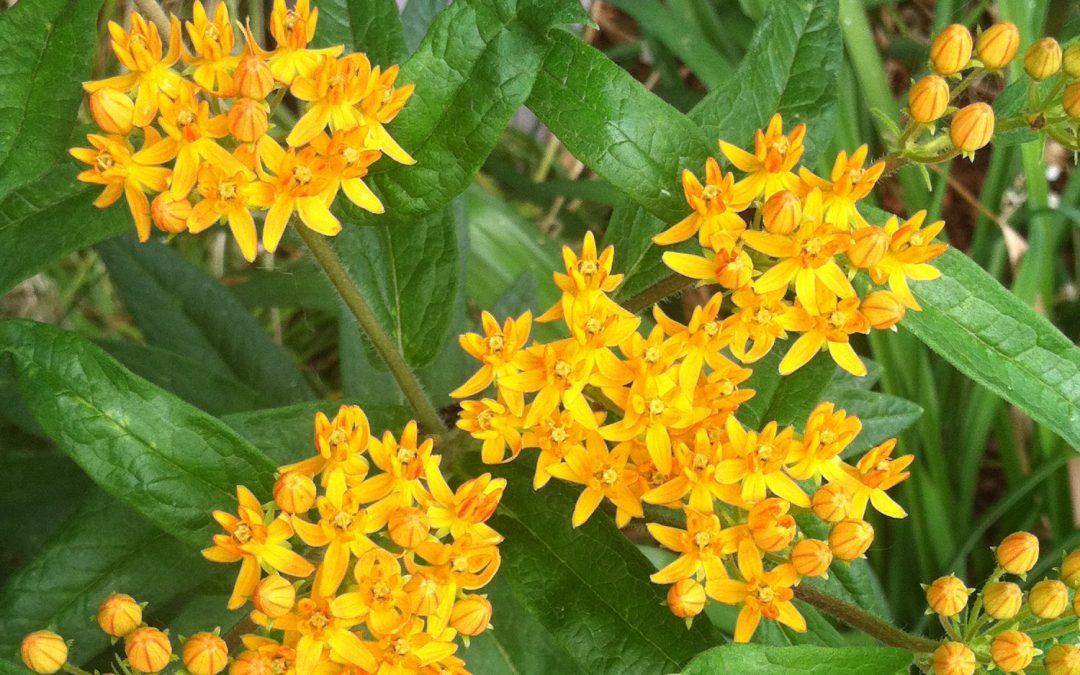
by 505 Outside | Jun 4, 2019 | Flowering Plants
Exposure:
Sun
/ Shade
Water:
Medium
Mature
Size (H x W): 2’
x 2’
Blooming
Season: June
- September
Flower
Color: Orange
Region:
All
parts of Greater Albuquerque
A
must-have for all Monarch butterfly enthusiasts, this cheerful, easy perennial
has a place in most gardens. Use it in rainwater swales, perennial beds, or
cutting gardens. Native to most parts of North America, it does well in poor,
dry soils. The flowers provide an important nectar source for Monarch
butterflies, and the leaves are food for Monarch caterpillars.
Look
for plants grown from local stock, which are better adapted to the desert than
plants propagated from cooler, wetter parts of the country. Prune the first
flowers in summer to encourage a longer blooming season. Spread these plants
out in the garden; greater concentrations of the plants draw more predators to
the caterpillars. Don’t be alarmed if your plants attract aphids – high quality
habitat brings with it a greater diversity of insects, which are not
necessarily harmful to the plants or to the Butterfly weed. (A mild solution of
soap and water can be applied to treat the aphids.)
Water
every two weeks while blooming. If planted in a shadier location, Butterfly
weed will need less water. Leave the stems and dried seed pods intact over the
winter and then trim to the ground in early spring. The silky fluff in the seed
pods looks beautiful when backlit.
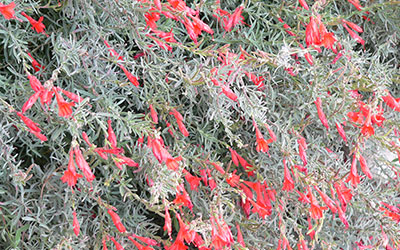
by 505 Outside | Aug 2, 2018 | Flowering Plants

Full Sun

Medium Water
Mature Size: 24”X 36”
Blooming Season: Late Summer-Early Fall
Flower Color: Red
Along the front range in Colorado, gardeners have come to associate fall and the buzz of busy hummingbirds with the blazing scarlet Zauschnerias. Hummingbird Plant puts on an extravagant display of red-orange flowers. It thrives planted in front of hot south and west-facing walls and walks, in areas that might fry less heat-loving plants. Plant in well-drained soil; not too much clay. Hummingbird Plant appreciates regular watering the first year or two, particularly during dry winters, to help get it established.
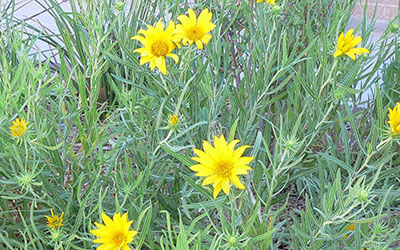
by 505 Outside | Aug 2, 2018 | Flowering Plants
Full Sun
Rainwater Only
Mature Size: 2’X 3’
Blooming Season: Spring into summer
Flower Color: Yellow
The rather odd name of this dryland perennial sunflower refers to its sand papery stiff leaves held upright on slender white stems; this eye-catching long-lived sunflower has vanilla-scented showy yellow flowers and large dark brown seed heads with seeds sought after by songbirds. Desert Mule’s Ears prefer lean, unamended soil at planting time and very little water once they are well rooted.
by 505 Outside | Aug 2, 2018 | Flowering Plants
Full Sun, Part Shade
Low Water
Mature Size: 12”X 12”
Blooming Season: Early Summer
Flower Color: Yellow
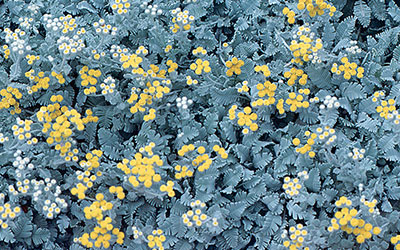
Partridge Feather’s incredible silver-white leaves attract the attention of everyone; you can’t help but pet the soft foliage. The plant forms a dense carpet of foliage topped with clusters of yellow button flowers in early summer. It thrives in the sunniest, hottest spot you can find. Needs well-drained soil.
by 505 Outside | Aug 2, 2018 | Flowering Plants
Full Sun
Rainwater Only
Mature Size: 2’X 2’
Blooming Season: Spring and late summer
Flower Color: Pink, lavender and coral
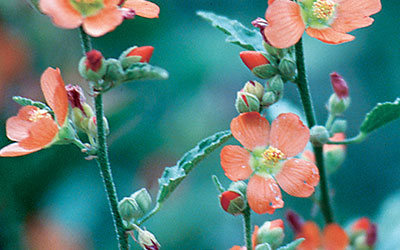
There are at least a dozen species of Globemallow native in the arid West, and Desert Globemallow is one of the finest as it produces a strong show of colorful flowers against the backdrop of pale green leaves. It is one of the earliest and longest blooming in spring and after a rest may bloom again with late summer rains. It will self-sow in gravelly or sandy soil.
by 505 Outside | Aug 2, 2018 | Flowering Plants
Full Sun, Part Shade
Low Water
Mature Size: 24”X 24”
Blooming Season: Summer
Flower Color: Red
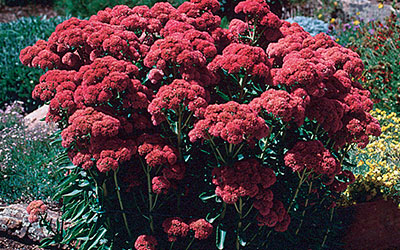
Once you have gone through the fall with Autumn Joy in your garden, you’ll wonder how you ever lived without it. Not what you typically think of as a Sedum, this tall upright variety blooms with large flower heads that start pink and age gracefully to a rich bronze. Nice as a dried everlasting flower.