ALBUQUERQUE, N.M. — By and large, New Mexican homeowners are getting the all-important message of the arid Southwest: Water is precious, and not to be wasted.
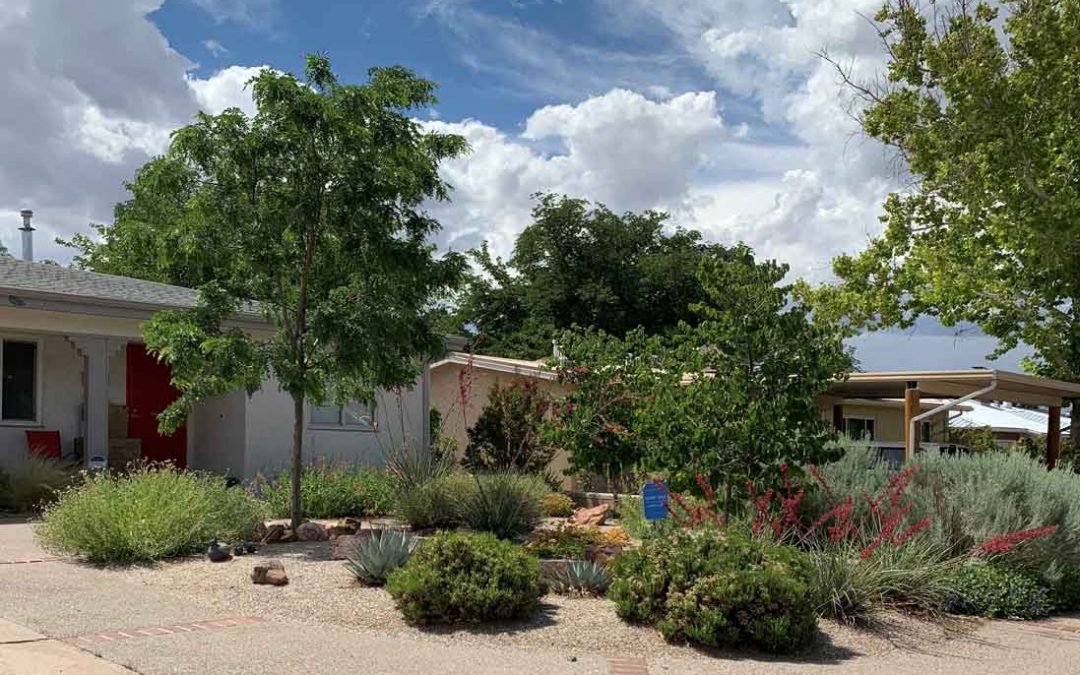
But local experts say an important piece of the story is still often lost when it comes to landscaping: Conserving water doesn’t have to mean a yard consisting of one plant surrounded by gravel.
“We’ve got to go away from that,” said Carlos Bustos, water conservation program manager for the Albuquerque Bernalillo County Water Utility Authority. “Xeriscapes are luscious, they’re beautiful, they’re abundant, they’re resilient, they’re sustainable. … We hope that 10 years from now we’re not still dealing with the idea of ‘zeroscapes.'”
Solange Serquis, of Santa Fe-based Serquis + Associates Landscape Architecture, agreed.
“I am a big believer that we all deserve aesthetic and beauty,” she said. “When you combine aesthetic and beauty to achieve something else, like passive cooling or low-consumption plants or an invitation to be outdoors, better use of … energy indoors, that’s the main thing.”
Plant selection
According to Jill Brown, a landscape architect and owner of My Landscape Coach, selecting plants tends to be a point in the landscaping process where homeowners get very engaged.
“If I go back and look at the most popular articles, the most popular things, discussions, questions that we’ve received, it’s always about plants,” said Brown, who also provides content for the water utility authority’s landscape website 505 Outside. “So people are really interested in plants and learning about plants and in that aspect of a landscape.”
For several local landscape pros, planting trees tops the list.
“That’s going to provide shade, which is going to reduce your energy bills if you put it … on the south side of the home … or the west side of the home,” Brown said.
Bustos said if a tree is well planned and well-positioned, those energy savings can be significant.
“There’s studies out there that say that if you place a tree strategically where you need to, you can save up to 25% of the energy in a typical household use,” he said, adding that tree shade helps reduce water lost by other plants nearby.
“By creating this microclimate, you can reduce the water need between 6 and 20%,” he said. “It’s always cooler in the shade.”
Serquis says planting trees adds long-term value.
“I always say planting a tree is an act of … citizenship,” she said. “Because you plant that tree today and in maybe 50 years, it’s … a heritage for the neighborhood.”
With trees as well as with smaller plants, Serquis said she’s looking for ways to passively cool living spaces – both indoors and outdoors – and selects varieties that have low water consumption.
When it comes to choosing specific plant varieties, Brown’s got a simple approach.
“Basically native plants that you buy from a local nursery are going to work in your soil,” she said. “That’s like a generalization we like to tell homeowners: Don’t over-stress about your soil. If you buy plants from a local nursery, you’ll be OK.”
Of course, there’s a caveat: Those plants and trees still have to be watered properly.
Irrigation
Brown said data and her own experience suggest that in the universe of homeowners who care about their landscaping, about half use an irrigation system of some kind, and about half are hand-watering.
Those hand-waterers, according to Brown and Bustos, should think about installing an irrigation system.
“Hand-watering is wasteful, because they’re spraying the leaves and … we need to get to the roots,” Brown said.
Those who already have an irrigation system can consider whether it’s efficient or fine-tuned enough.
Those who use spray sprinklers, for example, may consider swapping out sprayers for highly efficient models that are more available to homeowners today than in the past, often on the shelf of local irrigation supply companies, Brown said.
Homeowners can look at whether plants in their yard are being watered to the right depth, whether their irrigation system adjusts with the seasons – less water during the spring and fall than in summer – or with the weather.
Plants’ water needs also vary depending in what type of soil they’re planted – which even in the Albuquerque metro area can range widely, from sand on the West Side to clay in the valley.
Brown concedes the considerations can overwhelm homeowners.
“People really just want you to say, ‘Hey, water your landscape 20 minutes two times a week in the summer, 20 minutes once a week in the spring and fall,” Brown said.
Lawns
Serquis said when she first moved to New Mexico from Argentina, the trend was incentivizing homeowners to get rid of their lawns altogether in favor of gravel. But lawns don’t get quite such a bad rap with conservation-minded landscapers these days.
“I think there is something in between” lawn and gravel, Serquis said. “(It) depends how you look at the grass, or what type of grass – it’s not that bad. And a xeriscape with no plants, just as a reflecting surface, could be even worse” because of the heat generated.
Brown said there are types of grass that require less water – and even if homeowners want the grass “that’s at the park,” there are better ways to water it than with a spray system that throws water high in the air and risks evaporation. Bustos agreed.
“If you have a lawn and you’re enjoying it and it’s functional and you’re taking care of it, then update it,” he said. “You know, update that irrigation system. There’s technology out there that just can make things a lot more efficient.”
Mulch
Brown said mulch is an important part of landscaping in the Southwest.
“One of the biggest things people complain about are weeds in New Mexico, and a lot of that is because wherever there is bare dirt, you’re going to get weeds,” she said. “… The simplest solution and the most inexpensive solution and easy to install is 3 to 4 inches of a shredded wood chip mulch over the entire yard.”
Mulch helps soil hold in moisture and insulate plant roots, and it breaks down over time to enrich the soil. Brown said a mulch layer often means replacing expanses of gravel.
“All gravel does is produce more heat and more weeds,” she said. “Even if you have the weed cloth, the weed cloth just makes it easier to pull the weeds.”
Starting small
Bustos acknowledged the process of adapting a landscape can be daunting. He said he encourages residents to start with the “lowest investment,” which is changing behaviors. People can start following the seasonal irrigation needs of their landscape, rather than giving the same amount of water all year.
Those ready to invest some resources can take small steps like installing smart irrigation controllers, swapping out sprinkler heads and efficient nozzles – steps Bustos said can save up to 30% of water usage in some cases.
“If you really want to invest, you want to transform your yard into a desert-friendly landscape, then we got a xeriscape rebate that folks can tap into,” he said.
Brown said while her clients may be in different phases with their landscapes, they tend to share one thing in common. “Overall, in general, people in Albuquerque want to save water,” she said. “That is a no-brainer now.”
Author: Gabrielle Porter, Albuquerque Journal Business Editor. Reprinted with permission from the Albuquerque Journal. Have a question about the article? [email protected]
June, July and August are the hottest months for Albuquerque. Our current drought intensifies the heat stress of plants even more because there is lower soil moisture content and higher than normal ET from plants (plants losing more water due to EvapoTranspiration). Regional plants have evolved to adapt to this type of stress, but they still need water. Don’t go overboard! Plants growing in soil that is too wet can be negatively affected, leading to the death of roots. Stunted slow growth and yellowing leaves could be a symptom of overwatering.
Follow these tips to assure your plant’s success and conserve water.
Tips for Watering Your Plants Using a Hose and Nozzle:
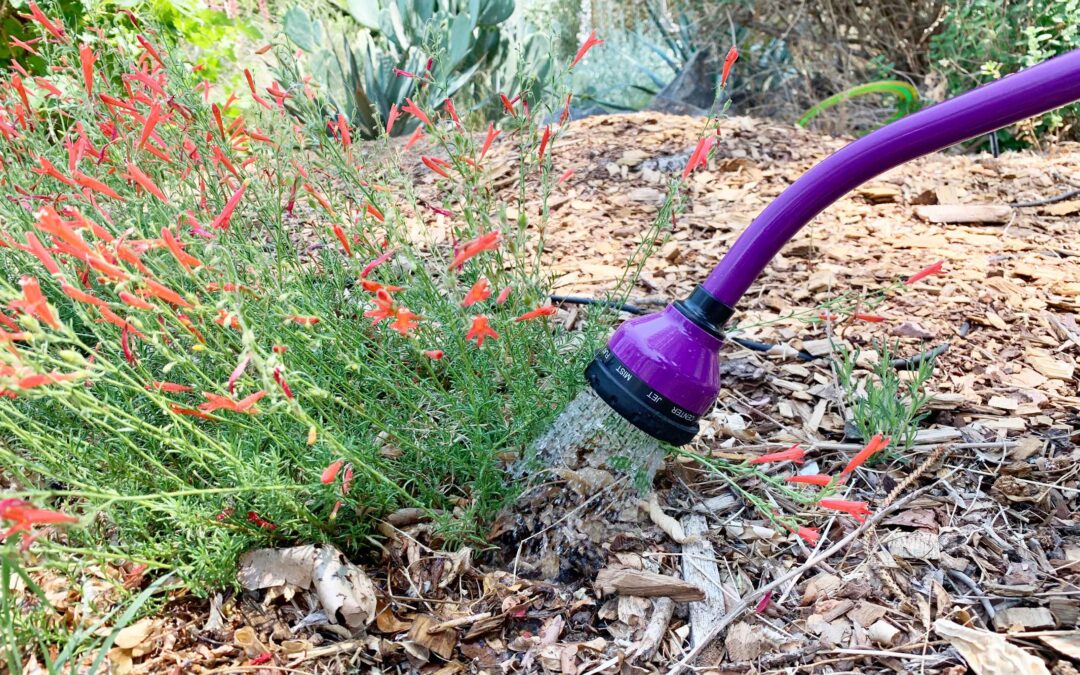
Make sure your nozzle or watering wand has an on/off switch that does not leak. This allows you to completely turn off the water at the hose end when you are not using it.
Make sure the wand or nozzle is set to “shower” or a setting that imitates rainfall.
To make sure you don’t have too much pressure, grab a five-gallon bucket and adjust your hose pressure with the nozzle or wand attached. Fill it up ¾ of the way in one minute. Set a timer (timers and stopwatches on your phone are great for this) so you know how long that minute is.
Once you know the correct pressure, we recommend writing down how many turns of the handle you did and use that as your reference. Or, using fingernail polish, put a dot on your faucet handle that also lines up with a dot on the faucet stem so you have a visual reminder.
If you are watering just a few plants located near each other, you will want to build a well around the plants. This makes sure the water stays where you want it to be most effective and avoids water waste.
Wetting plant leaves or the trunk base of a tree is not an efficient way to water and may damage the health of some plants. Instead, water around the plant, aiming at the root growing area.
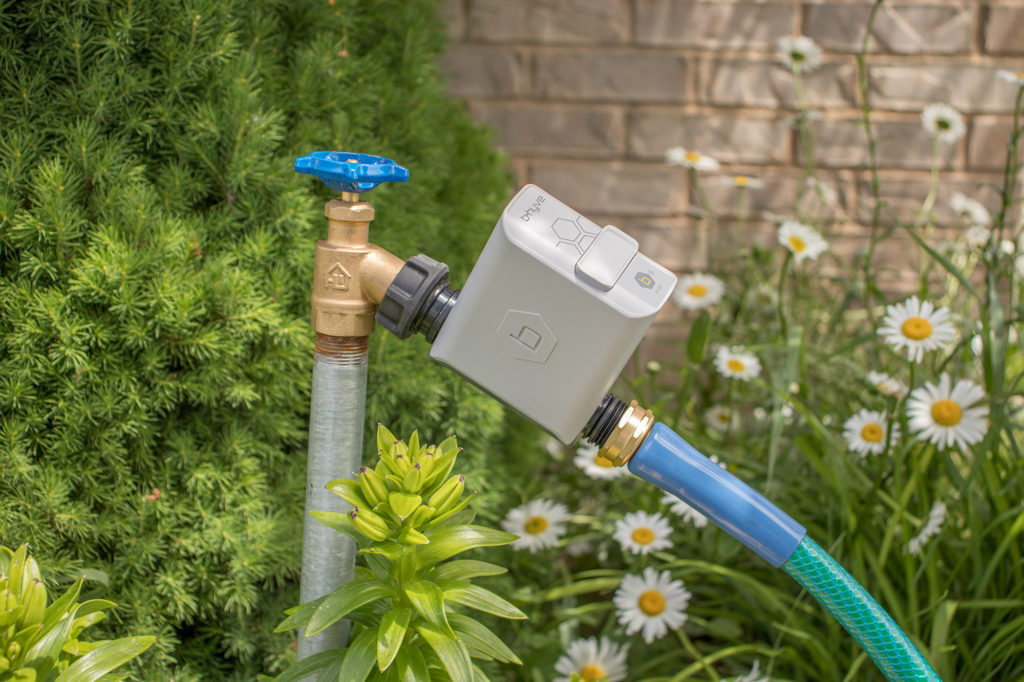
If you are ready to invest in a more efficient irrigation system instead of dragging your hose around the yard, a Water Sense Smart hose timer is the way to go.
A Smart timer system connected to a professional landscape dripline can water your yard at a set time and for a set length of time. Hose timers can accommodate many several hoses and zones (usually from one to four). We offer a rebate on a Water Sense Smart Irrigation Controllers hose timer that adjusts to our weather and your plant’s watering needs. Each valve can be set to water at various times throughout the day. For example, you could set one valve to water your vegetable garden for 10 minutes daily and another valve to water your perennials two times a week for 20 minutes.
Drip Irrigation Tips:
Make sure you always have a pressure regulator on your drip line. Even if you are converting an old turf valve into a drip zone, use an in-line pressure regulator.
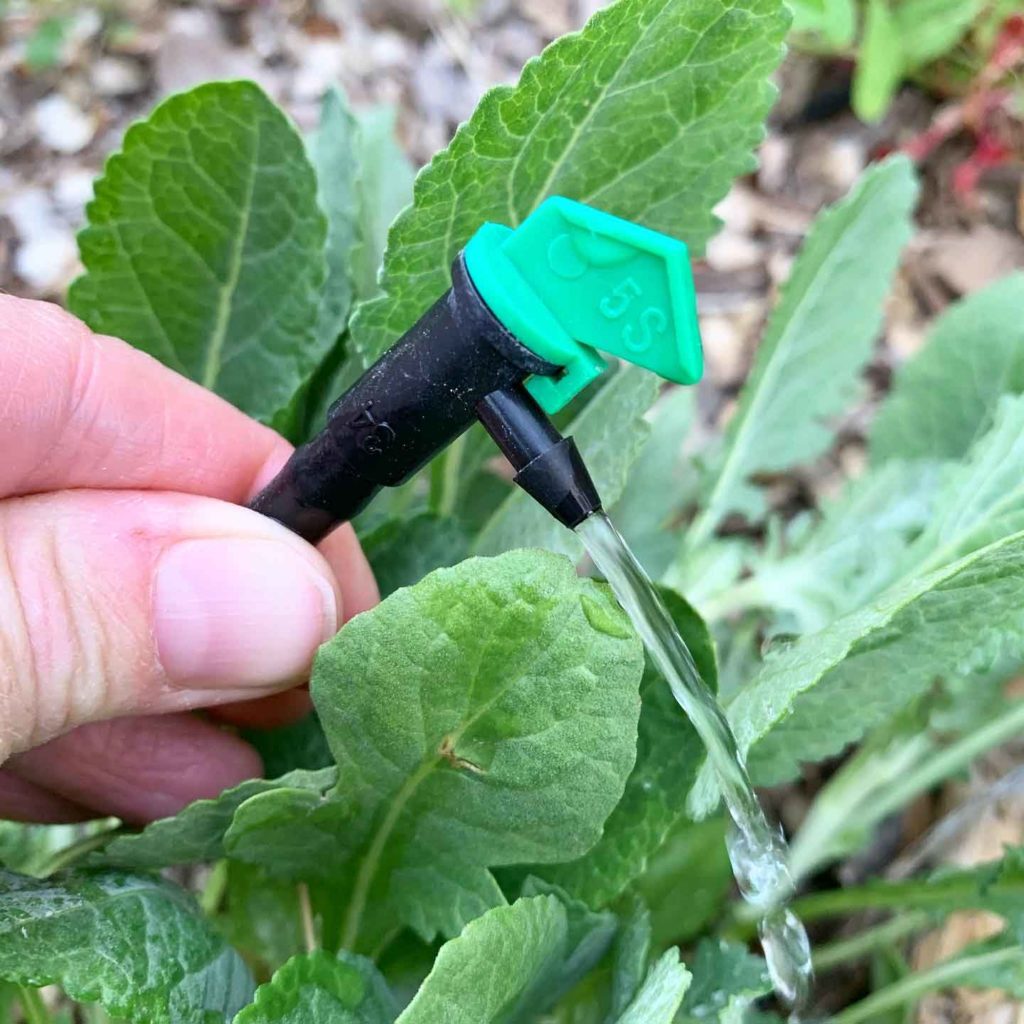
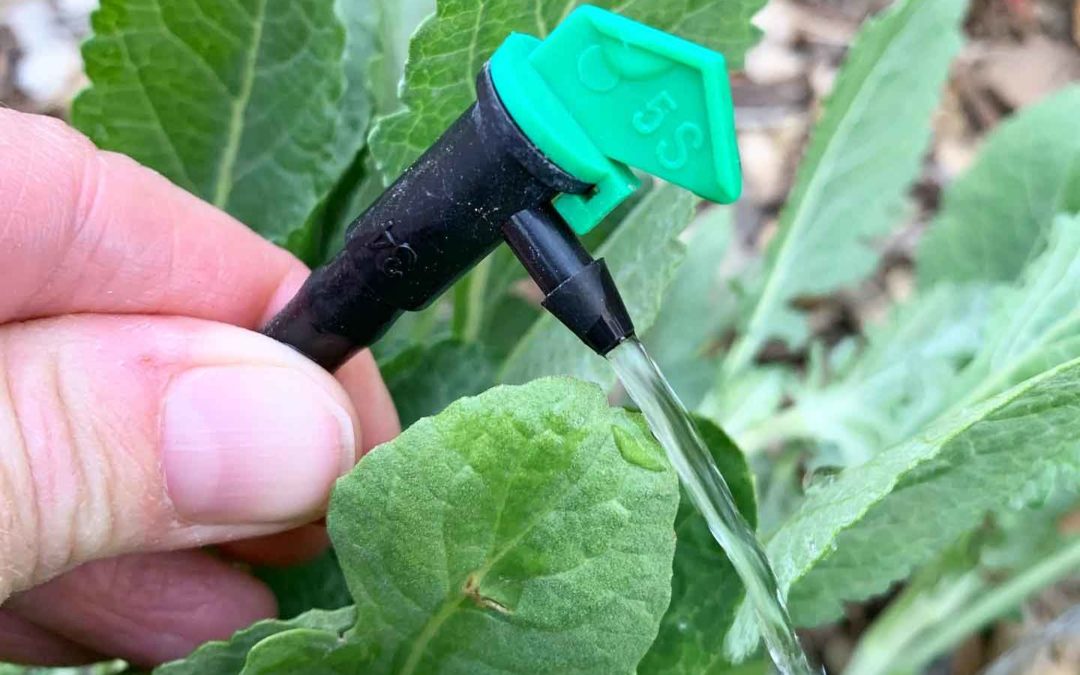
Using professional in-line emitted drip tubing around trees and shrubs is often the most efficient way to provide your trees with enough water.
Make sure you have more than one emitter per plant. That way, if an emitter clogs, you have less chance of that plant dying from lack of water.
“Walk the Line” at least once a month, looking and listening for any broken drip. You are listening for the sound of rushing water and looking for little fountains, excessive wet areas or wilted plants.
Make sure you know approximately where your polyline runs so it is easier for you to know where to plant and make repairs.
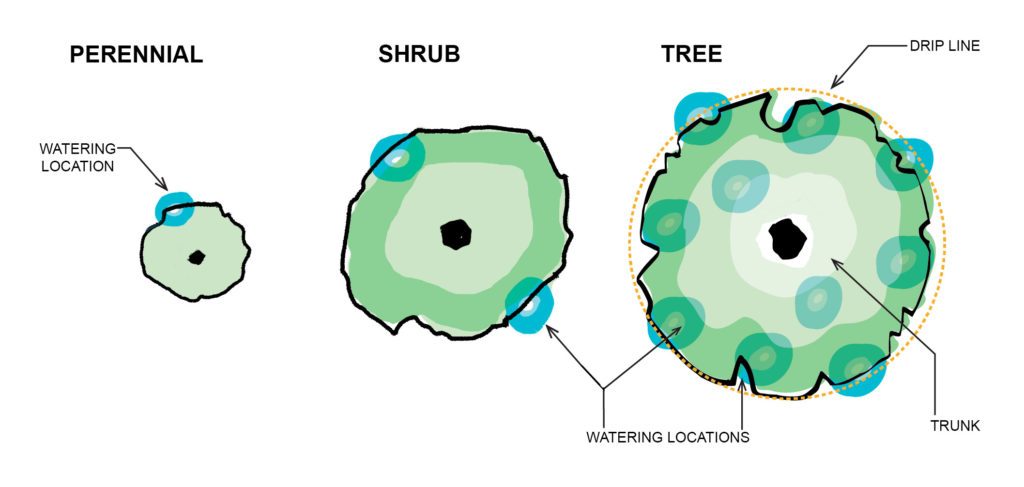
Make sure drip irrigation gets moved out to the edge of a shrub or tree canopy and increase the number of emitters as your plants get larger. This is especially important on trees and medium and high-water shrubs.
Your Desert Accent plants, and Rainwater-Only plants may not need supplemental drip irrigation after the third year, so plugging the emitters will help you save water.
Author: Richard Perce, Irrigation Efficiency Specialist with the Water Conservation Department for the Water Authority. Have a question about the article? [email protected]
Drip irrigation systems play an important role in desert-friendly xeriscapes. When properly designed, installed and managed, drip irrigation efficiently maintains the optimal range of moisture in the soil. It applies water in precise quantities, to the right depth and on a set schedule. Installation and modifications are easy to do and relatively inexpensive.
Drip irrigation is the recommended method of delivering water to shrubs, trees and all other plants that are not considered turf grasses. When using drip irrigation there are a few things to keep in mind to make sure you are watering as efficiently as possible.
Below are some “Rules of Thumb.”
Grouping plants of similar water needs on the same drip line makes establishing and maintaining plants much easier. This is called hydrozoning.
Drip emitters should be placed where the backfill meets the root ball. Larger plants need several higher than normal flow rate emitters to water the transplanted roots plus the backfill. Water needs to penetrate the soil deep enough so that the entire root ball plus the soil below the roots are wet.
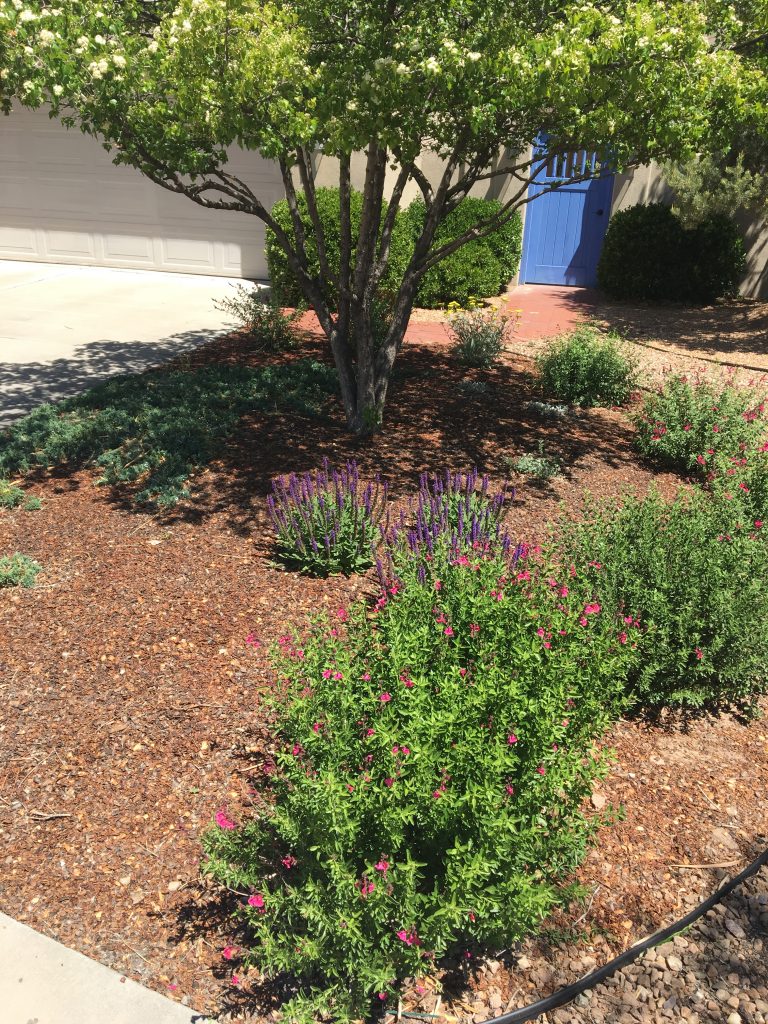
To grow a healthy tree, add ground covers, ornamental grasses and/or shrubs. They act as a supportive network around a tree so the tree roots can grow from one irrigated spot to another, sharing water with all the plants under and beyond its canopy.
Shrub and groundcovers under a healthy tree.
The length of time it takes for plants to become well- established varies greatly and depends on the species of the plant and the site conditions. The best adapted, fastest rooting plants may become well-established in one or two growing seasons. Some plants — such as those in extremely hot or exposed windy locations — may take three to five years of weekly watering during the summer before the quantity of water they need can be reduced.
For the first month or two after planting, keep the drip lines running once a week for 45 minutes at a time. If there's no rain and the temperature push 100 degrees for many days in a row, you may need to water every 4 to 5 days. After a few months, you can follow the watering recommendations offered in the Water by the Seasons chart. For plants to get properly established, it is important that water penetrates the soil at least 6 inches deeper than the roots of the new plants.
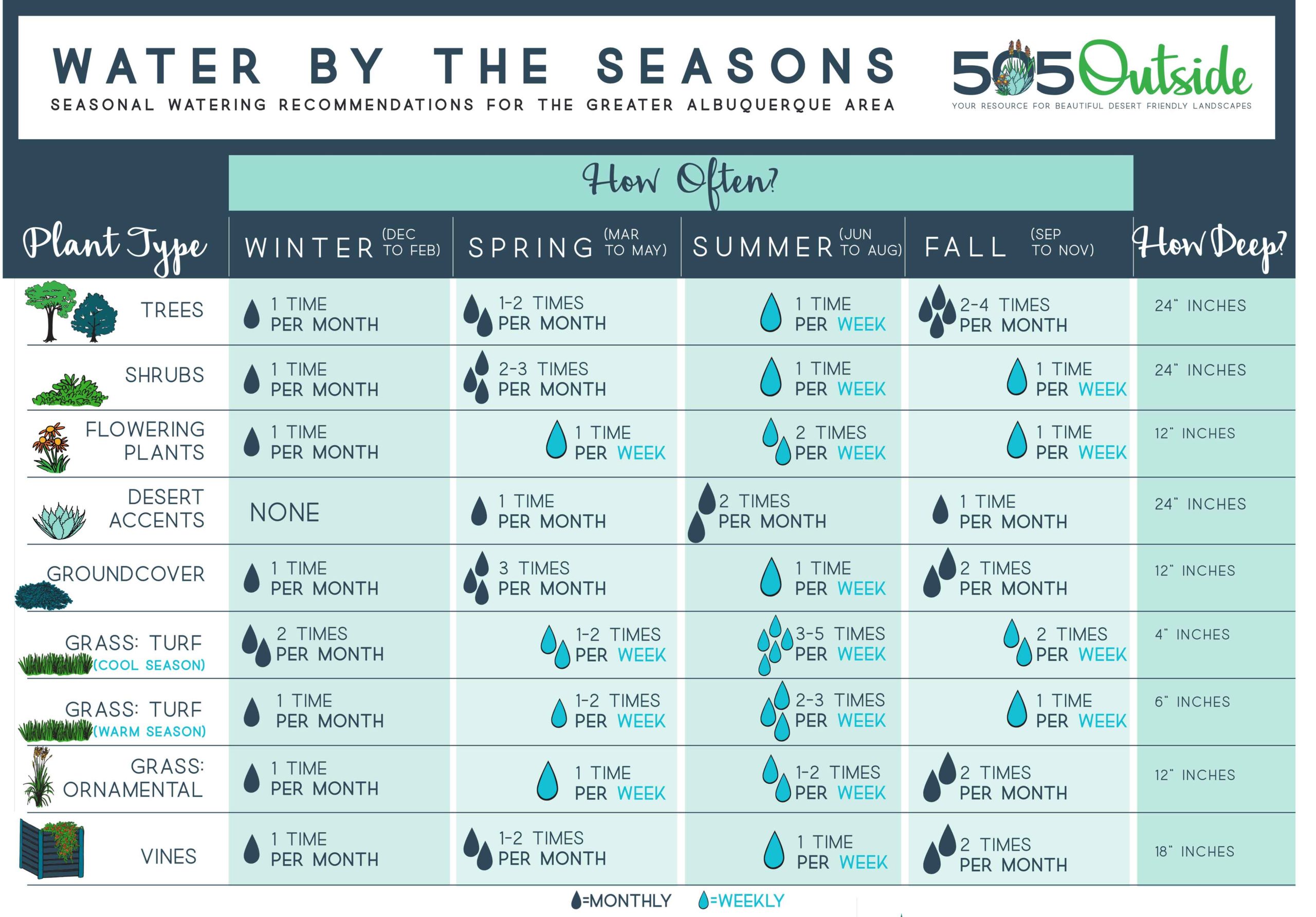
Once your trees and other plants are established, the best way to efficiently water your trees and plants and maintain a healthy landscape is to follow the Water by the Seasons recommendations shown below.
Current Drought conditions mean even more water will need to be used for your high-water use lawn to remain healthy. If you have been thinking about transforming your lawn into a desert friendly xeriscape there is no better time to do it than right now! These types of landscapes are more resilient to climate variability and can provide for up to 30% in water savings or more. Rebates of $1.00 per square foot are available for our residential customers. Certain restrictions apply, and your plans must be approved in advance by Water Authority staff so don’t start removing your lawn until you have submitted an application and contacted the inspector. Learn about our Xeriscape rebate here and get the link to the application portal.
Our expert staff can provide advice and free resources on how to start your beautiful xeriscape transformation. If your application is approved an inspection will be scheduled to verify that your grass type is considered high water use and has sprinkler irrigation. The grass must be currently cared for at the time of the inspection to qualify for the rebate. The inspection is a great opportunity to ask questions and get opinions from our xeriscape expert on various aspects of transformation projects such as plant selection, irrigation conversion and tips for saving money by doing it yourself or hiring a professional landscaper.
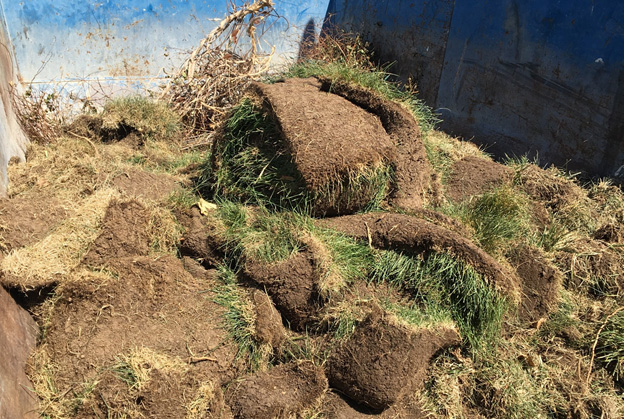
To remove your lawn we recommend using a sod cutter because it’s a fast and effective, chemical-free method to remove your lawn. Many local equipment rental companies rent sod cutters. Approved participants of the xeriscape conversion rebate program may receive 25% up to $100 in rebate off the cost of renting equipment like a sodcutter or skidsteer for removing grass. Before removing the lawn, make sure the soil is not too wet or too dry. Set the cutting blade depth at the shallowest setting necessary on the sod cutter to help retain as much valuable soil on site as possible. The removed sod should be recycled at one of our local composting facilities. One advantage of using a sod cutter is that it is chemical-free, fast, and you can continue with the next step of your project on that same day.
Please note: This method is not recommended for lawns that have mature trees. Sod cutters can damage shallow, fine-hair feeder roots that are critical for water and air uptake. Sod cutters are also not recommended for lawns with Bermuda grass due to the nature of its rooting system. For these cases you might want to consider herbicides. Take advantage of our free ask an expert email service if you have questions about what type of lawn you have or any other questions about xeriscape transformations.
Additionally, xeriscape rebate participants get 25% off the cost of installing bulk organic mulch up to $100. Not only is organic mulch such as shredded wood chips, aesthetically appealing, it provides numerous other benefits. Mulch increases moisture retention in the soil, encourages healthy root establishment, and greatly reduces weeds. A 3”-4” thick layer of organic mulch and drip irrigation are two of the best tools we have for keeping our landscapes healthy and resilient in times of drought.
Check out the Desert Friendly Xeriscape Rebate page to learn more about the qualifications, requirements and process to apply for this generous rebate. You may also contact our xeriscape specialist Amos Arber, at [email protected] or 505-208-2015
Author: Amos Arber, Xeriscape Incentive Inspector, and Certified Arborist for the Water Conservation Department of the Water Authority. Have a question about the article? [email protected]
Spring is here, and it is a dry one. Remember that we are under a drought watch, which is no reason to panic, BUT it does mean we need to be much more careful with our water and aware of how efficiently we are using it in our yards.
This April, there are three easy activities you can do to help make sure your system is working more efficiently.
1. Double check your irrigation settings. Your plants are actively growing now. They need an extra drink of water to stay healthy, but it is important that we are not giving them too much. Your plants will do better with a deep watering done less frequently. Print out our Seasonal Watering Chart, which shows how often we recommend watering each type of plant. Water your lawn one to two times per week, your trees two times per month and your shrubs two to three times per month.
Check with a screwdriver to make sure the water is reaching the roots but not going so deep that the roots can’t reach it. The proper depth is on the right side of our chart above.
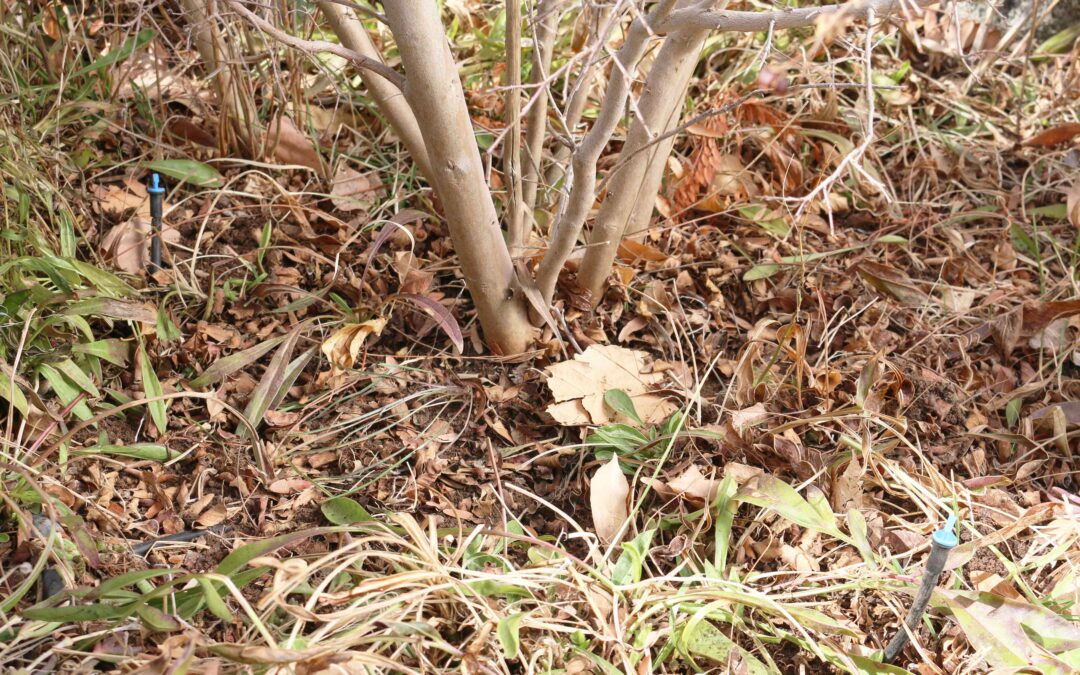
2. Make sure that your trees and shrubs are watered around their drip line so they can efficiently use the water they are getting. This is where woody plants (trees and shrubs) are best able to take up water from the soil. If your emitters are at the trunk or base of your shrubs, your plants are not able to use all of the water you are giving them. You need to move the emitters out to the drip line, and you may need to add additional emitters. For example, if there are only two emitters serving a mature tree that needs over 400 gallons of water in April, it will be nearly impossible for that tree to get enough water to remain healthy without adding more emitters.
3. Because of the “stay at home” health order, many of us have been focusing on improving our yards. This is the perfect time to upgrade your irrigation system so you can water more efficiently. You may only need to replace the nozzles on your sprinklers, or you may be looking at a complete yard transformation. By making changes sooner rather than later, you will benefit in three ways: You will save money sooner, probably have a better chance of getting into a contractor’s schedule if you need help and put less stress on your plants if the work is done in the cool spring weather rather than during the summer.
It’s also the perfect time to reach out to us for help. Send us an email at [email protected] to ask landscape questions or to arrange an appointment for a free consultation.
Author: Richard Perce, Irrigation Efficiency Specialist with the Water Resources Division for the Water Authority. Have a question about the article? [email protected]
As I write this, a cold thin snow cover still hides the ground, but it won’t last long. If we’re lucky, the snow will slowly melt and seep into the soil; if we aren’t lucky, it will sublimate right into the atmosphere – straight from solid to gas. Alas, the roots of our trees lie in the dry desert soil, waiting for water.
It’s always that way, here in the arid Southwest. Our soil, lacking in moisture, also lacks living and dead organic matter. The water that falls on our land either falls infrequently, too little or too much all at once. Still, the plants and trees persist. It is up to us, the human caretakers of these places and trees, to do whatever we reasonably can to provide them with what they need to survive.
Sounds kinda doom-and-gloom, you say? It does! This year promises to be very dry and likely very hot. We all need to do our part to conserve water, and yet we want to keep those established trees healthy and help recently planted trees get established. So, what to do?
It turns out that the two best things we can do are relatively simple. We can reasonably and regularly irrigate the trees (more details below) and apply a layer of coarse organic material as a mulch over the root zone of our trees.
Since every tree in every yard is different, how often you’ll need to water your trees largely depends on how quickly water moves through the soil. In sandy and gravelly areas (Westside and Foothills), the water passes through the soil quickly, moving past the tree roots. These types of soil need watering more often but with less water each time.
Here is how to do it: Water long enough that after a day, when the water has soaked in, the soil has been moistened about 16-24 inches deep. Poke a thin piece of metal (a long screwdriver or something similar will work) into the ground and see how deep you can push it in. That will tell you approximately how deep the water penetrated the soil.
Do this in a broad area, focusing not on the trunk but on the part of the ground under the outer half of the canopy and maybe a bit beyond the drip line (edge of the canopy). Feel the soil with your fingers to determine when to water again. You don’t want to let the soil completely dry out between irrigations! Also, pay attention to the leaves, noticing if they are full and flush or droopy and tired.
The best way to water soil that has more clay in it is to irrigate less often but with more water. This kind of soil holds more water, but that water moves slowly. Be careful not to overwater, especially near the trunk. Too much water in the soil interferes with root function and can more easily lead to root rot and decay issues. Concentrate the water in the outer half, and also in a bit of the canopy shadow, all the way around the tree.
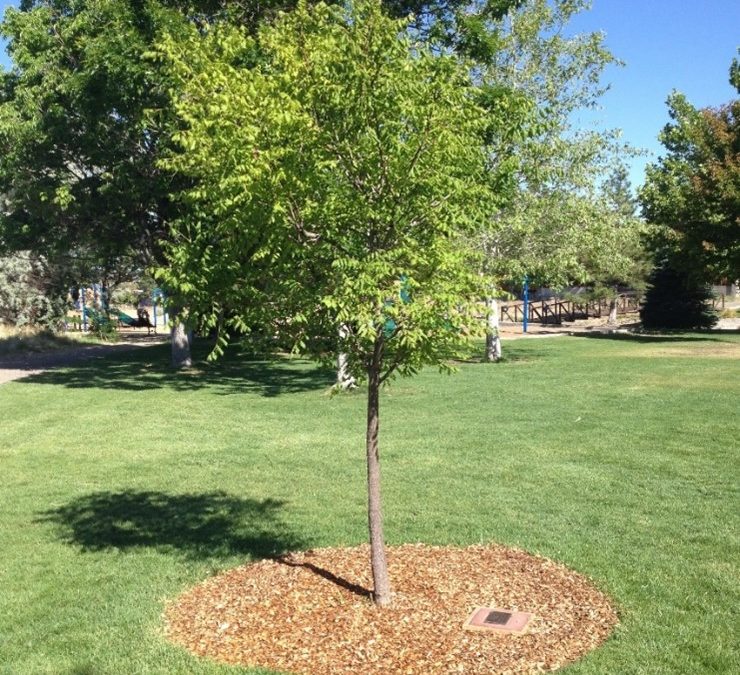
Wood chips, which can be obtained from a tree service or a local vendor, are the ideal mulch for trees. No matter what soil type and irrigation pattern you have, putting approximately three inches of wood chip mulch directly on the soil does wonders for your trees. As with any mulch, wood chips cover and cool the soil and reduce evaporation. As the chips decay, they foster the development of a forest-like soil ecosystem, which is just what tree roots really benefit from. Think of the ground surface in a forest — bits and pieces of old trees, slowly decaying at the surface. Add a new layer of mulch every couple of years, and watch your trees thrive!
Other mulches, like pine bark chips or pecan shells, are not quite as good as wood chips. Rock mulch is not a good choice. It absorbs sunlight and releases that energy as heat that rises through the tree’s canopy and strips even more precious moisture from stressed leaves.
Did you know that the Water Utility Authority will help cover the cost of some of this work? Through the Treebate program, they will offset a portion of the cost of certain purchases — such as new trees — and activities such as pruning and other maintenance work, soil improvements through compost and mulch and even some irrigation costs. Check out tree recommendations and all the program details here.
Author and Photography: Joran Viers, Senior Partner at Root to Shoot Urban Forestry, Inc. find him at [email protected] Have a question about the article? [email protected]