
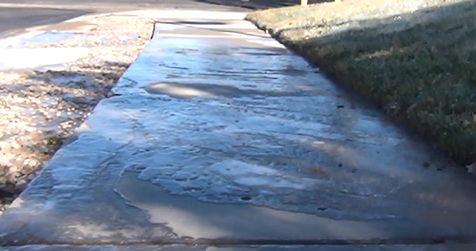
Winter is the time to give your irrigation system a rest. The weather is unpredictable in the greater Albuquerque area. Unusually warm dry winters are possible along with wet cold winters, so watering and irrigation system use may fluctuate year to year.
The basic advice is that once temperatures are forecast to fall below 40 degrees Fahrenheit, it’s time to get your irrigation system ready for winter. Freezing temperatures can damage irrigation systems. Follow the steps below to get your system ready for winter.
Shut down your automatic (below-ground) irrigation system.
- Turn off the irrigation controller.
- Turn the controller dial to OFF.
- Keep your controller plugged in so it saves its programming information for next year.
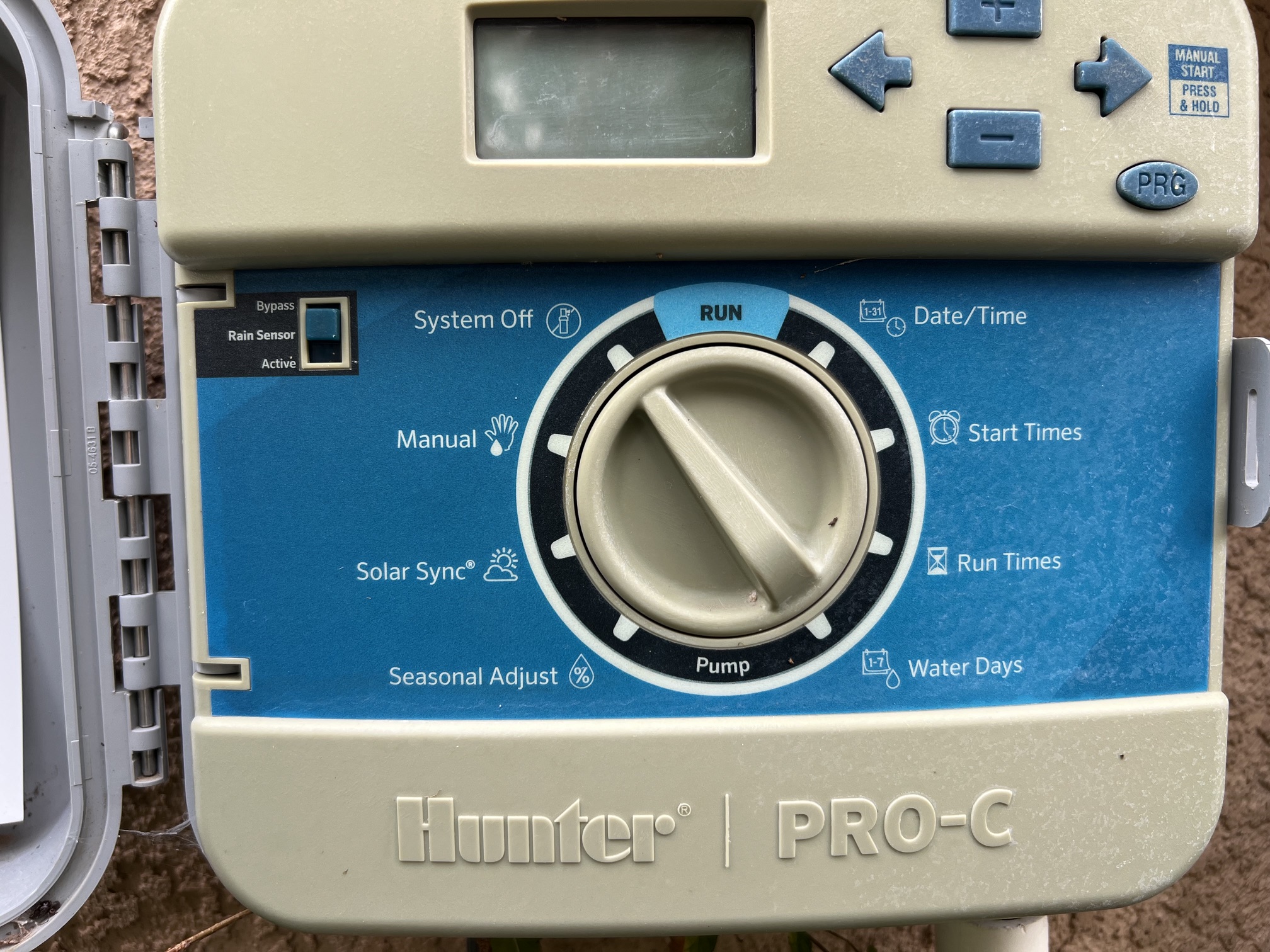
Controller in the “off” position.
- Locate your shut-off valve, which is often housed in a 3” PVC pipe with a white or yellow cap.
- Turn it to the right to close, taking care not to overtighten.
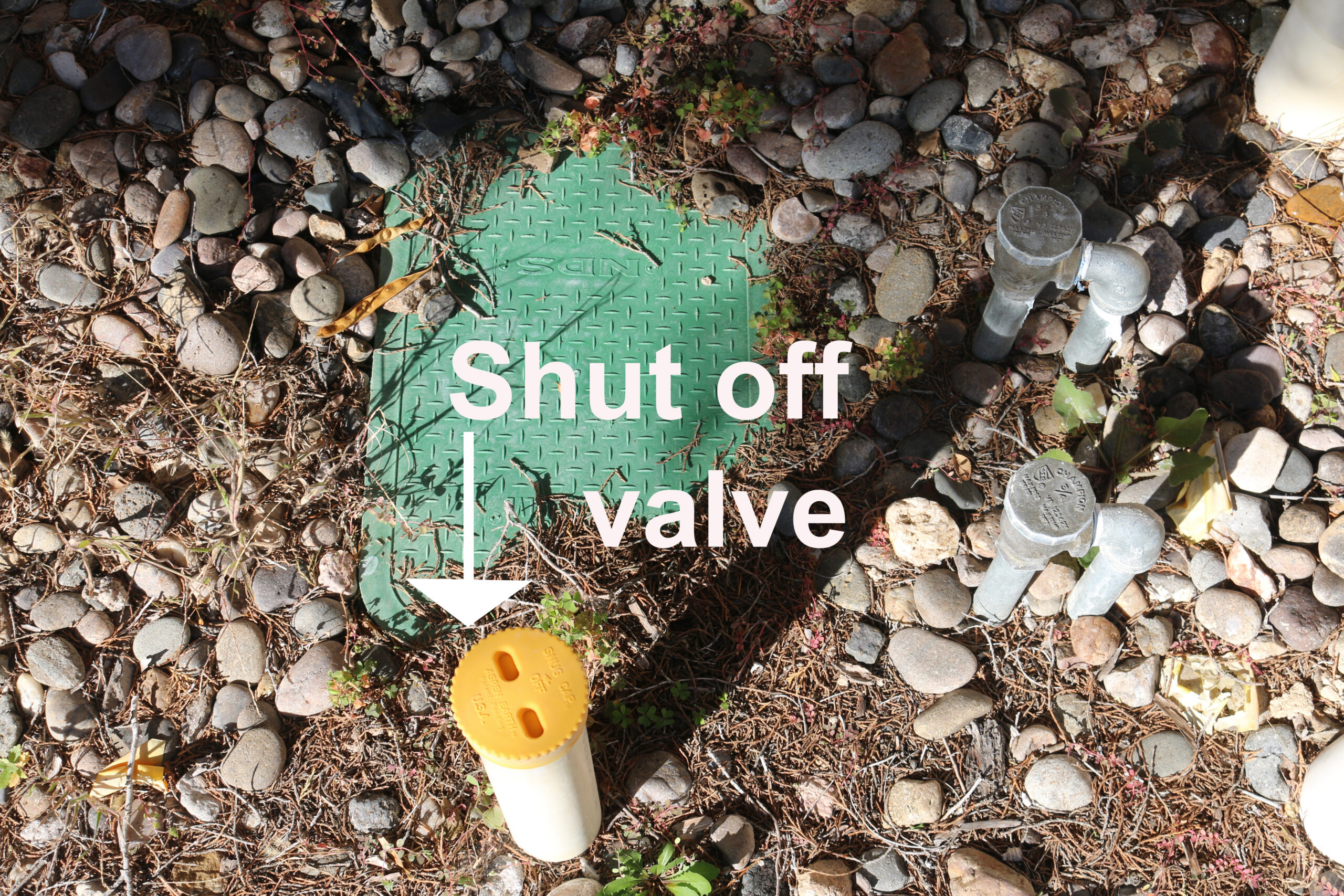
Irrigation System with shut off valve (sometimes called isolation valve).
How to shut off your irrigation system for winter. (Click on image to watch video, it will pop up in Facebook, if you are not a FB user close or X out of the pop-up window to view the video)

- Protect drip lines.
- For drip irrigation systems, find the end cap of each drip hose and let the water drain out.
- Pay extra attention to drip lines on the shady north side of your home, where freezing is more likely because the ground gets little winter sun and stays colder longer.

Drip system flush or end cap.
Keep your outdoor faucet/spigot (aka hose bib) from freezing.
If your irrigation system connects to an outdoor faucet/spigot (aka hose bib), disconnect it and cover it with an insulated outdoor faucet cover. All outdoor faucets/spigots should be covered.

Insulated outdoor faucet cover.
If you have a yard faucet, protect it from freezing with an insulated pipe cover and heat tape. This does not apply to frost free yard hydrants.
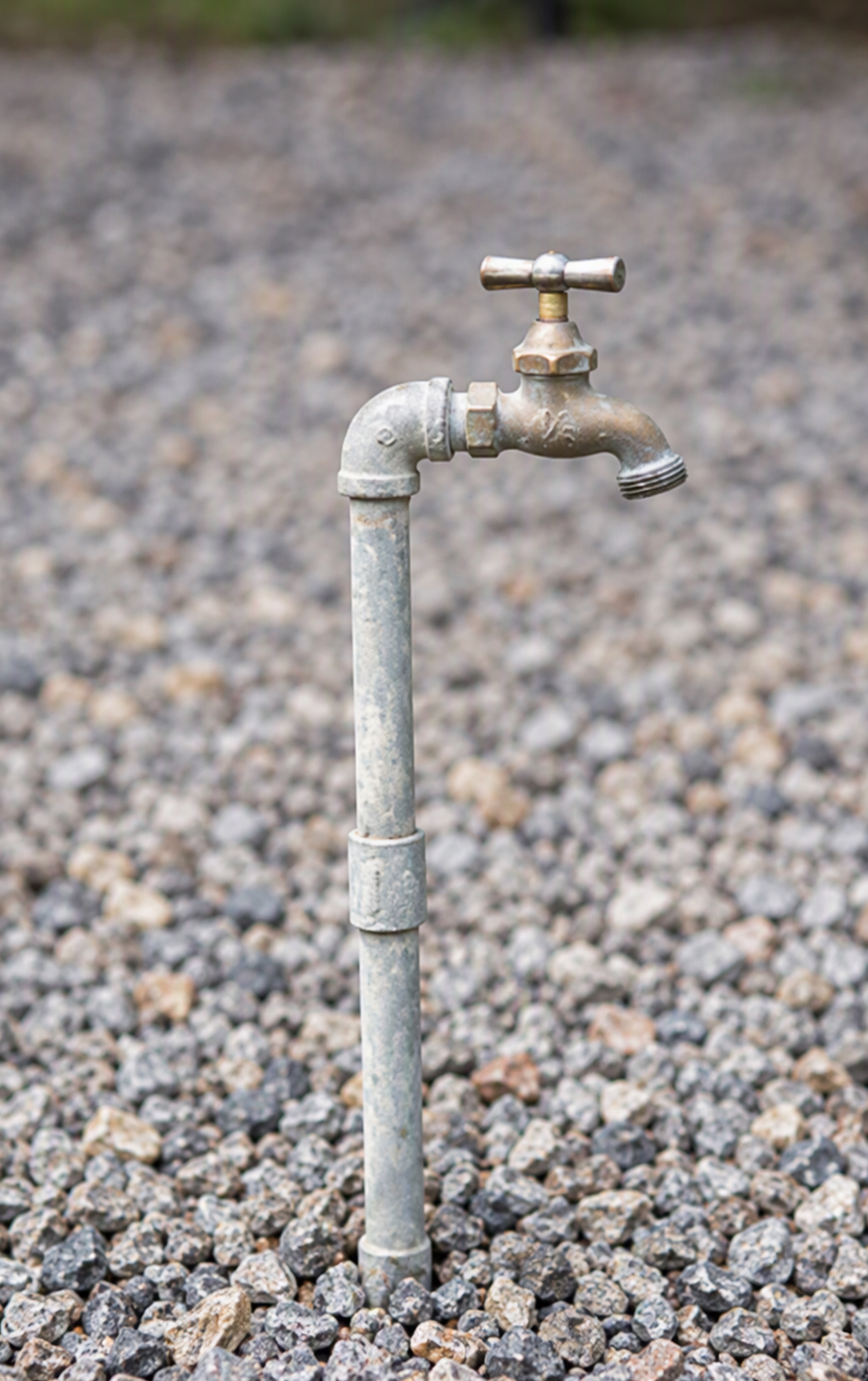
Yard faucet that should be covered and protected from freezing temperatures.
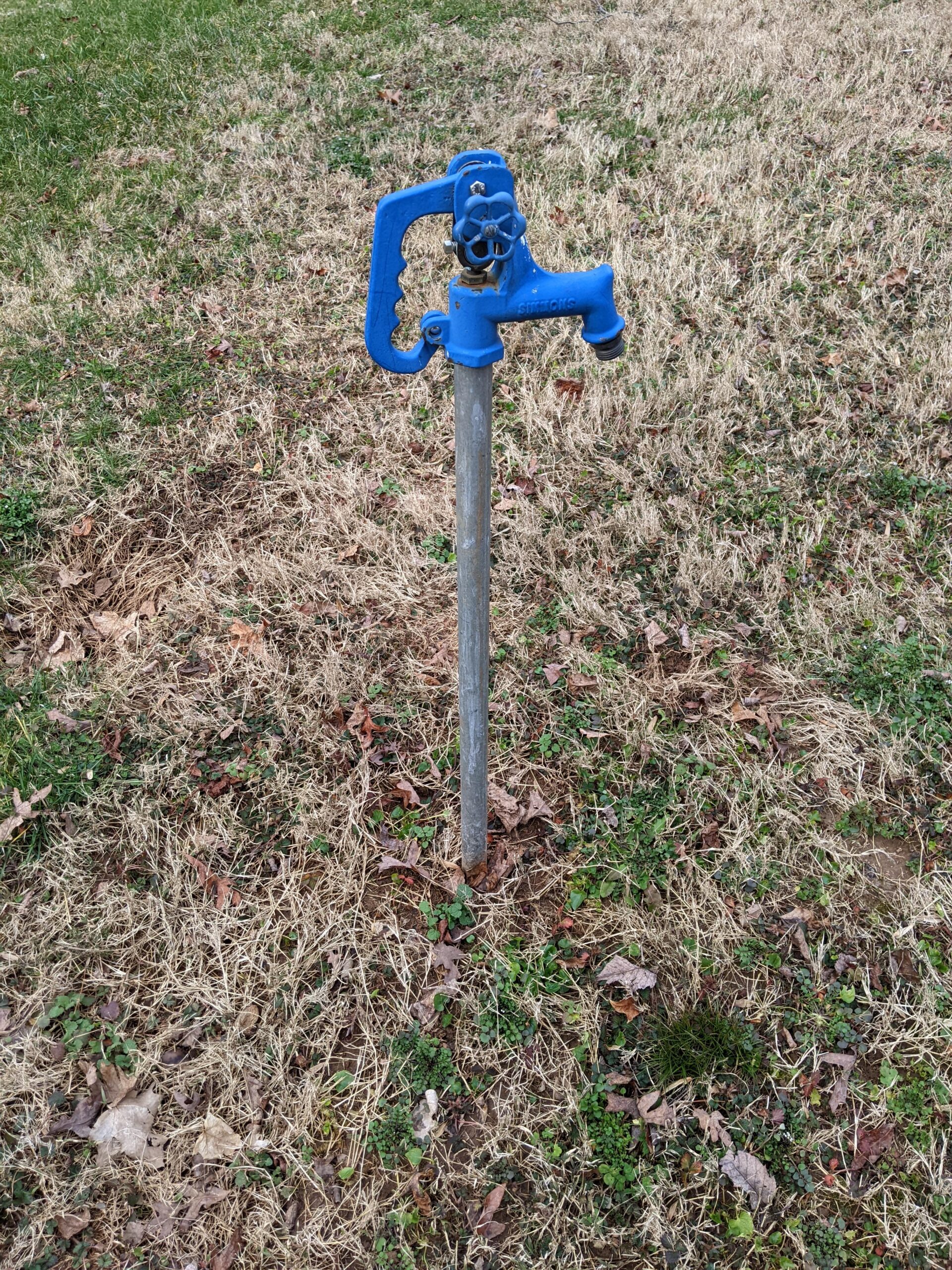
Frost free yard hydrant.
Get your plants ready for the winter season.
These simple tips will help your plants withstand the winter months and thrive next spring. The general advice is to mulch, leave your leaves, water properly, pay attention to the temperatures and precipitation, and do not cut back or prune yet.
Leave your leaves: Each autumn, leaves fall to the ground, sheltering the soil and beneficial organisms, returning organic matter to the soil and sustaining the nutrient cycle that healthy plants depend on. This year, consider tucking leaves around your plants instead of removing them. Letting leaves follow their natural life cycle provides you with all the benefits of mulch and doesn’t add waste to the landfill.
Add mulch: Adding or refreshing shredded wood chip mulch to about 4 inches thick around plants is recommended before winter. Mulch insulates plant roots from the cold, reducing moisture loss from the soil by evaporation, feeding beneficial soil microorganisms that enhance plant growth, and improving soil health while reducing weeds. This makes the soil more spongelike and better able to hold water. Be sure to keep mulch away from tree trunks.
Prep turf grass: Cut your lawn to 2-2.5 inches tall. Grass left too long through the winter can develop brown patches. Remove fallen leaves from the lawn. Leaves left over the winter can damage the grass and invite disease. Water according to our seasonal guidelines and adjust depending on weather conditions.
Water strategically during winter: Plants need to be watered in the winter in order to keep them healthy, especially trees. This means you need to de-winterize your system at least once a month or water with a hose. If your irrigation system connects to an outdoor faucet/spigot (aka hose bib), connect your hose system back up and water during the warmest part of the day typically midday. When watering is finished, disconnect the hose and put the insulated outdoor faucet cover back on.
If you have a drip system connected to an automatic irrigation system, turn your controller back on to water during the warmest part of the day, typically midday. This gives water time to soak in before temperatures drop at night. When shady areas need winter water, wait for a warm mild day. Once you’re done, you must re-winterize your irrigation system.
If you are concerned about turning on your irrigation system, then water everything manually with a hose. When watering by hand, remember to make sure your hose has a shut off valve or nozzle on the end. One hour of hose watering at a trickle is a good rule of thumb. For trees, learn to make a tree watering system
Trees need to be watered properly over the winter. Trees that get too dry during this time can suffer stress and drought injury. The damage often does not show up until the heat of the following summer, which then makes trees more susceptible to pests and disease. Track how much rain and snow your yard gets each month. Water trees once a month to 24” deep (December to February) to support winter hardiness. If we receive more than 1/2″ of rain or 6” of snow, you can skip your next watering cycle. To find out how deep you are watering, read more here.
Pay particular attention to conifers and other evergreen trees. Dry winter winds can strip moisture from trees quickly. It’s important that soil moisture is available to roots to help compensate for these losses. Outdoor water usage should be 80% lower than in summer.
Follow the Water by the Seasons recommendations below.
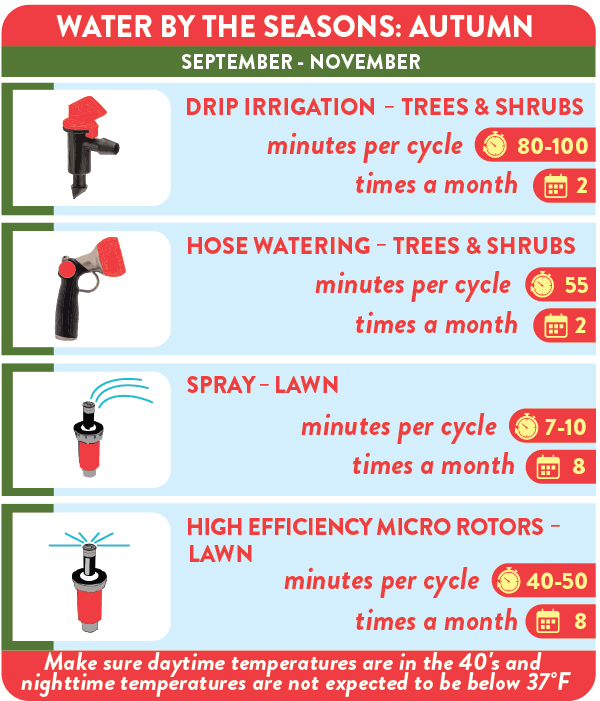
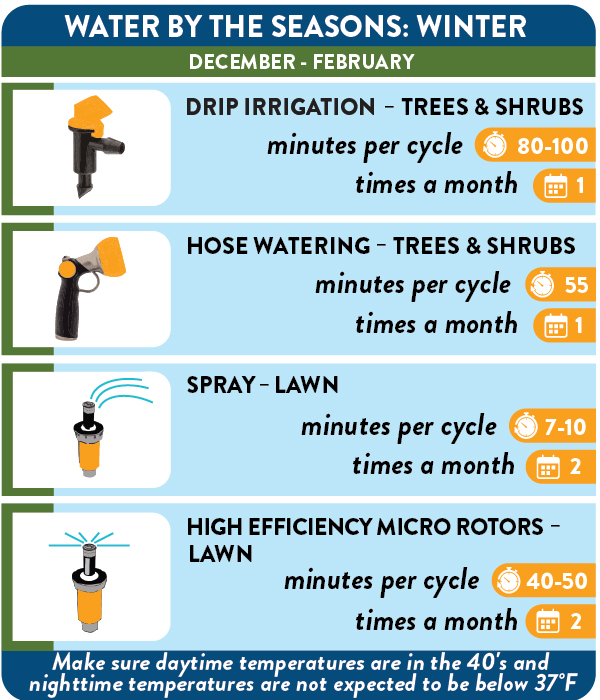
Ultimately, winterizing your irrigation system is the best way to protect it, your plants and your home from damage.
Learn More Here:
Irrigation Maintenance Checklist
The Balancing Act of Watering Trees in the Fall and Winter
Simple Fall Maintenance for Albuquerque Landscapes
Take the Guesswork Out of Programming an Irrigation Controller
Yes You Can Afford and Irrigation System
Irrigation Fundamentals Webinar

Have a question about the article or anything else? [email protected]