A popular question we get at 505Outside is “Where should I go to get plants for my yard?” We’re highlighting our local nurseries and the uniqueness of each of them.
Every yard has its own unique environment that includes things like sun and wind exposure, soils, drainage, climate, bugs, orientation, views, weather conditions and elevation. And certain species of plants like certain types of conditions. Nurseries pride themselves in getting plants that are specifically grown for your area. And the only way to ensure that you get a plant that is well-suited for your yard is to go to a local nursery. Plants that are grown in your region for your region are going to do much better in your yard.
Local nurseries have very knowledgeable staff experienced in dealing with all the variables of yards just like yours. But remember, they have limited time so go prepared with a list of questions. Make sure you note all the conditions of your space so the nursery staff can steer you in the right direction.
Check out some local nurseries below, listed in alphabetical order:
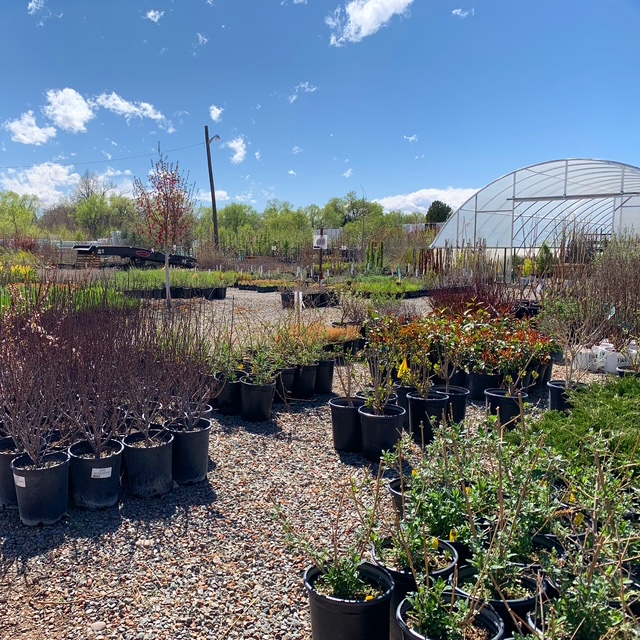
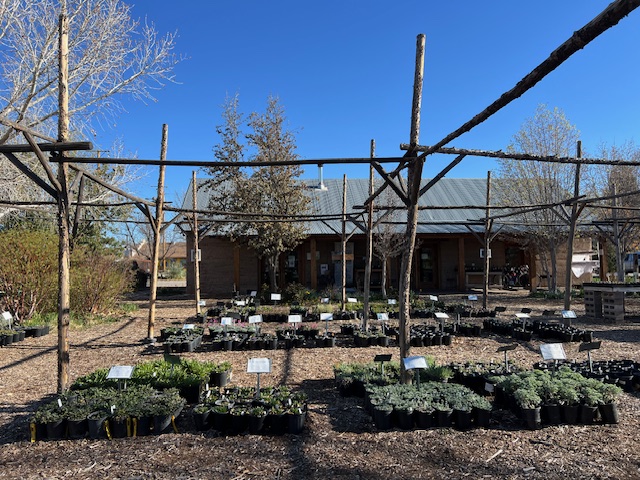
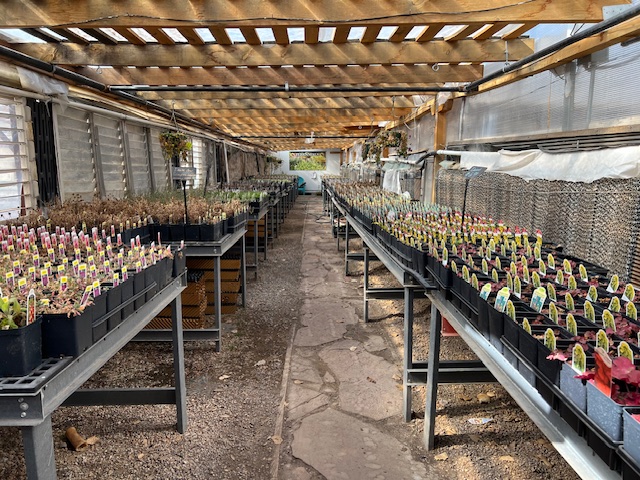
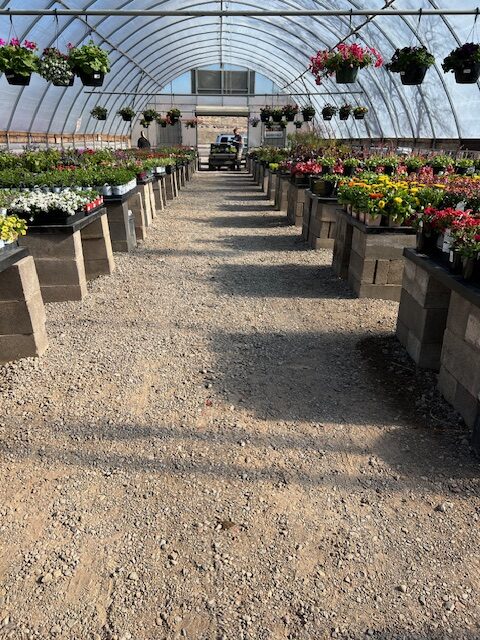
This plant nursery located along Alameda NW near Fourth Street is best known for its thousands of vegetable seedlings, making it a must-stop for all your vegetable needs. Of course, they also carry a ton of other plants like perennials, annuals, groundcovers, trees, roses and more — but go for the vegetables.
As the name suggests, this North Valley nursery specializes in aquatic plants and fish. However, they also carry a wide variety of locally grown perennials, trees and shrubs. You’ll want to linger as their garden offers a very pleasant shopping experience.
Located in the South Valley bosque of Albuquerque, this off-the-beaten-path farm and nursery specializes in edibles and resilient and native trees and shrubs, alongside egg-laying ducks and orchards. Grown onsite, you can find underrepresented trees and shrubs that grow well in the harsh New Mexico climate.
The shop is mostly known for home décor but walk towards the back of the store and you’ll find a well-stocked nursery with a good selection of annuals, perennials, shrubs, trees, succulents, houseplants and vegetables. They also carry a host of garden supplies and are easily accessible, being located along San Mateo NE near Interstate 25.
From a location near Balloon Fiesta Park, Jericho provides some unique items not found at other nurseries in town. Of course, they have the usual annuals, perennials, natives, trees, roses, shrubs and more, but you’d never guess they have all kinds of specialty miniature garden and fairy garden materials. You’ll also find a friendly staff and everything you need to make a terrarium, garden tools, outdoor décor and other garden products.
At this large nursery located on Osuna NE just east of Edith, you can find just about everything you need. Be sure to check out the native plant section. But one of the coolest features of Osuna is its Plant Pharmacy featuring certified staff eager and willing to answer all your wildest questions about your plants. Bring a picture of your aphids or leaves from the actual plant and they diagnose the problem.
Natives, natives, natives. Located on Fourth Street NW north of Chavez Road, this nursery sells native New Mexico plants and seed. Just about any plant you find here will grow with ease in your yard. You will also find a wide variety of seeds, from vegetables to any type of wildflower you’d like. The staff even curates specialty blends of wildflowers and grass lawn seeds.
Originally only a wholesale nursery, now anyone can shop here via the Garden Club, which costs $25 for a lifetime membership. Conveniently located on El Pueblo NE west of Edith, you will be able to find everything you need for your yard. In fact, Plant World sells some of the largest ball and burlap trees in town.
Known as your neighborhood nursery, this store located at 5801 Lomas NE has everything you need for your yard conveniently located near those in the Near Northeast Heights, Nob Hill and Uptown. The staff is extremely knowledgeable, and the deep family-like atmosphere and roots of this store shine through.
It might be too early to start planting your 2025 garden but it’s never to early to start planning your yard. We’ve grabbed some of our favorite plants for you to test out in 2025. Take a look below.
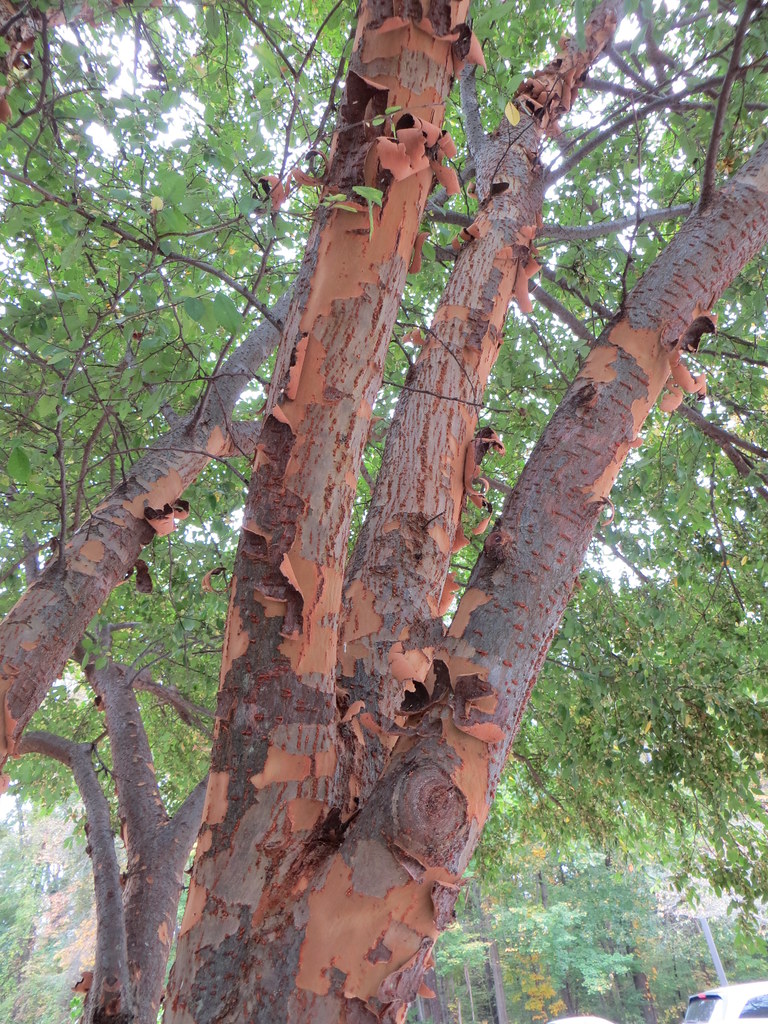
This fast-growing shade tree should not be confused with the notoriously invasive Siberian elm. Lacebark elm is a medium sized tree with a round to oval crown and interesting lacy bark in tan, grey and cinnamon colors. It is an excellent drought tolerant species for use in windbreaks. It can grow as much as 3 feet a year. It is adaptable to most soil conditions.
Type: Deciduous
Exposure: Full sun
Water Use: Medium
Mature Size: 40’ x 40’
Mock orange, Philadelphus lewisii Cheyenne:
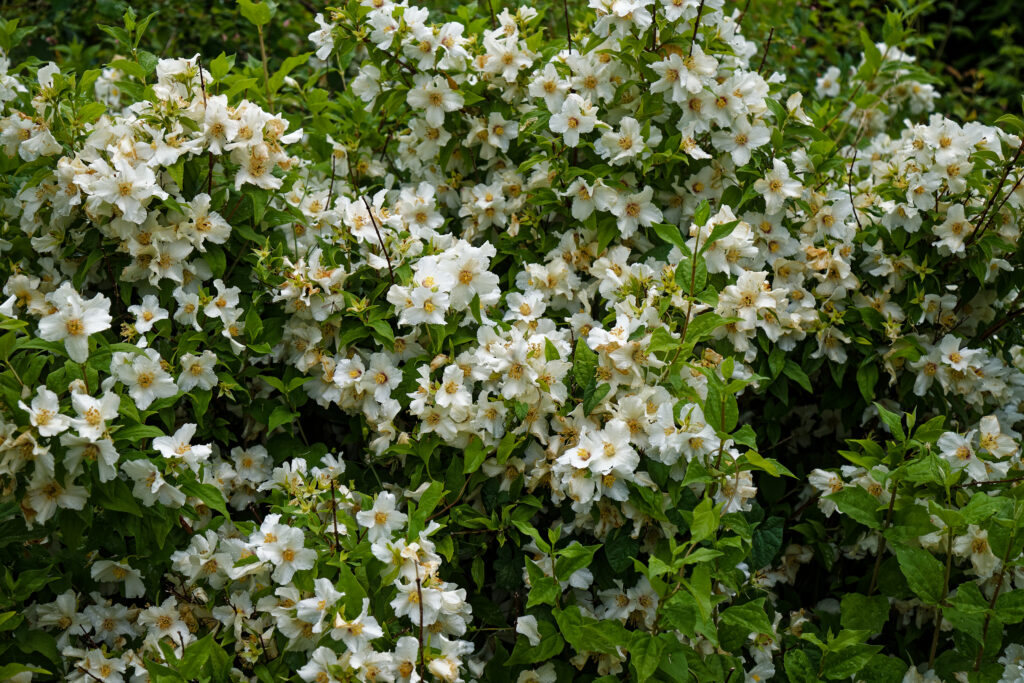
This deciduous native shrub sports white blooms from spring to summer. A mass of flowers emits a delightful fragrance reminiscent of orange blossoms with a hint of pineapple. It’s a great habitat and pollinator shrub that works well in perennial beds, providing interest and privacy if needed.
Type: Deciduous
Exposure: Sun/shade
Water Use: Medium
Mature Size: 10’ x 10’
Woolly butterfly bush, Buddleja marrubiifolia:
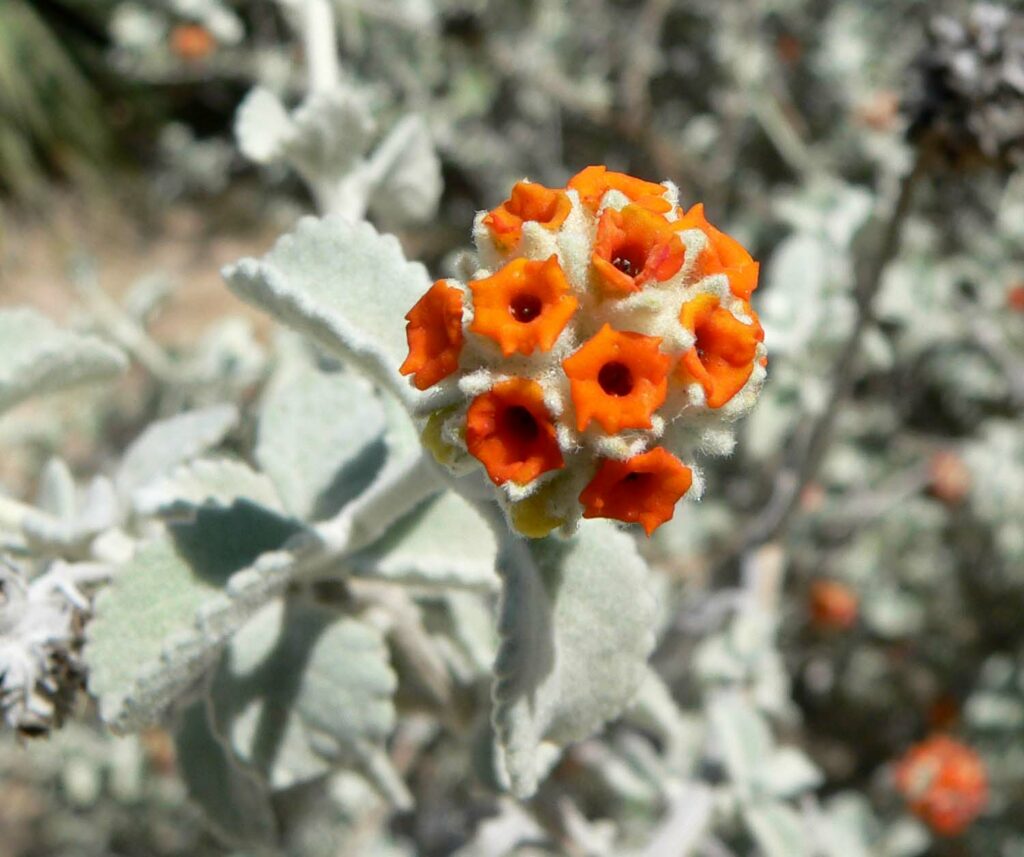
This rounded, grey green evergreen shrub provides year-round interest. Orange flowers are prevalent year-round with their showiest times in the spring and summer. Woolly butterfly bush is native from southwest Texas into New Mexico, where it can be found in canyons, arroyos and on slopes at elevations from 1,800 to 3,800 feet. It’s heat tolerant and likes well drained soils.
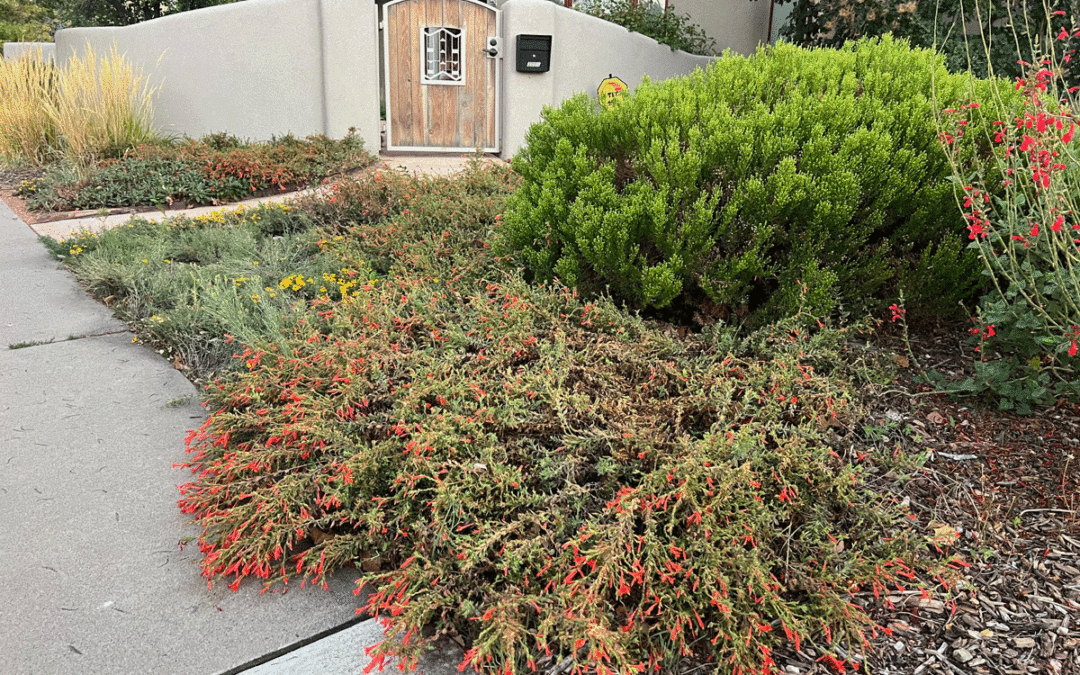
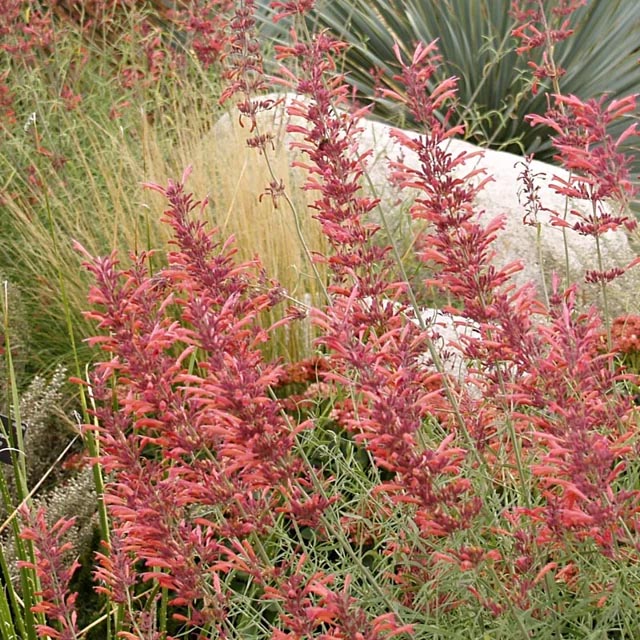
This is one of the best, most durable species in the Agastache family. It has nectar-rich orange flowers that attract hummingbirds for many months. The plant has a licorice minty scent. It’s also low water use and very drought resistant.
Type: Deciduous
Exposure: Full sun
Water Use: Low
Mature Size: 2’ x 2’
Sandpaper verbena, Verbena rigida:
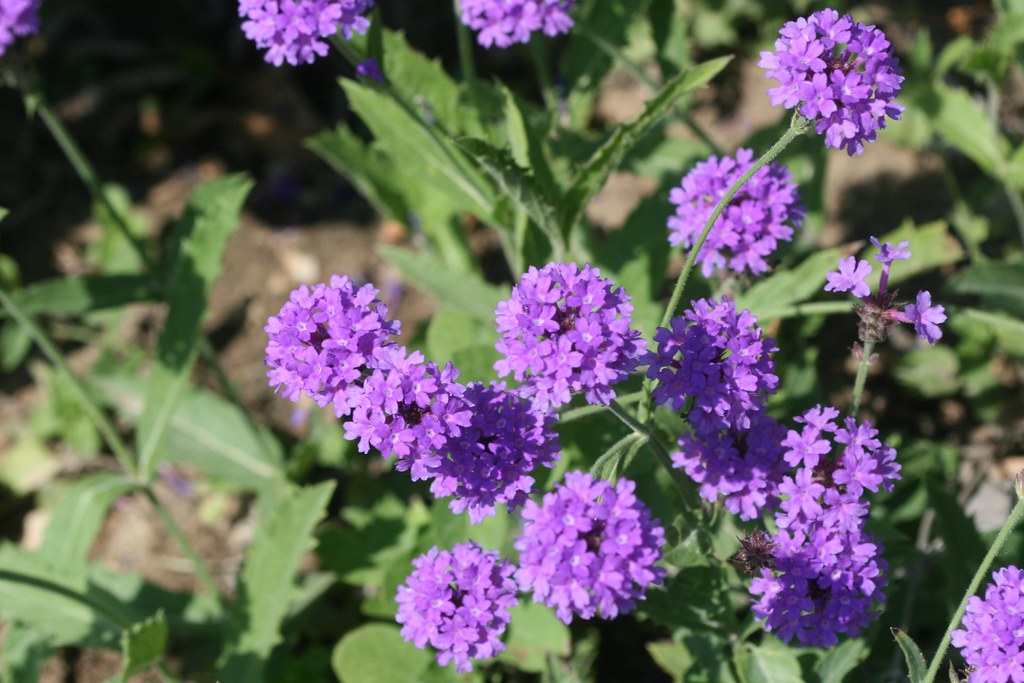
This flowering plant grows well in extreme heat. It has rough, dark green leaves that feel like sandpaper and vivid purple flowers in the spring and summer. If this plant starts to look ragged, cut it back to the ground and fresh growth will sprout from underground stems. Even in very cold winters, this plant bounces back from these rhizomes. It is nice mixed with the yellows of prairie zinnia or Angelita daisy.
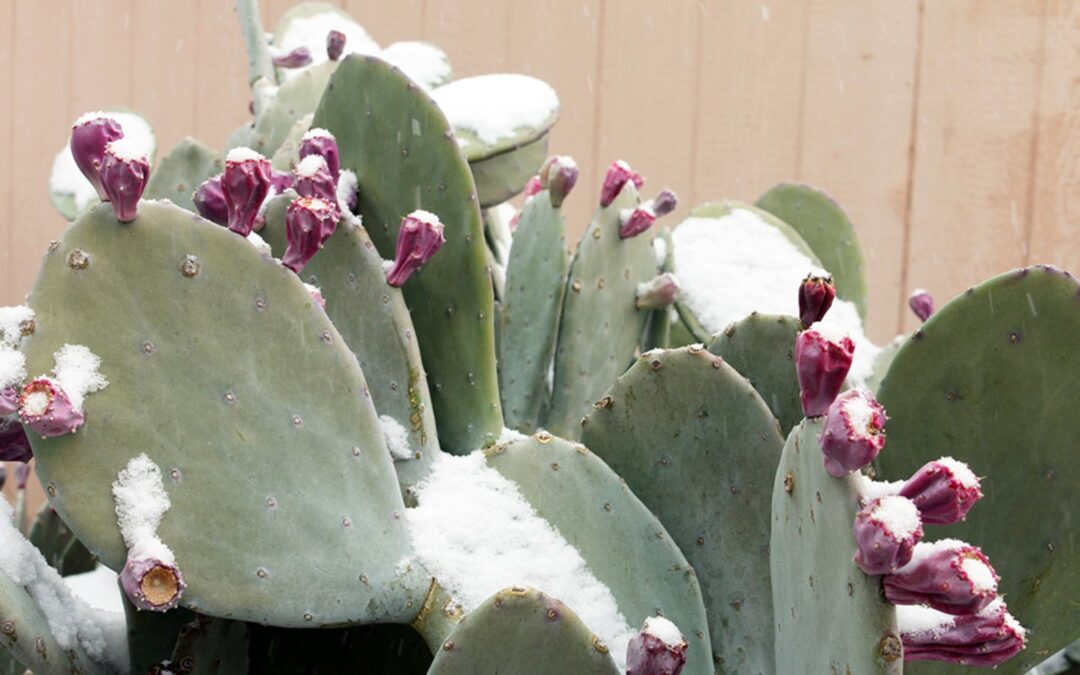
This easy to grow native plant thrives in our New Mexico climate. Striking against a stucco backdrop, bees can’t get enough of the pollen from the big yellow blooms during late spring. In late summer and early fall, it is filled with maroon-red fruit. While it gives off a smooth, non-spiny appearance, it does have tiny glochids or slivers that can grab onto your skin when handled. Once established, it can survive without water. As with most cactus, water is not necessary in the winter. Use tongs or gloves to plant and prune. Prickly pear is also very easy to propagate; learn how here.
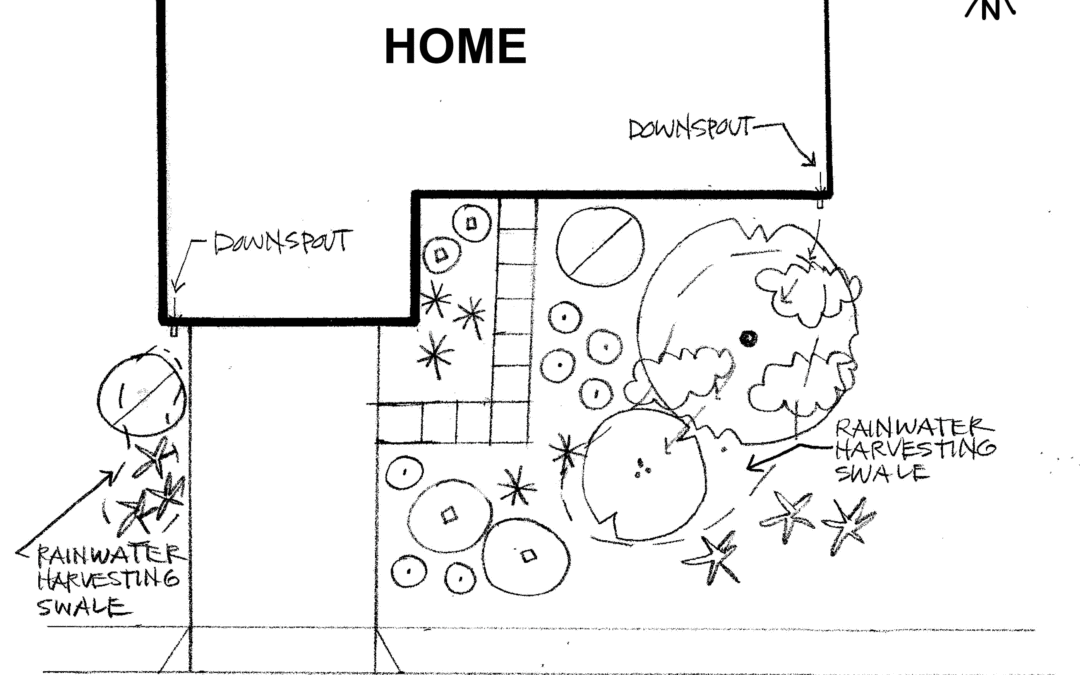
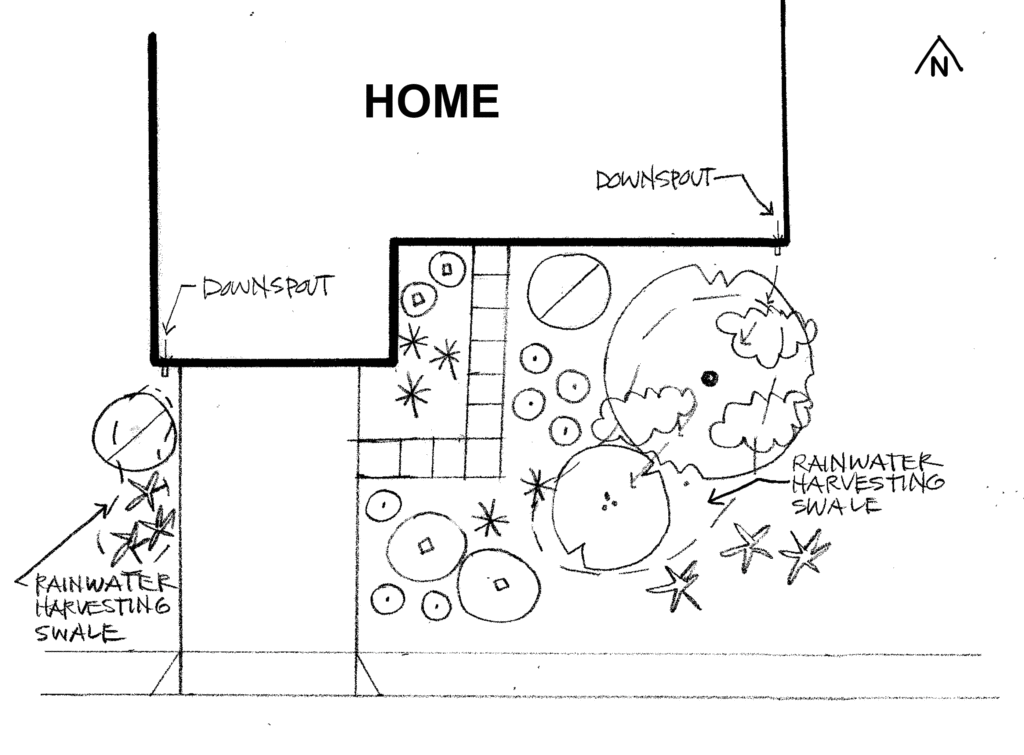
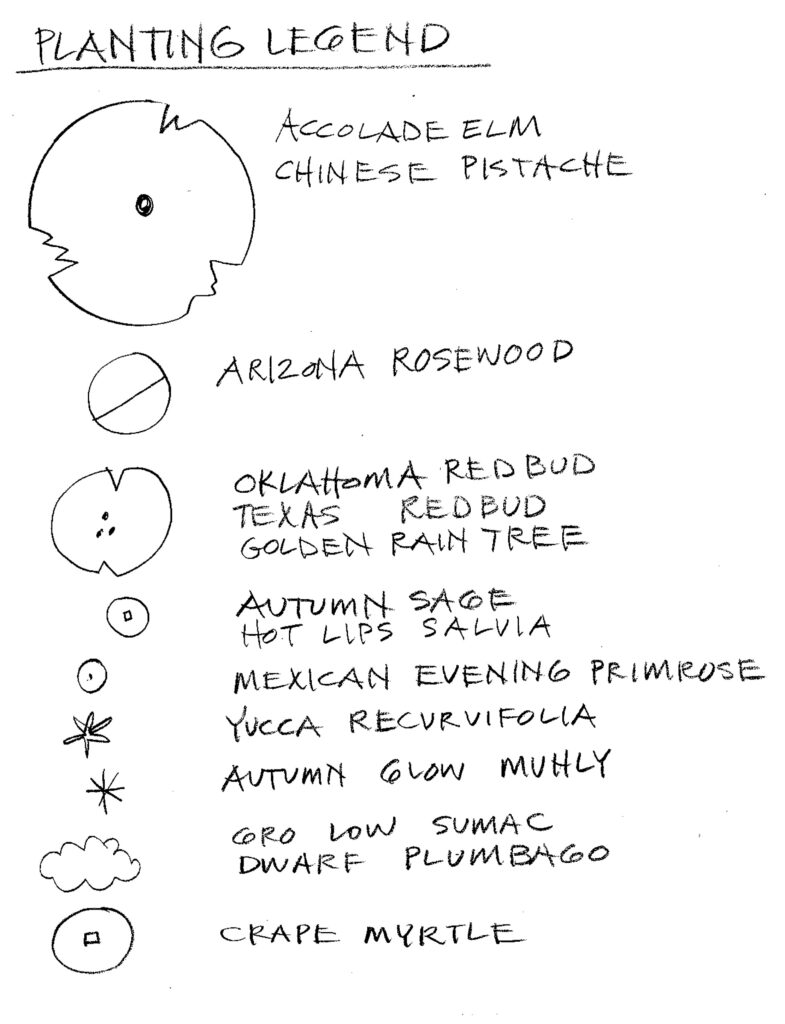
A lot goes into designing a landscape, hence there’s an entire profession called landscape architecture devoted to designing outdoor spaces. A few generous local landscape architects donated their time and put together some Landscape Design templates of a typical front yard for our 505Outside subscribers.
All good things start with a solid plan. Developing a plan saves you not only time and money, but it is more likely to result in a beautiful landscape. Above is a look at an example landscape template for a south facing front yard. This design brings a taste of the East Coast or Midwest to your home in New Mexico. It’s full of leafy green desert friendly plants. Take a look and get inspired to recreate this in your own yard.
Nothing adds the same quality and value to a landscape as a healthy mature tree. Trees are so important to our community now and for future generations. The benefits include cooler outdoor spaces and homes, aesthetic appeal, carbon capture, stormwater mitigation, and more. There are some key things to think about when it comes to keeping your tree happy.
The two best things we can do for our trees are simple. We can reasonably and regularly irrigate the trees and apply a layer of organic mulch over the root zone.
The roots of our trees lie in the dry desert soil, waiting for water. In the arid Southwest, our soil also lacks living and dead organic matter. The water that falls on our land falls either infrequently, too little or too much all at once. Still, the plants and trees persist. It is up to us, the human caretakers of these places and trees, to do whatever we reasonably can to provide them with what they need to survive.
Watering Trees:
Newly planted trees (planted within one to three years) are more susceptible to damage from dry conditions and should be watered more frequently than established trees. Aim to water them to a depth of 24 inches three times a month in the fall and twice a month in the winter.
Evergreen trees lose water through their needles in the dry winter air. They need more stored water going into the winter season to make up for that. In addition, cold dry winds can strip water from evergreens faster than their roots can absorb it. That’s why it is especially important to provide enough water in the fall and during dry, warm spells in the winter. Water evergreen trees to a depth of 24 inches twice a month during the fall and once a month in the winter.
Even though they lose their leaves, deciduous trees also should not get too dry in the fall and winter. Water acts as an insulator for both the tree and soil. Soil that stays moist will be warmer. Likewise, plant cells that are plump with water will be less susceptible to damage from the cold. Water deciduous trees to a depth of 24 inches twice a month during the fall and once a month in the winter.
When watering any tree, remember to apply water out to the edge of the tree’s canopy drip line. Most established trees have a root spread equal to their height and beyond. Watering to the right depth depends on your specific soils, so you will want to measure how much water it takes to reach 24 inches deep in your soils.
Since every tree in every yard is different, how often you’ll need to water your trees largely depends on how quickly water moves through the soil. In sandy and gravelly areas (Westside and Foothills), the water passes through the soil quickly, moving past the tree roots. These types of soil need watering more often but with less water each time. On the other hand, the best way to water soil that has more clay in it is to irrigate less often but with more water. This kind of soil holds more water, but that water moves slowly. Be careful not to overwater, especially near the trunk.
How cany you tell how deeply you are watering your trees? After a day, when the water has soaked in, the soil should be moistened about 16-24 inches deep. Poke a thin piece of metal (a long screwdriver or something similar will work) into the ground and see how deep you can push it in. That will tell you approximately how deep the water penetrated the soil.
Adding Organic Mulch to Trees:
Shredded wood chips, which can be obtained from a tree service or a local vendor, are the ideal mulch. No matter what soil type and irrigation pattern you have, putting approximately 3 inches of shredded wood chip mulch directly on the soil does wonders for your trees. As with any mulch, wood chips cover and cool the soil and reduce evaporation. They also reduce weed growth. As the chips decay, they foster the development of a forest-like soil ecosystem with minerals and soil fungi, which is just what tree roots really benefit from. Think of the ground surface in a forest — bits and pieces of old trees, slowly decaying at the surface. Adding a thick layer of organic mulch is the only way to replicate those forest conditions in our urban environments.
What harms a tree? Things that harm the root system (soil compaction, drought, heat, chemicals), things that damage the root flare (stem girdling roots, mowers, construction), things that damage the living rind (wire girdling, kids with hatchets, vehicles) and things that damage leaves (over pruning, certain herbicides, heat). There are feedback loops, especially between the roots and the leaves. Root damage that reduces water uptake leads to leaves making less sugar which means fewer resources to grow new roots. Herbicide damage that deforms leaves leads to less sugar feeding root function as well as less pull on the water, both leading to less water and nutrient uptake going back to the leaves. The life for a tree in Albuquerque is difficult and just one of the aforementioned insults can be the small push which sends a tree into a slow death spiral.
How to Avoid Harming Your Tree:
Protect roots by covering the soil with 3 or 4 inches of shredded wood chips. Avoid cutting roots over one inch when possible; when absolutely necessary, use a sharp, sterilized pruning saw to make a clean cup, cut as few as possible and cut as far from the trunk as possible. Don’t compact soil by dumping gravel or parking on the root zone. Don’t apply herbicides to the root zone, which is larger than the canopy above.
Protect the leaves by avoiding over pruning. Most mature trees don’t need regular pruning, and, in fact, that should be avoided. Pruning takes away energy sources (leaves) and creates energy sinks (wounds that must be dealt with). Excessive pruning can send a tree into a starvation spiral. Prune for specific goals. Avoid herbicides like those found in weed-and-feed fertilizers.
Protect the living rind by taking away Junior’s hatchet. More seriously, don’t tie wires, ropes, and holiday lights around the trunk or branches unless you check them every year to make sure they aren’t girdling the tree.