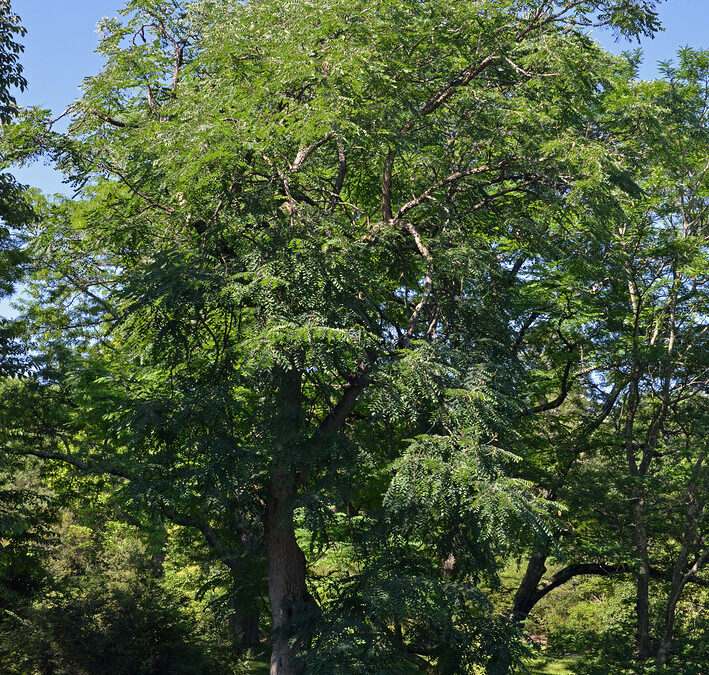
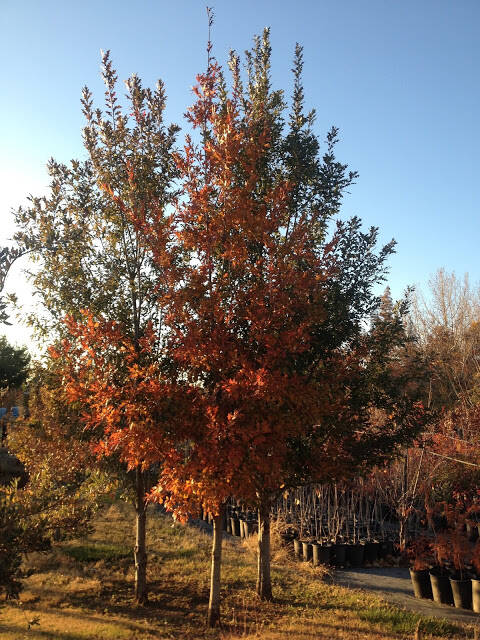
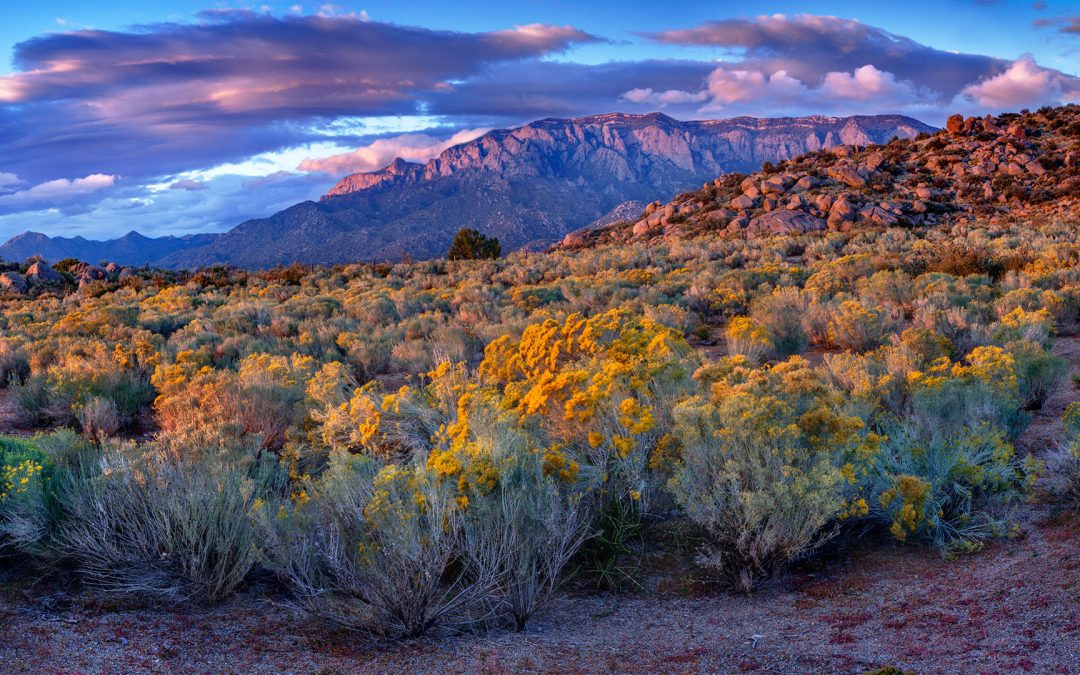
This tree, recently introduced to the Southwest area, is a large drought tolerant shade tree. Clusters of fragrant flowers appear in May/June when it is swarmed with pollinating bees. It has small deep blue-green leaves that turn yellow in the fall, visually interesting seed pods, gray colored bark, coarse ascending branches and can endure extreme temperatures. The name comes from its seeds being roasted and used as a coffee substitute.
Below are some great gifts for that homeowner who likes to tinker in their yard and also save water. Practical gifts are always in style!
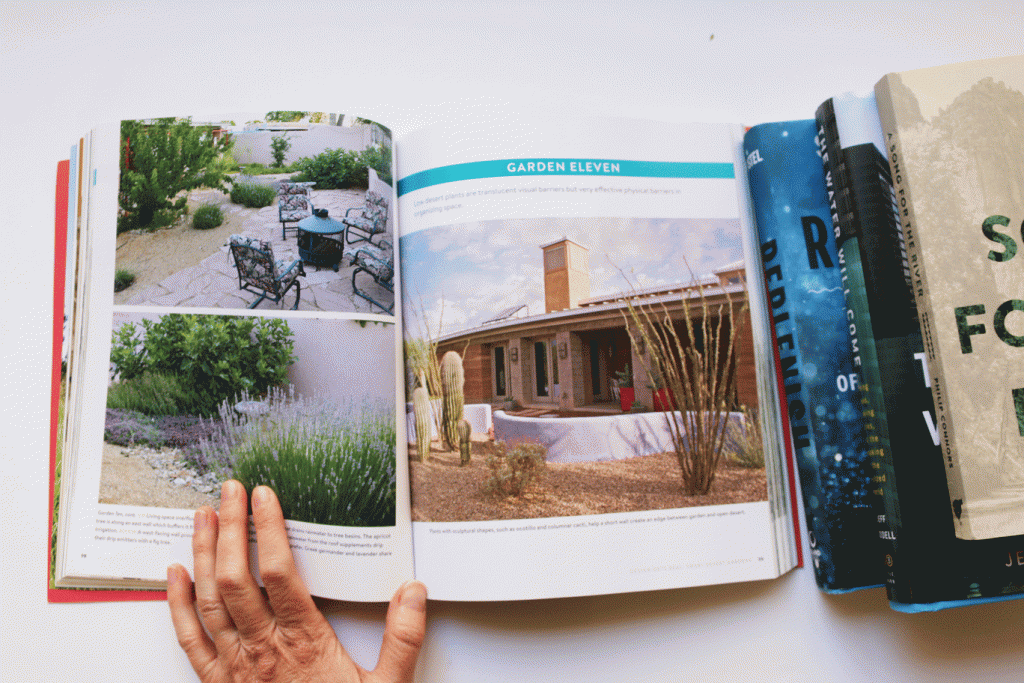
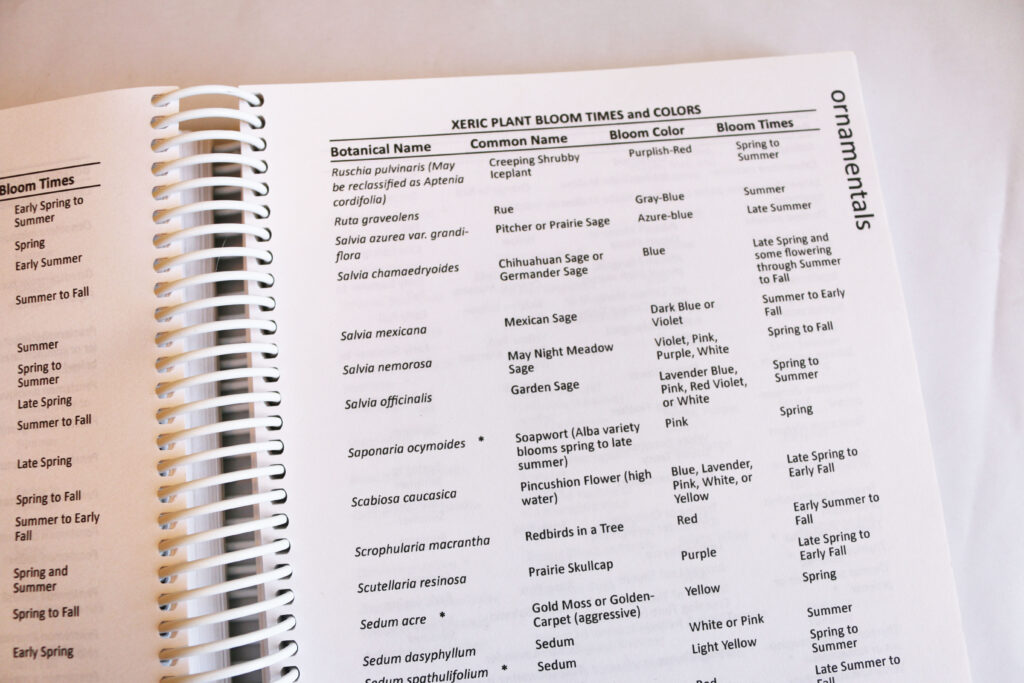
Favorite Garden Books:
A local favorite author, Judith Phillips has been writing garden books for decades. The book is Growing the Southwest Garden, Judith Phillips. “Plant selection and garden style are deeply influenced by where we are gardening. To successfully grow a range of beautiful ornamental plants, every gardener has to know the specifics of the region’s climate, soil, and geography.” This book introduces plant species that will thrive with our changing temperature patterns. The rise in temperatures here in Albuquerque are making it hard for some of the higher elevation plants to survive and thrive. The plants in this book are chosen to last during those irregular years of abnormal temperatures.
Down to Earth, A Gardeners Guide for the Albuquerque Area, Albuquerque Area Extension Master Gardeners. This local favorite is not exactly a quick guide. Quite the opposite, this book dives right into all the details of gardening, from pest management to pruning. If you like to know everything there is to know about growing tomatoes in Albuquerque then this book is for you. It is an extremely thorough guide for growing many of the traditional plants and vegetables you grew up with.
Tree Watering System:
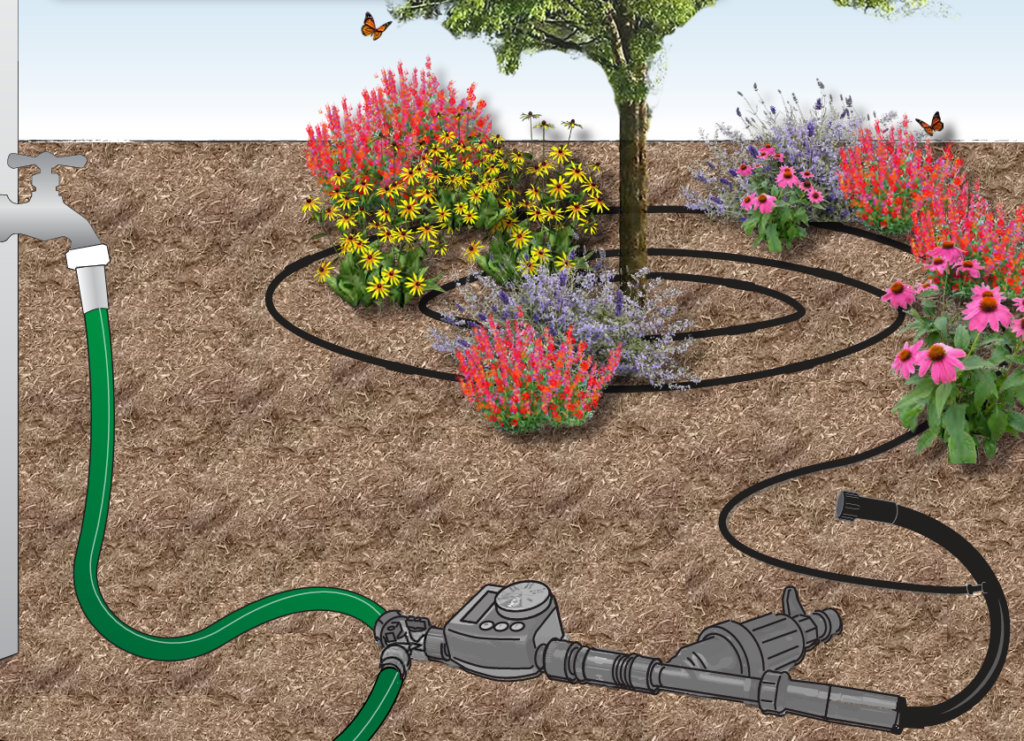
This drip irrigation system attaches to your hose, allowing you to easily water your established trees. The tree gets watered efficiently and directly where the roots need it. The systems comes with 1gph emitters that are spaced every twelve inches. This allows the water to drip consistently and efficiently directly into the ground, deeply soaking the roots of the tree.
Once you have your system installed, a good rule of thumb is to set up a 45-minute run time. To know how often to water, follow the Seasonal Watering Recommendations .
Hose Irrigation Timer:
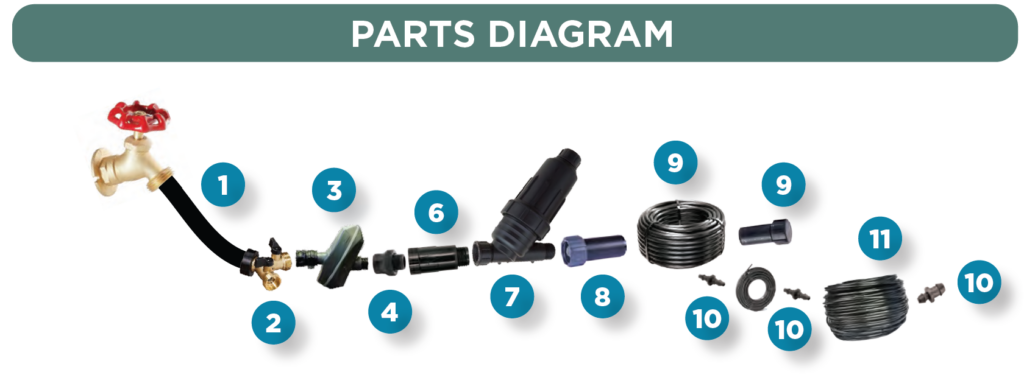
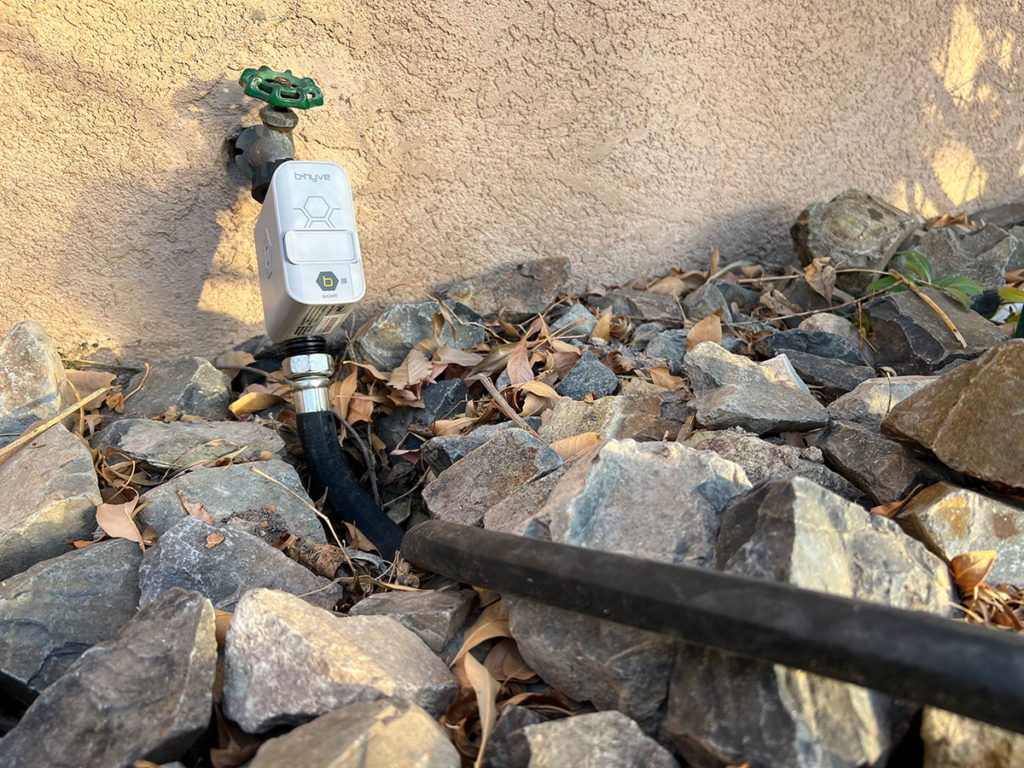
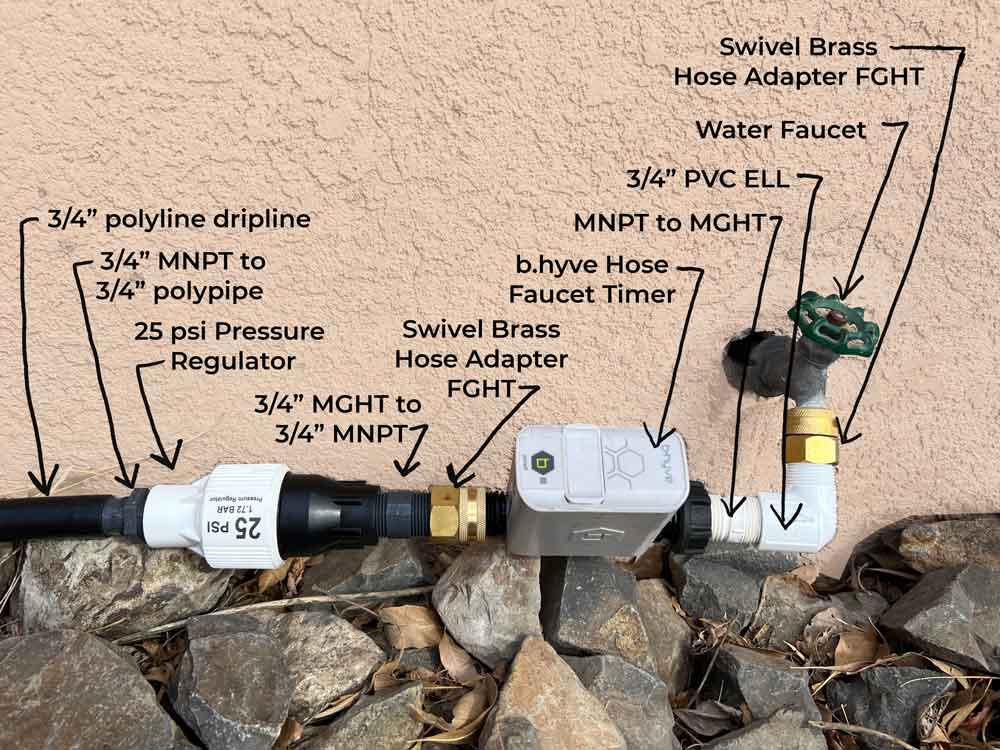
A timer that attaches to your hose is great for homeowners who aren’t ready to install an in-ground irrigation system and need an inexpensive (under $100) way to water. The hose timer attaches to your house near the spigot. You can then attach a simple polyline irrigation system to it or the tree watering system listed below. You could set up an above or below ground irrigation Polypipe with drip emitters to water all your plants. The irrigation dripline can stay in the ground year-round and be easily connected to an automatic in-ground irrigation system in the future.
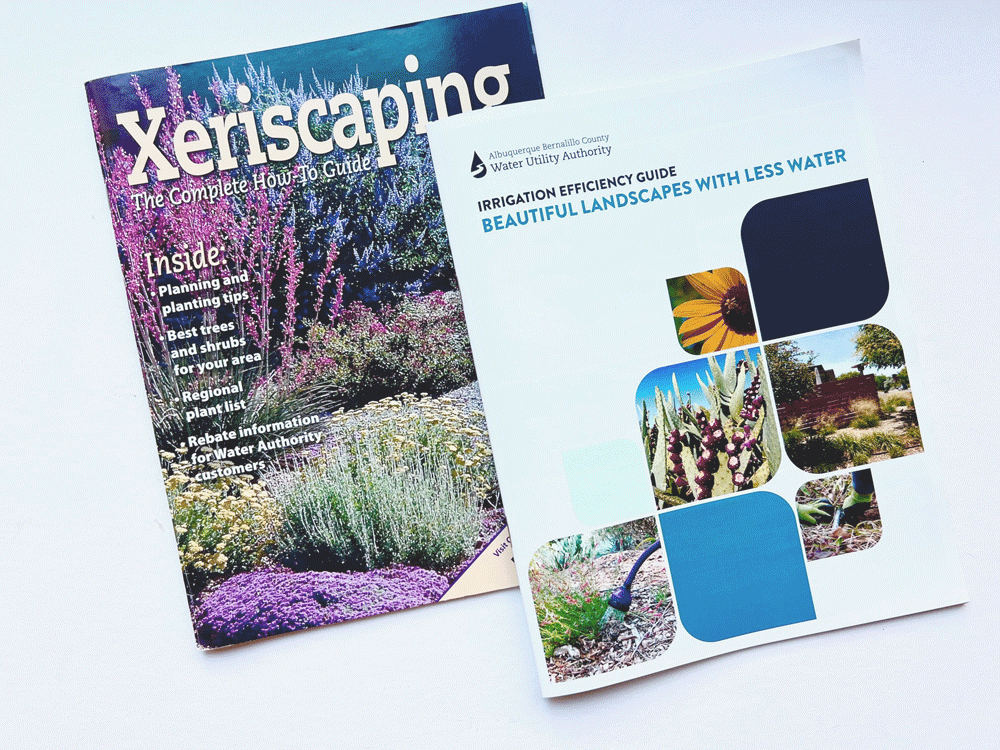
Xeriscape Guide and Irrigation Efficiency Guide: Check out the Albuquerque Bernalillo County Water Utility Authority’s FREE xeriscape and irrigation guides that you can download for your stocking stuffers.
Author: Jill Brown, ASLA, is a Landscape Architect and owner of My Landscape Coach in Albuquerque. Have a question about the article? [email protected]
Description: A New Mexico native tree that grows fast, sometimes up to 4 feet a year. This deciduous tree produces brilliant red-maroon fall color. The leaves then fade to a chocolate brown color and hang onto their branches throughout the winter.
Like all oaks, this tree has deep roots so it can be planted closer to structures than surface-rooted trees like cottonwoods and mulberries. The Chisos red oak can be very long-lived; plant it wisely so generations can enjoy its shade and beauty. In the wild, it is often found on drier hillsides growing in limestone soils. Chisos red oak does best in well-drained soils but also tolerates clay soils with low to regular water. It is both a great shade and specimen tree. Water deeply but infrequently, more in extreme heat. Drought tolerant once established.
The Water Authority’s xeriscape rebate program, and predecessor programs run by the city of Albuquerque, have seen about 12 million square feet of turf replaced over the past 25 or so years. Since 2009, the top five years for program participation were:
This has contributed to a reduction in daily per capita water consumption from 250+ gallons in the mid-1990s to about 124 today. Replacement of turf with desert-friendly landscapes has always been a key component of Albuquerque’s multidecade conservation drive and of the Water Authority’s 100-year management plan, WATER 2120, which was adopted in 2016. Now, we’ve joined other Western water utilities in committing to pursue removal of 30% of remaining “non-functional” turf in our respective service areas over the next several years. That does NOT mean the wholesale removal of cherished green spaces in the name of saving water. Parks, ballfields and children’s backyard play areas are great places to have grass. Parking lots, median strips and emerald-green front yards are often a different story — and their owners may be able to save water and money by voluntarily exploring xeric alternatives.
To qualify for rebates, those alternatives must include landscape plans that are rich in climate appropriate trees, shrubs and plants. The idea isn’t to just pave over a patch of grass, replace it with gravel or let it revert to unsightly weeds. Plants and trees aren’t just pretty to look at: They create shade that reduces the “heat sink” effect — and the demand for water. So, yes, we want to “get off the lawn.” Doing so will help us meet important conservation goals. But we can do it in a way that preserves the benefits that functional turf and green spaces can offer.
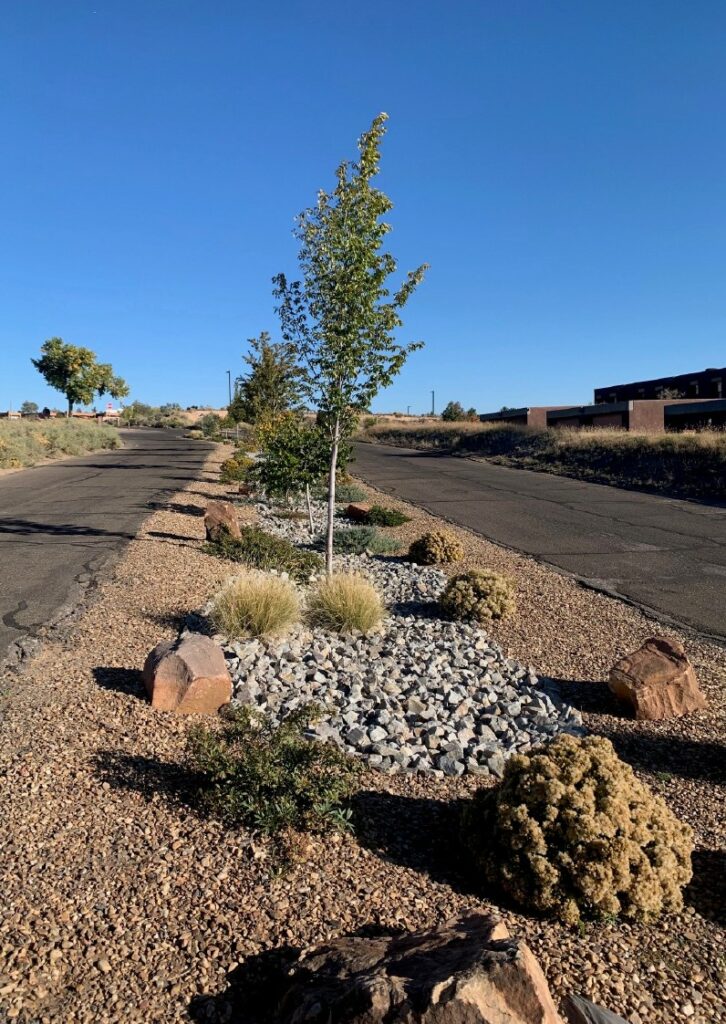
Check out some of our recent projects:
Paradise Hills Golf Course
Project timeline: 2011-2022
Total landscape transformation: 1.4 million sq. ft.
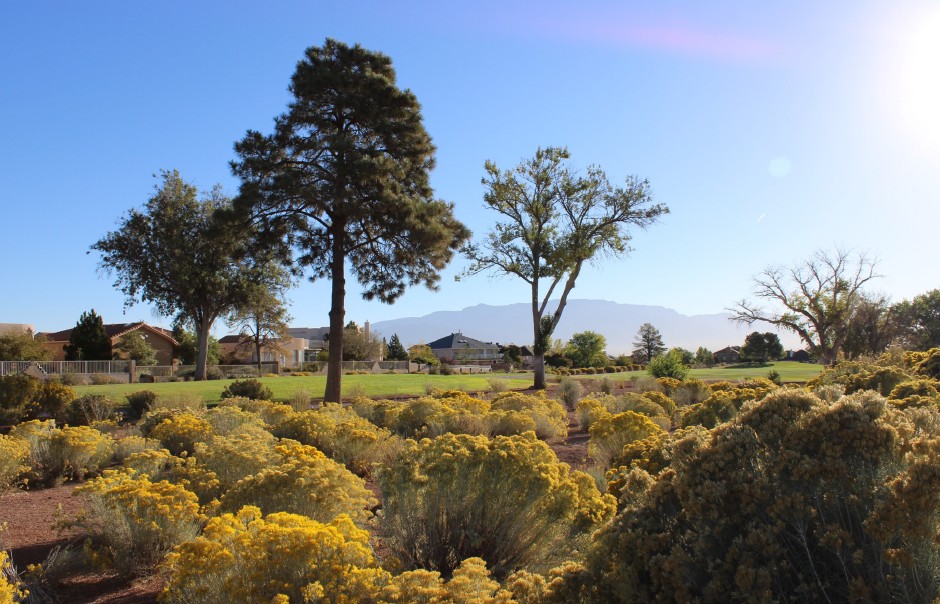
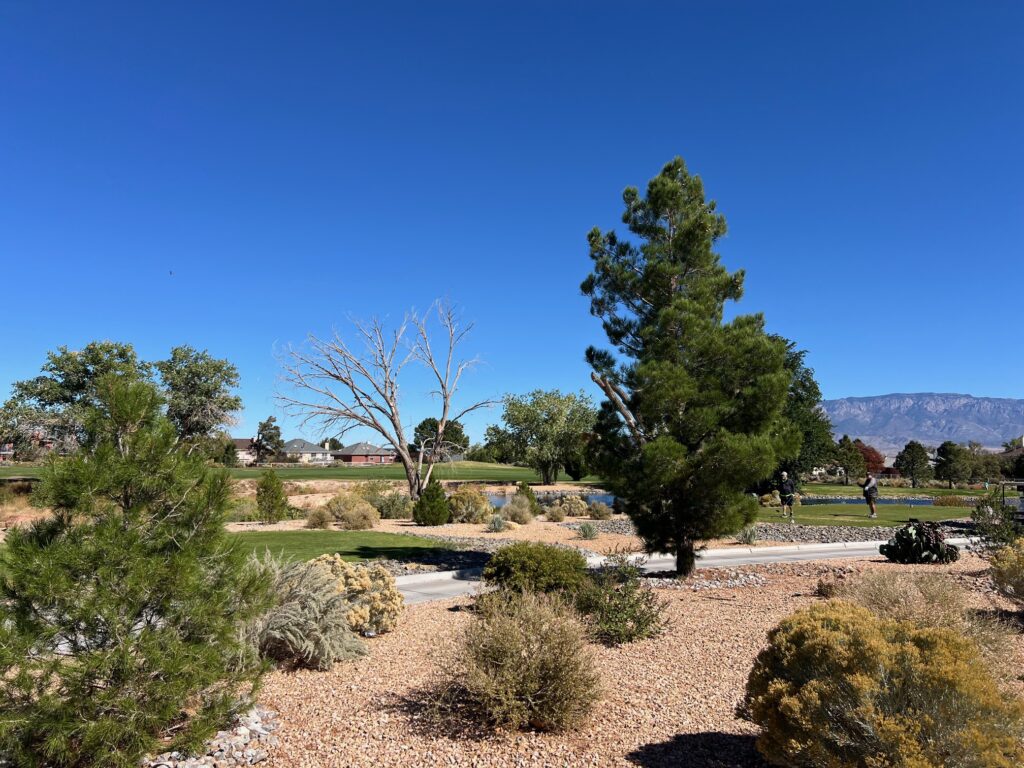
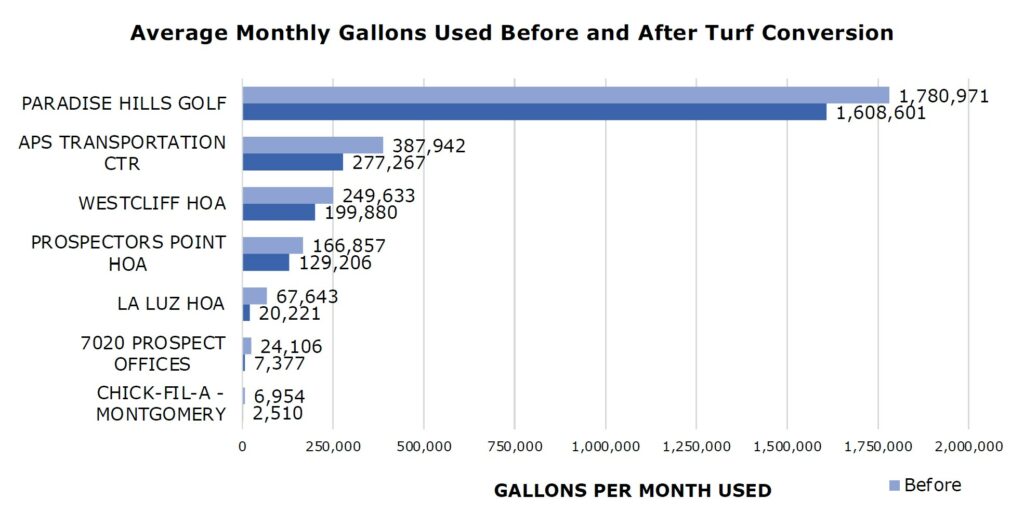
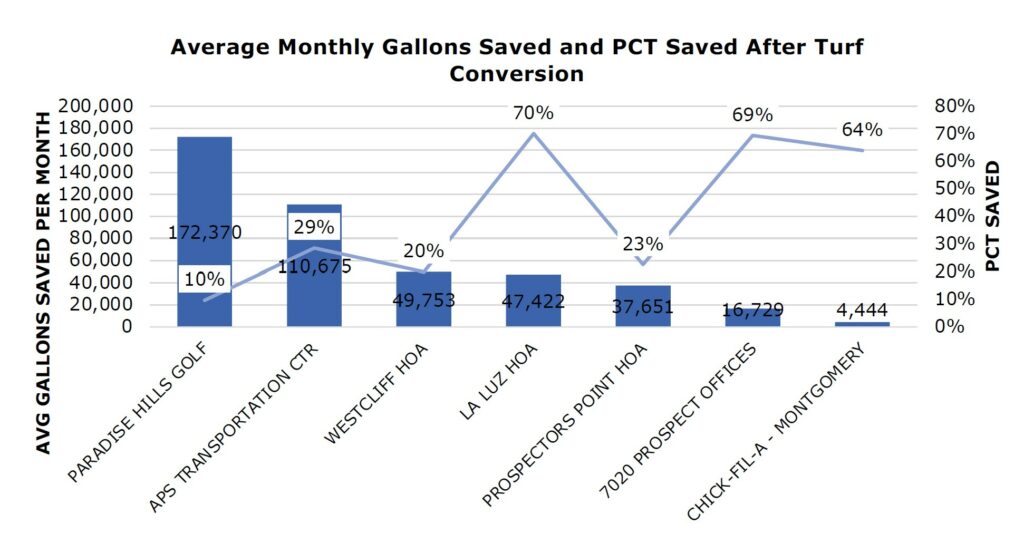
Paradise Hills Golf Course (formerly known as Desert Greens Golf Course), a private country club on Albuquerque’s northwest side, had been served since its construction in 1962 by a private water utility charging artificially low, subsidized rates. When the Water Authority acquired the private utility in 2009 and began charging ordinance-based rates, the course’s operating costs increased significantly. With its business model no longer tenable, Desert Greens was in danger of shutting down. Fortunately, help arrived in the form of the Water Authority’s xeriscape rebate program, which Desert Greens used to finance the removal of turf from non-playable irrigated areas. By 2021, the golf course had transformed nearly 1.4 million square feet of turf into xeric landscapes, conserved more than 350 million gallons of water, and — key to the course’s survival — saved over $2 million in water bills. The end result is an aesthetically pleasing, targeted-play course that patrons love — and which can continue to operate at a profit.
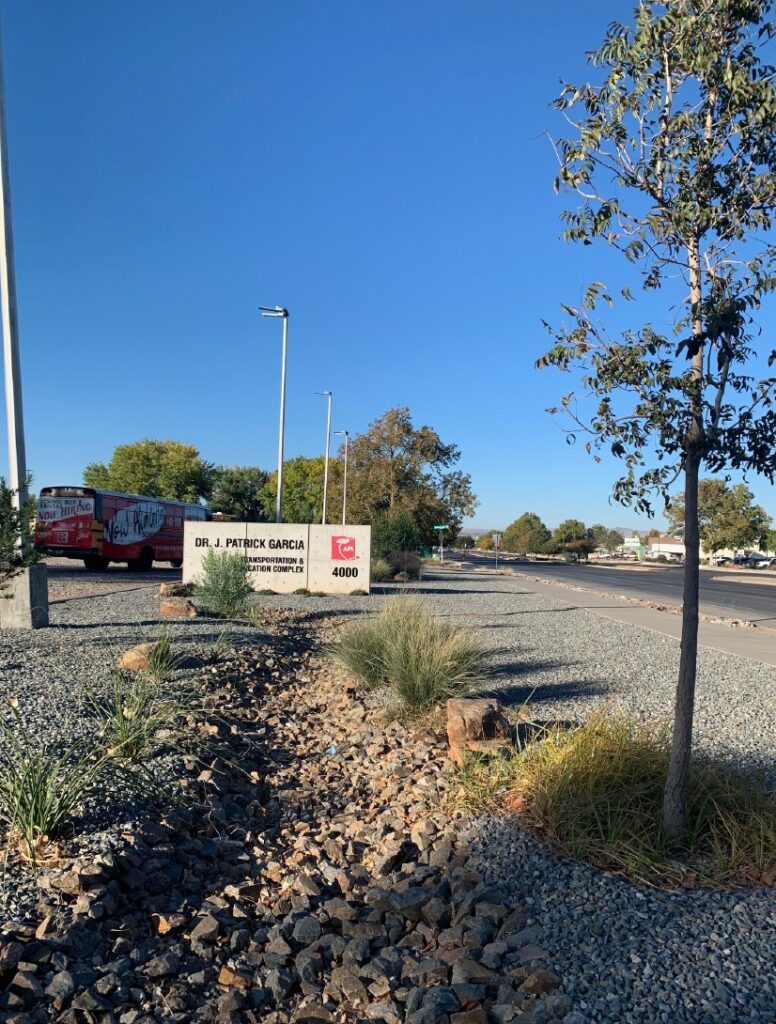
Dr. J. Patrick Garcia (APS) Transportation/Education Complex
Plant types: Lacebark elm, escarpment live oak, frontier elm, Oklahoma redbud, crape myrtle, turpentine bush, blue grama, Chinese pistache, catmint
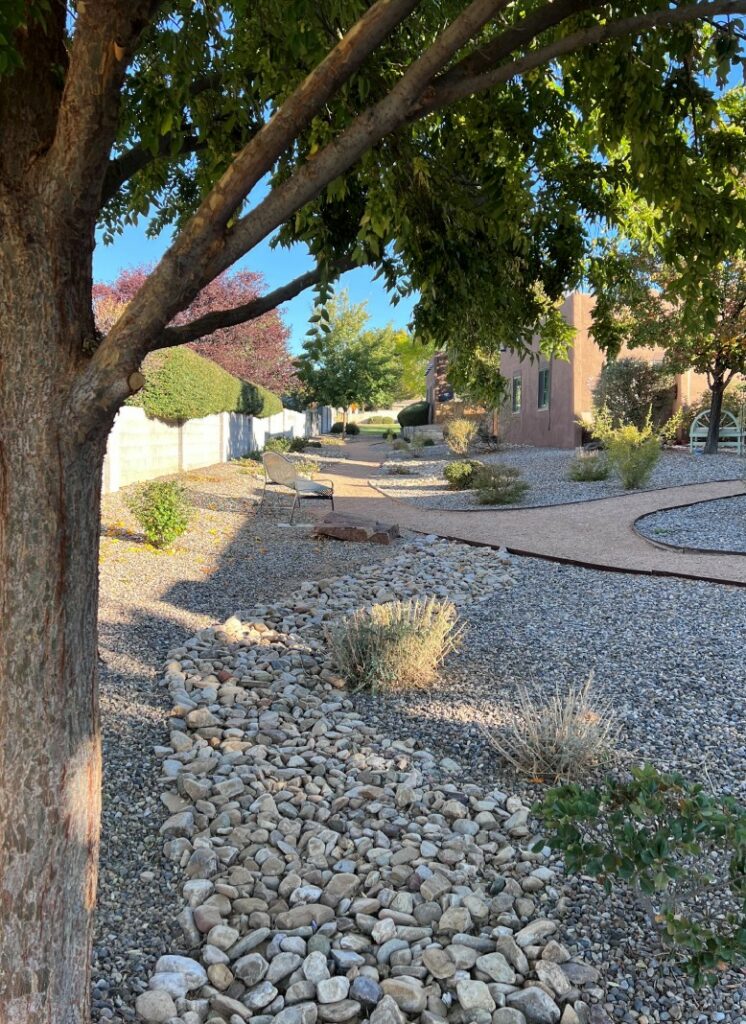
Commercial Office Park
Project timeline: 2023
Total landscape transformation:1,540 sq. ft.
Water savings to date: 83,645 gallons
Rebate amount: $3,080
Total plants: 134
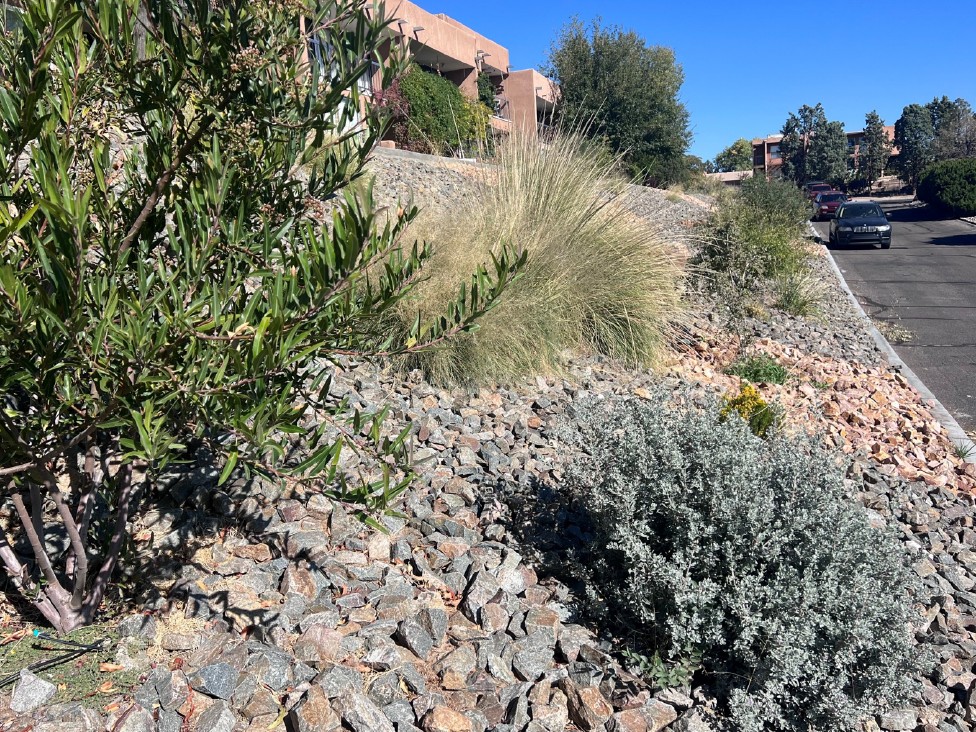
Plant types: Creeping germander, dwarf plumbago, golden columbine, turpentine bush, little bluestem, English lavender, ornamental pear, London plane tree
Just as we take shelter when the weather turns colder, so do your plants. This time of year, plants store most of their nutrients in their roots and find shelter in the ground. We can support this transition to help plants thrive during the entire winter season.
Also, it is time to give your irrigation system a rest. To avoid damage to your irrigation system we recommend setting it to the OFF position. Your next step will be to wait for a warm day to water deeply one more time and then take steps to winterize your irrigation system.
Follow this advice to ensure landscape success:
Turn off your irrigation system.
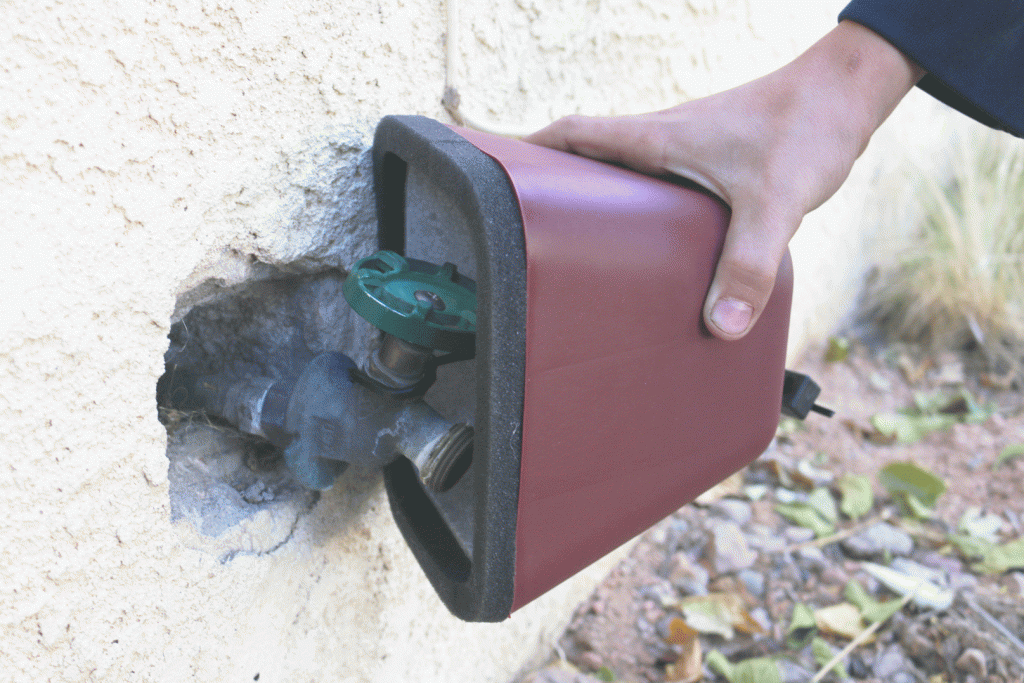
If your irrigation system is attached to an outdoor spigot, you should disconnect it and cover your hose bib using a faucet cover.
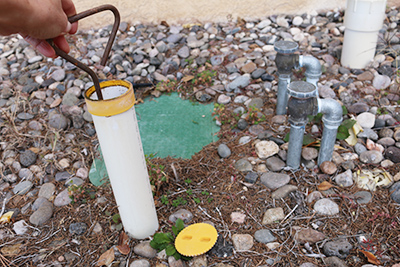
If you have a below-ground irrigation system, locate your shut-off valve (often hidden in a 3” PVC pipe; often with a white or yellow cap, as shown in the photo). Turn it to the right to shut it off. Be careful when turning so you do not break the valve.
Drain the water from all pipes, valves, and sprinkler heads. Learn more about protecting your irrigation system here.
It’s important to make sure your landscape stays healthy in the winter during times of drought. If we don’t get snow or rain, find a warm day once a month and deeply water your plants. After watering, set your system to the OFF position again.
How much should I water this November?
1-2 more times this month
Skip watering if it rains or snows
Give individual trees 100 gallons to a depth of 24 inches at least one time this month
Water turf for 7-10 minutes, to a depth of ½ inch”
Your outdoor water usage should be 80% less than in the summer season
How can I keep my landscape healthy this winter?
Turf
Mow your lawn to 2-2.5 inches tall. Grass left too long over the winter can develop brown patches.
Aerate next time it is warm. Aerating your lawn will give it a chance to breathe before the grass goes completely dormant. This also provides relief from any compaction that has built up during the warmer months.
Rake or blow off the leaves that have fallen on your lawn. Leaves that are left on the lawn could become moldy, which invites disease.
Top dress with compost. Compost acts as a fertilizer, adds moisture retention capacity and improves overall turf health.
Trees
Apply a thin layer of compost, about ½ inch, to provide nutrients.
Add mulch away from the trunk base, about 2 inches thick. Mulch helps maintain your ground at a constant temperature and helps retain moisture.
Water your trees thoroughly once a month, if needed, to support winter hardiness. Withholding water will not help the tree acclimate to winter.
Shrubs
Leave your leaves. Every autumn, leaves fall to the ground, sheltering the soil and beneficial organisms, returning organic matter back to the ground, and perpetuating the nutrient cycling essential for good plant health. This year, think about leaving those leaves in your garden by tucking them in around your shrubs. When we allow leaves to follow their natural life cycle, we can enjoy a colorful tapestry on our landscape as well as all the benefits provided by an organic mulch.
How do I avoid irrigation and other plumbing system damage? To avoid costly repairs, we recommend that homeowners take the following steps:
Find the master shutoff valve The master shutoff valve turns off the water to the entire house. If you have one, learn its location. This could be critical if a pipe bursts. Need an emergency turn-off? Call 842-WATR and select Option 1.
Insulate pipes and faucets in unheated areas Wrap exposed water pipes in unheated areas (such as a garage, basement, crawl space or space beneath your mobile home) with insulation or heat tape. Be sure to follow the manufacturer’s instructions carefully.
Seal off access doors, air vents and cracks Winter winds whistling through overlooked openings can quickly freeze exposed water pipes. DO NOT plug air vents used by your furnace or water heater.