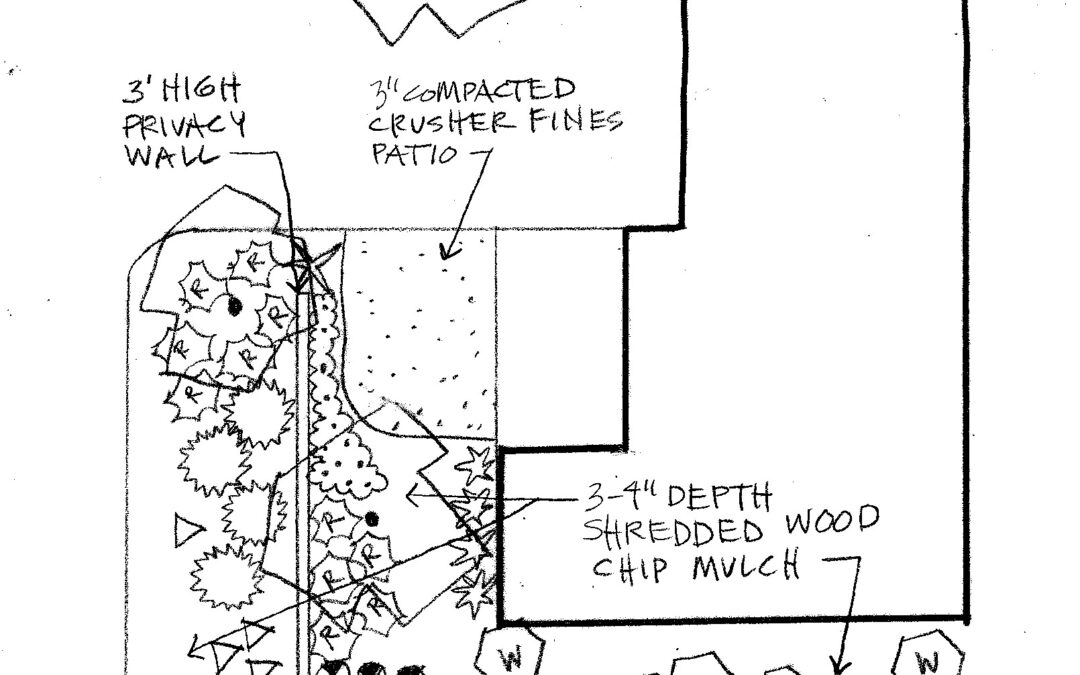
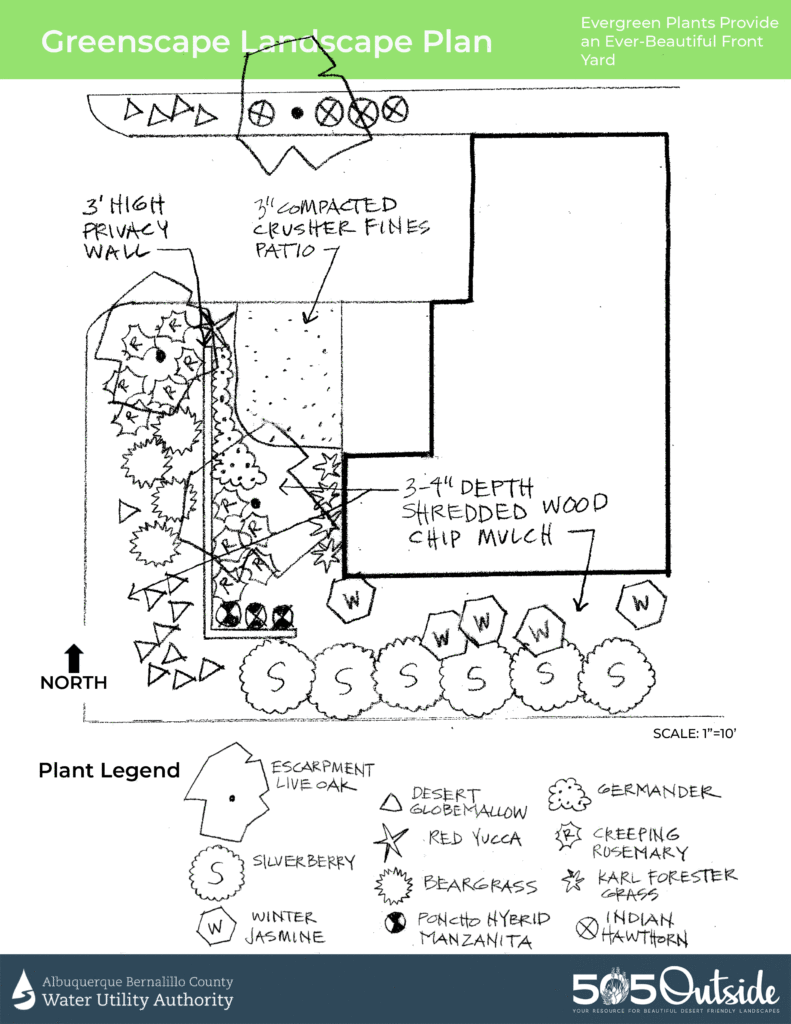
Creating a landscape plan is a complicated endeavor. Luckily for home gardeners, landscape architects specialize in designing outdoor spaces. Today, we’re sharing a unique plan by New Mexico landscape designer David Cristiani to give you some inspiration and ideas for designing your own yard. We’ll be sharing three more landscape plans in future issues of 505Outside.
Green spaces and water conservation need not conflict, nor does an oasis require the use of high-water-use and high-maintenance turf grass at the exclusion of native plants and succulents. This typical front yard area contains mostly evergreen plantings and an inviting entry experience to welcome guest and owner alike, no matter the season. A low wall and climbing evergreen vines combine to provide additional screening and intimacy for sitting out on the front porch and also extend the architecture into the plantings. While designed for a smaller front area, the plantings can be increased in scale and number to fill a larger property.
The sculptural and leafy forms of an evergreen escarpment live oak grouping provide a canopy to the plantings below, which offer seasonal interest using native and adapted species. Native bear grass provides a soft yet bold texture, as do the spiky flower stalks of red hesperaloe, or red yucca. The loose forms of colorful desert globemallow provide masses of pink-toned flowers throughout much of the growing season. Germander and trailing rosemary generously fill in the ground surfaces with dark green color, fragrance and seasonal flowers. Durable materials prevail, while the plant spacing provides both screening from adjacent neighbors and ample room to access both sides of the home.
Learn more about specific types of gardening here:
Sometimes you need help to create your perfect desert friendly landscape. Many times, this involves hiring a landscape contractor. The Water Utility Authority is committed to helping its customers. Below we share some tips to help you choose a landscape contractor.
It’s important to start with a to-scale landscape design plan. This may be done by a professional landscape architect or a landscape designer. Or perhaps you worked up your own design plan.
Hiring a landscape contractor requires research similar to what you would do when hiring any home repair contractor. It’s important to consider the following:
Is the contractor able to secure bonding and are they insured?
What are the contractor’s credentials (formal training, references, professional certification)?
Does the contractor belong to a local or national trade association and abide by its standards?
Does the contractor have a Water Smart Contractor listing through the Albuquerque Bernalillo County Water Utility Authority?
The contractor should provide references for projects similar in size, scope and design so you can talk to previous customers about their experiences.
The contractor should share photographs of other projects you can check out.
Estimate/Bid and Contract
The contractor should provide you with a detailed, line-item estimate for the work. This will include the price of the materials, labor, taxes and permit costs if applicable. A detailed estimate will help you accurately compare pricing and services.
A signed estimate may act as the official contract, a legal requirement that will protect both you and the contractor if anything goes wrong.
What is the payment schedule? Most contractors will ask for anywhere from 30% to 50% up front so they can purchase materials. They should provide you with a general timeline or payment schedule.
How long will the construction take, and what does the sequencing/schedule look like?
How does the contractor manage additional work that may be added in the middle of the project and is not on the plan?
During and After Construction
Who will be the contractor’s point person, someone you can go to with questions? How will they communicate with you and how often?
How will the contractor handle variabilities that come up during construction?
What happens if there is a delay once construction has started?
The contractor should show you how to maintain the landscape after it is built and how to work the elements installed, such as the irrigation controller.
What are the warranties for the project? What do they cover and exclude?
Does the contractor provide troubleshooting support during the first year after installation?
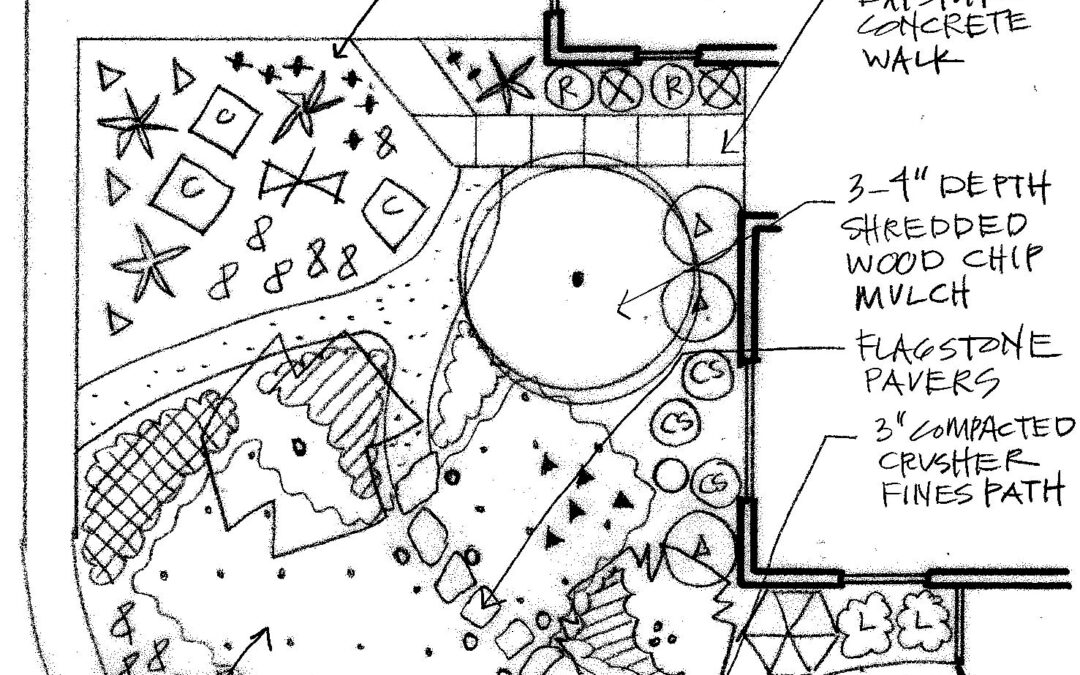
A lot goes into designing a landscape; hence, there’s an entire profession called landscape architecture devoted to designing outdoor spaces. We won’t be able to make you a landscape architect today, but we’re sharing a unique landscape plan designed by New Mexico landscape designer Judith Phillips to get you inspired with ideas for designing your own yard. We’ll be sharing five more landscape plans in future issues of 505Outside.
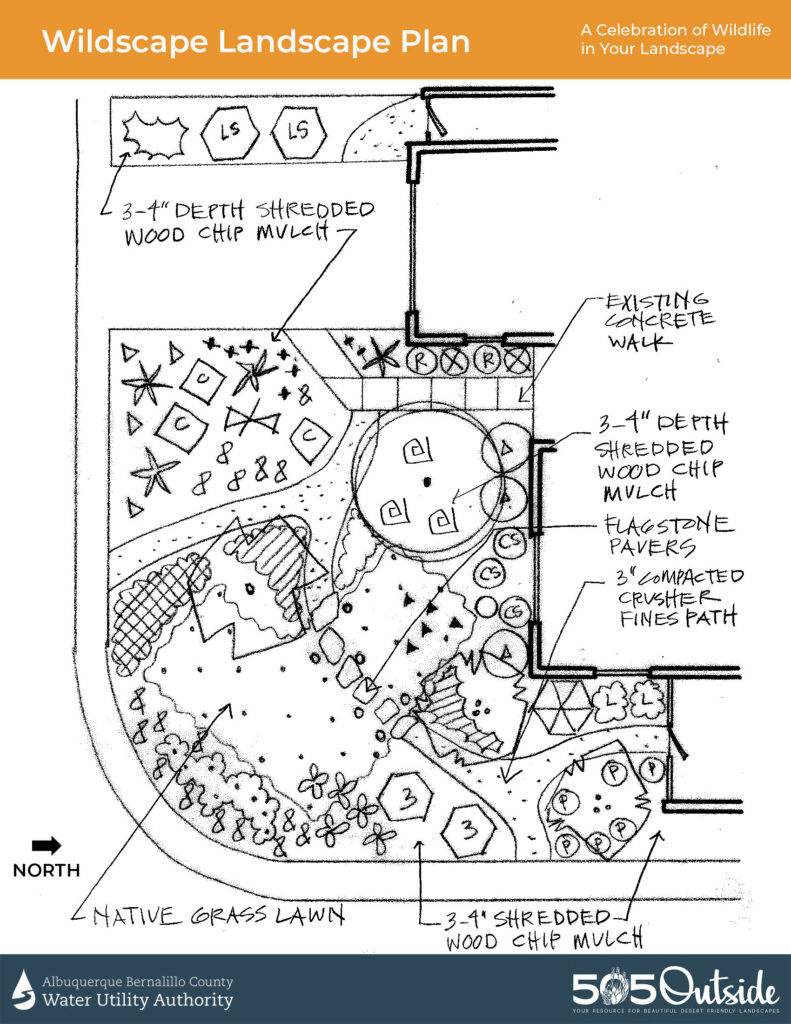
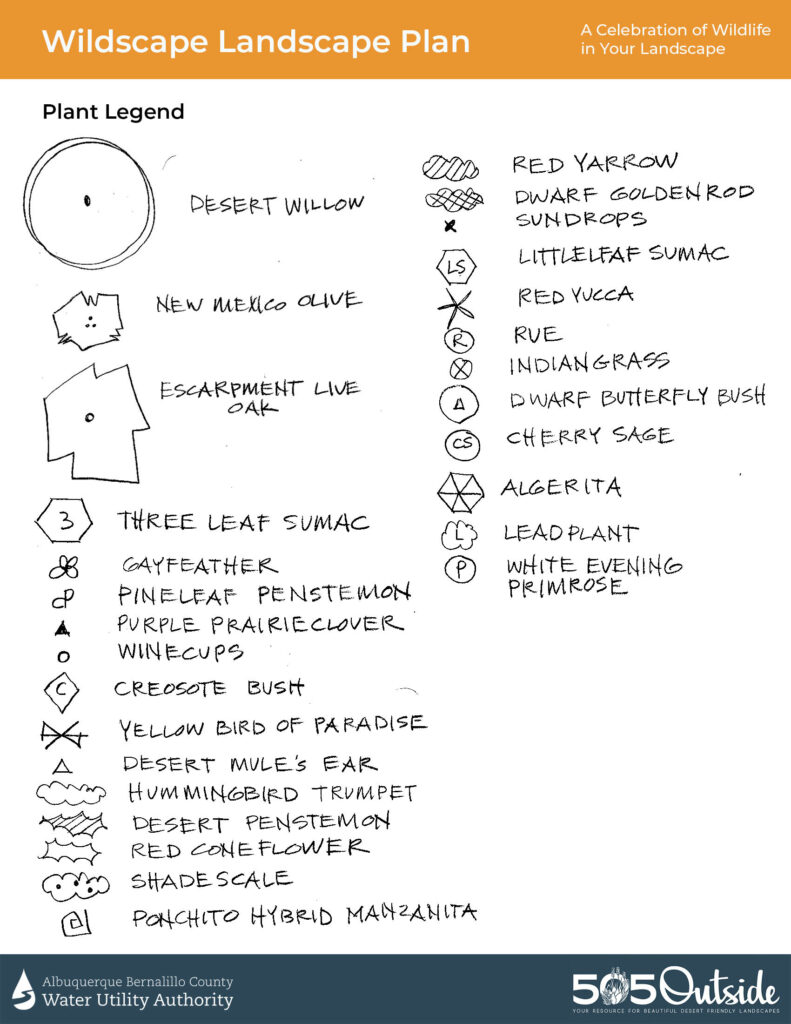
Plant for wildlife and you will host a never-ending garden party. Wildscapes should have tiers of canopy to provide shelter and food for a wide variety of wildlife, including birds, hummingbirds, bees and butterflies. Tall trees provide shade and shelter. Dense thickets of middle-height shrubs provide spaces for roosting and nesting and also give the landscape a sense of enclosure. Open areas with low-growing groundcovers provide areas for nesting and foraging, and the colorful flowers and berries appeal to people as well as winged visitors. A mix of evergreen plants for cover, brilliant flowers for nectar and pollen, and fruits and seeds ripening through the seasons will keep your wildlife friends fat and happy. In this wildscape, the gayfeather, dwarf goldenrod, leadplant, yarrow, rue, grasses and dwarf butterfly bush are lures for butterflies. Hummingbirds are drawn to plants with nectar-rich tubular flowers, such as desert willow, penstemons, cherry sage, coral honeysuckle and red yucca. Local songbirds and quail will be attracted by New Mexico olive, sumacs, creosote bush, desert mule’s ear, coneflowers, shadscale, gayfeather and algerita.
Designed by Judith Phillips, author of Plants for Natural Gardens
Learn more about specific types of gardening here:
A lot goes into designing a landscape, hence there’s an entire profession called landscape architecture devoted to designing outdoor spaces. We won’t be able to make you a landscape architect today, but we’re sharing a unique landscape plan designed by landscape architects to get you inspired with ideas for designing your own yard. We’ll be sharing five more landscape plans in future issues of the 505Outside.
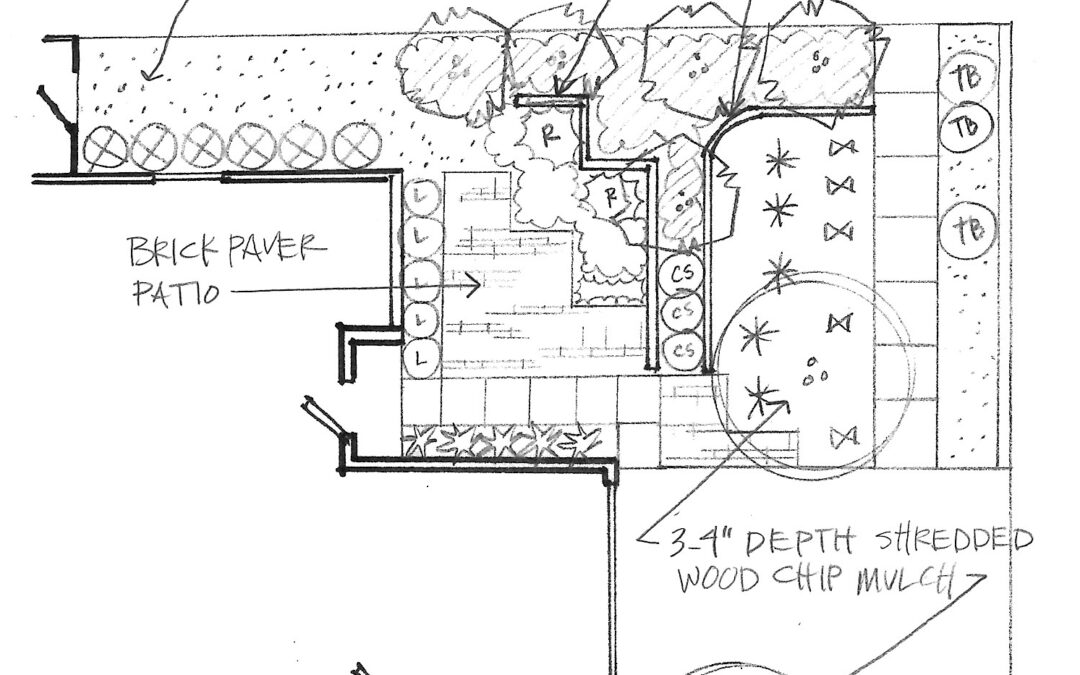
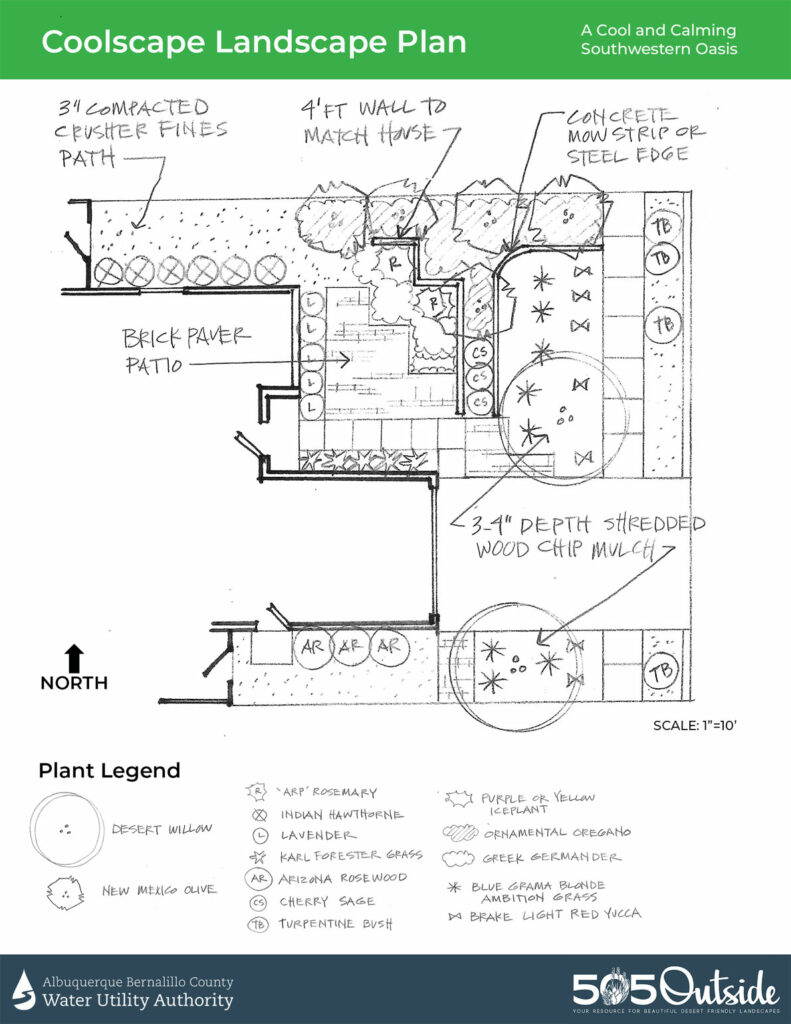
This Coolscape Landscape Plan is designed to provide an attractive streetside landscape as well as a comfortable, private area that is usable even in the winter. The privacy is achieved with a low wall (which should match or complement the house) and a grove of small trees, such as New Mexico olives or chaste trees. The placement of the trees effectively adds to the privacy and provides a backdrop along the edge of the brick patio. All the trees create lots of shade, adding to the coolness of the yard.
The courtyard patio was placed to provide some sun even on an east exposure. Beneath the trees, a groundcover of ornamental oregano grows in the sunnier spots and Kinnikinnick, in those most shady. For the best use of rainwater, the brick patio should be slanted to drain away from the house and into the surrounding planting beds. The edge of the patio on the north side of the yard ends in a bed of fine crushed gravel to create a path to the rear yard. Plants that do best on the cold north exposure of homes, such as Karl Forester ornamental grass and Indian hawthorn, are used to cope with the lack of sun, which in turn makes them more drought tolerant. Likewise, Arizona rosewood is used along the south exposure to capture as much warmth and sun as possible. Lastly, an ornamental clump buffalo grass in combination with a smaller specimen of the red yucca called Brake Light is planted along the front easternmost portion of the yard where it will be the most drought tolerant.
Learn more about specific types of gardening here:
Author: George Radnovich, FASLA Owner of Sites Southwest orchestrates an elegant, simple mixture of ornamental plants and features for north-facing xeriscapes. Have a question about the article? AskAnExpert@abcwua.org
It’s been a rough few months in the 505. We’re having a challenging gardening season, to say the least. Dry. Hot. Intense. The unraveling of our climate has been on full display.
Whether you’re choosing more adaptive plants and creating habitat or beginning your gardening journey, no doubt you’ve lost plants this summer — or worried about it. I’ve been calling it the Summer of Feeling Like a Not So Great Gardener.
Just to put this in perspective, I’ve been gardening for over 30 years and I’ve struggled and learned a lot this summer. Learning to steward land in a way that’s in alignment with our changing climate is not easy. But it’s crucial.
In the midst of these challenges, you might be experiencing more emotions than you’re used to — anxiety, for example? Frustration, perhaps. Confusion about where to start. Sadness at all the loss and devastation. Feeling alone. Lack of confidence. Overwhelm. Anger. Dread.
So, what’s a gardener to do? It’s easy to think our emotions are totally separate from the scorching heat. We’re used to compartmentalizing — experiencing emotions and deep spiritual questions in one part of our life and tackling complex external issues, like choosing climate-ready trees to plant, in another part of our life. No matter how well we’re dealing with these emotions, they’re bound to creep into our external gardening. What if, instead of shutting ourselves down in order to accomplish the daunting task of adapting our urban forest to the changes before us, we actually bring our emotional and spiritual selves into the garden? This is precisely the zone where deep and meaningful climate resilience awaits us — in the cultivation of our Home Gardens with our Inner Gardens. We grow an ability to weather storms, to adapt as things unravel — in both our inner and outer landscapes.
For example, let’s look at overwhelm, which is so common these days and to which we gardeners are not immune. We might be asking, “Am I doing enough? Am I making the right changes and adaptations? Which do I do first — spread mulch or create ways to passively harvest the rain?” We might be worrying about how much water we’re using or that we’re not using enough. There are so many decisions to make, and it’s easy to feel overwhelmed.
Here’s what I recommend for dealing with overwhelm:
Notice: Take a deep breath and recognize, “Ahh, this is overwhelm. That’s all it is. It’s happening in my inner garden, inside my heart.” That’s the first step. Pause. Notice it. Take a breath with it. The inner garden is what is happening in our consciousness — which primarily lives at the level of our heart (not our brain). There’s a lot of fertile ground to work with in there.
Just be: Next, take 15 minutes and just go outside and sit in the garden. Find a place to just be. Don’t plan or make any lists, just sit and breathe. Don’t skip this step, it’s the most important one. Listen to the sounds, feel the soil, notice the smells. What insights come through?
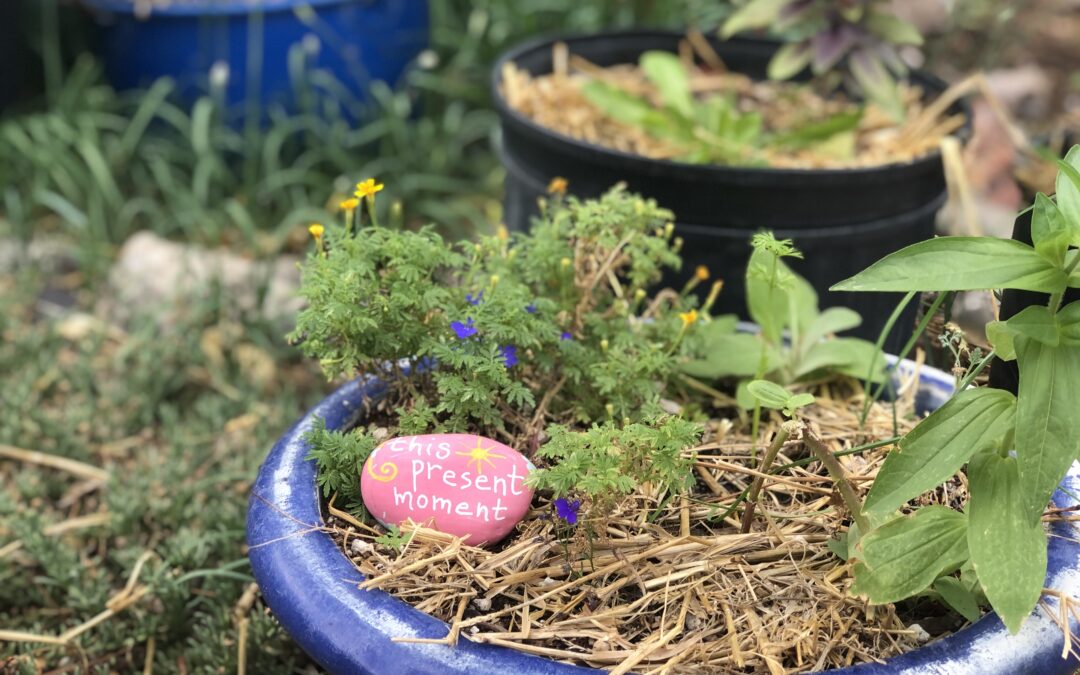
Create: Then, find a special place in the garden and create something to help remind you of what insights came up. It can be very simple, just something that speaks to you — a gathering of stones, an arrangement of leaves, a circle of flower petals. When we take the time to tend what’s growing within our inner garden, we have more inner space to effectively handle what’s happening in our outer garden. This is resilience.
Reconnect: The next time you’re doing a garden task — like weeding — briefly pause and reconnect with your inner garden in your heart. Set a simple intention to help shift the pattern of overwhelm, such as “This garden belongs to all who live here, human and non-human. May my activities today bring benefit to all the beings here.” And then carry on weeding, but with this intention.
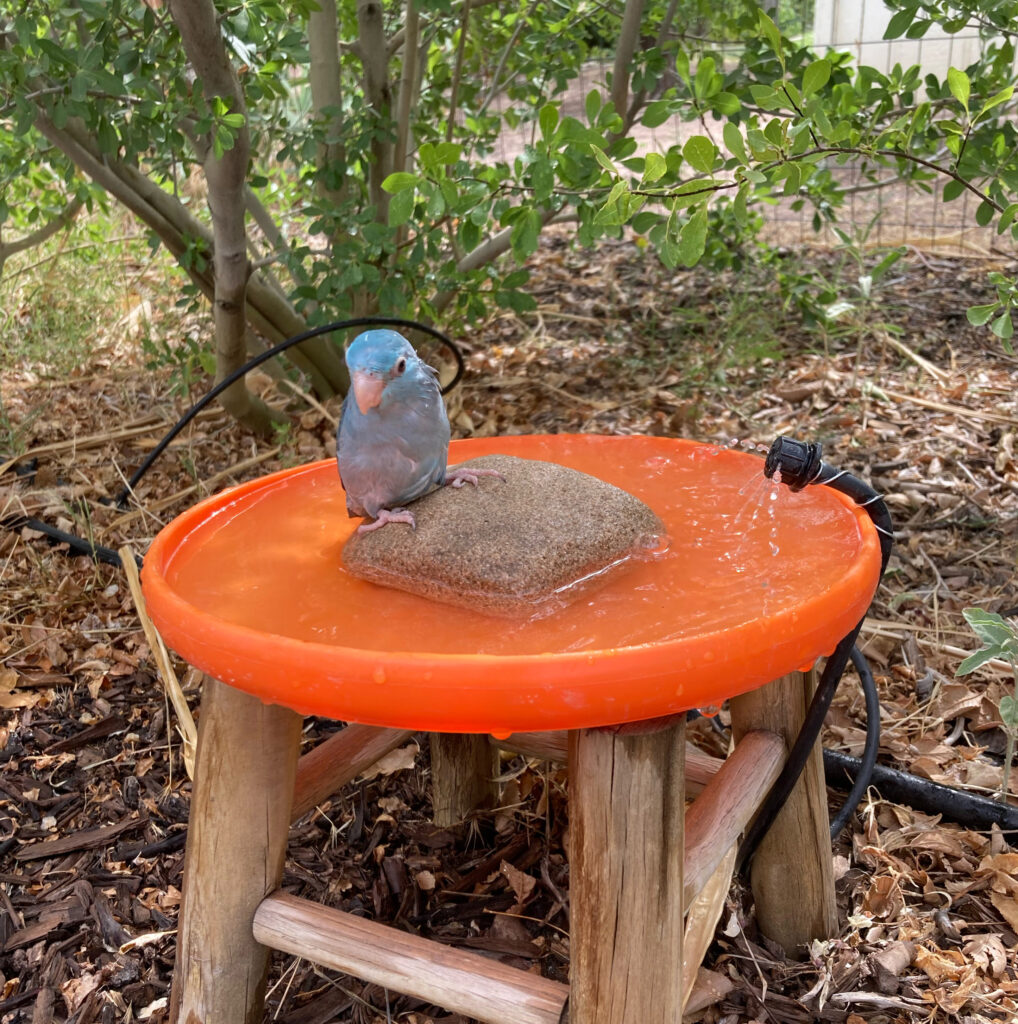
An intention like this can shift our state of mind away from overwhelm and into a place of gratitude and caring. From this place, we’ll make better gardening decisions. We might notice that the birds need more water and fill an old Frisbee with water and put a rock in it. We might start giving ourselves the space to be imperfect in our gardening. We might begin to see ourselves more as a caretaker of the space and less as the “owner” — ”our” garden becomes “the” garden.
The inner garden and the home garden have a profound and interdependent relationship. As we tend both of them together, we cultivate a deeper resilience in both gardens. This adaptation and flexibility then ripple from our own hearts out into the world, so in need of our tending and care.
Learn more about specific types of gardening here:
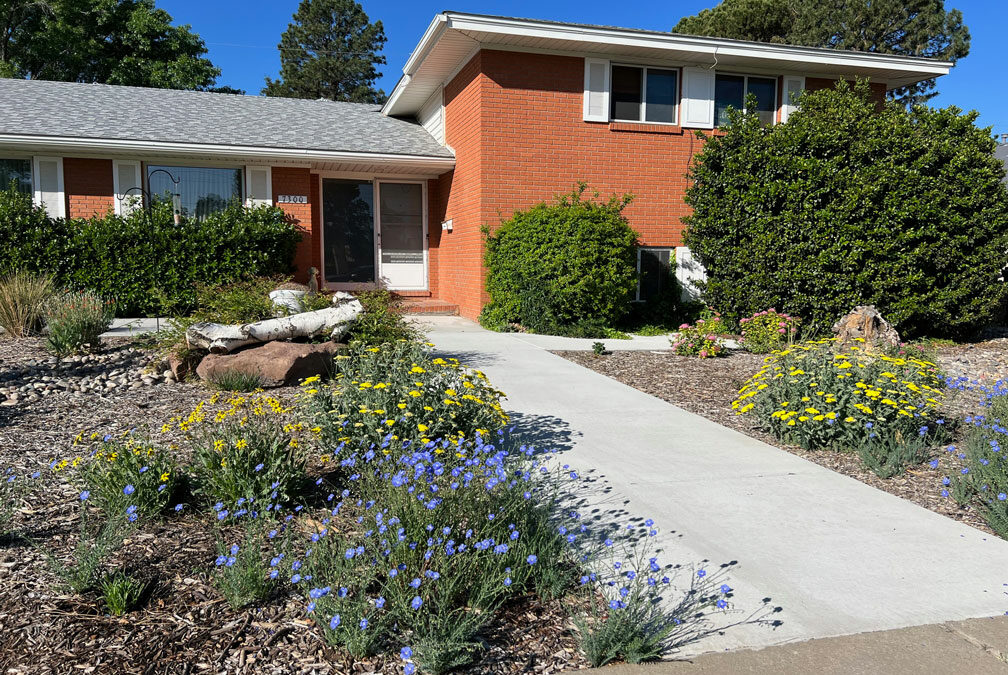
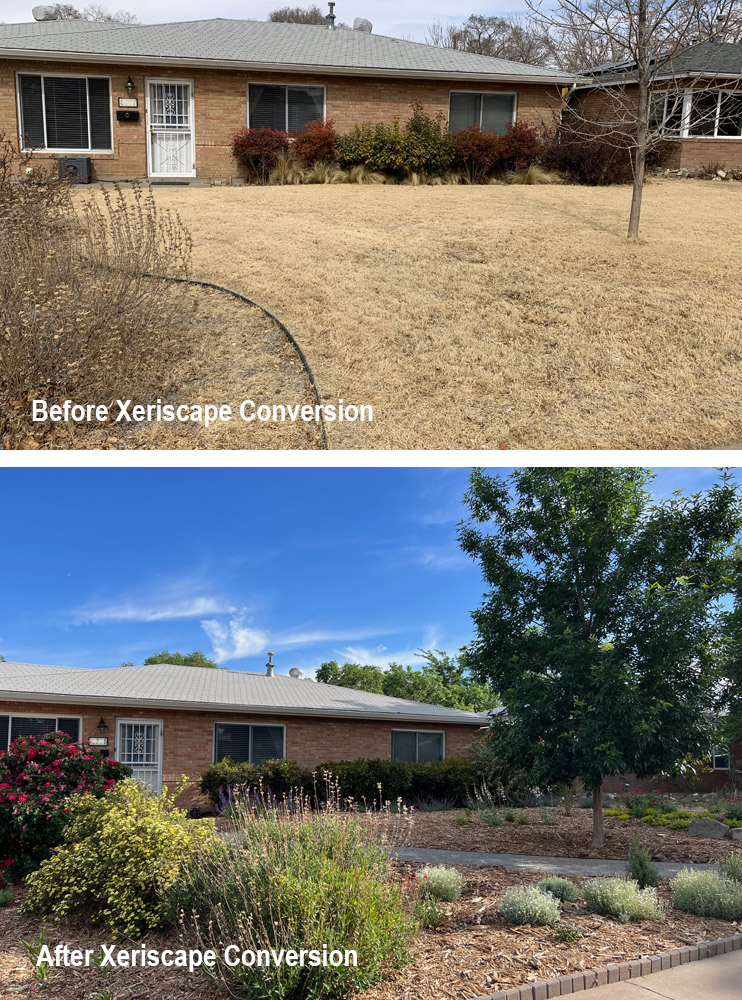
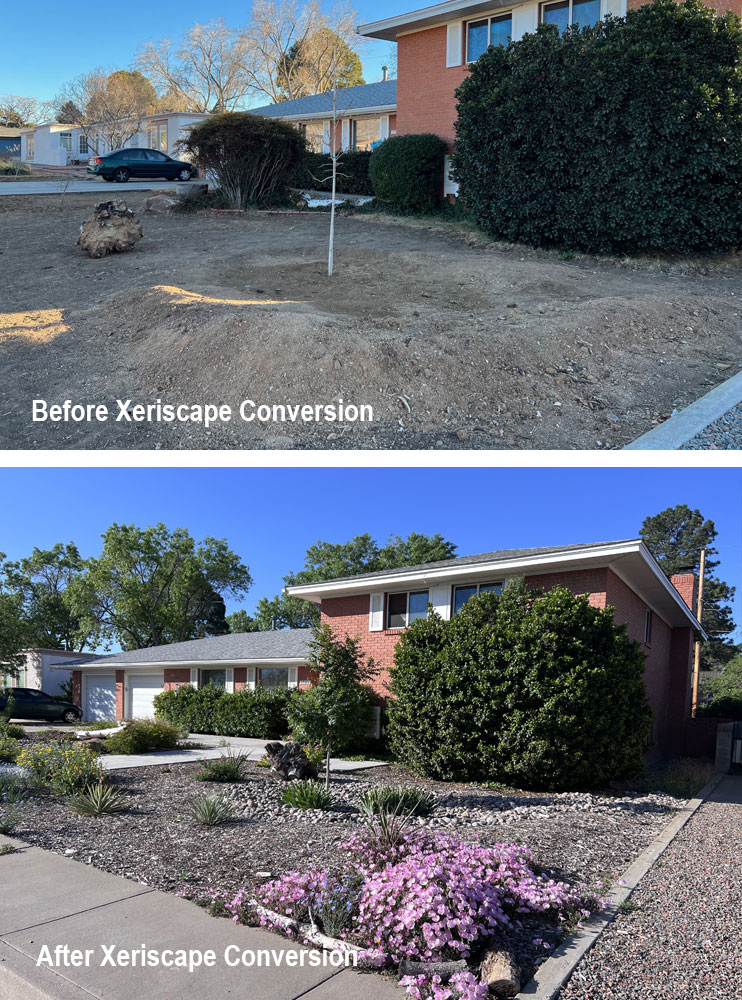
As Albuquerque area homeowners convert their high-water-use turf grass to desert friendly xeriscapes, many are opting for wood chip mulch rather than gravel or other aggregate, which can be hot and allow weeds to pop up.
The Water Authority checked in on two recent xeriscape conversion projects. These homeowners chose the DIY option for their front yards to save money. With all the resources available online, it has become easier to find how-to information on installing landscapes. The design, on the other hand, can be more difficult, and one of the homeowners chose to hire a professional. The other homeowner checked in with her mom who is an avid gardener, looked over resources from the library, and used online videos to pull together the design they wanted.
“I like the yard so much more now than the lawn we had before. The lawn would be pleasant about one or two days a month, and otherwise just felt like a chore and a needless expense. We’re lucky to live very close to a park, with a much nicer lawn than ours ever was, so when we want to play Frisbee or do ‘lawny’ things, we just walk the half a block to the park,” one homeowner said.
“While it took some labor to kill the grass, dig holes for the plants, install irrigation and lay down mulch, now when I look at my yard I no longer think, ‘Ugh, we need to weed/mow/fertilize/whatever.’ Now, I feel more joyful seeing all the different plants growing, and I’m always out there checking on my little plant friends.”
The other homeowner was motivated to create a landscape that “made more sense with the desert environment, used less water, helped provide habitat for pollinators and had a more natural look.”
Both homeowners chose to use wood chip mulch because it is extremely affordable and easy to install. They knew the advantages of mulch from their research and from seeing yards in their neighborhoods that use mulch. One of the added benefits, according to both homeowners, is attracting pollinators and other wildlife. “I see a lot more insects; I especially notice the bees,” one said. “There’s a family of roadrunners in our neighborhood, and they’re spending more time in our yard than they used to.”
Wood chip mulch is made up of chipped trees. This is a long-lasting mulch that decomposes slowly over bare dirt, retains moisture and is superior to other mediums at suppressing weeds. Most wood mulches available on the market are chipped flat and are consistent in shape and size. These are great in areas that receive foot traffic as they compact down to a firm surface.
Both homes installed a 3- to 4-inch layer of organic mulch over bare dirt. That depth is effective at stopping sunlight from reaching annual weed seeds, thereby preventing weed germination. The homeowners noted that mulch was easy to install and much less expensive than gravel, and they found that the mulch also was much cooler than the hot gravel.
“The main things we have noticed with the mulch are weed control and how well it retains water,” one homeowner said. “There are very few weeds that seem be able to germinate and make it through the mulch barrier. The weeds that do come up are actually very easy to remove by hand (my preferred method for weeding) because there is no artificial weed barrier or rocks to dig out.”
The advice both homeowners would like to pass along to other folks looking to DIY their yards is to give yourself plenty of time and tackle the project in small parts.
“I think the most important thing was breaking the project down into manageable tasks, and then figuring out the best order of those tasks. I also made some mistakes, so being adaptable to changes and adding tasks was key. I definitely needed the six-month extension in addition to the initial six-month period allowed; it took me about nine months total to complete the work.”
The other homeowner took almost a year to complete their project, but they now are basking in compliments from their neighbors.
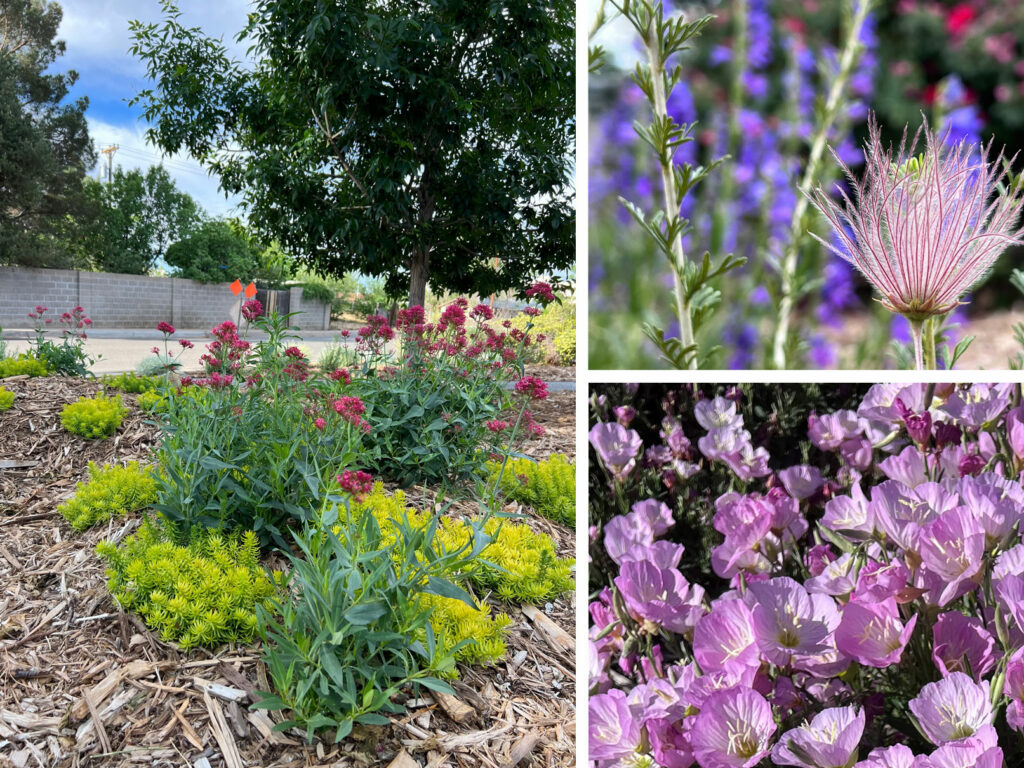
Sedum, Jupiters beard, Apache plume and Mexican primrose
Additional Facts on Mulches:
Wood chip mulch insulates plant roots from both heat and cold, reducing moisture loss from the soil by evaporation, feeding beneficial soil microorganisms that enhance plant growth and improving soil health. This makes the soil more sponge-like and better able to hold water. By installing 3-4 inches of mulch over bare dirt, weeds are reduced, the soil is enriched and new plants retain more moisture.
Another benefit of organic mulches is that they can visually accommodate a little bit of leaf litter, reducing the need for constant raking and clean-up. A thin top dressing of mulch added every two to three years keeps the landscape looking fresh and replaces the material that has broken down to sustain the soil. Organic mulches are lightweight, making them easy to transport in a wheelbarrow and spread with a rake.
Mulches are available in bags from most local garden centers (avoid the dyed ones as the colors will fade) and in bulk from several retailers in the Albuquerque area. When you buy from local bulk retailers, you are supporting the recycling of local organic materials that may otherwise end up in a landfill and contribute to greenhouse gas emissions. Buying bulk also means less plastic! Mulch is sometimes available at no cost from local tree trimming companies. In addition, Bernalillo County offers free mulch to residents who load it themselves at the East Mountain Transfer Station. County staff can load the mulch in your vehicle with a tractor for a $5 charge. The county also will deliver 30 cubic yards of mulch for $60, plus $2 a round trip mile for delivery. Mulches are a renewable resource that will improve landscape health and conserve water.
In areas of higher wind exposure or periodic inundation with water, use a wood chip mulch that is irregularly shaped and sized as the pieces will knit together better. This type of mulch can include recycled yard waste and tree trimmings as well as commercially available, locally processed wood products.
Property Data:
These homeowners converted a total of 2,940 sf of park blend grass to desert friendly xeriscape. Total gallons saved in one year since conversion: 100,000 gallons. Total rebate received: $3,140.
Thinking about converting your yard from high-water-use grass to xeriscape? Check out the Desert Friendly Xeriscape Rebate page to learn more about the qualifications, requirements and process to apply for this generous rebate. Additionally, xeriscape rebate participants get 25% off the cost of installing bulk organic mulch, up to $100. If you want to top dress mulch around your trees, take advantage of our Treebates. You are welcome to contact our xeriscape specialist, Amos Arber, at aarber@abcwua.org or 505-208-2015.