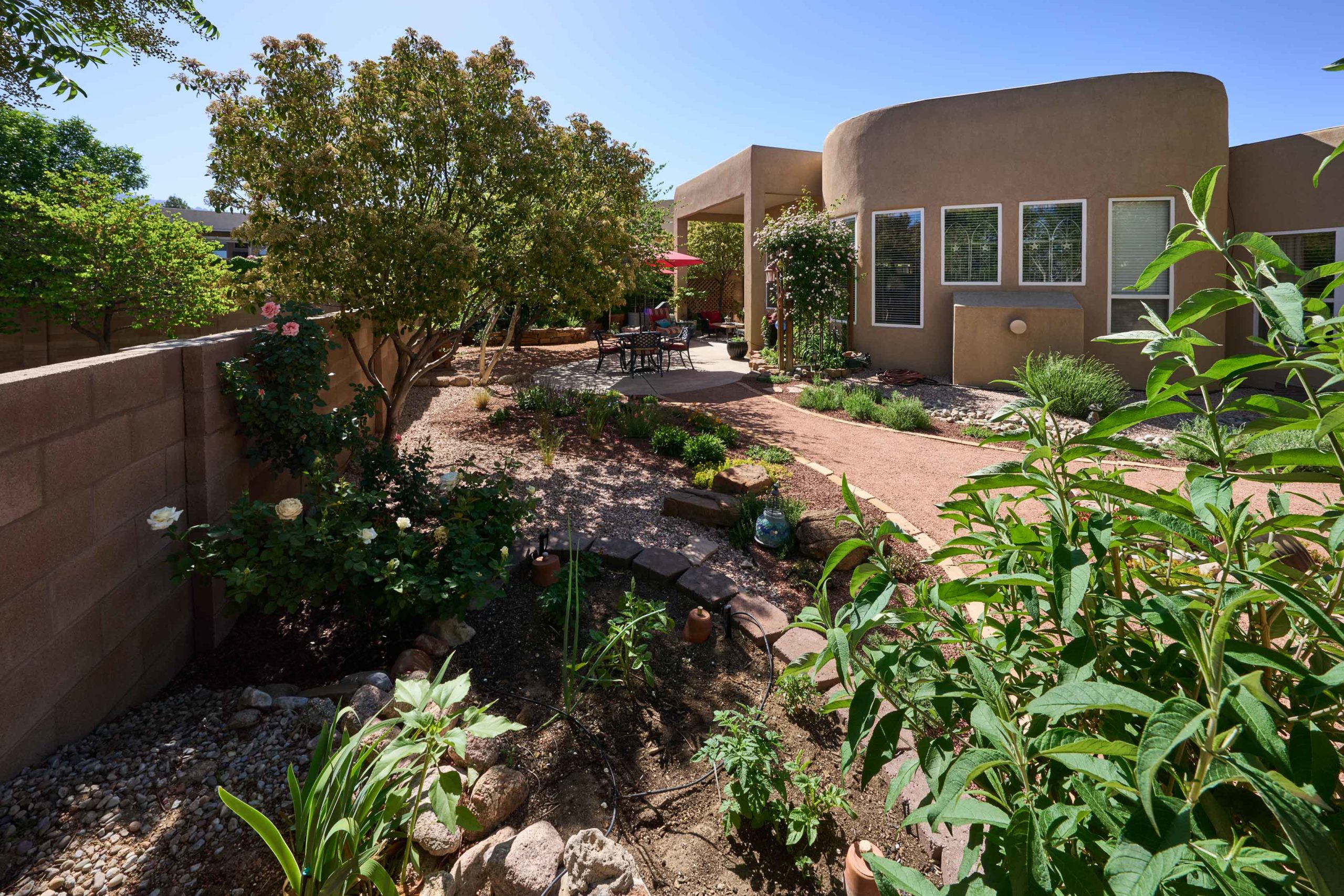
Homeowners are constantly looking for that perfect plant for that exact spot. Unfortunately, there isn’t a simple answer. Landscape designers know there are so many factors that go into placing the right plant in the right place. Sun-loving plants should be planted in sunny spaces. Shade-loving plants should be placed under trees or next to walls where they’ll be protected from our intense New Mexico sun. Be sure the area is big enough to accommodate the plant when it reaches its full mature size, and remember to place plants with similar water needs together.
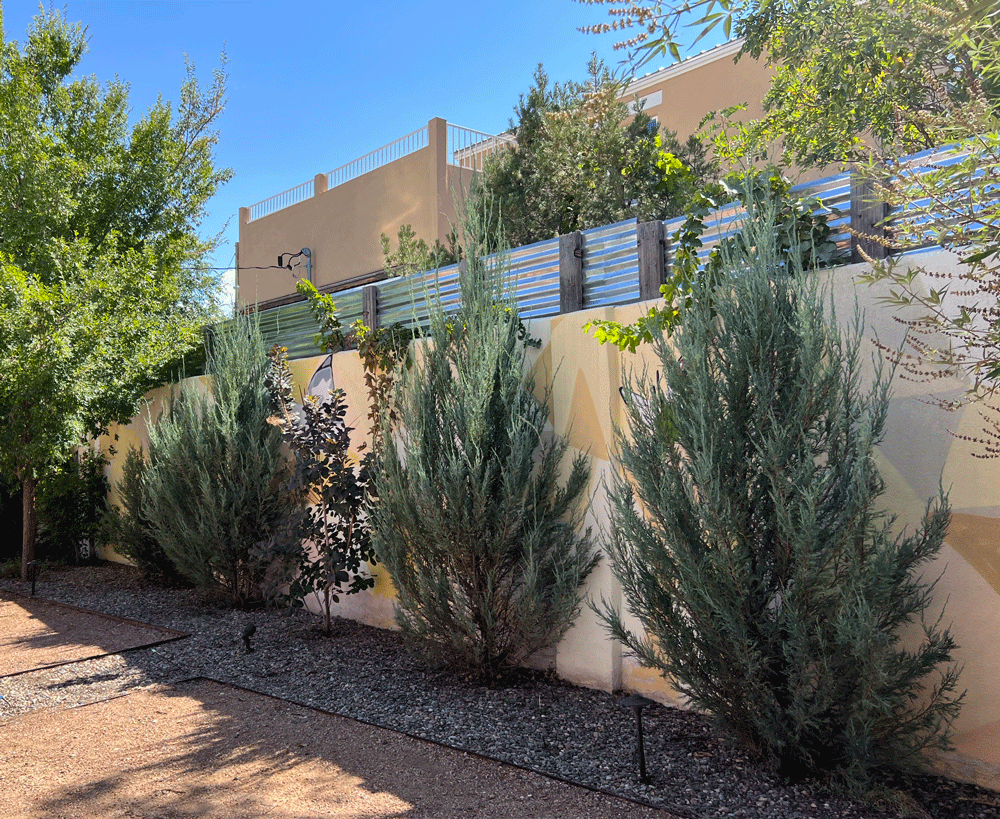
One of the most frequent requests is for a year-round green plant that hides and blocks an ugly view. For a narrow space (4’ and smaller) next to a wall or a neighbor’s driveway, check out the Skyrocket juniper. It’s a blue-green, narrow columnar tree growing 15 feet tall and only four feet wide, making it the narrowest of the juniper trees. A hedge of these works great in a small narrow space where you need some height. If your space is a little wider and you want some variety, you could add Texas ranger (also known as Texas sage) and ornamental grasses.
Whichita Juniper in narrow space screening the wall.
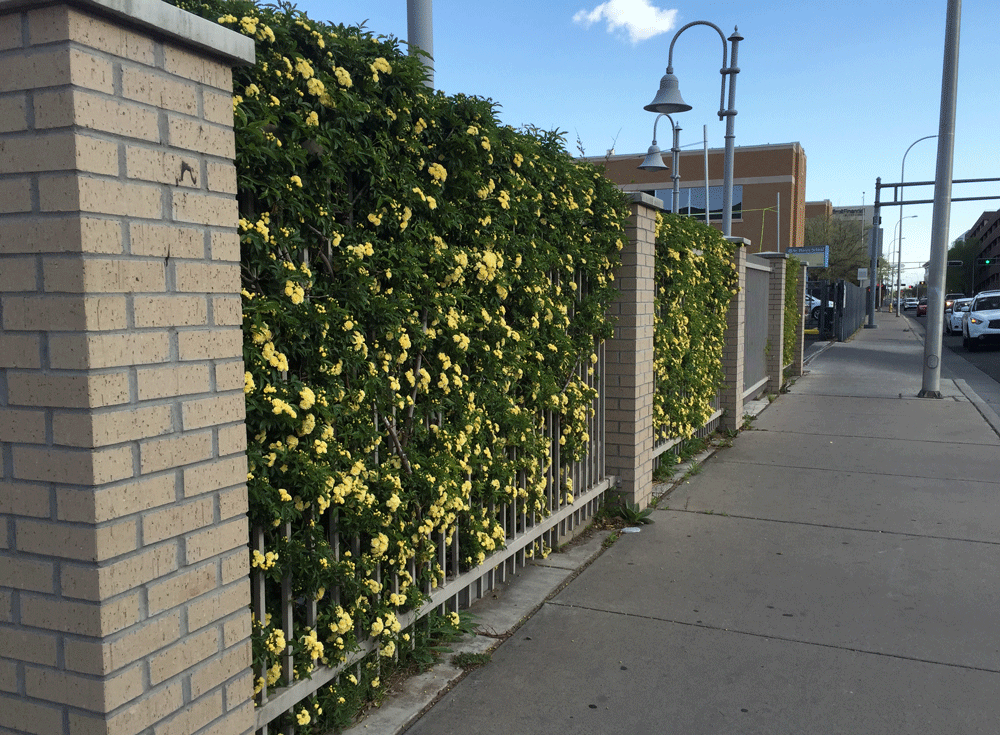
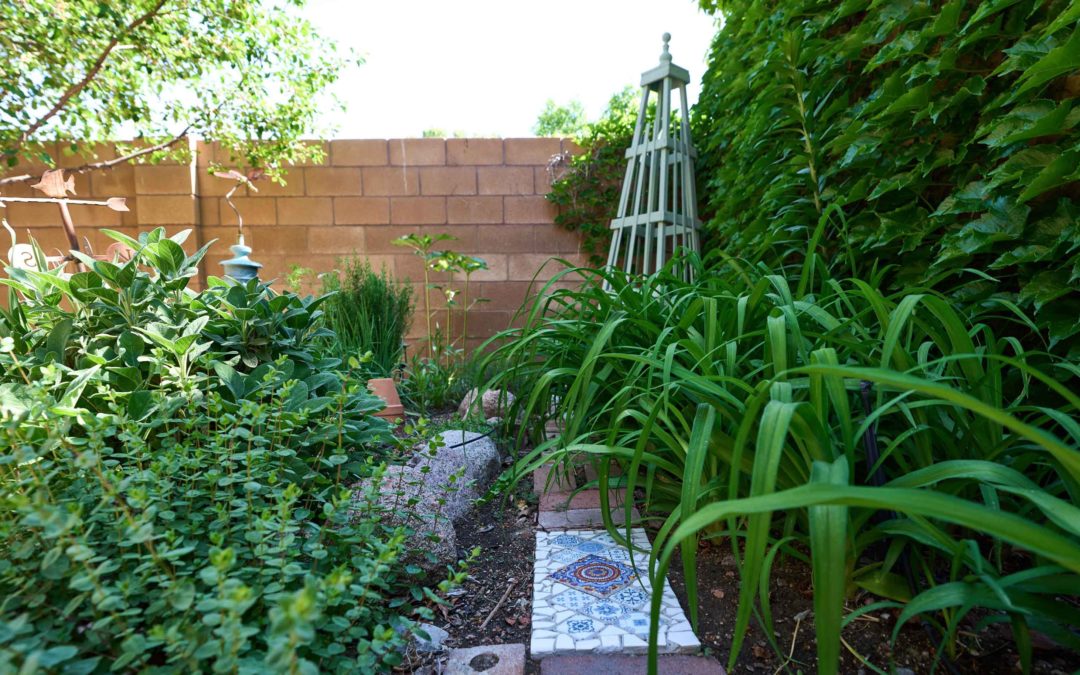
For those two-feet-wide spaces where you don’t have the room for a wide plant but you need lots of height, you’ll want to choose vines. For sun and light shade areas choose Lady Banks roses or desert coral honeysuckle. You’ll want to keep them in check by training them up a trellis until you get the desired coverage in the very narrow space.
Lady Banks Rose Vine in narrow space.
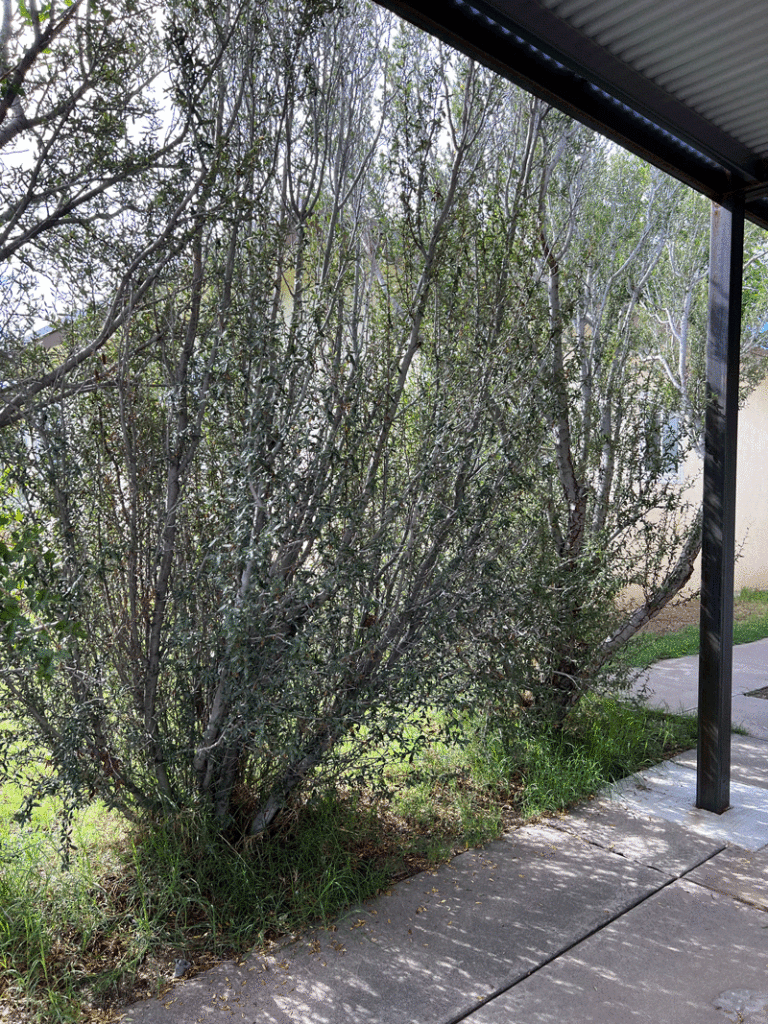
When you have a 5’- 6’ wide area — like along a driveway or between property lines — try planting curl-leaf mountain mahogany, evergreen, narrow. In our area you’ll see it used along a driveway to create privacy between neighbors. You can vary the space by interplanting it with New Mexico olive, which has a similar shape and size, or ornamental grasses like giant sacaton and muhlenbergia rigens (deer grass), if you want more visual contrast. To add some blue-green to the mix, bring in an Artemisia species like prairie sage as ground cover.
Mountain Mahogany along driveway trained to be a natural screen between houses.
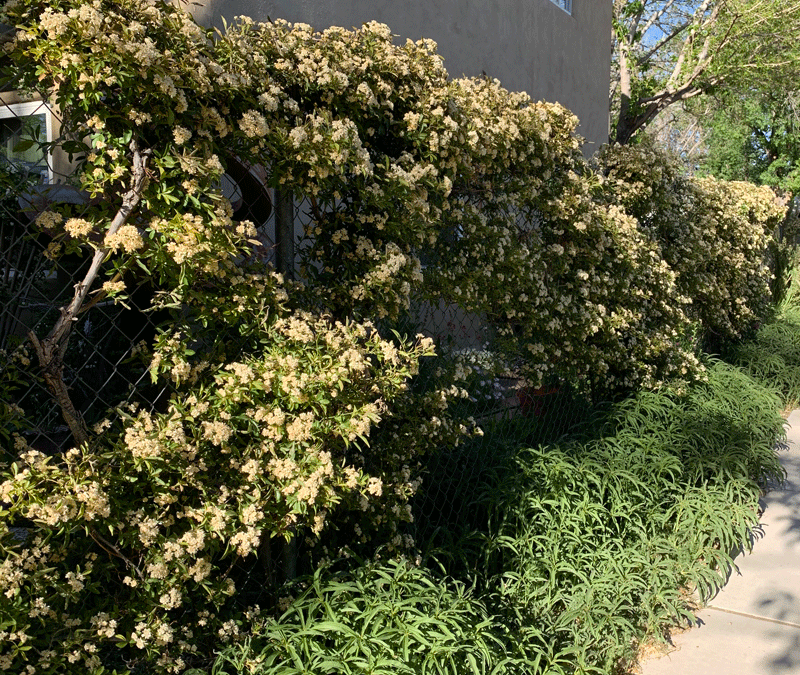
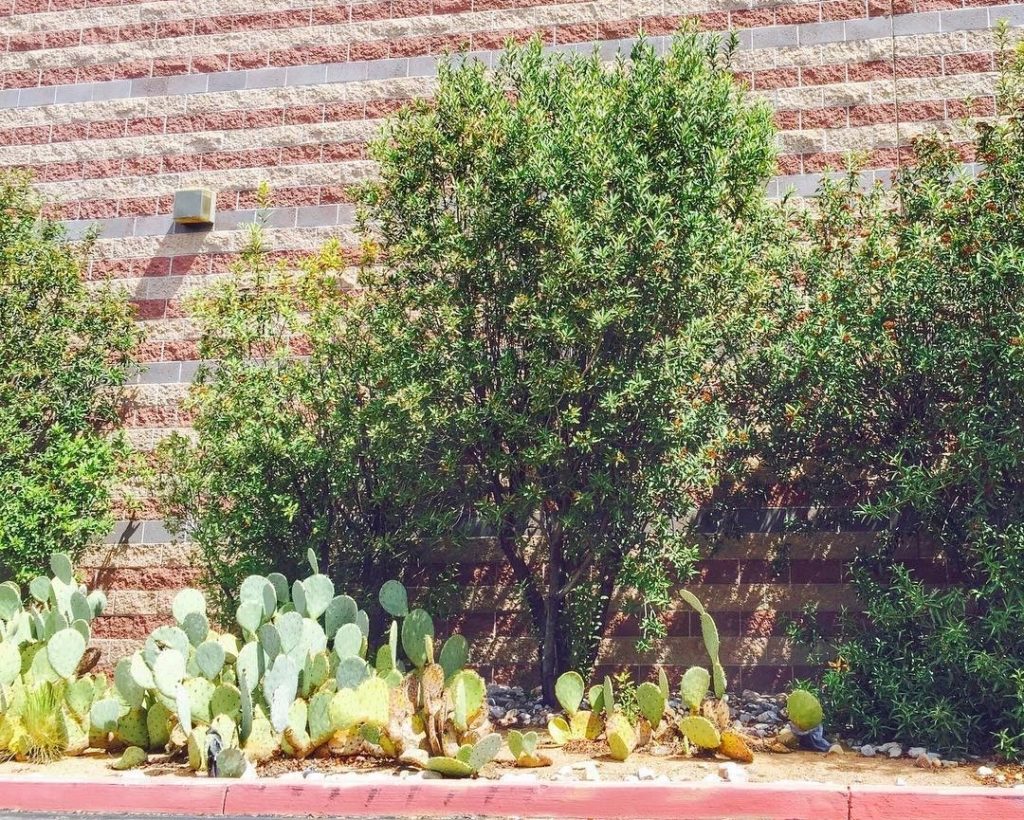
Another tried and true combination is the Arizona rosewood and prickly pear. They are beautiful together, plus they require little to no water after established.
Arizona Rosewood and Prickly Pear screening a wall.
Author: Jill Brown, ASLA, is a Landscape Architect and owner of My Landscape Coach in Albuquerque, NM. Have a question about the article? AskAnExpert@abcwua.org
Congratulations to the ten winners of our first annual Water Authority Desert Friendly Landscape Contest! Thank you for sharing your beautiful gardens with us. They are an inspiration for others to make the switch to desert-friendly landscapes.
The transformation of adirt front yard into a Desert-Friendly Landscape
Many Albuquerque homeowners are interested in saving water, so over time they have turned off their sprinkler systems and let nature take its course. However, nature takes a long time to come back to life in the desert, which is why we see bare dirt yards all over the city.
When Katrina and Peter Nardini moved into their southeast Albuquerque house, it had a dirt yard. After observing the landscaping in neighboring yards, Peter came up with a plan for their property that included a hardscape path and a wide variety of plants. To make sure the hardscape path was put together properly, a landscape professional was hired to build the path and steps.
“We chose plants by looking at other yards, taking pictures, and then working with garden center staff on selecting plants,” Peter and Katrina explain. Attracting hummingbirds was foremost in their minds.
Fortunately, a drip system was already in place in their yard, although some of the components needed to be upgraded to extend irrigation to all the areas that supported plants. “Initially, we had the irrigation drip system running most days of the week to get the new plants established,” they said. “Now, we turn it on twice a week in the summer and only one time a week during the other seasons. We only irrigate trees in the winter season. Most of our other plants do well with rainfall and snow.”
Katrina and Peter are delighted with the diversity of native and drought-tolerant plants in their transformed yard. “Our fruit trees are our favorite. They provide us with shade, beautiful flowers, and fruit!”
Grassy Lawn to Low Maintenance
After growing tired of weekly lawn maintenance, mowing, trimming, and the expense of watering, Daniel Stromberg decided to get rid of the grass in the front and back areas of his northwest Albuquerque yard and create a drought-tolerant, desert-friendly space. The first order of business was to replace the sprinkler system with a drip system.
Daniel worked with several different companies and a friend who is a master gardener to come up with the right design and plant selection. There was a bit of trail and error in the process, but the result is a thriving yard with drought-tolerant and native plants that gives Daniel a great deal of pleasure. “These plants look and do much better in the yard,” Daniel explains.
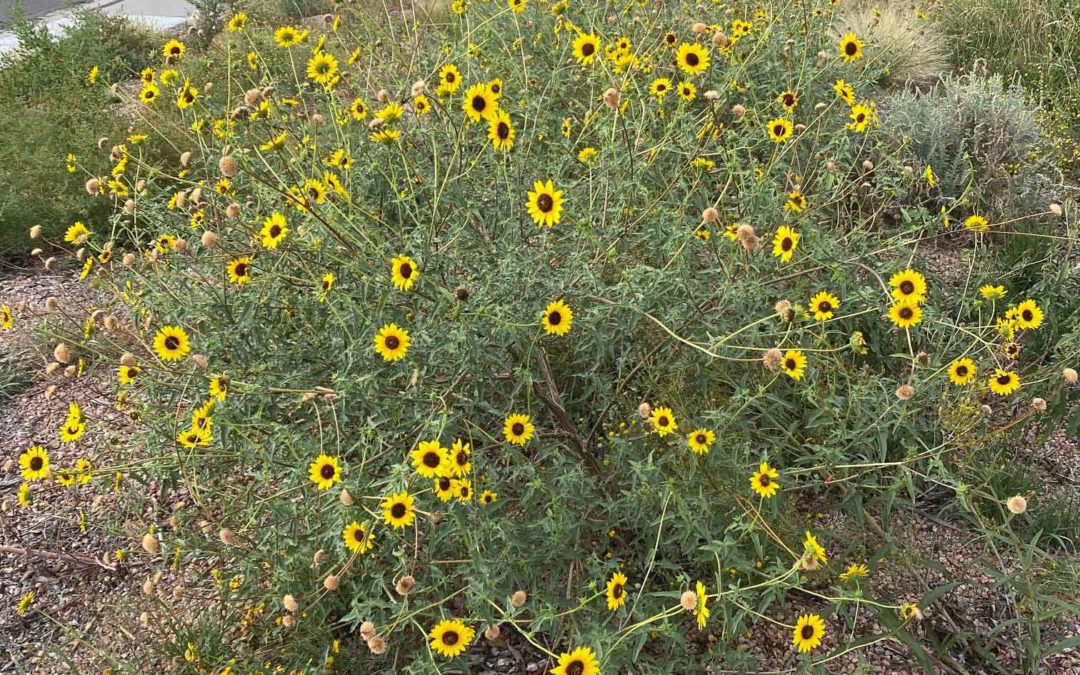
Transforming the yard from one that was high-maintenance to an easy-to-take-care-of space that requires little work was worth the effort, Daniel says. He is most proud of his sunflowers, whale tongue agave, ice plants and giant desert willow.
Containers are an easy way to add a splash of color to your garden, porch, balcony or patio, without ever having to dig a hole in our hard New Mexico soil. While you could drop pansies or geraniums in a pot and consider it complete, you could also plant a truly stunning container garden full of color, texture and fragrance. The right combination of plants arranged properly in a planter can be magical. After that, you only need to keep things watered and fertilized as you enjoy the colorful design all season long.
1. Choose the Right Container
Containers have their own unique characteristics to consider, including weight, appearance and sensitivity to weather changes. Also, consider your budget, space and style when selecting them. Keep in mind that the larger the size, the less you’ll need to water. But whatever you choose, make sure your containers have good drainage.
2. Select a Color Theme and Plant Combinations
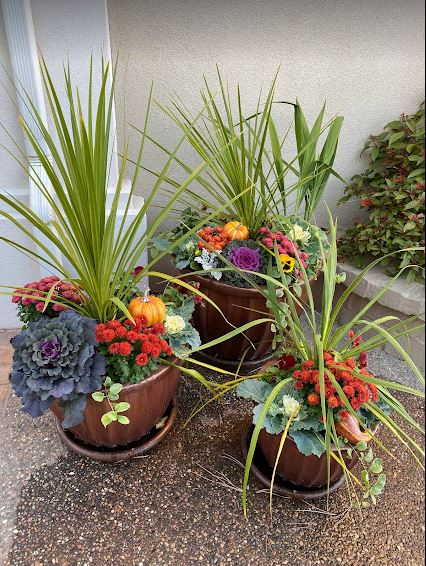
Starting with a color theme for your container garden can help with plant selection. When combining plants in your containers, it’s important to make sure they all have the same light requirements and watering needs. A good rule of thumb is to plant in odd numbers and combine three types of plants — thrillers, fillers, and spillers — in each container to add interest and balance to your design.
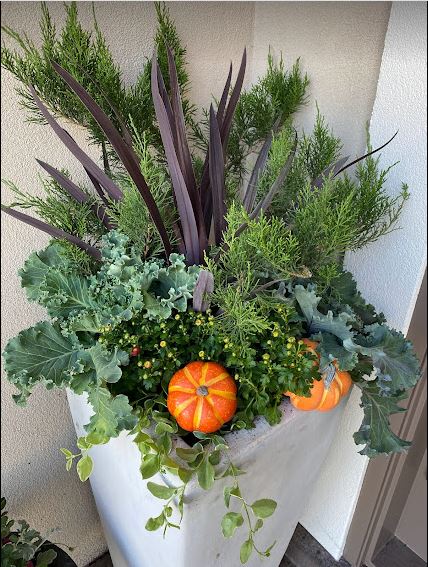
“Thriller” plants are the centerpiece of your design. They add height and a bold vertical element. Options include plants chosen for foliage, ornamental grasses or other upright plants. In larger containers, small shrubs or trees, topiaries, spirals and other vertical selections can be used. Thrillers typically go near the center of a container, but they can also be put toward the back of the planter, depending on its final location.
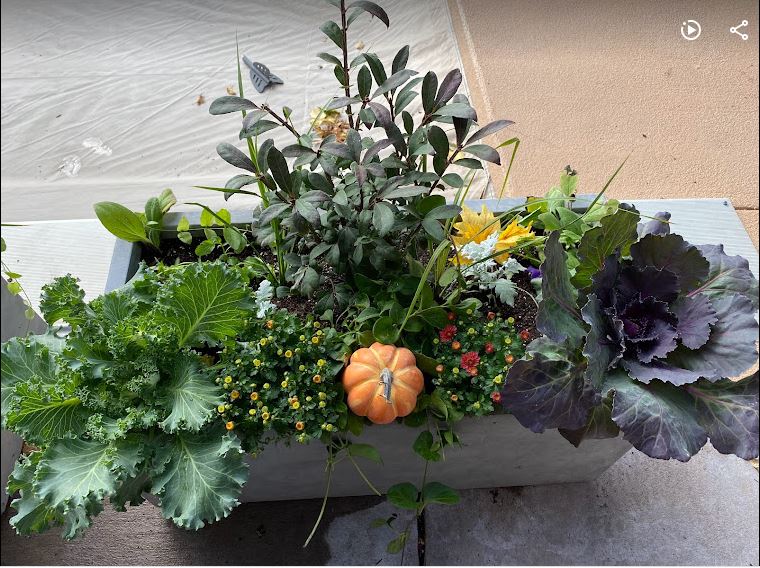
“Filler” plants tend to be more rounded and make the container look full. These are generally placed in front of or around your selected thriller. In a narrow, long container like a window box, fillers are placed halfway between the edge of the container and the thrillers. Violas, pansies, dusty miller, ornamental kale/cabbage, ornamental peppers, geraniums and mums are just a few of the many options for autumn fillers.
“Spiller” plants literally spill out of a container. If your container garden is going to be visible from all sides, be sure to place spillers all the way around. Some favorite autumn spillers are licorice plant (Helichrysum), English ivy, Dichondra ‘Silver Falls’, ivy geranium and perennial vinca (minor or major), also called periwinkle. I am especially fond of some of the brighter vinca varieties like Illumination or Wojo’s Gem.
3. Fill the Container with a Good Potting Mix
Once you’ve selected plants and a container, it’s time to get started! Fill your container about two-thirds full with a good quality potting mix. If you have a really large planter and would like to use less potting mix, you can use empty water bottles or smaller empty nursery pots or containers turned upside down to take up some of the space in the bottom of the container. Fill around them with potting mix until your container is two-thirds full.
4. Arrange Plants in Your Container
When you’re ready to add plants, remove the plants from their nursery pots, gently loosening the root ball with your fingers. Place them in your container and add soil, stopping about two inches from the top of the container to leave enough space for watering.
5. Water Your Plants
Water your container garden thoroughly to help the soil settle. After watering, add more soil if needed to insure good root coverage. Check your containers every 2-3 days, and when the top two inches are dry, it’s time to water again. Don’t forget container plantings may need water twice a day when it’s hot, especially if it’s also windy.
Don’t be afraid to add different types of plants, such as annuals, perennials, herbs, cold-hardy vegetables, and even small shrubs, to the same container. The important thing is to select plants that require the same growing conditions. I really like using dwarf Alberta spruce or lemon cypress as the vertical element, surrounded by licorice plants, pansies/violas, dusty miller and ornamental cabbages. I will occasionally add artificial gourds, pumpkins and other décor to make them even more festive.
With a little planning and creativity, you can put together stunning container designs that can be enjoyed all season long.
Congratulations to the ten winners of our first annual Water Authority Desert Friendly Landscape Contest! Thank you for sharing your beautiful gardens with us. They will be an inspiration for others to make the switch to desert-friendly landscapes.
Succulent Garden Wisdom
What once was a high-water use turfgrass lawn in the Northeast Heights is now a xeriscape garden with a focus on succulents. Janice transformed 550 square feet of turf into a diverse landscape complete with low-water use trees and shrubs and a beautiful succulent garden. She loves that there is, “No more mowing! No more trimming edges! No more feeding with nutrients! No more grass!”
When selecting plants, Janice turned to a variety of resources, including 505Outside, the Xeriscape guide and avid gardener friends. She hired a professional landscape company to install her new drip system. “The drip system is my go-to irrigation system as recommended by various professionals,” Janice said. “My plants and trees are happy following the 505Outside seasonal watering recommendations.”
Succulent beds are her favorites, and she looks forward to adding new succulent species each year. Janice enjoys the diversity of plants in her yard and how they change colors throughout the seasons.
What started as a way to reduce water usage has evolved into a renewed love of the outdoors. Janice keeps track of landscape seasonal transitions, rain events, plant changes and teachings in her “Garden Wisdom” journal. “A garden can teach a lot about flexibility, patience and calmness,” she added.
Unearthing Wildscape
Local scientists Paul and Teri started with high-water use turfgrass and trees when they set out to make a wildlife habitat in their yard in the North Valley. They removed all the non-native grass and have been slowly replacing it with low-water native plants. Areas that haven’t yet been planted are covered with 3″-4” of organic mulch, which is an easy way to prep the soil before they’re ready to plant.
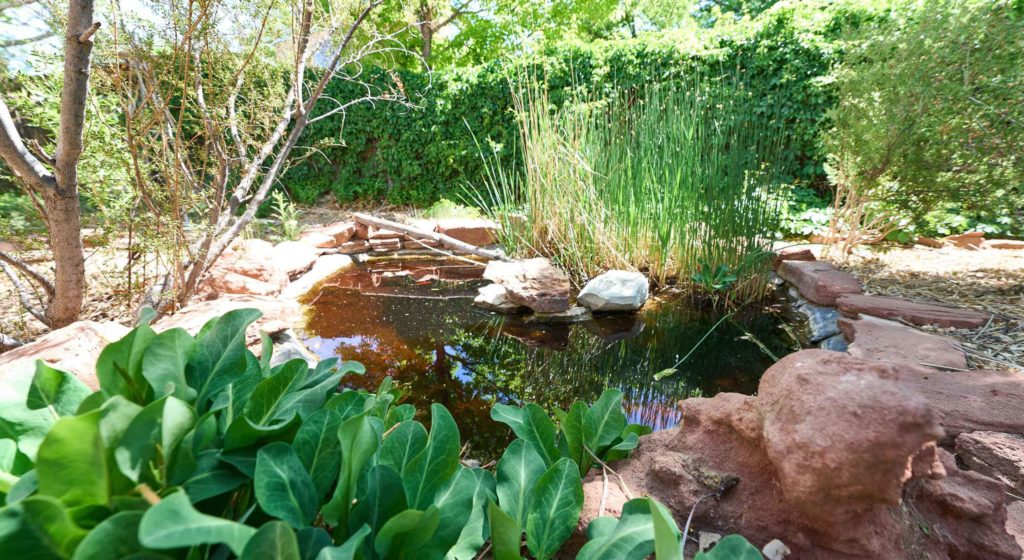
A pond was added to create a habitat for western toads. Other creatures have joined their landscape, and it is now a recognized Fish and Wildlife backyard refuge.
Part of the scientific work that Paul and Teri do involves mapping vegetation across the Southwest. Their extensive knowledge of local ecosystems has helped them select native plants that will thrive in different environments and through our changing climate, especially during times of drought. “Wild native plants can be very beautiful and add value to gardens because they remain resilient thru changes,” they said.
Their yard is set up with a drip irrigation system that waters as needed. During rainstorms rain barrels collect up to 1,500 gallons of water, which supplement their irrigation system.
“We are proud to minimize water use while maximizing pollinators, edibles and the abundance of plants,” they said.
Congratulations to the ten winners of our first annual Water Authority Desert Friendly Landscape Contest! Thank you for sharing your beautiful gardens with us. They will be an inspiration for others to make the switch to desert-friendly landscapes.
A Garden for the Senses
What once was a sandy empty lot in the NW has now become a garden that provides food, attracts birds and other pollinators and stimulates the five senses. “The flowers smell great through the seasons, we grow vegetables that we use on our plates,” say homeowners Adam and Meagan Henrie, who like the balance of having aesthetically pleasing and functional areas in the garden.
The Henrie’s accessed online resources, including 505Outside.com, to help decide which plants to incorporate into their garden. During trips to local garden centers, they identified plants that were thriving in their neighborhood. They chose low-maintenance, drought-tolerant plants and installed a drip and spray irrigation system using the latest technology. Local irrigation supply stores helped them choose irrigation system components and come up with a design for the irrigation system that they could follow.
When they planted new trees, they turned to the Water Authority and took advantage of the Treebate from the Water Authority. This rebate program also helps them with costs for tree maintenance.
“We love that our oasis attracts pollinators like birds, bees, butterflies, and also other wildlife like rabbits and roadrunners,” say Meagan.
100’s of Pollinators Can’t be Wrong!
The landscape around Elliott house in the NE used to be a sea of gravel, but now it is recognized by the Fish and Wildlife Backyard Refugee Program. During the past several years, Elliott has spent time transforming his yard into a habitat that attracts insects and wildlife.
“I wanted a yard that will change through the seasons and has a diversity of local drought-tolerant native plants,” he explains. “My goal was to add plants that will attract pollinators, so I started with the ones that were growing in the wild.”
Elliott learned about plants by doing lots of research, including reading information on the Albuquerque Native Plant Society’s website, accessing a list of plants from the Backyard Refugee Program, and visiting the store Plants of the Southwest. His goal was to have a lush, diverse and sustainable landscape that benefits wildlife and does not depend on supplemental water outside of rainwater.
Like the Henrie’s, Elliott has taken advantage of the Water Authority’s Treebate when planting new trees.
“I love all the pollinators, diversity of plants, and my learning journey along the way. Now I get to educate and share my experience with others,” says Elliott, who hopes his yard is an inspiration to his friends and neighbors.
Low Water Paradise
With the goal of reducing water usage, the owners of this home in the Northeast Heights first turned their attention to the property’s big, hardly-used front lawn. Once they learned about the Xeriscape rebate from the Water Authority, they immediately called to get more information and help with choosing plants that would enhance their property.
The transformation started by renting a sod cutter to remove the lawn as part of the Desert Friendly Xeriscape Conversion Rebate. They were able to save the turfgrass and transplant it to their son’s yard.
Landscape professionals were hired to create a design and install the swale, plants, and drip irrigation system. It only took one week to transform the 880-square-foot front yard from a high-water use turf lawn to a desert-friendly xeriscape with a diversity of plants that are supported by rain and drip irrigation.
Because of the transformation, the homeowners earned an $880 credit on their water bill! An extra benefit came when they participated in the Treebate program. Now, the homeowners take pride in their yard, which has attracted pollinators and interest from neighbors. They also are learning how to maintain and care for their new plants so their landscape will continue to bring enjoyment in the years ahead
Since the Albuquerque area receives about 9” of rain on average per year and grass lawns can use up to 50” of water per year, the proper design of an irrigation system for a grass lawn is of utmost importance when it comes to water efficiency. Irrigation efficiency can save up to 30% of the water you use by avoiding water waste.
While the Water Authority does not encourage grass lawns, we understand that some homeowners may want to install new lawns or reduce the size of their existing lawns. If you are going to have a turfgrass lawn, we recommend that it’s a lawn you use and not just maintain for curb appeal. Proper irrigation layout and design are key to having a healthy and water-efficient lawn.
When designing your lawn, keep these tips in mind:
1) Lawns smaller than 10’x 10’ are hard to water with a spray irrigation system.
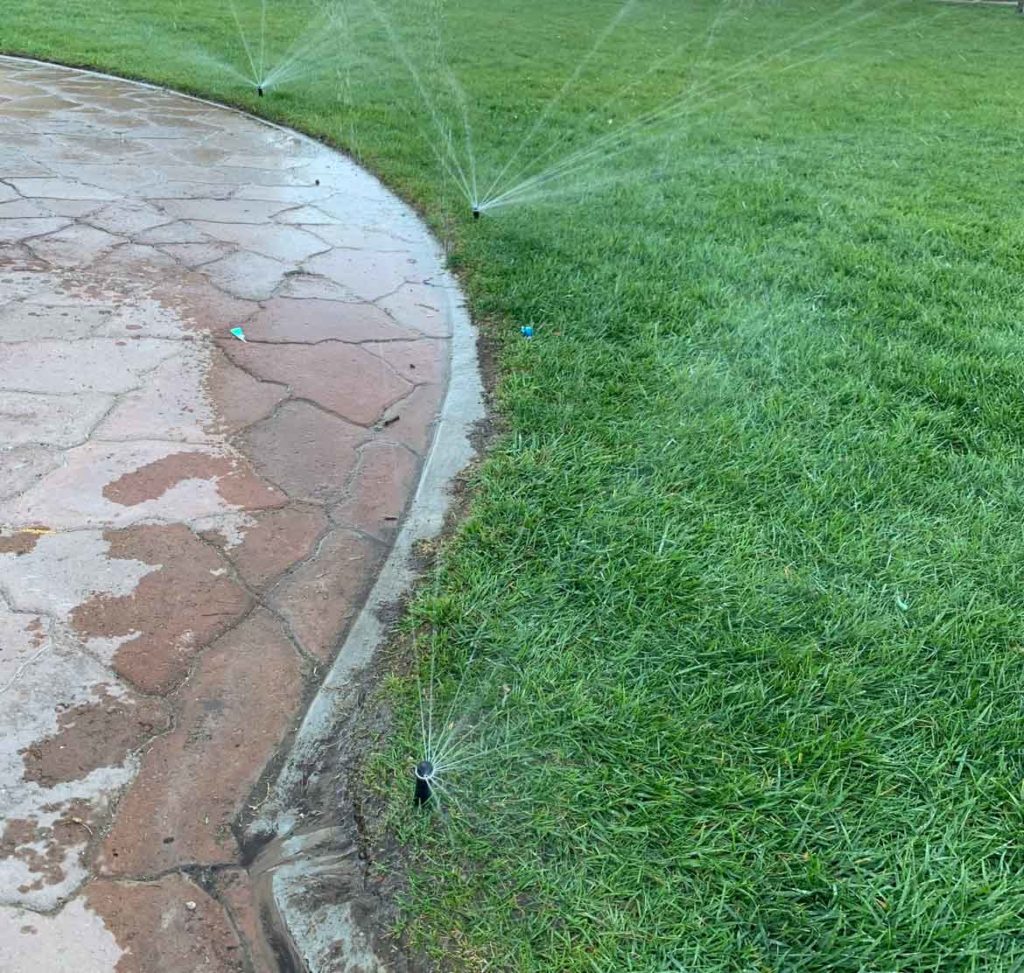
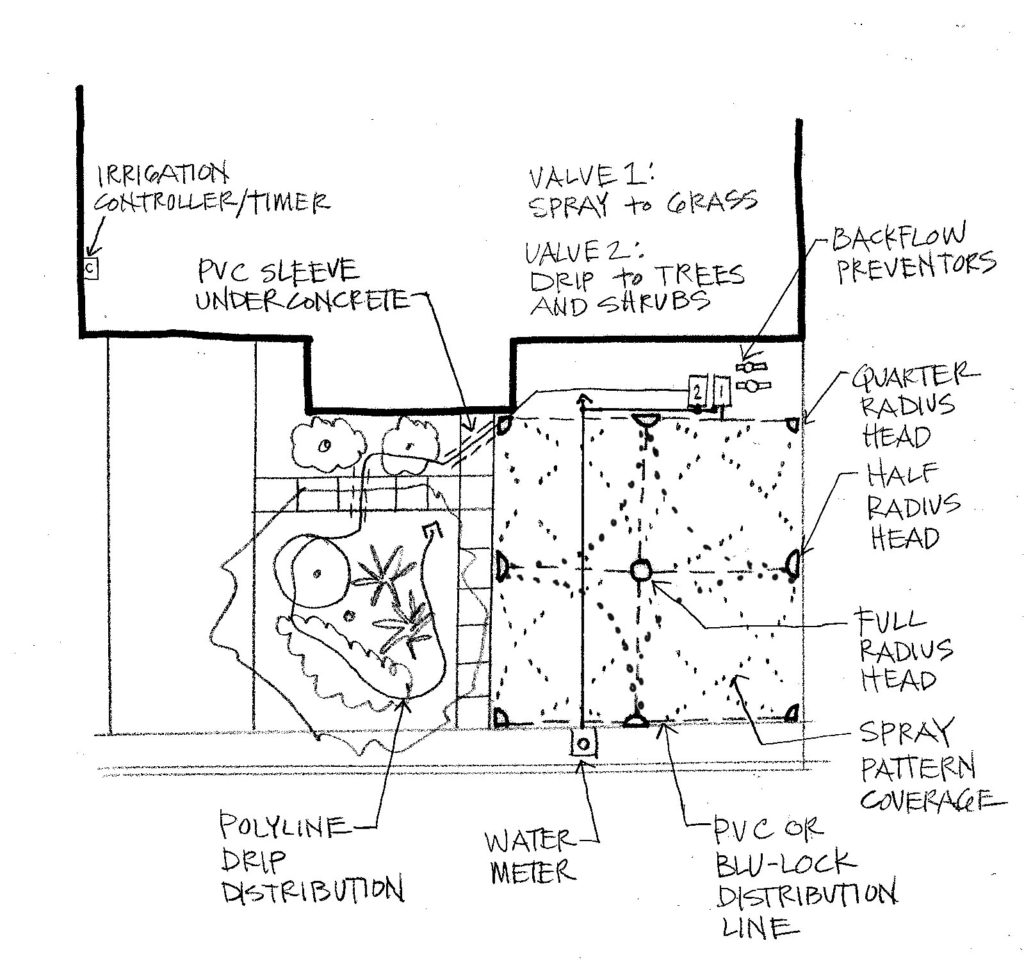
2) To get the most efficient irrigation coverage, design square and rectangular lawns since sprinkler heads spray in fixed patterns-such as a quarter circle, half circle or full circle-but not curves. If curves are necessary, broad curves have the best chance of being irrigated without over spraying, while zigzag narrow curves are the toughest to irrigate effectively.
3) We recommend using WaterSense Pressure Regulating Spray Sprinkler Bodies.
WaterSense labeled spray sprinkler bodies with internal pressure regulation can reduce water waste by providing a consistent flow at the sprinkler nozzle. When the sprinkler body maintains pressure near its optimal operating pressure, the connected nozzle is better able to generate the right amount of water spray and coverage for a more uniform distribution of water across the landscape. Customers can choose from a list of pre-qualified spray sprinkler bodies.
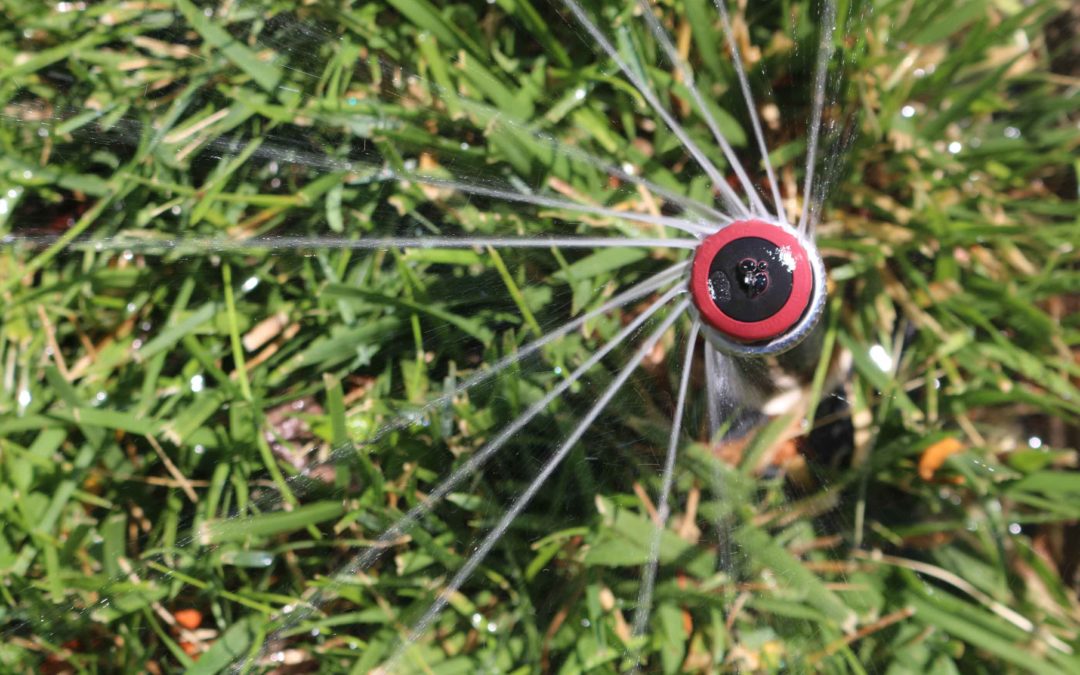
4) We also recommend using High-Efficiency Rotating Sprinkler Nozzles (multi-stream). These nozzles minimize water waste and feature a unique multi-trajectory rotating stream that delivers water at a steady rate. This slower application allows water to gently soak in at rates that soils can absorb. Use these nozzles to replace the sprinkler head on any conventional spray head body or pop up sprinkler. For more information on these nozzles read this post.
5) Irrigation sprinkler nozzles are designed for 100% overlap of watered areas, which means each sprinkle nozzle throws water to the next sprinkler in all directions. If a system is not built this way, there will be dry spots (see the below image).
Designing, reducing and changing the shape of your lawn doesn’t have to be an expensive project but it can save a lot of water. Visit your favorite local irrigation supply store for professional equipment and expert advice.
Learn more by checking out these other useful irrigation articles:
Author: Jill Brown, ASLA, is a Landscape Architect and owner of My Landscape Coach in Albuquerque, NM. Have a question about the article? AskAnExpert@abcwua.org