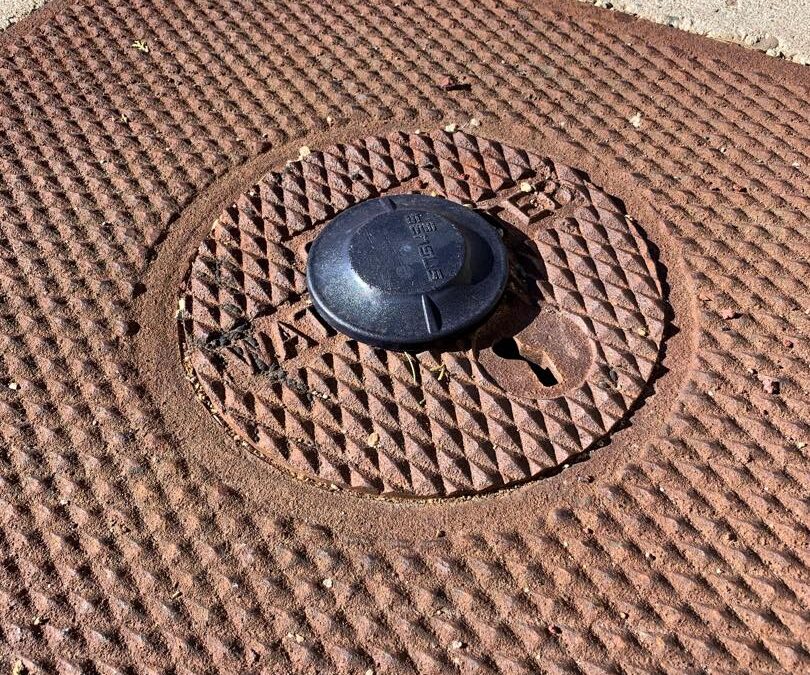
If you have a meter equipped with AMI (Advanced Metering Infrastructure) as shown in the photo above, you can log into your Water Authority account and see your hour-by-hour usage. This may help you locate any issues in your house or yard, such as a continuous water leak in toilets or irrigation systems. It can help you understand how much water you use throughout your day and serve as a guide to better decision-making in how you use your water. If you don’t have an AMI meter installed yet, it will produce an average use graph for your home.
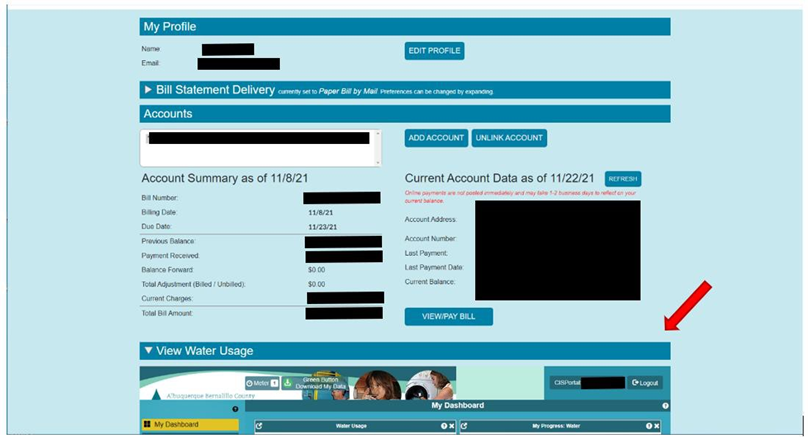
Start by going to www.abcwua.org. Click on “My Account” in the top menu bar (shown below with a red arrow) to create an account if you haven’t done so already. You’ll need your billing information. Once you’ve created an account, you can view and pay your bills, as well as see your daily water usage.
Here is an example of the account page. We are going to focus on the “View Water Usage” section. It can take a few moments to add the dashboard information.
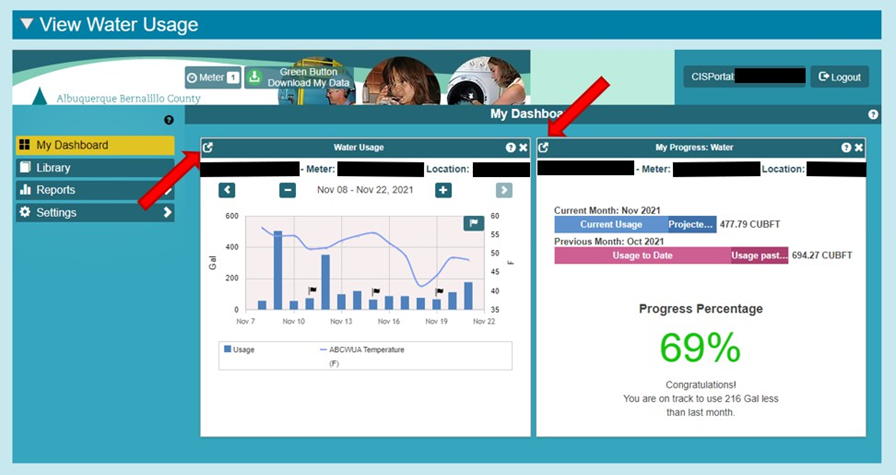
Initially, you will have two screens in your dashboard: “Water Usage” and “My Progress.” You can expand each one by clicking on the icon in the top left corner (red arrows). This will make the information easier to read and provide access to some additional features.
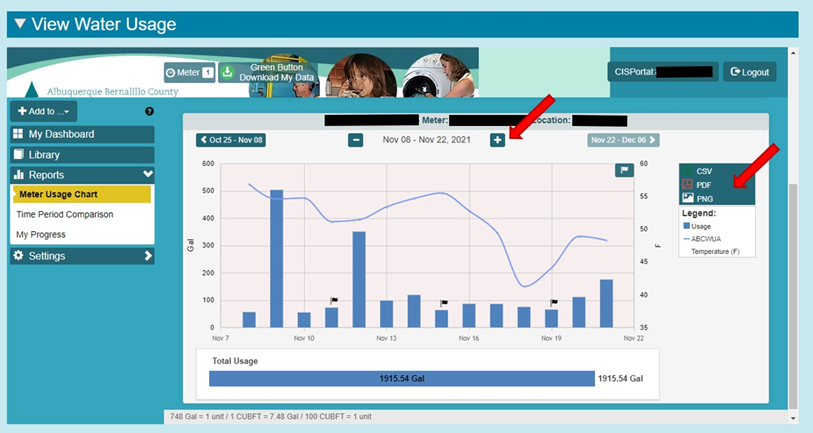
Below is a graph that provides you with a glance of your daily usage, along with the average temperature for that day. Two features highlighted in this photo are: 1) the “+” sign will change the date parameter and provide hourly usage and 2) the “PNG” feature will export your usage chart if you want to save it as a picture.
On the right-hand side, where the red arrow is, the “PDF” feature allows you to download the current month’s hourly data. An example of this is shown in the following image.
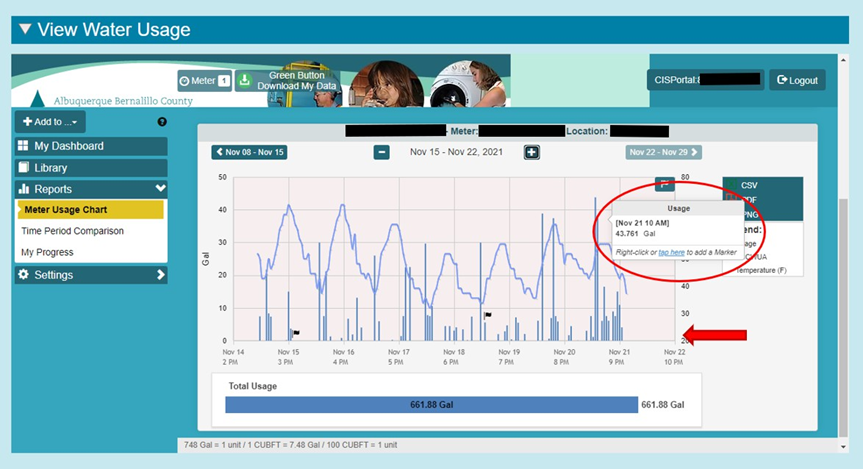
Below is an example of an hourly chart of your water usage, with the hourly temperature shown as well. Note: You can view your actual usage on each line of the graph by hovering your pointer over it. This is where you may see a possible leak if you have vertical lines (hourly usage) each hour, daily. A red arrow highlights where you would see that.
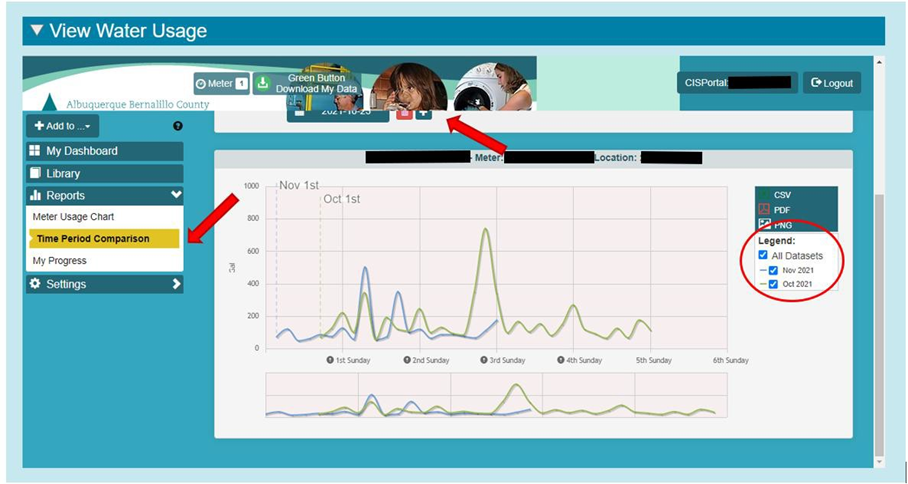
Next, we’ll look at a monthly comparison. To do this, choose “Time Period Comparison” on the left (highlighted by the red arrow). This example shows consecutive months, but you can adjust the view using the “slider” above the graph to click on the months. You can compare your usage for the same month from one year to the next. This is great if you are trying to track savings from changes in your household or irrigation.
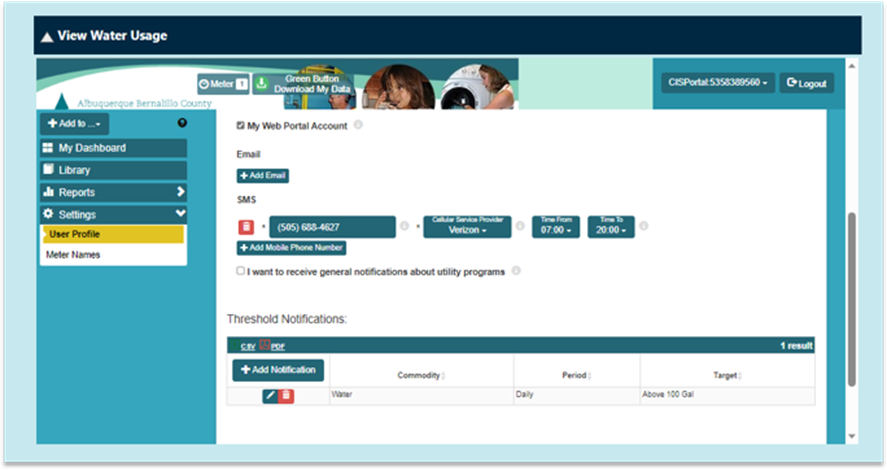
You can add a threshold notification that will inform you when your water use passes a set amount. The threshold should start at your “normal” daily usage. So, if your normal usage in the winter is 100 gallons a day, you can add that as your threshold, and our system will notify you if you’ve gone above the threshold. This picture shows you how to add a threshold. You can add an email address or phone number to receive the notifications.
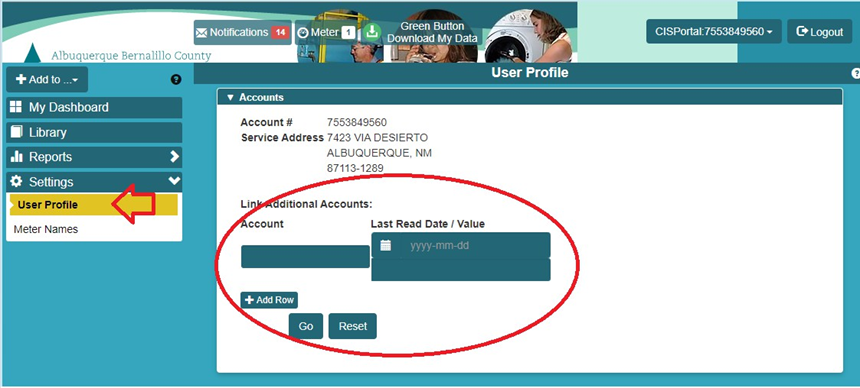
If you have more than one account that you watch over, you can go to the user profile tab and add additional account numbers to your profile.
Watch our How To Video below!
https://www.youtube.com/watch?v=EsZ1C65MQMc
Author: Amos Arber, Water Conservation Program manager. Have a question about the article on AMI reader and Home Connect? [email protected]
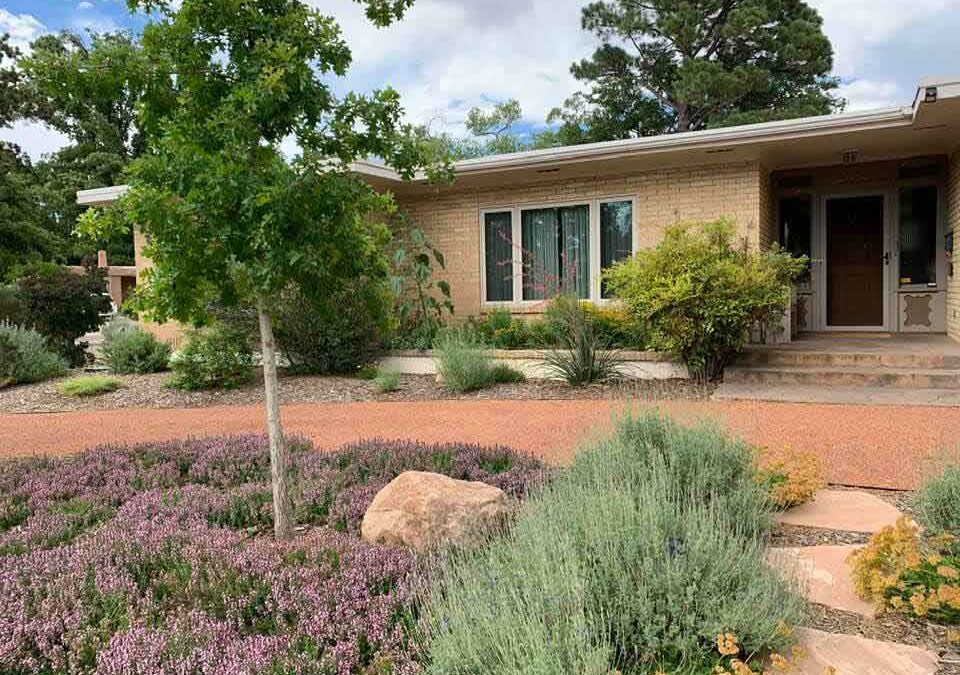
Your new xeric plants are in, and everything is looking good. What do you need to do to keep it that way? Start by looking at your irrigation controller. It may be programmed to apply water too frequently and/or for too long in order to get the plants started. If you hired a contractor, they may have set the controller to water every day because it’s easier than getting a call about a plant that doesn’t look great.
Many desert-friendly plants and trees evolved to survive on very little precipitation but also to make the most of abundant rainfall when it does happen. They’ll store the water in their roots or grow larger (and produce more seed for dry years) than they would with only adequate water. A xeriscaped yard doesn’t automatically “save” water — it is up to the homeowner to do the actual water saving by adjusting their irrigation controller. My dog would be “happier” if I fed her as much as she wanted, but it’s wasteful (among other things) to do so. Watering your desert-friendly plants too much may cause them to outgrow the space they were designed for, which might mean pruning them more than they need so they don’t grow against the house or over a path or outcompete other plants. Overwatering also creates lush, tender growth that is more attractive to pests and susceptible to frost damage.
A recent study in Arizona found that xeriscaped yards didn’t have reduced water usage because the homeowners applied the same amount of water as they would for a traditional yard with a lawn and non-natives.
Here are steps you can take to make sure you’re watering correctly for your new landscape and keeping your plants healthy:
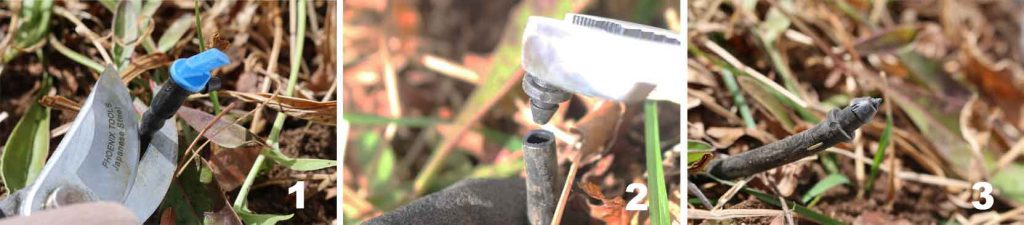
Reduce the number of emitters if needed: The best way to do this is by cutting off the drip emitter and installing a “goof” plug in the end of the ¼ inch tubing. This is preferable to trying to pull the ¼” coupler out from the larger line, which creates a larger hole that can’t be easily plugged.
Check your irrigation controller: You’ll want to keep the soil moist around the newly installed perennials, shrubs and trees for the first week, and that might mean watering every day if it’s above 90 degrees. After the first week, switch to watering every other day. Then on week three, switch to twice a week. Exceptions would be for cacti, which I would soak once when planting and then water once a week for the first month before tapering off to once or twice a month until established. (Perennials / grasses - 8-10 weeks, Shrubs - 1 year, Trees - 1-3 years.)
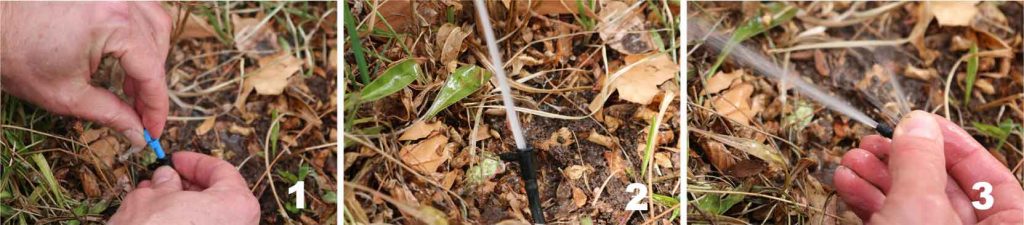
Check that drip emitters are working properly, especially if a plant looks wilted: Drip emitters often get clogged after a repair is made in the larger ½” or ¾” poly tubing. If you’re using “flag”-shaped emitters and one is not flowing, you’ll want to grasp the body of the emitter while you turn the top “flag” shape counterclockwise 90 degrees to allow the top to separate from the rest. You should do this while the zone is running so that you can see if any emitters aren’t working and so that the water pressure can clear the clog. Once you’ve twisted off the top, you should have a strong flowing stream of water coming out. Hold your finger over the water stream, forcing it into the drip outlet, which clears the clog.
If you’re using “button”-shaped emitters and one is clogged, you’ll need to cut it off and replace it. Don’t try to pull it off the ¼” tubing, just cut it off and plug in a new one so that the barbed insert has fresh (not stretched out) tubing to fit into.
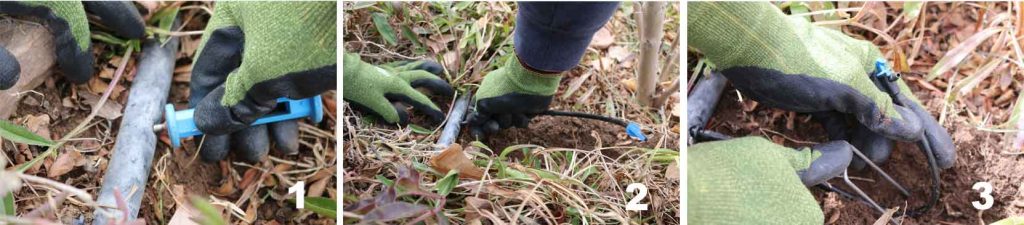
Keep up with plant growth: As your desert-friendly plants grow larger, you can move the emitters farther away from the base of the plant and add new ones if needed; larger plants require more water. There are several ways to do this. You can poke a new hole in the nearby larger poly tubing, insert a ¼” coupler, run an additional ¼” line to the plant and add an emitter. However, if the main poly line is more than a couple of feet away, install a ¼” “T” in the spaghetti tubing and go from there. It saves time and means fewer holes in the main poly line. Remember, when installing ¼” couplers into the main poly, always poke the hole in the side, not the top; that way if you step on them by accident, they won’t break off. Also, if your plants are on a slope, the emitter should be on the uphill side, so water flowing downhill will cover more of the root zone. Check that water wells are still in place and holding water around the plant.
Inspect your trees: Check the leaves for any insect damage and the underside of leaves for insect infestations. Also make sure the mulch or gravel isn’t covering up any of the tree trunk above the root flare, which traps moisture that can cause decay or rot. Particularly in fruit trees, this can also allow detrimental insects access to the trunk where they could bore into it.
Check the soil around the base of your plants: Often during initial watering, the soil will settle into the planting hole and can expose the root ball, which causes it to dry out quickly. If you observe or suspect this, kneel in front of the plants, move the mulch out of the way and scrape the surrounding soil back around the plant to cover up the root ball. Then replace the mulch and reposition the drip emitter as necessary.
Learn the common or scientific names of your plants: If you don’t have a list, plant tags or a detailed landscape plan, some newer smart phones have a plant identifier built into the camera app (no need to remember the app store password and download another app). The closer you can get to the plant — showing leaves, branch shapes and flowers (if any) — the better the app will work. The phone (as we all know) can be wrong, but it will give you a place to start. Alternatively, send an email with photos to [email protected] and we can help you identify
Once you know the plant names you can look them up in our xeriscape guide to reacquaint yourself with their water needs and mature sizes. Need help remembering the plant names? Often the plants themselves can tell you. Is it a catmint? Rub the leaves and smell the minty aroma. Turpentine bush? Lemony pine smell, for sure. Maybe it’s the shape of the leaves. Fernbush? Examine the leaves closely and see how they resemble an actual fern from a rainier climate.
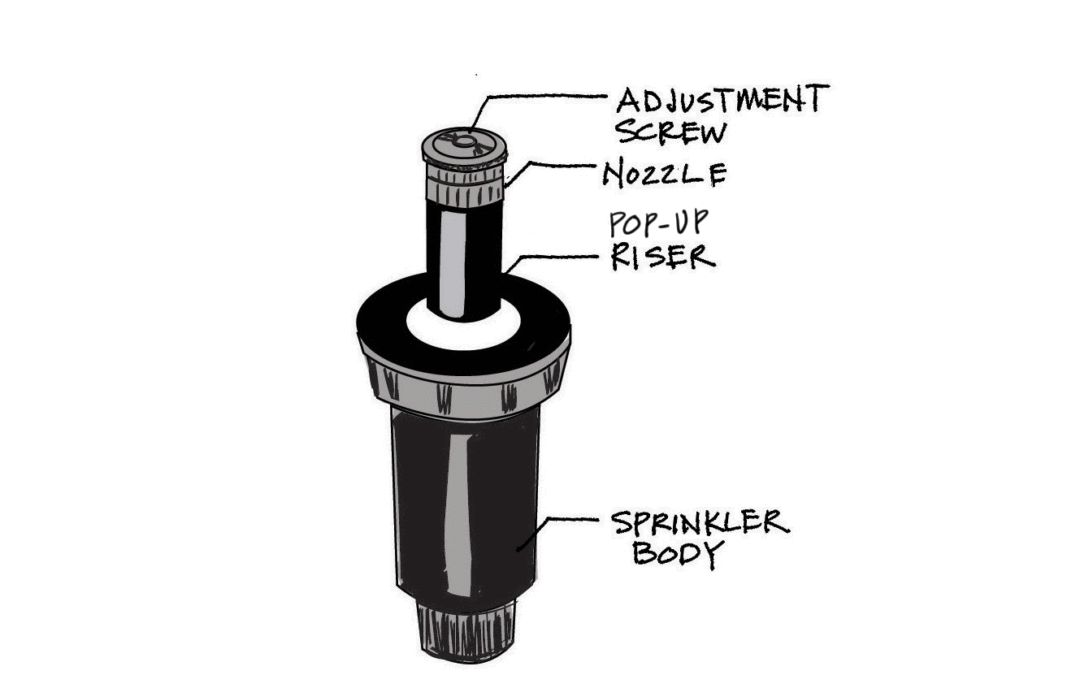
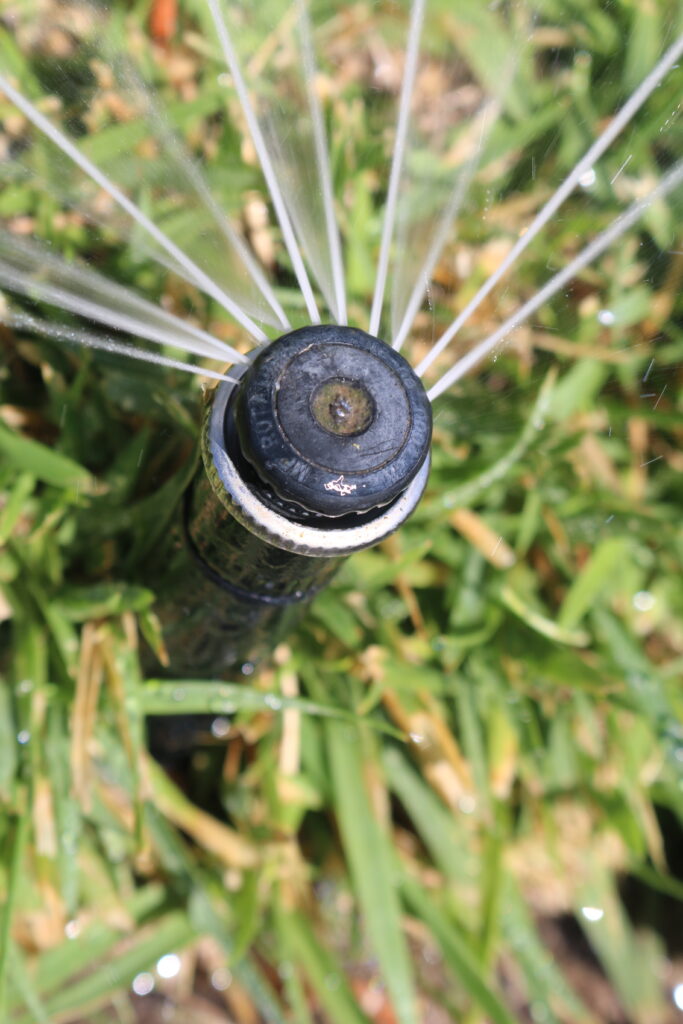
Grass lawns in the greater Albuquerque area need supplemental irrigation to survive our high desert climate. Most residential landscapes are watered by pop-up spray heads that include a sprinkler nozzle set into a spray sprinkler body.
We recommend switching out your older sprinkler nozzles and spray sprinkler bodies for more water efficient ones. Take a look below. They are easy to install; check out the pictures to see how simple it is.
These devices provide pressure regulation at each individual spray head. The sprinkler body is the exterior shell that connects to the irrigation system piping and houses the spray nozzle that applies water to your landscape. WaterSense-labeled spray sprinkler bodies with internal pressure regulation can reduce water waste by providing a consistent flow at the sprinkler nozzle. When the sprinkler body maintains pressure near its optimal operating pressure, the connected nozzle is better able to generate the right amount of water spray and coverage for more uniform distribution of water across the landscape.
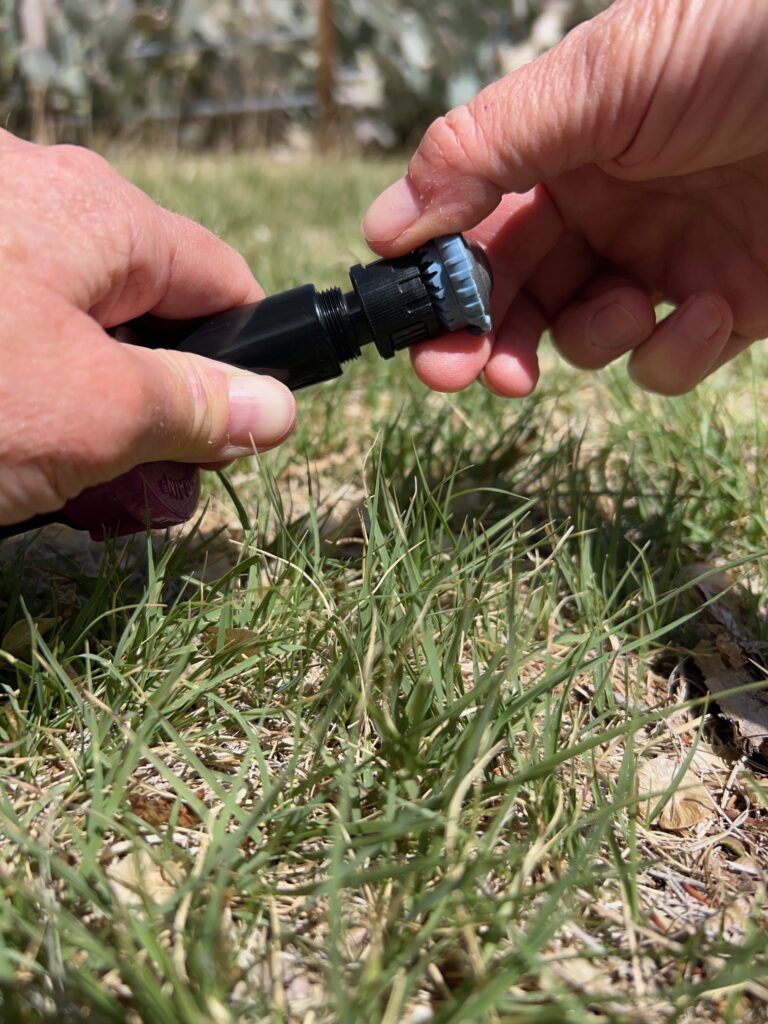
Installation is simple. First remove the old spray body by twisting it off and then twist on the new spray body.
High Efficiency Rotating Sprinkler Nozzles (multi-stream)
We also encourage you to change your existing spray heads to high efficiency sprinkler nozzles. These nozzles minimize water waste with unique, multi-trajectory rotating streams that deliver water at a steady rate. This slower application rate allows water to gently soak in at rates that soils can absorb. Use these nozzles to replace the sprinkler head on any conventional spray head body or pop-up sprinkler for water savings of up to 30%.
High efficiency sprinkler nozzles are a great solution for upgrading an old and poorly performing sprinkler system. These nozzles create a heavier droplet that is less affected by wind and reduce misting. These nozzles work especially well with pressure regulating bodies. These heads require longer run times. Don't worry it does not use more water, because rotary nozzles deliver water at a slower rate than typical spray nozzles. Therein lies the efficiency: water saturates deep into the root zone rather than running off and evaporating. This can also help reduce the frequency of runs, thereby saving water.
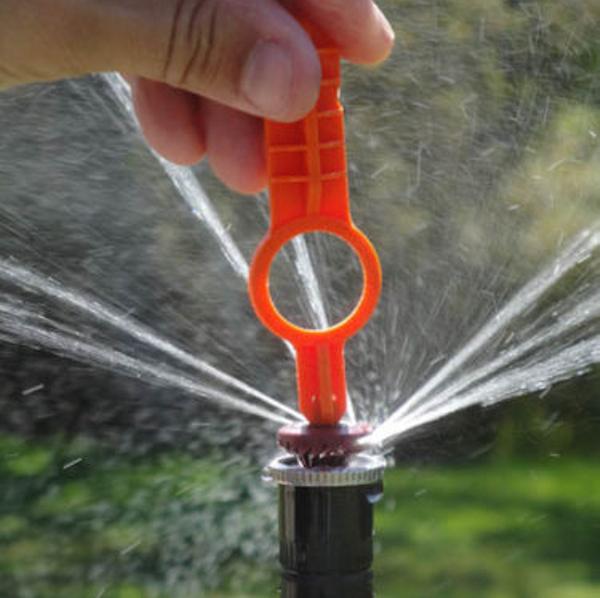
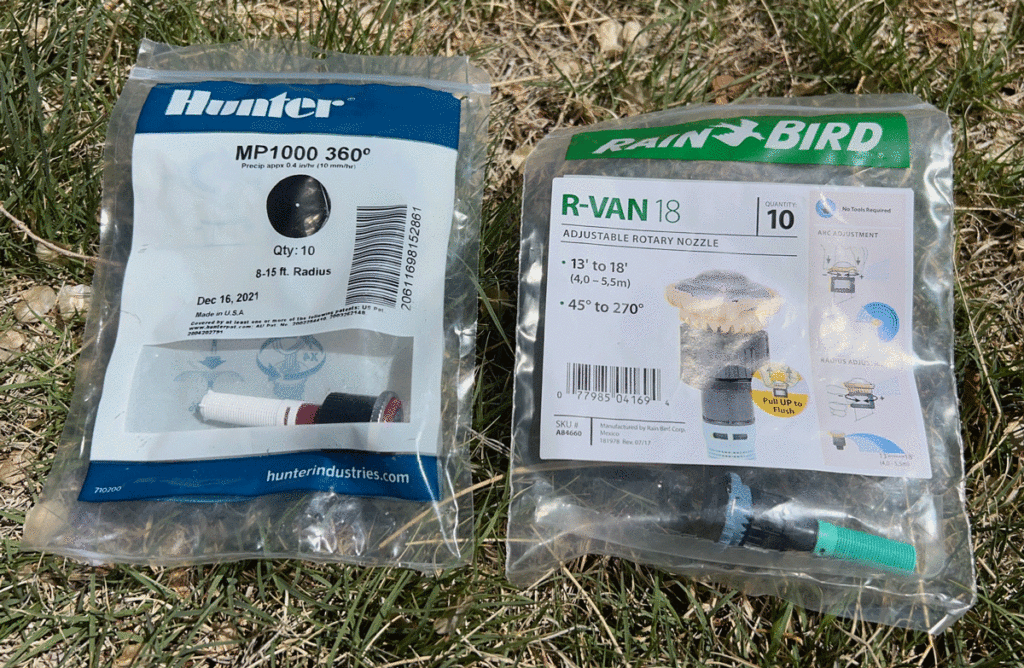
To make the upgrade, carefully pull the riser out of the sprinkler body, it's spring loaded so keep a hold of it while you unscrew the old nozzle and replace it. After you replace the nozzle you may need to turn the system back on and rotate the body slightly to adjust the spray direction. Pull up the existing nozzles in your sprinklers. While holding them, remove the cap from the sprinkler and install the appropriate spray nozzle, as indicated on the plan. If you are using Hunter brand nozzles be sure to also buy this little orange tool to adjust the spray arc. Rainbird nozzles can be adjusted by turning the ridged rings with your fingers.
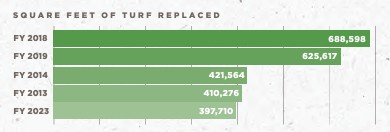
The Water Authority’s xeriscape rebate program, and predecessor programs run by the city of Albuquerque, have seen about 12 million square feet of turf replaced over the past 25 or so years. Since 2009, the top five years for program participation were:
This has contributed to a reduction in daily per capita water consumption from 250+ gallons in the mid-1990s to about 124 today. Replacement of turf with desert-friendly landscapes has always been a key component of Albuquerque’s multidecade conservation drive and of the Water Authority’s 100-year management plan, WATER 2120, which was adopted in 2016. Now, we’ve joined other Western water utilities in committing to pursue removal of 30% of remaining “non-functional” turf in our respective service areas over the next several years. That does NOT mean the wholesale removal of cherished green spaces in the name of saving water. Parks, ballfields and children’s backyard play areas are great places to have grass. Parking lots, median strips and emerald-green front yards are often a different story — and their owners may be able to save water and money by voluntarily exploring xeric alternatives.
To qualify for rebates, those alternatives must include landscape plans that are rich in climate appropriate trees, shrubs and plants. The idea isn’t to just pave over a patch of grass, replace it with gravel or let it revert to unsightly weeds. Plants and trees aren’t just pretty to look at: They create shade that reduces the “heat sink” effect — and the demand for water. So, yes, we want to “get off the lawn.” Doing so will help us meet important conservation goals. But we can do it in a way that preserves the benefits that functional turf and green spaces can offer.
Check out some of our recent projects:
Paradise Hills Golf Course
Project timeline: 2011-2022
Total landscape transformation: 1.4 million sq. ft.
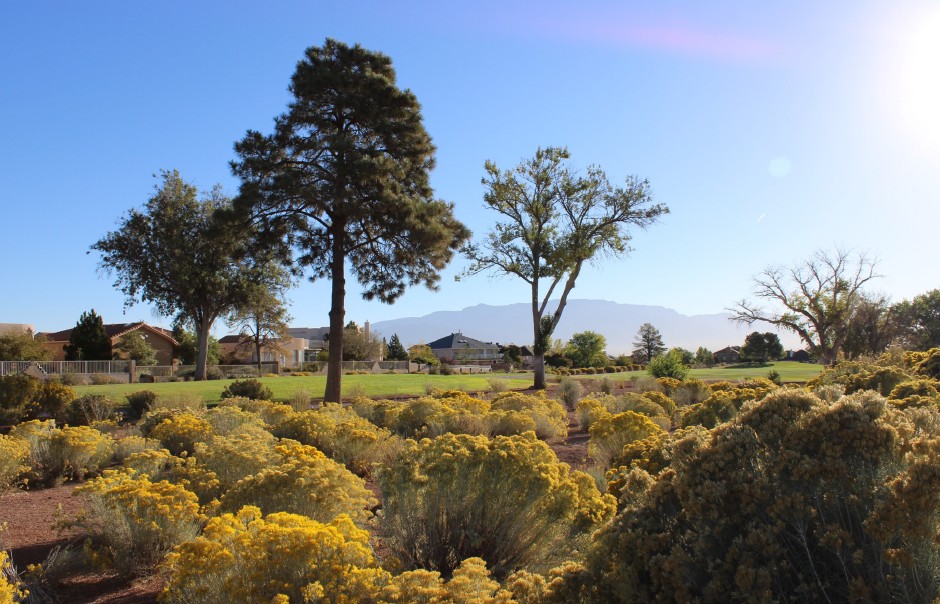
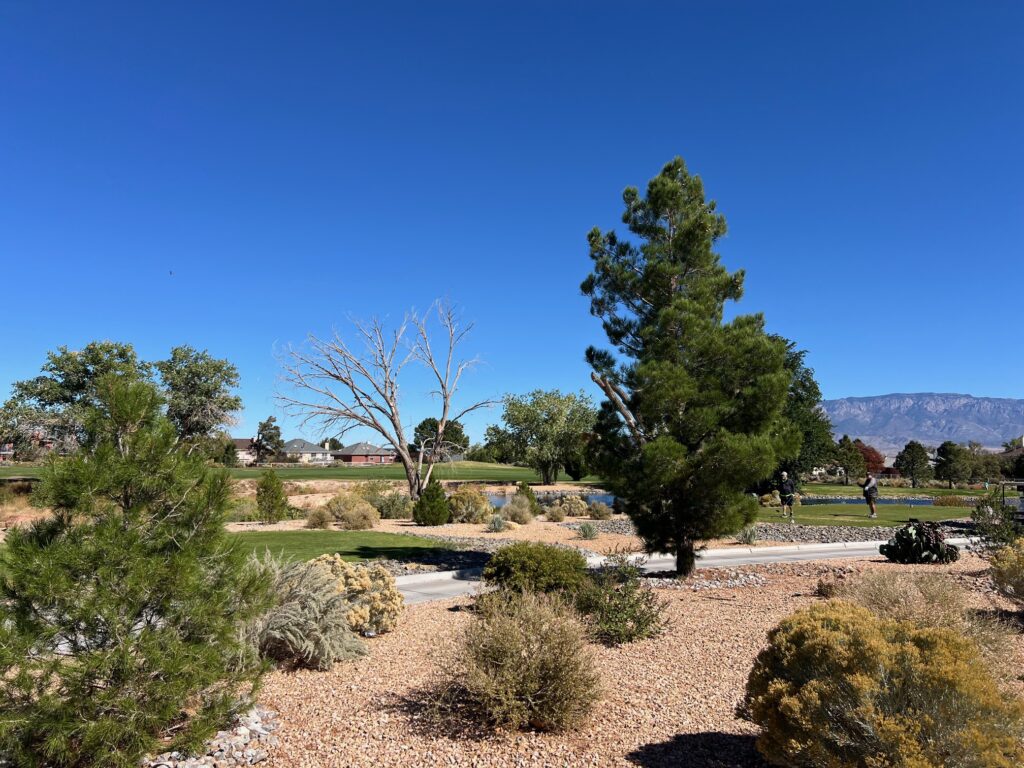
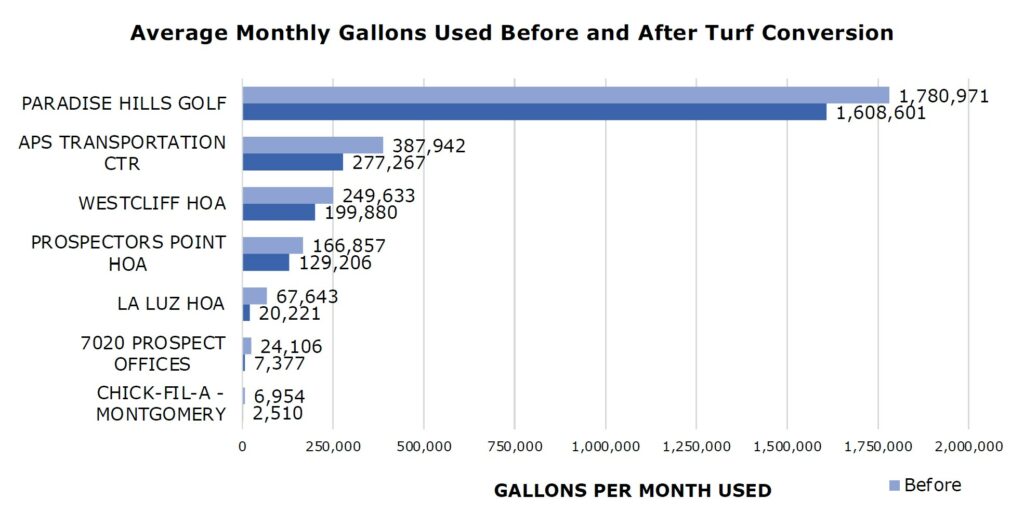
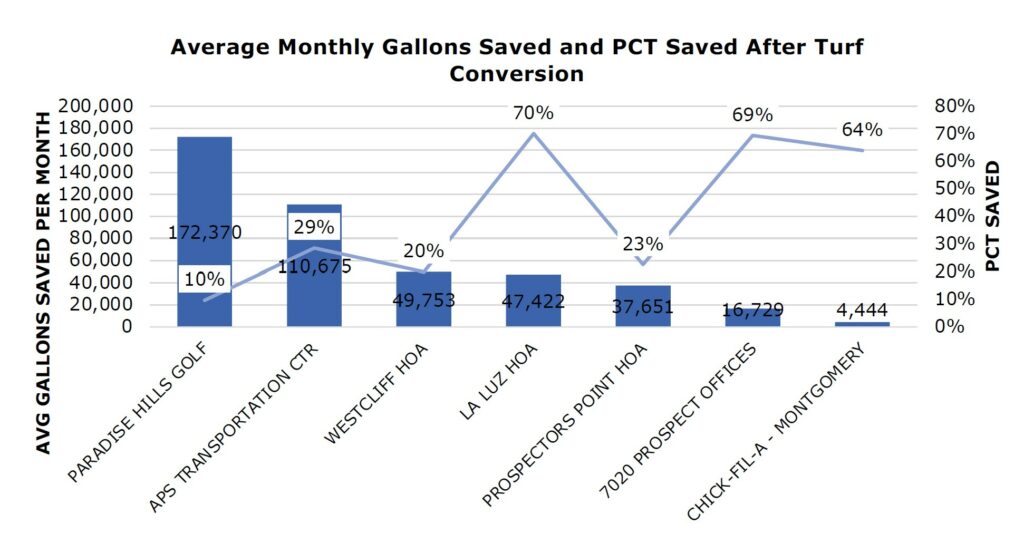
Paradise Hills Golf Course (formerly known as Desert Greens Golf Course), a private country club on Albuquerque’s northwest side, had been served since its construction in 1962 by a private water utility charging artificially low, subsidized rates. When the Water Authority acquired the private utility in 2009 and began charging ordinance-based rates, the course’s operating costs increased significantly. With its business model no longer tenable, Desert Greens was in danger of shutting down. Fortunately, help arrived in the form of the Water Authority’s xeriscape rebate program, which Desert Greens used to finance the removal of turf from non-playable irrigated areas. By 2021, the golf course had transformed nearly 1.4 million square feet of turf into xeric landscapes, conserved more than 350 million gallons of water, and — key to the course’s survival — saved over $2 million in water bills. The end result is an aesthetically pleasing, targeted-play course that patrons love — and which can continue to operate at a profit.
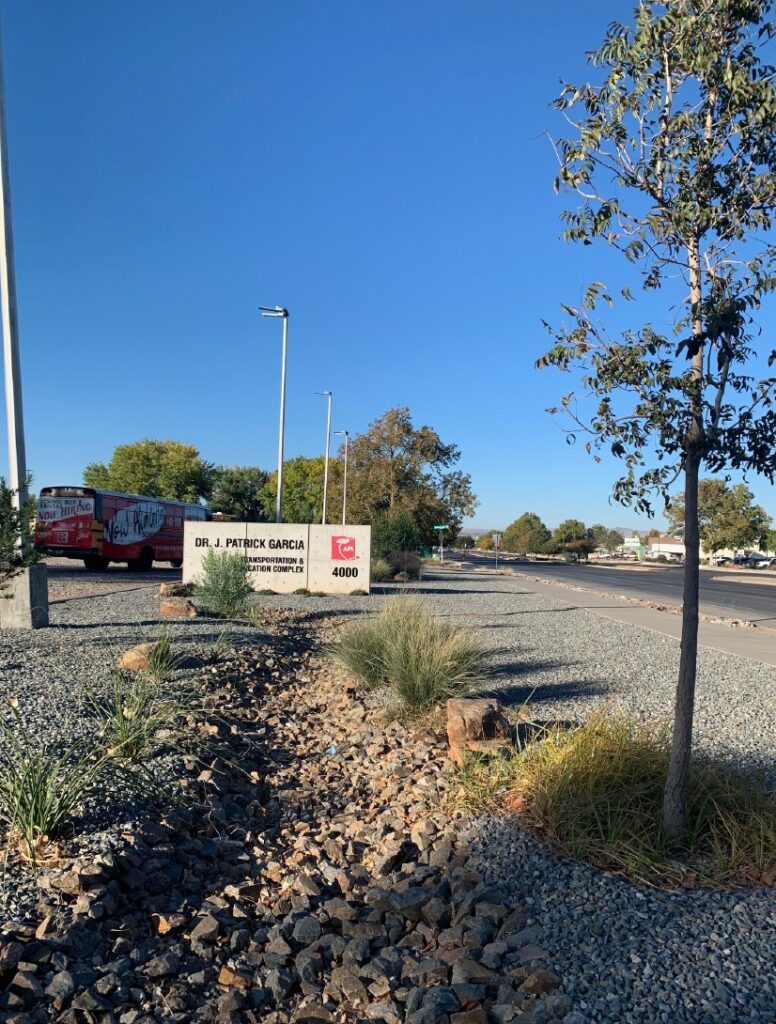
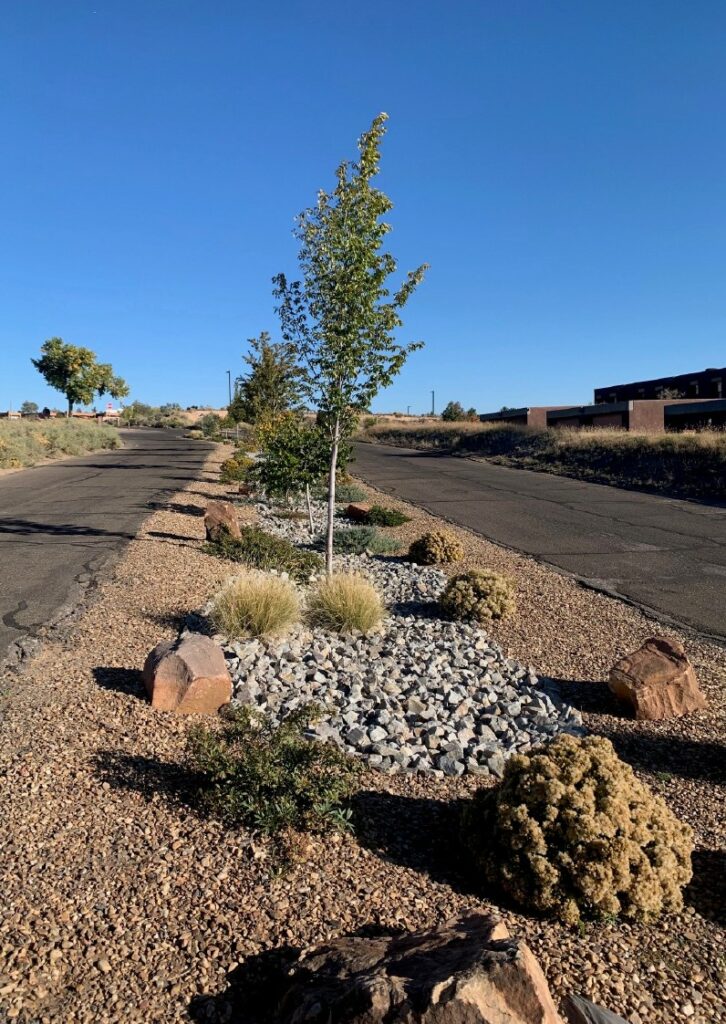
Dr. J. Patrick Garcia (APS) Transportation/Education Complex
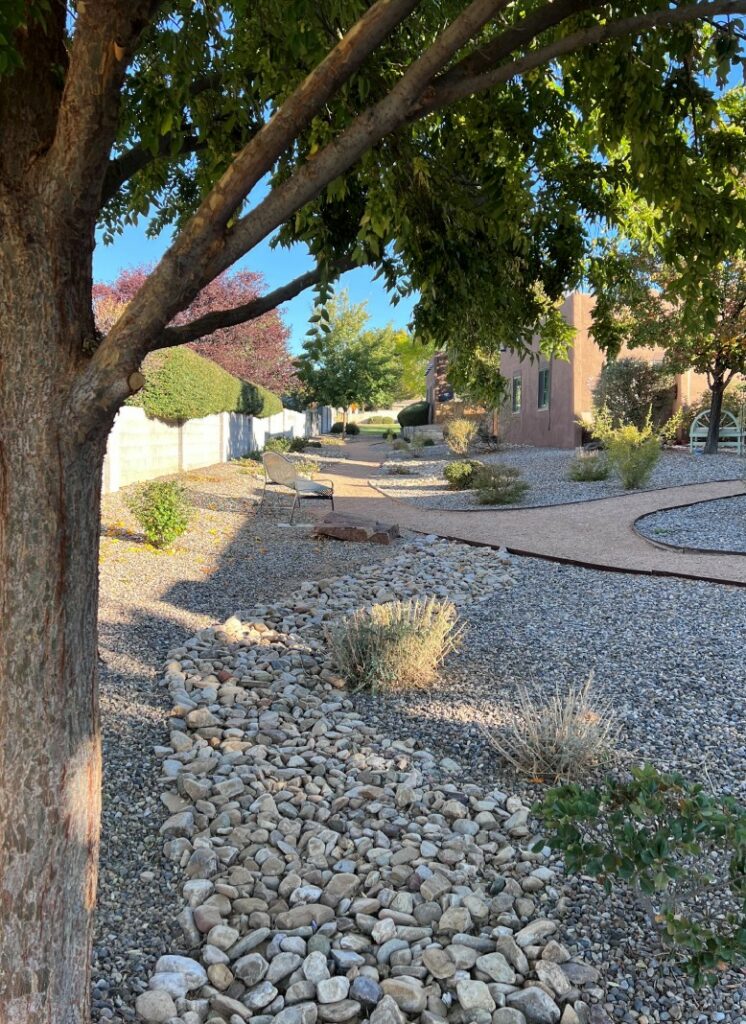
Plant types: Lacebark elm, escarpment live oak, frontier elm, Oklahoma redbud, crape myrtle, turpentine bush, blue grama, Chinese pistache, catmint
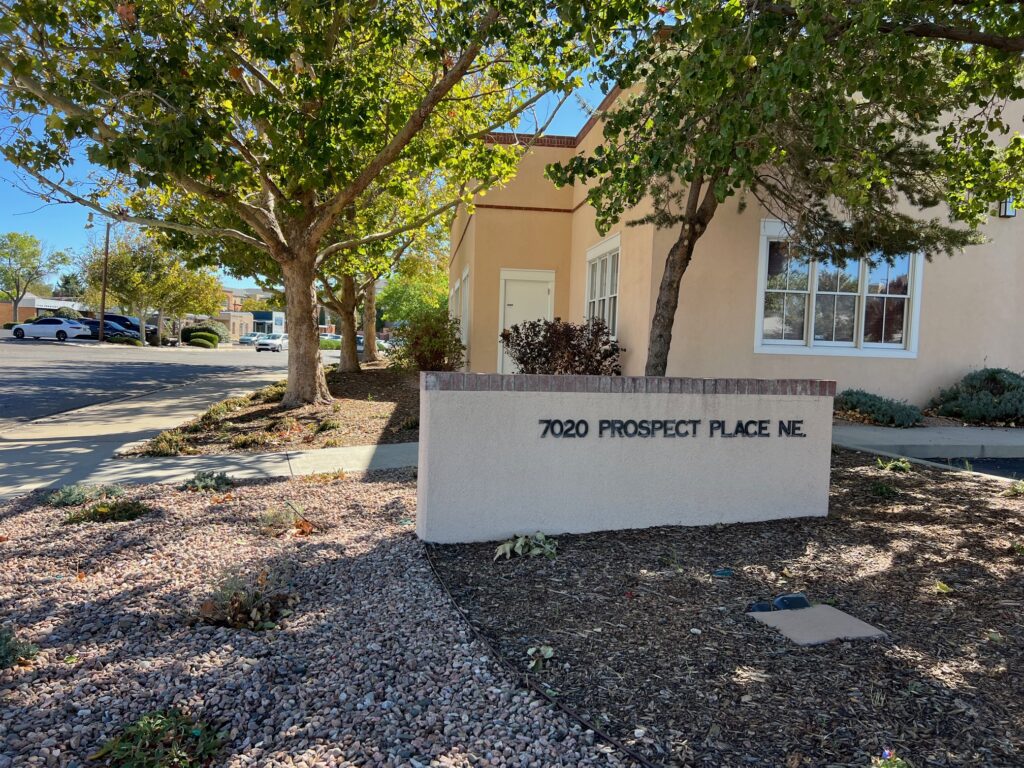
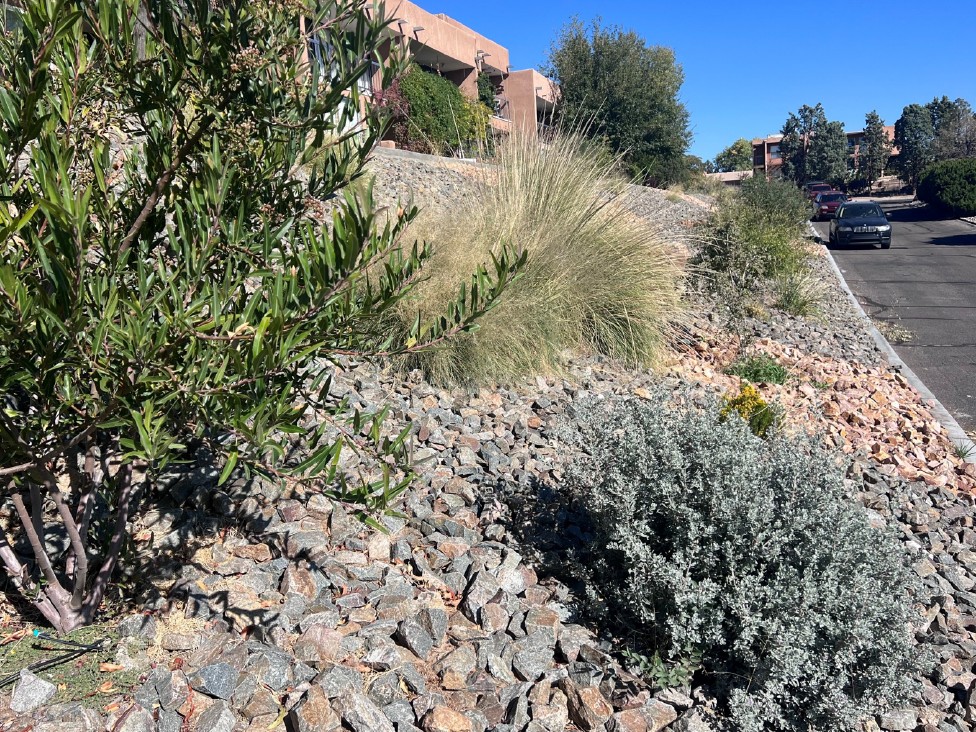
Commercial Office Park
Project timeline: 2023
Total landscape transformation:1,540 sq. ft.
Water savings to date: 83,645 gallons
Rebate amount: $3,080
Total plants: 134
Plant types: Creeping germander, dwarf plumbago, golden columbine, turpentine bush, little bluestem, English lavender, ornamental pear, London plane tree
What is urban heat? Dark surfaces like concrete, asphalt and brick absorb and retain heat from the sun. Little spaces between buildings can create heat canyons that trap this heat, forming “islands” that are warmer than rural or suburban areas.
Urban heat can affect us in many ways, such as increasing heat stroke, heart and lung diseases, energy costs, general discomfort, hyperthermia, and poor air quality. The U.S. Environmental Protection Agency projects that by 2040 Albuquerque will see four times the current annual number of days with temperatures of over 100 degrees.
But trees can help! Trees provide shade to keep us and the ground cool, as well as cooling the air through water loss, or evapotranspiration. Increasing the urban canopy can lower city temperatures.
Let’s Plant Albuquerque is a broad community alliance dedicated to planting 100,000 new trees in the city by 2030. The alliance represents a broad range of civic, government and community organizations dedicated to this goal.
DEVELOP, a NASA Applied Sciences Program, studied Albuquerque’s urban heat. DEVELOP conducts feasibility studies that bridge the gap between Earth science information and society and works with communities and organizations to address environmental and policy concerns.
NASA DEVELOP found that a 30% increase in tree shade can help offset rising temperatures and allow neighborhoods to be cooler. Trees can also increase your body’s “thermal comfort,” how cool and comfortable you feel on hot days.
The city’s parks canopy alone provides many benefits, including energy savings, air quality improvements and increased property values. The nearly 30,000 trees in the city’s public spaces provide:
$1.7 million in carbon monetary benefit
$624,000 in stormwater monetary benefit
$3.6 million in (overall monetary benefit
The Water Authority would like to encourage you to help cool our city by planting trees. The Tree-Bate program helps offset the cost of planting and maintaining trees.
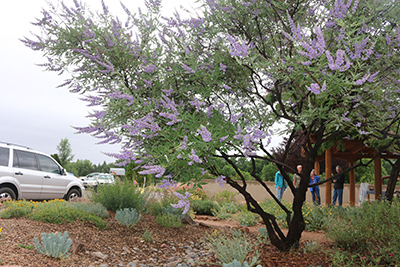
When you buy a new tree, you can receive a rebate equal to 25% of the purchase price up to $100 a year. To help customers narrow down their purchasing decisions, the Water Authority assembled a list of 20 trees that are proven to thrive in our area, are commonly available for purchase, fit a variety of situations and provide numerous environmental benefits. A broader list of more than 160 qualifying trees is in the Water Authority’s Xeriscaping Guide. They include:
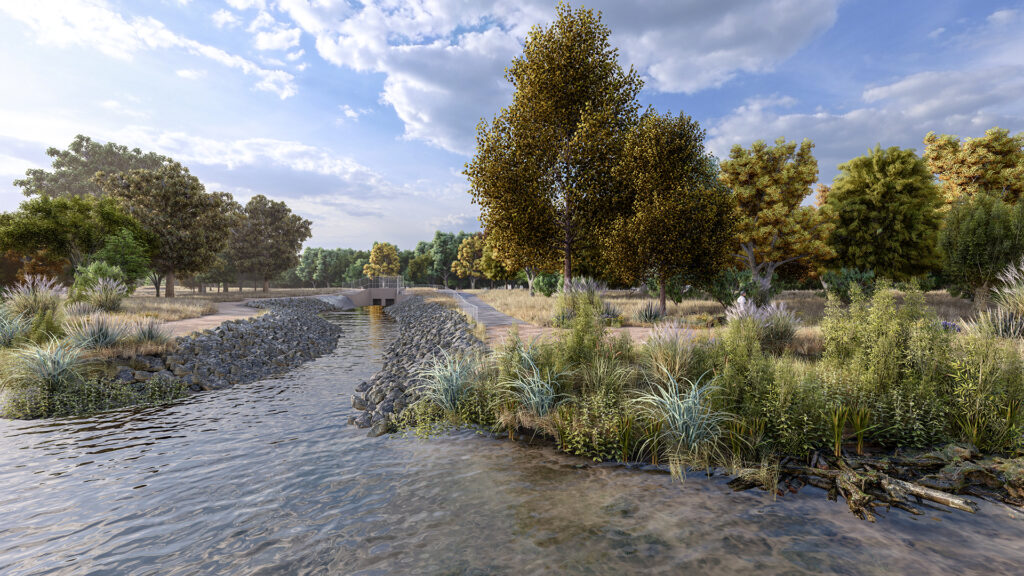
Water flowing from the Southside Water Reclamation Plant is so clear that a person can see rocks at the bottom of the riverbed, and the Albuquerque Bernalillo County Water Utility Authority is trying to make that outflow a better habitat for fish and more accessible to hikers, joggers, bikers and anglers.
The water reclamation plant is where Albuquerque’s wastewater comes to be treated for reuse. Some is used as reuse water in sprinkler systems, while some is thoroughly cleaned and released into the Rio Grande. The outflow puts about 55 million gallons per day into the river, said Diane Agnew, water rights program manager with the Water Authority.
The water has low sediment and a nice temperature — so fish really like to swim there, she said. As a result, fisherman come to enjoy it, too.
“People love to fish right here,” Agnew said. But the outflow could be better. That’s the idea behind the treatment plant outflow restoration project, which aims to improve water quality, increase community and maintenance access, and rehabilitate the flood plain. The design is complete, and the restoration project is permitted but still needs $2.5 million in additional funding to build.
The total cost for planning, permitting, design and construction will be $6.6 million, and the project has already received some funding from the state Legislature, the Office of Natural Resources Trustee and the Water Trust Board.
“We designed this using historical flow data in the Rio Grande, so we know that with the designed flows, we will get the number of days that the fish need for spawning,” Agnew said.
The project is trying to make the outflow a better habitat for fish, especially the endangered Rio Grande silvery minnow.
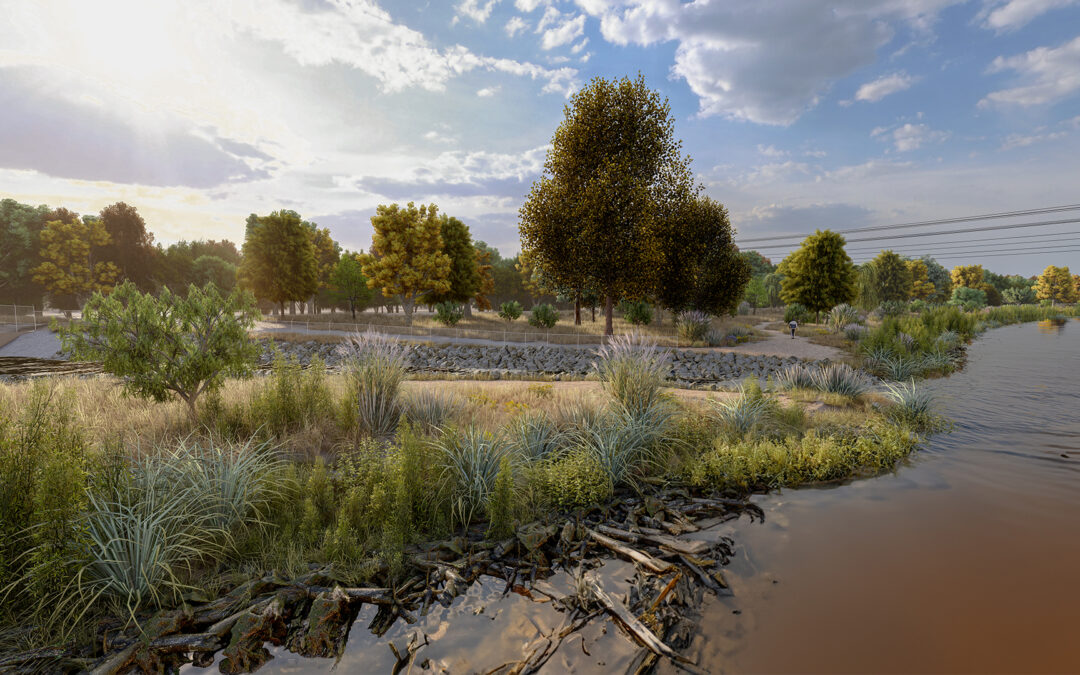
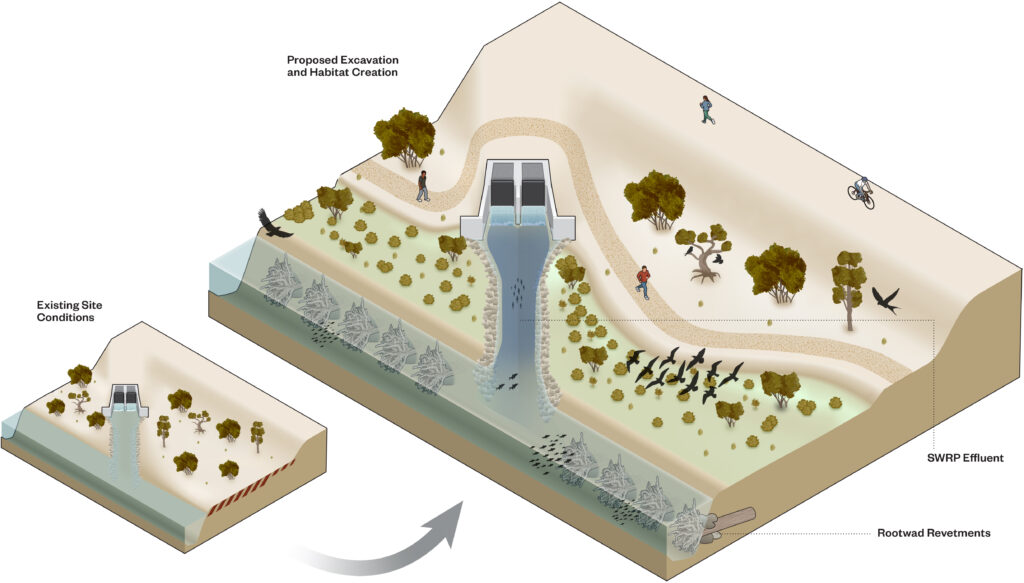
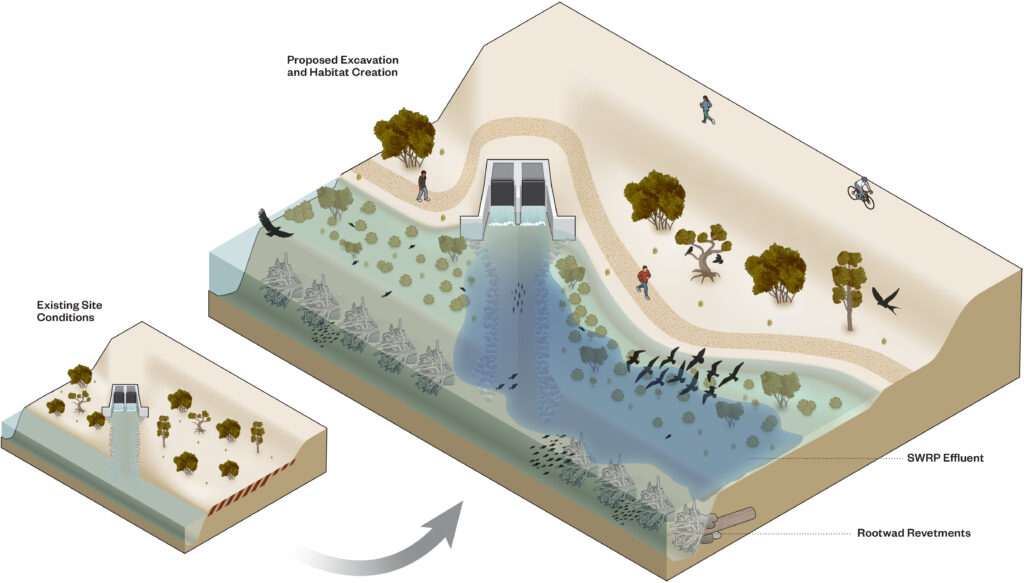
At present, the bank is steep with a roughly 2-foot drop to the river. The restoration project will turn the bank back into a flood plain, where water can wash over the bank, depositing ground water, watering native plants and making the space more appealing to fish and safer for anglers.
“Not only are we creating a flood plain terrace where the water will come up onto it, we’re putting in these bioengineering features called rootwad revetments. So, we’re taking trees that were already dead, and we’re going to cut them and turn them around so their roots stick out into the stream. And that creates stream stability, so that we won’t get as much erosion and we’ll get less sediment in the water, which is good for the fish. And, create little nooks and crannies for the fish to spawn in and hang out in until the eggs hatch,” Agnew said.
The restoration project would include 1,100 feet of rootwad revetments and calls for removing invasive species like salt cedar and ravenna grass and replacing them with native plant species over 18 acres. The native plant species will create a tiered habitat, with grasses, bushes and trees.
“That allows the different animals to have habitat, and those root systems are all individually different, too, so it helps increase the stability of the flood plain overall. Whereas out here, and as you see all over the Rio Grande, there’s increased sedimentation and a lot of erosion that occurs in this area. The river has to get to a pretty high level before it floods. This spring, the river got to 4,000 CFS (cubic feet per second) and this area did not flood,” Agnew said.
After the project, she said, the area should start flooding at 900 CFS.
The project should benefit the yellow-billed cuckoo and the Southwestern willow flycatcher, two protected birds, by creating more spots where they can nest. Planting milkweed will benefit the monarch butterfly.
The work should make the area more accessible to the public by connecting two bosque trail systems on either side of the outflow. The project would create 4,800 feet of new trails. Crews also will be removing 198 jetty jacks.
The Legislature has provided about $1.2 million for planning and design, but District 26 Sen. Antonio “Moe” Maestas, a Democrat, is advocating for more investment in bosque restoration because he believes the bosque is underused.
“We’re one of the only cities in the country that doesn’t utilize its river for recreation or economic purposes,” Maestas said. “Given the fires that happened last spring, it’s imperative that we deal with the fuels and the underbrush.”
There’s not a city with a comparable river, Maestas said, but the San Antonio River Walk does offer an example of a river becoming central to a city’s tourism.
“Because we want to protect it, we do nothing with it,” Maestas said. “That’s not consistent with what we’re capable of.”
Additional funding from the state likely would have to come from capital outlay appropriations, Maestas said. He’s on the lookout for other project proposals that would restore or enhance the bosque.
“We have the financial resources to turn the bosque in Bernalillo County into a beautiful state park that we can all be proud of, that increases environmental protections and will add to our quality of life and build the city we want to build, which is a city that climbs out of poverty and keeps future generations from moving away,” Maestas said.
Construction should begin in August 2024 due to a $3 million dollar federal grant from the Bureau of Reclamation. Once construction starts, the project is expected to be finished in eight months. This important project will improve the riparian habitat for endangered species and make the outfall area more attractive to hikers and bikers in this section of the Bosque.
Author: Cathy Cook is a news reporter for the Albuquerque Journal. Reach her via email at [email protected]. Reprinted with permission from the Albuquerque Journal.