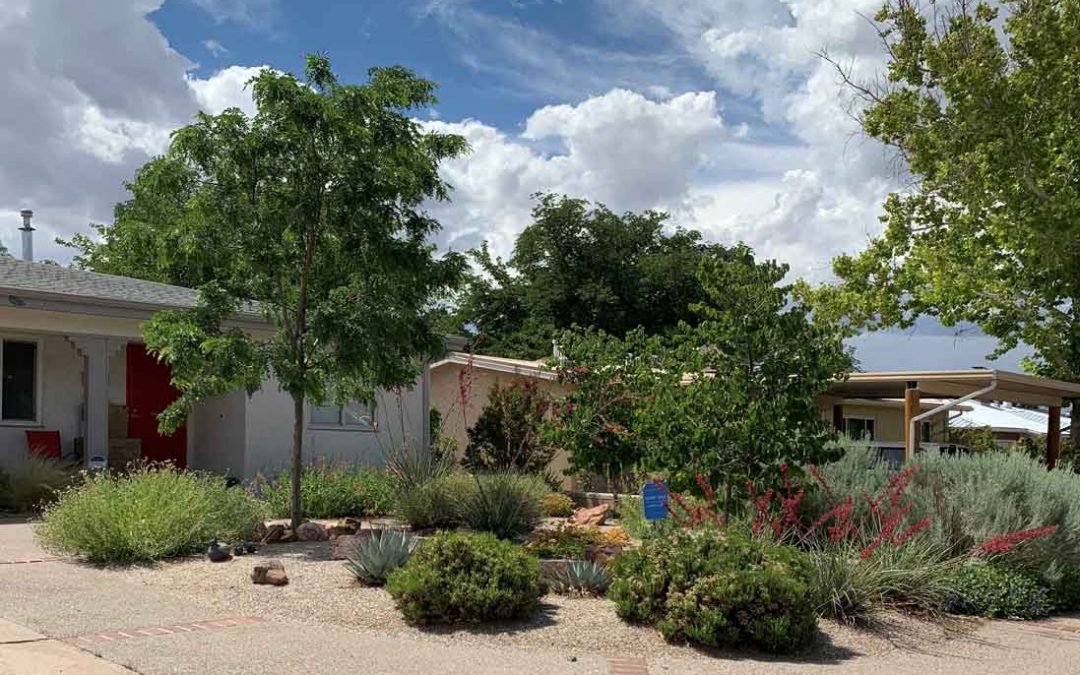
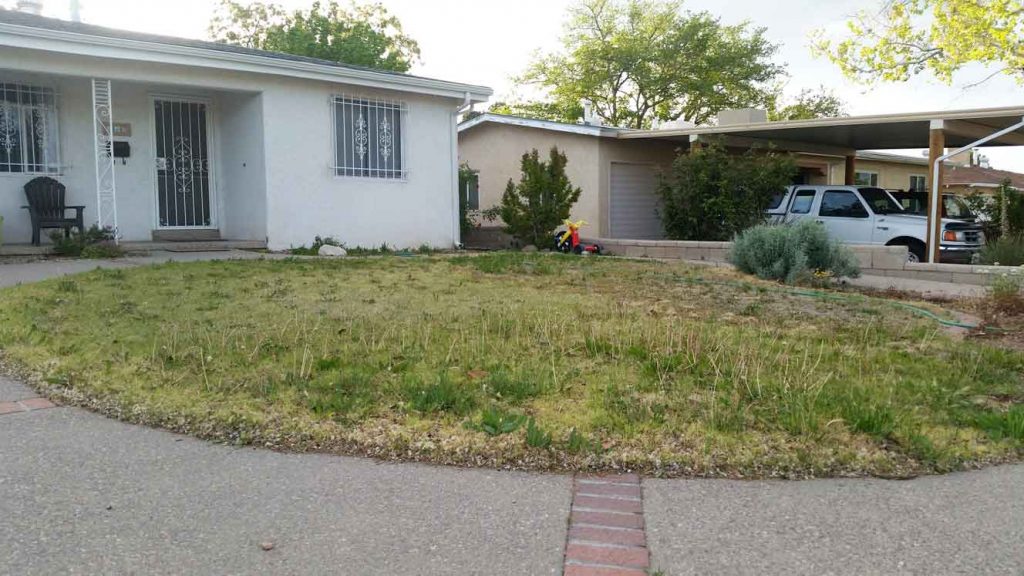
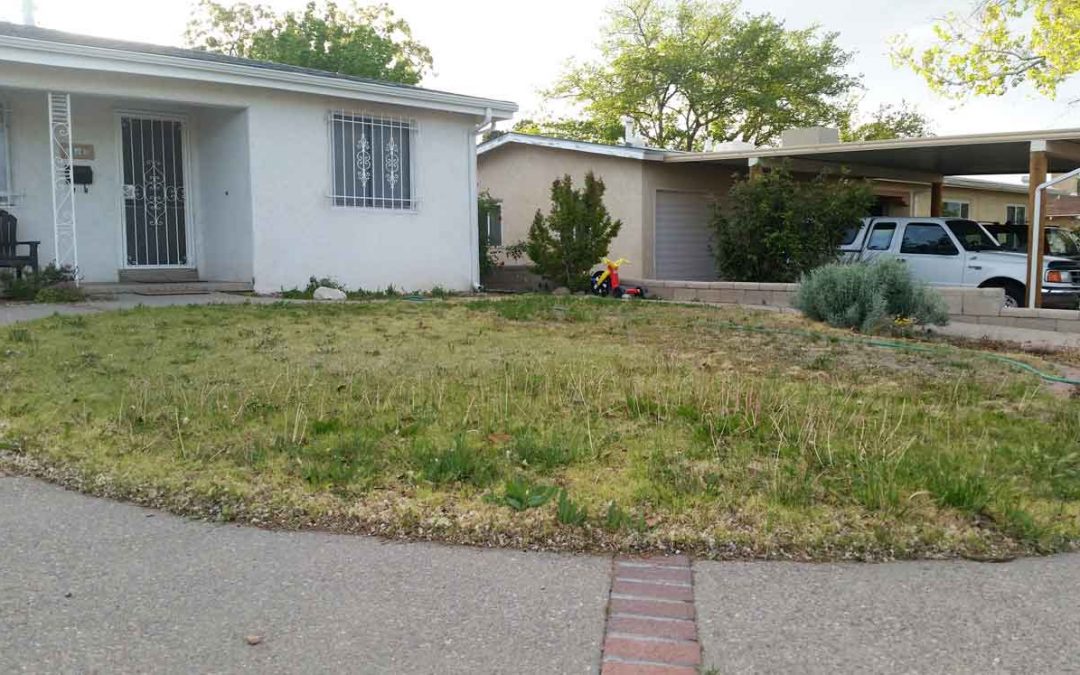
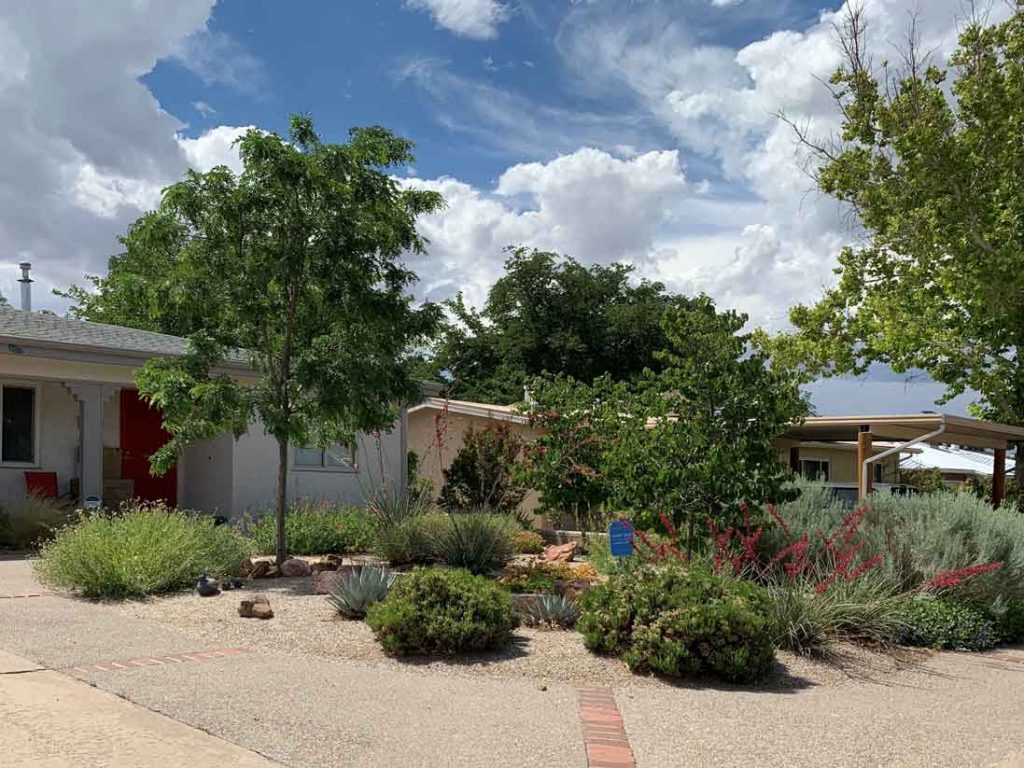
Current Drought conditions mean even more water will need to be used for your high-water use lawn to remain healthy. If you have been thinking about transforming your lawn into a desert friendly xeriscape there is no better time to do it than right now! These types of landscapes are more resilient to climate variability and can provide for up to 30% in water savings or more. Rebates of $1.00 per square foot are available for our residential customers. Certain restrictions apply, and your plans must be approved in advance by Water Authority staff so don’t start removing your lawn until you have submitted an application and contacted the inspector. Learn about our Xeriscape rebate here and get the link to the application portal.
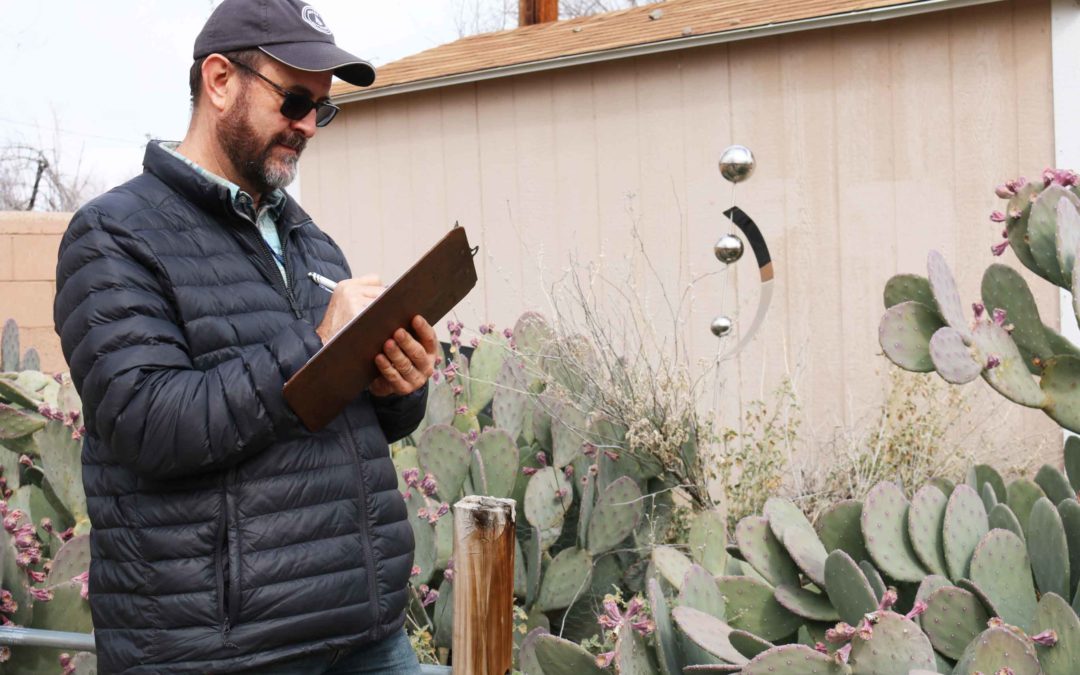
Our expert staff can provide advice and free resources on how to start your beautiful xeriscape transformation. If your application is approved an inspection will be scheduled to verify that your grass type is considered high water use and has sprinkler irrigation. The grass must be currently cared for at the time of the inspection to qualify for the rebate. The inspection is a great opportunity to ask questions and get opinions from our xeriscape expert on various aspects of transformation projects such as plant selection, irrigation conversion and tips for saving money by doing it yourself or hiring a professional landscaper.
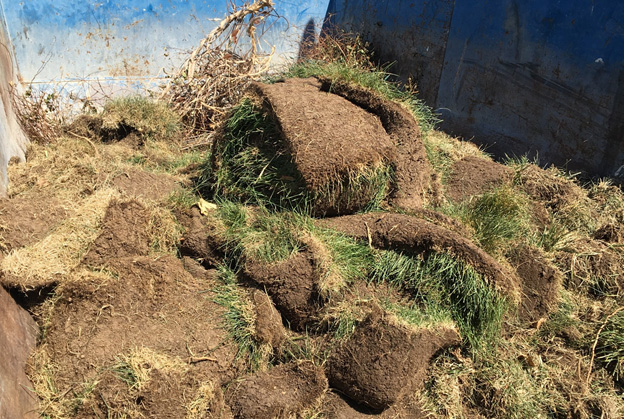
To remove your lawn we recommend using a sod cutter because it’s a fast and effective, chemical-free method to remove your lawn. Many local equipment rental companies rent sod cutters. Approved participants of the xeriscape conversion rebate program may receive 25% up to $100 in rebate off the cost of renting equipment like a sodcutter or skidsteer for removing grass. Before removing the lawn, make sure the soil is not too wet or too dry. Set the cutting blade depth at the shallowest setting necessary on the sod cutter to help retain as much valuable soil on site as possible. The removed sod should be recycled at one of our local composting facilities. One advantage of using a sod cutter is that it is chemical-free, fast, and you can continue with the next step of your project on that same day.
Please note: This method is not recommended for lawns that have mature trees. Sod cutters can damage shallow, fine-hair feeder roots that are critical for water and air uptake. Sod cutters are also not recommended for lawns with Bermuda grass due to the nature of its rooting system. For these cases you might want to consider herbicides. Take advantage of our free ask an expert email service if you have questions about what type of lawn you have or any other questions about xeriscape transformations.
Additionally, xeriscape rebate participants get 25% off the cost of installing bulk organic mulch up to $100. Not only is organic mulch such as shredded wood chips, aesthetically appealing, it provides numerous other benefits. Mulch increases moisture retention in the soil, encourages healthy root establishment, and greatly reduces weeds. A 3”-4” thick layer of organic mulch and drip irrigation are two of the best tools we have for keeping our landscapes healthy and resilient in times of drought.
Check out the Desert Friendly Xeriscape Rebate page to learn more about the qualifications, requirements and process to apply for this generous rebate. You may also contact our xeriscape specialist Amos Arber, at [email protected] or 505-208-2015
Author: Amos Arber, Xeriscape Incentive Inspector, and Certified Arborist for the Water Conservation Department of the Water Authority. Have a question about the article? [email protected]
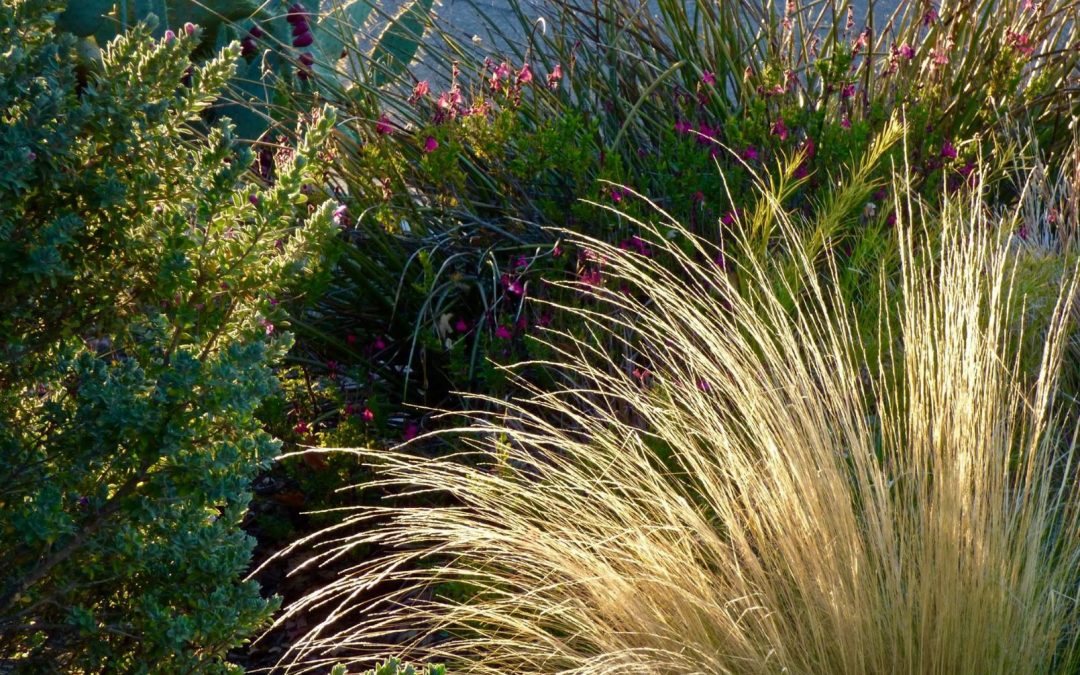
Winter is the best time to rethink your high water use turfgrass and create a plan for a xeriscape yard of desert-friendly plants. A desert friendly xeriscape will help you save water, reduce maintenance, encourage pollinators, and beat the heat of the summer. We define a desert friendly xeriscape as a landscape that has half of the total landscape area with desert friendly plants selected from our Xeriscape Guide and typically watered with drip systems or by hand.
Water Authority residential customers who transform their landscapes from high water use turfgrass to a desert friendly xeriscape can qualify for a $1.00 per square foot rebate. If you are interested in participating in the Desert Friendly Xeriscape Conversion Rebate, please do not start your turf removal project until you have applied online to the program and schedule an initial inspection. An initial inspection is required before removing your grass lawn to see if your project qualifies. If you answer yes to the questions below, your landscape meets the minimum requirements.
Do you have living turfgrass on your site? (Rebates cannot be given to work that is already complete.)
Do you have an existing operating SPRAY irrigation system on your site?
If you answered YES to the above questions, then your next step is to create the landscape plan, apply and schedule an inspection. Feel free to [email protected] for tips on planning your desert friendly xeriscape.
Author: Jill Brown, ASLA, is a Landscape Architect and owner of My Landscape Coach in Albuquerque, NM. Have a question about the article? [email protected]
With drought conditions predicted to continue for the foreseeable future, we’re likely to water more often this spring and summer. Make every drop count – and keep us on track to meet our conservation goals – by performing routine maintenance to maximize your sprinkler system’s efficiency.
Monthly
Check for leaks by inspecting water lines, sprinklers, emitters, and other components. Look for wet spots in the landscape and listen for hissing to help locate issues.
Your irrigation system is only as good as its aim. Adjust sprinklers and emitters to make sure they’re delivering water to the landscape and not onto rocks, bare earth, or pavement.
Replace damaged parts immediately with identical or equivalent parts. This ensures uniform coverage and optimal system efficiency.
Locate and clean any clogged equipment.
Use water meter and historical data to help reveal hidden leaks.
Check to make sure irrigation controller is set appropriately for the season
Spring
As the watering season gets underway, check your irrigation system for leaks and clogged, broken, or missing sprinkler heads and emitters.
An outdated irrigation system can waste time, water, and money. Consider installing a new WaterSense-labeled, “smart” irrigation controller to take the guesswork out of scheduling (rebates available).
Set the controller for watering frequency, start times, and duration per zone per program.
Replace the back-up battery in the controller.
Test the manual shut-off or isolation valve.
Check the water pressure in each irrigation zone.
Check and clean filters, wherever they are in the system.
Check and clean the filter screen in each sprinkler body. Adjust the rotor arc or spray pattern to eliminate water waste.
Test heads to make sure they are delivering consistently and efficiently.
Inspect all drip emitters (look for wet zones after running a complete cycle). Unclog or replace any that are malfunctioning.
Early Summer
Adjust controller for the appropriate seasonal setting.
Adjust sprinklers and emitters to make sure they’re delivering water to the landscape and not onto rocks, bare earth, or pavement.
Check and clean filters, wherever they are in the system.
Inspect all drip emitters (look for wet zones after running a complete cycle). Unclog or replace any that are malfunctioning.
As plants grow bigger, move the emitters to the edge of each plant’s root ball or drip line to encourage further root development.
Fall
Adjust controller for the appropriate seasonal setting.
Test the manual shut-off or isolation valve.
Check and clean filters, wherever they are in the system.
Inspect all drip emitters (look for wet zones after running a complete cycle). Unclog or replace any that are malfunctioning.
Winter
Guard your irrigation system against freezing temperatures by draining pipes and tubing and properly winterizing your system.
When temperatures are below 40 degrees Fahrenheit, discontinue automatic watering and turn on systems manually or hand water as needed.
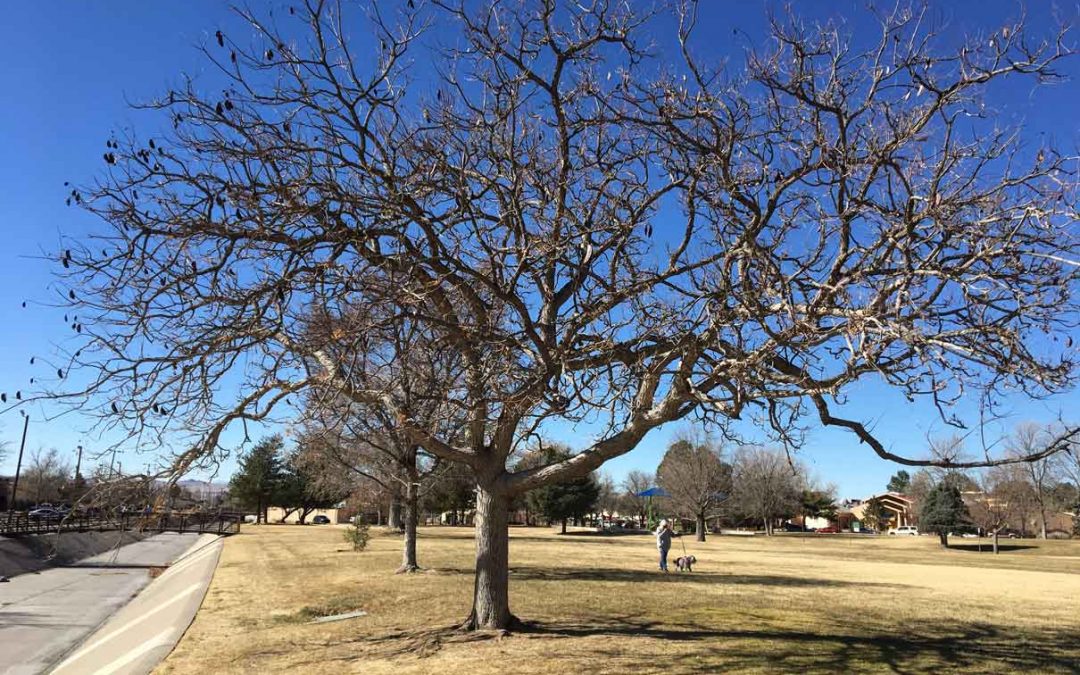
In an arid city like Albuquerque, trees and the urban forest are even more important than in places with more moisture. Trees provide shade and habitat, and help cool the urban landscape. To sustain a healthy canopy trees require special care given the arid climate, ongoing drought, and warming temperatures. This year’s hot, dry conditions highlight the need for New Mexicans to take even more care of their trees – and to plan for which species will grow best in increasingly warm conditions. This was especially true this past September when a windstorm wreaked havoc on trees throughout the city.
In collaboration with Our Land New Mexico, a local environmental show on NMPBS, we are sharing a short (7 minute) episode they did about the urban forest in Albuquerque.
The episode discusses how the vitality of a city can be measured in part by the health of its trees and plant life. There is also evidence that tells us how exposure to nature provides emotional and social benefits, lowers stress levels and encourages more community engagement in residential settings.
We encourage you to take care of your trees to support our urban forest and if you are adding a new tree email [email protected] with questions. Local tree experts around the Southwest, including conservation staff from the Water Authority, with the guidance of the Nature Conservancy, have put together a climate-ready tree list that includes trees that will thrive in our current and future climate.
Author: Water Authority in collaboration with correspondent Laura Paskus of Our Land New Mexico and guest Joran Viers, City Forester, CABQ Parks Management Division. Have a question about the article? [email protected]
September days can have widely varying temperatures, with some days getting into the 90s, but we can count on nights being longer and cooler. This means that plants do not need to be watered as often. Ramping down how often you water your yard is a great way to save money on your water bill and keep plants happy.
After spending the summer putting energy into growing leaves, flowers, and fruit, plants use the fall to store water and energy in their roots for winter survival and spring growth. Proper watering supports this activity.
Ramping down your irrigation does not mean you should stop watering altogether. If you have a lawn, cut back to two days per week. Cut back to two times a month for mature trees (4 times a month for younger trees).
Water Authority customers have been inspired to convert their turf to sustainable, resilient xeriscapes that save water, time and money and provide habitat for wildlife and pollinators for many reasons. Below are some of our favorites:
“We just didn’t see the point of maintaining and paying to water the grass in the front yard. No matter how much we water and fertilize, the front lawn never looks good, and we don’t want to be the last house on the block with a not-so-great lawn.”
“Now that the kids are out of the house and we no longer have dogs, we don’t want to have such a high water-use landscape that requires weekly maintenance. We want to do our part in saving water for future generations and create a beautiful patch of nature in our backyard, especially now that we’re into birdwatching.”
“We may downsize someday, and our realtor said that having a beautiful low water use landscape is a good selling point.”
“We just moved to Albuquerque from another part of the country where grass grows easily, and we spent several hours a week mowing and weeding. We are done with mowing. We want a landscape that is regionally appropriate, with native and low water use plants and trees.”
“Our irrigation system seems to always need repair, and the grass never really looks that great.”
“We needed to replace our sewer line which meant digging up the front yard. It seemed like a good time to ditch the grass and convert it to a low maintenance landscape with new drip irrigation.”
Qualifying conversion projects by Water Authority residential customers may receive $1.00 per square foot of converted turf grass. This rebate has a specific application process. Only projects that have completed the application and passed inspections will qualify for the rebate. For more information visit our rebates page.
Pro Tip: Are you ready to convert your lawn to a xeriscape? Here is what local landscape contractor Tyson Hafler, owner of Southwest Horticulture, wants you to know before you start.
“Make sure you start with a green lawn. It is important to have a green lawn for two reasons. Water Authority needs to see a currently cared for, in good living condition green lawn to quality for the rebate. A live, green lawn is much easier and speedier to get rid of than a brown, dry, dead and dying lawn.”
Author: Amos Arber, Xeriscape Incentive Inspector with the Water Resources Division of the Water Authority. Pro Tip: Tyson Hafler, Landscape Contractor and Owner, Southwest Horticulture. Have a question about this article [email protected]