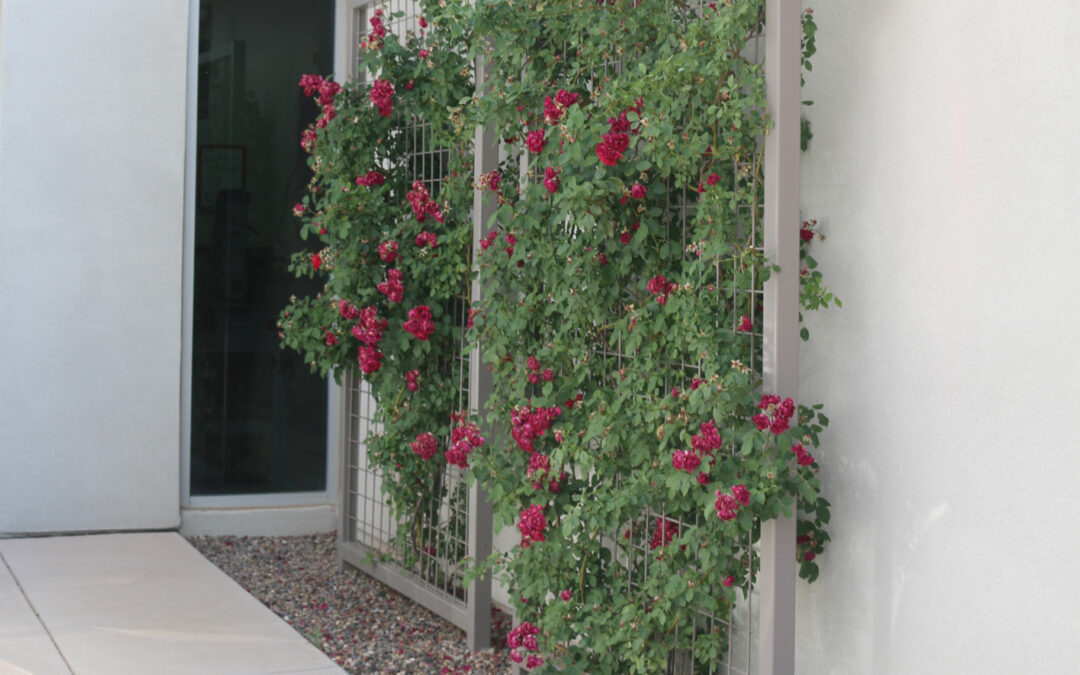
One of the questions the Water Authority xeriscape inspector gets asked most often is how to inexpensively build a trellis for vines. You can make a DIY trellis from materials that are easy to find at your local hardware store. Off-the-shelf trellises can be expensive, and more than likely they are too small. Most homeowners are looking for a trellis to go next to a house or concrete block wall or to divide spaces. Below are two trellis options that will suit those needs.
Freestanding Trellis
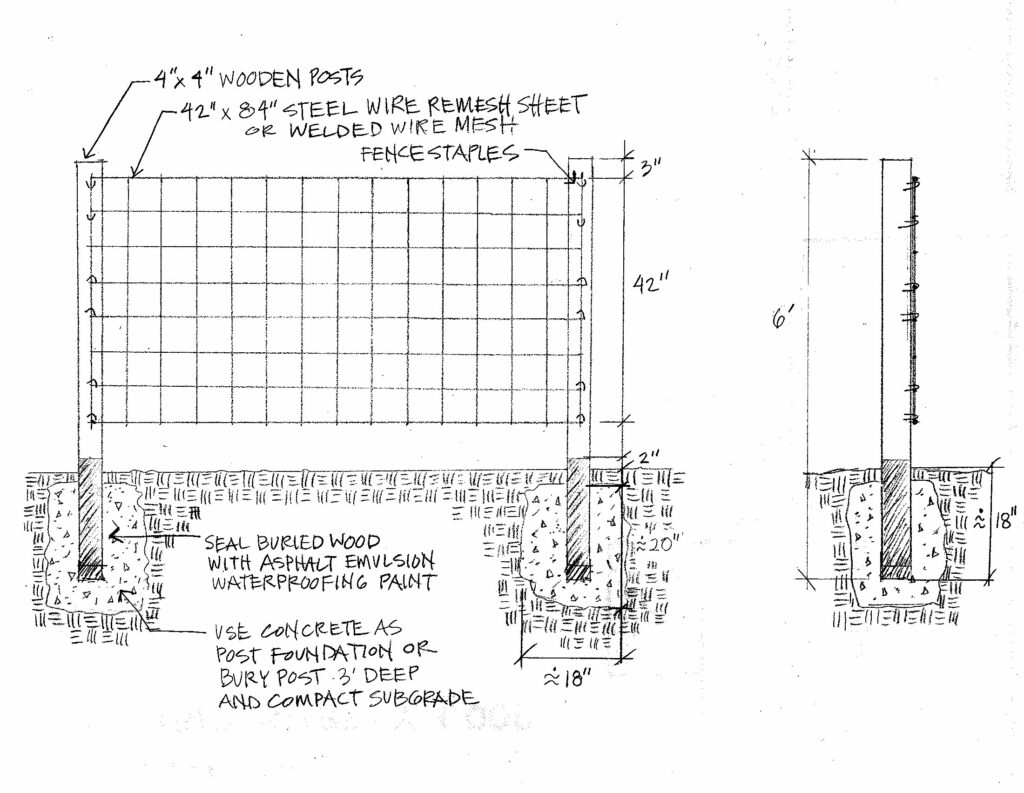
Materials
4”x4” post (height according to specific project need)
42”x84” steel wire remesh sheet or welded wire mesh
12 fence staples
Asphalt emulsion waterproofing paint or spray paint
Concrete
Tools
Shovel or post hole digger
Hammer
Paint brush
Measuring tape
Level
Step by Step
Step 1: Dig holes for post.
Step 2: Apply waterproofing paint to the section of the posts that will be buried.
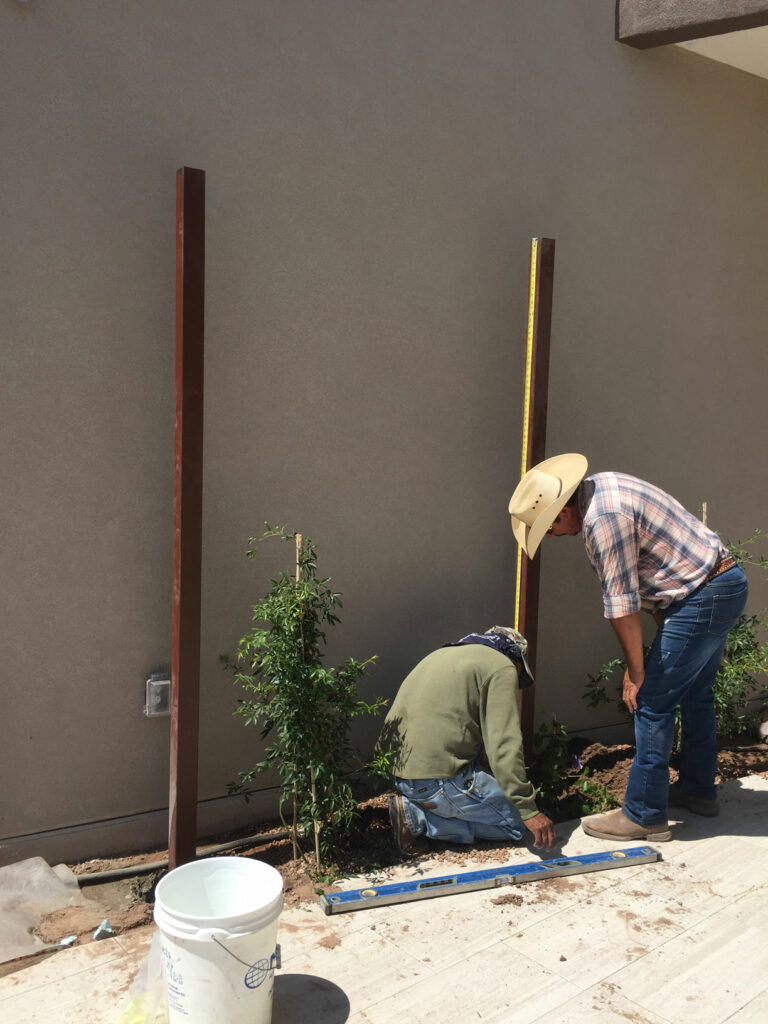
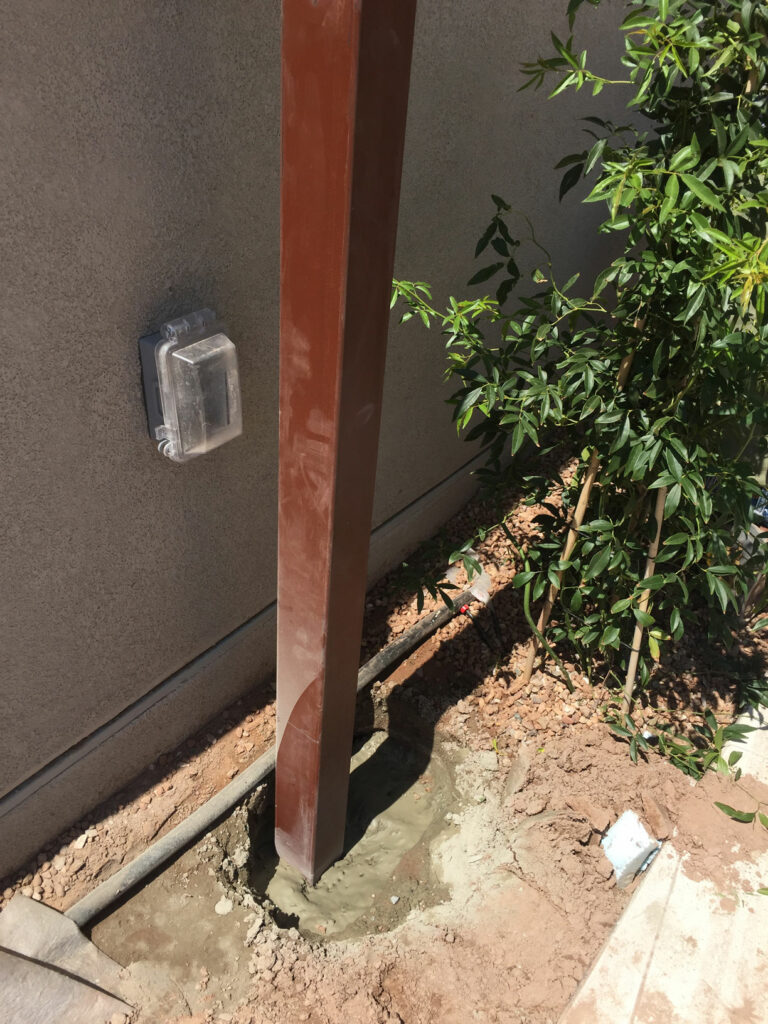
Step 3: Set post in hole. Measure and level post. Once leveled, fill the hole with concrete. If not using concrete, backfill with existing dirt, making sure dirt is compacted every four inches.
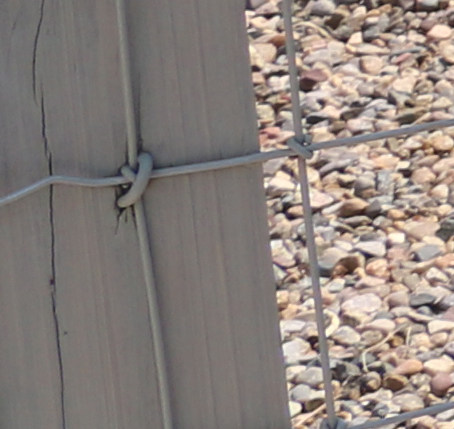
Step 4: Attach steel mesh to wood posts by hammering in fence staples.
Making sure post is the correct height and level. Concrete footing for post. Fence Staple
Trellis Attached to Concrete Block Wall
Materials
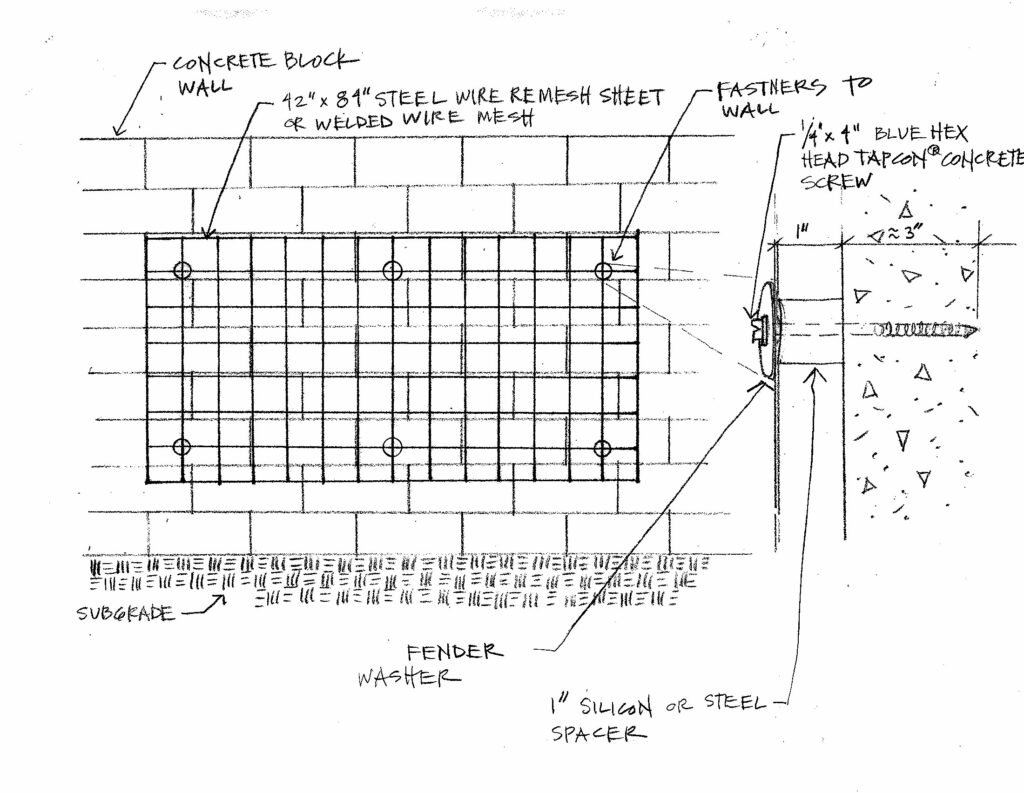
42”x84” steel wire remesh sheet or welded wire mesh
6 ¼” fender washers, 2” circumference
6 ¼” x 4” Blue Hex Head Tapcon® concrete screws
6 1” silicon or steel spacers
Tools
Drill with 3/16” concrete bit
Hammer drill
Measuring tape
Level
Step by Step
Step 1: Measure, level and mark locations to attach fasteners to the wall using wire mesh as a guide.
Step 2: Drill holes for the screws.
Step 3: Attach steel mesh to the concrete wall using suggested screws, washers and fasteners as shown in the diagram.
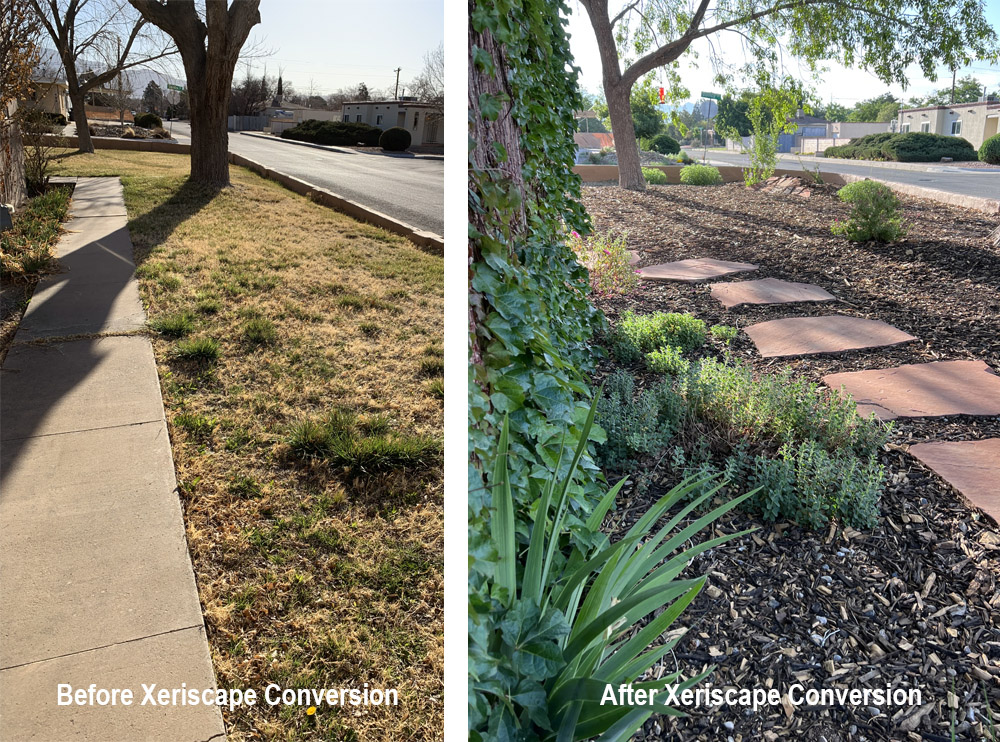
As homeowners around the Greater Albuquerque area are converting their high-water use turfgrass areas to desert-friendly xeriscapes, many are choosing to use wood chip mulch instead of gravel, which can be hot, expensive and also very good at cultivating weeds. Gravel can use up to as much as 60% of the materials cost of a landscape transformation project.
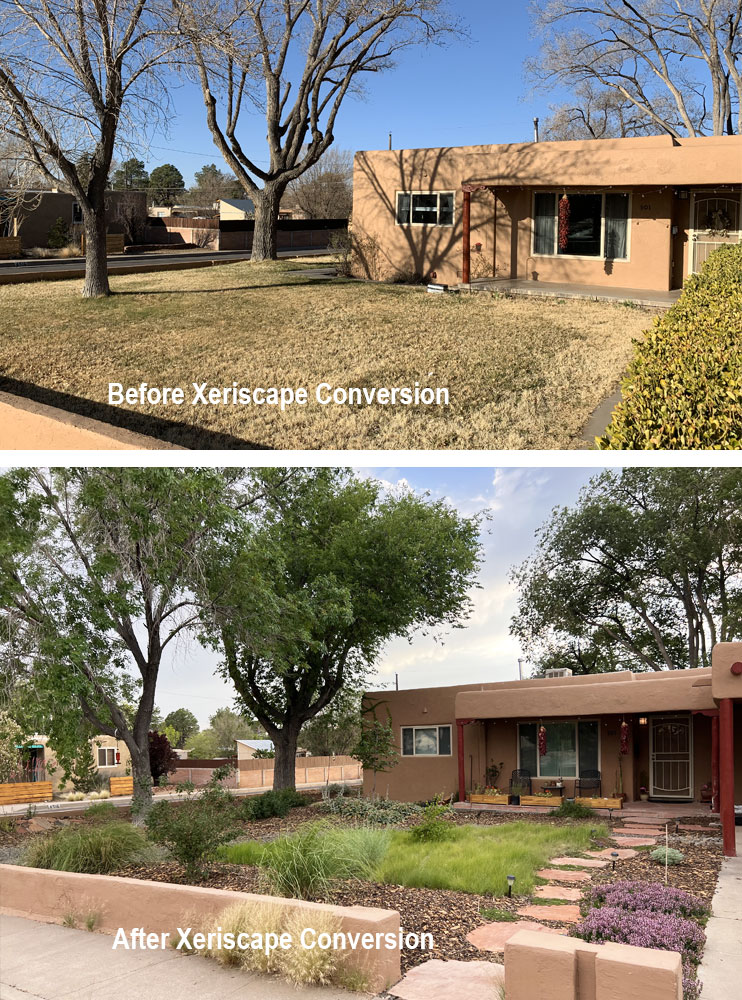
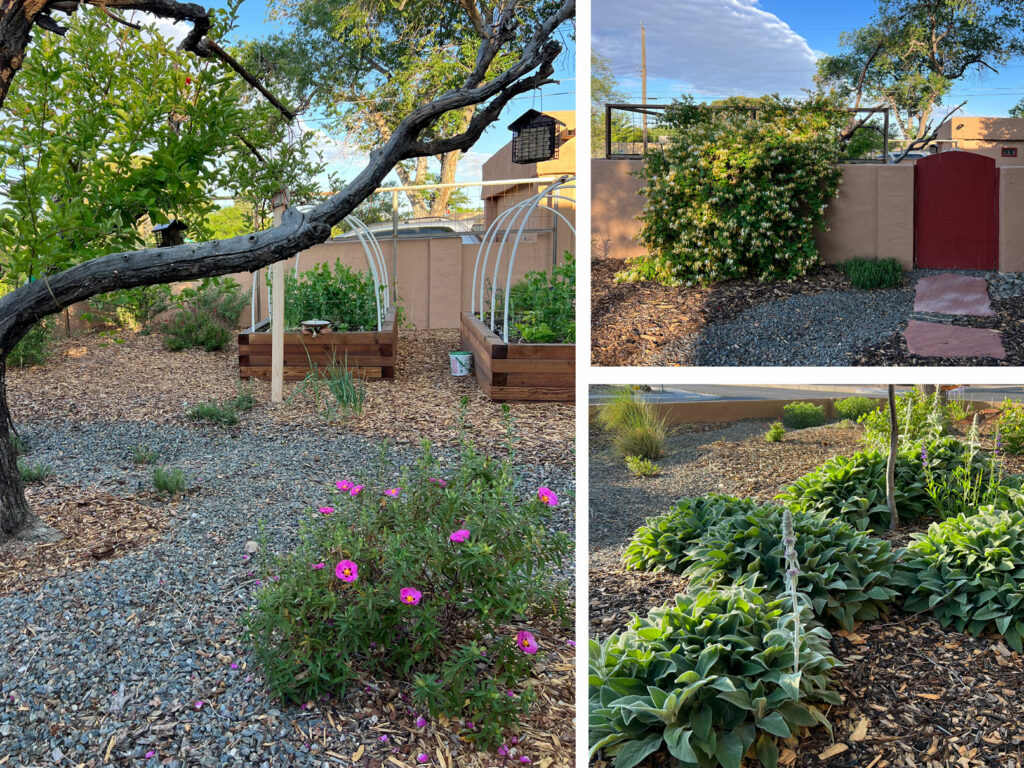
The Water Authority checked in on some recent xeriscape conversion projects that use wood chip mulch. One of these homes was built in the 1950’s and is located in the near NE Heights, an area where the original landscapes for homes consisted of both front and backyards with Bermuda grass and large elm trees. The homeowners wanted to remove the grass in both the front and back of the house and create desert-friendly xeriscapes while retaining their mature trees. They became fans of wood chip mulch many years ago while living in Florida. “Wood chip mulch is easy to maintain,” explains the homeowner. "I do nothing to it except occasionally blow out whatever drifts into the swales and top dress it every couple of years with a thin layer of new mulch. Not only does it reduce the evaporation of moisture from the soil, it helps keep our property much cooler than rock because it doesn’t retain heat or reflect the intense light we get here. I also think the mulch along with the trees helps dull the sounds of the city.”
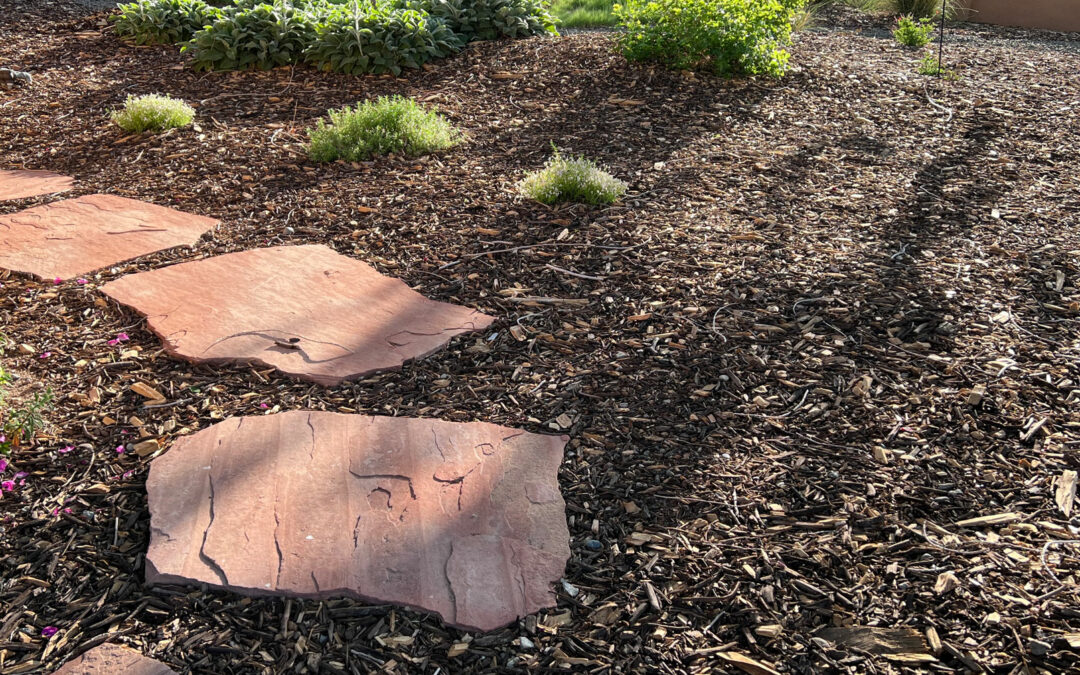
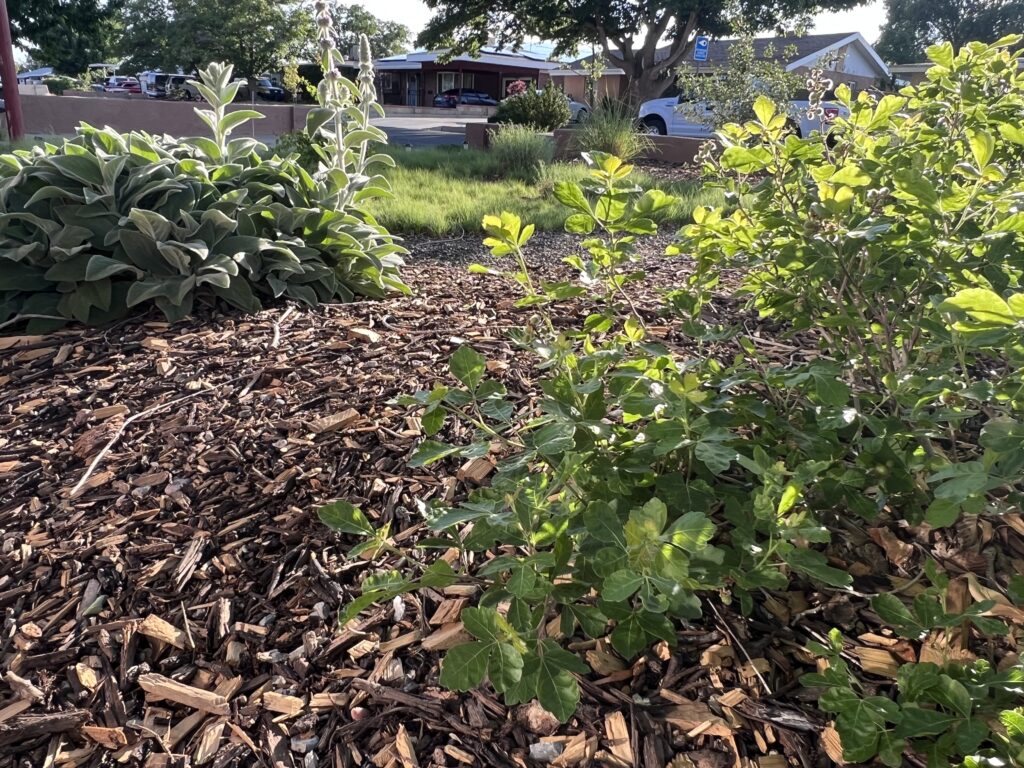
The mulch, which is laid down 3” to 4” deep, makes weeding much less of a task. Fewer things germinate in the mulch and when things do – in particular, the zillions of elm seeds that drop every spring — all that’s needed is to rake back the mulch layer, let it dry out for a day or so, and then rake it back into place. The seedlings dry up, die and become part of the mulch layer. The hardest part of the project, according to the homeowner, was removing the Bermuda grass. Due to the nature of its rooting system, the grass was completely eradicated before beginning the installation process. In this situation, the homeowner used an herbicide treatment to eradicate the grass. Since there are many options for eradication, we invite homeowners to take advantage of our free, ask-an-expert email service, [email protected], if you have questions about what type of lawn you have or any other questions about xeriscape transformations.
It’s been two years since their yard transformation. The homeowners say they noticed changes in the wildlife in their yard almost immediately. Fruit-bearing shrubs and wildflowers are allowed to go to seed, which means there are food sources for pollinators and birds most of the year as well as more cover in which critters can take shelter.
Since these homeowners moved to Albuquerque from a subtropical area, they did note that the one big lesson has been how much patience is required when undertaking a project like this in our desert environment. “The first year, most of what had been planted survived the winter, but a lot of things didn’t show much growth,” explains the homeowner. “I was a little frustrated. But this spring, things just burst forth – partially because of the amount of rain, but also because it simply takes that long for things to really establish a root system that can sustain significant growth.”
Sitting in their yard is more enjoyable now, say the homeowners, as the cooler landscape makes the outdoors more comfortable. They continue to learn from their landscape, picking up a few new irrigation drip skills along the way. They receive many positive comments from neighbors and are proud that their yard is an example of a healthy, sustainable and low-water use desert-friendly landscape.
Additional Facts on Mulches:
Wood chip mulchinsulates plant roots from both heat and cold, reducing moisture loss from the soil by evaporation, feeding beneficial soil microorganisms that enhance plant growth and improving soil health. This makes the soil more sponge-like and better able to hold water. By installing 3”- 4” of mulch over bare dirt, weeds are reduced, the soil is enriched and new plants retain more moisture.
Another benefit of organic mulches is that they can visually accommodate a little bit of leaf litter, reducing the need for constant raking and clean-up. A thin top dressing of mulch added every 2-3 years keeps the landscape looking fresh and replaces the material that has broken down to sustain the soil. Organic mulches are also lightweight, making them easy to transport in a wheelbarrow and spread with a rake.
Mulches are available in bags from most local garden centers (avoid the ones dyed with different colors as these will fade) and in bulk from several retailers in the Albuquerque area. When you buy from local bulk retailers, you are supporting the recycling of local organic materials that may otherwise end up wasting away in a landfill and contributing to greenhouse gas emissions. Buying bulk also means less plastic! Mulch can sometimes be available at no cost. Check with your local tree trimming companies and/or try your local county for free mulch resources. Mulches are a renewable resource that will improve landscape health and conserve water.
In areas of higher wind exposure or periodic inundation with water, use a wood chip mulch that is irregularly shaped and sized as the pieces will knit together better. This type of mulch can be recycled yard waste and tree trimmings as well as commercially-available, locally-processed wood products.
Property Data:
Homeowner converted 4,640 square feet of Bermuda grass to a desert-friendly xeriscape. Total gallons saved since conversion: 61,001 gallons. Total gallons per month homeowner saves: 3,050 gallons. Total rebate received: $4,740
Thinking about converting your yard from high-water use grass to xeriscape? Check out the Desert Friendly Xeriscape Rebate page to learn more about the qualifications, requirements and process to apply for this generous rebate. Additionally, xeriscape rebate participants get 25% off the cost of installing bulk organic mulch up to $100. If you want to top dress mulch around your trees, take advantage of our Treebates. You are welcome to contact our xeriscape specialist Amos Arber, at [email protected] or 505-208-2015
Author: Amos Arber, Xeriscape Rebate Inspector with the Water Resources Conservation Department for the Water Authority. And Jill Brown, ASLA MyLandscapeCoach.com Have a question about the article? [email protected]
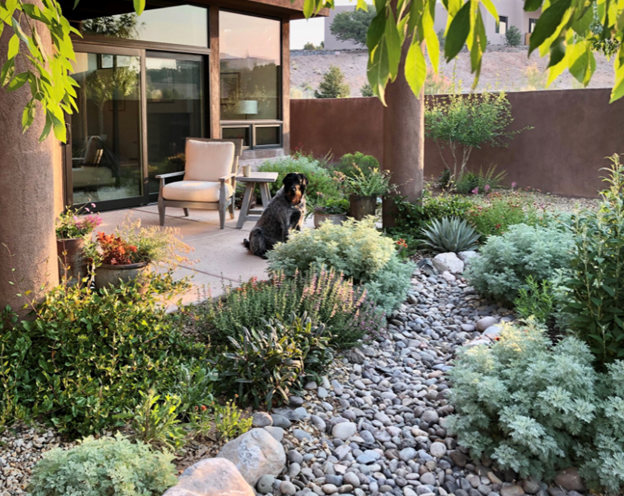
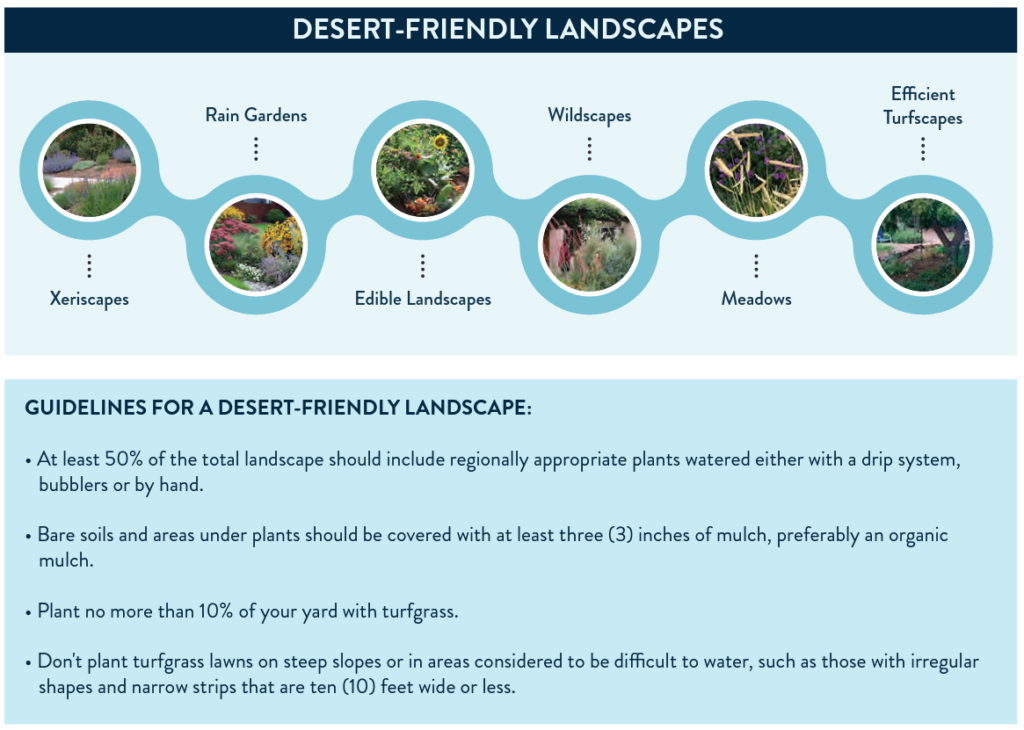
The Albuquerque metro area has a wide variety of landscape types, which include desert-friendly landscapes, lush pollinator-friendly xeriscapes and wildscapes or prairie plantings where native grasses and wildflowers bring the feel of a prairie to a yard. Rain gardens are specifically designed to make the most of natural precipitation, while edible landscapes have garden beds or edible plants interspersed throughout them. Efficient turfscapes have smaller areas of turfgrass and diverse plantings. Conventional turfscapes, with large areas of cool-season grasses and high-water foundation shrub plantings, are no longer considered desert-friendly landscapes. The term “desert-friendly” now describes a variety of landscapes that include beautiful, diverse plantings with increased resiliency achieved through efficient watering.
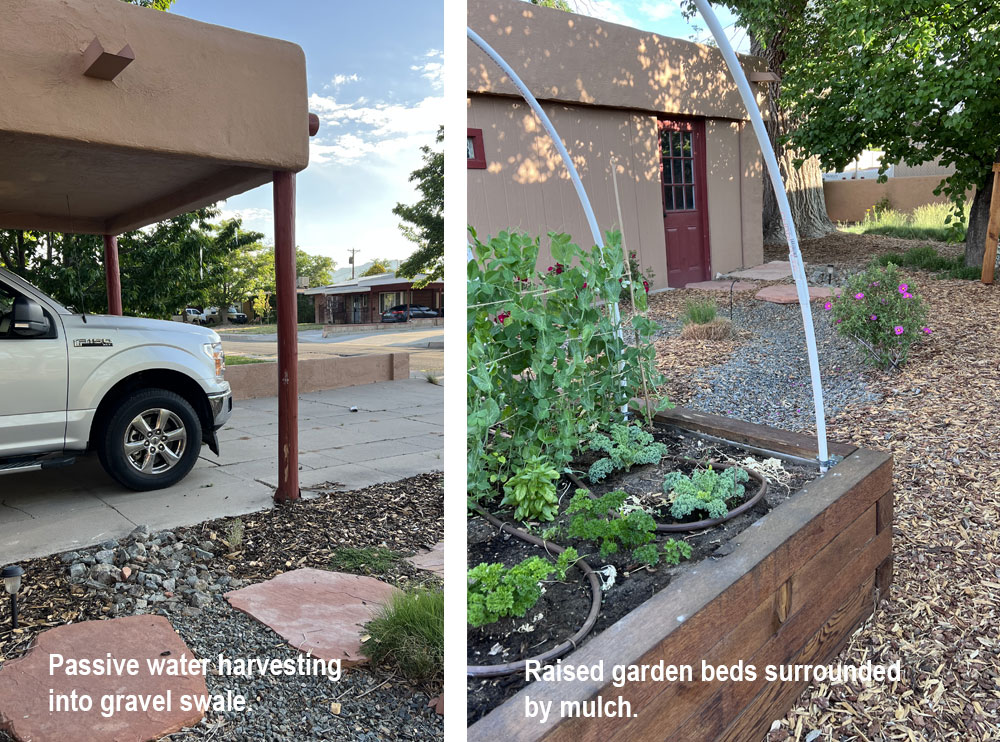
Rain gardens, a subset of xeriscapes, maximize the benefits of active and passive rainwater harvesting. Plant choices become more critical, particularly if the intent is to use little supplemental irrigation.
Pro Tips for Rain Gardens:
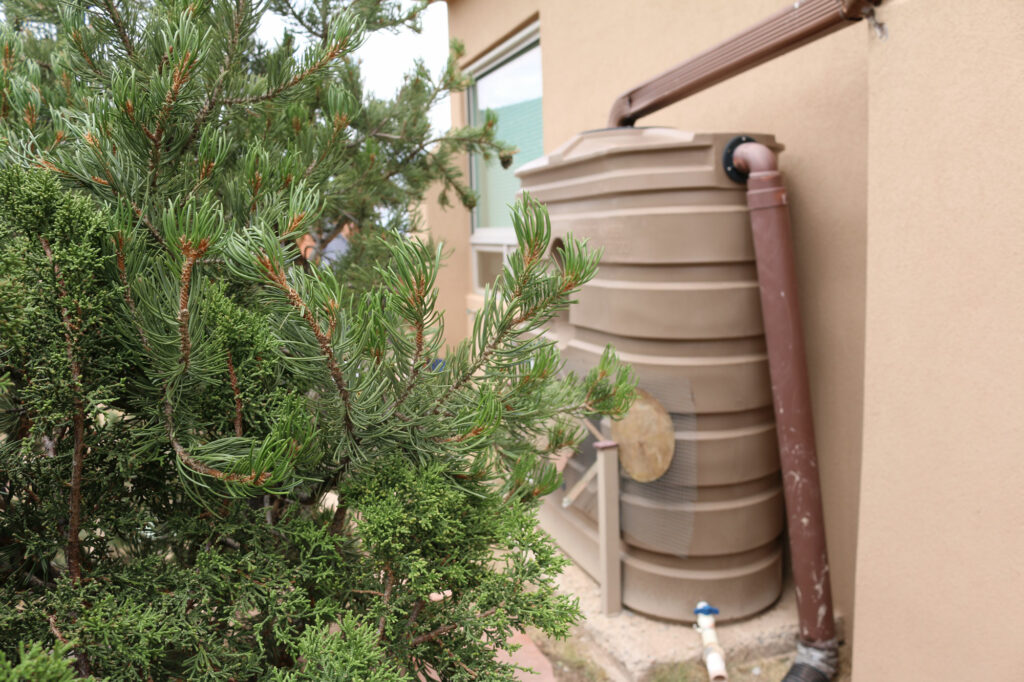
* Direct any overflow from a rain barrel or cistern into a passive water harvesting system.
* Prioritize trees for passive rainwater harvesting.
* Choose low-water and rainwater-only plants for the best results.
* Contour the soil to create gentle berms that drain better. Put water-loving plants in the low spots (swales) where rainwater and irrigation water collect.
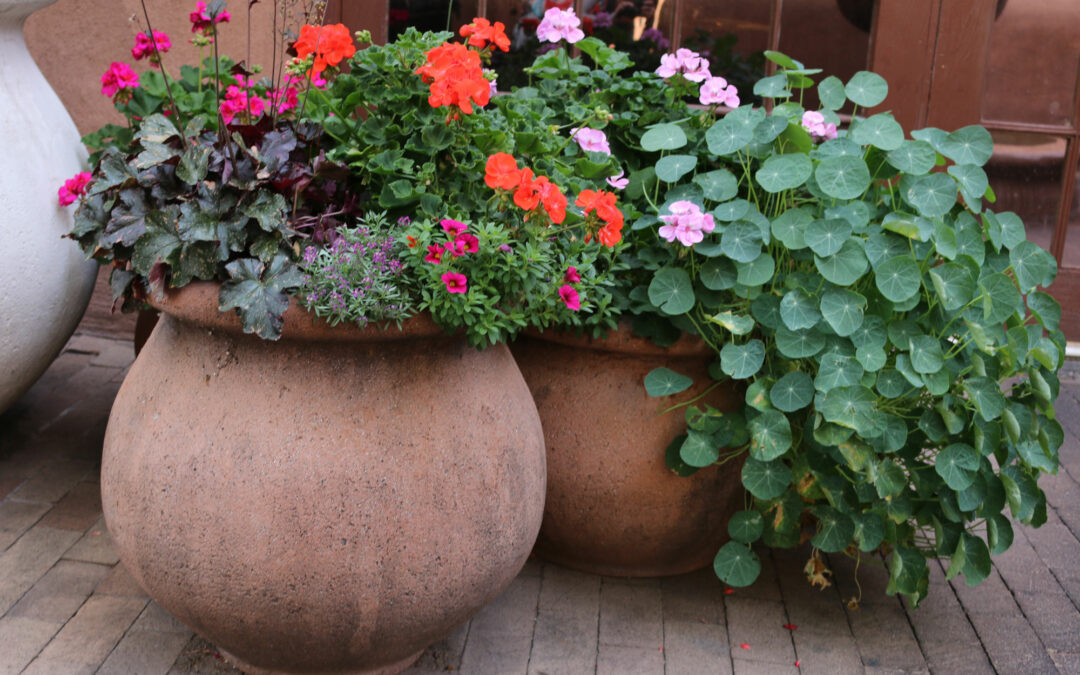
One of our favorite things to do at Bennu Organics is design container gardens. We like to talk about the “wow factor,” and containers are a fantastic way to add stunning, season-long color to our landscapes without digging a single hole in our hard, unforgiving soil.
Here are six helpful hints for creating your own successful container designs:
1) Location: Will the containers be in full sun, partial sun or full shade? In most cases, full sun containers in New Mexico require daily watering. If you don’t want to water every day, consider selecting plants that require less water, like succulents, cacti or perennials. Placing containers in partial shade will also save water. It’s important to know the amount of sunlight you will have available for each container prior to purchasing plants.
2) Size: What size are the containers, or what size do you want them to be if you’re purchasing them? You’ll need plenty of soil to fill or refresh the containers, and you want to make sure you have enough plant material to give your containers a nice, full look.
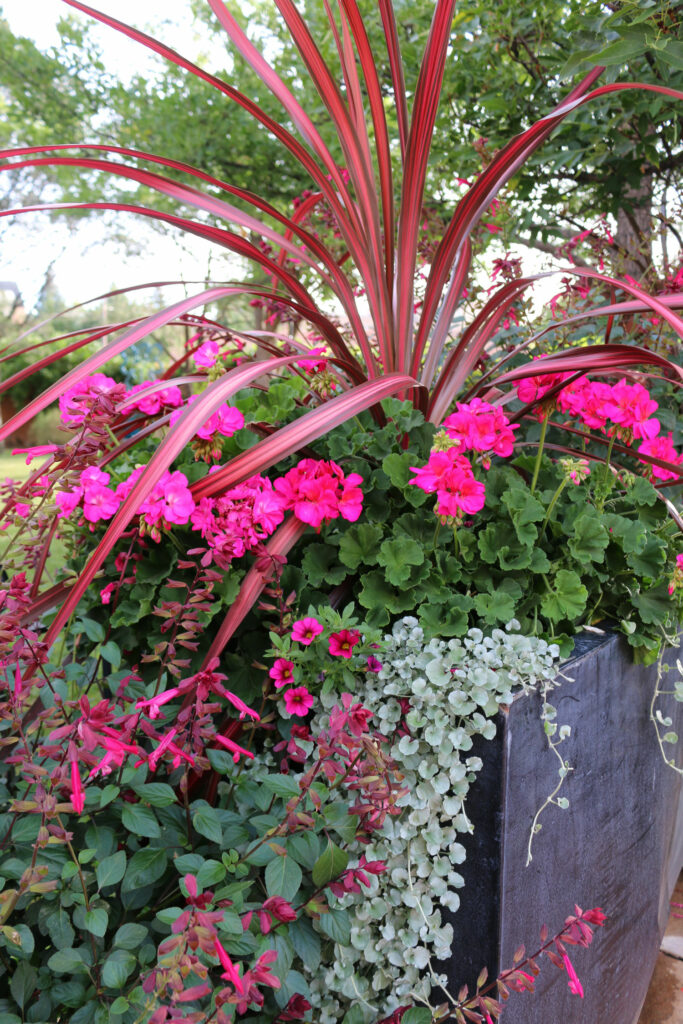
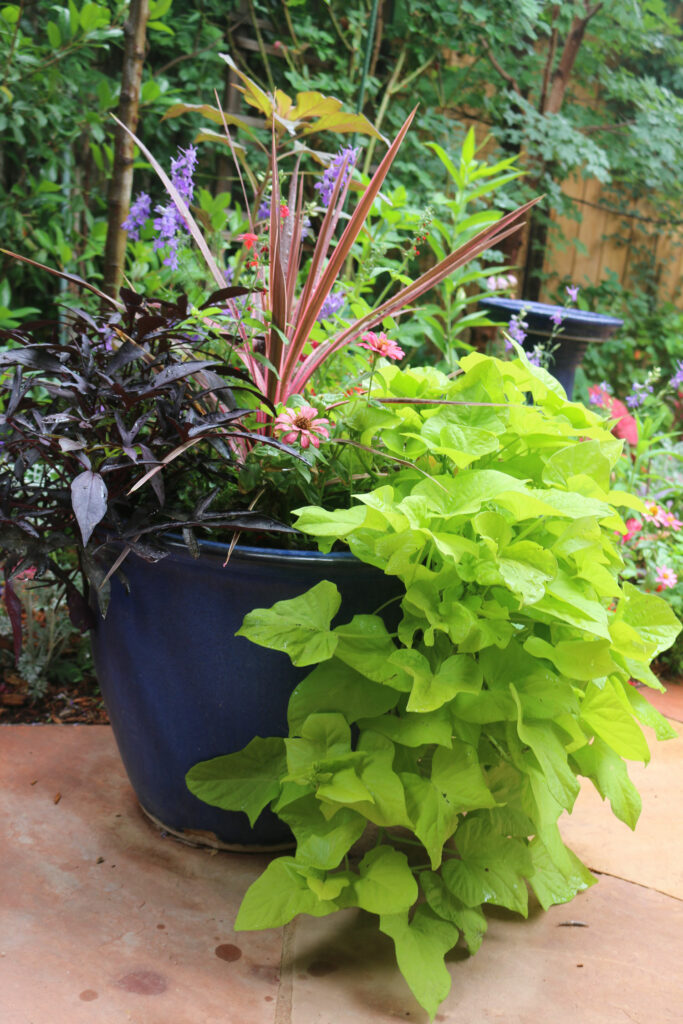
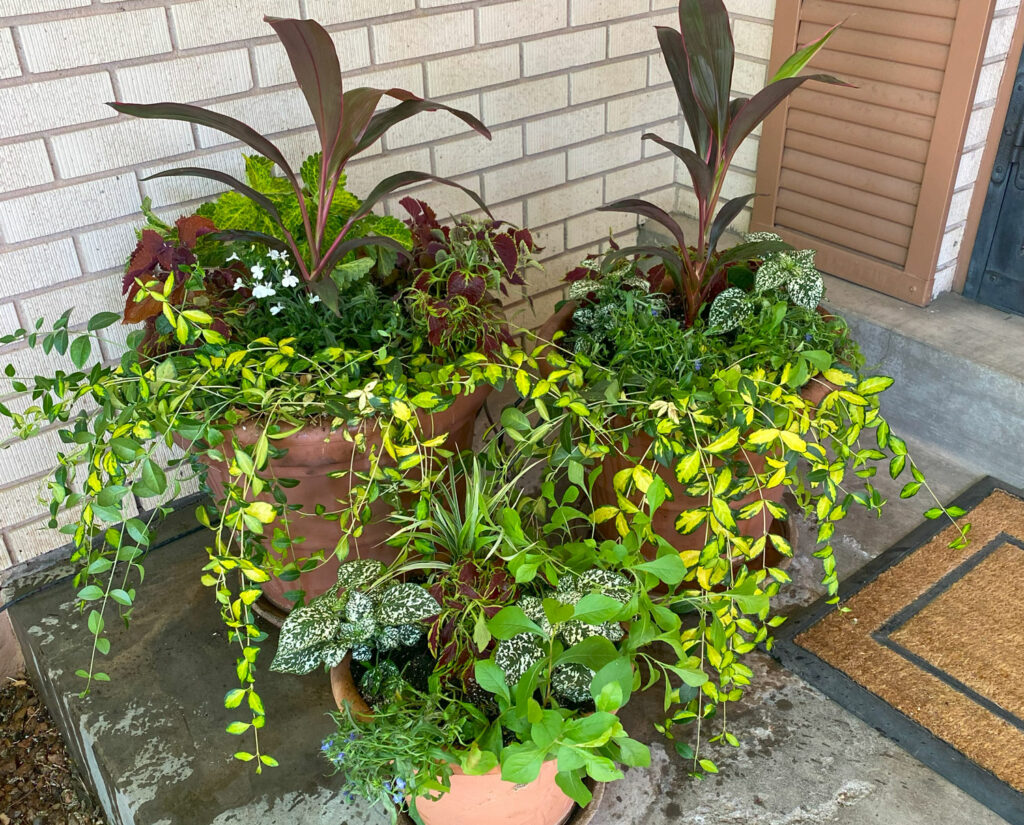
3) Design: Well-designed containers require three types of plants: thrillers, fillers and spillers. The thriller is something tall and showy, while fillers are shorter plants that fill in the spaces. Spillers are those low vining-type plants that spill gracefully over the sides of the container.
4) Color theme: I like picking a color palette and then selecting different plants within that palette. I don’t want my containers to be identical, but I do want them to complement each other. Also, depending on the locations of the containers, I will often do a “mirror image” design if the containers are on either side of an entry way, for example.
5) Lighting and water: Select plants that have similar lighting and water requirements. You don’t want to put a cactus as a thriller and wave petunias as your filler. One or both will suffer from too much or a lack of water.
6) Maintenance: Besides watering consistently, you will want to trim and deadhead your designs frequently. Petunias and calibrachoa (classified both as fillers and spillers) need regular deadheading to keep the blooms going strong. Trim them heavily when they get “leggy.” They respond well to a really good haircut. If you are consistent with your maintenance and watering, the containers should keep their “wow factor” all season long. Also, regular fertilizing is crucial to maintaining season-long blooms. In the active growing season, we fertilize our containers every two weeks.
While the following list of possible plants you can use in containers is hardly comprehensive, it should help get your creative juices flowing:
Shade/Part Shade
Thrillers: caladium, alocasia, sansevieria/dracaena, colocasia, cordyline, etc.
Fillers: bacopa, begonias, Boston fern, caladium, coleus, begonias, dusty miller, impatiens, etc.
Finally, your container designs should bring you joy, so get creative! What do you love? What are your goals? Do you want to attract hummingbirds and butterflies? Do you want fragrance? Do you want a color explosion, or are you looking for something more subdued? Your containers should reflect their designer, so pick things that you really enjoy — not just the plants you see on Pinterest or in magazines, although if you love the ones you see in those places, imitation is the sincerest form of flattery! Some people like to use all annuals, some like a combination of annuals and perennials and some even add edible plants into their designs. The sky is the limit!
As with all things related to plants, design and gardening, remember that everything we do is a grand experiment. Don’t feel guilty if you mistakenly combine a low-water plant and a high-water plant in the same container and one of them dies. Learn from your experience and simply replace the dead plant with something more suitable.
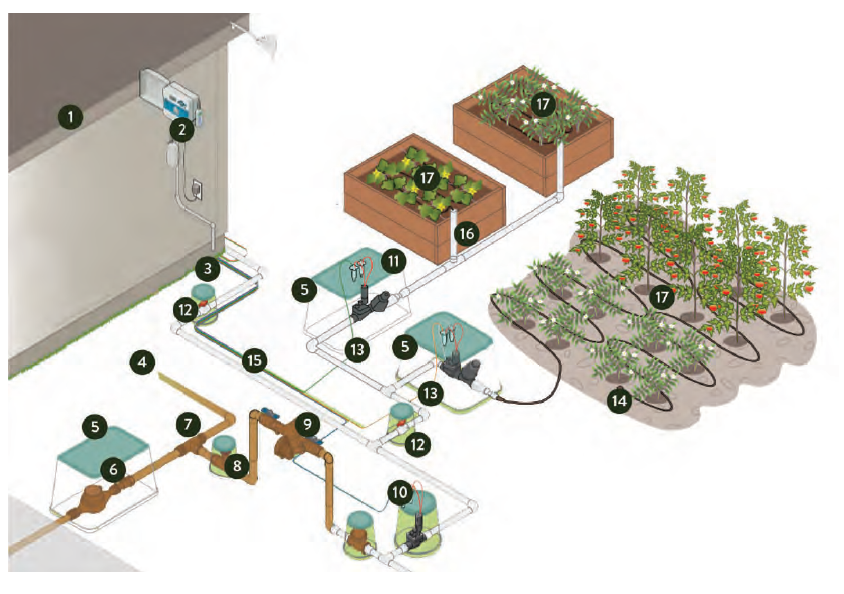
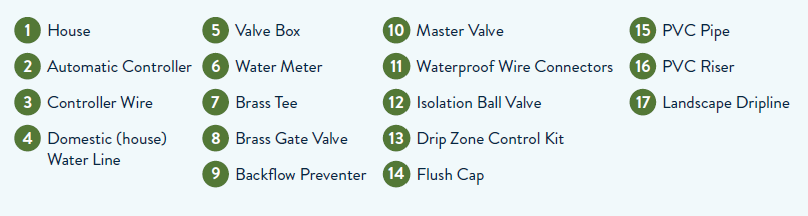
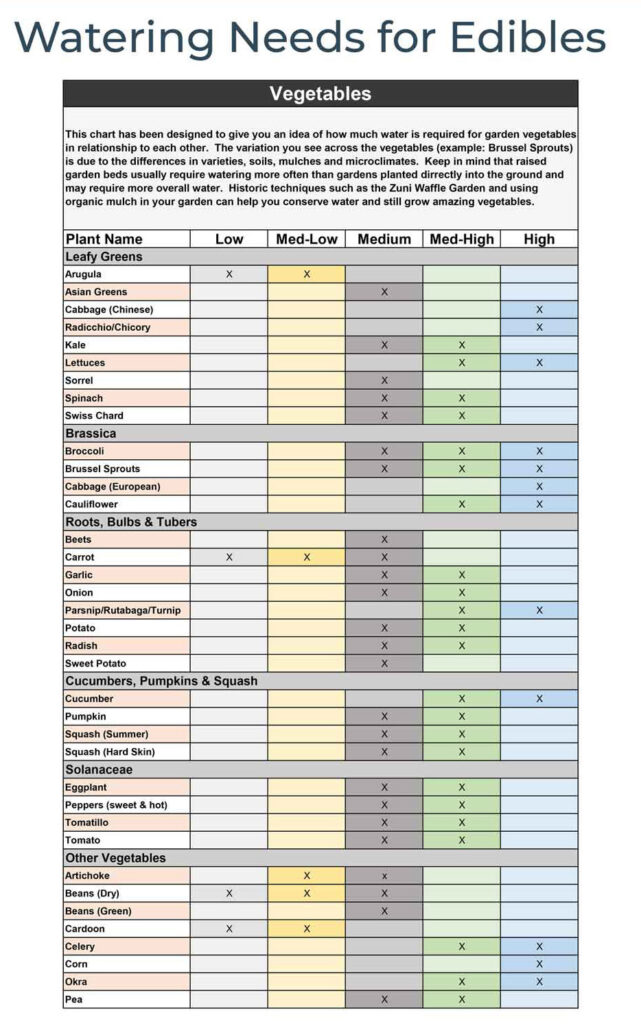
Edible garden landscapes need to have dedicated valves so they can be watered more frequently than our average desert-friendly landscapes. These landscapes should not be watered at the same time as the rest of the drip zones.
The key to growing the best quality produce, fruit-bearing trees, shrubs and vegetables is having a consistent watering schedule that is maintained until harvest. If you are unable to install a new irrigation valve for your edible garden, you can connect it to your hose spigot with a spigot irrigation timer. We recommend the smart versions of these timers. Rebates are available.
We recommend using ¼” polyline with inline drip emitter tubing. Drippers should be located every 6” along the tubing for irrigation in both raised beds and veggie rows. The drippers require no maintenance since they are installed within the polyline. Each dripper is engineered with a little bit of copper that kills off roots that try to grow into the dripline. They are easily connected to a ¾” polyline flexible irrigation supply line. Metal irrigation stakes help keep everything in place.
All these materials can be purchased at local irrigation stores. Drip irrigation is not only the most efficient way to water your edible garden but it is also very affordable.
Typically, a conventional turfgrass yard includes a few large trees and some planting beds for flowers and shrubs around the foundation of the home. This type of yard often has a couple of existing irrigation valves for sprinkler irrigation. A conventional turfgrass landscape requires tremendous amounts of water to thrive in our region — a minimum of 40” (with an average of 50"-55”) of water per growing season, which is about three to five times more than what is provided by natural precipitation each year. This is why we do not consider a turfgrass yard a desert-friendly landscape.
Climate change is causing us to rethink our yards, and that includes yards with lawns. For a yard with a lawn to be truly desert-friendly, the amount and type of grass used must be considered. A desert-friendly turfscape should also have efficient sprinkler nozzles and pressure compensating sprinkler bodies to maximize the water that’s used to maintain the lawn.
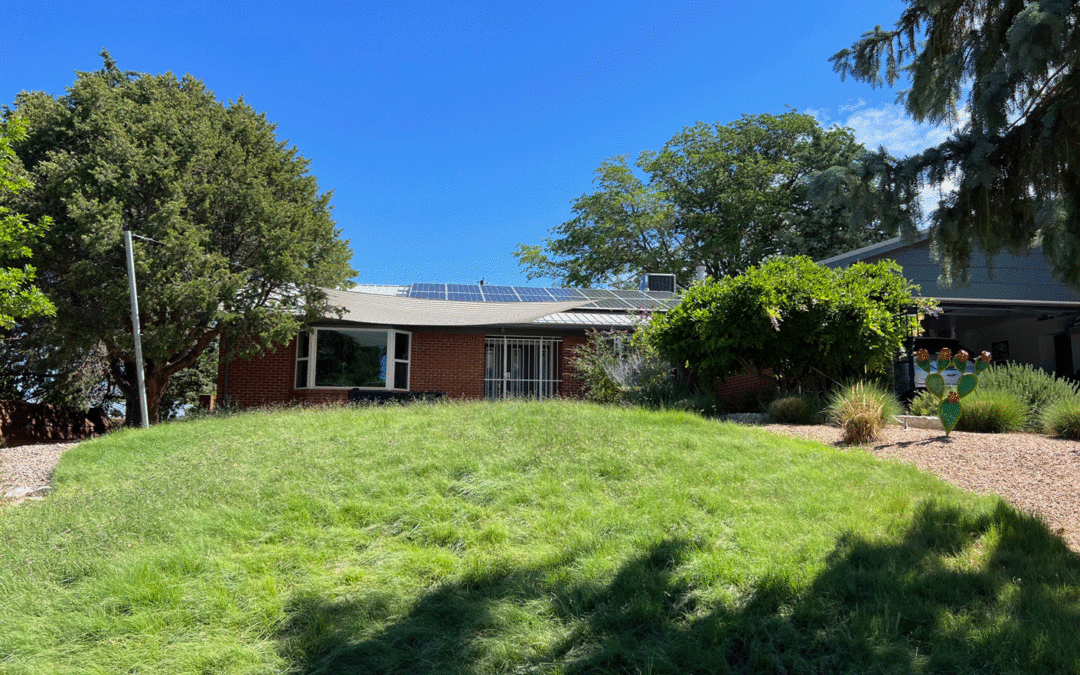
We recommend that no more than 10% of your total yard is devoted to a lawn. Research from various universities in the Southwest and lawn seed producers (such as Pennington Seed) is now suggesting that New Mexico’s climate is no longer suitable for cool-season grasses to thrive. Instead, we need to make a shift to various warm-season grasses, which will grow well with significantly less water.
Cool-season and warm-season lawns are the two different categories of turfgrass lawns found in Albuquerque. Cool-season grasses (Kentucky bluegrass, perennial ryegrass and tall fescue) thrive between 65F and 75F degrees in the summer. They create a softer, darker green and lush-looking lawn. In Albuquerque, most lawns are composed of cool-season grasses that are cold-tolerant and green most of the year. They can withstand considerable amounts of foot traffic. One disadvantage is that they use a substantial amount of water in the summer months. Parkblend (a blend of cool season grasses) is the most common lawn in the Albuquerque metro area. It uses around 40” of water a year.
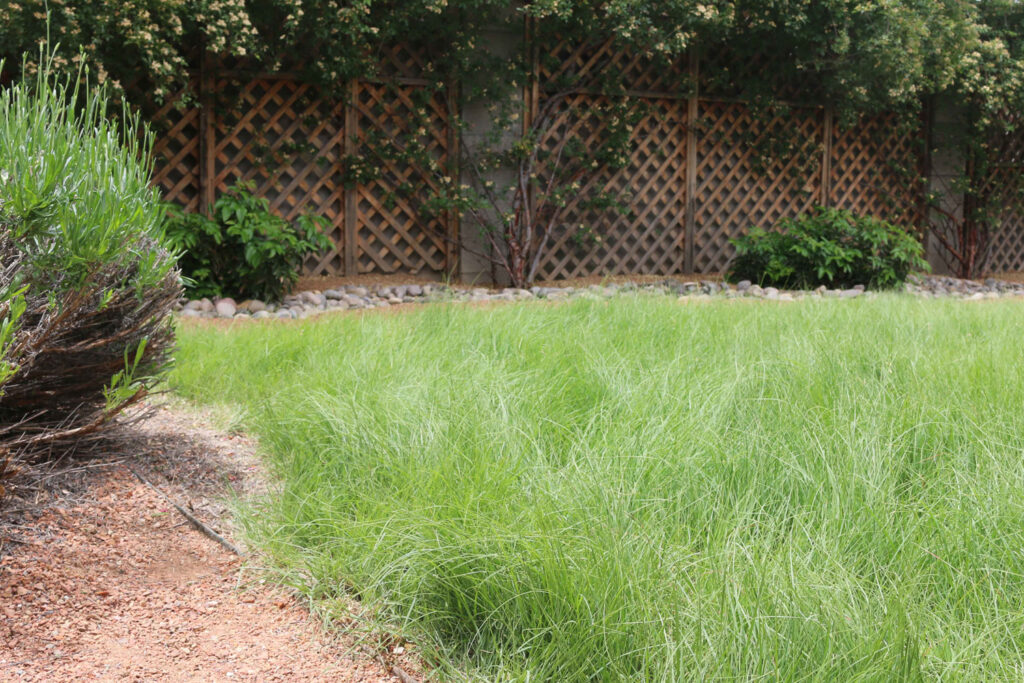
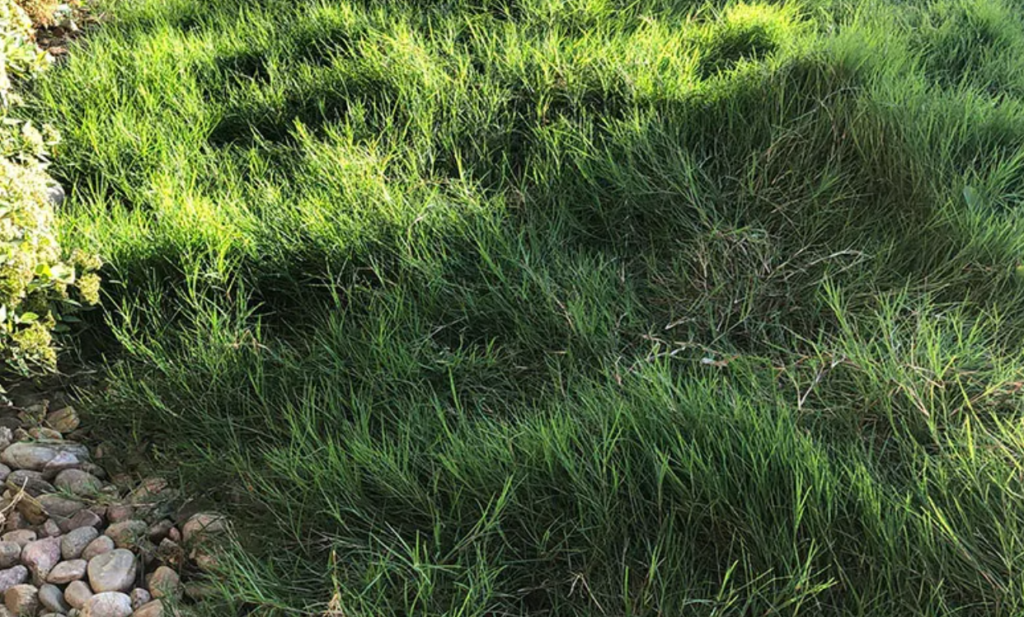
Warm-season grasses (Bermuda grass, blue grama, and buffalo grass), which thrive in 70F to 90F degrees, have been used in Albuquerque for many years. There are parts of town where they are quite prevalent. Warm-season grasses have a shorter growing season. They green up later and go dormant earlier than cool-season lawns. They are low maintenance and require less water than cool-season grasses.
Buffalo GrassBermuda Grass
Knowing what type of lawn or turfgrass is being installed or already being watered can make a significant difference in how much water should be applied. The key to choosing a turfgrass for a new area is to determine the one most suited to the specific needs of the landscape.
Water Budget (this includes 1,000 square feet of cool-season grass and a number of mature trees, shrubs and vines):