Folks, it’s a hot, dry summer here in central New Mexico. No surprise, you say — we live in a desert. Even for our location, though, it’s hot and dry. This creates a little conundrum for us: keeping our landscape plants growing while using water efficiently.
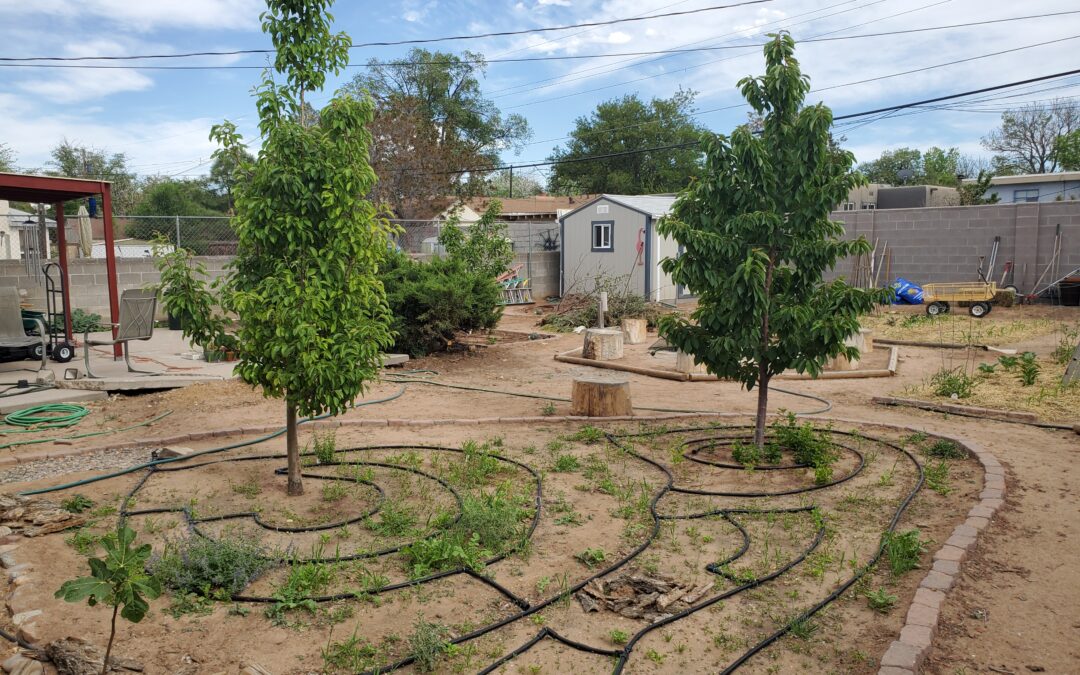
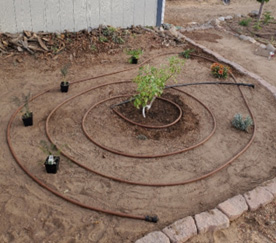
Tree and surrounding plants being watered by inline drip irrigation.
This applies especially to trees because as large plants with lots of leaves, they need regular adequate water for their size and species to remain happy and continue creating positive benefits for your yard and the city as a whole. Call that a biological law and reality. As temperatures go up, trees’ water demand goes up. That is a good starting point to keep in mind — in times of drought, you should water your trees a little more frequently than you would in a year with abundant rainfall.
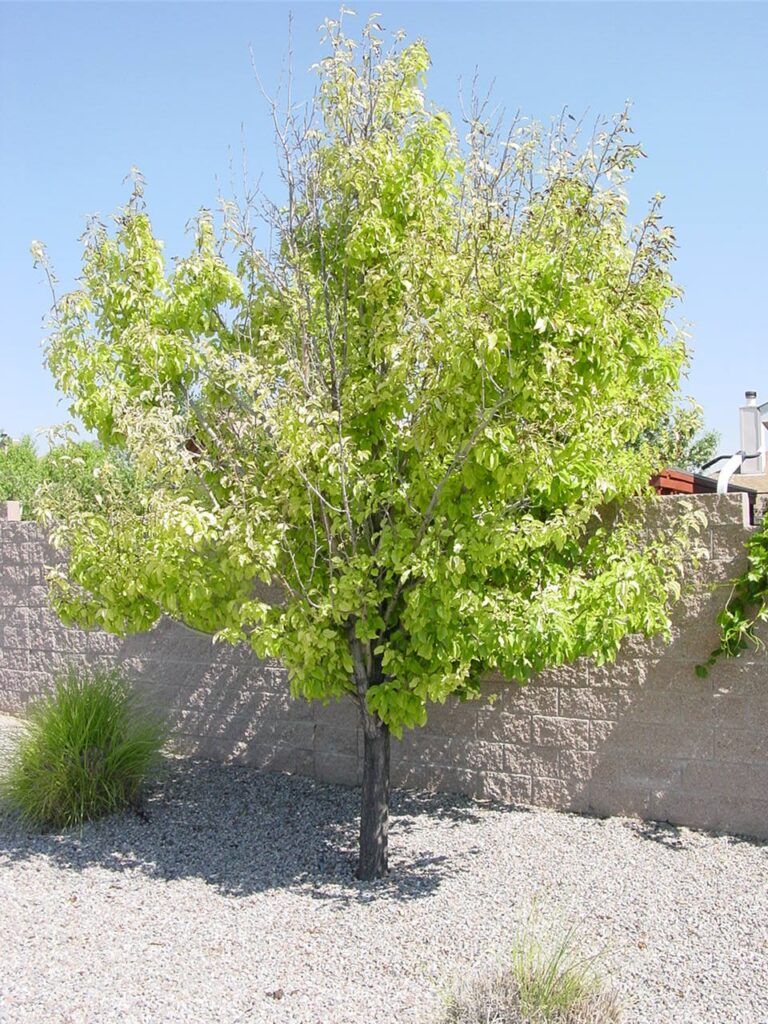
Drought stressed tree showing missing leaves and yellowing.
It turns out that over 90% of the water that comes into a tree simply escapes through the leaves as water vapor; the tree keeps very little water inside to grow. This loss of water vapor provides the “suction” that causes more water to enter the root system. It also cools the leaves and keeps them within comfortable working temperatures. Someone once said trees (and plants generally) have figured out a way to guide the natural movement of water from soil to atmosphere, channeling it through their bodies and using it to grow and function, which is one part of the water cycle. Having trees increases moisture in the air, allowing your swamp cooler to perform better.
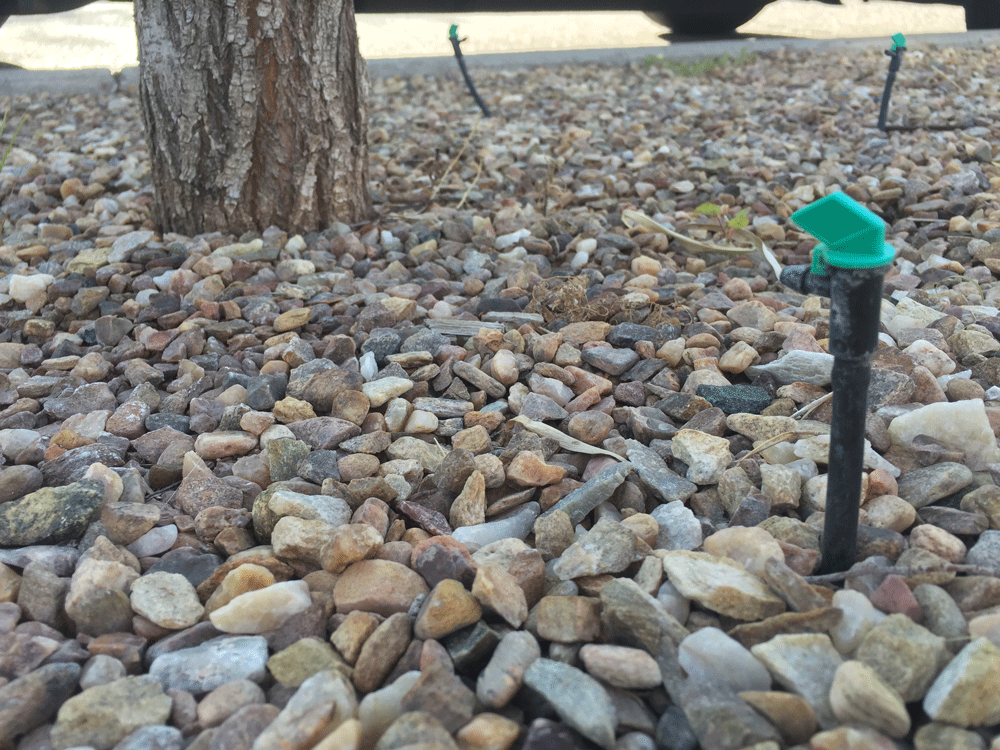
Trees “drink” very differently than you and I. We have one fairly large mouth into which all the water goes. However much we need, we have one target to hit in order to drink that water. Trees, on the other hand, take water in through their tiny, young roots out in the soil. Water has to get to a lot of soil in order to hit enough of those “mouths” to matter. A lot of tree irrigation eventually fails because there are only a few emitters (and those are often too close to the trunk). Those few emitters cannot put out enough water to satisfy the tree’s demand, nor do they wet enough surface area. (See examples in the photos below.)
Drip emitters located very close to the tree trunk.
What matters to a tree is the volume of water it has to work with. That volume is entirely dictated by the volume of soil that is holding water. And THAT volume is dictated by the surface area that received and absorbed water. The key is to disperse the water throughout the main root zone and do it in a way that allows the water to soak in where applied and not flow to low spots on the ground (which often are gutters. Science has found that most tree roots are located within the top three feet of the soil surface and quite likely even more shallow in landscapes that have not been deeply irrigated for the life of the tree, which is a common condition in Albuquerque.
To properly water your trees, you will need some sort of irrigation system. It could be a bucket you fill from the sink or a state-of-the-art sensor-controlled automated drip system. But somehow you need to put water on the soil surface in a slow, controlled manner so that it can soak into the soil where it is applied. While buckets and hoses work, their simplicity makes them very labor intensive. In-line emitter drip tubing, laid out in a spiral or concentric circles, does a much better job. Once in place, these drip systems can be set to run for two to four hours at a time, about once a week during the hottest part of the year and less often during other seasons. Irrigation improvements qualify for the Water Authority Treebate. See our rebates here.
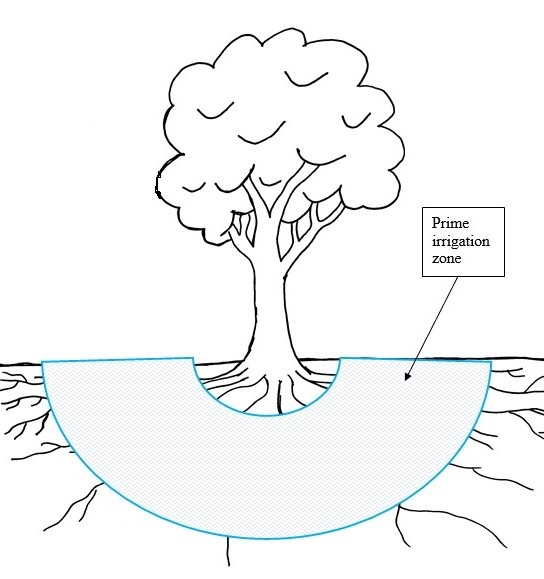
The ideal target area to irrigate is both theoretical and grounded to the reality of the site. Imagine a donut shaped area centered around the tree trunk. The trunk sits in the center of the donut hole. The body of the donut begins halfway between the trunk and the edge of the branch canopy and extends some distance beyond the edge of the canopy. This theoretical donut represents the ideal critical irrigation zone.
Now enters site reality — maybe there is a house or driveway or sidewalk covering part of the donut (or all three, with the tree located in a tiny unpaved space). We don’t want to encourage root growth at the house foundation, so don’t water within a couple of feet of it. Similarly, where concrete or asphalt covers the soil, root growth is moisture-limited and concentrated immediately under the impervious cover and under any planned or accidental cracks that allow rainwater to slip through. Ideally, we don’t want to water next to the pavement. The more of the donut that is unavailable for watering, the more often you may need to water the limited areas of open soil. Even so, it may simply not be enough soil volume to support the tree, which will then decline. In that case, replace it with a nice xeric shrub!
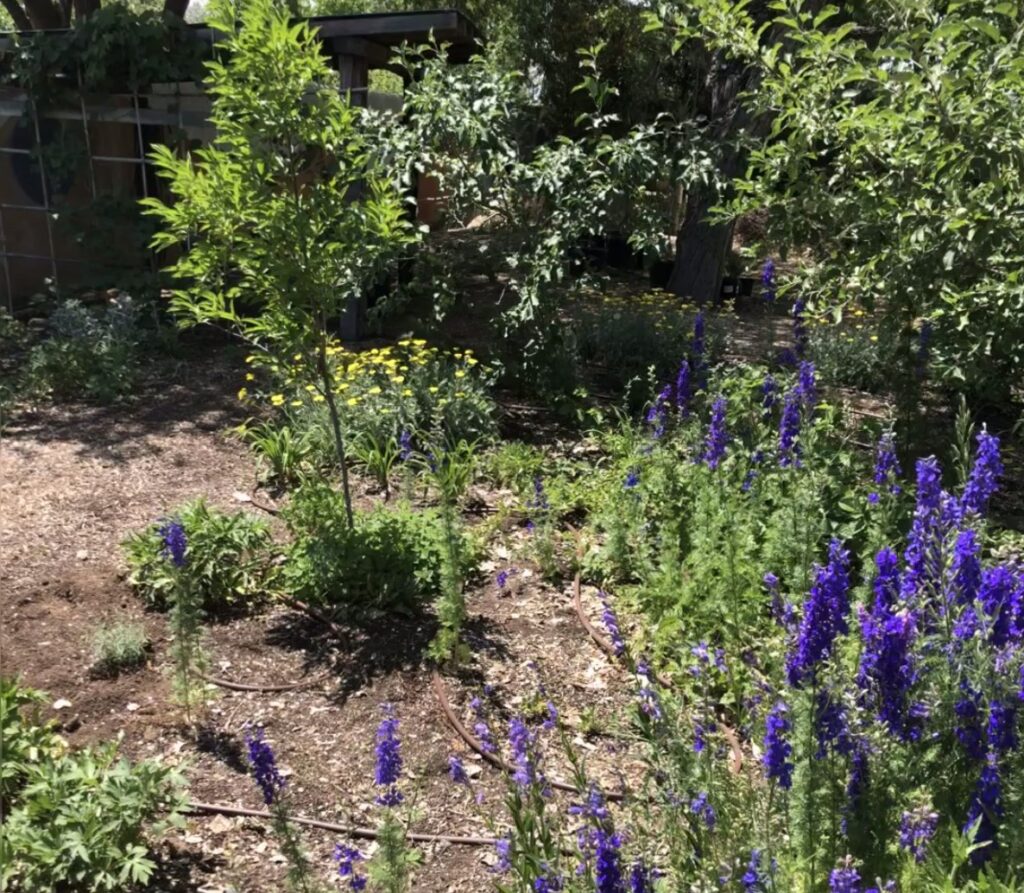
Recently installed drip tubing around a newly planted Mexican elder and some to-be-planted fennel. Both of those plants are excellent pollinator forage. A 4-inch depth of wood chip mulch will be installed over the top.
Author: Joran Viers is an arborist at Legacy Tree Company. Contact him at [email protected]. He’ll be speaking about this topic in greater detail on July 25. Sign up here. Have a question about the article? [email protected]
The ABQ Backyard Refuge Program is working with greater Albuquerque residents to create a mosaic of habitat across the city that will support a wide variety of both year-round and migrating wildlife. The program, which is managed by the Friends of Valle de Oro National Wildlife Refuge, was developed by more than 40 partners, including local government agencies, university departments and conservation organizations. The program provides resources for residents, including an introductory guide that features a list of plants that both thrive here and attract wildlife as well as a workbook for building and documenting your refuge. In addition to recruiting homeowners to build habitats in their yards, we are working with our partners to increase green space in the communities most affected by our changing climate.
Any space can be certified, including a front yard, patio, balcony, community space or, of course, a backyard. As of May 22, the program has certified about 166 acres with 629 individual and business participants. That surpasses the initial goal of certifying as many habitats as there are national wildlife refuges in the nation (572). Next, the program hopes to match Valle de Oro's 570 acres. Every bit of habitat counts!
Whether you have a balcony, a patio (where you can put potted pollinator plants) or acreage at your home, you can make changes that benefit wildlife. Here are some tips:
Leave a few dead branches in your yard, as long as they don’t pose a safety hazard. They can provide great perches for birds and food sources or potential nesting sites for woodpeckers.
Allow some leaves to stay on the ground in the fall so more butterflies are attracted to your property in the spring.
Leave dried sunflowers and grasses in your yard because they provide food for wildlife during the winter.
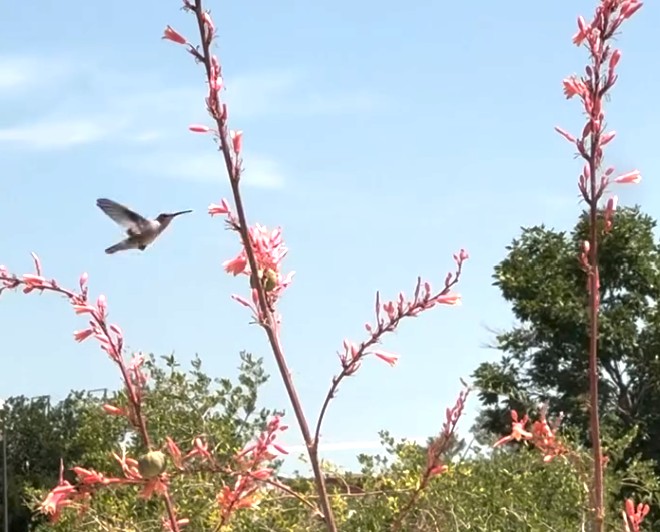
Plant pollinator friendly species such as sunflowers, mistflower, yarrow, beebalm, salvias, penstemon, oregano, fennel, whorled milkweed or native buckwheats.
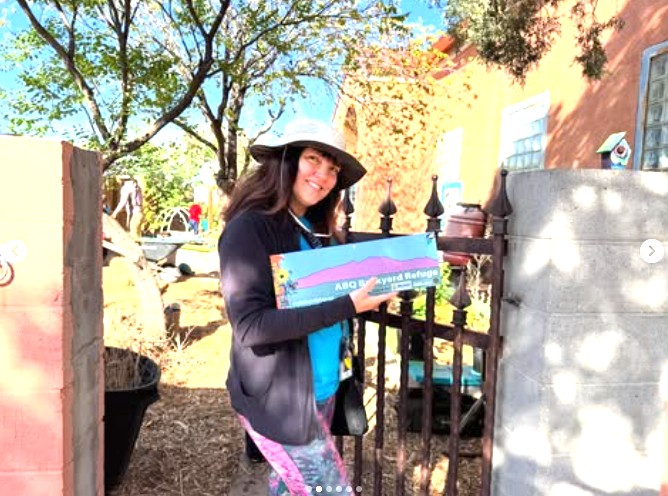
When you certify your space as an ABQ Backyard Refuge, you are helping to encourage neighbors to build wildlife habitats. As a member of the certification program, you will receive a metal sign with stickers that show your certification level.
The sign can be a conversation starter with your neighbors and help the program grow.
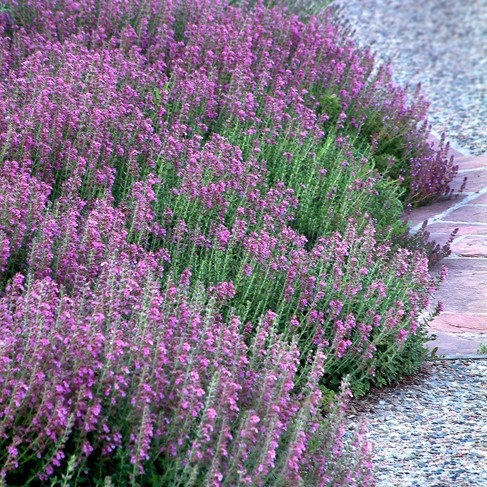
This low growing tidy evergreen groundcover is great for garden beds. It spreads nicely under trees. Dark green glossy foliage is topped with magenta flower spikes that attract pollinators in late spring and early summer.
With most of Bernalillo County and much of north-central New Mexico in extreme drought, according to the U.S. Drought Monitor, and the Albuquerque stretch of the Rio Grande potentially running dry this summer, it’s time for action.
Albuquerque can use its groundwater resources to make up for the lack of surface water, but the drought reminds us that water is scarce in the arid Southwest. Here’s what the Water Authority is working on to help save water for future generations.
The Water Authority is now at “Stage 0 Drought Advisory,” which triggers several actions and calls for increased public education to encourage voluntary water conservation such as:
Expanding public outreach efforts and customizing promotional and educational materials to raise awareness about the current drought conditions.
Hosting a series of educational drought-focused webinars with a $20 rebate offered to attendees. About 200 ratepayers signed up for the first two webinars.
The water conservation program generally follows a three-pronged approach: education, incentives and enforcement. This includes focusing on how we can help educate ratepayers to efficiently irrigate their existing yard, provide incentives for creating beautiful yard transformations, and better target sites that waste water.
We will be expanding our media outreach on public radio, Spotify, YouTube and social media as well as through traditional methods such as billboards, newspapers and television.
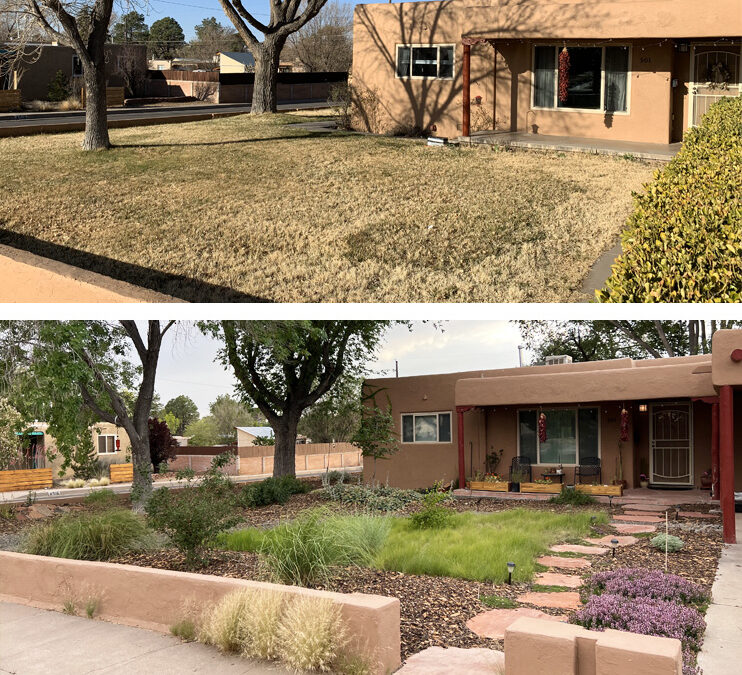
We encourage the public to take advantage of our Desert Friendly Xeriscape Conversion Rebate. At $3 per square foot (the highest in our region), this rebate supports the transformation of water-thirsty lawns into desert friendly landscapes featuring plants, drip irrigation and mulch. This season, we aim to boost participation in this generous program as it remains one of the most effective methods for conserving water outdoors.
We are also prioritizing water waste enforcement. Landscape irrigation is the most common cause of water waste, but waste also can result from air conditioning system leaks, car washing, draining pools and other uses of water. It is also considered water waste to use spray irrigation between 11 a.m. and 7 p.m. from April 1 to Oct. 31. Click here to report water waste or call 842-WATR (9287).
Thank you for working together to support our community in conserving water regularly and during these drought conditions.
You undoubtedly have seen your neighbors and friends around town removing their grass lawns and replacing them with water efficient desert friendly xeriscapes. You may yourself be interested in doing the same with your yard but perhaps are overwhelmed by the tasks or concerned about how much it would cost. Don’t fret, it’s much simpler than you think. We’re walking you through the six steps to transform your lawn into a beautiful desert friendly xeriscape.
STEP 1
COME UP WITH A DESIGN, then apply for the $3-a-square-foot rebate.
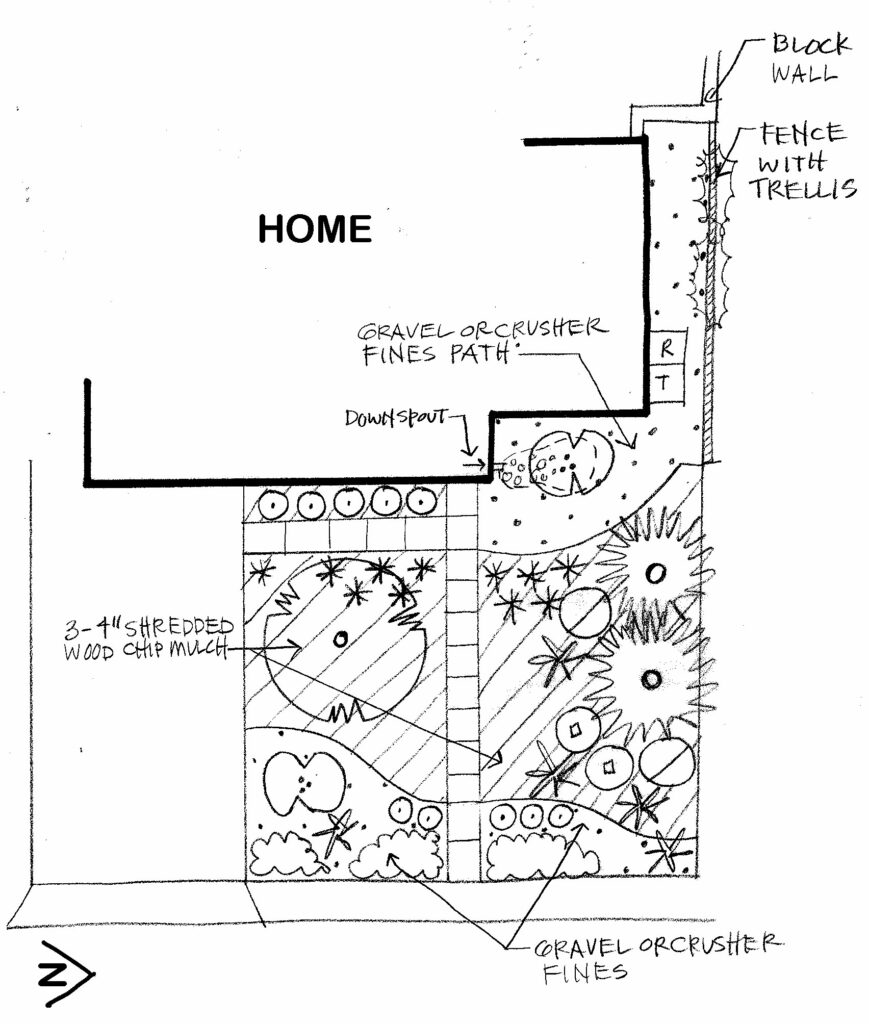
No need to get overwhelmed by this step. You know your yard best, so observe and understand how you want to use your space. Brainstorm elements you want to include. Take into account existing plants and trees, views you want to preserve or hide, shady or very sunny spots, and downspouts/canales or other places where water collects.
Once you have your design, use spray paint or old hoses to lay it out on the ground. Walk around the space and make changes as needed.
Before demolition and removal of the lawn, call 811 to mark underground utilities. Also note existing tree roots that you need to protect during your work.
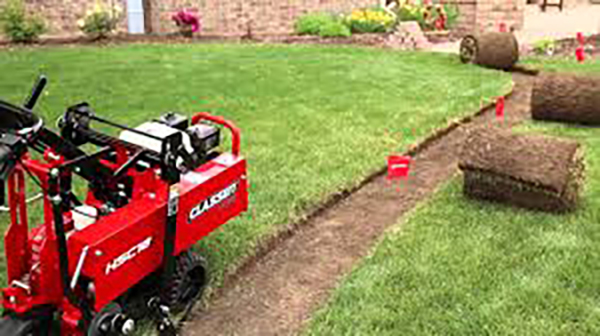
Lawn removal techniques: A sod cutter works best for most lawns unless there are large roots or the grass is Bermuda. Hand dig grass out around large roots so as not to cut any that are more than 2” thick. Use an herbicide to kill Bermuda due to its invasive and prolific roots. Along sidewalks you’ll want to dig down 4” by 12” wide to make room for 3” of mulch and slope the soil back up to the surrounding grade gently. Avoid using a skid steer to remove the grass, this can unnecessarily remove useful existing topsoil.
Drainage Considerations: Always grade water away from your house, masonry walls or walking paths and towards planting areas.
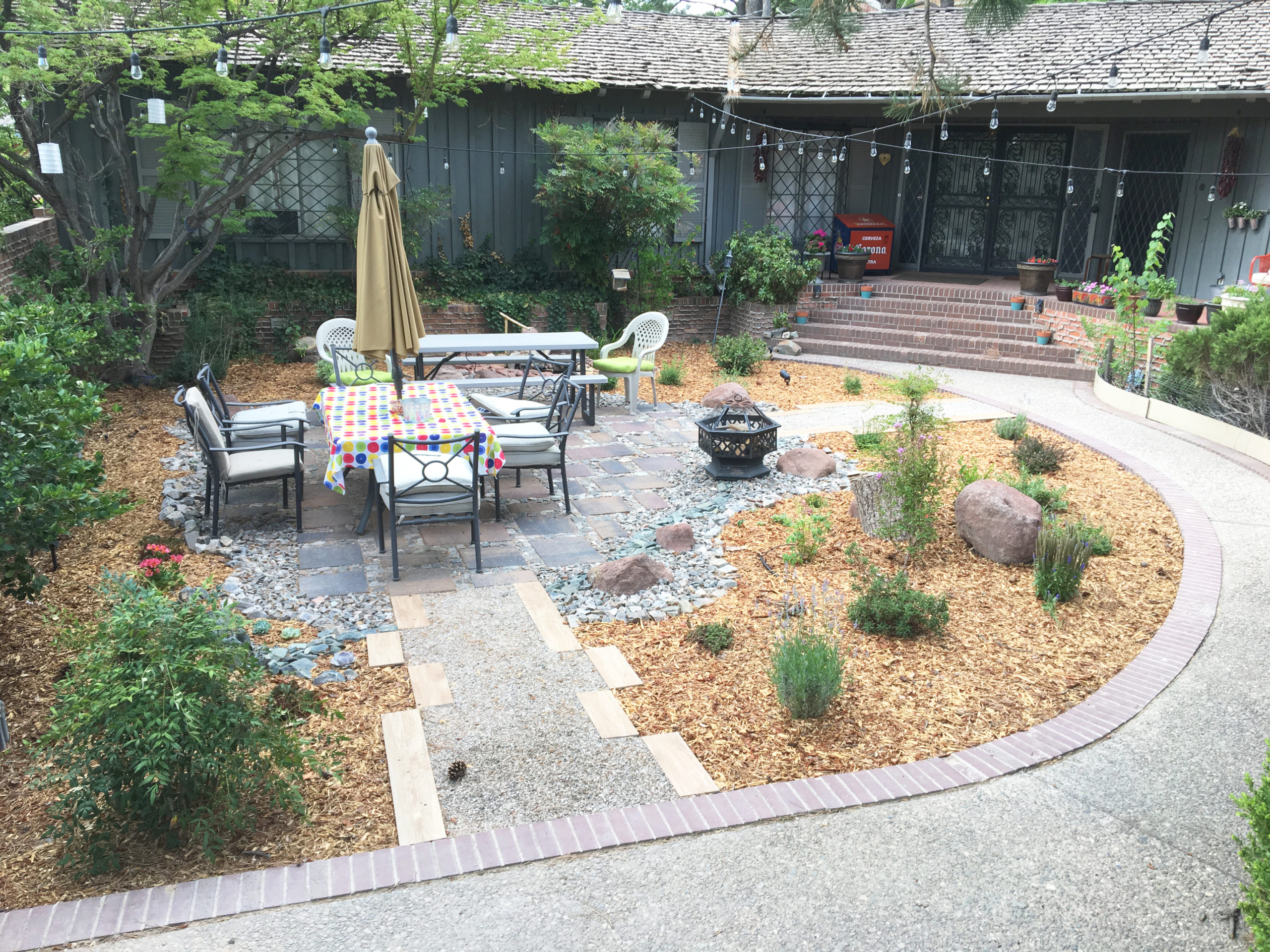
Install any hardscape elements such as walls, pergolas, sidewalks, pavers and boulders.
STEP 4
IRRIGATION
You’ll use a drip system to irrigate your new beautiful desert friendly xeriscape. Check that your existing spray valves are in good working condition. If so, you can reuse these valves. Simply have a licensed irrigator or plumber add a pressure reducer after the valve, then you can add your ½” drip polyline.
Irrigation Components: If your existing valves are damaged or non-functional you’ll need to install new ones. Typically, an irrigation specialist or licensed plumber would install your new manual shut-off valve, automatic valves, box, backflow preventers and pressure reducers. But if you want to do it yourself, do your research and reach out to local landscape irrigation suppliers for advice.
Drip Tubing: The drip tubing is everything downstream of the pressure reducers, and it’s relatively easy for homeowners to install. Uncoil the ½” or ¾” poly tubing in the sun until it’s flexible enough to manage (making sure there are no kinks in the process). Then, dig shallow 6” trenches, lay out the ½” poly in the trench, staking it with 6” weed fabric staples along the way, and snake the poly within a few feet of the plant locations. Wait until the plants are installed to cover the poly unless you have long lengths of it without plants.
Install the plants (link to article). Water your new plants with a hose right after they’re installed. You might need to create temporary basins around each plant to keep the water from running off.
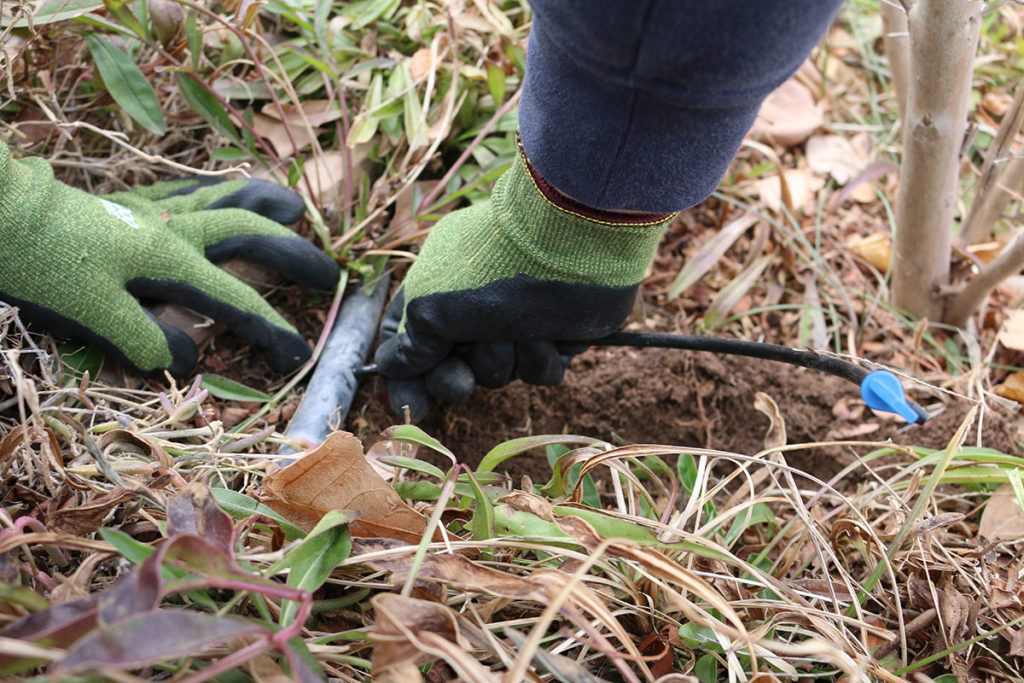
At this point, you’ll want to set up the permanent irrigation. Use your drip tubing punch tool to create a hole for the ¼” coupler and ¼” tubing. Always punch the hole in the side of the ½” poly, not the top, so a footstep doesn’t damage the connection. Carve a small trench in the dirt and run the ¼” tubing to the base of the plant and attach the emitter (use a weed fabric staple to hold it in place if necessary). Avoid running ¼” tubing farther than 3 feet in order to keep things orderly. After the ¼” tubing is installed, cover it with dirt to protect it and keep it from being tripped over.
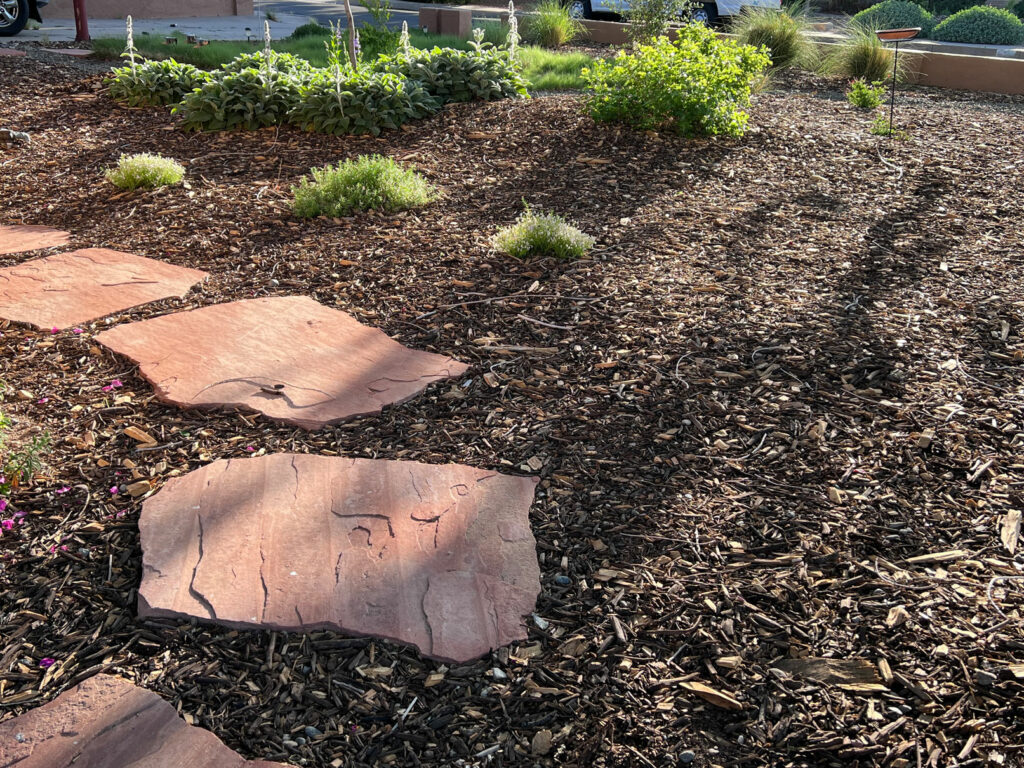
If you’re using gravel, the complexity and layout of your yard will determine whether you install weed barrier fabric before or after planting, but you do want the drip tubing under the weed fabric. For shredded wood chip mulch, lay the irrigation line down over the bare dirt then top with 3-4” of wood mulch.
If the mulch has been delivered in the street or on a concrete driveway, use a square shovel to scoop it up. From there, just load each wheelbarrow full and dump it throughout the yard. Spread it out with a rake and you’re done!