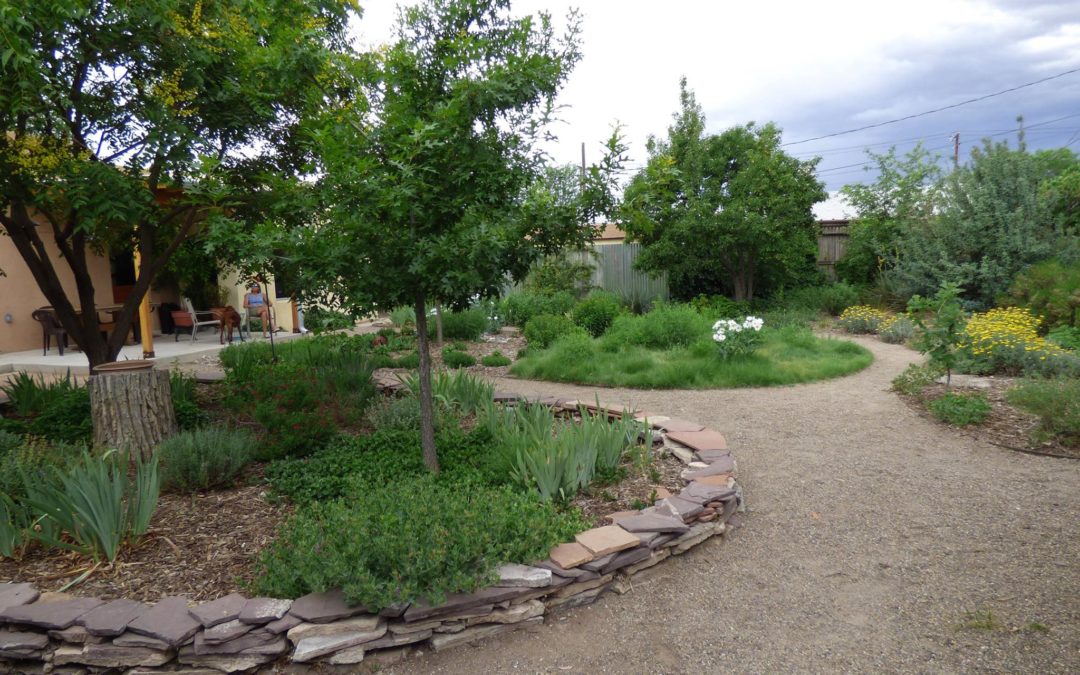
We are living in a time when our climate is going through rapid changes. Winter days have gotten warmer, and very cold nights are decreasing in number. The decrease in snowpack and early snowmelt that volatilizes before it soaks into the soil are creating drier watersheds, which are vulnerable to fires that can affect our water quality. Reduced snowpack affects streamflow. In order to take care of our Albuquerque landscapes, we need to rely on groundwater. When there’s a lack of precipitation, groundwater recharge is adversely affected. Less precipitation also means drier soils with little reserve moisture to maintain existing vegetation. Even if precipitation amounts don’t diminish, warmer temperatures affect evaporation rates from plant leaves and add to water stress. Supplemental irrigation demand is going to surge to maintain healthy landscapes. We need to implement adaptation strategies, like proper plant selection and smart watering methods, to make climate-ready landscapes a reality in Albuquerque.
We can prepare our landscapes for hotter summer daytime temperatures and warmer winters by following these strategies:
Shade surfaces: Plant trees and large shrubs against walls and near concrete to buffer sunbaked paving and cool walls that absorb heat during the day. By doing this, temperatures can be reduced by five degrees in urban areas.
Plant climate-ready trees: Check out the Climate Ready Tree list. This science-based list of trees that are most likely to survive our changing climate was put together by a diverse group of plant professionals. In mid-century, Albuquerque is projected to become as hot as El Paso, Texas. By the end of this century, our climate will become like present-day Tucson, Arizona.
Mulch everything:Mulchinsulates plant roots from both heat and cold, reducing moisture loss from the soil by evaporation, feeding beneficial soil microorganisms that enhance plant growth and improving soil health. Install 3-4” of mulch over bare dirt to reduce weeds, to enrich the soil and around all new plants to retain the moisture.
Remove or reduce turfgrass lawns: Lawns require 40 inches of water a year, compared with the 8 inches that Albuquerque gets. The greatest value of a cool- season turf is its resilience as a play surface, so if you aren’t regularly using it, consider removing it or installing a low-water grass or meadow.
Incorporate smart irrigation practices: Smart irrigation devices like smart controllers adjust the watering times based on local weather, thus saving water. Drip irrigation delivers water directly to plants. Efficient rotary spray heads reduce water use by 30% or more compared with regular spray heads.
By using these climate-ready practices, it will take less water to create a greener city, support wildlife and keep our community cooler.
Learn more by checking out these other useful drought articles:
Author: Judith Phillips, owner of Design Oasis, landscape designer, and garden writer with 30 years of experience designing arid-adapted and native gardens in the high desert. Have a question about the article? AskAnExpert@abcwua.org
One of the biggest obstacles holding homeowners back from removing their high-water turfgrass and installing xeriscape is believing that setting up the irrigation system is difficult. Luckily, it is not as hard as you may think.
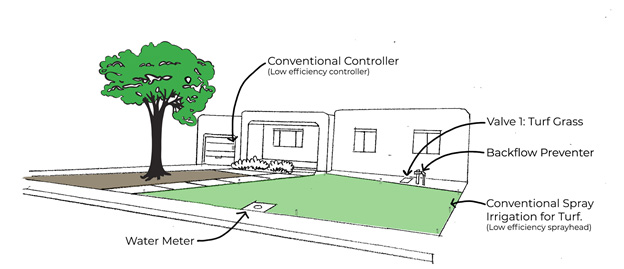
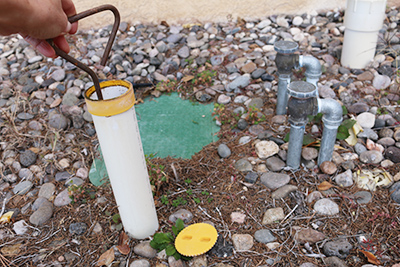
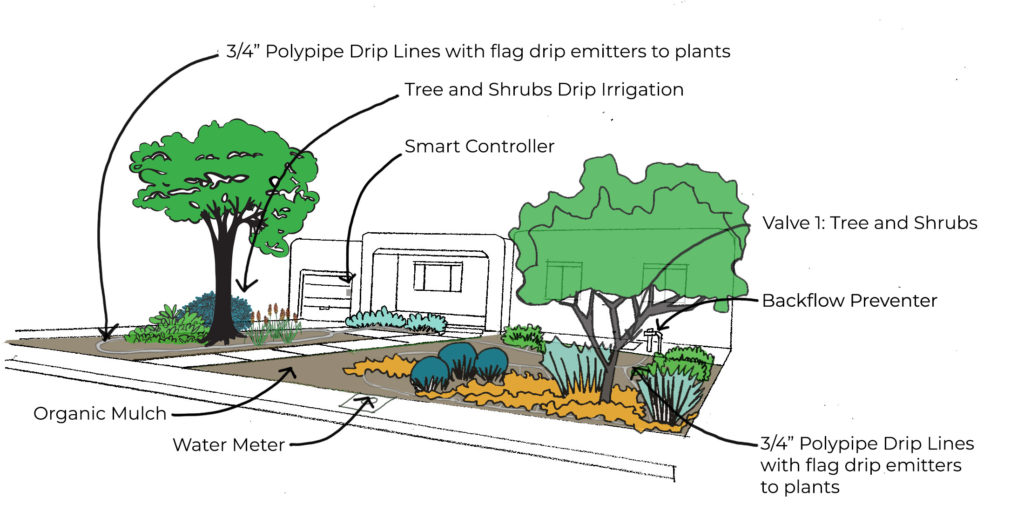
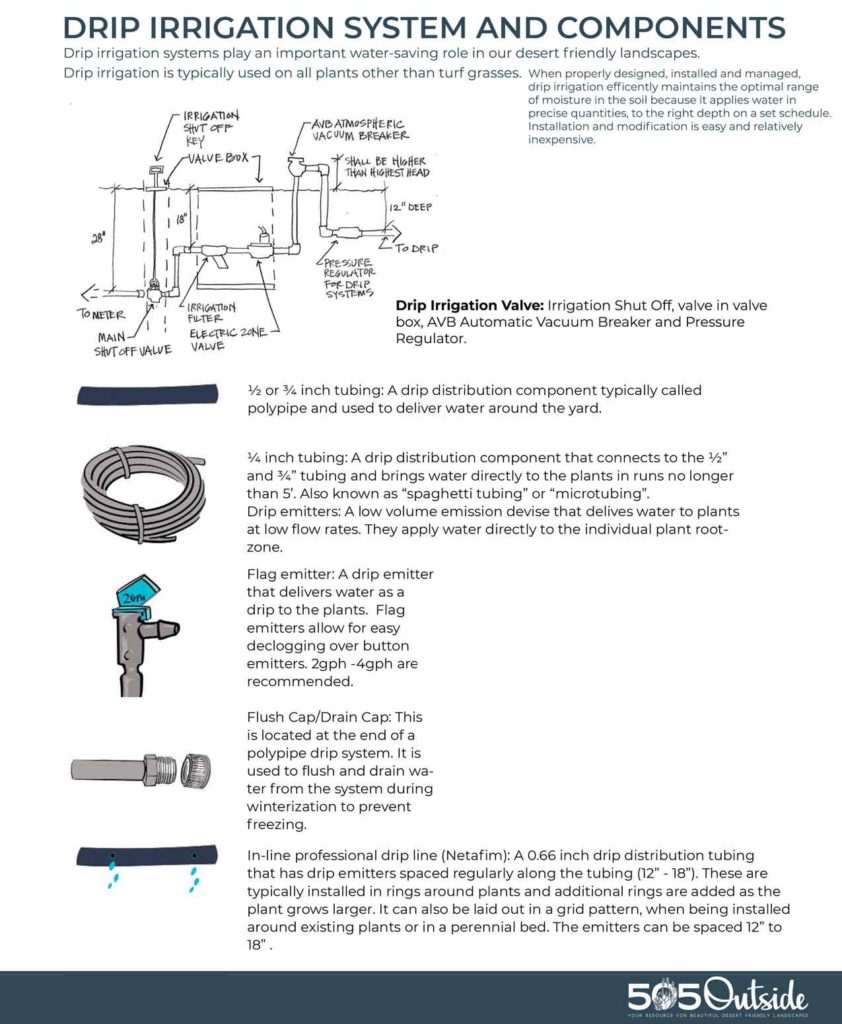
If you have an automatic irrigation spray system, you already have an existing valve and, most likely, an AVB backflow preventer. It may look something like this.
Desert Friendly Xeriscape with spray to drip conversion.
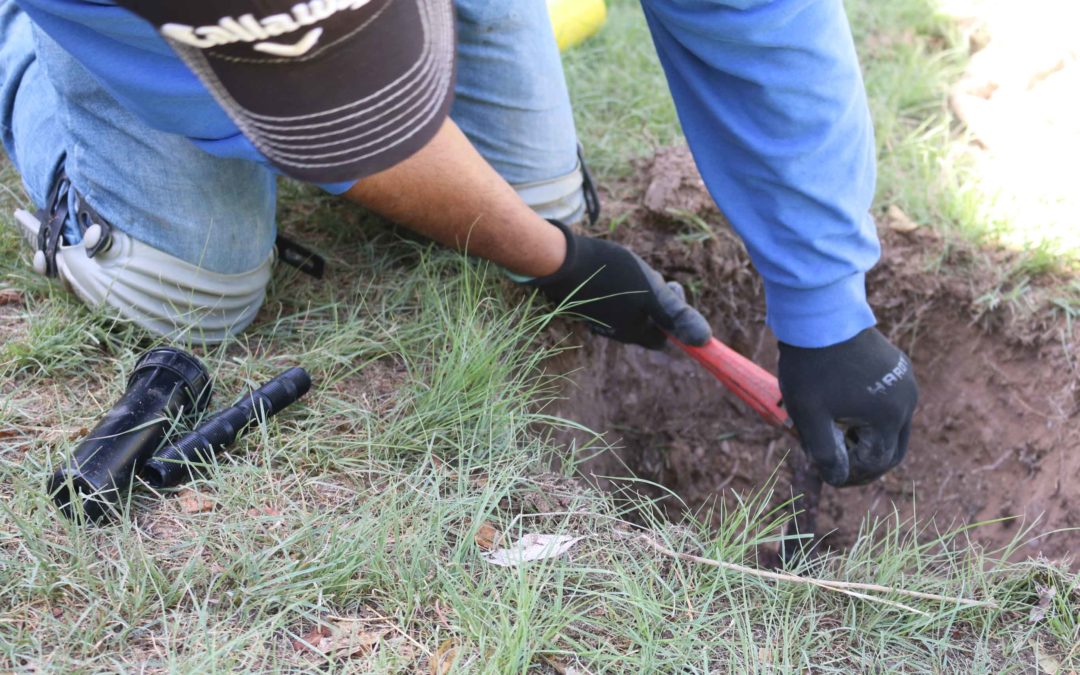
The first thing to do before converting to drip is to get the valves checked out by a professional to make sure they are in working order. When you know they’re fine, add a pressure regulator filter combo just past the existing valve and backflow preventer. Then attach ¾”polyline, snaking it around the yard to the new plants and inserting flag emitters at each plant.
The existing underground piping and spray heads are no longer needed. Simply remove all the existing spray heads. There is no need to dig up any existing pipe.
You may have seen the spray-to-drip retrofit kits locally available and wonder if this is a good approach. We don’t recommend this approach because studies show that nearly half of the water saved from converting a lawn to a healthy xeriscape comes from abandoning leaky underground piping and fittings. A Sprinkler system’s lifespan is less than 20 years. If you are not sure how old your system is, or if it is older than 10 years, it’s best to not rely on old underground piping. Since sprinklers typically run for 8-12 minutes and drip often runs for 45-60 minutes, if you have a leak in your old sprinkler piping and it is now part of the drip system you could be wasting a ton of water – negating the savings from getting rid of your thirsty lawn.
Drip irrigation tubing is very inexpensive per foot and only needs to be in a shallow trench. Properly converting to drip irrigation is not as expensive as many people think, while converting your sprinklers to drip the cheap and easy way with a retrofit kit is likely to cost more in the long run.Contact AskAnExpert@abcwua.org to learn more.
Learn more by checking out these other useful drip irrigation articles:
Author: Amos Arber, Xeriscape Rebate Inspector with the Water Resources Conservation Department for the Water Authority. Have a question about the article? AskAnExpert@abcwua.org
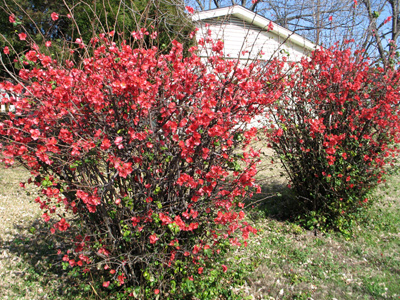
The flowering quince is a winter showstopper, producing spectacular blooms well before anything else starts to green up for spring. This shrub’s apple-like blossoms, ranging in color from pink to coral to red, grace elegant arching branches that make beautiful cut flower arrangements. Long oblong leaves fill in after bloom time is over. Be sure to give it some space in your garden, as the stems are thorny.
Flowering quince is surprisingly easy to grow and will thrive on a modest water budget once established.
So far this winter season precipitation has been 30% below normal for New Mexico. According to the National Weather Service statewide average day temperatures are 56.6 degrees, which is 2.1 degrees above the normal of 54.5.
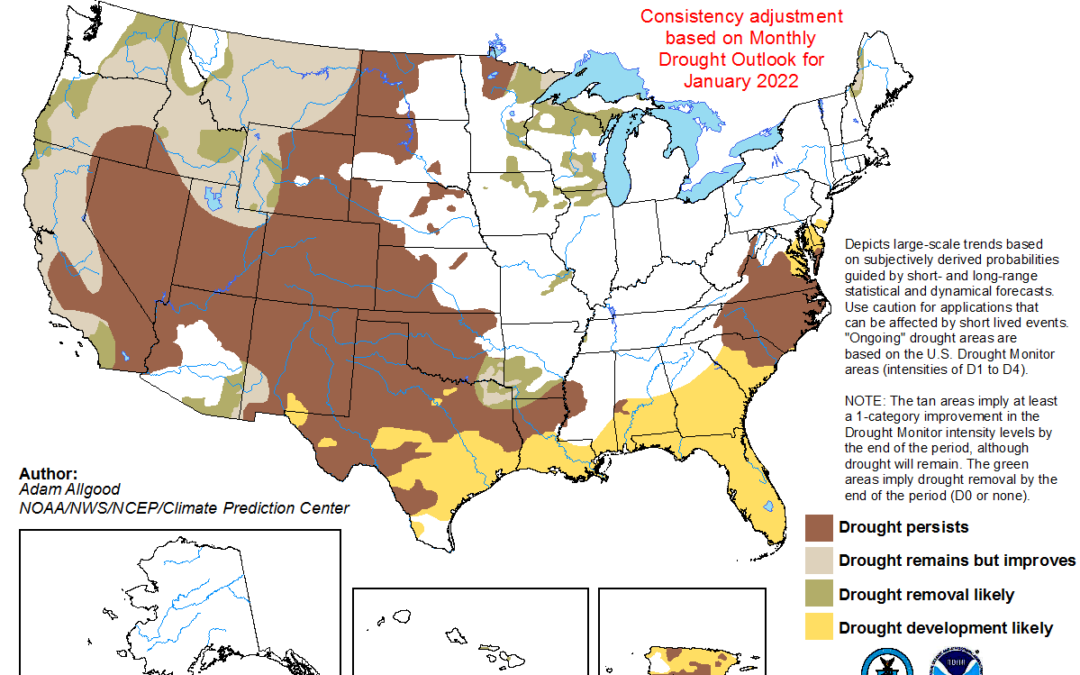
With that said, we are starting out the year with intensified drought conditions. Your landscape needs more care and attention when we are facing higher temperatures and low precipitation.
Here are a few suggestions for minimizing plant damage and mortality in times of drought:
Water mid-morning (around 10am) with a hose when it is above 40F. This way, water can soak into the ground and be absorbed by plants before the evening’s freezing temperature returns. Disconnect your hose and roll it up to drain after watering.
Don’t prune back shrubs and flowering plants yet. Let any additional plant material act as insulation that helps keep plants protected and, ultimately, healthier.
Top dress planters and beds, or around shrubs and trees, with your leaf litter or a 3” layer of shredded wood chip mulch. This will help insulate and regulate the root zone. By doing this, less water is needed to keep plants healthy.
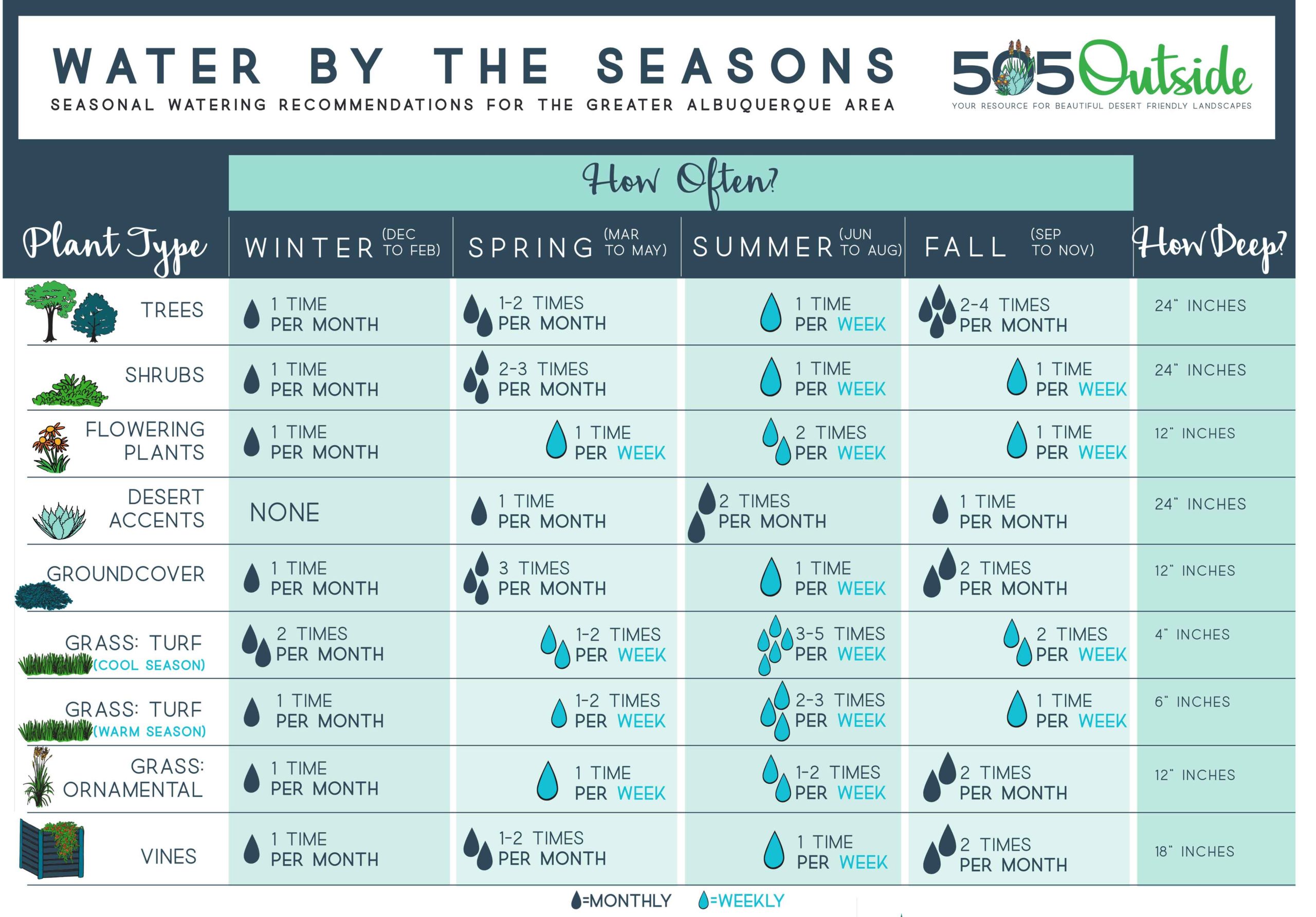
Watering isn’t always needed in the winter when landscapes are dormant, but in times of drought follow this watering advice to keep plants healthy:
Trees and shrubs: Water plants deeply, trees especially, at least once this month unless we receive more than a half inch of rain or more than 6″ of snow.
Turfgrass: Water your lawn every other week this winter. NMSU conducted research on winter lawn watering and determined that in order to maintain optimal year-round health, your lawn needs to be watered twice a month in the winter.
Evergreens: Conifers are particularly susceptible to wind, which dries them out. Water them deeply a minimum of one time this month, but you’ll want to add about ¼ more water to evergreens than to other trees or shrubs.
Author: Carlos Bustos, Conservation Manager & Richard Perce, Irrigation Efficiency Specialist with the Water Resources Conservation Department for the Water Authority. Have a question about the article? AskAnExpert@abcwua.org
The desert friendly xeriscape conversion incentive rebate has been around since the early ’90s and is still going strong. Millions of square feet of thirsty lawns have been converted to healthy xeriscapes that save billions of gallons of water. Although the xeriscape conversion rebate’s application process has a few more steps than our other rebates, our experts are here to help you every step of the way. Remember to contact our xeriscape inspector, Amos Arber, before you stop caring for your lawn or start tearing it up.
Below, Amos answers some of the most frequently-asked questions.
Q: I want to replace my lawn with gravel because I’m trying to save water. Why do I need to include new plants in order to be eligible for a rebate?
A: The xeriscape rebate is meant to incentivize our customers to add a 50% coverage (at maturity) of new plants, drip irrigation, and mulch (gravel, crusher fines, wood chips) to encourage healthy xeriscapes. Plants provide a range of benefits, such as shading the ground to help our city stay cooler, providing wildlife habitat and keeping our neighborhoods looking beautiful.
Q: Do I have to convert my entire lawn to get the rebate?
A: No. Projects can be done in phases or only part of the lawn can be converted as long as it is at least 500 square feet.
Q: Will I receive a check from the Water Authority when the project is complete?
A: We do not issue checks. All rebates are credits towards your account. Participants do not have to pay on their account until the rebate is used up, which may take more than one year.
Q: Can I include a patio or pathway in the project area?
A: Yes. Plants do not have to be spread evenly throughout the former lawn area. They can be denser in some areas to accommodate a small patio or pathways.
Q: I want to replace my lawn with artificial turf. Can I get a rebate?
A: If the area of fake grass is small and you can fit in the required amount of plants in the rest of the project area, you can get the rebate. If the area of plastic lawn is covering all or most of the former living lawn area, you will not be able to meet the rebate requirements.
Q: Do I have to hire a professional to do the design or installation work?
A: No. We encourage folks to do the designing and installation work themselves and have many helpful resources. Not only can DIY projects save money but they can empower homeowners and help them feel comfortable performing necessary landscape maintenance.
Q: I’d like to convert my lawn, but I have no idea how to get started. What do I do?
A: Check out the Resources and Landscape Tips tabs on our website. We have several great articles on everything you need to know to get started. Another option is to ask our xeriscape expert Amos Arber (505-208-2015) to meet you on-site. He will explain the rebate process, tell you about important site conditions to consider, offer plant and design ideas and help you put together a list of questions to ask a contractor.
Q: Is it okay to use plants I’ve grown myself?
A: Yes. A good way of saving money is to transplant or propagate your own plants.
Q: Do you have any tips for doing a project on the cheap?
A: We encourage folks to do the projects themselves since DIY projects can save at least 75% of the cost of hiring a contractor. Other ways of saving money include using free woodchip mulch that’s available from tree services (gravel and weed fabric can be expensive) and purchasing bulk organic mulch to receive an extra $100 rebate. When purchasing container plants, compare costs. For example, a five-gallon rosemary plant gets the same number of plant points as quart-sized rosemary but costs 80% less. Also consider using recycled materials, such as broken concrete pieces, instead of expensive flagstones.
Q: I’ve already completed a xeriscape project but did not apply for a rebate or get my lawn inspected before it was removed. Can I still get a rebate?
A: Unfortunately, no. We need to document the existing lawn before it is removed. This ensures that our customers’ funds are used only to convert thirsty lawns.
Q: I don’t have a lawn but want to fix up my yard with new xeric plants. Can I get a xeriscape rebate?
A: No, however, we have lots of rebates that might apply for other yard renovation projects such as the Treebate.
Q: Some of the plants I want to use are not on the master plant list. Can I use those plants in my project?
A: If the plants you want to use are cultivated varieties of plants on our master plant list (plant names are listed in quotes), you can use them. If not, you are welcome to install them in your yard, but they will not count towards the required plant total for your project. Our master plant list contains over 600 plants proven to thrive in our area for all landscape types and conditions.
Author: Amos Arber, Xeriscape Rebate Inspector with the Water Resources Conservation Department for the Water Authority. Have a question about the article? AskAnExpert@abcwua.org Want to start on your Xeriscape conversion project today? Click here to get started.