Chinquapin Oak, Quercus muhlenbergia

Chinquapin Oak, Quercus muhlenbergia

Type: Deciduous

Exposure: Sun/Shade

Water Use: Medium

Mature Size: 40’ H x 40’ W

The Chinquapin oak (also spelled Chinkapin)is a rugged, adaptable shade tree native to New Mexico and primarily occurring in the southeastern mountains. This long-lived deciduous tree is valued for its extreme hardiness in arid climates, and it thrives in high-pH, alkaline, and limestone-based soils. It is a premier choice for landscaping in hot, dry areas because of its deep root system and drought tolerance once established. The tree is easily identified by its rough scabby bark and its glossy, dark-green, oblong leaves with serrated edges. In the fall, foliage turns vibrant shades of yellow, gold, orange or copper. It produces small, sweet acorns that are the preferred food for squirrels, deer, wild turkeys and songbirds like woodpeckers and blue jays. Given its potential width of 30-40 feet, plant it where it has room to spread. This oak will provide southern or western shade to homes under its spreading rounded crown.

As a keystone species, it hosts hundreds of caterpillar species that support local bird populations. Native American tribes, such as the Cherokee and Koasati, traditionally used infusions of the bark and roots for medicinal purposes, including treating fevers, headaches and stomach aches. 

The El Capitan cultivar is specifically selected from New Mexico populations for its ability to tolerate higher elevations and more arid, low-humidity environments compared to Eastern varieties.

Ornamental Grasses: How and When to Use Them

Ornamental Grasses: How and When to Use Them

What is an ornamental grass? Most often, that term is used to describe cultivars of grasses that are used for specific visual appeal such as color, texture, form, movement, seed heads or other structural characteristics that give interest to our landscapes. Grass-like plants such as sedges and rushes are often included in this category. Most are clump-forming rather than spreading. They can be used as tall background screening, dramatic individual vertical forms or low clumping groundcovers. There is a grass or grass-like plant for virtually any spot in the landscape or garden.

Full sun, upright and mounding grasses

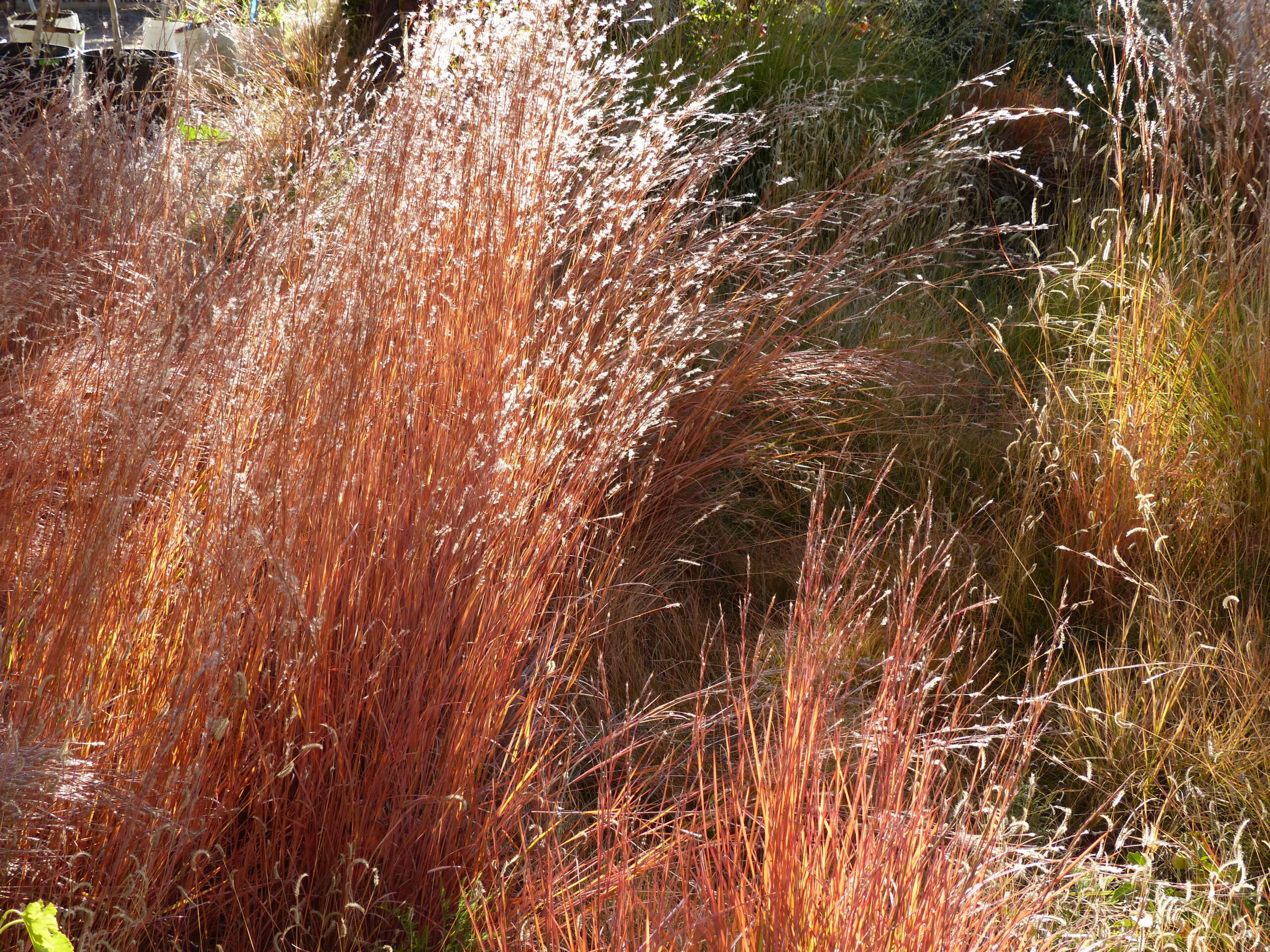
Little bluestem (Schizachyrium scoparium) is one of our most beautiful native grasses! Tall, growing 2-3 feet, this grass is narrow — just a foot or more wide — deep rooted and drought tolerant. This indispensable exclamation point stands upright in the landscape. It is medium green to icy blue in spring and summer months. When autumn and winter temperatures turn most grasses the color of dry straw, little bluestem shines subtly in shades of bronze, ochre and rust. Interspersed in a meadow with blue gramma and side oats grama, little bluestem punctuates the monochromatic tapestry. Standing alone, or in groupings, this grass produces autumn seed heads of silken silver fuzz that shine and shimmer when backlit by the rising or setting sun. Best in full sun and poor to moderate good draining soil. Reseeds easily. Cut once a year, to a low and rounded mound of about 3 inches in early spring, late February-mid March.

Little Bluestem Grass

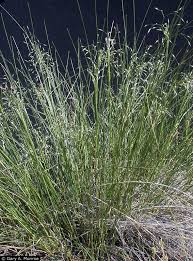
Sand lovegrass (Eragrostis trichoides) is a wiry, fine bladed native grass tolerant of sandy to poor soils, full sun, drought, wind and heat. It forms a wide (2-3 feet), rounded mound. From late summer to autumn, seed heads appear on burgundy tinged panicles floating above the foliage. Airy and elegant, the seed heads are distinctive and lovely in dried arrangements. An individual showpiece, this grass looks great when planted in masses, too. Another light catcher that reseeds well. Cut once a year in early spring, to about 2-3 inches high.

Sand Lovegrass

Maiden grass (Miscanthus sinensis) is a non-native thatgrows 4-5 feet tall. Dwarf varieties are available that are 2-3 feet tall. The form is upright with the top of the plant spreading wider than the base. This grass can be 3-plus feet wide at the top and 2 feet wide at the base. A specimen grass, it’s not for meadows except as an accent or background and works well in groupings. Seed heads form mid to late season, at first appearing like narrow fingers, sometimes with coloration from pink to burgundy, all eventually drying to a blond fluffy appearance like golden clouds over the straw-like blades curling up and out. When backlit by the sun, this can be stunning. Moderate water for this grass is better than low water. Maiden grass does not reseed successfully in our area now but can be thinned and transplanted by division. Cut back once a year in spring, when new green becomes visible at the base. A cut at around 6-8 inches of height can be good for this large grass.

Maiden Grass

Karl Foerster or feather reed grass (Calamagrostis x acutiflora ‘Karl Foerster’) is a non-native, low maintenance vertical grass that produces seeds early, unlike most grasses which produce seed heads later in the season. Like Miscanthus, green and variegated (striped) cultivars are available. This grass likes full sun and moderate water and grows 3-4 feet tall and 1-2-plus feet wide. It makes a statement as a single plant and is great in groups or rows for a contemporary take on plant placement. Does not reseed. Cut back to a height of 3-5 inches once a year in early spring.

Karl Forester

Full sun to part shade grasses

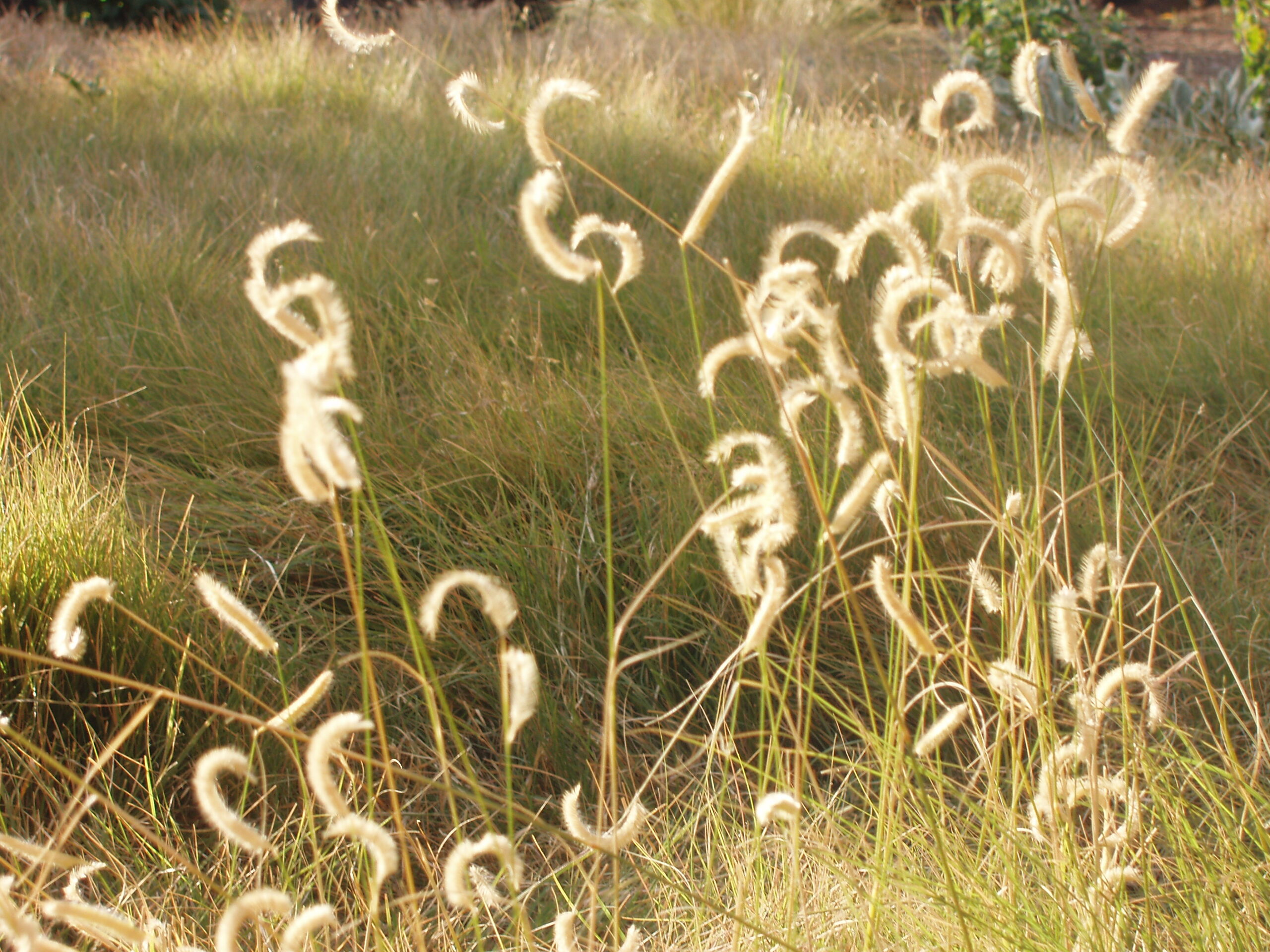
June grass (Koeleria macrantha) is a native that can be found growing in our mountains in full sun to part shade. Narrow blue green blades 12-18 inches tall push up in early spring, soon followed by spiky seed heads. The seed heads flush out into narrow, pointed silky bottle brush shapes, catching morning and afternoon light that makes them appear illuminated. Not fussy about soil, except when heavy and wet, this tough grass is drought tolerant and deer resistant. As a cool season grass, it may go dormant in hot dry summers, especially at lower elevations. So while appealing, this plant does not flourish in a hot and dry xeriscape.

June grass

Blue avena (Helictotrichon sempervirens), also called blue oat grass, has wiry ice blue blades that form a low, rounded mound around 18-30 inches tall and wide. Narrow seed heads push up, and the seeds soon turn straw colored and give an oat like appearance. This cool season grass is not fussy about soil and is drought tolerant when established. Does not reseed. Cut back once a year in early spring to a rounded 2- to 4-inch mound.

Blue Avena

Blue fescue (Festuca ovina glauca) is a blue green form of native sheep’s fescue (Festuca ovina). Fine, needlelike blades and wiry, thin, straw colored seed heads make this small (6-8 inch) grass perfect for small areas, borders and rock gardens. Often keeping color through the winter, this grass is drought tolerant when established. Straight species can reseed while named cultivars like Elijah Blue do not reseed well. Cut back once a year to a height of 2 inches. Requires shade to do well.

Blue Fescue

Maintenance and selection tips:

Most grasses benefit from having old dry growth thinned out of the center every few years at the time they are cut back. Many grasses can be used in containers or large pots. Grass trimmings can be used as mulch in the landscape (careful with seeds if you don’t want seedlings) or added to your compost.

Some ornamental grasses like pampas grass and Ravenna grass have become invasive here, particularly in the Rio Grande Bosque, so are no longer recommended. Large native grasses like giant sacaton (Sporobolus wrightii) and switch grasses (Panicum species) are good substitutes. There are many species of native grasses that are tough, ornamental, easy to care for and beneficial to native insects, birds and other wildlife, thus being wise selections for our landscapes and gardens. 

Learn more here:

What Type of Grass is that?

New and Underutilized Plants for 2026!

Climate Ready Landscapes!

Author: Wes Brittenham, landscape professional. Have a question about the article or anything else? AskAnExpert@abcwua.org

Common Planting Design Mistakes

Common Planting Design Mistakes

1. Too many different plants spread out like polka dots

Often when homeowners begin to design their yard, they get excited by the variety of plants in our Xeriscape Guide. Similarly, going to a well-stocked nursery in the spring can be like going to a candy store — you might say to yourself, ‘I’ll take one of everything!’ However, it’s good advice to resist that urge and instead attempt a more cohesive ensemble of plants and trees. Grouping plants, especially smaller ones or perennials that have less dense forms, can maximize their effect by creating masses of various sizes and contribute to the feeling of a more natural landscape. 

In these instances, you can pair plants that have widely different leaf shapes, like the agave and ephedra pictured below. The effect is something you wouldn’t appreciate if there was a large gap between the plants. A lot of flora have distinctive attributes like bark patterns, seedheads, dried flowers or an overall shape that allow them to stand out when accompanied by contrasting plants.

If you’re not sure where to start on your own yard design, check out our landscape templates here. You’ll notice there is a lot of variety in each design, but the same plant symbols appear next to each other throughout the yards. The three landscape architects and designers who contributed these templates have tons of combined experience designing beautiful and sustainable landscapes in New Mexico, and their templates are worth checking out!

Benefits of installing multiple plants of the same variety

  • Visual impact: Let’s take a really great flowering perennial like Gaura or whirling butterflies (Oenothera lindheimeri) as an example. It has airy small white (or light pink) flowers less than an inch wide atop thin branches that sway in the breeze — visually it doesn’t stand out unless you’re right in front of it. If you were to plant a single specimen of Gaura in the middle of a yard it could almost disappear.  Instead, we suggest a group of three in a triangle or row closer to paths or windows to maximize their impact — just like they’ve done in this photo taken at Presbyterian Rust Medical Center on the West Side.
  • Attracting pollinators: Grouping flowering plants that attract pollinators can really make it worth the effort for them to visit. Perennials bloom at different times from spring to fall, and in a small yard you may have only one type of plant flowering at a given time. A group of at least three of the same perennial will be hard for pollinators to miss as they go about their business of collecting pollen and nectar. Then they’ll be able to save their energy for building nests and breeding.
  • Reduced maintenance: If you’re new to xeriscaping or gardening, having fewer varieties of plants in groups can make maintaining them (and learning names and growth habits) less overwhelming. Instead of starting out with a mishmash of plants installed everywhere, you’ll be able to get your head around the maintenance more easily because the yard is divided into manageable areas. Also, if you pay someone for yard care, you may need to explain to them when, how (and if) to do the work. A smaller plant palette grouped by variety can help simplify the job. You could say to them: “This year for all the woody evergreen shrubs next to the sidewalk, don’t use hedge trimmers but do remove one-third of the oldest branches at the base.” 

So if you head to the nursery to buy 10 plants this spring, consider coming home with just two or three varieties that together will make a real impression.

2. Symmetrical vs. informal plant layout

Another mistake DIYers sometimes make when designing landscapes is opting for a symmetrical layout for the new plants. For instance, they will have corresponding rows of evergreen shrubs on either side of a path as shown below. There are a couple of reasons why this is less than ideal. One is that an unhealthy plant (or worse, one that is dead) is immediately noticeable. Also, in a formal layout, you’re anticipating that the plants will grow to a uniform size and shape. However, this is not the case with native and xeric-adapted plants (and most plants, really). Once in the ground, they’ll be responding to all sorts of different conditions. Too much shade from a nearby tree limits a plant’s mature size, or extra water from the roof causes one to get larger than the others, for example. And if you did need to replace one plant in a formal layout, it could take a while for the new one to catch up to the others (assuming you able to find the same variety as the originals).  

In an informal or “naturalistic” layout, a missing plant is not an issue because there’s not an expectation for that space to be filled. It also allows flexibility in the design — shade-loving plants near the tree, plants that can handle more water under the downspout. If a particular plant isn’t doing well, you can transplant it to another location. Using an informal or naturalistic planting design allows you to add to your garden over time as it matures and changes for years to come. 

Selecting plants for your yard can feel overwhelming to a new gardener. We hope these tips help you avoid common mistakes, and remember that we're always here to support you. If you have questions about plant selection, feel free to send photos and details of your yard to askanexpert@abcwua.org — we’ll be happy to help.

Learn more here:

Let’s Plant Albuquerque

Simple Steps to Get Started Designing your Yard

Desert Friendly Design Templates

Author: Carl Christensen, Xeriscape Inspector. Have a question about the article or anything else? AskAnExpert@abcwua.org
Symphoricarpos albus, Snowberry

Symphoricarpos albus, Snowberry

Type: Deciduous

Exposure: Full Sun

Water Use: Medium

Mature Size: 6’ H x 6’ W

This shrub is sparsely branched, growing 2–5 feet tall and gradually forming a thicket 4–6 feet wide. Its slender, wiry twigs bear small, opposite leaves and pinkish white bell shaped tiny flower clusters, which are followed by large, snow-white berry-like fruit. It can be found along stream beds, making it a great plant for beneath the runoff of downspouts.

Related species include coralberry (S. orbiculatus), known for its purplish-green flowers and clusters of pink berries, and wolfberry (S. occidentalis), a dry prairie shrub with pale pink flowers, leathery oval leaves and greenish-white fruit.

This plant has many traditional and medicinal uses, according to the National Park Service, “Fresh berries can be crushed and rubbed on skin to cleanse and soothe; they also heal rashes and burns. Native Americans used the berries to clean their hair. Roots were soaked to make tea to treat stomach disorders, and tea made from twigs treated fevers. The spindly branches can be tied together to make brooms.”

Small flowers in Spring.
Fall and Winter berries.
New and Underutilized Plants for 2026!

New and Underutilized Plants for 2026!

Who doesn’t love a good plant list to start off the year? Local nursery industry expert with over 50 years of experience Andrew Lisignoli shared with us his favorite new and underutilized plants.

COLORFUL SHRUBS

One group of plants Lisignoli recommends are a number of species (and cultivated varieties) of the genus leucophyllum. There are many different options that offer unique features but Leucophyllums generally love hot exposures (like next to a south facing wall) and there are two types: mostly evergreen and what some would call ‘ever-grey’ providing year-round interest in a sage green plant with blooms most vibrant after a rain.  In fact, one of its common names is ‘barometer bush’ because it often blooms after a rain, when the relative humidity is high. Other common names are Texas Sage and cenizo. We are showcasing four cultivars; each offers a variety of different flower and leaf colors and sizes. All of these species ‘attract butterflies and bees, providing nectar for native pollinators.’ Additionally, after blooming these shrubs cover the ground with bright confetti of the spent flowers. It is low maintenance, plant it in a place where it has enough room and you won’t have to prune it.

Leucophyllum langmaniae, ‘Lynn’s Legacy’

5’ H x 5’ W, semi-evergreen, full sun, low water

Bloom color: Lavender

The most popular of the Leucophyllums, this evergreen shrub grows moderately fast, forming a dense, rounded mound of sage green foliage. Masses of lavender flowers are produced up to 3 or 4 times in the summer and fall. This selection is not as dependent on changes in relative humidity for flowering, compared to others in the genus, which means that it blooms more often during the dry months.

Leucophyllum frutescensCompacta’ Compact Texas sage

3’ H x 4’ W, semi-evergreen, full sun, low water

Bloom color: Pink

This evergreen shrub forms a dense, rounded mound of light gray foliage. It produces masses of pink flowers after it rains and when the humidity rises in the summer and fall. Plant in full sun and reflected heat exposures. This selection is fairly tolerant of heavier clay soils.

Leucophyllum frutescens San Antonio rose PP33454

5’ H x 5’ W, evergreen, full sun, low water

Bloom color: Rose pink

Drought resistant and heat loving, this compact variety was bred to thrive in the Southwest. Bright rose pink flowers bloom throughout the summer, especially when humidity spikes. Unique in that it has a tighter growth habit with small silvery leaves and larger flowers then other Leucophyllums.  

WOODY SHRUBS

LIsignoli suggests homeowners take a second look at these great local plants that are often overlooked. The three of these shouldn’t need much care.  

Forestiera neomexicana New Mexico olive/privet

6 ’H x 4’ W, deciduous, sun/shade, medium water, clay soil

Bloom color: Yellow

Traditionally found as an understory plant near the Rio Grande, it makes a great small tree in a courtyard, can be an effective natural hedge or windbreak or can be planted under large shade trees for wildlife and interest. This shrub features upright arching and finely twigged white branches with rounded bright celery green foliage and tiny yellow flowers in the early spring that provide nectar for bees. These plants are dioecious, meaning they are separate male and female plants, in late summer, females have small blue-black berries, which birds enjoy. Males are fruitless. Leaves change to golden yellow in the fall then drop to expose the sculpture of the pale white branches. New Mexico olive is very drought tolerant once established.

Chamaebatiaria millefolium, Fernbush

5’ H x 6’ W, semi-evergreen, full sun, low water

Bloom color: White

Fernbush is great used as a single specimen or clustered in groups or rows for visual screening and hedges. The showy flower spikes resemble those of white lilacs and attract butterflies all summer. Its aromatic olive-green foliage is soft and fernlike, and its upright stems with their peeling bronze bark create a pleasant, rounded silhouette without the need for much pruning This hardy plant loves south- and west-facing exposures and well-drained soil. It brings interest to the garden year-round.

Vauquelinia californica, Arizona rosewood

12’ H x 10’ W, evergreen, full sun, low water

Bloom color: White

Arizona rosewood is a large, evergreen shrub or small tree. Leathery, dark-green foliage provides a backdrop for the umbrella shaped clusters of white, five-petaled flowers that crown rosewood in summer, turning a deep cocoa brown and persisting well into winter. At its best in open windy spaces where evergreen wind protection is especially welcome, it features stiff, mostly straight branches. Extreme exposures seem to increase its density, and, unlike most broadleaf evergreens, its glossy foliage stays crisp and attractive through heat and cold. It can be slow growing but it is very long lived.  AZ Rosewood is a great replacement for photinia or euonymous shrubs.

GROUNDCOVERS

Manzanita is a plant genus that has many forms including trees, shrubs and groundcovers. It is one of the few true broad-leafed evergreens that can handle the challenges of our cold winters and hot summers. It’s native range is open pine forests and piñon-juniper woodlands, from 3000’ to 8000’ elevation. It thrives on sandy, rocky areas and slopes; is cold hardy (-20 F/-28 C); tolerates heat; and needs very little water. Smaller hybrid manzanitas, Lisignoli points out, have been found to provide similar features in a groundcover. Below are two species to try. Future iterations of our Xeriscape guide will include both of these great evergreen groundcovers.

Arctostaphylus x coloradoensis  ‘Panchito’ Manzanita

2’ H x 5’ W, evergreen, sun/shade, medium water

A naturally occurring hybrid from the Uncompaghre Plateau in Colorado, this plant has small pink-white flowers in early spring followed by dry red berries in fall with evergreen leaves that turn a red-purplish color. Naturally dense and low-growing, it is a great, well-behaved evergreen shrub for the home landscape.

Arctostaphylus x coloradoensis 'Chieftain' Manzanita

2’ H x 6’ W, evergreen, sun/shade, medium water

Chieftan manzanita is a low, broadleaf evergreen that can become quite wide at maturity. Its large, round leaves make this plant very valuable as a backdrop in summer and a welcome evergreen shrub throughout fall and winter, with its bright green leaves holding their color longer into the winter. Small pinkish-white flowers grace the plant in early spring but are not very noticeable. It makes an excellent groundcover in flat areas but also cascades nicely over retaining walls and boulders. Chieftain manzanita has slightly larger leaves and is more vigorous than Panchito.

TREES

Some up and coming trees are very adaptable maples. People love Japanese maples but they don’t grow in our climate unless they are in full shade and are not always successful even then. Also up-and-coming are hybrid tree form Gambel oaks cultivated from the native shrub. Both these plants are still new but keep a lookout for them and start asking your local nursery about them.

Acer tataricum, 'GarAnn' PP 15,023 Hot Wings® Tatarian maple

15’-18’ H x 15’-18’ W, deciduous, sun/shade, low water

Hot Wings Tatarian maple is a beautiful, small ornamental tree with slender branches forming an upright oval canopy. Although the flowers are not noticeable, by midsummer brilliant red seed capsules (samaras) cover the tree and provide a spectacular show, shining in bright contrast to the summer foliage and persisting for about a month. During the fall, the leaf colors range from yellow to orange-red. An excellent performer in rugged climates, it is tolerant of alkaline soils and light-adaptable. It puts on quite a show in July when the red samaras are present. It is a small, low-water-use tree worth considering. Broadly oval when young, its branches spread wider than tall, becoming rounded at maturity. It is best planted in lots of mulch, partially shaded with adequate irrigation

Hot Wings Maple Tree
Red seed capsules on Hot Wings Maple

Quercus gambelii  Gambel oak

15’-20’ H x 15’-20’ W, deciduous, full sun, medium water

The gambel oak can be found in two forms in the nurseries. One as a multi-trunk species and one as a single trunk species. Dark green foliage turns to yellow-orange and orange-red in the fall. Native to the dry mountainous interior West from Utah and Colorado to the Mexican border, Gambel oak is drought tolerant and hardy. It is an ideal tree for low maintenance landscapes in Albuquerque.

Gambel oak in single trunk tree form.

Learn more here:

Favorite Mediterranean Plants for the Albuquerque Area Landscapes

Our Favorite Evergreens

Fruit Trees for the Homeowner

Author: 505Outside interviewed Andrew Lisignoli, Ambassador to the Industry at Trees of Corrales. Have a question about the article or anything else? AskAnExpert@abcwua.org