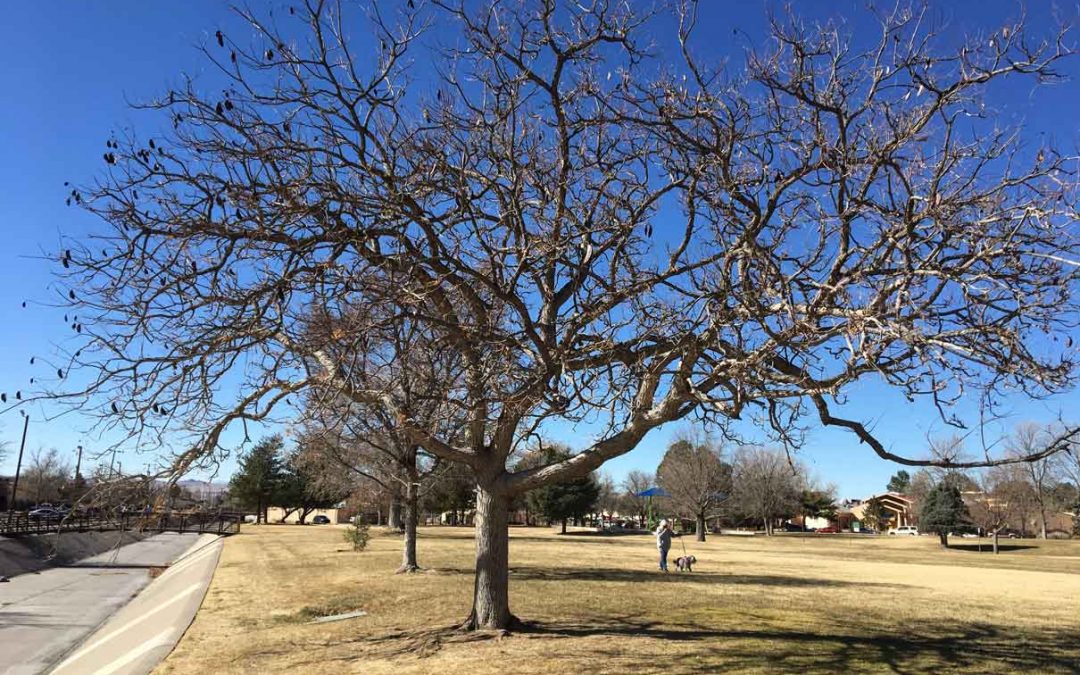
In an arid city like Albuquerque, trees and the urban forest are even more important than in places with more moisture. Trees provide shade and habitat, and help cool the urban landscape. To sustain a healthy canopy trees require special care given the arid climate, ongoing drought, and warming temperatures. This year’s hot, dry conditions highlight the need for New Mexicans to take even more care of their trees – and to plan for which species will grow best in increasingly warm conditions. This was especially true this past September when a windstorm wreaked havoc on trees throughout the city.
In collaboration with Our Land New Mexico, a local environmental show on NMPBS, we are sharing a short (7 minute) episode they did about the urban forest in Albuquerque.
The episode discusses how the vitality of a city can be measured in part by the health of its trees and plant life. There is also evidence that tells us how exposure to nature provides emotional and social benefits, lowers stress levels and encourages more community engagement in residential settings.
We encourage you to take care of your trees to support our urban forest and if you are adding a new tree email [email protected] with questions. Local tree experts around the Southwest, including conservation staff from the Water Authority, with the guidance of the Nature Conservancy, have put together a climate-ready tree list that includes trees that will thrive in our current and future climate.
Author: Water Authority in collaboration with correspondent Laura Paskus of Our Land New Mexico and guest Joran Viers, City Forester, CABQ Parks Management Division. Have a question about the article? [email protected]
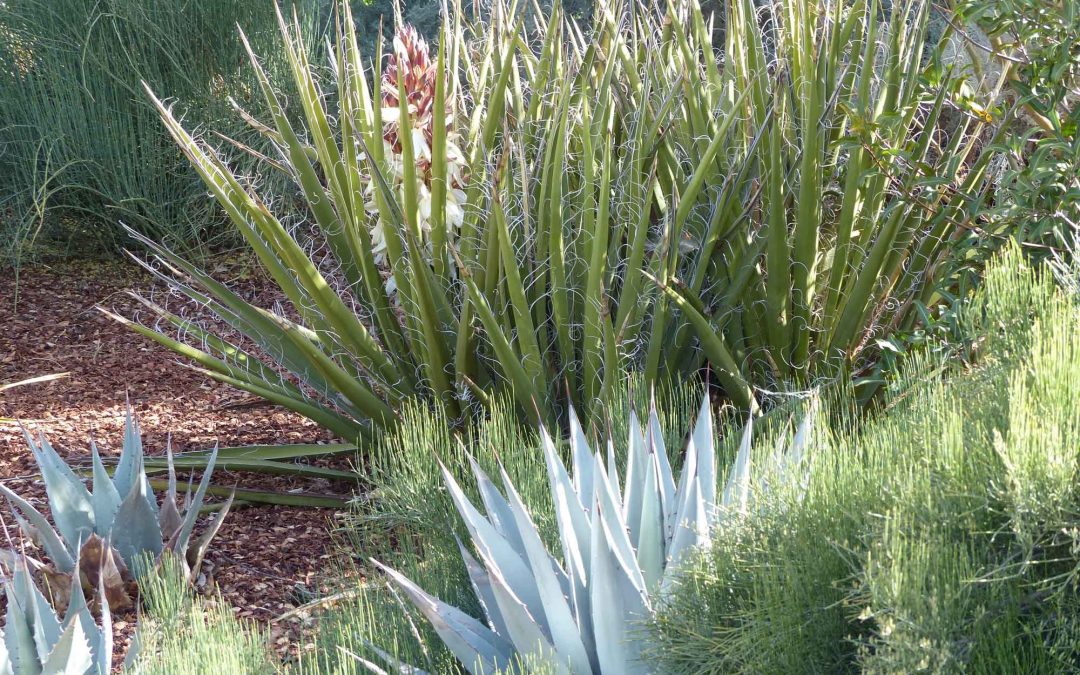
Description: The Yucca Baccata Compacta originated in Mora in northeastern New Mexico. It is low maintenance and drought resistant. The huge fruit in the middle, which ripens in late summer and is edible in September, resembles bananas. Birds love to peck it. Add this evergreen desert accent to your native New Mexican plant collection.
With so much time spent at home this year, many homeowners have taken up gardening. To encourage this trend and spread the joy that spending time in nature brings, we’ve pulled together a list of Water Authority Conservation staff’s favorite garden tools they can’t live without.
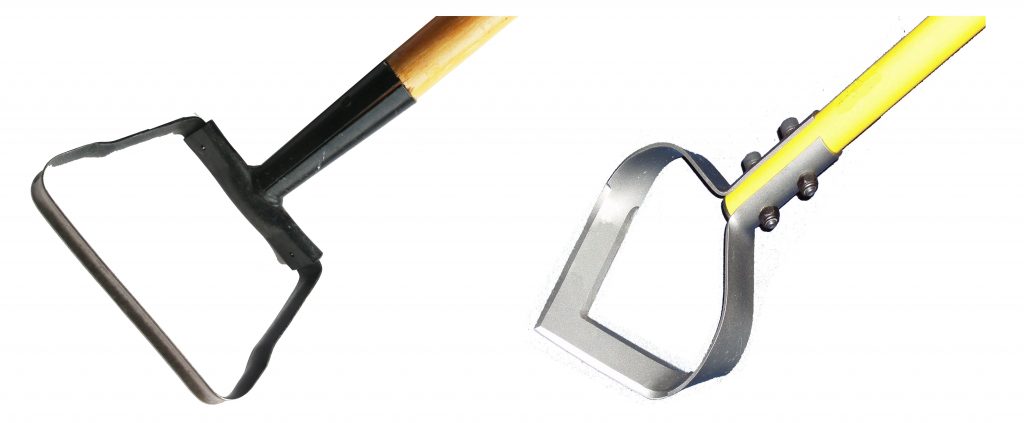
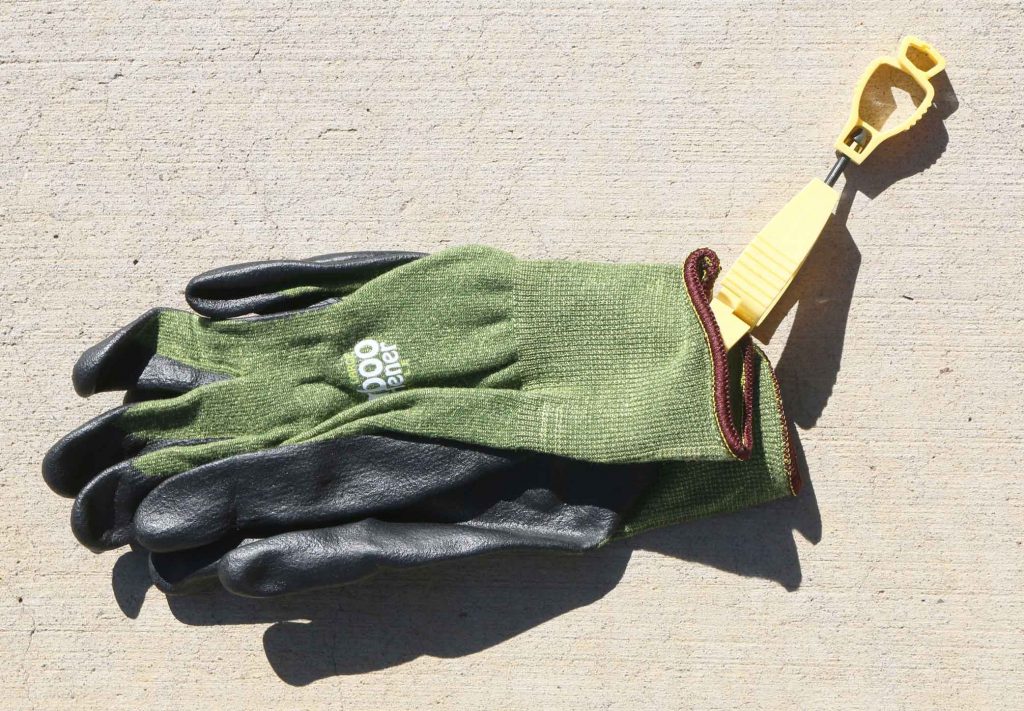
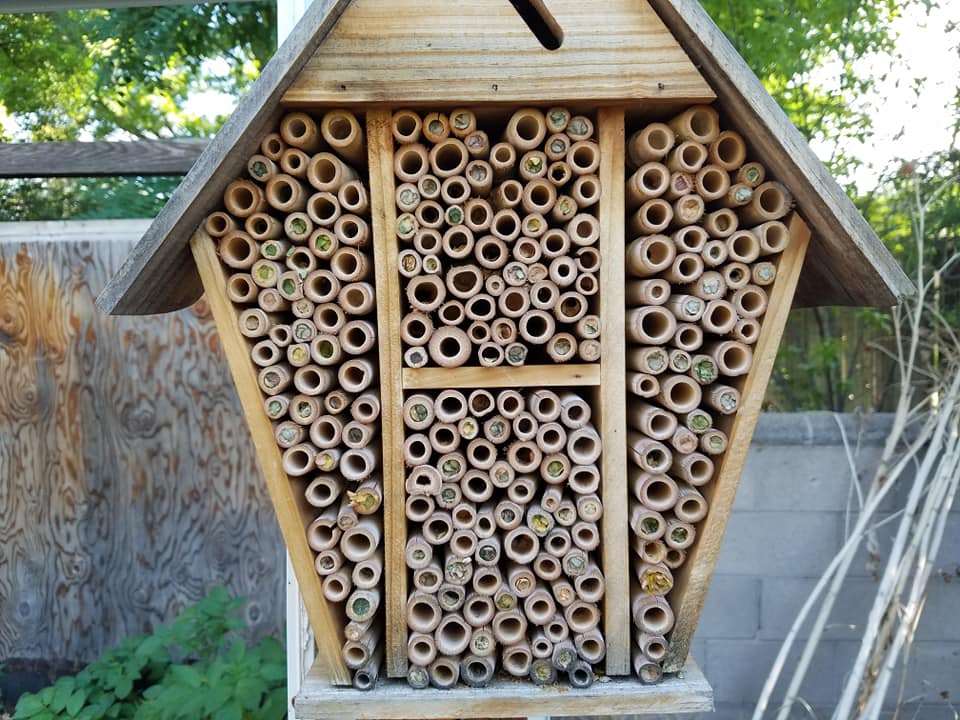
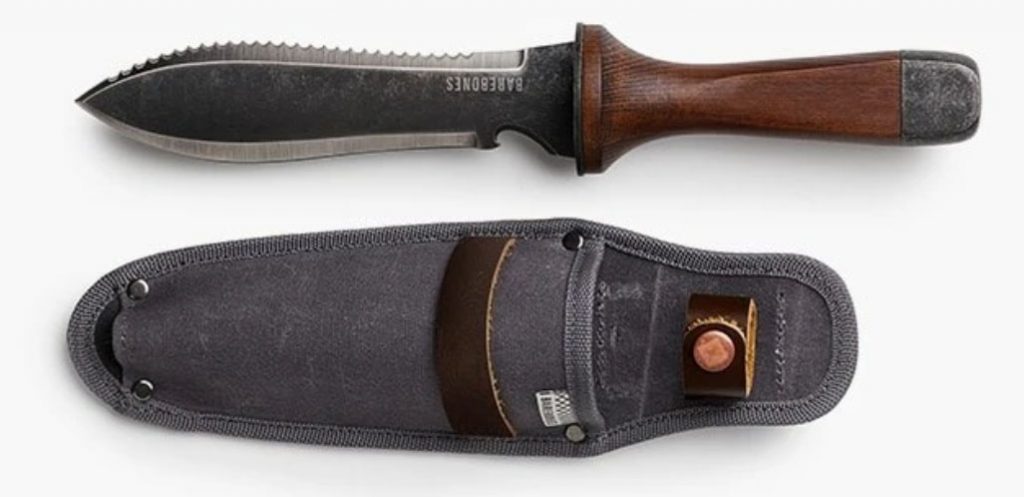
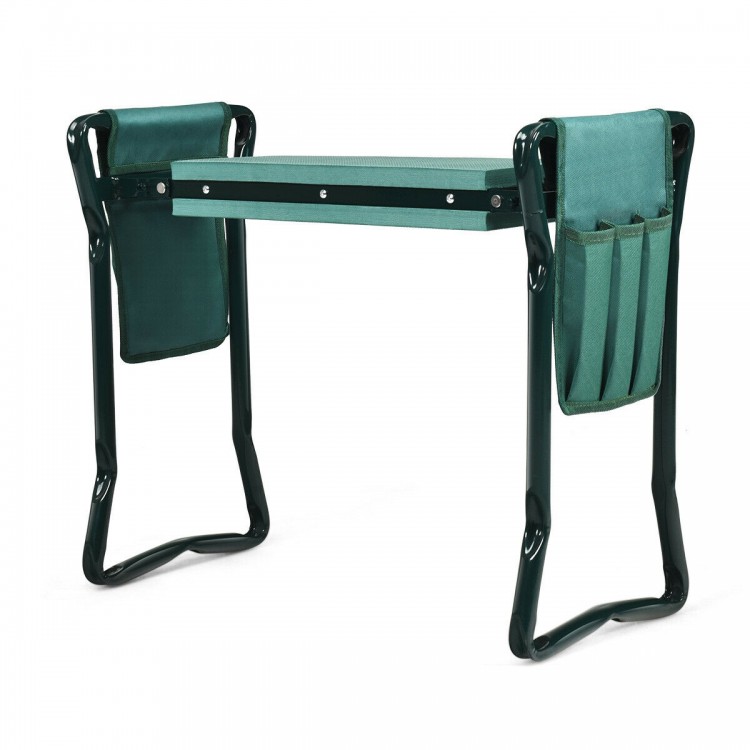
Carlos Bustos, Water Conservation Program Manager and Paulina Aguilera-Eaton, Water Conservation Specialist, both recommend the Skidger® Xtreme Weeder™ - basically a hula hoe on steroids. “Weed early, weed often, and never bend over for a weed again. This tool works in perfect symbiosis with a landscape blanketed with organic mulch.”Amos Arber, Xeriscape Incentive Inspector, swears by garden glove clips. “I can’t live without glove clips for keeping my gloves together.”Denise Rumley, Water Conservation Specialist-Supervisor, loves bee houses! Richard Perce, Irrigation Efficiency Specialist, says this tool is not only indestructible, it’s also beautiful. Hori Hori Ultimate & SheathKatherine Yuhas, retired Water Resources Division Manager, says, “I love these garden seats. They are perfect little seats when pruning shrubs and flowers.”Author: Jill Brown, ASLA Landscape Architect and owner of My Landscape Coach in Albuquerque, NM. Photography courtesy of Andy Young, Albuquerque, NM. Have a question about the article? [email protected]
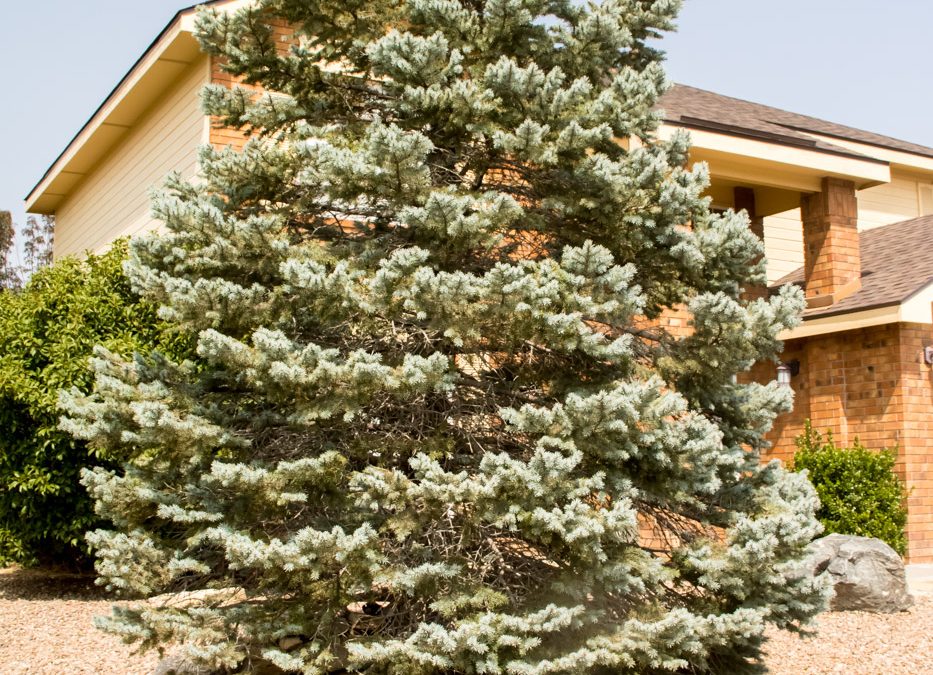
Description: The Colorado Blue Spruce adjusts well to most Albuquerque soils and is a staple in numerous landscapes. It is resilient to flooding and drought as well. This tree provides privacy and is a lovely silvery blue-green color all year. The needles are prickly to the touch and have a strong, fresh, piney smell. Consider planting a Colorado Blue Spruce if you would enjoy a beautiful, tall, evergreen, and well-scented tree.
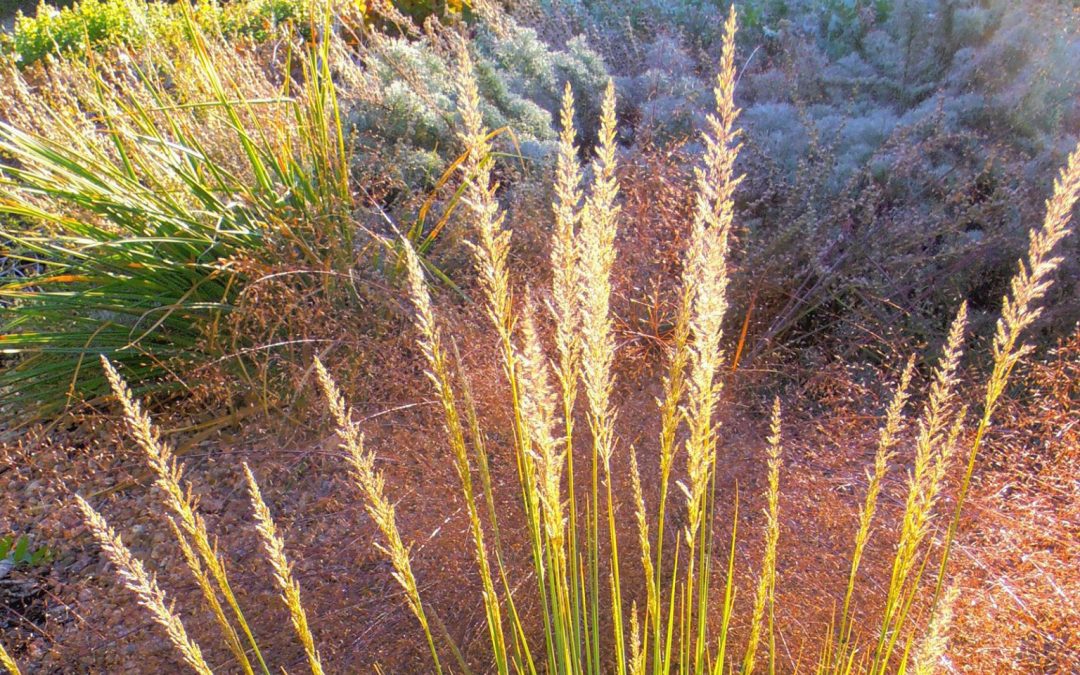
Native ornamental grasses play an integral role in a landscape. Throughout the seasons, grasses enhance the beauty of our gardens and are often at their showiest during autumn. They create a masterful mix of hues, textures, and seasonal delight. From their graceful flower clusters that gently dance in the wind to their vibrant plumage and foliage illuminated by the red glow of the sun, grasses create attractive and alluring backdrops while also adding motion and sound to our landscape.
Several considerations should be made before selecting ornamental grasses regardless of the style of the garden. Understanding the site requirements – sun tolerance, water use, and hardiness – as well as the growth form of grasses can help determine which species will be ideal for your landscape. Growing a species with weedy or invasive tendencies in moist habitats, for example, may not be ideal near the bosque. Similarly, growing a variegated variety of grass in a sun-exposed slope could result in blistering and discoloration which may detract from its beauty and health. Being aware of how site conditions and plant characteristics interact can help in selecting ideal species.
Consider adding the following ornamental grasses to the landscape:
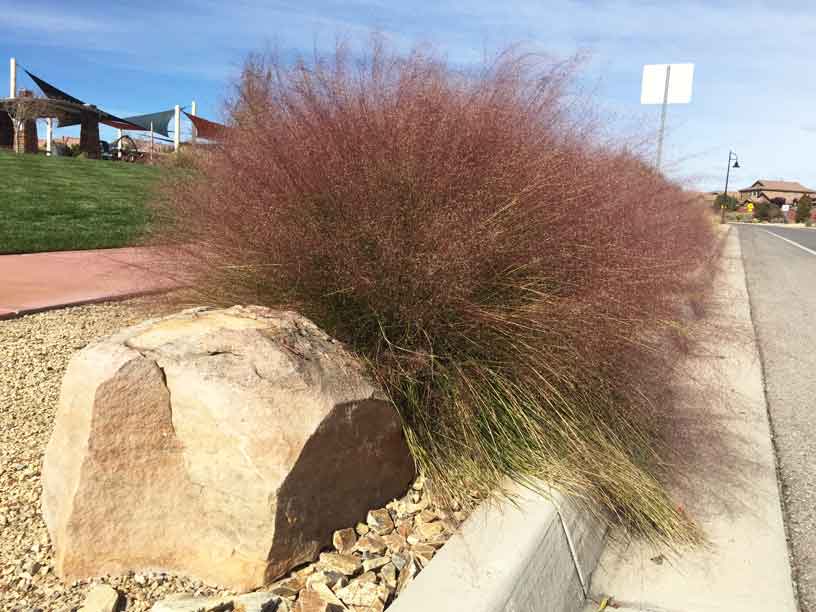
Muhly Grasses (Muhlenbergia species)
Muhly grasses (genus Muhlenbergia) are a non-invasive, ornamental grass native to the southwest. These grasses provide a wide range of favorable characteristics and perform well in full sun as well as partial shade. They are also heat and cold tolerant and can persist in most soil conditions. The plumy foliage often described as whispering, is quite attractive when a gentle breeze brings these plants to life. This species range in height from 1½ to 5 feet and has a variety of seed colors and textures blooming from August to November. Pink muhly (Muhlenbergiacapillaries) is an outstanding accent plant with its feathery, pink-hued flowers that float above dark green foliage (typically 3 feet). For a larger accent plant with a more subdued color, Deer grass (Muhlenbergiarigens) can make an excellent addition to any garden with its bright green leaves and slender tan flower stalks reaching upwards of 6 feet.
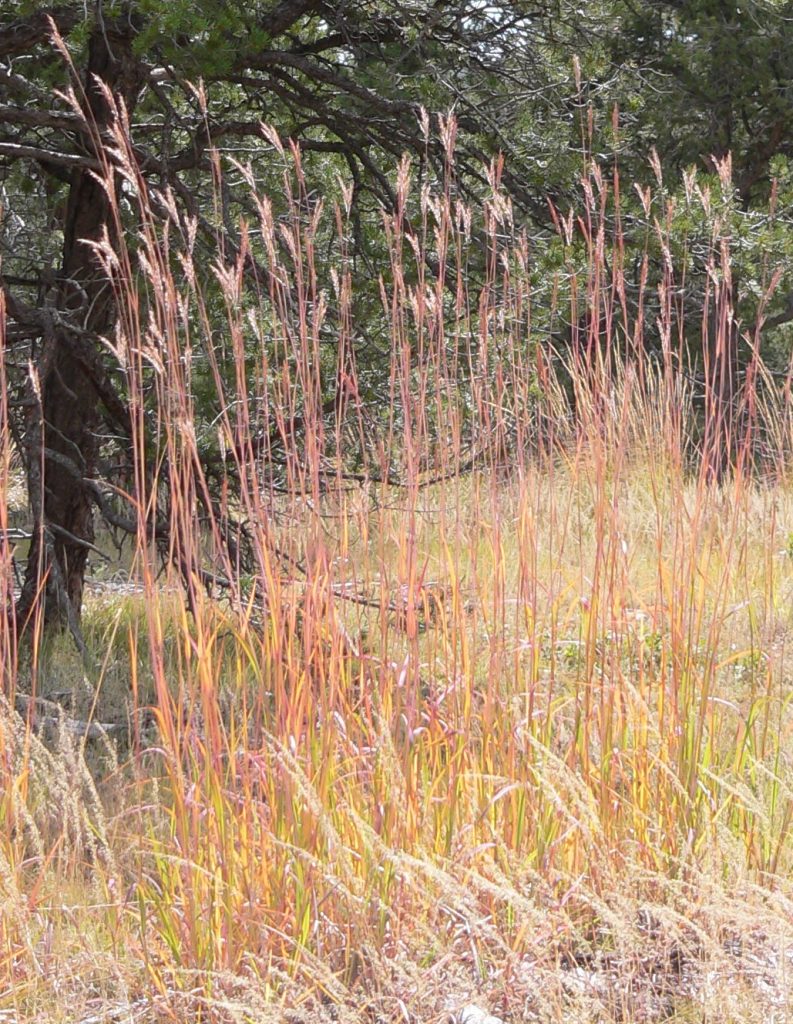
Big Bluestem Grass (Andropogon gerardii)
Several cultivars of the native prairie grass Big Bluestem (Andropogon gerardii) can be spectacular in a landscape and reach heights up to 6 feet. ‘Red October’ is a common cultivar that boasts year-round visual interest. It emerges in the spring with vibrant red foliage that transitions to a striking scarlet color for the remainder of the season. ‘Rain Dance’ Big Bluestem is also a very showy cultivar, providing maroon foliage in both summer and fall. These clump-forming grasses will grow in attractive mounds that add wonderful accents or backgrounds to the landscape in higher elevation plantings like the East Mountains.
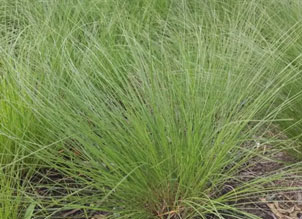
Prairie Dropseed Grass (Sporobolus heterolepis)
Prairie Dropseed Grass (Sporobolus heterolepis) is an exceptional bunch of grass that reaches 2 to 3 feet in height. This grass creates a fountain-like effect with its finely textured foliage – bright green in the summer and delightfully golden in the fall. Its flower spikes create a cloud of texture that becomes airier with see-through seed heads in autumn. Moreover, Prairie Dropseed Grass performs well in a wide range of conditions and soil types and is an excellent drought-tolerant addition to the landscape.
On top of their inherent aesthetic value, ornamental native grasses provide refuge and forage for pollinators and wildlife, which enhance the landscape’s ecosystems. Many bird species feast on the seeds of grasses, while the larval stage of butterflies use native grasses to shelter through the winter. For these reasons, ornamental grasses should be left uncut until early spring where they can be trimmed to encourage new growth. Incorporating ornamental grasses is a beautiful way to impart functionality and complexity to any landscape. Autumn is the perfect time to enjoy all that these grasses have to offer.
Author: Alissa Freeman, plant ecologist with an M.S. in Plant Biology, Ecology, and Evolution, has worked with NMSU Plant Extension and the City of Albuquerque on using native plants to enhance pollinator habitats. Photography: by Hunter Ten Broeck of Waterwise Landscapes and Judith Phillips of Design Oasis. Have a question about the article? [email protected]Caption for Feature Photo: Karl Forester Grass plumes with pink Bush Muhly grass located behind it.