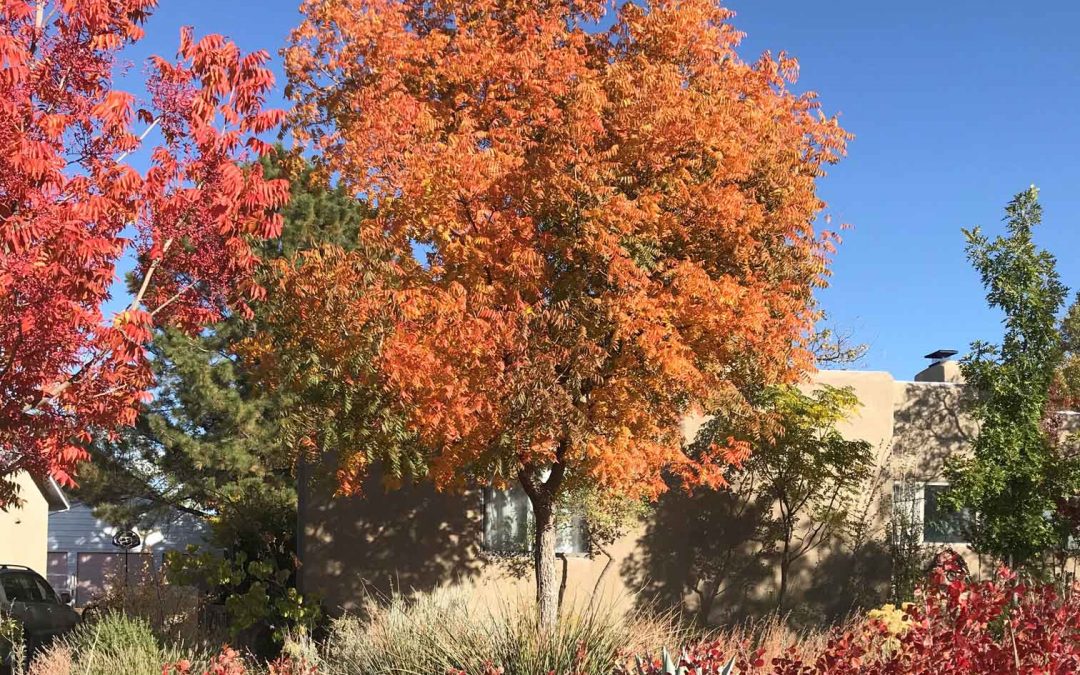
The balancing act of watering your trees in the fall and winter is important. Established trees should be watered two to three times a month in the fall season and once a month in the winter season. If not watered properly, trees that get too dry during this time can suffer stress and drought injury. This often does not show up until the heat of the following summer, which then makes trees more susceptible to pests and disease. Fall is the time to set your trees up for winter success.
Other important factors to consider when watering trees:
Newly planted trees (trees planted within 1-3 years), are more susceptible to damage from dry conditions and should be watered more frequently than established trees. Try watering them to a depth of 24 inches three times a month in the fall and twice a month in the winter.
Evergreen trees lose water through their needles in the dry winter air. They need more stored-up water going into the winter season to make up for that. Cold, dry winds can strip water from evergreens faster than their roots can absorb it, too. That is why it is especially important to provide enough water in the fall and during dry, warm spells in the winter.
Even though they lose their leaves, deciduous trees should also not get too dry in the fall and winter. Water acts as an insulator for both the tree and soil. Soil that stays moist will be warmer. Likewise, plant cells that are plump with water will be less susceptible to damage from the cold. Water deciduous trees to a depth of 24 inches twice a month during the fall and once a month in the winter.
When watering any tree, remember to apply water out to the edge of the tree’s canopy drip line. Most established trees have a root spread equal to their height and beyond. Water deeply and avoid spraying foliage. Watering to the right depth depends on your specific soils, so you will want to measure how much water it takes your soils to reach 24 inches deep. Read this article for tips on measuring watering depth.
One of the best things you can do for your trees in the coming months is to add mulch. Layering three to four inches of organic mulch protects the soil from moisture loss and helps regulate soil temperature throughout the winter. Treebates for bulk organic mulch is available.
Pro Tip: "Watering to the right depth and managing the frequency of watering are both very important aspects of keeping our plants healthy throughout the year, but especially in the fall and winter months,” says Patrick Chavez, Trees of Corrales Wholesale Nursery.
Author: Amos Arber, Xeriscape Incentive Inspector, and Certified Arborist with the Water Resources Division for the Water Authority. Photography: Wes Brittenham Pro tip:Trees of Corrales Have a question about the article? AskAnExpert@abcwua.org
September days can have widely varying temperatures, with some days getting into the 90s, but we can count on nights being longer and cooler. This means that plants do not need to be watered as often. Ramping down how often you water your yard is a great way to save money on your water bill and keep plants happy.
After spending the summer putting energy into growing leaves, flowers, and fruit, plants use the fall to store water and energy in their roots for winter survival and spring growth. Proper watering supports this activity.
Ramping down your irrigation does not mean you should stop watering altogether. If you have a lawn, cut back to two days per week. Cut back to two times a month for mature trees (4 times a month for younger trees).
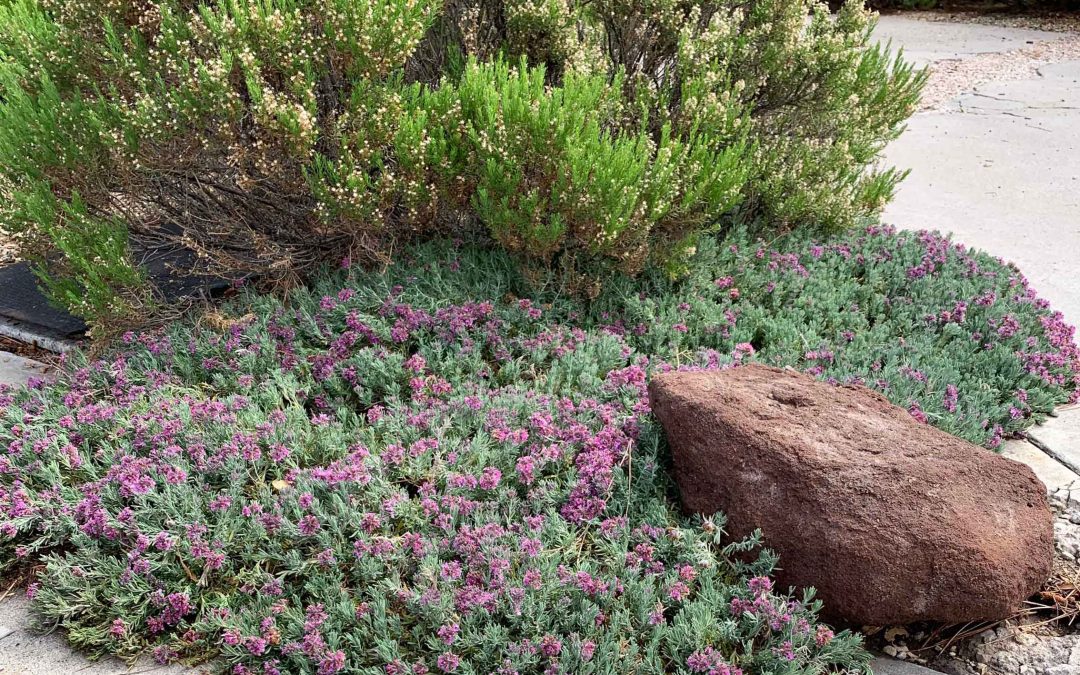
This drought-tolerant groundcover enjoys the heat from adjacent boulders and is wide spreading along walkways. The silver evergreen foliage is a welcome addition in winter. Lavender-purple flowers bloom from spring to summer, attracting pollinators.
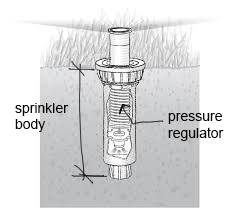
You probably don't pay a lot of attention to sprinkler bodies, those plastic devices that house the sprinkler's spray nozzle. Well, not until one breaks and your yard suddenly looks like the fountain at the Bellagio. But selecting the right sprinkler body can have a big impact on your water bill. Just look for the WaterSense label!
WaterSense-labeled sprinkler bodies, certified by the EPA, are designed to help regulate the water pressure that reaches the nozzle, ensuring efficient watering and aiding in conservation.
Landscape irrigation systems are often installed so the pressure is higher than what is recommended for the nozzles. This can lead to excessive flow rates, misting, fogging, and uneven coverage. Uneven coverage could flood one section of your lawn while you still have dry spots in another area. WaterSense labeled spray sprinkler bodies with integral pressure regulation can reduce water waste by:
Providing a constant flow at the sprinkler nozzle
Generating the right amount of water spray
Creating optimal coverage and uniform distribution
Reducing misting and fogging
The Water Authority now offers a rebate for listed WaterSense pressure regulating spray sprinkler bodies. Check with your local irrigation supplier to make sure you match your spray nozzle with the appropriate WaterSense pressure regulating sprinkler body and take advantage of the rebate. Get $4.00 off each sprinkler body you purchase (no limit per year).
Visit our rebates pageto apply for your rebate today.
Pro Tip:
Leilani Cochran of Just Sprinklers says, “Too much pressure blowing through the heads can cause a mist that evaporates in our dry air. The pressure regulating spray bodies eliminate this mist, so the head operates at the optimum capacity."
Author: Richard Perce, irrigation efficiency specialist with the Water Resources Division for the Water Authority. Pro tip:Just Sprinklers. Have a question about the article? AskAnExpert@abcwua.org
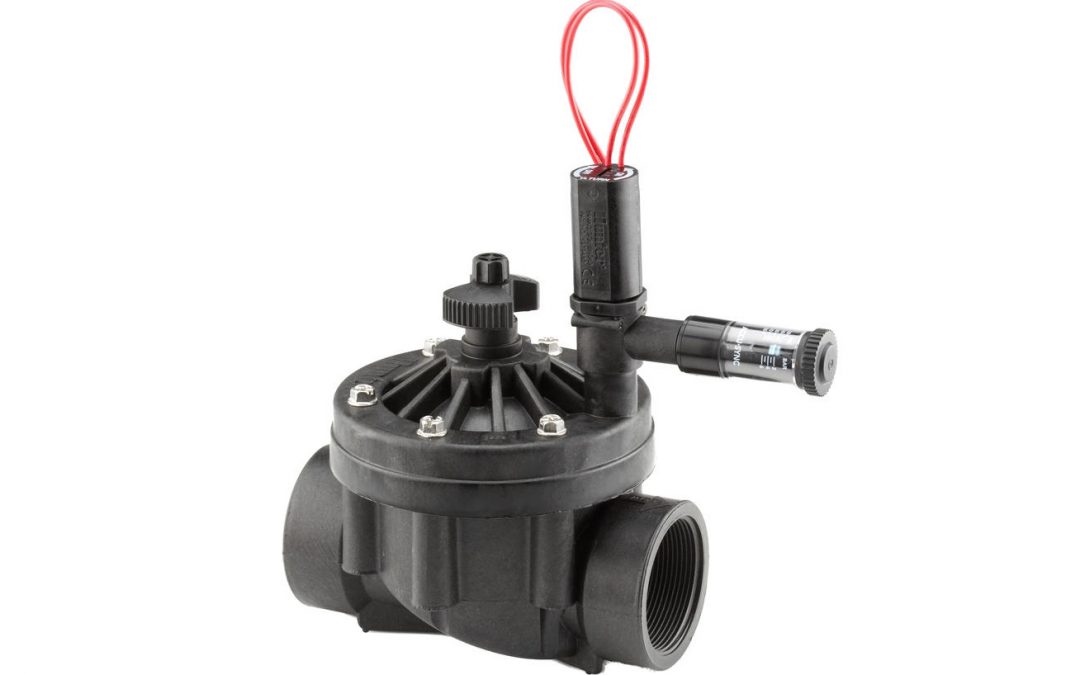
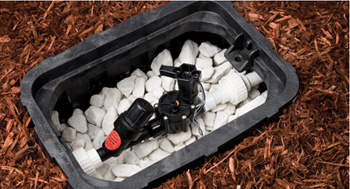
Pressure regulators are another essential technology for improving the efficiency of your irrigation system. They are an integral part of keeping your system running in peak condition. Pressure regulators come in two basic styles: inline or valve fitted. An inline regulator attaches within the piping on a lateral line and is most used with drip irrigation. A pressure-regulated valve fitting is used more often with turf irrigation where the pressure is high.
These fittings can either reduce pressure or provide sustained pressure. Valve fittings are brand specific, so we suggest visiting a local irrigation supplier to see if they are available for your brand of valve. Pressure regulators provide the following benefits:
Avoid underwatering or overwatering by maintaining a set, optimal pressure.
For lawn irrigation, they reduce misting and excessive evaporation.
With a drip system, they help keep the emitters’ water output accurate and keep them from “blowing” or “popping” off the drip line due to excessive pressure.
Earn rebates of 25% up to $100 including purchase and professional installation. Visit irrigation efficiency rebates to apply for your rebate today.
Pro Tip: Jim from Site One irrigation supply store in Albuquerque says, “An inline pressure regulator is a must in any irrigation installation in Albuquerque. They reduce the chance of blowing out your drip emitters and even out the water delivery.”
Pressure Regulator Photography courtesy of Hunter Industries
Author: Richard Perce, Irrigation Efficiency Specialist with the Water Resources Division for the Water Authority. Pro tip:Site One Irrigation. Have a question about the article? AskAnExpert@abcwua.org