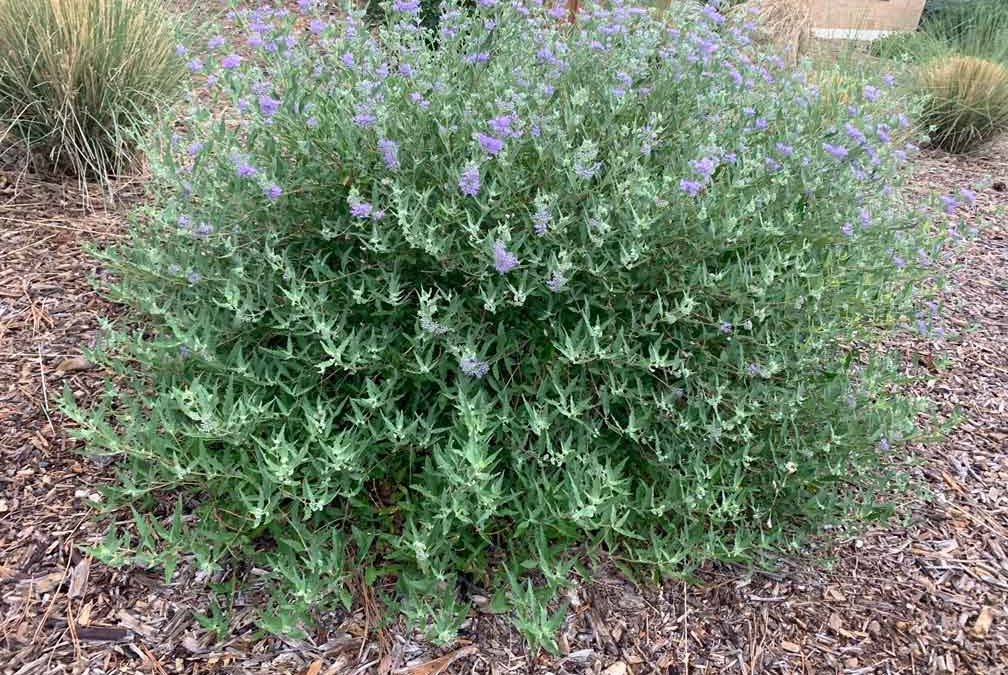
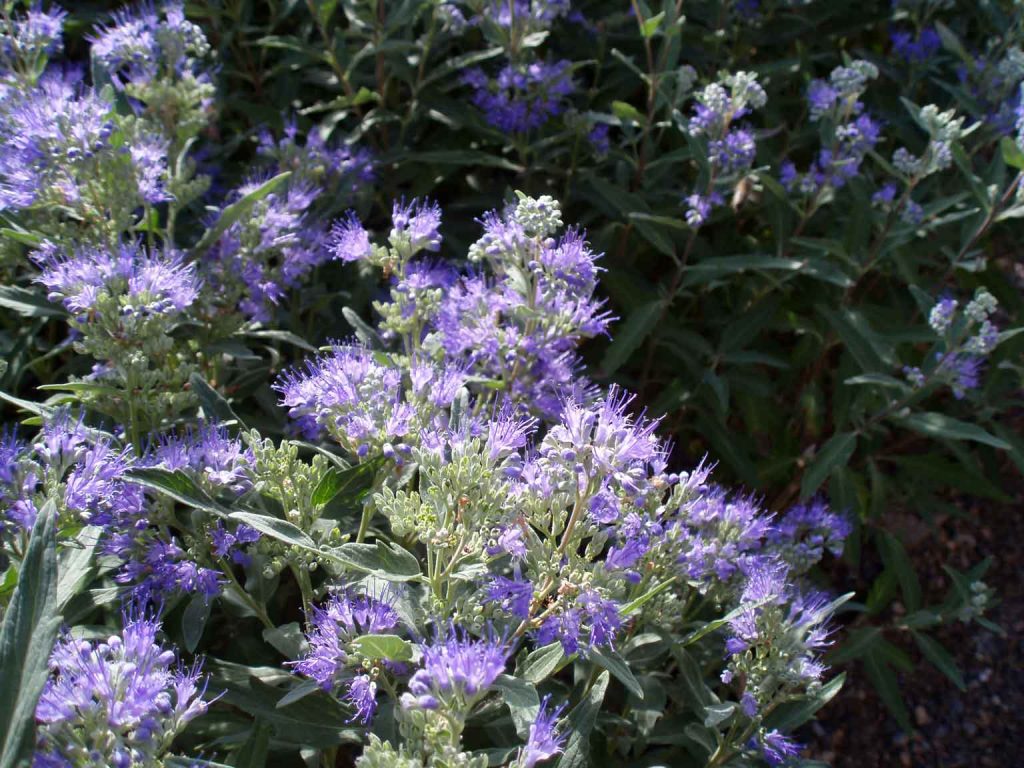
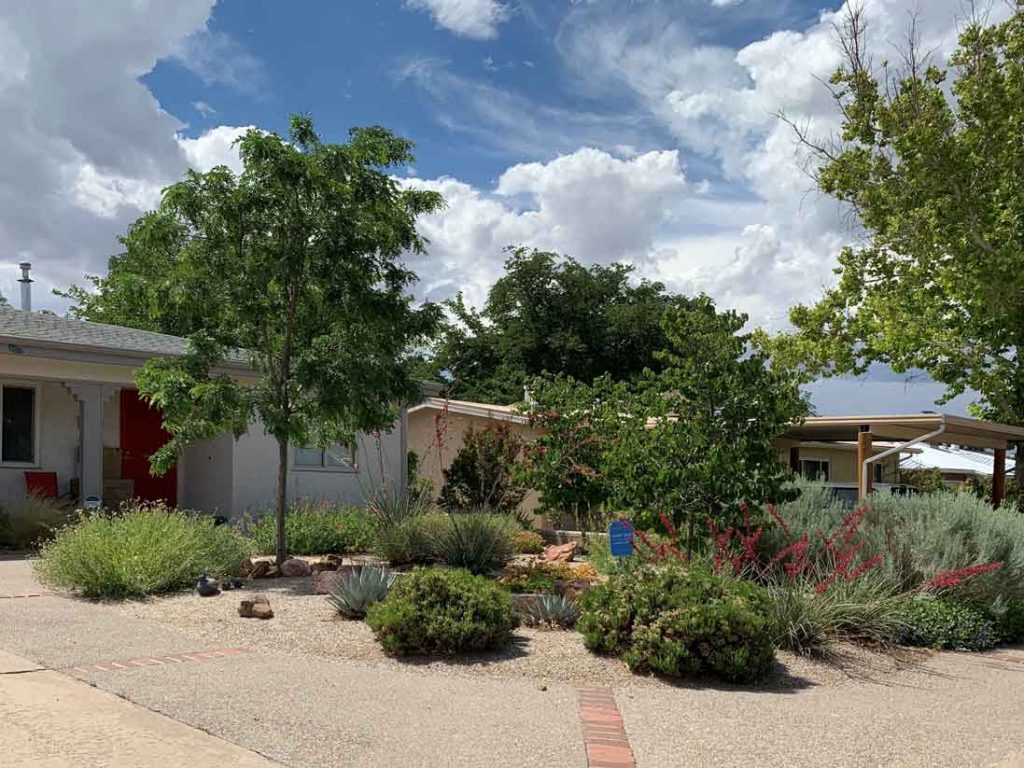
Blue Mist spirea is particularly well suited for areas with dry climates. That makes it a significant staple in New Mexico landscapes. The flowers attract a variety of life that includes bumblebees, butterflies, and even hummingbirds. Once established, it is reasonably drought tolerant, too. Pick Blue Mist spirea to add a touch of color in your garden.
Irrigation systems have grown more efficient by leaps and bounds in recent years to maximize water savings. Now, many systems can even communicate with you via your smart phone or computer. There are some tried and true, if under-used, pieces of equipment you can add to your system that are inexpensive, easy to install and don’t require a ton of technical know-how. And the Water Authority is offering a rebate on them!
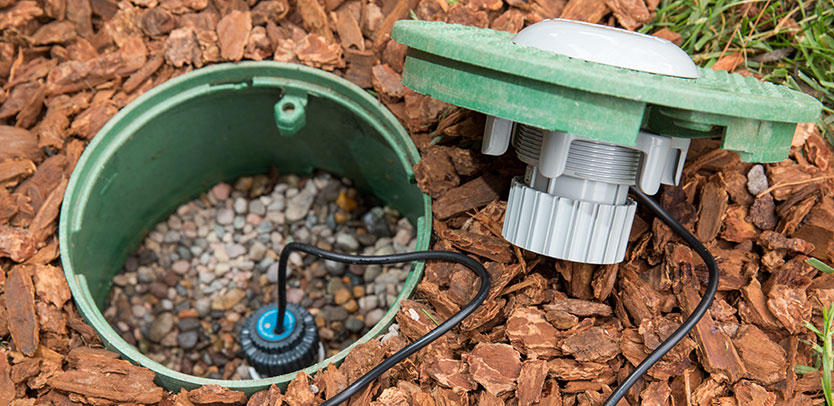
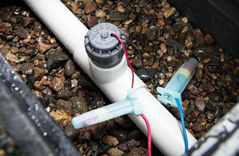
Flow sensors are inexpensive gadgets that can alert you of a broken line or a broken head in your turf. Flow sensors on main or lateral lines can be set up to “learn” what the normal flow for each zone is. The sensors then monitor the flow, and if there is a change in flow outside of the norm (either low or high), they will shut down the water line with the issue. A flow sensor provides the following benefits:
Some flow sensors can record and transmit how many gallons you use each time you water.
Flow sensors can save you hundreds or thousands of gallons of water by either shutting down a malfunctioning system, or warning you of one, or both.
Visit your local irrigation house to see which model and brand are compatible with your system and earn rebates of 25% up to $100 including purchase and professional installation. Learn more at irrigation efficiency rebates.
Pro Tip: “Flow sensors are great for all commercial installations and for savvy homeowners who want to know how much water their system puts out. The key is to not mix brands. Instead match the brand of your controller with the brand of your flow sensor. ” says Loren Dunlap of Sierra Irrigation, local supply store in Albuquerque.
Flow sensor photo courtesy of Hunter Industries
Author: Richard Perce, Irrigation Efficiency Specialist with the Water Resources Division for the Water Authority. Pro tip:Sierra Irrigation. Have a question about the article? AskAnExpert@abcwua.org
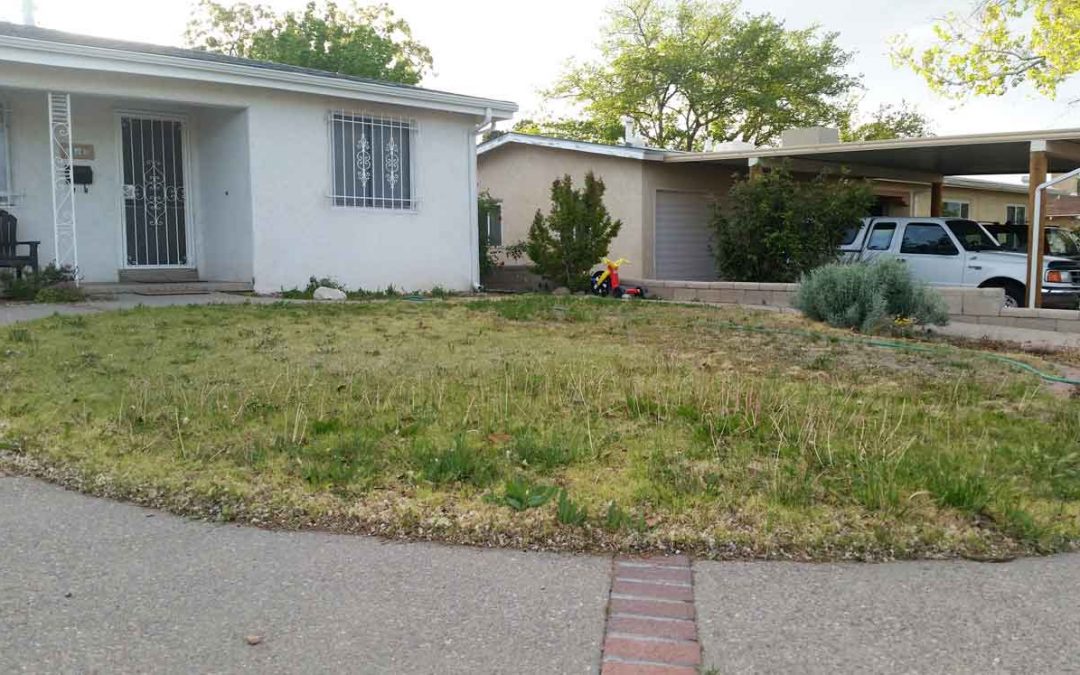
Water Authority customers have been inspired to convert their turf to sustainable, resilient xeriscapes that save water, time and money and provide habitat for wildlife and pollinators for many reasons. Below are some of our favorites:
“We just didn’t see the point of maintaining and paying to water the grass in the front yard. No matter how much we water and fertilize, the front lawn never looks good, and we don’t want to be the last house on the block with a not-so-great lawn.”
“Now that the kids are out of the house and we no longer have dogs, we don’t want to have such a high water-use landscape that requires weekly maintenance. We want to do our part in saving water for future generations and create a beautiful patch of nature in our backyard, especially now that we’re into birdwatching.”
“We may downsize someday, and our realtor said that having a beautiful low water use landscape is a good selling point.”
“We just moved to Albuquerque from another part of the country where grass grows easily, and we spent several hours a week mowing and weeding. We are done with mowing. We want a landscape that is regionally appropriate, with native and low water use plants and trees.”
“Our irrigation system seems to always need repair, and the grass never really looks that great.”
“We needed to replace our sewer line which meant digging up the front yard. It seemed like a good time to ditch the grass and convert it to a low maintenance landscape with new drip irrigation.”
Qualifying conversion projects by Water Authority residential customers may receive $1.00 per square foot of converted turf grass. This rebate has a specific application process. Only projects that have completed the application and passed inspections will qualify for the rebate. For more information visit our rebates page.
Pro Tip: Are you ready to convert your lawn to a xeriscape? Here is what local landscape contractor Tyson Hafler, owner of Southwest Horticulture, wants you to know before you start.
“Make sure you start with a green lawn. It is important to have a green lawn for two reasons. Water Authority needs to see a currently cared for, in good living condition green lawn to quality for the rebate. A live, green lawn is much easier and speedier to get rid of than a brown, dry, dead and dying lawn.”
Author: Amos Arber, Xeriscape Incentive Inspector with the Water Resources Division of the Water Authority. Pro Tip: Tyson Hafler, Landscape Contractor and Owner, Southwest Horticulture. Have a question about this article AskAnExpert@abcwua.org
Smart technology has become popular at homes and businesses because it makes some aspects of daily life easier and more efficient. WaterSense Smart Irrigation Controllers are the Water Authority conservation group’s favorite smart technology.
These types of controllers adjust landscape irrigation schedules using weather data, plant type, soil type and other important factors to help you follow the seasonal watering recommendations.
Pro tip: “One of the advantages of Smart Controllers is that they help the user make good watering decisions during the set up process to ensure a healthy landscape throughout the year,” says Ken Schwartz, branch manager for Neumark Irrigation Supply.
Installing a WaterSense-labeled controller provides the following benefits:
A healthy, beautiful landscape: WaterSense-labeled controllers help landscapes flourish and remain healthy by providing the right amount of water for each plant zone. Underwatered or overwatered landscapes can be unhealthy and unattractive.
Water quality protection: These irrigation controllers reduce water runoff from the landscape, helping to keep local water bodies clean and healthy while avoiding water waste.
Savings of both water and money: WaterSense-labeled controllers help eliminate overwatering, so they may lower water-use expenses and conserve water
Convenience: Properly programmed WaterSense-labeled controllers save end-users the time required to continuously monitor and adjust irrigation schedules in response to changing weather.
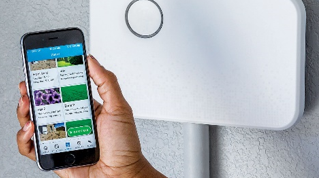
Many of these controllers are compatible with mobile devices like tablets and smartphones to allow the user to interact with their irrigation system remotely. The Irrigation Association has assembled a list of smartphone-friendly irrigation controllers. You can find many of these controllers at your local irrigation supply store.
The Water Authority offers residential rebates of 25% up to $100, and commercial rebates of 25% up to $500, for WaterSense Smart Controllers. The rebate can be used for both purchase of the controller and the cost of professional installation. Before purchasing your new controller, make sure to visit the list of qualified WaterSense controllers located in the rebate section.
Look for the WaterSense logo when purchasing your new controller.
Author: Carlos A. Bustos, Water Conservation Program Manager with the Water Resources Division for the Water Authority. Pro tip by https://neumarkirrigation.com/. Have a question about the article? AskAnExpert@abcwua.org
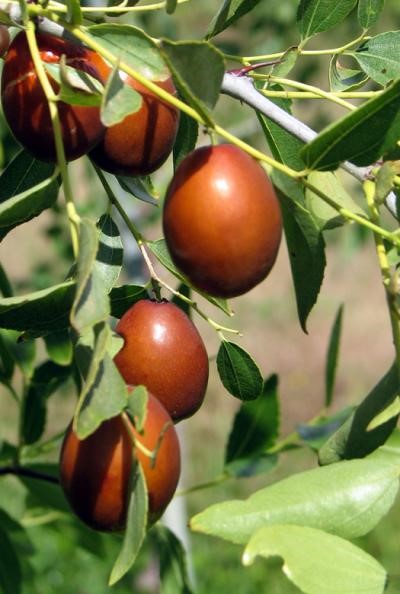
One of the easiest fruit crops to grow, jujube trees are tolerant of a wide range of temperatures and rainfall. The oval shaped leaves are dark green with a gleaming, wax like appearance. This tree grows upright, making it a good tree for screening in narrow spaces or even used in groupings. The fruit will change color from dark green to a reddish-brown color when fully matured. Jujubes can be an extraordinary substitute for apples in recipes.