If you suspect
you have an indoor leak, or if you have questions about your landscape and
irrigation system, call our experienced staff for a free one-hour educational phone
consultation. To sign up, visit https://rebates.abcwua.org/ or call 505-842-9287 and press option 4.
Our staff will respond to your
request and schedule a one-hour call between the hours of 9:00 a.m. - 3:00 p.m. Monday - Friday.
We will offer
two types of educational phone calls:
Indoor Leak Consultations consist of a full walk through, via telephone, on how to
identify and repair leaks. We aim to educate you on the most effective method
to check for leaks in your home. Topics include, but are not limited to:
How to read your meter
Identify and repair malfunctioning fixtures (tubs, faucets, toilets)
Identify and repair malfunctioning equipment (swamp coolers, water softeners, hot water heaters)
Finding underground leaks
Historical water use
Landscape and Irrigation
Consultations will answer many of your landscape and
irrigation questions. We will also be able to troubleshoot specific situations
and walk you through projects and offer advice and guidance where we can.
Topics include, but are not limited to:
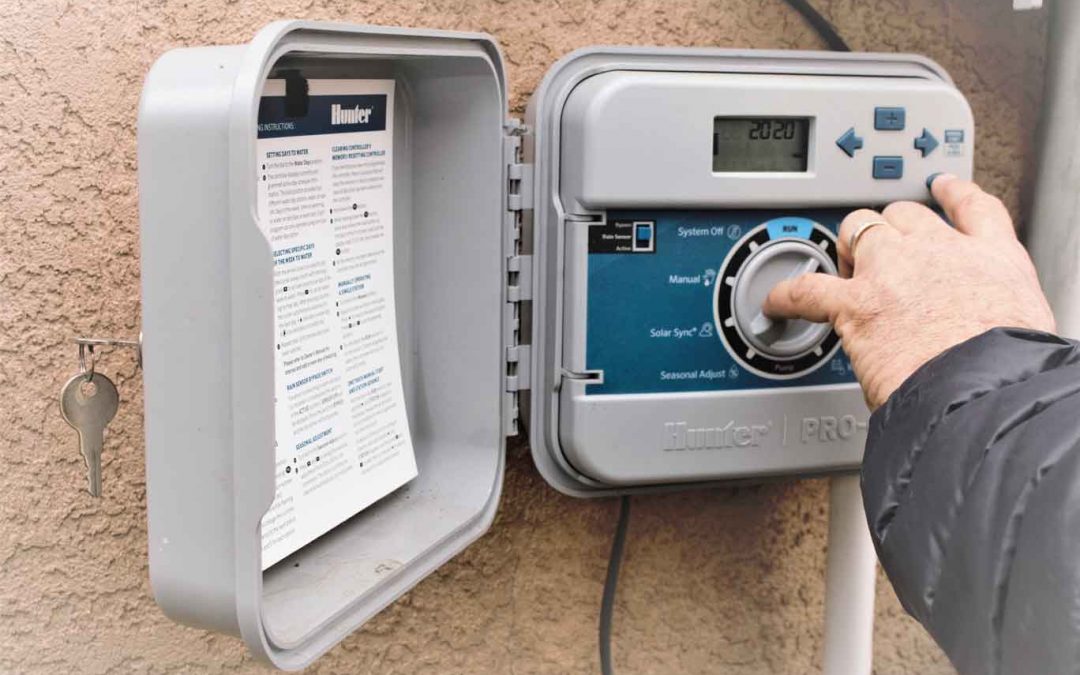
Irrigation scheduling and start-up
Maintaining and repairing broken irrigation systems (it’s easier than you might think!)
Plant identification and basic plant suggestions
Planting and irrigating edible landscapes, including vegetable gardens
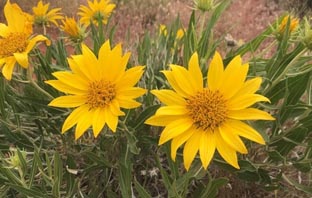
An early bloomer, this water thrifty plant is sure to provide you with large bright yellow flowers from spring through summer. Desert Mule’s Ear blossoms have a vanilla smell and are well adapted to sandy soil conditions. They are long-lived and can be a great addition to a dry flowerbed.
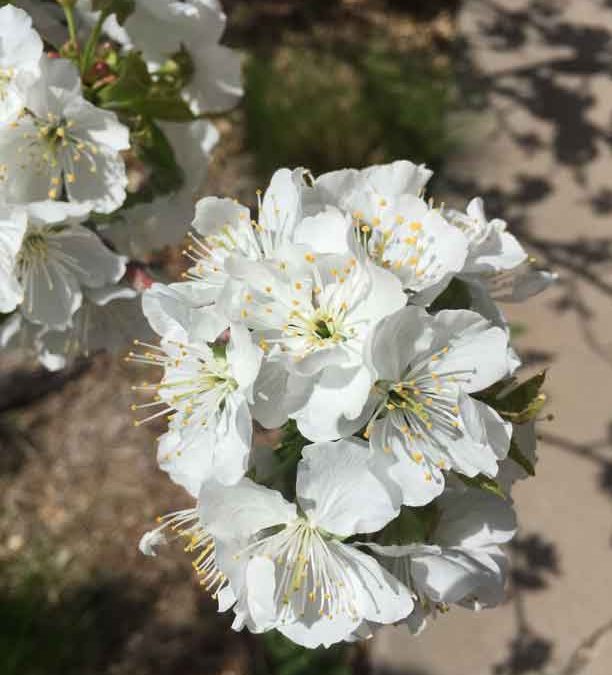
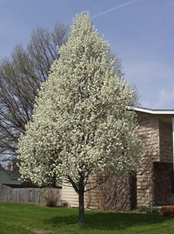
The Chanticleer Pear is a deciduous flowering tree that
produces profuse clusters of white flowers in early spring followed by small
round, hard, bitter fruits that can last into winter. Its shallow roots and
pyramidal form make it a great choice for a landscape with limited space. Other
advantages of the Chanticleer Pear are that it is favored by birds because of
its dense branch structure and that it provides food throughout the year for
birds, insects and bees.
As the landscape irrigation season gets under way, inspect your irrigation system for leaks and clogged, broken or missing sprinkler heads and emitters.
Use a pressure gauge to verify that sprinkler heads are operating at recommended pressures, and check and clean all system filters.
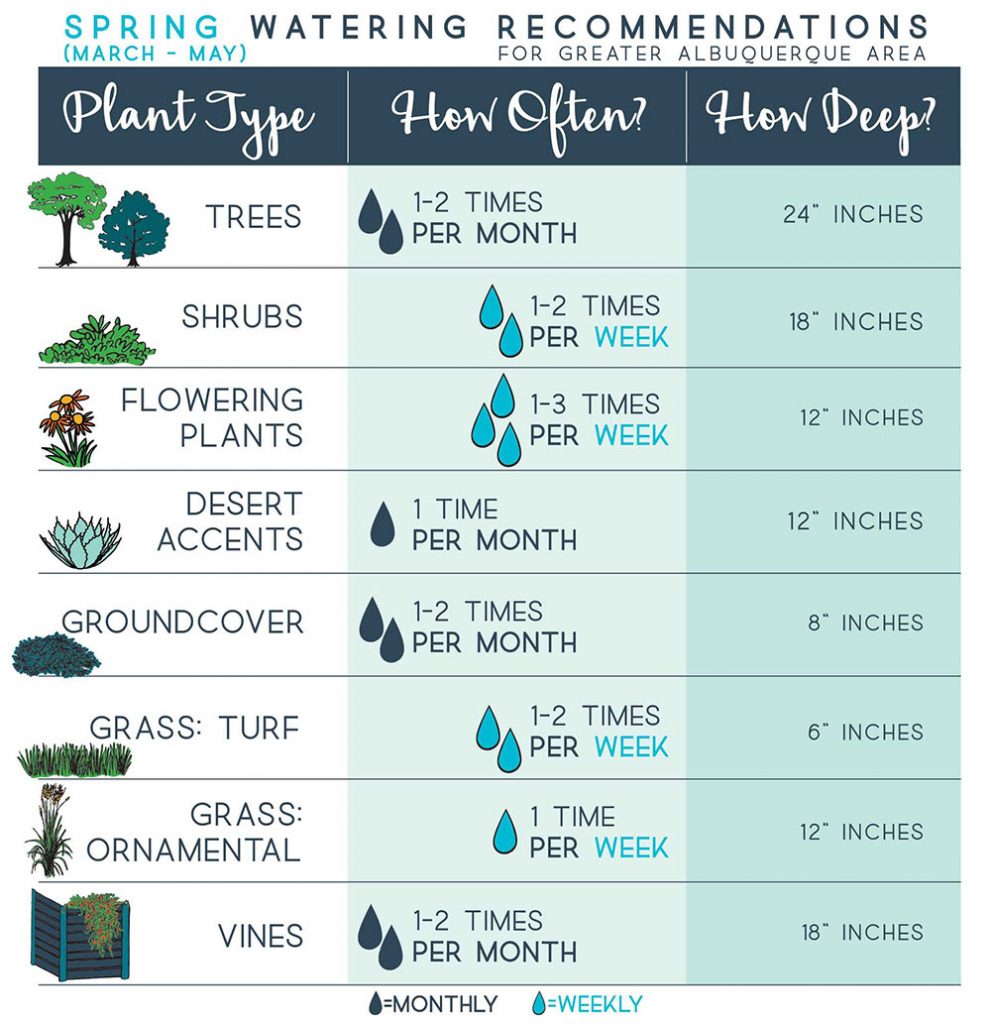
Time to follow our Spring Watering Recommendations.
Time to follow our spring watering recommendations. Remember, if it rains more than a half inch you can skip your next scheduled watering time as there is no need for supplemental irrigation.
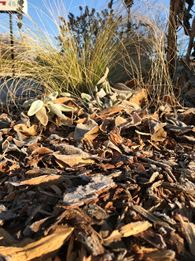
Shredded woodchip mulch helps soil hold moisture and insulates plant roots on a frosty November morning. Photo credit M. Thompson.
One of the most frequent questions we get at NMSU Extension is, “Should I add fertilizer or amendments to the soil when planting?” The short answer is no. And the long-term answer is an even stronger no.
Soil amendments are materials that are
worked into the soil with the intention of improving soil physical qualities. But
it’s just not that simple. As City of Las Cruces Community Forester Jimmy
Zabriskie said when I asked if he ever recommends using soil amendments when
planting a tree, “Save your money for mulch.” Organic
mulch is
material that sits on top of the soil, providing an insulation layer that helps
control soil temperature, retain moisture, and suppress weeds.
When planting ornamental plants, the
recommended species are the ones with roots that are well adapted to our native
soils. They’re more likely to live long, sustainable lives in our native soils
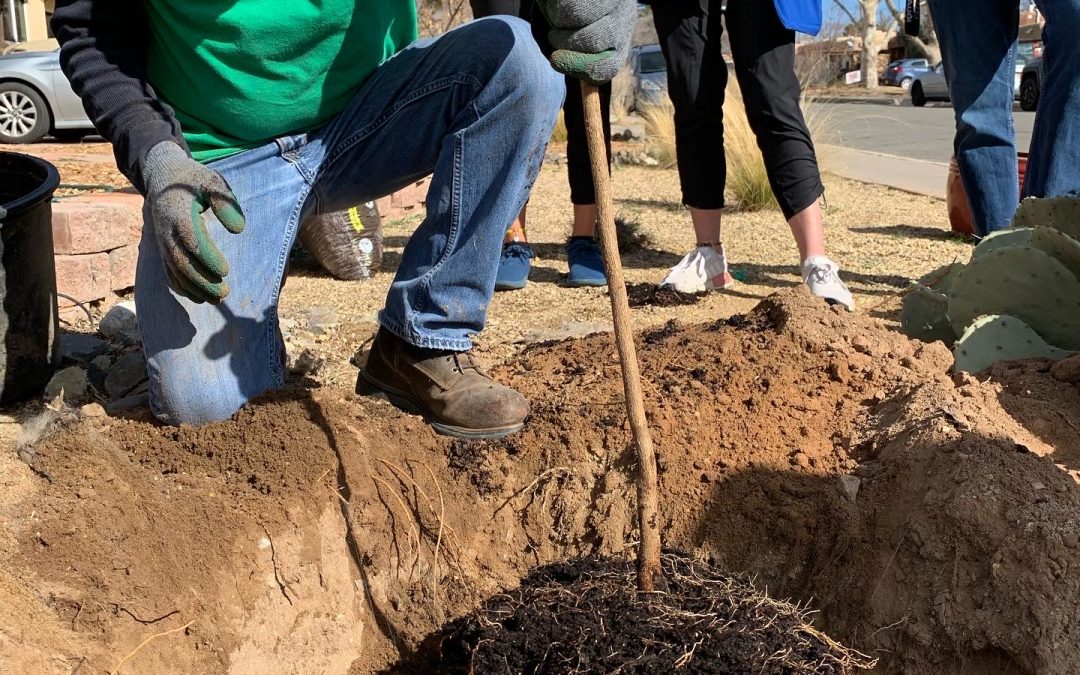
without amendments. The bottom line: Always put the same soil you dug up right
back into the hole with the new plant, and top dress with a thick layer of
mulch.
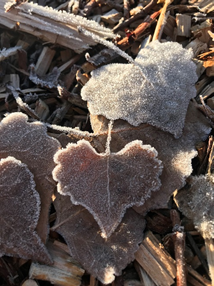
Frosty cottonwood leaves add a nice layer on top of several inches of shredded woodchip mulch. Photo credit M. Thompson
As for fertilizers, slow and steady wins this race. As Albuquerque City Forester Joran Viers said recently at a tree planting demo put on by Tree New Mexico and The Nature Conservancy, it helps to think of our trees (and other plants) as marathoners, not sprinters. When fertilizer is applied to trees, they can grow too fast for their own good and are more likely to develop structural problems and other issues. Fertilizers are not recommended at the time of planting perennial plants, either, because we want the plant’s energy to go into root establishment at a healthy rate to support the aboveground growth. The growth hormones necessary for healthy root development are found in the root tips and are made by the plant itself, so adding root stimulator to living roots is not necessary or even helpful. (Side note: Rooting hormone is potentially useful when you’re trying to get roots to grow quickly from cuttings where the roots have been removed completely.) So hold off on fertilizing for at least a few years while your plants are setting down roots.
Research on all sorts of landscape plants has shown that by adding amendments (like organic matter or perlite) to your soil backfill, the initial, short-term results are good. But the interface between the amended soil and the native soil is bad news. Water doesn’t move well across the interface, and neither do roots. With time, the roots may be inclined to stay in the original planting hole and spiral around, so you end up with essentially a potted tree or plant with reduced growth rate, constant water and nutrient stress (because lateral roots never fully developed), heightened vulnerability to pests and diseases, and even an increased falling hazard (think root ball in socket).
Author: Marisa Thompson, PhD, is the Extension Horticulture Specialist for New Mexico State University and is based at the Agricultural Science Center at Los Lunas. For more gardening information, including decades of archived Southwest Yard & Garden weekly columns, visit the NMSU Extension Horticulture page (https://desertblooms.nmsu.edu/), , follow us on social media (@NMDesertBlooms), or contact your County Cooperative Extension office (https://aces.nmsu.edu/county).