505Outside sat down with local landscape contractor Hunter Ten Broeck, owner of WaterWise Landscapes Incorporated, to chat about Water Harvesting in Albuquerque.
There are two categories of water harvesting techniques: passive water harvesting and active water harvesting. Passive water harvesting is the practice of slowing water down and encouraging it to soak into the ground. Water is collected from the source (roof, canale, downspout, or sloped earth) and directed to the landscape where the water can be immediately used by the plants. Active water harvesting uses rain barrels, cisterns, and other types of containers to store rainwater for later distribution. These typically hold as few as 200 gallons of water up to 10,000 gallons. A good calculation to remember is 1” of rain on a 1000 sq. ft. roof equals about 600 gallons of water.
Hunter
says the key to any type of water harvesting system, whether active or passive,
is to incorporate it into the landscape design. Thinking through how the rain
water will interact with your landscape and designing for that should be first
and foremost.
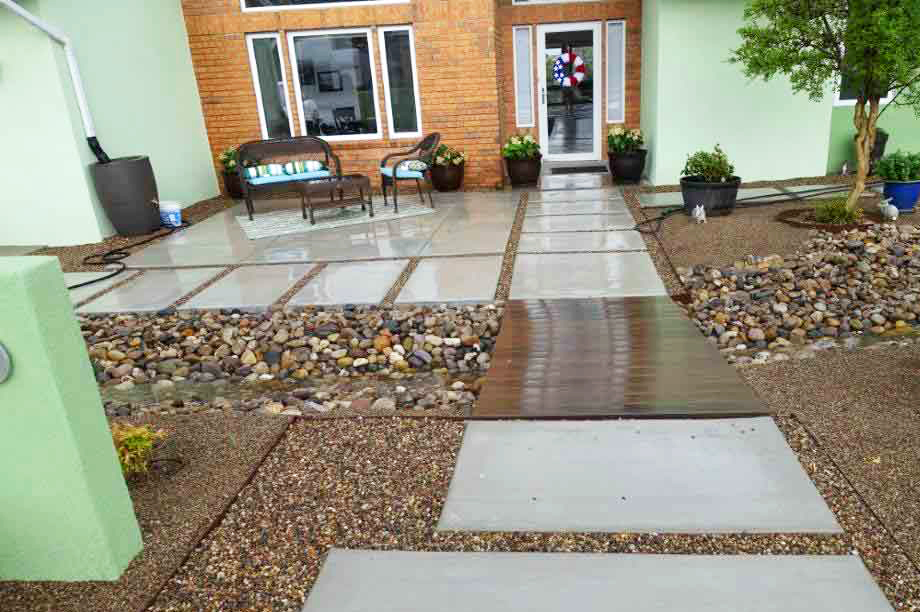
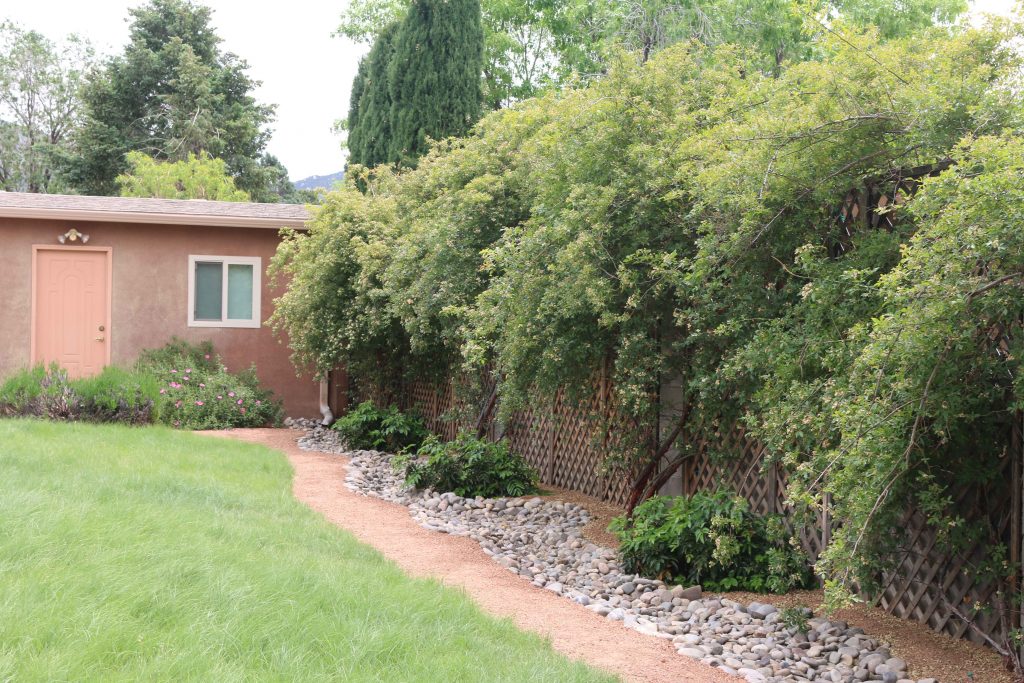
When asked what a homeowner could easily do to start water harvesting in their yard, Hunter recommended starting small and trying passive water harvesting. Passive systems can be as simple as a swale, a French drain (or rock burrito, as nicknamed by his staff), or more complicated systems that include building an underground soil sponge area. He says to start by finding the roof’s downspouts and canals, then provide a catch area underneath them. A catch area could be a concrete splash block or cobbles. Then direct that water away from the home via a cobble swale that runs into a planting area. This can be done easily by digging down a few inches and creating a slope away from the house into the planting area. Once the swale is dug, add cobble on top to stabilize the soil and prevent erosion.
Cobble swale located at downspout next to house.
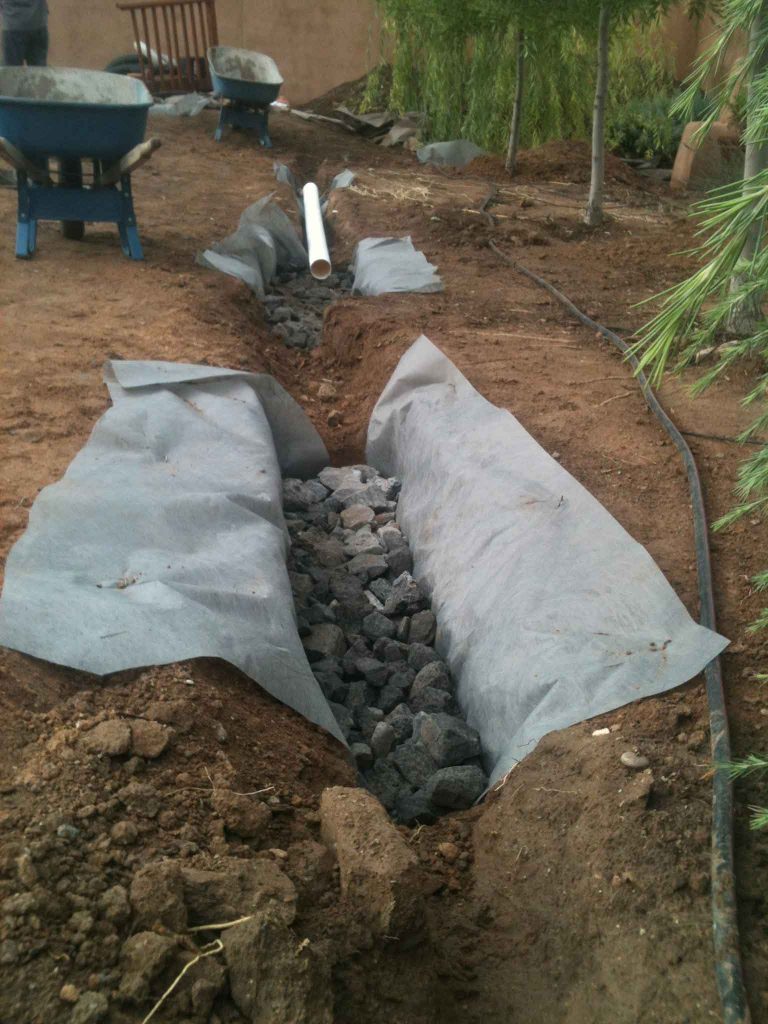
To make Hunter’s “rock burrito” simply dig an 8” wide trench at least 12” deep and as long as necessary for the space. Slope the bottom of the trench toward the drainage area. Layer the trench with filter fabric followed by cobble or rocks. Roll the fabric over the rocks then backfill with soil. This will provide an underground collection area for water. Water will slowly soak into the ground providing moisture to adjacent planting areas.
"Rock Burrito" French drain under construction in an Albuquerque landscape.
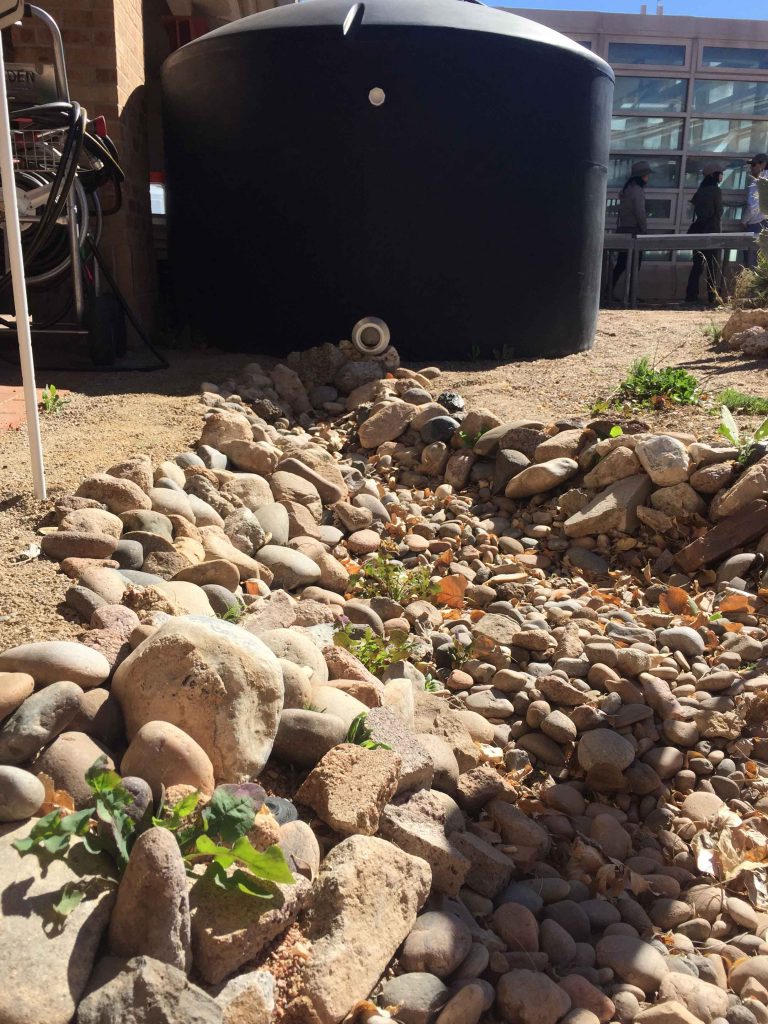
For homeowners who are ready to tackle an active water harvesting system like a rain barrel or cistern, Hunter recommends adding a passive water harvesting system next to the active one for when the container overflows.
Passive water harvesting swale next to active water harvesting cistern.
Using every drop of water through water harvesting is an important feature Hunter incorporates into all his landscape designs.
Local Expert: Hunter Ten Broeck, Landscape Contractor and owner of WaterWise Landscapes Incorporated in Albuquerque, NM. Author: Jill Brown, ASLA Landscape Architect and owner of My Landscape Coach in Albuquerque, NM.
While it is fantastic living in the Southwest
where the sun shines over 310 days a year, sometimes landscapes and homeowners
alike crave shade. Large trees provide great shade but may take a long time to
grow. So to create fast shade for patios and windows, choose vines. Luckily
many vines grow well in Albuquerque, including evergreen vines, flowering
vines, fruiting vines and many more. Below are four favorites of 505Outside for
the Albuquerque area.
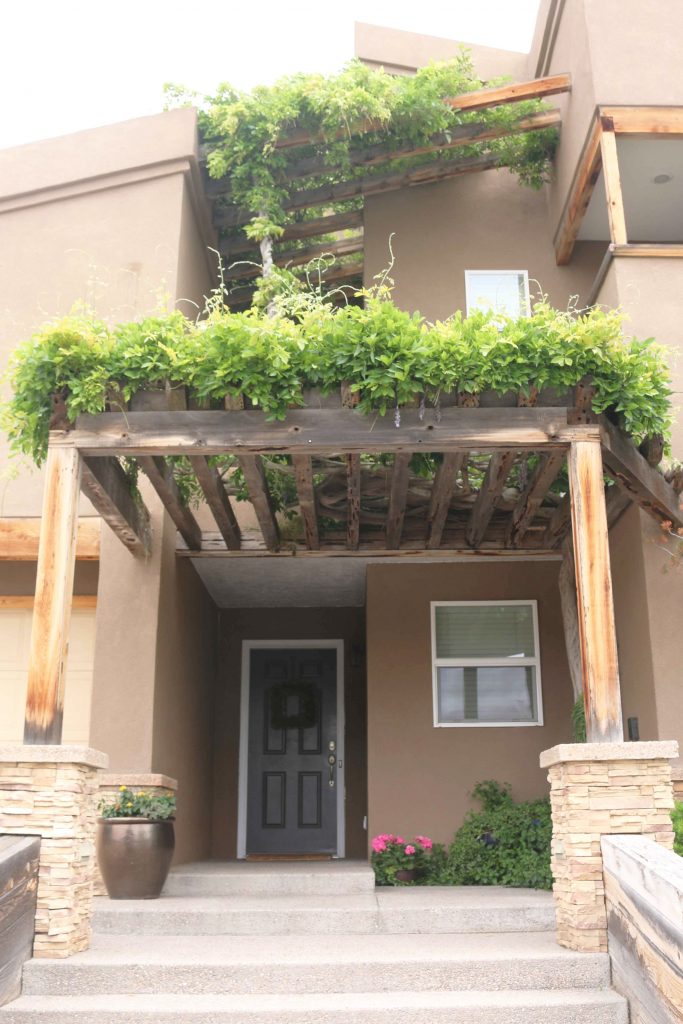
1. Wisteria, Wisteria sinensis: The pendulous lavender flowers of this vine are some of the first to bloom in the spring. Bright green leaves follow shortly thereafter, filling up the plant and creating lots of dappled shade below. Once the flowers fade, the leaves fill in to provide dense shade in the summer. Prepare for wisteria vines to get woody over time. Strategic training of the stems is also recommended. Wisteria grows well in sun, shade and part shade. Mature height and spread are 25’ to 30’ x 25’ to 40’.
Wisteria growing over a front door trellis.
2. Lady Banks Rose, Rosa banksiae: Rarely do you find a plant that is fast growing, evergreen and long-lived. Lady Banks Rose is all those things, and it produces a beautiful if brief show of flowers in spring. And it uses surprisingly little water. This plant grows large and, unlike most roses, blooms on old wood.
3. Trumpet Vine, Campsis radicans: Orange and yellow trumpet-like flowers grace this beautiful deciduous vine. Train it to grow onto a shade structure. It is a fast grower but you must provide a strong enough support and enough space for this vigorous rambler.
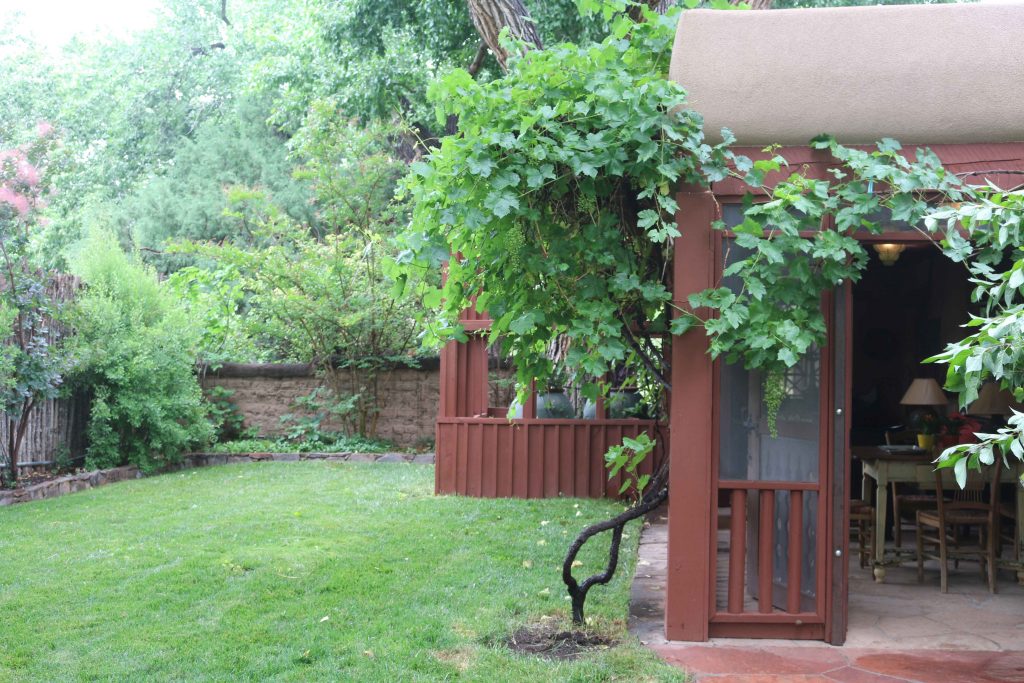
4. Grape vines, multiple varieties: New Mexico is one of the oldest grape growing regions in North America. For covering a trellis or arbor look for vigorous growers. Grape vines like to have moist feet during the first year of establishment. Grapes will grow wild and crazy if not trained and strategically pruned during the winter months. They also need constant redirecting, so tie the vines to the trellis with twine, checking on it every other week during the growing season. These are deciduous so be prepared for a sculptural woody vista throughout the winter months.
Grape vines growing next to an outdoor patio.
Try growing any of these vines on open lattice ramadas, arbors and pergolas. While wood is the most often used material for these structures because it is simple and easy to build, in the Albuquerque climate steel is an ideal choice. Steel structures are strong, long lasting and maintenance free. No matter what material you choose, creating living shade with vines can be rewarding.
Author: Jill Brown, ASLA Landscape Architect and owner of My Landscape Coach in Albuquerque, NM. Resources: Down to Earth, A Gardener's Guide to the Albuquerque Area by Albuquerque Area Extension Master Gardeners. Growing the Southwest Garden and New Mexico's Gardener's Guide by Judith Phillips.
A
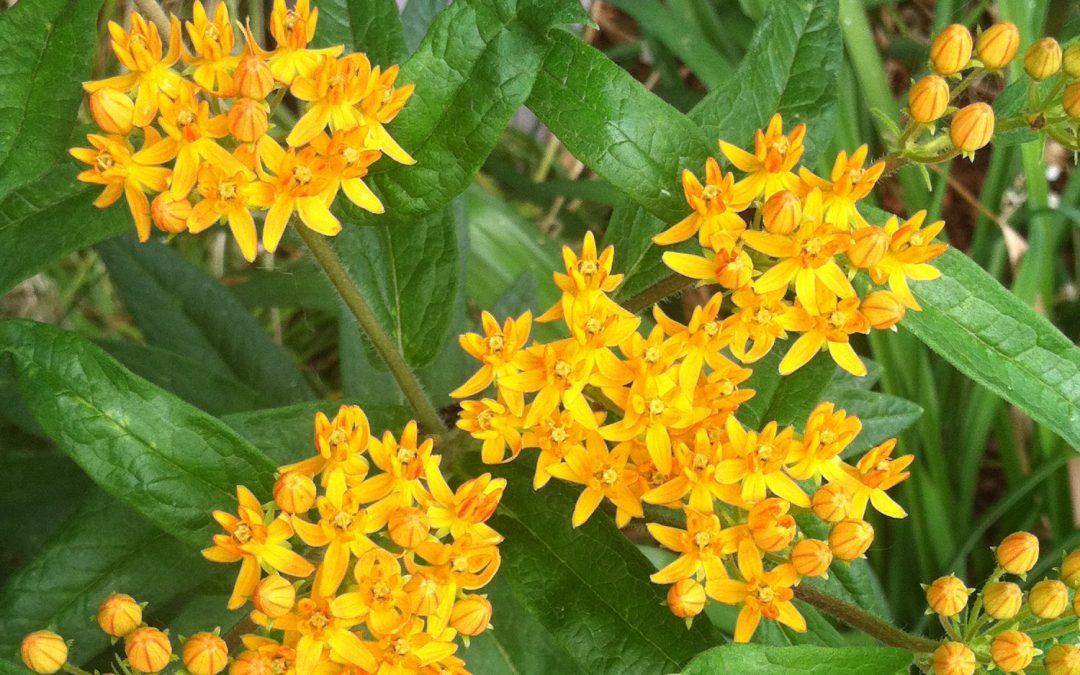
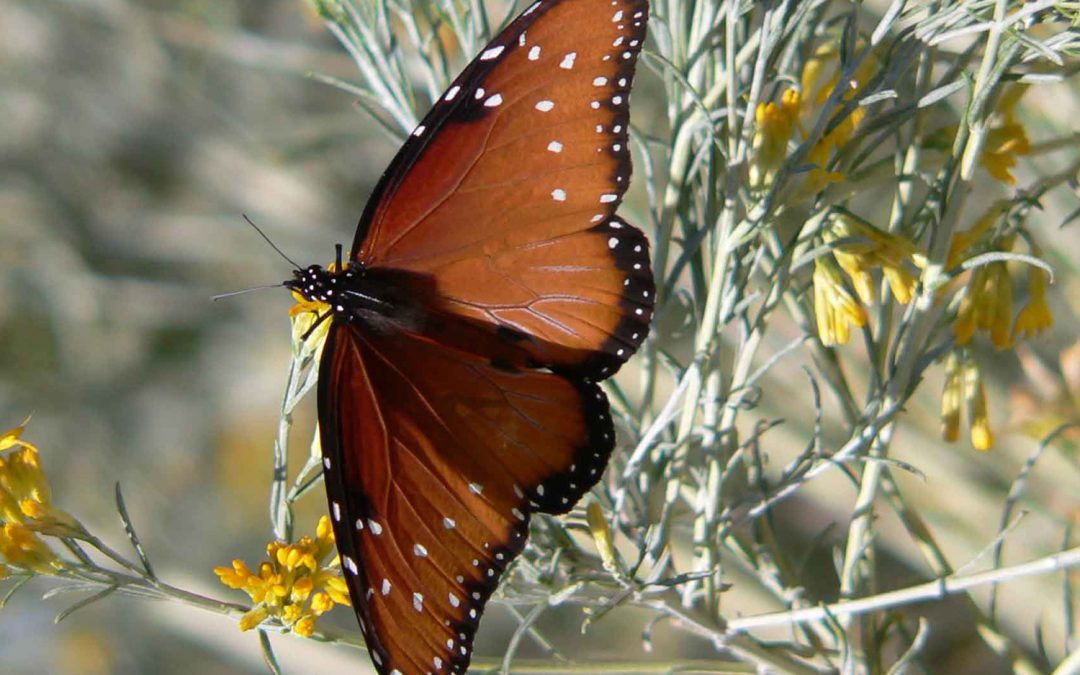
must-have for all Monarch butterfly enthusiasts, this cheerful, easy perennial
has a place in most gardens. Use it in rainwater swales, perennial beds, or
cutting gardens. Native to most parts of North America, it does well in poor,
dry soils. The flowers provide an important nectar source for Monarch
butterflies, and the leaves are food for Monarch caterpillars.
Look
for plants grown from local stock, which are better adapted to the desert than
plants propagated from cooler, wetter parts of the country. Prune the first
flowers in summer to encourage a longer blooming season. Spread these plants
out in the garden; greater concentrations of the plants draw more predators to
the caterpillars. Don’t be alarmed if your plants attract aphids – high quality
habitat brings with it a greater diversity of insects, which are not
necessarily harmful to the plants or to the Butterfly weed. (A mild solution of
soap and water can be applied to treat the aphids.)
Water
every two weeks while blooming. If planted in a shadier location, Butterfly
weed will need less water. Leave the stems and dried seed pods intact over the
winter and then trim to the ground in early spring. The silky fluff in the seed
pods looks beautiful when backlit.
Everything in nature is
connected. Fostering the connections keeps ecosystems and gardens vital. And weaving
pollinator essentials together into a beautiful garden is a fun process. Start
by thinking about where you will view the garden from as well as how you’ll
move through the space to view pollinator activity without disrupting your
winged guests. Organize the largest and thirstiest plants around rainwater
harvesting opportunities such as gutters or canales, and use pathways to divide
larger spaces into smaller planting areas like herb gardens, wildflower beds
and native shrub borders. Include the essentials of food, shelter and water in
your garden and your pollinators will thrive.
Among the insects and
birds that pollinate plants, bees are the primary work force. There are 1000+ kinds
of native bees in New Mexico, as well as honey bees that assist plants in
producing seeds. Butterflies and moths are less efficient pollinators than
bees, and many have key relationships with specific plants: Monarchs
butterflies with milkweeds and hawkmoths with evening primroses. Beetles, bats
and hummingbirds are also nectar drinkers and pollinators.
Plants expend energy to
produce showy flowers to attract pollinators. In exchange for distributing the
pollen needed to fertilize the flowers so the plants can reproduce, the
pollinator feeds on the energy-rich nectar. The shapes and colors of flowers
determine who will pollinate them. Butterflies can’t hover to feed, so they
need open-faced flowers with places to land, like daisies and roses.
Hummingbirds and hawkmoths are able to hover while they probe tubular flowers
for their nectar and pollen. Plants with inconspicuous flowers are often
wind-pollinated, like native grasses, but are still part of the pollinator
support system. Their leaves feed many larval stage insects.
If you are new to the
neighborhood, survey plants nearby for pollinator activity and plant some of
the busiest ones. If you already have plants in your garden that are abuzz with
pollinators, think about replacing any plants that are shirking their habitat
role with ones that are better hosts. Choose plants that are rich in nectar and
well-adapted and watch your garden become a surprise party buzzing with energy.
Food sources include flower nectar for sugar and essential amino
acids, pollen for protein, and leaves as larval food. Native grasses are
especially valuable as caterpillar food. Plan to include food sources
throughout the seasons that pollinators are active.
Shelter includes layers of canopy from taller
trees, mid-height shrubs and groundcovers (knee high and shorter). Leave some
dead snags as hummingbird roosts and for bee nesting. Leave leaf litter in some
places and keep some open soil in out of the way areas for ground nesting
insect habitat. Cluster plants in masses of varied heights and densities as cover.
Plans for bee hotels and ready-made bee and bat nesting boxes are easy to find and
build. Check nature center gift shops and online for ready-made nesting boxes.
A
small, trickling water feature as a
source of drinking and bathing water for insects and birds should have shallow
edges to avoid drowning bees. An extra drip emitter in fine stone mulch or bare
ground is a good water source for bees and puddling place for butterflies.
Eliminate
pesticides and herbicides. You don’t wan to attract pollinators just to poison
them! Your health will benefit, too.
The greater the variety of plants, the greater diversity of pollinators will visit. Plant for a seasonal progression of blooms. It takes at least 100 sq. ft. of the same flower to consistently attract pollinators (think a 5-foot-tall and wide fernbush or butterfly bush or a 10-foot x 10-foot wildflower or herb bed space). So if your neighbor has a swath of red valerian, plant a few but use more of your space for sunflowers, mistflower, yarrow, beebalm, salvias, penstemon, oregano, fennel, whorled butterfly weed or native buckwheats. Pollinators don’t recognize property lines so the more neighbors who garden for pollinators, the richer your neighborhood will become in pollinators. Avoid hybrid flowers, especially varieties with double flowers since those plants may produce little or no nectar or pollen.
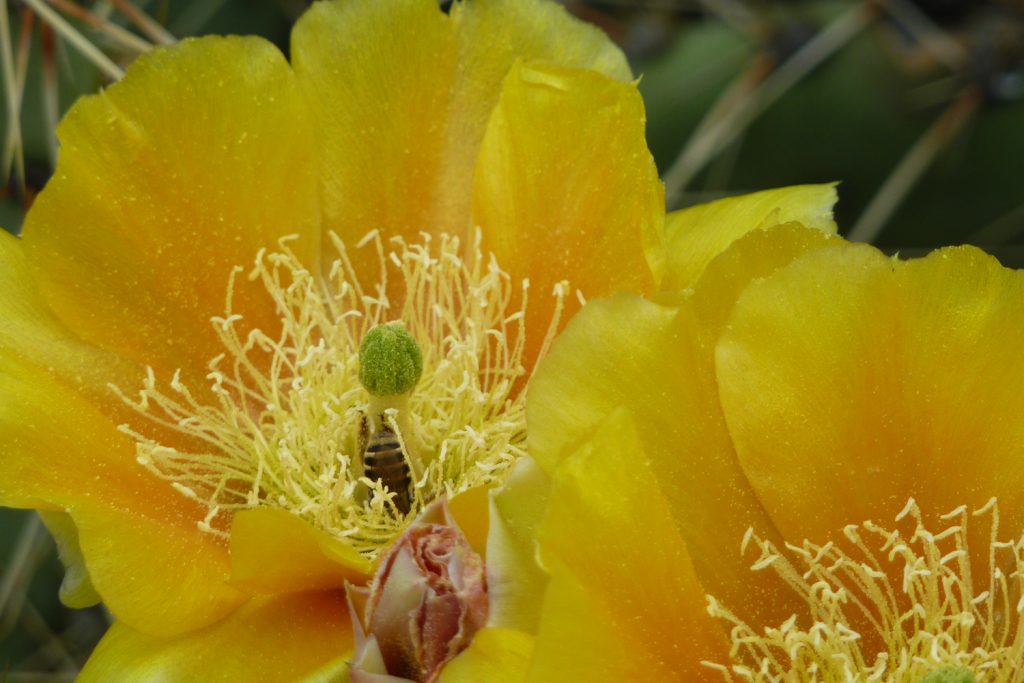
Opuntia englemannii with bee. Photo by Judith Phillips
There are
public pollinator gardens in Albuquerque:
Rio Grande Botanic Gardens on Central Ave at New York NW
El Oso Grande Pollinator Habitat at the east end of El Oso Grande Park on Osuna Road @ Morris NE
Albuquerque Garden Clubs Garden Center in Los Altos Park on Lomas just west of Eubank
Author: Judith Phillips, owner of Design Oasis, landscape designer and garden writer with 30 years experience designing arid-adapted and native gardens in the high desert.
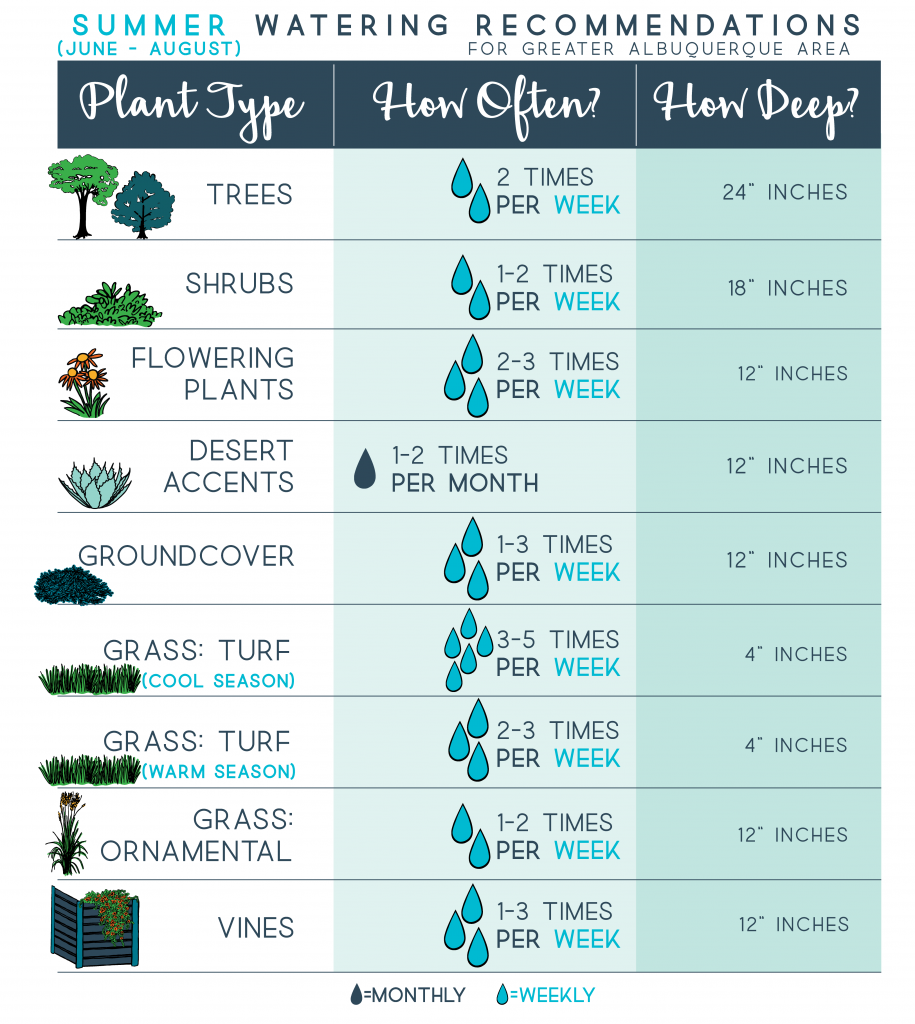
Albuquerque area continues to receive rains with precipitation reaching up to .50” in some areas during the month of May. As we move to summer months, we encourage customers to follow the Summer Watering Recommendations to maintain healthy landscapes during the hotter months of the year. So far we’ve conserved 800 million gallons this year and the precipitation outlook for the summer months is looking great!
Remember to Service your irrigation system at least once per month checking for leaks and malfunctions, a single broken sprinkler head flowing at 15 gallons per minute will waste 900 gallons in one hour of use.
Follow the Summer Watering Recommendations below for your landscape.