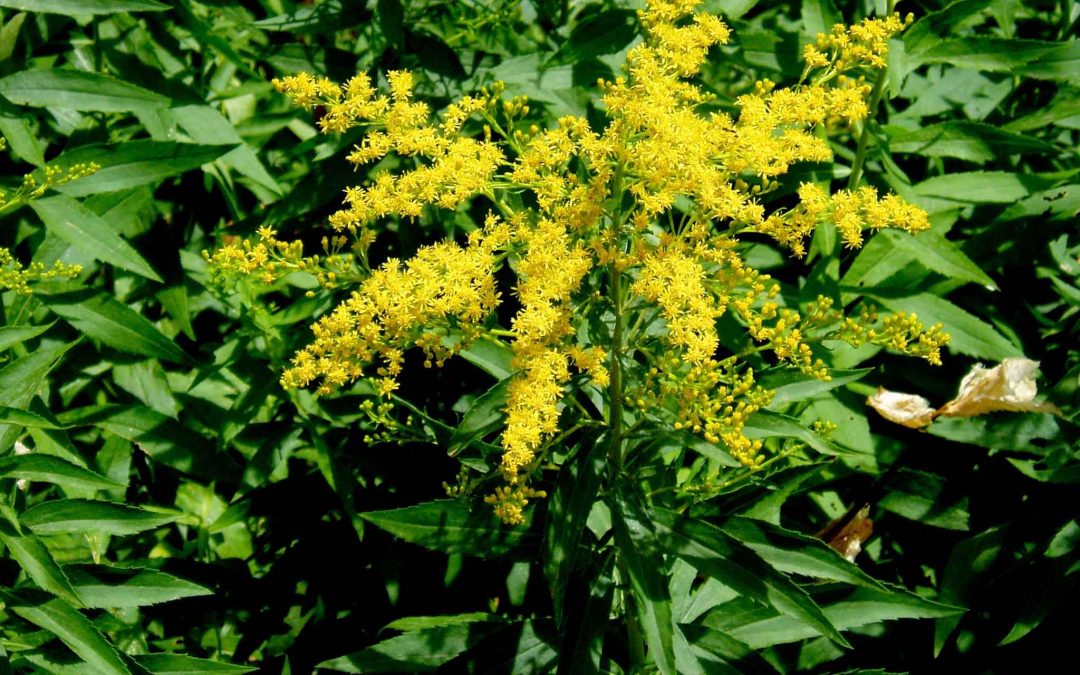
Among the most iconic and showy of autumn
wildflowers, Goldenrod is native to many parts of North America, from deserts
to mountains to prairies. The flowers hang gracefully from stems. Although Goldenrod
is frequently mistaken as an allergen, its heavy pollen is in fact carried by
birds and insects, not the wind. (Wind born pollen from plants like grasses are
much more likely to annoy our sinuses). Long-lived with deep roots, Goldenrod
provides vital sources of pollen and nectar for bees and other beneficial
insects.
Cultivars for small garden settings
include ‘Golden Baby’ – a clump-forming hybrid. This cultivar is best planted
in groups to get extended color, since individual plants bloom for a short
time. A good rain garden plant with bright green leaves that contrast nicely
with silver and soft green desert plants. Water every two weeks in summer to
keep it happy.
Since this is a late bloomer, situate it
near plants with contrasting fall foliage, such as Western Sand Cherry.
Removing spent flowers will encourage a longer bloom. Surprisingly good as a
cut flower – try it in a fall bouquet!
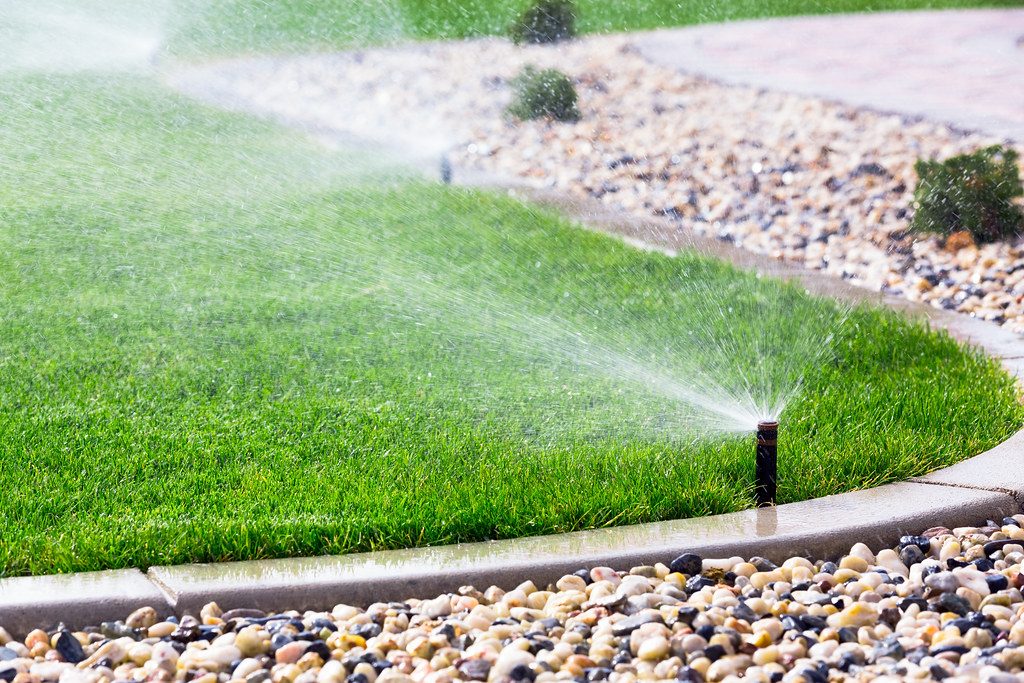
Grass lawns in the greater Albuquerque area require supplemental irrigation in order to survive our high desert climate. Most residential landscapes are watered by pop up spray heads with conventional nozzles, as pictured below.
Pop up spray head
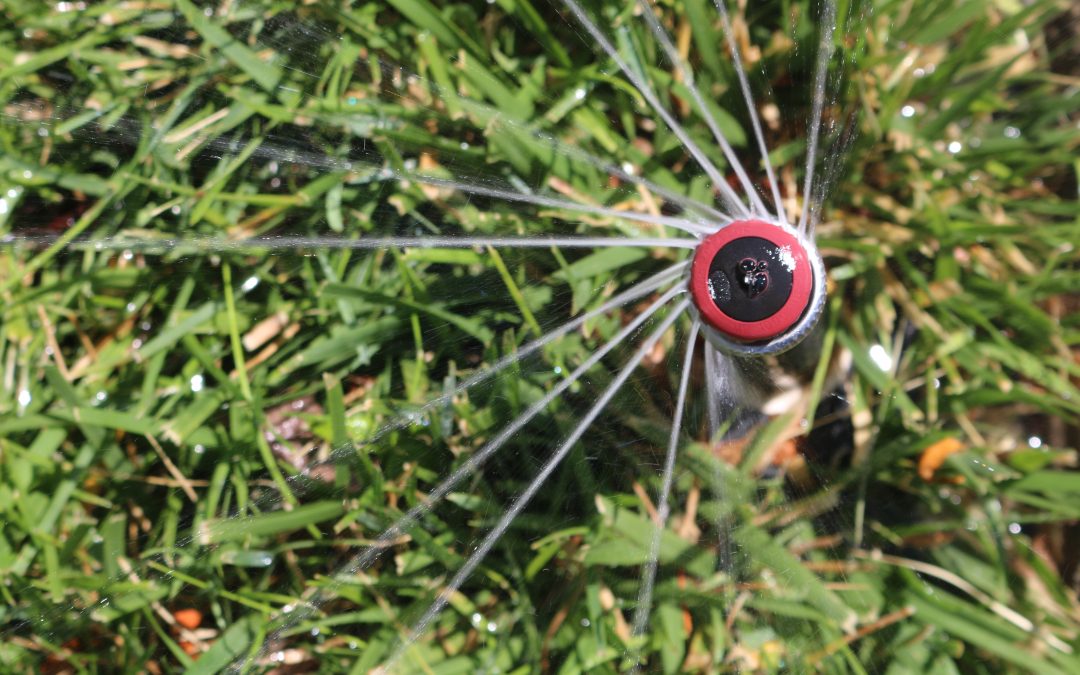
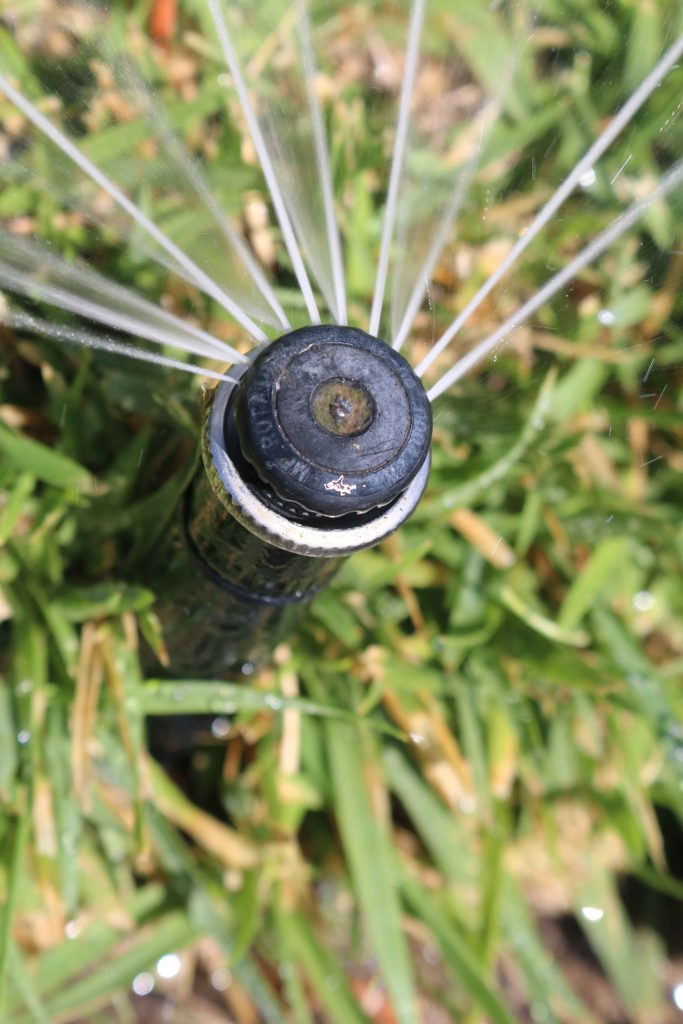
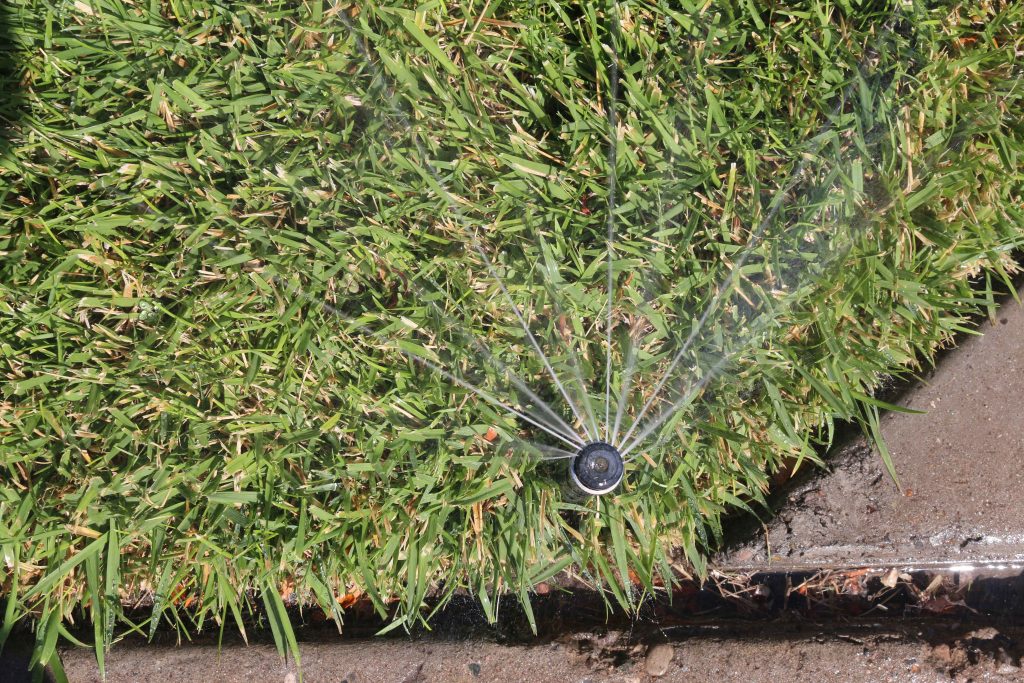
But did you know that water waste from these conventional spray nozzles can be reduced by simply swapping the nozzle out for high efficiency rotary nozzles? And for just a few dollars per head. Rotary nozzles improve irrigation efficiency by delivering water more slowly. That prevents runoff by giving soil time to absorb the water and allows the water to reach the root zone of the plant. These nozzles also deliver water in a larger droplet size, making the spray less susceptible to being carried off by the wind. This is all accomplished via their distinctive multiple rotating streams of water, pictured below.
High efficiency rotary nozzle
505Outside visited local irrigation supply stores to find out their most
frequently asked questions about these nozzles.
Can I replace my existing spray nozzles with these high efficiency rotary nozzles?
Yes. In most cases it’s as simple as unscrewing the existing nozzle and
dropping in the rotary nozzle and filter basket. These are available at any
local irrigation supply store. If you bring in your existing spray head, the
staff can recommend the best solution for you. Water Authority has rebates
available for the purchase of rotary nozzles, too. Visit the link here.
Sounds too good to be true. Are there any negatives?
They tend to clog with the hard water typically found in Albuquerque.
Make sure the brand you select comes with an inline filter basket, so you can
easily flush out and unclog your spray head.
What else should I know about high efficiency rotary nozzles?
They require longer run times. This is where most homeowners get confused. Wouldn’t
a longer run time mean I’m using more water? The answer is no, because rotary
nozzles deliver water at a slower rate than typical spray nozzles. Therein lies
the efficiency: water saturates deep into the root zone rather than running off
and evaporating. This can also help reduce the frequency of runs, thereby
saving water.
They work best at 30-40 psi. If the pressure running through your irrigation
system is too high, the rotary nozzle will spin out of control and break. The
average pounds per inch (psi) in Albuquerque ranges between 40 and 70 psi, so
you may need a pressure regulator on your system to avoid damage. Check with
your local supplier to figure out if you need to regulate the pressure on your
system, and how.
They are adjustable. Most rotary nozzle brands provide matched precipitation rates across radius, arcs, and pattern types, making it easy to install a system with even distribution. Nozzles can be easily adjusted by tool or by hand while the heads are running, to avoid water waste through overspray.
Stop by your local irrigation supplier and learn all about these high efficiency rotary nozzles.
High efficiency rotary nozzle watering a 135 degree angle.
August is hot. And customers
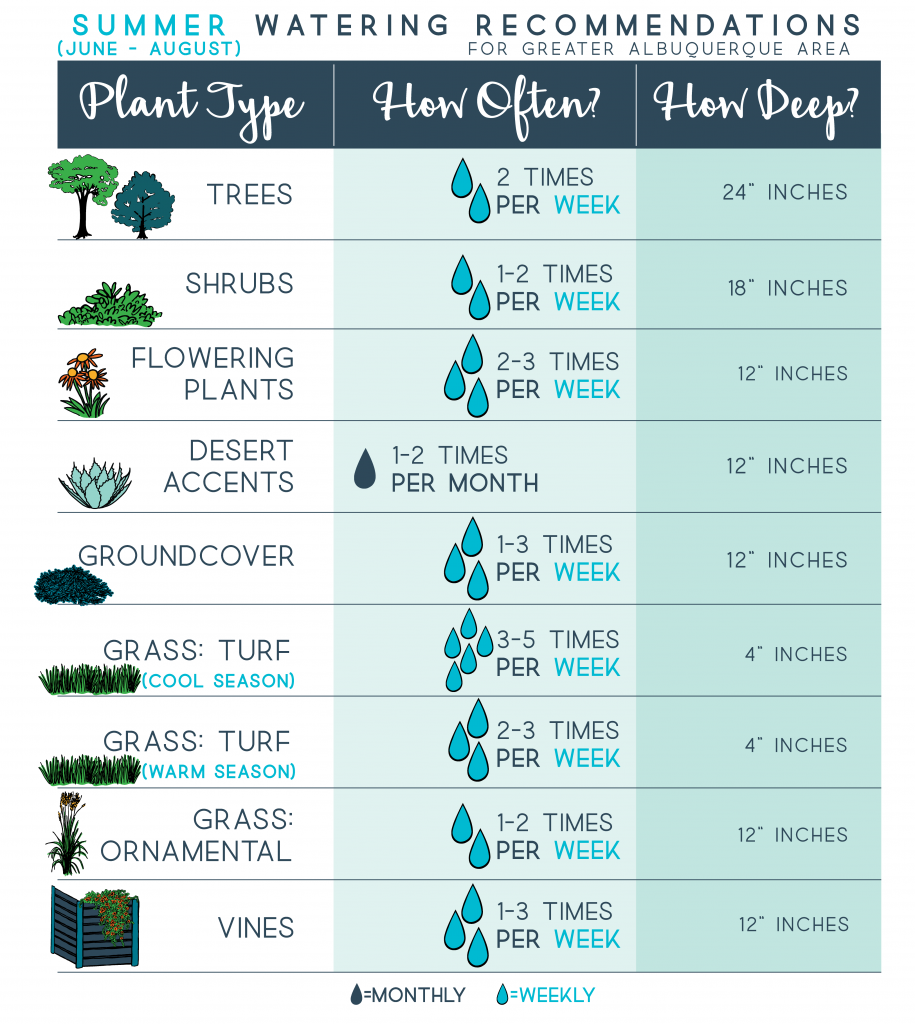
are encouraged to follow the summer watering recommendations below. But
remember that if it rains, count that day as one of your watering days and cut
back on supplemental irrigation.
Remember to service your irrigation
system at least once per month, checking for leaks and malfunctions. A single
broken sprinkler head flowing at 15 gallons per minute will waste 900 gallons
in just one hour of use.
Follow the Summer Watering Recommendations below for your landscape.
We are heading into the
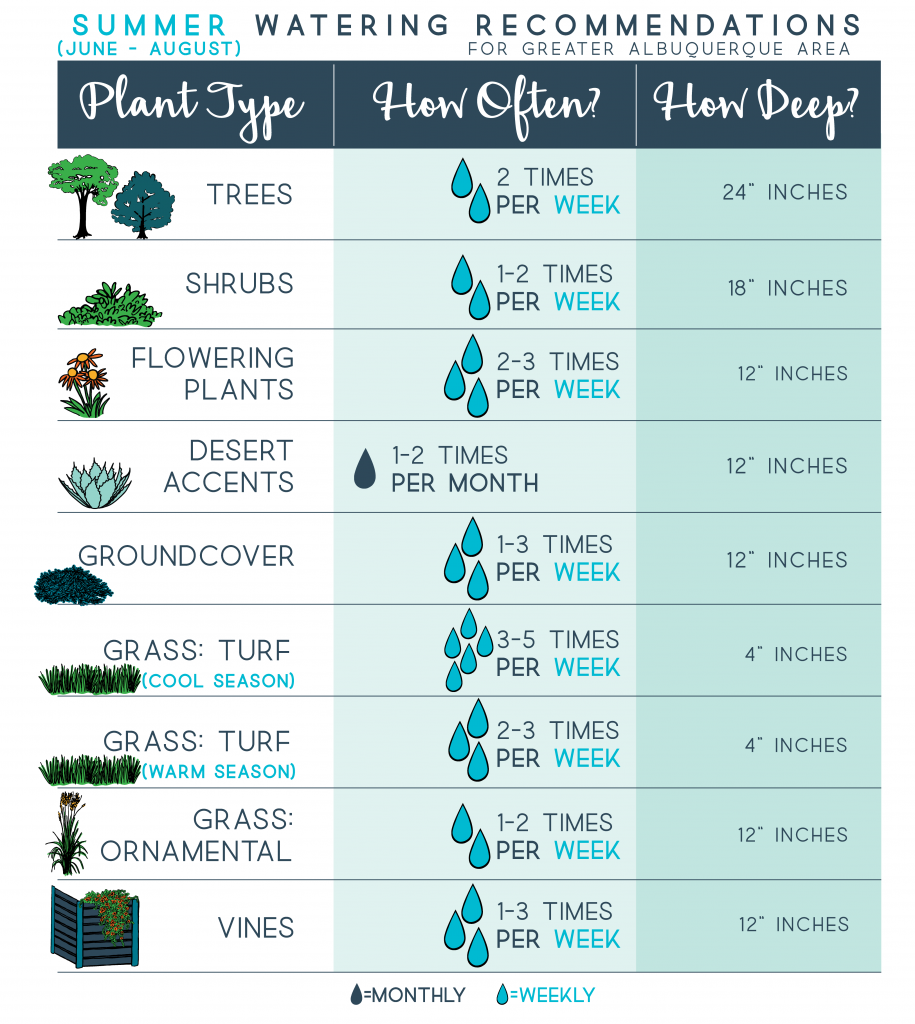
monsoon season and customers are encouraged to follow the summer watering
recommendations below. But remember that if it rains, count that day as one of
your watering days and cut back on supplemental irrigation.
Remember to service your irrigation
system at least once per month, checking for leaks and malfunctions. A single
broken sprinkler head flowing at 15 gallons per minute will waste 900 gallons
in just one hour of use.
Follow the Summer Watering Recommendations below for your landscape.
Region: All
parts of the Greater Albuquerque region except the East Mountains
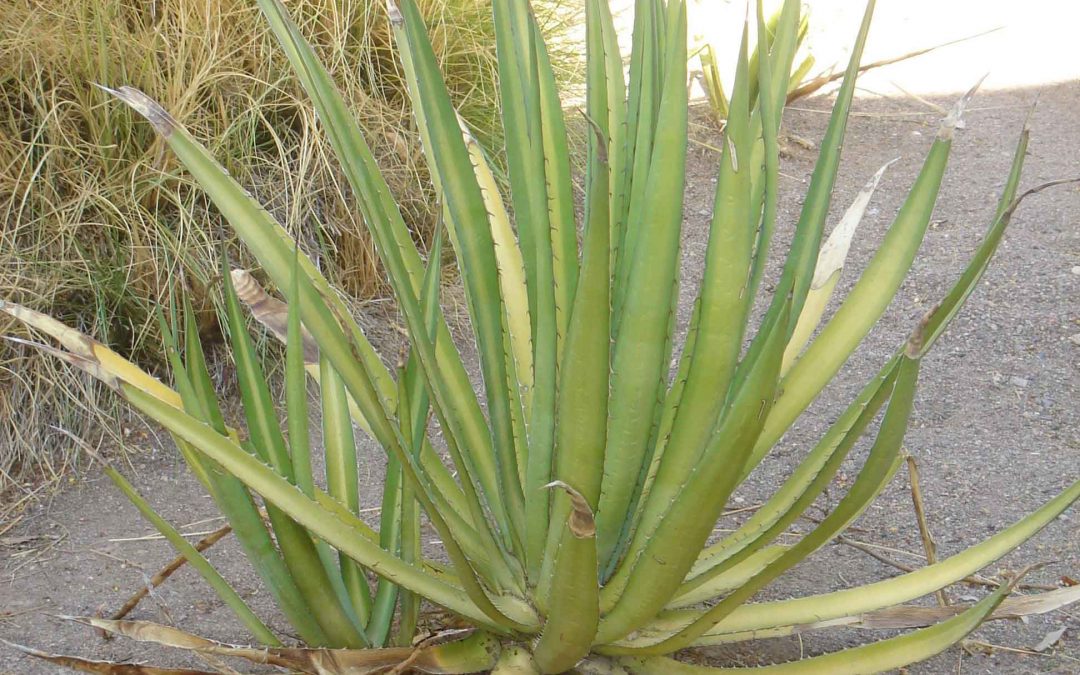
A succulent evergreen with spiny yellow-green
rosettes of foliage, the Lechugilla is a dangerously striking specimen. Its
rugged beauty is reminiscent of the landscapes where it grows naturally – the
plains and mountains of the Chihuahuan Desert, including parts of western Texas
and southern New Mexico. Select the Lechuguilla for its low water requirement,
dramatic production of an outlandishly tall flower stalk, and value for bees
and butterflies.
Locate the Lechuguilla with caution – plant only in an area where the sharp spines pose little risk
to yourself or passersby. This plant is best appreciated from afar. An ideal
location is in front of a south-facing wall, where its form can be appreciated.
After producing the flower, the entire plant will die. However,
since the Lechuguilla suckers, small offshoots will grow up in its place.
Paired with soft, complementary companions
such as the Chocolate Flower, Lechuguilla provides an enduring architectural
presence in the dry garden. It has a long history of use in soaps and textiles
in the Chihuahuan Desert. Unique among agaves for its relatively small size, it
is an excellent desert plant.