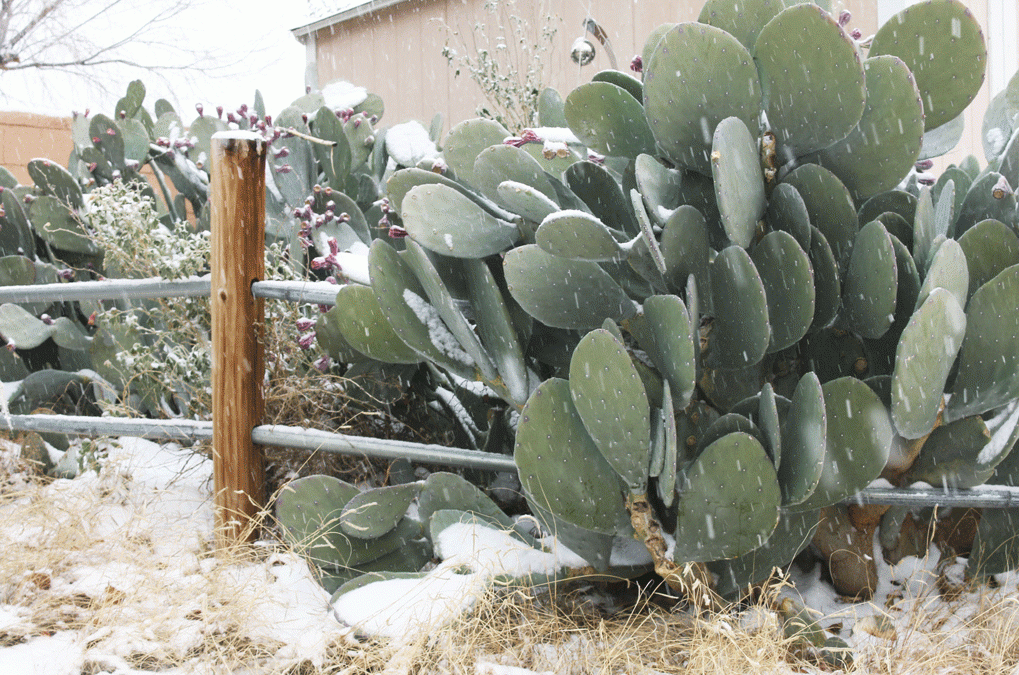
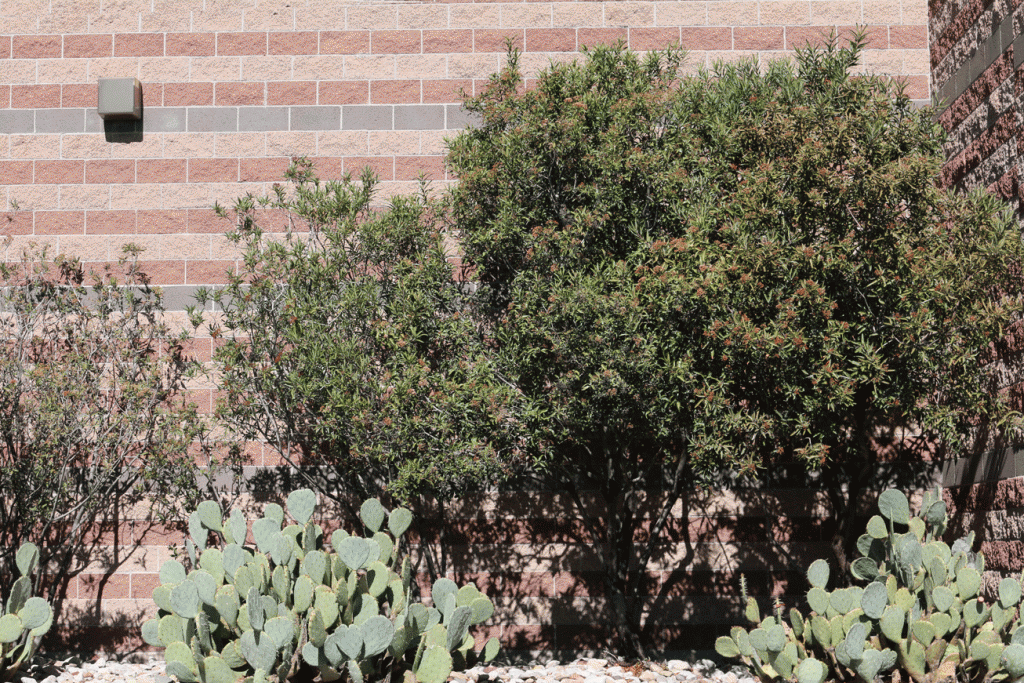
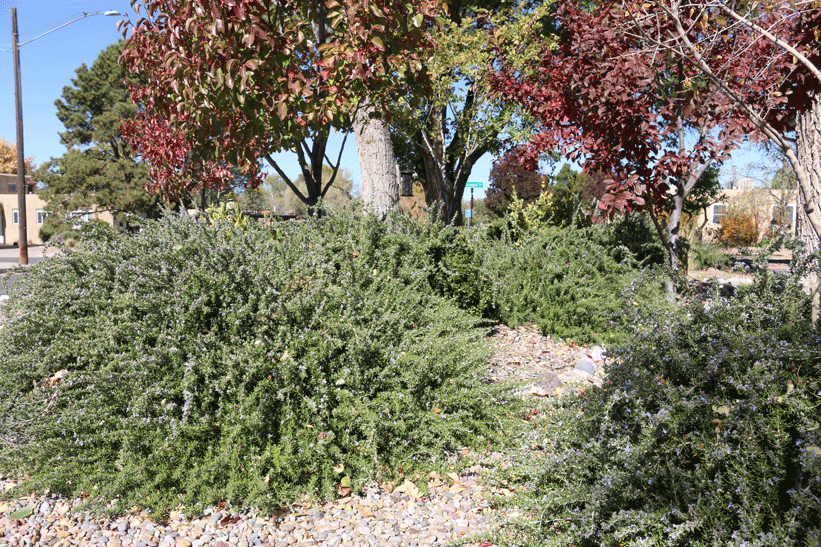
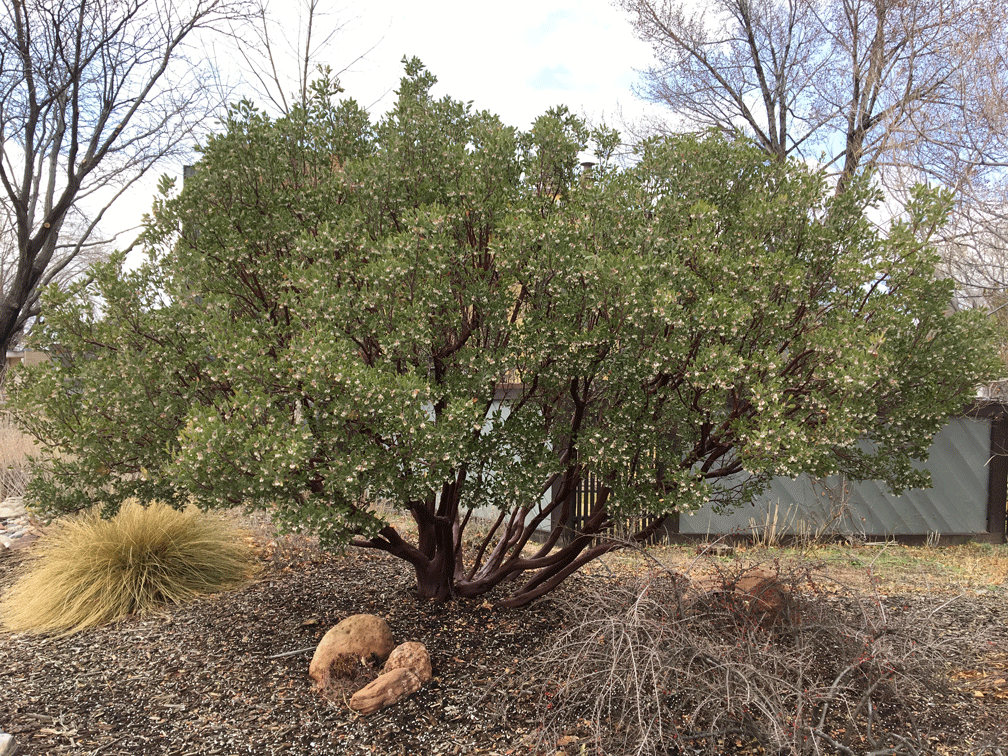
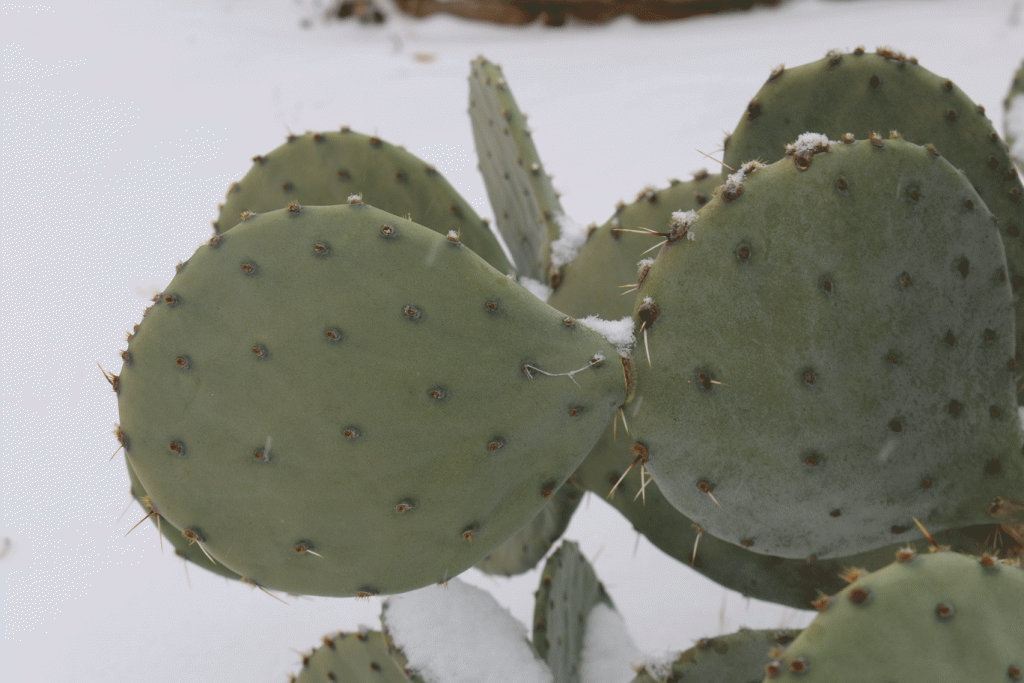
When we think of the word evergreen, many of us think about pine trees, cedars and junipers. However, an evergreen is simply any plant that remains green all year long. These plants are welcome fixtures in our winter landscapes, too. 505Outside highlights these essential elements of the greater Albuquerque area landscape by asking local plant experts which ones they love. Below are some of their favorites.
When the last of the yellow and purple perennial colors fade away in the fall, these (and other) evergreen plants provide the structure that holds landscapes together through the winter months. Don’t forget to include evergreen plants in your landscape for year-round interest.
Now that the weather is colder, curl up with a book and
learn more about our global and local water resources.
Here are a few of my favorites to get you started. If you’ve
got a water book to recommend for future newsletters, please email me at kyuhas@abcwua.org
For a thought-provoking read about the effect of rising sea
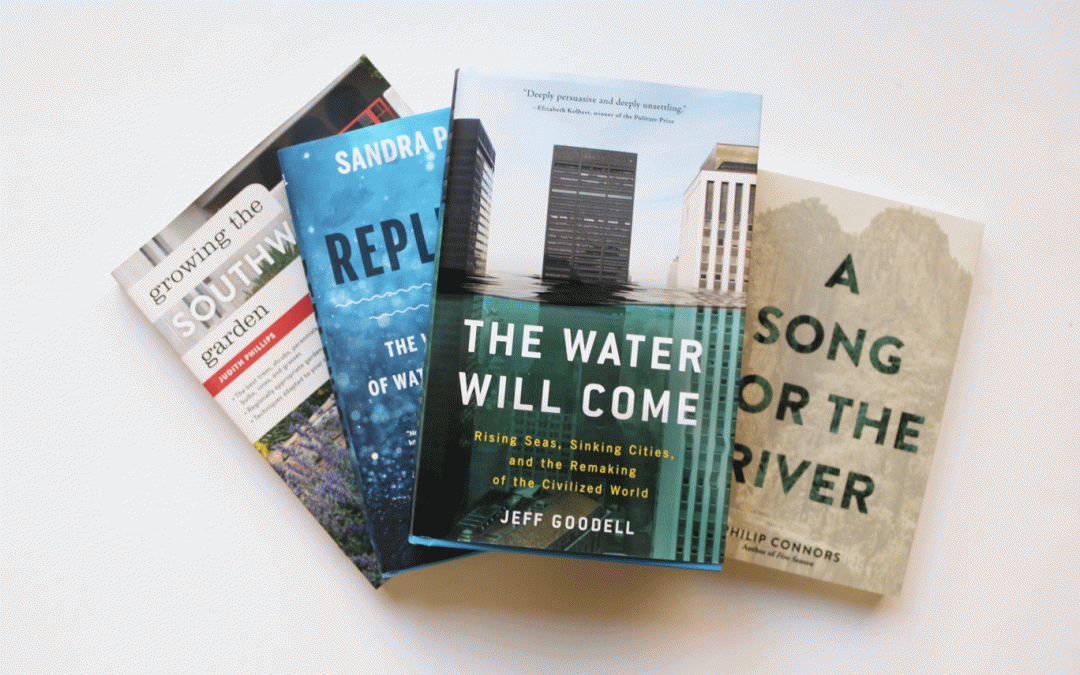
levels throughout the world, pick up The Water Will Come: Rising Seas,
Sinking Cities And The Remaking Of The Civilized World by Jeff Goddell. He
uses a blend of science and first-person accounts to create an engaging and
informative read. This book made many top book lists when it was released in
2017.
Replenish: The Virtuous Cycle of Water and Prosperity by
Sandra Postel explores many projects, including some in New Mexico, that work
with nature to enhance and preserve the earth’s water resources. Ms. Postel is
a world-renowned water expert we’re lucky to have living with us here in New
Mexico.
Another New Mexico book is A Song for the River by
Philip Connors. This is beautiful, meditative exploration of his time in the
Gila National Forest and of the Gila River. Those who want more of Mr. Connors’
writing on the Southwest should also pick up the multiple award-winning Fire
Season: Field Notes from a Wilderness Lookout.
Finally, for those who want to get started dreaming about their
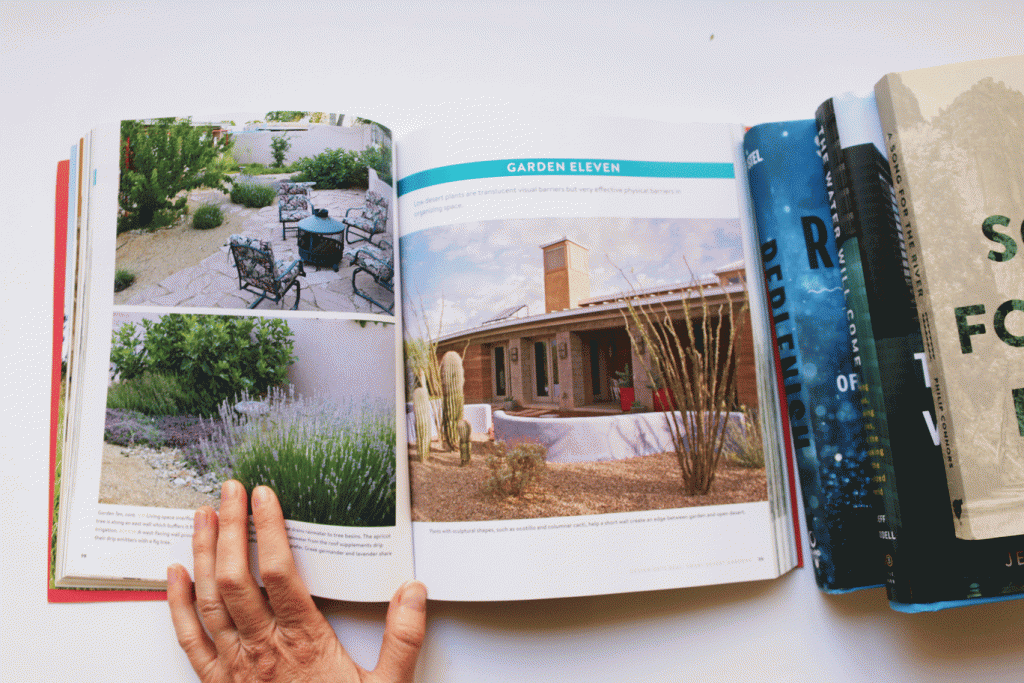
spring garden, try Growing the Southwest Garden: Regional Ornamental
Gardening or any of the other gorgeous, picture-laden titles by Judith
Phillips, another author we are lucky to call our own. Her beautiful books can
be found at local bookstores and libraries.
Author: Katherine Yuhas, Water Resources Division Manager with Albuquerque Bernalillo Water Utility Authority
To avoid damage to your irrigation system from
freezing temperatures, it is important to “winterize” it by protecting exposed outdoor
fixtures. If your hose bib is left exposed or standing water is left in pipes, valves
or sprinkler heads during freezing temperatures, that water may expand and damage your
system fixtures. That
could result in costly but avoidable repairs. Each irrigation system may be different,
but the general idea is the same: protect your irrigation system now to save
time and expense later. Here are a few tips you should take to prepare your irrigation
system for winter.
1. Disconnect the water supply to your irrigation system
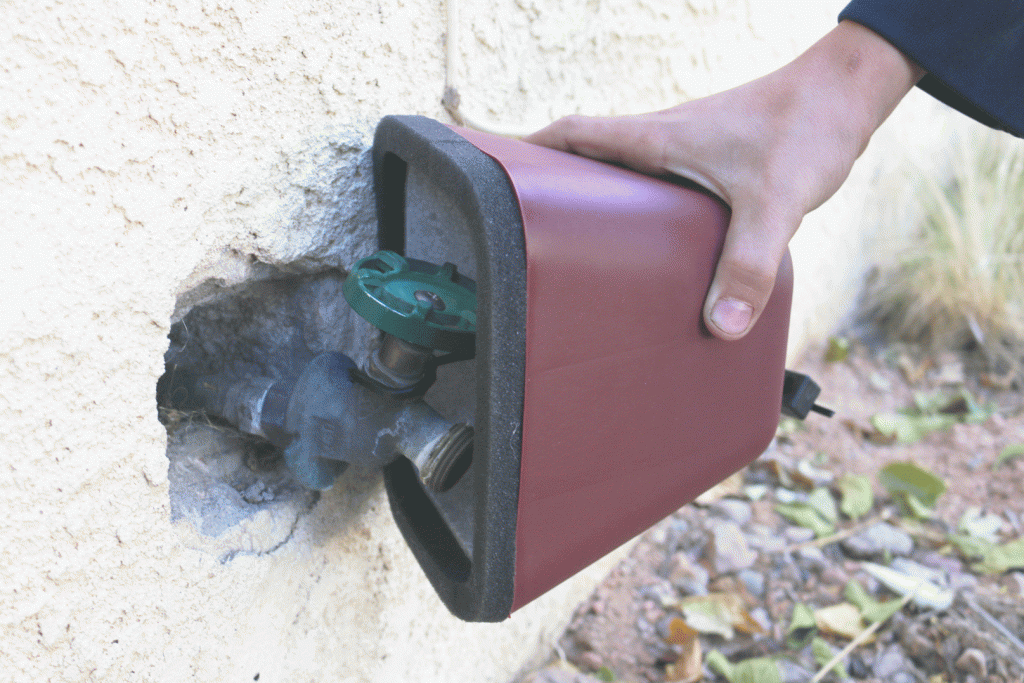
a. If you manually water using a hose or if the irrigation system is attached to an outdoor spigot, you should disconnect it and cover your hose bib using a faucet cover. A faucet cover is easy to install and is usually made from durable hard plastic. It protects your outdoor faucet from freezing temperatures. This in an easy, inexpensive fix that will provide you peace of mind when the temperatures drop.
Pro Tip #1
Faucet cover to protect hose bib from frost.
Disconnecting your hose and covering your hose bib is very important in winter. If you leave the hose connected, water can freeze in the hose all the way into the hose bib and the pipe that goes inside your home. If the house pipe breaks, you will have water flooding inside, and potential major water damage inside your home. It’s definitely worth the $10-$15 on these insulated covers to prevent potentially thousands of dollars in plumbing repairs and water damage to your home. Don’t assume that if the hose bib freezes it will drip and freeze only outside your home. Sometimes the damage is a whole lot worse.
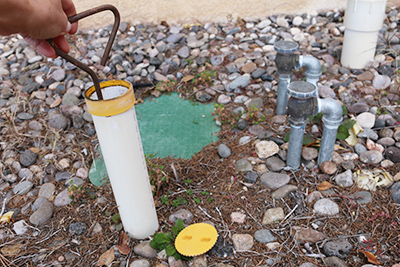
b. If you have a below ground irrigation system, locate your shut-off valve (often hidden in a 3” PVC pipe; often with a white or yellow cap, as shown in the photo). Turn it to the right to shut it off. Be careful when turning so you don’t break the valve. Your shut off valve may look like this:
Irrigation shut-off valve.
Pro
Tip #2
Sometimes the water shutoff for your sprinkler
system is in the green box shown in the picture. If so, we recommend adding some
heat tape and/or insulation in the box because it will be exposed to freezing temperatures.
If you can insulate it and protect it you can avoid potential frozen pipes at the
shut off and potential repairs in spring. Watch out for spiders, though,
because the shutoff box is a warm wet place.
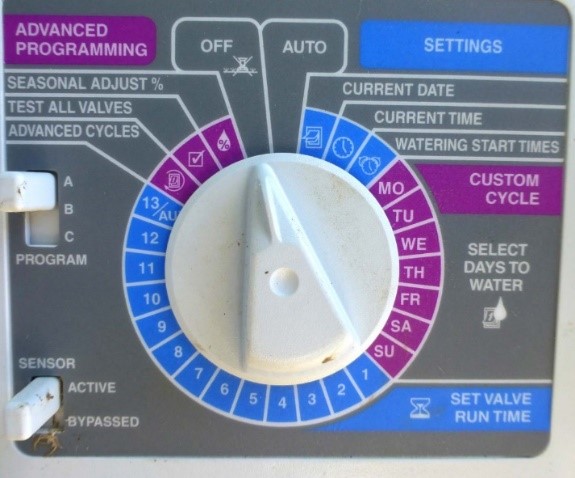
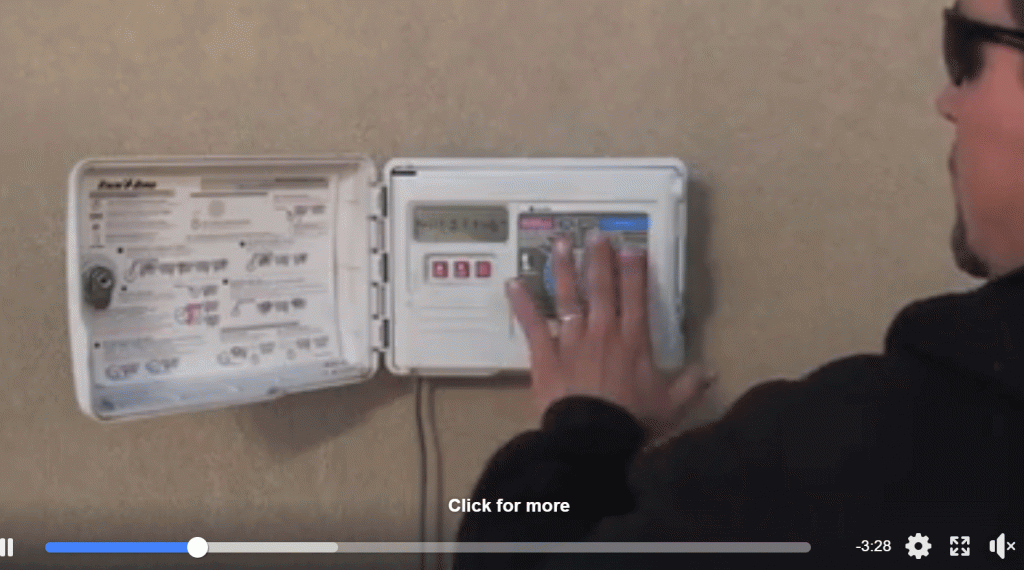
2. Turn off the irrigation system controller (if you have one)
Irrigation controller set to off.
Pro Tip #3
If you forget to shut off your irrigation system during winter you can potentially have your automated sprinklers running in freezing temperatures. That can freeze and damage your sprinkler heads. Make sure you turn off all automatic cycles for your system. If you have a drip system for trees and other plants that need to be watered periodically throughout winter run the system manually when you are home, and only in above freezing temperatures. Don’t just assume that setting it to run during the day will be okay, either. There are days in winter when the temperature doesn’t get above freezing. It’s best to just turn it on when you’re home and then watch it. If your sprinkler heads do crack or break and you don’t notice, you will likely flood your yard in spring when you turn your system back to automatic settings.
3. Drain the water from all pipes, valves, and sprinkler heads.
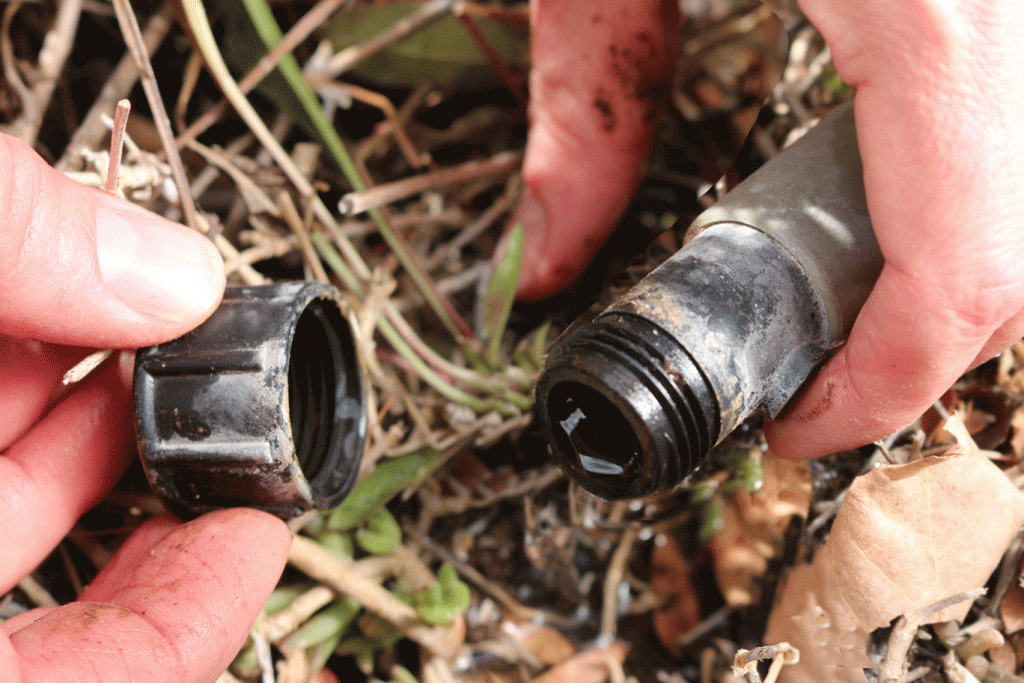
Drain cap at the end of a drip system.
There
are several ways to drain your system.
Manual
drain valves and automatic drain valves can be blown out with compressed air. Local
irrigation specialists can help.
If you
have an irrigation system with drip hoses, we recommend you locate the end cap (drain
cap) of the drip hose and drain out the water.
Pro Tip #4
Sometimes irrigation systems don’t have drain
valves. If you don’t have these, simply make sure you’ve turned off your sprinkler
system prior to winter and freezing temps. Then you can have a professional inspect
the system in spring before you turn it back on. A professional will inspect your
system for leaks and make any repairs so you don’t flood your yard. So avoid the
headache and have an inspection. If you consistently have problems year after year,
drain valves can be installed to help clear the lines each winter.
Reminder: If you need to water in the winter season use your hose and remember to cover it when finished.
How to shut off your irrigation system for winter.
Some of our best landscaping practices can be learned from Mother
Nature. Every autumn, leaves fall to the ground, sheltering the soil and beneficial
organisms, returning organic matter back to the ground, and perpetuating the nutrient
cycling essential for good plant health. This year we want you to think about leaving
those leaves in your garden. When we allow leaves to follow their natural life cycle,
we can enjoy a colorful tapestry on our landscape as well as all the benefits provided
by an organic mulch.
With these tips, you can spend less time raking leaves into plastic
bags and enjoy more fall fun:
When designing your landscape, make your pathways
and hardscapes above the level of your planting areas. The wind will naturally blow
leaves into the low spots where they will support soil and plant health. This also
happens to be a great water harvesting strategy.
Use organic mulches instead of gravel. Organic mulches
such as wood mulch are visually accommodating to leaf litter (meaning you won’t
notice them as much), allow for the leaves to decompose into the porous spaces and
build soil. Leaves break down to virtually nothing in this environment. If you prefer
a tidy look, follow up with a light topdressing of mulch for a finished appearance.
If the leaf load is too much to manage directly under
your trees, rake the leaves a little off the top and distribute them throughout
your yard – ideally to a compost heap where the leaf litter will become an excellent
soil amendment for your spring garden. Note: if you have chickens, they will turn
your leaves into next to nothing in a matter of days.
If you have a lawn, run your lawn mower over the
leaves and let the crumbled litter work its way back into the soil. The addition
of organic material to your lawn in the fall will give a boost to your lawn when
it wakes up in the spring.
There are a few instances when you should remove fall
leaf litter. Leaves from diseased plants – particularly fruit trees and roses -
should be taken to a compost facility to be recycled. While you can try to compost
them yourself, be advised that most backyard compost piles do not reach a high enough
temperature to kill pathogens. Also, xeric plants that grow naturally in rocky terrain
will be susceptible to crown rot if organic material is piled up around their bases.
Leaving fall leaves has another great benefit – it is carbon neutral. Carbon is sequestered in the soil, leaf blowers and plastic bags are removed from the equation, leaves don’t end up in a landfill or produce methane gas, and no transport to the landfill is required. It’s a win-win when we let Mother Nature be our guide.
Author: Paulina Aguilera-Eaton, Water Conservation Specialist with Albuquerque Bernalillo Water Utility Authority
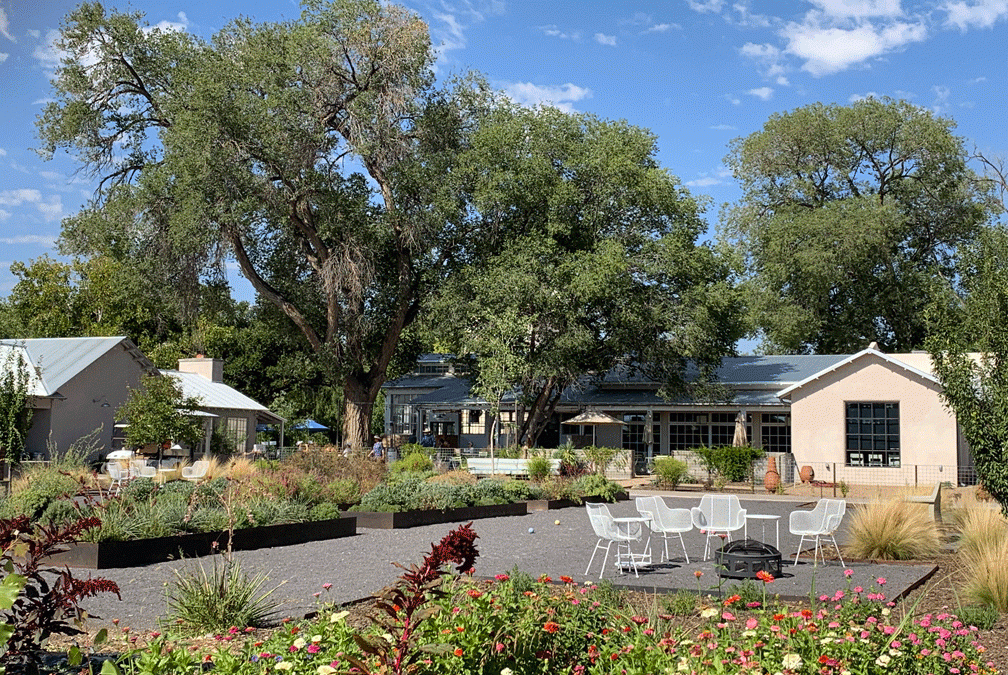
505Outside sat down with local landscape expert Wes Brittenham, Farm and
Landscape Manager at Los Poblanos Historic
Inn & Organic Farm, to chat about Fall
maintenance tasks for Albuquerque gardens. At Los Poblanos, Wes oversees
all growing things on their 25 acres, from the historic gardens to the newer
more xeric and multi-functional landscapes, as well as the kitchen garden and the
fields of lavender.
Wes has noticed many homeowners with traditional landscaped yards
keep them highly pruned with perfectly trimmed rounded plants free and clear of
leaf litter and debris. Over the last 15 years, as homeowners have made the
shift to xeriscape landscapes (aka desert friendly) he’s noticed they haven’t
shifted their maintenance regimens. They should.
Xeriscape landscapes don’t require the rigorous maintenance that
traditional landscapes do, so he’s been teaching homeowners to “get over the
tidiness!” He wants homeowners to embrace the shape of native plants and, in
general, do less yard work. Especially in the Fall.
When asked what homeowners can do to prepare their landscapes
for winter, he gave us a short list of surprisingly simple to-dos:
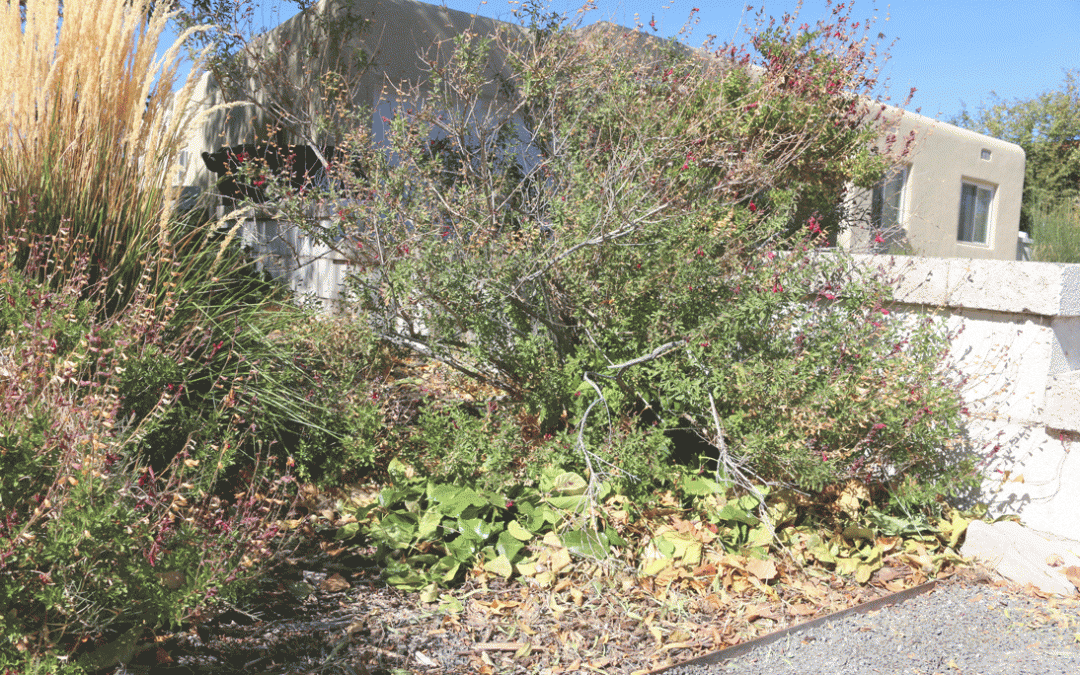
Leave it natural. There is no need to prune! So leave stems with seed heads in
place. This includes grasses, perennials and shrubs. The dead stems, leaves and
seed heads provide natural habitats for wildlife all winter. They also give the
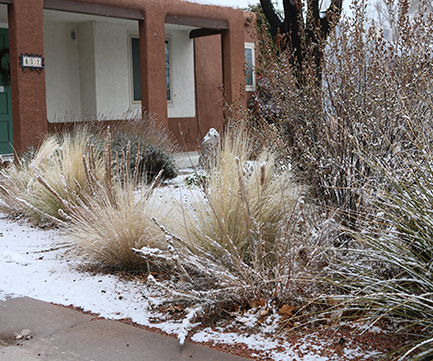
garden good structure over the winter. When Albuquerque gets a blanket of snow,
the wispy seed heads of the grasses create a beautiful silhouette. Leaving dead
foliage insulates the plants from winter freeze damage, too.
Do clean up fruit and
vegetable debris from gardens. This helps reduce bug
populations and prevents fungus problems.
Leave the leaves. When the trees start losing their leaves, rake them around
the base of plants to provide habitat, retain moisture, and create natural
mulch under the plant.
With over four decades of experience, Wes’s advice is extremely useful for local homeowners. Efficiency is key, so use his three simple tips for a great fall and winter landscape and minimal yard work this Fall.
Your landscape needs a lot less water in September than it did in the summertime. About 35 percent less on average. The days may still be warm, but shorter days and cooler nights in the months of September, October and November means less evaporation, which means less irrigation is required. Adjust your irrigation controller following the Fall Season Watering Recommendations to save water and money this Fall.
Ramping down your landscape irrigation does not mean you
need to stop watering all together. If you have a lawn, cut back to two days
per week. Cut back to two to four days a month for trees. Fall is when trees,
shrubs and other perennial plants get busy growing their roots, and proper watering
supports this activity. After spending the summer putting energy into growing
leaves, flowers and fruit producing plants take advantage of the fall season by
anchoring their root system to the earth. It’s important to fortify root systems
during the Fall so they have a stronger trunk and stem during the winter
season.
Fall season is also a great time to put in new plants, for the
same reason – they spend their time growing their root system instead of leaves
and flowers. But new plants need more frequent watering to help them get established.
Keep in mind that new plants need at least a month to anchor in the ground before
the first freeze, so don’t plant too late in the season to avoid damage.
And remember it is not necessary to irrigate when it rains, or on days following a good rain event (or about a 1/2" of rain). Using nature as your source of water encourages a desert friendly landscape.
Want to know how much your landscape really needs? Call 505-289-3003 to schedule a free, efficient irrigation consultation with a Water Authority expert.