Growing vegetables and herbs at home in small spaces can be easy, fun, rewarding and not expensive. Here are some tips for anyone from first timer to a pro.
Start small with a raised bed, good-sized pots or containers or a small plot of ground. Good soil is the key in all of them, so do not skimp there. If you are a composter, good compost is a great addition to our native soil, which is generally alkaline and low in organic matter. If you are growing in the ground, compost added to the soil is highly recommended. Plant nurseries offer good compost in bags, and you can also purchase in bulk, from a bucket to truckloads, from composting facilities.
When planting in containers, use a potting soil labeled for growing vegetables. Do not use pure compost, topsoil or garden soil in containers. Those are designed for in-ground use. Start your own seeds or purchase plants from a local nursery.
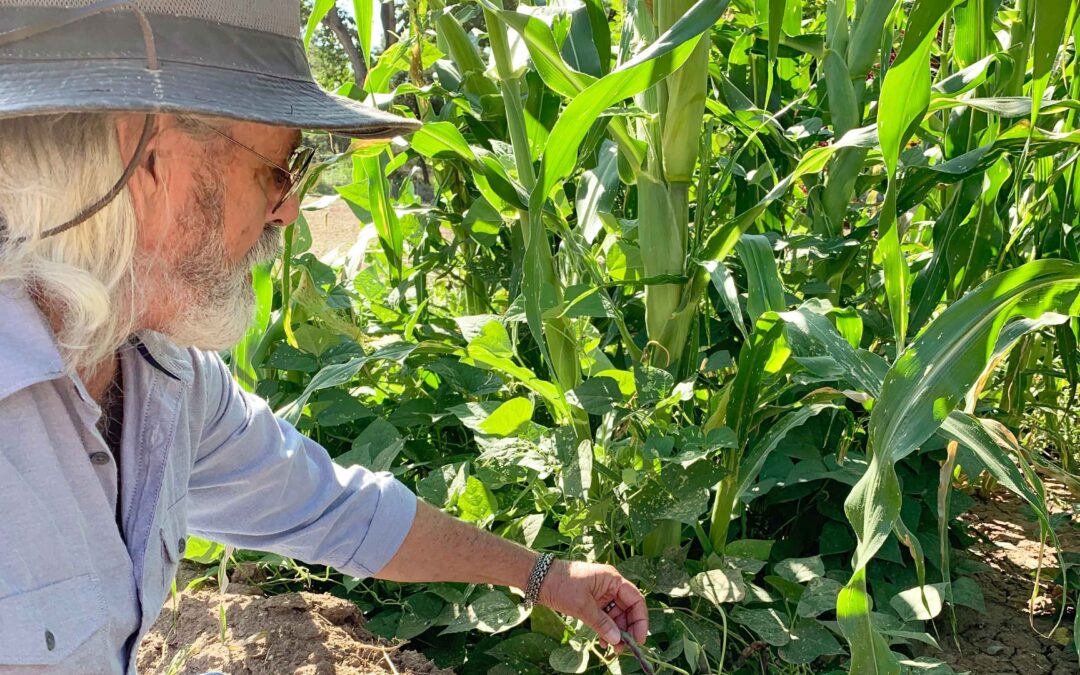
Choose what you grow based on what you love. Most will agree there is nothing like the flavor of a homegrown tomato, but the joy of growing, harvesting, preparing, sharing and eating something you have grown is a rich pleasure in a complicated world. Beans are fast and easy to grow. Since dried beans are inexpensive and readily available and it takes a lot to make a pot of cooked beans, I stick to green beans. I have done Three Sisters (corn, beans, squash) in large pots on my patio using climbing green beans.
Tomatoes will do fine in a five-gallon pot or larger, and peppers of many varieties do great in containers, as do most herbs. Look up books on companion planting. Roses Love Garlic and Carrots Love Tomatoesare books by Louise Riotte that suggest good neighbors in the garden. Lisa Mason’s Vegetables Love Flowers and Companion Planting by Sally Roth also give useful information. I have planted borage with my tomatoes for many years on the advice of an old gardener friend, and I rarely have tomato worms. Borage is both beautiful and edible!
Never leave the surface of the soil exposed. Always use mulch. My preferred mulch is barley straw (not hay!) It is clean and rarely has weeds or other seeds in it. You get an occasional sprig of barley that is simple to pull and lay with the rest of the mulch. Spread the straw three or four inches thick, thinning carefully at the base of plants. It holds moisture, prevents unwanted seedlings from sprouting and can be turned into the soil or added to compost at the end of the season. Water is crucial. Consistent deep watering, whether you use in-line drip tubing, soaker hoses or attentive hand watering, is important. The soil must not dry out or be too wet. Most containers will need water every day or two. Pay attention, ask your gardening friends questions, share stories of failure and success and enjoy the fruits of your labor!
Author: Wes Brittenham Farm & Landscape Manager, Los Poblanos Historic Inn & Organic Farm Have a question about the article? [email protected]
Everyone should consider planting fruit trees in their yard.
Because of our climate, fruit trees grow really well in our area. Besides the
joy they bring when we harvest delicious fruit, they put on a beautiful show
with spring flowers, create shade, and provide shelter and food for wildlife
and pollinators. The Water Authority encourages the planting of fruit and shade
trees by providing a generous annual rebate (click here
for more information). Thinking of planting a new fruit tree? Check out our
blog post about the proper way to plant trees here.
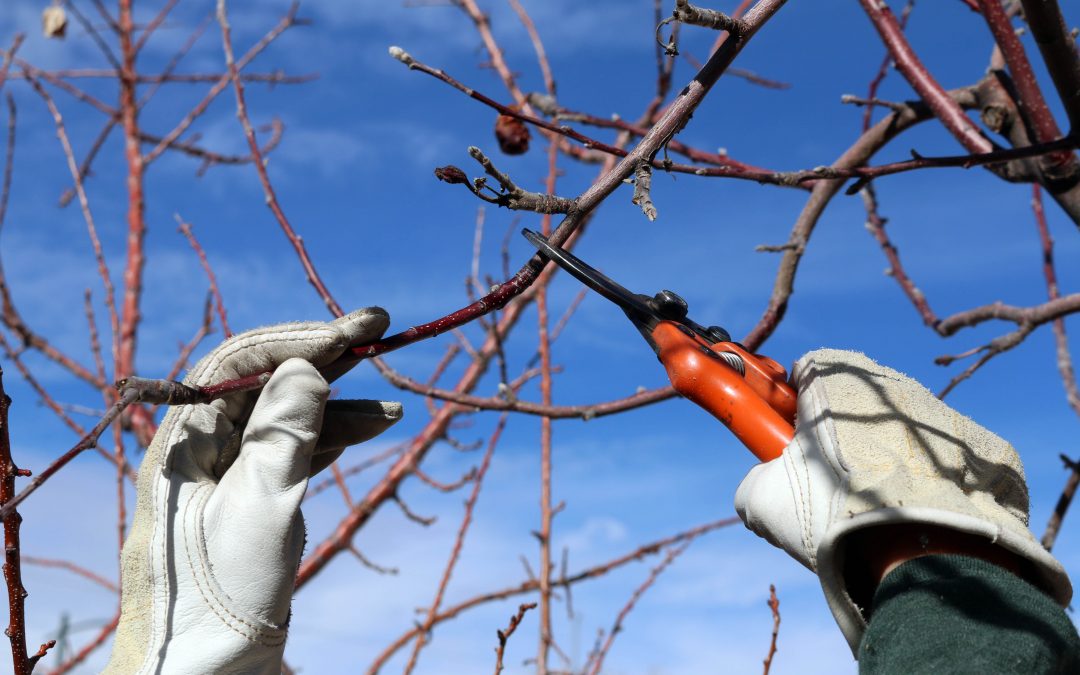
All trees require some amount of pruning, especially when
young, in order to set up good structure. Fruit trees have a few special
considerations related to our intense sunlight, specific pests, and where on
the tree the fruit is produced.
Pruning has been called “one of the best, worst practices
for trees,” because removing branches and leaves limits the tree’s ability to
produce energy. Pruning wounds also create a place for decay to enter the tree.
You should always have a reason for pruning a tree and understand why you are
making specific cuts – not just because it’s a nice day and you remember
reading somewhere that you should prune your fruit tree. Pruning is good
because it reduces the length of branches to prevent breakage from heavy fruit
years; removes dead or diseased branches; and/or reduces limbs to keep them
from rubbing against a wall.
There is a ton of great information available online and in books about how to prune specific types of fruit trees. Below are a few resources. But remember that the way you care for your fruit tree will be a bit different than that of a commercial orchard. Besides producing fruit, the tree in your yard will also provide shade and beauty, so keep this in mind when studying resources about fruit trees and deciding which cuts to make.
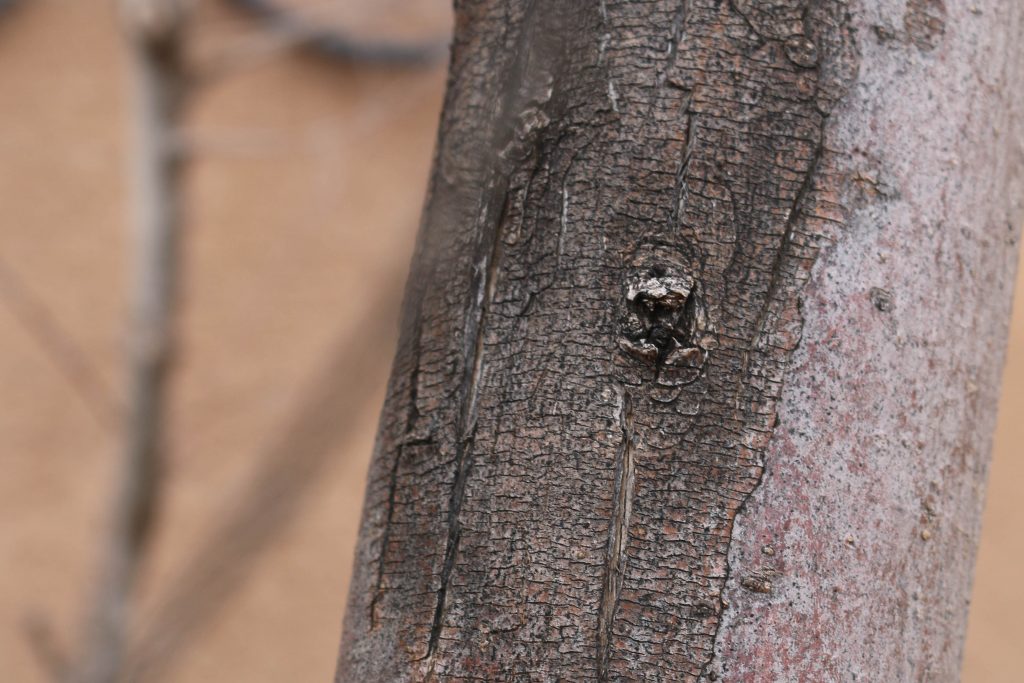
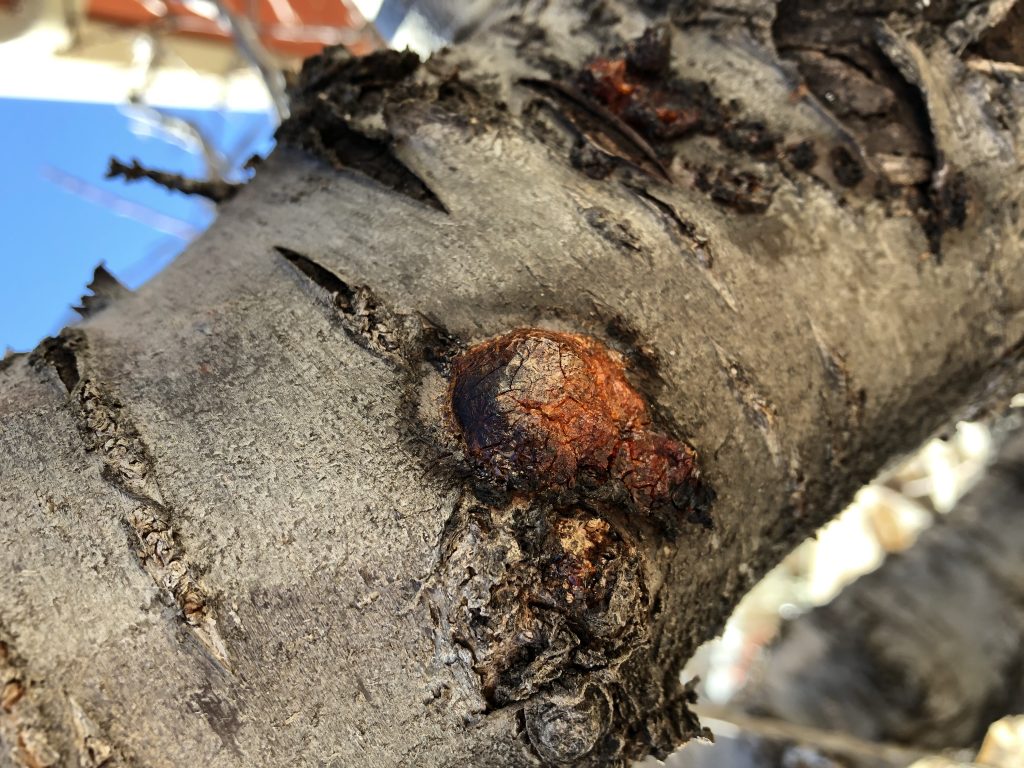
Unlike in many other climates, our intense sunlight means that over-pruning can to lead to sunscald. This occurs when a branch is suddenly exposed to bright sunlight, causing areas of the bark to become burned and crack, exposing them to disease and rot. In order to avoid this, be careful about removing too many branches from the top, south and west sides of the tree. This exposes remaining branches to intense sunlight, causing sunscald.
Darkening on tree on the south side is a sign of sunscald.
Stone fruit trees such as apricots, peaches, and cherries thrive
in our area and can be really rewarding to grow. Unfortunately, there is also a
pest called a borer (often referred to as a peach borer) that loves other fruit
trees, too. This pest is very common and many feel that it is not a matter of if but when your stone fruit tree will
get borers. Luckily a healthy tree can resist this pest on its own through
natural defenses.
You can support and keep your tree healthy by doing the following three things:
Selecting an appropriate irrigation system ensuring that it is properly watered (see our seasonal plant watering guide here)
Adding mulch (see information about treebates for irrigation improvements and mulch)
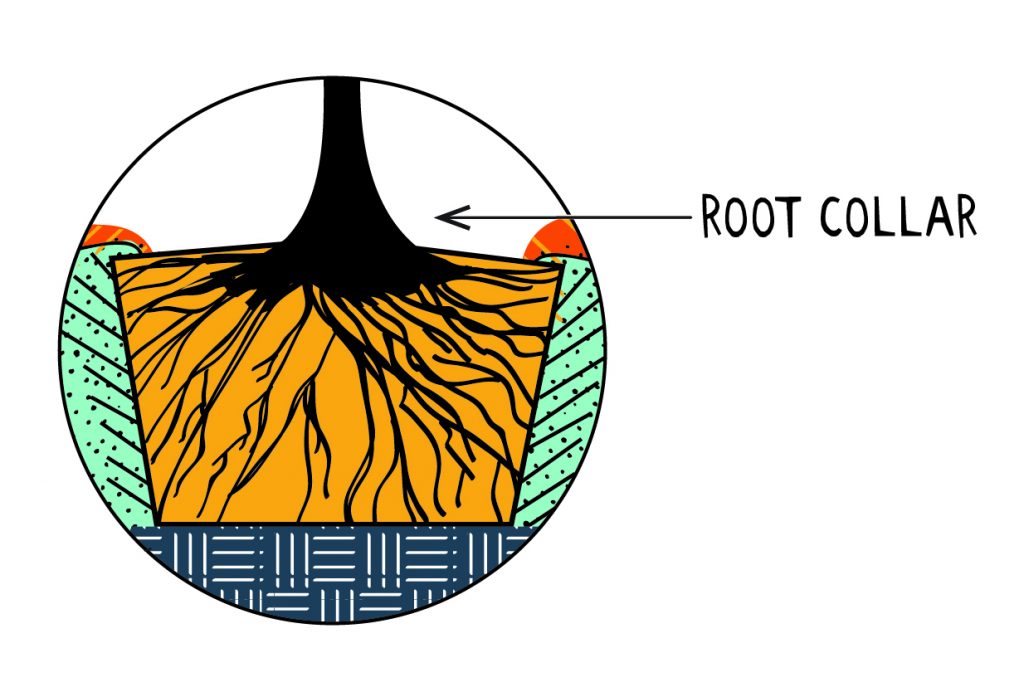
Keeping the root collar of the tree exposed. (see tree detail)
Even trees that have borers can continue to live and produce fruit for more than a decade if they are well taken care of. Drought-stressed trees which have borers, on the other hand, often die within a few years.
If you think that you have borers in your stone fruit tree, there are several treatment options. These range from predatory soil nematodes to plant-derived and chemical pesticides that are sprayed, injected, or applied as a root drench. As with any plant pest treatment, the timing is critical. This is especially true with borers. If done at the incorrect time during the borer’s lifecycle, your effort will be completely wasted and you may kill beneficial insects that help your fruit tree. Resources or more information about borers here.
Fruit Tree Borer Infection
Fruit trees are usually pruned in late winter (February –
early March) to adjust the tree’s structure. Summer pruning can also be done,
but this is typically used to control or slow down growth. Removing dead,
diseased, or dying branches can be done at any time of the year. It is
important to remove dead branches so you can determine later if more branches
are dying, and thus judge the general health and vigor of the tree. For young
trees, it is especially important to leave as many small branches as possible. These
help to produce energy for the tree as it is getting established, and can be
removed later if they are not desirable for the mature tree structure. It is
extremely important to never prune living branches if the tree is stressed by
drought conditions.
Most fruit trees bear flower buds, then fruit, on
specialized branch structures called fruit spurs. Fruit spurs will look
different depending on the type of tree. Although variable, these usually occur
on parts of the branch that are at least two years old, and individual fruit
spurs can last for up to 10 years. In general, flower buds located on fruit
spurs are fat, fuzzy and plump, as opposed to leaf buds which are pointed and
flat. It’s important to know how to recognize these so you don’t prune off the
coming year’s fruit harvest.
Because of how damaging bad pruning can be, and how valuable trees are, it may be worthwhile to hire an expert. Be sure that they have experience with fruit tree pruning in our area and are certified arborists by the International Society of Arboriculture (ISA). To find a local certified arborist, visit this site.
Author: Amos Arber, ASLA, ISA Xeriscape Incentive Inspector for Albuquerque Bernalillo County Water Utility Authority
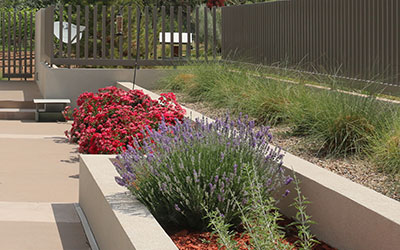
Many homeowners are interested in planting in raised beds. It can be great for homeowners who worry about their soil. Planting in raised beds allows you to add the exact soil you want. Another popular reason is the interesting visual element the raised bed will provide in your yard. A few other tips about planting in raised beds are listed below.
Planting desert accents, like agave and prickly pear, in raised beds gives them the good drainage they prefer. It allows leaf litter from nearby plants to collect at the base of the bed instead of between the prickly leaves and stems making it much easier to maintain.
When planting in raised beds always remember to include at least 3″ of an organic mulch. Organic mulches help to retain moisture around plant materials. This prevents water waste.
Don’t forget to plan out your irrigation system prior to installing your raised bed. You may find you’ll need to plan in some openings to bring the irrigation up into the bed.
We recommend installing drip irrigation for raised beds. It will provide just the right amount of water to your plants and decrease the likelihood of over watering your garden.
Mature Size: 5’X 8’ Blooming Season: Late spring Flower Color: Yellow or orange
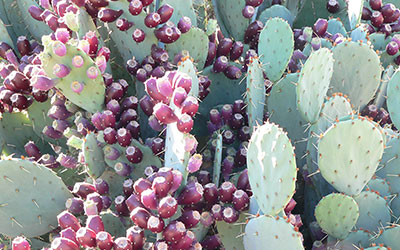
In high desert gardens, Engelmann Prickly Pear is one of the largest reliably cold-hardy cacti. Its dinner plate-sized pads stand perpendicular to the sun in summer, one of the ways it minimizes its water needs by avoiding the direct rays of the sun. Its flowers can be either yellow or a spectacular red-orange, and the same plant may have one color or the other in different years, but luscious red fruits always follow.


 Full Sun
 Rainwater Only