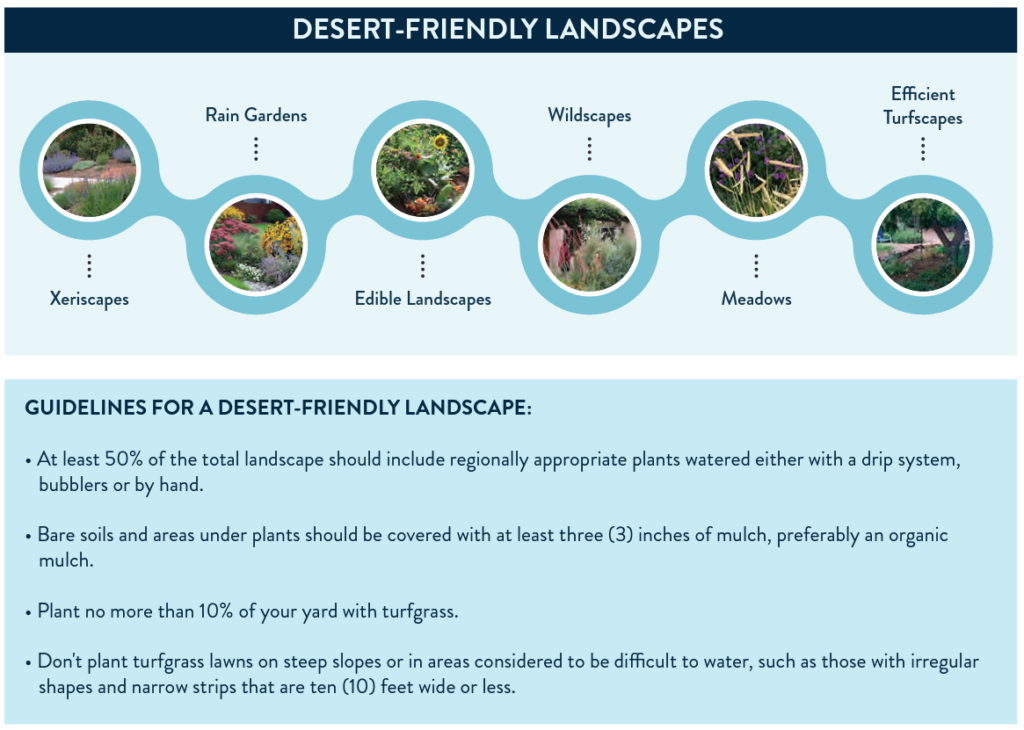
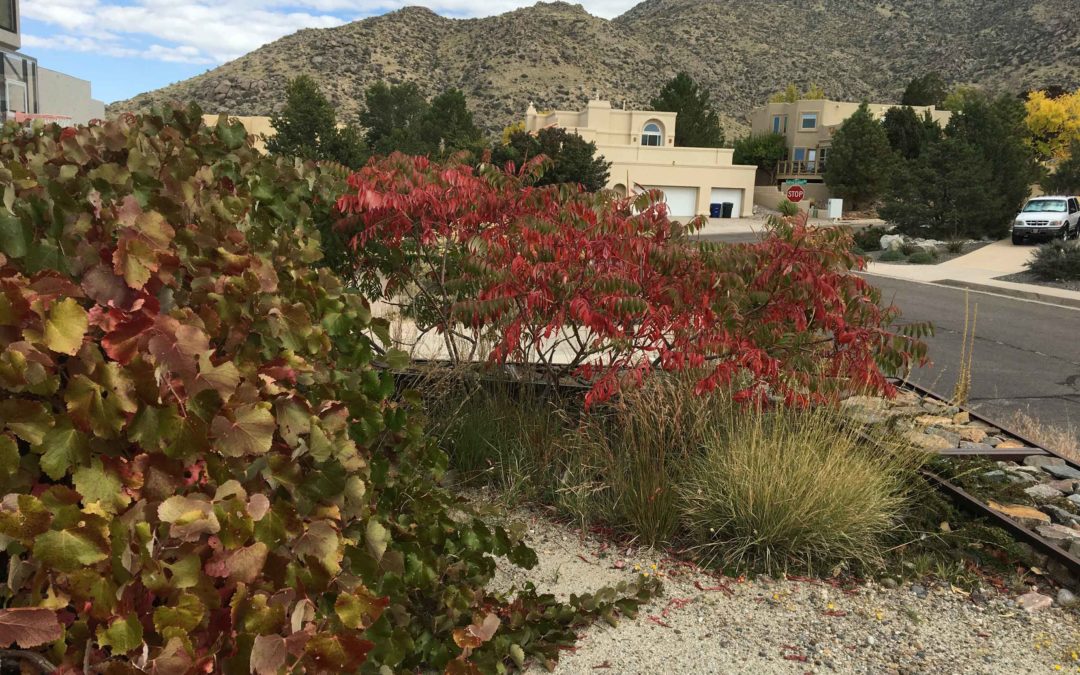
The Albuquerque metro area has a wide variety of landscapes. These include desert-friendly landscapes, lush pollinator-friendly xeriscapes and wildscapes or prairie plantings where native grasses and wildflowers bring the feel of a prairie to a yard. Rain gardens are specifically designed to make the most of natural precipitation, while edible landscapes have garden beds or edible plants interspersed throughout them. Efficient turfscapes have smaller areas of turfgrass and diverse plantings. Conventional turfscapes, with large areas of cool-season grasses and high-water foundation shrub plantings, are no longer considered desert-friendly landscapes. The term “desert-friendly” now describes a variety of landscapes that include beautiful, diverse plantings with increased resiliency achieved through efficient watering.
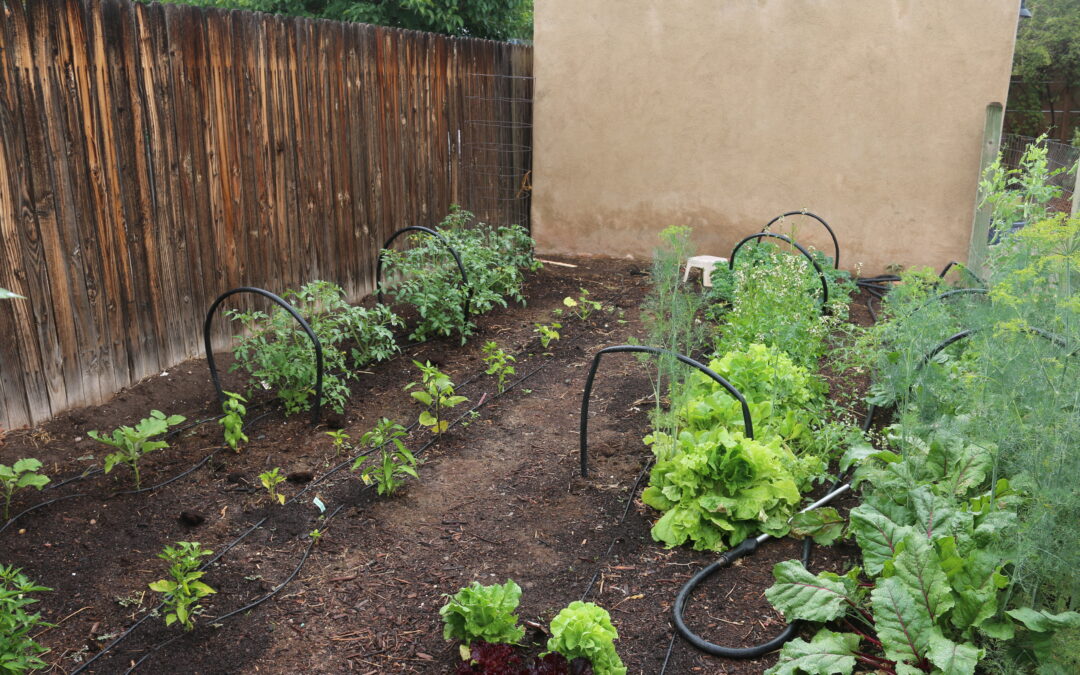
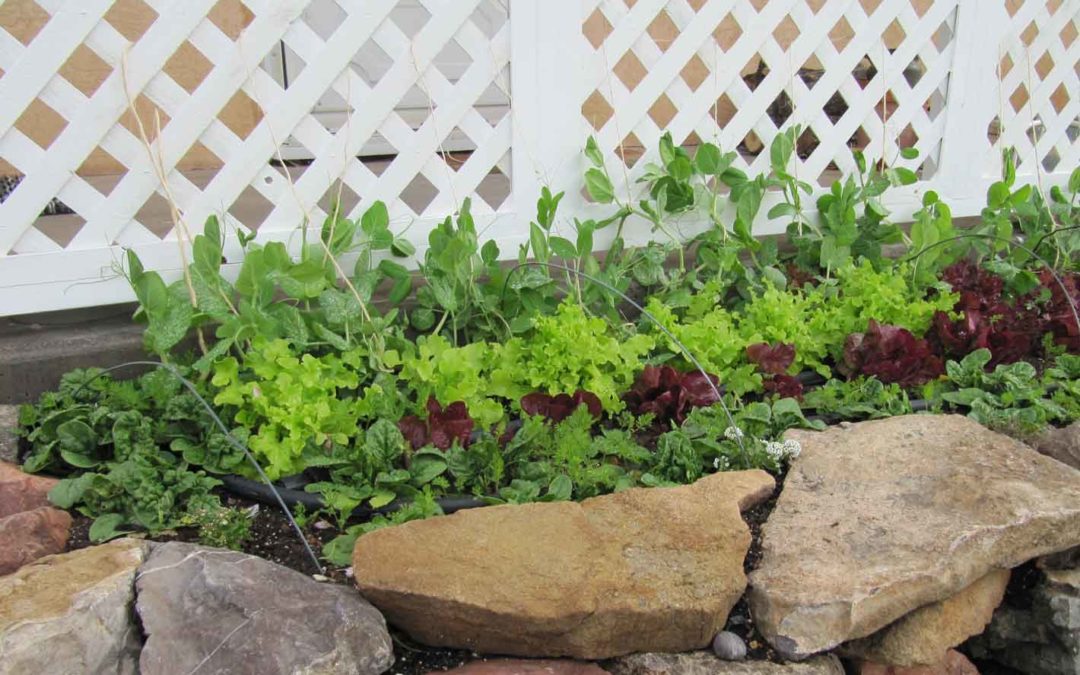
Edible landscapes feature herb, vegetable and fruit-producing plants that can have a wide variety of watering needs. If you choose to grow food in your yard with drip irrigation, in-line emitted tubing is the most efficient way to water. We recommend setting up separate irrigation zones due to the daily watering needs of edible plants in summer. Hand watering is an option if drip irrigation is not possible.
Here are tips for starting a vegetable garden.
Good soil and regular watering are keys to having a successful garden. In the dry Southwest rich soils don’t form naturally, so you’ll first need to create a good soil and then maintain it.
Setting up wide garden beds makes the most efficient use of amended garden soil and applied irrigation. John Jeavon’s excellent book How to Grow More Vegetables Than You Ever Thought Possible on Less Land Than You Can Imagine has valuable information about why and how to set up wide beds.
You may need to break up the soil before planting your first garden. Once the soil is loosened and amended, it’s better to work in new compost with hand tools and to mulch deeply with an organic mulch. Hand tools have advantages. They don’t destroy the living soil the way mechanical tillage does. They also aren’t noisy and don’t smell like exhaust. A great benefit is that you get exercise while using them!
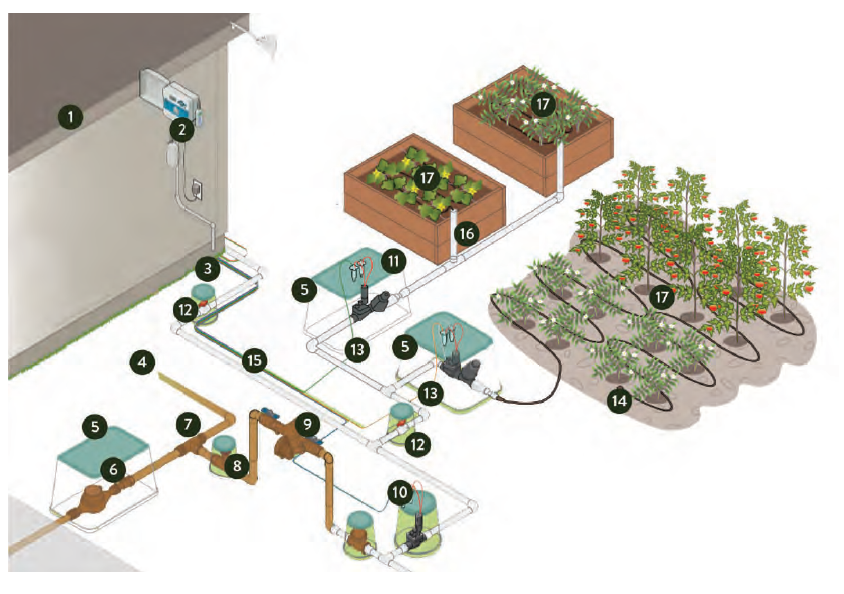
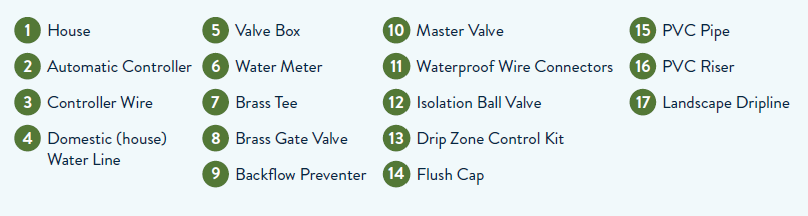
Drip irrigation is ideal for vegetable beds, and there are numerous ways to set up a good system. If you are using an outdoor hose bib, be sure to include anti-siphon devices, pressure reducers and good filters to keep everything safe and functional.
Add organic mulch! There are a number of choices for organic mulch.
Here are some good vegetables to plant, based on the season.
Spring: Try out kale/chard with radish and turnips or try peas with a radish, turnip/carrot combo.
Summer: Try tomatoes and peppers mixed with herbs and chile. If you want to be nostalgic and adventurous, try the “Three Sisters” — corn, squash and beans. It’s best to choose pole beans, like green beans.
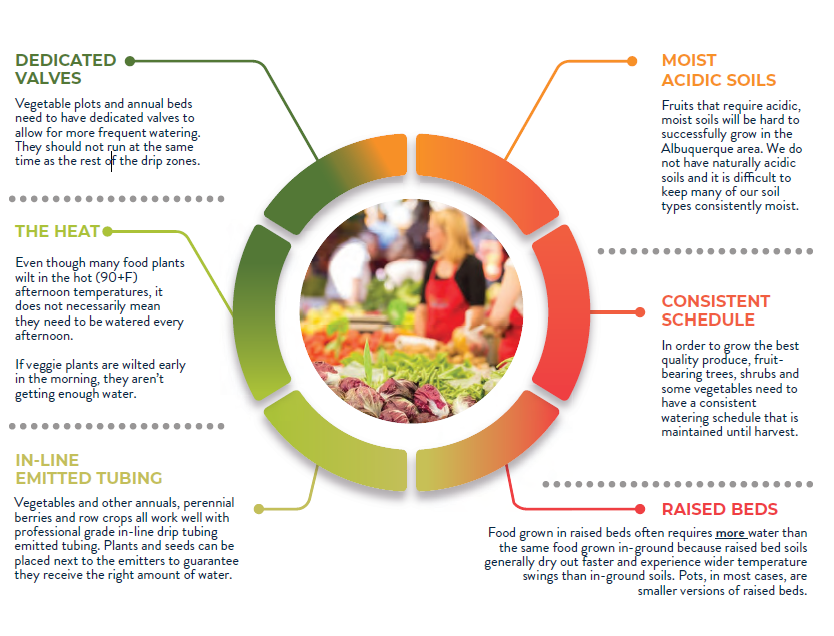
Edible garden landscapes need to have dedicated valves so they can be watered more frequently than our average desert-friendly landscapes. These landscapes should not be watered at the same time as the rest of the drip zones.
The key to growing the best quality produce, fruit-bearing trees, shrubs and vegetables is having a consistent watering schedule that is maintained until harvest. If you are unable to install a new irrigation valve for your edible garden, you can connect it to your hose spigot with a spigot irrigation timer. We recommend the smart versions of these timers. Rebates are available.
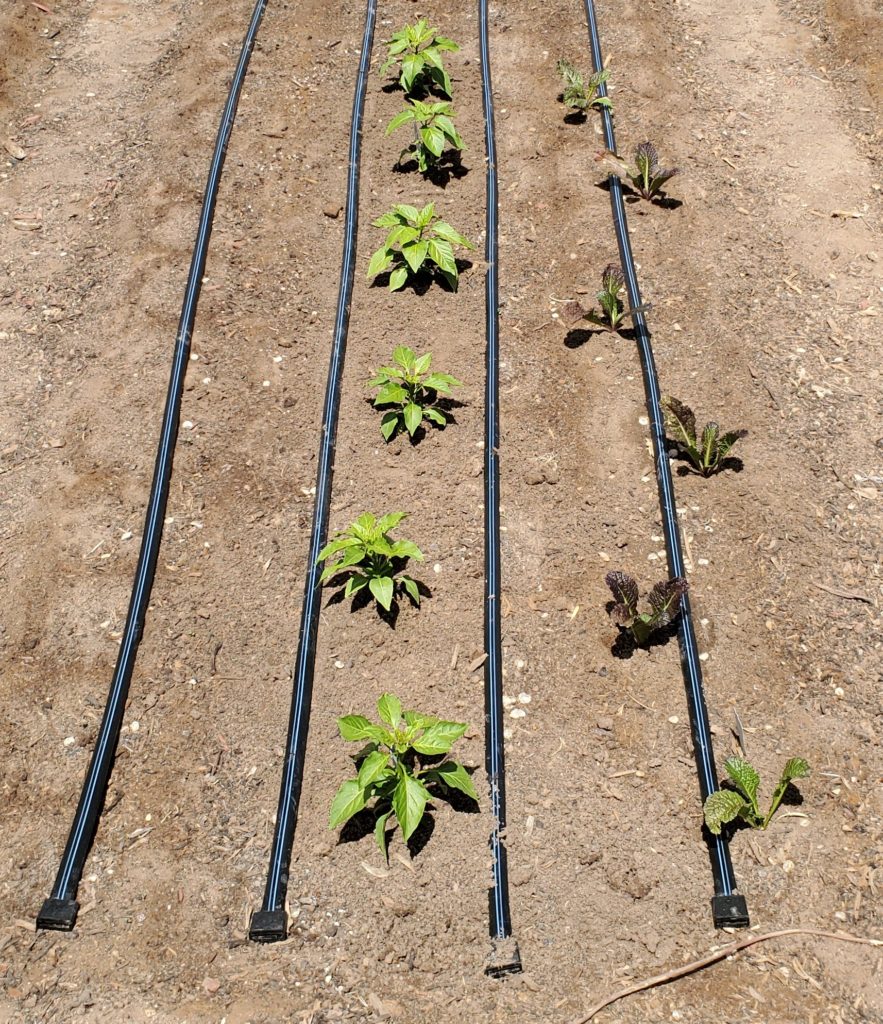
We recommend using ¼” polyline with inline drip emitter tubing. Drippers should be located every 6” along the tubing for irrigation in both raised beds and veggie rows. The drippers require no maintenance since they are installed within the polyline. Each dripper is engineered with a little bit of copper that kills off roots that try to grow into the dripline. They are easily connected to a ¾” polyline flexible irrigation supply line. Metal irrigation stakes help keep everything in place.
All these materials can be purchased at local irrigation stores. Drip irrigation is not only the most efficient way to water your edible garden but it is also very affordable.
Thinking of putting some trees in your landscape but also concerned about making good use of the water, space and time? Some people like to plant fruit trees around the home landscape.
The obvious reason to grow fruit trees is the fruit! Just like there is no tomato as good as the ripe one picked right off the garden vine, there is no peach like the tree-ripened peach just outside your door. Growing fruit is not without challenges. Some people discover that the work required for a good harvest is more than they are up for. However, for others it is part of the gardening challenge that keeps us coming back for more.
Just like any other tree, fruit trees can play an aesthetic role in the landscape. They can be highlighted, or they can hide the blight beyond your fence. They can provide shade, cooling the outdoor spaces. They also can provide some level of wildlife habitat, whether it’s for the native bees that might pollinate the flowers or the little brown dickie birds pecking divots out of my ripening peaches. Well, they gotta eat too, I guess.
Fruit trees need all the things that any tree needs, which is sufficient rooting volume (it’s wider and shallower than you think), consistent moisture into that rootable soil and a mulch of some sort that covers and protects the soil. When they are grown for production in a commercial orchard, fruit trees also receive regular fertilization that may not be needed for a well-grown home tree usually producing more fruit than is needed. If you have fruit trees that produce more than you can use and give away, considering contacting a gleaning organization like Food is Free Albuquerque. They can bring volunteers to your property to pick the fruit, which is distributed through food banks to the local community. Fruit trees also benefit from regular annual pruning to maintain shape and size.
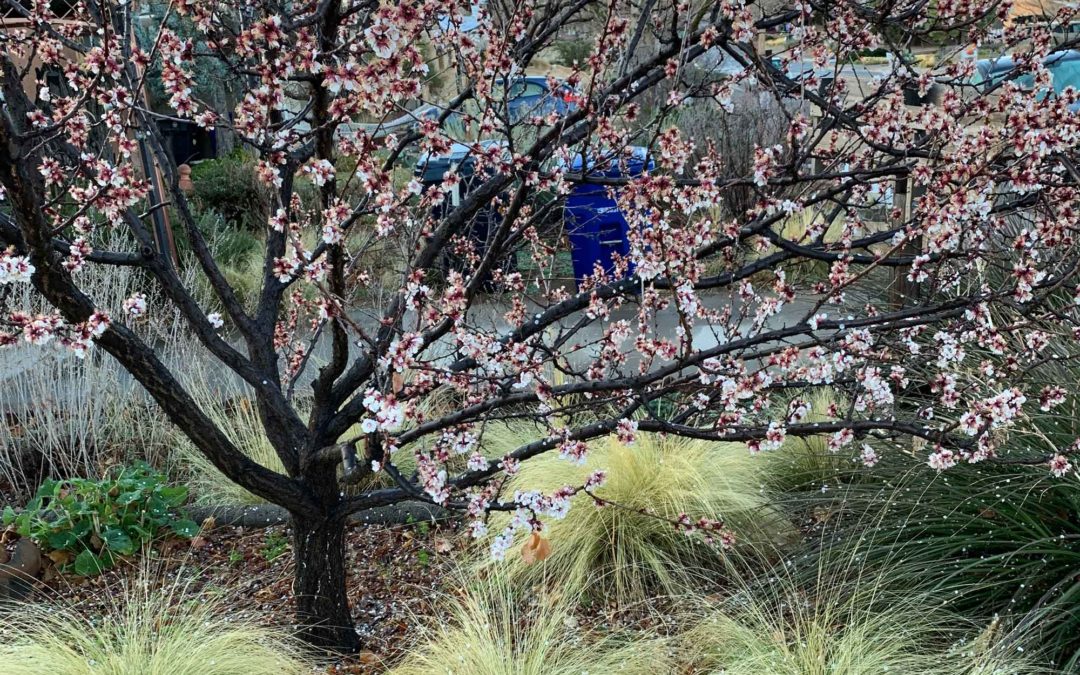
A large number of fruit species will grow well in our area. With peaches, one down side to them and other stone fruit species is their relatively short life spans, maybe 15-25 years in most urban settings. Other stone fruit species that do well for us are plums and cherries. Apricots grow well here but their early blooming often leads to last-frost crop death. Don’t worry, the tree is still fine. Of all the fruit trees, apricot may be the best for shading.
Apples also do well and are longer-lived than stone fruits. However, the fruit is more susceptible to insect damage, most notably the codling moth caterpillar (the infamous worm in the apple core). These can be controlled, with varying degrees of success, by trapping with pheromone traps. Timing is critical for that, and control may be incomplete, but more apples will be worm-free than without trapping. Codling moth also attacks pear fruit but to a much lesser degree. Fruiting pears can do well for us, though in some cases fire blight bacterial disease may cause a lot of damage and even death. Jujubes, Asian pears, Japanese persimmons and figs are all good choices as well.
There are several sources where you can buy your new fruit trees. I’m partial to online ordering from established mail-order nurseries. This approach offers the combination of variety choice and cost effectiveness. Keep in mind that mail-order trees are young and shipped out in later winter as dormant bare-root sticks. For a few reasons, this is an ideal type of plant to start working with if you have the patience to wait a few more years before getting fruit. Buying from local nurseries is fine as well, though it really pays to inspect the root ball condition carefully. If you’re very careful, even the big box stores can have good specimens.
Read up on proper planting techniques and early structural pruning approaches. For a tree, the transition from potted (or bare-root) conditions to fully in the soil is critical. Tree growth and longevity can be made or broken at this point. In a nutshell: Dig a shallow and wide hole, have the highest root at the top of the soil and mulch well. As the young tree grows, prune for strong attachments, ease of access and to help control total fruit load that can break branches in a bumper crop year. Early and aggressive thinning of the fruit can really help to prevent branch failure and also produces larger pieces of ripened fruit.
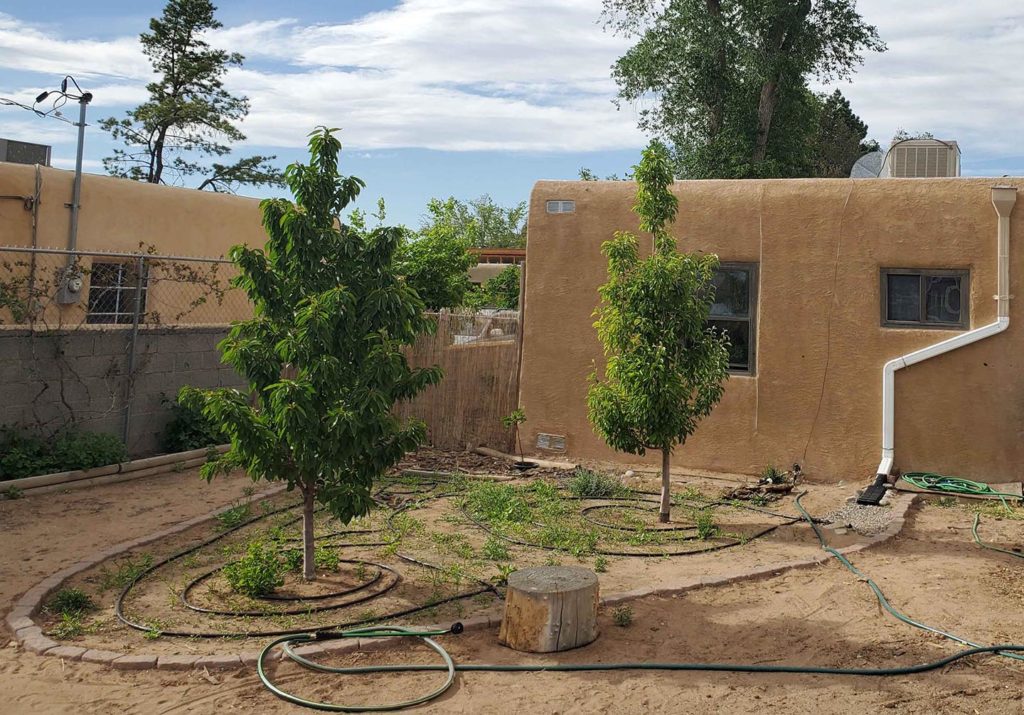
Un-mulched fruit trees showing inline dripline and roof runoff as watering system.
Author: Joran Viers, Senior Partner at Root to Shoot Urban Forestry, Inc. find him at [email protected] Have a question about the article? [email protected]
There are a number of things to consider when you are growing fruit and vegetables
The healthier your soil is the less water you will need over the growing season. Improve your soils by adding compost and other amendments every year. Getting a soil test can help you determine exactly what to add.
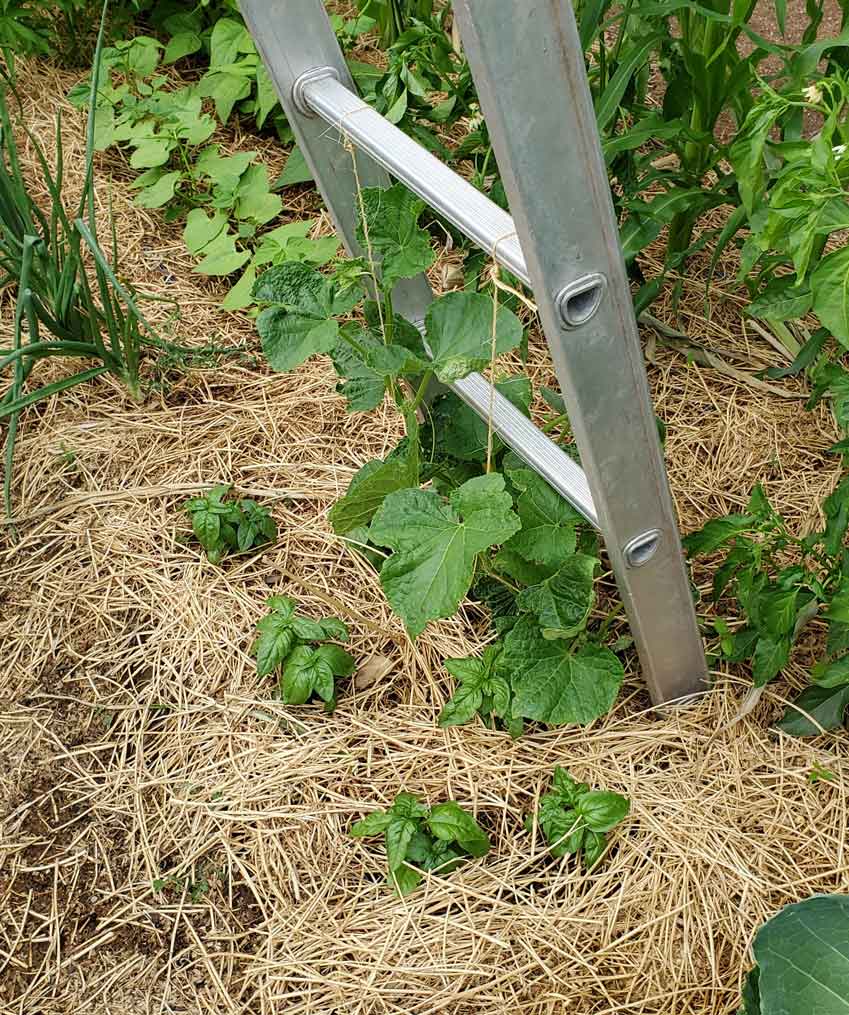
Cover your garden with an organic mulch, whether it is straw or wood chips (or another organic product). A thick layer (3-4”) of mulch will reduce the frequency of watering, and the amount you need because it helps cool the soil and protects against rapid evaporation.
Raised beds and pots can make gardening more convenient because you don’t have to stoop and it’s a way to utilize small spaces, or area where the ground may not be able to be used for gardening. The convenience often comes with a trade-off. Raised beds and pots tend to require water more frequently, often times using more water over a growing season than if you planted your garden in the soil.
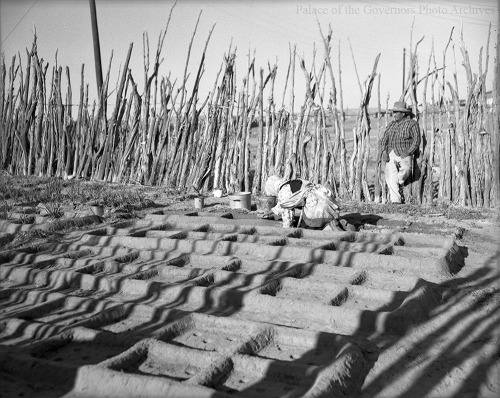
Historic, or traditional methods, such as waffle gardens and using ollas (unglazed terracotta pots which go in the soil at a plant’s rootzone) will often help you conserve water. More information on waffle gardens can be found here: Waffle Gardens - UNM Sustainability
Choose appropriate fruits and vegetables for your garden. Blueberries may be a “superfood” and delicious, but they want to grow in acidic, consistently moist soils. Those conditions are essentially the opposite of Albuquerque. Huckleberries, related to blueberries, prefer a more alkaline soil, and will often flourish in drier conditions.
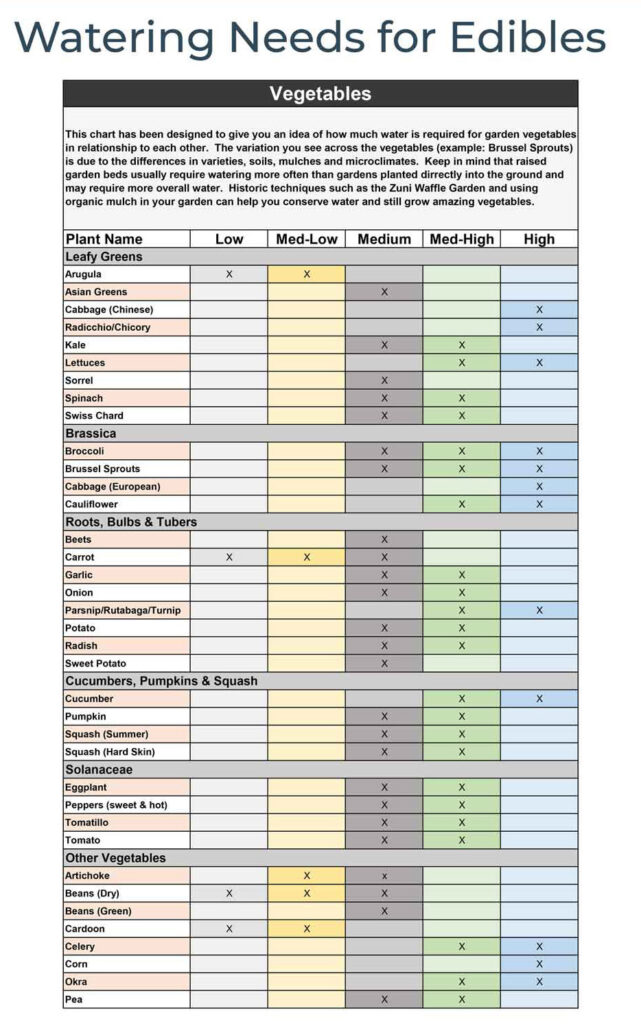
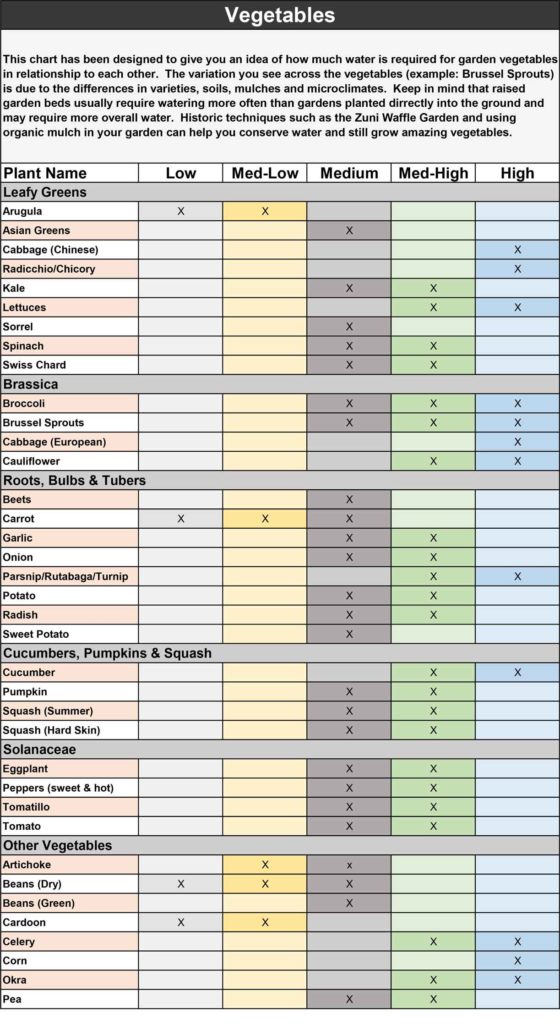
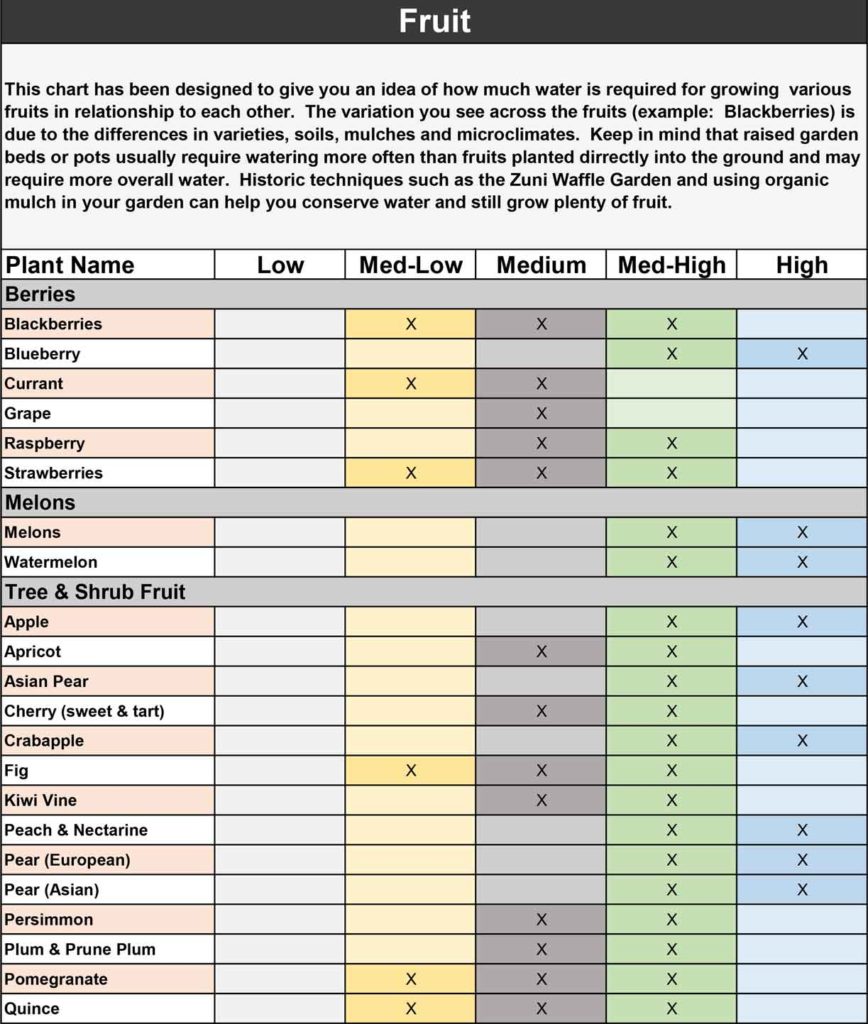
We have provided you with a quick guide to also give you a better idea of the relative amount of water needed to keep your fruits and veggies healthy and consistently producing for you.
Author: Richard Perce, Irrigation Efficiency Specialist with the Water Conservation Department for the Water Authority. Have a question about the article? [email protected]
One hundred years ago, almost every house with a yard had a vegetable garden. This was before the era of mass-produced, well-traveled foods readily available in the big grocery stores. People grew these gardens out of necessity. The whole family joined in, breathing fresh outdoor air and staying active while growing super healthy food to eat.
While we don’t have to do that now, every year more people are discovering the joys (and pains) of growing their own fresh produce. Maybe you’re one of those folks who has recently picked up a hoe and a packet of seeds.
Here are tips for starting gardens as well as suggestions for easy and tasty plants to grow.
Good soil and regular watering are keys to having a successful garden. In the dry Southwest rich soils don’t form naturally, so you’ll need to create a good soil first, and then maintain it.
Setting up wide garden beds makes the most efficient use of amended garden soil and applied irrigation (read John Jeavon’s excellent book How to Grow More Vegetables Than You Ever Thought Possible on Less Land Than You Can Imagine for more on the hows and whys of wide beds).
You may need to break up the soil before planting your first garden. Once the soil is loosened and amended, it’s better to work in new compost with hand tools and to mulch deeply with an organic mulch. Hand tools have advantages: They don’t destroy the living soil the way mechanical tillage does, they aren’t noisy, they don’t smell like exhaust and you get good exercise while using them!
Drip irrigation is ideal for vegetable beds, and there are numerous ways to set up a good system. If you are using the outdoor hose bib, be sure to include anti-siphon devices, pressure reducers and good filters to keep everything safe and functional. Timers are optional but recommended. It sounds complicated but really isn’t hard, and the results are well worth the effort.
Add organic mulch! There are a number of good choices for organic mulch.
Garden beds are in and ready. What are you going to plant?
Some vegetable species prefer warm (even hot) temperatures, while others grow best in cooler weather. At this point in the season, start with the warm weather crops.
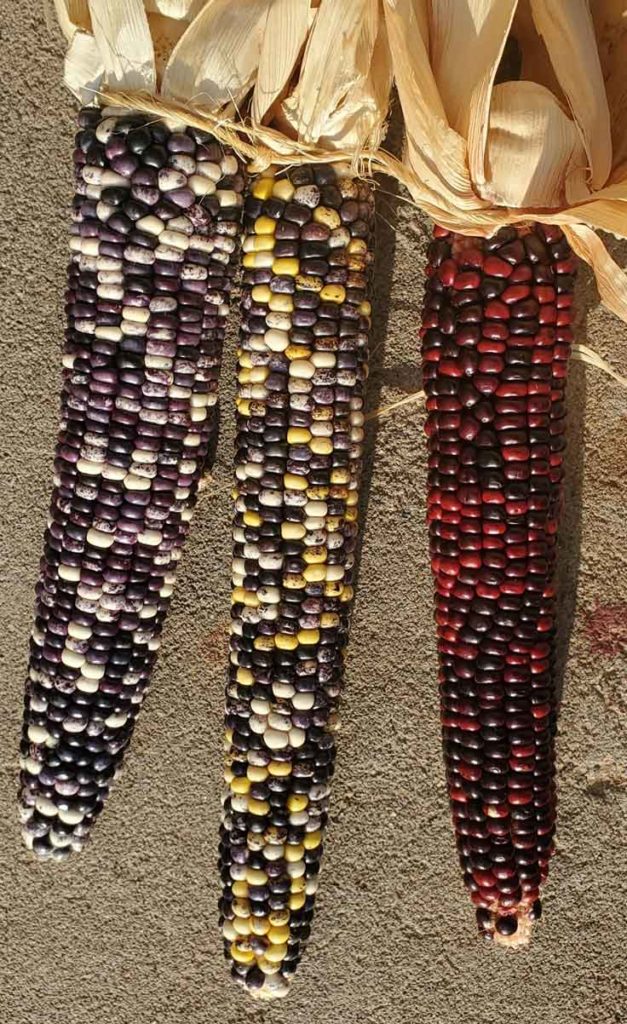
Corn is fun to grow. In a small garden, you don’t really get a lot of food for the space that corn uses, but those tall stalks play other roles as well. The shade they cast, especially in the afternoon, helps other plants grow in our hot, sunny climate. Pole beans, which can be planted around the new corn plants when they’re about a foot tall, will climb the corn stalks. Beans can also add nitrogen to the soil in partnership with certain symbiotic bacteria living in their roots. Flat Italian pole green beans are a true fresh garden delight! Almost any green beans — bush or pole — are easy and satisfying to grow.
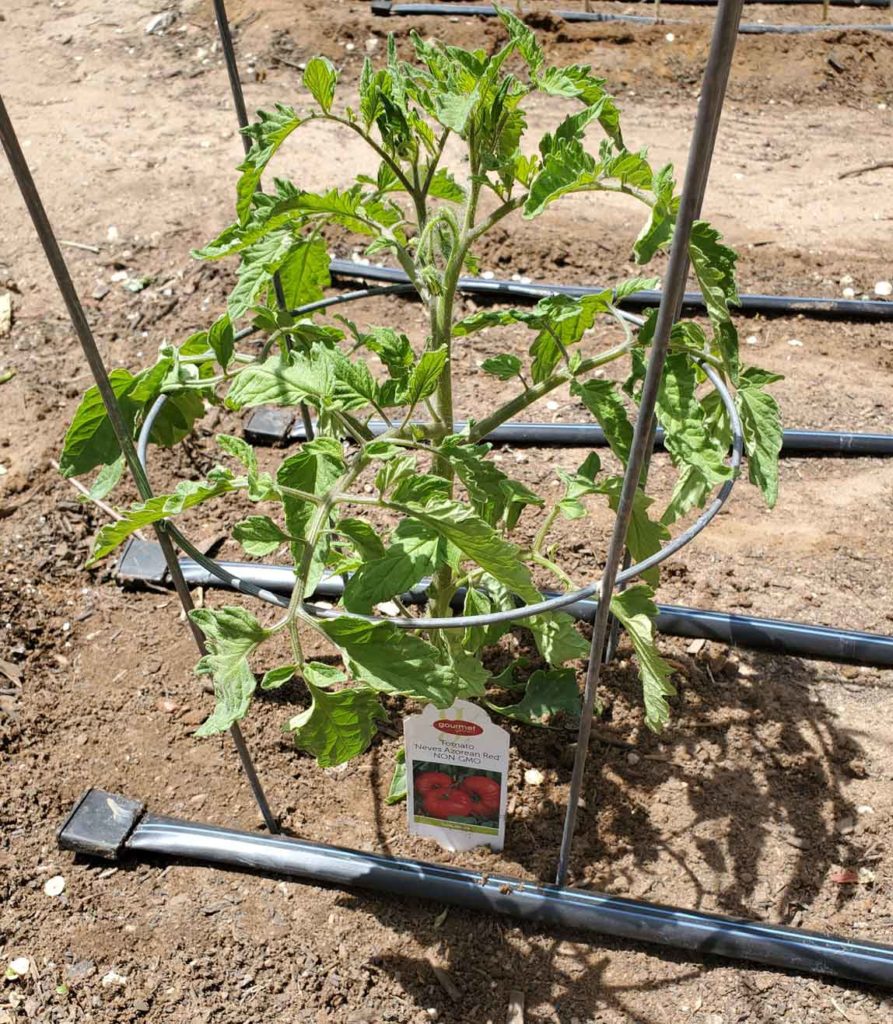
Tomatoes are an annual favorite for many gardeners. There are so many varieties of tomato plants, from short patio container plants and wild rambling cherry tomatoes to dense San Marzano paste tomatoes and Cherokee Purple slicers. The curly top virus can be a problem, but plants growing in light shade are less likely to contract the illness. Blossom end rot sometimes crops up and is most easily controlled with good mulching and regular irrigation. Adding some bone meal to the garden bed may help a bit, too.
If you have room for them to roam, consider planting watermelons! The smaller icebox varieties are a great size, and when planted in our area they tend to have few if any, pest and disease problems. They do, however, need an ample amount of water. Diversify your landscape by planting them in border flower beds where the vines can grow across the yard. They can take over small garden beds, so be careful where you plant them.
As the cooler fall temperatures arrive, lots of other veggies can be planted. Many of them should be seeded in August for fall harvest. Be sure to keep the seed beds moist and shaded a bit so the soil is cooler. Alternatively, you can start them in trays or little pots indoors. If they start to get long and thin, it’s a sign that they need more light!
Lettuce is a great fall crop. Romaine and butterhead varieties do well here and are distinct enough to add culinary variety. Other great greens for fall include spinach, kale and Swiss chard. Greens are high nitrogen users, so amend the beds again for fall planting, and periodically give them a light fertilizing with something like fish emulsion (smells awful, grows great plants!) or another soluble plant fertilizer.
Fall is also a great time to plant root crops. Both beets (botanically, the same plant as Swiss chard) and carrots do well in the autumn. Don’t try to start these in pots or trays. Root crops do much better when directly seeded into the ground. There are many gourmet varieties of both beets and carrots, even carrots that come in a mix of orange, yellow, white and purple colors. Shorter varieties are better for most home gardens, as the long ones require deep loose soil to form well.
All the cool season crops can be grown right through the winter if they are harvest-size by the time very cold weather hits. Keep them well mulched. As far as greens go, buy some spun-bound row cover material to drape over them. It’s amazing how well they will do with just a little protection. These crops can be started again in early spring for the spring, cool-season garden.
Learn more by checking out these other useful drip irrigation articles:
The Canyon Grape serves double duty in the landscape as an ornamental and an edible for us and wildlife. As its name suggests, the Canyon Grape is a Southwest native typically found in wet conditions like shady canyons and along stream beds. Canyon Grape shines in the fall with its brilliant red foliage. Its fruit, although slightly smaller and a little seedier than a typical grape, can be processed into juice and preserves – if you can get to it before wildlife does!