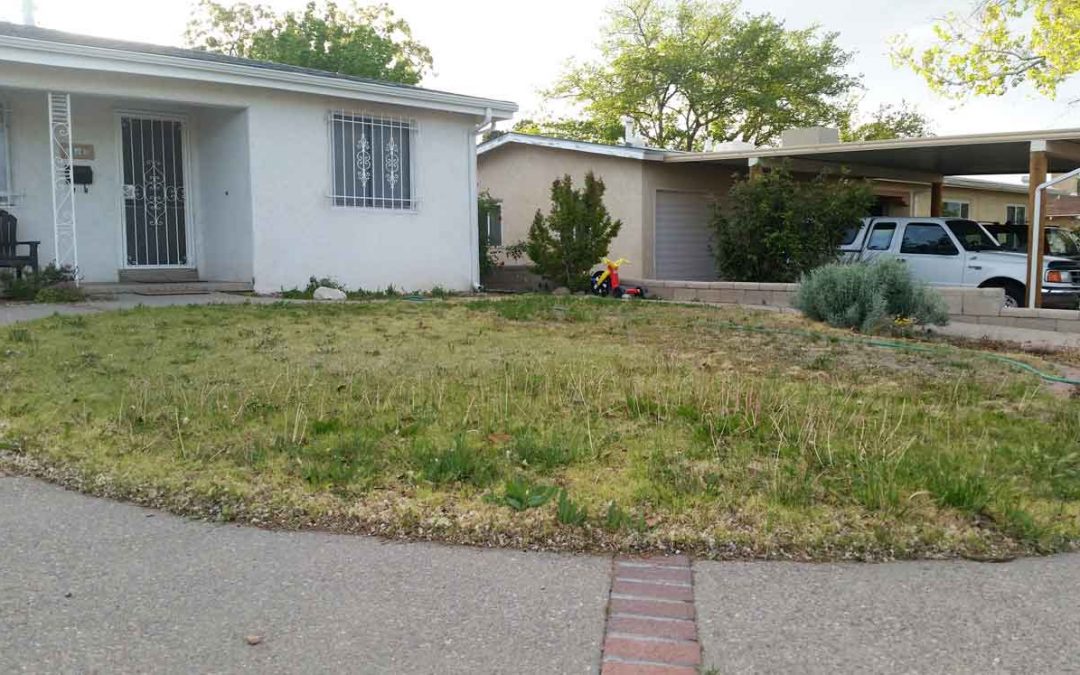
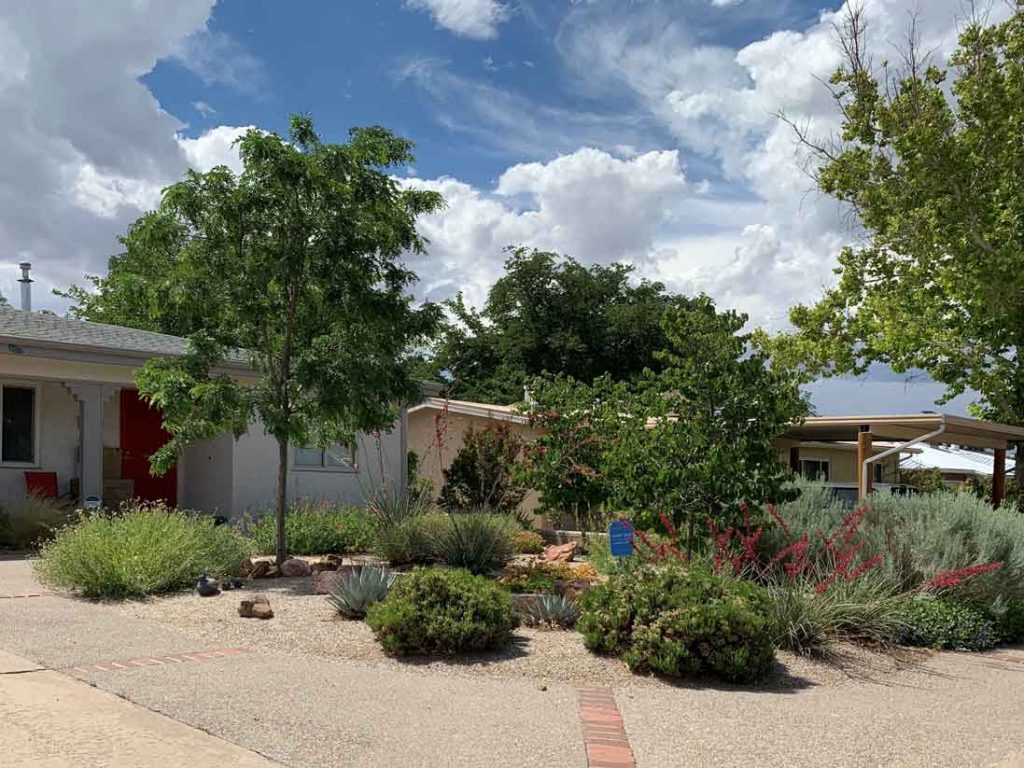
Water Authority customers have been inspired to convert their turf to sustainable, resilient xeriscapes that save water, time and money and provide habitat for wildlife and pollinators for many reasons. Below are some of our favorites:
“We just didn’t see the point of maintaining and paying to water the grass in the front yard. No matter how much we water and fertilize, the front lawn never looks good, and we don’t want to be the last house on the block with a not-so-great lawn.”
“Now that the kids are out of the house and we no longer have dogs, we don’t want to have such a high water-use landscape that requires weekly maintenance. We want to do our part in saving water for future generations and create a beautiful patch of nature in our backyard, especially now that we’re into birdwatching.”
“We may downsize someday, and our realtor said that having a beautiful low water use landscape is a good selling point.”
“We just moved to Albuquerque from another part of the country where grass grows easily, and we spent several hours a week mowing and weeding. We are done with mowing. We want a landscape that is regionally appropriate, with native and low water use plants and trees.”
“Our irrigation system seems to always need repair, and the grass never really looks that great.”
“We needed to replace our sewer line which meant digging up the front yard. It seemed like a good time to ditch the grass and convert it to a low maintenance landscape with new drip irrigation.”
Qualifying conversion projects by Water Authority residential customers may receive $1.00 per square foot of converted turf grass. This rebate has a specific application process. Only projects that have completed the application and passed inspections will qualify for the rebate. For more information visit our rebates page.
Pro Tip: Are you ready to convert your lawn to a xeriscape? Here is what local landscape contractor Tyson Hafler, owner of Southwest Horticulture, wants you to know before you start.
“Make sure you start with a green lawn. It is important to have a green lawn for two reasons. Water Authority needs to see a currently cared for, in good living condition green lawn to quality for the rebate. A live, green lawn is much easier and speedier to get rid of than a brown, dry, dead and dying lawn.”
Author: Amos Arber, Xeriscape Incentive Inspector with the Water Resources Division of the Water Authority. Pro Tip: Tyson Hafler, Landscape Contractor and Owner, Southwest Horticulture. Have a question about this article [email protected]
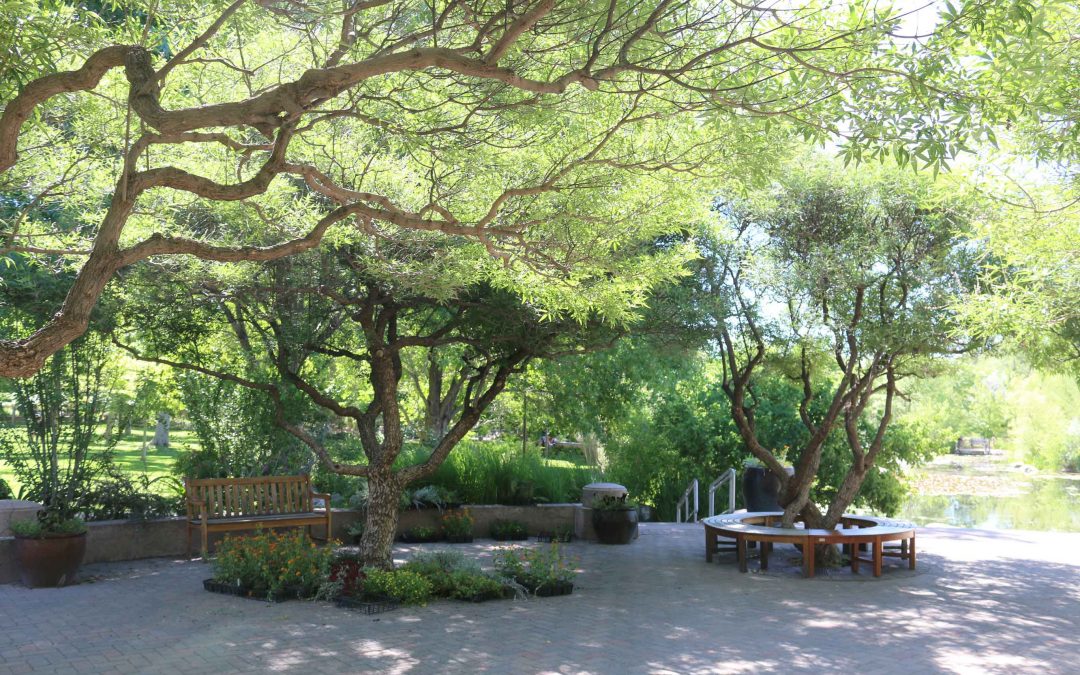
Our urban forest (yes, the trees in your landscape are part of a forest) provides so many benefits too us – cooling, increased home values, beauty, and better mental health just to name a few.
Here’s what you can do to help keep your members of our urban forest as healthy as possible.
1. Water your trees to a depth of about two feet, because 95% of the tree’s roots are in the first two feet of soil. To check if you are getting down to that two-foot optimum, insert a long screwdriver or soil probe into the soil around your tree a day after watering to determine the depth the water has reached. Adjust your watering time, if needed, to reach that two-foot goal.
2. Water your trees a little inside and outside of the canopy edge (the outer ring of the tree’s leaves) because that is where the roots that take in water are located.
4. Check your trees for signs that they aren’t getting enough water: wilted leaves early in the morning, scorched leaf edges, twig die-back from the top down or a sparse leaf canopy.
5. Take advantage of rainwater by directing downspouts or canales toward existing trees. Consider planting new trees in lower areas to take advantage of captured moisture.
6. Surround your trees with 4-6 inches of organic mulch. Organic mulch helps to retain soil moisture, keeps soil temperatures more consistent, and keeps weeds out. Additionally, over time it loosens compacted soil, adds organic matter, and slowly adds nutrients to the soil. Note: organic mulch does not include bark (sometimes called ‘bark nuggets’ or ‘deco bark”). Use actual wood chips like what comes out of an arborist’s woodchipper. Many tree services offer wood chips for free and several local businesses sell wood chip mulches in bulk.
Author: Amos Arber, ASLA, ISA Xeriscape Incentive Inspector with the Water Resources Division for the Water Authority. Have a question about the article [email protected]
We scoured the internet, met
with local experts, and pulled together a great educational resource list for you.
When you’re ready to dig into all there is to know about landscaping in New
Mexico, these resources are ready for you.
Agaves, Yuccas and Related Plants. Mary Irish, Portland
Oregon: Timber Press, 2000.
A Field Guide to the Plants and Animals of the
Middle Rio Grande Bosque. Jean-Luc Cartron, David Lightfoot, Jane
Mygatt, Sandra Brantley and Timothy Lowrey, Albuquerque, New Mexico: University
of New Mexico Press, 2008.
Landscaping with Native Plants of the
Southwest. George
Oxford Miller, Minneapolis, MN: Voyageur Press, 2007
Native Plants for High-Elevation Western
Gardens. Janice
Busco and Nancy R. Morin, Golden, Colorado: Fulcrum Publishing, 2003.
Natural by Design. Judith Phillips, Santa
Fe, NM: Museum of New Mexico Press, 1995.
Have you ever wished you could
just take a picture of a plant and have the internet identify it for you? Turns
out, there are a lot of digital options to help with the identification of
plants. We’ve reviewed the best resources so you don’t have to.
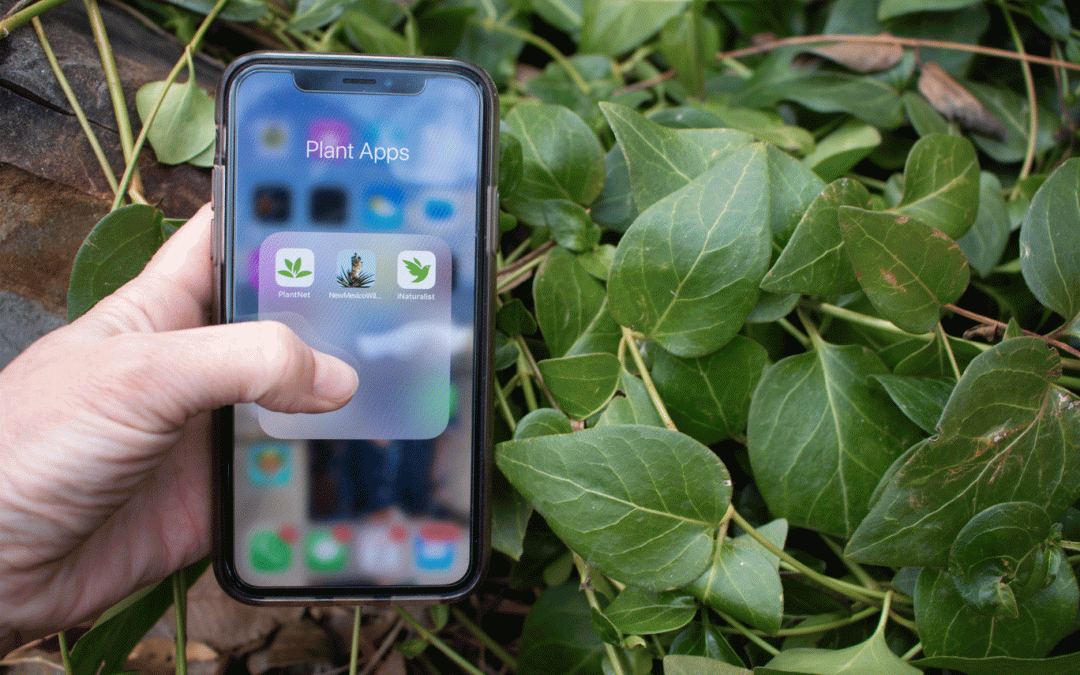
PLANT APPS:
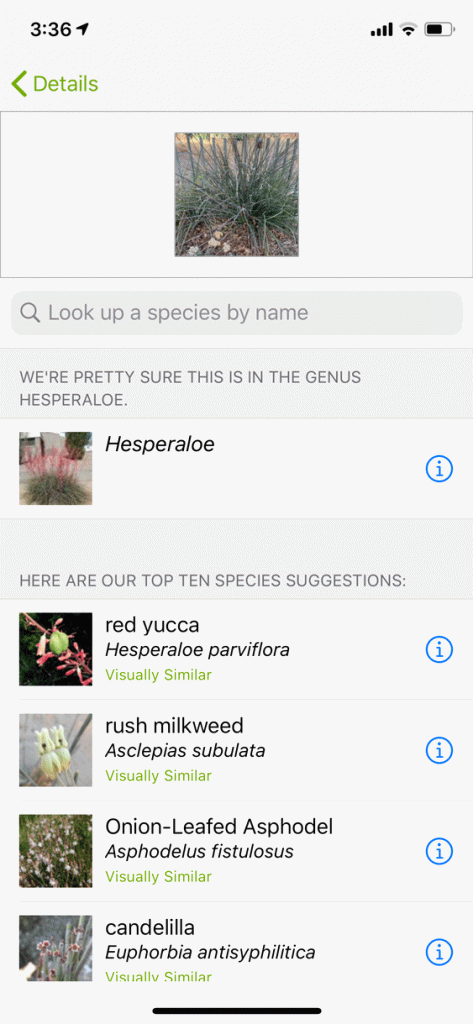
iNaturalist: Once logged on to this free application, you become one of their citizen scientists. The app uses your photos then provides you with a list of possible plant choices. Once the plant has been identified the app then asks you to upload the data to help other people learn what’s in their neighborhood (there is the option to skip this and just get the plant identified). This app was by far the best at identifying the correct plant. An added bonus is it allows users to create guides and gives access to others created in the area. In fact, there is a fantastic Plants of the Middle Rio Grande Bosque guide already on the app listing hundreds of plants in the Albuquerque area.
Pl@ntNet: This free app uses a database organized by location to identify plants. Simply upload a photo and the app provides a long list of possible matches. It’s common to find the correct plant among the choices given, but if a match is not made, users may access the world flora database to find the exact plant. This app is good at identifying the plant family which is a good start in finding the right identification. The best attributes of this app are that it does not require a login or account and you can either take live photos or select from your photo library.
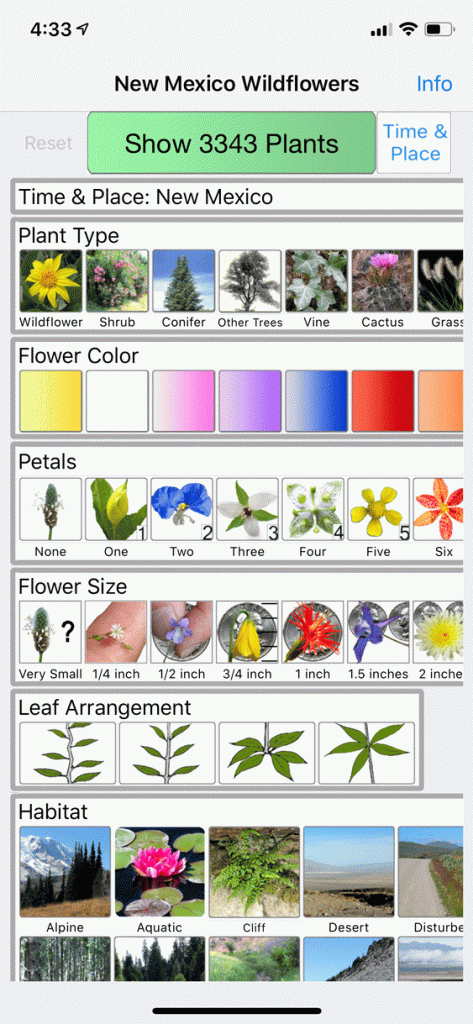
New Mexico Wildflowers. This free, local app is a winner - it’s basically an online field guide boasting more than 3,000 local plants! Select a plant type, flower color, flower size, leaf arrangement and habitat. It then provides a list of plants that meet the criteria. From there, users can identify the plant in question. A great feature of this app is that it can be used during your favorite outdoor activity because internet access is not required.
New Mexico Wildflowers app
iNaturalist app
LOCAL DATABASE AND GROUPS:
New Mexico Plant List Database: This plant database is courtesy of the Office of the State Engineer. It has a large variety of plants with an easy-to-use interface. https://wuc.ose.state.nm.us/Plants/
Groups: Another way to figure out plant identification is to crowdsource using social media. There are a few notable Facebook groups that regularly answer plant ID questions, where members upload photos of the plant with location details, and members of the group provide input. A few to check out are Native Plants of New Mexico (4,027 members), Entomology (135,034 members), Plant Identification (174,670 members), and Plant Identification and Discussion (278,523 members).
Other apps: PlantSnap, Picture
This Plants, Seek. We’ve found these to be less reliable for identifying desert
friendly plants.
TIP: When using any of these tools, the quality of the photo is important. It’s helpful to have both zoomed-in pictures of foliage and photos of the entire plant form.
Author: Marisa Y. Thompson, Ph.D. Extension Horticulture Specialist, Department of Extension Plant Sciences NMSU Desert Blooms blog and Jill Brown, ASLA Landscape Architect and owner of My Landscape Coach in Albuquerque, NM. Resources: Native Plants of New Mexico Facebook Group
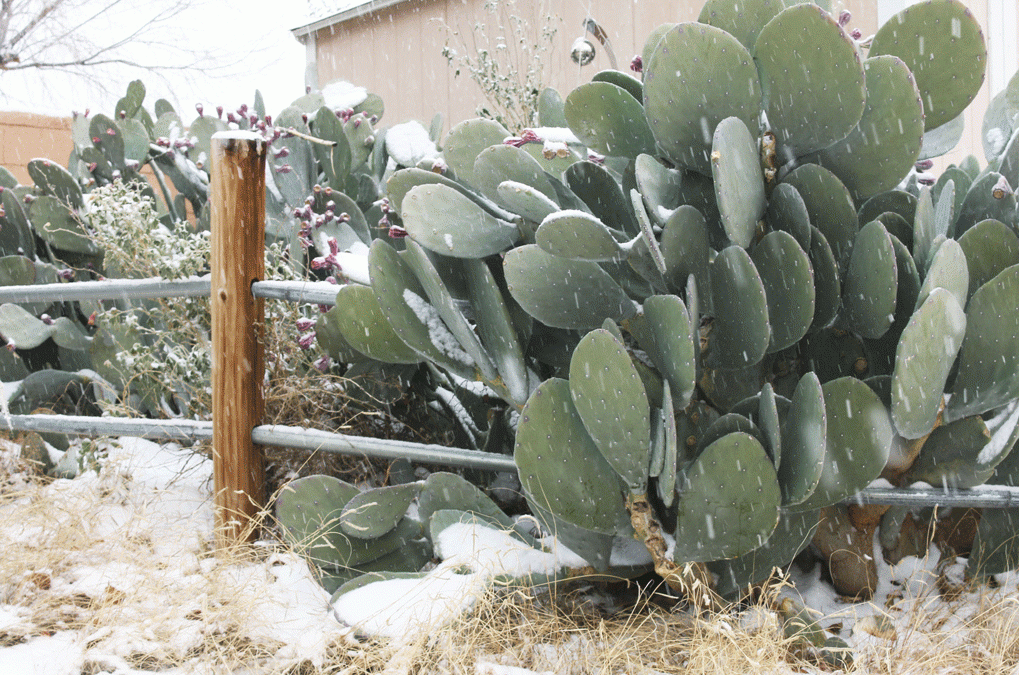
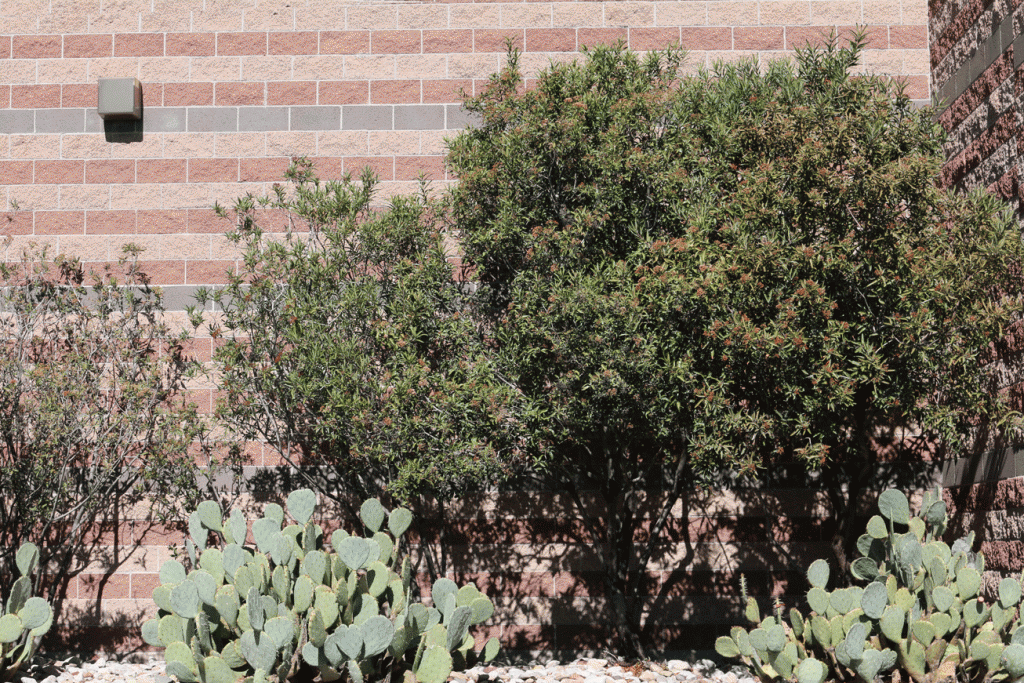
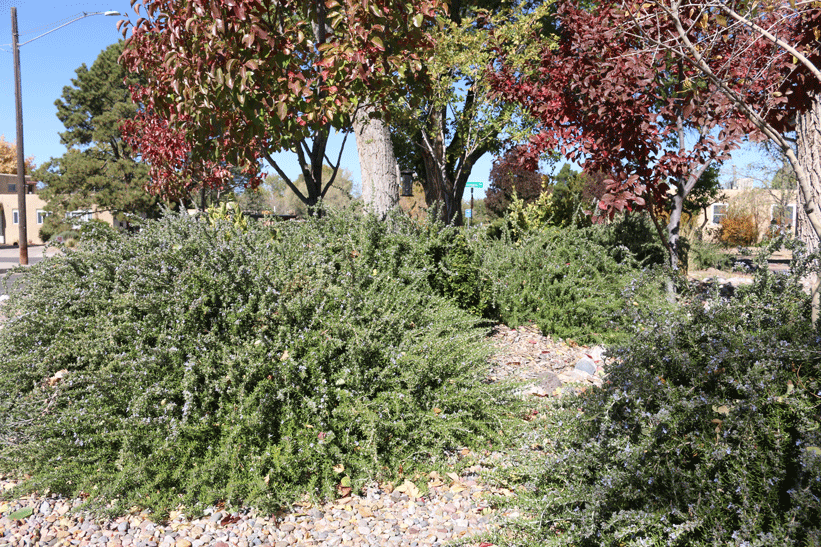
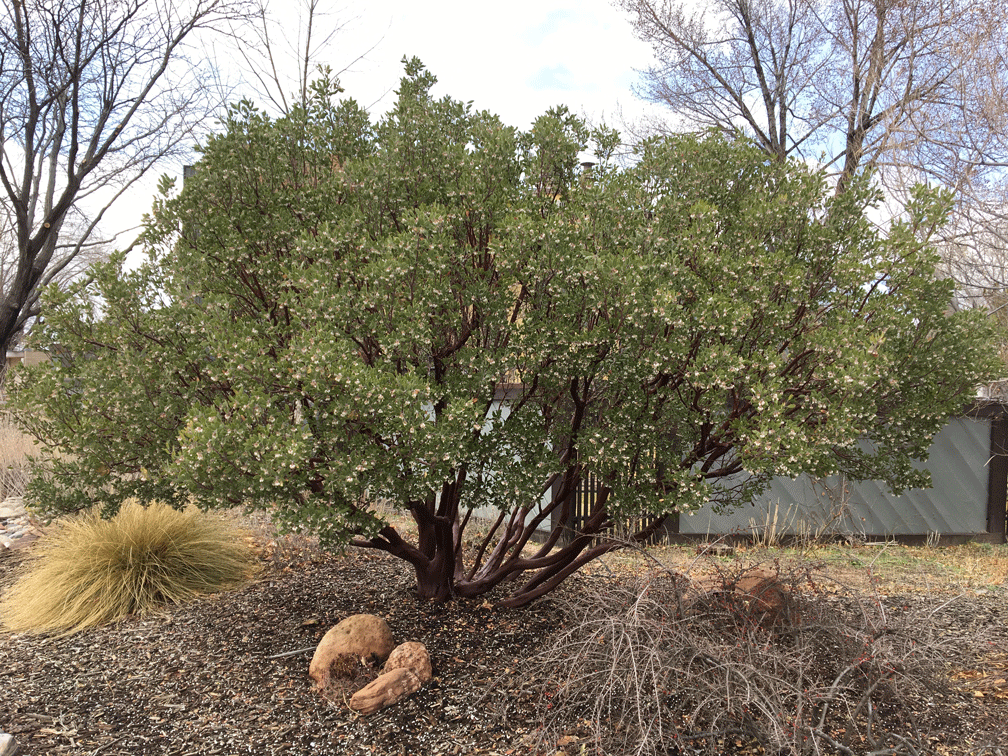
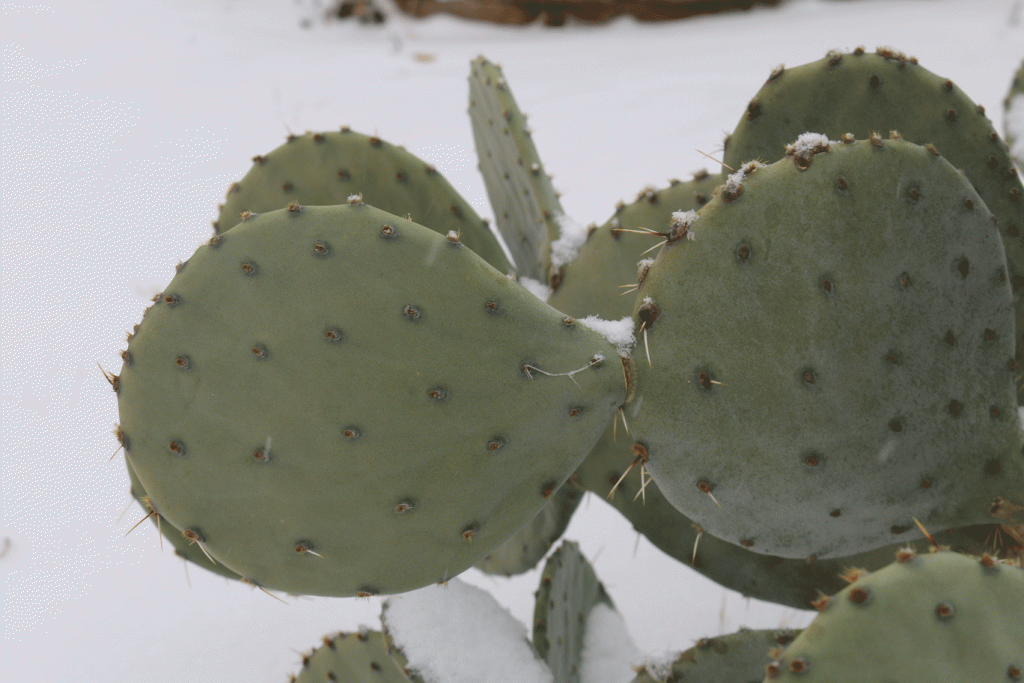
When we think of the word evergreen, many of us think about pine trees, cedars and junipers. However, an evergreen is simply any plant that remains green all year long. These plants are welcome fixtures in our winter landscapes, too. 505Outside highlights these essential elements of the greater Albuquerque area landscape by asking local plant experts which ones they love. Below are some of their favorites.
When the last of the yellow and purple perennial colors fade away in the fall, these (and other) evergreen plants provide the structure that holds landscapes together through the winter months. Don’t forget to include evergreen plants in your landscape for year-round interest.
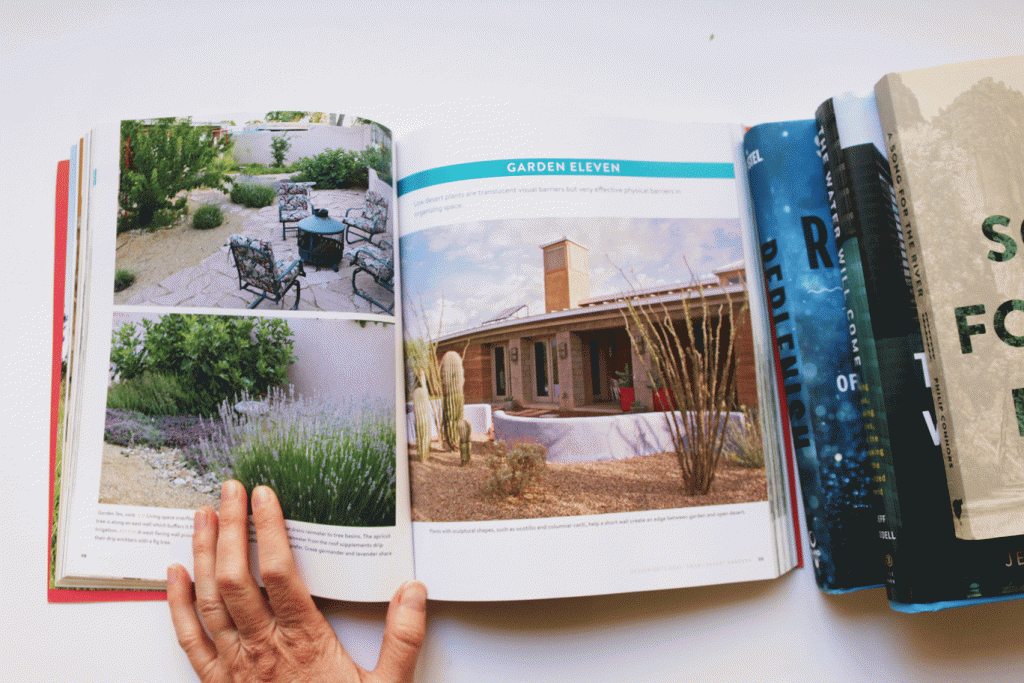
Now that the weather is colder, curl up with a book and
learn more about our global and local water resources.
Here are a few of my favorites to get you started. If you’ve
got a water book to recommend for future newsletters, please email me at [email protected]
For a thought-provoking read about the effect of rising sea
levels throughout the world, pick up The Water Will Come: Rising Seas,
Sinking Cities And The Remaking Of The Civilized World by Jeff Goddell. He
uses a blend of science and first-person accounts to create an engaging and
informative read. This book made many top book lists when it was released in
2017.
Replenish: The Virtuous Cycle of Water and Prosperity by
Sandra Postel explores many projects, including some in New Mexico, that work
with nature to enhance and preserve the earth’s water resources. Ms. Postel is
a world-renowned water expert we’re lucky to have living with us here in New
Mexico.
Another New Mexico book is A Song for the River by
Philip Connors. This is beautiful, meditative exploration of his time in the
Gila National Forest and of the Gila River. Those who want more of Mr. Connors’
writing on the Southwest should also pick up the multiple award-winning Fire
Season: Field Notes from a Wilderness Lookout.
Finally, for those who want to get started dreaming about their
spring garden, try Growing the Southwest Garden: Regional Ornamental
Gardening or any of the other gorgeous, picture-laden titles by Judith
Phillips, another author we are lucky to call our own. Her beautiful books can
be found at local bookstores and libraries.
Author: Katherine Yuhas, Water Resources Division Manager with Albuquerque Bernalillo Water Utility Authority