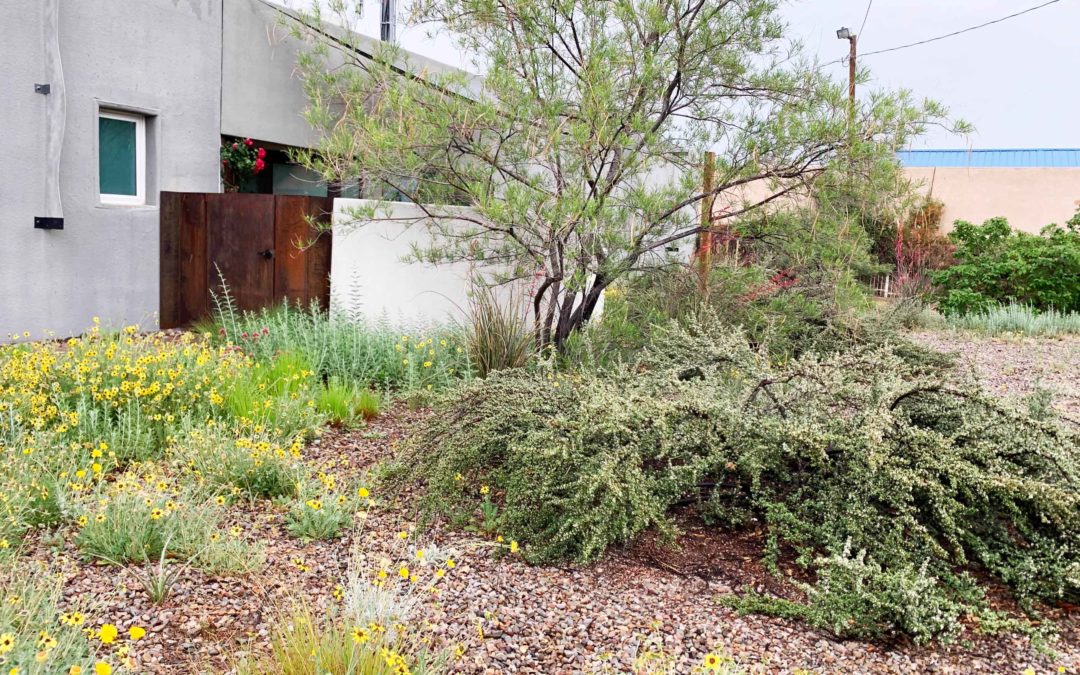
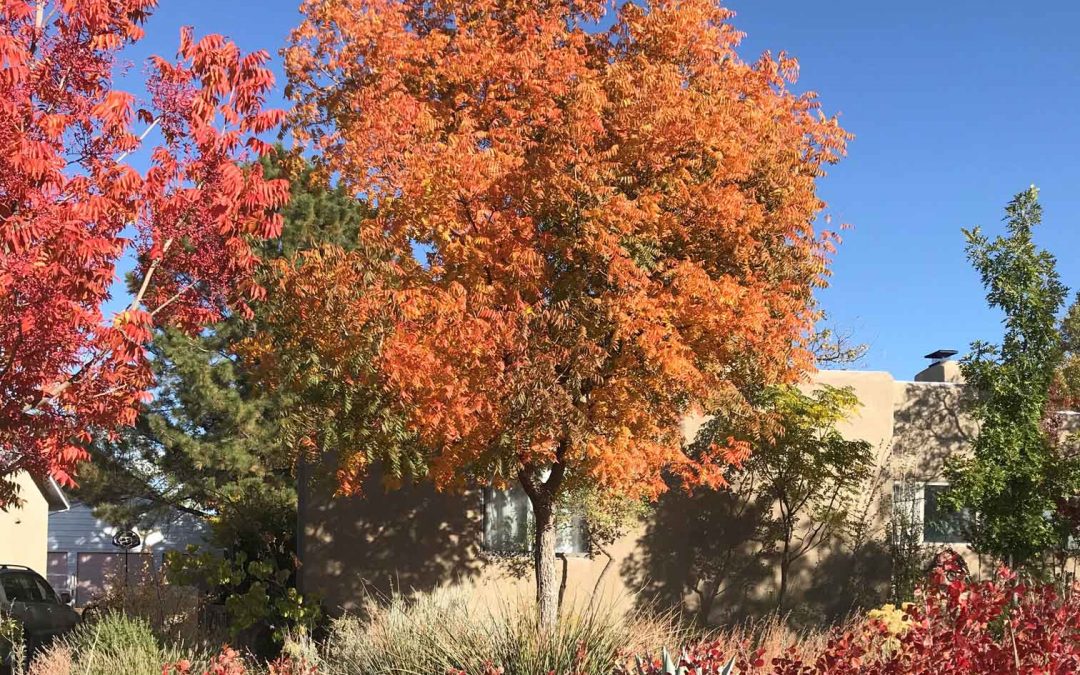
Irrigation is essential to give plants a healthy start, so they become well-rooted in the landscape. A great way to find out the water needs of individual plants is by checking out the ABCWUA Xeriscape Guide and then follow the seasonal watering recommendations.
When your landscape is new, the best thing to do is observe your plants and respond to their cues. Sometimes there are a few plants that seem to need water more often than others at first. It is better to put higher flow rate emitters on these plants or give them extra water by hose than it is to add more water to everything in the landscape. Once they develop a better root system, these plants can be watered just like all the plants around them.
Here are three frequently asked questions about watering new plants:
Where do I place drip emitters?
Drip emitters should be placed where the backfill meets the root ball. Larger plants need several higher flow rate emitters to water the transplanted roots plus the backfill. Make sure the water goes deep enough to water the entire root ball plus the soil below the roots.
How do I know what plants to group in my yard?
Plants grouped on the same irrigation valve should have similar water needs.
How often should I water my new plants?
Actual water use varies seasonally and as the plants grow. It makes sense to give plants less water less frequently during cooler weather and more water more frequently during extremely hot, windy weather. To encourage deep roots, water must go deeper into the soil as the plants grow. Deeply rooted native shrubs need water to go down 24 inches once a month. Fruit trees, which have shallow roots, need watering to go to a depth of 18 inches every week while they are producing fruit from mid-April to September.
Plants with very low water needs may be able to survive on rainfall alone, once they are well-rooted in 3 to 5 years. If you want them to be more attractive, water them monthly in the summer, especially if monsoon rains are late or scant.
Plants with medium water need to benefit from watering twice monthly, May through September, but only once a month the rest of the year.
Plants with high water needs should be watered weekly, May through September, twice monthly during March, April, and October, and monthly the rest of the year.
As roots start to go deeper into the soil, it's usually best to water less often but for longer cycles so the roots continue to go down further into the soil. But here are a couple of things to keep in mind!
Watering for more than a 3 or 4-hour cycle in well-drained soil will put the water deeper than roots will grow.
In poorly drained soil, water that goes too deep could inhibit the rooting of arid-adapted plants.
As plants root out, they will become more resilient and need less observation.
Author: Judith Phillips, owner of Design Oasis, landscape designer, and garden writer with 30 years of experience designing arid-adapted and native gardens in the high desert. Have a question about the article? [email protected]
As I write this, a cold thin snow cover still hides the ground, but it won’t last long. If we’re lucky, the snow will slowly melt and seep into the soil; if we aren’t lucky, it will sublimate right into the atmosphere – straight from solid to gas. Alas, the roots of our trees lie in the dry desert soil, waiting for water.
It’s always that way, here in the arid Southwest. Our soil, lacking in moisture, also lacks living and dead organic matter. The water that falls on our land either falls infrequently, too little or too much all at once. Still, the plants and trees persist. It is up to us, the human caretakers of these places and trees, to do whatever we reasonably can to provide them with what they need to survive.
Sounds kinda doom-and-gloom, you say? It does! This year promises to be very dry and likely very hot. We all need to do our part to conserve water, and yet we want to keep those established trees healthy and help recently planted trees get established. So, what to do?
It turns out that the two best things we can do are relatively simple. We can reasonably and regularly irrigate the trees (more details below) and apply a layer of coarse organic material as a mulch over the root zone of our trees.
Since every tree in every yard is different, how often you’ll need to water your trees largely depends on how quickly water moves through the soil. In sandy and gravelly areas (Westside and Foothills), the water passes through the soil quickly, moving past the tree roots. These types of soil need watering more often but with less water each time.
Here is how to do it: Water long enough that after a day, when the water has soaked in, the soil has been moistened about 16-24 inches deep. Poke a thin piece of metal (a long screwdriver or something similar will work) into the ground and see how deep you can push it in. That will tell you approximately how deep the water penetrated the soil.
Do this in a broad area, focusing not on the trunk but on the part of the ground under the outer half of the canopy and maybe a bit beyond the drip line (edge of the canopy). Feel the soil with your fingers to determine when to water again. You don’t want to let the soil completely dry out between irrigations! Also, pay attention to the leaves, noticing if they are full and flush or droopy and tired.
The best way to water soil that has more clay in it is to irrigate less often but with more water. This kind of soil holds more water, but that water moves slowly. Be careful not to overwater, especially near the trunk. Too much water in the soil interferes with root function and can more easily lead to root rot and decay issues. Concentrate the water in the outer half, and also in a bit of the canopy shadow, all the way around the tree.
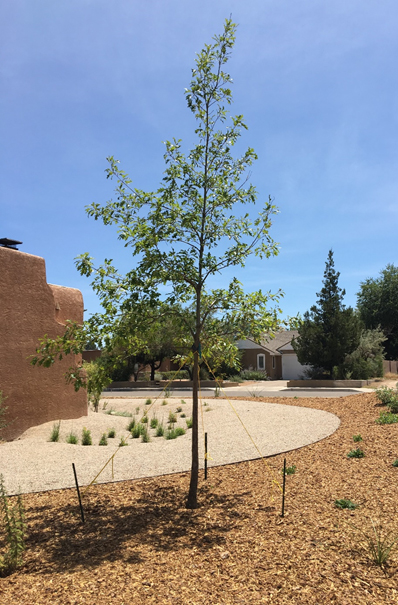
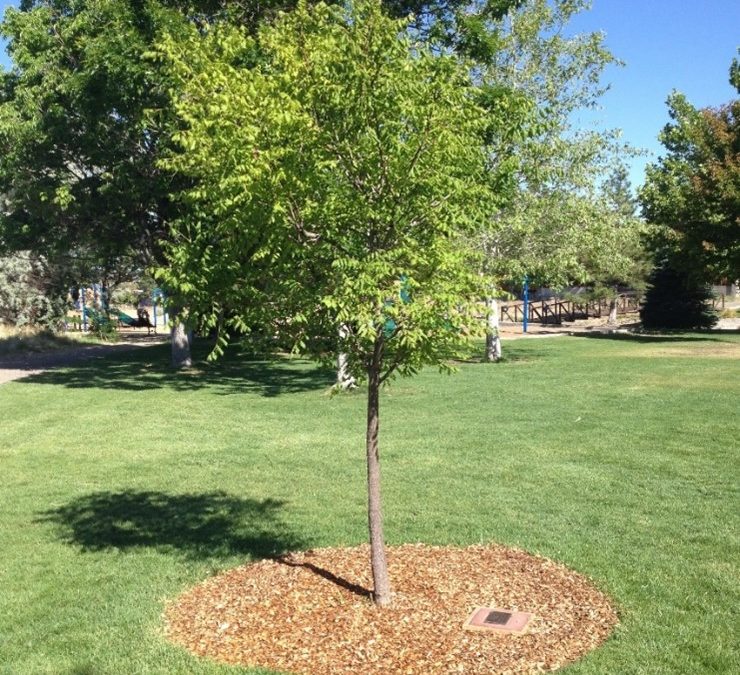
Wood chips, which can be obtained from a tree service or a local vendor, are the ideal mulch for trees. No matter what soil type and irrigation pattern you have, putting approximately three inches of wood chip mulch directly on the soil does wonders for your trees. As with any mulch, wood chips cover and cool the soil and reduce evaporation. As the chips decay, they foster the development of a forest-like soil ecosystem, which is just what tree roots really benefit from. Think of the ground surface in a forest — bits and pieces of old trees, slowly decaying at the surface. Add a new layer of mulch every couple of years, and watch your trees thrive!
Other mulches, like pine bark chips or pecan shells, are not quite as good as wood chips. Rock mulch is not a good choice. It absorbs sunlight and releases that energy as heat that rises through the tree’s canopy and strips even more precious moisture from stressed leaves.
Did you know that the Water Utility Authority will help cover the cost of some of this work? Through the Treebate program, they will offset a portion of the cost of certain purchases — such as new trees — and activities such as pruning and other maintenance work, soil improvements through compost and mulch and even some irrigation costs. Check out tree recommendations and all the program details here.
Author and Photography: Joran Viers, Senior Partner at Root to Shoot Urban Forestry, Inc. find him at [email protected] Have a question about the article? [email protected]
Winter is the best time to rethink your high water use turfgrass and create a plan for a xeriscape yard of desert-friendly plants. A desert friendly xeriscape will help you save water, reduce maintenance, encourage pollinators, and beat the heat of the summer. We define a desert friendly xeriscape as a landscape that has half of the total landscape area with desert friendly plants selected from our Xeriscape Guide and typically watered with drip systems or by hand.
Water Authority residential customers who transform their landscapes from high water use turfgrass to a desert friendly xeriscape can qualify for a $1.00 per square foot rebate. If you are interested in participating in the Desert Friendly Xeriscape Conversion Rebate, please do not start your turf removal project until you have applied online to the program and schedule an initial inspection. An initial inspection is required before removing your grass lawn to see if your project qualifies. If you answer yes to the questions below, your landscape meets the minimum requirements.
Do you have living turfgrass on your site? (Rebates cannot be given to work that is already complete.)
Do you have an existing operating SPRAY irrigation system on your site?
If you answered YES to the above questions, then your next step is to create the landscape plan, apply and schedule an inspection. Feel free to [email protected] for tips on planning your desert friendly xeriscape.
Author: Jill Brown, ASLA, is a Landscape Architect and owner of My Landscape Coach in Albuquerque, NM. Have a question about the article? [email protected]
In an arid city like Albuquerque, trees and the urban forest are even more important than in places with more moisture. Trees provide shade and habitat, and help cool the urban landscape. To sustain a healthy canopy trees require special care given the arid climate, ongoing drought, and warming temperatures. This year’s hot, dry conditions highlight the need for New Mexicans to take even more care of their trees – and to plan for which species will grow best in increasingly warm conditions. This was especially true this past September when a windstorm wreaked havoc on trees throughout the city.
In collaboration with Our Land New Mexico, a local environmental show on NMPBS, we are sharing a short (7 minute) episode they did about the urban forest in Albuquerque.
The episode discusses how the vitality of a city can be measured in part by the health of its trees and plant life. There is also evidence that tells us how exposure to nature provides emotional and social benefits, lowers stress levels and encourages more community engagement in residential settings.
We encourage you to take care of your trees to support our urban forest and if you are adding a new tree email [email protected] with questions. Local tree experts around the Southwest, including conservation staff from the Water Authority, with the guidance of the Nature Conservancy, have put together a climate-ready tree list that includes trees that will thrive in our current and future climate.
Author: Water Authority in collaboration with correspondent Laura Paskus of Our Land New Mexico and guest Joran Viers, City Forester, CABQ Parks Management Division. Have a question about the article? [email protected]
Native ornamental grasses play an integral role in a landscape. Throughout the seasons, grasses enhance the beauty of our gardens and are often at their showiest during autumn. They create a masterful mix of hues, textures, and seasonal delight. From their graceful flower clusters that gently dance in the wind to their vibrant plumage and foliage illuminated by the red glow of the sun, grasses create attractive and alluring backdrops while also adding motion and sound to our landscape.
Several considerations should be made before selecting ornamental grasses regardless of the style of the garden. Understanding the site requirements – sun tolerance, water use, and hardiness – as well as the growth form of grasses can help determine which species will be ideal for your landscape. Growing a species with weedy or invasive tendencies in moist habitats, for example, may not be ideal near the bosque. Similarly, growing a variegated variety of grass in a sun-exposed slope could result in blistering and discoloration which may detract from its beauty and health. Being aware of how site conditions and plant characteristics interact can help in selecting ideal species.
Consider adding the following ornamental grasses to the landscape:
Muhly Grasses (Muhlenbergia species)
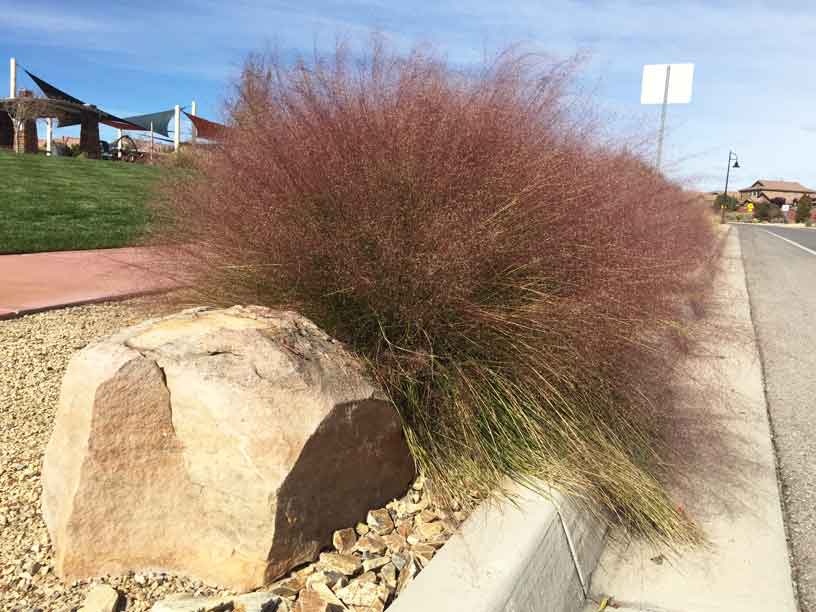
Muhly grasses (genus Muhlenbergia) are a non-invasive, ornamental grass native to the southwest. These grasses provide a wide range of favorable characteristics and perform well in full sun as well as partial shade. They are also heat and cold tolerant and can persist in most soil conditions. The plumy foliage often described as whispering, is quite attractive when a gentle breeze brings these plants to life. This species range in height from 1½ to 5 feet and has a variety of seed colors and textures blooming from August to November. Pink muhly (Muhlenbergiacapillaries) is an outstanding accent plant with its feathery, pink-hued flowers that float above dark green foliage (typically 3 feet). For a larger accent plant with a more subdued color, Deer grass (Muhlenbergiarigens) can make an excellent addition to any garden with its bright green leaves and slender tan flower stalks reaching upwards of 6 feet.
Big Bluestem Grass (Andropogon gerardii)
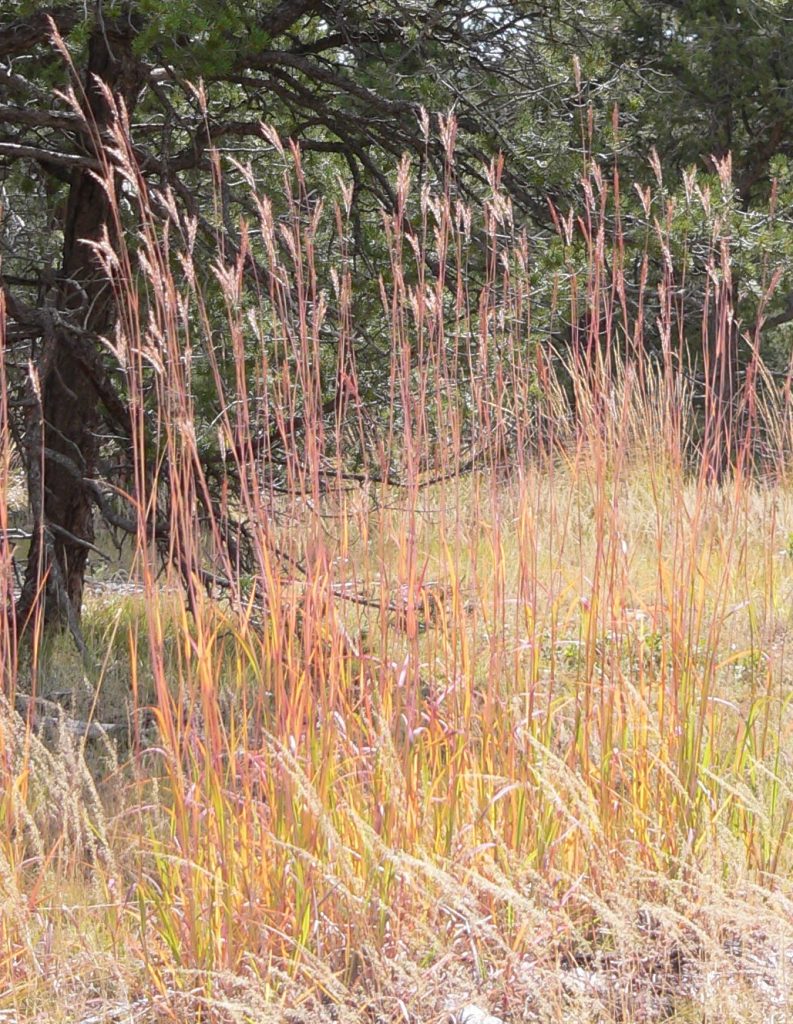
Several cultivars of the native prairie grass Big Bluestem (Andropogon gerardii) can be spectacular in a landscape and reach heights up to 6 feet. ‘Red October’ is a common cultivar that boasts year-round visual interest. It emerges in the spring with vibrant red foliage that transitions to a striking scarlet color for the remainder of the season. ‘Rain Dance’ Big Bluestem is also a very showy cultivar, providing maroon foliage in both summer and fall. These clump-forming grasses will grow in attractive mounds that add wonderful accents or backgrounds to the landscape in higher elevation plantings like the East Mountains.
Prairie Dropseed Grass (Sporobolus heterolepis)
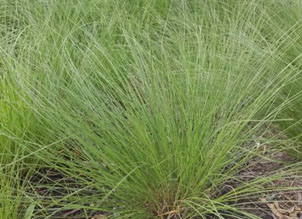
Prairie Dropseed Grass (Sporobolus heterolepis) is an exceptional bunch of grass that reaches 2 to 3 feet in height. This grass creates a fountain-like effect with its finely textured foliage – bright green in the summer and delightfully golden in the fall. Its flower spikes create a cloud of texture that becomes airier with see-through seed heads in autumn. Moreover, Prairie Dropseed Grass performs well in a wide range of conditions and soil types and is an excellent drought-tolerant addition to the landscape.
On top of their inherent aesthetic value, ornamental native grasses provide refuge and forage for pollinators and wildlife, which enhance the landscape’s ecosystems. Many bird species feast on the seeds of grasses, while the larval stage of butterflies use native grasses to shelter through the winter. For these reasons, ornamental grasses should be left uncut until early spring where they can be trimmed to encourage new growth. Incorporating ornamental grasses is a beautiful way to impart functionality and complexity to any landscape. Autumn is the perfect time to enjoy all that these grasses have to offer.
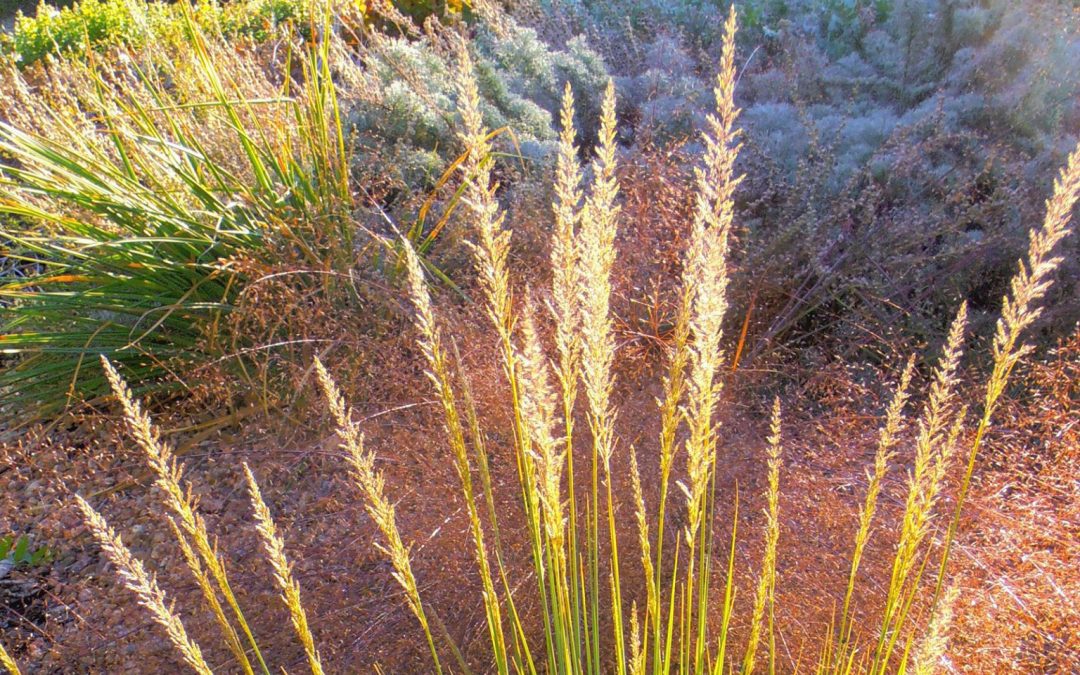
Author: Alissa Freeman, plant ecologist with an M.S. in Plant Biology, Ecology, and Evolution, has worked with NMSU Plant Extension and the City of Albuquerque on using native plants to enhance pollinator habitats. Photography: by Hunter Ten Broeck of Waterwise Landscapes and Judith Phillips of Design Oasis. Have a question about the article? [email protected]Caption for Feature Photo: Karl Forester Grass plumes with pink Bush Muhly grass located behind it.
The balancing act of watering your trees in the fall and winter is important. Established trees should be watered two to three times a month in the fall season and once a month in the winter season. If not watered properly, trees that get too dry during this time can suffer stress and drought injury. This often does not show up until the heat of the following summer, which then makes trees more susceptible to pests and disease. Fall is the time to set your trees up for winter success.
Other important factors to consider when watering trees:
Newly planted trees (trees planted within 1-3 years), are more susceptible to damage from dry conditions and should be watered more frequently than established trees. Try watering them to a depth of 24 inches three times a month in the fall and twice a month in the winter.
Evergreen trees lose water through their needles in the dry winter air. They need more stored-up water going into the winter season to make up for that. Cold, dry winds can strip water from evergreens faster than their roots can absorb it, too. That is why it is especially important to provide enough water in the fall and during dry, warm spells in the winter.
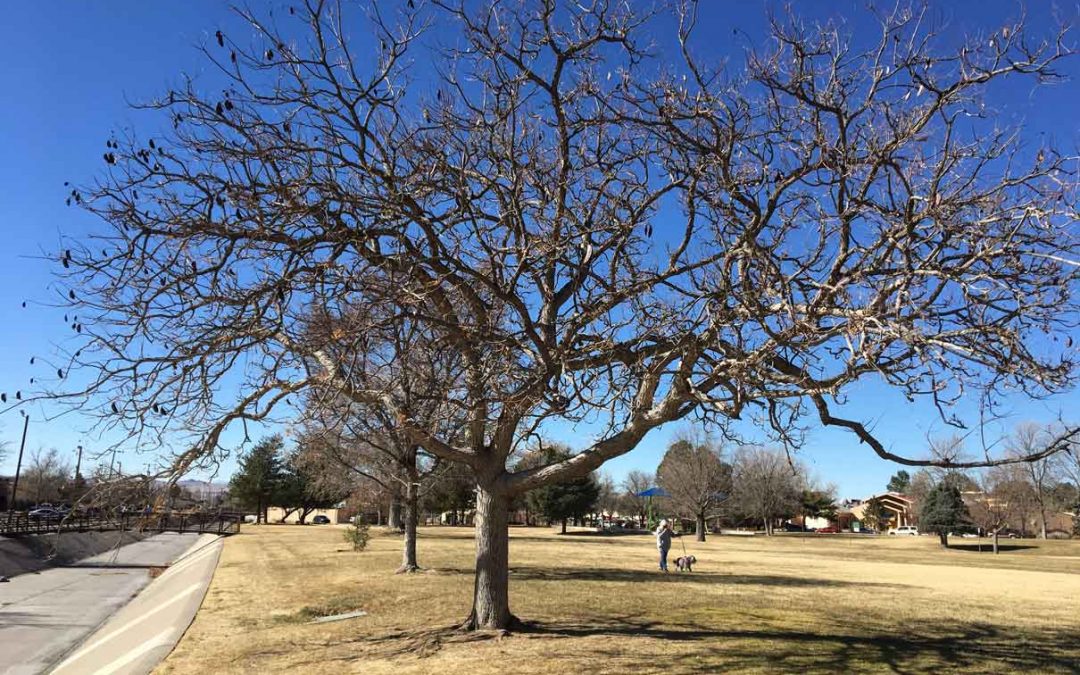
Even though they lose their leaves, deciduous trees should also not get too dry in the fall and winter. Water acts as an insulator for both the tree and soil. Soil that stays moist will be warmer. Likewise, plant cells that are plump with water will be less susceptible to damage from the cold. Water deciduous trees to a depth of 24 inches twice a month during the fall and once a month in the winter.
When watering any tree, remember to apply water out to the edge of the tree’s canopy drip line. Most established trees have a root spread equal to their height and beyond. Water deeply and avoid spraying foliage. Watering to the right depth depends on your specific soils, so you will want to measure how much water it takes your soils to reach 24 inches deep. Read this article for tips on measuring watering depth.
One of the best things you can do for your trees in the coming months is to add mulch. Layering three to four inches of organic mulch protects the soil from moisture loss and helps regulate soil temperature throughout the winter. Treebates for bulk organic mulch is available.
Pro Tip: "Watering to the right depth and managing the frequency of watering are both very important aspects of keeping our plants healthy throughout the year, but especially in the fall and winter months,” says Patrick Chavez, Trees of Corrales Wholesale Nursery.
Author: Amos Arber, Xeriscape Incentive Inspector, and Certified Arborist with the Water Resources Division for the Water Authority. Photography: Wes Brittenham Pro tip:Trees of Corrales Have a question about the article? [email protected]