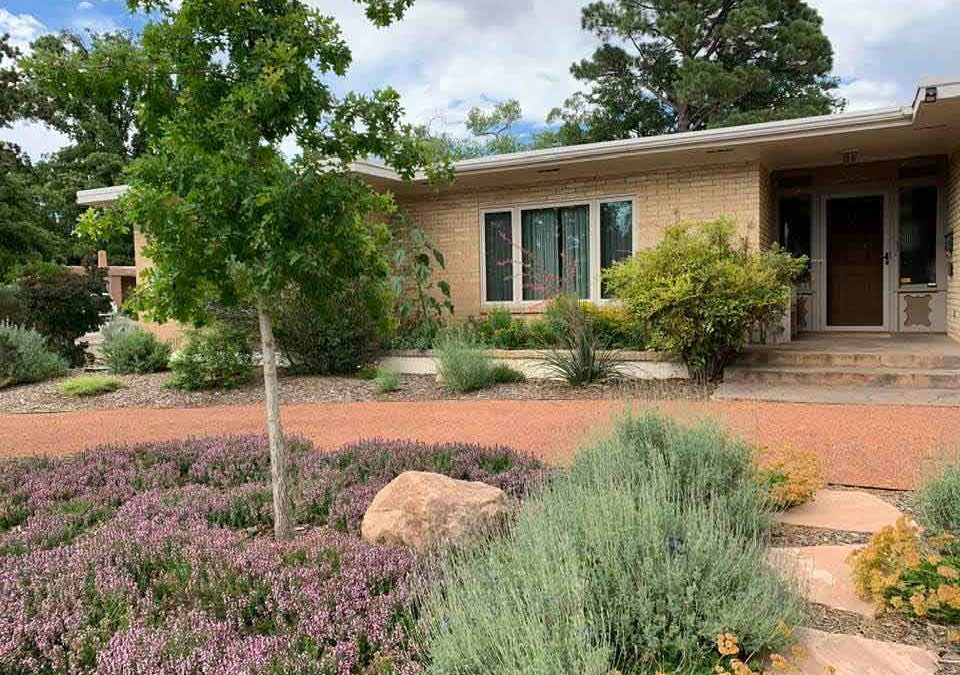
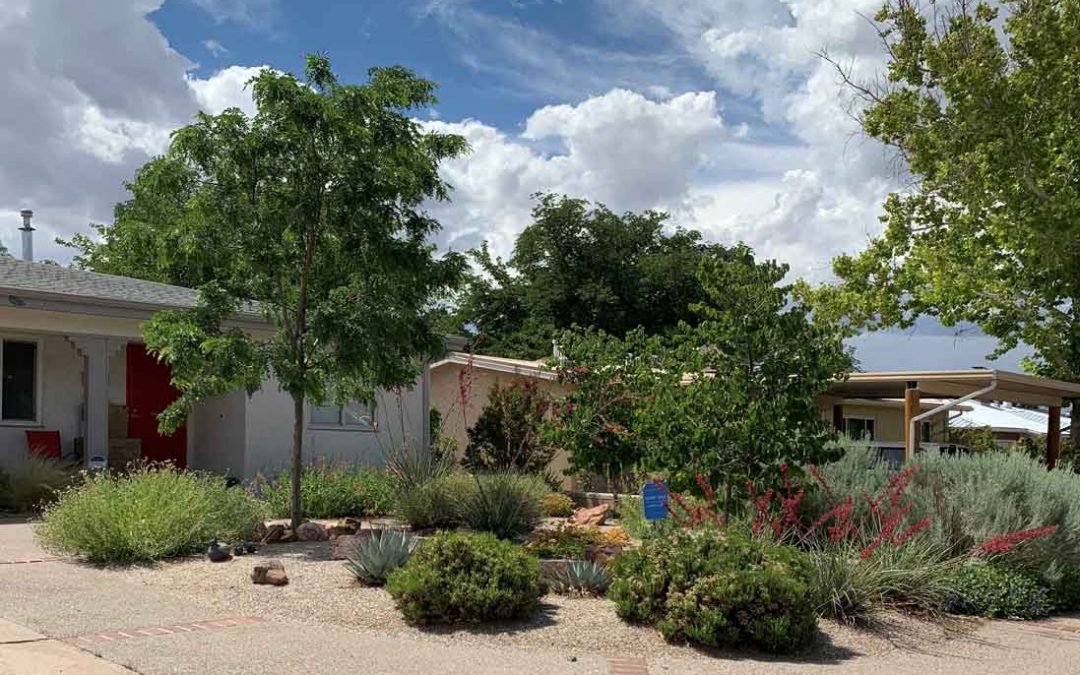
The desert friendly xeriscape conversion incentive rebate has been around since the early ’90s and is still going strong. Millions of square feet of thirsty lawns have been converted to healthy xeriscapes that save billions of gallons of water. Although the xeriscape conversion rebate’s application process has a few more steps than our other rebates, our experts are here to help you every step of the way. Remember to contact our xeriscape inspector, Amos Arber, before you stop caring for your lawn or start tearing it up.
Below, Amos answers some of the most frequently-asked questions.
Q: I want to replace my lawn with gravel because I’m trying to save water. Why do I need to include new plants in order to be eligible for a rebate?
A: The xeriscape rebate is meant to incentivize our customers to add a 50% coverage (at maturity) of new plants, drip irrigation, and mulch (gravel, crusher fines, wood chips) to encourage healthy xeriscapes. Plants provide a range of benefits, such as shading the ground to help our city stay cooler, providing wildlife habitat and keeping our neighborhoods looking beautiful.
Q: Do I have to convert my entire lawn to get the rebate?
A: No. Projects can be done in phases or only part of the lawn can be converted as long as it is at least 500 square feet.
Q: Will I receive a check from the Water Authority when the project is complete?
A: We do not issue checks. All rebates are credits towards your account. Participants do not have to pay on their account until the rebate is used up, which may take more than one year.
Q: Can I include a patio or pathway in the project area?
A: Yes. Plants do not have to be spread evenly throughout the former lawn area. They can be denser in some areas to accommodate a small patio or pathways.
Q: I want to replace my lawn with artificial turf. Can I get a rebate?
A: If the area of fake grass is small and you can fit in the required amount of plants in the rest of the project area, you can get the rebate. If the area of plastic lawn is covering all or most of the former living lawn area, you will not be able to meet the rebate requirements.
Q: Do I have to hire a professional to do the design or installation work?
A: No. We encourage folks to do the designing and installation work themselves and have many helpful resources. Not only can DIY projects save money but they can empower homeowners and help them feel comfortable performing necessary landscape maintenance.
Q: I’d like to convert my lawn, but I have no idea how to get started. What do I do?
A: Check out the Resources and Landscape Tips tabs on our website. We have several great articles on everything you need to know to get started. Another option is to ask our xeriscape expert Amos Arber (505-208-2015) to meet you on-site. He will explain the rebate process, tell you about important site conditions to consider, offer plant and design ideas and help you put together a list of questions to ask a contractor.
Q: Is it okay to use plants I’ve grown myself?
A: Yes. A good way of saving money is to transplant or propagate your own plants.
Q: Do you have any tips for doing a project on the cheap?
A: We encourage folks to do the projects themselves since DIY projects can save at least 75% of the cost of hiring a contractor. Other ways of saving money include using free woodchip mulch that’s available from tree services (gravel and weed fabric can be expensive) and purchasing bulk organic mulch to receive an extra $100 rebate. When purchasing container plants, compare costs. For example, a five-gallon rosemary plant gets the same number of plant points as quart-sized rosemary but costs 80% less. Also consider using recycled materials, such as broken concrete pieces, instead of expensive flagstones.
Q: I’ve already completed a xeriscape project but did not apply for a rebate or get my lawn inspected before it was removed. Can I still get a rebate?
A: Unfortunately, no. We need to document the existing lawn before it is removed. This ensures that our customers’ funds are used only to convert thirsty lawns.
Q: I don’t have a lawn but want to fix up my yard with new xeric plants. Can I get a xeriscape rebate?
A: No, however, we have lots of rebates that might apply for other yard renovation projects such as the Treebate.
Q: Some of the plants I want to use are not on the master plant list. Can I use those plants in my project?
A: If the plants you want to use are cultivated varieties of plants on our master plant list (plant names are listed in quotes), you can use them. If not, you are welcome to install them in your yard, but they will not count towards the required plant total for your project. Our master plant list contains over 600 plants proven to thrive in our area for all landscape types and conditions.
Author: Amos Arber, Xeriscape Rebate Inspector with the Water Resources Conservation Department for the Water Authority. Have a question about the article? [email protected] Want to start on your Xeriscape conversion project today? Click here to get started.
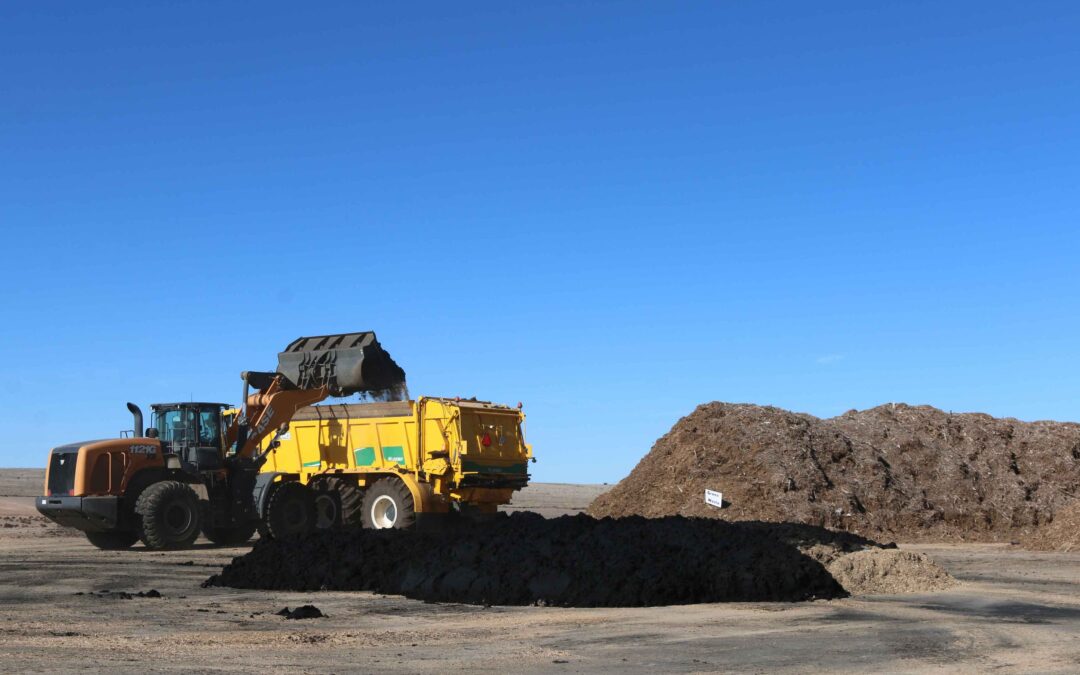
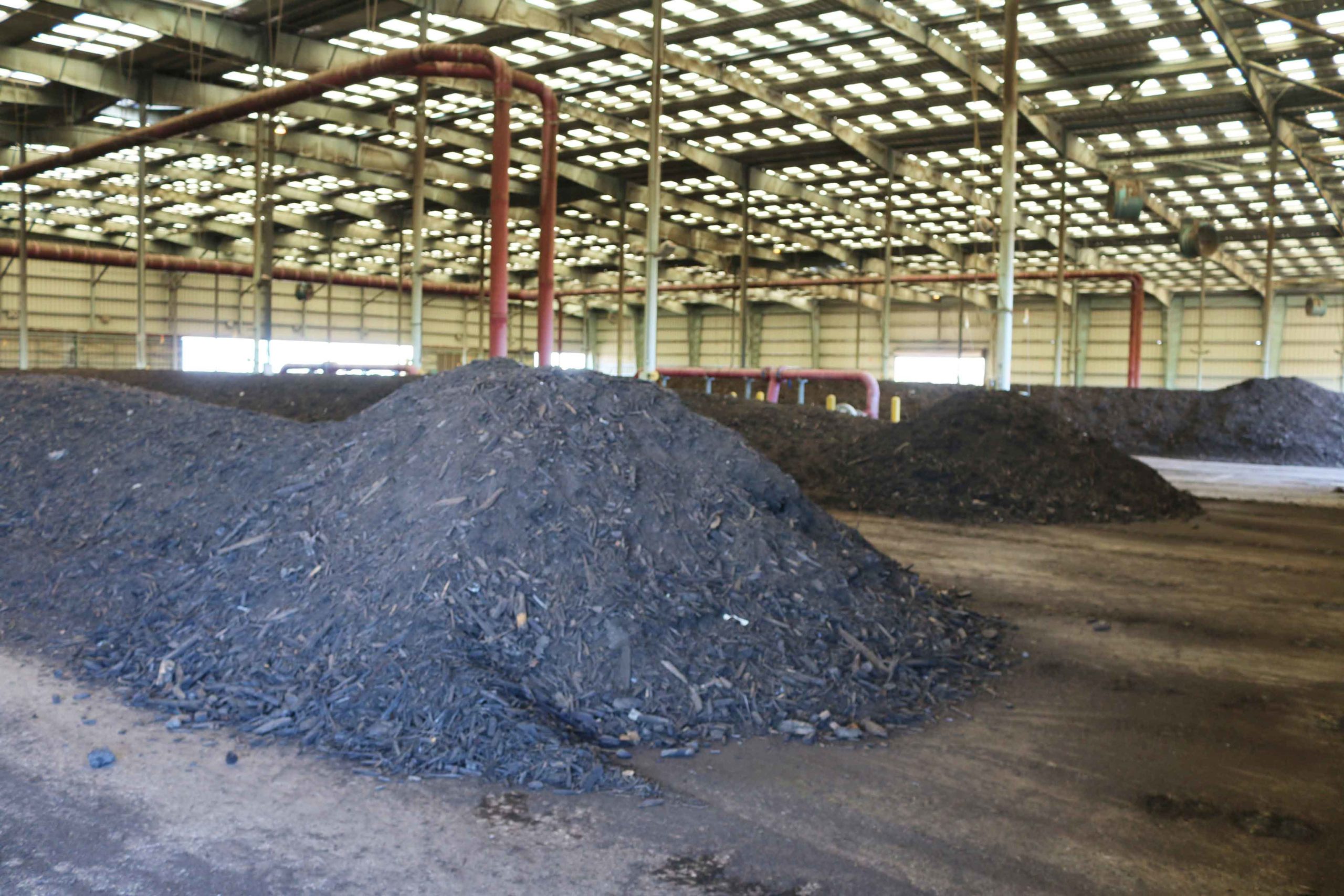
In 1988, the Albuquerque Bernalillo County Water Utility Authority’s started a composting facility for biosolids produced. 505Outside recently visited the Soil Amendment Facility to check out the “Compost Del Rio Grande.”
Water Authority compost is unlike any other in town because it’s not just made with the typical green waste, manure, wood chip, and horse bedding. It also has one special ingredient: biosolids. Biosolids, also known as humanure, are organic matter recycled from sewage operations.
Compost del Rio Grande is responsible for reprocessing the biosolids that are a daily byproduct of the Southside Wastewater Reclamation Plant – about 360,000 pounds a day, or three truckloads three times a day are produced. While we were touring the facility, we got a chance to see three of these truckloads.
Biosolids are rich in organic matter, nitrogen, and trace minerals. The US Environmental Protection Agency (USEPA) encourages safe biosolids re-use. Properly managed, composting qualifies as a Process to further reduce pathogens under US EPA regulations, meaning that composted biosolids may be used in the production of crops for human consumption.
The facility accepts green waste from the community. They also will soon begin receiving food scraps from Intel and horse manure and bedding from New Mexico Expo.
Certified biosolids compost of good quality is typically comprised of 25% animal stable bedding, 40% biosolids, 30% green waste (pulverized yard trimmings), and 5% wood chips. The facility can produce over 4,000 cubic yards of compost per month.
Compost del Rio Grande uses a recipe created specifically for the facility. The recipe consists not only of the materials that go into the product, but the process used to create the compost. This includes the temperature and length of time at which the materials cook and the number of times the compost is turned. After cooking for 8-10 weeks, the compost is ready.
The facility works closely with the New Mexico Department of Transportation (NMDOT). NMDOT uses large quantities of the Rio Grande Compost on highway reclamation projects around the state for erosion control, dust control, and vegetation growth.
Water Authority compost (“Compost Del Rio Grande”) is available to the general public for purchase. Click on the link for more information, or to find out how you can obtain compost for your outdoor projects. https://www.abcwua.org/customer-service-compost/
Author: Jill Brown, ASLA Landscape Architect and owner of My Landscape Coach in Interviewed: W. Shane Fitzgerald, SAF Superintendent, Albuquerque Bernalillo County Water Utility Authority.
Fall can be a great time to plant, especially if you are planting higher elevation and temperate climate plants that are adapted to cooler, more humid growing conditions. In the fall, the soil is still warm enough to encourage roots to develop so watering properly makes a big difference on preparing them to survive in the winter season. What to plant? Most conifers, shade trees, cool season grass and moisture-loving fruit and ornamental trees, such as crabapples, apples and pears, are a great selection for planting in this autumn.
What not to plant this fall? The answer is plants from desert ecosystems like southern New Mexico and the Mediterranean natives. Their newly planted roots are less able to survive our winter cold. The same is true for perennial wildflowers and warm season grasses. These should be planted in the spring through early August. Succulents are another group of plants that thrive after settling into the garden during the warmer part of the growing season, so wait until the spring to plant them.
Knowing what to plant at this time of year will give you that edge you need to grow healthy plants!
Author: Judith Phillips, owner of Design Oasis, landscape designer, and garden writer with 30 years of experience designing arid-adapted and native gardens in the high desert. Photography:Plants of the Southwest. Have a question about the article? [email protected]
ALBUQUERQUE, N.M. — By and large, New Mexican homeowners are getting the all-important message of the arid Southwest: Water is precious, and not to be wasted.
But local experts say an important piece of the story is still often lost when it comes to landscaping: Conserving water doesn’t have to mean a yard consisting of one plant surrounded by gravel.
“We’ve got to go away from that,” said Carlos Bustos, water conservation program manager for the Albuquerque Bernalillo County Water Utility Authority. “Xeriscapes are luscious, they’re beautiful, they’re abundant, they’re resilient, they’re sustainable. … We hope that 10 years from now we’re not still dealing with the idea of ‘zeroscapes.'”
Solange Serquis, of Santa Fe-based Serquis + Associates Landscape Architecture, agreed.
“I am a big believer that we all deserve aesthetic and beauty,” she said. “When you combine aesthetic and beauty to achieve something else, like passive cooling or low-consumption plants or an invitation to be outdoors, better use of … energy indoors, that’s the main thing.”
Plant selection
According to Jill Brown, a landscape architect and owner of My Landscape Coach, selecting plants tends to be a point in the landscaping process where homeowners get very engaged.
“If I go back and look at the most popular articles, the most popular things, discussions, questions that we’ve received, it’s always about plants,” said Brown, who also provides content for the water utility authority’s landscape website 505 Outside. “So people are really interested in plants and learning about plants and in that aspect of a landscape.”
For several local landscape pros, planting trees tops the list.
“That’s going to provide shade, which is going to reduce your energy bills if you put it … on the south side of the home … or the west side of the home,” Brown said.
Bustos said if a tree is well planned and well-positioned, those energy savings can be significant.
“There’s studies out there that say that if you place a tree strategically where you need to, you can save up to 25% of the energy in a typical household use,” he said, adding that tree shade helps reduce water lost by other plants nearby.
“By creating this microclimate, you can reduce the water need between 6 and 20%,” he said. “It’s always cooler in the shade.”
Serquis says planting trees adds long-term value.
“I always say planting a tree is an act of … citizenship,” she said. “Because you plant that tree today and in maybe 50 years, it’s … a heritage for the neighborhood.”
With trees as well as with smaller plants, Serquis said she’s looking for ways to passively cool living spaces – both indoors and outdoors – and selects varieties that have low water consumption.
When it comes to choosing specific plant varieties, Brown’s got a simple approach.
“Basically native plants that you buy from a local nursery are going to work in your soil,” she said. “That’s like a generalization we like to tell homeowners: Don’t over-stress about your soil. If you buy plants from a local nursery, you’ll be OK.”
Of course, there’s a caveat: Those plants and trees still have to be watered properly.
Irrigation
Brown said data and her own experience suggest that in the universe of homeowners who care about their landscaping, about half use an irrigation system of some kind, and about half are hand-watering.
Those hand-waterers, according to Brown and Bustos, should think about installing an irrigation system.
“Hand-watering is wasteful, because they’re spraying the leaves and … we need to get to the roots,” Brown said.
Those who already have an irrigation system can consider whether it’s efficient or fine-tuned enough.
Those who use spray sprinklers, for example, may consider swapping out sprayers for highly efficient models that are more available to homeowners today than in the past, often on the shelf of local irrigation supply companies, Brown said.
Homeowners can look at whether plants in their yard are being watered to the right depth, whether their irrigation system adjusts with the seasons – less water during the spring and fall than in summer – or with the weather.
Plants’ water needs also vary depending in what type of soil they’re planted – which even in the Albuquerque metro area can range widely, from sand on the West Side to clay in the valley.
Brown concedes the considerations can overwhelm homeowners.
“People really just want you to say, ‘Hey, water your landscape 20 minutes two times a week in the summer, 20 minutes once a week in the spring and fall,” Brown said.
Lawns
Serquis said when she first moved to New Mexico from Argentina, the trend was incentivizing homeowners to get rid of their lawns altogether in favor of gravel. But lawns don’t get quite such a bad rap with conservation-minded landscapers these days.
“I think there is something in between” lawn and gravel, Serquis said. “(It) depends how you look at the grass, or what type of grass – it’s not that bad. And a xeriscape with no plants, just as a reflecting surface, could be even worse” because of the heat generated.
Brown said there are types of grass that require less water – and even if homeowners want the grass “that’s at the park,” there are better ways to water it than with a spray system that throws water high in the air and risks evaporation. Bustos agreed.
“If you have a lawn and you’re enjoying it and it’s functional and you’re taking care of it, then update it,” he said. “You know, update that irrigation system. There’s technology out there that just can make things a lot more efficient.”
Mulch
Brown said mulch is an important part of landscaping in the Southwest.
“One of the biggest things people complain about are weeds in New Mexico, and a lot of that is because wherever there is bare dirt, you’re going to get weeds,” she said. “… The simplest solution and the most inexpensive solution and easy to install is 3 to 4 inches of a shredded wood chip mulch over the entire yard.”
Mulch helps soil hold in moisture and insulate plant roots, and it breaks down over time to enrich the soil. Brown said a mulch layer often means replacing expanses of gravel.
“All gravel does is produce more heat and more weeds,” she said. “Even if you have the weed cloth, the weed cloth just makes it easier to pull the weeds.”
Starting small
Bustos acknowledged the process of adapting a landscape can be daunting. He said he encourages residents to start with the “lowest investment,” which is changing behaviors. People can start following the seasonal irrigation needs of their landscape, rather than giving the same amount of water all year.
Those ready to invest some resources can take small steps like installing smart irrigation controllers, swapping out sprinkler heads and efficient nozzles – steps Bustos said can save up to 30% of water usage in some cases.
“If you really want to invest, you want to transform your yard into a desert-friendly landscape, then we got a xeriscape rebate that folks can tap into,” he said.
Brown said while her clients may be in different phases with their landscapes, they tend to share one thing in common. “Overall, in general, people in Albuquerque want to save water,” she said. “That is a no-brainer now.”
Author: Gabrielle Porter, Albuquerque Journal Business Editor. Reprinted with permission from the Albuquerque Journal. Have a question about the article? [email protected]
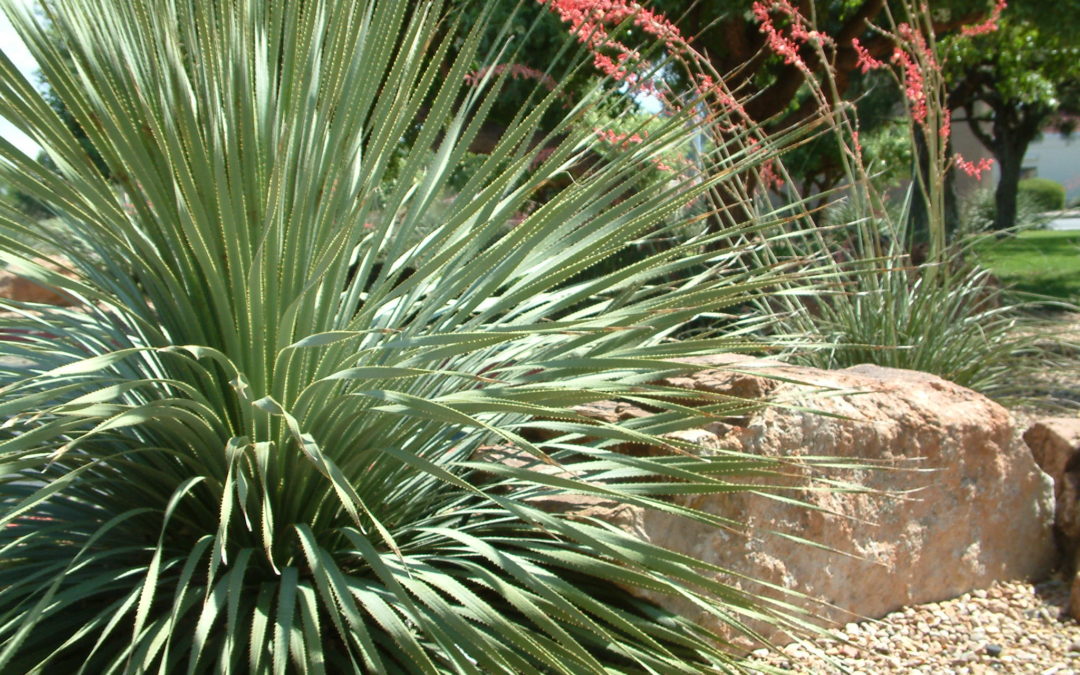
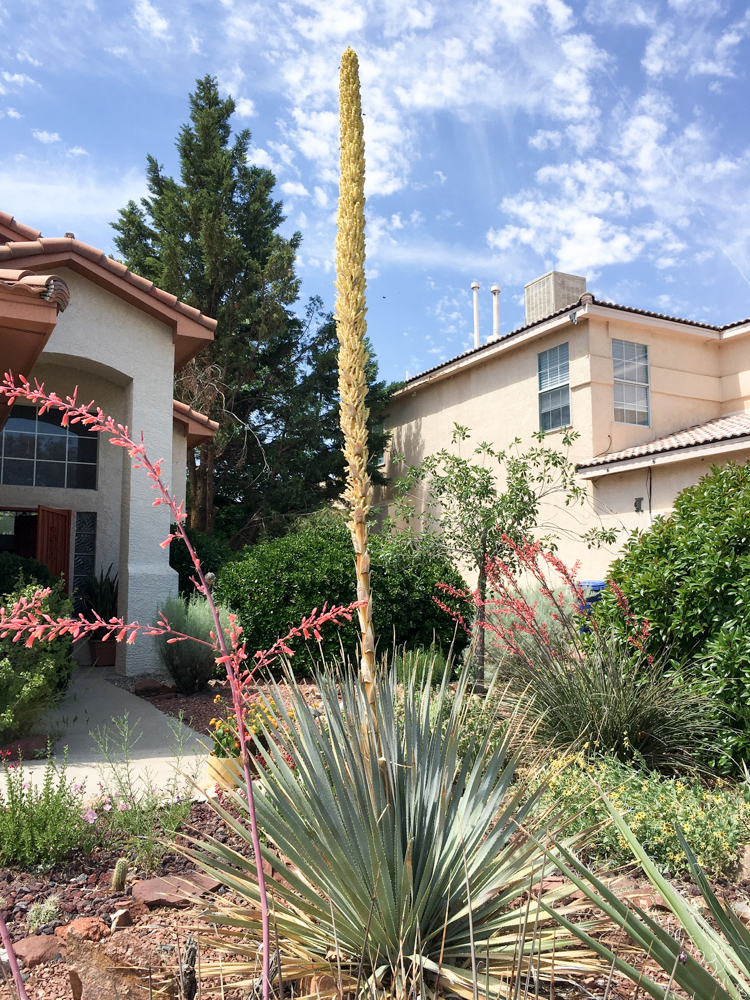
Striking thin evergreen leaf blades (sometimes referred to as saw blades) grace this desert accent. Once established, it thrives on rainwater alone in hot gravelly or sandy soils. It can stand alone as a beautiful symmetrical accent plant or be planted among desert flowering perennials. Give it space to grow away from patios and walkways. Trim old seed stalks once a year in late winter.
Growing vegetables and herbs at home in small spaces can be easy, fun, rewarding and not expensive. Here are some tips for anyone from first timer to a pro.
Start small with a raised bed, good-sized pots or containers or a small plot of ground. Good soil is the key in all of them, so do not skimp there. If you are a composter, good compost is a great addition to our native soil, which is generally alkaline and low in organic matter. If you are growing in the ground, compost added to the soil is highly recommended. Plant nurseries offer good compost in bags, and you can also purchase in bulk, from a bucket to truckloads, from composting facilities.
When planting in containers, use a potting soil labeled for growing vegetables. Do not use pure compost, topsoil or garden soil in containers. Those are designed for in-ground use. Start your own seeds or purchase plants from a local nursery.
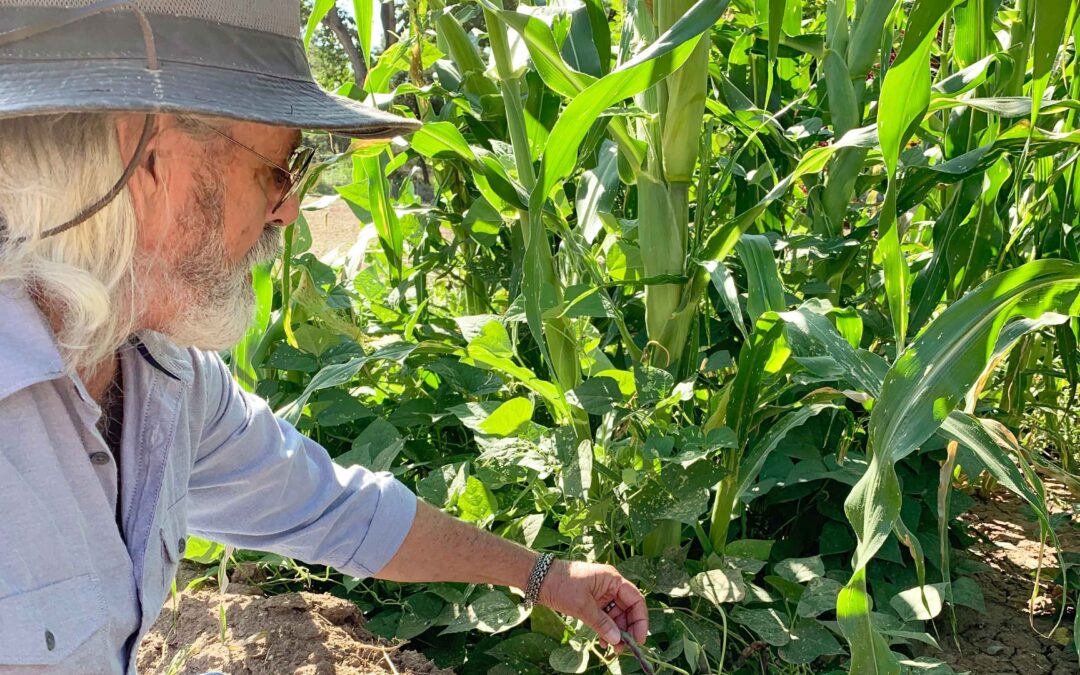
Choose what you grow based on what you love. Most will agree there is nothing like the flavor of a homegrown tomato, but the joy of growing, harvesting, preparing, sharing and eating something you have grown is a rich pleasure in a complicated world. Beans are fast and easy to grow. Since dried beans are inexpensive and readily available and it takes a lot to make a pot of cooked beans, I stick to green beans. I have done Three Sisters (corn, beans, squash) in large pots on my patio using climbing green beans.
Tomatoes will do fine in a five-gallon pot or larger, and peppers of many varieties do great in containers, as do most herbs. Look up books on companion planting. Roses Love Garlic and Carrots Love Tomatoesare books by Louise Riotte that suggest good neighbors in the garden. Lisa Mason’s Vegetables Love Flowers and Companion Planting by Sally Roth also give useful information. I have planted borage with my tomatoes for many years on the advice of an old gardener friend, and I rarely have tomato worms. Borage is both beautiful and edible!
Never leave the surface of the soil exposed. Always use mulch. My preferred mulch is barley straw (not hay!) It is clean and rarely has weeds or other seeds in it. You get an occasional sprig of barley that is simple to pull and lay with the rest of the mulch. Spread the straw three or four inches thick, thinning carefully at the base of plants. It holds moisture, prevents unwanted seedlings from sprouting and can be turned into the soil or added to compost at the end of the season. Water is crucial. Consistent deep watering, whether you use in-line drip tubing, soaker hoses or attentive hand watering, is important. The soil must not dry out or be too wet. Most containers will need water every day or two. Pay attention, ask your gardening friends questions, share stories of failure and success and enjoy the fruits of your labor!
Author: Wes Brittenham Farm & Landscape Manager, Los Poblanos Historic Inn & Organic Farm Have a question about the article? [email protected]