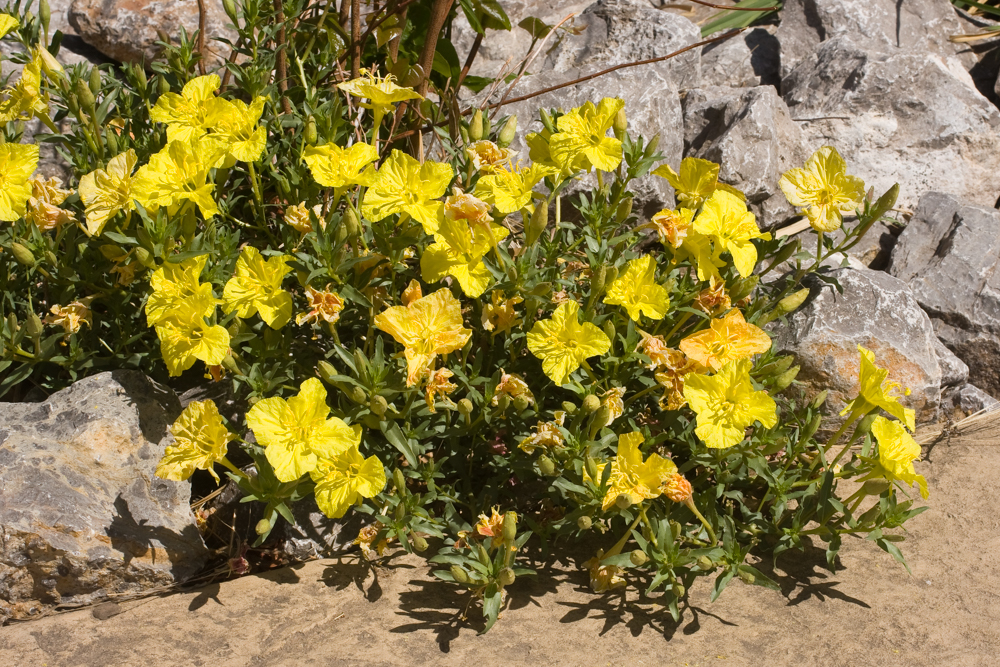
This spectacular native wildflower is everblooming with a profusion of large, bright yellow, four-petaled flowers. Its narrow gray-green foliage gives the plant a lacy look in the garden. Calylophus thrives in the heat and grows well in a wide range of soils, as long as they’re well drained. This tough plant is the star of any dryland rock garden or xeriscape. Giving it a good shearing before the growing season starts in late spring will keep it looking tidy and loaded with flowers.
One hundred years ago, almost every house with a yard had a vegetable garden. This was before the era of mass-produced, well-traveled foods readily available in the big grocery stores. People grew these gardens out of necessity. The whole family joined in, breathing fresh outdoor air and staying active while growing super healthy food to eat.
While we don’t have to do that now, every year more people are discovering the joys (and pains) of growing their own fresh produce. Maybe you’re one of those folks who has recently picked up a hoe and a packet of seeds.
Here are tips for starting gardens as well as suggestions for easy and tasty plants to grow.
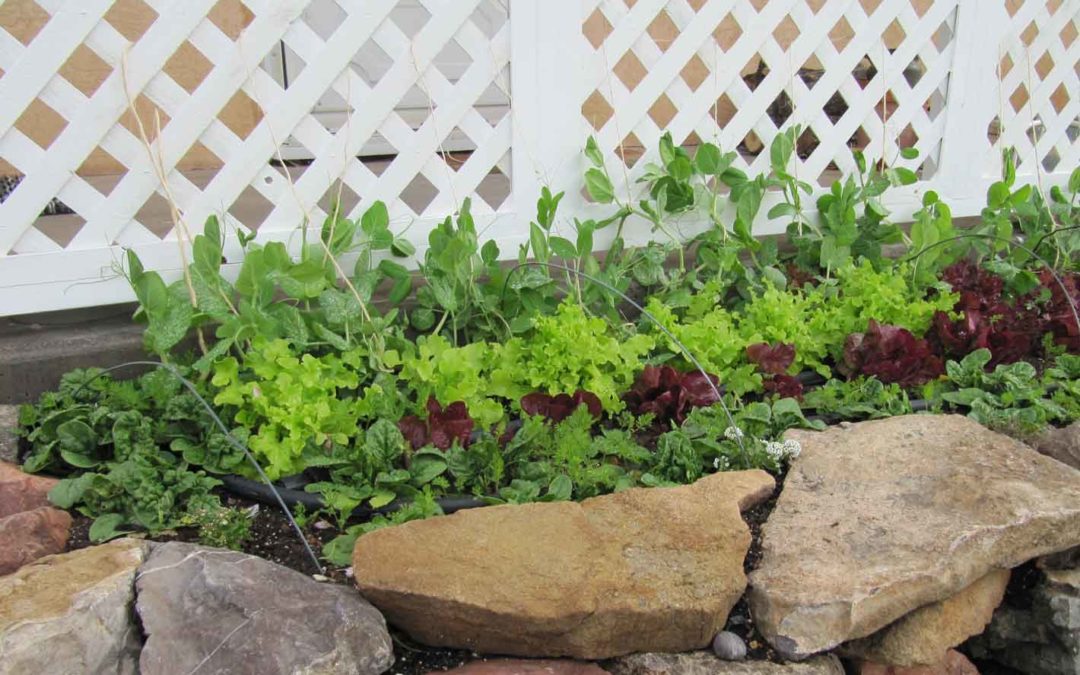
Good soil and regular watering are keys to having a successful garden. In the dry Southwest rich soils don’t form naturally, so you’ll need to create a good soil first, and then maintain it.
Setting up wide garden beds makes the most efficient use of amended garden soil and applied irrigation (read John Jeavon’s excellent book How to Grow More Vegetables Than You Ever Thought Possible on Less Land Than You Can Imagine for more on the hows and whys of wide beds).
You may need to break up the soil before planting your first garden. Once the soil is loosened and amended, it’s better to work in new compost with hand tools and to mulch deeply with an organic mulch. Hand tools have advantages: They don’t destroy the living soil the way mechanical tillage does, they aren’t noisy, they don’t smell like exhaust and you get good exercise while using them!
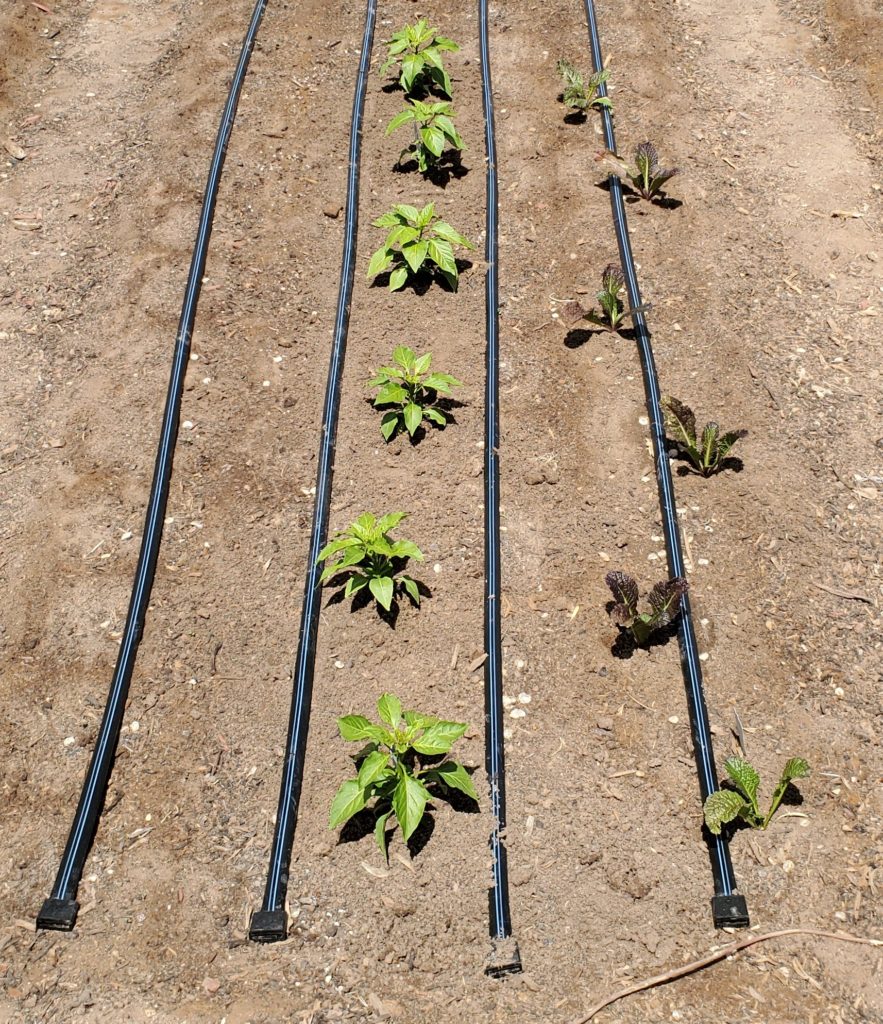
Drip irrigation is ideal for vegetable beds, and there are numerous ways to set up a good system. If you are using the outdoor hose bib, be sure to include anti-siphon devices, pressure reducers and good filters to keep everything safe and functional. Timers are optional but recommended. It sounds complicated but really isn’t hard, and the results are well worth the effort.
Add organic mulch! There are a number of good choices for organic mulch.
Garden beds are in and ready. What are you going to plant?
Some vegetable species prefer warm (even hot) temperatures, while others grow best in cooler weather. At this point in the season, start with the warm weather crops.
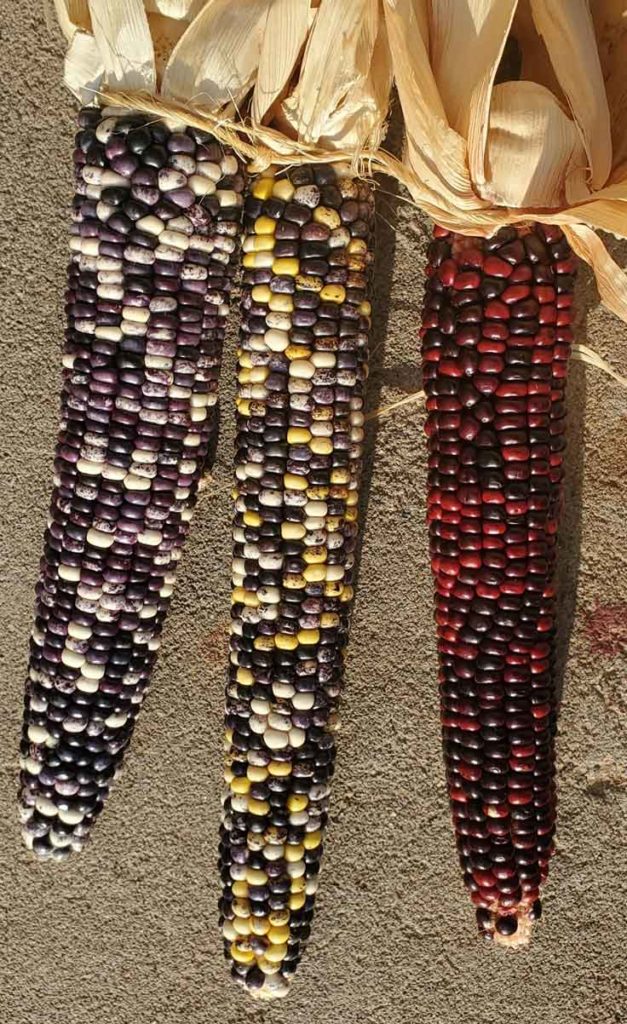
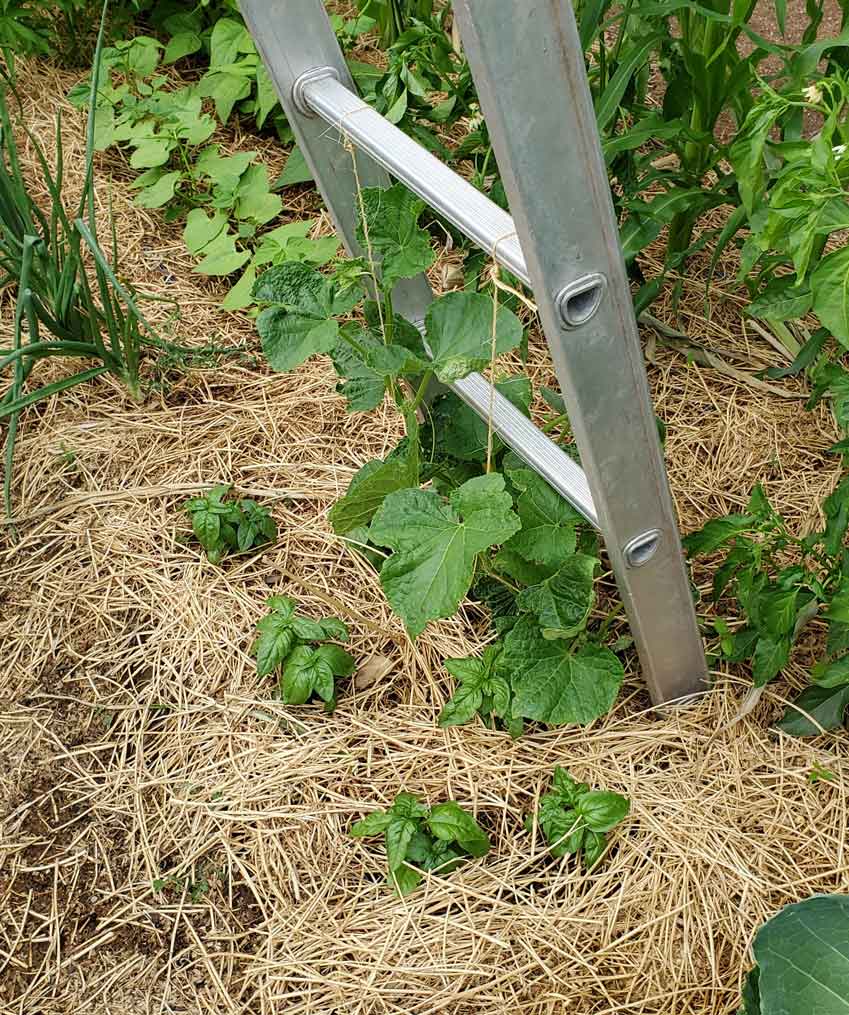
Corn is fun to grow. In a small garden, you don’t really get a lot of food for the space that corn uses, but those tall stalks play other roles as well. The shade they cast, especially in the afternoon, helps other plants grow in our hot, sunny climate. Pole beans, which can be planted around the new corn plants when they’re about a foot tall, will climb the corn stalks. Beans can also add nitrogen to the soil in partnership with certain symbiotic bacteria living in their roots. Flat Italian pole green beans are a true fresh garden delight! Almost any green beans — bush or pole — are easy and satisfying to grow.
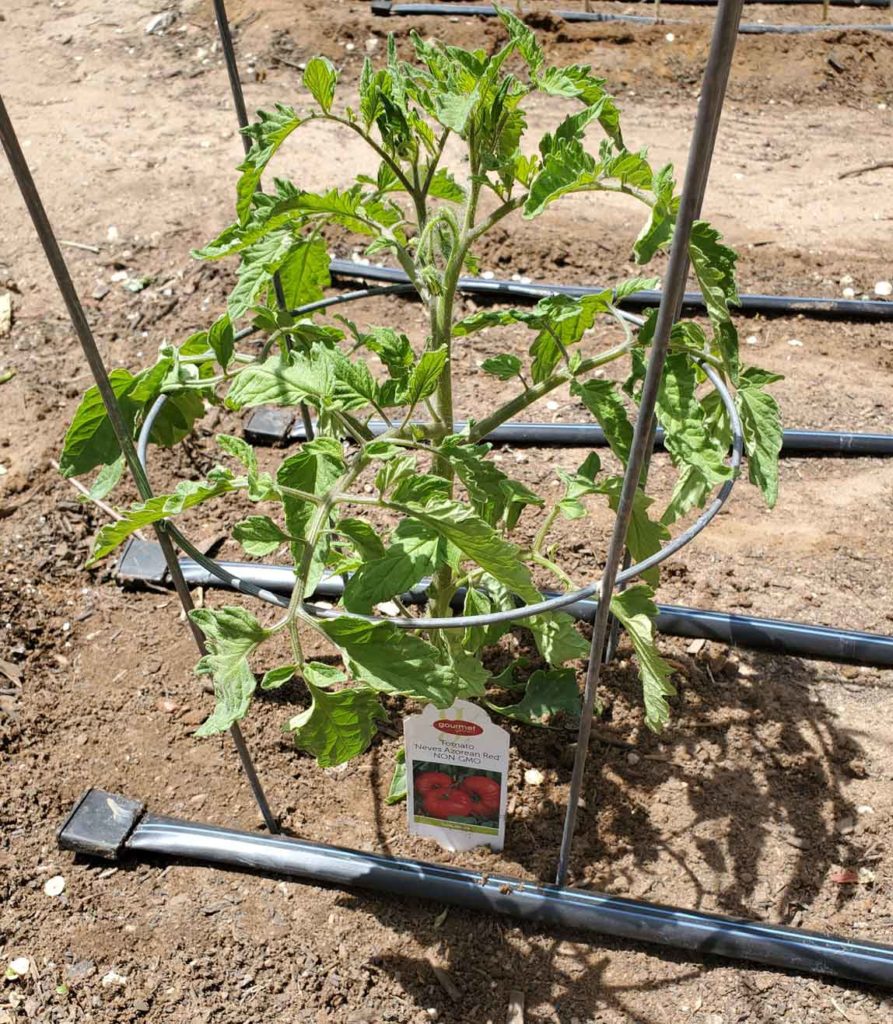
Tomatoes are an annual favorite for many gardeners. There are so many varieties of tomato plants, from short patio container plants and wild rambling cherry tomatoes to dense San Marzano paste tomatoes and Cherokee Purple slicers. The curly top virus can be a problem, but plants growing in light shade are less likely to contract the illness. Blossom end rot sometimes crops up and is most easily controlled with good mulching and regular irrigation. Adding some bone meal to the garden bed may help a bit, too.
If you have room for them to roam, consider planting watermelons! The smaller icebox varieties are a great size, and when planted in our area they tend to have few if any, pest and disease problems. They do, however, need an ample amount of water. Diversify your landscape by planting them in border flower beds where the vines can grow across the yard. They can take over small garden beds, so be careful where you plant them.
As the cooler fall temperatures arrive, lots of other veggies can be planted. Many of them should be seeded in August for fall harvest. Be sure to keep the seed beds moist and shaded a bit so the soil is cooler. Alternatively, you can start them in trays or little pots indoors. If they start to get long and thin, it’s a sign that they need more light!
Lettuce is a great fall crop. Romaine and butterhead varieties do well here and are distinct enough to add culinary variety. Other great greens for fall include spinach, kale and Swiss chard. Greens are high nitrogen users, so amend the beds again for fall planting, and periodically give them a light fertilizing with something like fish emulsion (smells awful, grows great plants!) or another soluble plant fertilizer.
Fall is also a great time to plant root crops. Both beets (botanically, the same plant as Swiss chard) and carrots do well in the autumn. Don’t try to start these in pots or trays. Root crops do much better when directly seeded into the ground. There are many gourmet varieties of both beets and carrots, even carrots that come in a mix of orange, yellow, white and purple colors. Shorter varieties are better for most home gardens, as the long ones require deep loose soil to form well.
All the cool season crops can be grown right through the winter if they are harvest-size by the time very cold weather hits. Keep them well mulched. As far as greens go, buy some spun-bound row cover material to drape over them. It’s amazing how well they will do with just a little protection. These crops can be started again in early spring for the spring, cool-season garden.
Learn more by checking out these other useful drip irrigation articles:
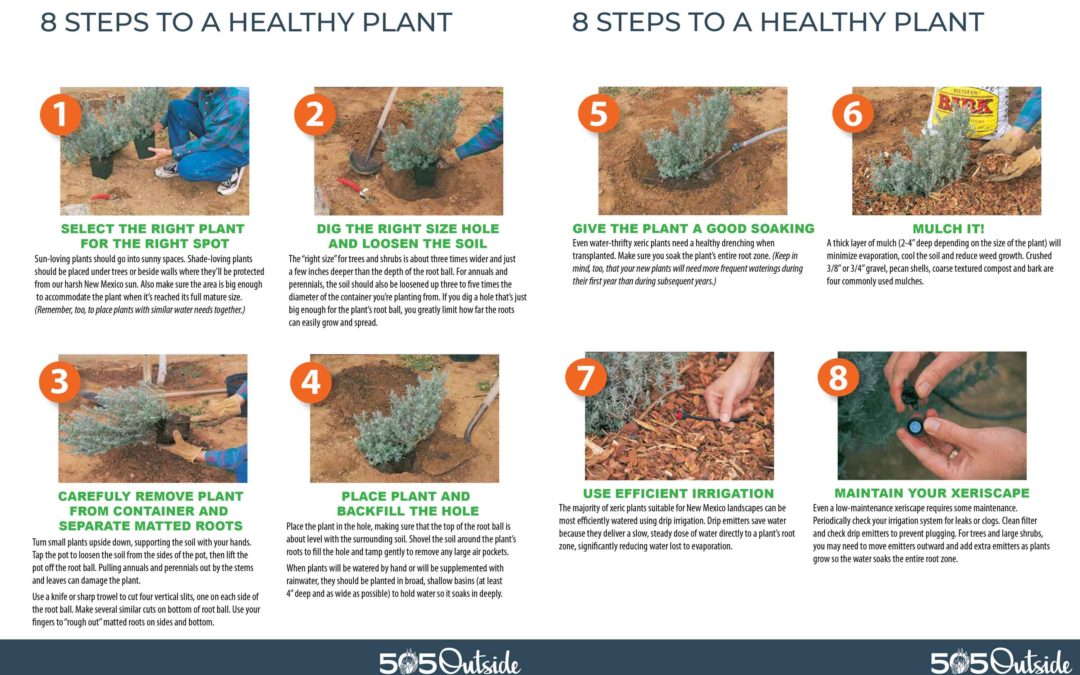
With spring fast approaching and many homeowners heading out to local plant nurseries, we want to remind you how to plant for a healthy plant. Choosing the right plant for the right place is the most important consideration. Once you’ve selected the perfect desert-friendly plant, installing and irrigating it correctly are the next steps for success.
Step 1: Select the Right Plant for the Right Spot
Sun-loving plants should be planted in sunny spaces. Shade-loving plants should be placed under trees or next to walls where they’ll be protected from our intense New Mexico sun. Be sure the area is big enough to accommodate the plant when it reaches its full mature size, and remember to place plants with similar water needs together.
Step 2: Dig the Right Size Hole and Loosen the Soil
The right size hole for trees and shrubs is about three times wider and just a few inches deeper than the depth of the root ball. When transplanting annuals and perennials, look at the diameter of the plant’s container and make sure the soil around the hole is loosened up three to five times the size of the diameter of the container. If you dig a hole that’s just big enough for the plant’s root ball, you greatly limit how far the roots can easily grow and spread.
Step 3: Carefully Remove the Plant from its Container and Separate Matted Roots
Turn small plants upside down, supporting the soil with your hands. Tap the sides of the pot to loosen the soil, then lift the pot off the root ball. Pulling annuals and perennials out by their stems and leaves can cause damage.
Step 4:Place the Plant in the Hole and Backfill the Hole
Place the plant in the hole, making sure that the top of the root ball is close to level with the surrounding soil. Shovel the soil around the plant’s roots to fill in the hole and tamp gently to remove any large air pockets. If plants are going to be watered by hand or supplemented with rainwater, they should be planted in broad, shallow basins at least 4” deep and as wide as possible to hold water so it soaks deeply into the soil.
Step 5:Give the Plant a Good Soaking
Even water-thrifty xeric plants need a healthy drenching when transplanted. Make sure you soak the plant’s entire root zone. Keep in mind that your new plants will need more frequent watering during their first year than in subsequent years.
Step 6:Add Mulch!
A thick layer of shredded wood chip mulch, 2”- 4” deep depending on the size of the plant, will minimize evaporation, cool the soil and reduce weed growth.
Step 7: Use Efficient Irrigation
The majority of desert-friendly plants suitable for New Mexico landscapes can be most efficiently watered using drip irrigation. Drip emitters save water because they deliver a slow, steady dose of water directly to the plant’s root zone, significantly reducing evaporation.
Step 8:Maintain Your Desert-Friendly Xeriscape
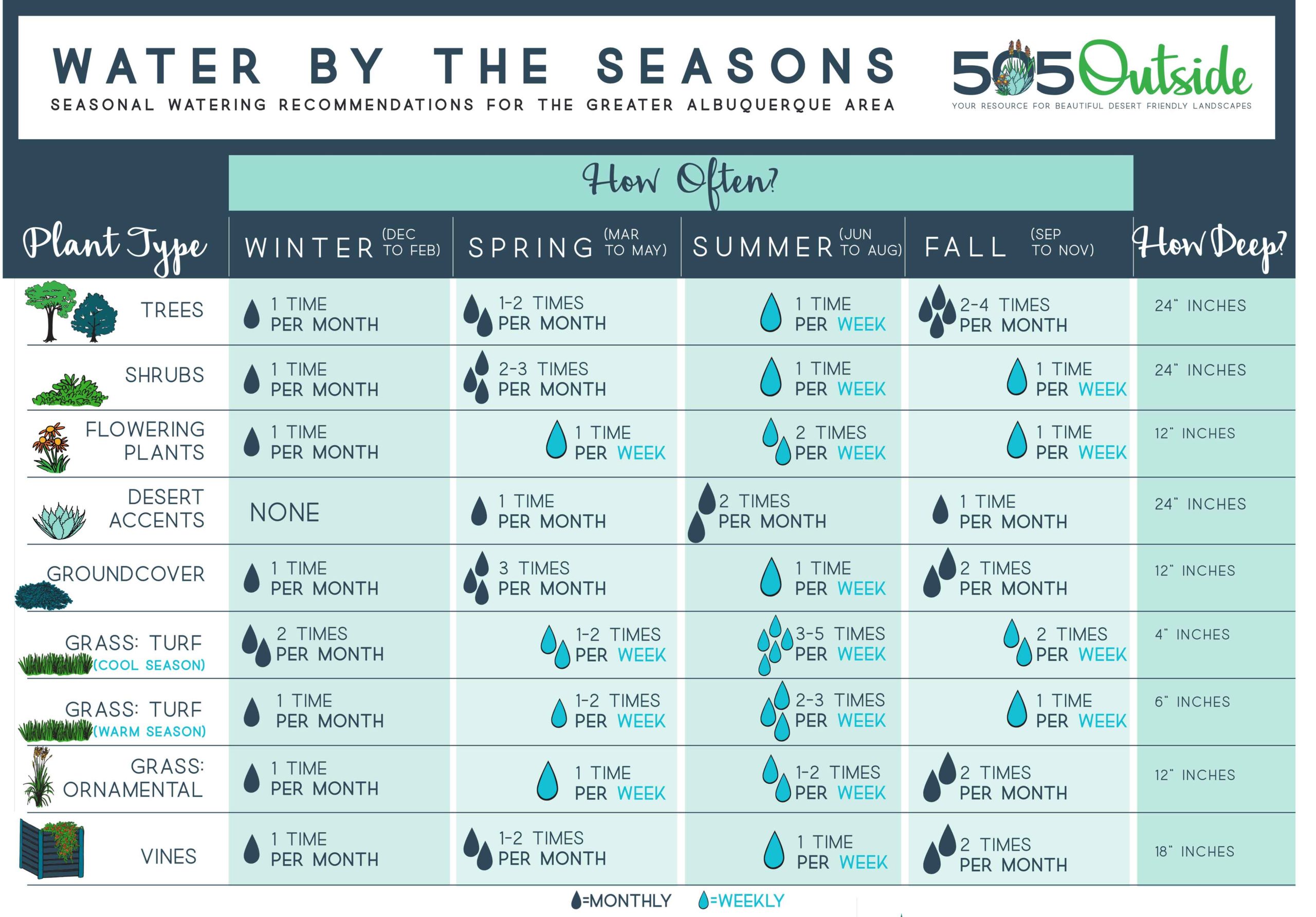
Even a low-maintenance xeriscape requires some maintenance. Periodically check your irrigation system for leaks or clogs. Clean the filter and check drip emitters to prevent plugging. For trees and large shrubs, you may need to move emitters outward and add extra emitters as plants grow to make sure water soaks the entire root zone. Use our Water by the Seasons Watering Recommendations for all your seasonal water needs.
Check out our free .pdf, display it in a visible place and use it when you start your spring plantings.
Learn more by checking out these other useful drip irrigation articles:
We are living in a time when our climate is going through rapid changes. Winter days have gotten warmer, and very cold nights are decreasing in number. The decrease in snowpack and early snowmelt that volatilizes before it soaks into the soil are creating drier watersheds, which are vulnerable to fires that can affect our water quality. Reduced snowpack affects streamflow. In order to take care of our Albuquerque landscapes, we need to rely on groundwater. When there’s a lack of precipitation, groundwater recharge is adversely affected. Less precipitation also means drier soils with little reserve moisture to maintain existing vegetation. Even if precipitation amounts don’t diminish, warmer temperatures affect evaporation rates from plant leaves and add to water stress. Supplemental irrigation demand is going to surge to maintain healthy landscapes. We need to implement adaptation strategies, like proper plant selection and smart watering methods, to make climate-ready landscapes a reality in Albuquerque.
We can prepare our landscapes for hotter summer daytime temperatures and warmer winters by following these strategies:
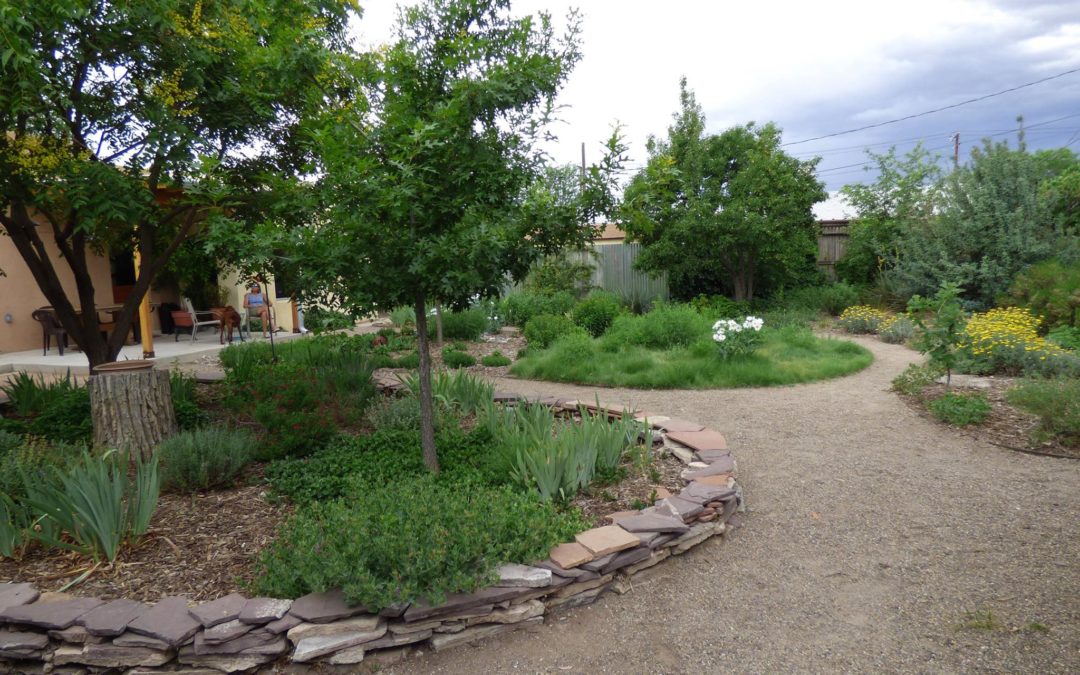
Shade surfaces: Plant trees and large shrubs against walls and near concrete to buffer sunbaked paving and cool walls that absorb heat during the day. By doing this, temperatures can be reduced by five degrees in urban areas.
Plant climate-ready trees: Check out the Climate Ready Tree list. This science-based list of trees that are most likely to survive our changing climate was put together by a diverse group of plant professionals. In mid-century, Albuquerque is projected to become as hot as El Paso, Texas. By the end of this century, our climate will become like present-day Tucson, Arizona.
Mulch everything:Mulchinsulates plant roots from both heat and cold, reducing moisture loss from the soil by evaporation, feeding beneficial soil microorganisms that enhance plant growth and improving soil health. Install 3-4” of mulch over bare dirt to reduce weeds, to enrich the soil and around all new plants to retain the moisture.
Remove or reduce turfgrass lawns: Lawns require 40 inches of water a year, compared with the 8 inches that Albuquerque gets. The greatest value of a cool- season turf is its resilience as a play surface, so if you aren’t regularly using it, consider removing it or installing a low-water grass or meadow.
Incorporate smart irrigation practices: Smart irrigation devices like smart controllers adjust the watering times based on local weather, thus saving water. Drip irrigation delivers water directly to plants. Efficient rotary spray heads reduce water use by 30% or more compared with regular spray heads.
By using these climate-ready practices, it will take less water to create a greener city, support wildlife and keep our community cooler.
Learn more by checking out these other useful drought articles:
Author: Judith Phillips, owner of Design Oasis, landscape designer, and garden writer with 30 years of experience designing arid-adapted and native gardens in the high desert. Have a question about the article? [email protected]
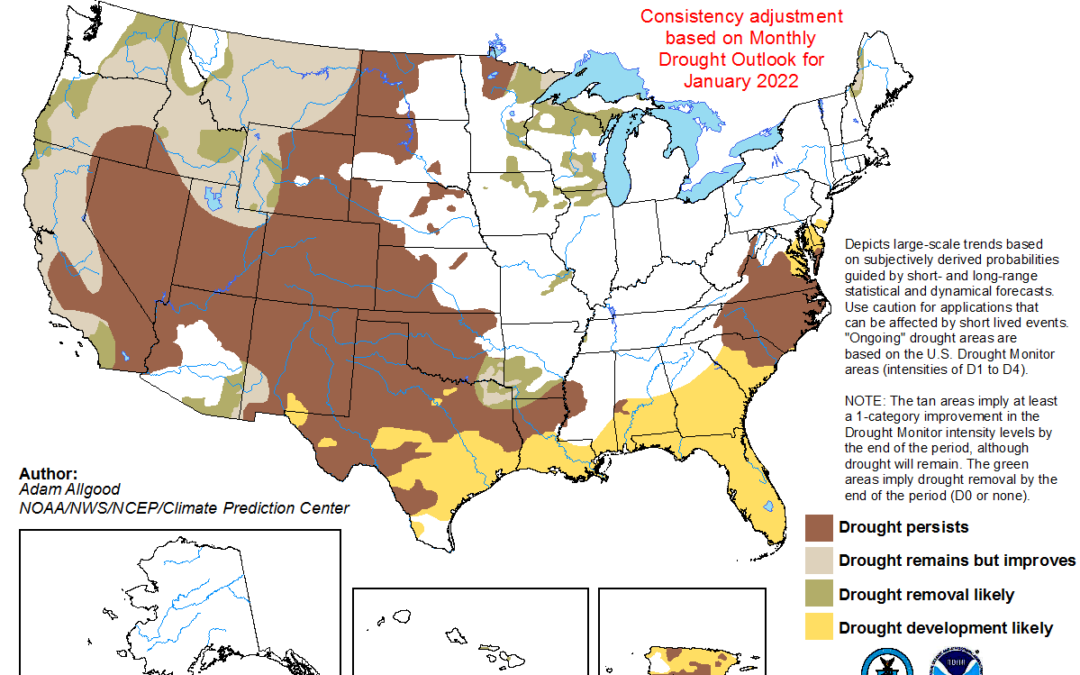
So far this winter season precipitation has been 30% below normal for New Mexico. According to the National Weather Service statewide average day temperatures are 56.6 degrees, which is 2.1 degrees above the normal of 54.5.
With that said, we are starting out the year with intensified drought conditions. Your landscape needs more care and attention when we are facing higher temperatures and low precipitation.
Here are a few suggestions for minimizing plant damage and mortality in times of drought:
Water mid-morning (around 10am) with a hose when it is above 40F. This way, water can soak into the ground and be absorbed by plants before the evening’s freezing temperature returns. Disconnect your hose and roll it up to drain after watering.
Don’t prune back shrubs and flowering plants yet. Let any additional plant material act as insulation that helps keep plants protected and, ultimately, healthier.
Top dress planters and beds, or around shrubs and trees, with your leaf litter or a 3” layer of shredded wood chip mulch. This will help insulate and regulate the root zone. By doing this, less water is needed to keep plants healthy.
Watering isn’t always needed in the winter when landscapes are dormant, but in times of drought follow this watering advice to keep plants healthy:
Trees and shrubs: Water plants deeply, trees especially, at least once this month unless we receive more than a half inch of rain or more than 6″ of snow.
Turfgrass: Water your lawn every other week this winter. NMSU conducted research on winter lawn watering and determined that in order to maintain optimal year-round health, your lawn needs to be watered twice a month in the winter.
Evergreens: Conifers are particularly susceptible to wind, which dries them out. Water them deeply a minimum of one time this month, but you’ll want to add about ¼ more water to evergreens than to other trees or shrubs.
Author: Carlos Bustos, Conservation Manager & Richard Perce, Irrigation Efficiency Specialist with the Water Resources Conservation Department for the Water Authority. Have a question about the article? [email protected]