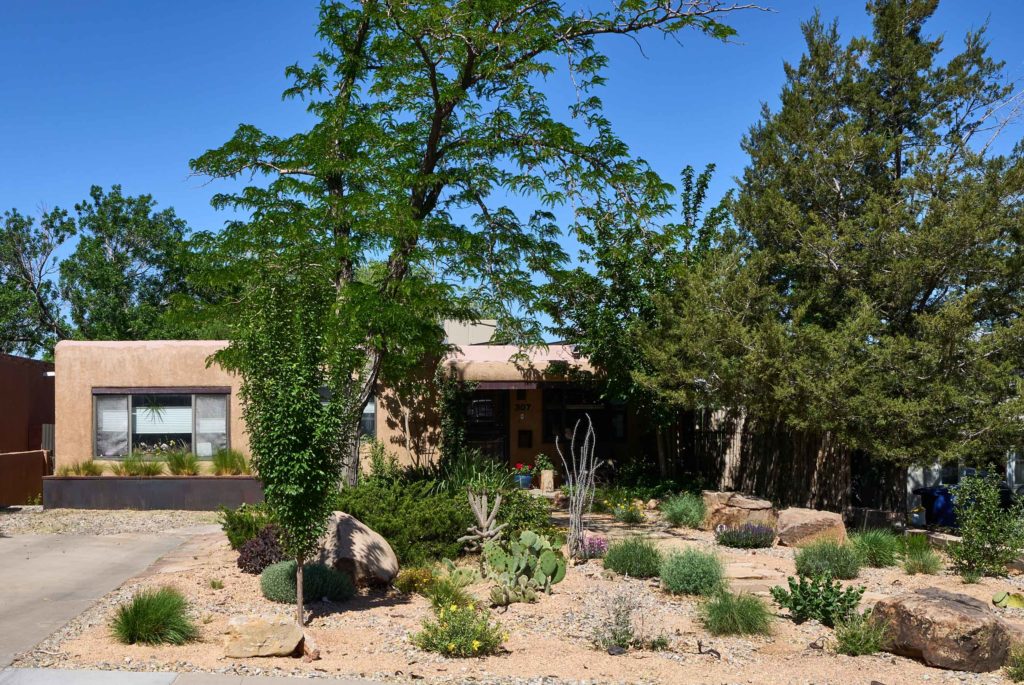
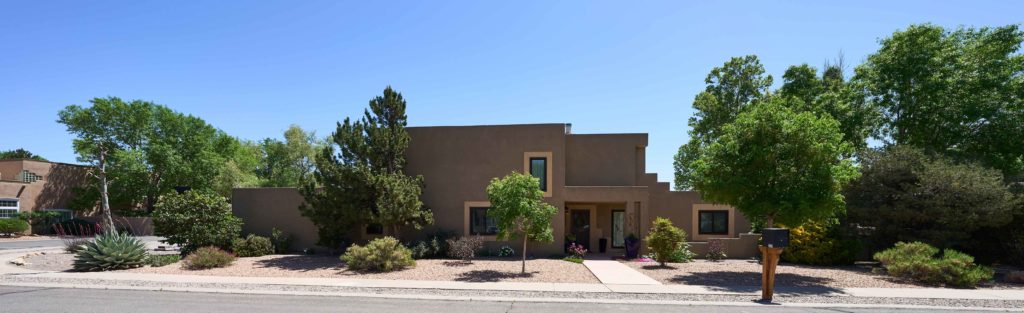
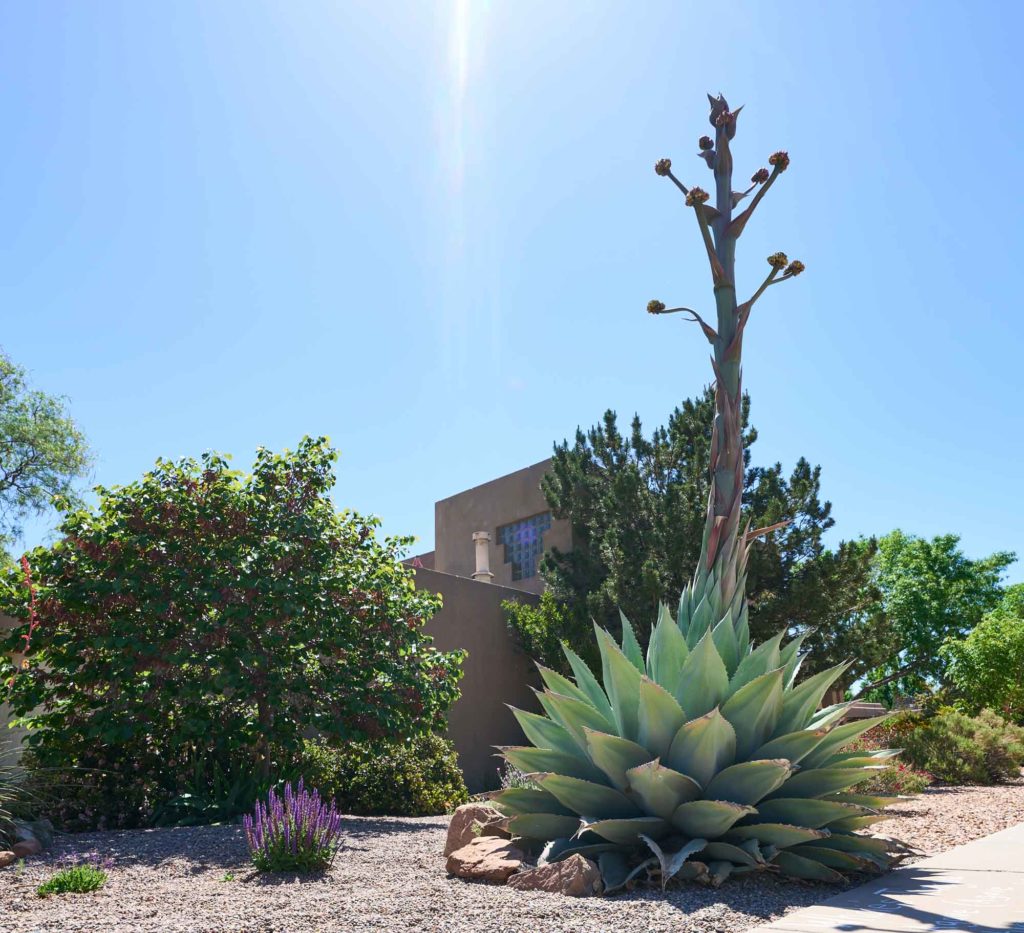
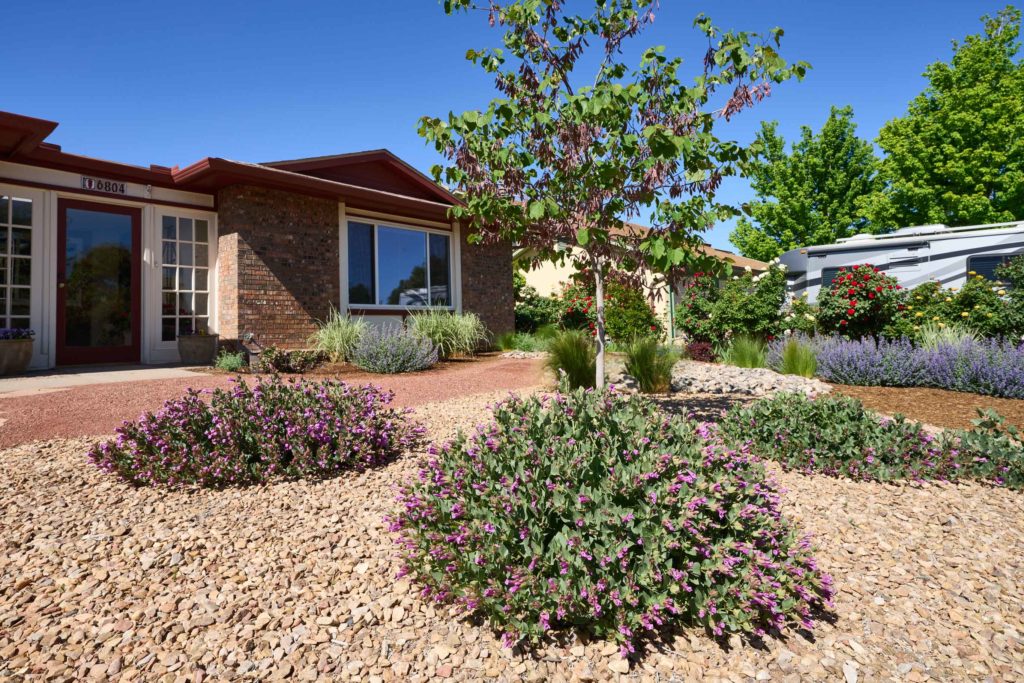
Pinyon-juniper woodlands are the largest forest cover type in NM, comprising 14.6 million acres and representing 65% of NM forests (according to USGS Gap Analysis Program–Land Cover Data). In contrast, the next largest forest cover types in NM are ponderosa pine at 5.2 million acres (23%) and mixed conifer at 1.5 million acres (7%). When it comes to junipers, New Mexicans either love them or hate them.
Those who dislike them talk about allergens and how junipers are overused, get sheared within an inch of their life and smell like urine. Those who like them appreciate their low water needs, climate adaptation, long lifespans and evergreen qualities.
Hate them or love them, Junipers are here to stay. They have so many useful qualities in our New Mexican gardens that they should be on everyone’s plant list. Choose females for no pollen, which is what is sold in local nurseries.
Below are some of the local favorites:
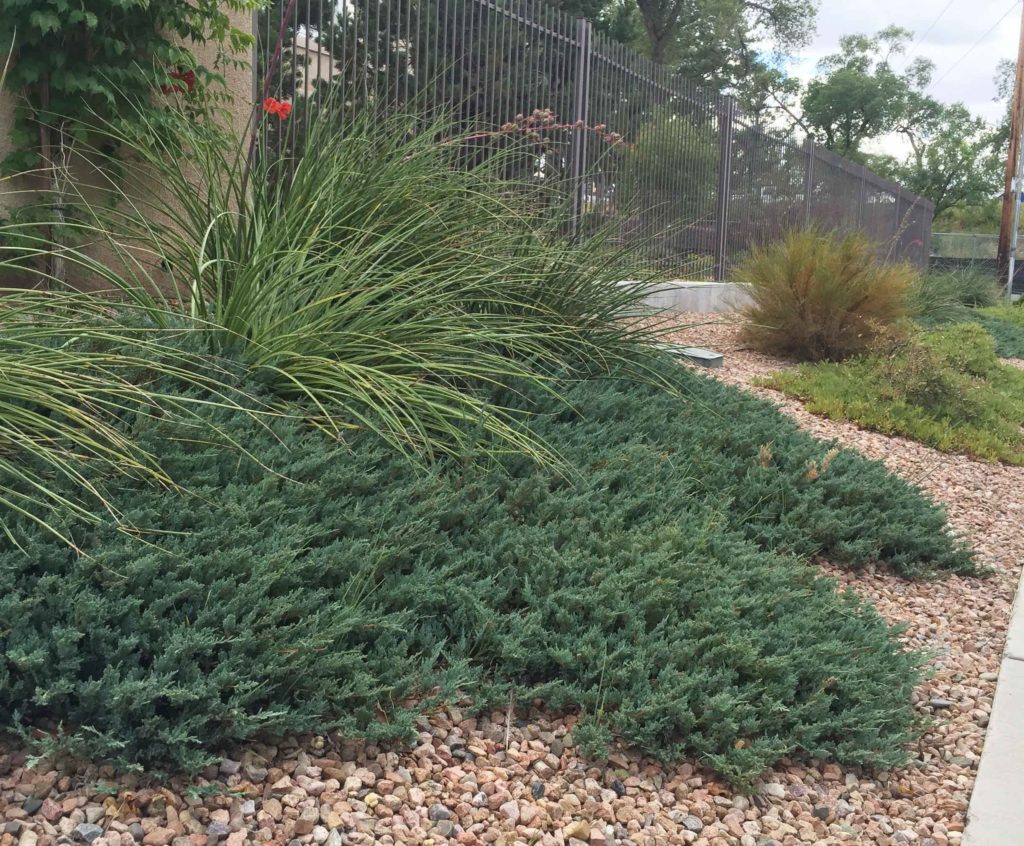
Carpet Juniper, Juniperus horizontalis. Blue chip, low allergen, beautiful color, low growing, does best in part shade. The species Juniperus horizontalis “Plumosa Compacta’, Andorra Juniper, is low growing 18”-20”, spreads 8’-10,’ green during growing season, burgundy in winter, looks great when planted in mass. Blue Chip is another great spreader that has beautiful year-round silver-blue foliage.
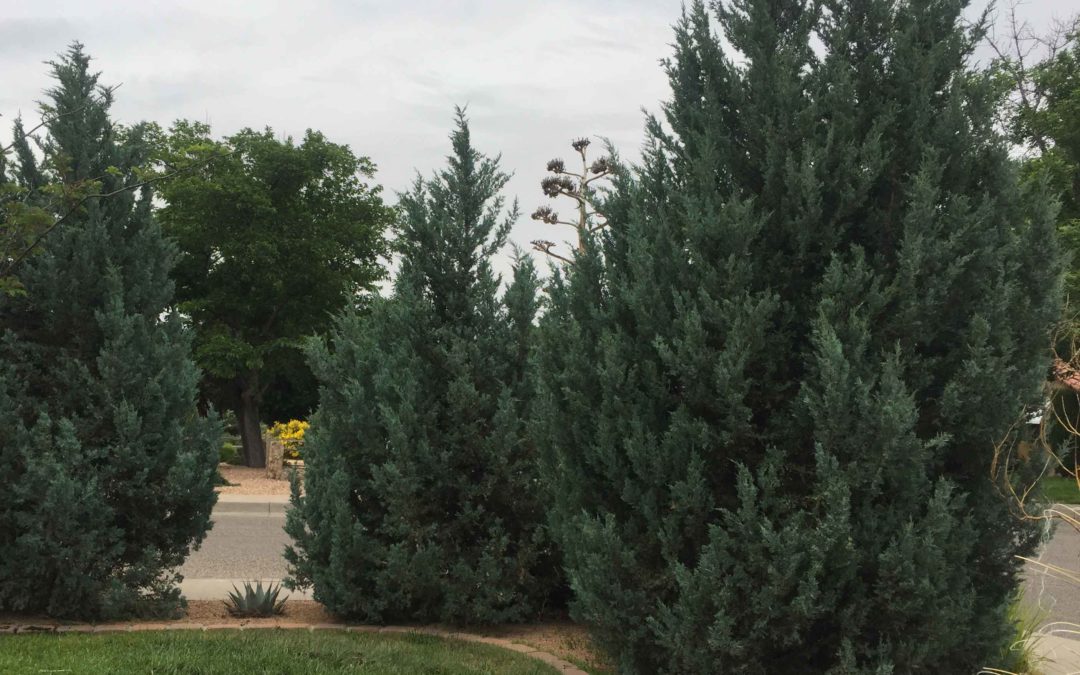
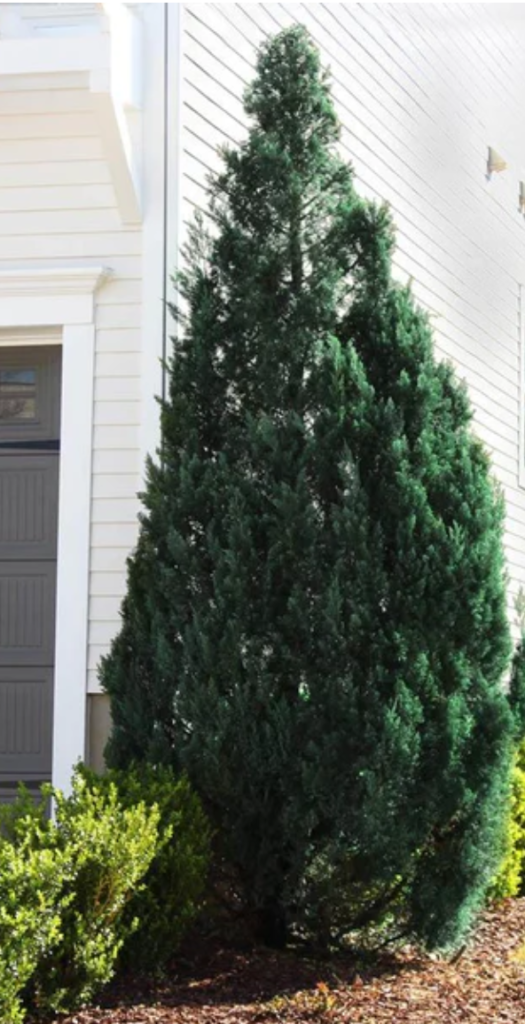
Blue Point Juniper, Juniperus chinensis Blue Point. This blue-green stately tree is pyramidal in form and has dense evergreen foliage. It makes a great windbreak when planted in lines and is a very nice front lawn Christmas tree, perfect for winter lighting. It reaches 12’ tall and is 8’ wide.
Rocky Mountain, Juniperus scopulorum, tall and narrow, dark green, tall. Pruning destroys the natural shape so it’s best to plant this in a place where it has room to grow up to 40’ tall and 20’ wide. There are many beautiful cultivars. Whichita Blue Juniper, Juniperus scopulorum ‘Whichita Blue’ is a beautiful shade of steely blue, year-round growing 10’-15’ tall and only 4’-6’ wide. ‘Skyrocket’ is a bluish-green narrow columnar tree growing 15’ tall and only 4’ wide, making it the narrowest of the juniper trees.
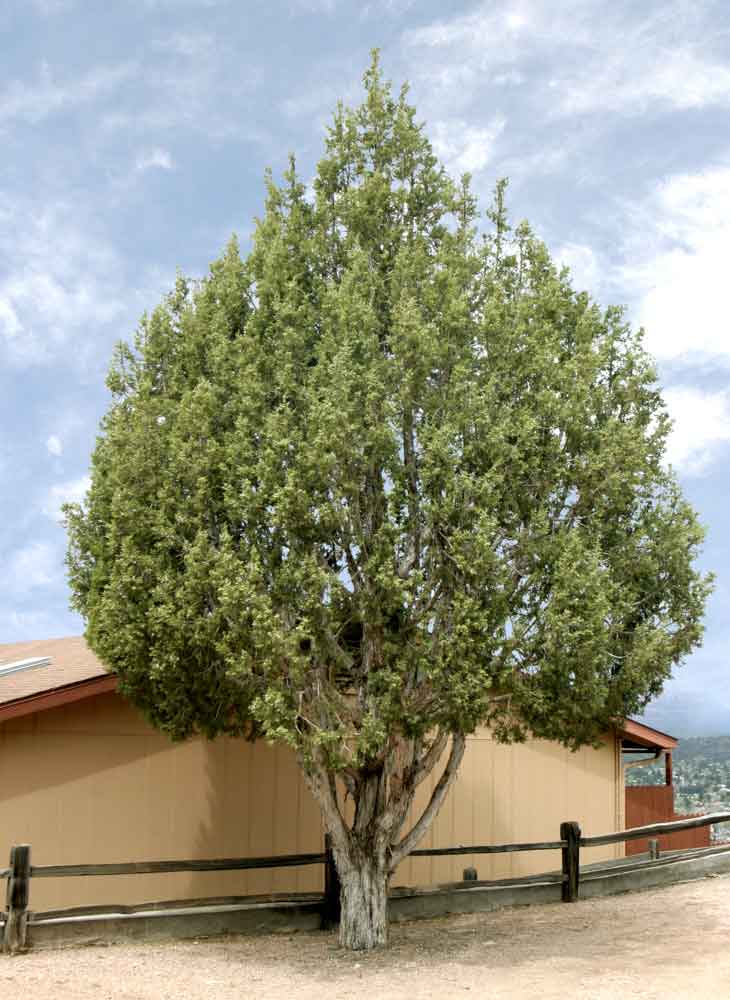
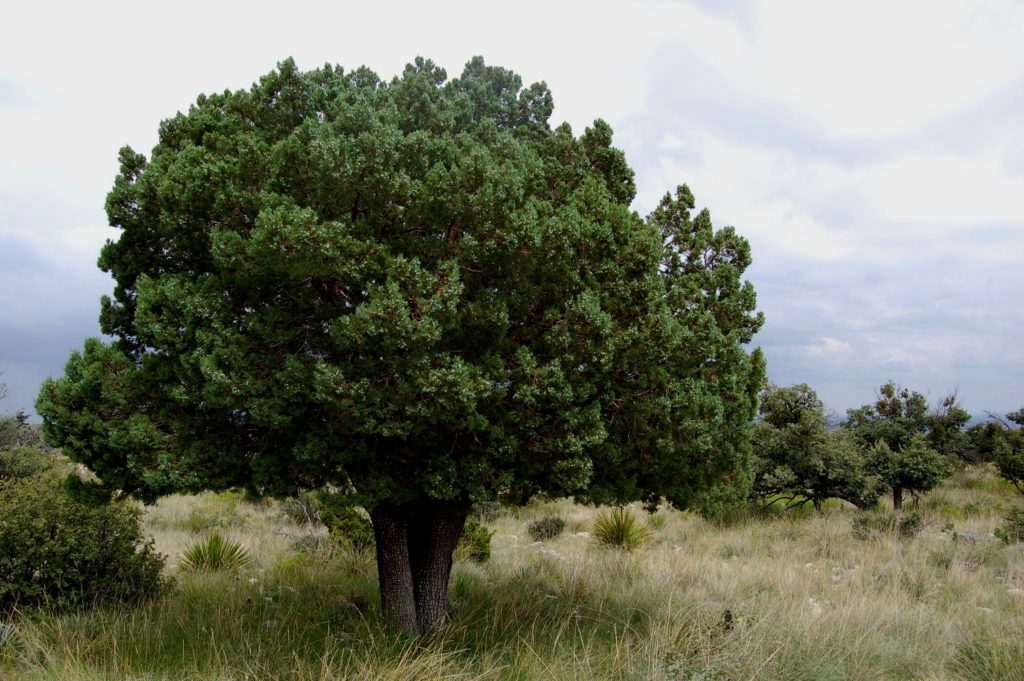
Alligator juniper, Juniperus deppeana, has blue-gray leaves. This tree has a thick trunk with bark that resembles that of an alligator. Unlike most junipers it has a stout, not conical, shape with great character and color. It can tolerate pruning.
Let’s give junipers a chance. If we let them follow their natural shape, these adaptable conifers are attractive, evergreen and sustainable survivors that provide habitat for birds and are quite useful in our landscapes.
Author: Jill Brown, ASLA, is a Landscape Architect and owner of My Landscape Coach in Albuquerque, NM. Have a question about the article? [email protected]
Thinking of putting some trees in your landscape but also concerned about making good use of the water, space and time? Some people like to plant fruit trees around the home landscape.
The obvious reason to grow fruit trees is the fruit! Just like there is no tomato as good as the ripe one picked right off the garden vine, there is no peach like the tree-ripened peach just outside your door. Growing fruit is not without challenges. Some people discover that the work required for a good harvest is more than they are up for. However, for others it is part of the gardening challenge that keeps us coming back for more.
Just like any other tree, fruit trees can play an aesthetic role in the landscape. They can be highlighted, or they can hide the blight beyond your fence. They can provide shade, cooling the outdoor spaces. They also can provide some level of wildlife habitat, whether it’s for the native bees that might pollinate the flowers or the little brown dickie birds pecking divots out of my ripening peaches. Well, they gotta eat too, I guess.
Fruit trees need all the things that any tree needs, which is sufficient rooting volume (it’s wider and shallower than you think), consistent moisture into that rootable soil and a mulch of some sort that covers and protects the soil. When they are grown for production in a commercial orchard, fruit trees also receive regular fertilization that may not be needed for a well-grown home tree usually producing more fruit than is needed. If you have fruit trees that produce more than you can use and give away, considering contacting a gleaning organization like Food is Free Albuquerque. They can bring volunteers to your property to pick the fruit, which is distributed through food banks to the local community. Fruit trees also benefit from regular annual pruning to maintain shape and size.
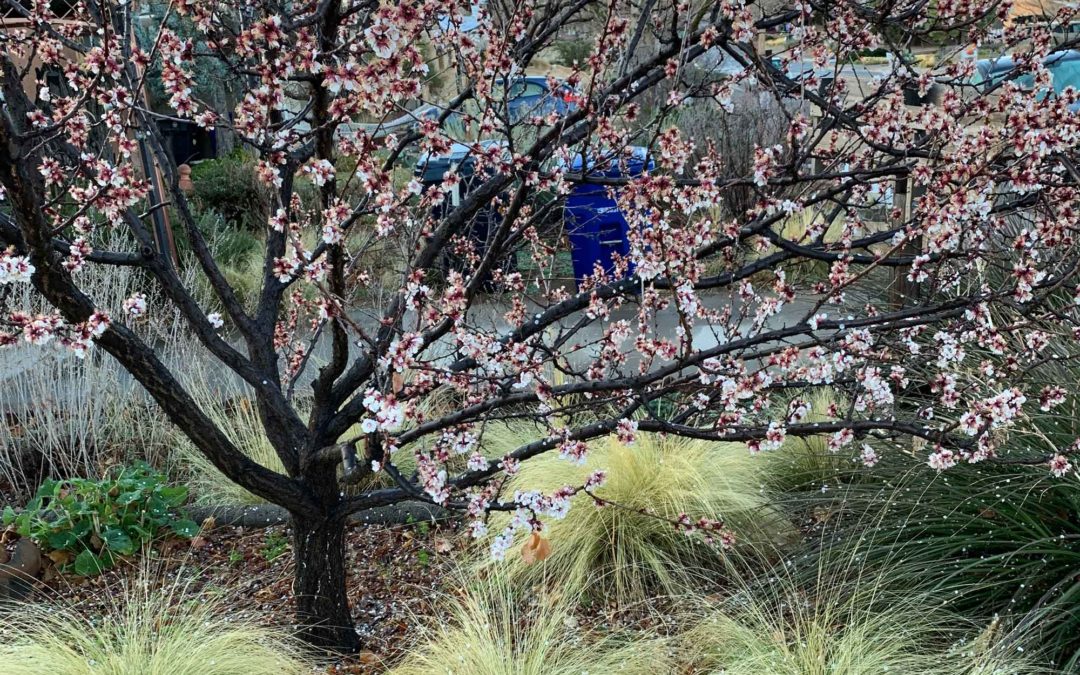
A large number of fruit species will grow well in our area. With peaches, one down side to them and other stone fruit species is their relatively short life spans, maybe 15-25 years in most urban settings. Other stone fruit species that do well for us are plums and cherries. Apricots grow well here but their early blooming often leads to last-frost crop death. Don’t worry, the tree is still fine. Of all the fruit trees, apricot may be the best for shading.
Apples also do well and are longer-lived than stone fruits. However, the fruit is more susceptible to insect damage, most notably the codling moth caterpillar (the infamous worm in the apple core). These can be controlled, with varying degrees of success, by trapping with pheromone traps. Timing is critical for that, and control may be incomplete, but more apples will be worm-free than without trapping. Codling moth also attacks pear fruit but to a much lesser degree. Fruiting pears can do well for us, though in some cases fire blight bacterial disease may cause a lot of damage and even death. Jujubes, Asian pears, Japanese persimmons and figs are all good choices as well.
There are several sources where you can buy your new fruit trees. I’m partial to online ordering from established mail-order nurseries. This approach offers the combination of variety choice and cost effectiveness. Keep in mind that mail-order trees are young and shipped out in later winter as dormant bare-root sticks. For a few reasons, this is an ideal type of plant to start working with if you have the patience to wait a few more years before getting fruit. Buying from local nurseries is fine as well, though it really pays to inspect the root ball condition carefully. If you’re very careful, even the big box stores can have good specimens.
Read up on proper planting techniques and early structural pruning approaches. For a tree, the transition from potted (or bare-root) conditions to fully in the soil is critical. Tree growth and longevity can be made or broken at this point. In a nutshell: Dig a shallow and wide hole, have the highest root at the top of the soil and mulch well. As the young tree grows, prune for strong attachments, ease of access and to help control total fruit load that can break branches in a bumper crop year. Early and aggressive thinning of the fruit can really help to prevent branch failure and also produces larger pieces of ripened fruit.
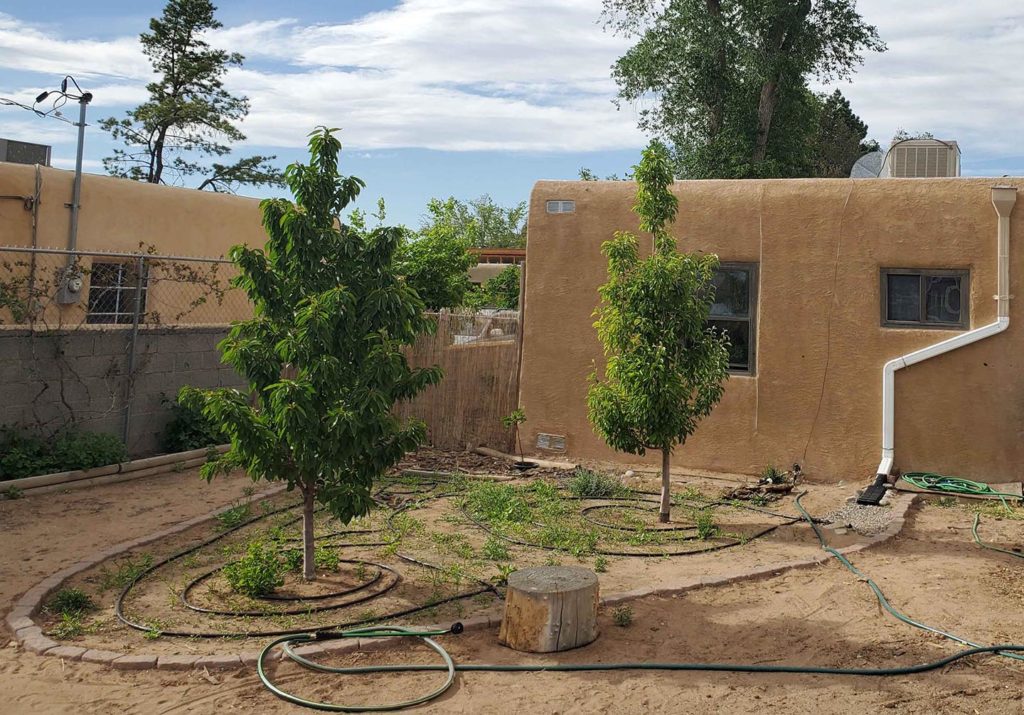
Un-mulched fruit trees showing inline dripline and roof runoff as watering system.
Author: Joran Viers, Senior Partner at Root to Shoot Urban Forestry, Inc. find him at [email protected] Have a question about the article? [email protected]
Congratulations to the ten winners of our first annual Water Authority Desert Friendly Landscape Contest! Thank you for sharing your beautiful gardens with us. They are an inspiration for others to make the switch to desert-friendly landscapes.
The transformation of adirt front yard into a Desert-Friendly Landscape
Many Albuquerque homeowners are interested in saving water, so over time they have turned off their sprinkler systems and let nature take its course. However, nature takes a long time to come back to life in the desert, which is why we see bare dirt yards all over the city.
When Katrina and Peter Nardini moved into their southeast Albuquerque house, it had a dirt yard. After observing the landscaping in neighboring yards, Peter came up with a plan for their property that included a hardscape path and a wide variety of plants. To make sure the hardscape path was put together properly, a landscape professional was hired to build the path and steps.
“We chose plants by looking at other yards, taking pictures, and then working with garden center staff on selecting plants,” Peter and Katrina explain. Attracting hummingbirds was foremost in their minds.
Fortunately, a drip system was already in place in their yard, although some of the components needed to be upgraded to extend irrigation to all the areas that supported plants. “Initially, we had the irrigation drip system running most days of the week to get the new plants established,” they said. “Now, we turn it on twice a week in the summer and only one time a week during the other seasons. We only irrigate trees in the winter season. Most of our other plants do well with rainfall and snow.”
Katrina and Peter are delighted with the diversity of native and drought-tolerant plants in their transformed yard. “Our fruit trees are our favorite. They provide us with shade, beautiful flowers, and fruit!"
Grassy Lawn to Low Maintenance
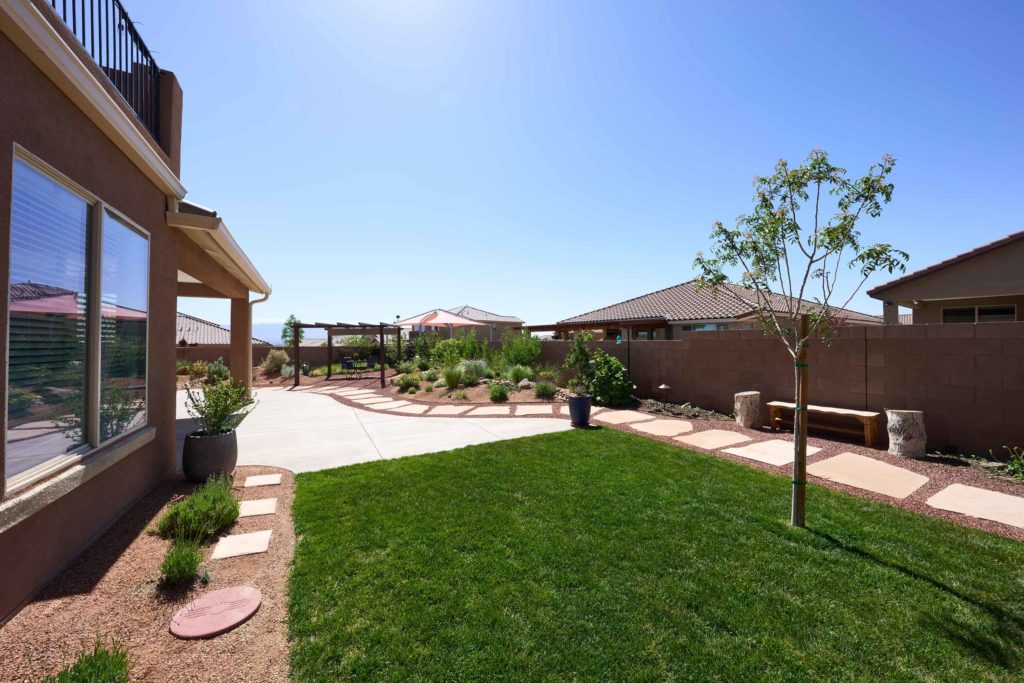
After growing tired of weekly lawn maintenance, mowing, trimming, and the expense of watering, Daniel Stromberg decided to get rid of the grass in the front and back areas of his northwest Albuquerque yard and create a drought-tolerant, desert-friendly space. The first order of business was to replace the sprinkler system with a drip system.
Daniel worked with several different companies and a friend who is a master gardener to come up with the right design and plant selection. There was a bit of trail and error in the process, but the result is a thriving yard with drought-tolerant and native plants that gives Daniel a great deal of pleasure. “These plants look and do much better in the yard,” Daniel explains.
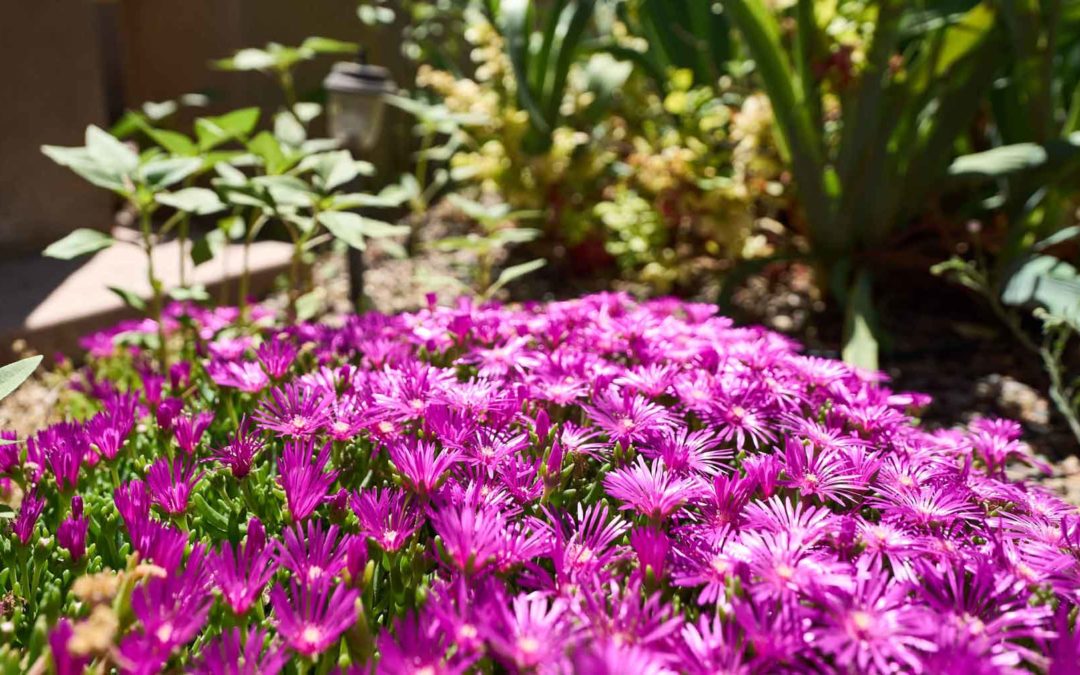
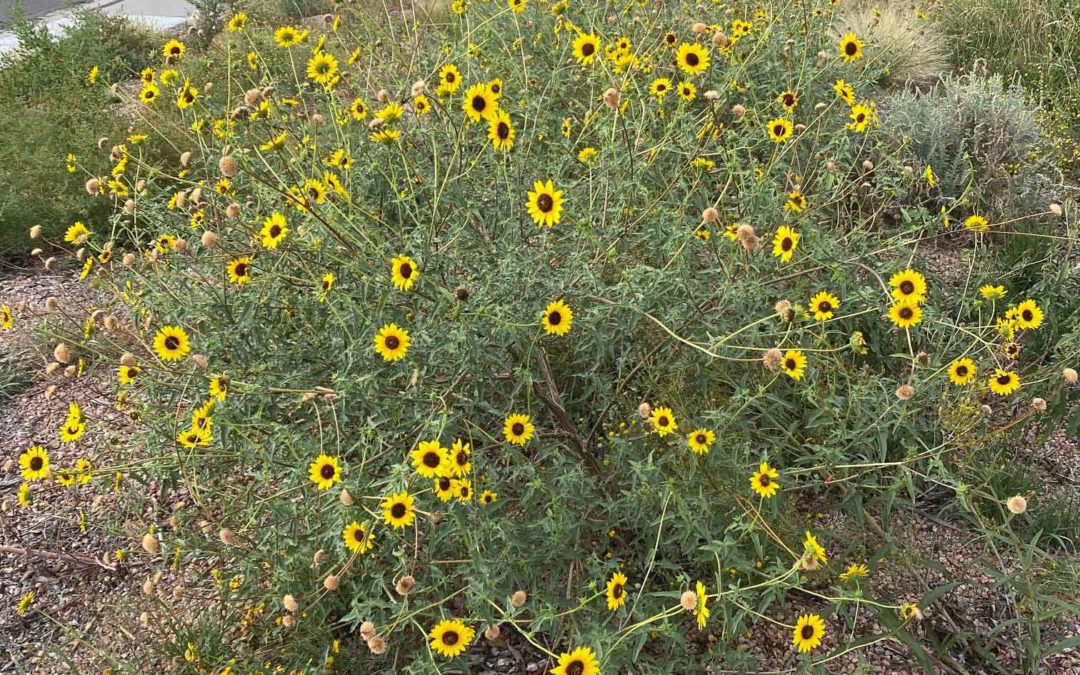
Transforming the yard from one that was high-maintenance to an easy-to-take-care-of space that requires little work was worth the effort, Daniel says. He is most proud of his sunflowers, whale tongue agave, ice plants and giant desert willow.
Containers are an easy way to add a splash of color to your garden, porch, balcony or patio, without ever having to dig a hole in our hard New Mexico soil. While you could drop pansies or geraniums in a pot and consider it complete, you could also plant a truly stunning container garden full of color, texture and fragrance. The right combination of plants arranged properly in a planter can be magical. After that, you only need to keep things watered and fertilized as you enjoy the colorful design all season long.
1. Choose the Right Container
Containers have their own unique characteristics to consider, including weight, appearance and sensitivity to weather changes. Also, consider your budget, space and style when selecting them. Keep in mind that the larger the size, the less you'll need to water. But whatever you choose, make sure your containers have good drainage.
2. Select a Color Theme and Plant Combinations
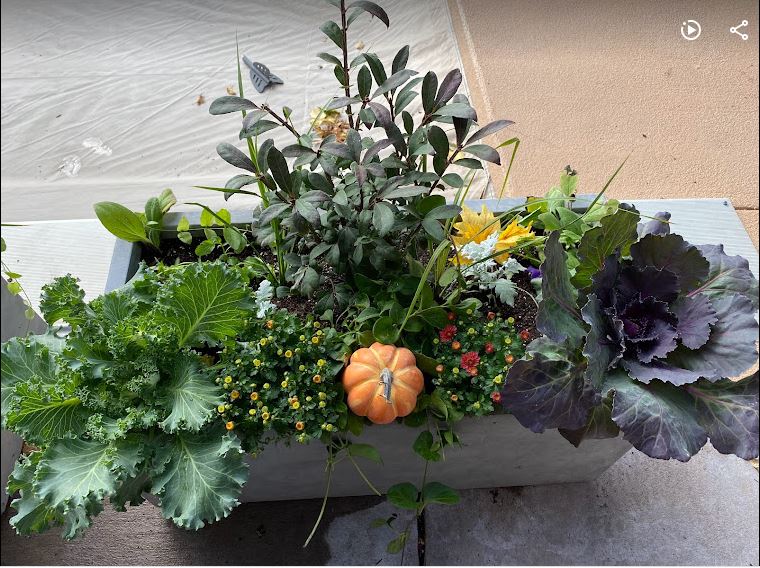
Starting with a color theme for your container garden can help with plant selection. When combining plants in your containers, it’s important to make sure they all have the same light requirements and watering needs. A good rule of thumb is to plant in odd numbers and combine three types of plants — thrillers, fillers, and spillers — in each container to add interest and balance to your design.
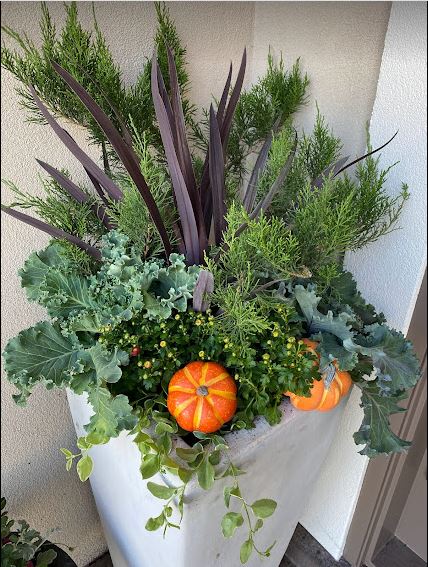
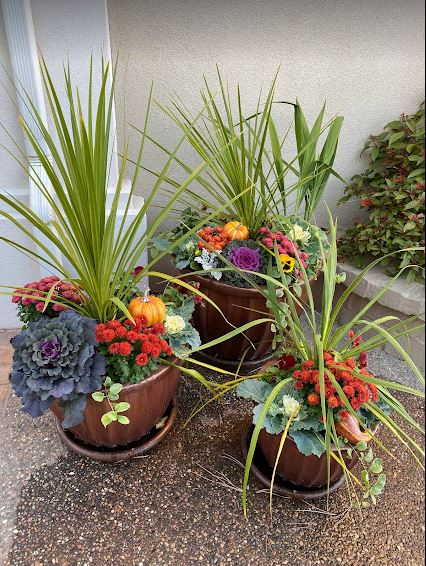
“Thriller” plants are the centerpiece of your design. They add height and a bold vertical element. Options include plants chosen for foliage, ornamental grasses or other upright plants. In larger containers, small shrubs or trees, topiaries, spirals and other vertical selections can be used. Thrillers typically go near the center of a container, but they can also be put toward the back of the planter, depending on its final location.
“Filler” plants tend to be more rounded and make the container look full. These are generally placed in front of or around your selected thriller. In a narrow, long container like a window box, fillers are placed halfway between the edge of the container and the thrillers. Violas, pansies, dusty miller, ornamental kale/cabbage, ornamental peppers, geraniums and mums are just a few of the many options for autumn fillers.
“Spiller” plants literally spill out of a container. If your container garden is going to be visible from all sides, be sure to place spillers all the way around. Some favorite autumn spillers are licorice plant (Helichrysum), English ivy, Dichondra 'Silver Falls', ivy geranium and perennial vinca (minor or major), also called periwinkle. I am especially fond of some of the brighter vinca varieties like Illumination or Wojo’s Gem.
3. Fill the Container with a Good Potting Mix
Once you've selected plants and a container, it's time to get started! Fill your container about two-thirds full with a good quality potting mix. If you have a really large planter and would like to use less potting mix, you can use empty water bottles or smaller empty nursery pots or containers turned upside down to take up some of the space in the bottom of the container. Fill around them with potting mix until your container is two-thirds full.
4. Arrange Plants in Your Container
When you're ready to add plants, remove the plants from their nursery pots, gently loosening the root ball with your fingers. Place them in your container and add soil, stopping about two inches from the top of the container to leave enough space for watering.
5. Water Your Plants
Water your container garden thoroughly to help the soil settle. After watering, add more soil if needed to insure good root coverage. Check your containers every 2-3 days, and when the top two inches are dry, it’s time to water again. Don’t forget container plantings may need water twice a day when it’s hot, especially if it’s also windy.
Don't be afraid to add different types of plants, such as annuals, perennials, herbs, cold-hardy vegetables, and even small shrubs, to the same container. The important thing is to select plants that require the same growing conditions. I really like using dwarf Alberta spruce or lemon cypress as the vertical element, surrounded by licorice plants, pansies/violas, dusty miller and ornamental cabbages. I will occasionally add artificial gourds, pumpkins and other décor to make them even more festive.
With a little planning and creativity, you can put together stunning container designs that can be enjoyed all season long.
Congratulations to the ten winners of our first annual Water Authority Desert Friendly Landscape Contest! Thank you for sharing your beautiful gardens with us. They will be an inspiration for others to make the switch to desert-friendly landscapes.
A Garden for the Senses
What once was a sandy empty lot in the NW has now become a garden that provides food, attracts birds and other pollinators and stimulates the five senses. “The flowers smell great through the seasons, we grow vegetables that we use on our plates,” say homeowners Adam and Meagan Henrie, who like the balance of having aesthetically pleasing and functional areas in the garden.
The Henrie’s accessed online resources, including 505Outside.com, to help decide which plants to incorporate into their garden. During trips to local garden centers, they identified plants that were thriving in their neighborhood. They chose low-maintenance, drought-tolerant plants and installed a drip and spray irrigation system using the latest technology. Local irrigation supply stores helped them choose irrigation system components and come up with a design for the irrigation system that they could follow.
When they planted new trees, they turned to the Water Authority and took advantage of the Treebate from the Water Authority. This rebate program also helps them with costs for tree maintenance.
“We love that our oasis attracts pollinators like birds, bees, butterflies, and also other wildlife like rabbits and roadrunners,” say Meagan.
100’s of Pollinators Can’t be Wrong!
The landscape around Elliott house in the NE used to be a sea of gravel, but now it is recognized by the Fish and Wildlife Backyard Refugee Program. During the past several years, Elliott has spent time transforming his yard into a habitat that attracts insects and wildlife.
“I wanted a yard that will change through the seasons and has a diversity of local drought-tolerant native plants,” he explains. “My goal was to add plants that will attract pollinators, so I started with the ones that were growing in the wild.”
Elliott learned about plants by doing lots of research, including reading information on the Albuquerque Native Plant Society’s website, accessing a list of plants from the Backyard Refugee Program, and visiting the store Plants of the Southwest. His goal was to have a lush, diverse and sustainable landscape that benefits wildlife and does not depend on supplemental water outside of rainwater.
Like the Henrie’s, Elliott has taken advantage of the Water Authority’s Treebate when planting new trees.
“I love all the pollinators, diversity of plants, and my learning journey along the way. Now I get to educate and share my experience with others,” says Elliott, who hopes his yard is an inspiration to his friends and neighbors.
Low Water Paradise
With the goal of reducing water usage, the owners of this home in the Northeast Heights first turned their attention to the property’s big, hardly-used front lawn. Once they learned about the Xeriscape rebate from the Water Authority, they immediately called to get more information and help with choosing plants that would enhance their property.
The transformation started by renting a sod cutter to remove the lawn as part of the Desert Friendly Xeriscape Conversion Rebate. They were able to save the turfgrass and transplant it to their son’s yard.
Landscape professionals were hired to create a design and install the swale, plants, and drip irrigation system. It only took one week to transform the 880-square-foot front yard from a high-water use turf lawn to a desert-friendly xeriscape with a diversity of plants that are supported by rain and drip irrigation.
Because of the transformation, the homeowners earned an $880 credit on their water bill! An extra benefit came when they participated in the Treebate program. Now, the homeowners take pride in their yard, which has attracted pollinators and interest from neighbors. They also are learning how to maintain and care for their new plants so their landscape will continue to bring enjoyment in the years ahead
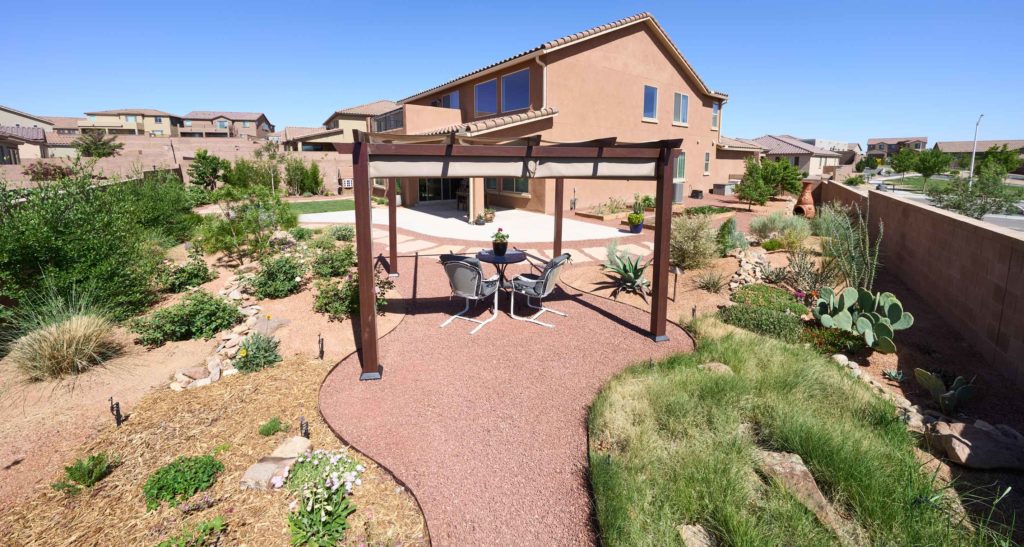
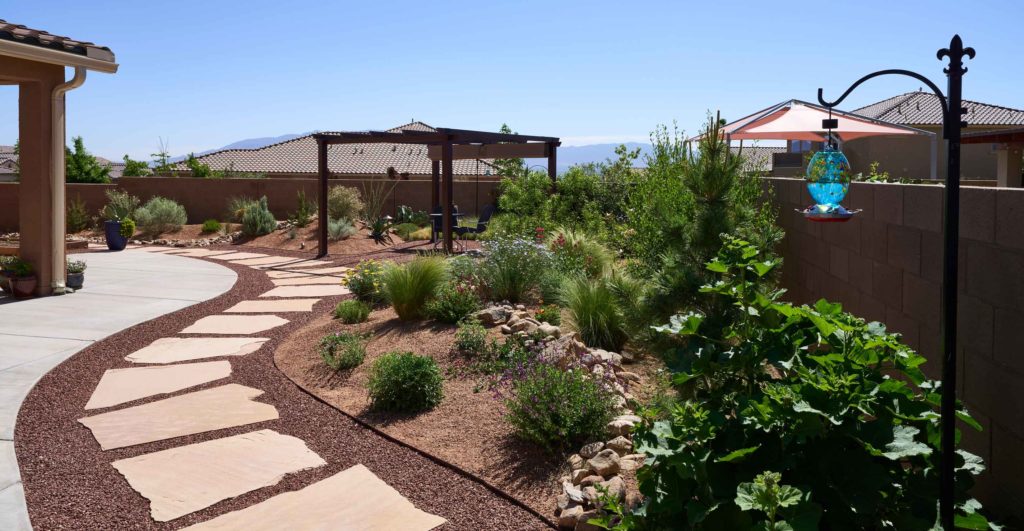
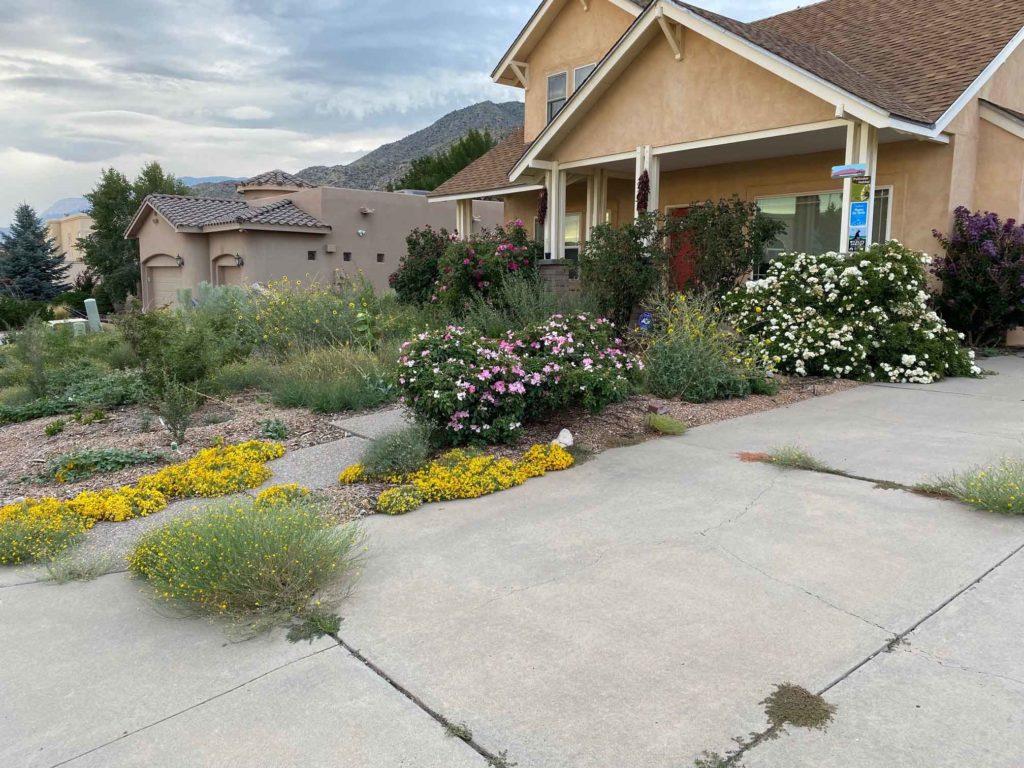
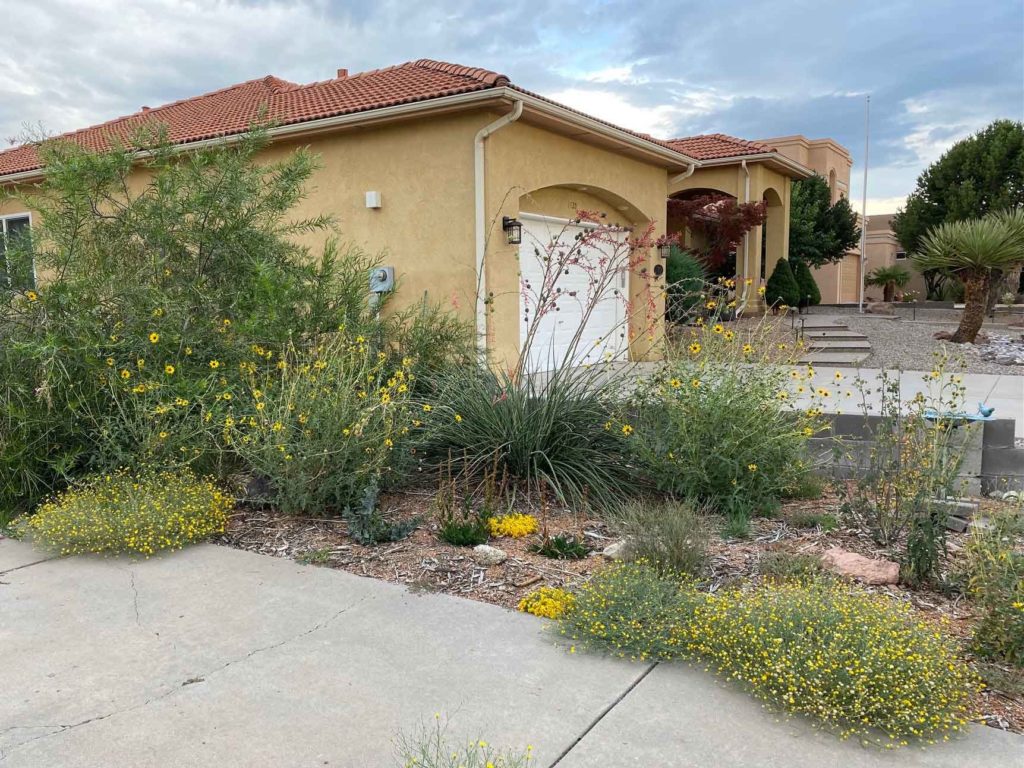
In these long, hot days of summer, especially if the summer rains don’t come, many plants really suffer from a lack of water. By incorporating native and very adapted plants into the landscape, we can still have attractive landscapes that don’t require a lot of irrigation, maybe even none in a good year!
These native plants are sometimes referred to as “luxury consumers." Their evolution, in an arid climate that occasionally has wetter years, has given them the ability to subsist reasonably well on low water. When there is an abundance of water, they take advantage of it and really grow. This kind of luxury growth may happen only every few years. In really dry years, they will lose some outer canopy. This adaptability helps them survive and even thrive in our natural landscape.
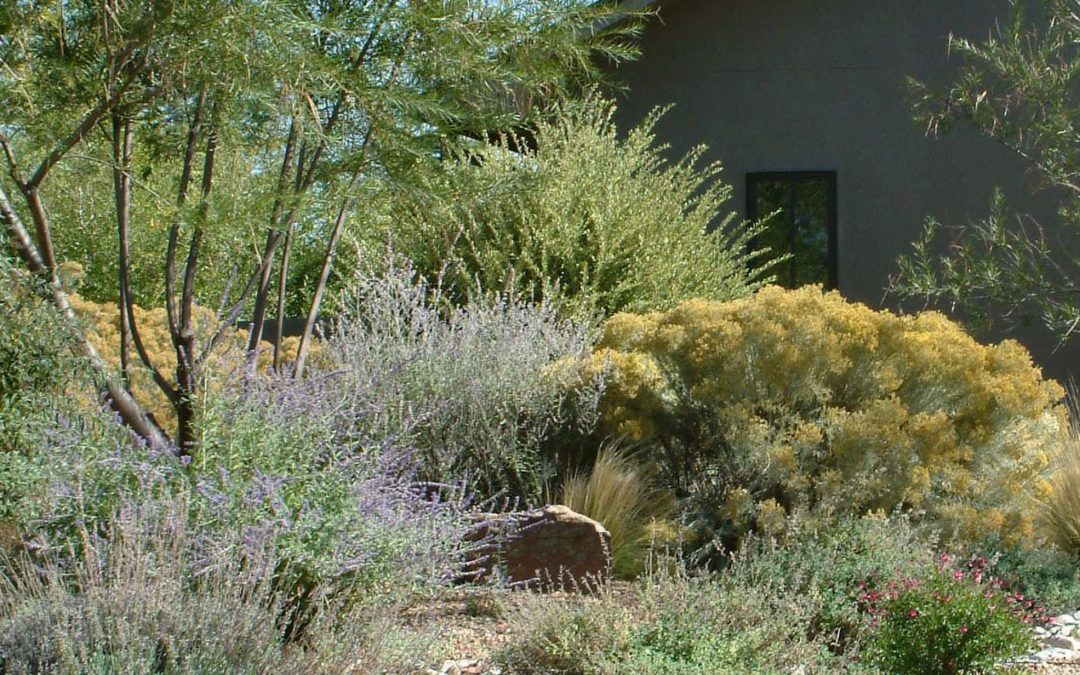
Among the plants that fit into this category are trees, shrubs, and native grasses: desert willow, Apache plume, three-leaf sumac, four-wing saltbush, chamisa, turpentine bush, and Mexican thread grass. There are others of a similar nature; native plants that really don’t need regular abundant water. Cactus is another type of plant that is easily over-watered. You might even end up killing it with too much water, as its roots rot away in constantly moist soil. If cacti don’t die, they may end up taking over a space.
One of the great aspects of xeric plants is that they are low maintenance. Small trees and shrubs live happily for years without needing pruning. Single stands of attractive, waving silky-looking grass seed heads don’t become a billowing menace when they quickly spread beyond the designed zone.
These plants should be irrigated regularly the year of planting but should be weaned to a lean water budget before they get too used to luxury living. A luxury level of irrigation should be saved for fruit trees and shade trees — plants that actually need that amount of water and produce fruit and shade.
To help save water, look for water harvesting opportunities in your landscape, especially when deciding where to plant. Where does water come off the roof, and where does it go on the ground? If you can redirect that roof water to a high spot that will flow into the yard — and maybe even contour the yard in shallow, subtle ways to get that water to spread out and slow down and sink in — then you can take advantage of the water by planting strategically along the flow line.
Mulches are a great water-saving step for native trees and shrubs. Rock is too hot for most things, except for ocotillo and some cacti, so use coarse chipped tree waste. Some local tree companies offer free mulch. Keep sunlight off bare ground around the plants and you will slow down evaporation from the soil while reducing the ambient air temperature enough to make a difference to the plants living out there all day, every day.
As far as shearing goes, this kind of pruning creates very tight outer canopies with lots of leaves (the resulting growth that follows previous cutting), usually in a simple geometric shape. Native plants that have less dense outer canopies end up having a higher water budget due to the excess foliage grown by shearing the canopy. A natural form could have the same overall size but with a more open, interesting branching framework supporting a more natural leaf density, and all of that on less water. It’s best to let the plant’s nature express itself through the form it grows without a lot of interference and to prune strategically to highlight well-placed branch systems and balanced mass.
Author: Joran Viers, Senior Partner at Root to Shoot Urban Forestry, Inc. find him at [email protected] Have a question about the article? [email protected]