Irrigation systems have grown more efficient by leaps and bounds in recent years to maximize water savings. Now, many systems can even communicate with you via your smart phone or computer. There are some tried and true, if under-used, pieces of equipment you can add to your system that are inexpensive, easy to install and don’t require a ton of technical know-how. And the Water Authority is offering a rebate on them!
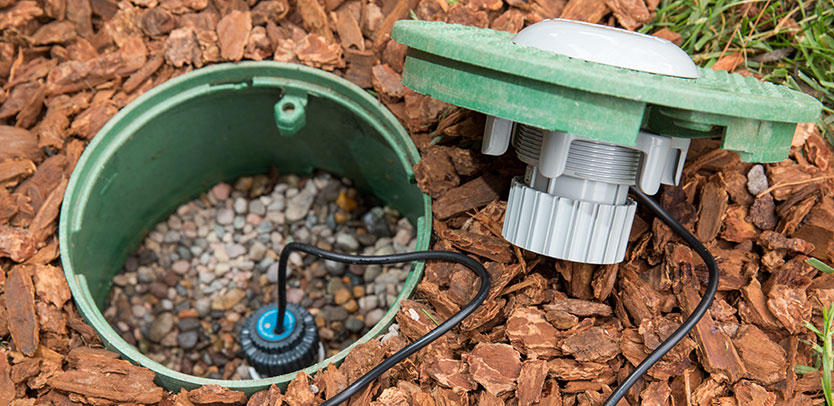
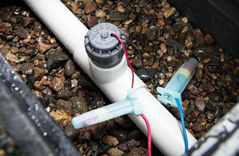
Flow sensors are inexpensive gadgets that can alert you of a broken line or a broken head in your turf. Flow sensors on main or lateral lines can be set up to “learn” what the normal flow for each zone is. The sensors then monitor the flow, and if there is a change in flow outside of the norm (either low or high), they will shut down the water line with the issue. A flow sensor provides the following benefits:
Some flow sensors can record and transmit how many gallons you use each time you water.
Flow sensors can save you hundreds or thousands of gallons of water by either shutting down a malfunctioning system, or warning you of one, or both.
Visit your local irrigation house to see which model and brand are compatible with your system and earn rebates of 25% up to $100 including purchase and professional installation. Learn more at irrigation efficiency rebates.
Pro Tip: “Flow sensors are great for all commercial installations and for savvy homeowners who want to know how much water their system puts out. The key is to not mix brands. Instead match the brand of your controller with the brand of your flow sensor. ” says Loren Dunlap of Sierra Irrigation, local supply store in Albuquerque.
Flow sensor photo courtesy of Hunter Industries
Author: Richard Perce, Irrigation Efficiency Specialist with the Water Resources Division for the Water Authority. Pro tip:Sierra Irrigation. Have a question about the article? [email protected]
Use a
pressure gauge to verify that sprinkler heads are operating at recommended
pressures, and check and clean all system filters.
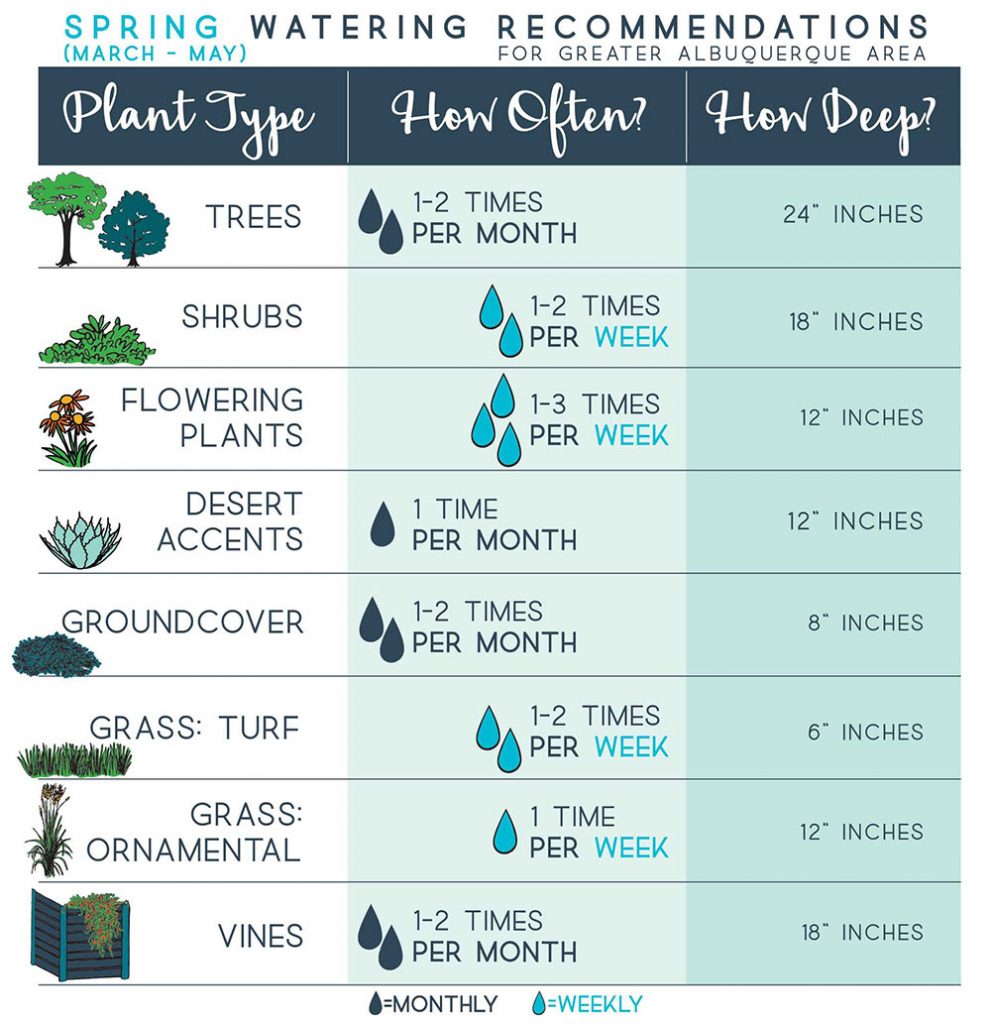
Watering Recommendations: Time to follow our Spring Watering Recommendations. Remember, if it rains more than a half inch you can skip your next scheduled watering time as there is there’s no need for supplemental irrigation.
Your irrigation system is only as good as its aim. Adjust sprinklers and emitters to make sure they are delivering water to the landscape and not onto rocks, bare earth or pavement.
June is a great time to check and replace any clogged spray nozzles or drip emitters. Remember, each spray head also has its own filter insert that needs checked as well.
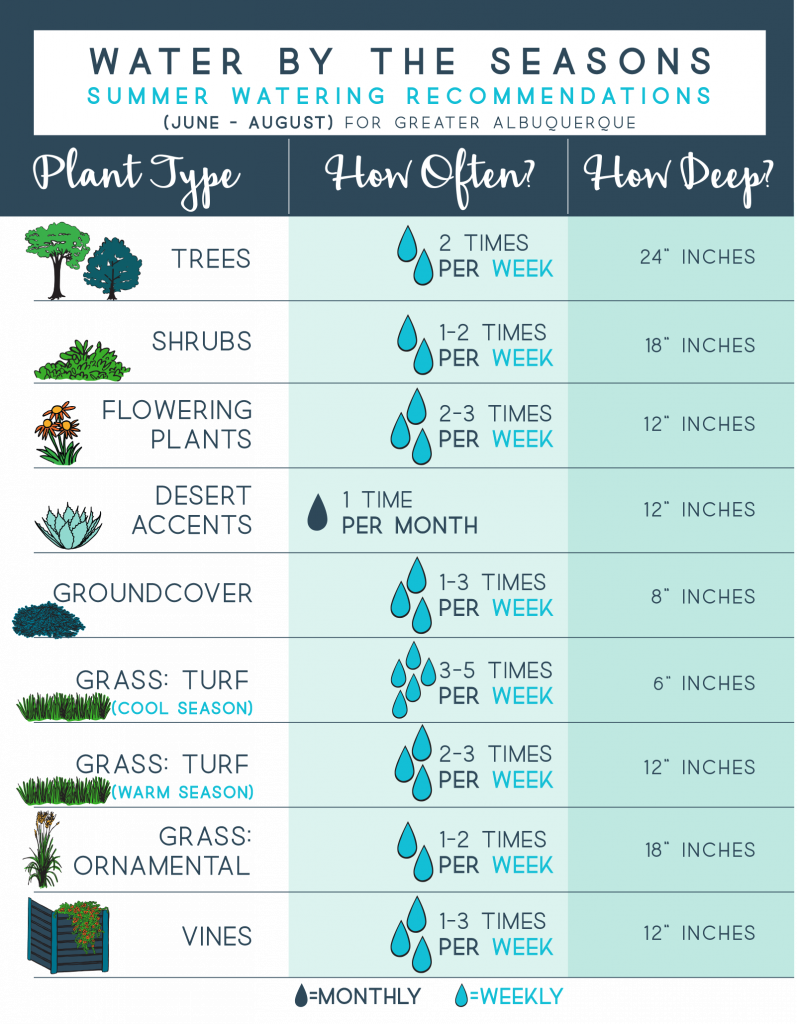
Watering Recommendations: Summer is here and so are hotter temperatures! Follow the Water by the Seasons Summer watering recommendations to keep your yard looking healthy. For turf, water 2-3 times per week. Start watering your trees and shrubs 1 time per week to keep them looking good.
Remember, if it rains more than a half inch you can skip your next scheduled watering as there is no need for supplemental irrigation.
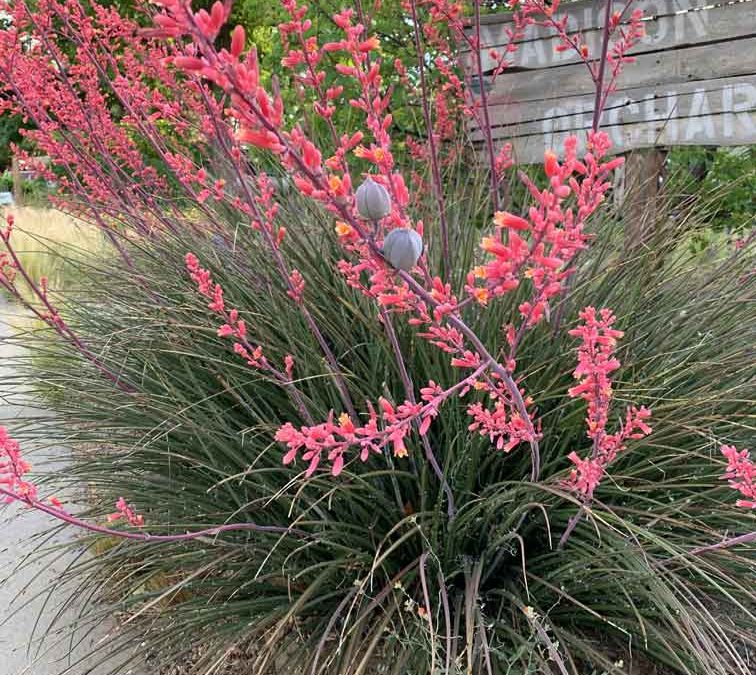
Effectively grown in dry and sandy soils, the Red Yucca is a standout for its drought and heat tolerance. The beautiful red to pink flowers bloom from May to October and attract hummingbirds, butterflies, and bees. It’s a great accent plant for that sunny spot in your yard.
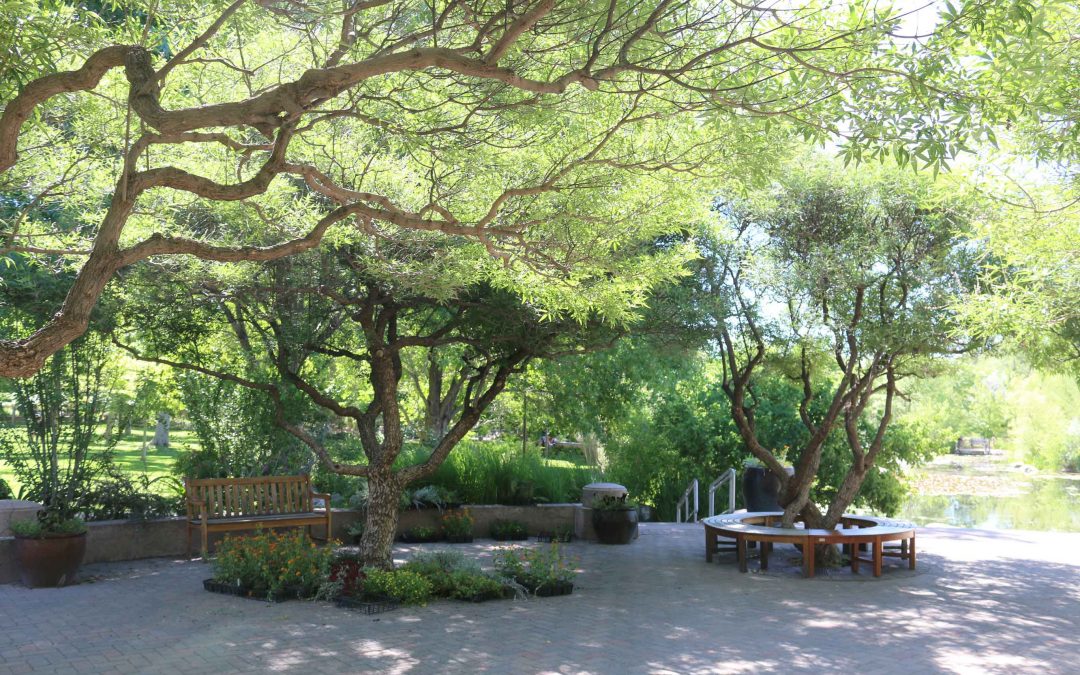
Our urban forest (yes, the trees in your landscape are part of a forest) provides so many benefits too us – cooling, increased home values, beauty, and better mental health just to name a few.
Here’s what you can do to help keep your members of our urban forest as healthy as possible.
1. Water your trees to a depth of about two feet, because 95% of the tree’s roots are in the first two feet of soil. To check if you are getting down to that two-foot optimum, insert a long screwdriver or soil probe into the soil around your tree a day after watering to determine the depth the water has reached. Adjust your watering time, if needed, to reach that two-foot goal.
2. Water your trees a little inside and outside of the canopy edge (the outer ring of the tree’s leaves) because that is where the roots that take in water are located.
4. Check your trees for signs that they aren’t getting enough water: wilted leaves early in the morning, scorched leaf edges, twig die-back from the top down or a sparse leaf canopy.
5. Take advantage of rainwater by directing downspouts or canales toward existing trees. Consider planting new trees in lower areas to take advantage of captured moisture.
6. Surround your trees with 4-6 inches of organic mulch. Organic mulch helps to retain soil moisture, keeps soil temperatures more consistent, and keeps weeds out. Additionally, over time it loosens compacted soil, adds organic matter, and slowly adds nutrients to the soil. Note: organic mulch does not include bark (sometimes called ‘bark nuggets’ or ‘deco bark”). Use actual wood chips like what comes out of an arborist’s woodchipper. Many tree services offer wood chips for free and several local businesses sell wood chip mulches in bulk.
Author: Amos Arber, ASLA, ISA Xeriscape Incentive Inspector with the Water Resources Division for the Water Authority. Have a question about the article [email protected]
If you suspect
you have an indoor leak, or if you have questions about your landscape and
irrigation system, call our experienced staff for a free one-hour educational phone
consultation. To sign up, visit https://rebates.abcwua.org/ or call 505-842-9287 and press option 4.
Our staff will respond to your
request and schedule a one-hour call between the hours of 9:00 a.m. - 3:00 p.m. Monday - Friday.
We will offer
two types of educational phone calls:
Indoor Leak Consultations consist of a full walk through, via telephone, on how to
identify and repair leaks. We aim to educate you on the most effective method
to check for leaks in your home. Topics include, but are not limited to:
How to read your meter
Identify and repair malfunctioning fixtures (tubs, faucets, toilets)
Identify and repair malfunctioning equipment (swamp coolers, water softeners, hot water heaters)
Finding underground leaks
Historical water use
Landscape and Irrigation
Consultations will answer many of your landscape and
irrigation questions. We will also be able to troubleshoot specific situations
and walk you through projects and offer advice and guidance where we can.
Topics include, but are not limited to:
Irrigation scheduling and start-up
Maintaining and repairing broken irrigation systems (it’s easier than you might think!)
Plant identification and basic plant suggestions
Planting and irrigating edible landscapes, including vegetable gardens