Most irrigation work can be done by the homeowner, except for one component. Tapping into your home's main water line needs to be done by a licensed contractor to ensure it is completed safely. To help homeowners know how to select and work with a contractor, we have provided the Irrigation Association's Irrigation Consumer Bill of Rights in the Appendix.
To make sure you have an efficient system, we highly recommend that you hire a professional irrigation designer to create a custom plan. Having a custom plan minimizes water waste and the chance of problems in the future and also helps ensure an efficient distribution of water, which reduces water usage. We also recommend asking a designer to produce a "call-out" list of all the parts required for the installation or renovation. This helps homeowners decide whether to DIY or hire a contractor.
SEPARATINGIRRIGATIONZONES&HYDROZONING
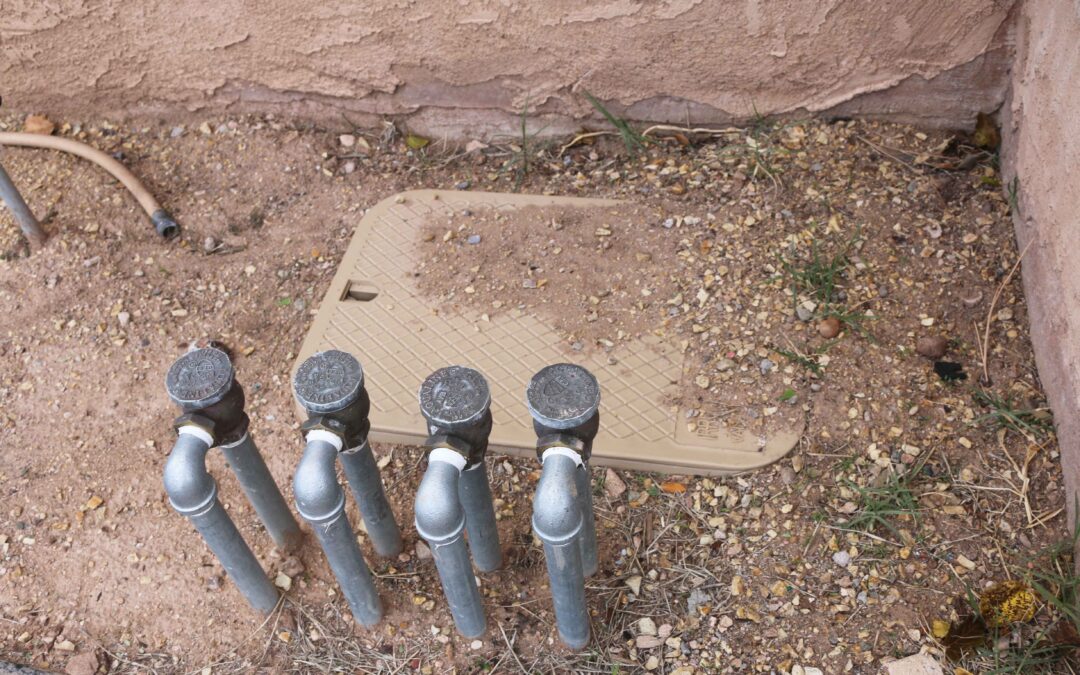
When you begin to plan a drip system, whether you’re installing a new system or retrofitting an existing system, it is imperative to design it so the drip valves are separate from your lawn valves. If you plan to grow a vegetable garden or water annual beds with a drip system, those areas also need to be on separate valves.
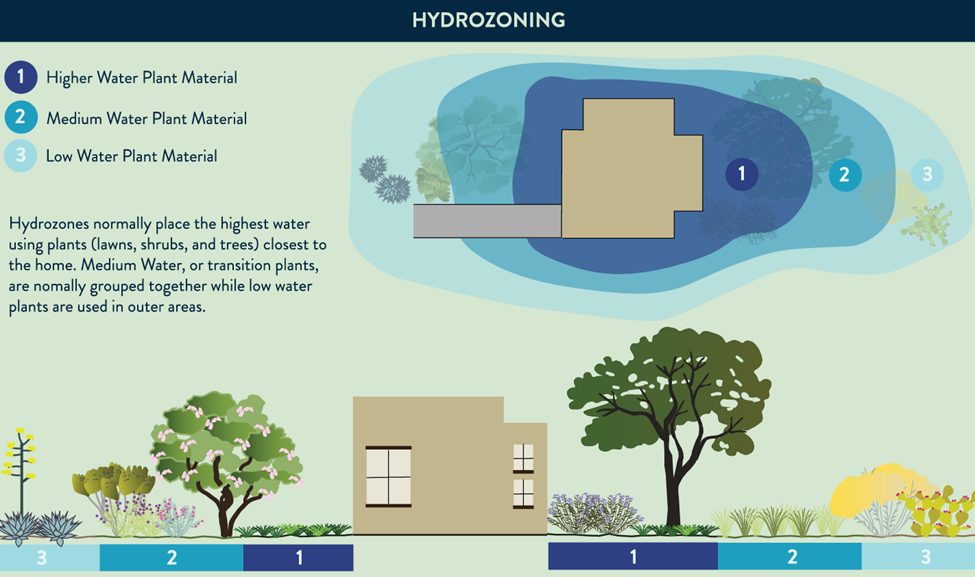
The next thing to do is organize your drip zones by plant watering needs. This means that higher water plants and lower water plants should be on separate valves (hydrozoning) whenever possible, so watering is much more efficient. Hydrozoning is not always possible when retrofitting an established landscape. In that case, you can adjust your water delivery with various sized drip emitters so plants with higher water needs receive more water per hour.
Check out our New Irrigation Efficiency Guide: Beautiful Landscapes with Less Water. Download the guide here.
Does the thought of making changes to your yard seem costly? Can you still get reasonable benefits from just changing a few things instead of your whole yard? Do you feel overwhelmed because you don't know where to start? Do you feel like you don't know enough about irrigation systems to know what to do?
Having an efficient automatic irrigation system can be financially affordable for homeowners, especially with help from our rebates. Homeowners can choose to install or update a spray or drip irrigation system. To figure out your budget using our rebates, consider the following questions: How much can I spend on irrigation updates this year? It's important to be realistic about what you can spend and stick to your budget. You don't necessarily need to spend thousands of dollars to begin saving water. We offer rebates to help you cover some of the costs. Upgrades don’t have to be completed all at once. They can be done in phases.
Check out our New Irrigation Efficiency Guide: Beautiful Landscapes with Less Water. Download the guide here.
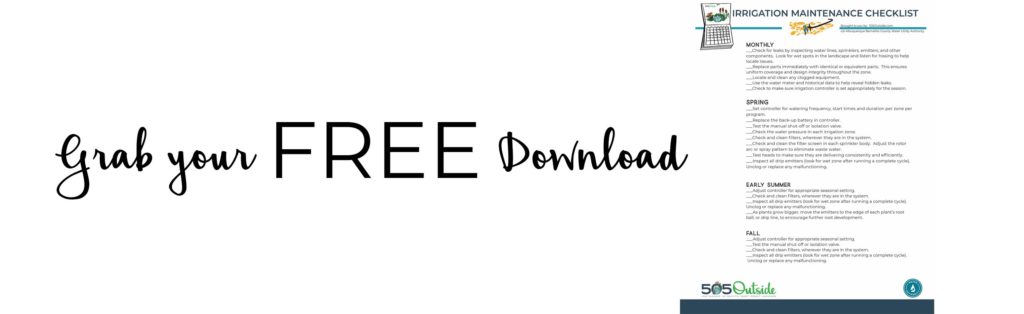
With drought conditions predicted to continue for the foreseeable future, we’re likely to water more often this spring and summer. Make every drop count – and keep us on track to meet our conservation goals – by performing routine maintenance to maximize your sprinkler system’s efficiency.
Monthly
Check for leaks by inspecting water lines, sprinklers, emitters, and other components. Look for wet spots in the landscape and listen for hissing to help locate issues.
Your irrigation system is only as good as its aim. Adjust sprinklers and emitters to make sure they’re delivering water to the landscape and not onto rocks, bare earth, or pavement.
Replace damaged parts immediately with identical or equivalent parts. This ensures uniform coverage and optimal system efficiency.
Locate and clean any clogged equipment.
Use water meter and historical data to help reveal hidden leaks.
Check to make sure irrigation controller is set appropriately for the season
Spring
As the watering season gets underway, check your irrigation system for leaks and clogged, broken, or missing sprinkler heads and emitters.
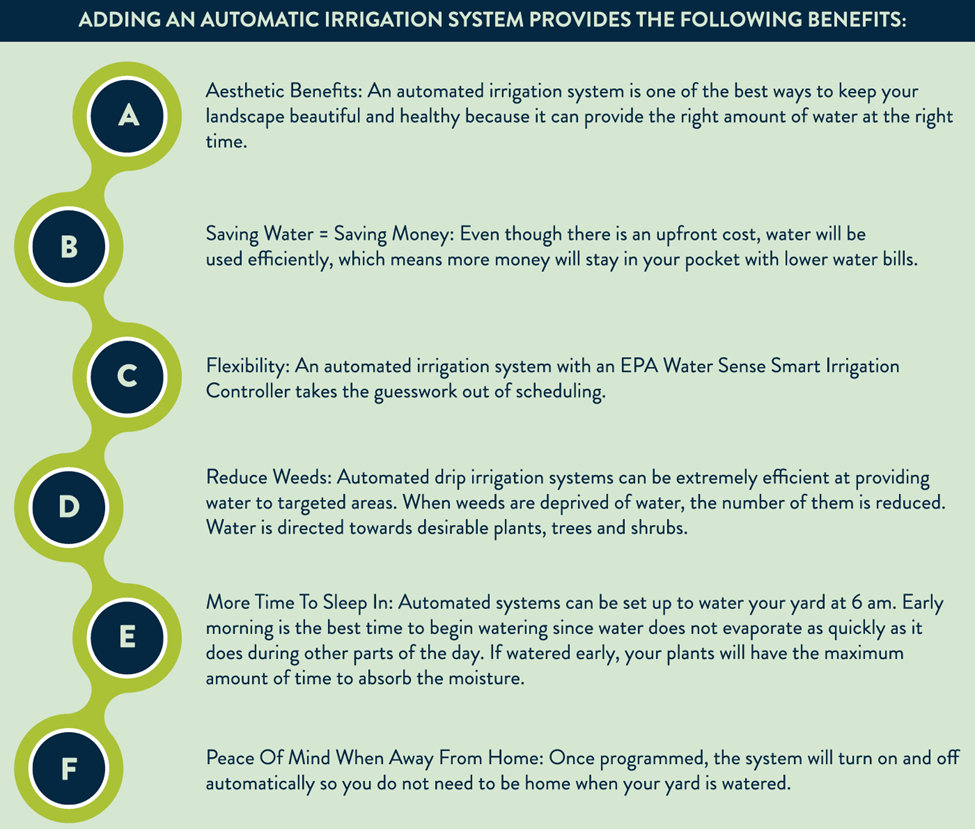
An outdated irrigation system can waste time, water, and money. Consider installing a new WaterSense-labeled, “smart” irrigation controller to take the guesswork out of scheduling (rebates available).
Set the controller for watering frequency, start times, and duration per zone per program.
Replace the back-up battery in the controller.
Test the manual shut-off or isolation valve.
Check the water pressure in each irrigation zone.
Check and clean filters, wherever they are in the system.
Check and clean the filter screen in each sprinkler body. Adjust the rotor arc or spray pattern to eliminate water waste.
Test heads to make sure they are delivering consistently and efficiently.
Inspect all drip emitters (look for wet zones after running a complete cycle). Unclog or replace any that are malfunctioning.
Early Summer
Adjust controller for the appropriate seasonal setting.
Adjust sprinklers and emitters to make sure they’re delivering water to the landscape and not onto rocks, bare earth, or pavement.
Check and clean filters, wherever they are in the system.
Inspect all drip emitters (look for wet zones after running a complete cycle). Unclog or replace any that are malfunctioning.
As plants grow bigger, move the emitters to the edge of each plant’s root ball or drip line to encourage further root development.
Fall
Adjust controller for the appropriate seasonal setting.
Test the manual shut-off or isolation valve.
Check and clean filters, wherever they are in the system.
Inspect all drip emitters (look for wet zones after running a complete cycle). Unclog or replace any that are malfunctioning.
Winter
Guard your irrigation system against freezing temperatures by draining pipes and tubing and properly winterizing your system.
When temperatures are below 40 degrees Fahrenheit, discontinue automatic watering and turn on systems manually or hand water as needed.
What should every home owner know about simple irrigation maintenance?
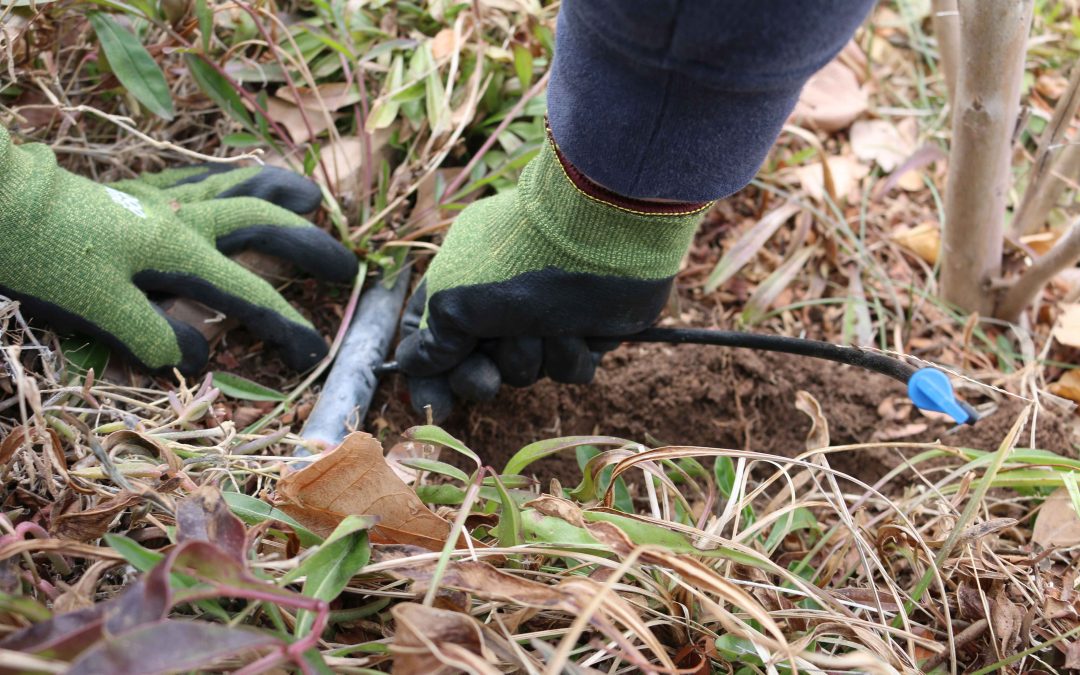
The most important thing is to visually inspect your system periodically. Usually, irrigation runs during the middle of the night and we’re unaware of how well (or how poorly) it’s working. Turn on each zone and observe its operation. Look for leaks in your valve boxes – if there’s water in the box, you probably have a leak.
With sprinklers:
Look for broken or tilted heads and nozzles that should be adjusted to address overspray. If water continues to drain from one of your sprinklers after the zone has shut down, you may have a low head drainage problem. To fix this, install a simple check valve, which typically screws into the lower part of the sprinkler head. Ask your local irrigation supplier for a check valve recommended for your situation.
With drip irrigation:
How to unclog your button or flag emitters.
Button emitters are not easy to unclog. Often, it’s easiest to simply remove a clogged button emitter and replace it.
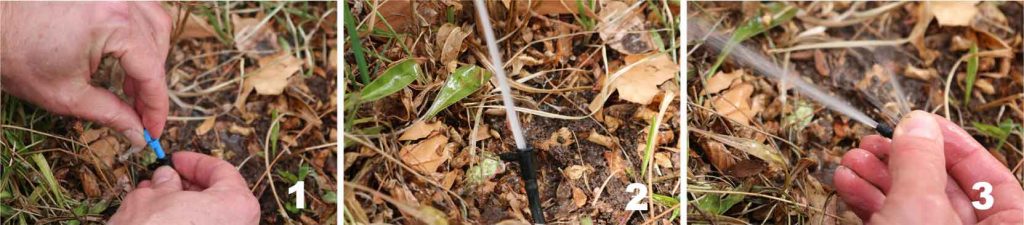
Flag emitters can be unclogged as follows:
While water is flowing through the emitter, twist the colored flag piece located on top of the emitter so that it can be removed.
Allow water to flow out the top of the emitter for 10-15 seconds with the flag piece removed.
Block flow from the top of the emitter to send water through the side orifice for 10-15 seconds.
Twist the flag piece back into place to resume typical irrigation (not pictured).
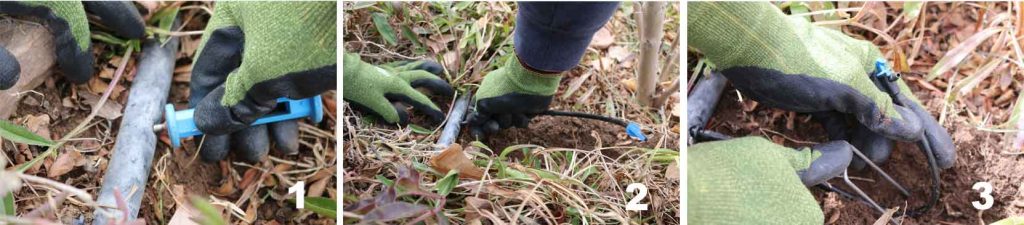
How to add an emitter?
Using a punch tool, make a hole where you will connect the spaghetti tubing
Attach the spaghetti tubing to the lateral line using a barbed connector
Run the spaghetti tubing through a small trench to where you want the emitter to apply water – at the dripline of the plant is usually best
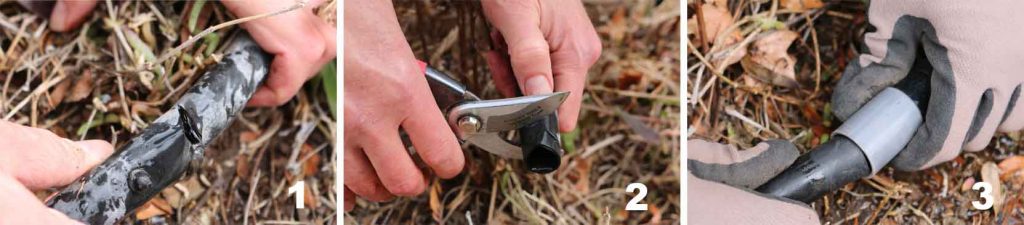
How to repair a poly tube if it's been punctured?
Locate the damaged section of poly
Cut out the damaged section
Use a fitting – there are many types that will work – to join the ends
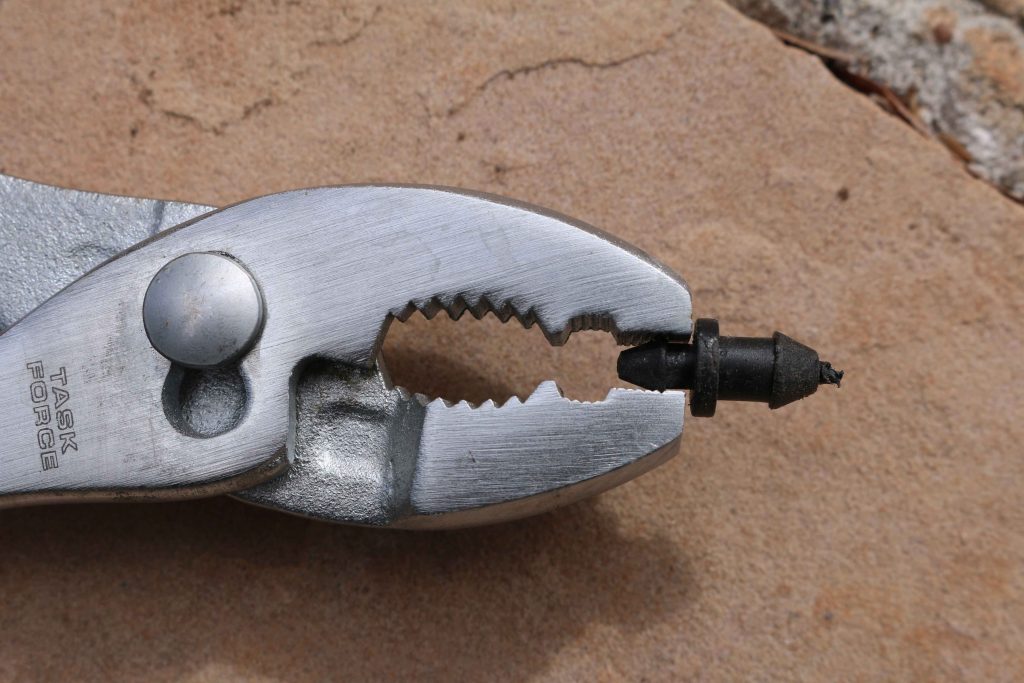
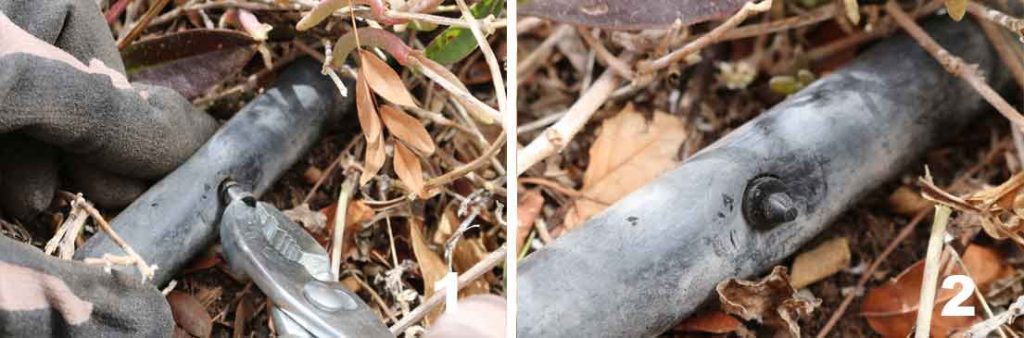
What is a goof plug and how to install it?
It’s a simple, 2-sided plastic piece used to plug a small opening in drip irrigation lines
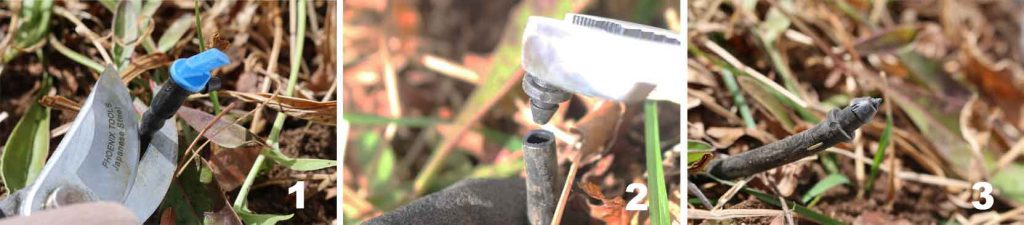
Goof plugs can be used to stop water flow through spaghetti tubing, as follows:
Locate tubing to plug (cut off emitter if necessary)
Twist small end of goof plug into spaghetti tubing opening
Enjoy your water conservation!
Goof plugs can be used to stop water flow through distribution line, as follows:
Locate tubing to plug
Twist large end of goof plug into distribution line
Using these few simple tricks, you can easily manipulate water flow in your landscape for maximum system efficiency.
Author: Laura Ferenchak, Irrigation Efficiency Specialist with Albuquerque Bernalillo County Water Utility Authority