It’s been a rough few months in the 505. We’re having a challenging gardening season, to say the least. Dry. Hot. Intense. The unraveling of our climate has been on full display.
Whether you’re choosing more adaptive plants and creating habitat or beginning your gardening journey, no doubt you’ve lost plants this summer — or worried about it. I’ve been calling it the Summer of Feeling Like a Not So Great Gardener.
Just to put this in perspective, I’ve been gardening for over 30 years and I’ve struggled and learned a lot this summer. Learning to steward land in a way that’s in alignment with our changing climate is not easy. But it’s crucial.
In the midst of these challenges, you might be experiencing more emotions than you’re used to — anxiety, for example? Frustration, perhaps. Confusion about where to start. Sadness at all the loss and devastation. Feeling alone. Lack of confidence. Overwhelm. Anger. Dread.
So, what’s a gardener to do? It’s easy to think our emotions are totally separate from the scorching heat. We’re used to compartmentalizing — experiencing emotions and deep spiritual questions in one part of our life and tackling complex external issues, like choosing climate-ready trees to plant, in another part of our life. No matter how well we’re dealing with these emotions, they’re bound to creep into our external gardening. What if, instead of shutting ourselves down in order to accomplish the daunting task of adapting our urban forest to the changes before us, we actually bring our emotional and spiritual selves into the garden? This is precisely the zone where deep and meaningful climate resilience awaits us — in the cultivation of our Home Gardens with our Inner Gardens. We grow an ability to weather storms, to adapt as things unravel — in both our inner and outer landscapes.
For example, let’s look at overwhelm, which is so common these days and to which we gardeners are not immune. We might be asking, “Am I doing enough? Am I making the right changes and adaptations? Which do I do first — spread mulch or create ways to passively harvest the rain?” We might be worrying about how much water we’re using or that we’re not using enough. There are so many decisions to make, and it’s easy to feel overwhelmed.
Here’s what I recommend for dealing with overwhelm:
Notice: Take a deep breath and recognize, “Ahh, this is overwhelm. That’s all it is. It’s happening in my inner garden, inside my heart.” That’s the first step. Pause. Notice it. Take a breath with it. The inner garden is what is happening in our consciousness — which primarily lives at the level of our heart (not our brain). There’s a lot of fertile ground to work with in there.
Just be: Next, take 15 minutes and just go outside and sit in the garden. Find a place to just be. Don’t plan or make any lists, just sit and breathe. Don’t skip this step, it’s the most important one. Listen to the sounds, feel the soil, notice the smells. What insights come through?
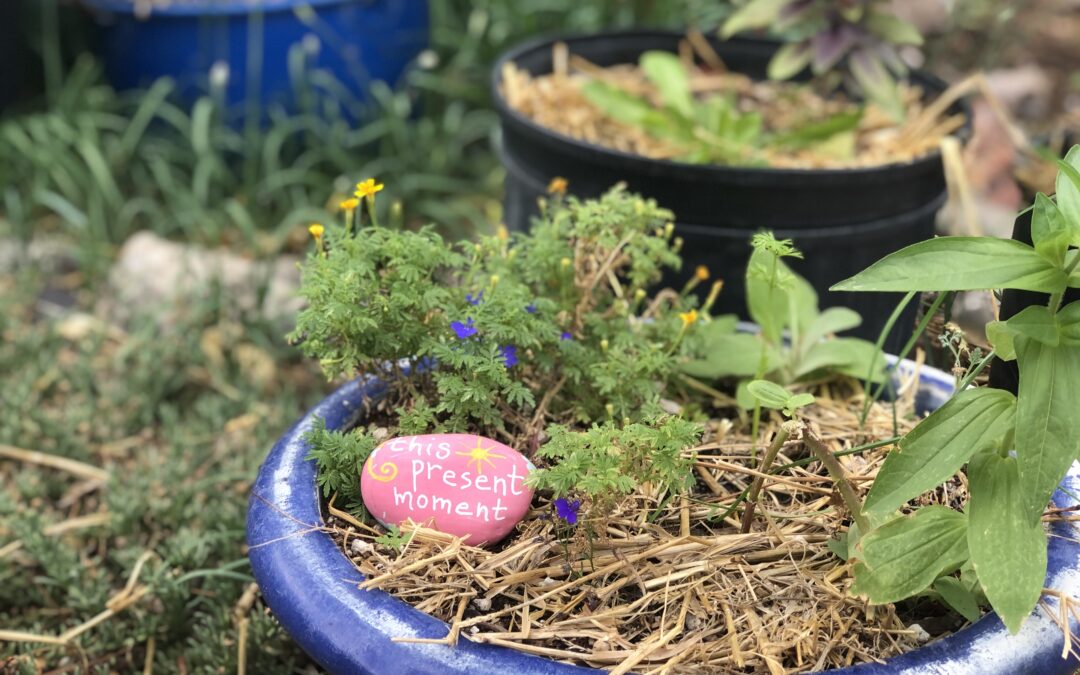
Create: Then, find a special place in the garden and create something to help remind you of what insights came up. It can be very simple, just something that speaks to you — a gathering of stones, an arrangement of leaves, a circle of flower petals. When we take the time to tend what’s growing within our inner garden, we have more inner space to effectively handle what’s happening in our outer garden. This is resilience.
Reconnect: The next time you’re doing a garden task — like weeding — briefly pause and reconnect with your inner garden in your heart. Set a simple intention to help shift the pattern of overwhelm, such as “This garden belongs to all who live here, human and non-human. May my activities today bring benefit to all the beings here.” And then carry on weeding, but with this intention.
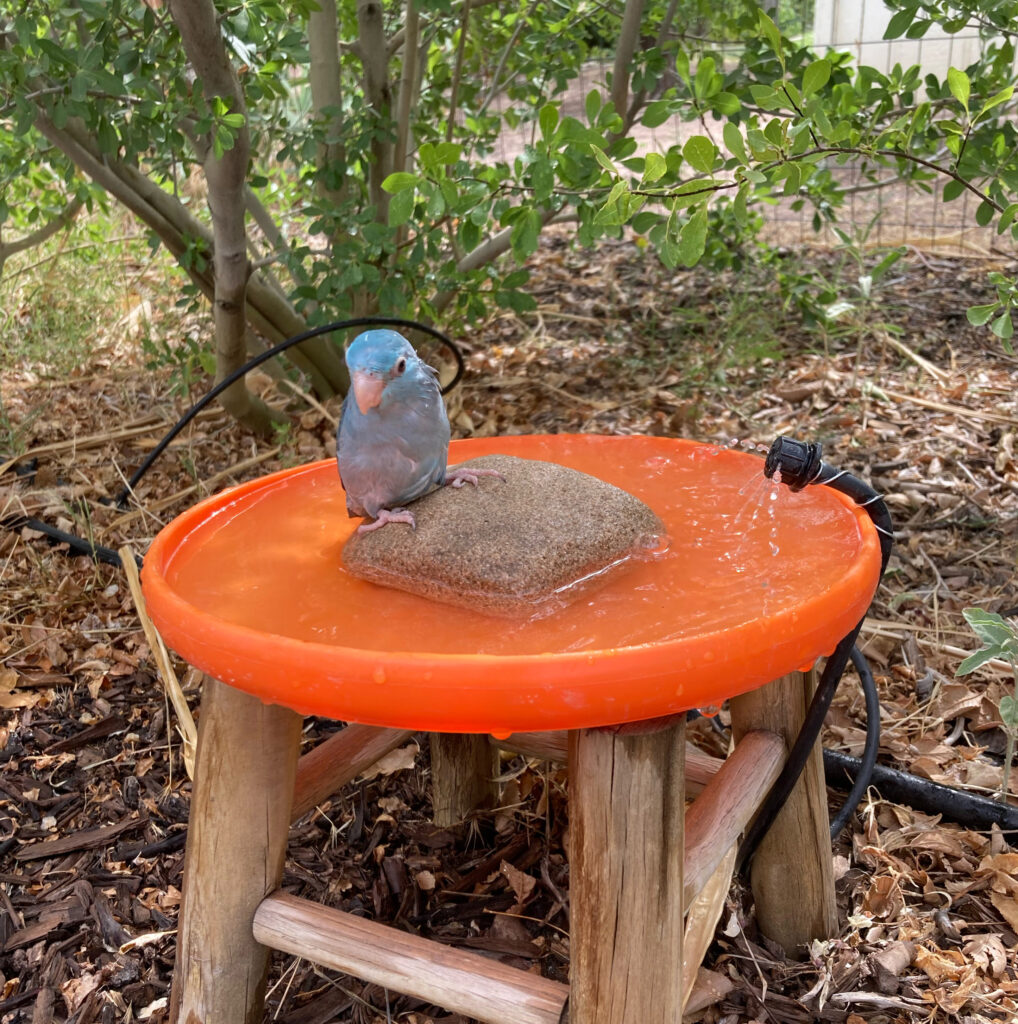
An intention like this can shift our state of mind away from overwhelm and into a place of gratitude and caring. From this place, we’ll make better gardening decisions. We might notice that the birds need more water and fill an old Frisbee with water and put a rock in it. We might start giving ourselves the space to be imperfect in our gardening. We might begin to see ourselves more as a caretaker of the space and less as the “owner” — ”our” garden becomes “the” garden.
The inner garden and the home garden have a profound and interdependent relationship. As we tend both of them together, we cultivate a deeper resilience in both gardens. This adaptation and flexibility then ripple from our own hearts out into the world, so in need of our tending and care.
Learn more about specific types of gardening here:
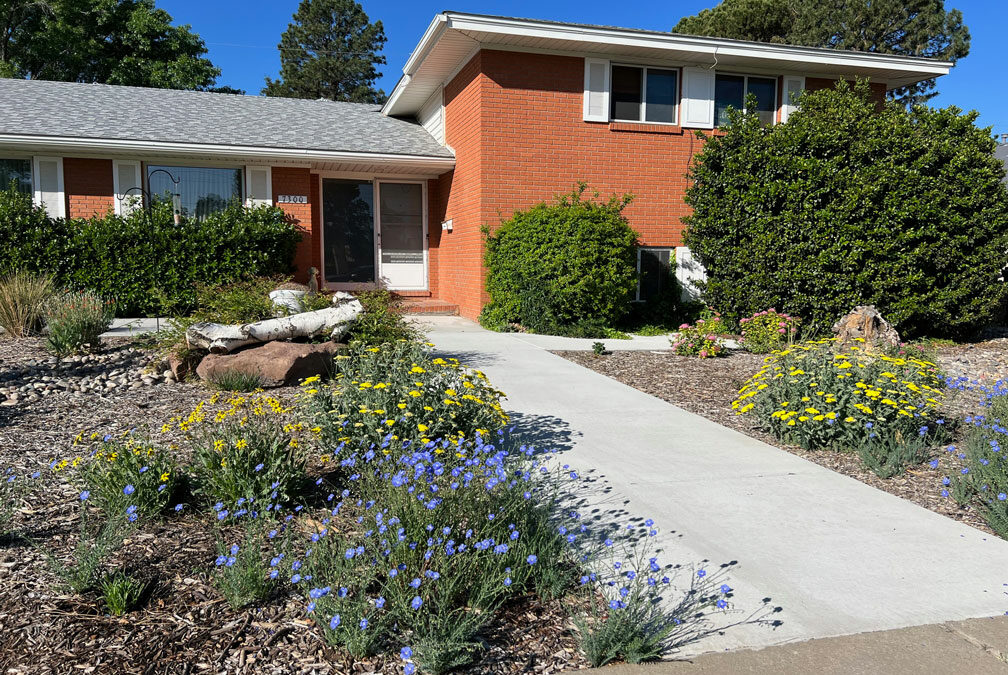
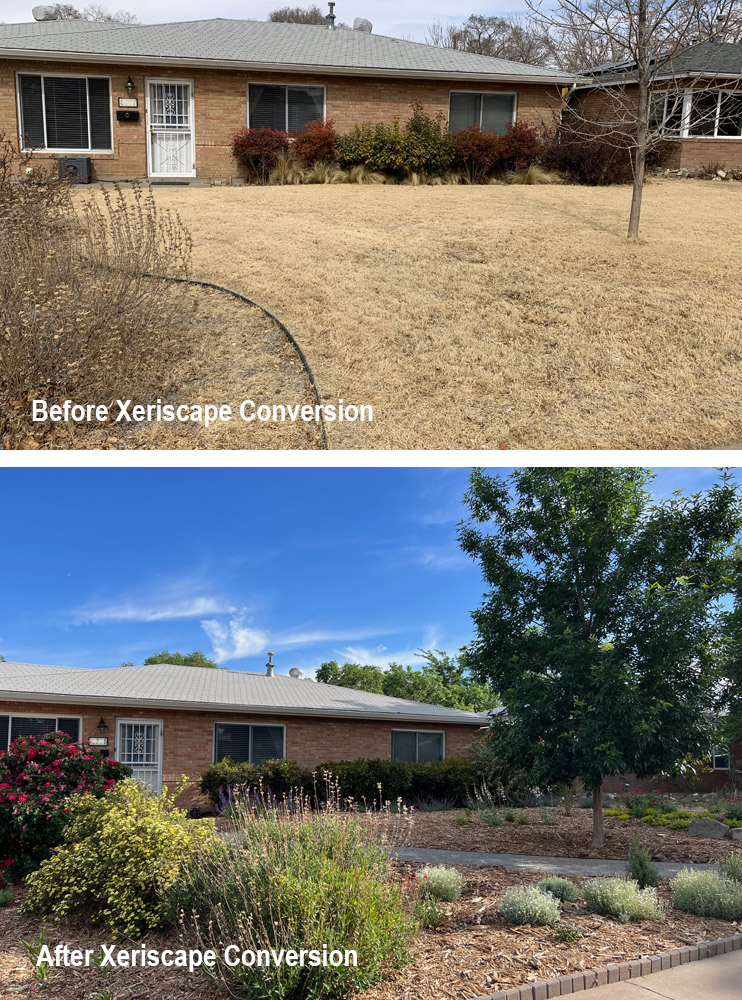
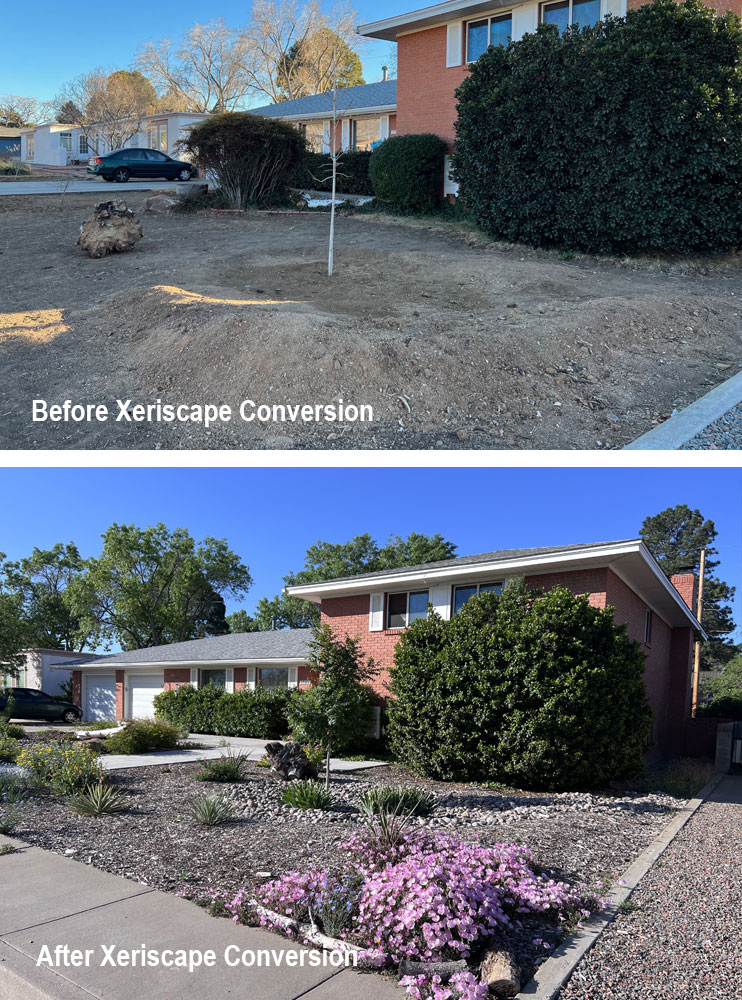
As Albuquerque area homeowners convert their high-water-use turf grass to desert friendly xeriscapes, many are opting for wood chip mulch rather than gravel or other aggregate, which can be hot and allow weeds to pop up.
The Water Authority checked in on two recent xeriscape conversion projects. These homeowners chose the DIY option for their front yards to save money. With all the resources available online, it has become easier to find how-to information on installing landscapes. The design, on the other hand, can be more difficult, and one of the homeowners chose to hire a professional. The other homeowner checked in with her mom who is an avid gardener, looked over resources from the library, and used online videos to pull together the design they wanted.
“I like the yard so much more now than the lawn we had before. The lawn would be pleasant about one or two days a month, and otherwise just felt like a chore and a needless expense. We’re lucky to live very close to a park, with a much nicer lawn than ours ever was, so when we want to play Frisbee or do ‘lawny’ things, we just walk the half a block to the park,” one homeowner said.
“While it took some labor to kill the grass, dig holes for the plants, install irrigation and lay down mulch, now when I look at my yard I no longer think, ‘Ugh, we need to weed/mow/fertilize/whatever.’ Now, I feel more joyful seeing all the different plants growing, and I’m always out there checking on my little plant friends.”
The other homeowner was motivated to create a landscape that “made more sense with the desert environment, used less water, helped provide habitat for pollinators and had a more natural look.”
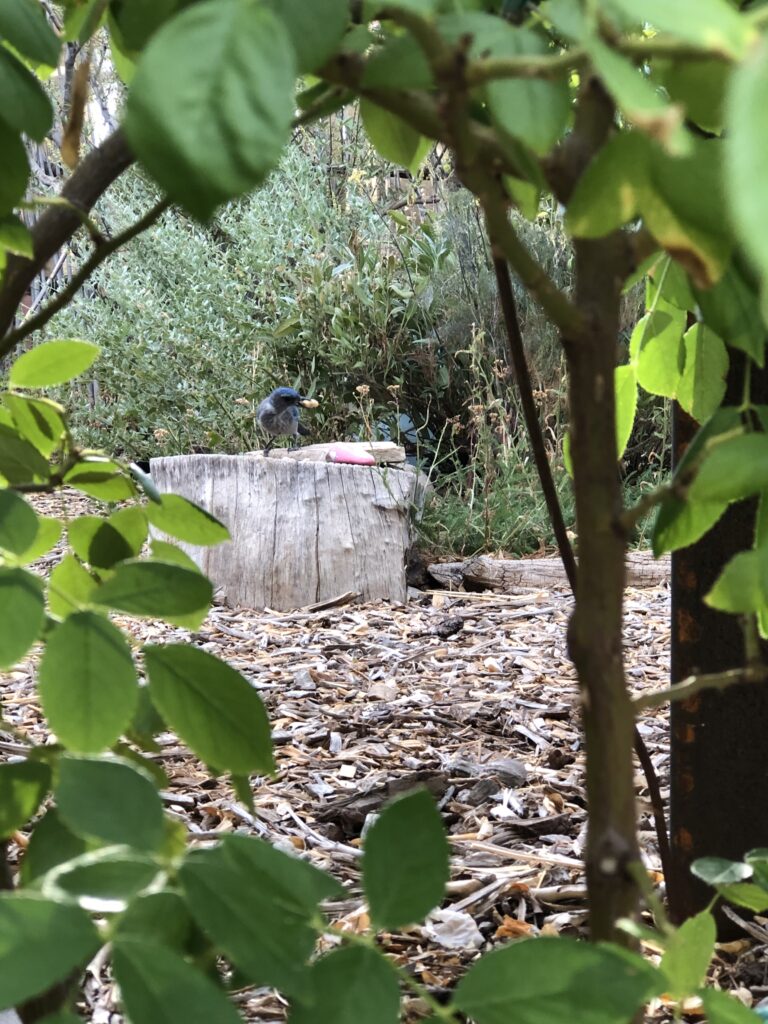
Both homeowners chose to use wood chip mulch because it is extremely affordable and easy to install. They knew the advantages of mulch from their research and from seeing yards in their neighborhoods that use mulch. One of the added benefits, according to both homeowners, is attracting pollinators and other wildlife. “I see a lot more insects; I especially notice the bees,” one said. “There’s a family of roadrunners in our neighborhood, and they’re spending more time in our yard than they used to.”
Wood chip mulch is made up of chipped trees. This is a long-lasting mulch that decomposes slowly over bare dirt, retains moisture and is superior to other mediums at suppressing weeds. Most wood mulches available on the market are chipped flat and are consistent in shape and size. These are great in areas that receive foot traffic as they compact down to a firm surface.
Both homes installed a 3- to 4-inch layer of organic mulch over bare dirt. That depth is effective at stopping sunlight from reaching annual weed seeds, thereby preventing weed germination. The homeowners noted that mulch was easy to install and much less expensive than gravel, and they found that the mulch also was much cooler than the hot gravel.
“The main things we have noticed with the mulch are weed control and how well it retains water,” one homeowner said. “There are very few weeds that seem be able to germinate and make it through the mulch barrier. The weeds that do come up are actually very easy to remove by hand (my preferred method for weeding) because there is no artificial weed barrier or rocks to dig out.”
The advice both homeowners would like to pass along to other folks looking to DIY their yards is to give yourself plenty of time and tackle the project in small parts.
“I think the most important thing was breaking the project down into manageable tasks, and then figuring out the best order of those tasks. I also made some mistakes, so being adaptable to changes and adding tasks was key. I definitely needed the six-month extension in addition to the initial six-month period allowed; it took me about nine months total to complete the work.”
The other homeowner took almost a year to complete their project, but they now are basking in compliments from their neighbors.
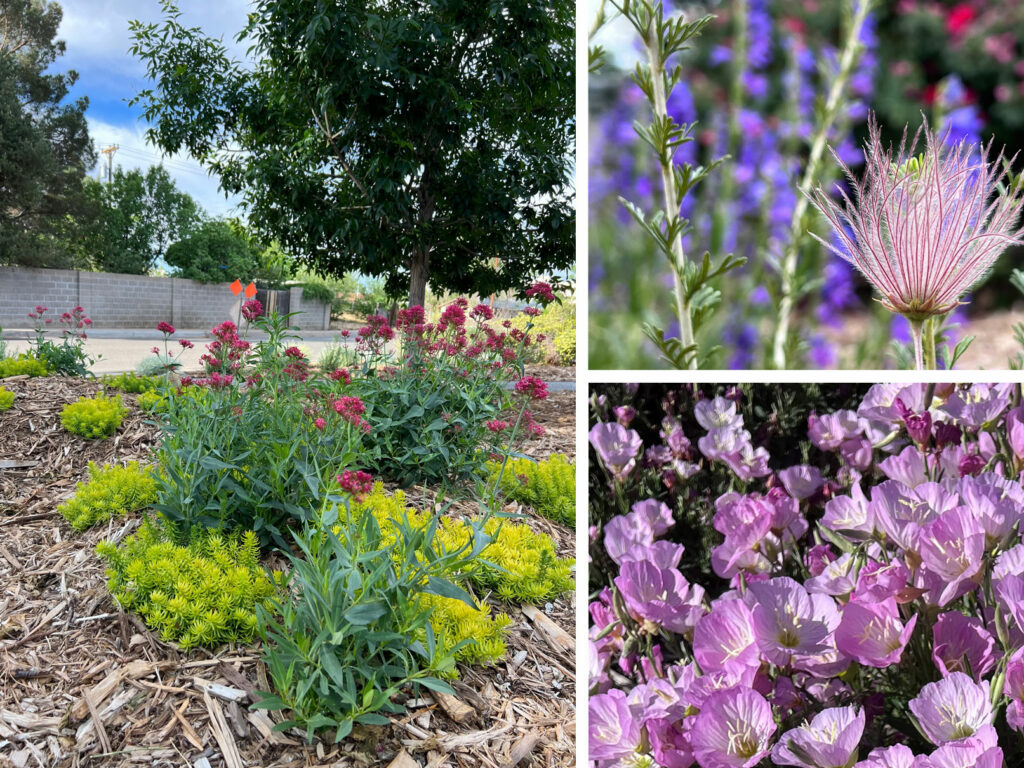
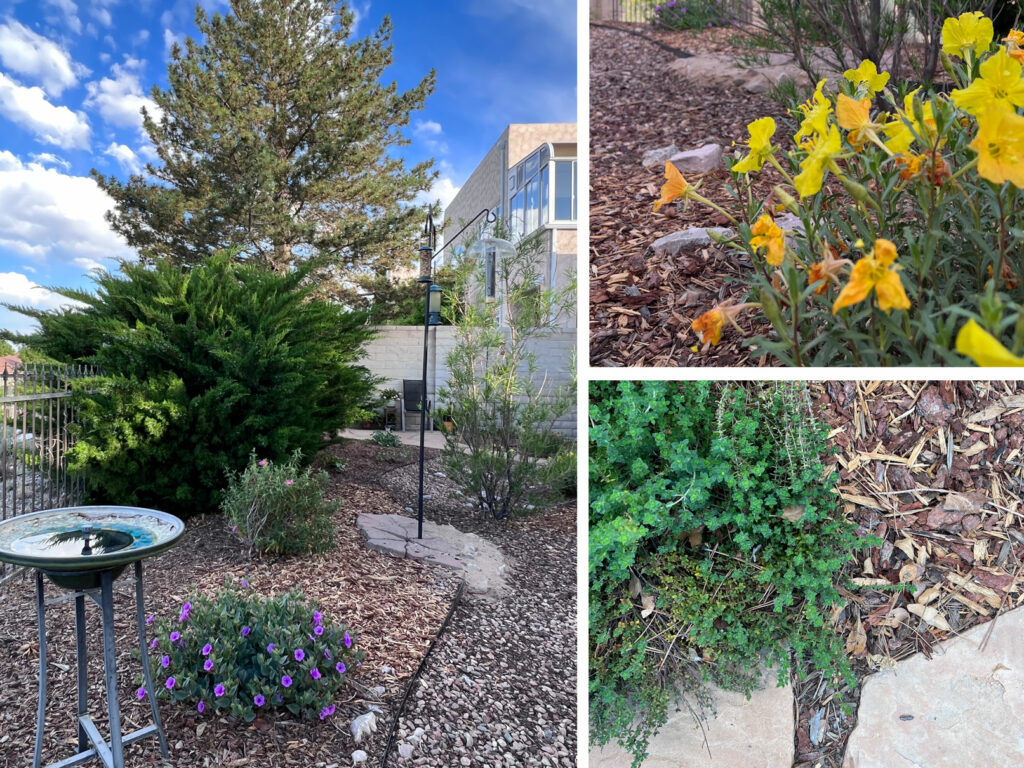
Sedum, Jupiters beard, Apache plume and Mexican primrose
Additional Facts on Mulches:
Wood chip mulch insulates plant roots from both heat and cold, reducing moisture loss from the soil by evaporation, feeding beneficial soil microorganisms that enhance plant growth and improving soil health. This makes the soil more sponge-like and better able to hold water. By installing 3-4 inches of mulch over bare dirt, weeds are reduced, the soil is enriched and new plants retain more moisture.
Another benefit of organic mulches is that they can visually accommodate a little bit of leaf litter, reducing the need for constant raking and clean-up. A thin top dressing of mulch added every two to three years keeps the landscape looking fresh and replaces the material that has broken down to sustain the soil. Organic mulches are lightweight, making them easy to transport in a wheelbarrow and spread with a rake.
Mulches are available in bags from most local garden centers (avoid the dyed ones as the colors will fade) and in bulk from several retailers in the Albuquerque area. When you buy from local bulk retailers, you are supporting the recycling of local organic materials that may otherwise end up in a landfill and contribute to greenhouse gas emissions. Buying bulk also means less plastic! Mulch is sometimes available at no cost from local tree trimming companies. In addition, Bernalillo County offers free mulch to residents who load it themselves at the East Mountain Transfer Station. County staff can load the mulch in your vehicle with a tractor for a $5 charge. The county also will deliver 30 cubic yards of mulch for $60, plus $2 a round trip mile for delivery. Mulches are a renewable resource that will improve landscape health and conserve water.
In areas of higher wind exposure or periodic inundation with water, use a wood chip mulch that is irregularly shaped and sized as the pieces will knit together better. This type of mulch can include recycled yard waste and tree trimmings as well as commercially available, locally processed wood products.
Property Data:
These homeowners converted a total of 2,940 sf of park blend grass to desert friendly xeriscape. Total gallons saved in one year since conversion: 100,000 gallons. Total rebate received: $3,140.
Thinking about converting your yard from high-water-use grass to xeriscape? Check out the Desert Friendly Xeriscape Rebate page to learn more about the qualifications, requirements and process to apply for this generous rebate. Additionally, xeriscape rebate participants get 25% off the cost of installing bulk organic mulch, up to $100. If you want to top dress mulch around your trees, take advantage of our Treebates. You are welcome to contact our xeriscape specialist, Amos Arber, at [email protected] or 505-208-2015.
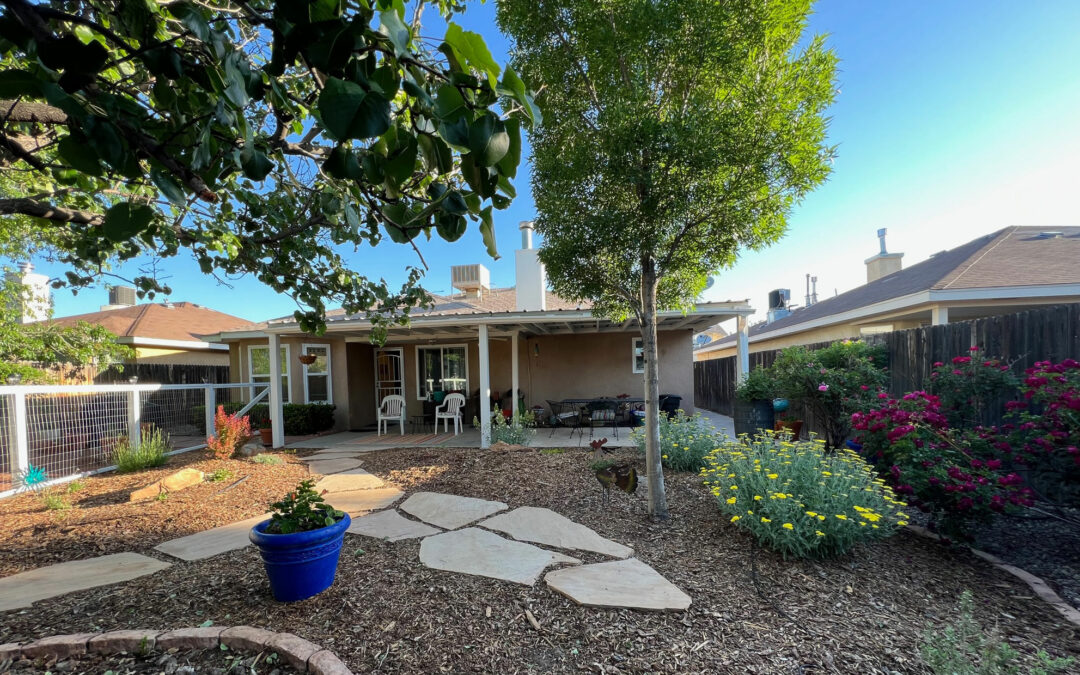
As homes around the Greater Albuquerque Area are converting their high-water-use turf grass to desert friendly xeriscapes, many are choosing to use wood chip mulch instead of gravel or other aggregate, which can be hot and allow weeds to pop up.
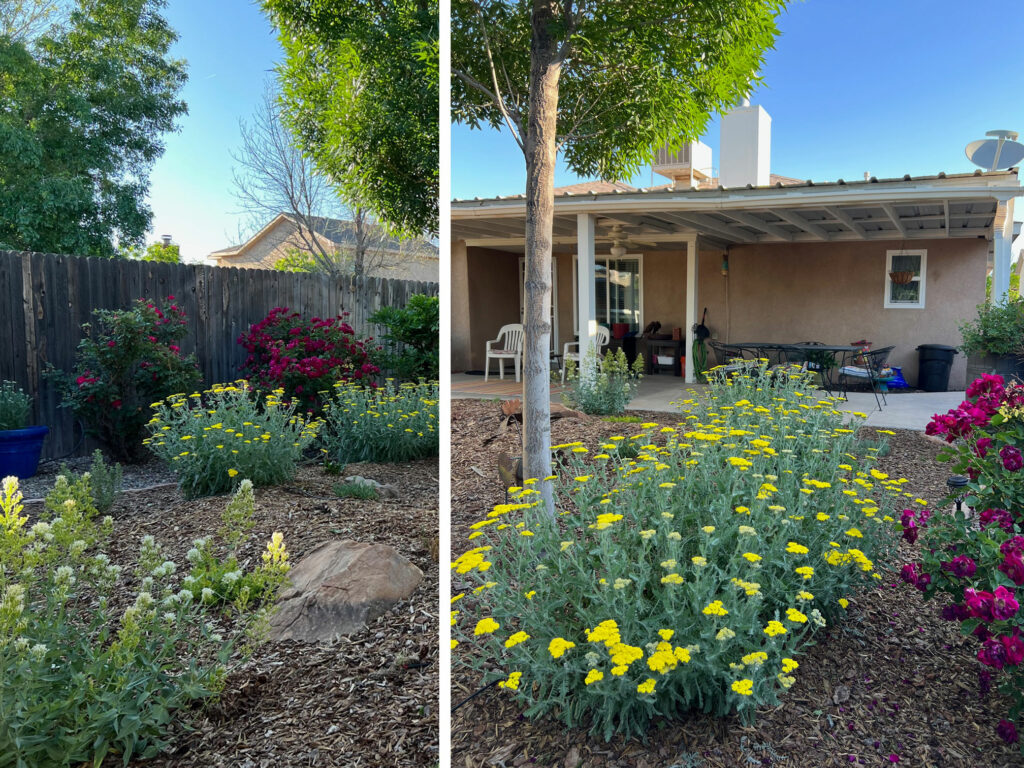
The Water Authority checked in on some recent xeriscape conversion projects. Two West Side homeowners with small backyards shared their grass transformation stories with 505Outside. Both homes had grass and gravel landscape. The decision to convert to a desert friendly xeriscape was an easy one, as one homeowner commented, “While I liked having grass, I couldn’t justify the water it took to keep the lawn healthy. I do enjoy not having to mow and feel much better about saving water.”
Both homeowners chose to use wood chip mulch. One homeowner learned through their contractor that shredded wood chip mulch is cooler than gravel and retains moisture around the plants. The second homeowner was used to the idea of mulch from their time living in New England.
Wood chip mulch is made up of chipped trees. This is a long-lasting mulch that decomposes slowly over bare dirt, retains moisture and is superior to other mediums at suppressing weeds. Most wood mulches available on the market are chipped flat and are consistent in shape and size. These are great in areas that receive foot traffic as they compact down to a firm surface.
Both homes installed a 3- to 4-inch layer of organic mulch. That depth is effective at preventing sunlight from reaching annual weed seeds, thereby preventing weed germination. The homeowners noted that mulch was easy to install and much less expensive than gravel, and they noticed that the mulch also was much cooler than the hot gravel. For these West Side homeowners, wind was their biggest concern. However, after living with the mulch for over a year, it’s only blown around a little bit and has been easy to sweep back into the garden.
One surprise for these homeowners has been the increase in wildlife. “We see whiptail lizards and ground feeding birds like robins, thrashers and roadrunners foraging for insects in the wood mulch.” Both agreed they do not miss mowing a lawn, plus they love the bonus of a low water bill. The Water Authority rebates were a huge incentive to make the change. There was definitely a learning curve for these first-timers to using a drip irrigation system, but it’s been easier than they thought, and their landscapes are low maintenance overall.
Additional Facts on Mulches:
Wood chip mulch insulates plant roots from both heat and cold, reducing moisture loss from the soil by evaporation, feeding beneficial soil microorganisms that enhance plant growth and improving soil health. This makes the soil more sponge-like and better able to hold water. By installing 3-4 inches of mulch over bare dirt, weeds are reduced, the soil is enriched, and new plants retain more moisture.
Another benefit of organic mulches is that they can visually accommodate a little bit of leaf litter, reducing the need for constant raking and clean-up. A thin top dressing of mulch added every two to three years keeps the landscape looking fresh and replaces the material that has broken down to sustain the soil. Organic mulches are lightweight, making them easy to transport in a wheelbarrow and spread with a rake.
Mulches are available in bags from most local garden centers (avoid the dyed ones as the colors will fade) and in bulk from several retailers in the Albuquerque area. When you buy from local bulk retailers, you are supporting the recycling of local organic materials that may otherwise end up in a landfill and contribute to greenhouse gas emissions. Buying bulk also means less plastic! Mulch can sometimes be available at no cost from local tree trimming companies. In addition, Bernalillo County offers free mulch to residents who load it themselves at the East Mountain Transfer Center. County staff can load the mulch in your vehicle with a tractor for a $5 charge. The county also will deliver 30 cubic yards of mulch for $60, plus $2 a round trip mile for delivery. Mulches are a renewable resource that will improve landscape health and conserve water.
In areas of higher wind exposure or periodic inundation with water, use a wood chip mulch that is irregularly shaped and sized as the pieces will knit together better. This type of mulch can include recycled yard waste and tree trimmings as well as commercially available, locally processed wood products.
Property Data:
Each homeowner converted under 800sf of park blend grass to desert friendly xeriscape. Total rebate received: $2,310.
Thinking about converting your yard from high-water-use grass to xeriscape? Check out the Desert Friendly Xeriscape Rebate page to learn more about the qualifications, requirements and process to apply for this generous rebate. Additionally, xeriscape rebate participants get 25% off the cost of installing bulk organic mulch, up to $100. If you want to top dress mulch around your trees, take advantage of our Treebates. You are welcome to contact our xeriscape specialist, Amos Arber, at [email protected] or 505-208-2015.
Author: Amos Arber, Xeriscape Rebate Inspector with the Water Resources Conservation Department for the Water Authority. And Jill Brown, ASLA MyLandscapeCoach.com Have a question about the article? [email protected]
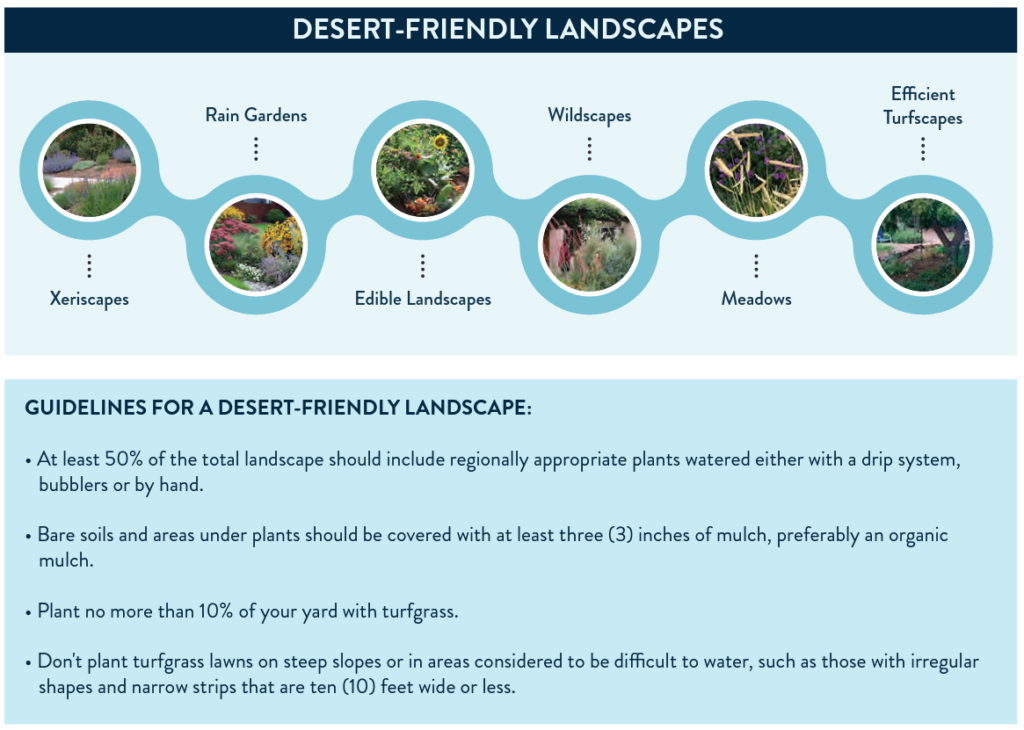
The Albuquerque metro area has a wide variety of landscapes. These include desert friendly landscapes, lush pollinator friendly xeriscapes and wildscapes or prairie plantings where native grasses and wildflowers bring the feel of a prairie to a yard and attract wildlife. Rain gardens are specifically designed to make the most of natural precipitation, while edible landscapes have garden beds or edible plants interspersed throughout them. Efficient turfscapes have smaller areas of turfgrass and diverse plantings. Conventional turfscapes, with large areas of cool-season grasses and high-water-use foundation shrub plantings, are no longer considered desert friendly landscapes. The term “desert friendly” now describes a variety of landscapes that include beautiful, diverse plantings with increased resiliency achieved through efficient watering.
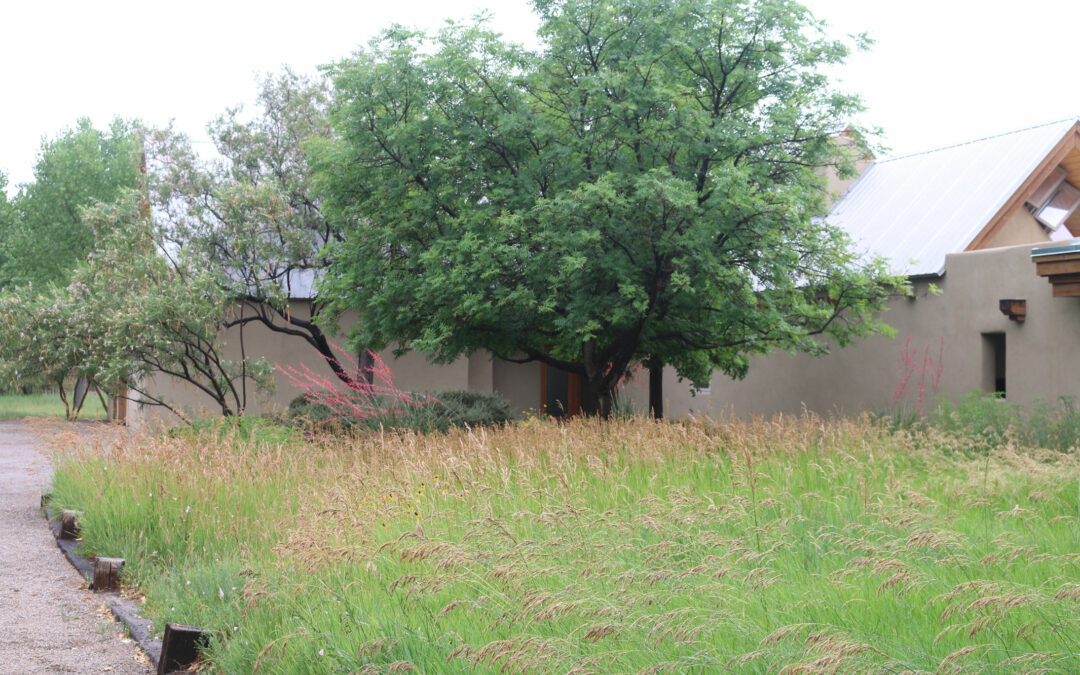
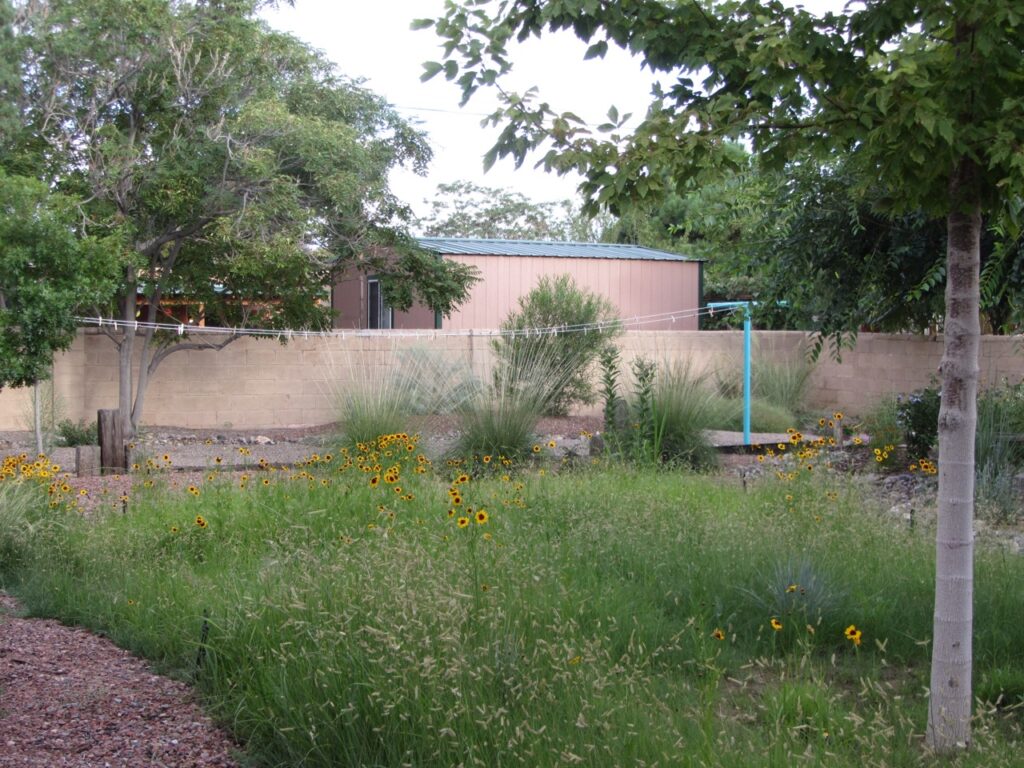
Wildscapes or prairie plantings take advantage of natural landscape techniquess and plant choices that attract wildlife. These types of landscapes include native warm-season grasses and a mix of native and adaptive plants, including wildflowers.
A wildscape may be designed to rely more heavily on natural precipitation to sustain established plants than a xeriscape. Both natural precipitation and temporary irrigation are needed at first. Establishment in the grass areas often takes three years and possibly longer for trees. Monitoring and removing weeds is critical during this early period. Wildscapes also require less frequent yet deeper watering than a regular cool season turfgrass lawn.
Pro Tips for Irrigation of Wildscapes:
• Consider a mix of high-efficiency sprayers or rotors (for the native grass area) and drip irrigation or inline dripline (for shrubs and trees) on separate zones. Specific zones can be turned off after the plantings are firmly established.
• If you are using rotors or spray irrigation in native grass areas, make sure they will clear the tall grass. Use rotors with a high angle of throw or 12-inch to 18-inch pop-up sprayers.
• Leave the irrigation system in place, even if the plan is to rely on natural precipitation, so supplemental watering is available during times of extreme heat or drought.
Learn more about specific types of gardening here:
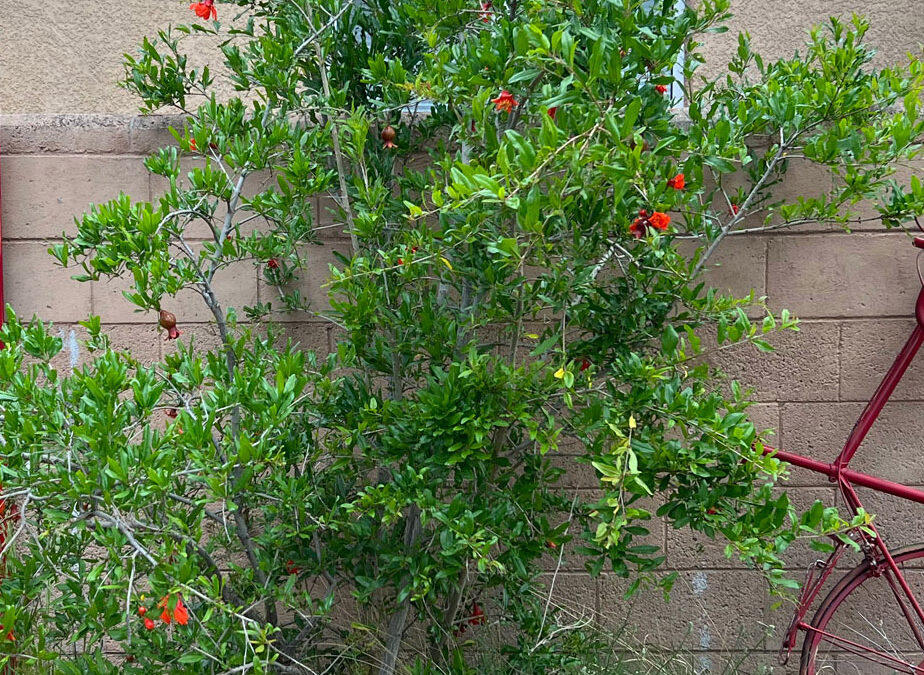
This fruit tree thrives against a hot wall with southern exposure. Beautiful orange flowers appear in the spring. After lots of pollination work by bees, pomegranates trees are covered with uniquely shaped fruit. This stunner needs only 4 feet of space because it has upright growth. During harvest time in the fall, it puts on a yellow foliage show then goes dormant for the winter. Pomegranate trees take about two growing seasons to fully set deep roots and produce fruit.