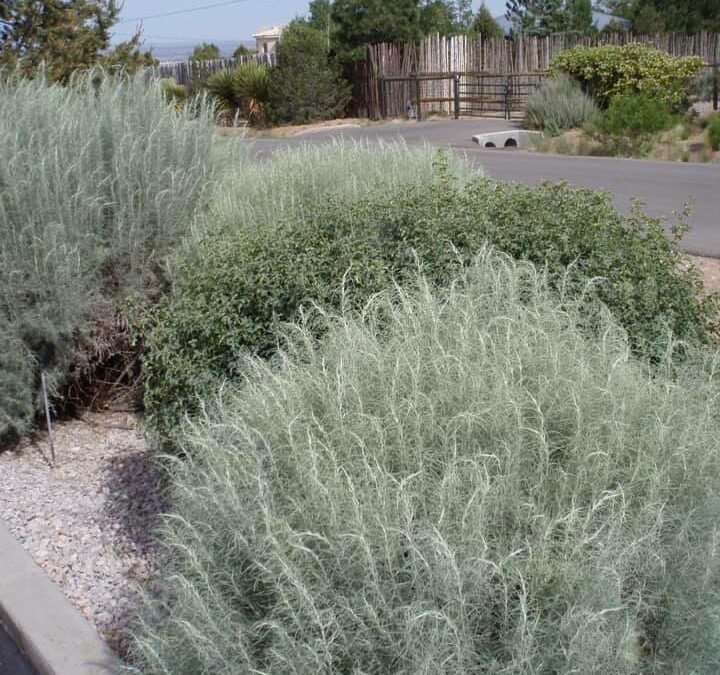
This fast-growing shrub has thready silver-blue semi-evergreen leaves. It is fast growing and has a deep taproot with fibrous roots that absorb every bit of rain. Trim in February to encourage new growth come spring. It grows well in reflected heat and helps stabilize sandy areas.
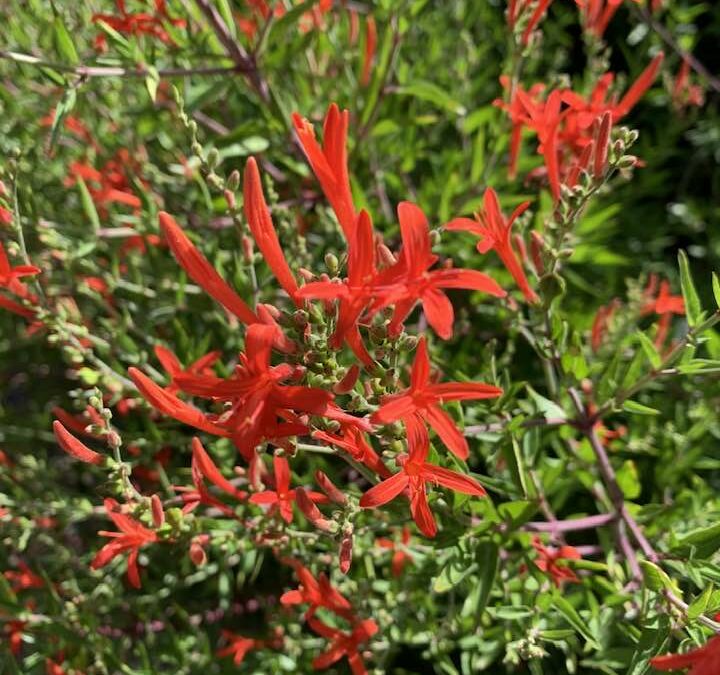
Hummingbirds flock to this shrub's tubular orange flowers, which bloom during the hottest times of the summer. Flame acanthus can be slow to leaf out in the spring, so it generally is not bothered by late winter freezes. It has a strong vertical structure with dark green leaves. This shrub does well in reflected heat and is cold hardy to -5 degrees F. It provides lots of color on a small water budget, and rain will trigger a rush of blooms.
A lot goes into designing a landscape, hence there’s an entire profession called landscape architecture devoted to designing outdoor spaces. We won’t be able to make you a landscape architect today, but we’re sharing a unique landscape plan designed by landscape architects to get you inspired with ideas for designing your own yard. We’ll be sharing five more landscape plans in future issues of the 505Outside.
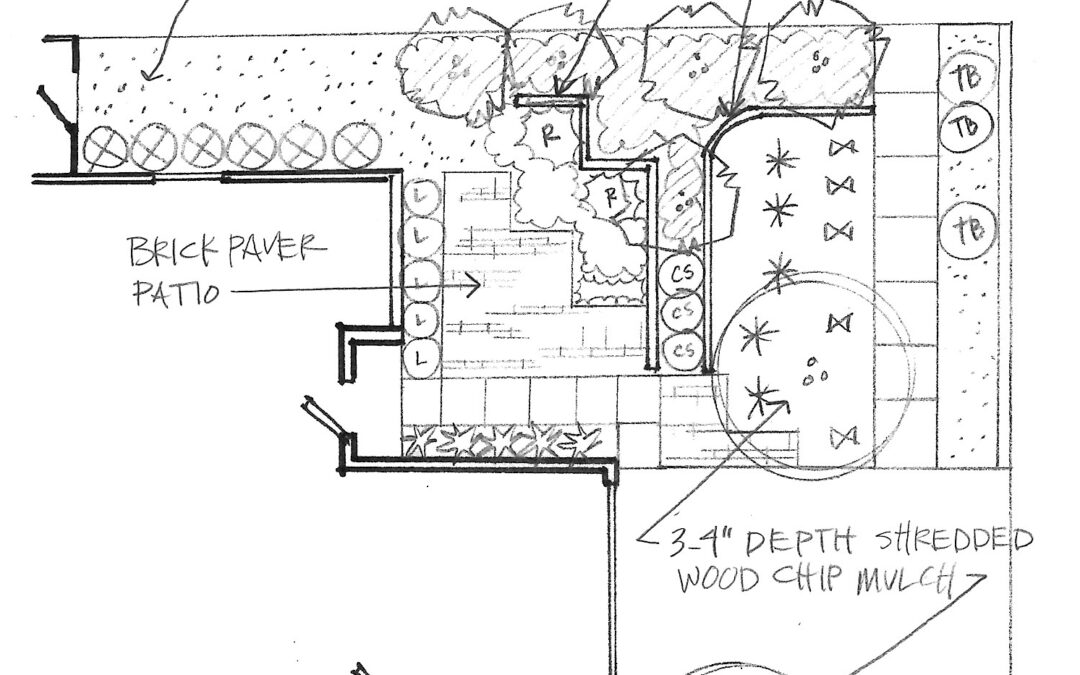
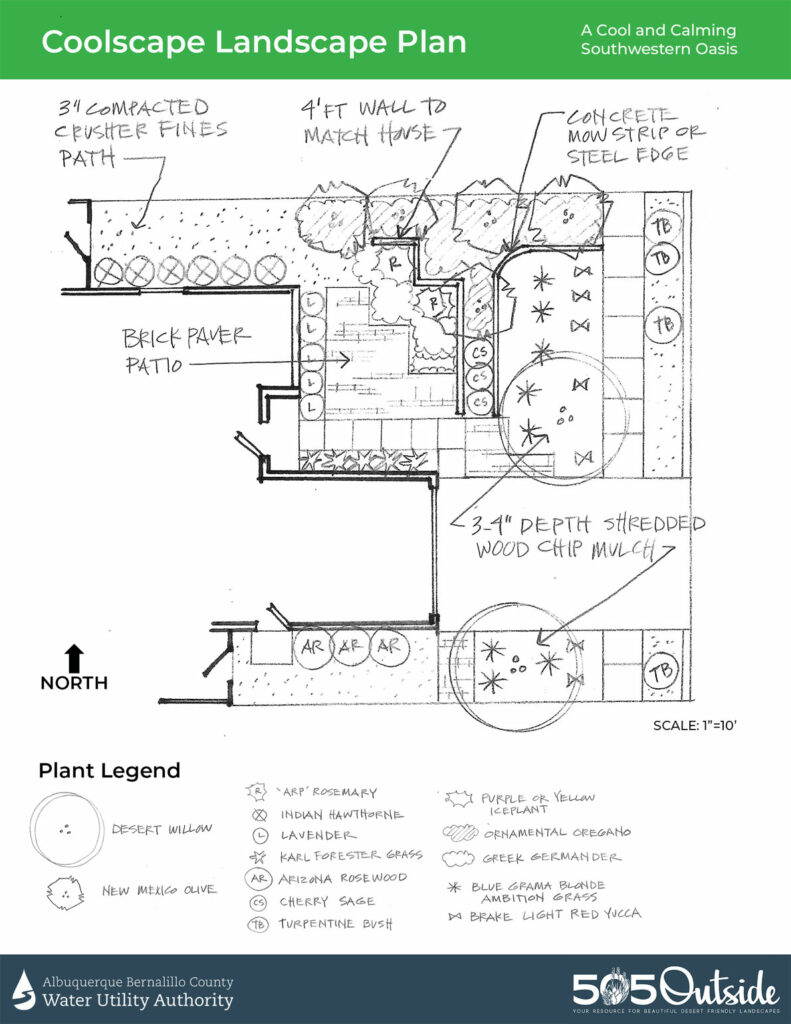
This Coolscape Landscape Plan is designed to provide an attractive streetside landscape as well as a comfortable, private area that is usable even in the winter. The privacy is achieved with a low wall (which should match or complement the house) and a grove of small trees, such as New Mexico olives or chaste trees. The placement of the trees effectively adds to the privacy and provides a backdrop along the edge of the brick patio. All the trees create lots of shade, adding to the coolness of the yard.
The courtyard patio was placed to provide some sun even on an east exposure. Beneath the trees, a groundcover of ornamental oregano grows in the sunnier spots and Kinnikinnick, in those most shady. For the best use of rainwater, the brick patio should be slanted to drain away from the house and into the surrounding planting beds. The edge of the patio on the north side of the yard ends in a bed of fine crushed gravel to create a path to the rear yard. Plants that do best on the cold north exposure of homes, such as Karl Forester ornamental grass and Indian hawthorn, are used to cope with the lack of sun, which in turn makes them more drought tolerant. Likewise, Arizona rosewood is used along the south exposure to capture as much warmth and sun as possible. Lastly, an ornamental clump buffalo grass in combination with a smaller specimen of the red yucca called Brake Light is planted along the front easternmost portion of the yard where it will be the most drought tolerant.
Learn more about specific types of gardening here:
Author: George Radnovich, FASLA Owner of Sites Southwest orchestrates an elegant, simple mixture of ornamental plants and features for north-facing xeriscapes. Have a question about the article? [email protected]
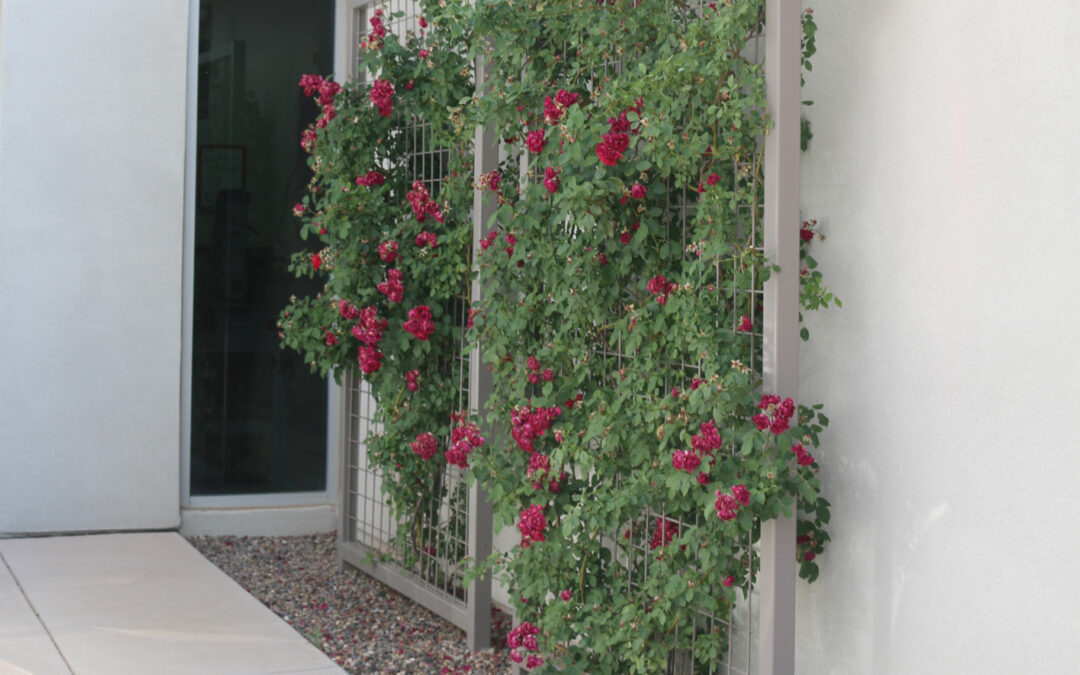
One of the questions the Water Authority xeriscape inspector gets asked most often is how to inexpensively build a trellis for vines. You can make a DIY trellis from materials that are easy to find at your local hardware store. Off-the-shelf trellises can be expensive, and more than likely they are too small. Most homeowners are looking for a trellis to go next to a house or concrete block wall or to divide spaces. Below are two trellis options that will suit those needs.
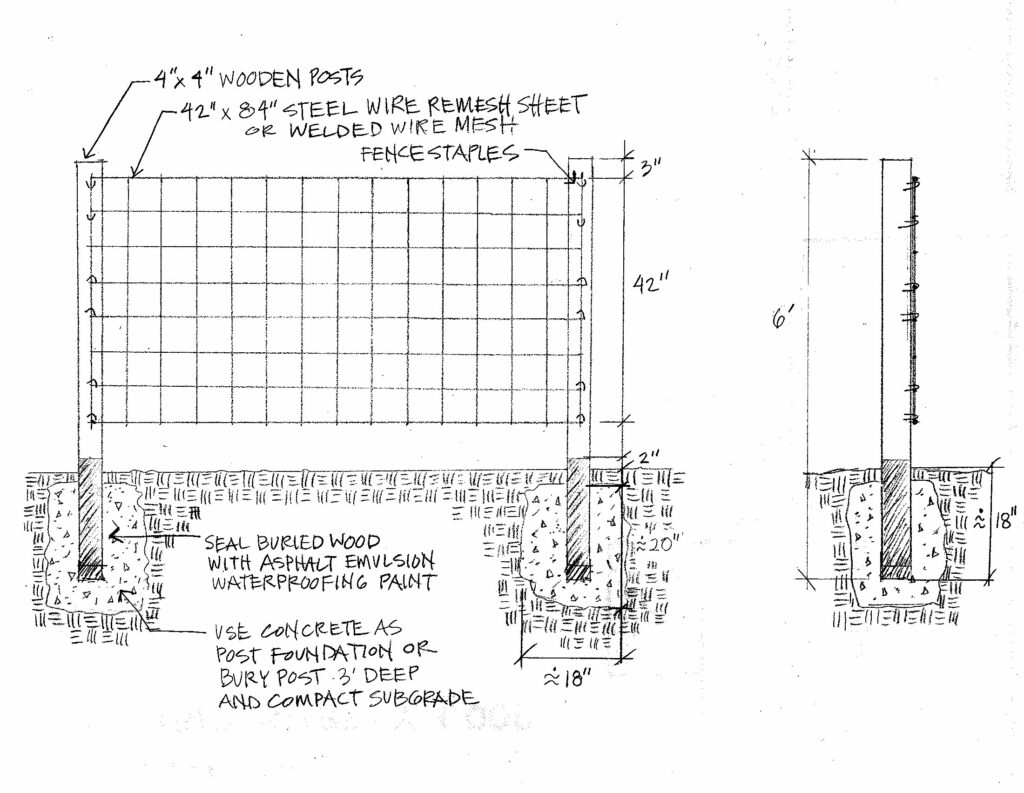
Freestanding Trellis
Materials
4”x4” post (height according to specific project need)
42”x84” steel wire remesh sheet or welded wire mesh
12 fence staples
Asphalt emulsion waterproofing paint or spray paint
Concrete
Tools
Shovel or post hole digger
Hammer
Paint brush
Measuring tape
Level
Step by Step
Step 1: Dig holes for post.
Step 2: Apply waterproofing paint to the section of the posts that will be buried.
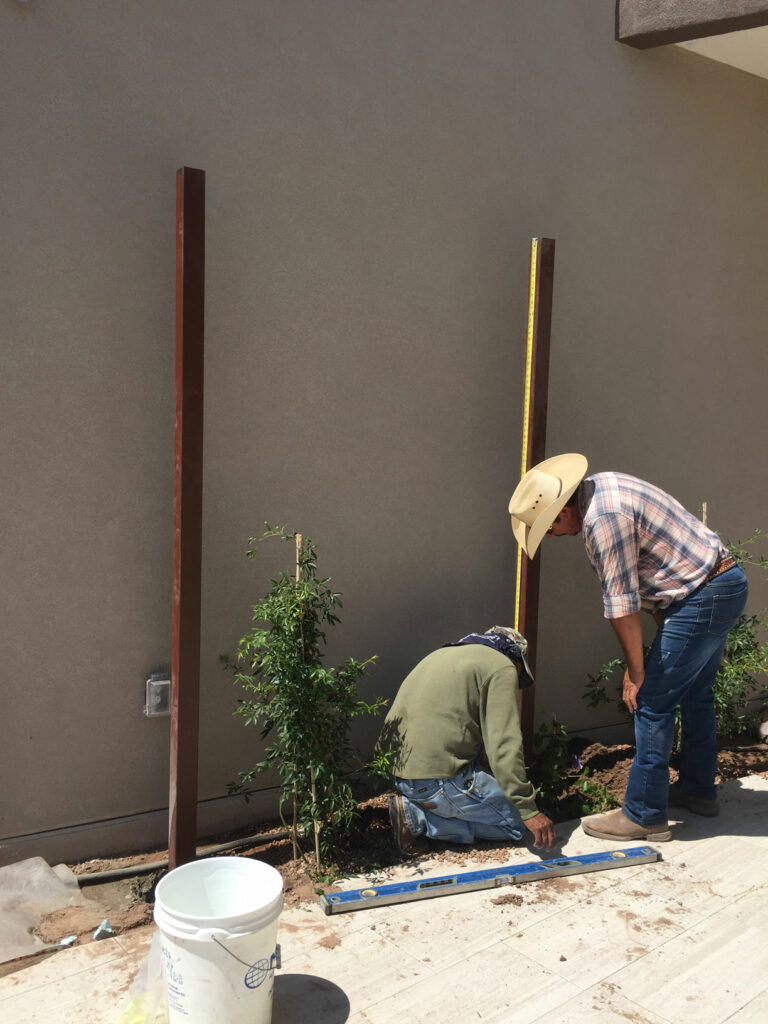
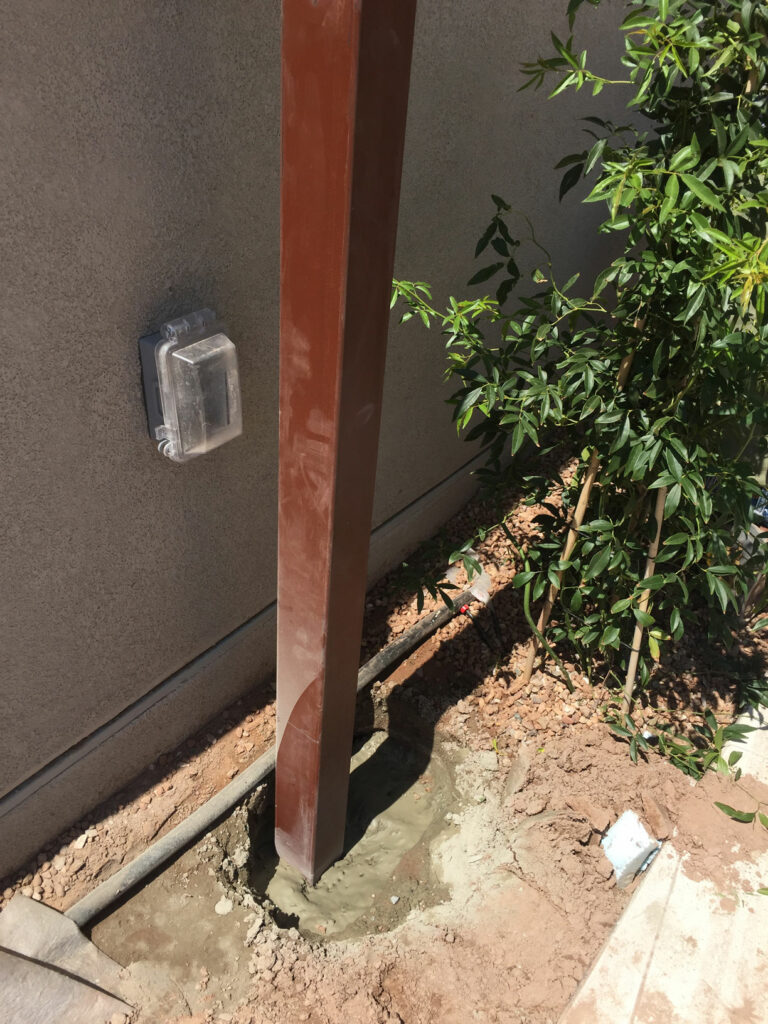
Step 3: Set post in hole. Measure and level post. Once leveled, fill the hole with concrete. If not using concrete, backfill with existing dirt, making sure dirt is compacted every four inches.
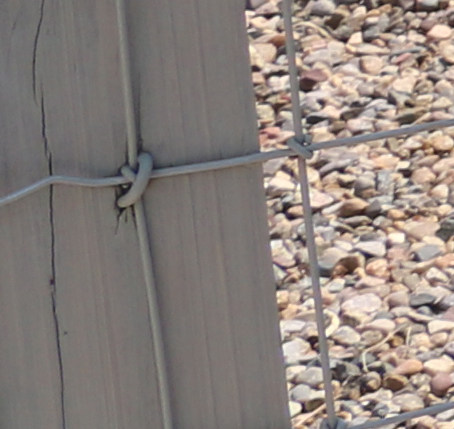
Step 4: Attach steel mesh to wood posts by hammering in fence staples.
Making sure post is the correct height and level. Concrete footing for post. Fence Staple
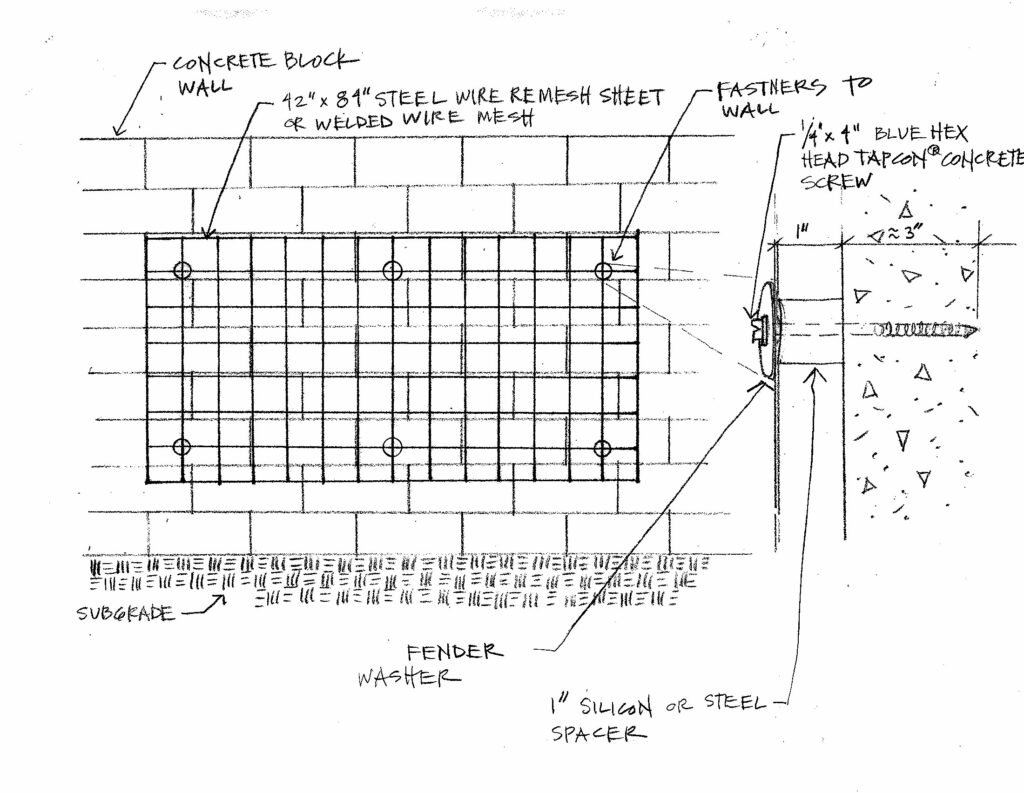
Trellis Attached to Concrete Block Wall
Materials
42”x84” steel wire remesh sheet or welded wire mesh
6 ¼” fender washers, 2” circumference
6 ¼” x 4” Blue Hex Head Tapcon® concrete screws
6 1” silicon or steel spacers
Tools
Drill with 3/16” concrete bit
Hammer drill
Measuring tape
Level
Step by Step
Step 1: Measure, level and mark locations to attach fasteners to the wall using wire mesh as a guide.
Step 2: Drill holes for the screws.
Step 3: Attach steel mesh to the concrete wall using suggested screws, washers and fasteners as shown in the diagram.
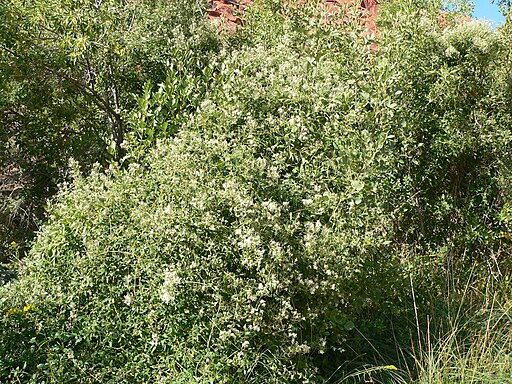
This vine native to riparian areas in the Jemez Mountains is great for covering pergolas and trellis for screening. It is fast growing as long as water is available to keep it moist. Afternoon shade reduces its water use. It does best planted on the north and east sides of a fence. Butterflies flock to the beautiful white fragrant blooms that appear in summer. Once blooms have dropped, the seedheads create a showy appearance known as old man’s beard. Don’t trim this vine until it begins to wake up in early spring so wildlife can enjoy its seeds and protection during the winter.