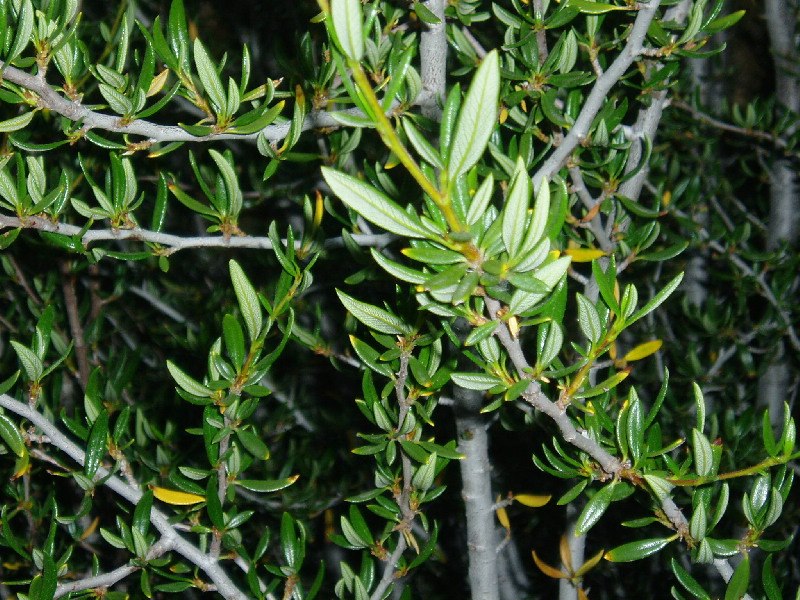
This semi-evergreen shrublike tree puts on an interesting fall display as the white seeds twist into a feathery white tail so big it obscures the green leaves. It thrives in hot sunny spaces and can live with neglect. It requires little pruning and deep watering only once a month.
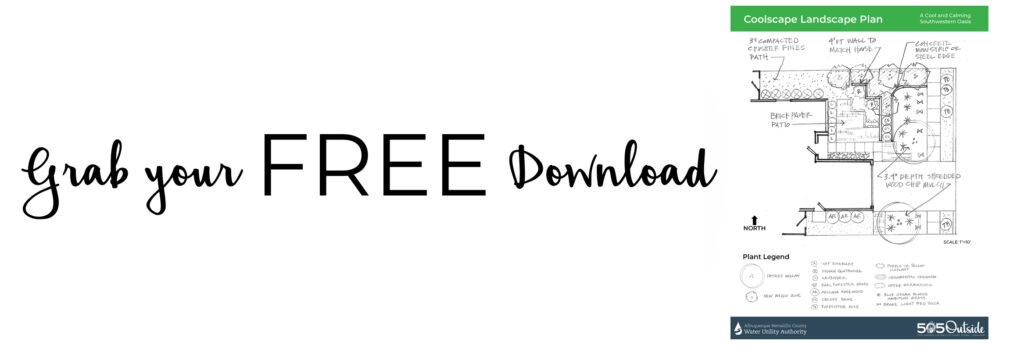
Creating a landscape plan is a complicated endeavor. Luckily for home gardeners, landscape architects specialize in designing outdoor spaces. Today, we’re sharing a unique plan by New Mexico landscape designer David Cristiani to give you some inspiration and ideas for designing your own yard. We’ll be sharing three more landscape plans in future issues of 505Outside.
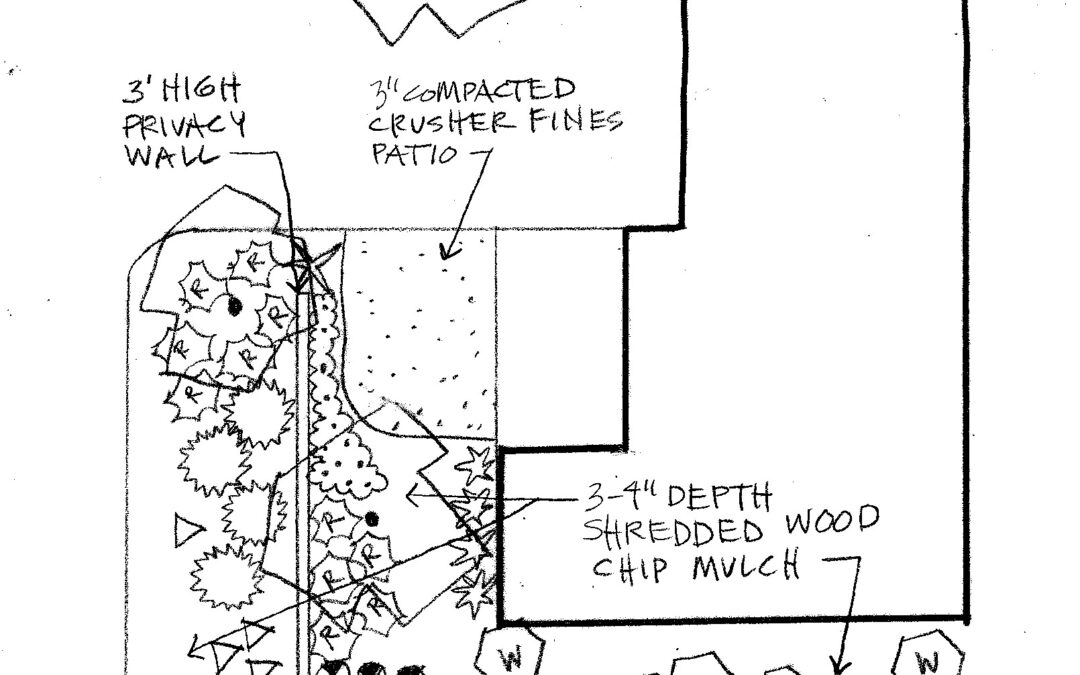
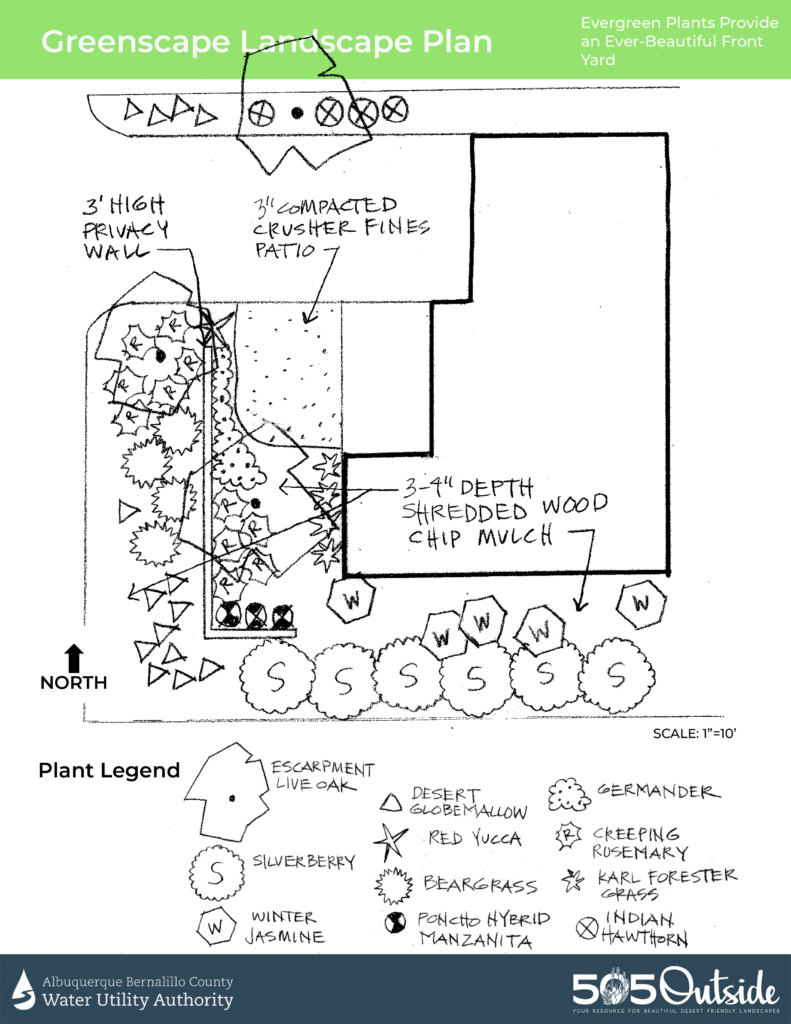
Green spaces and water conservation need not conflict, nor does an oasis require the use of high-water-use and high-maintenance turf grass at the exclusion of native plants and succulents. This typical front yard area contains mostly evergreen plantings and an inviting entry experience to welcome guest and owner alike, no matter the season. A low wall and climbing evergreen vines combine to provide additional screening and intimacy for sitting out on the front porch and also extend the architecture into the plantings. While designed for a smaller front area, the plantings can be increased in scale and number to fill a larger property.
The sculptural and leafy forms of an evergreen escarpment live oak grouping provide a canopy to the plantings below, which offer seasonal interest using native and adapted species. Native bear grass provides a soft yet bold texture, as do the spiky flower stalks of red hesperaloe, or red yucca. The loose forms of colorful desert globemallow provide masses of pink-toned flowers throughout much of the growing season. Germander and trailing rosemary generously fill in the ground surfaces with dark green color, fragrance and seasonal flowers. Durable materials prevail, while the plant spacing provides both screening from adjacent neighbors and ample room to access both sides of the home.
Learn more about specific types of gardening here:
Sometimes you need help to create your perfect desert friendly landscape. Many times, this involves hiring a landscape contractor. The Water Utility Authority is committed to helping its customers. Below we share some tips to help you choose a landscape contractor.
It’s important to start with a to-scale landscape design plan. This may be done by a professional landscape architect or a landscape designer. Or perhaps you worked up your own design plan.
Hiring a landscape contractor requires research similar to what you would do when hiring any home repair contractor. It’s important to consider the following:
Is the contractor able to secure bonding and are they insured?
What are the contractor’s credentials (formal training, references, professional certification)?
Does the contractor belong to a local or national trade association and abide by its standards?
Does the contractor have a Water Smart Contractor listing through the Albuquerque Bernalillo County Water Utility Authority?
The contractor should provide references for projects similar in size, scope and design so you can talk to previous customers about their experiences.
The contractor should share photographs of other projects you can check out.
Estimate/Bid and Contract
The contractor should provide you with a detailed, line-item estimate for the work. This will include the price of the materials, labor, taxes and permit costs if applicable. A detailed estimate will help you accurately compare pricing and services.
A signed estimate may act as the official contract, a legal requirement that will protect both you and the contractor if anything goes wrong.
What is the payment schedule? Most contractors will ask for anywhere from 30% to 50% up front so they can purchase materials. They should provide you with a general timeline or payment schedule.
How long will the construction take, and what does the sequencing/schedule look like?
How does the contractor manage additional work that may be added in the middle of the project and is not on the plan?
During and After Construction
Who will be the contractor’s point person, someone you can go to with questions? How will they communicate with you and how often?
How will the contractor handle variabilities that come up during construction?
What happens if there is a delay once construction has started?
The contractor should show you how to maintain the landscape after it is built and how to work the elements installed, such as the irrigation controller.
What are the warranties for the project? What do they cover and exclude?
Does the contractor provide troubleshooting support during the first year after installation?
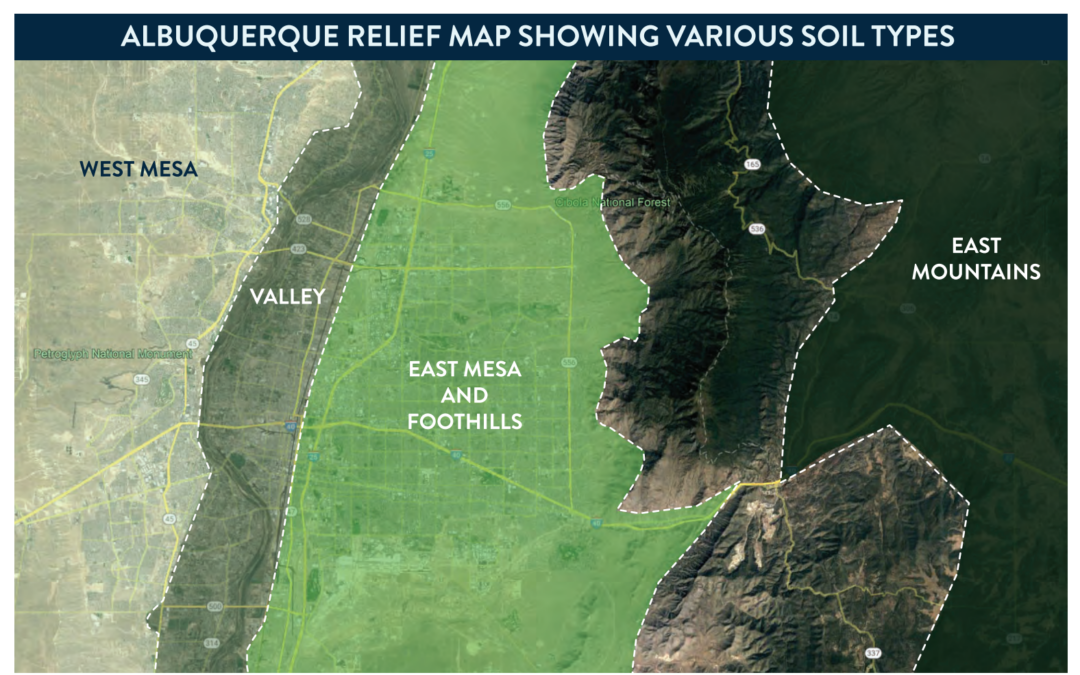
Albuquerque has a variety of soil types. Learning what type of soil is in your yard is a critical step to understanding how water will infiltrate the soil and how long specific plants need to be watered to get the water to the correct depth.
VALLEY SOILS
Valley soils vary from dense clay to grainy sand. They are layered and braided through the area because of the historic flooding of the Rio Grande. The valley also is where acequias weave through the community, providing many essential benefits. They provide water for creating foodsheds and are culturally significant for our community. They also help create and maintain our tree canopy and provide much needed pollinator habitat. This remains particularly important in our changing climate.
EAST MESA AND FOOTHILLS SOILS
The soils in the foothills are usually coarse, whereas the decomposed granite soils on the mesa are generally finer and prone to compaction. These soils have a broad range of organic material along with the base of decomposed granite, making for a huge diversity, even within a building site. Groundwater is deep — only shallow enough to be occasionally accessible to plants in unpaved arroyos near the foothills and stormwater basins fed by urban pavement.
WEST MESA SOILS
West Mesa soils, which vary from silty clay loam to finer sands, are sometimes deposited in a shallow layer above volcanic basalt. Groundwater is too deep to be accessible to most plants except in large stormwater collecting basins.
EAST MOUNTAIN SOILS
East Mountain soils tend to be a mix of moisture-retaining clay loams with some fast-draining gravelly deposits. The density and type of plant cover reflect the relative soil moisture. In upslope areas, where temperatures are consistently cooler and rain and snow more abundant, shrubland transitions to mixed conifer forest. Slopes tend to be drier than depressions, which accumulate moisture.
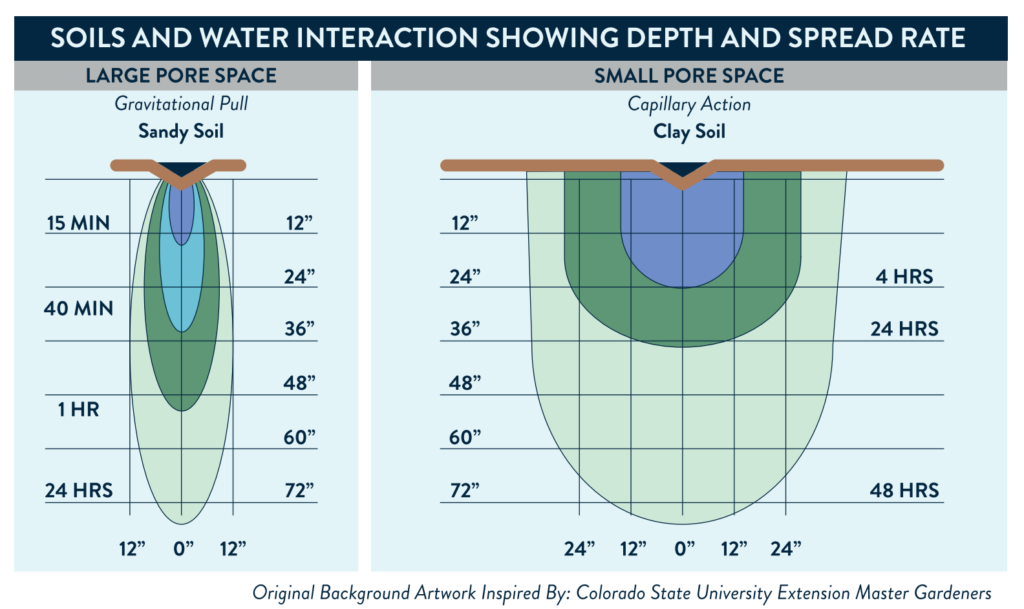
HOW WATER MOVES THROUGH DIFFERENT SOILS
Water soaks into sandy soils much more quickly than in clay soils, but it travels downward in a narrow pattern. In clay soils, the water travels much more slowly and spreads out in a much wider pattern.
Pro Tips:
• Plants in sandy soils generally need additional emitters to distribute water more evenly in a root zone. They also may need to be watered more frequently but for shorter amounts of time.
• Plants in clay soils generally need fewer emitters because the water spreads out. They will probably need to be watered less frequently but for longer periods.
• All soils need to drain between waterings to allow oxygen back into the soil pores.
A struggling plant may be receiving too much water. If soil stays saturated, plants will drown. Since there is a lot of clay in our soils, it is very easy to drown plants. A drowning plant often has similar symptoms to one not receiving enough water: wilted leaves and poor color. Always check soil moisture with a moisture meter before adding more water.
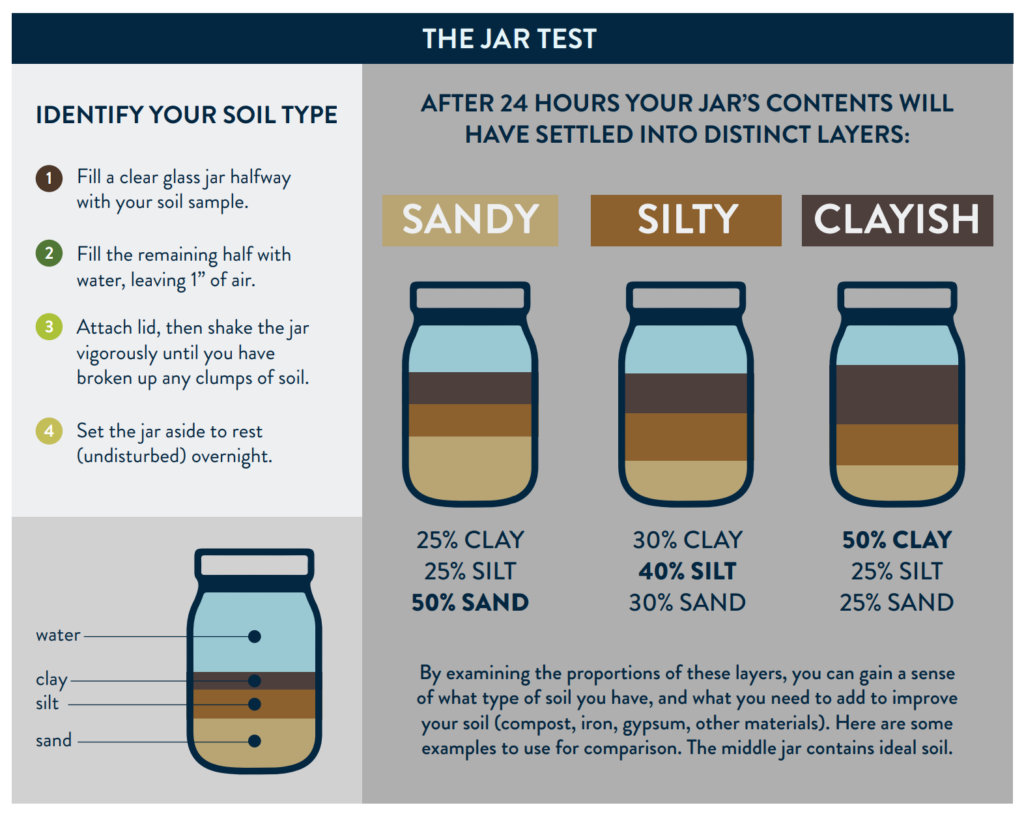
PERFORMING A JAR TEST TO DETERMINE SOIL TYPE
An easy way to get a better idea of what type of soil you are working with is to conduct a jar test. A jar test will separate the three main components of soil: sand, silt and clay. These determine the soil texture that contributes to drainage and overall plant health.
Most building sites, including home sites and the land directly surrounding them, have areas of heavy compaction. When soil is compacted, pore space that allows oxygen and water to get to the root zone is reduced, building an impermeable layer in the soil.
Soil compaction adversely affects percolation rates (the movement of water through the pores) and makes it much harder for roots to expand within the soil and thrive.
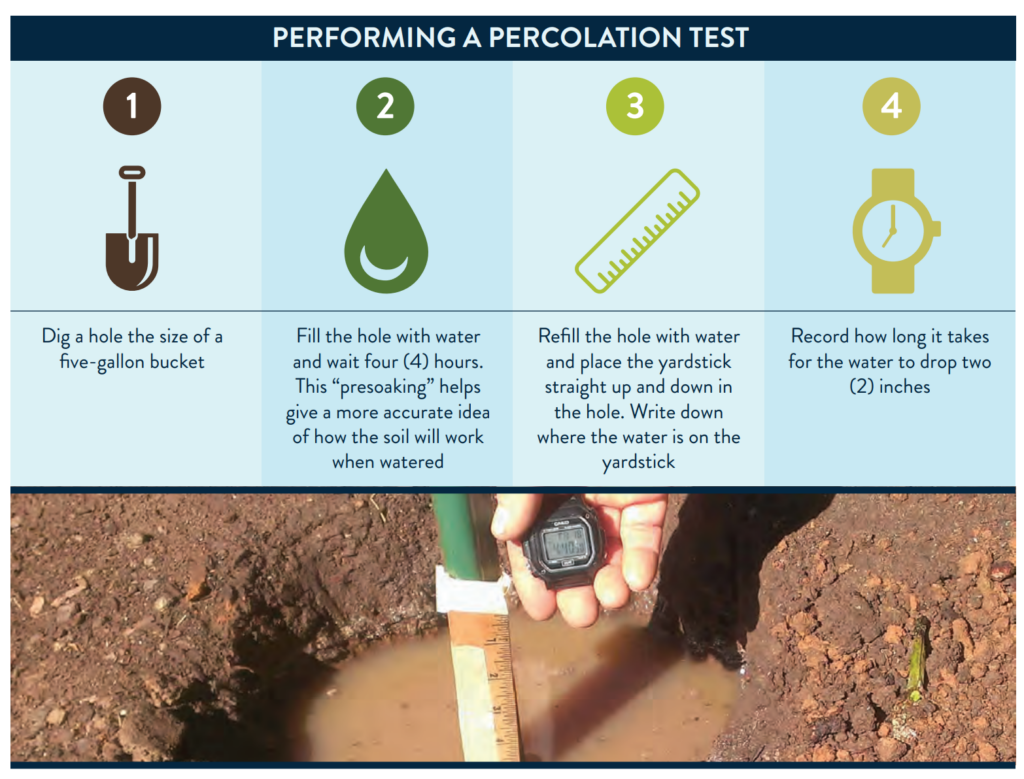
HOW TO TEST THE PERCOLATION RATE IN SOIL
If you do a jar test you will have a pretty good idea what percentage of sand, silt and clay make up your soil. Performing a percolation test will allow you to see how your soil interacts with water.
TOOLS NEEDED:
Shovel, yardstick, timer/watch, pen, paper and hose
To get your hourly percolation rate, divide how long it takes the water to drop 2 inches by 120. A soil percolation rate between 1 and 3 inches per hour is adequate for plants with average drainage needs. If the rate is less than 1 inch per hour, drainage is too slow, and the soil will either need to be improved by adding compost or planted with plants that tolerate wet soils. Watering should be less frequent but longer.
If the drainage is more than 4 inches per hour, it is too fast. Soil will need to be amended with compost and other organic matter either by digging it in or using it as a top dressing. Watering should be more frequent and for shorter time periods.
WHY IS MY SOIL COMPACTED?
Many things — including construction, heavy equipment or vehicles, or a lack of organic matter — can create compacted soil that won’t allow water to drain. One way to prevent further compaction is to park your vehicles and store heavy items only in your driveway or on soil devoid of trees or landscaping.
HOW DO I IMPROVE MY SOIL?
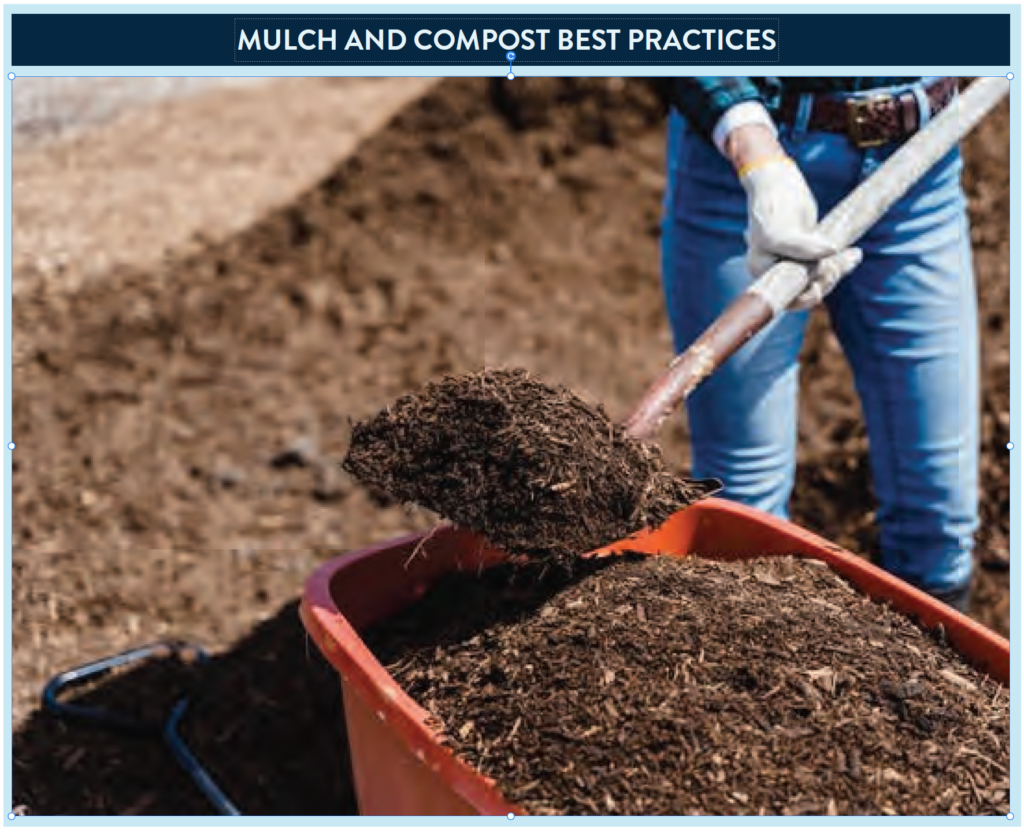
Add organic matter (compost) to clay to make it more permeable and add compost to sand to improve its water-holding capacity.
Add a deep (3”-4”) layer of organic mulch to help all soil types retain moisture better, suppress weeds and feed soil microorganisms. Native and low water use, desert friendly plants do not need compost. Although they will grow slowly in uncompacted native soil, they thrive best there.
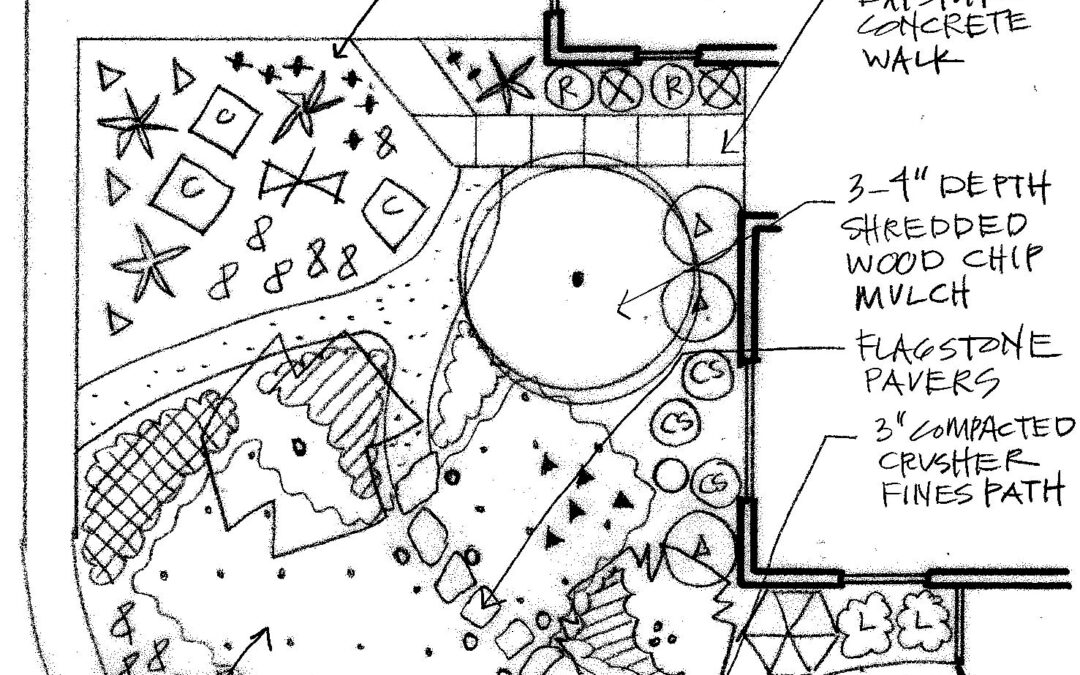
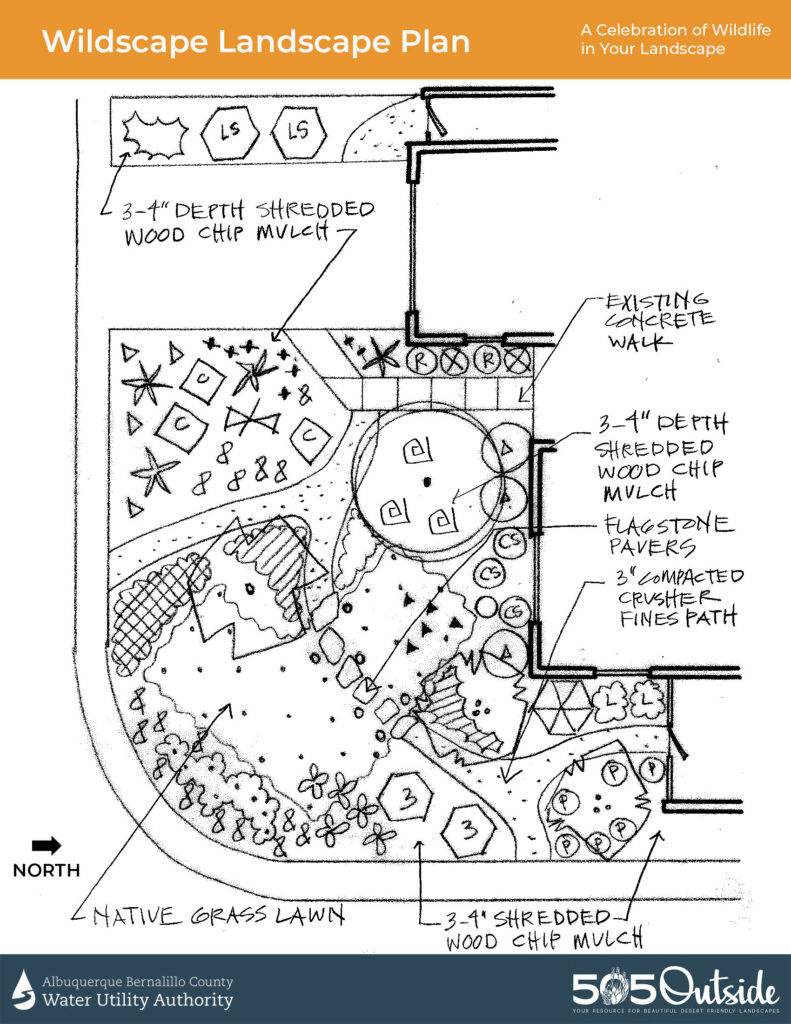
A lot goes into designing a landscape; hence, there’s an entire profession called landscape architecture devoted to designing outdoor spaces. We won’t be able to make you a landscape architect today, but we’re sharing a unique landscape plan designed by New Mexico landscape designer Judith Phillips to get you inspired with ideas for designing your own yard. We’ll be sharing five more landscape plans in future issues of 505Outside.
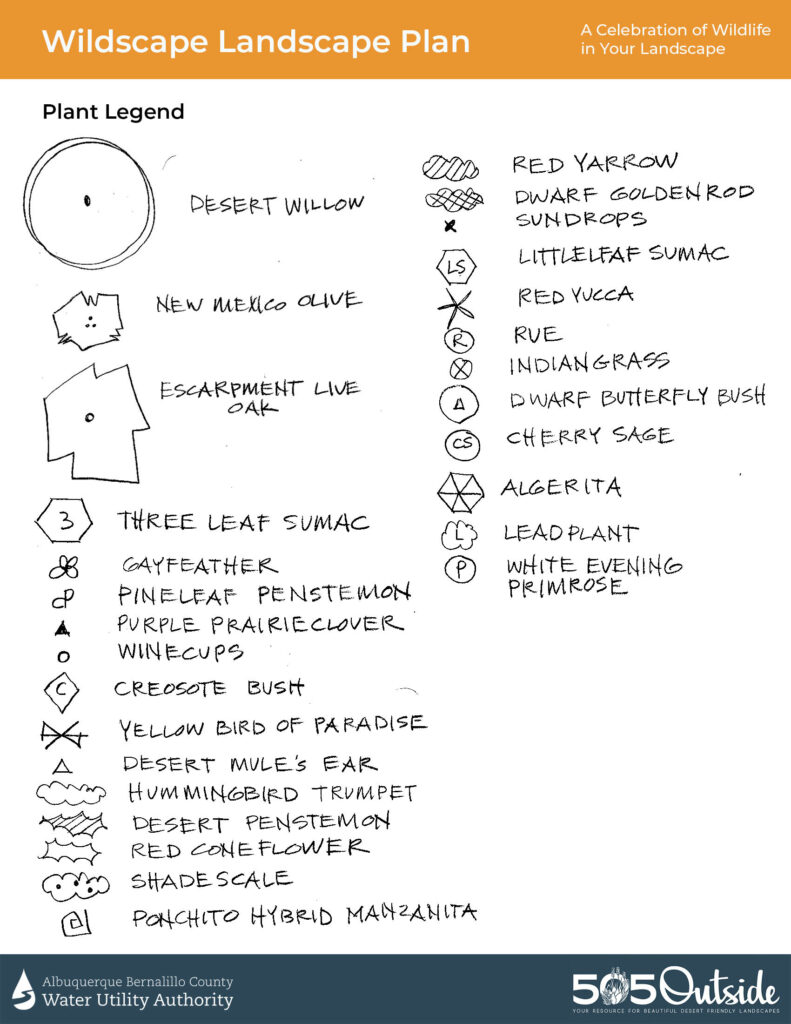
Plant for wildlife and you will host a never-ending garden party. Wildscapes should have tiers of canopy to provide shelter and food for a wide variety of wildlife, including birds, hummingbirds, bees and butterflies. Tall trees provide shade and shelter. Dense thickets of middle-height shrubs provide spaces for roosting and nesting and also give the landscape a sense of enclosure. Open areas with low-growing groundcovers provide areas for nesting and foraging, and the colorful flowers and berries appeal to people as well as winged visitors. A mix of evergreen plants for cover, brilliant flowers for nectar and pollen, and fruits and seeds ripening through the seasons will keep your wildlife friends fat and happy. In this wildscape, the gayfeather, dwarf goldenrod, leadplant, yarrow, rue, grasses and dwarf butterfly bush are lures for butterflies. Hummingbirds are drawn to plants with nectar-rich tubular flowers, such as desert willow, penstemons, cherry sage, coral honeysuckle and red yucca. Local songbirds and quail will be attracted by New Mexico olive, sumacs, creosote bush, desert mule’s ear, coneflowers, shadscale, gayfeather and algerita.
Designed by Judith Phillips, author of Plants for Natural Gardens
Learn more about specific types of gardening here: