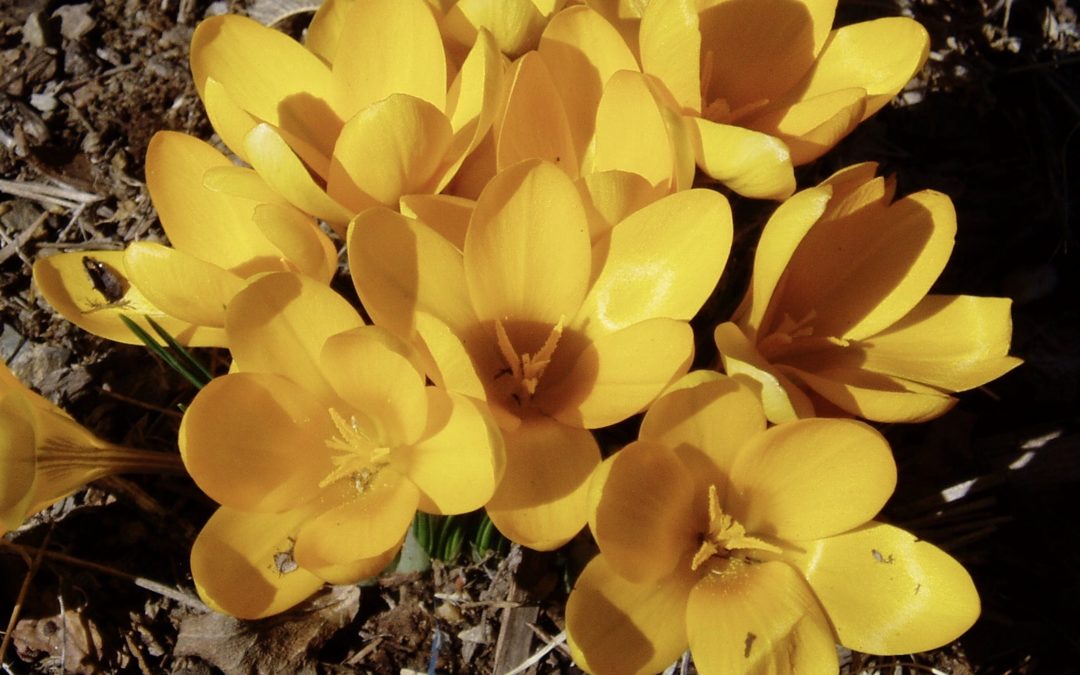
The Crocus is a brilliant addition to any landscape. It is one of the earliest bulbs to arrive and provides the first color to your landscape. The Crocus fits well in most landscapes because it can be found in various colors and sizes. It is easy to grow and care for and will return the following spring.
Spring is here, and it is a dry one. Remember that we are under a drought watch, which is no reason to panic, BUT it does mean we need to be much more careful with our water and aware of how efficiently we are using it in our yards.
This April, there are three easy activities you can do to help make sure your system is working more efficiently.
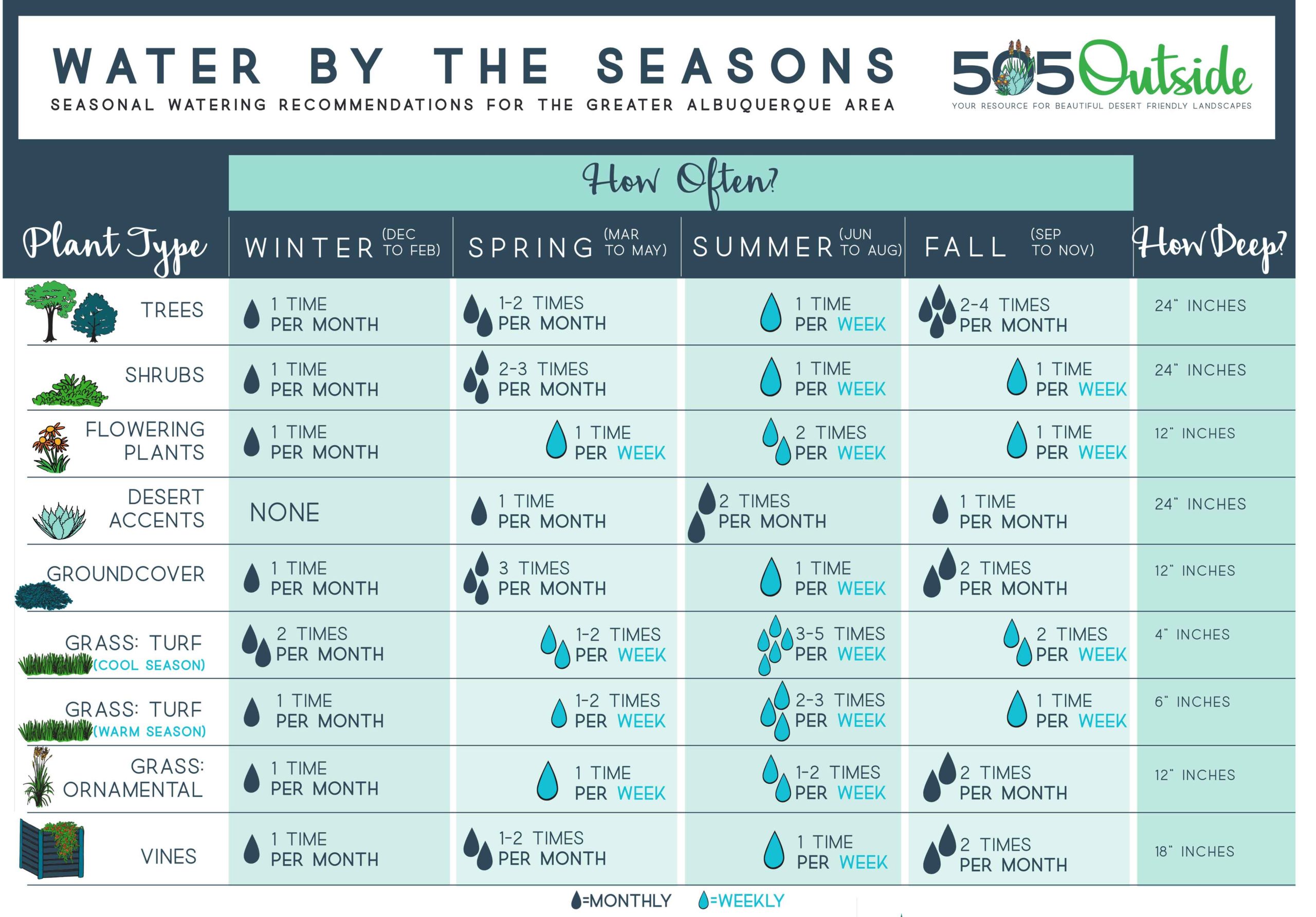
1. Double check your irrigation settings. Your plants are actively growing now. They need an extra drink of water to stay healthy, but it is important that we are not giving them too much. Your plants will do better with a deep watering done less frequently. Print out our Seasonal Watering Chart, which shows how often we recommend watering each type of plant. Water your lawn one to two times per week, your trees two times per month and your shrubs two to three times per month.
Check with a screwdriver to make sure the water is reaching the roots but not going so deep that the roots can’t reach it. The proper depth is on the right side of our chart above.
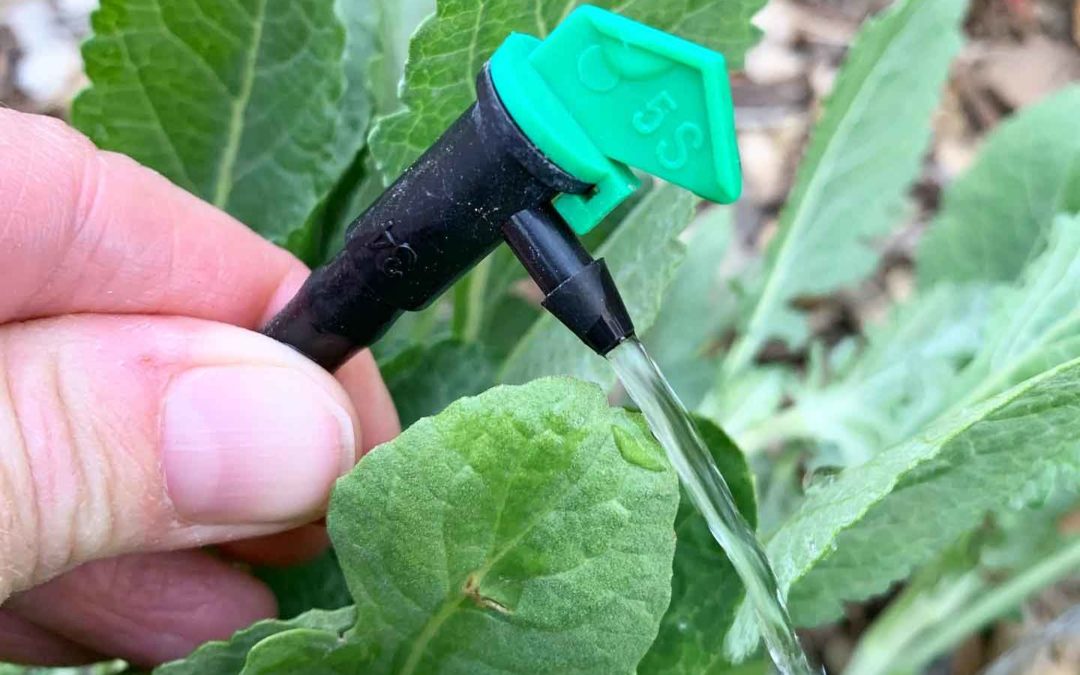
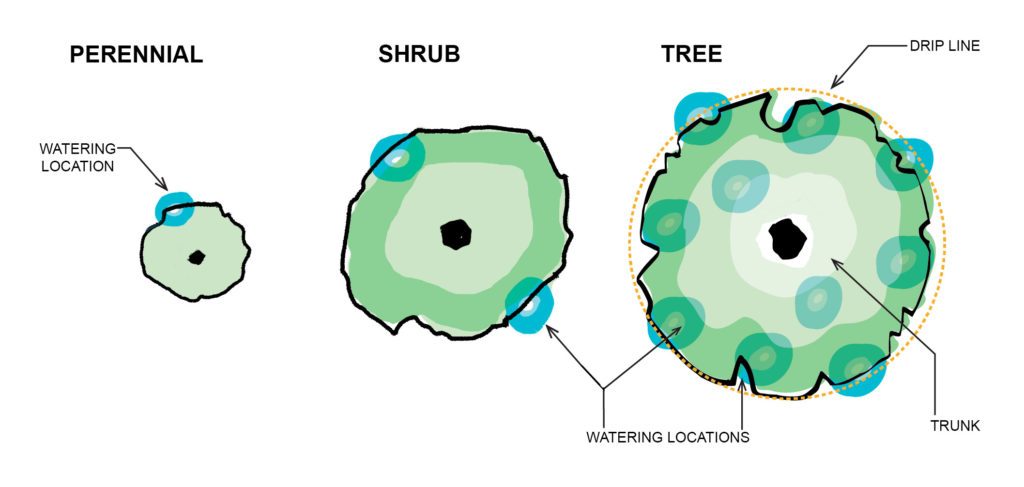
2. Make sure that your trees and shrubs are watered around their drip line so they can efficiently use the water they are getting. This is where woody plants (trees and shrubs) are best able to take up water from the soil. If your emitters are at the trunk or base of your shrubs, your plants are not able to use all of the water you are giving them. You need to move the emitters out to the drip line, and you may need to add additional emitters. For example, if there are only two emitters serving a mature tree that needs over 400 gallons of water in April, it will be nearly impossible for that tree to get enough water to remain healthy without adding more emitters.
3. Because of the “stay at home” health order, many of us have been focusing on improving our yards. This is the perfect time to upgrade your irrigation system so you can water more efficiently. You may only need to replace the nozzles on your sprinklers, or you may be looking at a complete yard transformation. By making changes sooner rather than later, you will benefit in three ways: You will save money sooner, probably have a better chance of getting into a contractor’s schedule if you need help and put less stress on your plants if the work is done in the cool spring weather rather than during the summer.
It’s also the perfect time to reach out to us for help. Send us an email at AskAnExpert@abcwua.org to ask landscape questions or to arrange an appointment for a free consultation.
Author: Richard Perce, Irrigation Efficiency Specialist with the Water Resources Division for the Water Authority. Have a question about the article? AskAnExpert@abcwua.org
As I write this, a cold thin snow cover still hides the ground, but it won’t last long. If we’re lucky, the snow will slowly melt and seep into the soil; if we aren’t lucky, it will sublimate right into the atmosphere – straight from solid to gas. Alas, the roots of our trees lie in the dry desert soil, waiting for water.
It’s always that way, here in the arid Southwest. Our soil, lacking in moisture, also lacks living and dead organic matter. The water that falls on our land either falls infrequently, too little or too much all at once. Still, the plants and trees persist. It is up to us, the human caretakers of these places and trees, to do whatever we reasonably can to provide them with what they need to survive.
Sounds kinda doom-and-gloom, you say? It does! This year promises to be very dry and likely very hot. We all need to do our part to conserve water, and yet we want to keep those established trees healthy and help recently planted trees get established. So, what to do?
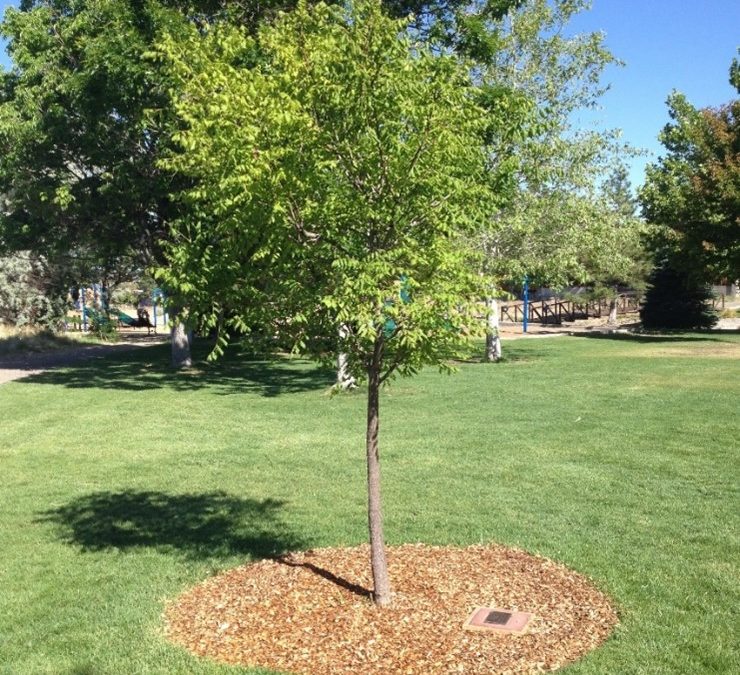
It turns out that the two best things we can do are relatively simple. We can reasonably and regularly irrigate the trees (more details below) and apply a layer of coarse organic material as a mulch over the root zone of our trees.
Since every tree in every yard is different, how often you’ll need to water your trees largely depends on how quickly water moves through the soil. In sandy and gravelly areas (Westside and Foothills), the water passes through the soil quickly, moving past the tree roots. These types of soil need watering more often but with less water each time.
Here is how to do it: Water long enough that after a day, when the water has soaked in, the soil has been moistened about 16-24 inches deep. Poke a thin piece of metal (a long screwdriver or something similar will work) into the ground and see how deep you can push it in. That will tell you approximately how deep the water penetrated the soil.
Do this in a broad area, focusing not on the trunk but on the part of the ground under the outer half of the canopy and maybe a bit beyond the drip line (edge of the canopy). Feel the soil with your fingers to determine when to water again. You don’t want to let the soil completely dry out between irrigations! Also, pay attention to the leaves, noticing if they are full and flush or droopy and tired.
The best way to water soil that has more clay in it is to irrigate less often but with more water. This kind of soil holds more water, but that water moves slowly. Be careful not to overwater, especially near the trunk. Too much water in the soil interferes with root function and can more easily lead to root rot and decay issues. Concentrate the water in the outer half, and also in a bit of the canopy shadow, all the way around the tree.
Wood chips, which can be obtained from a tree service or a local vendor, are the ideal mulch for trees. No matter what soil type and irrigation pattern you have, putting approximately three inches of wood chip mulch directly on the soil does wonders for your trees. As with any mulch, wood chips cover and cool the soil and reduce evaporation. As the chips decay, they foster the development of a forest-like soil ecosystem, which is just what tree roots really benefit from. Think of the ground surface in a forest — bits and pieces of old trees, slowly decaying at the surface. Add a new layer of mulch every couple of years, and watch your trees thrive!
Other mulches, like pine bark chips or pecan shells, are not quite as good as wood chips. Rock mulch is not a good choice. It absorbs sunlight and releases that energy as heat that rises through the tree’s canopy and strips even more precious moisture from stressed leaves.
Did you know that the Water Utility Authority will help cover the cost of some of this work? Through the Treebate program, they will offset a portion of the cost of certain purchases — such as new trees — and activities such as pruning and other maintenance work, soil improvements through compost and mulch and even some irrigation costs. Check out tree recommendations and all the program details here.
Plant the Akebia Quinata, Chocolate Vine, in your garden after the last frost of spring. It thrives in most soils, however, keep in mind that it does grow rapidly. It may serve as an excellent ground cover and has a distinct fragrance which is depicted to be a vanilla or chocolate aroma. Although this plant is native to China, Korea, and Japan it was introduced into the United States in 1845 and has prospered in various areas since then.
Irrigation controllers can be intimidating, particularly because they only get adjusted seasonally and it is easy to forget how to program the timer correctly.
In this article, we are going to explain some terms and point out some functions which are universal, regardless of the type of controller you have. We are also going to provide some pointers on what will help you keep track of it all, as well as provide you with links to a few programming videos that discuss the most common irrigation controllers in Albuquerque. So let’s dig in!
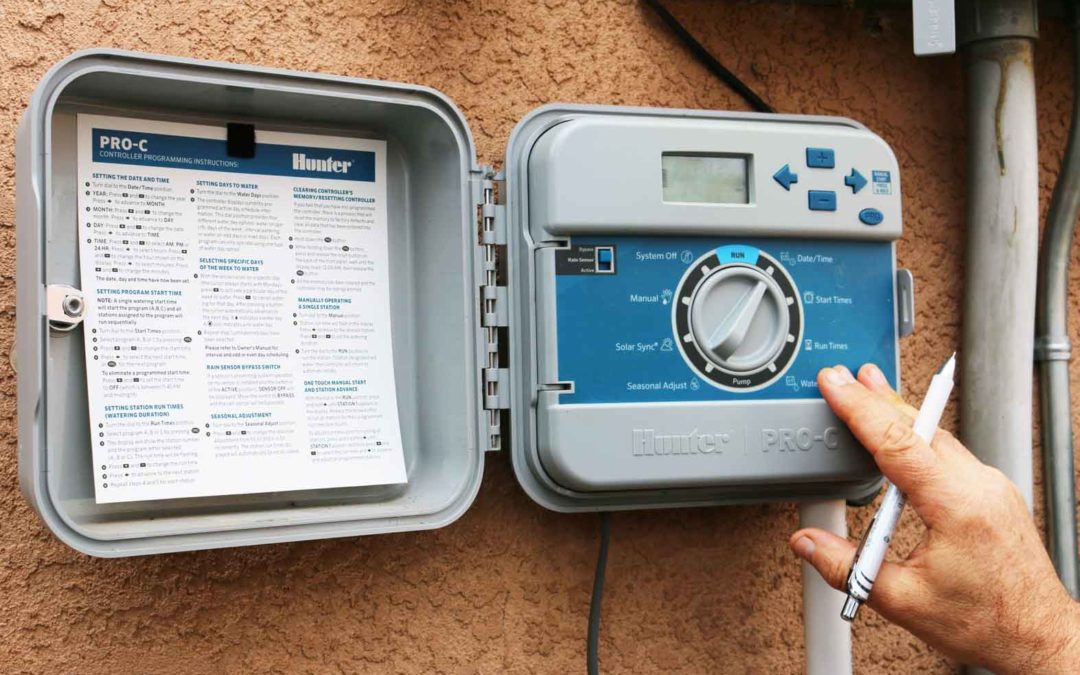
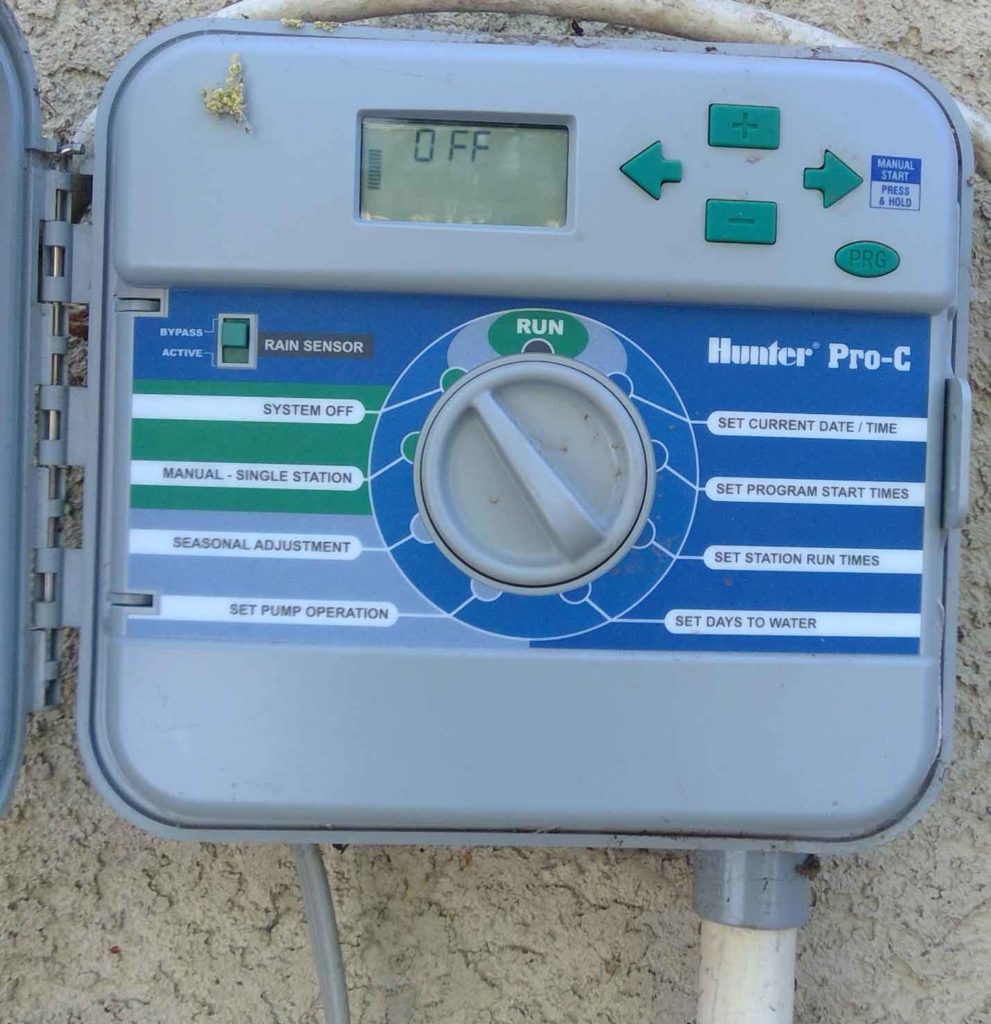
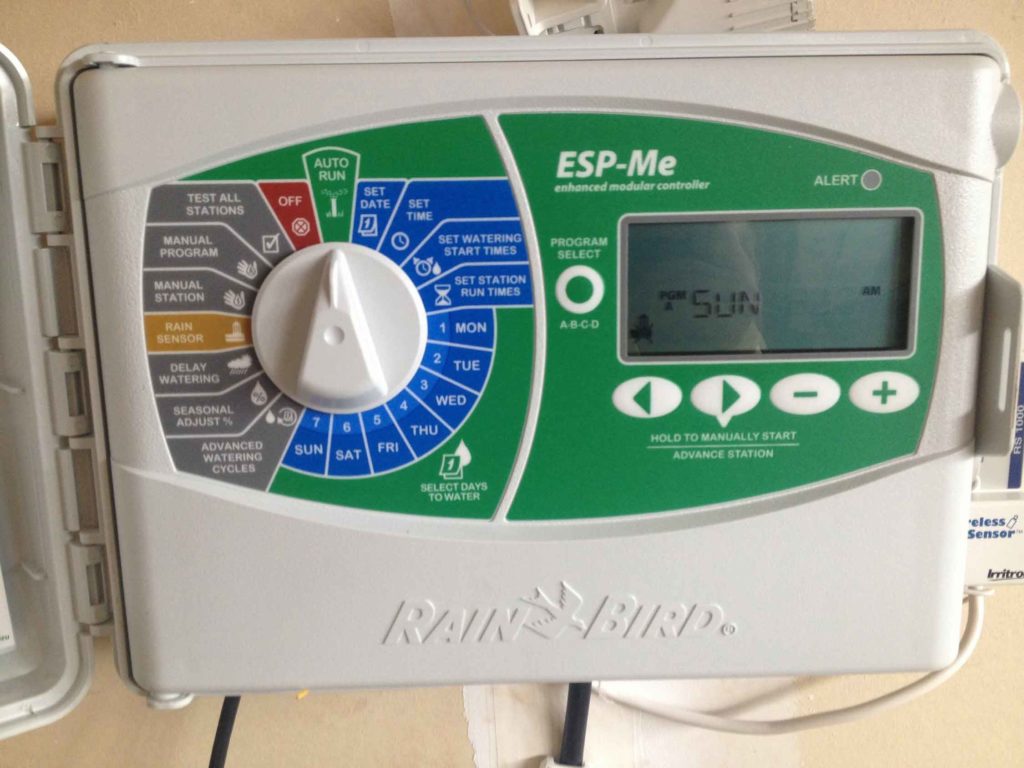
On nearly every controller you will find the following functions: program, time/date, start time, run time, days to water, autorun, and off. You will almost always have some +/- keys and some right and left arrow keys. These +/- and arrow keys are used to set your times and days. Other functions may be included on various timers as well.
Illustrated are two of the most common controllers installed in Albuquerque, the Hunter Pro-C and the Rainbird ESP-Me. They look different at first glance, but a closer inspection shows that they have essentially all the same functions.
What do you need to know to be able to set your controller this spring?
Time/Date: This is an important detail to keep up-to-date so that you are watering at the correct time and on the days that you want to water.
Zone/Station: A zone, or station, is all the sprinklers or drip lines that are controlled by a single valve. You may have one sprinkler valve and one drip valve split between your front and back yard. Each one is a separate zone which means you have two zones.
Program: Programs are how you group your zones that have plants with similar water needs. Using the above example:The lawn sprinkler zone would be selected on Program A. If the drip zone has similar water needs (trees and shrubs) you would group them both on Program B. This is because your lawn (Program A) needs to be watered differently from your trees and shrubs (Program B). If you have an additional zone, like for a vegetable garden, you will put that drip zone in Program C to water differently.
Start Time: It is important to know that the start time applies to the whole Program, not to each zone in a program. Controllers will run zones in succession within a program.
Run Time: This is the amount of time each station, or zone, waters every time it comes on
Example of spring programming:
Program A starts at 6:00 a.m.and your lawn sprinkler zone runs for eight minutes. Program A, zone 1, will quit watering by 6:08 a,m. If you had more lawn zones, they would water one right after the next.
Program B, your trees and shrubs zone starts at 10:00 a.m. It runs for 75 minutes so Program B would end watering at 11:15 a.m.
Days to Water: Once again, the days to water apply to all the zones, or stations in one program.
Example of spring programming:
Program A, your lawn, needs to be watered once or twice a week in the spring so you would set Program A to run twice a week.
Program B, your trees and shrubs, need to be watered only once a week in the spring so on Saturdays, for example, when you know that you have a better chance of checking the system for issues.
Tips & What to Watch For: Here are some tips to make programming easier and some tips to avoid common mistakes
Create a seasonal or monthly calendar and hang it up next to your controller.
Label each zone (Example: Zone 1 - front lawn close to the street)
Create calendar reminders for yourself, either on your phone or paper calendar, for each season.
Normally you won’t change the amount of time each zone waters seasonally, just how often you are watering.
Always double, or triple, check which program and zone you are on when you adjust the settings so you don’t end up setting a lawn zone to water like a drip zone.
Make sure you are back at Auto/Run whenever you have finished making adjustments. Your controller may not run at all if it isn’t, or it may revert to its emergency programming (usually 10 minutes for every zone, every day).
Replace your battery back-up every year. You don’t want to reprogram your whole controller if the power goes out.
Links to common controllers found in the Albuquerque area:
Author: Richard Perce, Irrigation Efficiency Specialist with the Water Resources Division for the Water Authority. Have a question about the article? AskAnExpert@abcwua.org