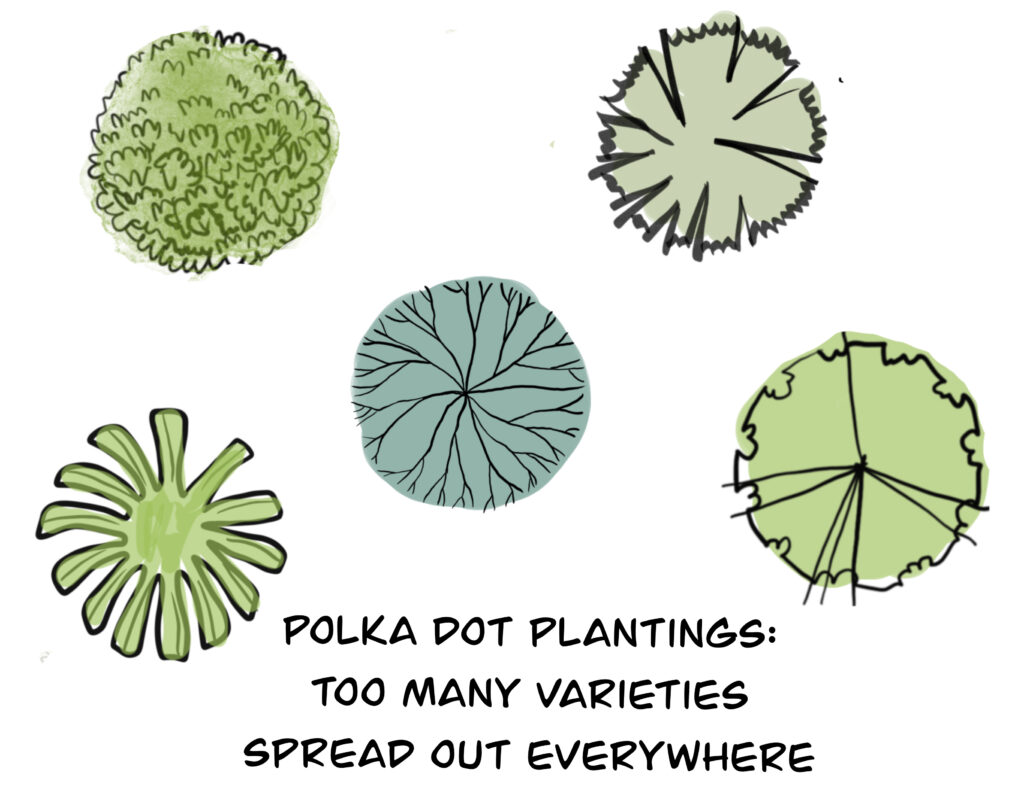
1. Too many different plants spread out like polka dots
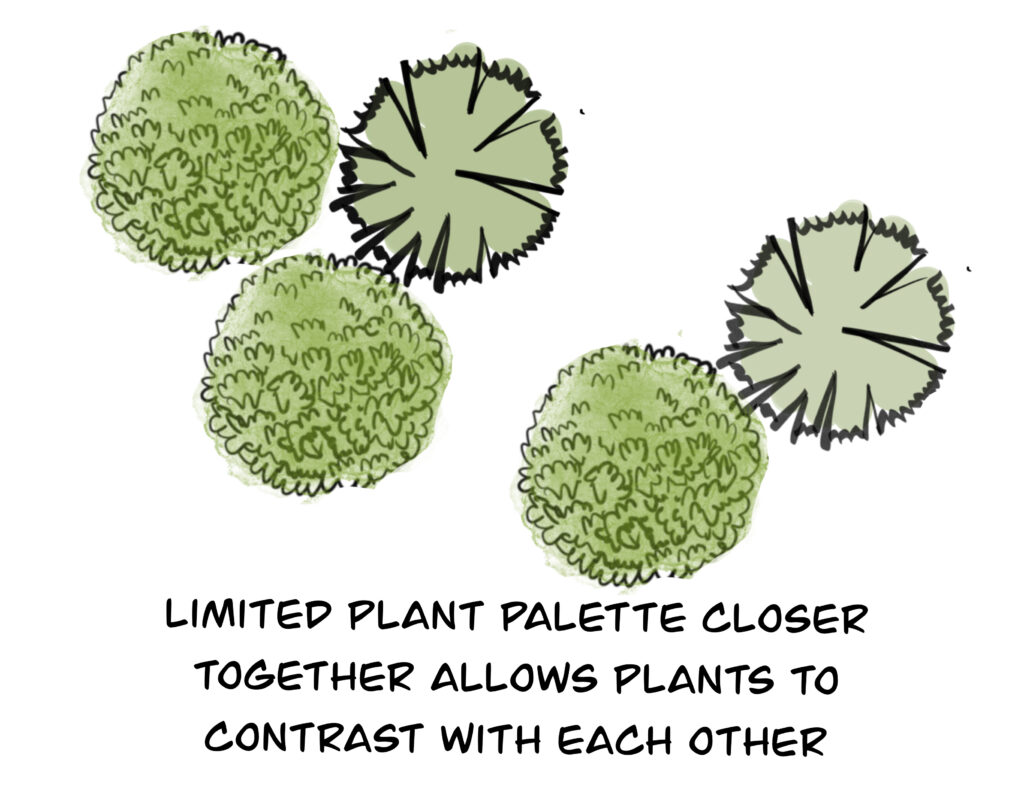
Often when homeowners begin to design their yard, they get excited by the variety of plants in our Xeriscape Guide. Similarly, going to a well-stocked nursery in the spring can be like going to a candy store — you might say to yourself, ‘I’ll take one of everything!’ However, it’s good advice to resist that urge and instead attempt a more cohesive ensemble of plants and trees. Grouping plants, especially smaller ones or perennials that have less dense forms, can maximize their effect by creating masses of various sizes and contribute to the feeling of a more natural landscape.
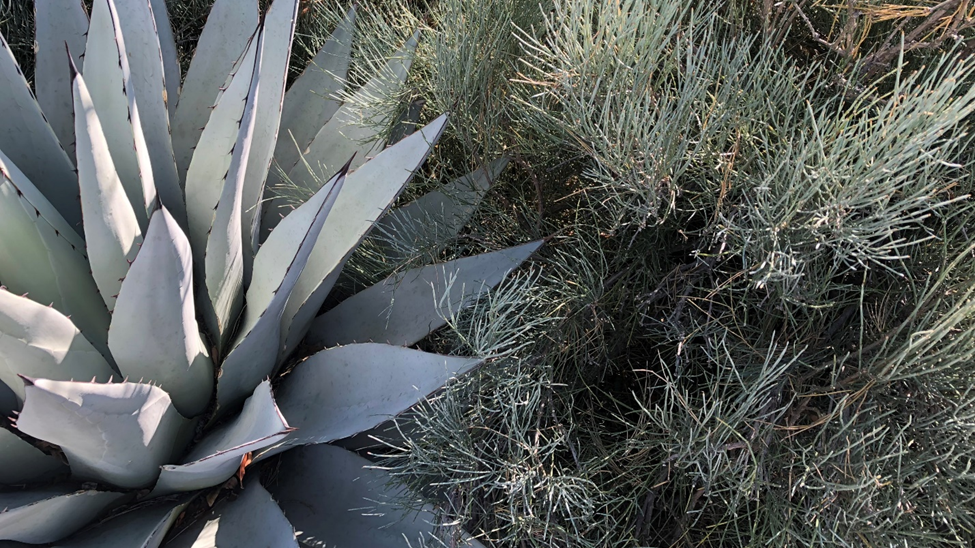
In these instances, you can pair plants that have widely different leaf shapes, like the agave and ephedra pictured below. The effect is something you wouldn’t appreciate if there was a large gap between the plants. A lot of flora have distinctive attributes like bark patterns, seedheads, dried flowers or an overall shape that allow them to stand out when accompanied by contrasting plants.
If you’re not sure where to start on your own yard design, check out our landscape templates here. You’ll notice there is a lot of variety in each design, but the same plant symbols appear next to each other throughout the yards. The three landscape architects and designers who contributed these templates have tons of combined experience designing beautiful and sustainable landscapes in New Mexico, and their templates are worth checking out!
Benefits of installing multiple plants of the same variety
Visual impact: Let’s take a really great flowering perennial like Gaura or whirling butterflies (Oenothera lindheimeri) as an example. It has airy small white (or light pink) flowers less than an inch wide atop thin branches that sway in the breeze — visually it doesn’t stand out unless you’re right in front of it. If you were to plant a single specimen of Gaura in the middle of a yard it could almost disappear. Instead, we suggest a group of three in a triangle or row closer to paths or windows to maximize their impact — just like they’ve done in this photo taken at Presbyterian Rust Medical Center on the West Side.
Attracting pollinators: Grouping flowering plants that attract pollinators can really make it worth the effort for them to visit. Perennials bloom at different times from spring to fall, and in a small yard you may have only one type of plant flowering at a given time. A group of at least three of the same perennial will be hard for pollinators to miss as they go about their business of collecting pollen and nectar. Then they’ll be able to save their energy for building nests and breeding.
Reduced maintenance: If you’re new to xeriscaping or gardening, having fewer varieties of plants in groups can make maintaining them (and learning names and growth habits) less overwhelming. Instead of starting out with a mishmash of plants installed everywhere, you’ll be able to get your head around the maintenance more easily because the yard is divided into manageable areas. Also, if you pay someone for yard care, you may need to explain to them when, how (and if) to do the work. A smaller plant palette grouped by variety can help simplify the job. You could say to them: “This year for all the woody evergreen shrubs next to the sidewalk, don’t use hedge trimmers but do remove one-third of the oldest branches at the base.”
So if you head to the nursery to buy 10 plants this spring, consider coming home with just two or three varieties that together will make a real impression.
2. Symmetrical vs. informal plant layout
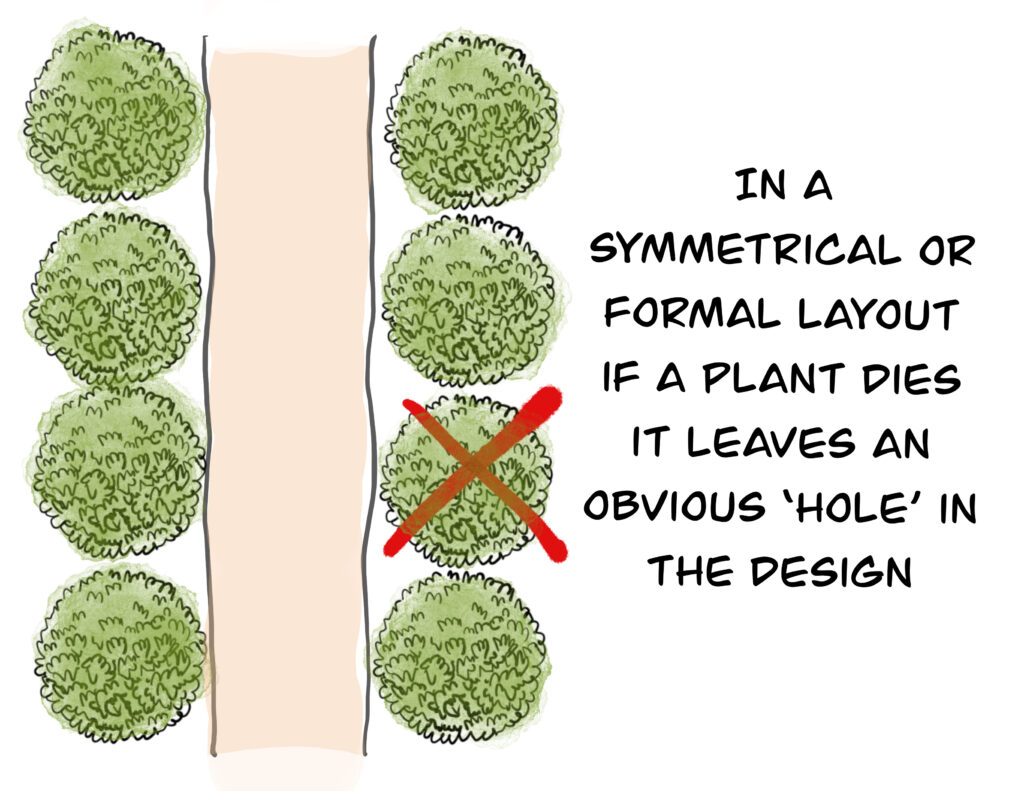
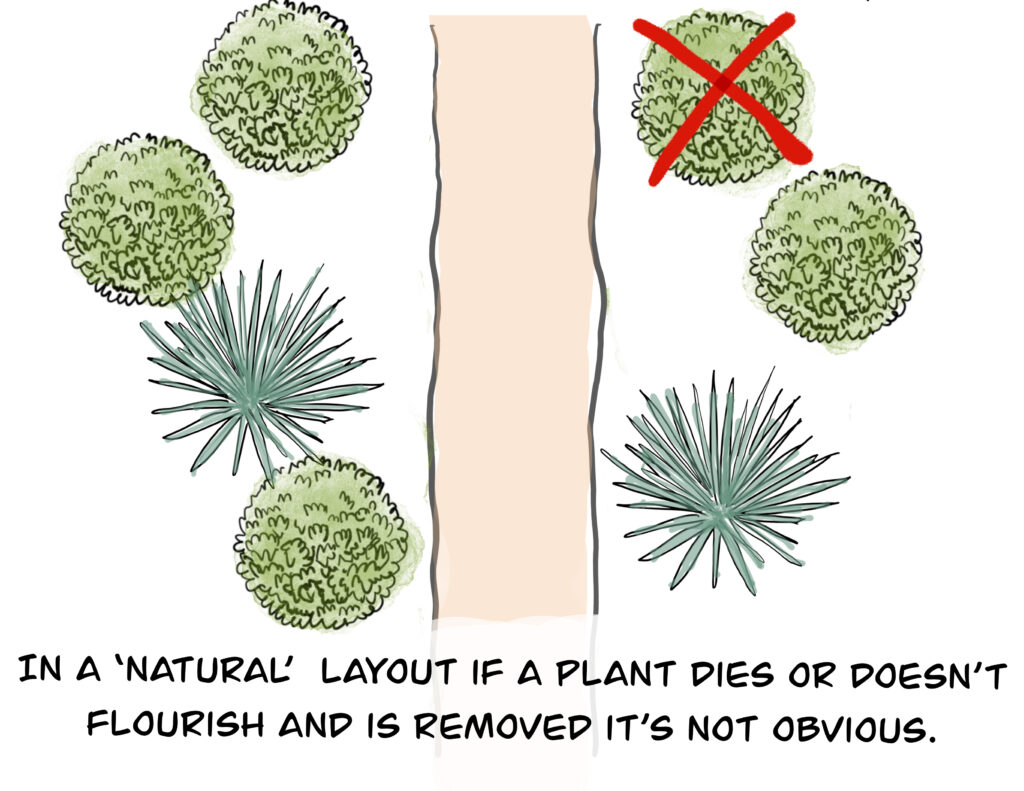
Another mistake DIYers sometimes make when designing landscapes is opting for a symmetrical layout for the new plants. For instance, they will have corresponding rows of evergreen shrubs on either side of a path as shown below. There are a couple of reasons why this is less than ideal. One is that an unhealthy plant (or worse, one that is dead) is immediately noticeable. Also, in a formal layout, you’re anticipating that the plants will grow to a uniform size and shape. However, this is not the case with native and xeric-adapted plants (and most plants, really). Once in the ground, they’ll be responding to all sorts of different conditions. Too much shade from a nearby tree limits a plant’s mature size, or extra water from the roof causes one to get larger than the others, for example. And if you did need to replace one plant in a formal layout, it could take a while for the new one to catch up to the others (assuming you able to find the same variety as the originals).
In an informal or “naturalistic” layout, a missing plant is not an issue because there’s not an expectation for that space to be filled. It also allows flexibility in the design — shade-loving plants near the tree, plants that can handle more water under the downspout. If a particular plant isn’t doing well, you can transplant it to another location. Using an informal or naturalistic planting design allows you to add to your garden over time as it matures and changes for years to come.
Selecting plants for your yard can feel overwhelming to a new gardener. We hope these tips help you avoid common mistakes, and remember that we're always here to support you. If you have questions about plant selection, feel free to send photos and details of your yard to [email protected] — we’ll be happy to help.
Who doesn’t love a good plant list to start off the year? Local nursery industry expert with over 50 years of experience Andrew Lisignoli shared with us his favorite new and underutilized plants.
COLORFUL SHRUBS
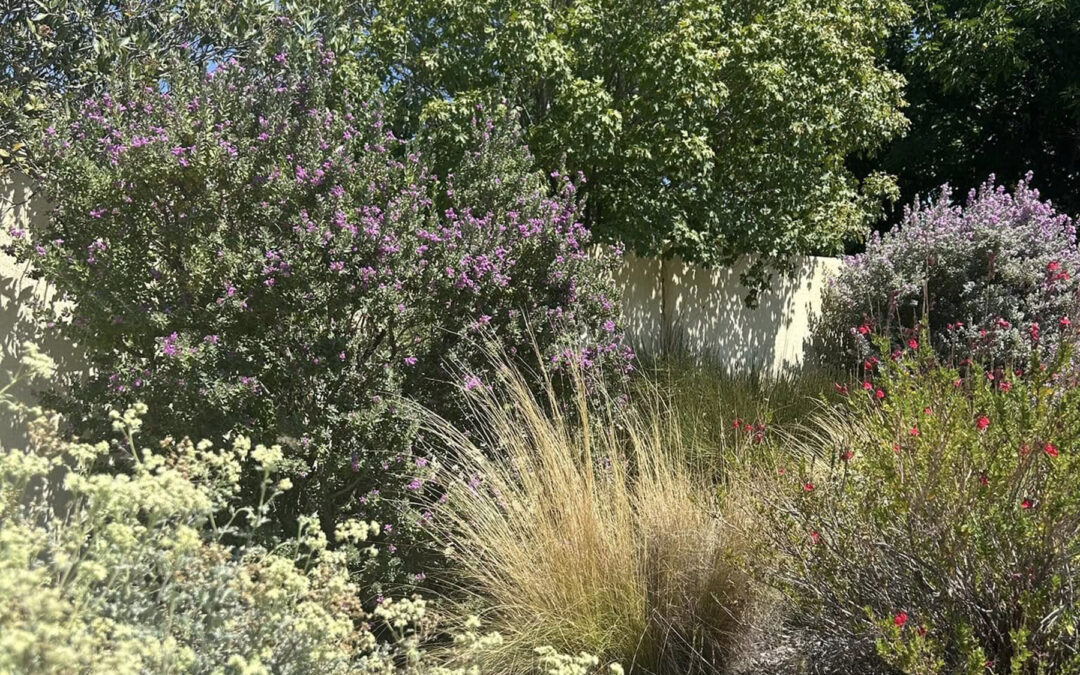
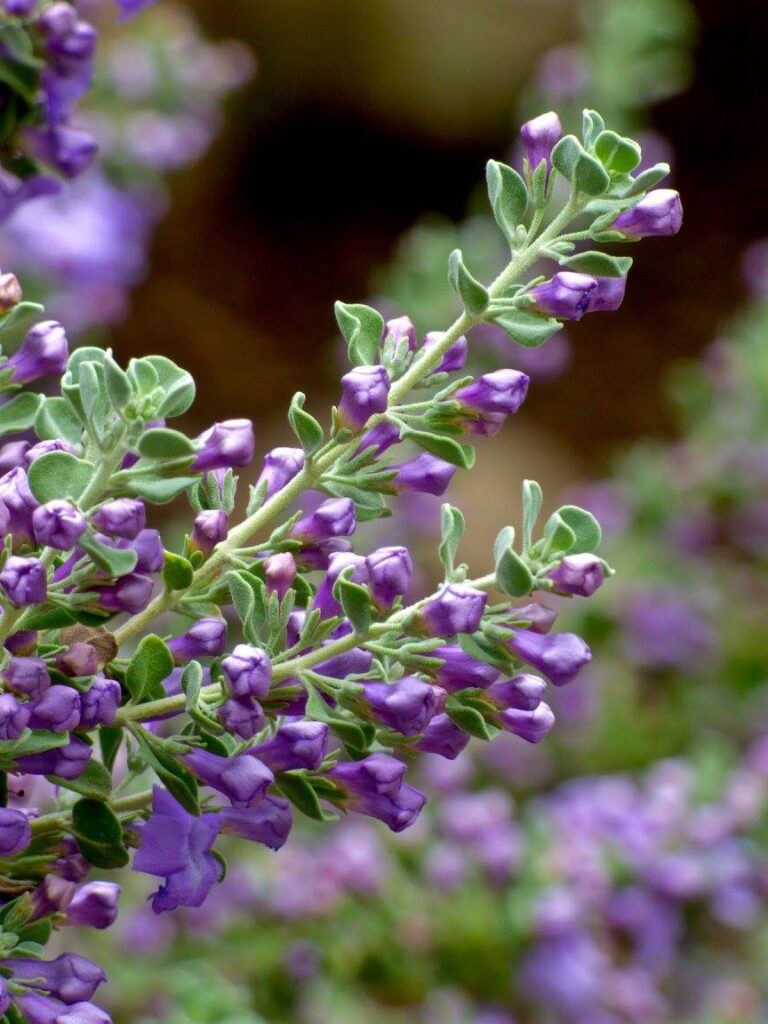
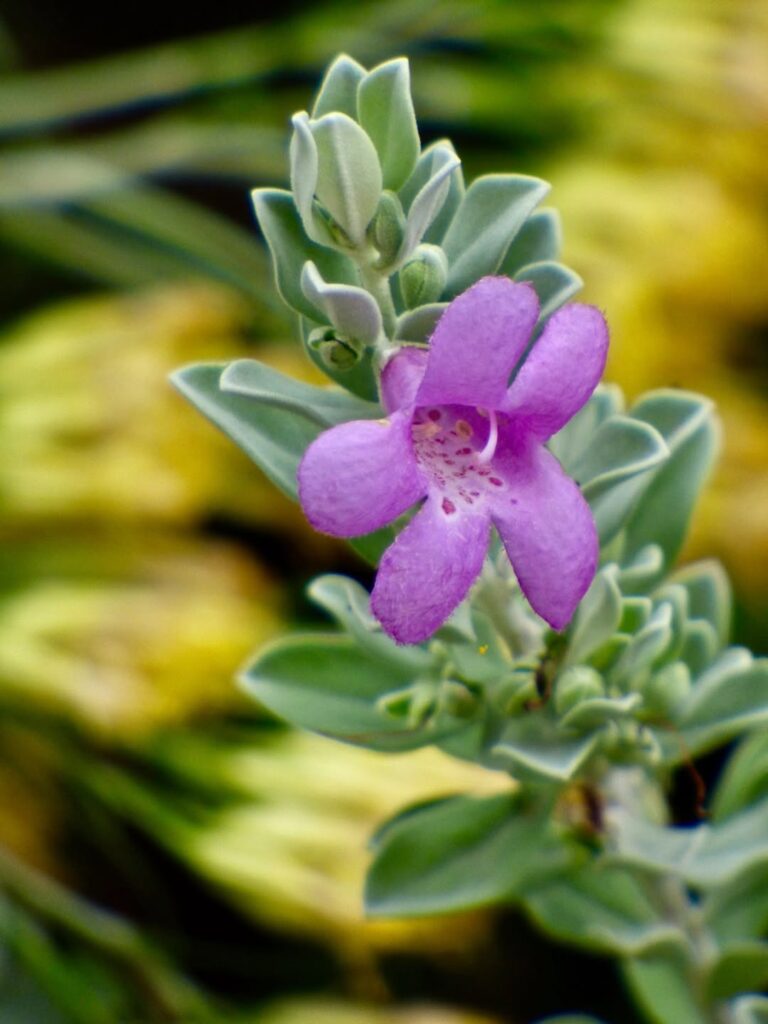
One group of plants Lisignoli recommends are a number of species (and cultivated varieties) of the genus leucophyllum. There are many different options that offer unique features but Leucophyllums generally love hot exposures (like next to a south facing wall) and there are two types: mostly evergreen and what some would call ‘ever-grey’ providing year-round interest in a sage green plant with blooms most vibrant after a rain. In fact, one of its common names is ‘barometer bush’ because it often blooms after a rain, when the relative humidity is high. Other common names are Texas Sage and cenizo. We are showcasing four cultivars; each offers a variety of different flower and leaf colors and sizes. All of these species ‘attract butterflies and bees, providing nectar for native pollinators.’ Additionally, after blooming these shrubs cover the ground with bright confetti of the spent flowers. It is low maintenance, plant it in a place where it has enough room and you won’t have to prune it.
Leucophyllum langmaniae, ‘Lynn’s Legacy’
5’ H x 5’ W, semi-evergreen, full sun, low water
Bloom color: Lavender
The most popular of the Leucophyllums, this evergreen shrub grows moderately fast, forming a dense, rounded mound of sage green foliage. Masses of lavender flowers are produced up to 3 or 4 times in the summer and fall. This selection is not as dependent on changes in relative humidity for flowering, compared to others in the genus, which means that it blooms more often during the dry months.
This evergreen shrub forms a dense, rounded mound of light gray foliage. It produces masses of pink flowers after it rains and when the humidity rises in the summer and fall. Plant in full sun and reflected heat exposures. This selection is fairly tolerant of heavier clay soils.
Leucophyllum frutescens San Antonio rose PP33454
5’ H x 5’ W, evergreen, full sun, low water
Bloom color: Rose pink
Drought resistant and heat loving, this compact variety was bred to thrive in the Southwest. Bright rose pink flowers bloom throughout the summer, especially when humidity spikes. Unique in that it has a tighter growth habit with small silvery leaves and larger flowers then other Leucophyllums.
WOODY SHRUBS
LIsignoli suggests homeowners take a second look at these great local plants that are often overlooked. The three of these shouldn’t need much care.
6 ’H x 4’ W, deciduous, sun/shade, medium water, clay soil
Bloom color: Yellow
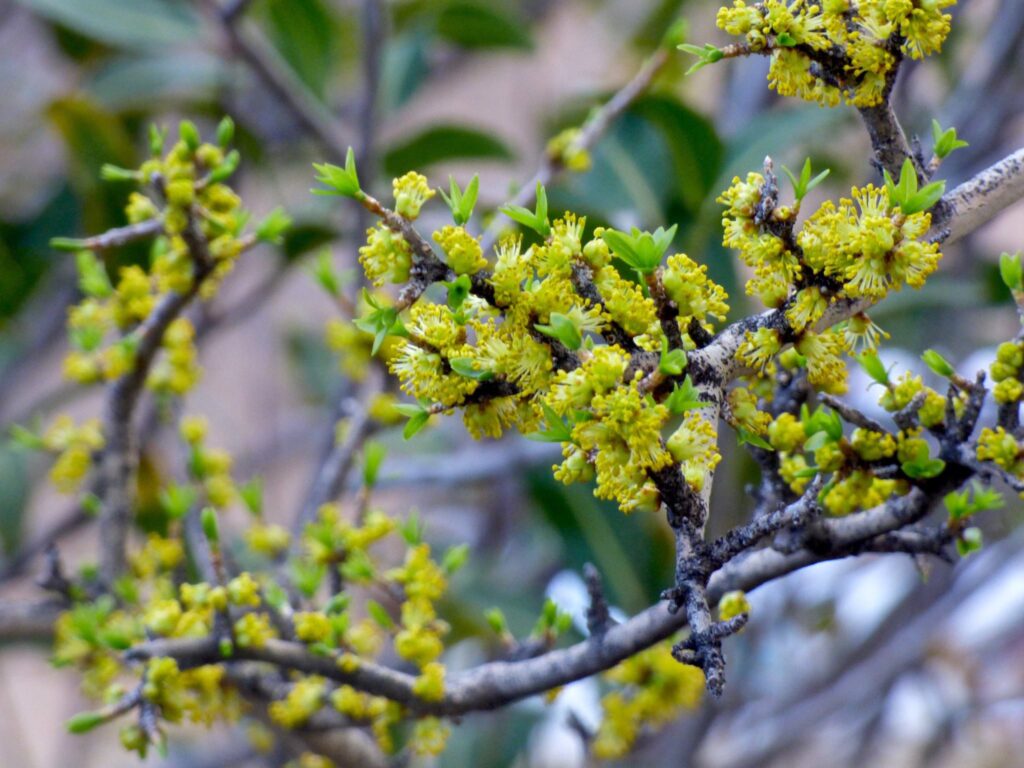
Traditionally found as an understory plant near the Rio Grande, it makes a great small tree in a courtyard, can be an effective natural hedge or windbreak or can be planted under large shade trees for wildlife and interest. This shrub features upright arching and finely twigged white branches with rounded bright celery green foliage and tiny yellow flowers in the early spring that provide nectar for bees. These plants are dioecious, meaning they are separate male and female plants, in late summer, females have small blue-black berries, which birds enjoy. Males are fruitless. Leaves change to golden yellow in the fall then drop to expose the sculpture of the pale white branches. New Mexico olive is very drought tolerant once established.
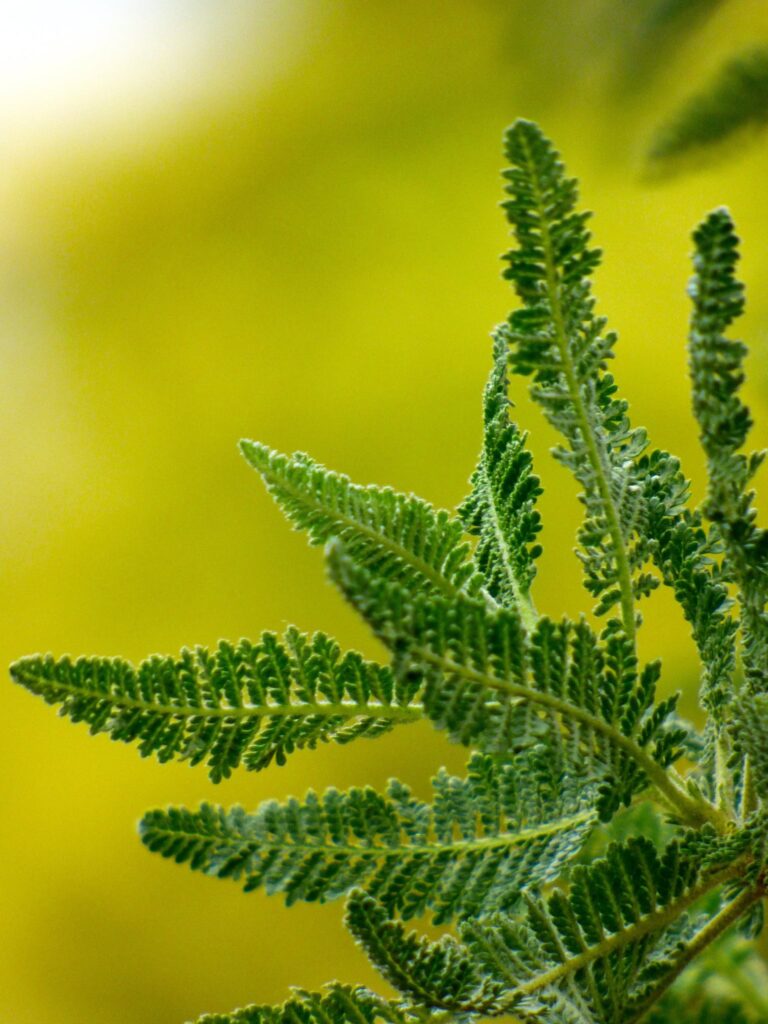
Fernbush is great used as a single specimen or clustered in groups or rows for visual screening and hedges. The showy flower spikes resemble those of white lilacs and attract butterflies all summer. Its aromatic olive-green foliage is soft and fernlike, and its upright stems with their peeling bronze bark create a pleasant, rounded silhouette without the need for much pruning This hardy plant loves south- and west-facing exposures and well-drained soil. It brings interest to the garden year-round.
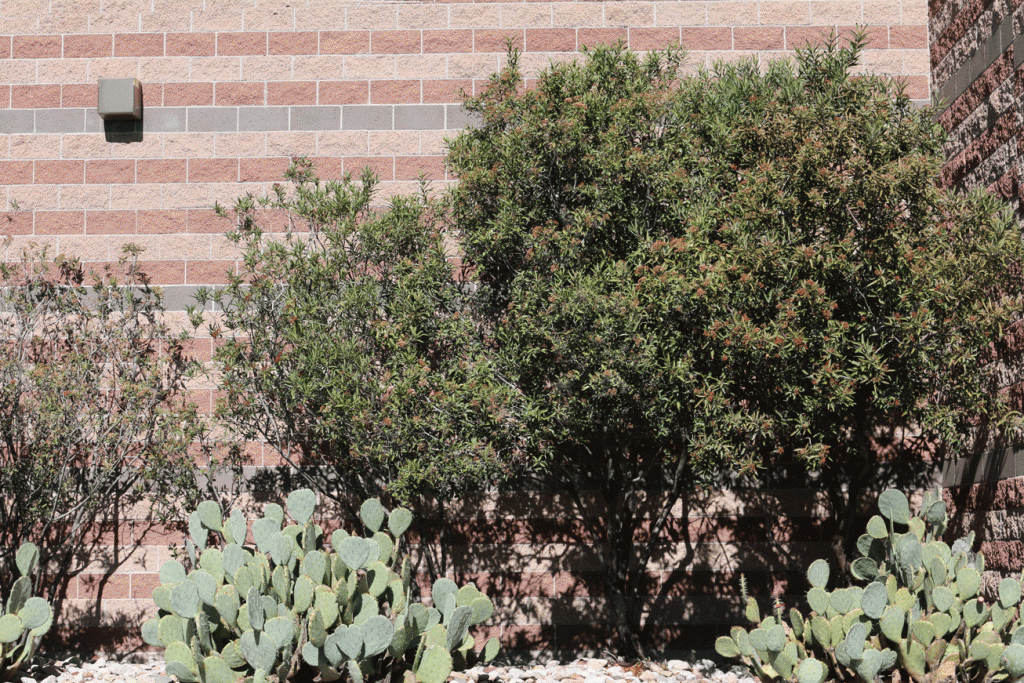
Arizona rosewood is a large, evergreen shrub or small tree. Leathery, dark-green foliage provides a backdrop for the umbrella shaped clusters of white, five-petaled flowers that crown rosewood in summer, turning a deep cocoa brown and persisting well into winter. At its best in open windy spaces where evergreen wind protection is especially welcome, it features stiff, mostly straight branches. Extreme exposures seem to increase its density, and, unlike most broadleaf evergreens, its glossy foliage stays crisp and attractive through heat and cold. It can be slow growing but it is very long lived. AZ Rosewood is a great replacement for photinia or euonymous shrubs.
GROUNDCOVERS
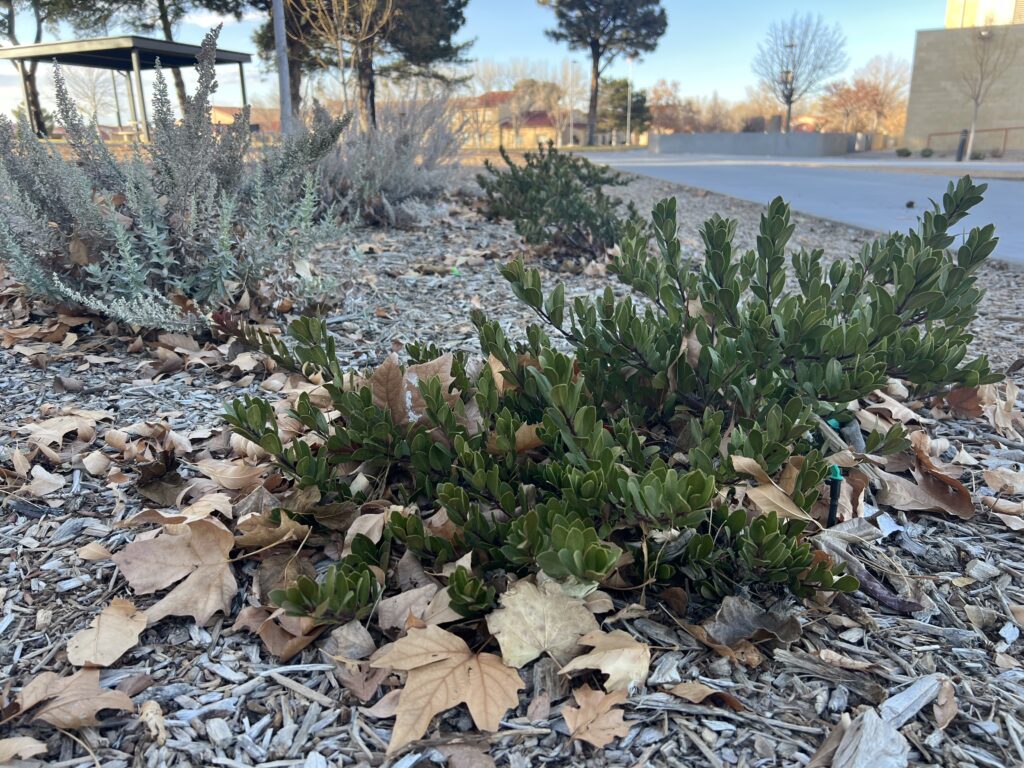
Manzanita is a plant genus that has many forms including trees, shrubs and groundcovers. It is one of the few true broad-leafed evergreens that can handle the challenges of our cold winters and hot summers. It’s native range is open pine forests and piñon-juniper woodlands, from 3000’ to 8000’ elevation. It thrives on sandy, rocky areas and slopes; is cold hardy (-20 F/-28 C); tolerates heat; and needs very little water. Smaller hybrid manzanitas, Lisignoli points out, have been found to provide similar features in a groundcover. Below are two species to try. Future iterations of our Xeriscape guide will include both of these great evergreen groundcovers.
Arctostaphylus x coloradoensis ‘Panchito’ Manzanita
2’ H x 5’ W, evergreen, sun/shade, medium water
A naturally occurring hybrid from the Uncompaghre Plateau in Colorado, this plant has small pink-white flowers in early spring followed by dry red berries in fall with evergreen leaves that turn a red-purplish color. Naturally dense and low-growing, it is a great, well-behaved evergreen shrub for the home landscape.
Arctostaphylus x coloradoensis 'Chieftain' Manzanita
2’ H x 6’ W, evergreen, sun/shade, medium water
Chieftan manzanita is a low, broadleaf evergreen that can become quite wide at maturity. Its large, round leaves make this plant very valuable as a backdrop in summer and a welcome evergreen shrub throughout fall and winter, with its bright green leaves holding their color longer into the winter. Small pinkish-white flowers grace the plant in early spring but are not very noticeable. It makes an excellent groundcover in flat areas but also cascades nicely over retaining walls and boulders. Chieftain manzanita has slightly larger leaves and is more vigorous than Panchito.
TREES
Some up and coming trees are very adaptable maples. People love Japanese maples but they don’t grow in our climate unless they are in full shade and are not always successful even then. Also up-and-coming are hybrid tree form Gambel oaks cultivated from the native shrub. Both these plants are still new but keep a lookout for them and start asking your local nursery about them.
Acer tataricum, 'GarAnn' PP 15,023 Hot Wings® Tatarian maple
15’-18’ H x 15’-18’ W, deciduous, sun/shade, low water
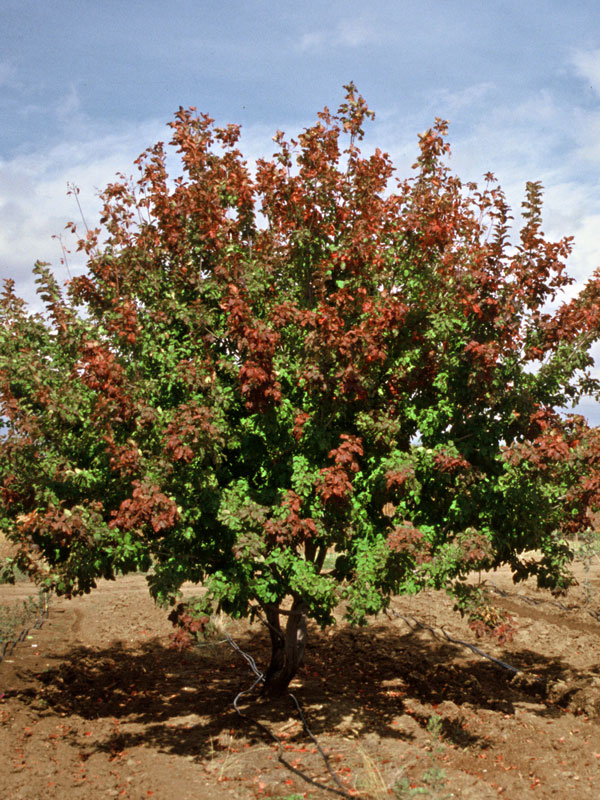
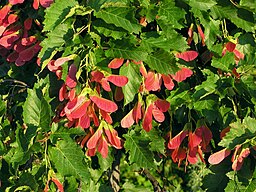
Hot Wings Tatarian maple is a beautiful, small ornamental tree with slender branches forming an upright oval canopy. Although the flowers are not noticeable, by midsummer brilliant red seed capsules (samaras) cover the tree and provide a spectacular show, shining in bright contrast to the summer foliage and persisting for about a month. During the fall, the leaf colors range from yellow to orange-red. An excellent performer in rugged climates, it is tolerant of alkaline soils and light-adaptable. It puts on quite a show in July when the red samaras are present. It is a small, low-water-use tree worth considering. Broadly oval when young, its branches spread wider than tall, becoming rounded at maturity. It is best planted in lots of mulch, partially shaded with adequate irrigation
Hot Wings Maple TreeRed seed capsules on Hot Wings Maple
Quercus gambeliiGambel oak
15’-20’ H x 15’-20’ W, deciduous, full sun, medium water
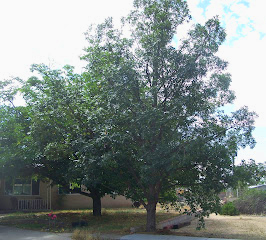
The gambel oak can be found in two forms in the nurseries. One as a multi-trunk species and one as a single trunk species. Dark green foliage turns to yellow-orange and orange-red in the fall. Native to the dry mountainous interior West from Utah and Colorado to the Mexican border, Gambel oak is drought tolerant and hardy. It is an ideal tree for low maintenance landscapes in Albuquerque.
Author: 505Outside interviewed Andrew Lisignoli, Ambassador to the Industry at Trees of Corrales. Have a question about the article or anything else? [email protected]
As gardeners or homeowners, we plant what we plant for a wide variety of reasons: Our neighbors have it. The homeowner’s association list includes it. We see it around town or in the nurseries or garden centers that we visit. Though often big box stores order the same plants for New Mexico as they do for Arizona and California. Unless we are a landscape or horticulture professional, we often make choices based on what we see around us.
We live in a desert environment where water is precious and getting more so as the population grows and resources shrink. Climate and soil conditions that are poor and alkaline also affect what plants thrive in our area. Forty to fifty years ago the plants listed below were commonly used because they were the only plants available at the nurseries. Today through the diligent work of the local horticulture industry and local demand we now have many more plant alternatives that are better suited, less finicky and require less water.
Here are a few plants we may want to reconsider before adding them to our landscapes.
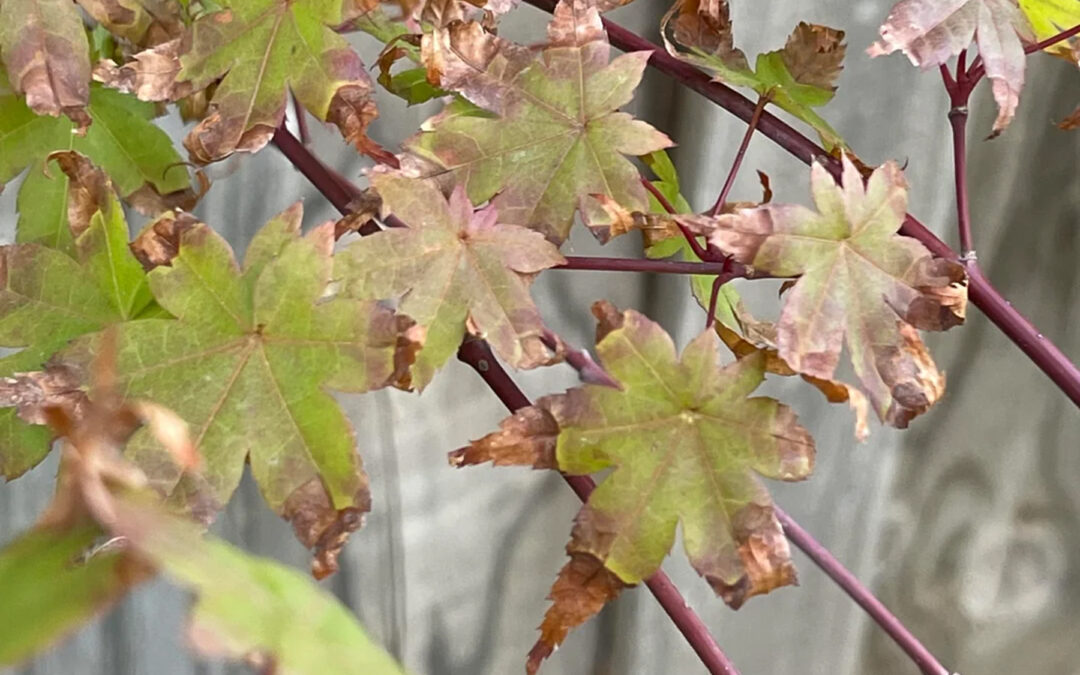
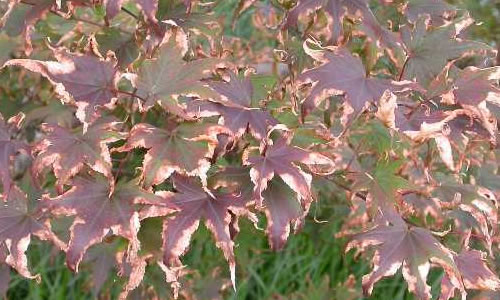
Japanese maple: Who doesn’t love the graceful form and fine texture of this beautiful small tree? However, this plant needs shade and quite a bit of water, which many of our gardens have in short supply. They prefer acidic soil, while ours is alkaline. Without adding lots of organic material and copious amounts of irrigation, they struggle in most gardens, with leaf margins burned and dry by summer’s end. Alternatives: Purple Smoke Tree, Mexican Elderberry
Leaf scorch from sun exposure on Japanese maple.
Aspen: These belong in the high mountains, where temperatures are cooler, moisture is more plentiful and eons of leaf litter have enriched the soil. It is not fond of heat and likes lots of water. This tree looks best in its naturally occurring zone. Some aspen 30-plus years old can be found around town, but they are few and far between. Alternatives: New Mexico Olive (white bark) or the Jujube (multi trunked tall and skinny)
Boxwood: While an old favorite for clipped hedges (which we don’t recommend doing for any shrub) and its evergreen presence, boxwood is out of place in our high desert climate. Like many frequently used plants, this one was brought here by transplanted humans who longed for what they knew from a home somewhere else, with soil and water conditions much more favorable to this species, like England. Alternatives:Leucophyllum,lavender, Turpentine bush, rosemary
Barberry: Like boxwood, this is another old favorite from the East Coast. With many varieties, it has been long used, but ultimately not always long lived due to its soil and water preferences that don’t match ours. Alternatives: Fernbush, Ephedra, winter Jasmine, cotoneasters, leucophyllum.
Euonymus: Used for its mostly evergreen nature and variety of color and form, this plant can struggle here. Prone to scale insect infestations and drought dieback, this plant can be more demanding of care and chemicals than many people wish to offer. Alternatives:Greenleaf santolina, Turpentine bush, Pancho manzanita.
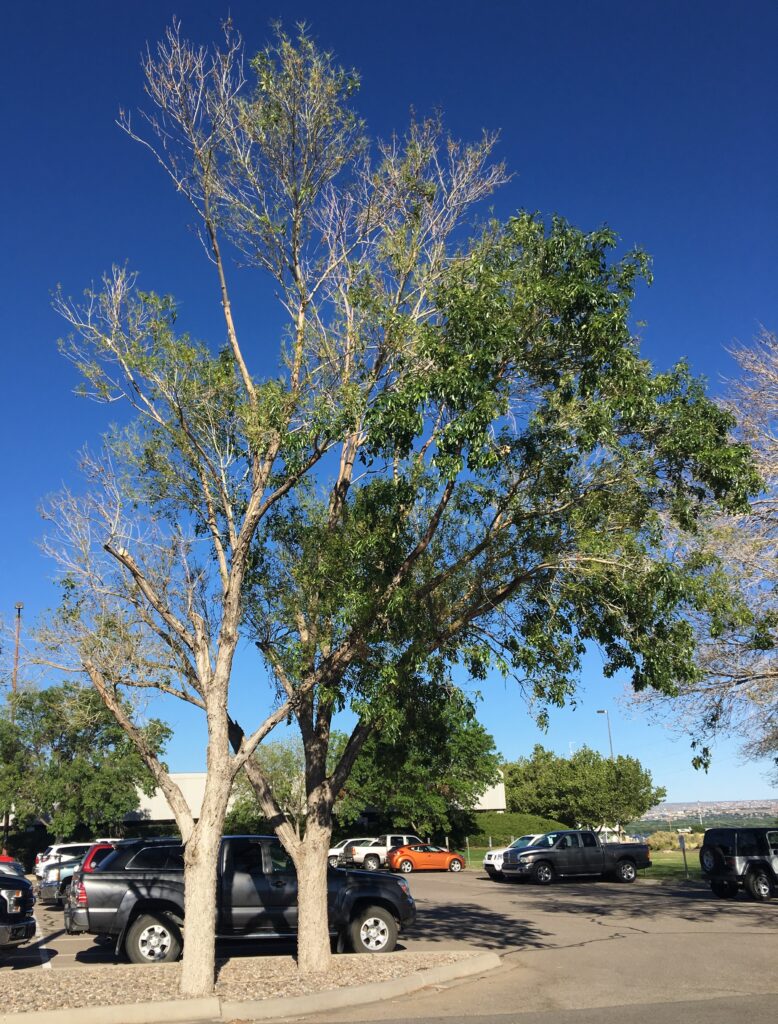
Green ash (or ash in general): Ash trees became one of the most widely planted species in the 1970s and 1980s. We have since learned that not all are hardy to the infrequent but deadly low temperatures that some winters bring. Worse, though, is the increasing threat from the invasive emerald ash borer, a beetle that is devastating this tree species across the country. Preferring plentiful water and improved soil, this tree is not happy here for long. Alternatives:Common Hackberry,Frontier elm, Lacebark Elm
Stress, disease and insufficient water damage on green ash.
Magnolia: This tree is happiest in warmer, milder climates where rich soil, nutrition and rainfall are in good supply, none of which is the norm here. It prefers acidic soils so existing ones may need acid treatment to keep healthy. Alternatives: Arizona Rosewood
Heavenly bamboo: Often not given the water it needs to be happy, this plant can look sparse and burned at the edges. If not pruned regularly, it can become straggly and top heavy. In some parts of the country, the berries appear to be toxic to birds that feed on them. Alternatives: Big Bluestem,Maximillian sunflower, Indian ricegrass
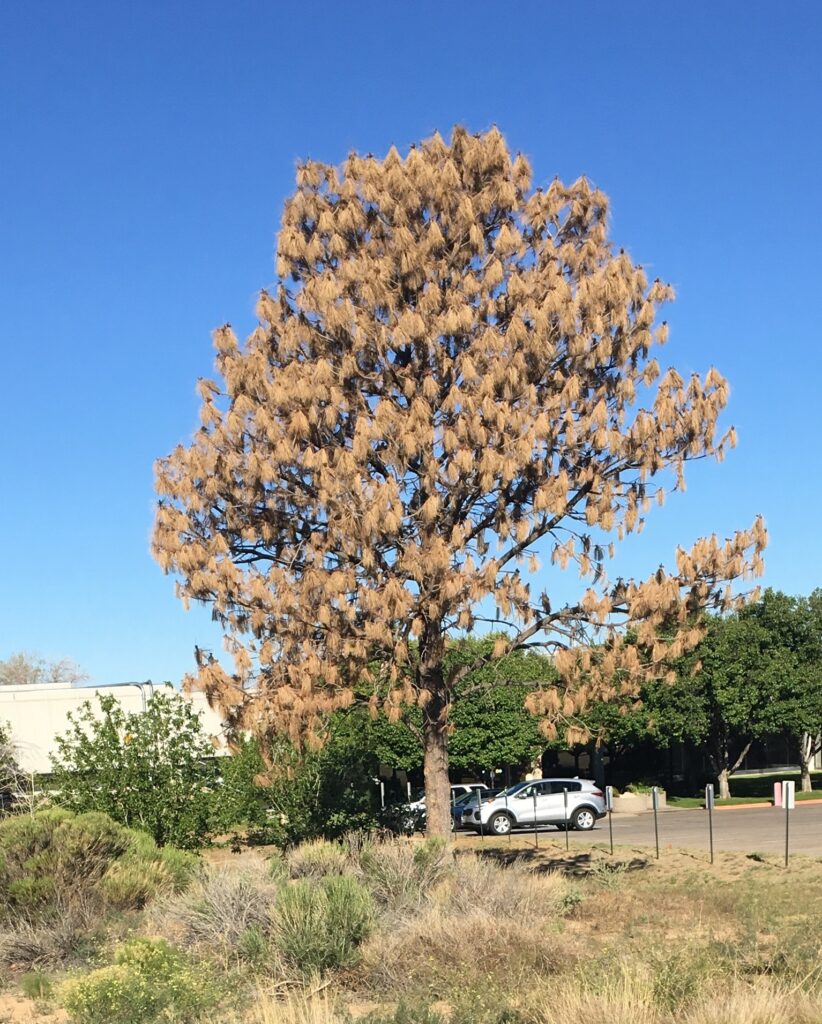
Ponderosa pine: This native mountain tree can struggle at our elevation without lots of water, and the heat of the city can result in browning and drying of the needles. Requiring thick organic mulch under the canopy, this tree needs care and attention to succeed out of its habitat. There are great existing specimens around town. To keep existing ponderosas healthy direct rainwater towards root zone, add organic mulch, add adequate fall and winter watering in our now warm and dry winters and do not prune when the tree is stressed. Alternatives:Stone pine,Afghan pine
Heat stress and insufficient watering damage on ponderosa pine.
While many of the plants mentioned in this article can be found in local landscapes and gardens, it is usually because they were planted long ago when it was cooler and grass lawns were plentiful. Many are now receiving special care, lots of water beyond what any xeriscape would require.
There are plenty of native or desert adapted plants with similar shape, form, autumn color and pleasing texture that thrive in our specific climate that can be used in place of the plants reviewed here.
There are many sources of information, and the internet can be a dangerous place. When you look up a plant, chances are the article is based on research from the Midwest, East Coast or Pacific Northwest so it does not represent our local conditions.
Instead, look for books by local authors. Compare notes with neighbors. Check out our Xeriscape Guide for information and plant lists that are updated as we learn more about our wonderful desert home. A high desert landscape can be colorful, lovely and a home for birds, bees, butterflies and us humans who live in and care for them.
If you have heard of Bermuda grass or live in one of the older areas of Albuquerque, just the name might make you flinch or grimace. The reason it gets a bad rap is because it is dormant in winter, it spreads like crazy into garden beds and can magically appear out of a dirt mess after monsoon season.
You may be surprised to hear that some of us actually like Bermuda grass lawns. In fact, I’ve even planted the grass in my backyard. I’ll take you through the pros and cons and why I’ve come to love the Bermuda grass lawn. It can be the right plant for the right space to fill the right need.
Many homeowners would like turfgrass but feel irresponsible watering a lawn in the arid Southwest. The key to choosing a turfgrass is to determine the one most suited to the specific needs of your landscape The Water Authority is not anti-lawn that is efficiently irrigated and physically used and enjoyed. Bermuda grass cultivars are one means of having a traffic/play/dog tolerant surface that uses half the amount of water of a traditional cool season lawn
According to the “turf research lab” at New Mexico State University (NMSU), “Certain turf characteristics, such as climate adaptation, water use, traffic tolerance, color, quality, maintenance requirements, and available resources, are all factors that need to be considered when selecting a turf species. Climatic adaptation and traffic tolerance, which largely determine the future use of the turf area, are the two most important factors. Many problems encountered in maintaining turfs can be attributed directly to selecting the wrong turfgrasses for Albuquerque’s difficult growing conditions and to the lack of resources, especially water, that homeowners and professional turf growers face in the state.” This means that understanding how much traffic (kids and dogs playing) and our very dry local climate are how we should be selecting turf grass species not what the big box store happens to have in stock.
There are two different categories of turfgrasses: cool season and warm season. Common Cool season grasses are Kentucky Bluegrass, Perennial Ryegrass and Tall Fescue. These are cold tolerant, green most of the year and hold up to extensive foot traffic. But they use a lot of water, up to 50” a year If efficiently irrigated. The water authority frequently has many customers (especially commercial customers) that water grass 80-100” per year! in a town that only gets an average 8” of precipitation. Common warm season grasses are Bermuda grass, Blue Grama and Buffalo Grass. Warm season grasses have a shorter growing season. This means they green up in mid spring, are low maintenance and require less water than cool season grasses. But blue grama and buffalo grass can’t take extensive foot and paw traffic plus they go dormant in the winter.
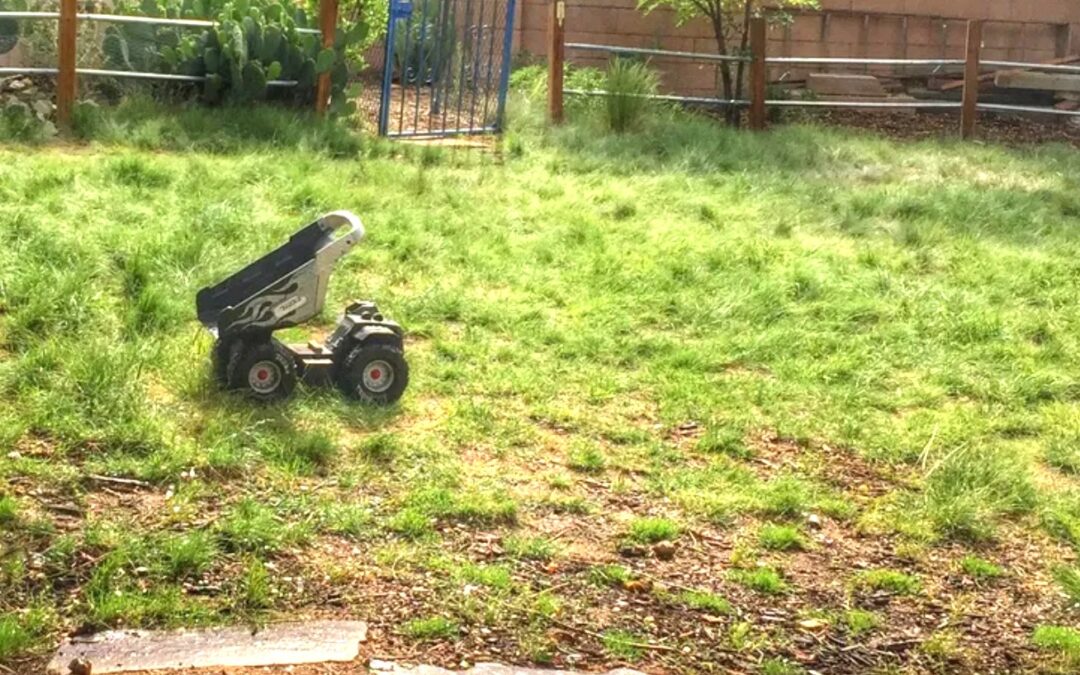
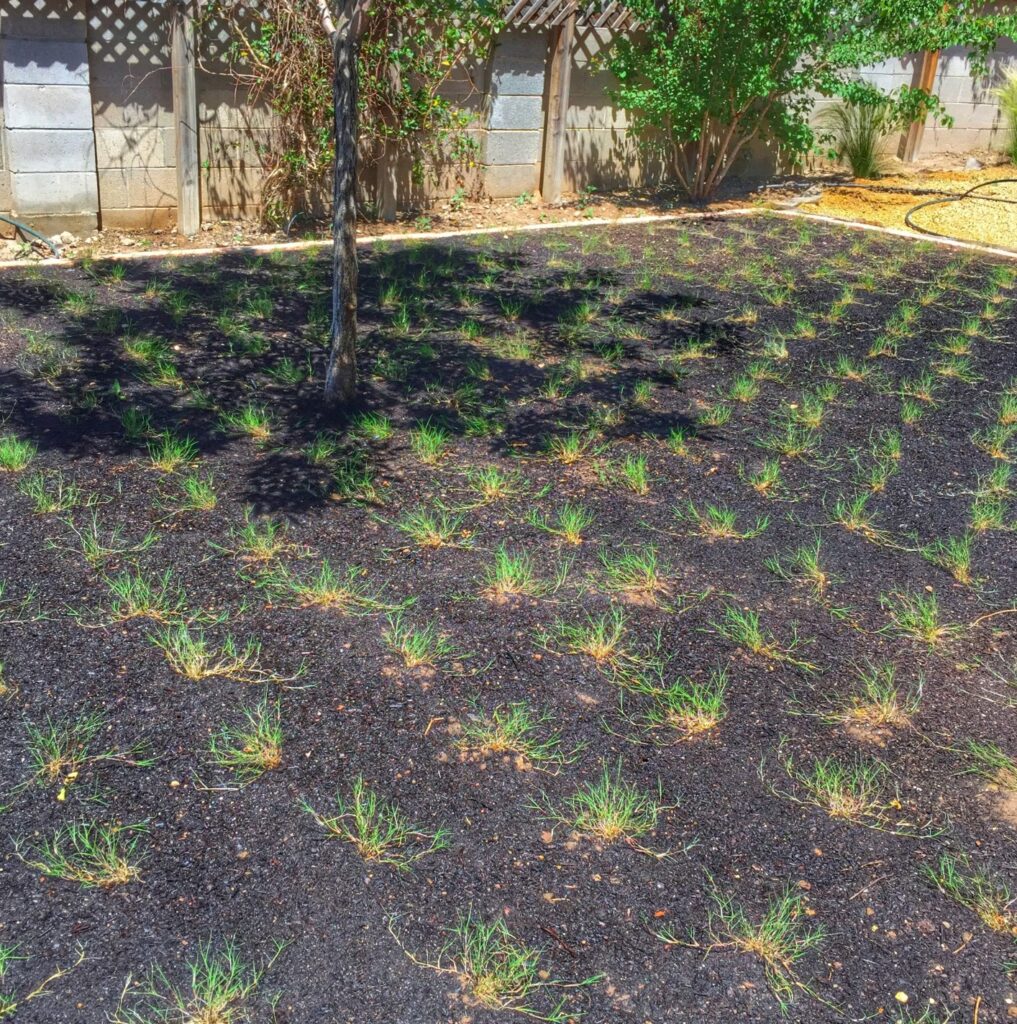
In my case, I had an existing native buffalo and blue grama grass lawn. It had always been perfect for our home. It’s native, low water use, easy to maintain and beautiful to look at. Fast forward to three kids and two dogs later. I was noticing wear and tear in certain areas of my lawn from two large dogs leaving run paths and kids playing soccer. I’m a professional landscape architect and knew Bermuda grass is a prolific spreader but in this case, I was actually looking for a grass to take over and fill in around the heavily accessed places in my yard. I found a species that could meet both my needs called Cynodon hybrida Dog Tuff ™ Grass Plugs, originally from High Country Gardens. There are many cultivars available check out the many options researched by NMSU. It is a Bermuda grass hybrid perfect for high traffic and play areas. It has excellent durability in yards with dogs. Once established, it is highly weed resistant, deep rooted and provides a soft, cushioned feel for bare feet.
The grass itself “produces an extensive system of creeping rhizomes and stolons commonly called runner roots that often have a scaly appearance. It also produces fibrous roots at the stem nodes. Bermuda grass reproduces through seed and vegetatively through rhizomes and stolons,” according to NMSU, allowing it to spread with just a little bit of water, around 20” a year. I find that it rarely needs mowing because of the traffic we give it. I mow it about twice a summer to the highest setting my mower goes around 4”.
Bermuda grass plugs.
The data on this grass comes from NMSU, which has turf study sites in Las Cruces and Farmington. A few key points from their study sites mentions that “Bermudagrass (Cynodon dactylon) is similar to Kentucky bluegrass in its tolerance to traffic and turfgrass recuperative capabilities after stress or damage, but it appeared to be more aggressive than Kentucky bluegrass during hot weather in mid-summer.” NMSU evaluated five different varieties of bermudagrass, Guymon, Riviera, Wrangler, and Yukon, at both their northern NM and southern NM sites. “Riviera was given higher quality ratings than the other varieties due to finer leaf blades. Being a warm-season grass, the bermudagrasses required less irrigation to exhibit a quality comparable to the cool-season grasses.”
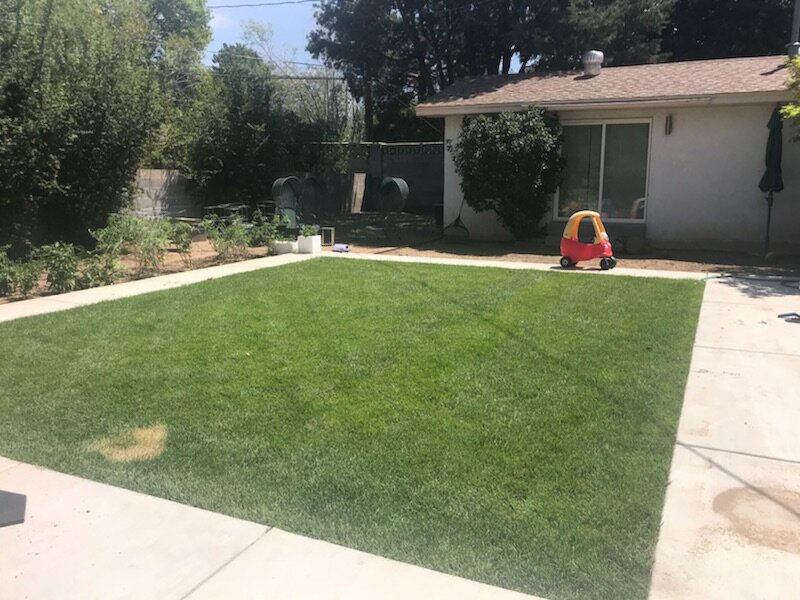
The shocking reason homeowners don’t like Bermuda grass is that it can become a troublesome weed, especially in southern NM, so it is wise to separate this grass from garden areas with a dry, unirrigated buffer strip, concrete mow strip at least 8”x 8” or other barrier. I like to design a concrete walk, patio or edger around these grass areas.
Grass lawn framed by concrete walk.
When placed strategically in a landscape this water friendly, high traffic, low mow grass is a winner in my book.
Author: Jill Brown, ASLA Landscape Architect and owner of My Landscape Coach in Albuquerque. Even more resources about turfgrasses can be found over at NMSU, one of our nations top university turfgrass science programs. Have a question about the article? [email protected]
A popular question we get at 505Outside is “Where should I go to get plants for my yard?” We’re highlighting our local nurseries and the uniqueness of each of them.
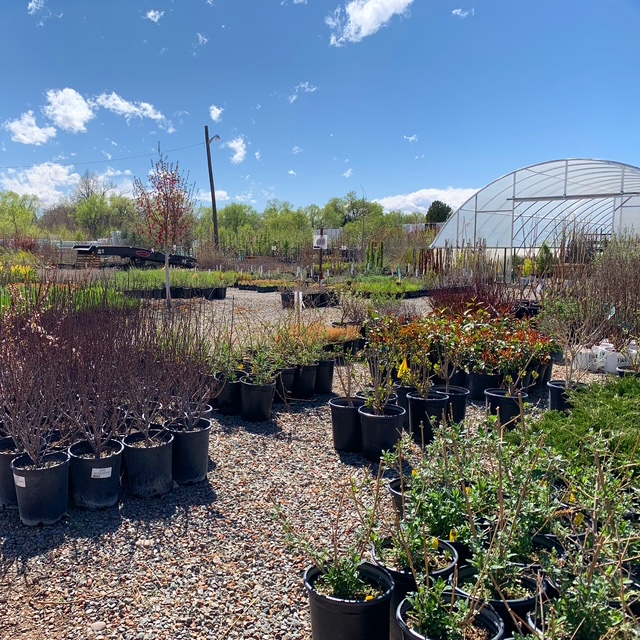
Every yard has its own unique environment that includes things like sun and wind exposure, soils, drainage, climate, bugs, orientation, views, weather conditions and elevation. And certain species of plants like certain types of conditions. Nurseries pride themselves in getting plants that are specifically grown for your area. And the only way to ensure that you get a plant that is well-suited for your yard is to go to a local nursery. Plants that are grown in your region for your region are going to do much better in your yard.
Local nurseries have very knowledgeable staff experienced in dealing with all the variables of yards just like yours. But remember, they have limited time so go prepared with a list of questions. Make sure you note all the conditions of your space so the nursery staff can steer you in the right direction.
Check out some local nurseries below, listed in alphabetical order:
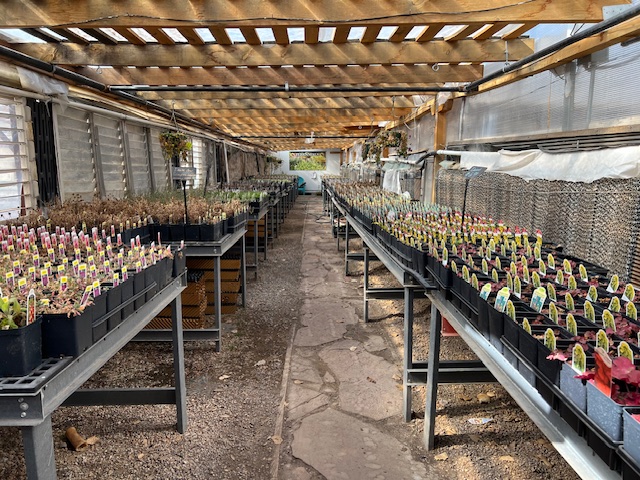
This plant nursery located along Alameda NW near Fourth Street is best known for its thousands of vegetable seedlings, making it a must-stop for all your vegetable needs. Of course, they also carry a ton of other plants like perennials, annuals, groundcovers, trees, roses and more — but go for the vegetables.
As the name suggests, this North Valley nursery specializes in aquatic plants and fish. However, they also carry a wide variety of locally grown perennials, trees and shrubs. You’ll want to linger as their garden offers a very pleasant shopping experience.
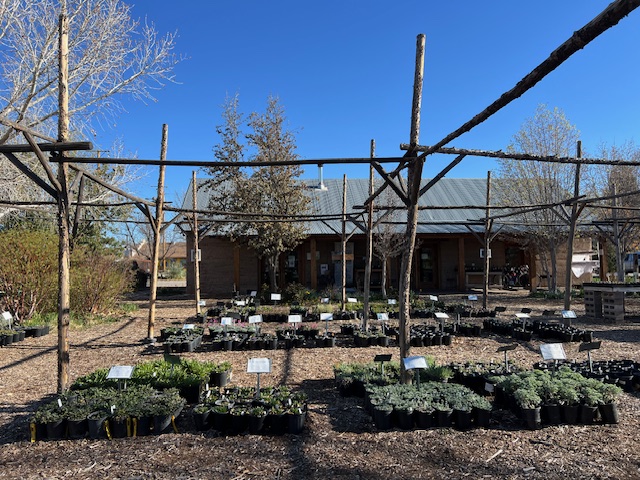
Located in the South Valley bosque of Albuquerque, this off-the-beaten-path farm and nursery specializes in edibles and resilient and native trees and shrubs, alongside egg-laying ducks and orchards. Grown onsite, you can find underrepresented trees and shrubs that grow well in the harsh New Mexico climate.
The shop is mostly known for home décor but walk towards the back of the store and you’ll find a well-stocked nursery with a good selection of annuals, perennials, shrubs, trees, succulents, houseplants and vegetables. They also carry a host of garden supplies and are easily accessible, being located along San Mateo NE near Interstate 25.
From a location near Balloon Fiesta Park, Jericho provides some unique items not found at other nurseries in town. Of course, they have the usual annuals, perennials, natives, trees, roses, shrubs and more, but you’d never guess they have all kinds of specialty miniature garden and fairy garden materials. You’ll also find a friendly staff and everything you need to make a terrarium, garden tools, outdoor décor and other garden products.
At this large nursery located on Osuna NE just east of Edith, you can find just about everything you need. Be sure to check out the native plant section. But one of the coolest features of Osuna is its Plant Pharmacy featuring certified staff eager and willing to answer all your wildest questions about your plants. Bring a picture of your aphids or leaves from the actual plant and they diagnose the problem.
Natives, natives, natives. Located on Fourth Street NW north of Chavez Road, this nursery sells native New Mexico plants and seed. Just about any plant you find here will grow with ease in your yard. You will also find a wide variety of seeds, from vegetables to any type of wildflower you’d like. The staff even curates specialty blends of wildflowers and grass lawn seeds.
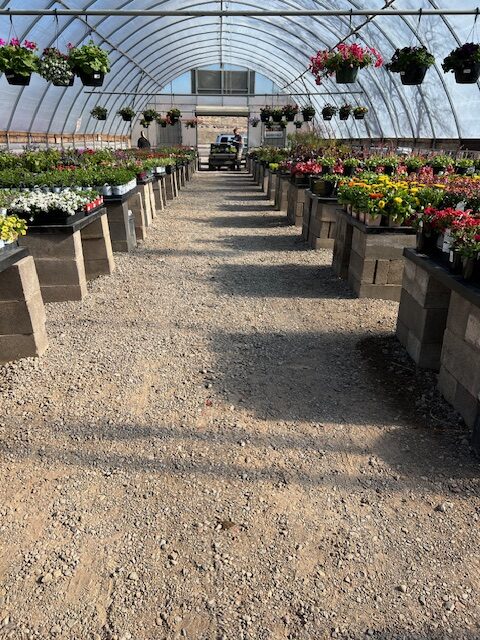
Originally only a wholesale nursery, now anyone can shop here via the Garden Club, which costs $25 for a lifetime membership. Conveniently located on El Pueblo NE west of Edith, you will be able to find everything you need for your yard. In fact, Plant World sells some of the largest ball and burlap trees in town.
Known as your neighborhood nursery, this store located at 5801 Lomas NE has everything you need for your yard conveniently located near those in the Near Northeast Heights, Nob Hill and Uptown. The staff is extremely knowledgeable, and the deep family-like atmosphere and roots of this store shine through.
It might be too early to start planting your 2025 garden but it’s never to early to start planning your yard. We’ve grabbed some of our favorite plants for you to test out in 2025. Take a look below.
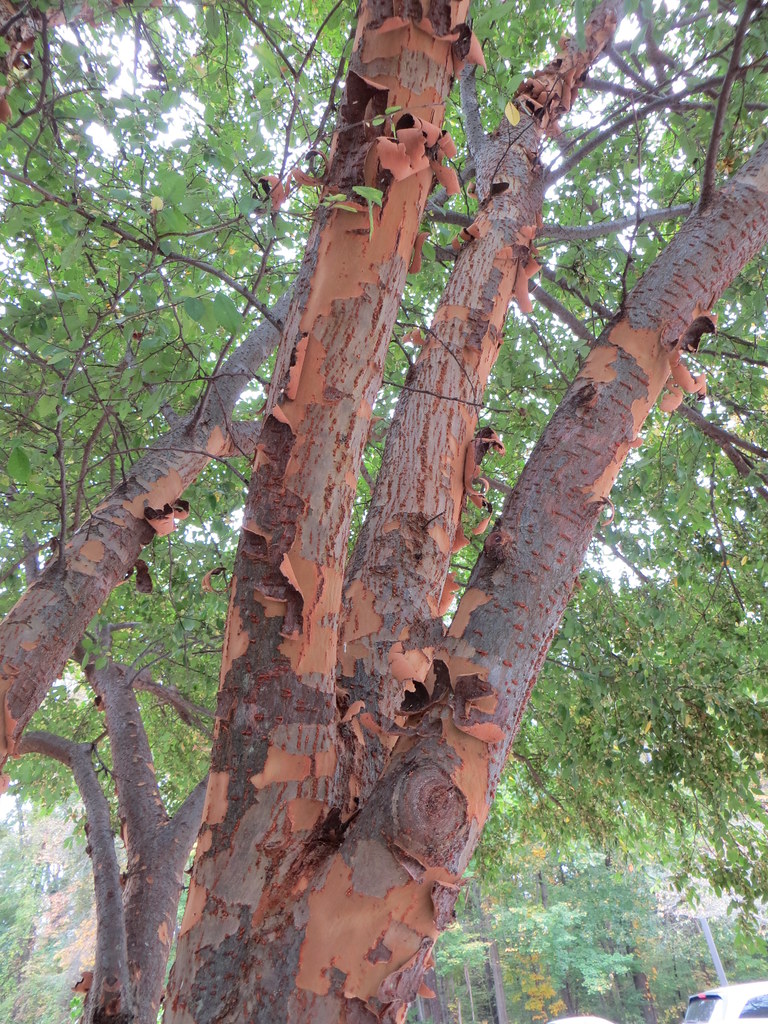
This fast-growing shade tree should not be confused with the notoriously invasive Siberian elm. Lacebark elm is a medium sized tree with a round to oval crown and interesting lacy bark in tan, grey and cinnamon colors. It is an excellent drought tolerant species for use in windbreaks. It can grow as much as 3 feet a year. It is adaptable to most soil conditions.
Type: Deciduous
Exposure: Full sun
Water Use: Medium
Mature Size: 40’ x 40’
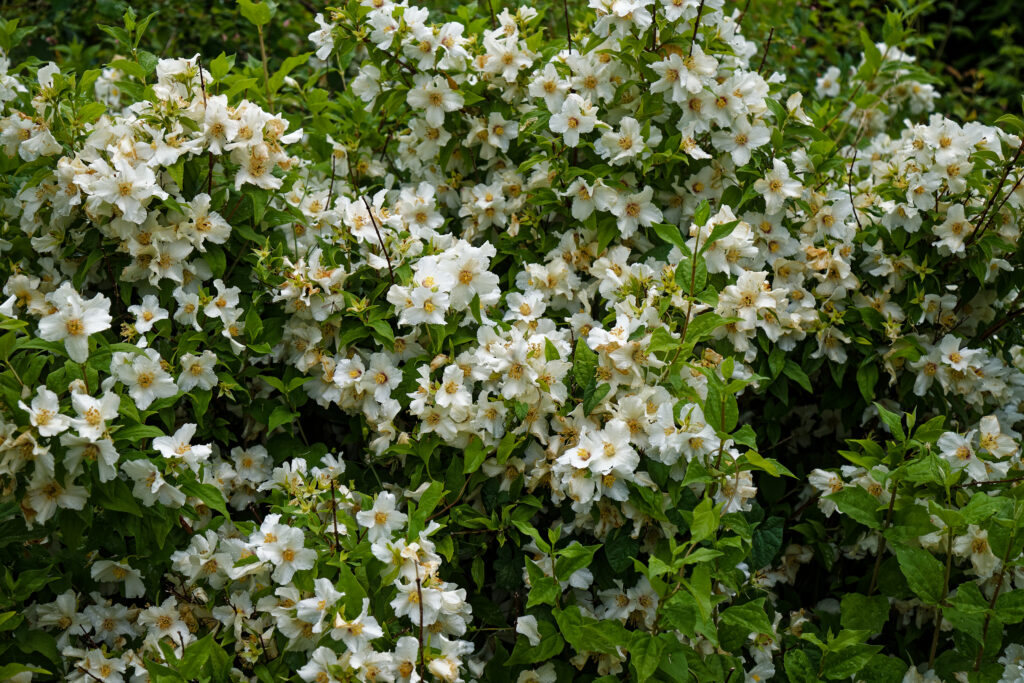
Mock orange, Philadelphus lewisii Cheyenne:
This deciduous native shrub sports white blooms from spring to summer. A mass of flowers emits a delightful fragrance reminiscent of orange blossoms with a hint of pineapple. It’s a great habitat and pollinator shrub that works well in perennial beds, providing interest and privacy if needed.
Type: Deciduous
Exposure: Sun/shade
Water Use: Medium
Mature Size: 10’ x 10’
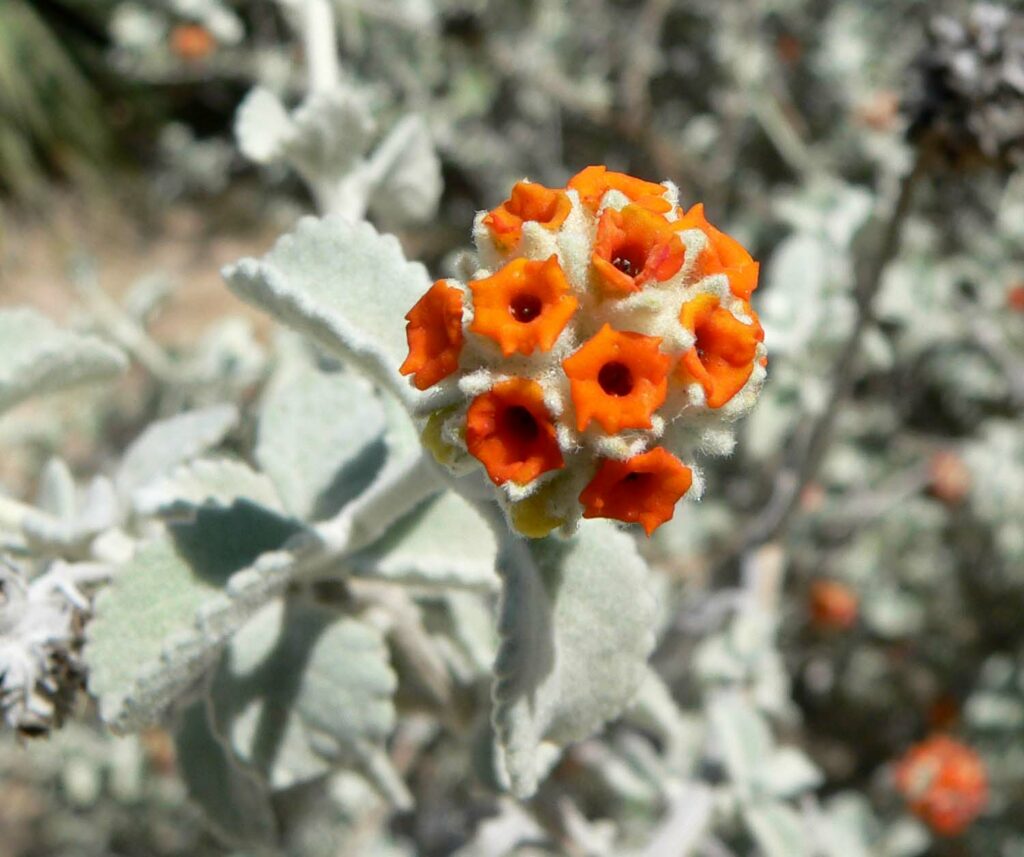
Woolly butterfly bush, Buddleja marrubiifolia:
This rounded, grey green evergreen shrub provides year-round interest. Orange flowers are prevalent year-round with their showiest times in the spring and summer. Woolly butterfly bush is native from southwest Texas into New Mexico, where it can be found in canyons, arroyos and on slopes at elevations from 1,800 to 3,800 feet. It’s heat tolerant and likes well drained soils.
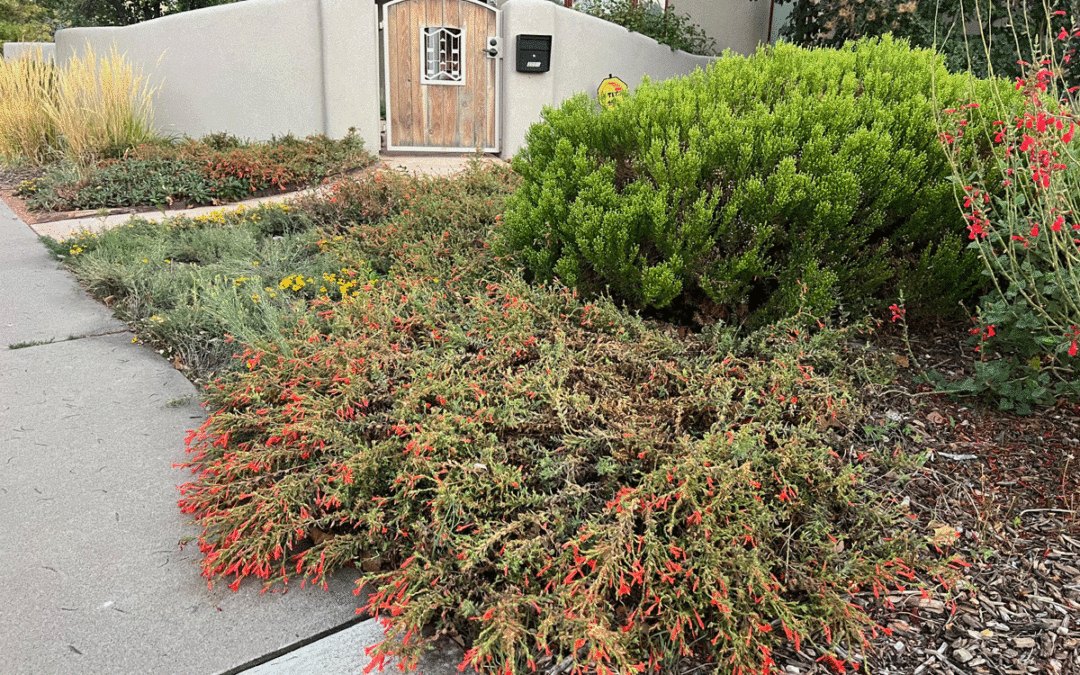
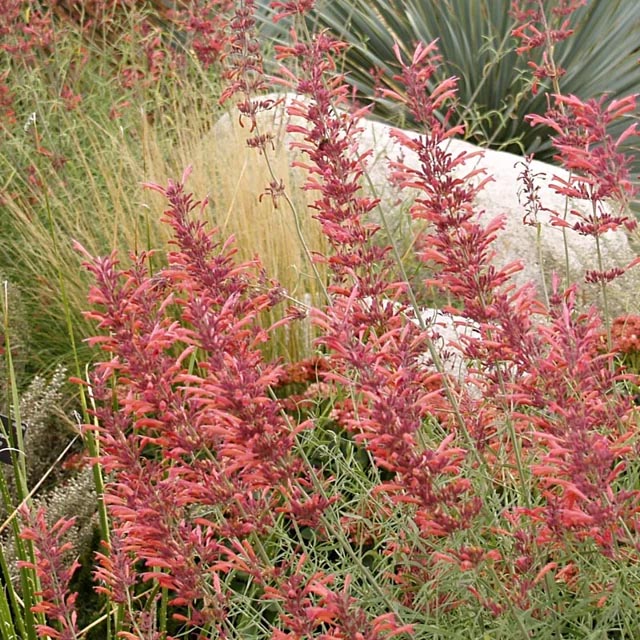
This is one of the best, most durable species in the Agastache family. It has nectar-rich orange flowers that attract hummingbirds for many months. The plant has a licorice minty scent. It’s also low water use and very drought resistant.
Type: Deciduous
Exposure: Full sun
Water Use: Low
Mature Size: 2’ x 2’
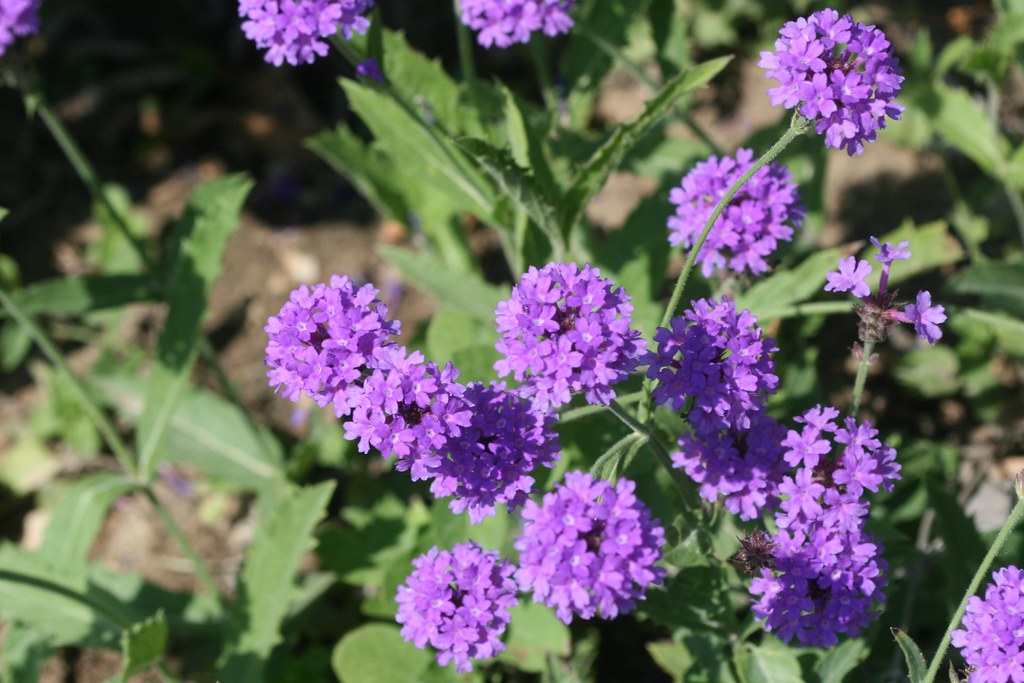
Sandpaper verbena, Verbena rigida:
This flowering plant grows well in extreme heat. It has rough, dark green leaves that feel like sandpaper and vivid purple flowers in the spring and summer. If this plant starts to look ragged, cut it back to the ground and fresh growth will sprout from underground stems. Even in very cold winters, this plant bounces back from these rhizomes. It is nice mixed with the yellows of prairie zinnia or Angelita daisy.