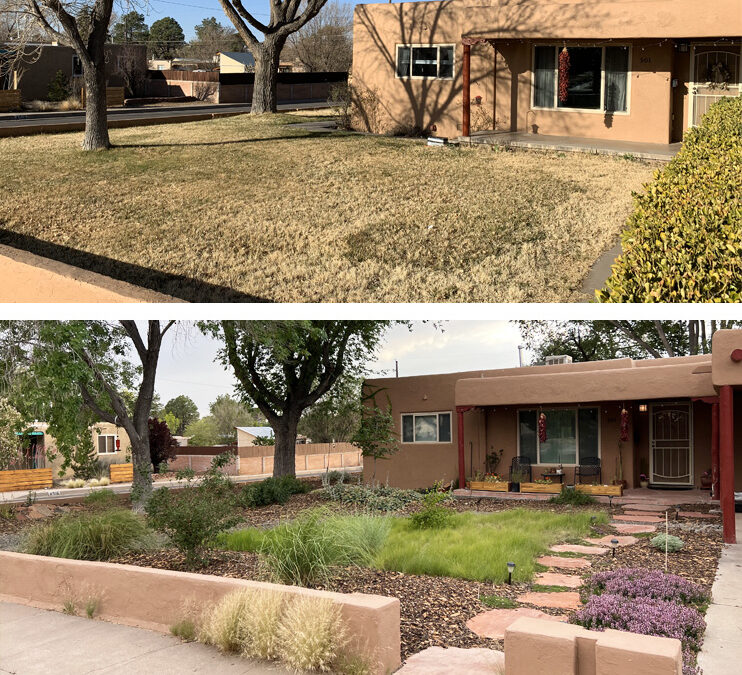
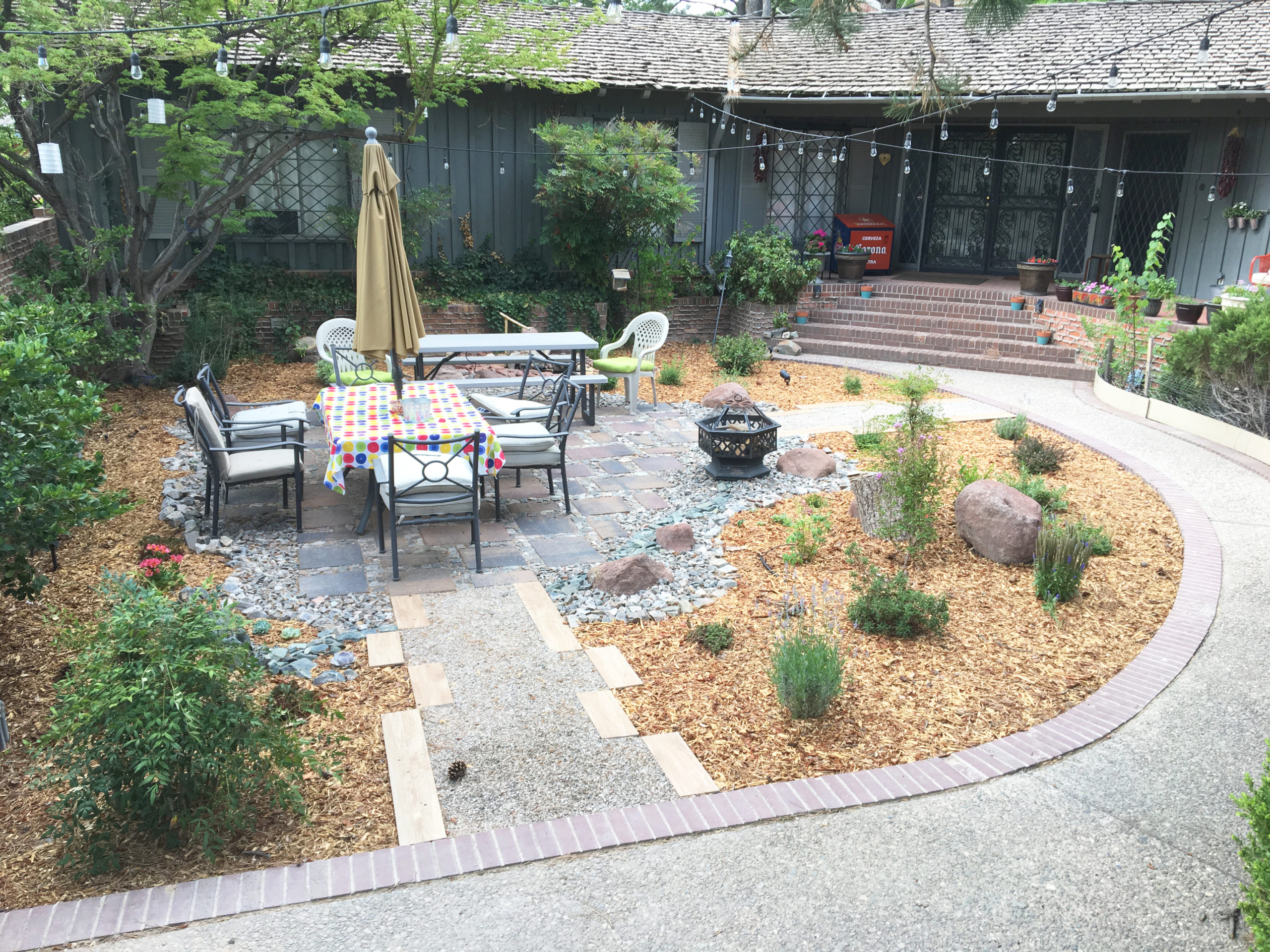
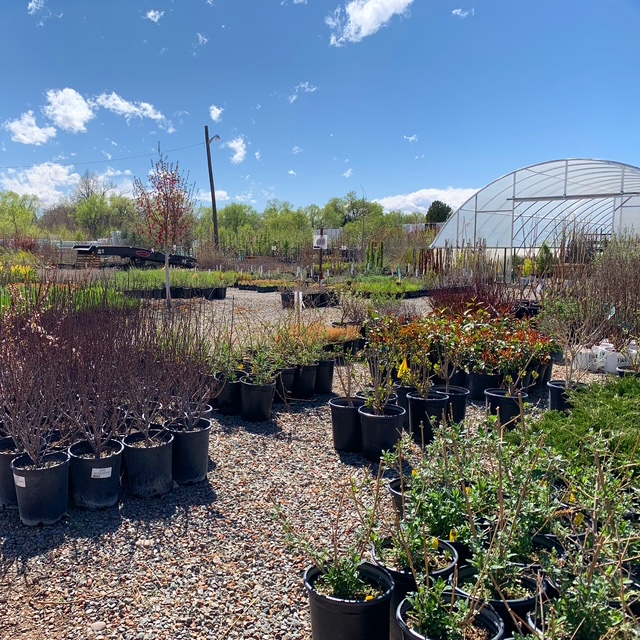
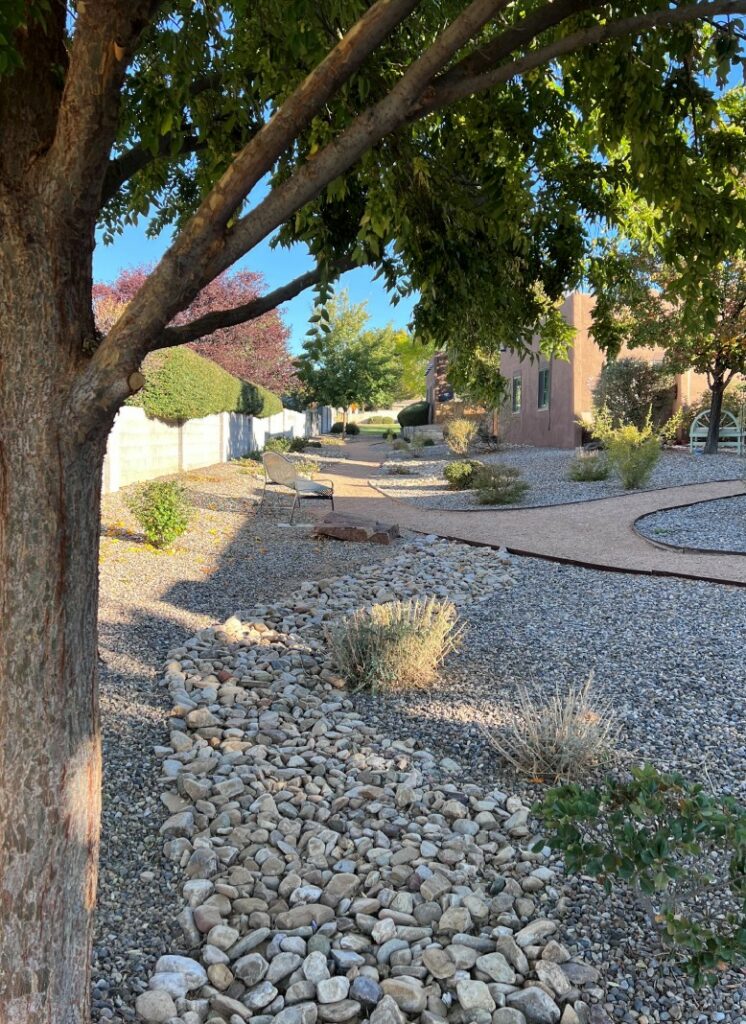
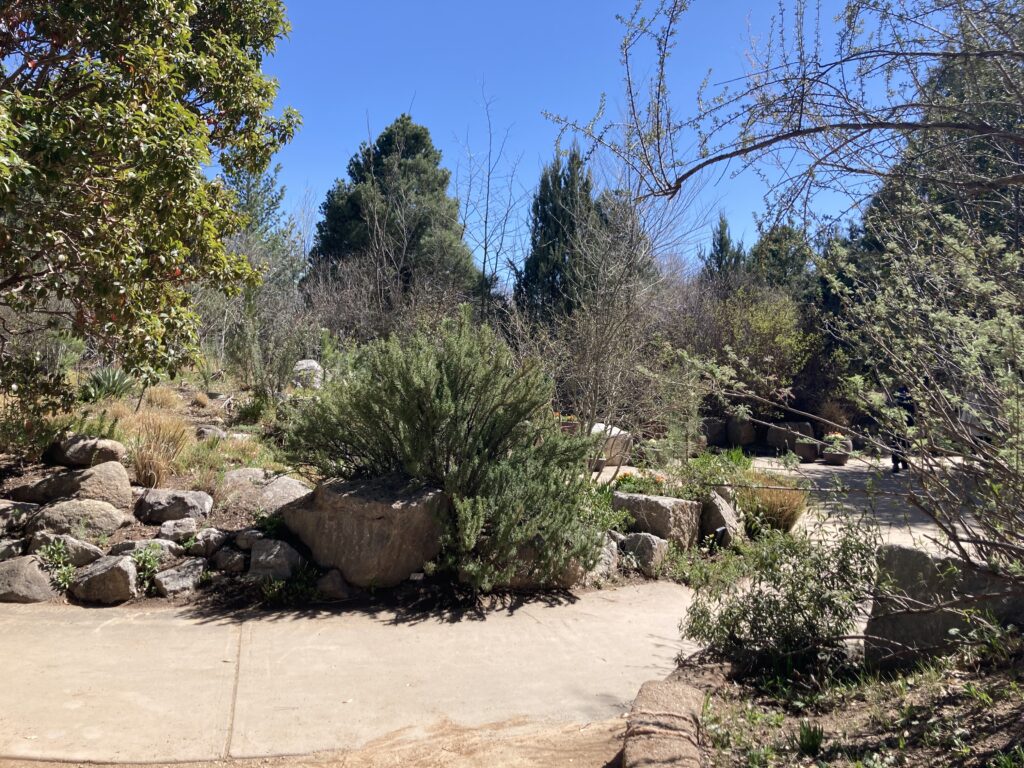
You undoubtedly have seen your neighbors and friends around town removing their grass lawns and replacing them with water efficient desert friendly xeriscapes. You may yourself be interested in doing the same with your yard but perhaps are overwhelmed by the tasks or concerned about how much it would cost. Don’t fret, it’s much simpler than you think. We’re walking you through the six steps to transform your lawn into a beautiful desert friendly xeriscape.
STEP 1
COME UP WITH A DESIGN, then apply for the $3-a-square-foot rebate.
No need to get overwhelmed by this step. You know your yard best, so observe and understand how you want to use your space. Brainstorm elements you want to include. Take into account existing plants and trees, views you want to preserve or hide, shady or very sunny spots, and downspouts/canales or other places where water collects.
Once you have your design, use spray paint or old hoses to lay it out on the ground. Walk around the space and make changes as needed.
Before demolition and removal of the lawn, call 811 to mark underground utilities. Also note existing tree roots that you need to protect during your work.
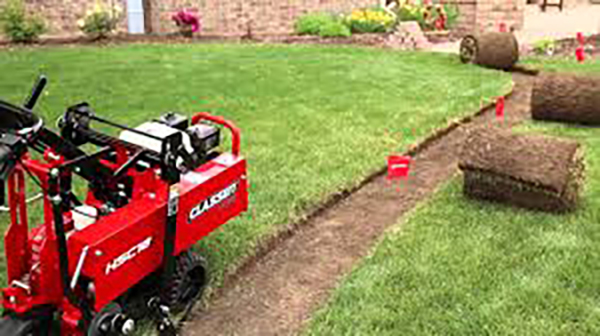
Lawn removal techniques: A sod cutter works best for most lawns unless there are large roots or the grass is Bermuda. Hand dig grass out around large roots so as not to cut any that are more than 2” thick. Use an herbicide to kill Bermuda due to its invasive and prolific roots. Along sidewalks you’ll want to dig down 4” by 12” wide to make room for 3” of mulch and slope the soil back up to the surrounding grade gently. Avoid using a skid steer to remove the grass, this can unnecessarily remove useful existing topsoil.
Drainage Considerations: Always grade water away from your house, masonry walls or walking paths and towards planting areas.
Install any hardscape elements such as walls, pergolas, sidewalks, pavers and boulders.
STEP 4
IRRIGATION
You’ll use a drip system to irrigate your new beautiful desert friendly xeriscape. Check that your existing spray valves are in good working condition. If so, you can reuse these valves. Simply have a licensed irrigator or plumber add a pressure reducer after the valve, then you can add your ½” drip polyline.
Irrigation Components: If your existing valves are damaged or non-functional you’ll need to install new ones. Typically, an irrigation specialist or licensed plumber would install your new manual shut-off valve, automatic valves, box, backflow preventers and pressure reducers. But if you want to do it yourself, do your research and reach out to local landscape irrigation suppliers for advice.
Drip Tubing: The drip tubing is everything downstream of the pressure reducers, and it’s relatively easy for homeowners to install. Uncoil the ½” or ¾” poly tubing in the sun until it’s flexible enough to manage (making sure there are no kinks in the process). Then, dig shallow 6” trenches, lay out the ½” poly in the trench, staking it with 6” weed fabric staples along the way, and snake the poly within a few feet of the plant locations. Wait until the plants are installed to cover the poly unless you have long lengths of it without plants.
Install the plants (link to article). Water your new plants with a hose right after they’re installed. You might need to create temporary basins around each plant to keep the water from running off.
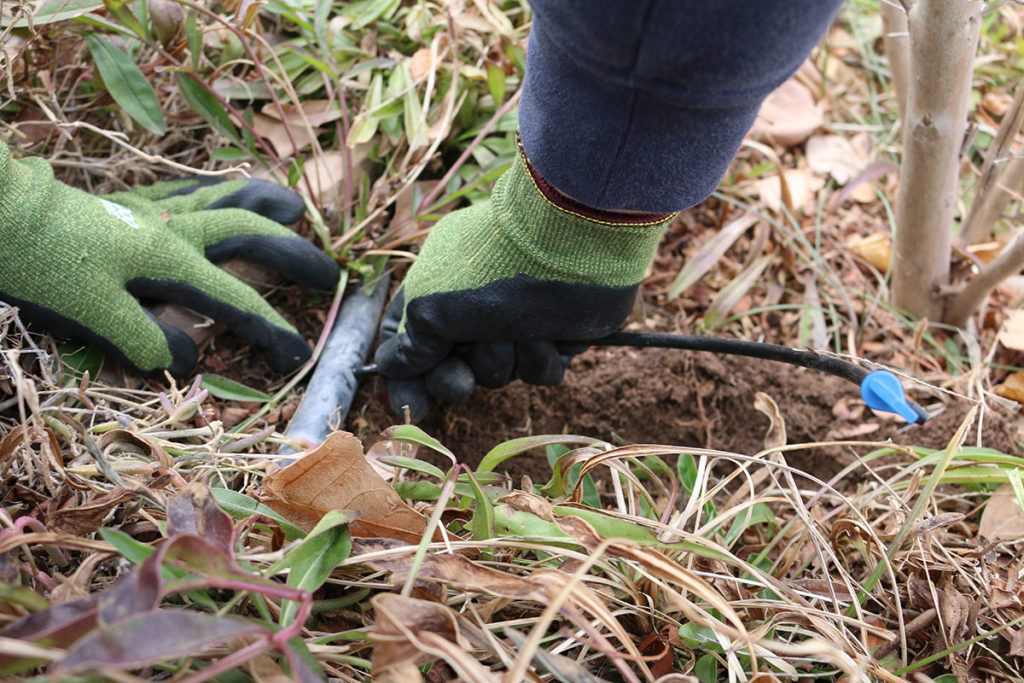
At this point, you’ll want to set up the permanent irrigation. Use your drip tubing punch tool to create a hole for the ¼” coupler and ¼” tubing. Always punch the hole in the side of the ½” poly, not the top, so a footstep doesn’t damage the connection. Carve a small trench in the dirt and run the ¼” tubing to the base of the plant and attach the emitter (use a weed fabric staple to hold it in place if necessary). Avoid running ¼” tubing farther than 3 feet in order to keep things orderly. After the ¼” tubing is installed, cover it with dirt to protect it and keep it from being tripped over.
If you’re using gravel, the complexity and layout of your yard will determine whether you install weed barrier fabric before or after planting, but you do want the drip tubing under the weed fabric. For shredded wood chip mulch, lay the irrigation line down over the bare dirt then top with 3-4” of wood mulch.
If the mulch has been delivered in the street or on a concrete driveway, use a square shovel to scoop it up. From there, just load each wheelbarrow full and dump it throughout the yard. Spread it out with a rake and you’re done!
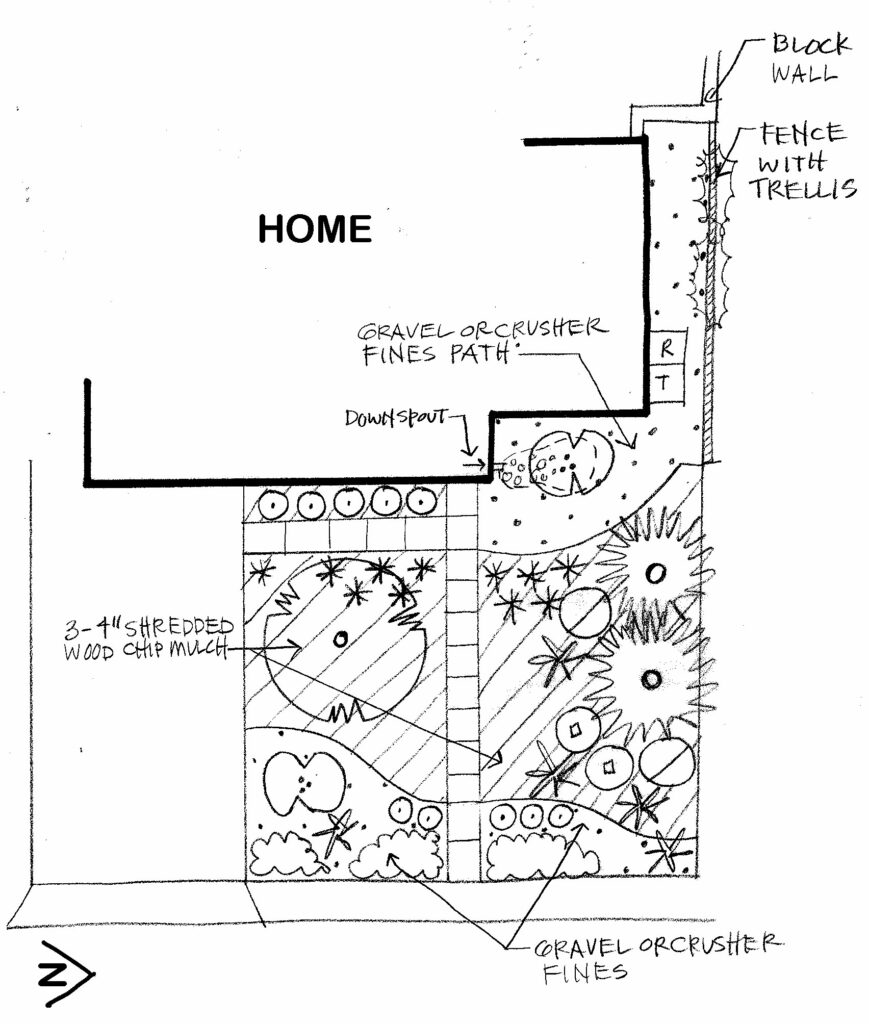
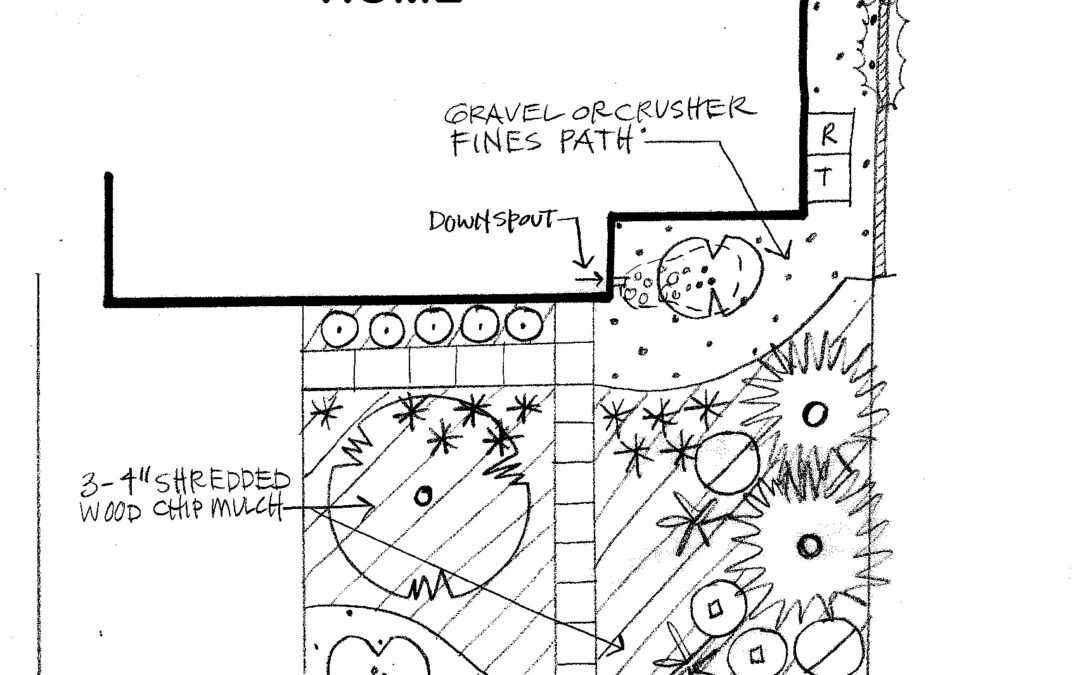
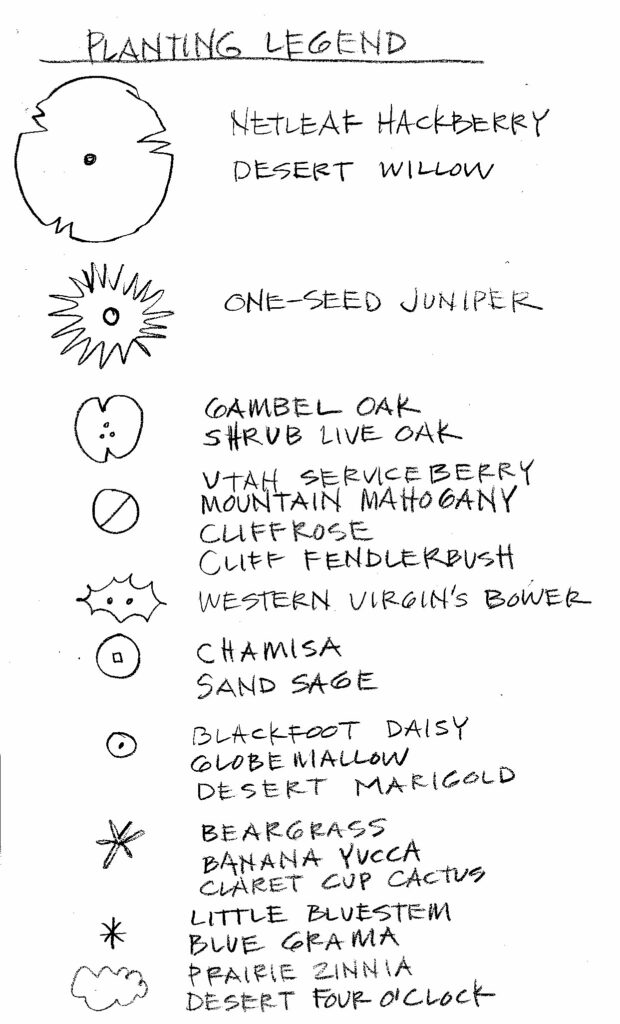
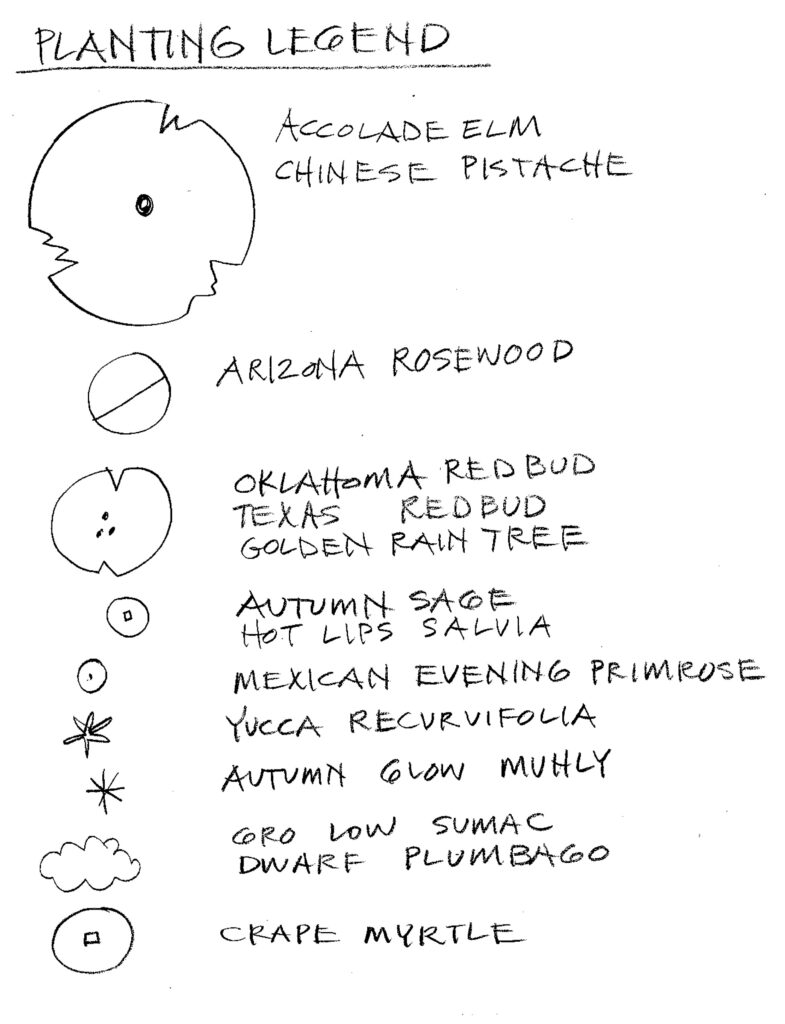
All good things start with a solid plan. Developing a landscape plan saves you not only time and money, but it is more likely to result in a beautiful yard. A few generous local landscape architects donated their time and put together some landscape design templates of a typical front yard for our 505Outside subscribers.
Above is a look at an example landscape template for a south facing front yard. This design brings all those local native plants you see in the foothills into your landscape. It’s full of a mix of oaks, sages and grasses. Take a look and get inspired to recreate this in your own yard.
Author: Jill Brown, ASLA, is a landscape architect and owner of My Landscape Coach in Albuquerque. Have a question about the article? [email protected]
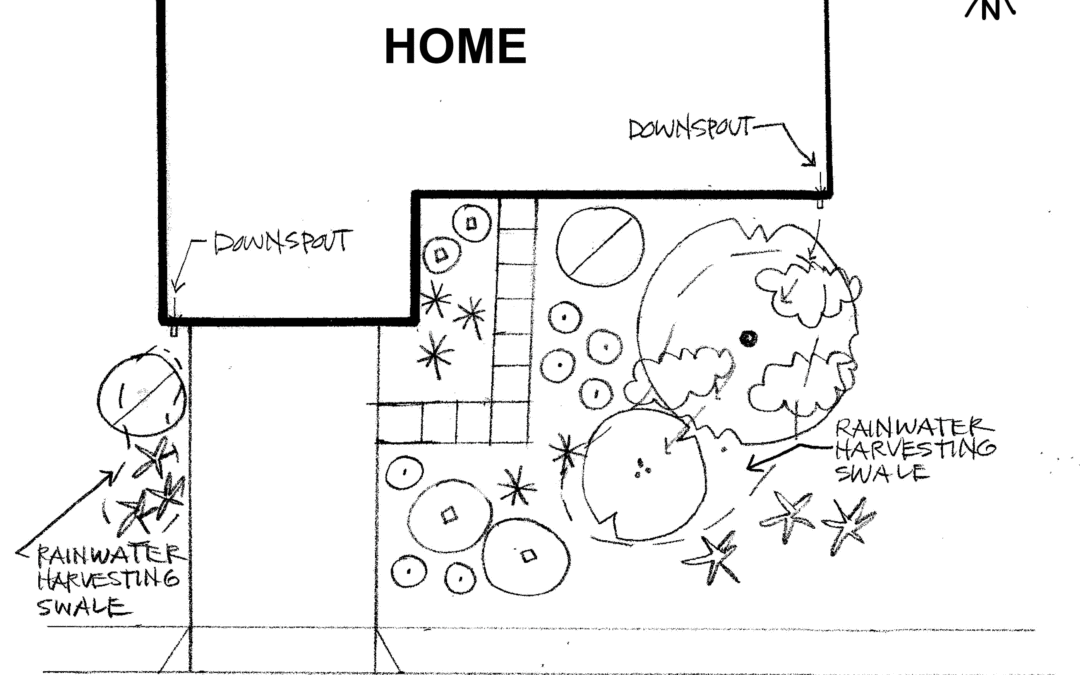
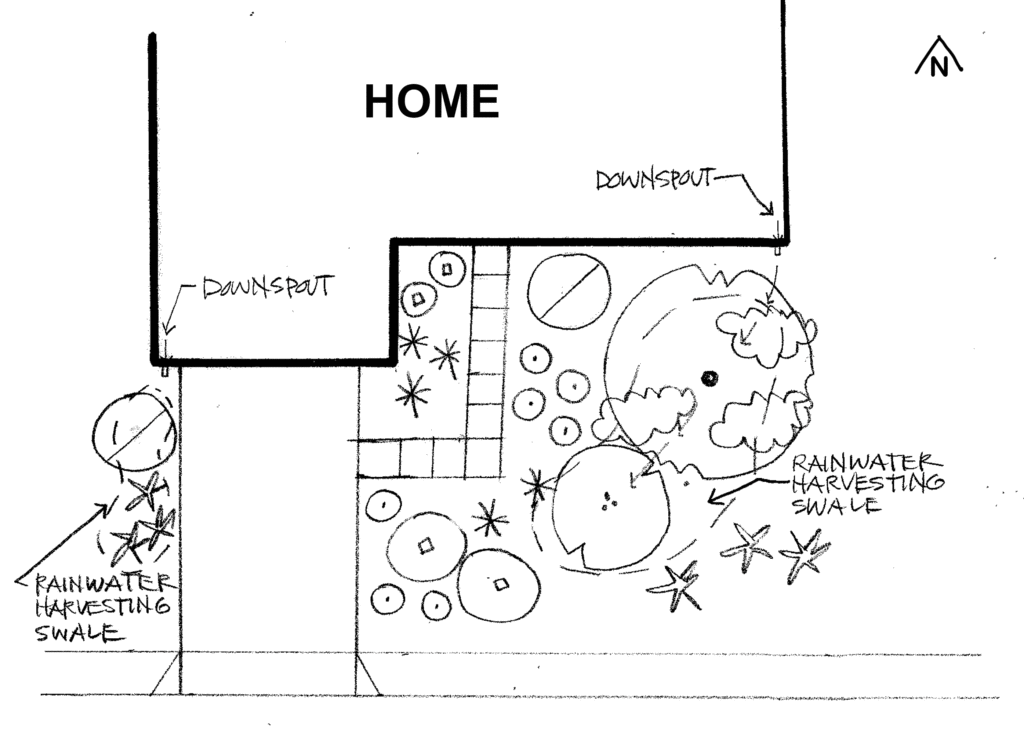
A lot goes into designing a landscape, hence there’s an entire profession called landscape architecture devoted to designing outdoor spaces. A few generous local landscape architects donated their time and put together some Landscape Design templates of a typical front yard for our 505Outside subscribers.
All good things start with a solid plan. Developing a plan saves you not only time and money, but it is more likely to result in a beautiful landscape. Above is a look at an example landscape template for a south facing front yard. This design brings a taste of the East Coast or Midwest to your home in New Mexico. It’s full of leafy green desert friendly plants. Take a look and get inspired to recreate this in your own yard.
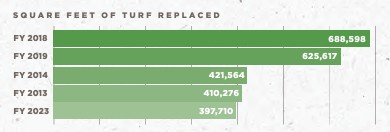
The Water Authority’s xeriscape rebate program, and predecessor programs run by the city of Albuquerque, have seen about 12 million square feet of turf replaced over the past 25 or so years. Since 2009, the top five years for program participation were:
This has contributed to a reduction in daily per capita water consumption from 250+ gallons in the mid-1990s to about 124 today. Replacement of turf with desert-friendly landscapes has always been a key component of Albuquerque’s multidecade conservation drive and of the Water Authority’s 100-year management plan, WATER 2120, which was adopted in 2016. Now, we’ve joined other Western water utilities in committing to pursue removal of 30% of remaining “non-functional” turf in our respective service areas over the next several years. That does NOT mean the wholesale removal of cherished green spaces in the name of saving water. Parks, ballfields and children’s backyard play areas are great places to have grass. Parking lots, median strips and emerald-green front yards are often a different story — and their owners may be able to save water and money by voluntarily exploring xeric alternatives.
To qualify for rebates, those alternatives must include landscape plans that are rich in climate appropriate trees, shrubs and plants. The idea isn’t to just pave over a patch of grass, replace it with gravel or let it revert to unsightly weeds. Plants and trees aren’t just pretty to look at: They create shade that reduces the “heat sink” effect — and the demand for water. So, yes, we want to “get off the lawn.” Doing so will help us meet important conservation goals. But we can do it in a way that preserves the benefits that functional turf and green spaces can offer.
Check out some of our recent projects:
Paradise Hills Golf Course
Project timeline: 2011-2022
Total landscape transformation: 1.4 million sq. ft.
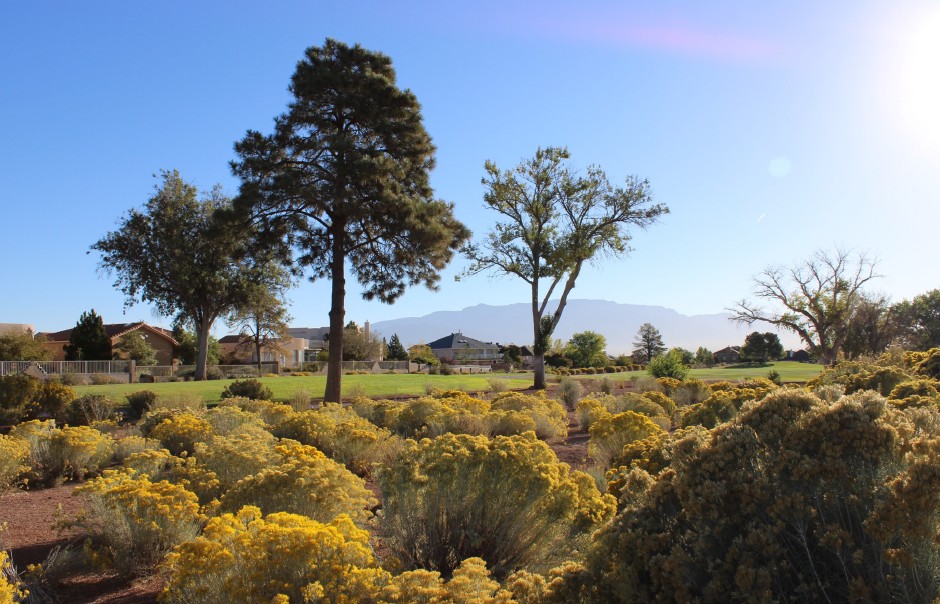
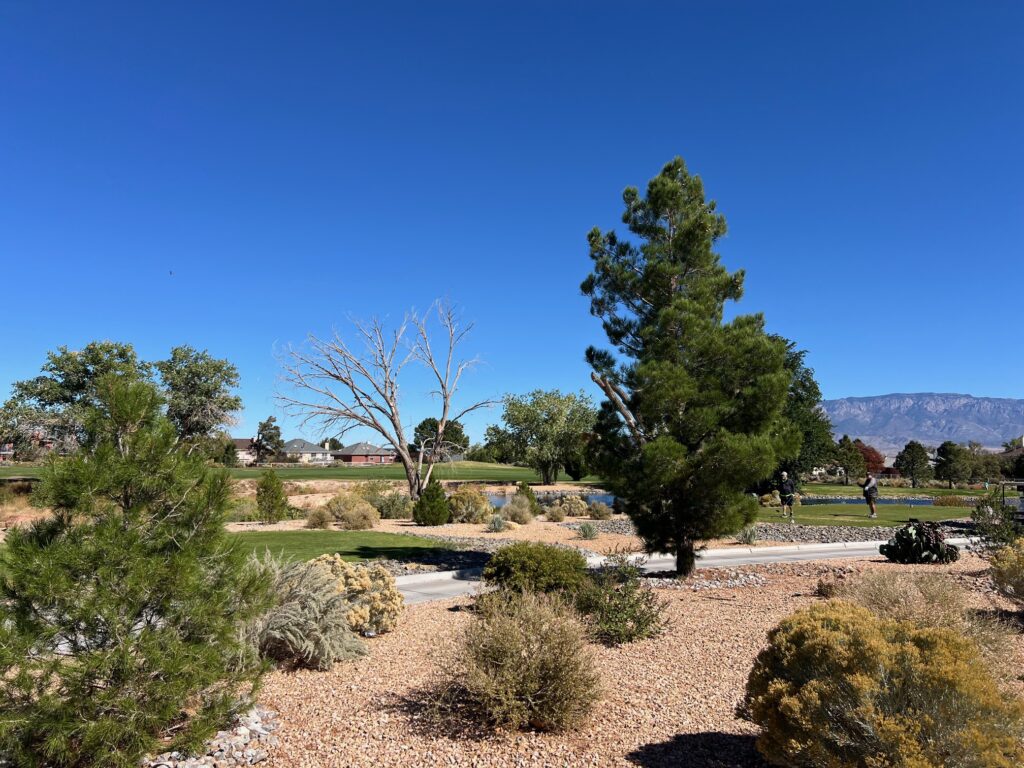
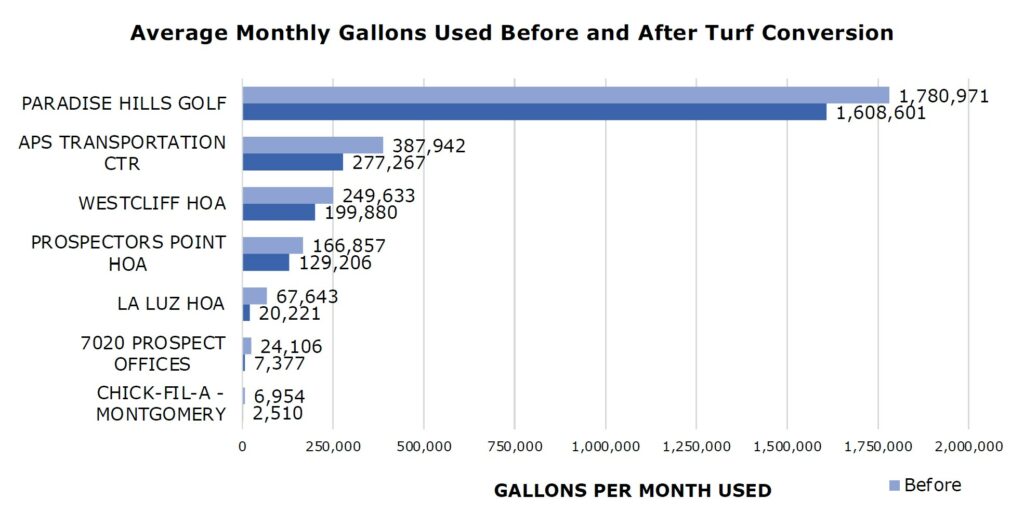
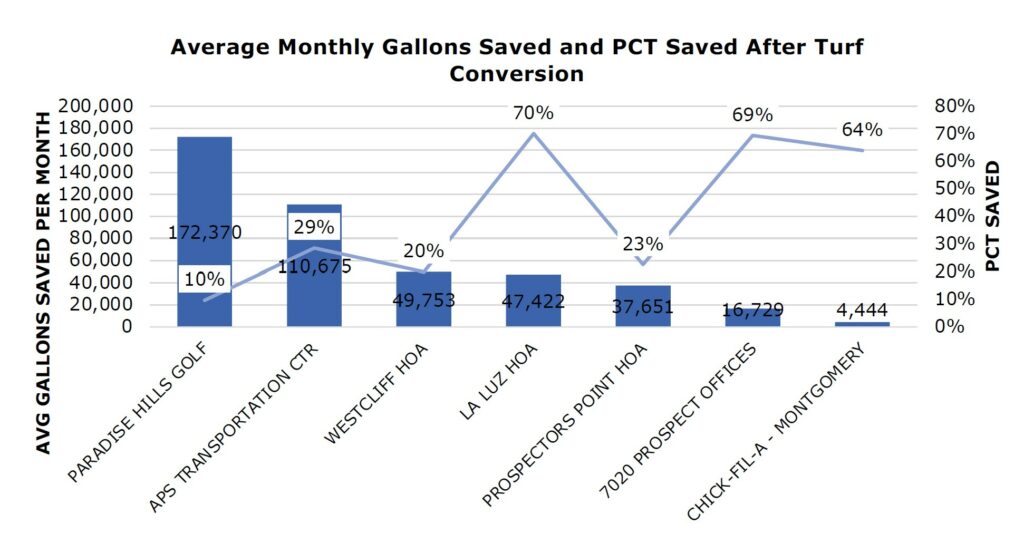
Paradise Hills Golf Course (formerly known as Desert Greens Golf Course), a private country club on Albuquerque’s northwest side, had been served since its construction in 1962 by a private water utility charging artificially low, subsidized rates. When the Water Authority acquired the private utility in 2009 and began charging ordinance-based rates, the course’s operating costs increased significantly. With its business model no longer tenable, Desert Greens was in danger of shutting down. Fortunately, help arrived in the form of the Water Authority’s xeriscape rebate program, which Desert Greens used to finance the removal of turf from non-playable irrigated areas. By 2021, the golf course had transformed nearly 1.4 million square feet of turf into xeric landscapes, conserved more than 350 million gallons of water, and — key to the course’s survival — saved over $2 million in water bills. The end result is an aesthetically pleasing, targeted-play course that patrons love — and which can continue to operate at a profit.
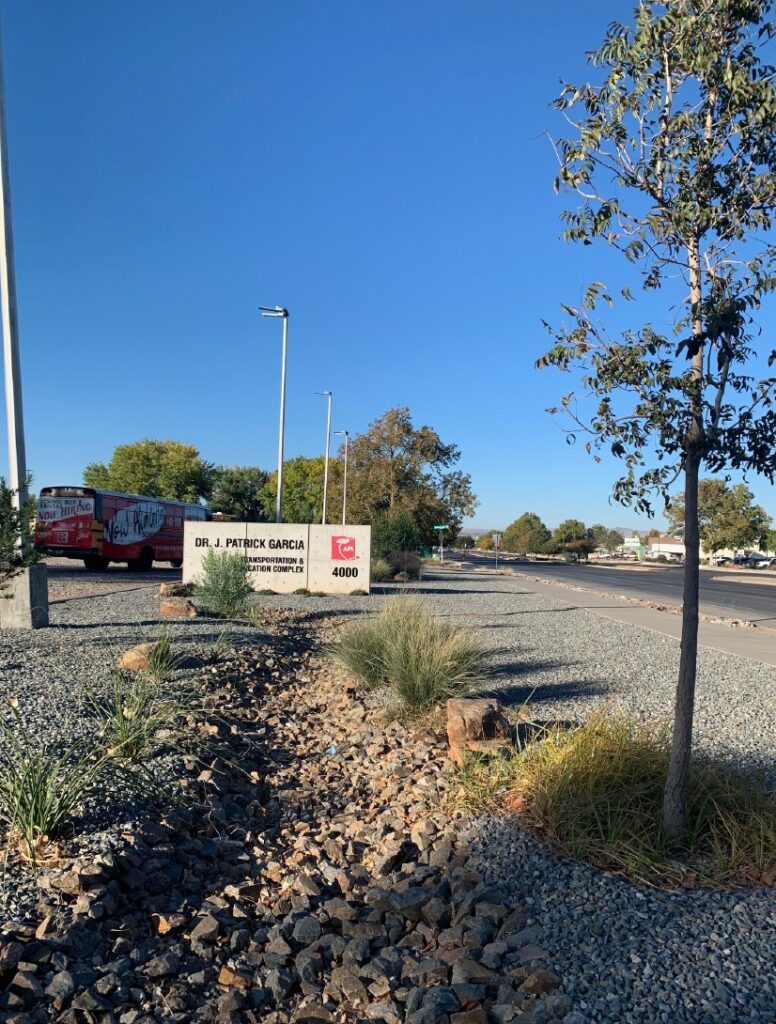
Dr. J. Patrick Garcia (APS) Transportation/Education Complex
Plant types: Lacebark elm, escarpment live oak, frontier elm, Oklahoma redbud, crape myrtle, turpentine bush, blue grama, Chinese pistache, catmint
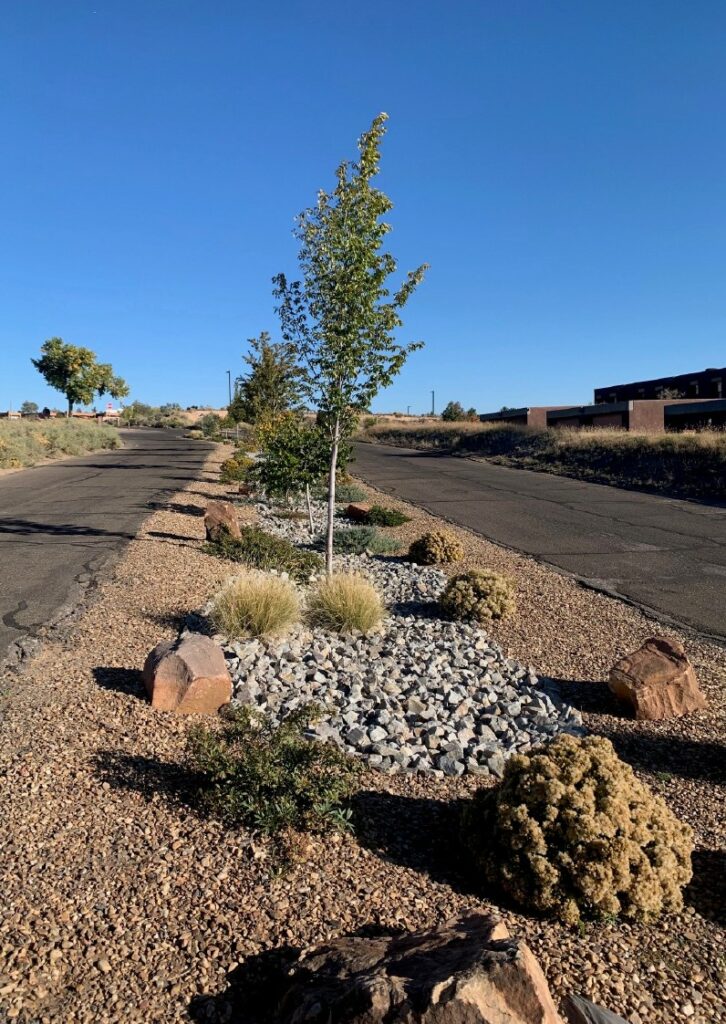
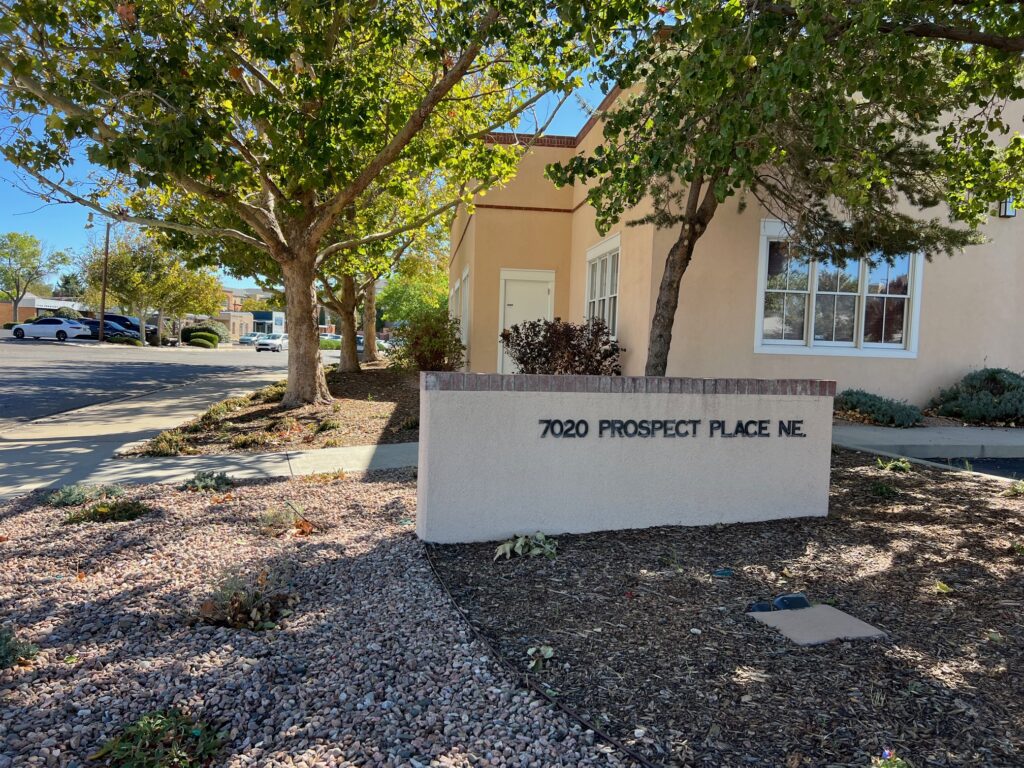
Commercial Office Park
Project timeline: 2023
Total landscape transformation:1,540 sq. ft.
Water savings to date: 83,645 gallons
Rebate amount: $3,080
Total plants: 134
Plant types: Creeping germander, dwarf plumbago, golden columbine, turpentine bush, little bluestem, English lavender, ornamental pear, London plane tree
Desert friendly xeriscapes are a great way to replace high-water-use turf grass with something beautiful, low-water-use and wildlife-friendly. Many Albuquerque area homeowners are taking their conversion projects a step further and choosing wood chip mulch over gravel or other aggregate, which can get hot and allow weeds to pop up.
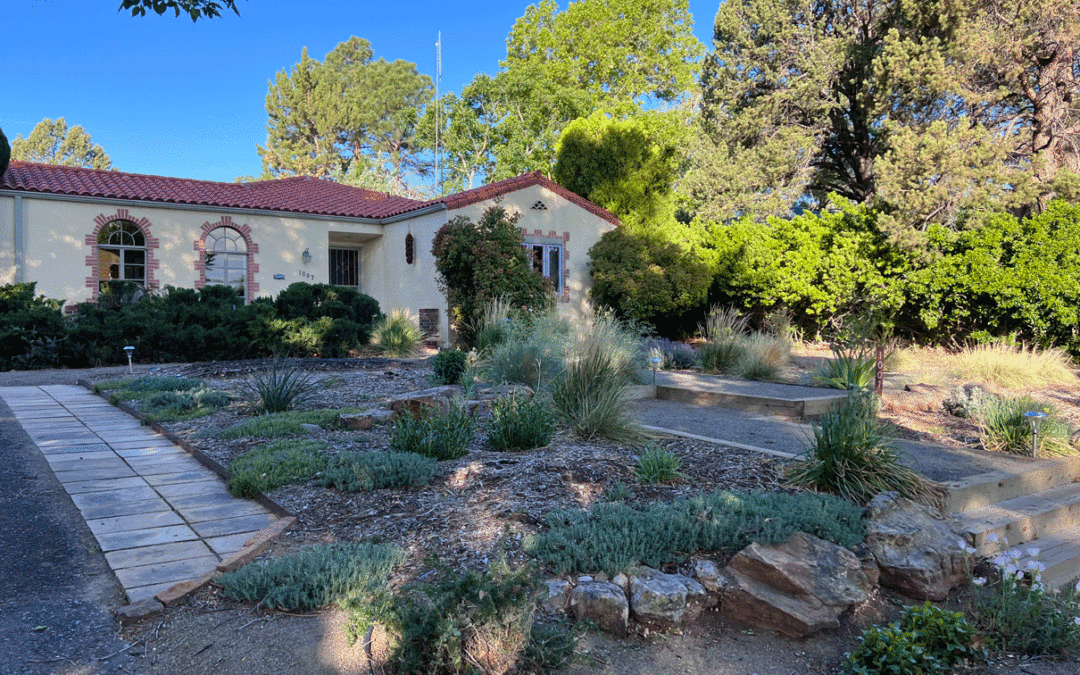
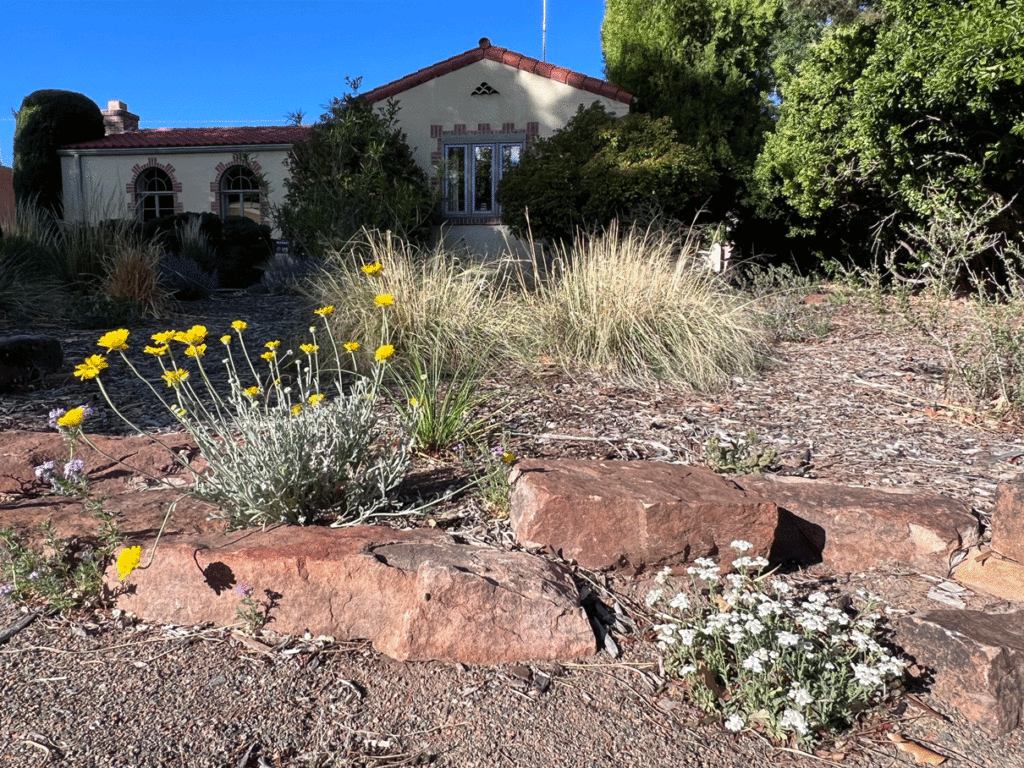
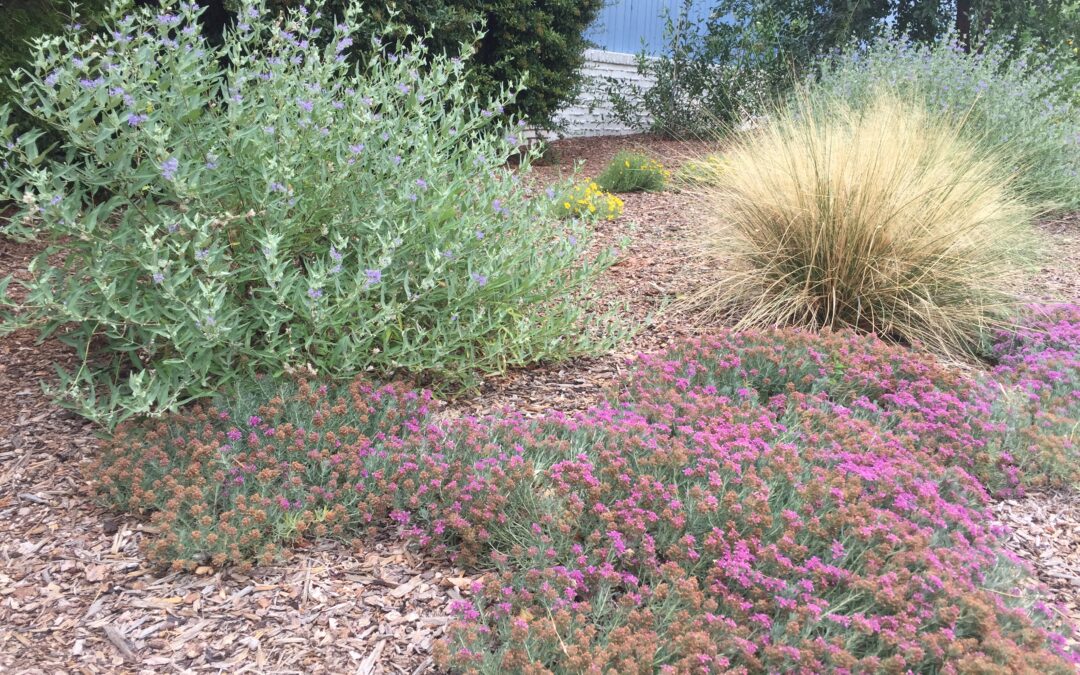
Our featured homeowner replaced 2,000 square feet of high-water-use grass lawn with a xeriscape filled with a variety of local native plants. Their lawn had become too high maintenance to keep up, and they were interested in a more water efficient yard that was pollinator friendly and low maintenance. The shrubs they chose include chamisa, cherry sage and catmint. Flowering plants include Mexican primrose, dwarf plumbago, desert marigold, creeping germander and penstemon. A mix of ornamental grasses such as Karl Forester, blue avena and muhly grass as well as a native desert willow tree round out the landscape.
Additional Facts on Mulches:
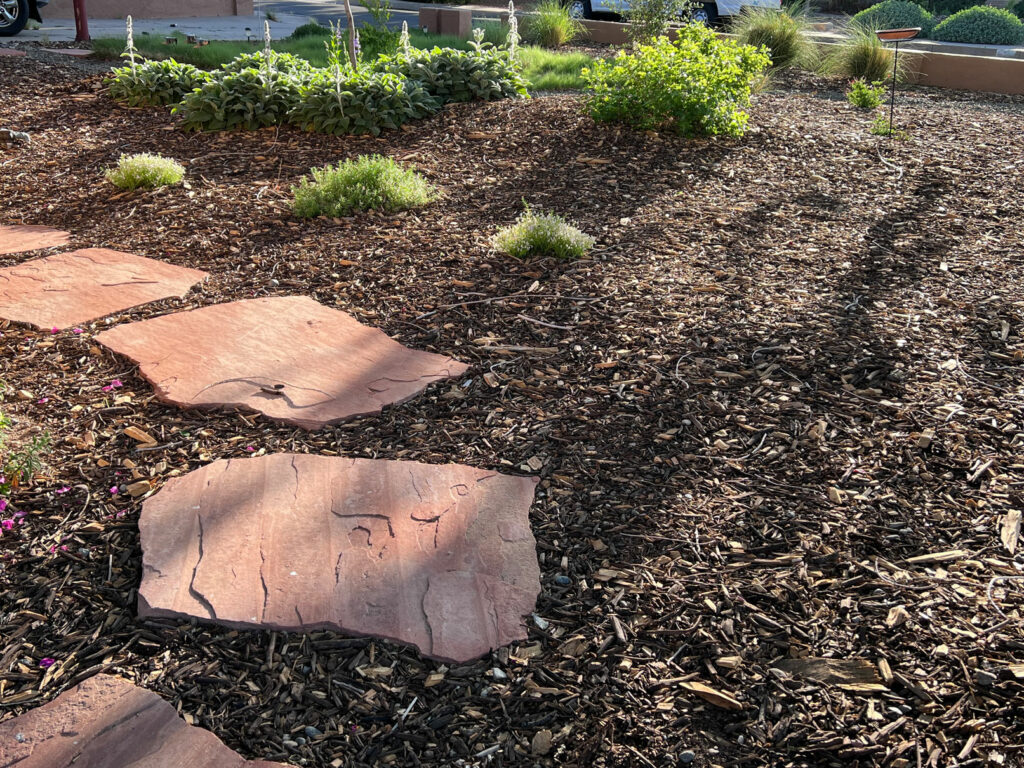
Wood chip mulch insulates plant roots from both heat and cold, reducing moisture loss from the soil by evaporation, feeding beneficial soil microorganisms that enhance plant growth and improving soil health. This makes the soil more sponge-like and better able to hold water. By installing 3-4 inches of mulch over bare dirt, weeds are reduced, the soil is enriched and new plants retain more moisture.
Another benefit of organic mulches is that they can visually accommodate a little bit of leaf litter, reducing the need for constant raking and clean-up. A thin top dressing of mulch added every two to three years keeps the landscape looking fresh and replaces the material that has broken down to sustain the soil. Organic mulches are lightweight, making them easy to transport in a wheelbarrow and spread with a rake.
Mulches are available in bags from most local garden centers (avoid the dyed ones as the colors will fade) and in bulk from several retailers in the Albuquerque area. When you buy from local bulk retailers, you are supporting the recycling of local organic materials that may otherwise end up in a landfill and contribute to greenhouse gas emissions. Buying in bulk also means less plastic! Mulch is sometimes available at no cost from local tree trimming companies. In addition, Bernalillo County offers free mulch to residents who load it themselves at the East Mountain Transfer Station. County staff can load the mulch in your vehicle with a tractor for a $5 charge. The county also will deliver 30 cubic yards of mulch for $60, plus $2 a round trip mile for delivery. Mulches are a renewable resource that will improve landscape health and conserve water.
In areas of higher wind exposure or periodic inundation with water, use a wood chip mulch that is irregularly shaped and sized as the pieces will knit together better. This type of mulch can include recycled yard waste and tree trimmings as well as commercially available, locally processed wood products.
Property Data:
Grass converted to desert friendly xeriscape: 2,150 square feet
Total gallons saved in one year since conversion: 10,000 gallons.
Total rebate received: $2,250 (extra $100 bonus for using organic mulch)
Thinking about converting your yard from high-water-use grass to xeriscape? Check out the Desert Friendly Xeriscape Rebate page to learn more about the qualifications, requirements and process to apply for this generous rebate. Additionally, xeriscape rebate participants get 25% off the cost of installing bulk organic mulch, up to $100. If you want to top dress mulch around your trees, take advantage of our Treebates. You are welcome to contact our xeriscape specialist, Carl Christensen, at [email protected] or 505-289-3026.
Authors: Amos Arber, Xeriscape Rebate Inspector with the Water Resources Conservation Department for the Water Authority, and landscape architect Jill Brown, ASLA, MyLandscapeCoach.com. Have a question about the article? [email protected]
The word Mediterranean may bring to mind rows of lavender in southern France, an Italian villa or maybe a Spanish courtyard or Greek olive orchard. These areas around the Mediterranean Sea all share unique plants and garden design methods that are part of their allure in movies, marketing and as tourist destinations. Luckily for residents of the Albuquerque area, the mediterranean climate is similar enough to that of our high desert home that many mediterranean plants can be successfully grown here. (Note: There are other coastal areas of the world that are climatically so similar to the area around the Mediterranean Sea that they are also known as having mediterranean climates. These areas include parts of South Africa, Australia, Chile and California. A capital “M” is used for the Mediterranean place in the world, while a lowercase “m” refers to the climate that includes all five regions.)
Albuquerque has hot and increasingly dry summers, just like the Mediterranean. This means that plants from both places do best with deep watering to reach their deep, drought-adapted roots and a good layer of organic mulch to keep moisture in the soil. Most mediterranean plants prefer full sun, although a few can tolerate some shade. Mediterranean places tend to have soils with good drainage, so make sure to keep mediterranean plants away from any areas with clay or caliche.
There are, however, a few very important differences between Albuquerque and mediterranean climates. The most significant of these differences is temperature: As coastal areas, mediterranean climates don’t get very cold. It is rare to have snow or anything other than a light freeze. Many mediterranean plants are not cold hardy enough to grow in the high desert. Others may require a protected area in a courtyard or along a south-facing wall for extra warmth. The mediterranean plants that are more cold hardy and generally do well here can still be killed by the combination of freezing temperatures and wet soil. So, as temperatures drop in the fall, stop watering your mediterranean plants and don’t start again until the chance of frost has passed in spring.
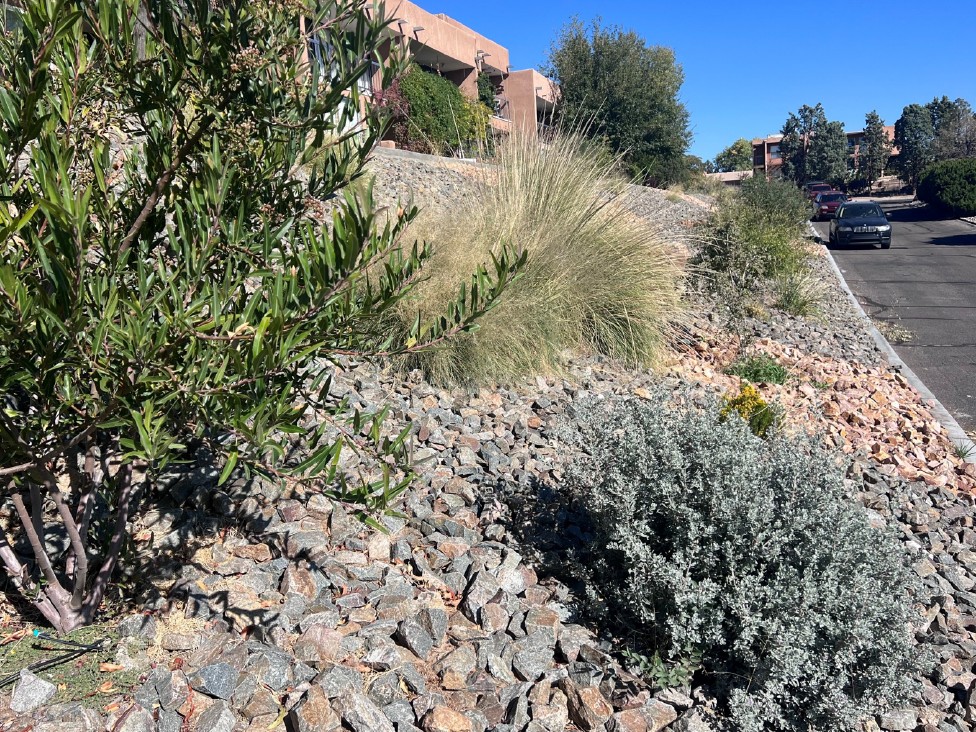
While selecting mediterranean plants for your landscape, you can also incorporate a few simple Mediterranean garden design strategies. The starting point for any Mediterranean garden is evergreen trees and shrubs. Think olive trees, Italian cypress and statuesque pines. However, since olive trees are not cold hardy in Albuquerque, instead try an escarpment live oak. Their glossy dark green leaves are a great substitute for an olive, and they are an important species for pollinators. Although Italian cypress can grow in Albuquerque (and was planted profusely in the 1970s), it is not particularly well-adapted here. A better choice is an upright juniper cultivar, such as Keteleeri. And while a Mediterranean stone pine or Aleppo pine would do well in a protected courtyard, Afghan pine is another option with better cold hardiness. Arizona rosewood, turpentine bush and manzanita hybrids are a few evergreen shrubs that will give your landscape a Mediterranean flavor.
Next, include some plants with light silvery-blue leaves to contrast with the evergreens suggested above. Silvery-blue foliage is a plant adaptation to intense solar radiation, so many mediterranean and locally native plants share this quality. Mediterranean natives with this striking color include lavender, gopher spurge and grey lavender cotton (which actually has yellow flowers), while silver-leafed native plants include sand sage, germander sage and chamisa. There are also many locally native plants with silvery leaves that provide contrasting shape as well as color: Agaves, desert spoon, blue Nolina and yuccas all can accent your landscape beautifully. Of course, these locally native plants will be easier to grow and will provide better pollinator habitat than mediterranean imports.
Edible plants and herbs have always been another important part of Mediterranean gardens. Rosemary, lavender, oregano, thyme, chives and culinary sage all hail from the Mediterranean and do well in Albuquerque. Mediterranean fruit trees, such as fig, pomegranate and apricot can flourish but do require a little extra water. This water need can be met by roof runoff if you plant them in a well-drained rainwater harvesting basin or swale. Fruits and herbs all provide flowers in addition to food. However, if you’re looking for an extra splash of color, red hot poker, moonshine yarrow and Bowle’s mauve are all mediterranean options.
Whatever mediterranean plants you choose, just remember to keep their roots dry when it’s cold out, make sure the soil drains well and give them a nice layer of wood mulch. They will repay you with a beautiful and low water use landscape for years to come.
Mediterranean plant options
Shade tree: Japanese pagoda
Evergreen trees: Keteleeri juniper, escarpment live oak
Small flowering trees: Vitex, crape myrtle
Large plants (5-8' tall/wide): Fernbush, blue Nolina, evergreen sumac
Medium plants (3-5' tall/wide): Rosemary, large agave (americana, ovata, havardiana), lavender, red hot poker, pink muhly grass