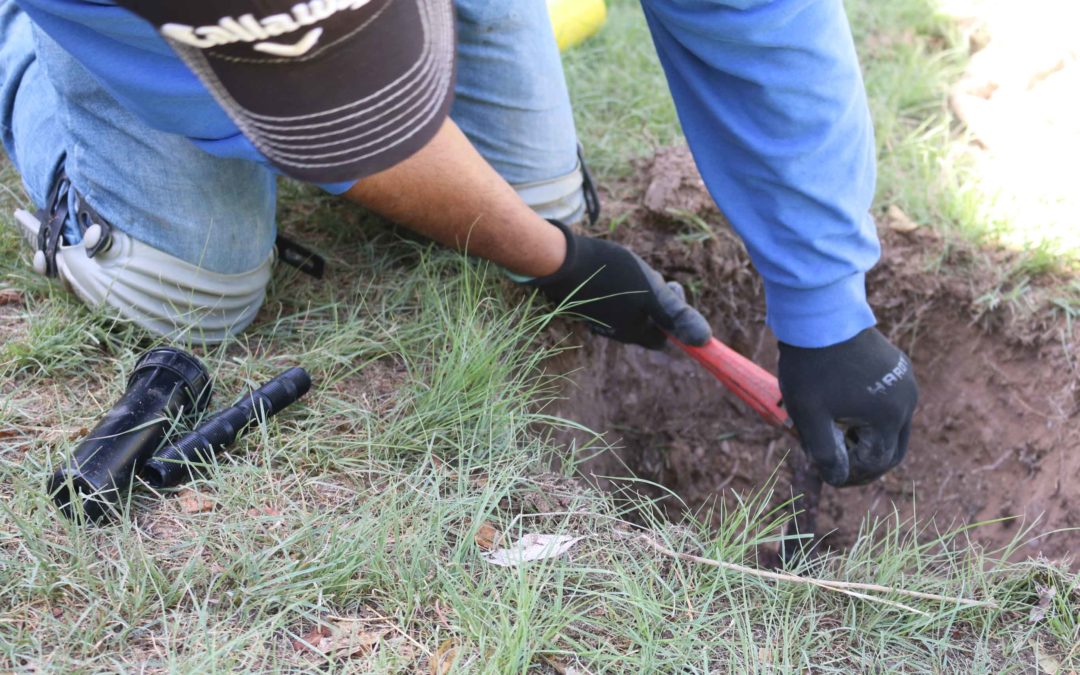
The Water Authority offers several rebates for irrigation efficiency equipment that might help you reduce water use your yard. You also can contact a Water Authority irrigation specialist at [email protected] for a consultation or efficient irrigation advice. Find more information about the rebates here.
WaterSense Smart Irrigation Controller: A WaterSense-labeled controller reduces watering times or the number of days when the system goes on so that less water is delivered to plants during the cooler months or when it has rained recently. Receive a rebate of 25% of purchase and professional installation costs, up to $100. Choose from a list of pre-qualified controllers here.
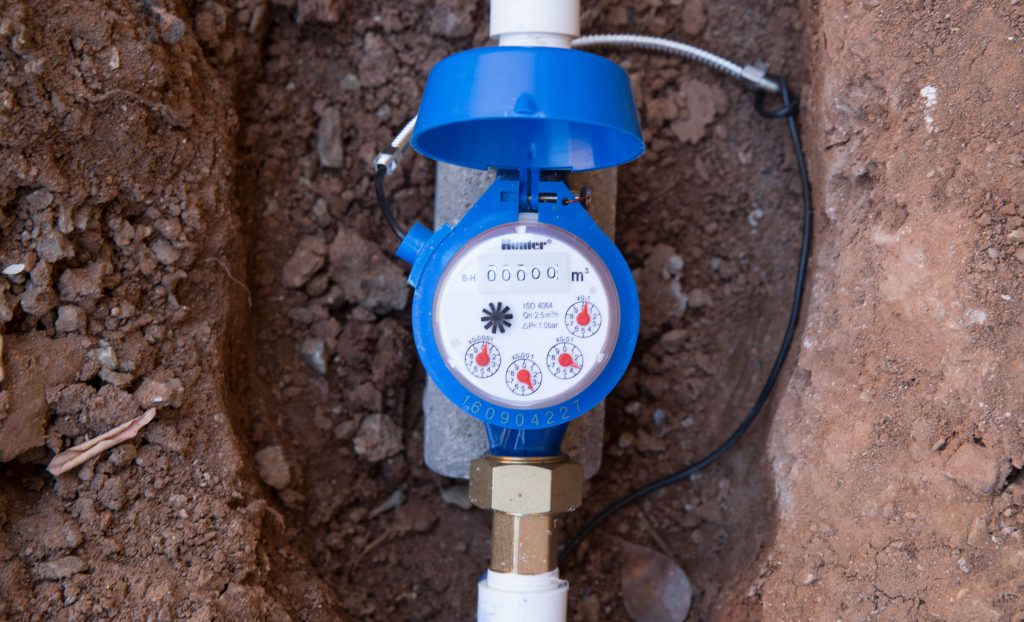
Smart Water Application Technology Flow Sensor: Meant to be used in conjunction with a smart controller, irrigation flow sensors measure the speed at which water is flowing through an irrigation system and then send that information to the smart controller. This helps detect problems and conserve water. For example, if water is flowing at an unusually high rate (such as from a line break or broken sprinkler), a flow sensor works in conjunction with the controller to take corrective action. Receive a rebate of 25% of purchase and professional installation costs, up to $100.
Smart Water Application Technology Pressure Regulators: Pressure regulation devices increase the efficiency and performance of your sprinkler and drip system by reducing the water pressure to a set, optimal rate. This is important to improve water distribution uniformity and avoid underwatering or overwatering. Receive a rebate of 25% of purchase and professional installation costs, up to $100.
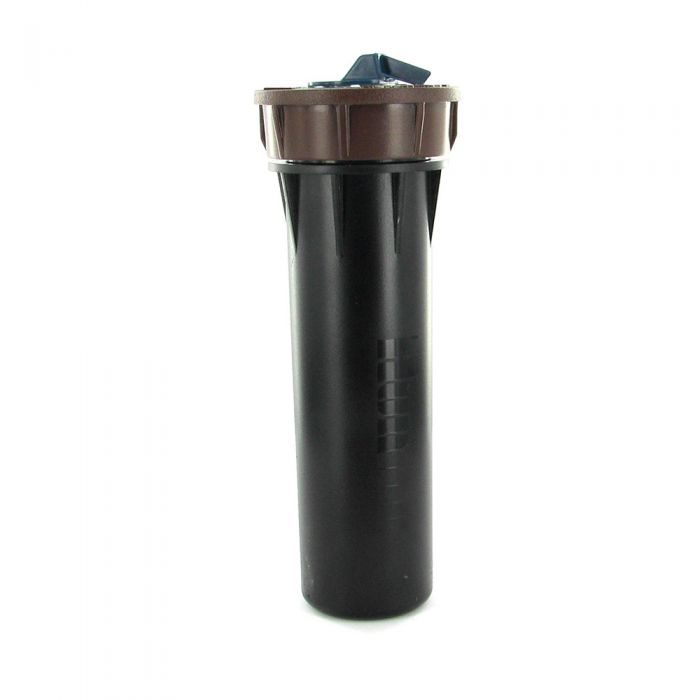
WaterSense Pressure Regulating Spray Sprinkler Bodies:These devices provide pressure regulation at each individual spray head and can reduce water waste by providing a consistent flow at the sprinkler nozzle. Get $4 off each sprinkler body you purchase (no limit).
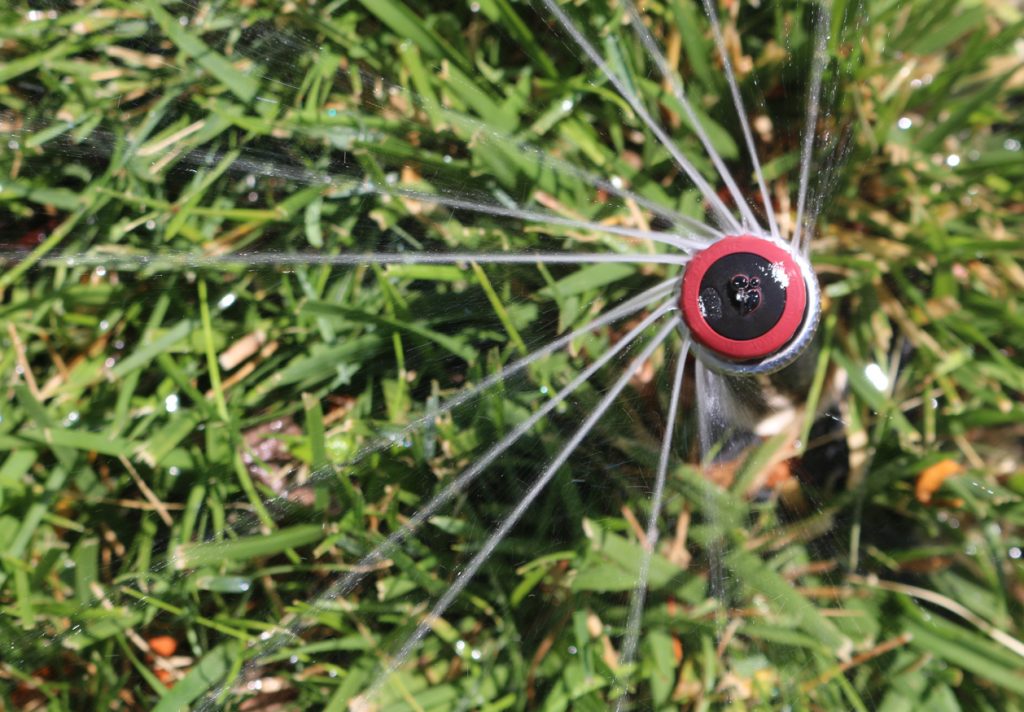
High Efficiency Rotating Sprinkler Nozzles (multi-stream):Use these nozzles to replace the sprinkler head on any conventional spray head body or pop-up sprinkler for water savings of up to 30%. High efficiency sprinkler nozzles are a great solution for upgrading an old and poorly performing system. In most cases, you just remove the old, water wasting spray nozzle and replace it with the new head. You don’t even have to take the main sprinkler body out of the ground. For more information on these nozzles check out this post. Get $2 off each nozzle you purchase (no limit).
Mature Size: 8” H x 2’ W, varies depending on species
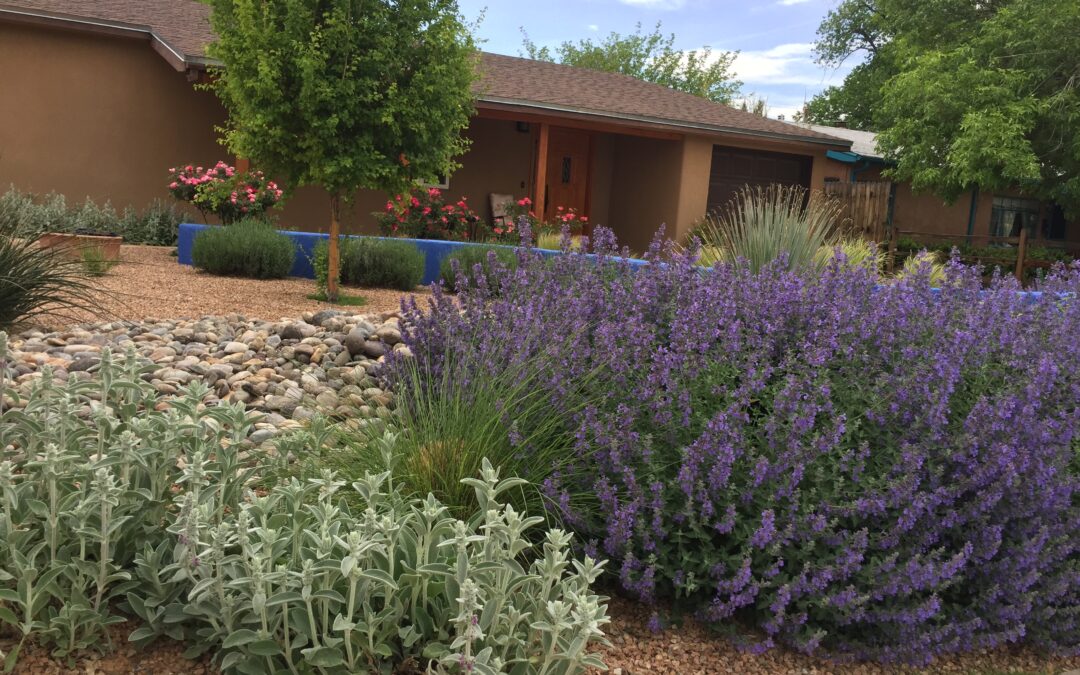
Catmint has become a cornerstone of many xeriscapes because of its hardiness and long bloom period. The first flush of blue flowers comes in late spring. When deadheaded promptly, a second flush blooms in late summer. Out of flower, the neat mound of gray-green foliage has a pleasing fragrance and texture. Adaptable to any well-drained soil, catmint can handle a range of light from full sun to light shade. Trim back in late winter for prolific blooms the following spring. Pollinators enjoy this plant along with house cats as this plant is similar to catnip. Walker’s Low is a great variety if you are looking for a more compact catmint. Six Hills Giant is one of the tallest catmint varieties with long lasting blooms.
Food forests and edible landscapes have been around for a very long time. They are what helped ancient humans survive and thrive. Hunter-gatherers likely did not expend precious energy by wandering aimlessly, hoping to find sustenance, but rather they were able to evaluate the landscape around them and learn to harvest food occurring naturally in their habitats.
Forest edges were rich sources of diverse plant species, and ancient humans learned what species were edible, where to find them and even ways to support and encourage the growth of plants useful to them. Food forests or edible landscapes have evolved and adapted over thousands of years as humans’ hands and minds have learned to design them to their nutritional needs and geographic limitations. A food forest will be very different depending on where it is in the world, but all share some common traits that can be adapted to almost any climate.
Food forests are very different from traditional farming or growing a vegetable garden. They are designed to mimic the natural forest edge, where species producing edible fruits, nuts, berries, roots and tubers grow in natural layers. We can imitate this pattern with species of our choosing that will do well in our hardiness zone and climate. There are many references and publications on the subject and a quick internet search is an easy way to begin, as is your local bookstore’s gardening section.
The philosophy of permaculture design, popularized over the last few decades, has brought a new awareness to our landscape and garden design; we have learned to make use of topography, natural water movement, soil structure and amendments, sun and shade patterns over the seasons, and the importance of pollinators and wildlife in our gardens and lives. A food forest is a functional, beautiful and diverse way to garden holistically.
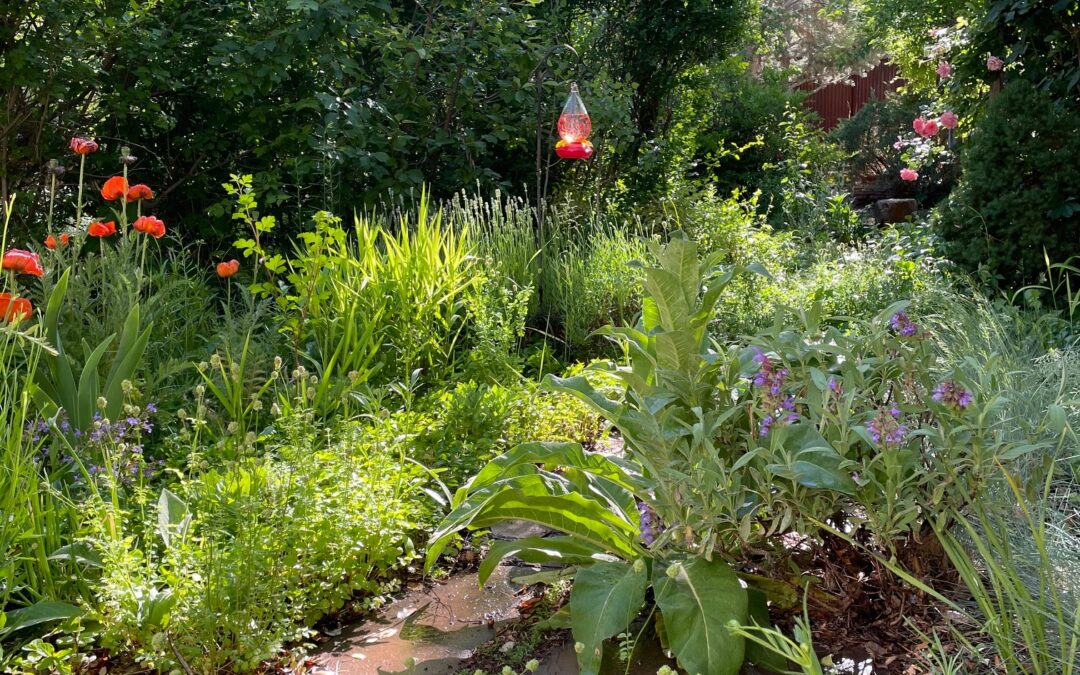
When you imagine your food forest, think about the layers of plant species and the food sources they provide. First, at the outer edge, there is the canopy, the tallest layer of trees. These might be fruit- or nut-bearing deciduous trees or even some conifers here or there, as even a pine tree has edible parts, and the needles make a fine tea.
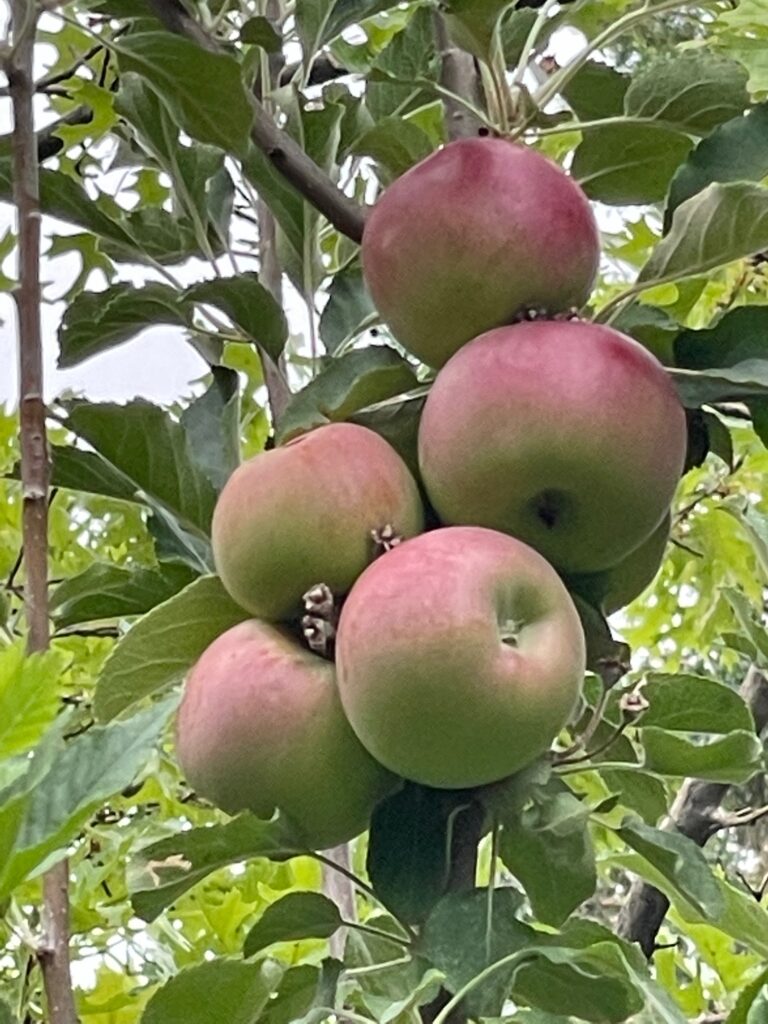
The second story is a mid-level layer of smaller trees, such as semi-dwarf or dwarf apple, peach and plum trees. Under the smaller fruit trees comes the shrub layer. If shaded, it could be currants or gooseberries. If sunnier, perhaps raspberries or blackberries.
After the shrubs comes the herbaceous layer, planted with perennial herbs like rosemary, garden sage and thyme. Ground covers like strawberries can sprawl under and around, followed by root crops like carrots, radishes and more. Vining plants are important, too. Some, like sweet potatoes, can be both root and vine. Others, like grapes, can utilize the structure of the trees to move up through the branches, making harvesting an easy task.
In some environments, you can grow edible mushrooms as part of the lowest layer; they will feed on the decomposing mulch and decaying wood that is part of the forest floor. Mulch is critical in any garden or landscape and a necessity in a healthy food forest. Fallen leaves are an excellent natural mulch as are wood chips. Leaving or intentionally placing dead branches and logs is a great way to recycle nutrients naturally into the soil profile. Having rocks or stones in the mix is also a very good thing as they slowly release minerals as they break down over long periods of time.
Most of the plants in your food forest will be perennials, but as you see, there are places for annual herbs or vegetables anywhere there is room and the proper amount of shade, sunlight and moisture. Companion planting is a great way to decide what goes where, and diversity is the strength of any plant community. A food forest is the oldest, most resilient agroecosystem in the world, whether occurring naturally, enhanced by human hands and minds, or entirely created by intention and design.
Some of the benefits of a food forest are increased harvests based on diversity, nutrient storage and water retention in soil protected by mulch and overstory; healthy soil holding a host of beneficial microorganisms; and less weed and pest populations, again due to density and diversity, and therefore less maintenance and inputs (think fertilizer, weed control). Of course, organic principles are the way to go when growing anything you plan on consuming.
Like any garden or landscape, a food forest can and should reflect the humans who are part of the ecosystem and should be a place where native plants, wildflowers and grasses all have a place in the garden, where beauty, joy and learning from Mother Nature are sources of education, nutrition, comfort and pleasure.
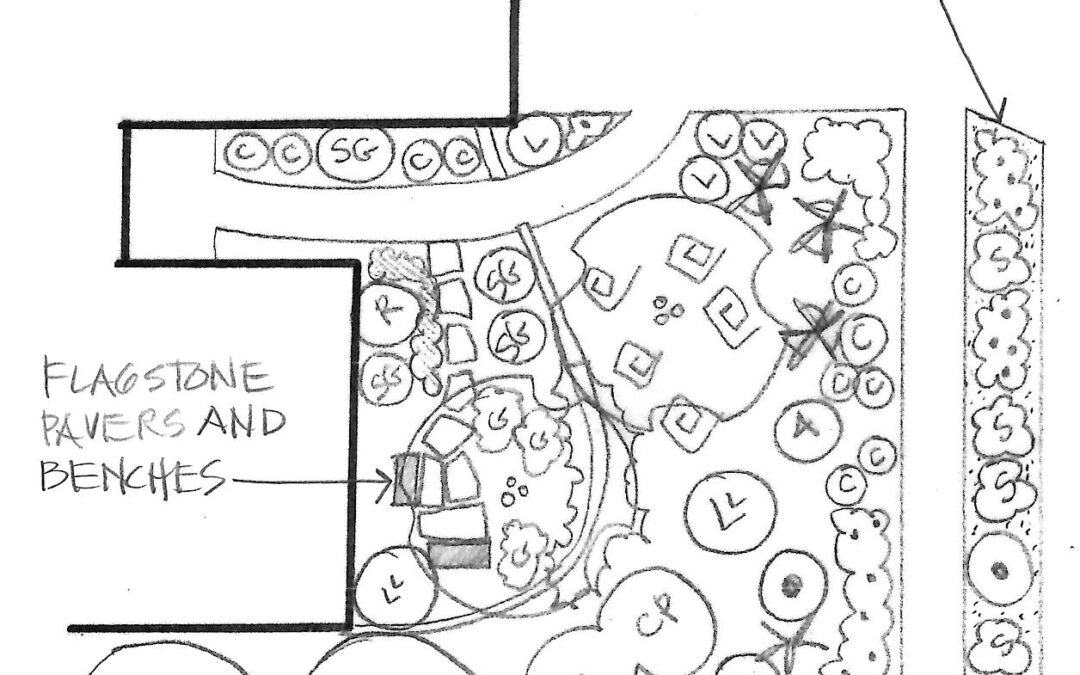
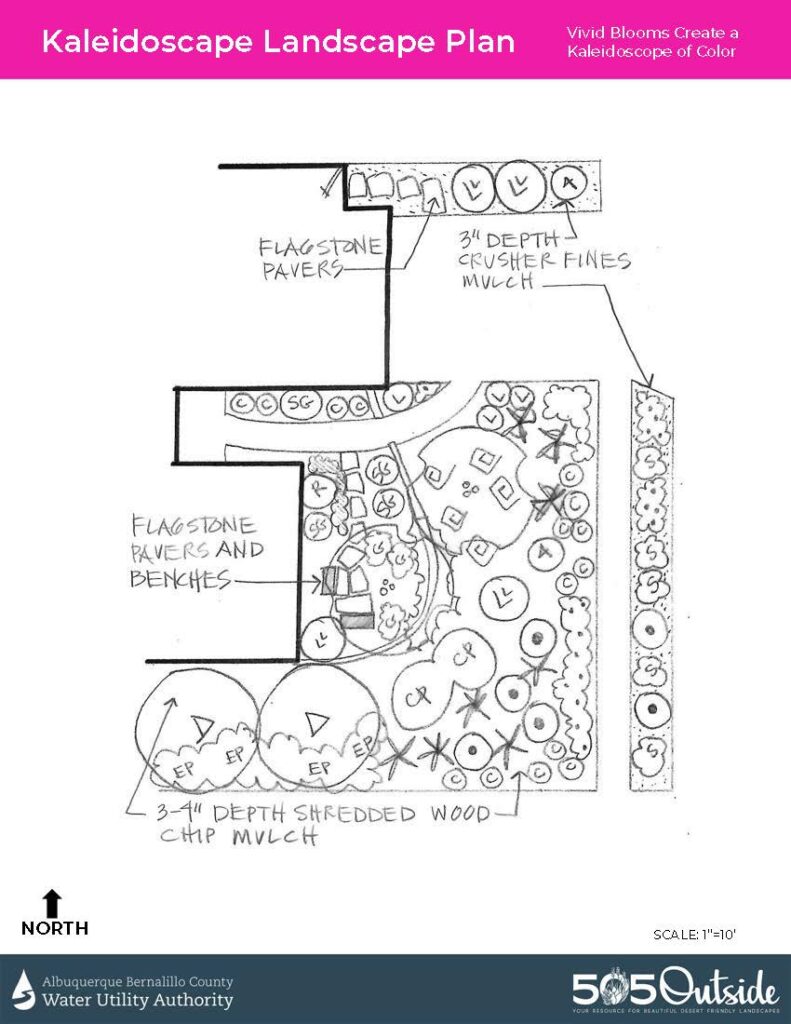
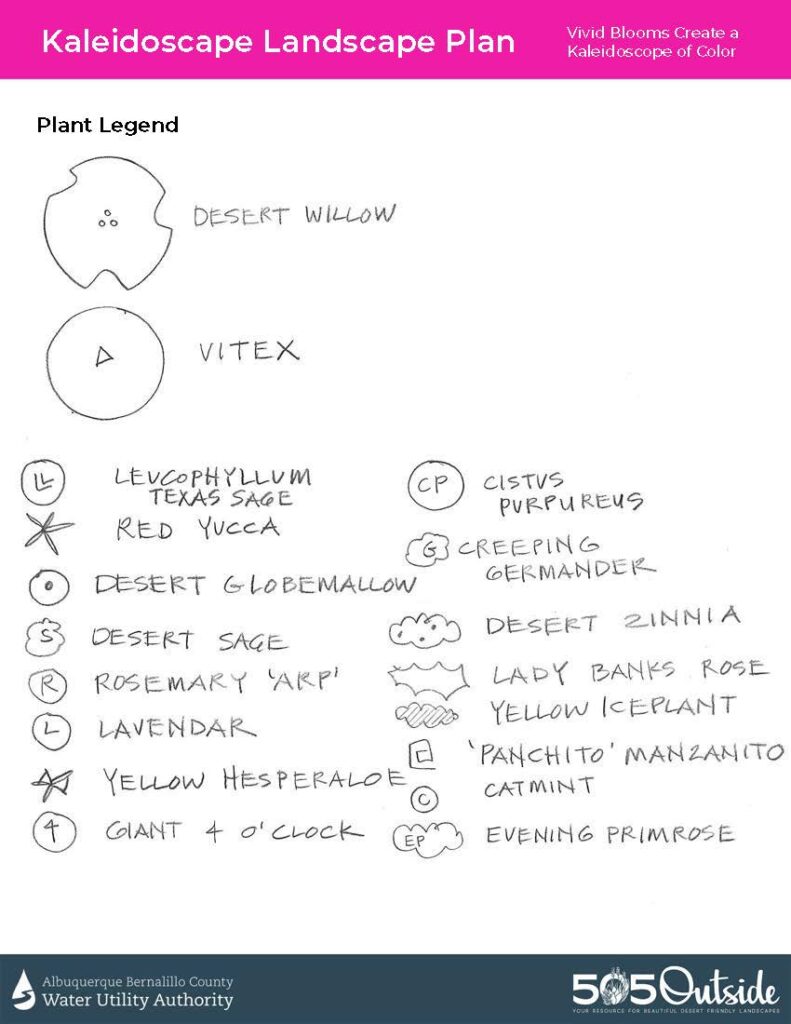
Color has a more dramatic impact in a garden if plants with strong flower colors are juxtaposed against one another. In this Kaleidoscape design by Judith Phillips, the blue-purple blooms of dwarf butterfly bush, desert sage, catmint, lavender and vitex are contrasted with the rose-pink and magenta blooms of desert willow, cherry sage, creeping germander, giant four o’clock, purple ice plant, red yucca and desert globemallow. Yellow tones are provided by desert zinnia, yellow ice plant, yellow yucca and Lady Banks rose.
Using several different plants with similar color palettes prolongs the blooming season and provides unity to the landscape. While vivid color may be the appeal of the garden from spring through autumn, a landscape also needs “good bones” — enough evergreen foliage and shapely plant forms to provide interest when the blooming fireworks are over for the year. rosemary, Lady Banks rose, cliffrose, desert sage, hesperaloes and cotoneaster all contribute seasonal flower color as well as evergreen foliage in a broad range of greens and silvers to carry the garden through the colder winter months. In addition to their colorful warm season blooms, the curving trunks and branches of desert willow and vitex add sculptural value all year.
Water flowing from the Southside Water Reclamation Plant is so clear that a person can see rocks at the bottom of the riverbed, and the Albuquerque Bernalillo County Water Utility Authority is trying to make that outflow a better habitat for fish and more accessible to hikers, joggers, bikers and anglers.
The water reclamation plant is where Albuquerque’s wastewater comes to be treated for reuse. Some is used as reuse water in sprinkler systems, while some is thoroughly cleaned and released into the Rio Grande. The outflow puts about 55 million gallons per day into the river, said Diane Agnew, water rights program manager with the Water Authority.
The water has low sediment and a nice temperature — so fish really like to swim there, she said. As a result, fisherman come to enjoy it, too.
“People love to fish right here,” Agnew said. But the outflow could be better. That’s the idea behind the treatment plant outflow restoration project, which aims to improve water quality, increase community and maintenance access, and rehabilitate the flood plain. The design is complete, and the restoration project is permitted but still needs $2.5 million in additional funding to build.
The total cost for planning, permitting, design and construction will be $6.6 million, and the project has already received some funding from the state Legislature, the Office of Natural Resources Trustee and the Water Trust Board.
“We designed this using historical flow data in the Rio Grande, so we know that with the designed flows, we will get the number of days that the fish need for spawning,” Agnew said.
The project is trying to make the outflow a better habitat for fish, especially the endangered Rio Grande silvery minnow.
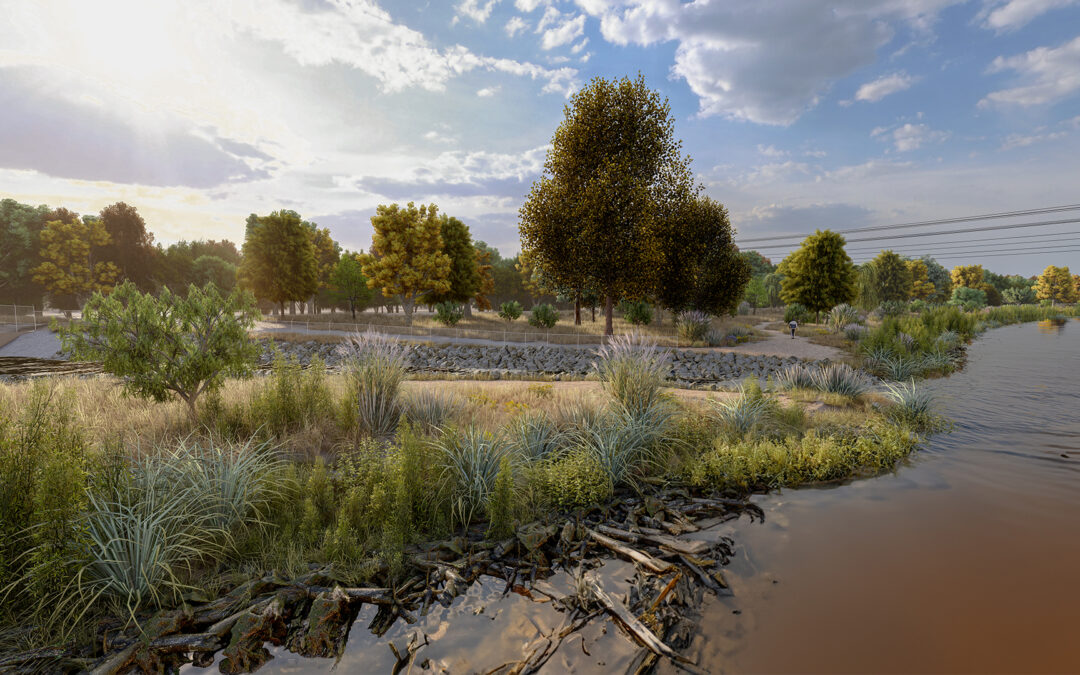
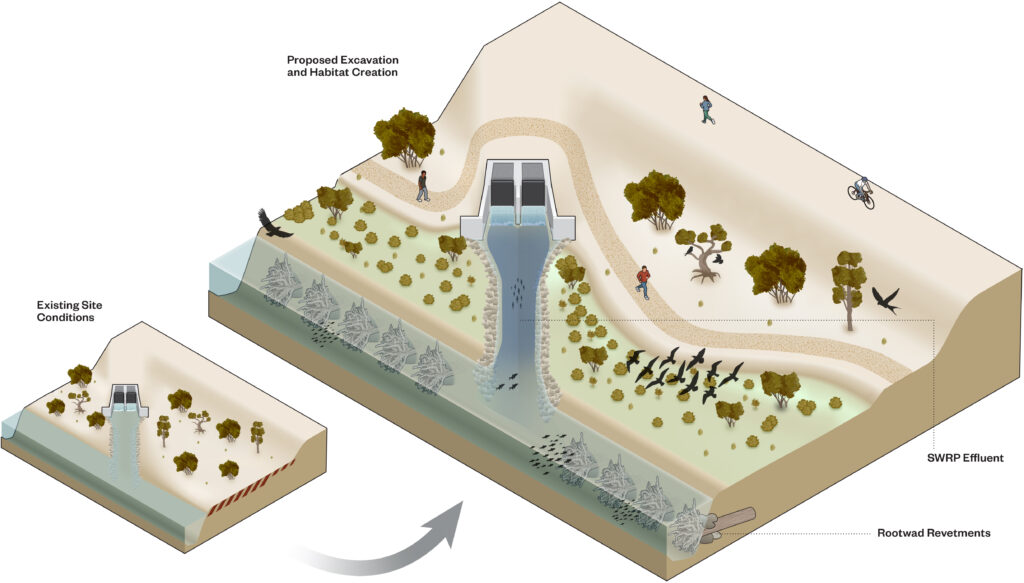
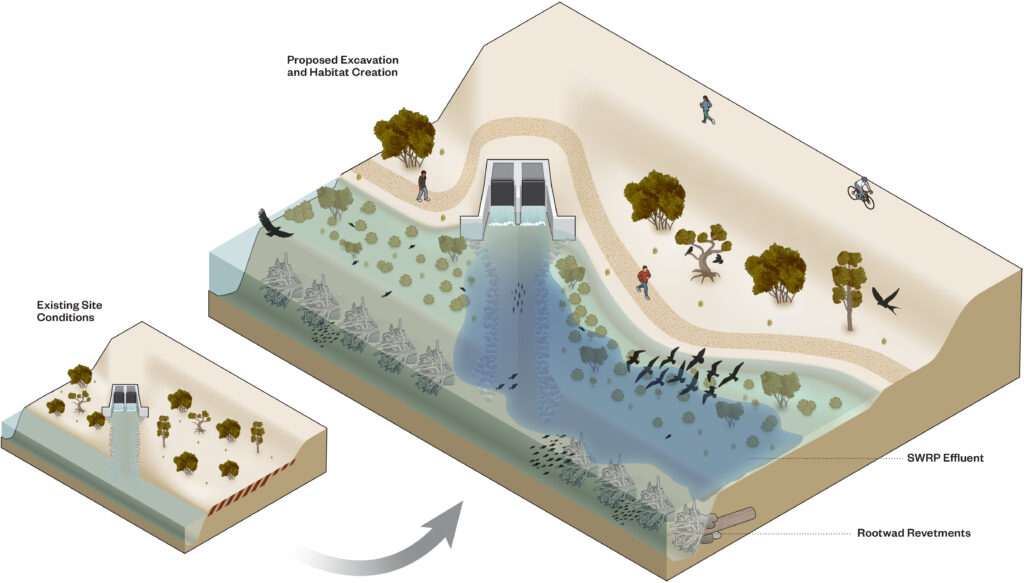
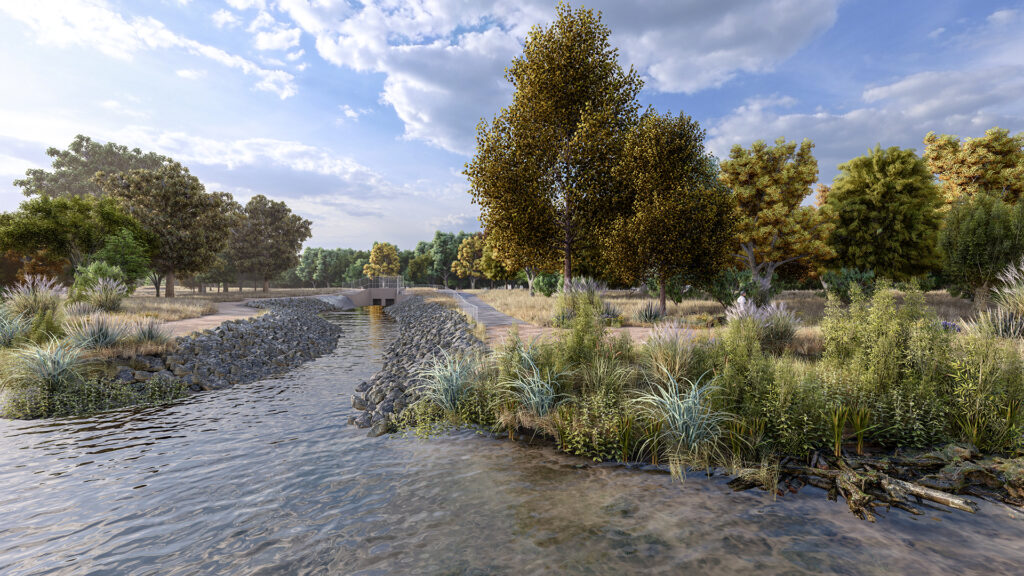
At present, the bank is steep with a roughly 2-foot drop to the river. The restoration project will turn the bank back into a flood plain, where water can wash over the bank, depositing ground water, watering native plants and making the space more appealing to fish and safer for anglers.
“Not only are we creating a flood plain terrace where the water will come up onto it, we’re putting in these bioengineering features called rootwad revetments. So, we’re taking trees that were already dead, and we’re going to cut them and turn them around so their roots stick out into the stream. And that creates stream stability, so that we won’t get as much erosion and we’ll get less sediment in the water, which is good for the fish. And, create little nooks and crannies for the fish to spawn in and hang out in until the eggs hatch,” Agnew said.
The restoration project would include 1,100 feet of rootwad revetments and calls for removing invasive species like salt cedar and ravenna grass and replacing them with native plant species over 18 acres. The native plant species will create a tiered habitat, with grasses, bushes and trees.
“That allows the different animals to have habitat, and those root systems are all individually different, too, so it helps increase the stability of the flood plain overall. Whereas out here, and as you see all over the Rio Grande, there’s increased sedimentation and a lot of erosion that occurs in this area. The river has to get to a pretty high level before it floods. This spring, the river got to 4,000 CFS (cubic feet per second) and this area did not flood,” Agnew said.
After the project, she said, the area should start flooding at 900 CFS.
The project should benefit the yellow-billed cuckoo and the Southwestern willow flycatcher, two protected birds, by creating more spots where they can nest. Planting milkweed will benefit the monarch butterfly.
The work should make the area more accessible to the public by connecting two bosque trail systems on either side of the outflow. The project would create 4,800 feet of new trails. Crews also will be removing 198 jetty jacks.
The Legislature has provided about $1.2 million for planning and design, but District 26 Sen. Antonio “Moe” Maestas, a Democrat, is advocating for more investment in bosque restoration because he believes the bosque is underused.
“We’re one of the only cities in the country that doesn’t utilize its river for recreation or economic purposes,” Maestas said. “Given the fires that happened last spring, it’s imperative that we deal with the fuels and the underbrush.”
There’s not a city with a comparable river, Maestas said, but the San Antonio River Walk does offer an example of a river becoming central to a city’s tourism.
“Because we want to protect it, we do nothing with it,” Maestas said. “That’s not consistent with what we’re capable of.”
Additional funding from the state likely would have to come from capital outlay appropriations, Maestas said. He’s on the lookout for other project proposals that would restore or enhance the bosque.
“We have the financial resources to turn the bosque in Bernalillo County into a beautiful state park that we can all be proud of, that increases environmental protections and will add to our quality of life and build the city we want to build, which is a city that climbs out of poverty and keeps future generations from moving away,” Maestas said.
Construction should begin in August 2024 due to a $3 million dollar federal grant from the Bureau of Reclamation. Once construction starts, the project is expected to be finished in eight months. This important project will improve the riparian habitat for endangered species and make the outfall area more attractive to hikers and bikers in this section of the Bosque.
Author: Cathy Cook is a news reporter for the Albuquerque Journal. Reach her via email at [email protected]. Reprinted with permission from the Albuquerque Journal.