Homeowners are constantly looking for that perfect plant for that exact spot. Unfortunately, there isn’t a simple answer. Landscape designers know there are so many factors that go into placing the right plant in the right place. Sun-loving plants should be planted in sunny spaces. Shade-loving plants should be placed under trees or next to walls where they’ll be protected from our intense New Mexico sun. Be sure the area is big enough to accommodate the plant when it reaches its full mature size, and remember to place plants with similar water needs together.
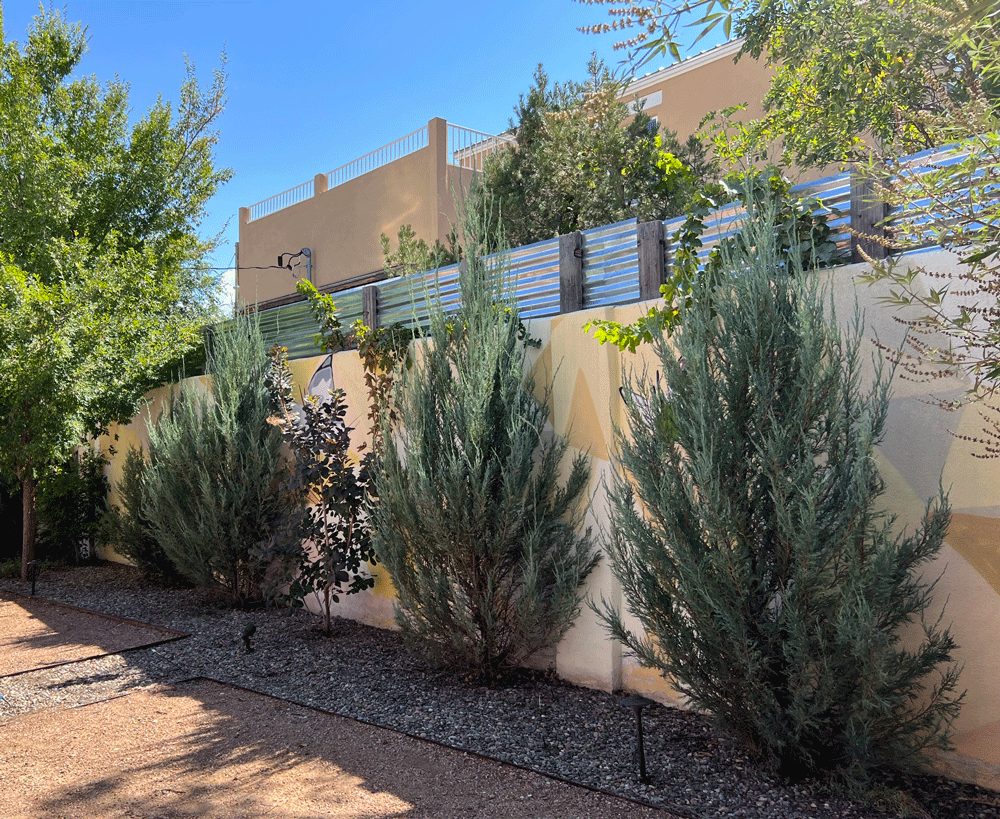
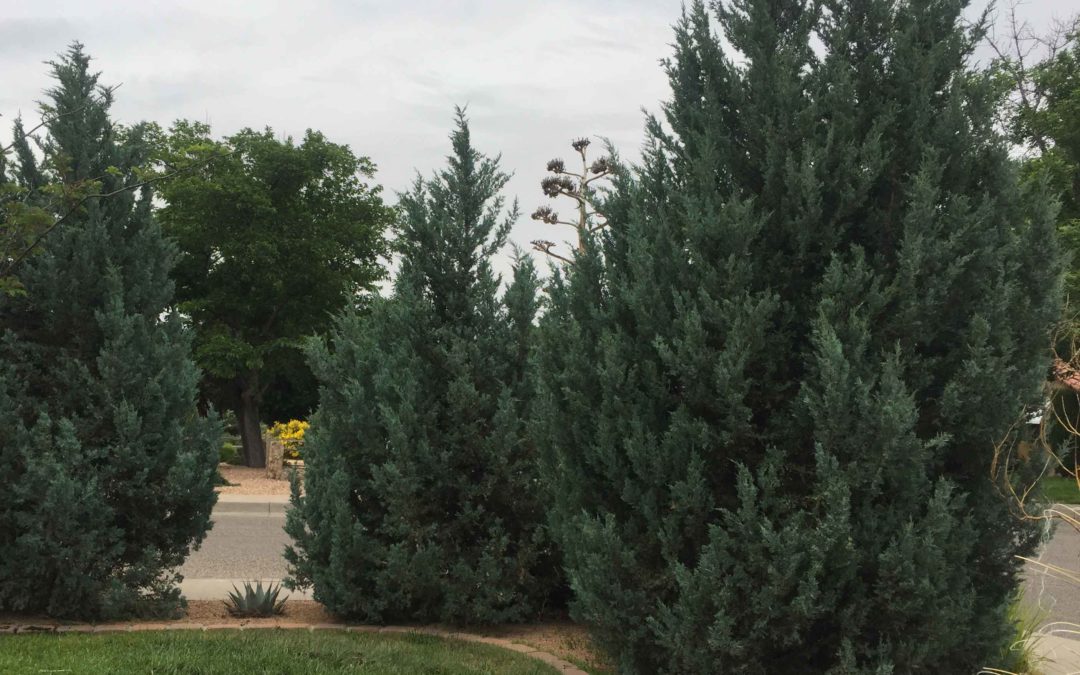
One of the most frequent requests is for a year-round green plant that hides and blocks an ugly view. For a narrow space (4’ and smaller) next to a wall or a neighbor’s driveway, check out the Skyrocket juniper. It’s a blue-green, narrow columnar tree growing 15 feet tall and only four feet wide, making it the narrowest of the juniper trees. A hedge of these works great in a small narrow space where you need some height. If your space is a little wider and you want some variety, you could add Texas ranger (also known as Texas sage) and ornamental grasses.
Whichita Juniper in narrow space screening the wall.
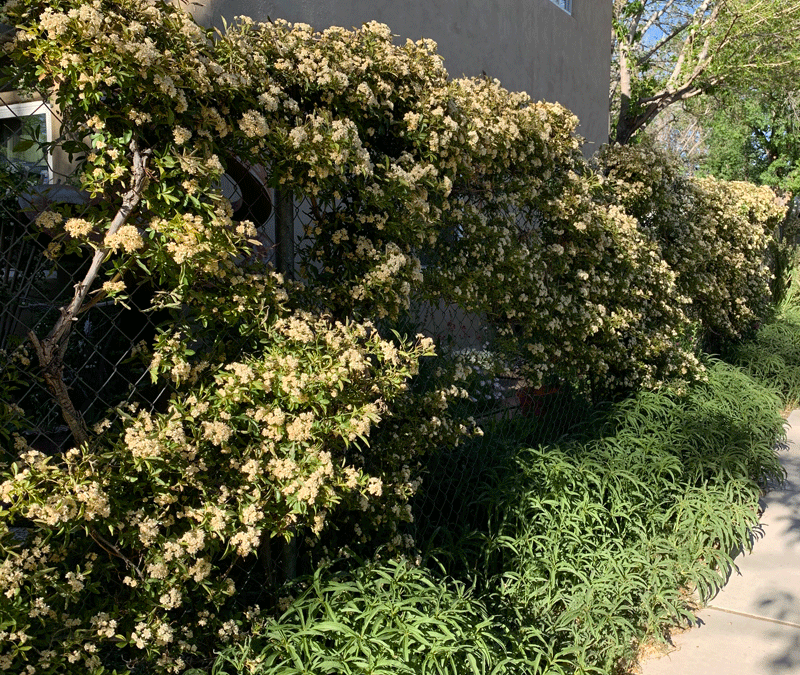
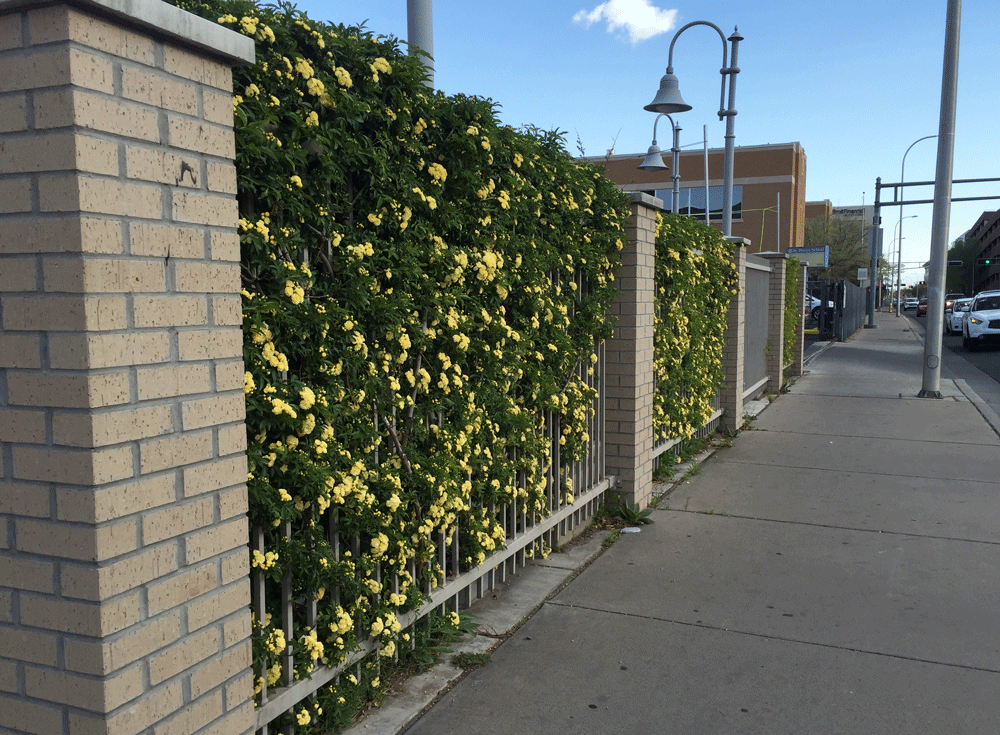
For those two-feet-wide spaces where you don’t have the room for a wide plant but you need lots of height, you’ll want to choose vines. For sun and light shade areas choose Lady Banks roses or desert coral honeysuckle. You’ll want to keep them in check by training them up a trellis until you get the desired coverage in the very narrow space.
Lady Banks Rose Vine in narrow space.
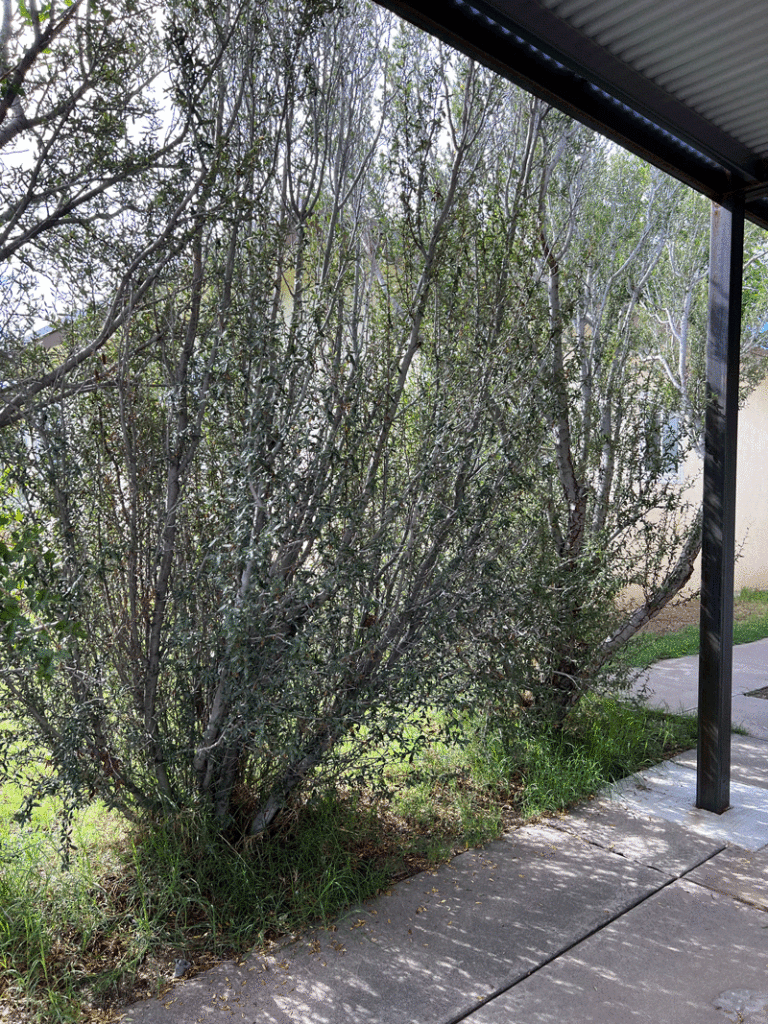
When you have a 5’- 6’ wide area — like along a driveway or between property lines — try planting curl-leaf mountain mahogany, evergreen, narrow. In our area you’ll see it used along a driveway to create privacy between neighbors. You can vary the space by interplanting it with New Mexico olive, which has a similar shape and size, or ornamental grasses like giant sacaton and muhlenbergia rigens (deer grass), if you want more visual contrast. To add some blue-green to the mix, bring in an Artemisia species like prairie sage as ground cover.
Mountain Mahogany along driveway trained to be a natural screen between houses.
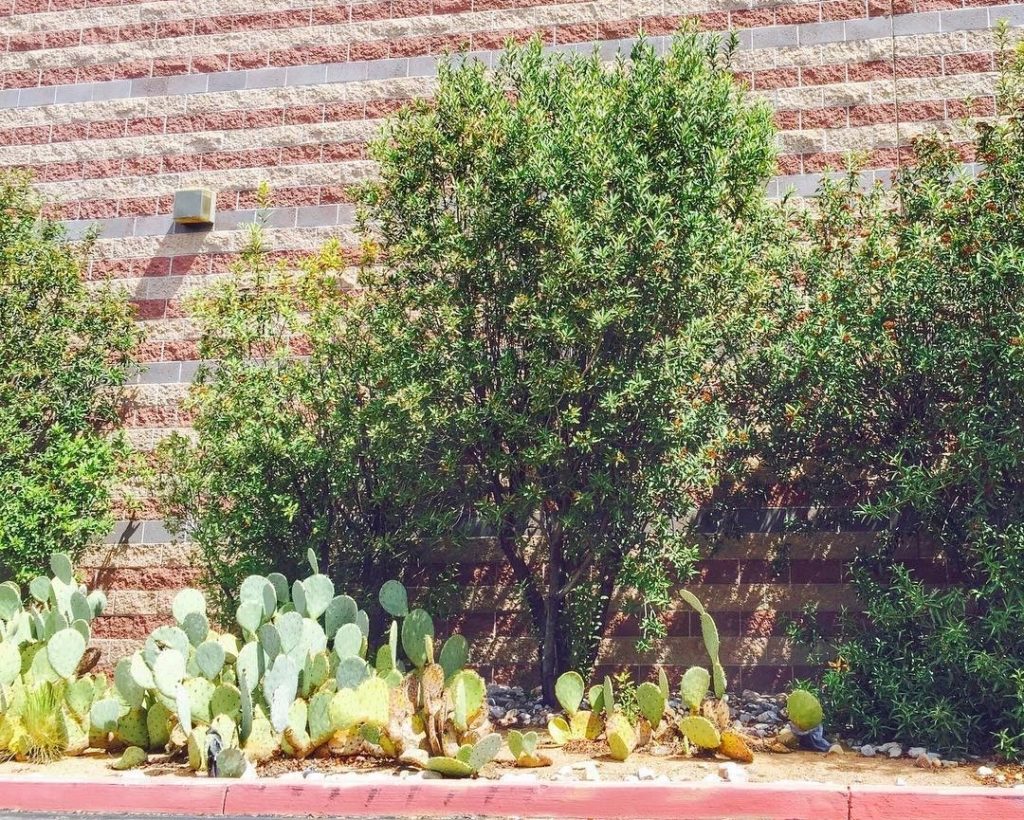
Another tried and true combination is the Arizona rosewood and prickly pear. They are beautiful together, plus they require little to no water after established.
Arizona Rosewood and Prickly Pear screening a wall.
Author: Jill Brown, ASLA, is a Landscape Architect and owner of My Landscape Coach in Albuquerque, NM. Have a question about the article? AskAnExpert@abcwua.org
Pinyon-juniper woodlands are the largest forest cover type in NM, comprising 14.6 million acres and representing 65% of NM forests (according to USGS Gap Analysis Program–Land Cover Data). In contrast, the next largest forest cover types in NM are ponderosa pine at 5.2 million acres (23%) and mixed conifer at 1.5 million acres (7%). When it comes to junipers, New Mexicans either love them or hate them.
Those who dislike them talk about allergens and how junipers are overused, get sheared within an inch of their life and smell like urine. Those who like them appreciate their low water needs, climate adaptation, long lifespans and evergreen qualities.
Hate them or love them, Junipers are here to stay. They have so many useful qualities in our New Mexican gardens that they should be on everyone’s plant list. Choose females for no pollen, which is what is sold in local nurseries.
Below are some of the local favorites:
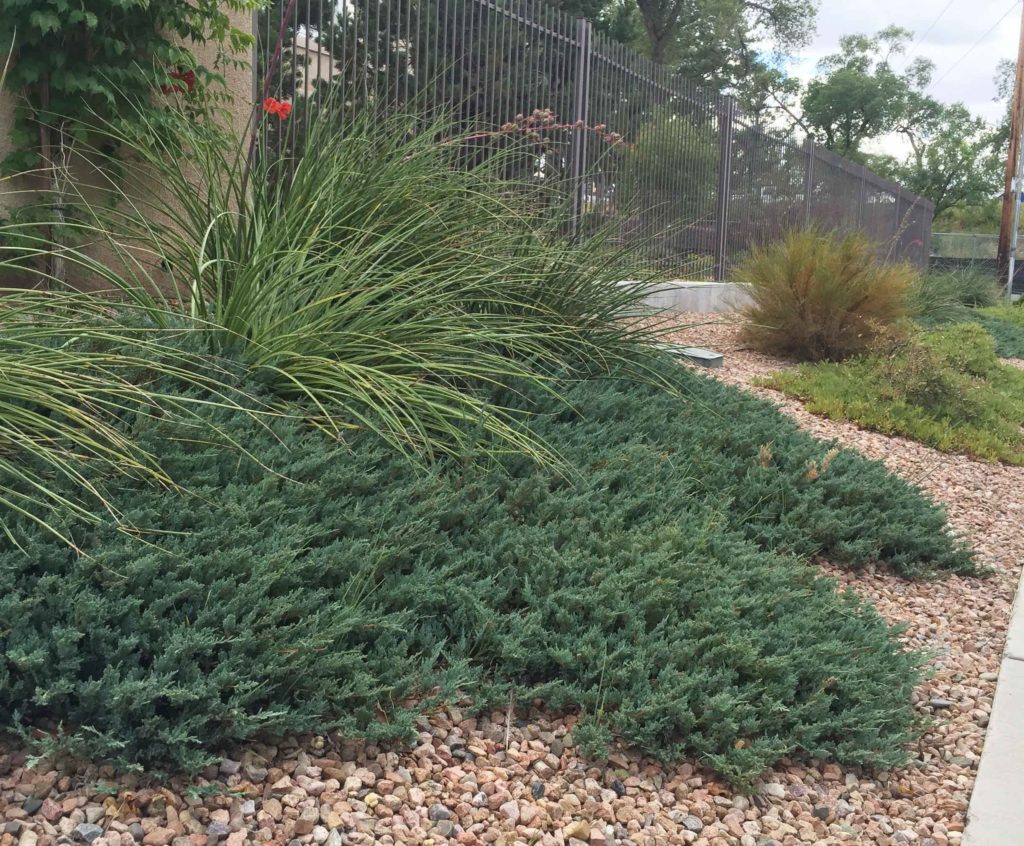
Carpet Juniper, Juniperus horizontalis. Blue chip, low allergen, beautiful color, low growing, does best in part shade. The species Juniperus horizontalis “Plumosa Compacta’, Andorra Juniper, is low growing 18”-20”, spreads 8’-10,’ green during growing season, burgundy in winter, looks great when planted in mass. Blue Chip is another great spreader that has beautiful year-round silver-blue foliage.
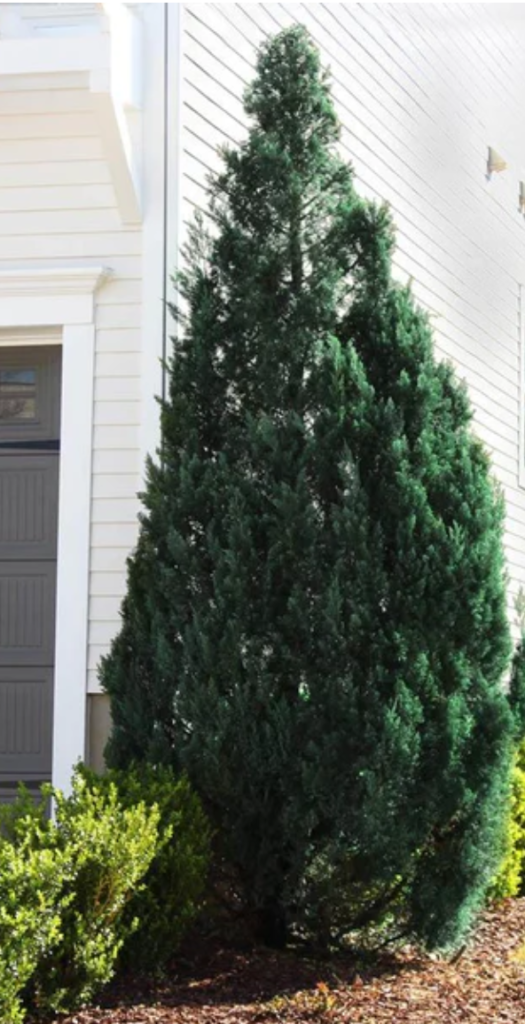
Blue Point Juniper, Juniperus chinensis Blue Point. This blue-green stately tree is pyramidal in form and has dense evergreen foliage. It makes a great windbreak when planted in lines and is a very nice front lawn Christmas tree, perfect for winter lighting. It reaches 12’ tall and is 8’ wide.
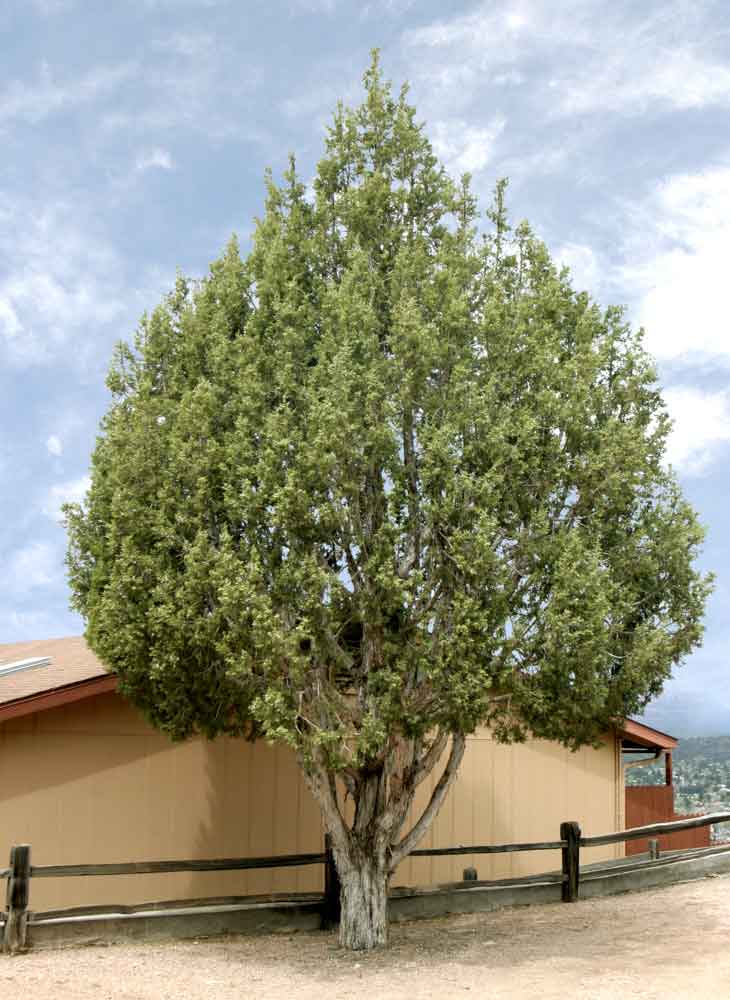
Rocky Mountain, Juniperus scopulorum, tall and narrow, dark green, tall. Pruning destroys the natural shape so it’s best to plant this in a place where it has room to grow up to 40’ tall and 20’ wide. There are many beautiful cultivars. Whichita Blue Juniper, Juniperus scopulorum ‘Whichita Blue’ is a beautiful shade of steely blue, year-round growing 10’-15’ tall and only 4’-6’ wide. ‘Skyrocket’ is a bluish-green narrow columnar tree growing 15’ tall and only 4’ wide, making it the narrowest of the juniper trees.
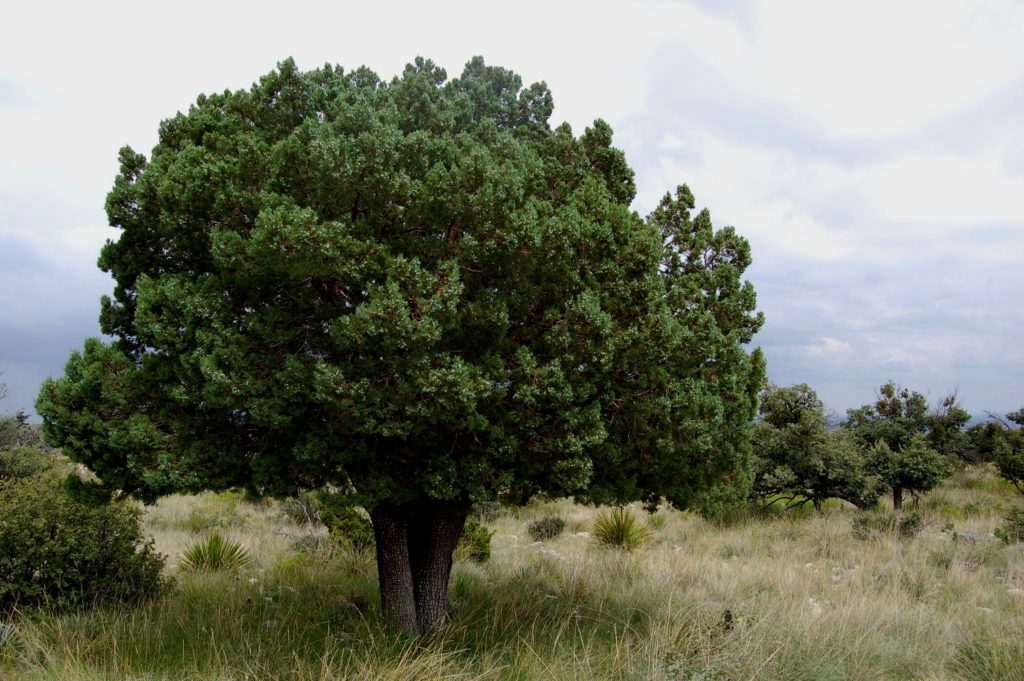
Alligator juniper, Juniperus deppeana, has blue-gray leaves. This tree has a thick trunk with bark that resembles that of an alligator. Unlike most junipers it has a stout, not conical, shape with great character and color. It can tolerate pruning.
Let’s give junipers a chance. If we let them follow their natural shape, these adaptable conifers are attractive, evergreen and sustainable survivors that provide habitat for birds and are quite useful in our landscapes.
Author: Jill Brown, ASLA, is a Landscape Architect and owner of My Landscape Coach in Albuquerque, NM. Have a question about the article? AskAnExpert@abcwua.org
Thinking of putting some trees in your landscape but also concerned about making good use of the water, space and time? Some people like to plant fruit trees around the home landscape.
The obvious reason to grow fruit trees is the fruit! Just like there is no tomato as good as the ripe one picked right off the garden vine, there is no peach like the tree-ripened peach just outside your door. Growing fruit is not without challenges. Some people discover that the work required for a good harvest is more than they are up for. However, for others it is part of the gardening challenge that keeps us coming back for more.
Just like any other tree, fruit trees can play an aesthetic role in the landscape. They can be highlighted, or they can hide the blight beyond your fence. They can provide shade, cooling the outdoor spaces. They also can provide some level of wildlife habitat, whether it’s for the native bees that might pollinate the flowers or the little brown dickie birds pecking divots out of my ripening peaches. Well, they gotta eat too, I guess.
Fruit trees need all the things that any tree needs, which is sufficient rooting volume (it’s wider and shallower than you think), consistent moisture into that rootable soil and a mulch of some sort that covers and protects the soil. When they are grown for production in a commercial orchard, fruit trees also receive regular fertilization that may not be needed for a well-grown home tree usually producing more fruit than is needed. If you have fruit trees that produce more than you can use and give away, considering contacting a gleaning organization like Food is Free Albuquerque. They can bring volunteers to your property to pick the fruit, which is distributed through food banks to the local community. Fruit trees also benefit from regular annual pruning to maintain shape and size.
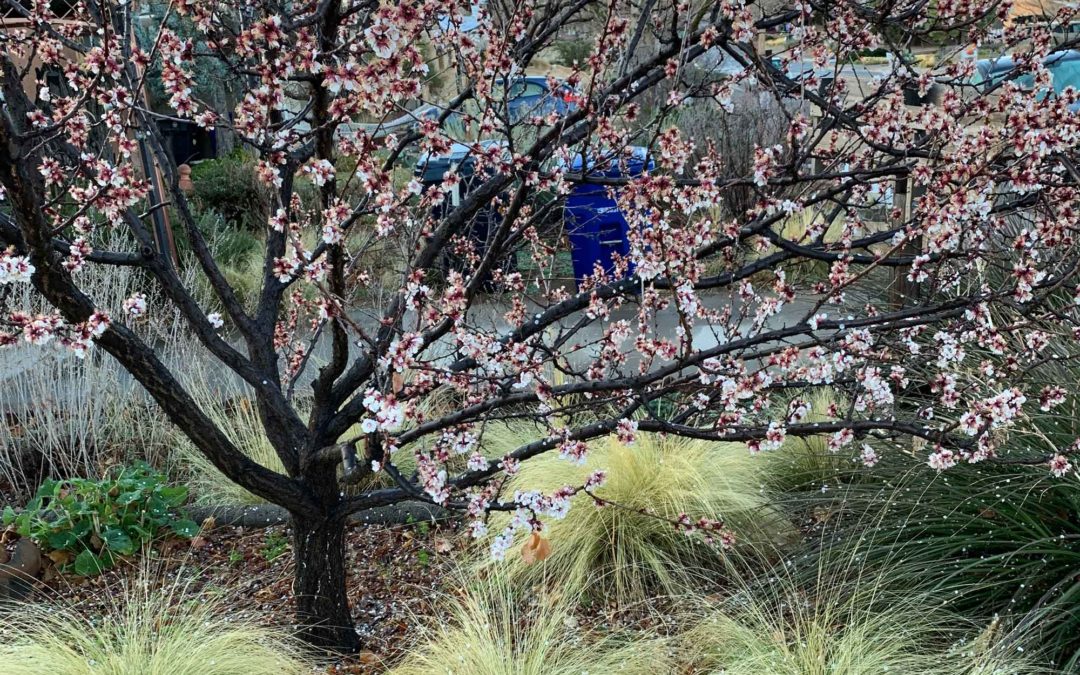
A large number of fruit species will grow well in our area. With peaches, one down side to them and other stone fruit species is their relatively short life spans, maybe 15-25 years in most urban settings. Other stone fruit species that do well for us are plums and cherries. Apricots grow well here but their early blooming often leads to last-frost crop death. Don’t worry, the tree is still fine. Of all the fruit trees, apricot may be the best for shading.
Apples also do well and are longer-lived than stone fruits. However, the fruit is more susceptible to insect damage, most notably the codling moth caterpillar (the infamous worm in the apple core). These can be controlled, with varying degrees of success, by trapping with pheromone traps. Timing is critical for that, and control may be incomplete, but more apples will be worm-free than without trapping. Codling moth also attacks pear fruit but to a much lesser degree. Fruiting pears can do well for us, though in some cases fire blight bacterial disease may cause a lot of damage and even death. Jujubes, Asian pears, Japanese persimmons and figs are all good choices as well.
There are several sources where you can buy your new fruit trees. I’m partial to online ordering from established mail-order nurseries. This approach offers the combination of variety choice and cost effectiveness. Keep in mind that mail-order trees are young and shipped out in later winter as dormant bare-root sticks. For a few reasons, this is an ideal type of plant to start working with if you have the patience to wait a few more years before getting fruit. Buying from local nurseries is fine as well, though it really pays to inspect the root ball condition carefully. If you’re very careful, even the big box stores can have good specimens.
Read up on proper planting techniques and early structural pruning approaches. For a tree, the transition from potted (or bare-root) conditions to fully in the soil is critical. Tree growth and longevity can be made or broken at this point. In a nutshell: Dig a shallow and wide hole, have the highest root at the top of the soil and mulch well. As the young tree grows, prune for strong attachments, ease of access and to help control total fruit load that can break branches in a bumper crop year. Early and aggressive thinning of the fruit can really help to prevent branch failure and also produces larger pieces of ripened fruit.
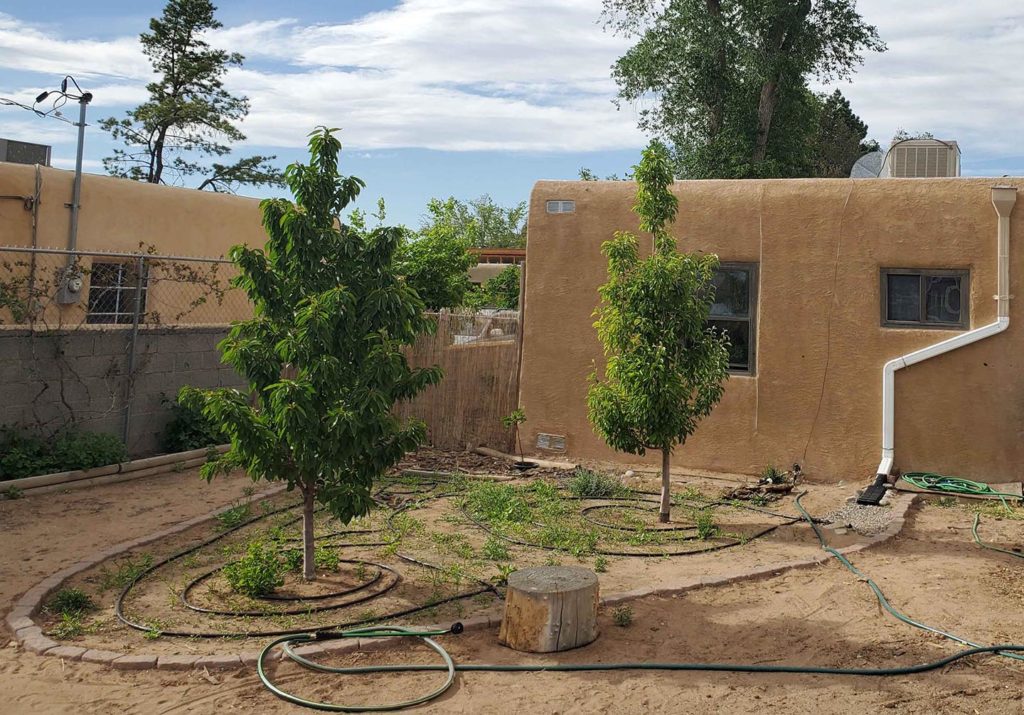
Un-mulched fruit trees showing inline dripline and roof runoff as watering system.
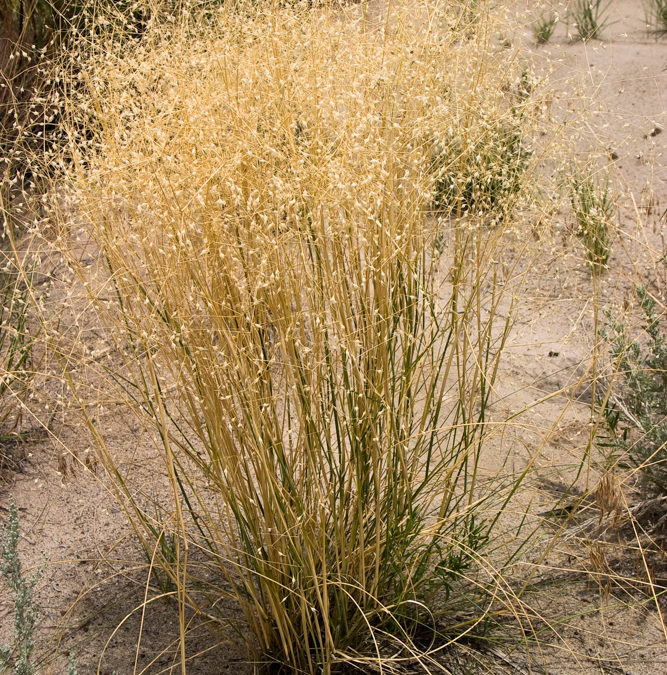
A cool season grass native to the Western Plains, ricegrass shines in the desert-friendly garden, bunched in masses and intermingled with other prairie bunchgrasses. Its elegant sage green leaves turn ivory in the fall and are crowned by a cloud-like constellation of seed heads that capture sunlight and provide striking visual interest throughout the winter. High in nutritional value, it has been a prized food source among many indigenous peoples of the West.
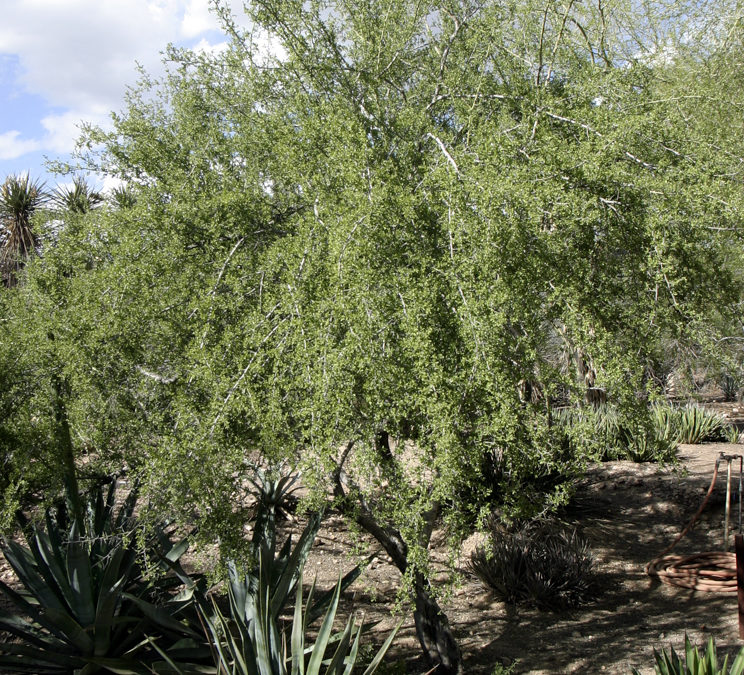
A young Netfleaf Hackberry passes through a rather ungainly adolescence, but with a little pruning, like a butterfly from a chrysalis, it emerges as a sculptural small shade tree that provides habitat for butterflies and songbirds as well as cooling our patios and decks on a very modest water budget. Because it has deep roots, it can be planted close to walls and paving without risk.