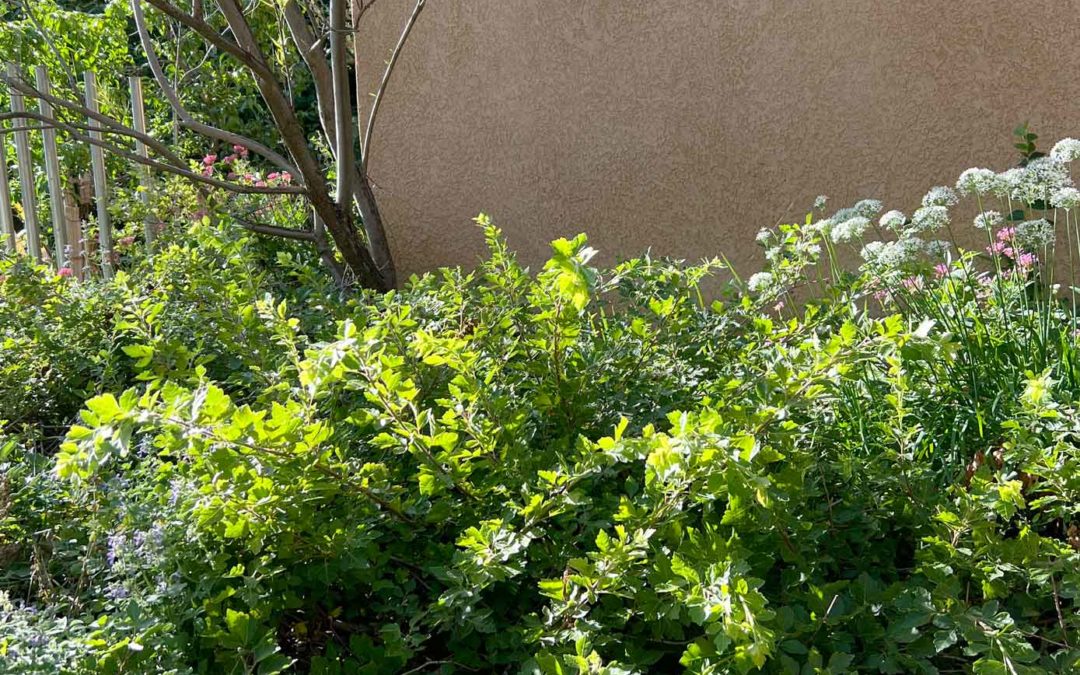
We all love the feeling of cool shade on a hot summer day, whether it comes from a dense tree canopy growing above the yard or from our home as it shades different areas throughout the day. Quite a few plants appreciate that cool space. There are many options for adding useful, attractive greenery to your yard that do well in the shade.
Since there are different levels of shade, watch the progress of the sun across your landscape so you can determine the right plants for each location. The shade cast by trees varies with the size and kind of tree. For example, a large mulberry will cast broad and deep shade, while a honeylocust will provide a more dappled and lighter level of shade. The more upright the tree, the narrower the shade profile. Tree canopies that spread broadly offer a more uniform level of shading. Shade from a building can be a bit problematic in that it is very dense where it falls, but that changes over the course of the day.
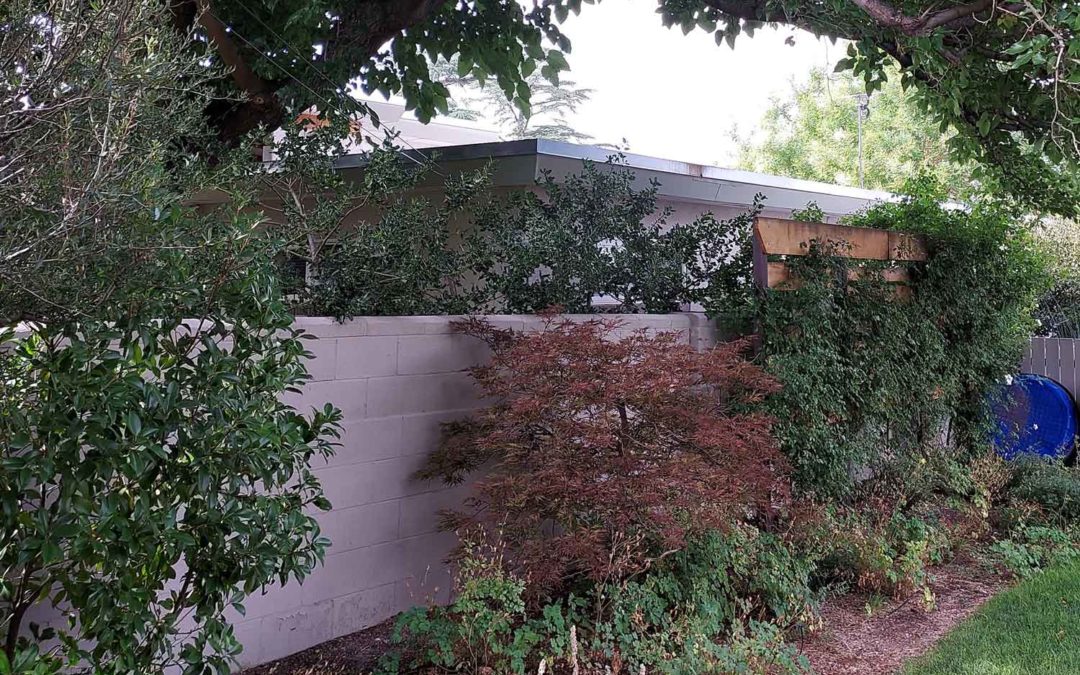
One of my favorite shade plants is something I hardly ever recommend in Albuquerque: Japanese maple trees. These small trees thrive in all-day dappled shade, although they do take a bit of water. Due to their small size, however, they don’t need that much extra water. These lovely little trees deserve a nice setting where you can see and enjoy them all year round. They may be a good choice for the oasis zone of your xeriscaped landscape. The caveat is that these little trees will not do well in strong sun, so pick your spot with care!
There are a couple of shrubs favored by nurseries that do much better with some shade than in the full-sun situations where they are often found. Both nandina (heavenly bamboo) and India hawthorn will look much better with some relief from scorching sun and suffocating heat. Native barberry (Berberis fendleri to the plant nerds) takes deep shade well, while the native three-leaf sumac and gro low sumac will tolerate moderate shade very nicely. The latter tends to get taller and leggier in shade than it does in sun, but it’s happy either way and doesn’t need much water. Other locally-common shrubs/sub-shrubs that do well in dappled shade are autumn sage, cliff fendlerbush, and even blue mist spirea.
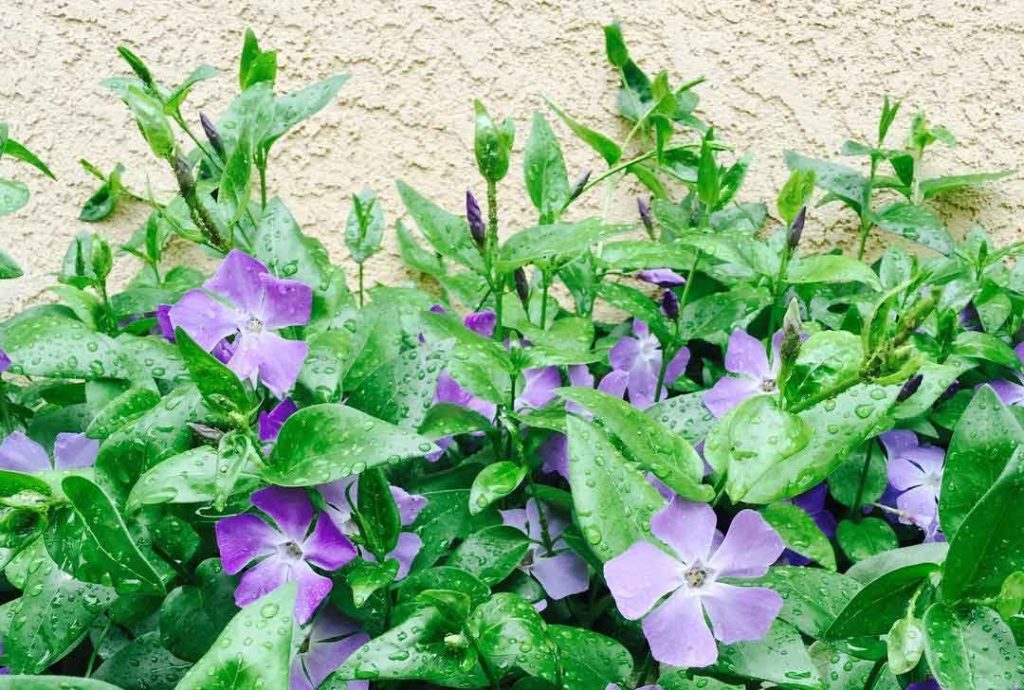
I’m a real fan of ground covers in shady areas, especially under trees and planted into organic mulch like shredded wood chips. Kinnikinnick (a.k.a bear berry) is a Montana native that too often is placed in full sun and doesn’t like it, but in a shadier spot it really shines. The periwinkles, Vinca major and Vinca minor, also do well in a shadier setting, attractively rambling through the mulch. Dwarf plumbago likes similar conditions to the vincas. Yerba mansa and creeping mahonia are native plants that also do well as ground cover.
Vinca Major
Mints are good in light shade. There are many types, from chocolate mint to spearmint to orange mint. I let them grow and bloom. Since bees of all types and sizes love the blossoms, the mint is a great addition to the landscape from the beneficial insect perspective. Many tiny wasps use mint flowers as adult food, while their offspring are busy parasitizing aphids and caterpillars. One thing to remember is to make room for the mint to spread, which it will happily do.
Related to mints, and likely to spread like mints, is dead nettle. Despite it’s name, it’s a great plant that uses little water and has blooms that attract good small insects. Other good flowering plants for light shade areas include the native columbines, lavender, and catmint.
What about turf grass? Most turf grasses like full sun and will get thin under shade, however I’ve had great results with creeping red fescue. This Eurasian native needs regular water to do well but can tolerate deep shade.
By establishing irrigation for shade plants, the trees above them also receive water, which is a great way to make sure those trees get water. Some shade plants are available only as seed (red fescue, for example), but most of them can be found as containerized plants at our local nurseries.
Most irrigation systems have a lifespan of 20 years before they begin to break down. If your house is older than that, most likely you are dealing with issues (water pressure, uniformity of watering, overspraying and possible leaks) that negatively affect the quality of your landscape. If you are going to go through the time, effort and cost of a total yard transformation, seriously consider replacing your whole irrigation system.
PRO TIPS FOR SPOTTING POSSIBLE PROBLEMS WITH THE IRRIGATION SYSTEM:
• Grass is often taller and darker green around a sprinkler that is leaking or in the middle of a lawn where a pipe is leaking.
• Wet spots in a pathway could indicate either a broken emitter is shooting water or a leak is occurring in piping underneath the path.
• Odd sounds, like hissing or splashing, or squishy areas in the lawn or gravel often indicate a leak.
• Calcium deposits on gravel without plants can indicate a leak.
• A wilting plant can indicate a clogged emitter.
• Small areas of dry turf, often near a sprinkler, usually mean there's a clogged nozzle.
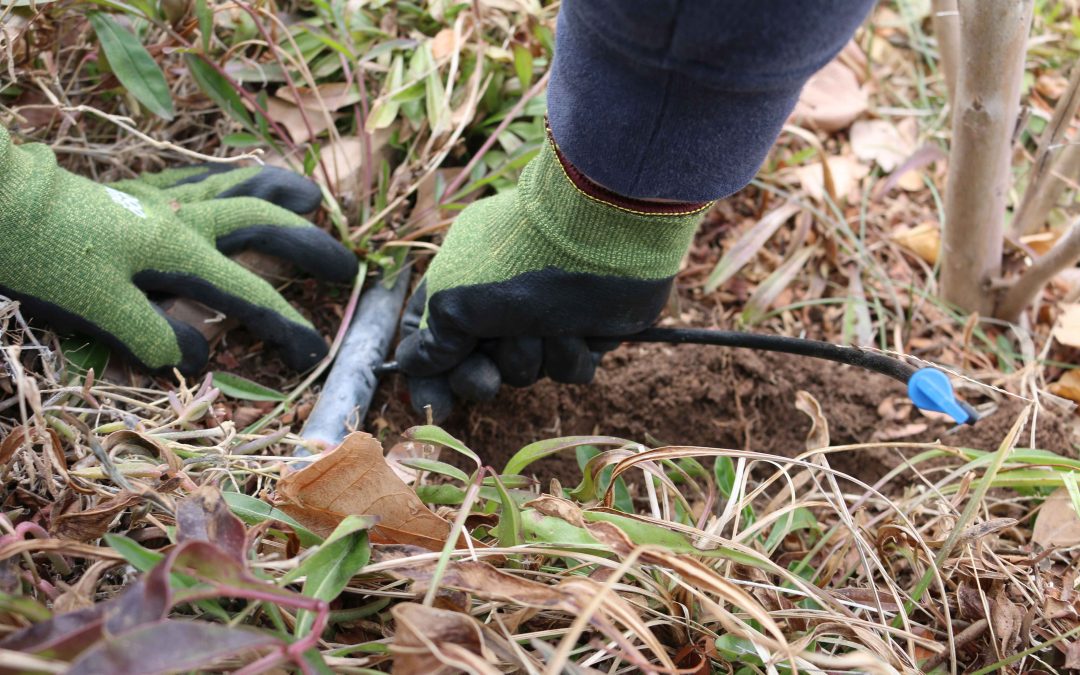
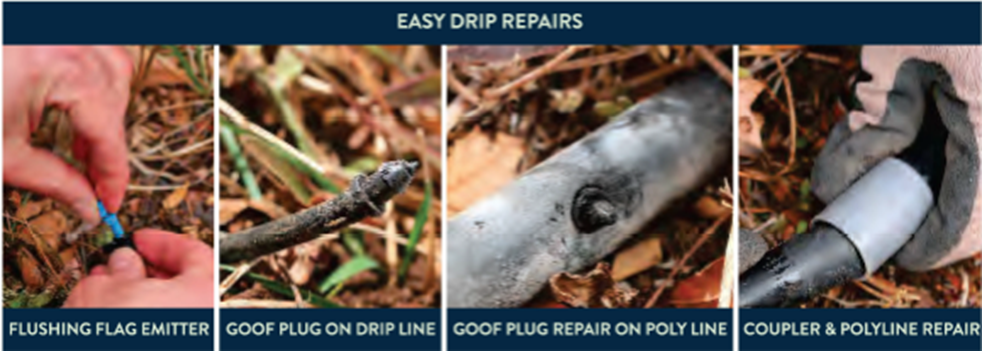
To achieve higher efficiency over time you need to maintain your system. Extending the lifespan of your system requires some upkeep. Most often this maintenance is very easy and won't take much time at all.
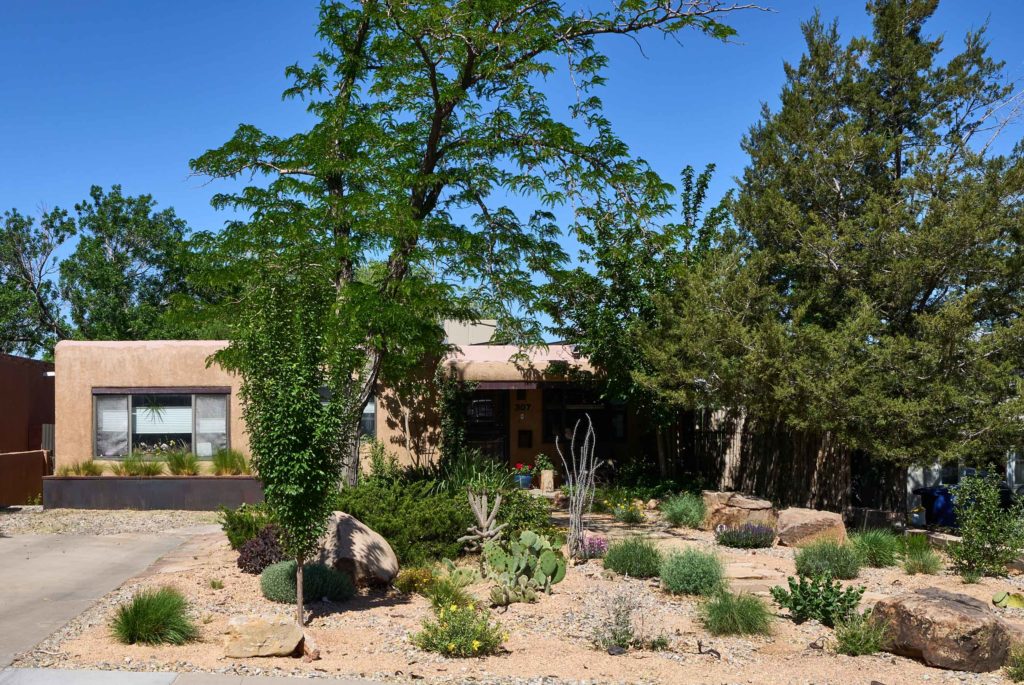
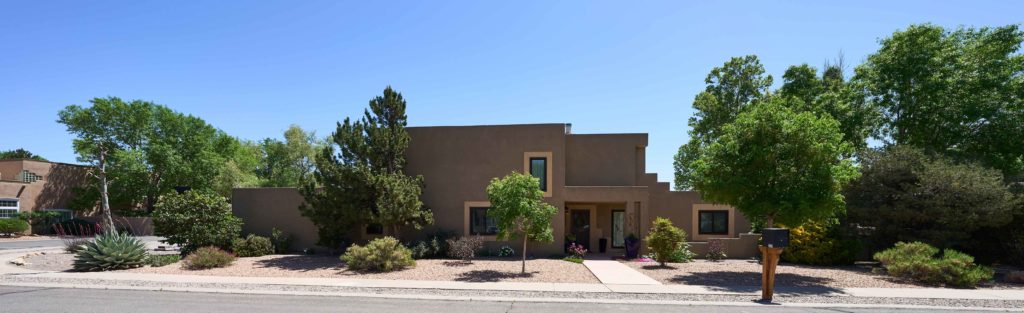
Congratulations to the ten winners of our first annual Water Authority Desert Friendly Landscape Contest! Thank you for sharing your beautiful gardens with us. They are an inspiration for others to make the switch to desert-friendly landscapes.
The transformation of adirt front yard into a Desert-Friendly Landscape
Many Albuquerque homeowners are interested in saving water, so over time they have turned off their sprinkler systems and let nature take its course. However, nature takes a long time to come back to life in the desert, which is why we see bare dirt yards all over the city.
When Katrina and Peter Nardini moved into their southeast Albuquerque house, it had a dirt yard. After observing the landscaping in neighboring yards, Peter came up with a plan for their property that included a hardscape path and a wide variety of plants. To make sure the hardscape path was put together properly, a landscape professional was hired to build the path and steps.
“We chose plants by looking at other yards, taking pictures, and then working with garden center staff on selecting plants,” Peter and Katrina explain. Attracting hummingbirds was foremost in their minds.
Fortunately, a drip system was already in place in their yard, although some of the components needed to be upgraded to extend irrigation to all the areas that supported plants. “Initially, we had the irrigation drip system running most days of the week to get the new plants established,” they said. “Now, we turn it on twice a week in the summer and only one time a week during the other seasons. We only irrigate trees in the winter season. Most of our other plants do well with rainfall and snow.”
Katrina and Peter are delighted with the diversity of native and drought-tolerant plants in their transformed yard. “Our fruit trees are our favorite. They provide us with shade, beautiful flowers, and fruit!"
Grassy Lawn to Low Maintenance
After growing tired of weekly lawn maintenance, mowing, trimming, and the expense of watering, Daniel Stromberg decided to get rid of the grass in the front and back areas of his northwest Albuquerque yard and create a drought-tolerant, desert-friendly space. The first order of business was to replace the sprinkler system with a drip system.
Daniel worked with several different companies and a friend who is a master gardener to come up with the right design and plant selection. There was a bit of trail and error in the process, but the result is a thriving yard with drought-tolerant and native plants that gives Daniel a great deal of pleasure. “These plants look and do much better in the yard,” Daniel explains.
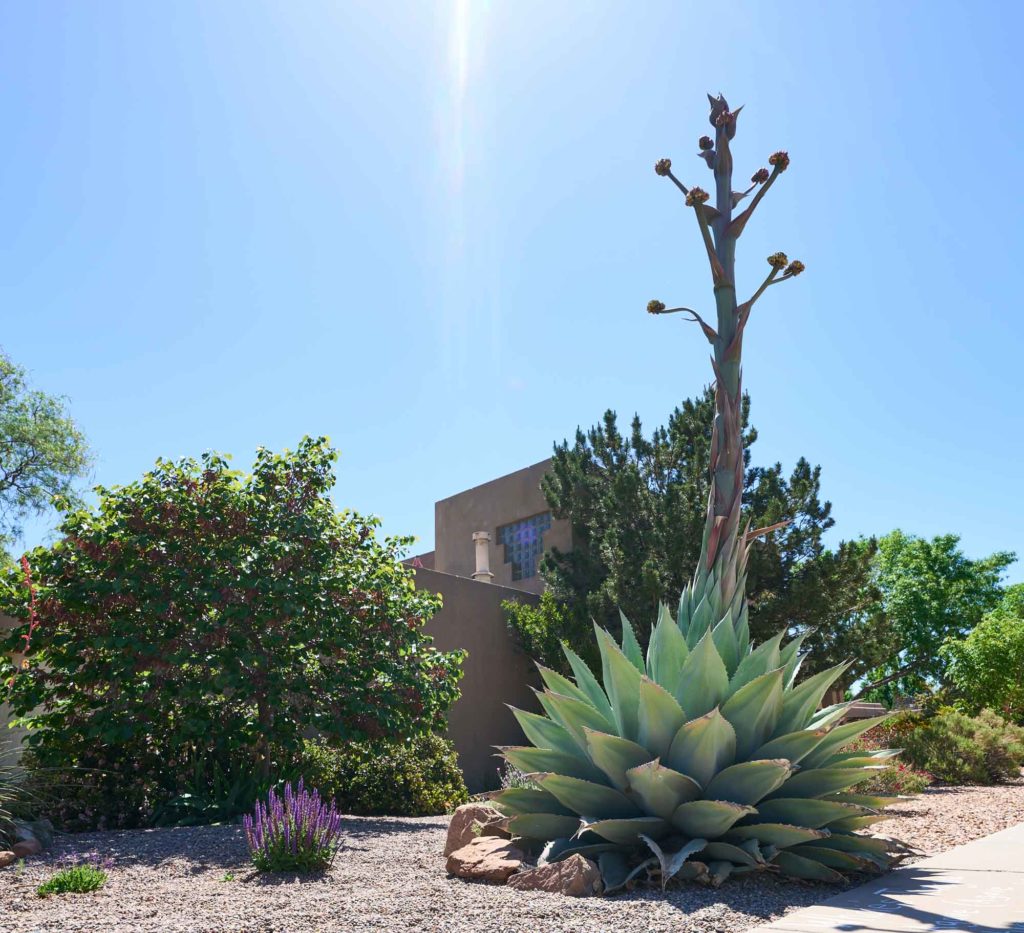
Transforming the yard from one that was high-maintenance to an easy-to-take-care-of space that requires little work was worth the effort, Daniel says. He is most proud of his sunflowers, whale tongue agave, ice plants and giant desert willow.
Containers are an easy way to add a splash of color to your garden, porch, balcony or patio, without ever having to dig a hole in our hard New Mexico soil. While you could drop pansies or geraniums in a pot and consider it complete, you could also plant a truly stunning container garden full of color, texture and fragrance. The right combination of plants arranged properly in a planter can be magical. After that, you only need to keep things watered and fertilized as you enjoy the colorful design all season long.
1. Choose the Right Container
Containers have their own unique characteristics to consider, including weight, appearance and sensitivity to weather changes. Also, consider your budget, space and style when selecting them. Keep in mind that the larger the size, the less you'll need to water. But whatever you choose, make sure your containers have good drainage.
2. Select a Color Theme and Plant Combinations
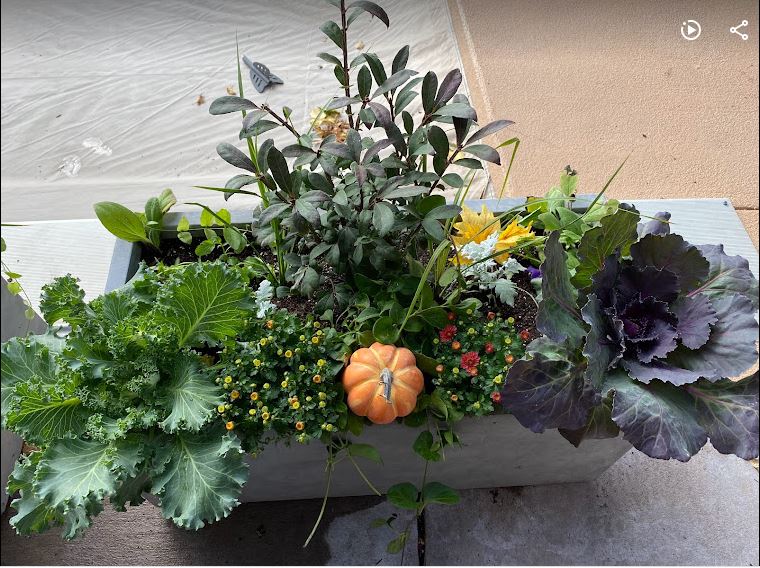
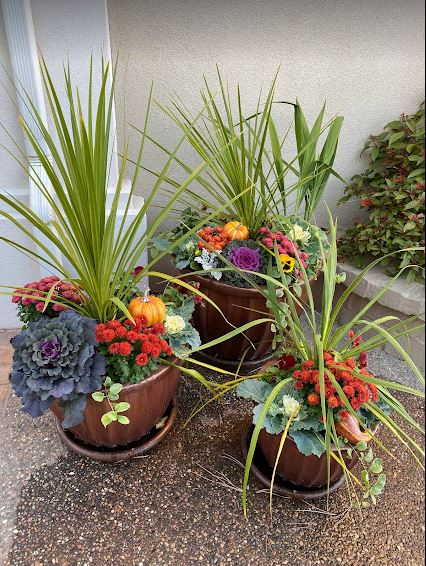
Starting with a color theme for your container garden can help with plant selection. When combining plants in your containers, it’s important to make sure they all have the same light requirements and watering needs. A good rule of thumb is to plant in odd numbers and combine three types of plants — thrillers, fillers, and spillers — in each container to add interest and balance to your design.
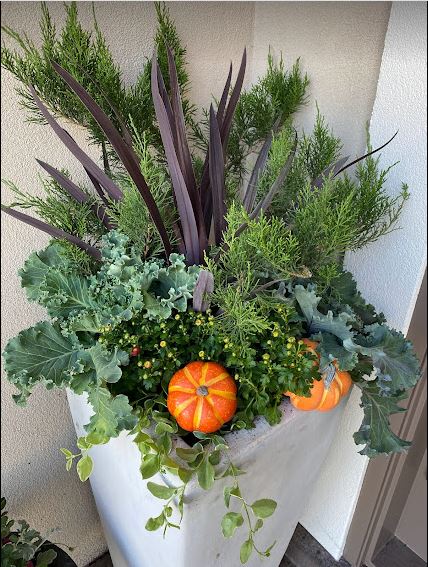
“Thriller” plants are the centerpiece of your design. They add height and a bold vertical element. Options include plants chosen for foliage, ornamental grasses or other upright plants. In larger containers, small shrubs or trees, topiaries, spirals and other vertical selections can be used. Thrillers typically go near the center of a container, but they can also be put toward the back of the planter, depending on its final location.
“Filler” plants tend to be more rounded and make the container look full. These are generally placed in front of or around your selected thriller. In a narrow, long container like a window box, fillers are placed halfway between the edge of the container and the thrillers. Violas, pansies, dusty miller, ornamental kale/cabbage, ornamental peppers, geraniums and mums are just a few of the many options for autumn fillers.
“Spiller” plants literally spill out of a container. If your container garden is going to be visible from all sides, be sure to place spillers all the way around. Some favorite autumn spillers are licorice plant (Helichrysum), English ivy, Dichondra 'Silver Falls', ivy geranium and perennial vinca (minor or major), also called periwinkle. I am especially fond of some of the brighter vinca varieties like Illumination or Wojo’s Gem.
3. Fill the Container with a Good Potting Mix
Once you've selected plants and a container, it's time to get started! Fill your container about two-thirds full with a good quality potting mix. If you have a really large planter and would like to use less potting mix, you can use empty water bottles or smaller empty nursery pots or containers turned upside down to take up some of the space in the bottom of the container. Fill around them with potting mix until your container is two-thirds full.
4. Arrange Plants in Your Container
When you're ready to add plants, remove the plants from their nursery pots, gently loosening the root ball with your fingers. Place them in your container and add soil, stopping about two inches from the top of the container to leave enough space for watering.
5. Water Your Plants
Water your container garden thoroughly to help the soil settle. After watering, add more soil if needed to insure good root coverage. Check your containers every 2-3 days, and when the top two inches are dry, it’s time to water again. Don’t forget container plantings may need water twice a day when it’s hot, especially if it’s also windy.
Don't be afraid to add different types of plants, such as annuals, perennials, herbs, cold-hardy vegetables, and even small shrubs, to the same container. The important thing is to select plants that require the same growing conditions. I really like using dwarf Alberta spruce or lemon cypress as the vertical element, surrounded by licorice plants, pansies/violas, dusty miller and ornamental cabbages. I will occasionally add artificial gourds, pumpkins and other décor to make them even more festive.
With a little planning and creativity, you can put together stunning container designs that can be enjoyed all season long.
Gro-Low Sumac is a low-growing shrub that offers a spectacular display of red in the fall. A fast-growing groundcover, it is an excellent choice for quickly covering unstable soils. It is adaptable to a variety of soil types and does well in the harshest of circumstances. Like its larger cousin (the native fragrant sumac), it has aromatic leaves and produces small red berries that make an excellent lemon-flavored tea and are attractive to birds.