

Set up a hose irrigation system for great benefits at a reduced cost
Set up a hose irrigation system for great benefits at a reduced cost
The most efficient way to water your yard is by using an automatic irrigation system with underground valves. Hand watering can be problematic because it can lead to inconsistent watering, causing you to overwater, underwater or forget to water altogether.
However, these systems can be expensive to install, with costs sometimes ranging from $800 to $2,000, depending on the number of valves. If you are ready to install a more efficient irrigation system but aren’t ready for the cost of an inground system, consider starting with a hose timer system that can be easily converted to an inground system later on.
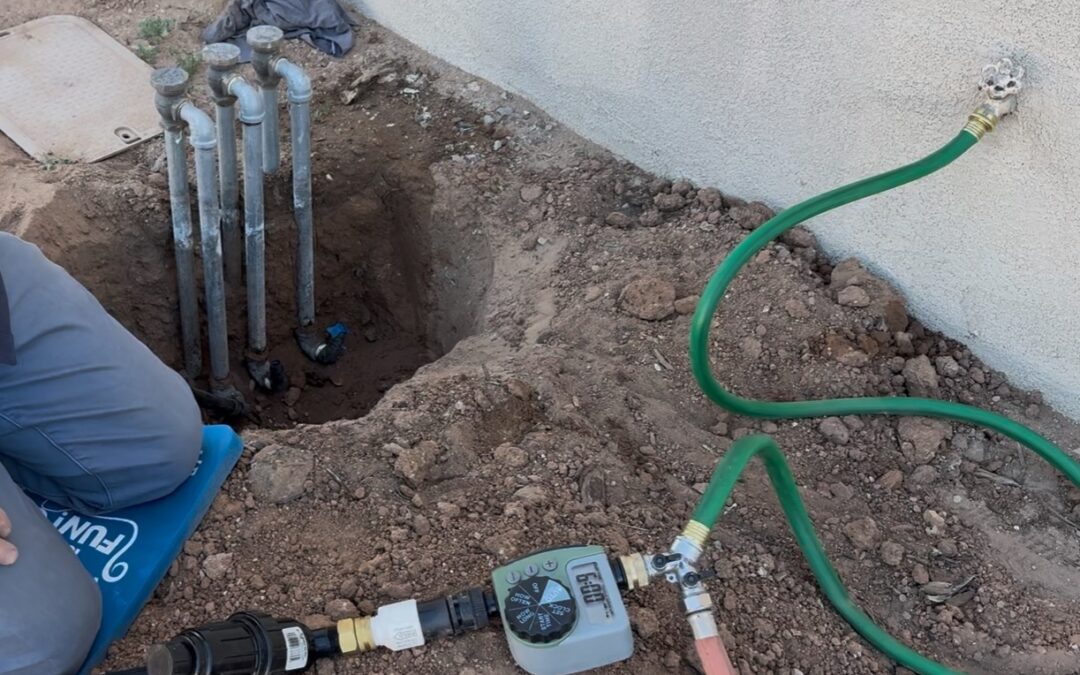
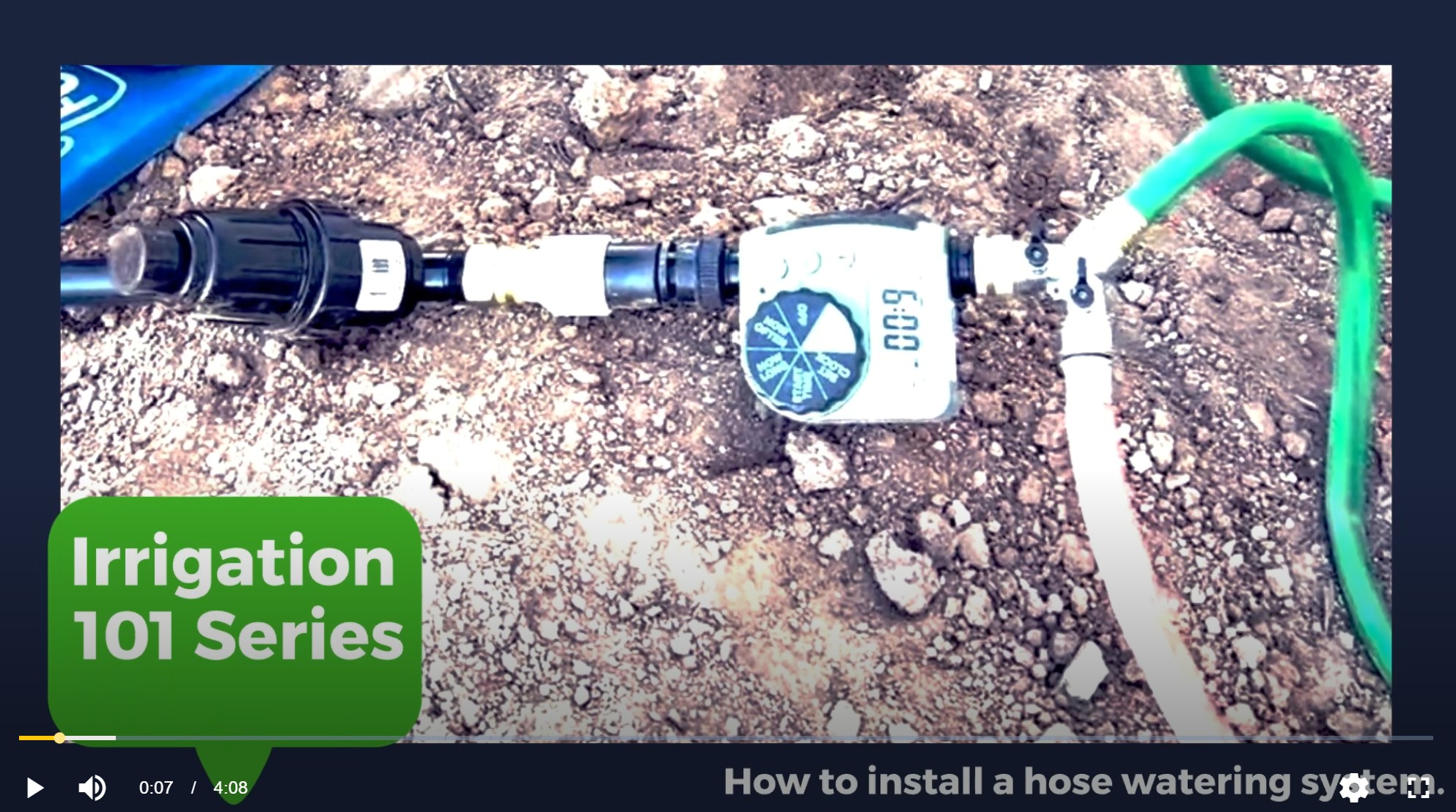
A hose timer system is an inexpensive way to get your plants on automatic irrigation, allowing you to water your yard on a specific day of the week, time of the day and for a set number of minutes. You can put it together yourself for under $100.
The hose timer attaches to high-quality irrigation ¾” Polyline with drip emitters or professional landscape dripline. The dripline can stay in the ground year-round and be later connected to future valves of an automatic in-ground irrigation system.
There are a variety of products you can use, including smart controllers, easy twist-and-turn controllers, multi-valve controllers, and more. We offer a rebate on ones that adjust to our weather and your plants’ water needs (referred to as ‘smart controllers’).
Check out our how-to installation video to learn how to get started.


Learn more by checking out these other useful irrigation articles:
Yes, You Can Afford an Irrigation System
Best Practices for Watering Your Plants With a Hose or Drip System.
Use Drip Irrigation for Your Trees and Shrubs
How to Build a Hose Irrigation System for Trees

Author: Have a question about the article or anything else? [email protected]
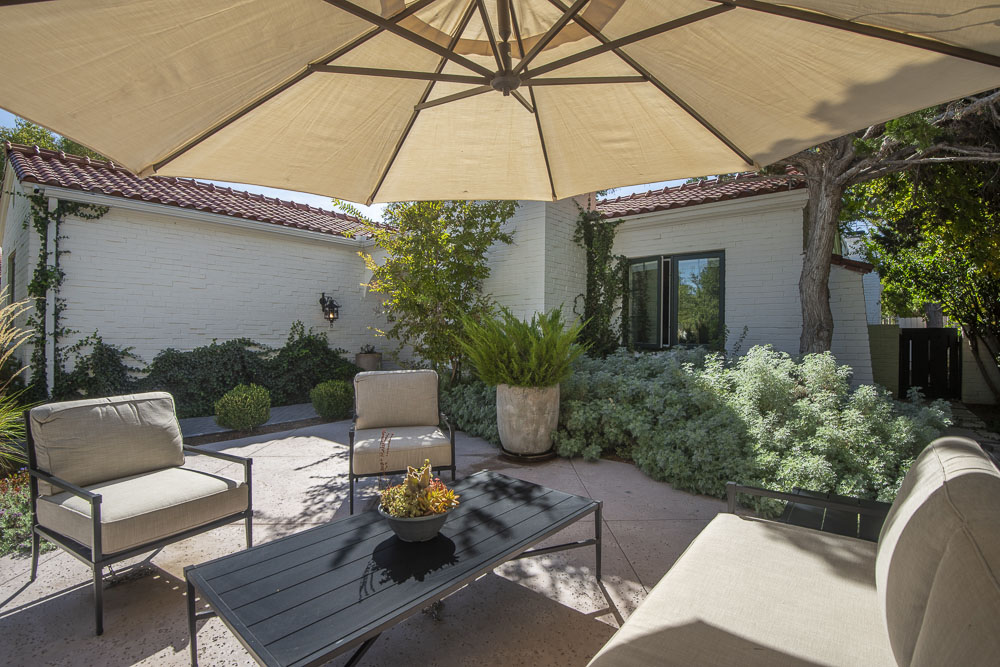
Designing Shade the Right Way: Trees, Shade Sails and Pergolas for a Comfortable Yard
Creating shade in a landscape is about far more than escaping the summer heat. The right shade strategy can reduce energy costs, maximize moisture absorption of plants, improve comfort year-round, and dramatically change how a yard feels and functions. Yet many homeowners make decisions based only on appearance, without fully understanding how the sun moves through their property, how wind affects structures, how big mature trees will get or how shade systems hold up long term.
Understanding the Sun and Your Property
Before choosing any shade solution, it’s important to study how sunlight moves across the yard throughout the day and across the seasons. In summer, the sun sits high in the sky and creates intense heat, particularly on west-facing patios, windows and walls. In winter, the sun is much lower in the southern sky, allowing welcome warmth and natural light into the home from south and west facing windows.
A well-designed landscape should block harsh summer sun while still allowing beneficial winter light whenever possible. This is especially important in hot, dry climates like Albuquerque, where afternoon heat can make outdoor spaces unusable without proper shade.
The west and southwest sides of a property are typically the most critical areas to shade because they receive the hottest afternoon sun. South-facing areas also require careful planning, since they benefit from winter solar exposure.
Trees: Nature’s Best Long-Term Shade Solution
Trees are often the most effective and beautiful form of shade, but choosing the wrong tree or placing it incorrectly can create major problems over time. One of the biggest mistakes homeowners make is planting based on how a tree looks today instead of how it will perform in 20 years. A small nursery tree may eventually grow into a massive canopy that blocks winter light, crowds structures, damages paving or interferes with utilities. The most successful landscapes begin with selecting the right tree for the right location.
Tree placement is also critical. Improper tree placement is extremely common and often expensive to correct later. Some of the most frequent issues include planting trees too close to the house, ignoring mature canopy size, or failing to consider root growth and maintenance needs. Trees should also be selected based on climate compatibility, water use, soil type and branch strength. Fast-growing species may provide quick shade but often develop weak wood and become vulnerable during storms. Thoughtful placement can dramatically improve outdoor comfort and even reduce cooling costs by shading walls, roofs and windows from intense summer heat. Use the Climate Ready Tree Resource when selecting your tree.
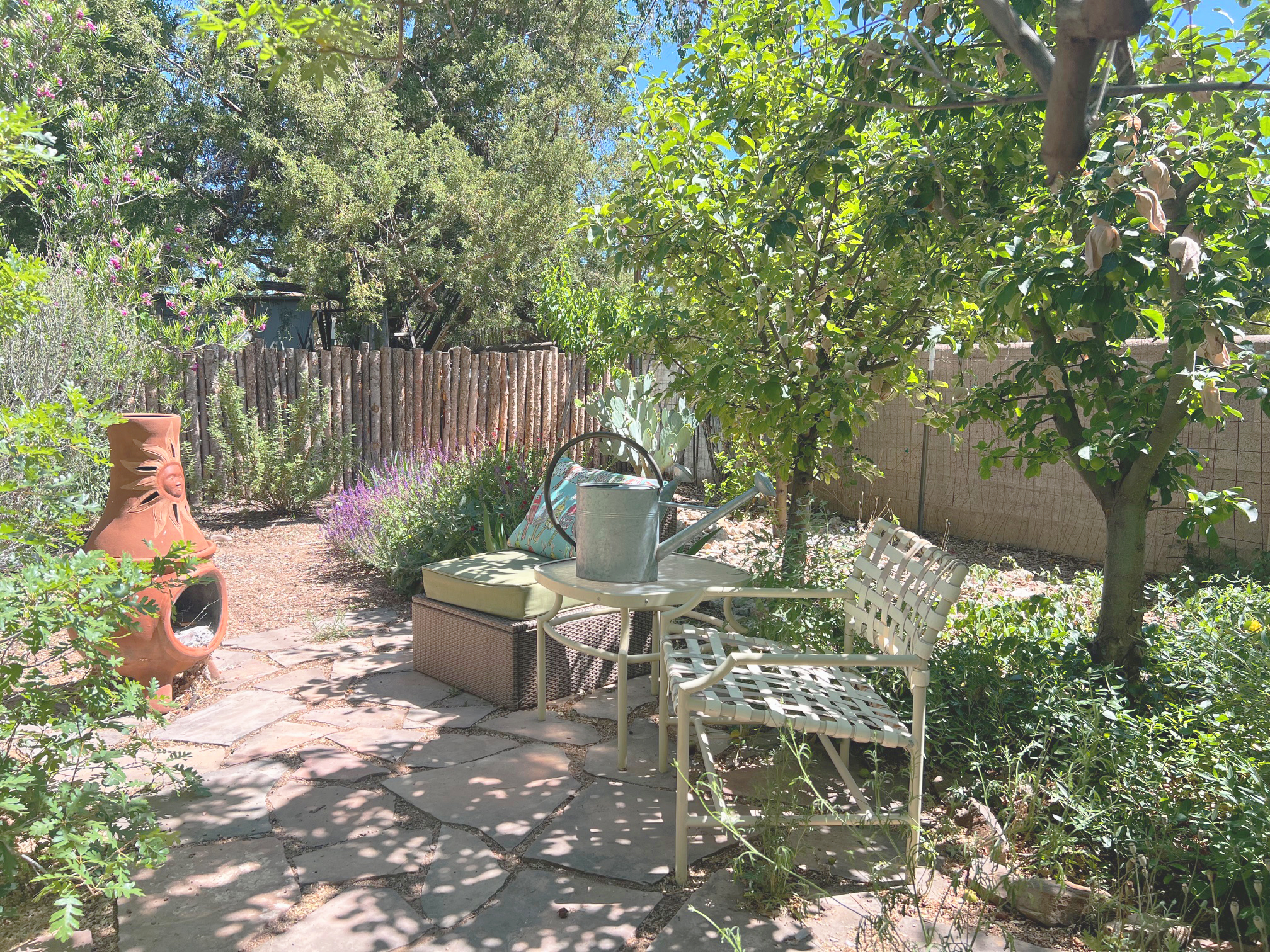
Patio Shaded by a dwarf apple tree.
Deciduous vs. Evergreen Trees
Deciduous trees lose their leaves in winter, making them ideal near south-facing windows and outdoor living areas because sunlight filters through the bare branches and helps naturally warm the home. During summer, their canopy provides cooling shade.
Evergreen trees, on the other hand, provide year-round screening and shade. While useful for privacy and wind protection, they can also block beneficial winter sun if placed too close to living areas. Understanding this difference is essential when planning a landscape that functions comfortably throughout the year.
Shade Sails: Modern Shade with Hidden Challenges
Shade sails have become increasingly popular because of their clean, modern appearance, simple installation and affordability. They can create dramatic outdoor spaces while providing significant relief from direct sun exposure. However, they are frequently installed incorrectly. What many homeowners do not realize is that shade sails behave much differently than traditional patio covers or pergolas. Under tension, the fabric acts similarly to a sail on a boat, capturing wind and placing enormous stress on posts, walls, and attachment points. Without proper engineering, failures are common.
Shade sails and shade fabrics are available in different shade densities, typically measured by the percentage of sunlight and UV rays blocked by the fabric. Lighter fabrics in the 50% to 70% range allow filtered light and maintain a more open feeling. Heavier fabrics in the 80% to 95% range provide greater cooling and UV protection but can create darker spaces with less airflow. For many residential applications, fabrics in the 70% to 90% range offer the best balance between comfort, openness and temperature reduction. These are not to be confused with the shade fabric used by farmers to reduce heat stress on their crops. These are lighter in weight and only provide 10-30% shade
One of the most common installation errors is underestimating wind loads. Many off-the-shelf systems are installed with insufficient footings, undersized posts or weak wall attachments. Over time, this can lead to sagging fabric, leaning posts, torn corners or even structural failure during high winds.
Another frequent mistake is installing shade sails completely flat. Properly designed sails use varying heights and angles to encourage drainage, maintain tension and reduce wind uplift. Flat sails tend to collect water and deteriorate more quickly.
Homeowners also often overlook maintenance and lifespan. Even high-quality shade fabrics eventually degrade from UV exposure, dust and wind fatigue. Most residential shade sails last approximately five to 10 years, depending on material quality and environmental conditions. In windy and snowy climates, some shade sails may need to be seasonally removed or designed with additional reinforcement systems.
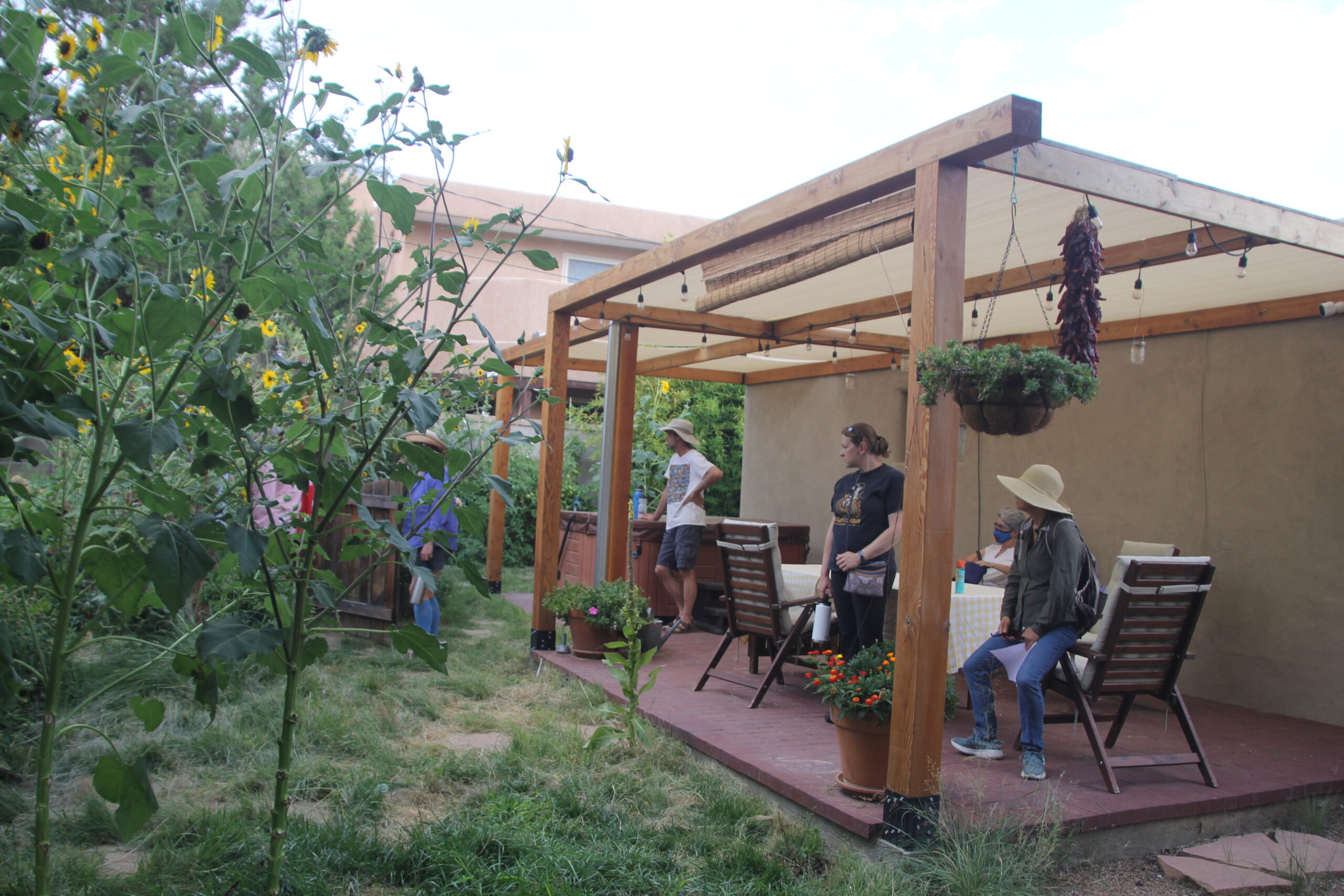
Shade sail fabric stapled to wood beams.
Pergolas: Permanent Structure with Architectural Appeal
Pergolas provide a more permanent and structurally reliable shade solution in many residential settings. Unlike shade sails, pergolas integrate directly with the architecture of the home and help define outdoor living spaces. They can support climbing vines, retractable canopies or additional shade elements while creating a strong visual framework within the landscape.
However, pergolas are often misunderstood as complete shade structures. Traditional pergolas provide filtered shade rather than full sun protection unless combined with solid roofing, shade panels or vegetation. The orientation of the pergola beams plays a major role in how much shade is created throughout the day. Beam spacing, height and direction should all respond to the sun angle and intended use of the space. A properly designed pergola balances shade, airflow and openness without trapping heat underneath the structure.
One of the least discussed, but most important aspects of outdoor shade structures is liability. Today, many pergola kits and shade systems are sold directly to homeowners online or through retailers. While these products may appear simple to install, they are often not engineered for specific site conditions such as local wind loads, soil conditions, drainage or attachment methods. If a structure fails, liability can become complicated.
Off-the-Shelf Systems
Prefabricated systems may place significant responsibility on the homeowner if improperly installed. In many cases, manufacturers provide general installation guidelines but not site-specific engineering.
Potential risks include
- Wind damage
- Structural movement
- Pulling fasteners from walls
- Water intrusion
- Premature failure
- Injury from collapsing components
Custom-Built Structures
With custom-built pergolas or shade structures, liability typically falls on the licensed contractor, engineer or fabricator responsible for the design and installation. Professionally designed structures generally include proper footing design, code compliance, engineering review when required, and better integration with the home.
For larger projects, homeowners should always verify contractor licensing, insurance coverage, permits and warranty information before construction begins.
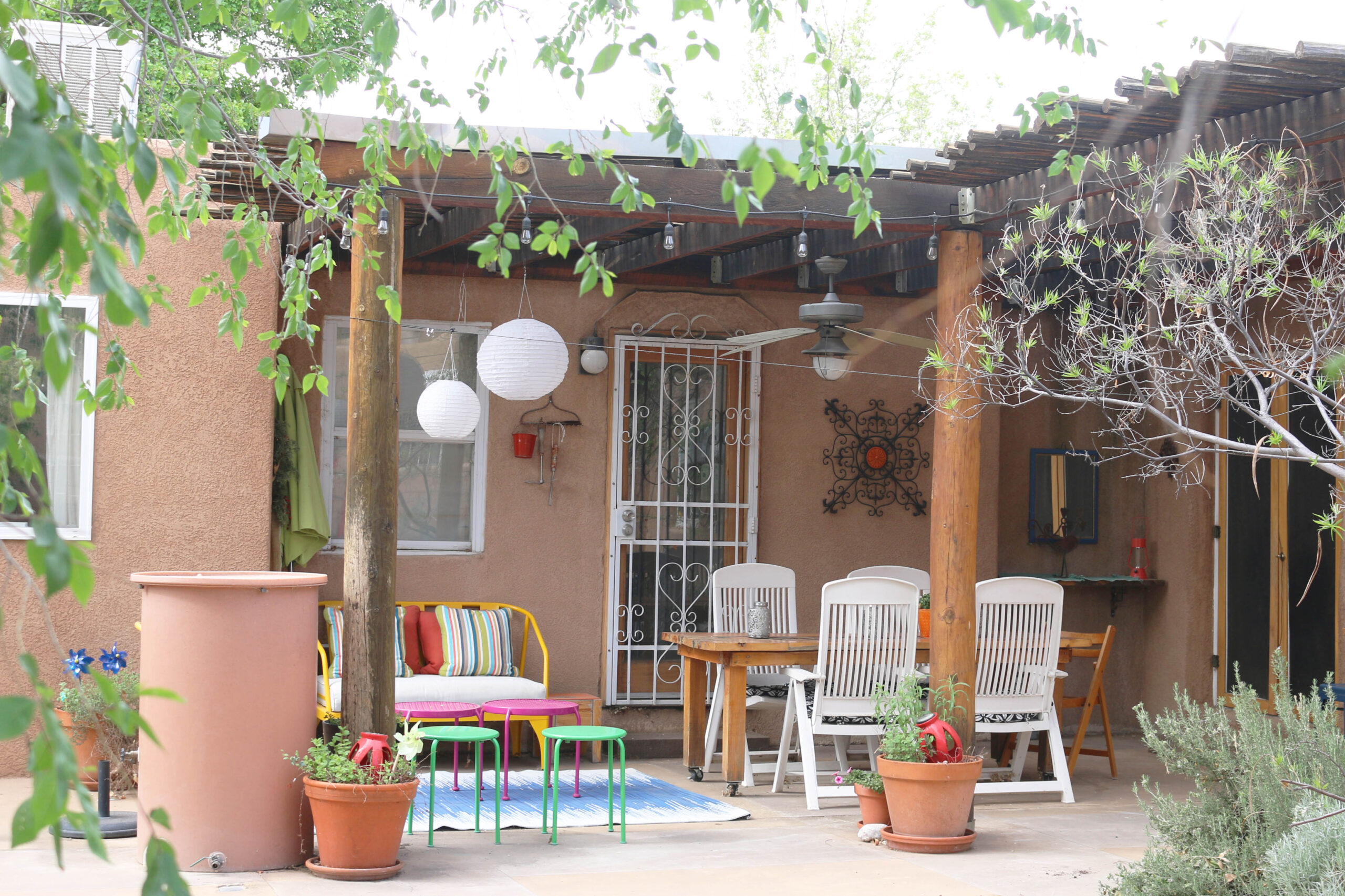
Wood pergola connected to house.
Combining Shade Elements for the Best Results
The most successful landscapes rarely rely on a single source of shade. Instead, they combine trees, structures and planting design to create layered comfort throughout the property. Trees provide long-term cooling and seasonal benefits. Pergolas create usable outdoor rooms and architectural character. Shade sails are affordable and offer targeted protection in areas where flexibility or modern aesthetics are desired.
Together, these elements can transform a yard into a comfortable extension of the home while improving energy efficiency and increasing long-term property value.
Shade should never be treated as an afterthought. When carefully planned, it becomes one of the most important and functional aspects of landscape design.
Learn More Here:
Create Living Shade with Vines
Plants that Thrive Under Shade Trees
How to Research and Hire the Right Contractor

Author: Sara Zahm, owner of Sara Zahm Landscape Architect. Have a question about the article or anything else? [email protected]
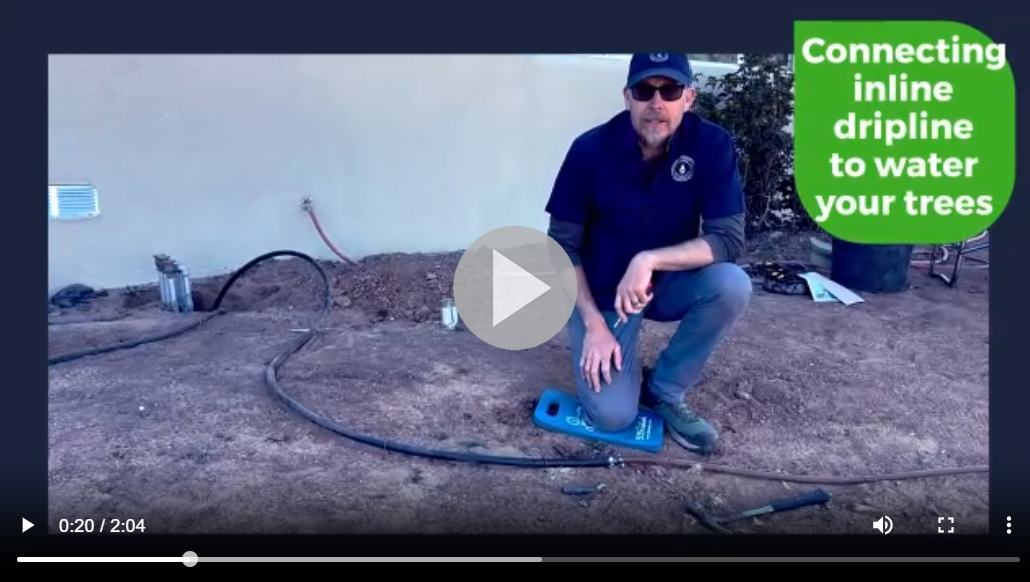
Irrigation 101 Tutorials
Water Meter Information
How can I find my water meter?
Irrigation Valve Information
Do I have an irrigation valve on my property?
Install Drip Line from Irrigation Valve
Learn how to install drip irrigation to your irrigation valves.
How to Install Water to a Tree
How to install drip irrigation to a tree?
Irrigation to a Plant
How to install drip irrigation to a plant?
Common Planting Design Mistakes
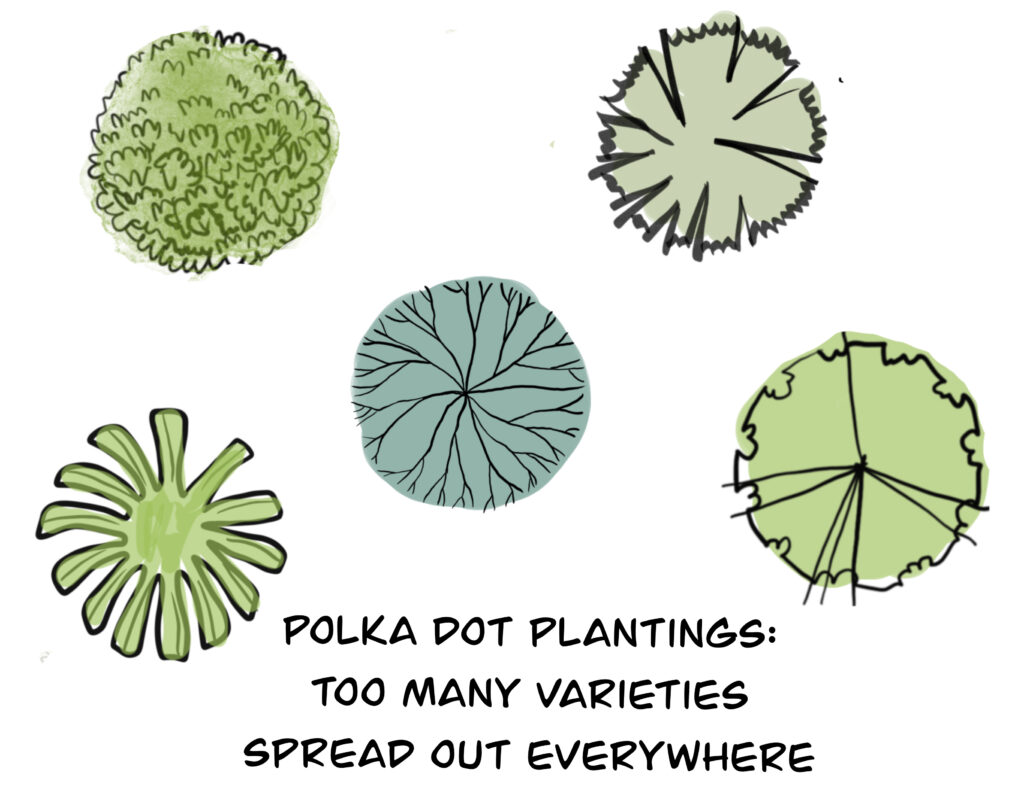
1. Too many different plants spread out like polka dots
Often when homeowners begin to design their yard, they get excited by the variety of plants in our Xeriscape Guide. Similarly, going to a well-stocked nursery in the spring can be like going to a candy store — you might say to yourself, ‘I’ll take one of everything!’ However, it’s good advice to resist that urge and instead attempt a more cohesive ensemble of plants and trees. Grouping plants, especially smaller ones or perennials that have less dense forms, can maximize their effect by creating masses of various sizes and contribute to the feeling of a more natural landscape.
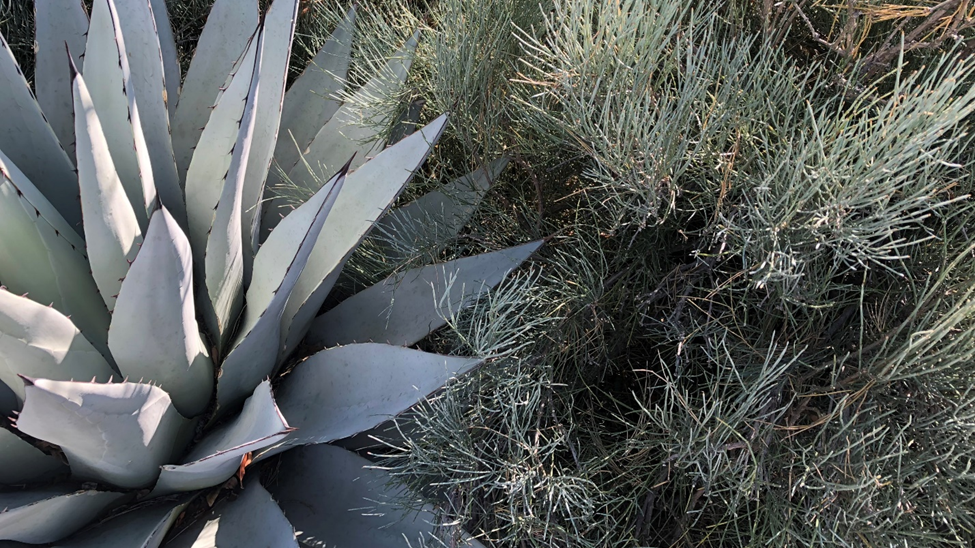
In these instances, you can pair plants that have widely different leaf shapes, like the agave and ephedra pictured below. The effect is something you wouldn’t appreciate if there was a large gap between the plants. A lot of flora have distinctive attributes like bark patterns, seedheads, dried flowers or an overall shape that allow them to stand out when accompanied by contrasting plants.
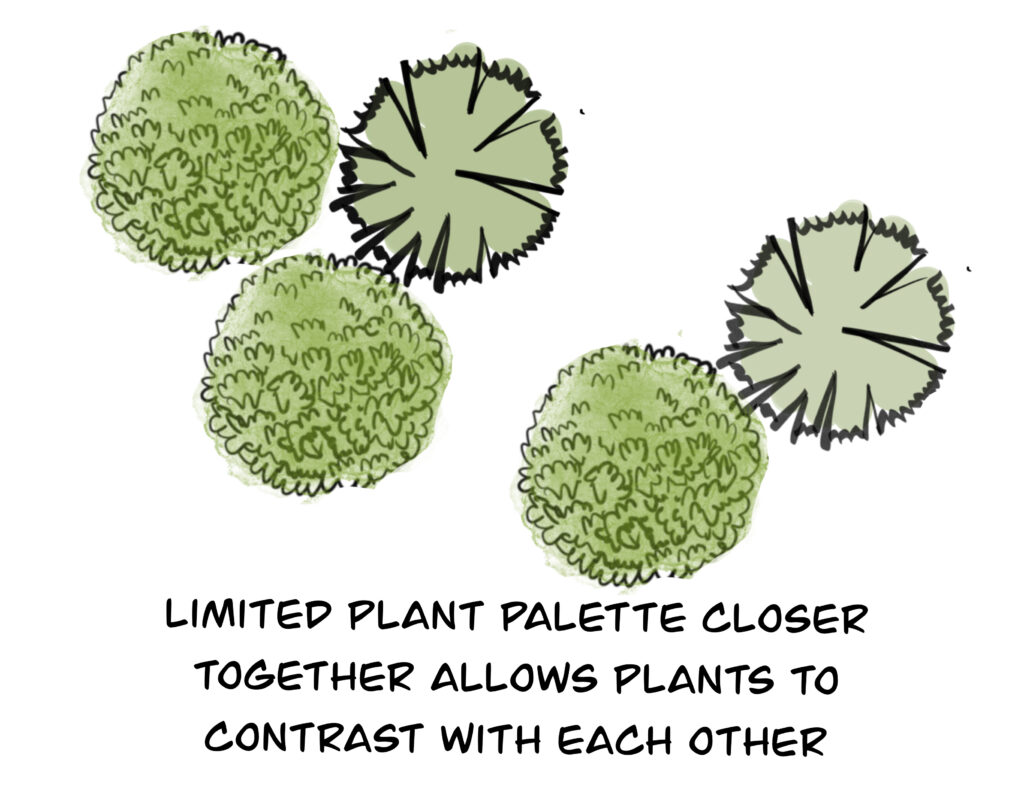
If you’re not sure where to start on your own yard design, check out our landscape templates here. You’ll notice there is a lot of variety in each design, but the same plant symbols appear next to each other throughout the yards. The three landscape architects and designers who contributed these templates have tons of combined experience designing beautiful and sustainable landscapes in New Mexico, and their templates are worth checking out!
Benefits of installing multiple plants of the same variety
- Visual impact: Let’s take a really great flowering perennial like Gaura or whirling butterflies (Oenothera lindheimeri) as an example. It has airy small white (or light pink) flowers less than an inch wide atop thin branches that sway in the breeze — visually it doesn’t stand out unless you’re right in front of it. If you were to plant a single specimen of Gaura in the middle of a yard it could almost disappear. Instead, we suggest a group of three in a triangle or row closer to paths or windows to maximize their impact — just like they’ve done in this photo taken at Presbyterian Rust Medical Center on the West Side.
- Attracting pollinators: Grouping flowering plants that attract pollinators can really make it worth the effort for them to visit. Perennials bloom at different times from spring to fall, and in a small yard you may have only one type of plant flowering at a given time. A group of at least three of the same perennial will be hard for pollinators to miss as they go about their business of collecting pollen and nectar. Then they’ll be able to save their energy for building nests and breeding.
- Reduced maintenance: If you’re new to xeriscaping or gardening, having fewer varieties of plants in groups can make maintaining them (and learning names and growth habits) less overwhelming. Instead of starting out with a mishmash of plants installed everywhere, you’ll be able to get your head around the maintenance more easily because the yard is divided into manageable areas. Also, if you pay someone for yard care, you may need to explain to them when, how (and if) to do the work. A smaller plant palette grouped by variety can help simplify the job. You could say to them: “This year for all the woody evergreen shrubs next to the sidewalk, don’t use hedge trimmers but do remove one-third of the oldest branches at the base.”
So if you head to the nursery to buy 10 plants this spring, consider coming home with just two or three varieties that together will make a real impression.
2. Symmetrical vs. informal plant layout
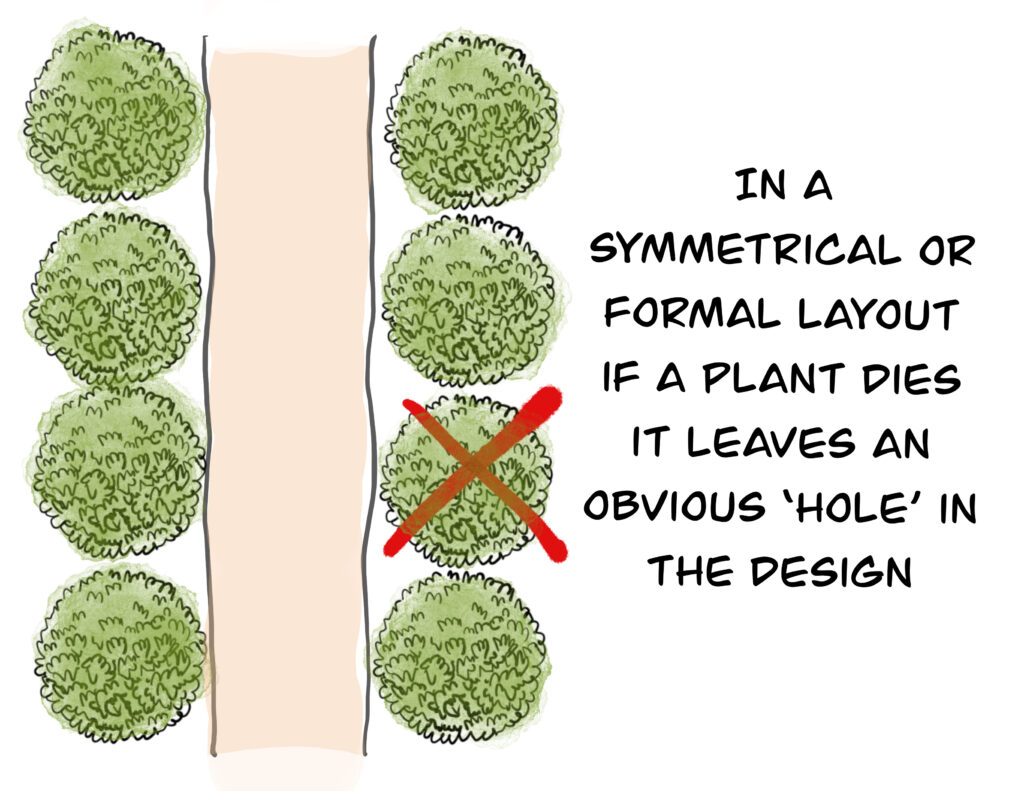
Another mistake DIYers sometimes make when designing landscapes is opting for a symmetrical layout for the new plants. For instance, they will have corresponding rows of evergreen shrubs on either side of a path as shown below. There are a couple of reasons why this is less than ideal. One is that an unhealthy plant (or worse, one that is dead) is immediately noticeable. Also, in a formal layout, you’re anticipating that the plants will grow to a uniform size and shape. However, this is not the case with native and xeric-adapted plants (and most plants, really). Once in the ground, they’ll be responding to all sorts of different conditions. Too much shade from a nearby tree limits a plant’s mature size, or extra water from the roof causes one to get larger than the others, for example. And if you did need to replace one plant in a formal layout, it could take a while for the new one to catch up to the others (assuming you able to find the same variety as the originals).
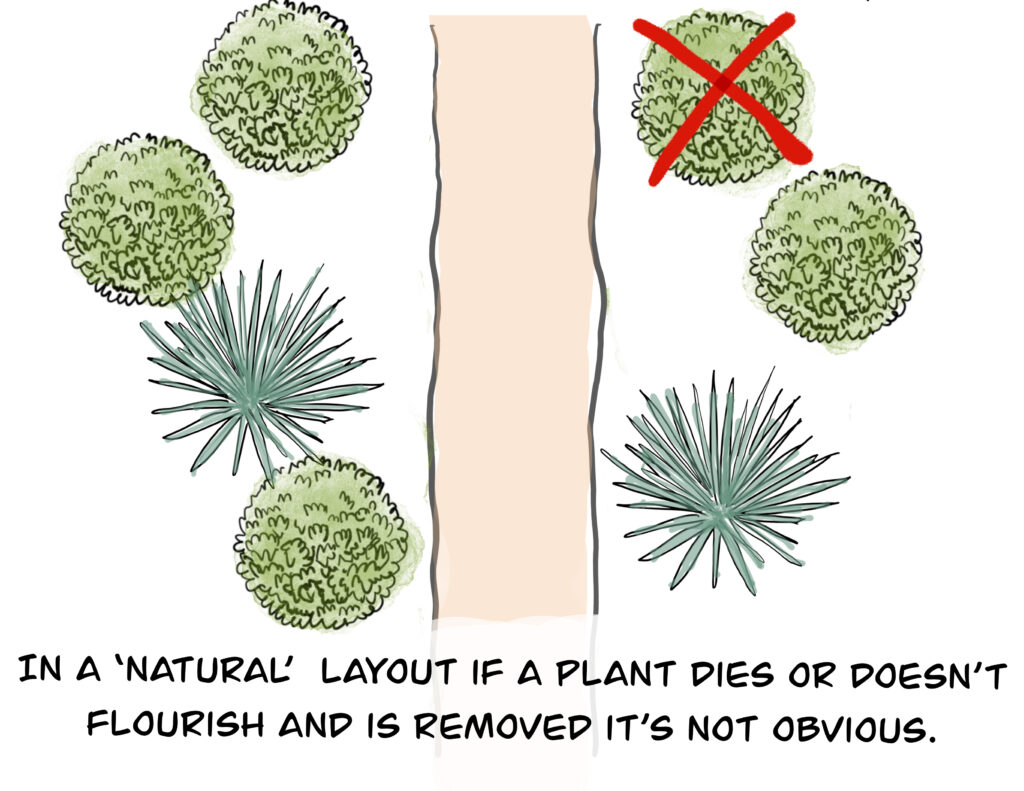
In an informal or “naturalistic” layout, a missing plant is not an issue because there’s not an expectation for that space to be filled. It also allows flexibility in the design — shade-loving plants near the tree, plants that can handle more water under the downspout. If a particular plant isn’t doing well, you can transplant it to another location. Using an informal or naturalistic planting design allows you to add to your garden over time as it matures and changes for years to come.
Selecting plants for your yard can feel overwhelming to a new gardener. We hope these tips help you avoid common mistakes, and remember that we're always here to support you. If you have questions about plant selection, feel free to send photos and details of your yard to [email protected] — we’ll be happy to help.
Learn more here:
Simple Steps to Get Started Designing your Yard
Desert Friendly Design Templates

How to Get Gravel Out of Your Yard
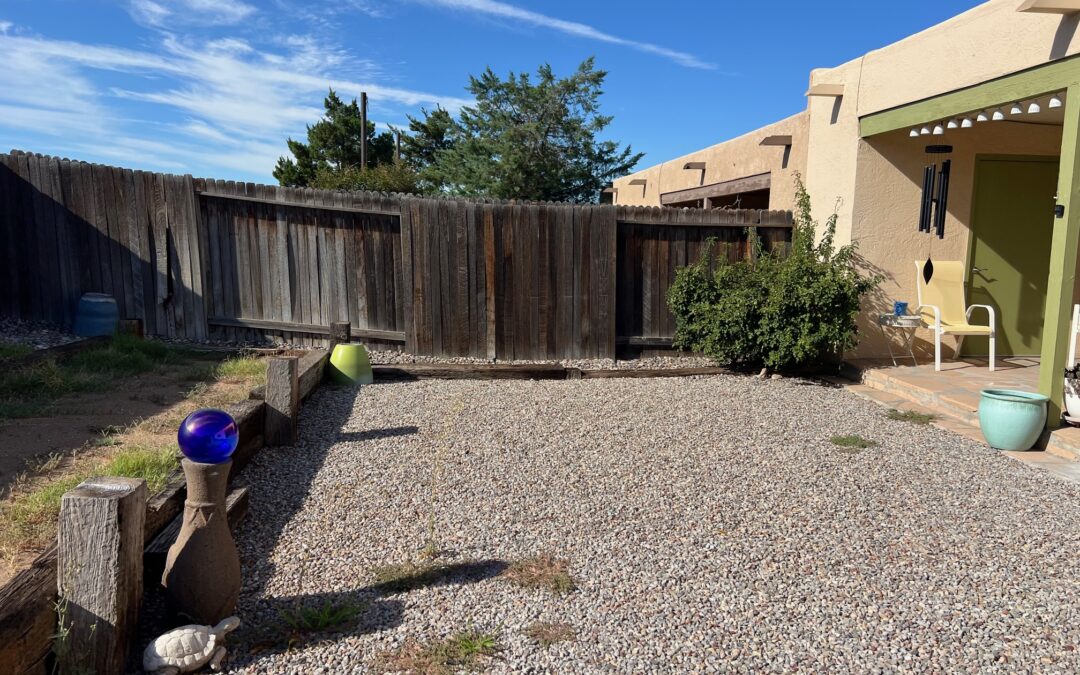
Maybe you recently moved into a house that has never been updated — think avocado tile in the bathroom and shag carpet in the sunken living room. You look outside and the theme continues — a sea of gravel and railroad ties. As with interiors, home exterior fashions and landscaping styles change over time. We once thought of gravel as low maintenance and tidy, but now are finding out isn’t the best choice as far as sustainability and community health. Thankfully, through the efforts of local designers, tree experts and Water Authority resources, there is a sea change in understanding the problems that gravel, weed fabric and plastic sheeting can cause in our neighborhoods.
Gravel soaks up heat and radiates it back into the neighborhood, warming up the city. We’ve also found out that gravel and weed fabric don’t discourage weeds, instead their seeds and dust settle on top, sprouting in no time. This leaves few options other than using herbicides, because pulling them can be difficult once they’re rooted in the weed fabric, and using a hoe is difficult in gravel larger than crusher fines. Additionally, tree and plant roots need two things: water and oxygen, neither of which permeate through old weed fabric clogged with silt. Wanting to install some flowering xeric plants near your new front door? That’s going to be a challenge — moving the rock out of the way, cutting the weed fabric and finding a way to install drip irrigation under the existing weed fabric and rock. Perhaps you’d like to invite pollinators to your new yard? Well, our native (and solitary) ground nesting bees won’t find a home in your yard because they can’t burrow through the weed fabric or rock to nest in the soil.
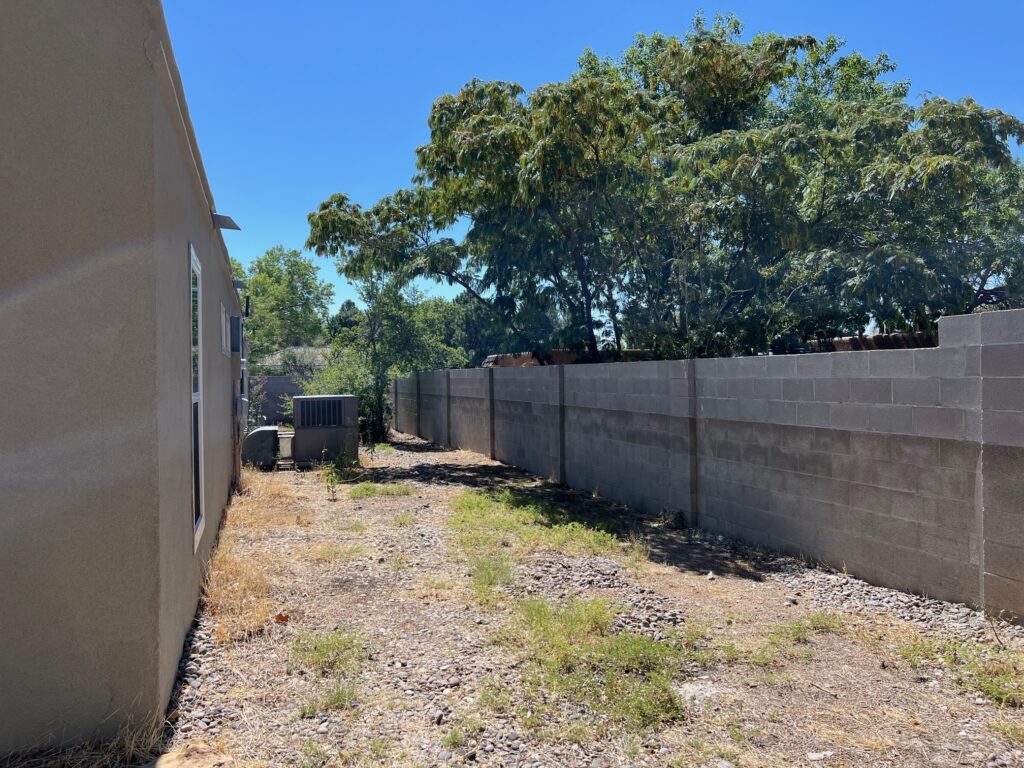
But all hope is not lost. Whether you’re aiming to remove all the gravel, just take out some around existing trees to improve their health or make your outdoor living space cooler and be sure water is soaking though the old weed fabric (or worse, plastic), there is help.
- If you have a limited budget and time but want to do some good, use a piece of rebar to poke holes in the weed fabric around your existing plants. This will ensure they can use some of our precious rainfall and allow for oxygen exchange.
- Have an existing tree that’s suffocating in heat absorbing rock? Time to grab the wheelbarrow and a shovel. If you’re removing small sections at a time, start with areas with the dripline of the tree. Here is where weed fabric is actually useful: In good condition it can make the gravel removal easier. Lift up the fabric carefully, using it to form the rock into piles that can be scooped up more easily. A square end shovel can be useful here because it’s less likely to rip the fabric underneath as you work. If you need to remove large rock like cobble, I recommend sitting on a protective pad and doing it by hand. Have a 5-gallon bucket or wheelbarrow right next to you to put it in. Some homeowners construct a basic wooden frame out of two-by-fours and wire mesh to make a screen to separate the gravel from dirt. Size it to fit over your wheelbarrow so you can transport the dirt more easily.
Albuquerque’s three convenience centers accept about two wheelbarrows full of rock (or dirt and concrete). Be sure not to take too much because you may be turned away. For larger amounts, you can try the Sandoval County Landfill in Rio Rancho or Southwest Landfill on Albuquerque’s southwest mesa; be sure to call first to confirm they will accept it. Alternatively, many homeowners are looking for gravel for erosion control under downspouts so try placing a FREE add on Craigslist, Facebook Marketplace or Nextdoor. It will most likely get picked up in no time.
- Now if your whole yard is full of gravel, you’ll probably need to call in someone who is better equipped, someone with a skid steer (Bobcat). Front yards are easier, but backyards can usually be done with a smaller machine if access is limited.
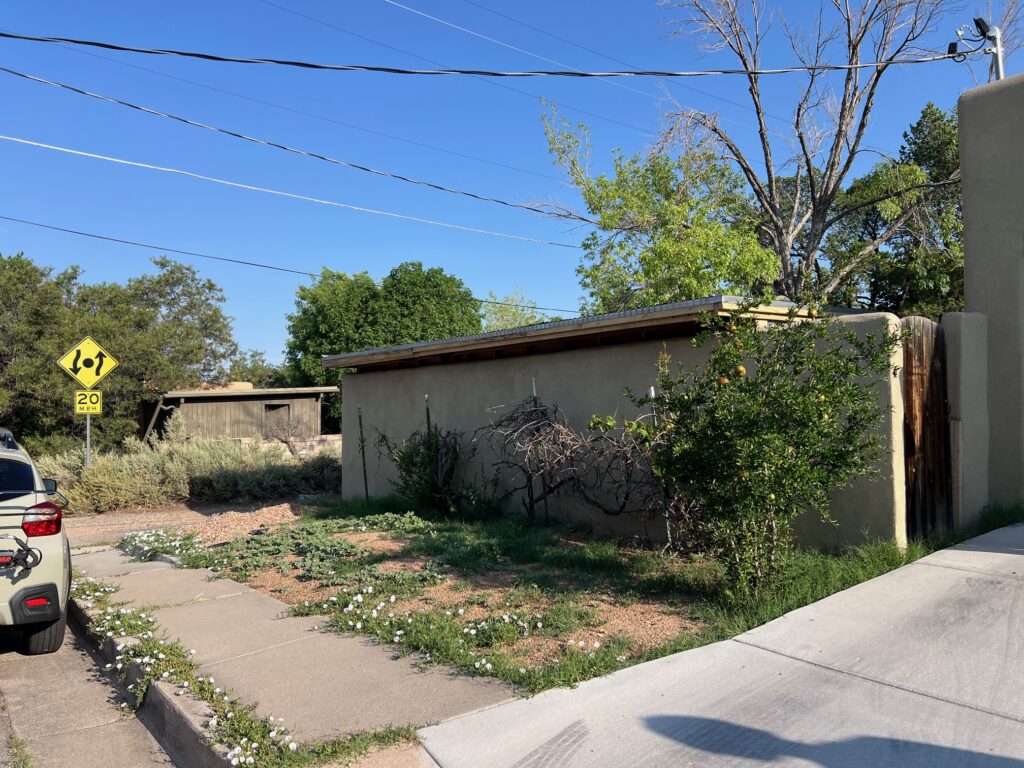
The obvious question to follow is, what’s next? We recommend wood chips spread to a depth of 4 inches. This mulch (without weed fabric) helps improve the soil over time and allows the tree and plant roots to breath. It also cools the environment a few degrees compared to rock. Several suppliers in the Albuquerque area sell mulch, and they all deliver. They’ll be happy to tell you how much you need if you know the dimensions. Additionally, several places offer free or discounted mulch. Call up large tree removal companies and see if they have any or head to the East Mountain Transfer Station in Tijeras and pick up a cubic yard for $5. There is also a great website called ChipDrop that connects tree service companies with homeowners who want mulch — you may have to wait a while for the stars to align but it’s totally free.

If you’d like to speak with our experts for more tips on removing gravel and having a healthy desert-friendly yard, reach out to us at [email protected]
As in most fields, change is slow. Older ways of thinking permeate the landscape industry, but some steps in the right direction (like wood chips instead of gravel) can make a difference over time.
Learn more here:
4 Common Myths about Organic Mulch,
Xeriscape Conversions that use Wood Chip Mulch
Tips to Keep Mature Trees Healthy