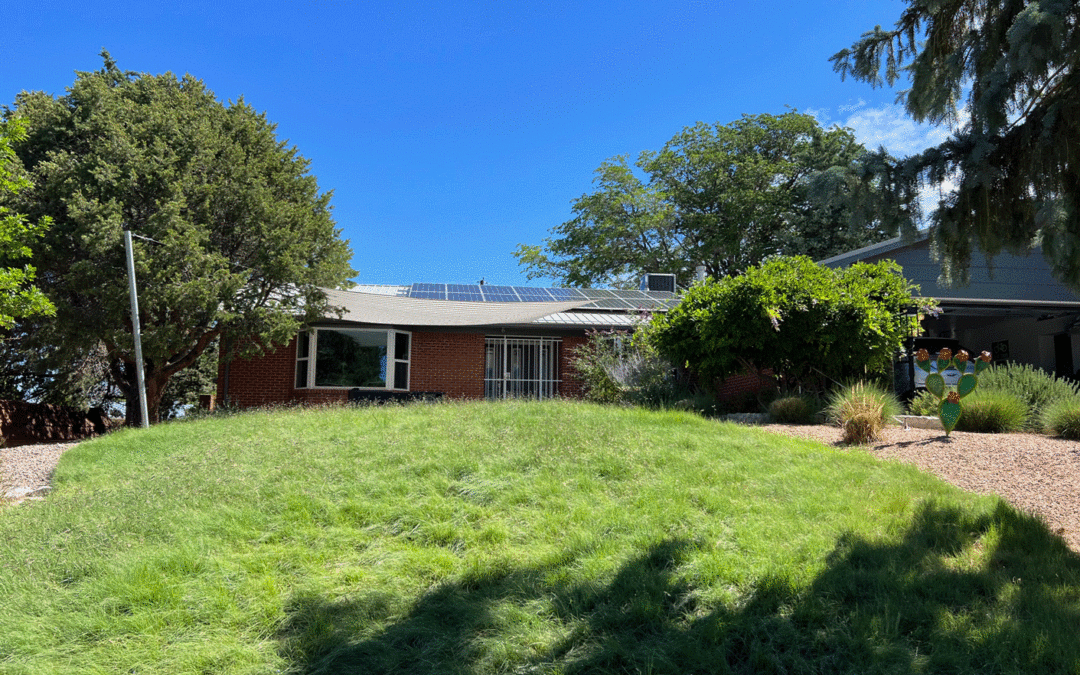
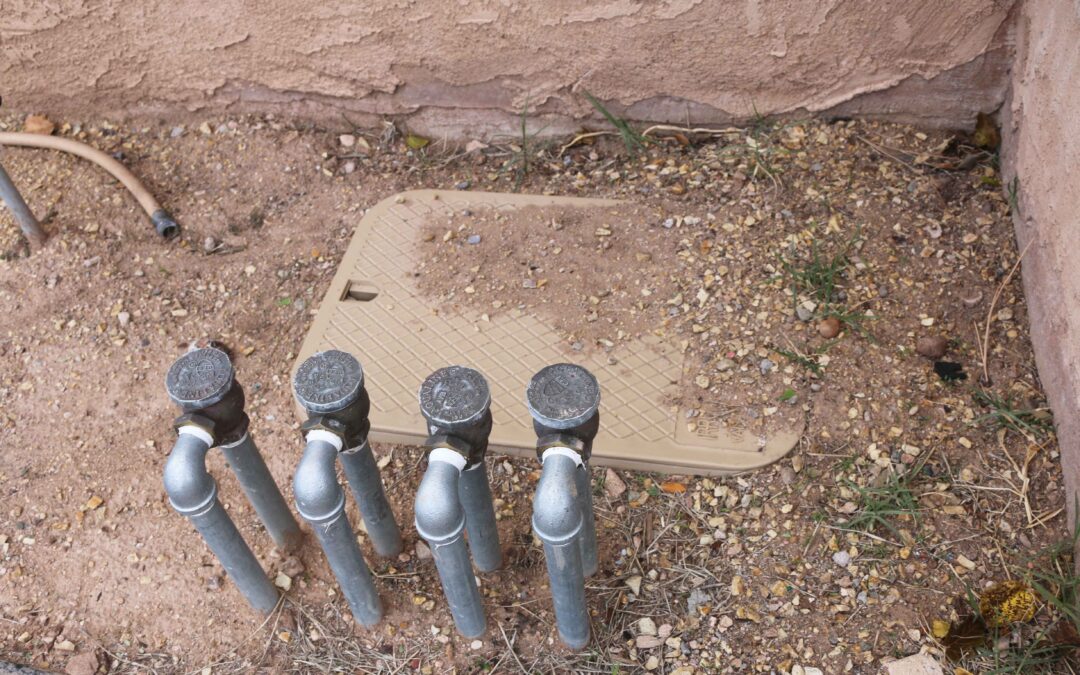
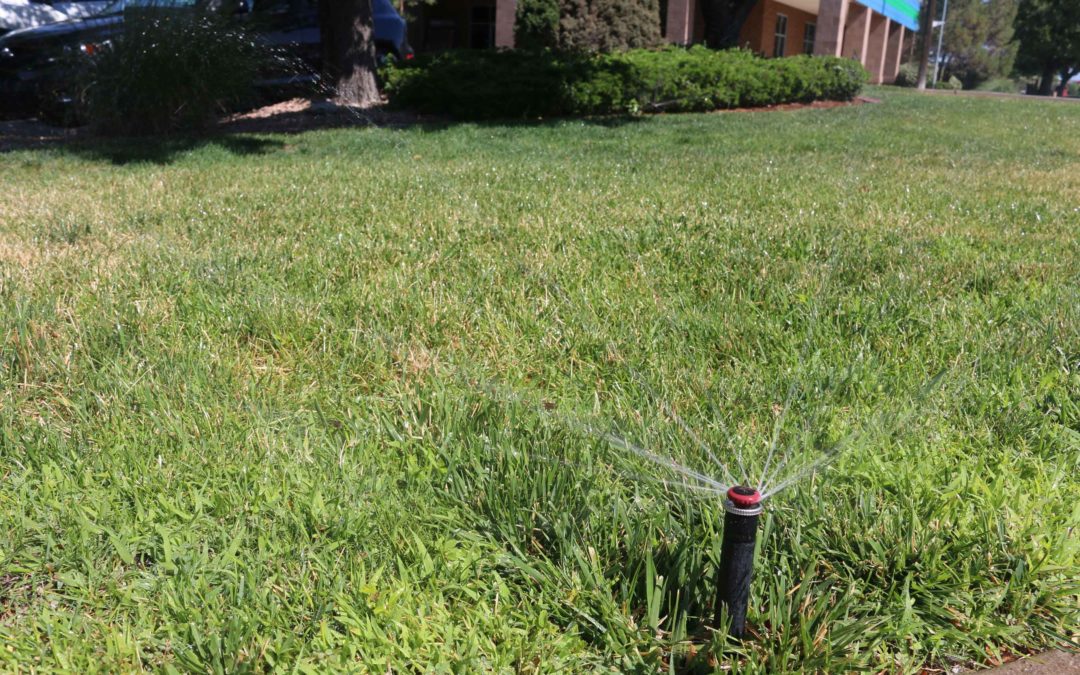
Typically, a conventional turfgrass yard includes a few large trees and some planting beds for flowers and shrubs around the foundation of the home. This type of yard often has a couple of existing irrigation valves for sprinkler irrigation. A conventional turfgrass landscape requires tremendous amounts of water to thrive in our region — a minimum of 40” (with an average of 50"-55”) of water per growing season, which is about three to five times more than what is provided by natural precipitation each year. This is why we do not consider a turfgrass yard a desert-friendly landscape.
Climate change is causing us to rethink our yards, and that includes yards with lawns. For a yard with a lawn to be truly desert-friendly, the amount and type of grass used must be considered. A desert-friendly turfscape should also have efficient sprinkler nozzles and pressure compensating sprinkler bodies to maximize the water that’s used to maintain the lawn.
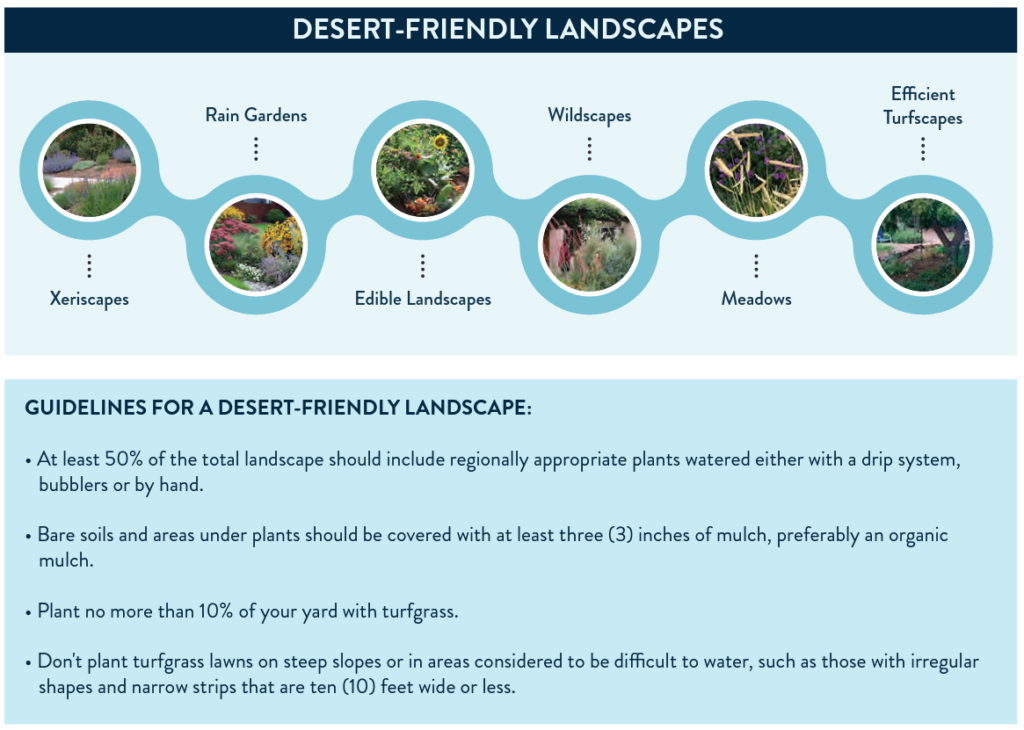
We recommend that no more than 10% of your total yard is devoted to a lawn. Research from various universities in the Southwest and lawn seed producers (such as Pennington Seed) is now suggesting that New Mexico’s climate is no longer suitable for cool-season grasses to thrive. Instead, we need to make a shift to various warm-season grasses, which will grow well with significantly less water.
Cool-season and warm-season lawns are the two different categories of turfgrass lawns found in Albuquerque. Cool-season grasses (Kentucky bluegrass, perennial ryegrass and tall fescue) thrive between 65F and 75F degrees in the summer. They create a softer, darker green and lush-looking lawn. In Albuquerque, most lawns are composed of cool-season grasses that are cold-tolerant and green most of the year. They can withstand considerable amounts of foot traffic. One disadvantage is that they use a substantial amount of water in the summer months. Parkblend (a blend of cool season grasses) is the most common lawn in the Albuquerque metro area. It uses around 40” of water a year.
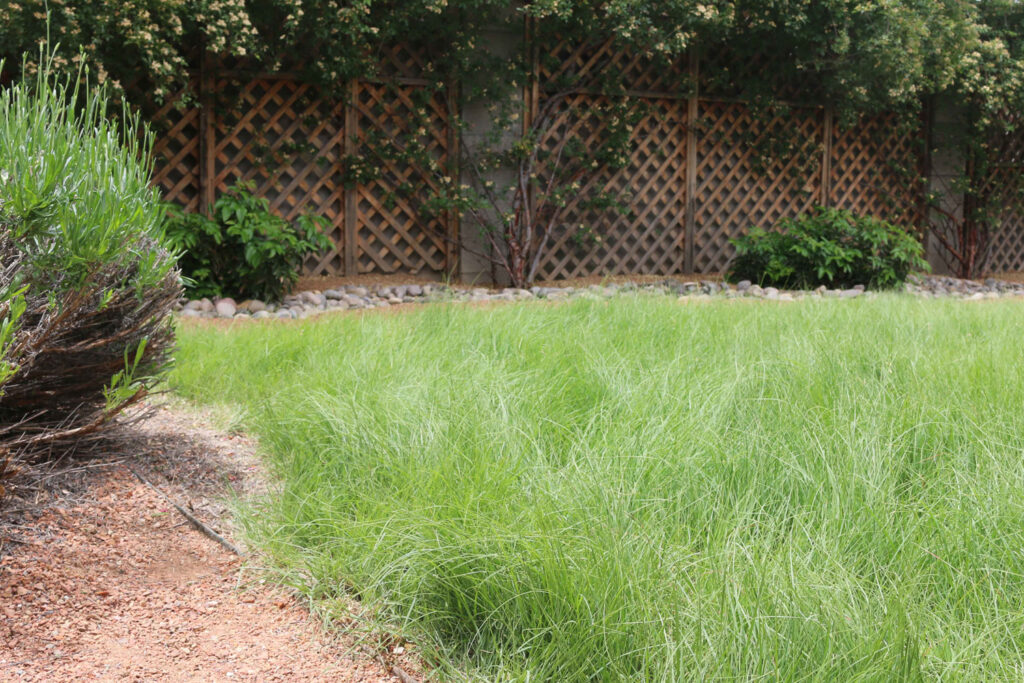
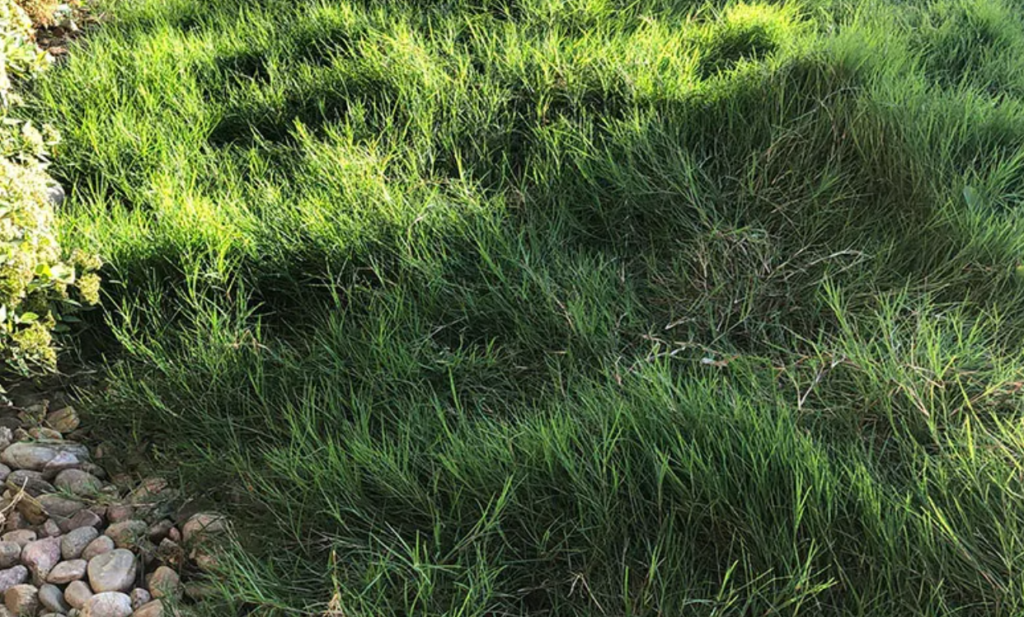
Warm-season grasses (Bermuda grass, blue grama, and buffalo grass), which thrive in 70F to 90F degrees, have been used in Albuquerque for many years. There are parts of town where they are quite prevalent. Warm-season grasses have a shorter growing season. They green up later and go dormant earlier than cool-season lawns. They are low maintenance and require less water than cool-season grasses.
Buffalo GrassBermuda Grass
Knowing what type of lawn or turfgrass is being installed or already being watered can make a significant difference in how much water should be applied. The key to choosing a turfgrass for a new area is to determine the one most suited to the specific needs of the landscape.
Water Budget (this includes 1,000 square feet of cool-season grass and a number of mature trees, shrubs and vines):
Most irrigation work can be done by the homeowner, except for one component. Tapping into your home's main water line needs to be done by a licensed contractor to ensure it is completed safely. To help homeowners know how to select and work with a contractor, we have provided the Irrigation Association's Irrigation Consumer Bill of Rights in the Appendix.
To make sure you have an efficient system, we highly recommend that you hire a professional irrigation designer to create a custom plan. Having a custom plan minimizes water waste and the chance of problems in the future and also helps ensure an efficient distribution of water, which reduces water usage. We also recommend asking a designer to produce a "call-out" list of all the parts required for the installation or renovation. This helps homeowners decide whether to DIY or hire a contractor.
SEPARATINGIRRIGATIONZONES&HYDROZONING
When you begin to plan a drip system, whether you’re installing a new system or retrofitting an existing system, it is imperative to design it so the drip valves are separate from your lawn valves. If you plan to grow a vegetable garden or water annual beds with a drip system, those areas also need to be on separate valves.
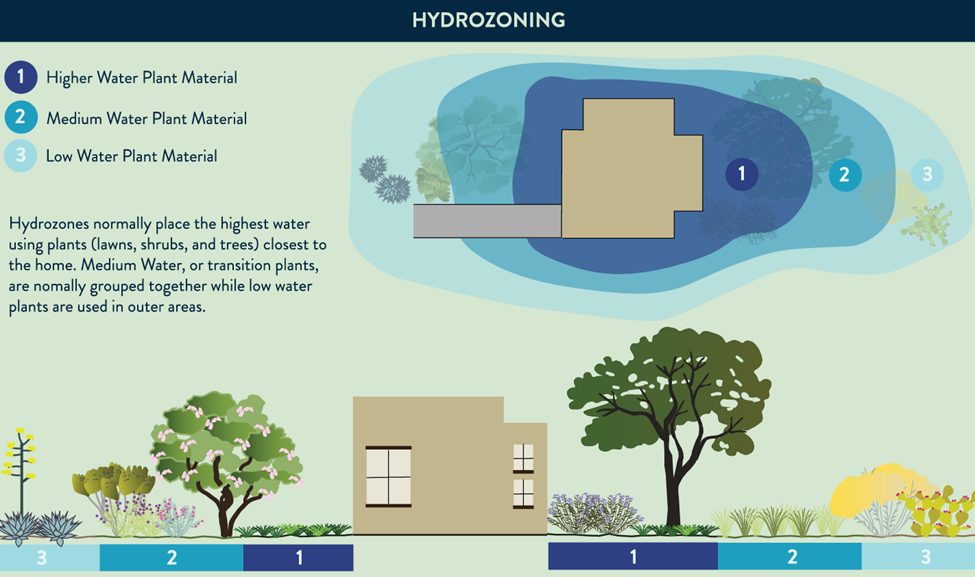
The next thing to do is organize your drip zones by plant watering needs. This means that higher water plants and lower water plants should be on separate valves (hydrozoning) whenever possible, so watering is much more efficient. Hydrozoning is not always possible when retrofitting an established landscape. In that case, you can adjust your water delivery with various sized drip emitters so plants with higher water needs receive more water per hour.
Check out our New Irrigation Efficiency Guide: Beautiful Landscapes with Less Water. Download the guide here.
Does the thought of making changes to your yard seem costly? Can you still get reasonable benefits from just changing a few things instead of your whole yard? Do you feel overwhelmed because you don't know where to start? Do you feel like you don't know enough about irrigation systems to know what to do?
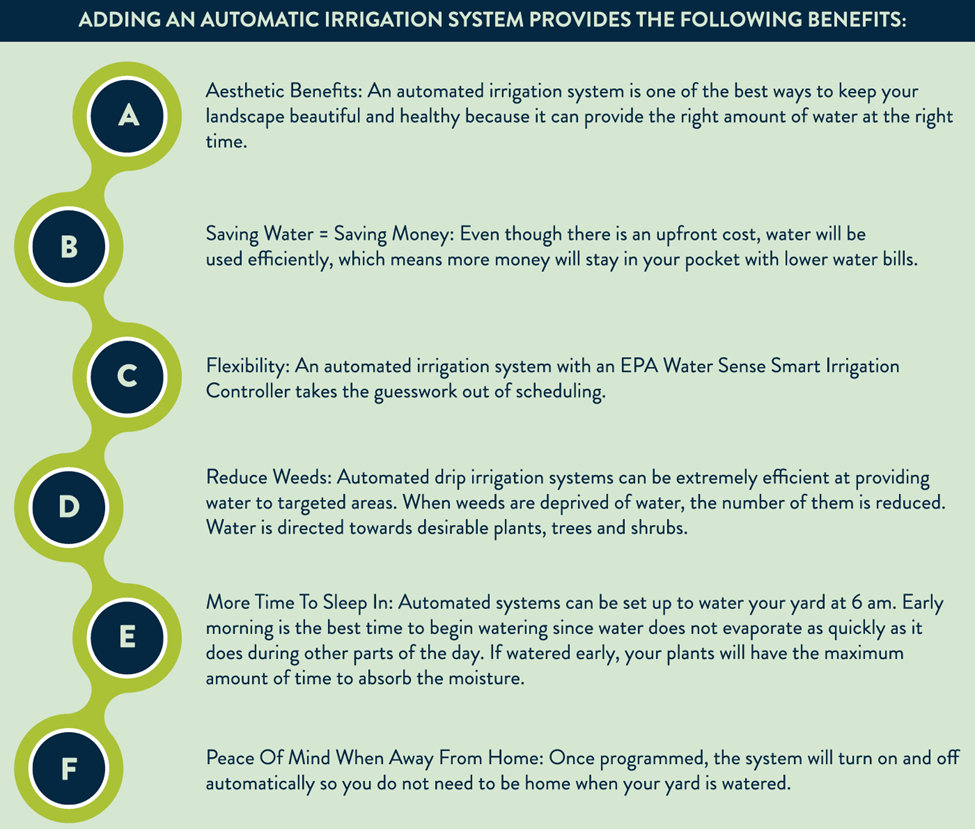
Having an efficient automatic irrigation system can be financially affordable for homeowners, especially with help from our rebates. Homeowners can choose to install or update a spray or drip irrigation system. To figure out your budget using our rebates, consider the following questions: How much can I spend on irrigation updates this year? It's important to be realistic about what you can spend and stick to your budget. You don't necessarily need to spend thousands of dollars to begin saving water. We offer rebates to help you cover some of the costs. Upgrades don’t have to be completed all at once. They can be done in phases.
Check out our New Irrigation Efficiency Guide: Beautiful Landscapes with Less Water. Download the guide here.
There are misconceptions about how to prune a tree. Here are seven things you need to know before you begin.
1. Always have a reason for each cut you make on a tree. A beautiful day and hearing you need to prune now are not the right reasons. The main reasons we trim our trees are to support strong tree structure, encourage fruit production, prevent damage, provide clearance to avoid conflicts, shape the tree for aesthetic reasons and repair the tree from previous damage.
2. Chose the right time of the year. There are good times of the year to prune. Pruning at other times can lead to tree distress and disease. Prune during late winter and early spring, just as trees are coming out of dormancy and will be actively growing soon. For fruit trees, wait until they have flowered before pruning to encourage production and direct growth.
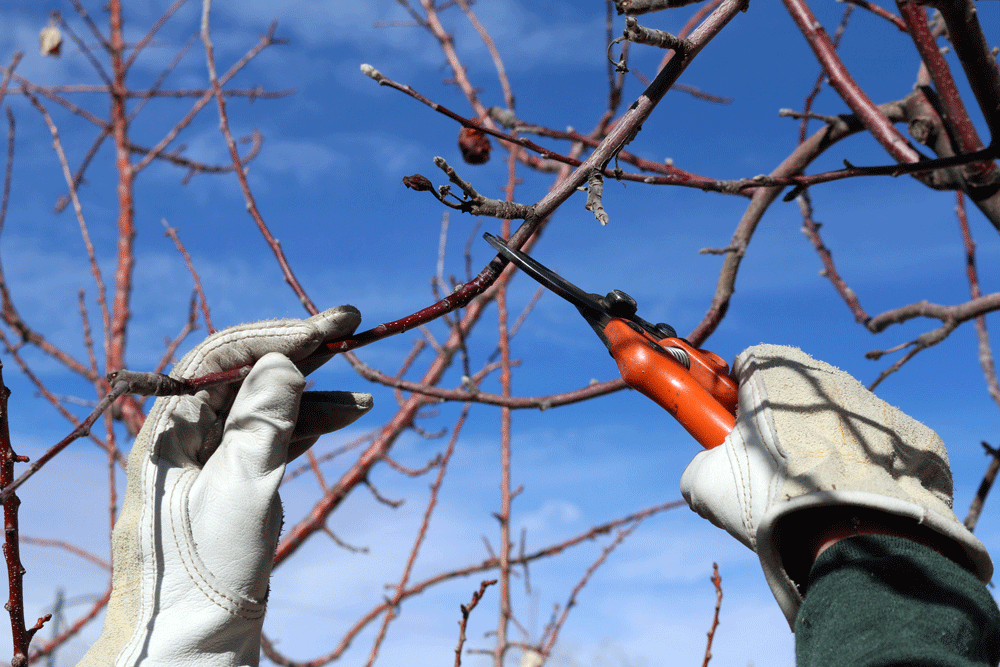
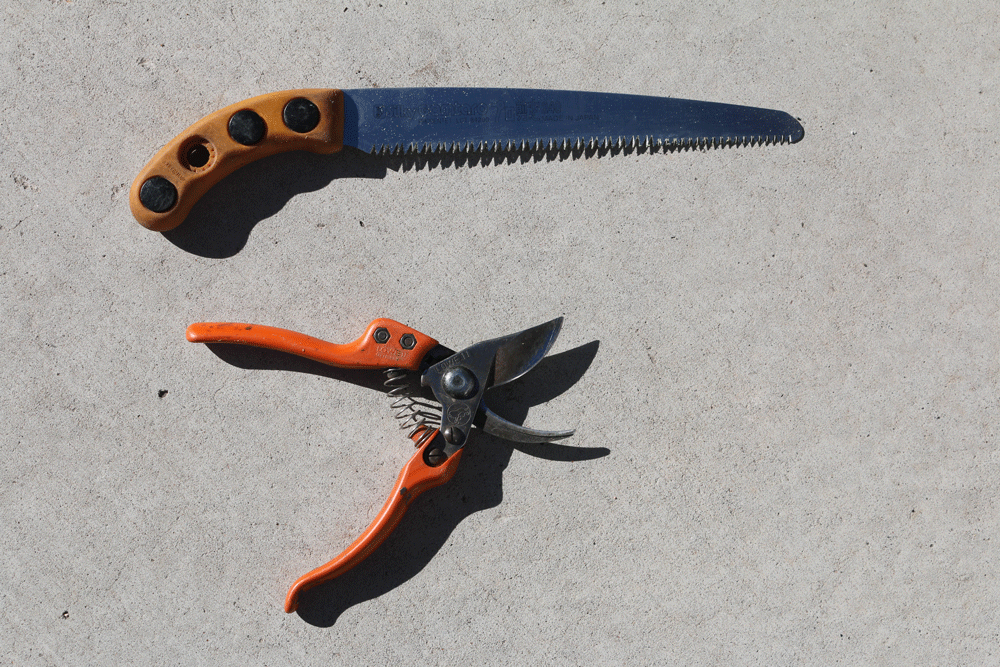
3. Use good hand tools, including a bypass hand pruner and scabbard, 8” folding hand saw, long reach pruner and orchard ladder (step ladders on uneven ground can be dangerous). As fun as they may seem, never use a chainsaw unless operating from the ground below shoulder height. Always wear PPE including safety chaps. Remember to sterilize tools with alcohol or Lysol spray when moving between trees.
Hand Pruner and Bypass Pruning Shears
4. Know your tree type. To figure out your tree type and its particular needs, try some plant identification apps, read the Arbor Day Foundation brochure “what tree is that.” or take photos of the tree and ask an expert. Pictures should include the overall tree form, leaves, bark, flowers or fruit. The most common trees in the Albuquerque landscapes are honey locust, Modesto ash, Siberian elm, London planetree, desert willow, Austrian pine, ashes, ornamental pear, Afghan pine, purple leaf plum, cottonwoods, golden raintree, Chinese pistache, pinon pine, redbuds, crabapples, Navajo willow, Texas red oak and mimosa.
5. Check out your tree’s health. How much water does it need and if/when does it need to be pruned? Highly-stressed trees should not have living branches pruned or removed. A healthy tree’s overall vigor and branch growth from previous years should be around 3”- 4” of growth per year between a bud scar and a new terminal bud. Access the density of the canopy all around and under the tree. For healthy conifers look for four years’ worth of needles on a branch. Less than two years on a branch is considered stressed.
6. Know the three types of pruning cuts: heading, removal and reduction. Avoid heading unless attempting to correct damage. Removal describes cutting branches all the way back to the main trunk. Remove 1” caliper branches and avoid cutting anything bigger than 3”. Some trees, like our local cottonwood, may not be able to heal large wounds. Reduction cut is the ideal cut. It is used to redirect and subordinate growth. Reduction cutting allows the tree to heal properly. Prune back to a branch that is at least 1/3 the size of the branch removed in order to avoid excess sprouting and allow the remaining branch to assert dominance.
7. Know where and how to make the cut. Refer to the diagrams to properly identify the branch collar, which contains the Branch Protection Zone (BPZ) that has specialized tissues which resist the passage of decay organisms into the trunk. Cut about 1/2” outside the branch collar. This allows for proper wound healing. Use the following three-step method when making a cut: First, make a partial upward cut several inches out from the final cut. Next, make a full downward cut a half inch farther out to take the weight off. Lastly, make the final cut without nicking the branch collar.
By reviewing and understanding these seven tree pruning concepts you are well on your way to properly pruning your trees. Remember, tree pruning is only needed every few years. The proper watering of your trees needs to happen monthly. Check out the other tree health articles below to keep yours in tip-top shape.
Author: Amos Arber, Xeriscape Rebate Inspector with the Water Resources Conservation Department for the Water Authority. Have a question about the article? [email protected]
Most irrigation systems have a lifespan of 20 years before they begin to break down. If your house is older than that, most likely you are dealing with issues (water pressure, uniformity of watering, overspraying and possible leaks) that negatively affect the quality of your landscape. If you are going to go through the time, effort and cost of a total yard transformation, seriously consider replacing your whole irrigation system.
PRO TIPS FOR SPOTTING POSSIBLE PROBLEMS WITH THE IRRIGATION SYSTEM:
• Grass is often taller and darker green around a sprinkler that is leaking or in the middle of a lawn where a pipe is leaking.
• Wet spots in a pathway could indicate either a broken emitter is shooting water or a leak is occurring in piping underneath the path.
• Odd sounds, like hissing or splashing, or squishy areas in the lawn or gravel often indicate a leak.
• Calcium deposits on gravel without plants can indicate a leak.
• A wilting plant can indicate a clogged emitter.
• Small areas of dry turf, often near a sprinkler, usually mean there's a clogged nozzle.
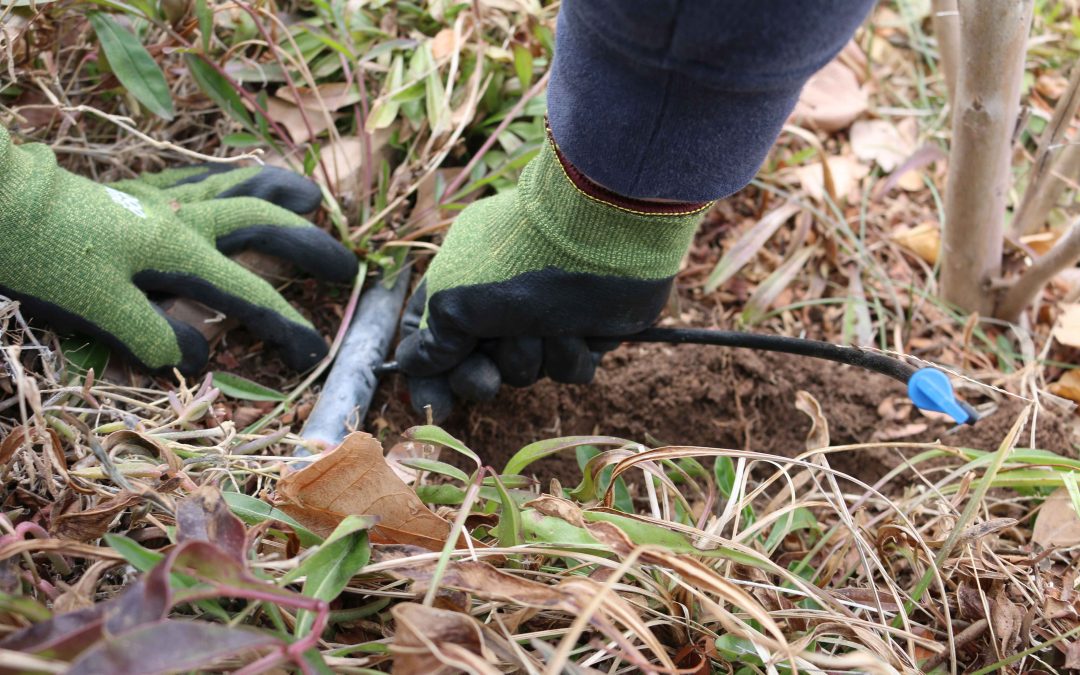
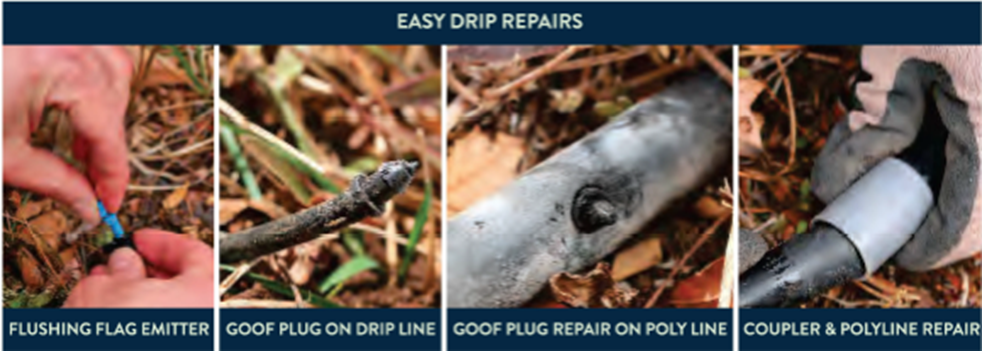
To achieve higher efficiency over time you need to maintain your system. Extending the lifespan of your system requires some upkeep. Most often this maintenance is very easy and won't take much time at all.
There are a number of things to consider when you are growing fruit and vegetables
The healthier your soil is the less water you will need over the growing season. Improve your soils by adding compost and other amendments every year. Getting a soil test can help you determine exactly what to add.
Cover your garden with an organic mulch, whether it is straw or wood chips (or another organic product). A thick layer (3-4”) of mulch will reduce the frequency of watering, and the amount you need because it helps cool the soil and protects against rapid evaporation.
Raised beds and pots can make gardening more convenient because you don’t have to stoop and it’s a way to utilize small spaces, or area where the ground may not be able to be used for gardening. The convenience often comes with a trade-off. Raised beds and pots tend to require water more frequently, often times using more water over a growing season than if you planted your garden in the soil.
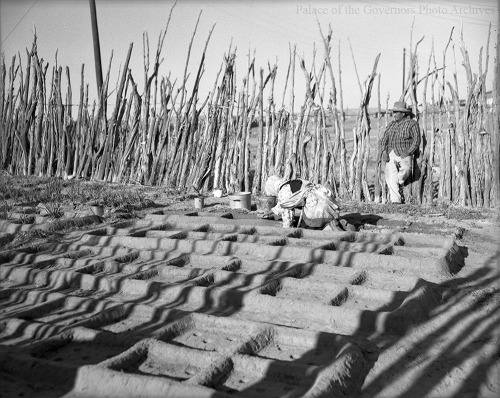
Historic, or traditional methods, such as waffle gardens and using ollas (unglazed terracotta pots which go in the soil at a plant’s rootzone) will often help you conserve water. More information on waffle gardens can be found here: Waffle Gardens - UNM Sustainability
Choose appropriate fruits and vegetables for your garden. Blueberries may be a “superfood” and delicious, but they want to grow in acidic, consistently moist soils. Those conditions are essentially the opposite of Albuquerque. Huckleberries, related to blueberries, prefer a more alkaline soil, and will often flourish in drier conditions.
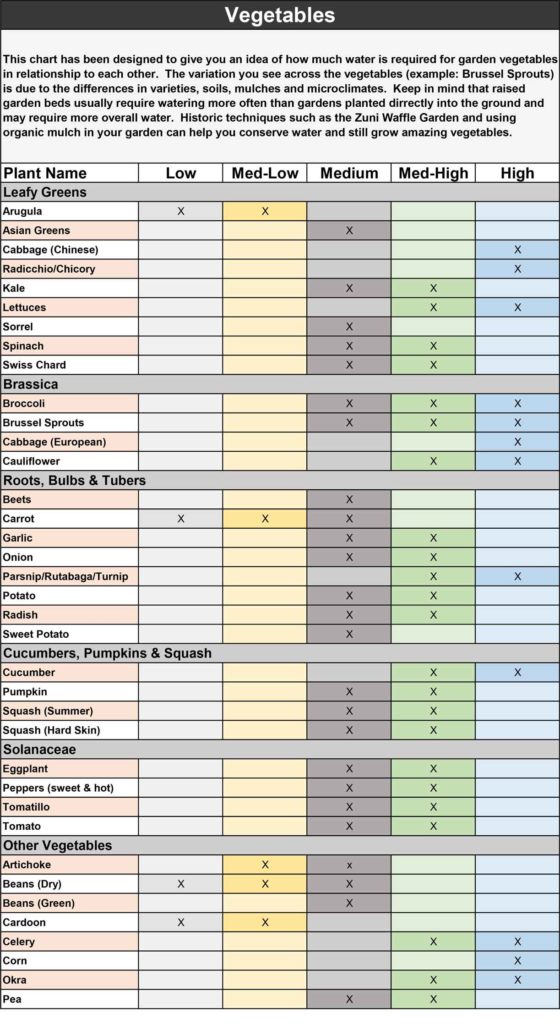
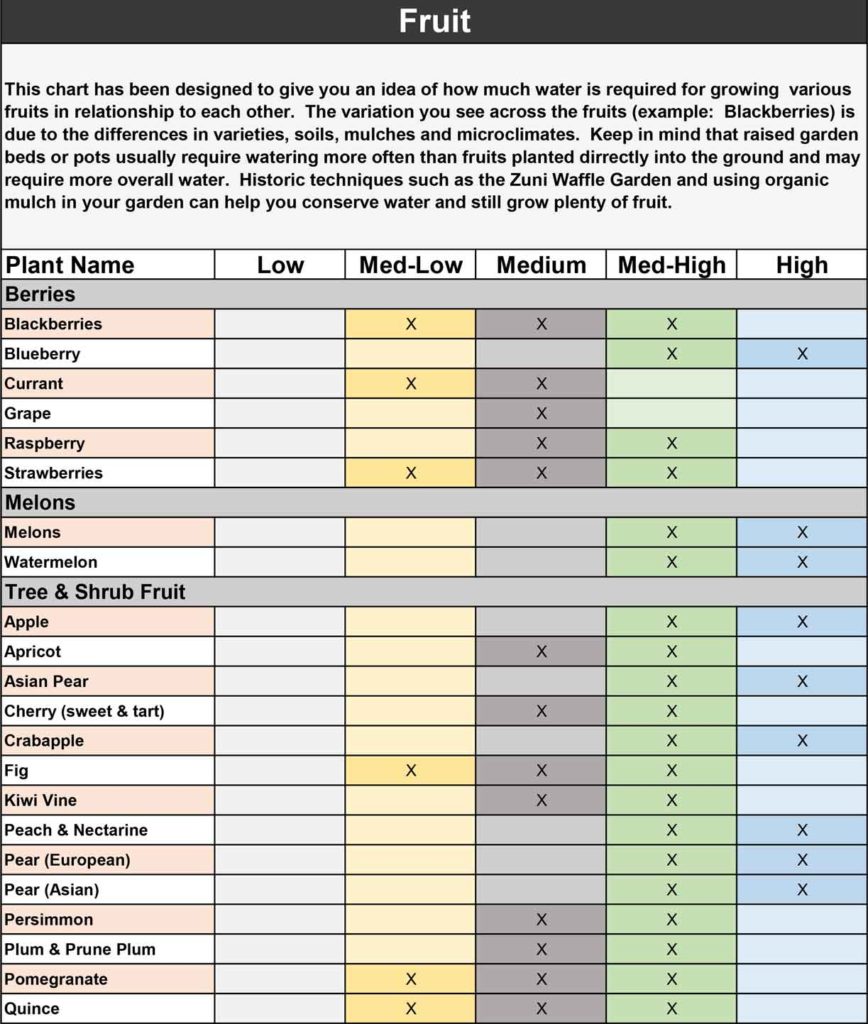
We have provided you with a quick guide to also give you a better idea of the relative amount of water needed to keep your fruits and veggies healthy and consistently producing for you.
Author: Richard Perce, Irrigation Efficiency Specialist with the Water Conservation Department for the Water Authority. Have a question about the article? [email protected]