Growing vegetables and herbs at home in small spaces can be easy, fun, rewarding and not expensive. Here are some tips for anyone from first timer to a pro.
Start small with a raised bed, good-sized pots or containers or a small plot of ground. Good soil is the key in all of them, so do not skimp there. If you are a composter, good compost is a great addition to our native soil, which is generally alkaline and low in organic matter. If you are growing in the ground, compost added to the soil is highly recommended. Plant nurseries offer good compost in bags, and you can also purchase in bulk, from a bucket to truckloads, from composting facilities.
When planting in containers, use a potting soil labeled for growing vegetables. Do not use pure compost, topsoil or garden soil in containers. Those are designed for in-ground use. Start your own seeds or purchase plants from a local nursery.
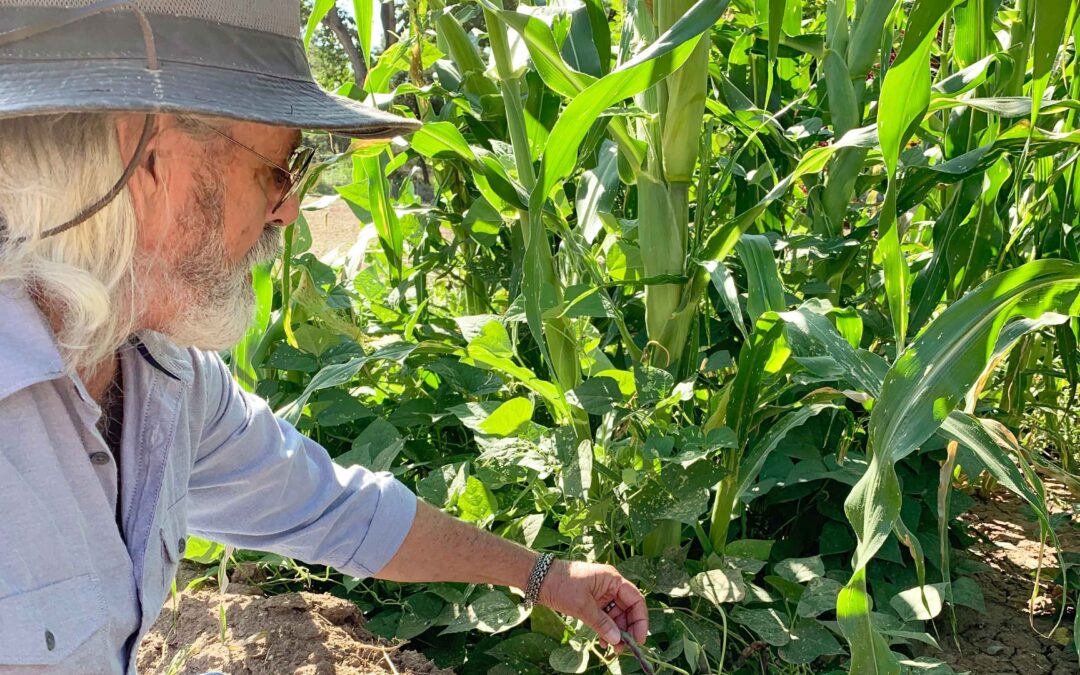
Choose what you grow based on what you love. Most will agree there is nothing like the flavor of a homegrown tomato, but the joy of growing, harvesting, preparing, sharing and eating something you have grown is a rich pleasure in a complicated world. Beans are fast and easy to grow. Since dried beans are inexpensive and readily available and it takes a lot to make a pot of cooked beans, I stick to green beans. I have done Three Sisters (corn, beans, squash) in large pots on my patio using climbing green beans.
Tomatoes will do fine in a five-gallon pot or larger, and peppers of many varieties do great in containers, as do most herbs. Look up books on companion planting. Roses Love Garlic and Carrots Love Tomatoesare books by Louise Riotte that suggest good neighbors in the garden. Lisa Mason’s Vegetables Love Flowers and Companion Planting by Sally Roth also give useful information. I have planted borage with my tomatoes for many years on the advice of an old gardener friend, and I rarely have tomato worms. Borage is both beautiful and edible!
Never leave the surface of the soil exposed. Always use mulch. My preferred mulch is barley straw (not hay!) It is clean and rarely has weeds or other seeds in it. You get an occasional sprig of barley that is simple to pull and lay with the rest of the mulch. Spread the straw three or four inches thick, thinning carefully at the base of plants. It holds moisture, prevents unwanted seedlings from sprouting and can be turned into the soil or added to compost at the end of the season. Water is crucial. Consistent deep watering, whether you use in-line drip tubing, soaker hoses or attentive hand watering, is important. The soil must not dry out or be too wet. Most containers will need water every day or two. Pay attention, ask your gardening friends questions, share stories of failure and success and enjoy the fruits of your labor!
Author: Wes Brittenham Farm & Landscape Manager, Los Poblanos Historic Inn & Organic Farm Have a question about the article? [email protected]
June, July and August are the hottest months for Albuquerque. Our current drought intensifies the heat stress of plants even more because there is lower soil moisture content and higher than normal ET from plants (plants losing more water due to EvapoTranspiration). Regional plants have evolved to adapt to this type of stress, but they still need water. Don’t go overboard! Plants growing in soil that is too wet can be negatively affected, leading to the death of roots. Stunted slow growth and yellowing leaves could be a symptom of overwatering.
Follow these tips to assure your plant’s success and conserve water.
Tips for Watering Your Plants Using a Hose and Nozzle:
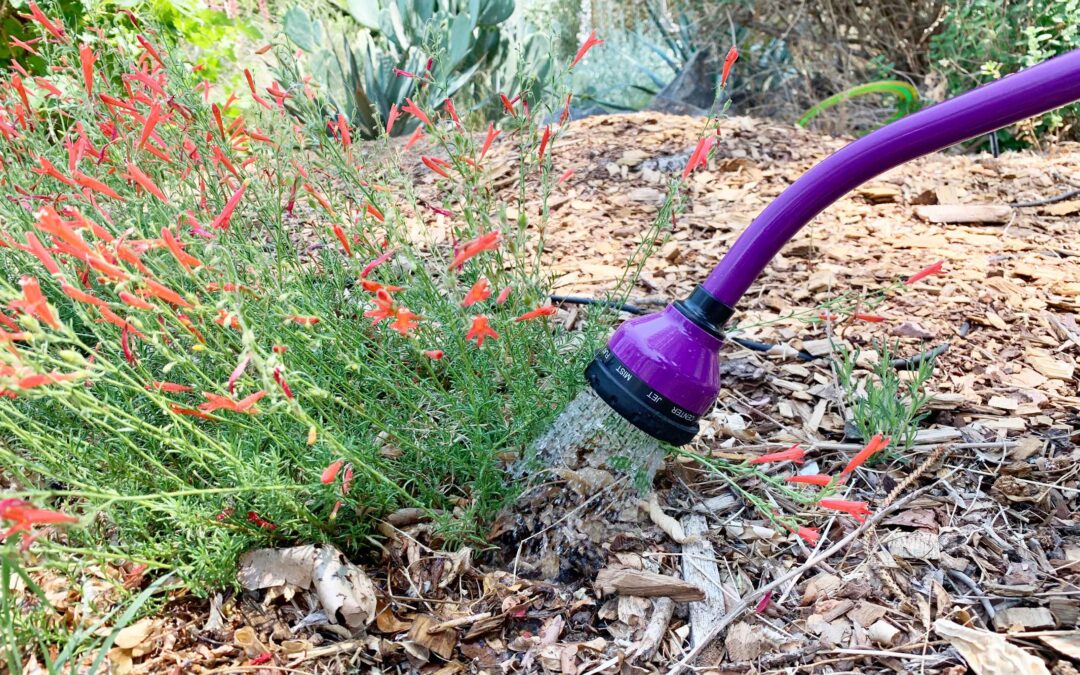
Make sure your nozzle or watering wand has an on/off switch that does not leak. This allows you to completely turn off the water at the hose end when you are not using it.
Make sure the wand or nozzle is set to “shower” or a setting that imitates rainfall.
To make sure you don’t have too much pressure, grab a five-gallon bucket and adjust your hose pressure with the nozzle or wand attached. Fill it up ¾ of the way in one minute. Set a timer (timers and stopwatches on your phone are great for this) so you know how long that minute is.
Once you know the correct pressure, we recommend writing down how many turns of the handle you did and use that as your reference. Or, using fingernail polish, put a dot on your faucet handle that also lines up with a dot on the faucet stem so you have a visual reminder.
If you are watering just a few plants located near each other, you will want to build a well around the plants. This makes sure the water stays where you want it to be most effective and avoids water waste.
Wetting plant leaves or the trunk base of a tree is not an efficient way to water and may damage the health of some plants. Instead, water around the plant, aiming at the root growing area.
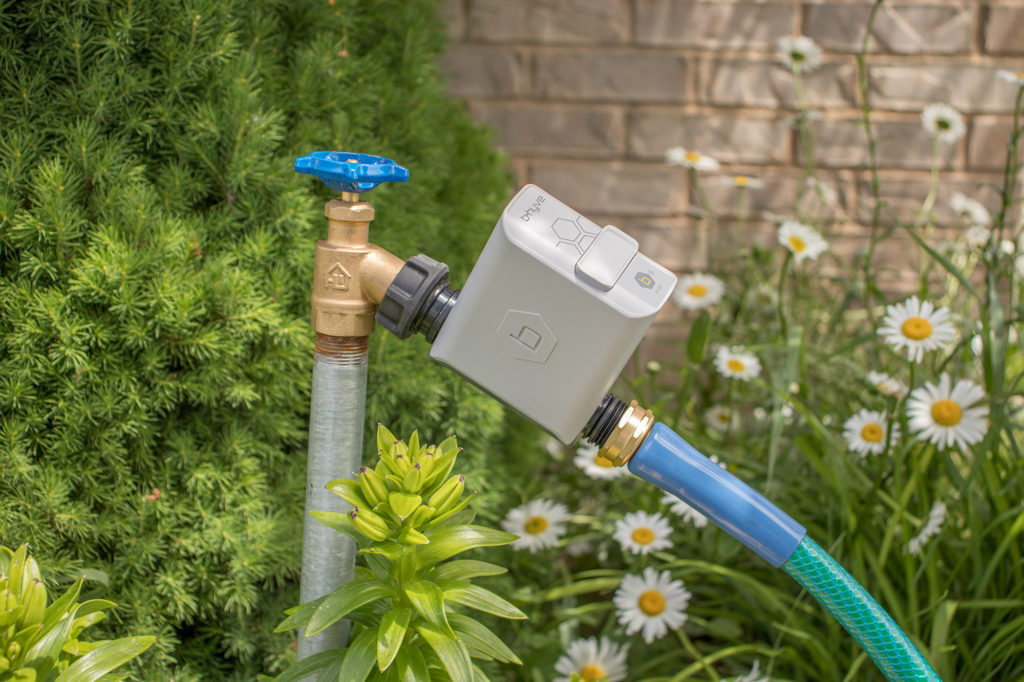
If you are ready to invest in a more efficient irrigation system instead of dragging your hose around the yard, a Water Sense Smart hose timer is the way to go.
A Smart timer system connected to a professional landscape dripline can water your yard at a set time and for a set length of time. Hose timers can accommodate many several hoses and zones (usually from one to four). We offer a rebate on a Water Sense Smart Irrigation Controllers hose timer that adjusts to our weather and your plant’s watering needs. Each valve can be set to water at various times throughout the day. For example, you could set one valve to water your vegetable garden for 10 minutes daily and another valve to water your perennials two times a week for 20 minutes.
Drip Irrigation Tips:
Make sure you always have a pressure regulator on your drip line. Even if you are converting an old turf valve into a drip zone, use an in-line pressure regulator.
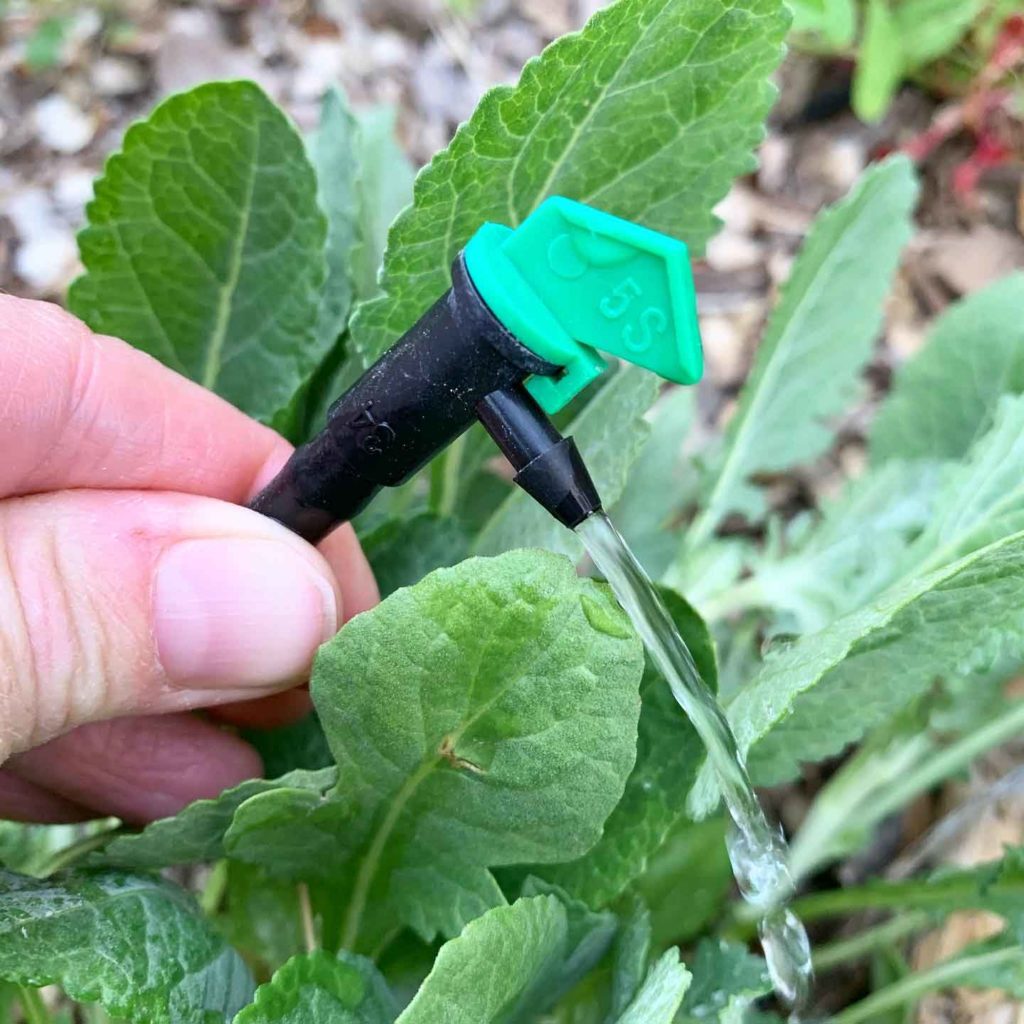
Using professional in-line emitted drip tubing around trees and shrubs is often the most efficient way to provide your trees with enough water.
Make sure you have more than one emitter per plant. That way, if an emitter clogs, you have less chance of that plant dying from lack of water.
“Walk the Line” at least once a month, looking and listening for any broken drip. You are listening for the sound of rushing water and looking for little fountains, excessive wet areas or wilted plants.
Make sure you know approximately where your polyline runs so it is easier for you to know where to plant and make repairs.
Make sure drip irrigation gets moved out to the edge of a shrub or tree canopy and increase the number of emitters as your plants get larger. This is especially important on trees and medium and high-water shrubs.
Your Desert Accent plants, and Rainwater-Only plants may not need supplemental drip irrigation after the third year, so plugging the emitters will help you save water.
Author: Richard Perce, Irrigation Efficiency Specialist with the Water Conservation Department for the Water Authority. Have a question about the article? [email protected]
Irrigation is essential to give plants a healthy start, so they become well-rooted in the landscape. A great way to find out the water needs of individual plants is by checking out the ABCWUA Xeriscape Guide and then follow the seasonal watering recommendations.
When your landscape is new, the best thing to do is observe your plants and respond to their cues. Sometimes there are a few plants that seem to need water more often than others at first. It is better to put higher flow rate emitters on these plants or give them extra water by hose than it is to add more water to everything in the landscape. Once they develop a better root system, these plants can be watered just like all the plants around them.
Here are three frequently asked questions about watering new plants:
Where do I place drip emitters?
Drip emitters should be placed where the backfill meets the root ball. Larger plants need several higher flow rate emitters to water the transplanted roots plus the backfill. Make sure the water goes deep enough to water the entire root ball plus the soil below the roots.
How do I know what plants to group in my yard?
Plants grouped on the same irrigation valve should have similar water needs.
How often should I water my new plants?
Actual water use varies seasonally and as the plants grow. It makes sense to give plants less water less frequently during cooler weather and more water more frequently during extremely hot, windy weather. To encourage deep roots, water must go deeper into the soil as the plants grow. Deeply rooted native shrubs need water to go down 24 inches once a month. Fruit trees, which have shallow roots, need watering to go to a depth of 18 inches every week while they are producing fruit from mid-April to September.
Plants with very low water needs may be able to survive on rainfall alone, once they are well-rooted in 3 to 5 years. If you want them to be more attractive, water them monthly in the summer, especially if monsoon rains are late or scant.
Plants with medium water need to benefit from watering twice monthly, May through September, but only once a month the rest of the year.
Plants with high water needs should be watered weekly, May through September, twice monthly during March, April, and October, and monthly the rest of the year.
As roots start to go deeper into the soil, it's usually best to water less often but for longer cycles so the roots continue to go down further into the soil. But here are a couple of things to keep in mind!
Watering for more than a 3 or 4-hour cycle in well-drained soil will put the water deeper than roots will grow.
In poorly drained soil, water that goes too deep could inhibit the rooting of arid-adapted plants.
As plants root out, they will become more resilient and need less observation.
Author: Judith Phillips, owner of Design Oasis, landscape designer, and garden writer with 30 years of experience designing arid-adapted and native gardens in the high desert. Have a question about the article? [email protected]
Drip irrigation systems play an important role in desert-friendly xeriscapes. When properly designed, installed and managed, drip irrigation efficiently maintains the optimal range of moisture in the soil. It applies water in precise quantities, to the right depth and on a set schedule. Installation and modifications are easy to do and relatively inexpensive.
Drip irrigation is the recommended method of delivering water to shrubs, trees and all other plants that are not considered turf grasses. When using drip irrigation there are a few things to keep in mind to make sure you are watering as efficiently as possible.
Below are some “Rules of Thumb.”
Grouping plants of similar water needs on the same drip line makes establishing and maintaining plants much easier. This is called hydrozoning.
Drip emitters should be placed where the backfill meets the root ball. Larger plants need several higher than normal flow rate emitters to water the transplanted roots plus the backfill. Water needs to penetrate the soil deep enough so that the entire root ball plus the soil below the roots are wet.
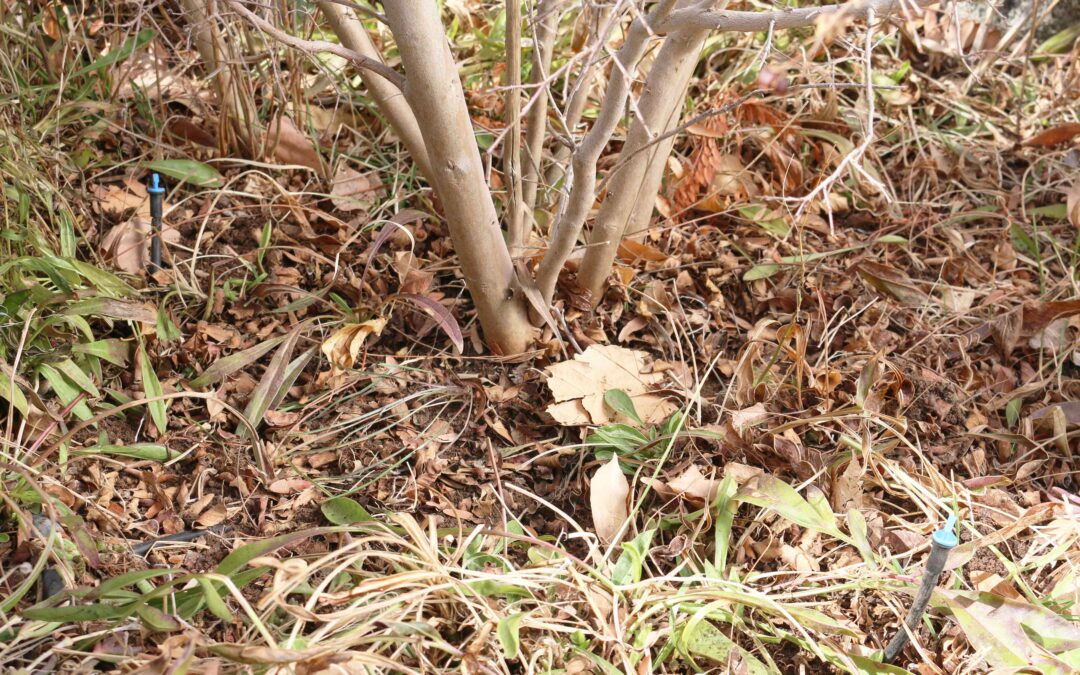
To grow a healthy tree, add ground covers, ornamental grasses and/or shrubs. They act as a supportive network around a tree so the tree roots can grow from one irrigated spot to another, sharing water with all the plants under and beyond its canopy.
Shrub and groundcovers under a healthy tree.
The length of time it takes for plants to become well- established varies greatly and depends on the species of the plant and the site conditions. The best adapted, fastest rooting plants may become well-established in one or two growing seasons. Some plants — such as those in extremely hot or exposed windy locations — may take three to five years of weekly watering during the summer before the quantity of water they need can be reduced.
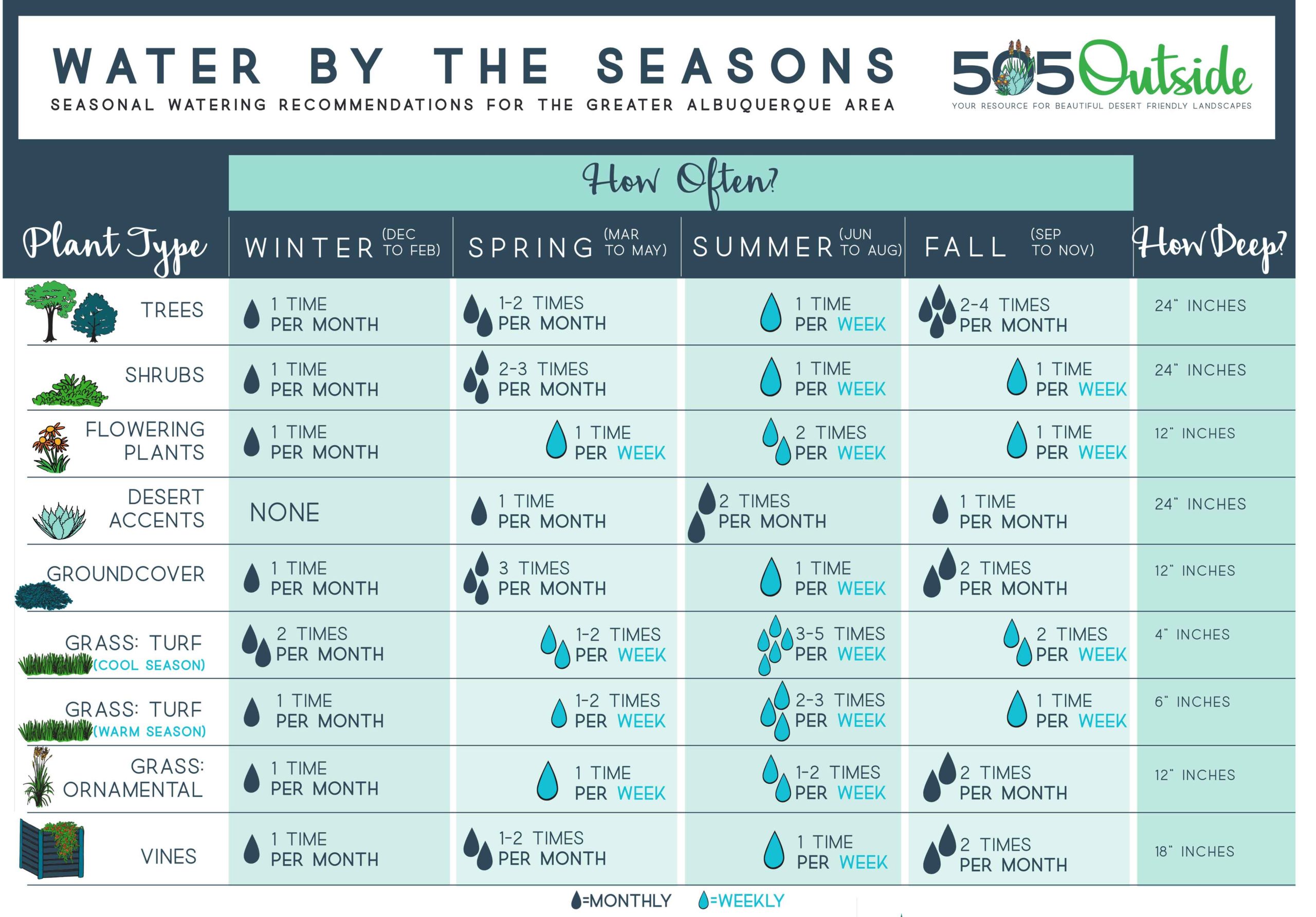
For the first month or two after planting, keep the drip lines running once a week for 45 minutes at a time. If there's no rain and the temperature push 100 degrees for many days in a row, you may need to water every 4 to 5 days. After a few months, you can follow the watering recommendations offered in the Water by the Seasons chart. For plants to get properly established, it is important that water penetrates the soil at least 6 inches deeper than the roots of the new plants.
Once your trees and other plants are established, the best way to efficiently water your trees and plants and maintain a healthy landscape is to follow the Water by the Seasons recommendations shown below.
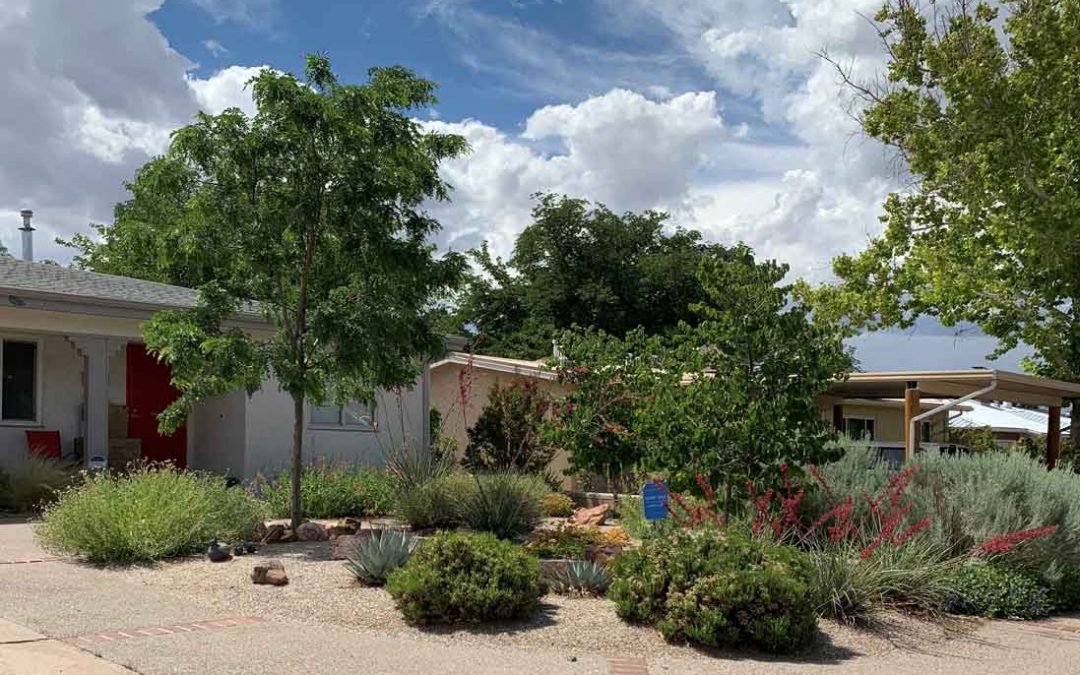
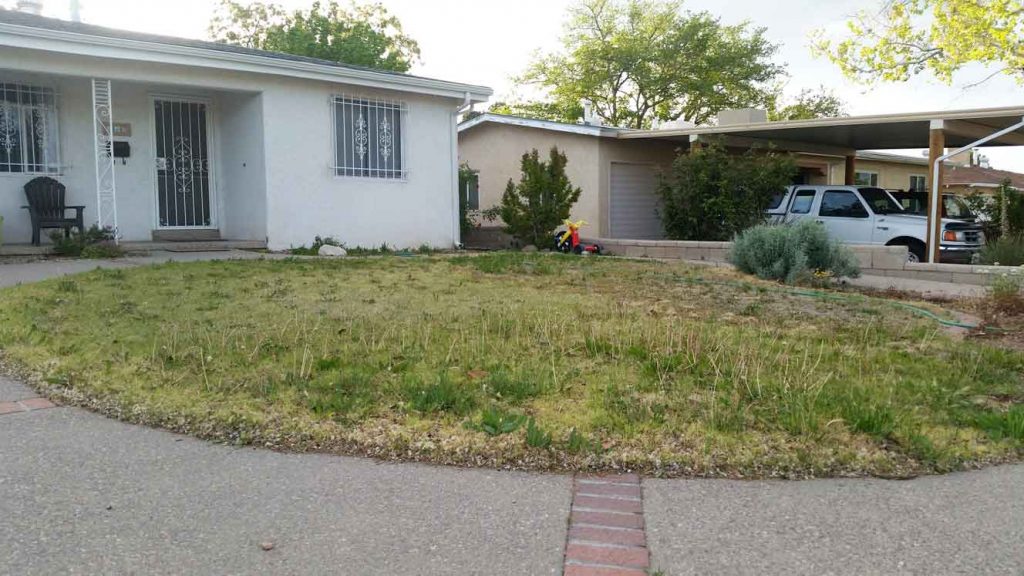
Winter is the best time to rethink your high water use turfgrass and create a plan for a xeriscape yard of desert-friendly plants. A desert friendly xeriscape will help you save water, reduce maintenance, encourage pollinators, and beat the heat of the summer. We define a desert friendly xeriscape as a landscape that has half of the total landscape area with desert friendly plants selected from our Xeriscape Guide and typically watered with drip systems or by hand.
Water Authority residential customers who transform their landscapes from high water use turfgrass to a desert friendly xeriscape can qualify for a $1.00 per square foot rebate. If you are interested in participating in the Desert Friendly Xeriscape Conversion Rebate, please do not start your turf removal project until you have applied online to the program and schedule an initial inspection. An initial inspection is required before removing your grass lawn to see if your project qualifies. If you answer yes to the questions below, your landscape meets the minimum requirements.
Do you have living turfgrass on your site? (Rebates cannot be given to work that is already complete.)
Do you have an existing operating SPRAY irrigation system on your site?
If you answered YES to the above questions, then your next step is to create the landscape plan, apply and schedule an inspection. Feel free to [email protected] for tips on planning your desert friendly xeriscape.
Author: Jill Brown, ASLA, is a Landscape Architect and owner of My Landscape Coach in Albuquerque, NM. Have a question about the article? [email protected]
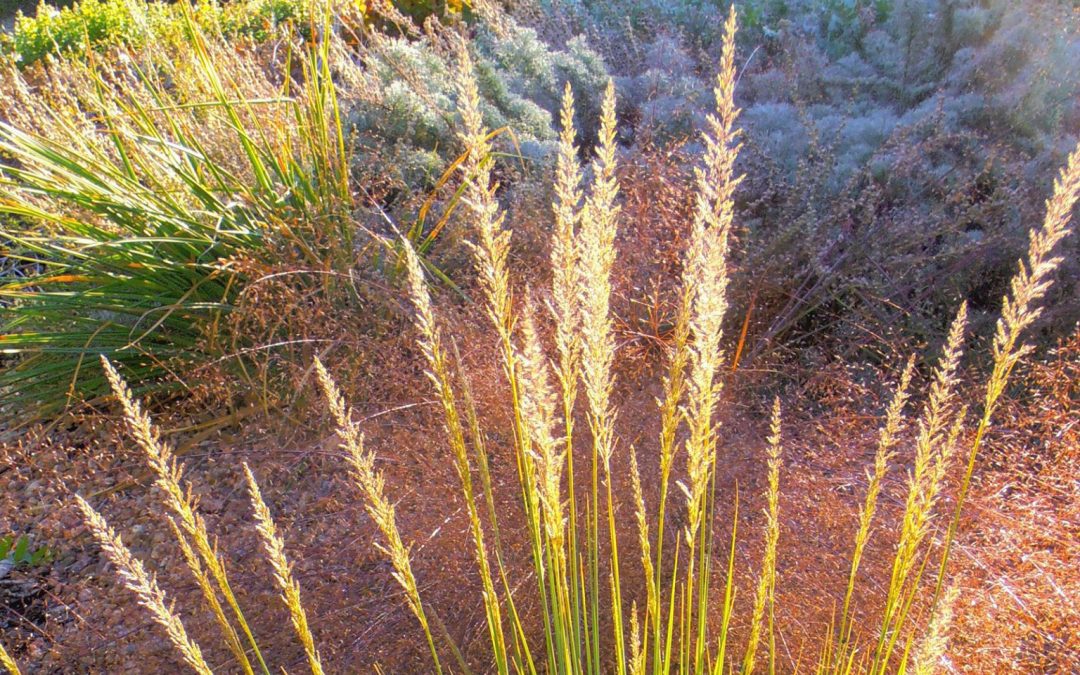
Native ornamental grasses play an integral role in a landscape. Throughout the seasons, grasses enhance the beauty of our gardens and are often at their showiest during autumn. They create a masterful mix of hues, textures, and seasonal delight. From their graceful flower clusters that gently dance in the wind to their vibrant plumage and foliage illuminated by the red glow of the sun, grasses create attractive and alluring backdrops while also adding motion and sound to our landscape.
Several considerations should be made before selecting ornamental grasses regardless of the style of the garden. Understanding the site requirements – sun tolerance, water use, and hardiness – as well as the growth form of grasses can help determine which species will be ideal for your landscape. Growing a species with weedy or invasive tendencies in moist habitats, for example, may not be ideal near the bosque. Similarly, growing a variegated variety of grass in a sun-exposed slope could result in blistering and discoloration which may detract from its beauty and health. Being aware of how site conditions and plant characteristics interact can help in selecting ideal species.
Consider adding the following ornamental grasses to the landscape:
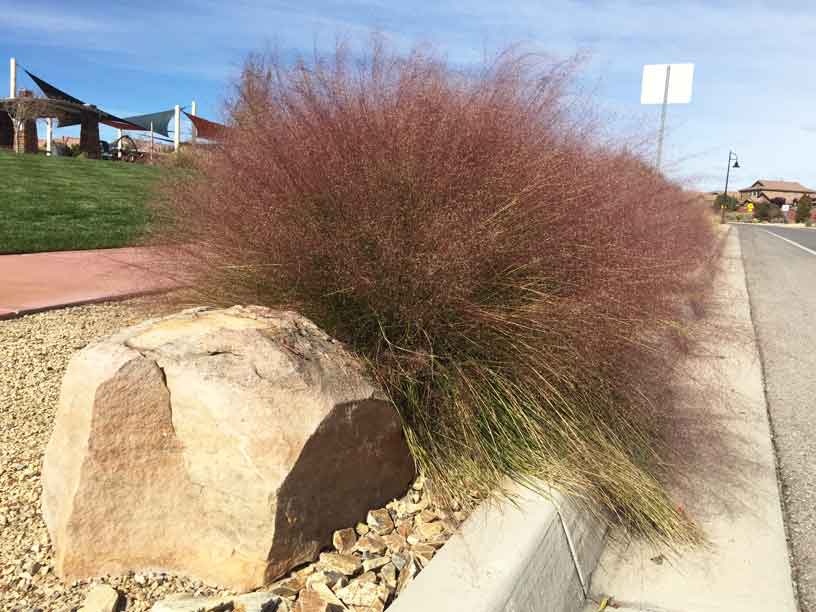
Muhly Grasses (Muhlenbergia species)
Muhly grasses (genus Muhlenbergia) are a non-invasive, ornamental grass native to the southwest. These grasses provide a wide range of favorable characteristics and perform well in full sun as well as partial shade. They are also heat and cold tolerant and can persist in most soil conditions. The plumy foliage often described as whispering, is quite attractive when a gentle breeze brings these plants to life. This species range in height from 1½ to 5 feet and has a variety of seed colors and textures blooming from August to November. Pink muhly (Muhlenbergiacapillaries) is an outstanding accent plant with its feathery, pink-hued flowers that float above dark green foliage (typically 3 feet). For a larger accent plant with a more subdued color, Deer grass (Muhlenbergiarigens) can make an excellent addition to any garden with its bright green leaves and slender tan flower stalks reaching upwards of 6 feet.
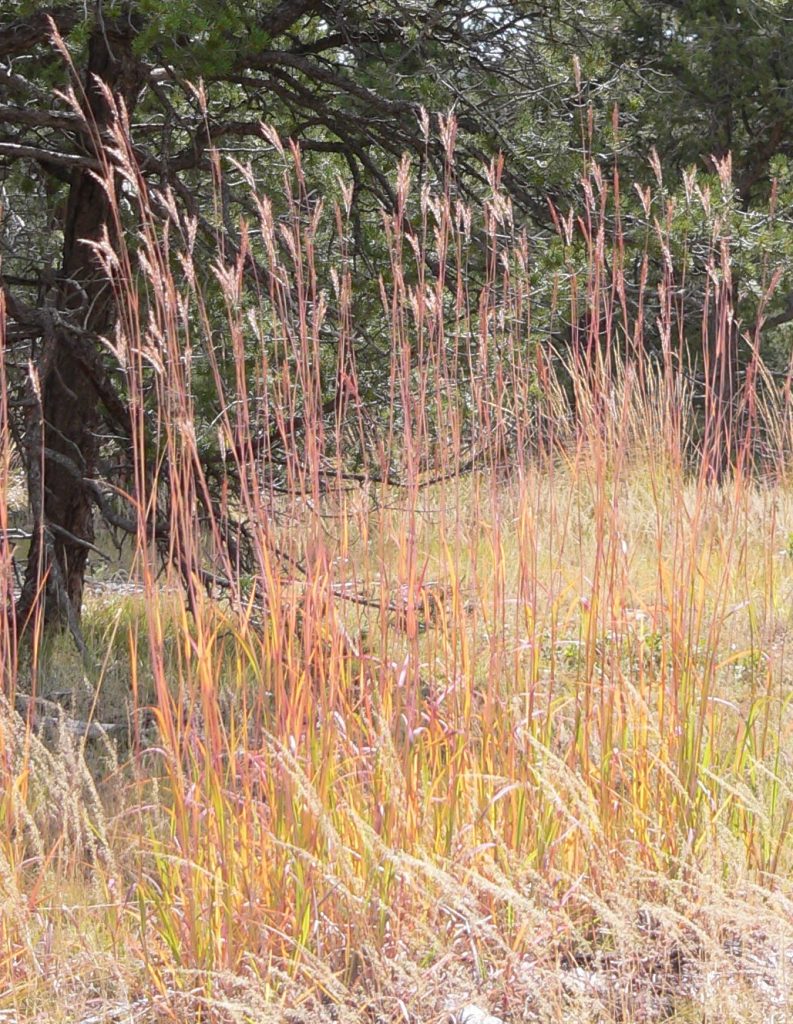
Big Bluestem Grass (Andropogon gerardii)
Several cultivars of the native prairie grass Big Bluestem (Andropogon gerardii) can be spectacular in a landscape and reach heights up to 6 feet. ‘Red October’ is a common cultivar that boasts year-round visual interest. It emerges in the spring with vibrant red foliage that transitions to a striking scarlet color for the remainder of the season. ‘Rain Dance’ Big Bluestem is also a very showy cultivar, providing maroon foliage in both summer and fall. These clump-forming grasses will grow in attractive mounds that add wonderful accents or backgrounds to the landscape in higher elevation plantings like the East Mountains.
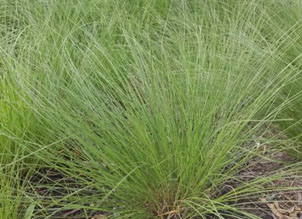
Prairie Dropseed Grass (Sporobolus heterolepis)
Prairie Dropseed Grass (Sporobolus heterolepis) is an exceptional bunch of grass that reaches 2 to 3 feet in height. This grass creates a fountain-like effect with its finely textured foliage – bright green in the summer and delightfully golden in the fall. Its flower spikes create a cloud of texture that becomes airier with see-through seed heads in autumn. Moreover, Prairie Dropseed Grass performs well in a wide range of conditions and soil types and is an excellent drought-tolerant addition to the landscape.
On top of their inherent aesthetic value, ornamental native grasses provide refuge and forage for pollinators and wildlife, which enhance the landscape’s ecosystems. Many bird species feast on the seeds of grasses, while the larval stage of butterflies use native grasses to shelter through the winter. For these reasons, ornamental grasses should be left uncut until early spring where they can be trimmed to encourage new growth. Incorporating ornamental grasses is a beautiful way to impart functionality and complexity to any landscape. Autumn is the perfect time to enjoy all that these grasses have to offer.
Author: Alissa Freeman, plant ecologist with an M.S. in Plant Biology, Ecology, and Evolution, has worked with NMSU Plant Extension and the City of Albuquerque on using native plants to enhance pollinator habitats. Photography: by Hunter Ten Broeck of Waterwise Landscapes and Judith Phillips of Design Oasis. Have a question about the article? [email protected]Caption for Feature Photo: Karl Forester Grass plumes with pink Bush Muhly grass located behind it.