There are misconceptions about how to prune a tree. Here are seven things you need to know before you begin.
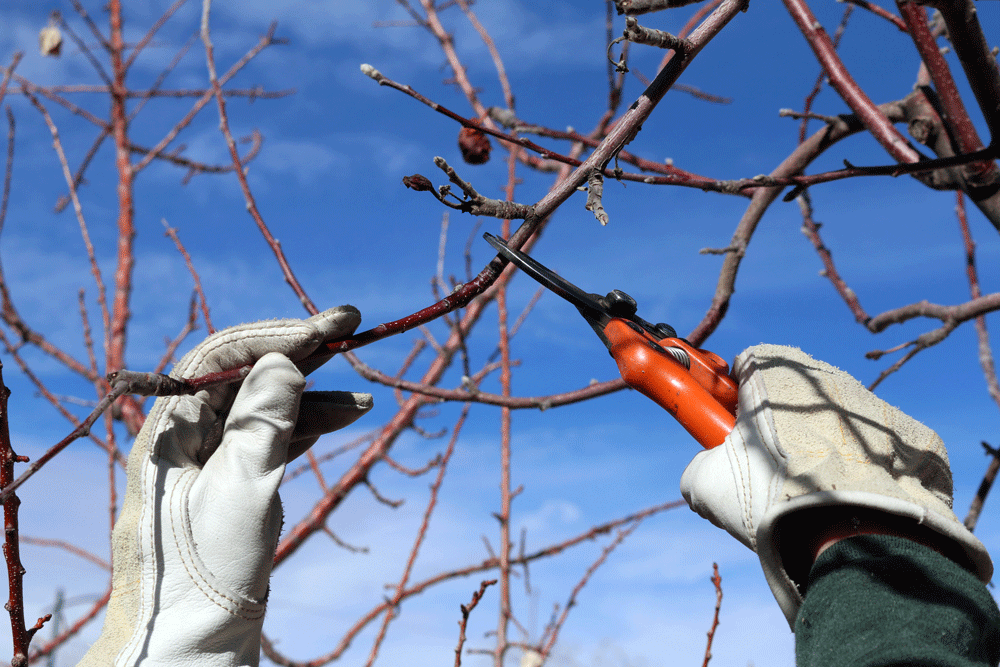
1. Always have a reason for each cut you make on a tree. A beautiful day and hearing you need to prune now are not the right reasons. The main reasons we trim our trees are to support strong tree structure, encourage fruit production, prevent damage, provide clearance to avoid conflicts, shape the tree for aesthetic reasons and repair the tree from previous damage.
2. Chose the right time of the year. There are good times of the year to prune. Pruning at other times can lead to tree distress and disease. Prune during late winter and early spring, just as trees are coming out of dormancy and will be actively growing soon. For fruit trees, wait until they have flowered before pruning to encourage production and direct growth.
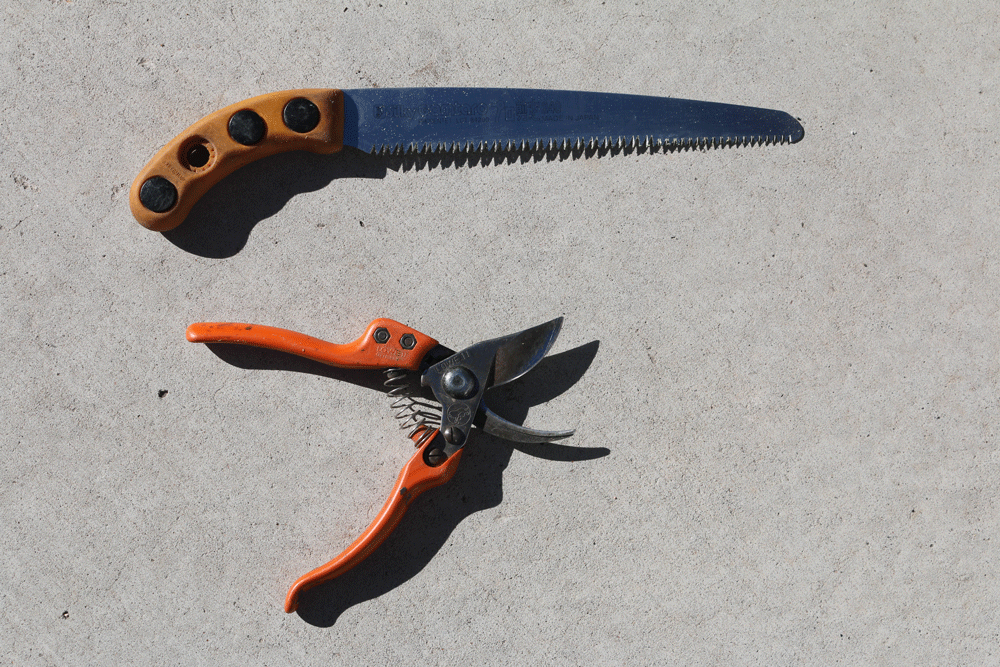
3. Use good hand tools, including a bypass hand pruner and scabbard, 8” folding hand saw, long reach pruner and orchard ladder (step ladders on uneven ground can be dangerous). As fun as they may seem, never use a chainsaw unless operating from the ground below shoulder height. Always wear PPE including safety chaps. Remember to sterilize tools with alcohol or Lysol spray when moving between trees.
Hand Pruner and Bypass Pruning Shears
4. Know your tree type. To figure out your tree type and its particular needs, try some plant identification apps, read the Arbor Day Foundation brochure “what tree is that.” or take photos of the tree and ask an expert. Pictures should include the overall tree form, leaves, bark, flowers or fruit. The most common trees in the Albuquerque landscapes are honey locust, Modesto ash, Siberian elm, London planetree, desert willow, Austrian pine, ashes, ornamental pear, Afghan pine, purple leaf plum, cottonwoods, golden raintree, Chinese pistache, pinon pine, redbuds, crabapples, Navajo willow, Texas red oak and mimosa.
5. Check out your tree’s health. How much water does it need and if/when does it need to be pruned? Highly-stressed trees should not have living branches pruned or removed. A healthy tree’s overall vigor and branch growth from previous years should be around 3”- 4” of growth per year between a bud scar and a new terminal bud. Access the density of the canopy all around and under the tree. For healthy conifers look for four years’ worth of needles on a branch. Less than two years on a branch is considered stressed.
6. Know the three types of pruning cuts: heading, removal and reduction. Avoid heading unless attempting to correct damage. Removal describes cutting branches all the way back to the main trunk. Remove 1” caliper branches and avoid cutting anything bigger than 3”. Some trees, like our local cottonwood, may not be able to heal large wounds. Reduction cut is the ideal cut. It is used to redirect and subordinate growth. Reduction cutting allows the tree to heal properly. Prune back to a branch that is at least 1/3 the size of the branch removed in order to avoid excess sprouting and allow the remaining branch to assert dominance.
7. Know where and how to make the cut. Refer to the diagrams to properly identify the branch collar, which contains the Branch Protection Zone (BPZ) that has specialized tissues which resist the passage of decay organisms into the trunk. Cut about 1/2” outside the branch collar. This allows for proper wound healing. Use the following three-step method when making a cut: First, make a partial upward cut several inches out from the final cut. Next, make a full downward cut a half inch farther out to take the weight off. Lastly, make the final cut without nicking the branch collar.
By reviewing and understanding these seven tree pruning concepts you are well on your way to properly pruning your trees. Remember, tree pruning is only needed every few years. The proper watering of your trees needs to happen monthly. Check out the other tree health articles below to keep yours in tip-top shape.
Author: Amos Arber, Xeriscape Rebate Inspector with the Water Resources Conservation Department for the Water Authority. Have a question about the article? [email protected]
Pinyon-juniper woodlands are the largest forest cover type in NM, comprising 14.6 million acres and representing 65% of NM forests (according to USGS Gap Analysis Program–Land Cover Data). In contrast, the next largest forest cover types in NM are ponderosa pine at 5.2 million acres (23%) and mixed conifer at 1.5 million acres (7%). When it comes to junipers, New Mexicans either love them or hate them.
Those who dislike them talk about allergens and how junipers are overused, get sheared within an inch of their life and smell like urine. Those who like them appreciate their low water needs, climate adaptation, long lifespans and evergreen qualities.
Hate them or love them, Junipers are here to stay. They have so many useful qualities in our New Mexican gardens that they should be on everyone’s plant list. Choose females for no pollen, which is what is sold in local nurseries.
Below are some of the local favorites:
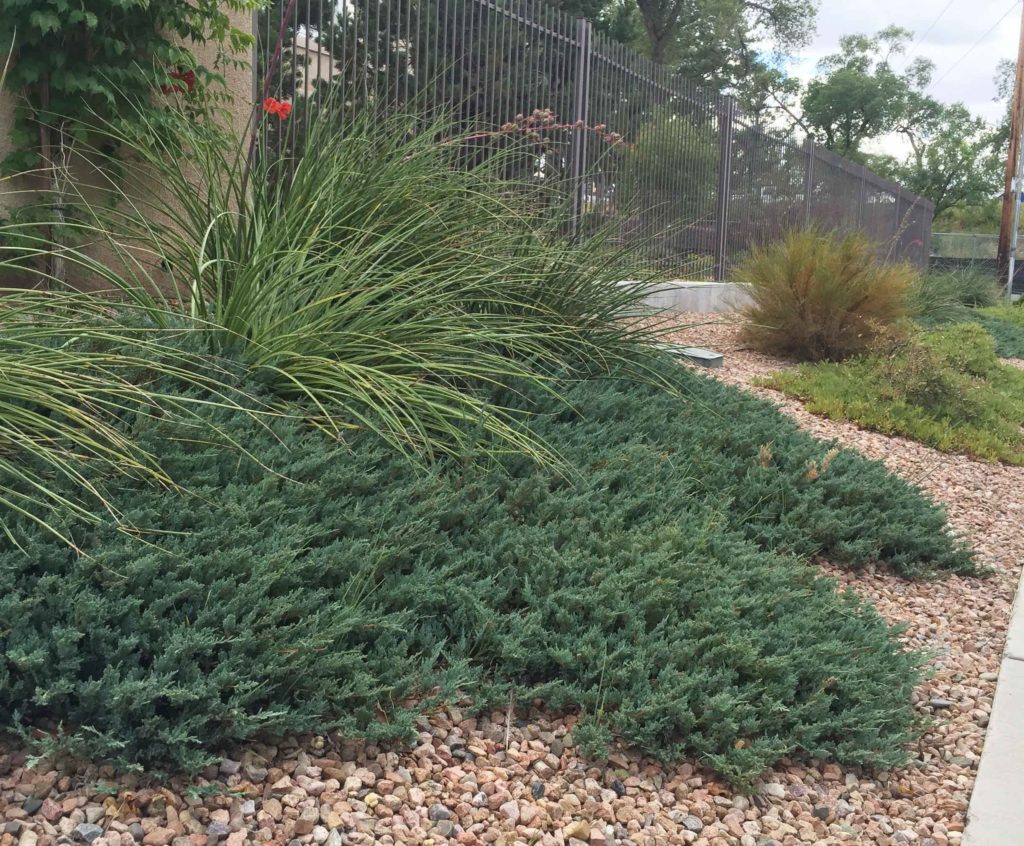
Carpet Juniper, Juniperus horizontalis. Blue chip, low allergen, beautiful color, low growing, does best in part shade. The species Juniperus horizontalis “Plumosa Compacta’, Andorra Juniper, is low growing 18”-20”, spreads 8’-10,’ green during growing season, burgundy in winter, looks great when planted in mass. Blue Chip is another great spreader that has beautiful year-round silver-blue foliage.
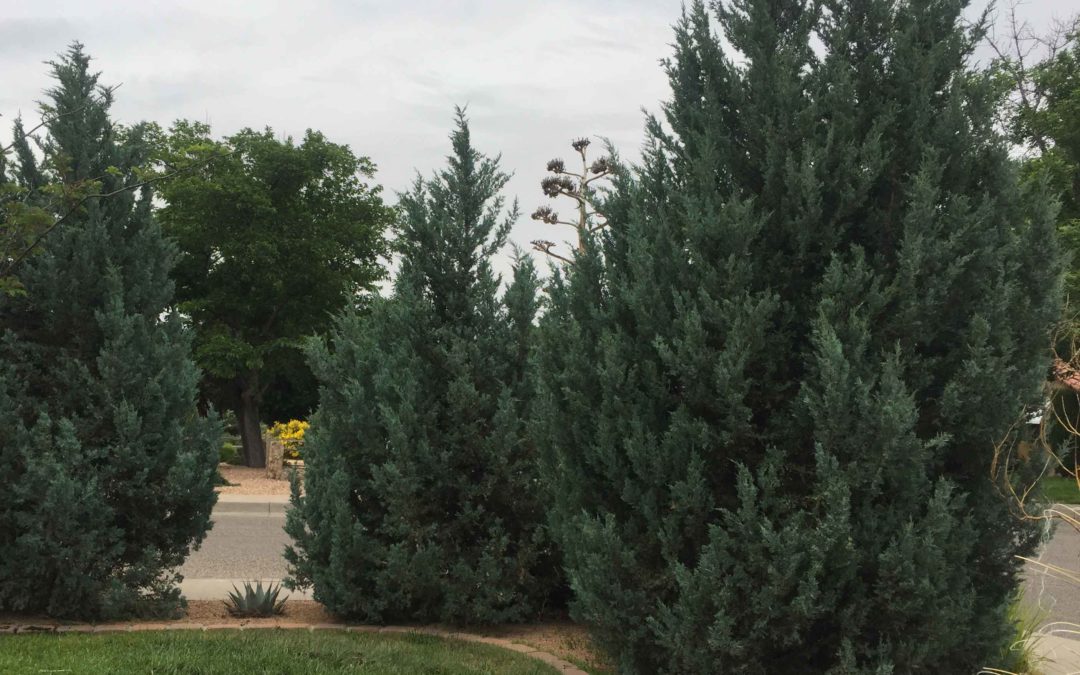
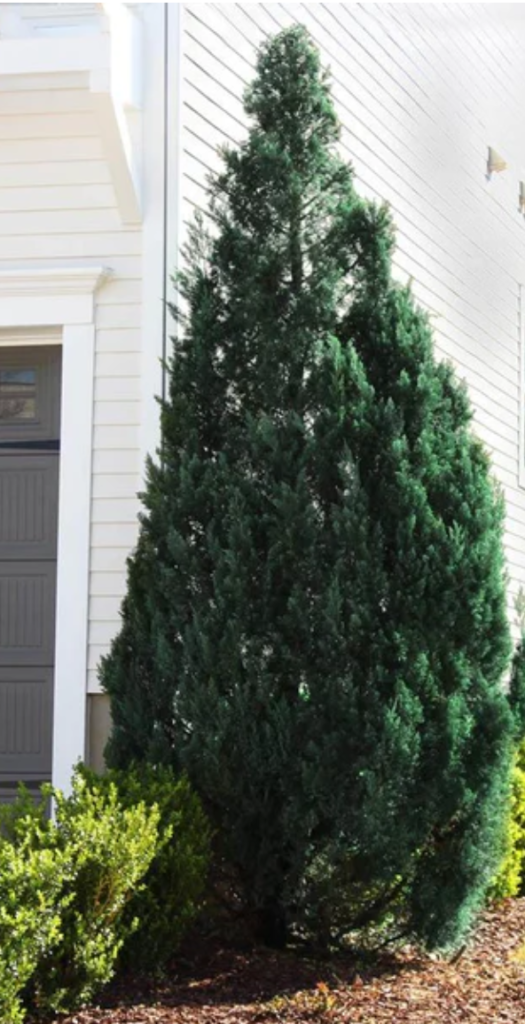
Blue Point Juniper, Juniperus chinensis Blue Point. This blue-green stately tree is pyramidal in form and has dense evergreen foliage. It makes a great windbreak when planted in lines and is a very nice front lawn Christmas tree, perfect for winter lighting. It reaches 12’ tall and is 8’ wide.
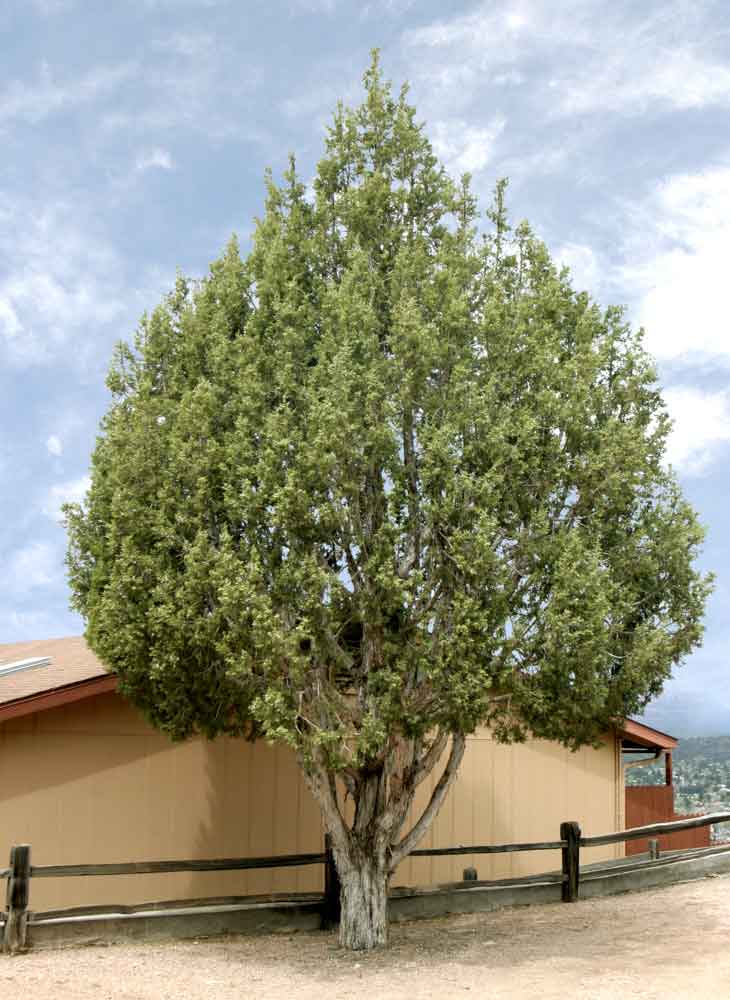
Rocky Mountain, Juniperus scopulorum, tall and narrow, dark green, tall. Pruning destroys the natural shape so it’s best to plant this in a place where it has room to grow up to 40’ tall and 20’ wide. There are many beautiful cultivars. Whichita Blue Juniper, Juniperus scopulorum ‘Whichita Blue’ is a beautiful shade of steely blue, year-round growing 10’-15’ tall and only 4’-6’ wide. ‘Skyrocket’ is a bluish-green narrow columnar tree growing 15’ tall and only 4’ wide, making it the narrowest of the juniper trees.
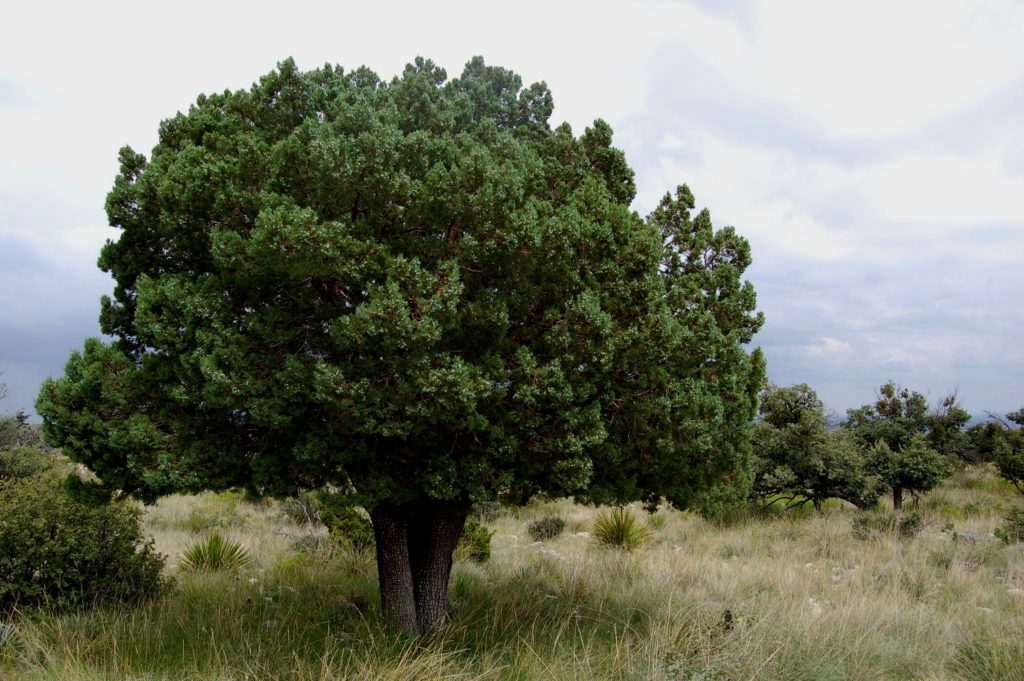
Alligator juniper, Juniperus deppeana, has blue-gray leaves. This tree has a thick trunk with bark that resembles that of an alligator. Unlike most junipers it has a stout, not conical, shape with great character and color. It can tolerate pruning.
Let’s give junipers a chance. If we let them follow their natural shape, these adaptable conifers are attractive, evergreen and sustainable survivors that provide habitat for birds and are quite useful in our landscapes.
Author: Jill Brown, ASLA, is a Landscape Architect and owner of My Landscape Coach in Albuquerque, NM. Have a question about the article? [email protected]
Thinking of putting some trees in your landscape but also concerned about making good use of the water, space and time? Some people like to plant fruit trees around the home landscape.
The obvious reason to grow fruit trees is the fruit! Just like there is no tomato as good as the ripe one picked right off the garden vine, there is no peach like the tree-ripened peach just outside your door. Growing fruit is not without challenges. Some people discover that the work required for a good harvest is more than they are up for. However, for others it is part of the gardening challenge that keeps us coming back for more.
Just like any other tree, fruit trees can play an aesthetic role in the landscape. They can be highlighted, or they can hide the blight beyond your fence. They can provide shade, cooling the outdoor spaces. They also can provide some level of wildlife habitat, whether it’s for the native bees that might pollinate the flowers or the little brown dickie birds pecking divots out of my ripening peaches. Well, they gotta eat too, I guess.
Fruit trees need all the things that any tree needs, which is sufficient rooting volume (it’s wider and shallower than you think), consistent moisture into that rootable soil and a mulch of some sort that covers and protects the soil. When they are grown for production in a commercial orchard, fruit trees also receive regular fertilization that may not be needed for a well-grown home tree usually producing more fruit than is needed. If you have fruit trees that produce more than you can use and give away, considering contacting a gleaning organization like Food is Free Albuquerque. They can bring volunteers to your property to pick the fruit, which is distributed through food banks to the local community. Fruit trees also benefit from regular annual pruning to maintain shape and size.
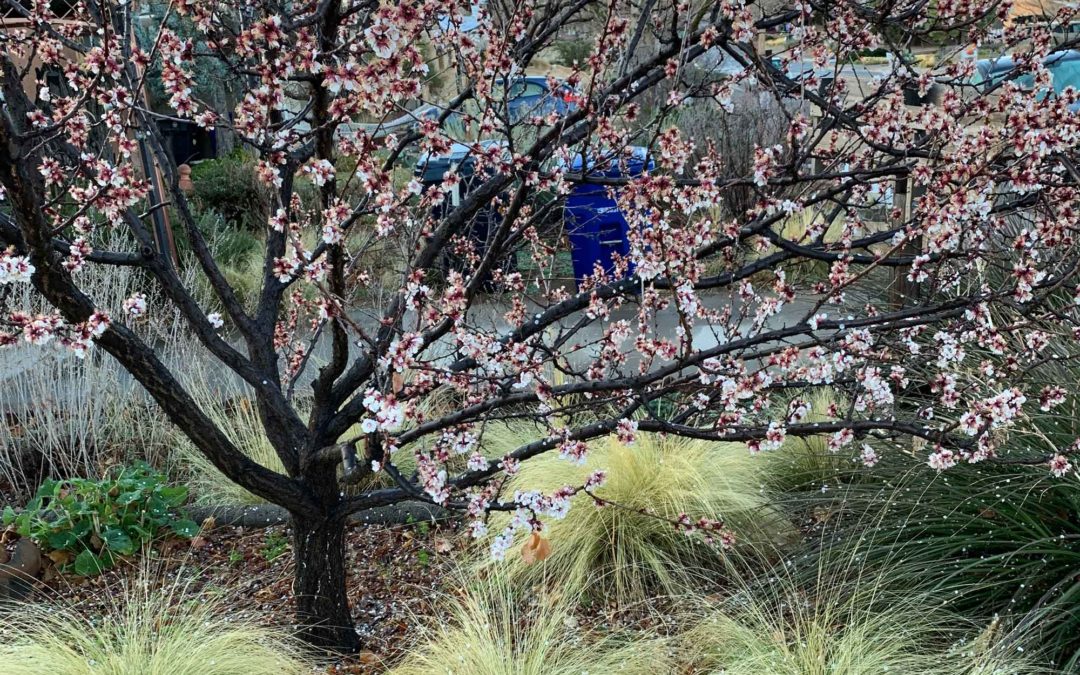
A large number of fruit species will grow well in our area. With peaches, one down side to them and other stone fruit species is their relatively short life spans, maybe 15-25 years in most urban settings. Other stone fruit species that do well for us are plums and cherries. Apricots grow well here but their early blooming often leads to last-frost crop death. Don’t worry, the tree is still fine. Of all the fruit trees, apricot may be the best for shading.
Apples also do well and are longer-lived than stone fruits. However, the fruit is more susceptible to insect damage, most notably the codling moth caterpillar (the infamous worm in the apple core). These can be controlled, with varying degrees of success, by trapping with pheromone traps. Timing is critical for that, and control may be incomplete, but more apples will be worm-free than without trapping. Codling moth also attacks pear fruit but to a much lesser degree. Fruiting pears can do well for us, though in some cases fire blight bacterial disease may cause a lot of damage and even death. Jujubes, Asian pears, Japanese persimmons and figs are all good choices as well.
There are several sources where you can buy your new fruit trees. I’m partial to online ordering from established mail-order nurseries. This approach offers the combination of variety choice and cost effectiveness. Keep in mind that mail-order trees are young and shipped out in later winter as dormant bare-root sticks. For a few reasons, this is an ideal type of plant to start working with if you have the patience to wait a few more years before getting fruit. Buying from local nurseries is fine as well, though it really pays to inspect the root ball condition carefully. If you’re very careful, even the big box stores can have good specimens.
Read up on proper planting techniques and early structural pruning approaches. For a tree, the transition from potted (or bare-root) conditions to fully in the soil is critical. Tree growth and longevity can be made or broken at this point. In a nutshell: Dig a shallow and wide hole, have the highest root at the top of the soil and mulch well. As the young tree grows, prune for strong attachments, ease of access and to help control total fruit load that can break branches in a bumper crop year. Early and aggressive thinning of the fruit can really help to prevent branch failure and also produces larger pieces of ripened fruit.
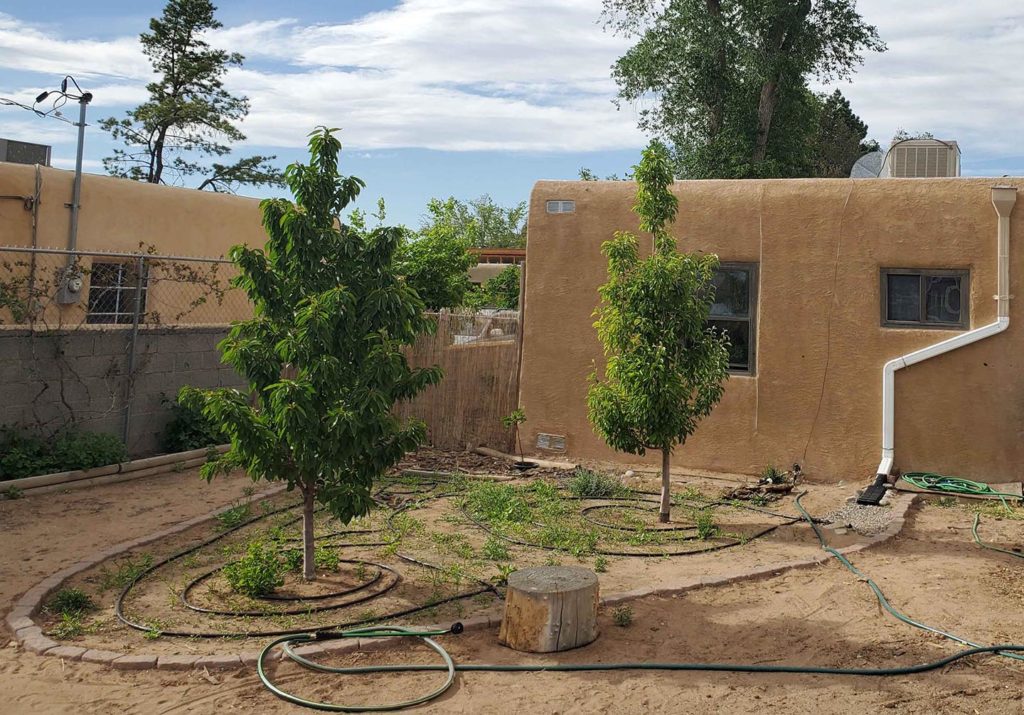
Un-mulched fruit trees showing inline dripline and roof runoff as watering system.
Author: Joran Viers, Senior Partner at Root to Shoot Urban Forestry, Inc. find him at [email protected] Have a question about the article? [email protected]
We all love the feeling of cool shade on a hot summer day, whether it comes from a dense tree canopy growing above the yard or from our home as it shades different areas throughout the day. Quite a few plants appreciate that cool space. There are many options for adding useful, attractive greenery to your yard that do well in the shade.
Since there are different levels of shade, watch the progress of the sun across your landscape so you can determine the right plants for each location. The shade cast by trees varies with the size and kind of tree. For example, a large mulberry will cast broad and deep shade, while a honeylocust will provide a more dappled and lighter level of shade. The more upright the tree, the narrower the shade profile. Tree canopies that spread broadly offer a more uniform level of shading. Shade from a building can be a bit problematic in that it is very dense where it falls, but that changes over the course of the day.
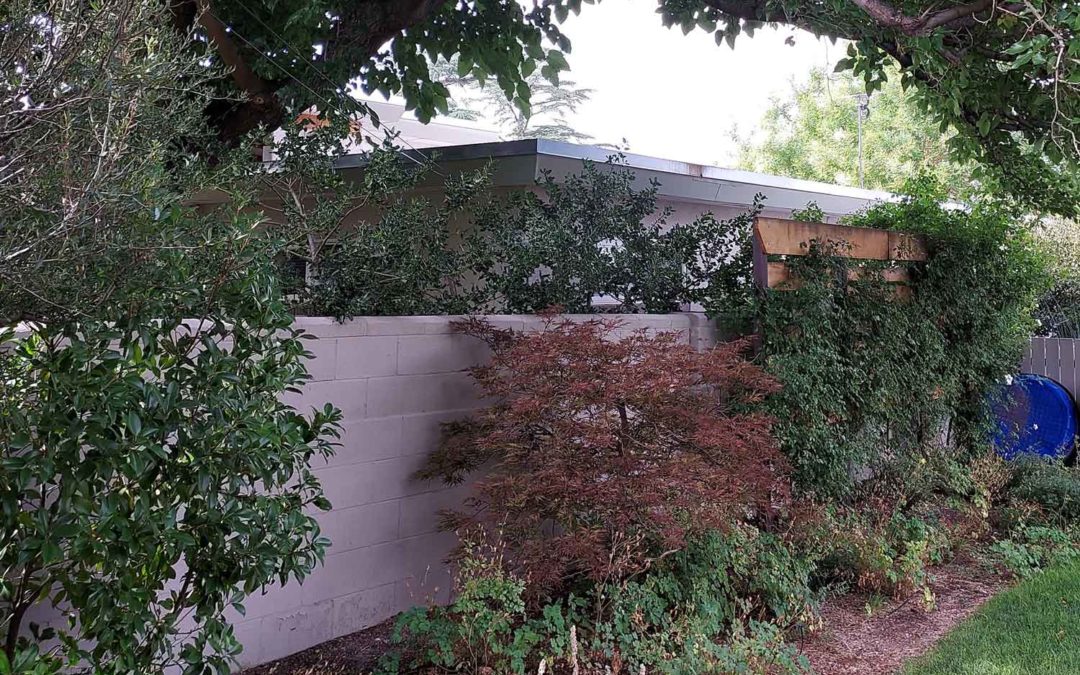
One of my favorite shade plants is something I hardly ever recommend in Albuquerque: Japanese maple trees. These small trees thrive in all-day dappled shade, although they do take a bit of water. Due to their small size, however, they don’t need that much extra water. These lovely little trees deserve a nice setting where you can see and enjoy them all year round. They may be a good choice for the oasis zone of your xeriscaped landscape. The caveat is that these little trees will not do well in strong sun, so pick your spot with care!
There are a couple of shrubs favored by nurseries that do much better with some shade than in the full-sun situations where they are often found. Both nandina (heavenly bamboo) and India hawthorn will look much better with some relief from scorching sun and suffocating heat. Native barberry (Berberis fendleri to the plant nerds) takes deep shade well, while the native three-leaf sumac and gro low sumac will tolerate moderate shade very nicely. The latter tends to get taller and leggier in shade than it does in sun, but it’s happy either way and doesn’t need much water. Other locally-common shrubs/sub-shrubs that do well in dappled shade are autumn sage, cliff fendlerbush, and even blue mist spirea.
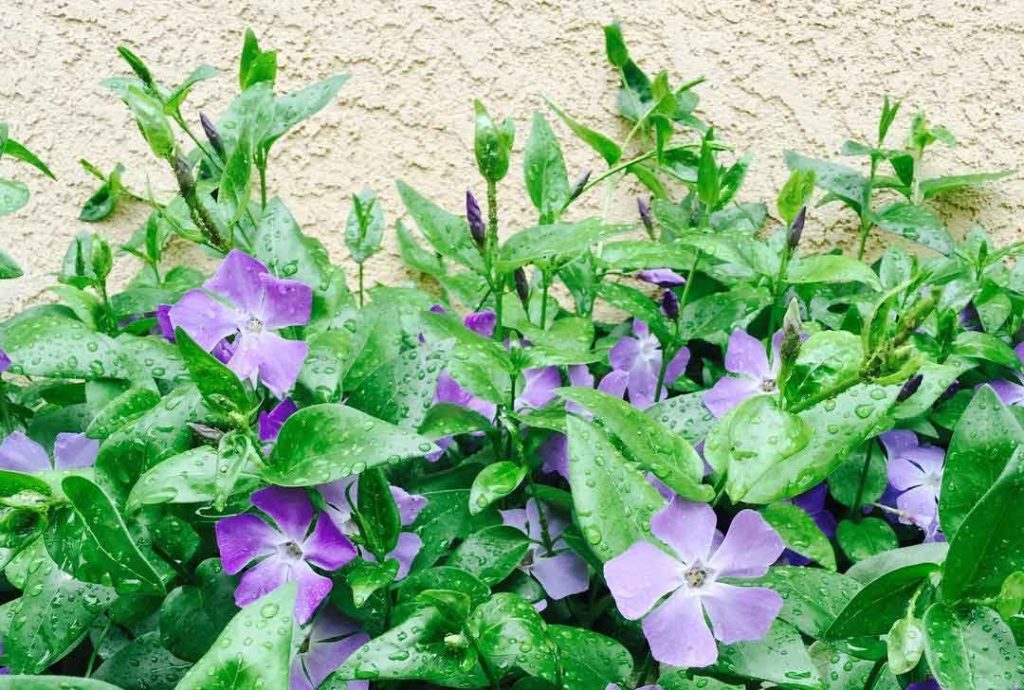
I’m a real fan of ground covers in shady areas, especially under trees and planted into organic mulch like shredded wood chips. Kinnikinnick (a.k.a bear berry) is a Montana native that too often is placed in full sun and doesn’t like it, but in a shadier spot it really shines. The periwinkles, Vinca major and Vinca minor, also do well in a shadier setting, attractively rambling through the mulch. Dwarf plumbago likes similar conditions to the vincas. Yerba mansa and creeping mahonia are native plants that also do well as ground cover.
Vinca Major
Mints are good in light shade. There are many types, from chocolate mint to spearmint to orange mint. I let them grow and bloom. Since bees of all types and sizes love the blossoms, the mint is a great addition to the landscape from the beneficial insect perspective. Many tiny wasps use mint flowers as adult food, while their offspring are busy parasitizing aphids and caterpillars. One thing to remember is to make room for the mint to spread, which it will happily do.
Related to mints, and likely to spread like mints, is dead nettle. Despite it’s name, it’s a great plant that uses little water and has blooms that attract good small insects. Other good flowering plants for light shade areas include the native columbines, lavender, and catmint.
What about turf grass? Most turf grasses like full sun and will get thin under shade, however I’ve had great results with creeping red fescue. This Eurasian native needs regular water to do well but can tolerate deep shade.
By establishing irrigation for shade plants, the trees above them also receive water, which is a great way to make sure those trees get water. Some shade plants are available only as seed (red fescue, for example), but most of them can be found as containerized plants at our local nurseries.
Author: Joran Viers, Senior Partner at Root to Shoot Urban Forestry, Inc. find him at [email protected] Have a question about the article? [email protected]
Albuquerque ranks third, after New Orleans and Houston, among cities with tree loss. Our trees are dying because they aren’t being watered properly or at all. How should we water established and mature trees?
To address this problem a landscape architect and a professional landscaper put together a Tree Watering Irrigation Kit that allows you to water established trees more deeply and consistently.
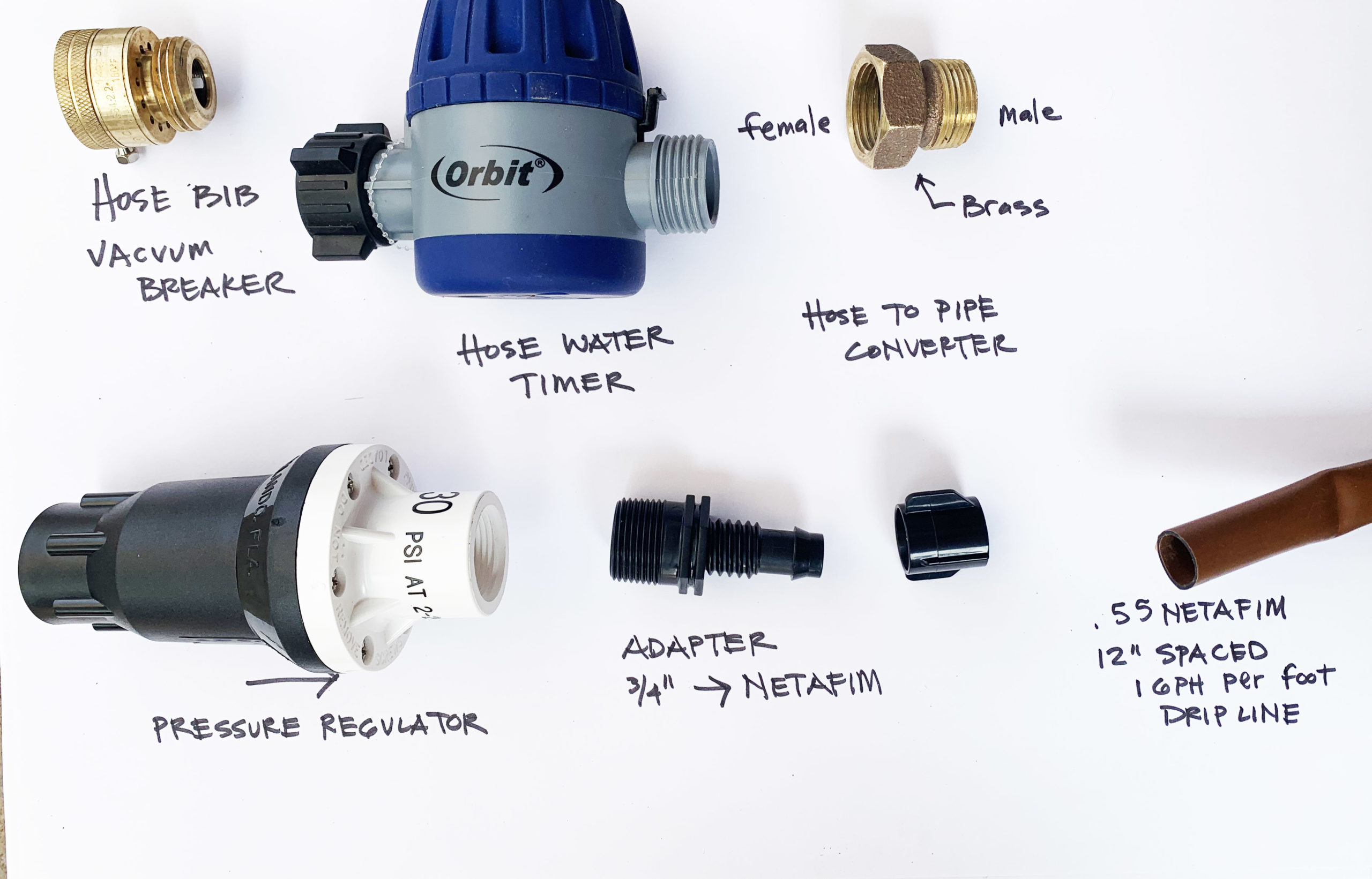
It’s easy for homeowners to assemble a similar kit that attaches to a hose spigot using the parts below, from left to right.
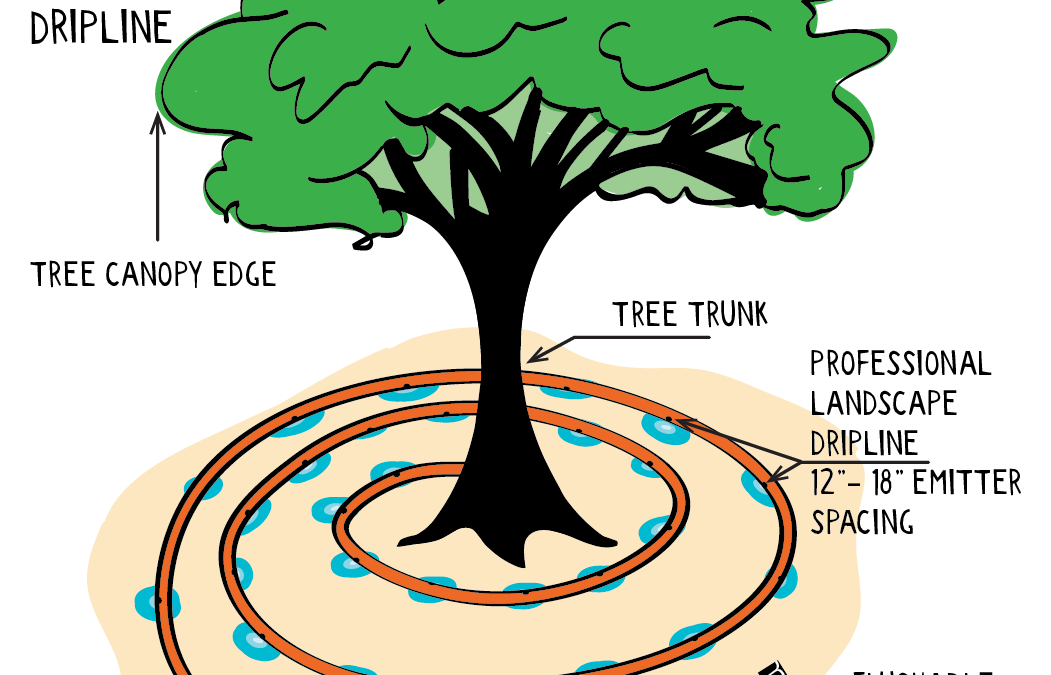
Startwith a hose bib vacuum breaker, which prevents water from siphoning back into the potable water system. Next in line is a hose water timer that works like a kitchen timer, opening and closing a valve at a pre-set time. Instead of a hose water timer, consider using a WaterSense Smart Controller (a rebate is available for this controller). Attach a female-to-male hose swivel converter to the timer or controller. This converter allows you to pop on a pressure regulator that drops our city’s water pressure down to 30psi, which is the best pressure for a drip system. After the pressure regulator, attach an adapter that connects to the ½” inline dripline. The inline dripline comes with 1gph emitters that are spaced every twelve inches. This allows the water to drip consistently and efficiently directly into the ground, deeply soaking the roots of the tree.
Once you have your system installed, a good rule of thumb is to set up a 45-minute run time. To know how often to water, follow the Seasonal Watering Recommendations .
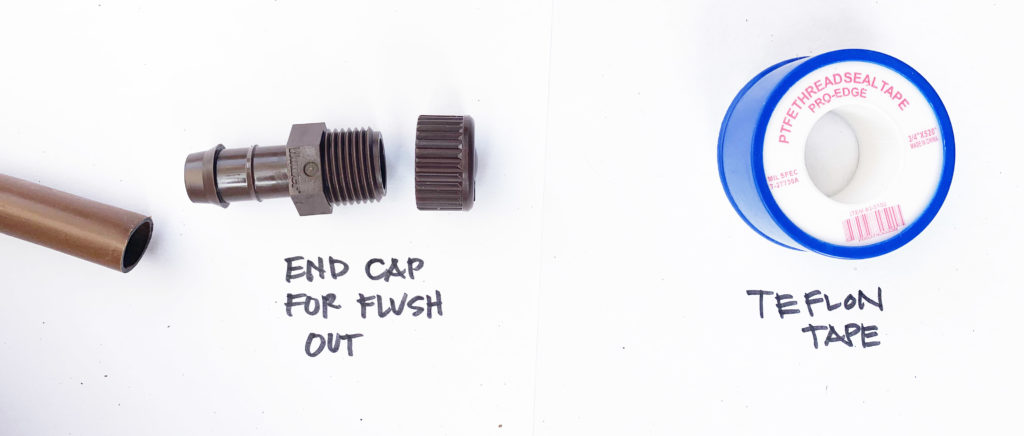
The end cap (pictured below) is installed at the end of the inline drip tubing. This can be opened to empty the line of water and prevent freezing.
As I write this, a cold thin snow cover still hides the ground, but it won’t last long. If we’re lucky, the snow will slowly melt and seep into the soil; if we aren’t lucky, it will sublimate right into the atmosphere – straight from solid to gas. Alas, the roots of our trees lie in the dry desert soil, waiting for water.
It’s always that way, here in the arid Southwest. Our soil, lacking in moisture, also lacks living and dead organic matter. The water that falls on our land either falls infrequently, too little or too much all at once. Still, the plants and trees persist. It is up to us, the human caretakers of these places and trees, to do whatever we reasonably can to provide them with what they need to survive.
Sounds kinda doom-and-gloom, you say? It does! This year promises to be very dry and likely very hot. We all need to do our part to conserve water, and yet we want to keep those established trees healthy and help recently planted trees get established. So, what to do?
It turns out that the two best things we can do are relatively simple. We can reasonably and regularly irrigate the trees (more details below) and apply a layer of coarse organic material as a mulch over the root zone of our trees.
Since every tree in every yard is different, how often you’ll need to water your trees largely depends on how quickly water moves through the soil. In sandy and gravelly areas (Westside and Foothills), the water passes through the soil quickly, moving past the tree roots. These types of soil need watering more often but with less water each time.
Here is how to do it: Water long enough that after a day, when the water has soaked in, the soil has been moistened about 16-24 inches deep. Poke a thin piece of metal (a long screwdriver or something similar will work) into the ground and see how deep you can push it in. That will tell you approximately how deep the water penetrated the soil.
Do this in a broad area, focusing not on the trunk but on the part of the ground under the outer half of the canopy and maybe a bit beyond the drip line (edge of the canopy). Feel the soil with your fingers to determine when to water again. You don’t want to let the soil completely dry out between irrigations! Also, pay attention to the leaves, noticing if they are full and flush or droopy and tired.
The best way to water soil that has more clay in it is to irrigate less often but with more water. This kind of soil holds more water, but that water moves slowly. Be careful not to overwater, especially near the trunk. Too much water in the soil interferes with root function and can more easily lead to root rot and decay issues. Concentrate the water in the outer half, and also in a bit of the canopy shadow, all the way around the tree.
Wood chips, which can be obtained from a tree service or a local vendor, are the ideal mulch for trees. No matter what soil type and irrigation pattern you have, putting approximately three inches of wood chip mulch directly on the soil does wonders for your trees. As with any mulch, wood chips cover and cool the soil and reduce evaporation. As the chips decay, they foster the development of a forest-like soil ecosystem, which is just what tree roots really benefit from. Think of the ground surface in a forest — bits and pieces of old trees, slowly decaying at the surface. Add a new layer of mulch every couple of years, and watch your trees thrive!
Other mulches, like pine bark chips or pecan shells, are not quite as good as wood chips. Rock mulch is not a good choice. It absorbs sunlight and releases that energy as heat that rises through the tree’s canopy and strips even more precious moisture from stressed leaves.
Did you know that the Water Utility Authority will help cover the cost of some of this work? Through the Treebate program, they will offset a portion of the cost of certain purchases — such as new trees — and activities such as pruning and other maintenance work, soil improvements through compost and mulch and even some irrigation costs. Check out tree recommendations and all the program details here.
Author and Photography: Joran Viers, Senior Partner at Root to Shoot Urban Forestry, Inc. find him at [email protected] Have a question about the article? [email protected]