Does the thought of making changes to your yard seem costly? Can you still get reasonable benefits from just changing a few things instead of your whole yard? Do you feel overwhelmed because you don't know where to start? Do you feel like you don't know enough about irrigation systems to know what to do?
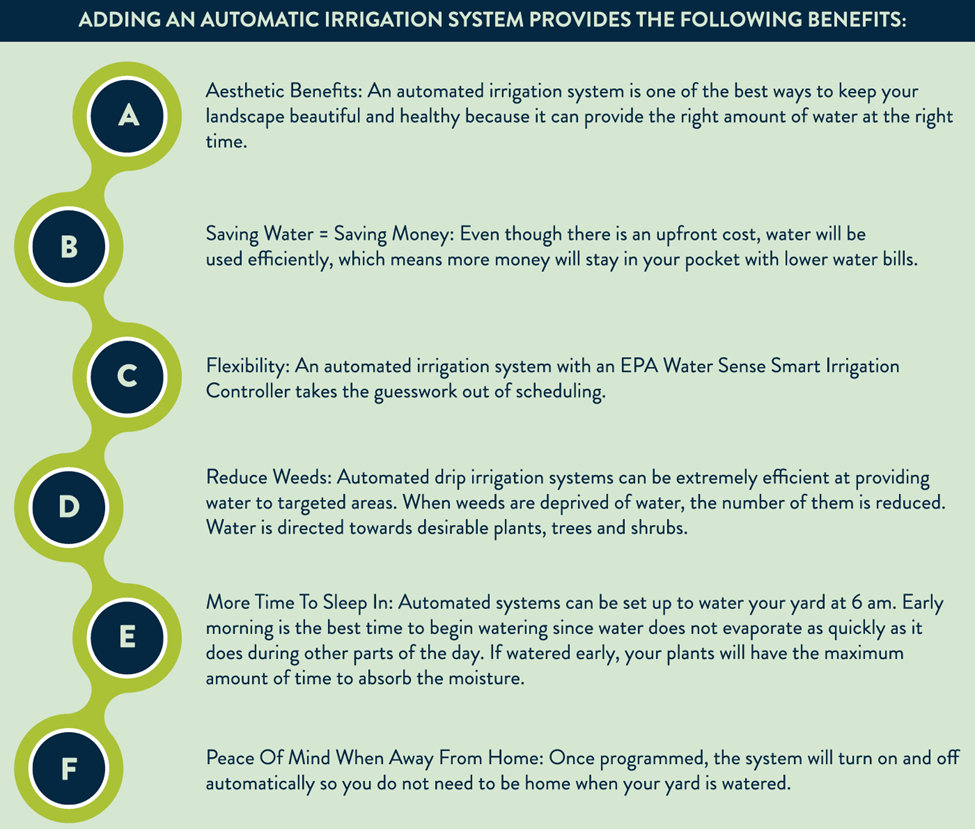
Having an efficient automatic irrigation system can be financially affordable for homeowners, especially with help from our rebates. Homeowners can choose to install or update a spray or drip irrigation system. To figure out your budget using our rebates, consider the following questions: How much can I spend on irrigation updates this year? It's important to be realistic about what you can spend and stick to your budget. You don't necessarily need to spend thousands of dollars to begin saving water. We offer rebates to help you cover some of the costs. Upgrades don’t have to be completed all at once. They can be done in phases.
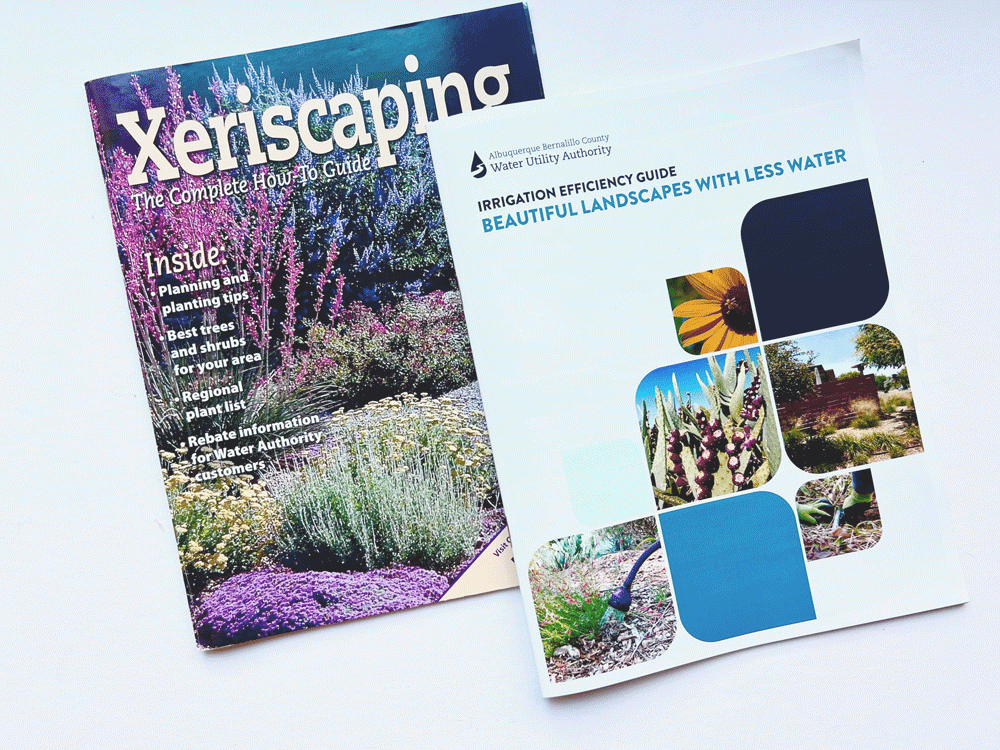
Check out our New Irrigation Efficiency Guide: Beautiful Landscapes with Less Water. Download the guide here.
Have you wondered what the City of Albuquerque is doing to support sustainability? The Sustainability Office is leading the city government’s efforts to reduce greenhouse gas emissions while growing our economy and protecting residents’ health.
What does the Sustainability Office do?
The Sustainability Office was created by Mayor Keller in 2019 and is housed in the Environmental Health Department. The office focuses on implementing projects and policies to equitably address climate change and environmental impacts across Albuquerque. One of the office’s major undertakings includes the development of the 2021 Climate Action Plan (CAP), whose core authors are 19 task force members representing frontline communities in Albuquerque. The 2021 CAP includes 50 strategies organized into seven categories. It is both a response to City Resolution R-19-187’s declaration of a climate emergency and an update of the city’s 2009 Climate Plan.
The office is headed by Sustainability Officer Kelsey Rader and has expanded to include Sustainability Specialist Denise Gonzalez, Sustainable Transportation Specialist Albert Lee and Sustainable Waste Specialist Sandra West. These staff members help implement the 2021 CAP goals and track progress for the public while taking guidance from community members. The office detailed recent progress in the first-ever CAP Implementation Report, which describes projects such as the expansion of publicly accessible, city-owned electric vehicle (EV) charging stations from two charging ports (aka plugs) to 36 ports as of July 2022. Other recent sustainability wins for Albuquerque include:
The Sustainability Office’s staff is looking forward to a year full of progress and new projects. For example, the office recently released heat-impact data collected in collaboration with NASA. The data will help staff decide where siting projects are most needed and better understanding the impact of heat-mitigation projects. In the transportation sector, residents can look forward to hearing more about EV rideshares and public transit access. In terms of waste reduction, the office is focusing on reducing food loss and waste and supporting community composting. Learn more about the Sustainability Office’s work.
Why are partners including the Water Authority important?
The success of citywide initiatives and goals rely on collaborations with partner organizations and support from the community. The Water Authority is a particularly important partner as water and waste are an integral part of many sustainability initiatives, including the mayor’s tree planting goal. The work that residents, the Water Authority, other like-minded organizations and the city are doing to reduce water waste and strategically utilize water in our homes and landscapes is an integral part of creating a healthy, resilient and equitable Albuquerque for all.
How can I stay informed or get involved?
To hear updates directly from the Sustainability Office, sign up for the Sustainability Office newsletter by emailing [email protected]. The office wants to hear from residents during quarterly CAP community engagement meetings and public surveys and is now asking for input on public transit and traffic safety issues. To share your input, please complete the survey this month (available in English and Spanish) and encourage your friends and neighbors to do the same. For those who want to dive into more information, please explore resources on the city’s website at www.cabq.gov/sustainability.
Albuquerque’s Sustainability Office (left to right) includes Sandra West, Kelsey Rader, Denise Gonzalez and Albert Lee.
Below are some great gifts for that homeowner who likes to tinker in their yard and also save water. Practical gifts are always in style!
Xeriscape Guide and Irrigation Efficiency Guide: Check out the Albuquerque Bernalillo County Water Utility Authority’s FREE xeriscape and irrigation guides that you can download for your stocking stuffers.
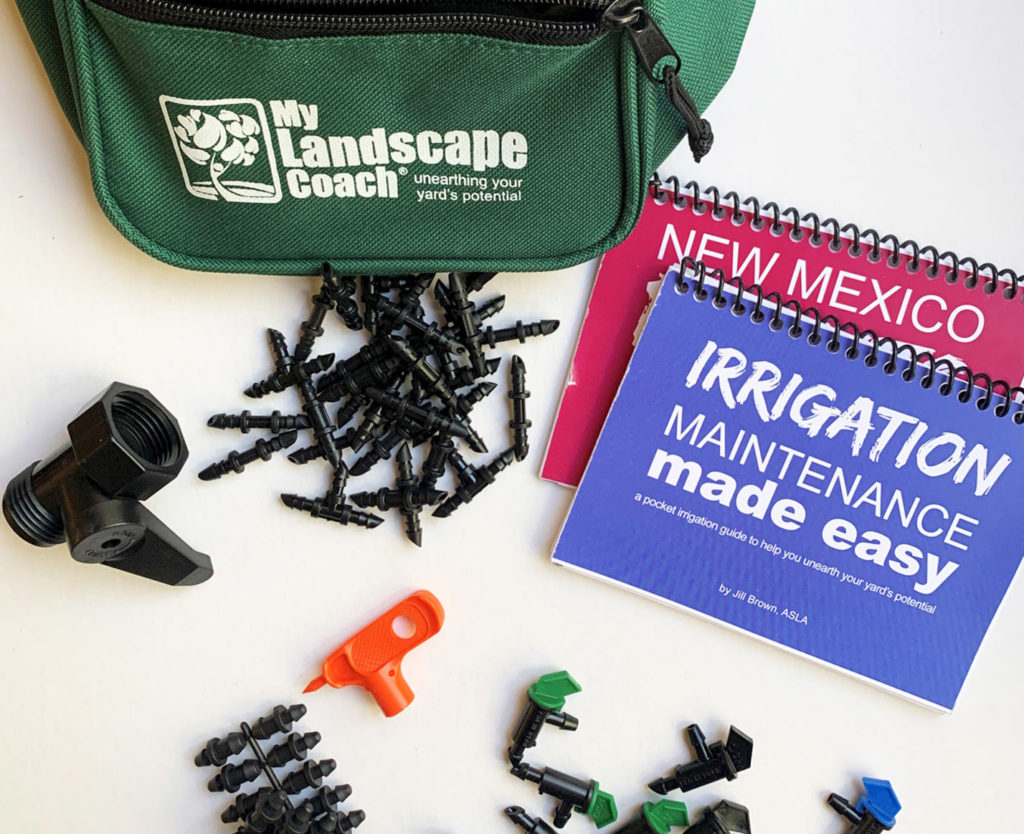
Irrigation Fanny Pack Maintenance drip kit: Drip irrigation isn’t rocket science. Fixes and tweaks can easily be done by the homeowner. This fanny pack drip maintenance kit ($40) comes with all the parts you need to maintain your system. The kit also contains two books: Irrigation Maintenance Made Easy, which teaches you how to make those simple fixes, and New Mexico Plants Made Easy, which features 60 plants that grow well in the Albuquerque area.
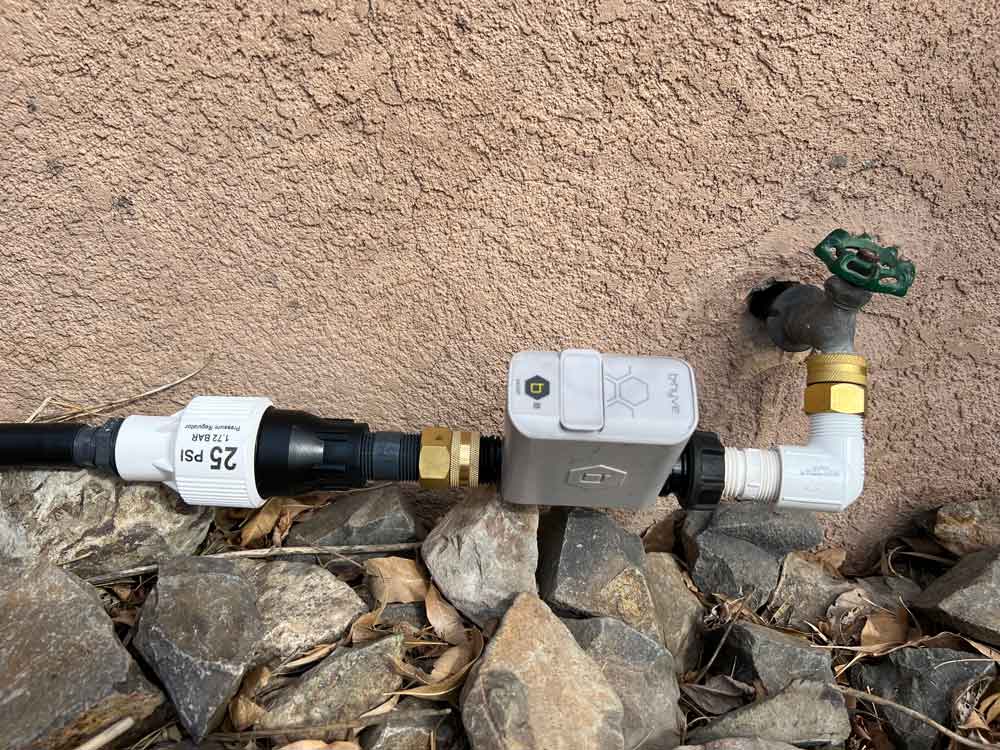
Hose watering system is great for homeowners who aren’t ready to install an in-ground irrigation system and need an inexpensive (under $100) way to water. The hose timer attaches to high-quality irrigation polypipe with drip emitters or connects to a professional landscape dripline. The irrigation dripline can stay in the ground year-round and be easily connected to an automatic in-ground irrigation system in the future.
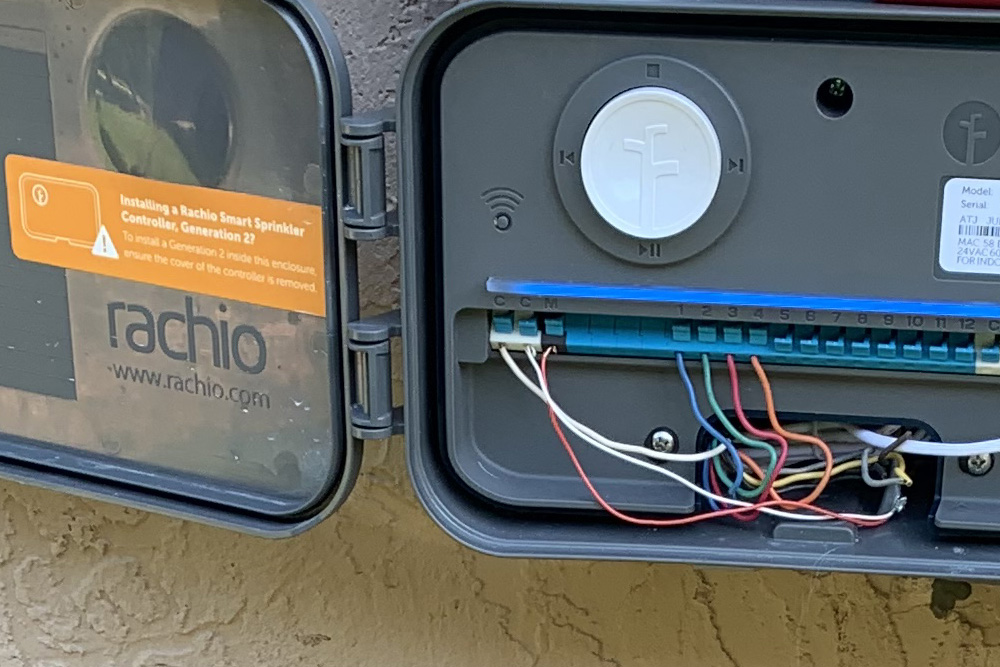
Smart Controller: This handy device ($100-$200) allows you to program days of the week, times of the day and the number of minutes to automatically irrigate your landscape according to seasonal weather and plant needs. EPA Water Sense Smart Controllers adjust landscape irrigation schedules using WIFI to collect weather data in conjunction with the information you provide about your plant type, soil type and other important factors that affect the irrigation schedule. The Water Authority’s irrigation efficiency specialist says, “While an irrigation controller is a must for your landscape, a smart controller adjusts your watering based on the local weather conditions.”
Author: Jill Brown, ASLA, is a Landscape Architect and owner of My Landscape Coach in Albuquerque, NM. Have a question about the article? [email protected]
Congratulations to the ten winners of our first annual Water Authority Desert Friendly Landscape Contest! Thank you for sharing your beautiful gardens with us. They are an inspiration for others to make the switch to desert-friendly landscapes.
The transformation of adirt front yard into a Desert-Friendly Landscape
Many Albuquerque homeowners are interested in saving water, so over time they have turned off their sprinkler systems and let nature take its course. However, nature takes a long time to come back to life in the desert, which is why we see bare dirt yards all over the city.
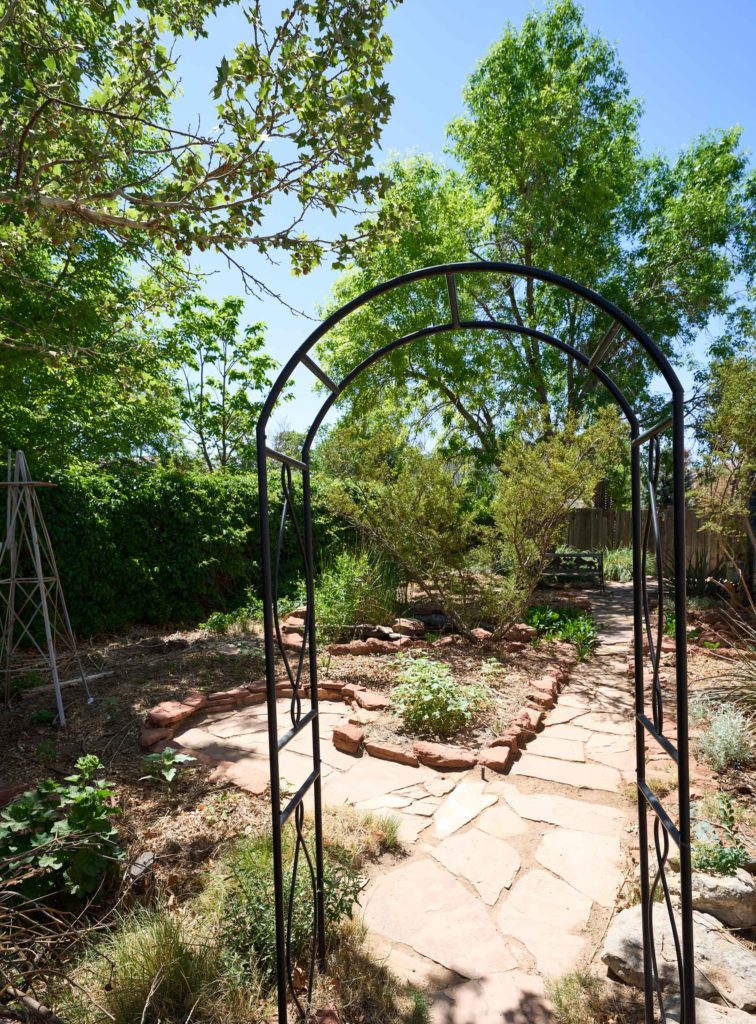
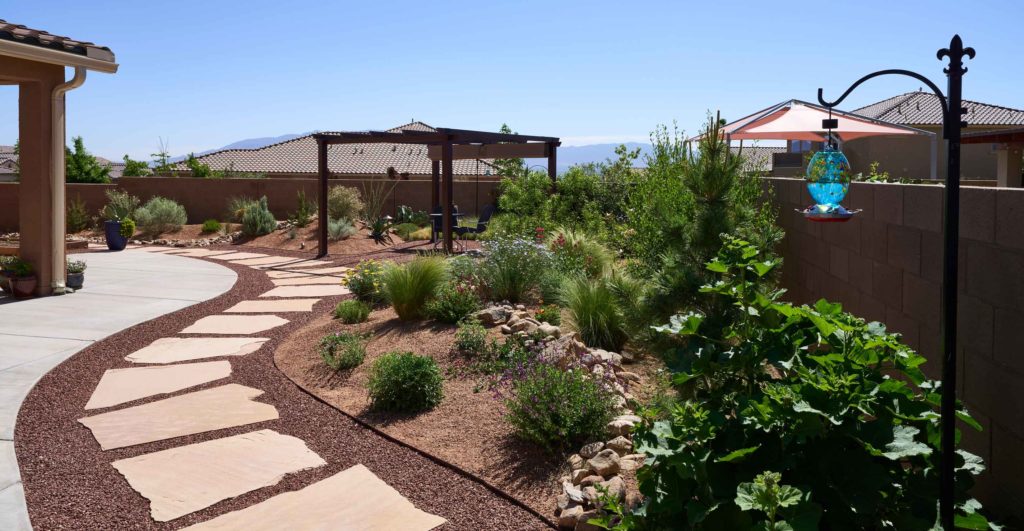
When Katrina and Peter Nardini moved into their southeast Albuquerque house, it had a dirt yard. After observing the landscaping in neighboring yards, Peter came up with a plan for their property that included a hardscape path and a wide variety of plants. To make sure the hardscape path was put together properly, a landscape professional was hired to build the path and steps.
“We chose plants by looking at other yards, taking pictures, and then working with garden center staff on selecting plants,” Peter and Katrina explain. Attracting hummingbirds was foremost in their minds.
Fortunately, a drip system was already in place in their yard, although some of the components needed to be upgraded to extend irrigation to all the areas that supported plants. “Initially, we had the irrigation drip system running most days of the week to get the new plants established,” they said. “Now, we turn it on twice a week in the summer and only one time a week during the other seasons. We only irrigate trees in the winter season. Most of our other plants do well with rainfall and snow.”
Katrina and Peter are delighted with the diversity of native and drought-tolerant plants in their transformed yard. “Our fruit trees are our favorite. They provide us with shade, beautiful flowers, and fruit!"
Grassy Lawn to Low Maintenance
After growing tired of weekly lawn maintenance, mowing, trimming, and the expense of watering, Daniel Stromberg decided to get rid of the grass in the front and back areas of his northwest Albuquerque yard and create a drought-tolerant, desert-friendly space. The first order of business was to replace the sprinkler system with a drip system.
Daniel worked with several different companies and a friend who is a master gardener to come up with the right design and plant selection. There was a bit of trail and error in the process, but the result is a thriving yard with drought-tolerant and native plants that gives Daniel a great deal of pleasure. “These plants look and do much better in the yard,” Daniel explains.
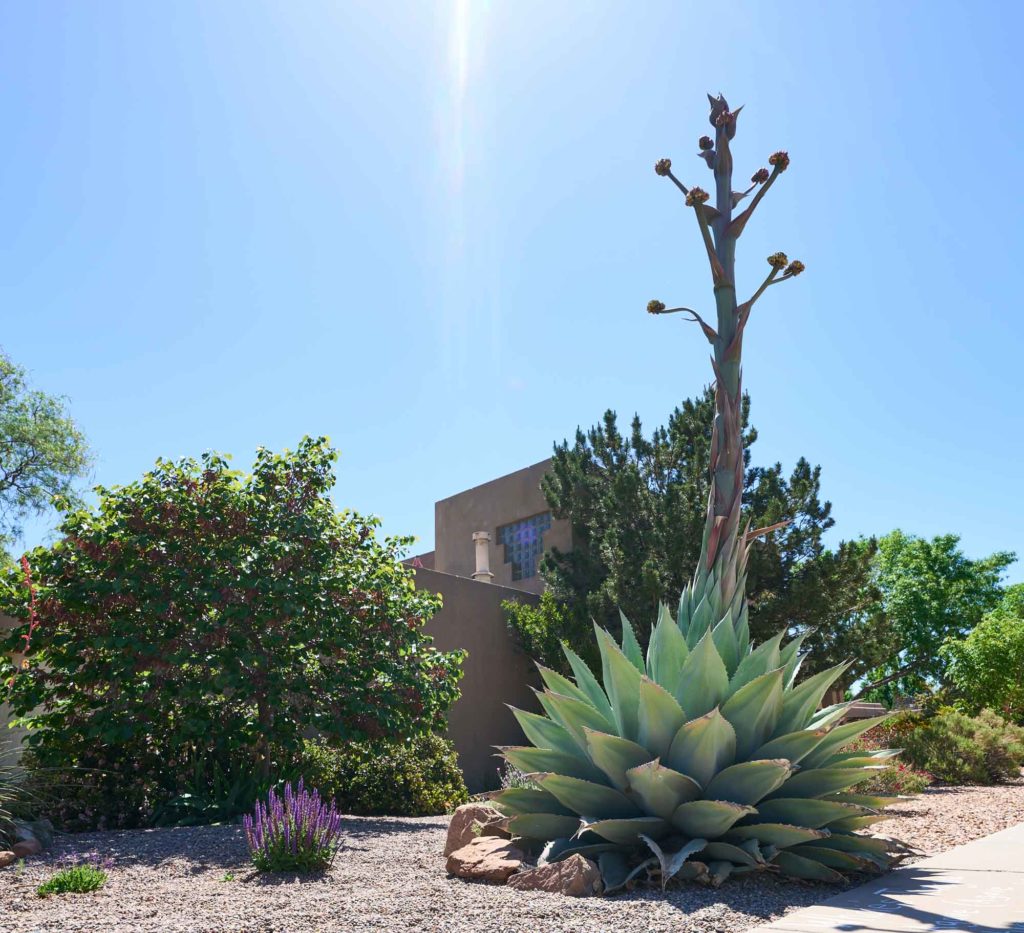
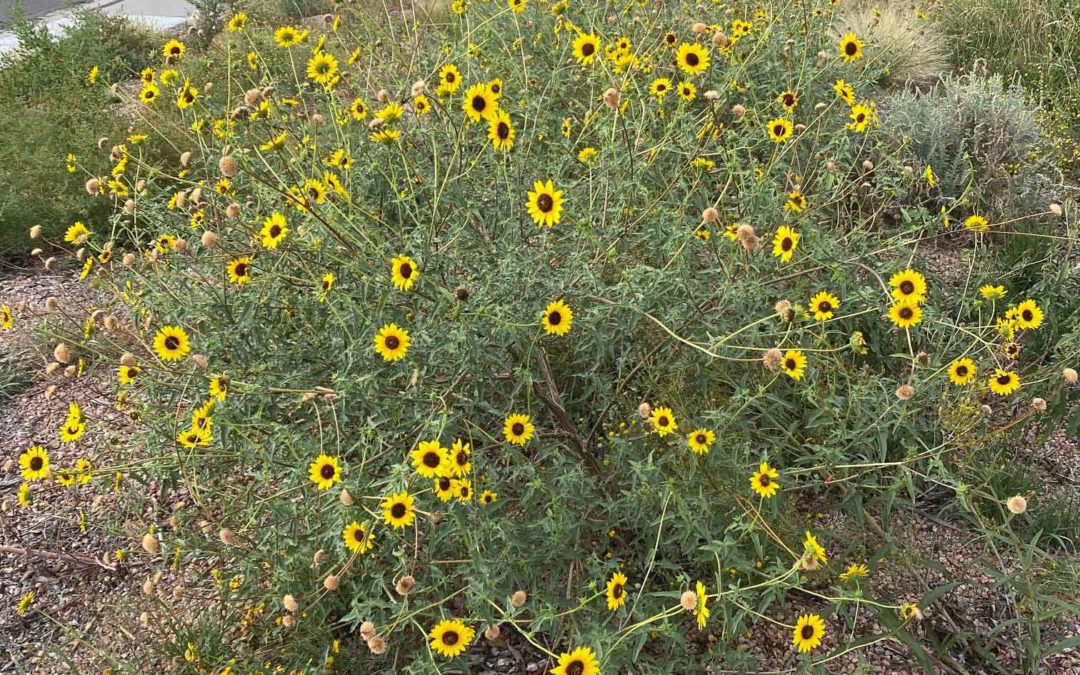
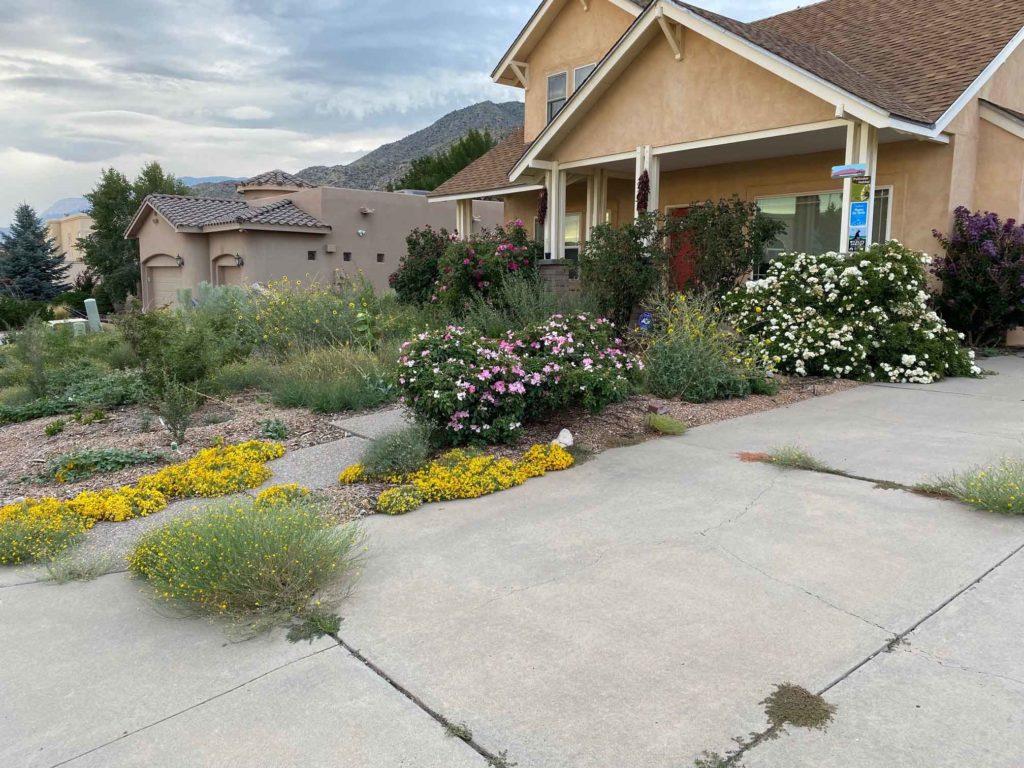
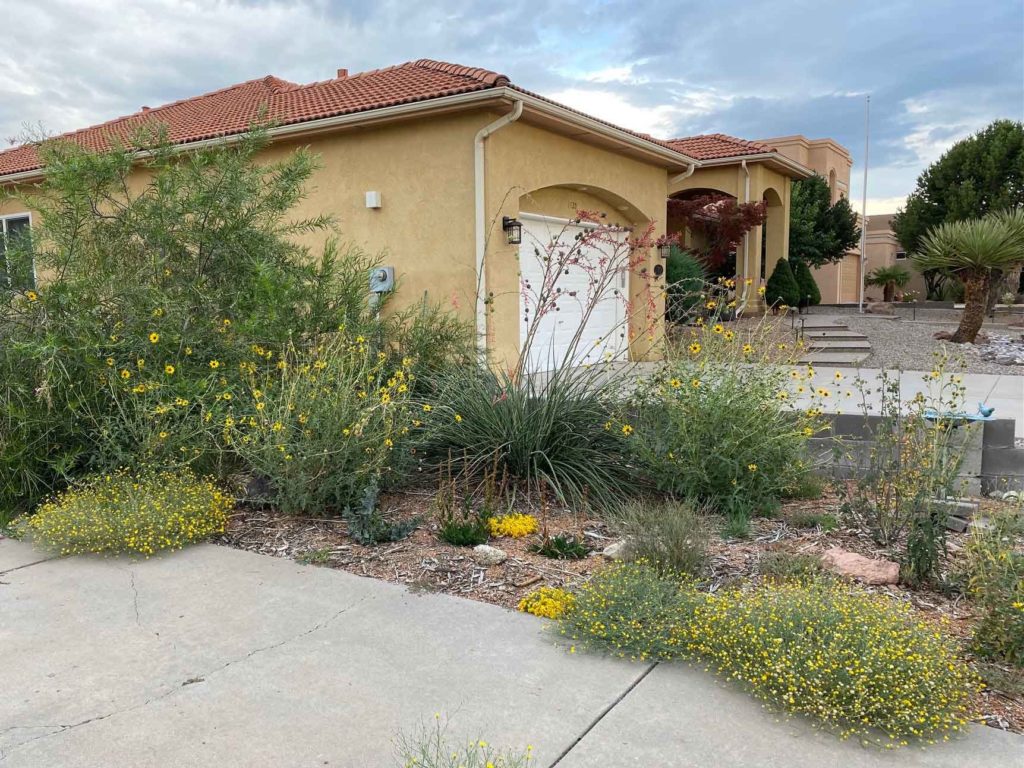
Transforming the yard from one that was high-maintenance to an easy-to-take-care-of space that requires little work was worth the effort, Daniel says. He is most proud of his sunflowers, whale tongue agave, ice plants and giant desert willow.
Congratulations to the ten winners of our first annual Water Authority Desert Friendly Landscape Contest! Thank you for sharing your beautiful gardens with us. They will be an inspiration for others to make the switch to desert-friendly landscapes.
Succulent Garden Wisdom
What once was a high-water use turfgrass lawn in the Northeast Heights is now a xeriscape garden with a focus on succulents. Janice transformed 550 square feet of turf into a diverse landscape complete with low-water use trees and shrubs and a beautiful succulent garden. She loves that there is, “No more mowing! No more trimming edges! No more feeding with nutrients! No more grass!”
When selecting plants, Janice turned to a variety of resources, including 505Outside, the Xeriscape guide and avid gardener friends. She hired a professional landscape company to install her new drip system. “The drip system is my go-to irrigation system as recommended by various professionals,” Janice said. “My plants and trees are happy following the 505Outside seasonal watering recommendations.”
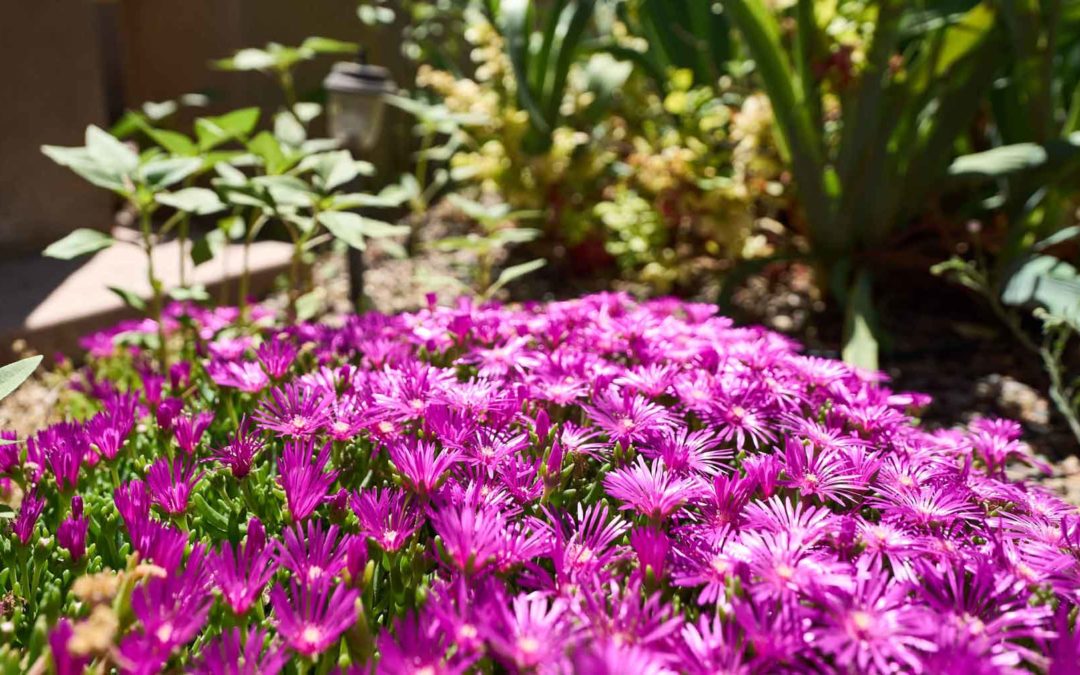
Succulent beds are her favorites, and she looks forward to adding new succulent species each year. Janice enjoys the diversity of plants in her yard and how they change colors throughout the seasons.
What started as a way to reduce water usage has evolved into a renewed love of the outdoors. Janice keeps track of landscape seasonal transitions, rain events, plant changes and teachings in her “Garden Wisdom” journal. “A garden can teach a lot about flexibility, patience and calmness,” she added.
Unearthing Wildscape
Local scientists Paul and Teri started with high-water use turfgrass and trees when they set out to make a wildlife habitat in their yard in the North Valley. They removed all the non-native grass and have been slowly replacing it with low-water native plants. Areas that haven’t yet been planted are covered with 3"-4” of organic mulch, which is an easy way to prep the soil before they’re ready to plant.
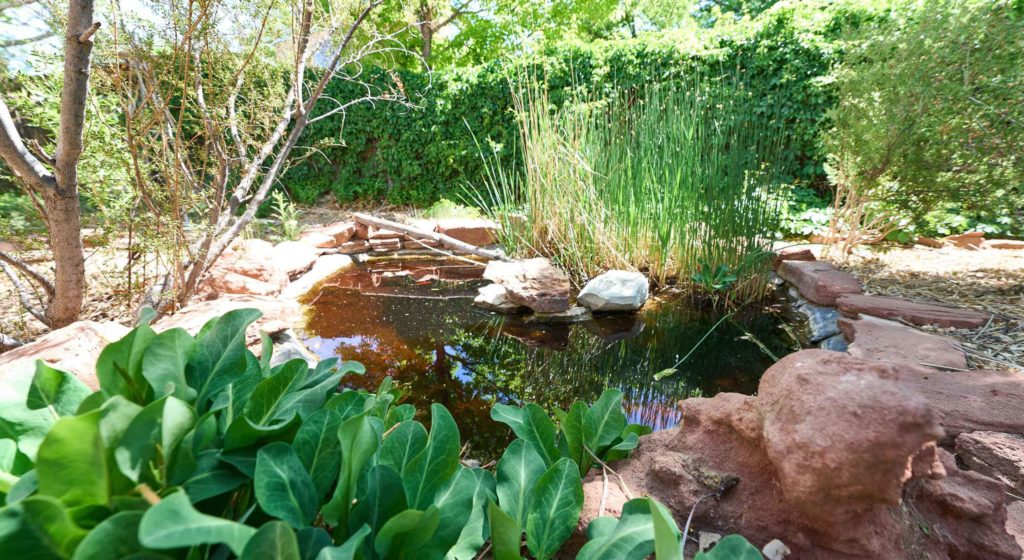
A pond was added to create a habitat for western toads. Other creatures have joined their landscape, and it is now a recognized Fish and Wildlife backyard refuge.
Part of the scientific work that Paul and Teri do involves mapping vegetation across the Southwest. Their extensive knowledge of local ecosystems has helped them select native plants that will thrive in different environments and through our changing climate, especially during times of drought. “Wild native plants can be very beautiful and add value to gardens because they remain resilient thru changes,” they said.
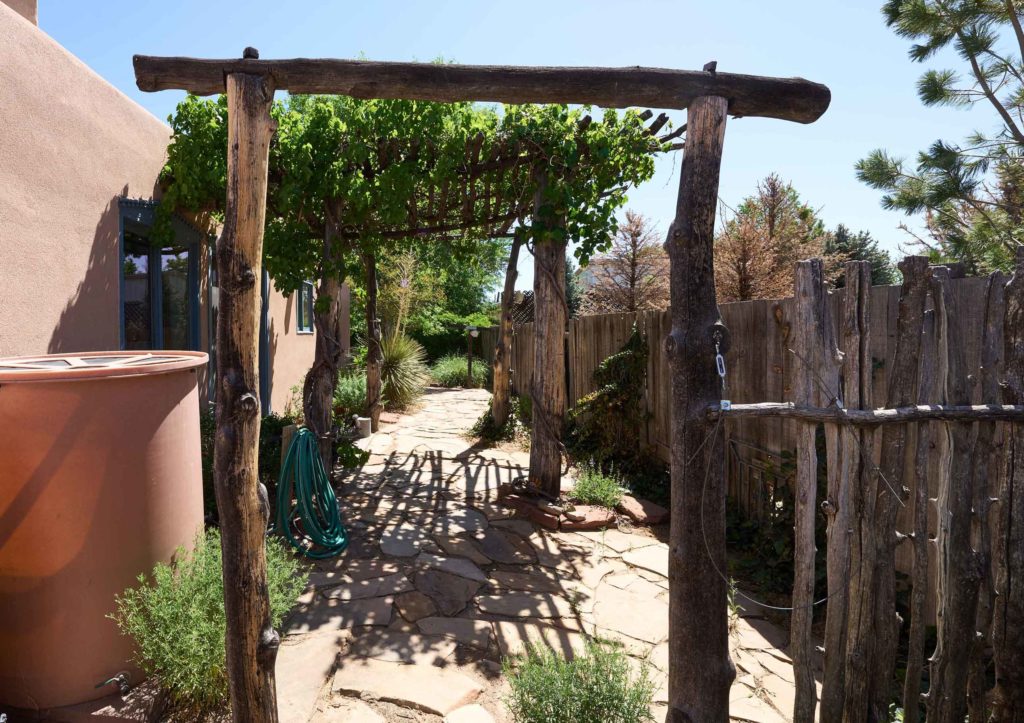
Their yard is set up with a drip irrigation system that waters as needed. During rainstorms rain barrels collect up to 1,500 gallons of water, which supplement their irrigation system.
“We are proud to minimize water use while maximizing pollinators, edibles and the abundance of plants,” they said.
Congratulations to the ten winners of our first annual Water Authority Desert Friendly Landscape Contest! Thank you for sharing your beautiful gardens with us. They will be an inspiration for others to make the switch to desert-friendly landscapes.
A Garden for the Senses
What once was a sandy empty lot in the NW has now become a garden that provides food, attracts birds and other pollinators and stimulates the five senses. “The flowers smell great through the seasons, we grow vegetables that we use on our plates,” say homeowners Adam and Meagan Henrie, who like the balance of having aesthetically pleasing and functional areas in the garden.
The Henrie’s accessed online resources, including 505Outside.com, to help decide which plants to incorporate into their garden. During trips to local garden centers, they identified plants that were thriving in their neighborhood. They chose low-maintenance, drought-tolerant plants and installed a drip and spray irrigation system using the latest technology. Local irrigation supply stores helped them choose irrigation system components and come up with a design for the irrigation system that they could follow.
When they planted new trees, they turned to the Water Authority and took advantage of the Treebate from the Water Authority. This rebate program also helps them with costs for tree maintenance.
“We love that our oasis attracts pollinators like birds, bees, butterflies, and also other wildlife like rabbits and roadrunners,” say Meagan.
100’s of Pollinators Can’t be Wrong!
The landscape around Elliott house in the NE used to be a sea of gravel, but now it is recognized by the Fish and Wildlife Backyard Refugee Program. During the past several years, Elliott has spent time transforming his yard into a habitat that attracts insects and wildlife.
“I wanted a yard that will change through the seasons and has a diversity of local drought-tolerant native plants,” he explains. “My goal was to add plants that will attract pollinators, so I started with the ones that were growing in the wild.”
Elliott learned about plants by doing lots of research, including reading information on the Albuquerque Native Plant Society’s website, accessing a list of plants from the Backyard Refugee Program, and visiting the store Plants of the Southwest. His goal was to have a lush, diverse and sustainable landscape that benefits wildlife and does not depend on supplemental water outside of rainwater.
Like the Henrie’s, Elliott has taken advantage of the Water Authority’s Treebate when planting new trees.
“I love all the pollinators, diversity of plants, and my learning journey along the way. Now I get to educate and share my experience with others,” says Elliott, who hopes his yard is an inspiration to his friends and neighbors.
Low Water Paradise
With the goal of reducing water usage, the owners of this home in the Northeast Heights first turned their attention to the property’s big, hardly-used front lawn. Once they learned about the Xeriscape rebate from the Water Authority, they immediately called to get more information and help with choosing plants that would enhance their property.
The transformation started by renting a sod cutter to remove the lawn as part of the Desert Friendly Xeriscape Conversion Rebate. They were able to save the turfgrass and transplant it to their son’s yard.
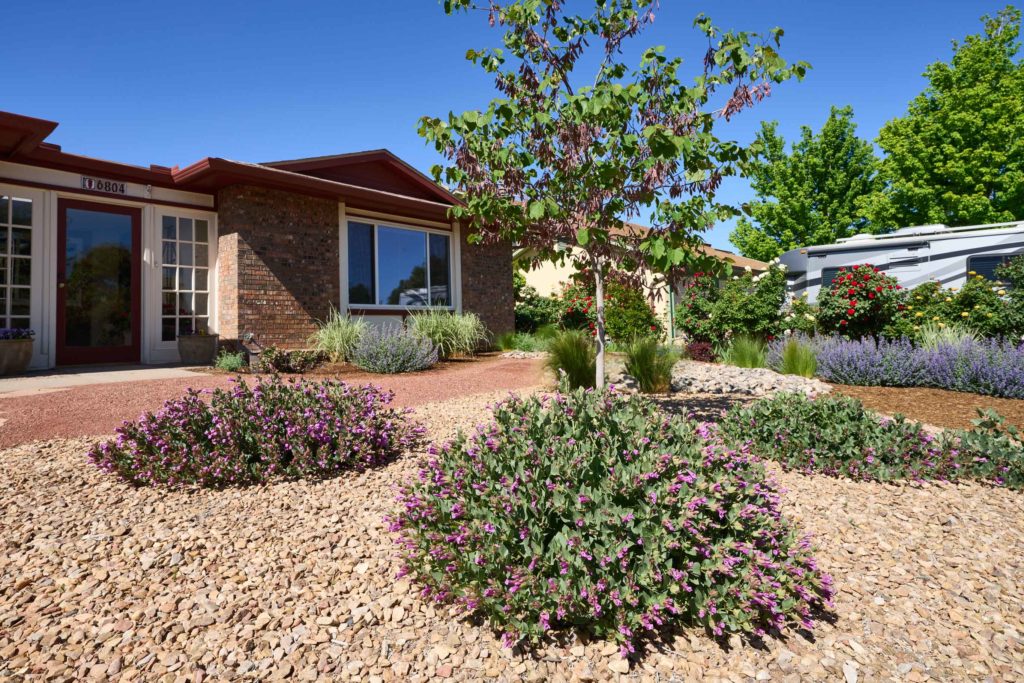
Landscape professionals were hired to create a design and install the swale, plants, and drip irrigation system. It only took one week to transform the 880-square-foot front yard from a high-water use turf lawn to a desert-friendly xeriscape with a diversity of plants that are supported by rain and drip irrigation.
Because of the transformation, the homeowners earned an $880 credit on their water bill! An extra benefit came when they participated in the Treebate program. Now, the homeowners take pride in their yard, which has attracted pollinators and interest from neighbors. They also are learning how to maintain and care for their new plants so their landscape will continue to bring enjoyment in the years ahead