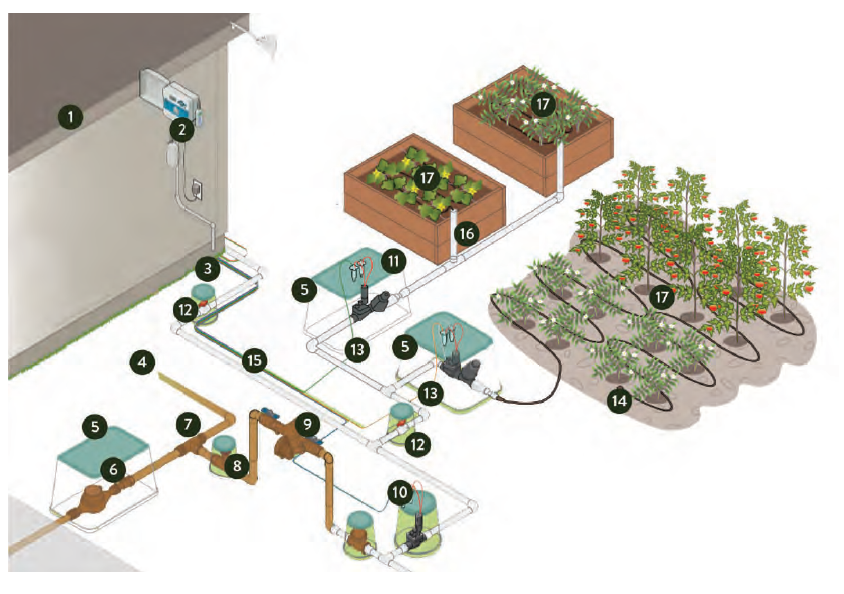
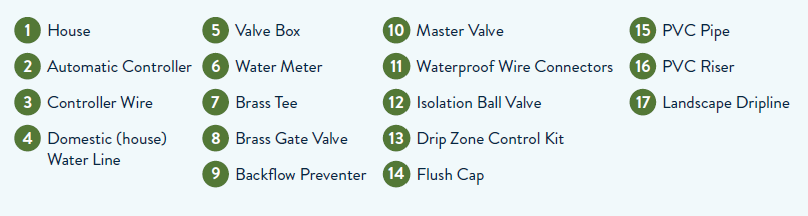
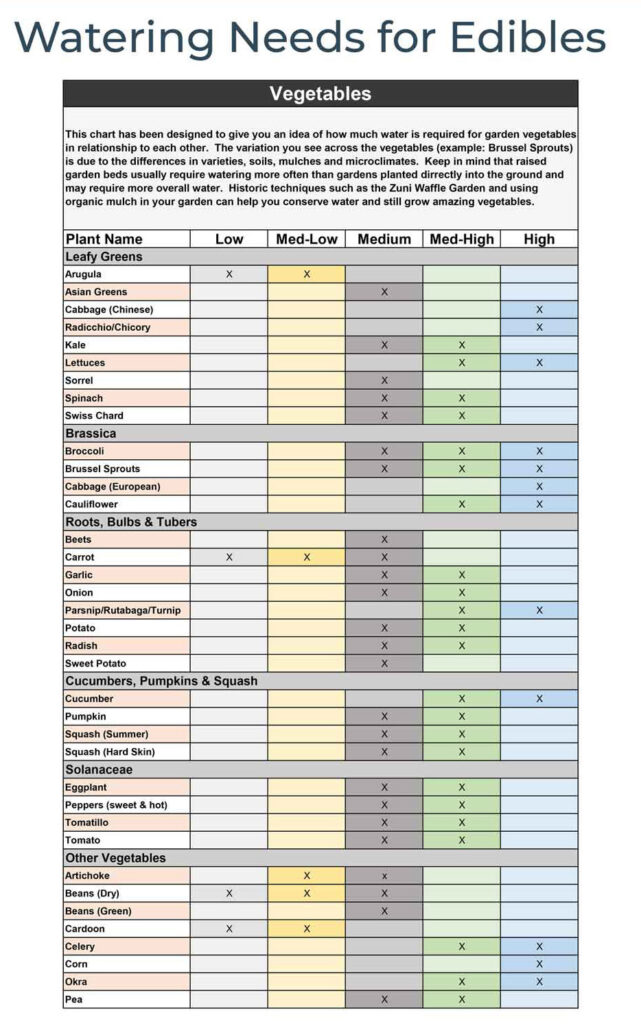
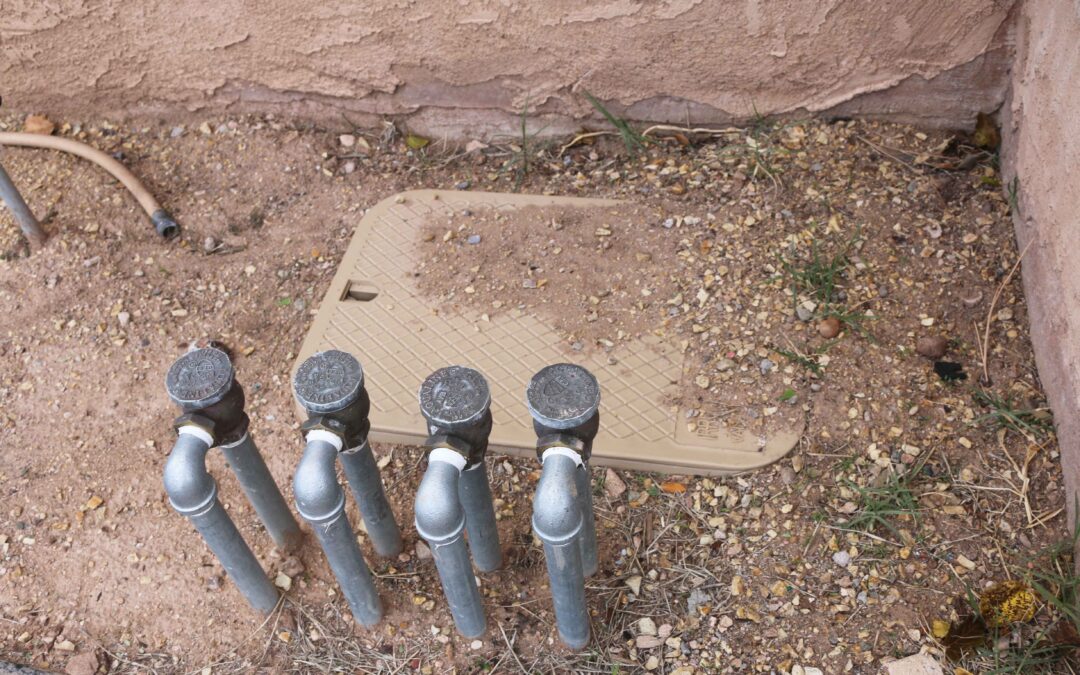
Edible garden landscapes need to have dedicated valves so they can be watered more frequently than our average desert-friendly landscapes. These landscapes should not be watered at the same time as the rest of the drip zones.
The key to growing the best quality produce, fruit-bearing trees, shrubs and vegetables is having a consistent watering schedule that is maintained until harvest. If you are unable to install a new irrigation valve for your edible garden, you can connect it to your hose spigot with a spigot irrigation timer. We recommend the smart versions of these timers. Rebates are available.
We recommend using ¼” polyline with inline drip emitter tubing. Drippers should be located every 6” along the tubing for irrigation in both raised beds and veggie rows. The drippers require no maintenance since they are installed within the polyline. Each dripper is engineered with a little bit of copper that kills off roots that try to grow into the dripline. They are easily connected to a ¾” polyline flexible irrigation supply line. Metal irrigation stakes help keep everything in place.
All these materials can be purchased at local irrigation stores. Drip irrigation is not only the most efficient way to water your edible garden but it is also very affordable.
Why is it important to compost? Between 30 and 50 percent of residential waste could be composted instead of put in a landfill, which would reduce the volume of trash and the production of greenhouse gas. Compost is nature’s way of recycling nutrients by using microbes to help break down organic material. The end result is a nutrient-rich soil amendment with an earthy aroma that improves soil and plant health and can eliminate the need for fertilizers.
If you have limited outdoor space for composting, consider the Bokashi bucket method or explore other options. There are also community-based composting programs in Albuquerque. To find a composting option in your area, simply enter “composting near me” into your Internet search engine.
The Four Required Elements for Backyard Bin Composting
Moisture (water) to sustain the microbial life
Nitrogen-rich materials, also referred to as “greens,” that heat up the compost pile to create ideal conditions for decomposition
Carbon-rich materials, or “browns,” that provide food for the microorganisms and help balance the green materials
Oxygen to maintain aerobic conditions necessary for the desired microbes
What Can be Composted?
Greens (Nitrogen)
Browns (Carbon)
Food and vegetable scraps
Dry leaves
Grass clippings and yard trim
Shredded straw or hay
Coffee grounds and paper filters
Shredded paper (non-glossy, not colored)
Paper tea bags
Shredded cardboard (no wax coating, tape or glue)
Eggshells
Sawdust
Bread and grains
Wood chips
Fruit or fruit peels (limit citrus)
Paper towels and towel rolls
Keep These Items Out of Your Compost
Meat, fish and bones
Dairy products
Pet waste or cat litter
Stickers left on produce
Fats, oils and greases
Aggressive weeds or weeds with seeds*
*Certain carefully-maintained compost techniques can kill seeds
How to Bin Compost
Collect and store materials. An easy way to collect food scraps (greens) is to use a dedicated, washable container that can be stored under the sink or on the counter. When preparing meals, place scraps into this container. To avoid smells and pests, store the container in your fridge or freezer until you are ready to build or add to your pile. Browns, like leaves and wood chips, can be collected throughout the year and set aside until needed.
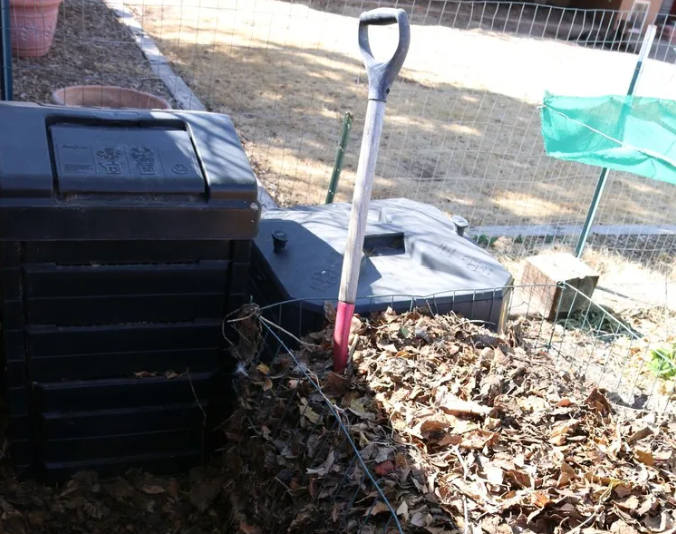
Select a space and then build or buy a bin. Choose a space outside that is dry, shady, within reach of a watering hose and easily accessible. Next, build a compost bin system or purchase a three-bin system, barrel or tumbler.
Prepare your browns and greens. Break large items into smaller pieces to speed up the process and create a more uniform product.
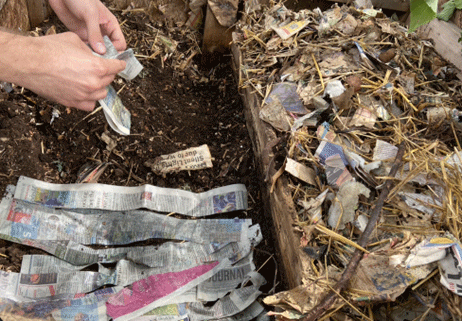
Build your pile. Start your bin with a 4 to 6-inch layer of large-sized brown material like twigs and wood chips. Then, layer greens and browns like you’re making lasagna at a ratio of two parts brown to one part green. Finally, add water to dampen the compost pile so it is moist but not soaked. *Tip: Squeeze a handful of the compost. If a few drops fall, it is moist. If water streams out, it is too wet.
Maintain the pile. As the material begins to decompose, the temperature will rise. Turn and mix your compost pile every few weeks so the decomposition process is sped up. Monitor the bin for moisture (damp, but not dripping) and odor (earthy, not stinky), and troubleshoot as needed.
Cure and use the finished compost. When there are no visible food scraps (except small pieces of eggshell), allow the compost pile to cure (sit unturned) for at least four weeks. If well-maintained, the whole process will take about three to five months.
Whether you decide to use a bin system, vermicompost or a different method, you will be turning waste into compost that builds healthy soils and sequesters carbon. To learn more about composting in New Mexico visit NM Master Composters and the NM Healthy Soil Working Group. Visit the City of Albuquerque for more information on the city’s sustainability efforts and tips for food waste prevention.
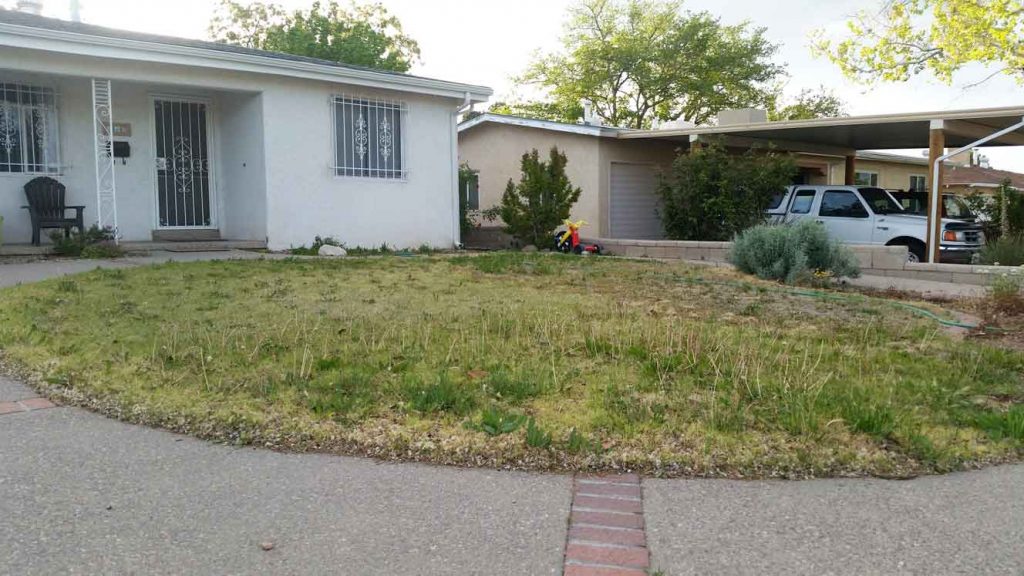
Typically, a conventional turfgrass yard includes a few large trees and some planting beds for flowers and shrubs around the foundation of the home. This type of yard often has a couple of existing irrigation valves for sprinkler irrigation. A conventional turfgrass landscape requires tremendous amounts of water to thrive in our region — a minimum of 40” (with an average of 50"-55”) of water per growing season, which is about three to five times more than what is provided by natural precipitation each year. This is why we do not consider a turfgrass yard a desert-friendly landscape.
Climate change is causing us to rethink our yards, and that includes yards with lawns. For a yard with a lawn to be truly desert-friendly, the amount and type of grass used must be considered. A desert-friendly turfscape should also have efficient sprinkler nozzles and pressure compensating sprinkler bodies to maximize the water that’s used to maintain the lawn.
We recommend that no more than 10% of your total yard is devoted to a lawn. Research from various universities in the Southwest and lawn seed producers (such as Pennington Seed) is now suggesting that New Mexico’s climate is no longer suitable for cool-season grasses to thrive. Instead, we need to make a shift to various warm-season grasses, which will grow well with significantly less water.
Cool-season and warm-season lawns are the two different categories of turfgrass lawns found in Albuquerque. Cool-season grasses (Kentucky bluegrass, perennial ryegrass and tall fescue) thrive between 65F and 75F degrees in the summer. They create a softer, darker green and lush-looking lawn. In Albuquerque, most lawns are composed of cool-season grasses that are cold-tolerant and green most of the year. They can withstand considerable amounts of foot traffic. One disadvantage is that they use a substantial amount of water in the summer months. Parkblend (a blend of cool season grasses) is the most common lawn in the Albuquerque metro area. It uses around 40” of water a year.
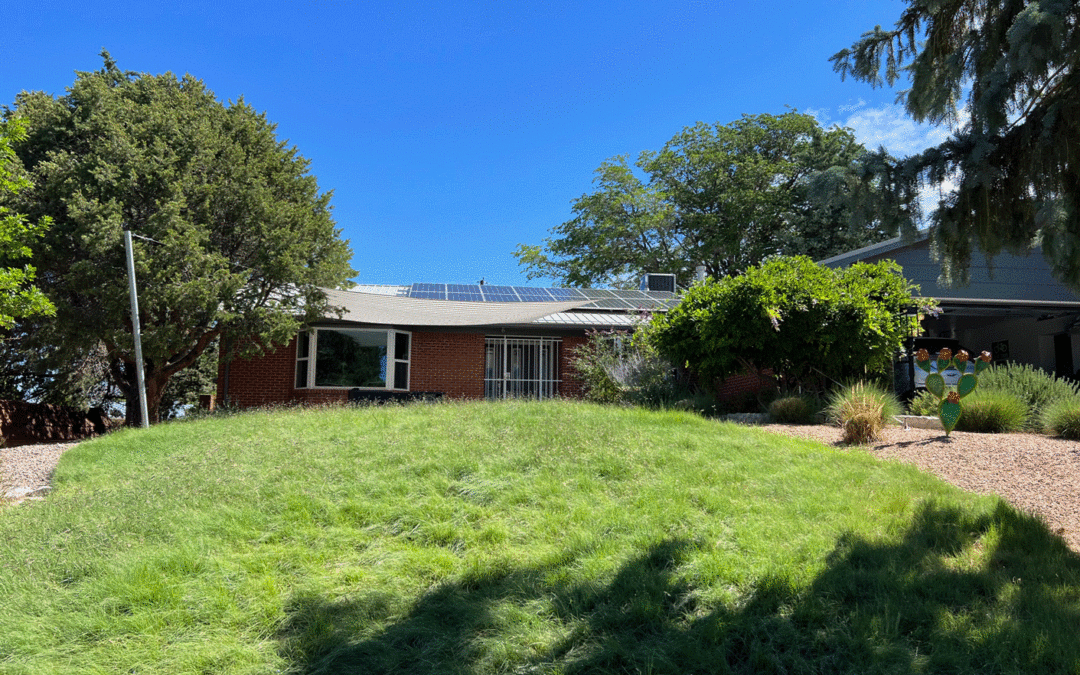
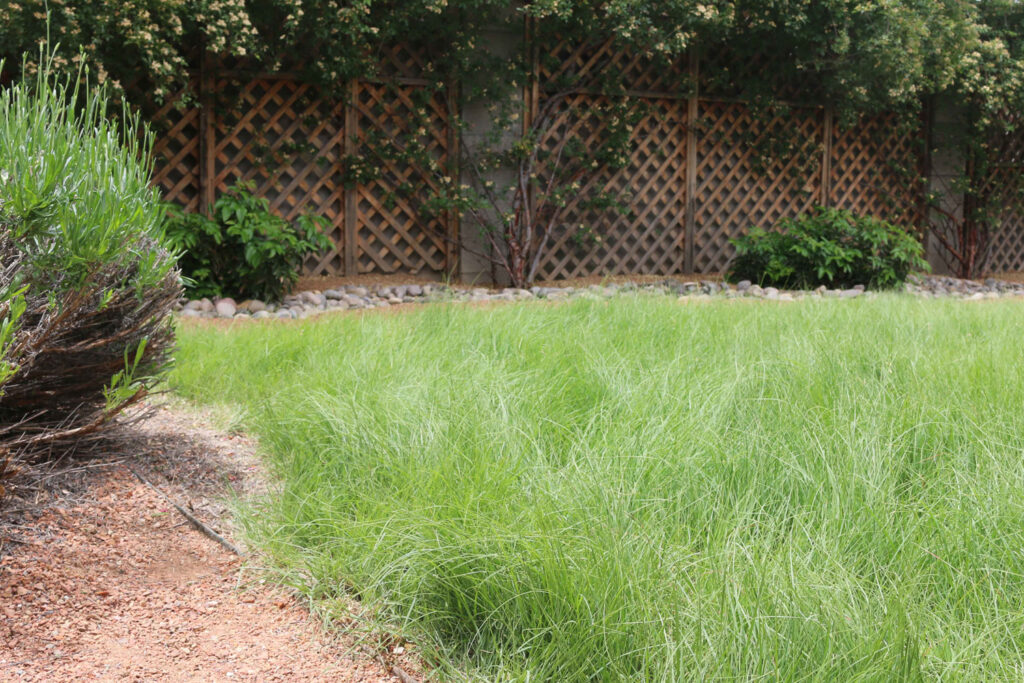
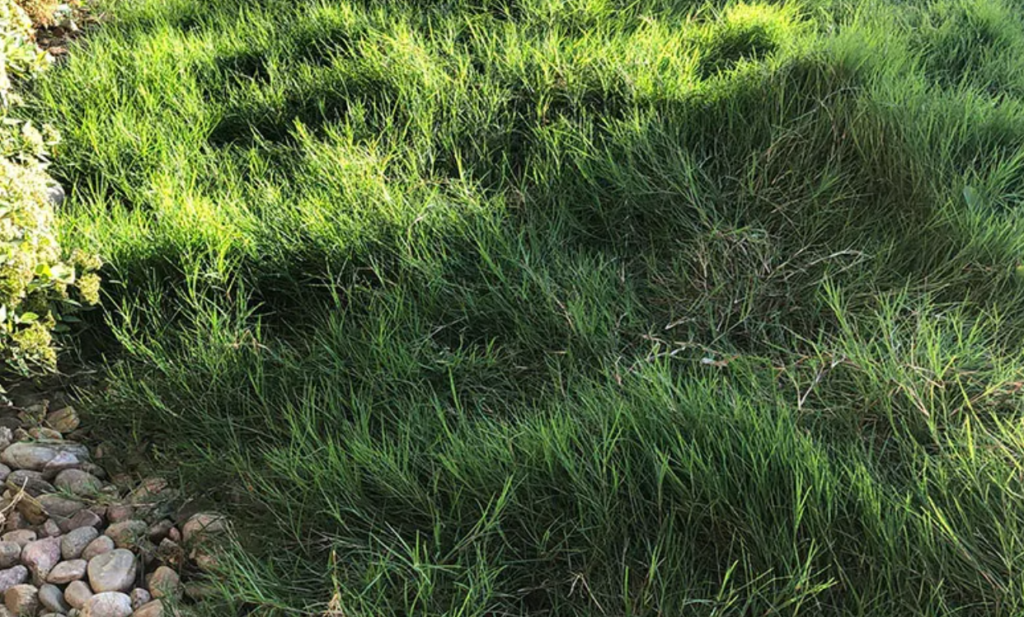
Warm-season grasses (Bermuda grass, blue grama, and buffalo grass), which thrive in 70F to 90F degrees, have been used in Albuquerque for many years. There are parts of town where they are quite prevalent. Warm-season grasses have a shorter growing season. They green up later and go dormant earlier than cool-season lawns. They are low maintenance and require less water than cool-season grasses.
Buffalo GrassBermuda Grass
Knowing what type of lawn or turfgrass is being installed or already being watered can make a significant difference in how much water should be applied. The key to choosing a turfgrass for a new area is to determine the one most suited to the specific needs of the landscape.
Water Budget (this includes 1,000 square feet of cool-season grass and a number of mature trees, shrubs and vines):
Are you ready to remove your lawn and create a desert-friendly landscape but worried about the cost? Below are cost-savings tips for transforming your yard.
Plant price tags: For homeowners wanting to transform their yards, it’s easy to feel sticker shock when adding up the cost of buying new plants. Keep in mind that the plants you buy from nurseries started as seedlings and have been nurtured for years before they are ready to sell. Most trees have been growing for 10 years before reaching stores. And remember that these same plants will enhance your yard for decades to come. To save money, buy plants in smaller pot sizes. For example, instead of buying a 5-gallon plant, buy a 1-gallon or 4” pot. Instead of buying a 2” caliper tree, buy a 24” box tree or a 15-gallon tree. Reducing the size of the plant you purchase will save money.
Irrigation woes: Fear of the unknown cost is what usually worries homeowners about installing an irrigation system. No need to worry if you are transitioning from a grass lawn with spray irrigation to drip irrigation when you already have valves in the ground. We recommend spending the money to hire a local irrigation professional to check your valves and convert your valve from spray to drip. Once you’ve done that you can save money by installing the drip polyline yourself.
Mulch madness: Choose organic shredded wood chip mulch over gravel to save money, enrich the health of your soil, eliminate weeds and greatly reduce maintenance. Shredded wood chip mulch can be up to $1 a square foot less expensive than installing gravel. Tree maintenance companies, like Baca’s Trees on Edith Blvd NE, offer mulch free to the local community. You can also visit the East Mountain Transfer station to buy inexpensive loads of mixed-sized organic mulch. This material is perfect to put over bare dirt areas of your yard that need to be covered to eliminate weed growth.
Materials stockpiled: Think outside the box and get creative when sourcing materials so you can save money and resources. Check out re-stores, thrift stores, Facebook Marketplace, Craigslist and even your neighbors, who are a valuable resource. They may have landscaping materials available for free or at a small cost. Your neighbors’ properties may have stockpiles of materials sitting around that may not be useful to them but could be put to great use in your yard. When in doubt, ask for what you are looking for. Pop onto your neighborhood’s text thread, knock on doors or even utilize the app Nextdoor.com. Someone’s trash is another person’s treasure.
Water Authority’s Rebates: Did you know you get $2.00 back for every square foot of lawn you convert? Water Authority residential customers who convert their landscapes to desert-friendly xeriscapes and use drip irrigation can qualify for a $2.00 per square foot rebate. The rebate area of your new landscape must have 50 percent coverage (at maturity) of qualifying low to medium water use plants, and the soil between and beneath all plants must be covered with at least three inches of mulch (organic mulch, gravel, etc.). If you are interested in participating in the Desert Friendly Xeriscape Conversion Rebate, be sure you don’t start your turf removal project until you have applied online to the program and received an official notice to proceed. Several conditions must be met in order to qualify for the desert-friendly xeriscape rebate.
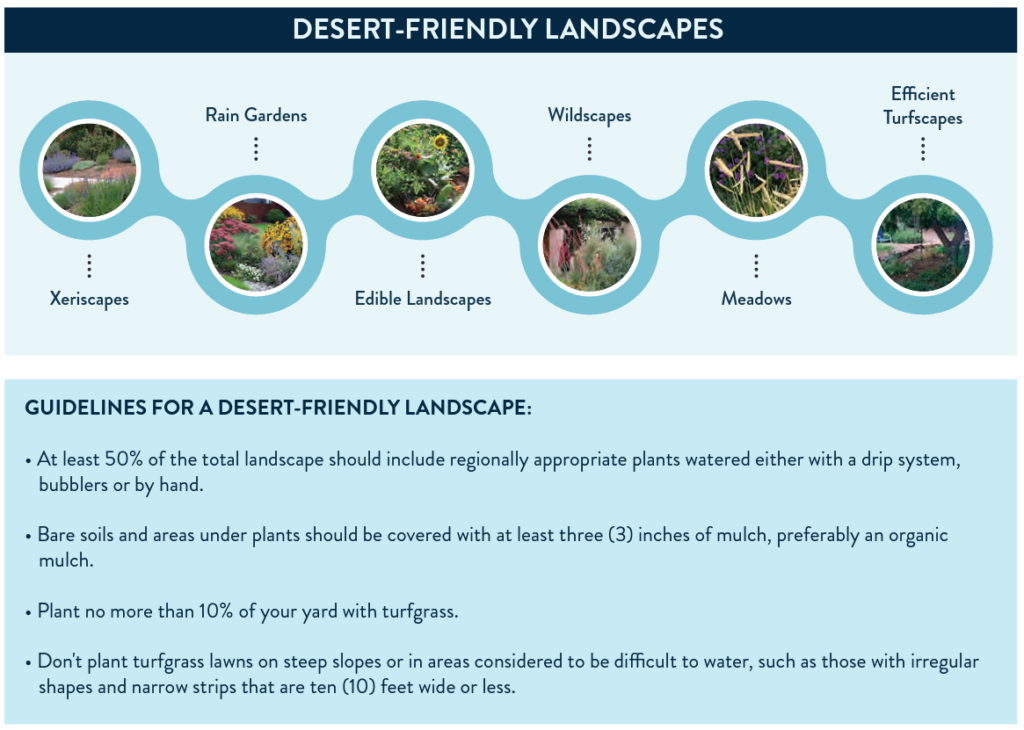
The Albuquerque metro area has a variety of landscapes. These include desert-friendly landscapes, such as lush, pollinator-friendly xeriscapes, and wildscapes or prairie plantings, where native grasses and wildflowers bring the feel of a prairie to a yard. Rain gardens are specifically designed to make the most of natural precipitation, while edible landscapes have garden beds or edible plants interspersed throughout them. Efficient turfscapes have smaller areas of turfgrass and diverse plantings. Conventional turfscapes with large areas of cool-season grass and high-water foundation shrub plantings are no longer considered desert-friendly landscapes. Desert-friendly landscapes describe a variety of landscapes that include beautiful, diverse plantings with increased resiliency achieved through efficient watering.
A sea of gravel may require little water, but it does not create a healthy environment. Weed fabric doesn’t prevent weeds from growing on top of the fabric and has been proven to be detrimental to soil and tree health in the long term. Trees struggle if they have been part of a yard that was once heavily irrigated and has been converted to a gravelscape. We do not recommend gravelscapes for reducing water use. Instead, transform those landscapes into cooler, healthy environments by adding appropriate plants and irrigation.
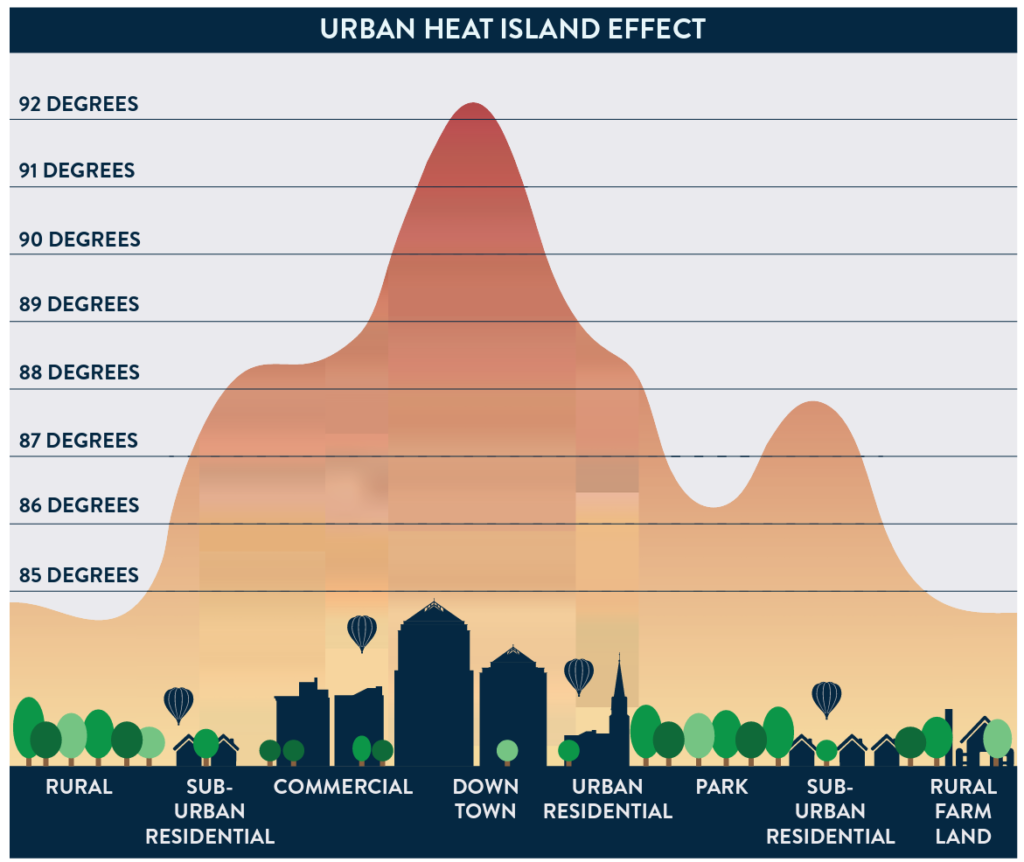
Desert-friendly landscapes make a positive contribution to lowering the urban heat-island effect, which is caused by heat emitted off surfaces including gravel, concrete and asphalt. This heat causes an updraft within an urban setting, which changes the weather patterns over a city and decreases the chances of precipitation and cooling. Plants, especially trees, help decrease or eliminate this heat island effect.
Desert-friendly landscapes help reduce noise pollution by absorbing sound. Desert-friendly plantings also increase biodiversity in your yard and in our community, generating much-needed pollinator habitat. Xeriscapes, particularly once they are established, use significantly less water than a conventional turfgrass lawn. Did you know that Albuquerque is a designated Bee City USA? To find out more, go to: Burque Bee City USA (beecityusa.org). For more information on pollinator gardens, go to ABQ Backyard Refuge Program (https:// www.505outside.com/2021/05/31/backyard-refug-es-for-people-and-wildlife/). To find out about rebates that help homeowners transform their yards into desert-friendly xeriscapes, visit: https://www.505outside.com/residential-desert-friendly-conversion-rebates-xeriscape-conversion/
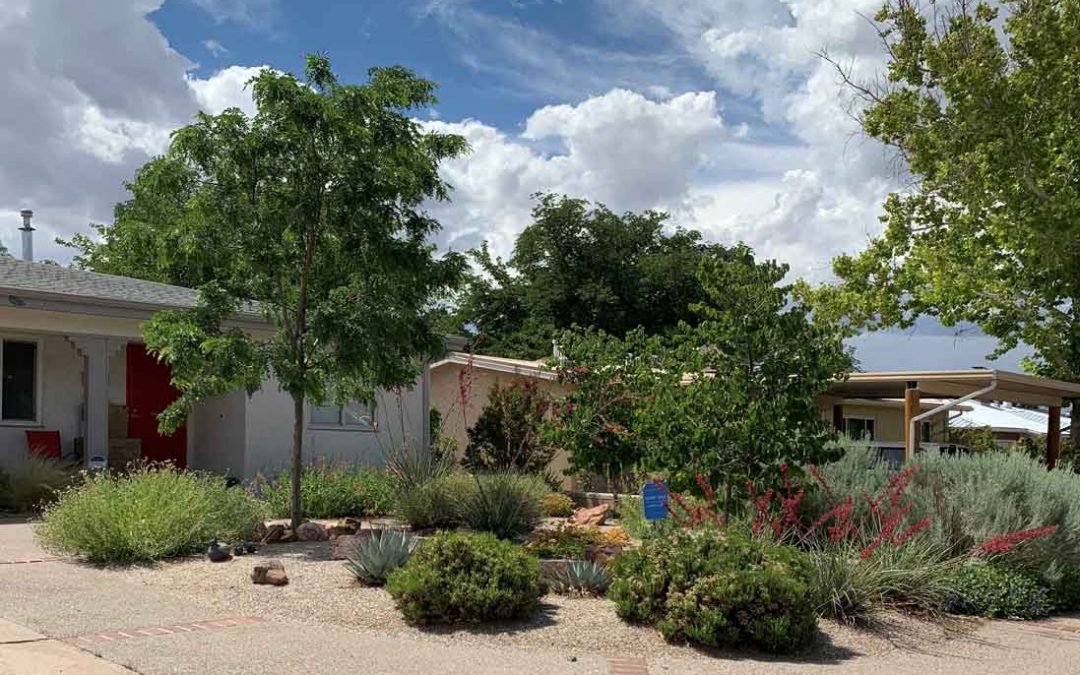
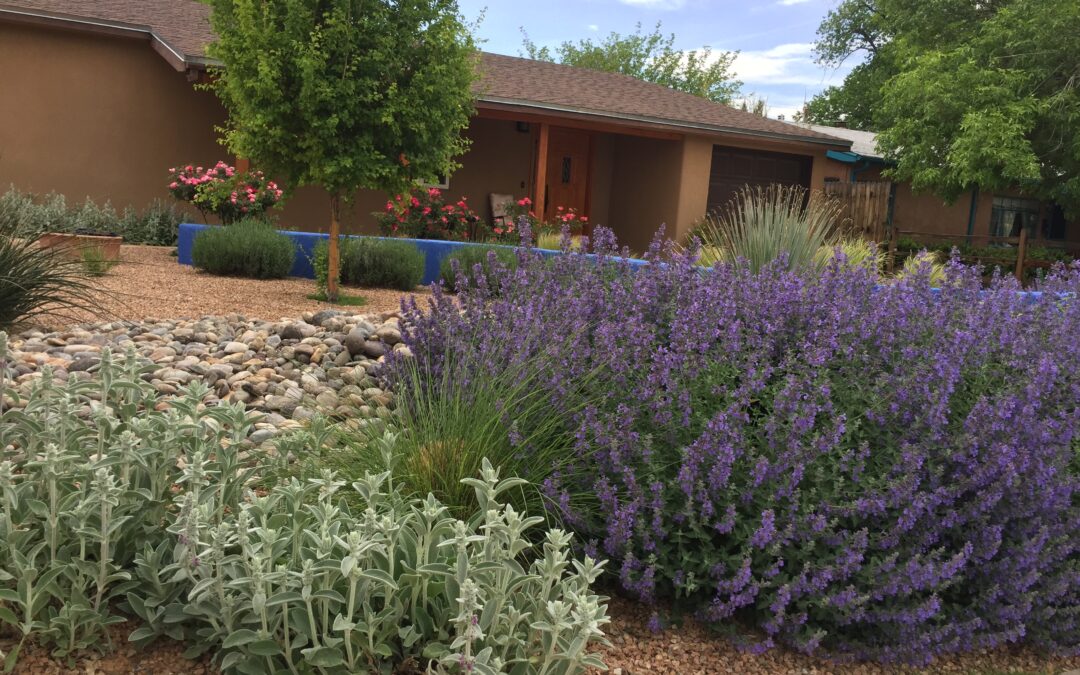
Xeriscapes have been largely misrepresented and misunderstood over the past 30 years, often being mistaken for zeroscape (a.k.a. no plants). What xeriscape really means is a native, desert-adaptive or desert-friendly landscape that often feels lush and vibrant and has plants that are appropriate for the Albuquerque climate. It attracts all kinds of wildlife and changes with the seasons.
Pro Tips for Using Drip Emitters in Xeriscapes:
• Always have more than one emitter per plant in case one becomes clogged. • Switch from adjustable micro sprayers and “shrubblers” to individual emitters or in-line emitted drip lines to know exactly how much water is being provided to your plants. • When using drip or other low-flow irrigation, accommodate plant needs by adjusting the flow rate (larger or smaller gph) and number of emitters per plant. • Drip irrigation is the best way to water plants that do not like getting their leaves wet. With drip emitters and ¼” spaghetti tubing, water can be placed exactly where it is needed.
Xeriscapes often include trees, shrubs, flowering “pollinator-friendly” perennials, desert accents, groundcovers, ornamental grasses and vines. They also can contain small functional turf areas, vegetable beds and other edible plants. Xeriscape plants are medium or low-water usage plants. Some can survive with rainwater alone after an establishment period of at least three full irrigation seasons. Adding trees to a desert-friendly xeriscape increases shade and habitat, creates favorable microclimates and reduces the urban heat island effect in Albuquerque. When deciding which tree to use in a particular place, refer to our Xeriscaping Guide or The Nature Conservancy’s Climate Ready Tree List.
HOW MUCH WATER IS NEEDED TO KEEP UP A BEAUTIFUL XERISCAPE?
This budget is only for outdoor use. Please include your winter averages to complete your TOTAL usage on your billing. For typical xeriscape landscapes with 500 square feet of NATIVE grass lawn (warm-season grasses) and two medium trees
Most irrigation work can be done by the homeowner, except for one component. Tapping into your home's main water line needs to be done by a licensed contractor to ensure it is completed safely. To help homeowners know how to select and work with a contractor, we have provided the Irrigation Association's Irrigation Consumer Bill of Rights in the Appendix.
To make sure you have an efficient system, we highly recommend that you hire a professional irrigation designer to create a custom plan. Having a custom plan minimizes water waste and the chance of problems in the future and also helps ensure an efficient distribution of water, which reduces water usage. We also recommend asking a designer to produce a "call-out" list of all the parts required for the installation or renovation. This helps homeowners decide whether to DIY or hire a contractor.
SEPARATINGIRRIGATIONZONES&HYDROZONING
When you begin to plan a drip system, whether you’re installing a new system or retrofitting an existing system, it is imperative to design it so the drip valves are separate from your lawn valves. If you plan to grow a vegetable garden or water annual beds with a drip system, those areas also need to be on separate valves.
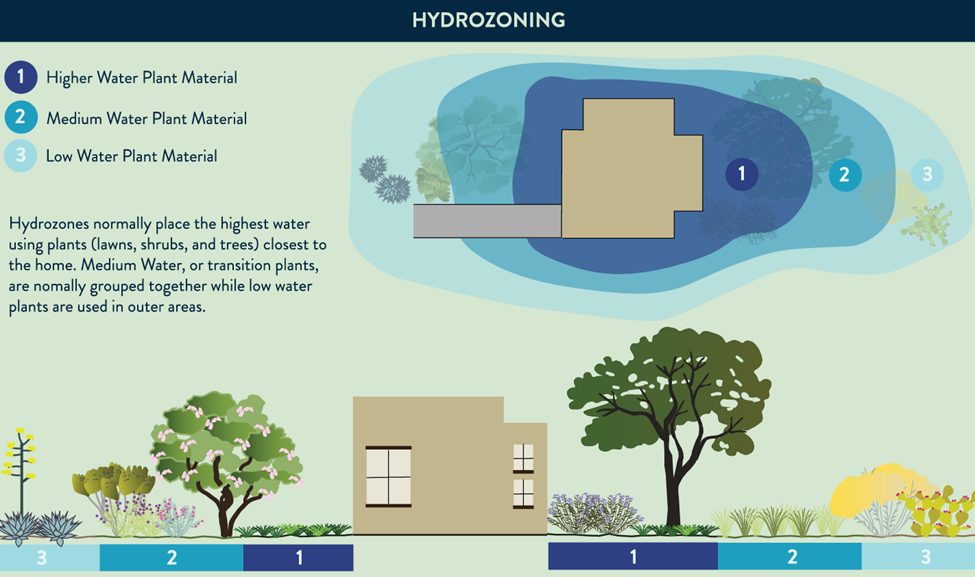
The next thing to do is organize your drip zones by plant watering needs. This means that higher water plants and lower water plants should be on separate valves (hydrozoning) whenever possible, so watering is much more efficient. Hydrozoning is not always possible when retrofitting an established landscape. In that case, you can adjust your water delivery with various sized drip emitters so plants with higher water needs receive more water per hour.
Check out our New Irrigation Efficiency Guide: Beautiful Landscapes with Less Water. Download the guide here.