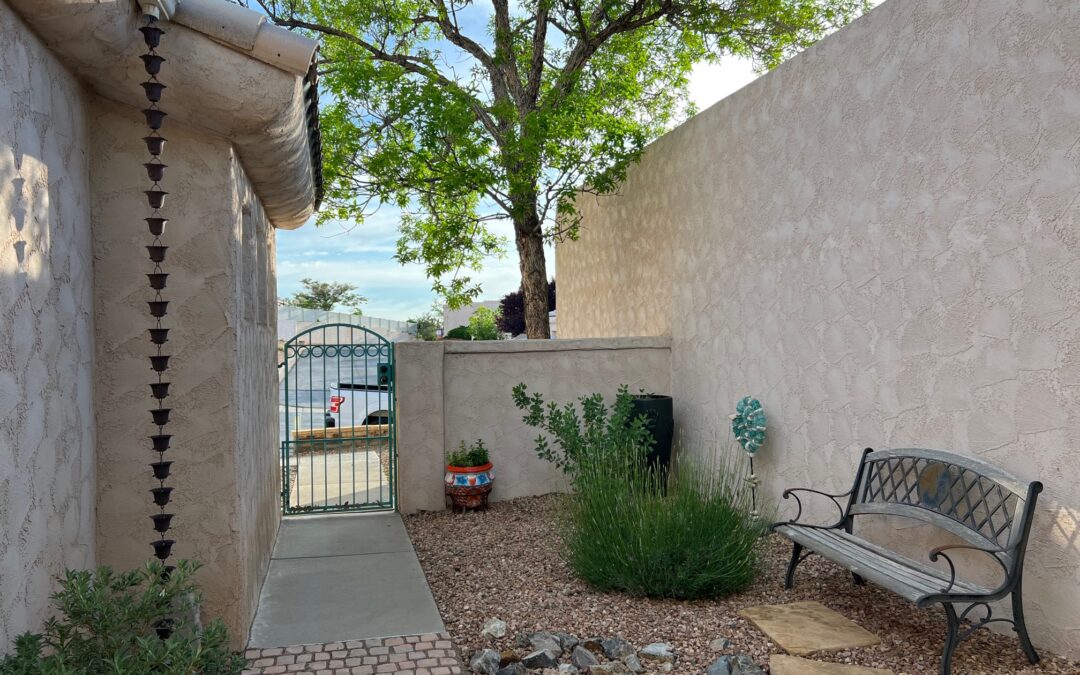
Passive rainwater harvesting is a great way to optimize your landscape while minimizing water use. So you may ask, “What are active and passive rainwater harvesting?”
Active rainwater harvesting involves collecting rainwater runoff from roofs and other impermeable surfaces into containers such as rain barrels or cisterns for later use. These containers can vary from small (50 gallons or less) to very large (thousands of gallons). The saved water can be distributed with a hose or drip system for use in the garden.
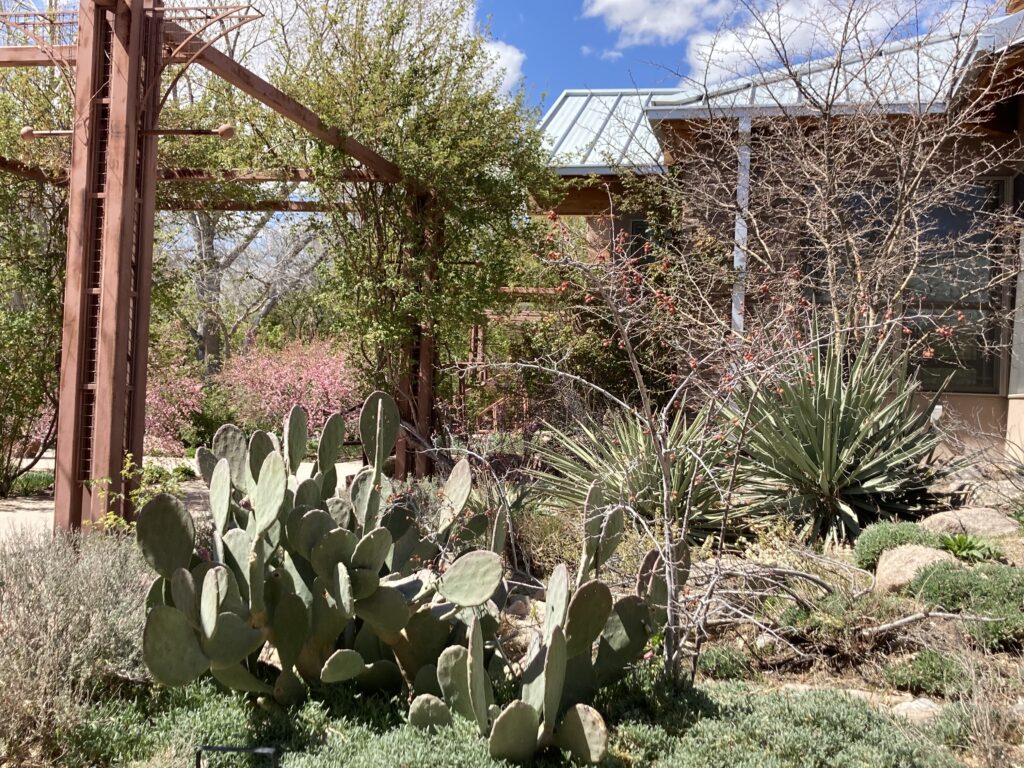
Passive rainwater harvesting channels water from roofs, patios or driveways directly into the landscape via swales (channels) into basins (depressions in the landscape) or into French drains where the water will be stored in the soil for use by the plants. For every 1,000 square feet of hard surface, 1 inch of rain will produce about 600 gallons of water, so it’s easy to see how active systems will produce overflow and why it’s always recommended to send that overflow into a passive rainwater harvesting system. This will lessen the amount of potable water you will need for your landscape while improving plant health.
So, what plants should you choose for your passive rainwater harvesting garden? First you need to realize there will be three different zones with different amounts of water available to the plants.
1. The High Ground Zone is the area around the outside perimeter of your basin or swale where there will be limited amounts of extra water available to the plants. This will be your most xeric (low water use) zone. Plants for this area could include:
Desert willow (Chilopsis linearis)
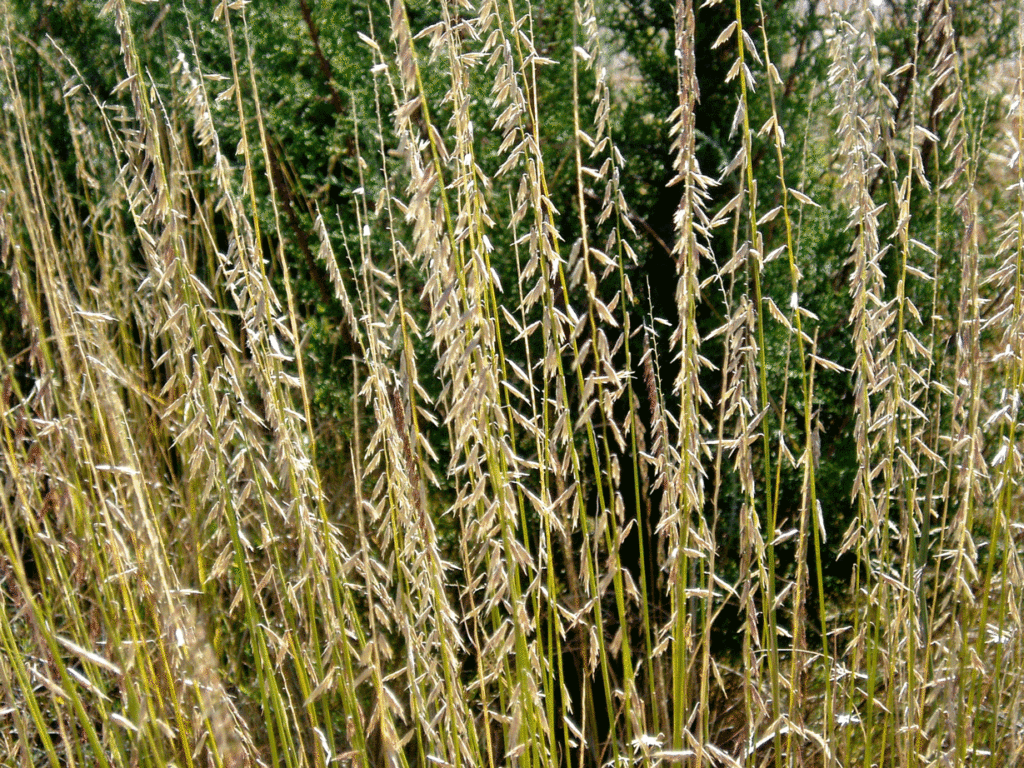
Grasses such as sideoats grama (Bouteloua curtipendula) or sand dropseed (Sporobolus crytandrus)
Desert four o’clock (Mirabilis multiflora) or blackfoot daisy (Melampodium leucanthum)
Sideoats Grama
2. The Transition Zone is partway up the sides of the swale or basin. Plants growing here will get some extra moisture but will not be at the low points of the basin or swale.
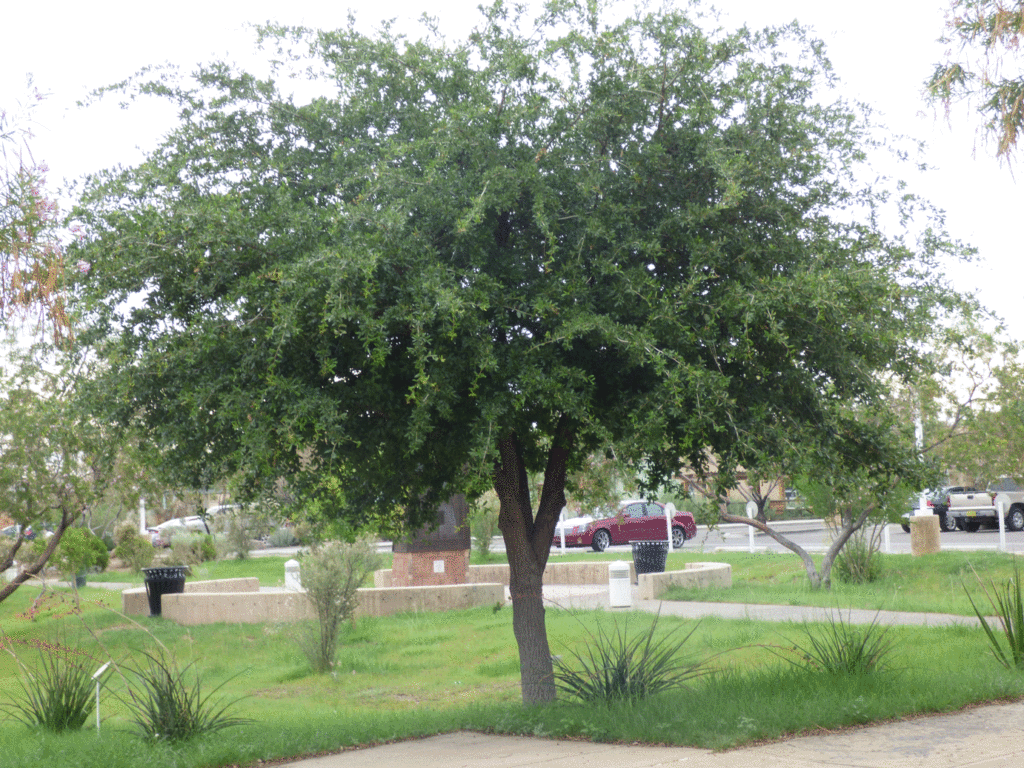
Escarpment live oak (Quercus fusiformus)
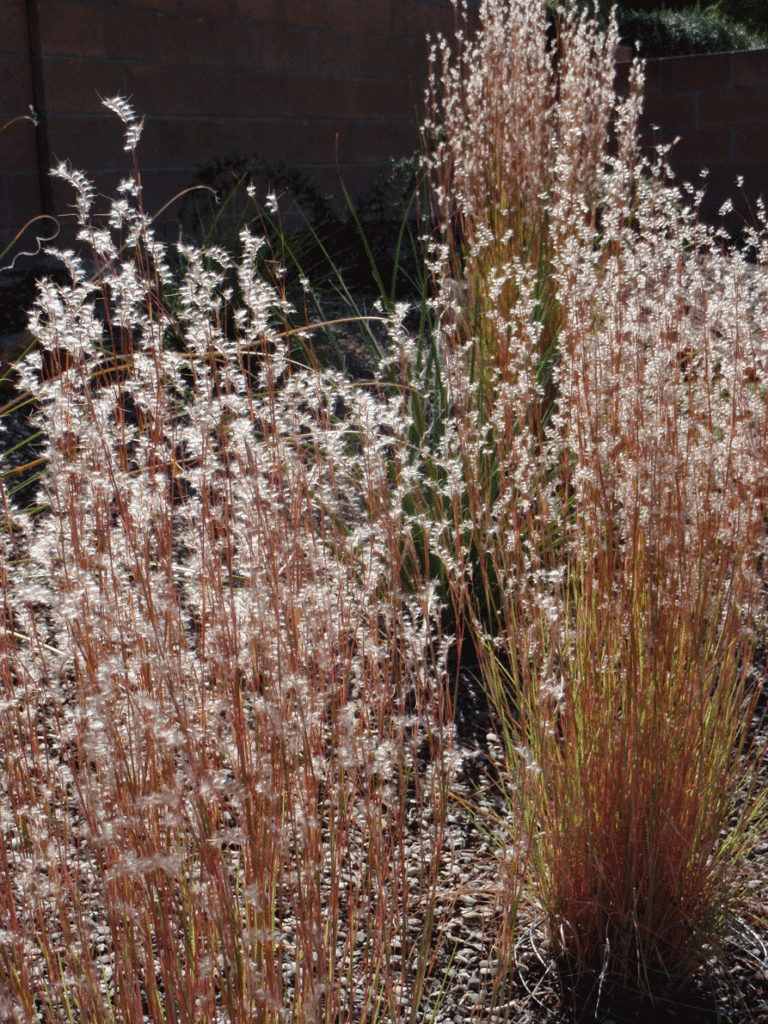
Grasses such as blue grama (Bouteloua gracilis) or little bluestem (Schizachryium scoparium)
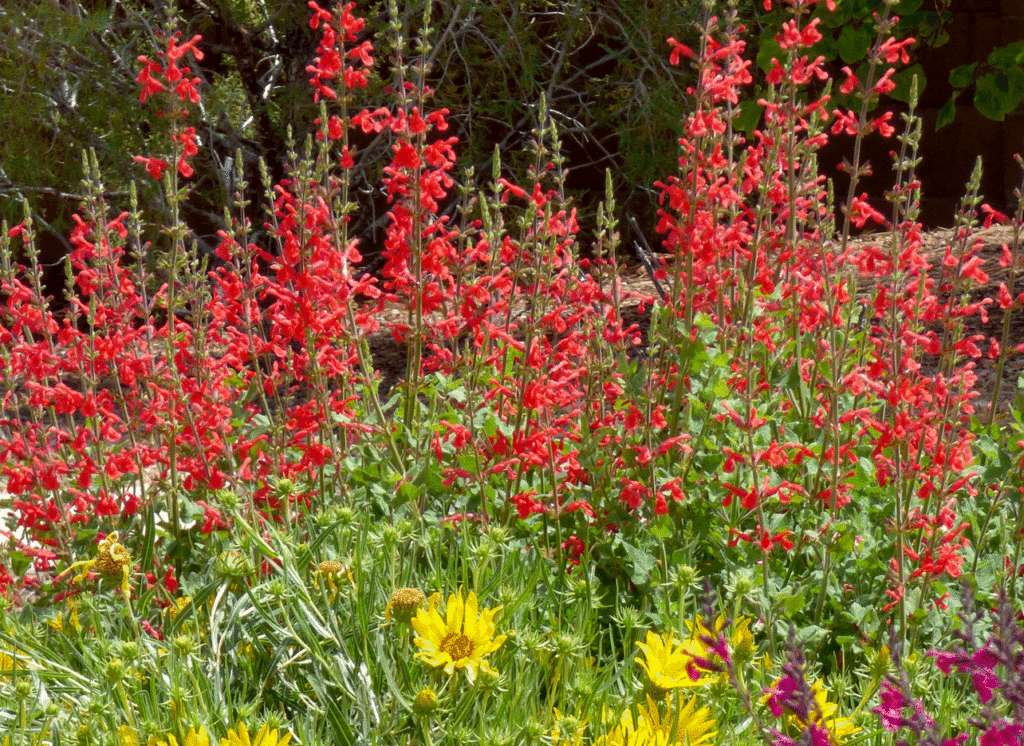
Salvias such as autumn sage (Salvia greggii), Mexican blue sage (Salvia chamaedryoides) or Mexican red sage (Salvia darcyii), or dwarf goldenrod (Solidago sp.)
Escarpment Live OakLittle BluestemSalvia darcyii
3. The Inundation Zone will be the wettest area during large rain events. Only plants that can tolerate periods of standing water will work here. The basins can be enhanced with soil sponges to increase storage capacity and soil quality.
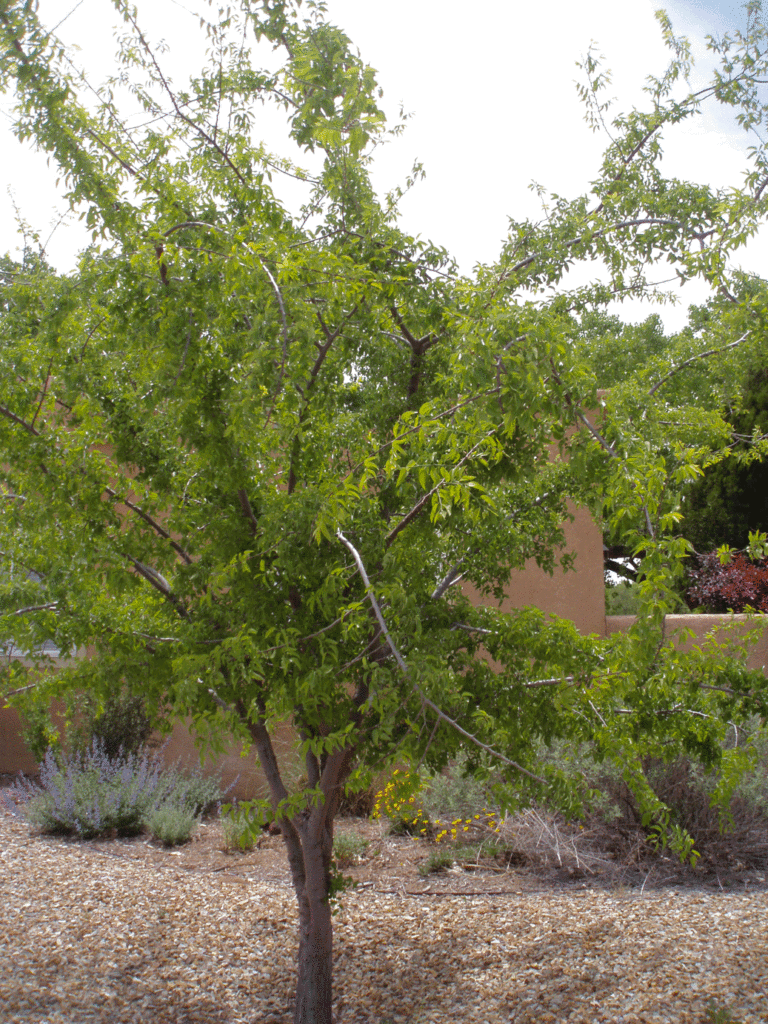
Netleaf hackberry (Celtis reticulata)
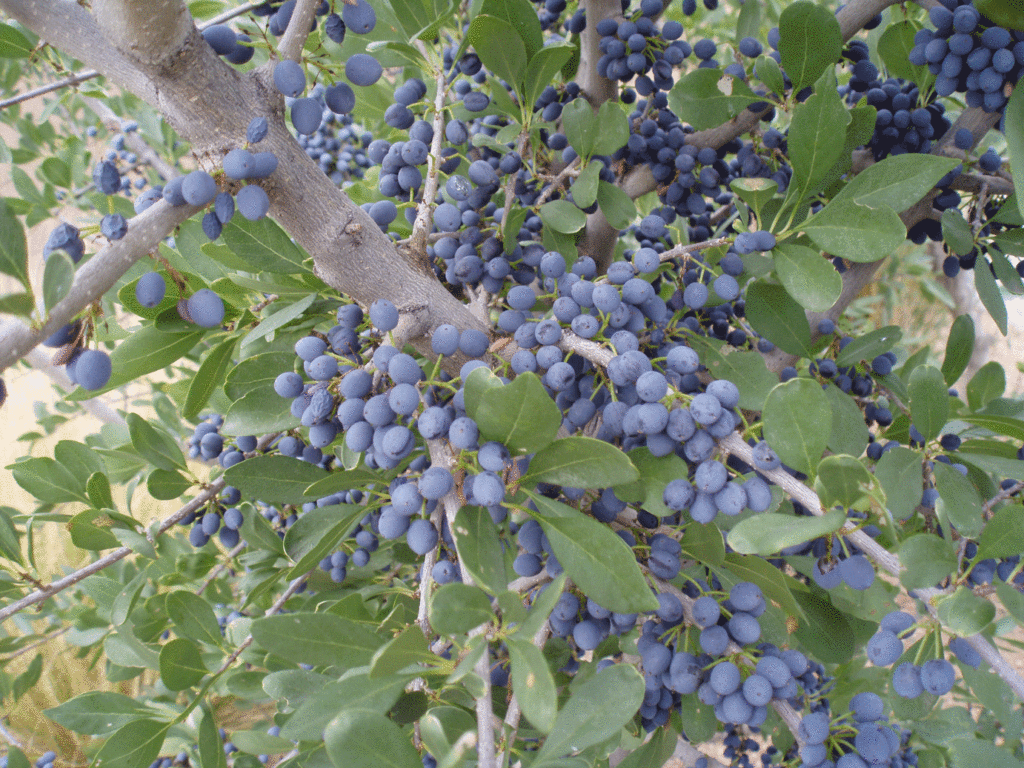
New Mexico olive (Forestiera neomexicana) or fernbush (Chamebatiaria milefolium)
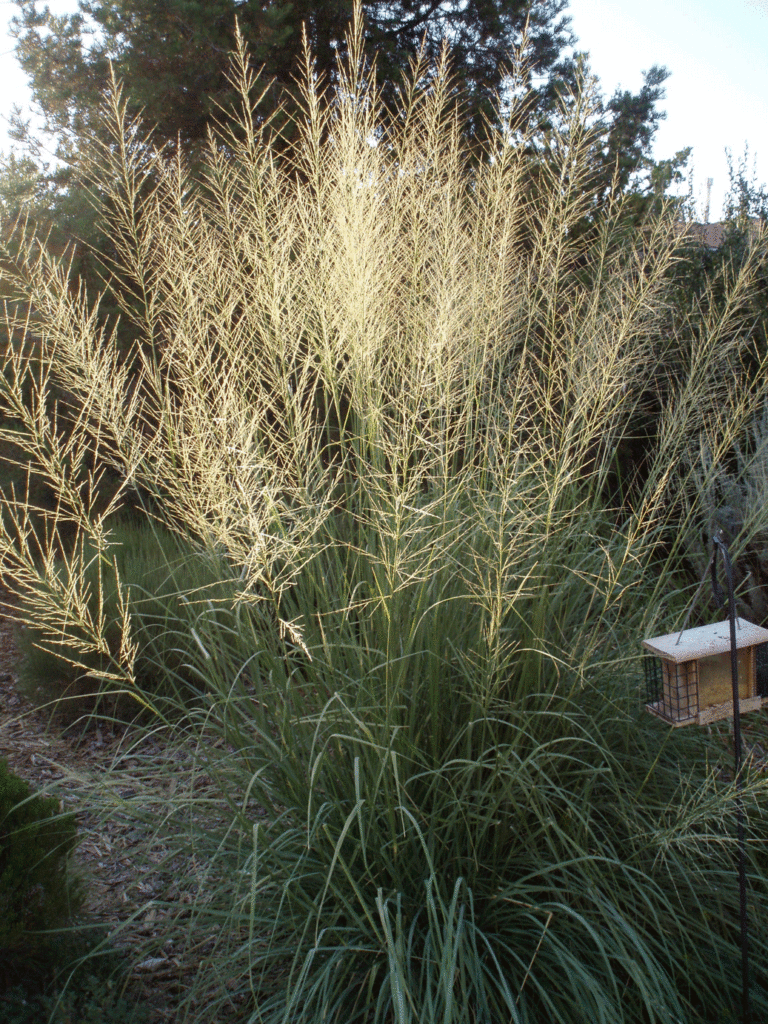
Grasses such as giant sacaton (Sporobolus wrightii) or Indiangrass (Sorghastrum nutans)
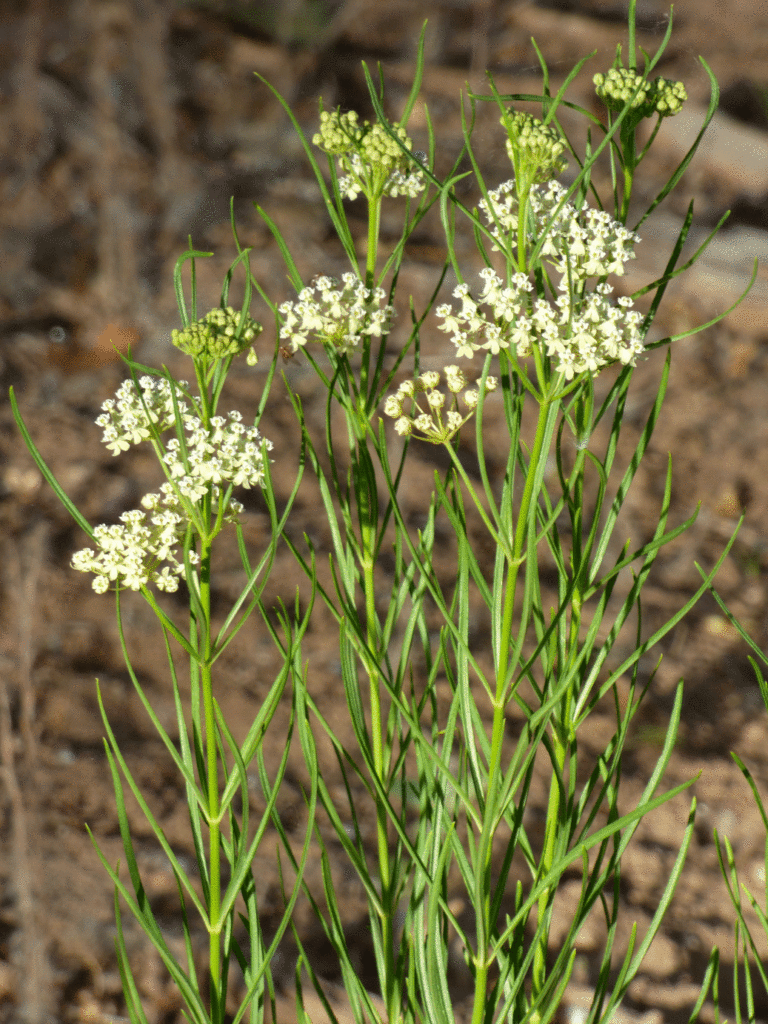
Horsetail milkweed (Asclepius) or creeping germander (Teucrium chaemadrys)
Always make sure the sun or shade exposure needs of the plant match your site and remember that you will need to water these plants at least until established.
The word Mediterranean may bring to mind rows of lavender in southern France, an Italian villa or maybe a Spanish courtyard or Greek olive orchard. These areas around the Mediterranean Sea all share unique plants and garden design methods that are part of their allure in movies, marketing and as tourist destinations. Luckily for residents of the Albuquerque area, the mediterranean climate is similar enough to that of our high desert home that many mediterranean plants can be successfully grown here. (Note: There are other coastal areas of the world that are climatically so similar to the area around the Mediterranean Sea that they are also known as having mediterranean climates. These areas include parts of South Africa, Australia, Chile and California. A capital “M” is used for the Mediterranean place in the world, while a lowercase “m” refers to the climate that includes all five regions.)
Albuquerque has hot and increasingly dry summers, just like the Mediterranean. This means that plants from both places do best with deep watering to reach their deep, drought-adapted roots and a good layer of organic mulch to keep moisture in the soil. Most mediterranean plants prefer full sun, although a few can tolerate some shade. Mediterranean places tend to have soils with good drainage, so make sure to keep mediterranean plants away from any areas with clay or caliche.
There are, however, a few very important differences between Albuquerque and mediterranean climates. The most significant of these differences is temperature: As coastal areas, mediterranean climates don’t get very cold. It is rare to have snow or anything other than a light freeze. Many mediterranean plants are not cold hardy enough to grow in the high desert. Others may require a protected area in a courtyard or along a south-facing wall for extra warmth. The mediterranean plants that are more cold hardy and generally do well here can still be killed by the combination of freezing temperatures and wet soil. So, as temperatures drop in the fall, stop watering your mediterranean plants and don’t start again until the chance of frost has passed in spring.
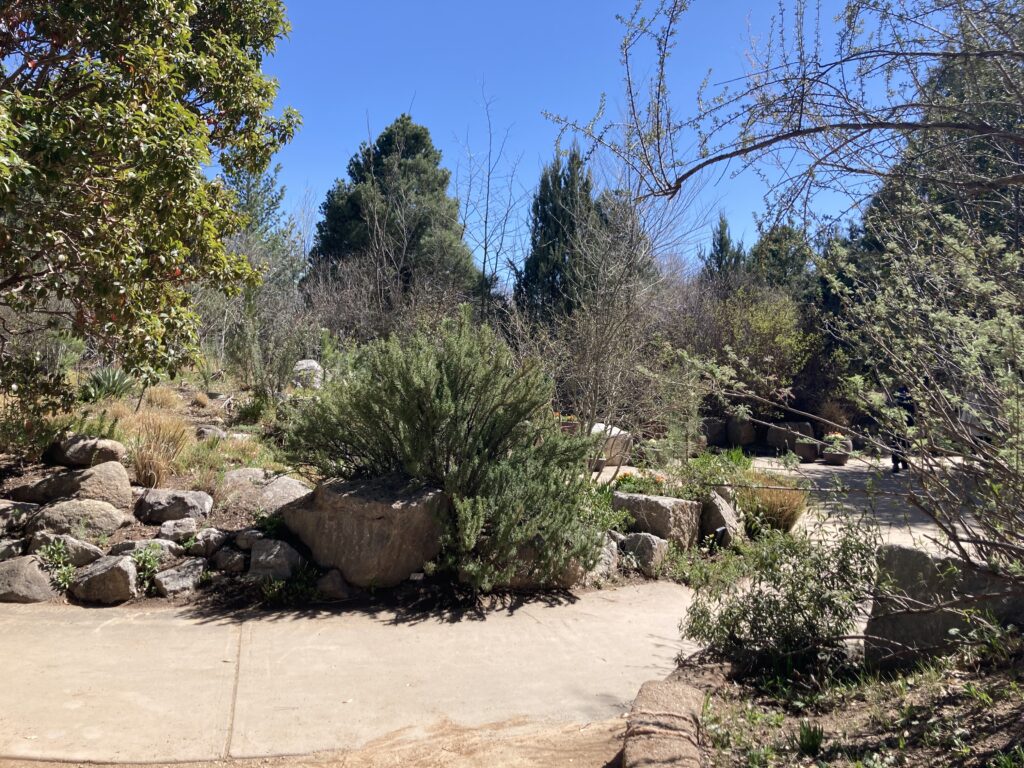
While selecting mediterranean plants for your landscape, you can also incorporate a few simple Mediterranean garden design strategies. The starting point for any Mediterranean garden is evergreen trees and shrubs. Think olive trees, Italian cypress and statuesque pines. However, since olive trees are not cold hardy in Albuquerque, instead try an escarpment live oak. Their glossy dark green leaves are a great substitute for an olive, and they are an important species for pollinators. Although Italian cypress can grow in Albuquerque (and was planted profusely in the 1970s), it is not particularly well-adapted here. A better choice is an upright juniper cultivar, such as Keteleeri. And while a Mediterranean stone pine or Aleppo pine would do well in a protected courtyard, Afghan pine is another option with better cold hardiness. Arizona rosewood, turpentine bush and manzanita hybrids are a few evergreen shrubs that will give your landscape a Mediterranean flavor.
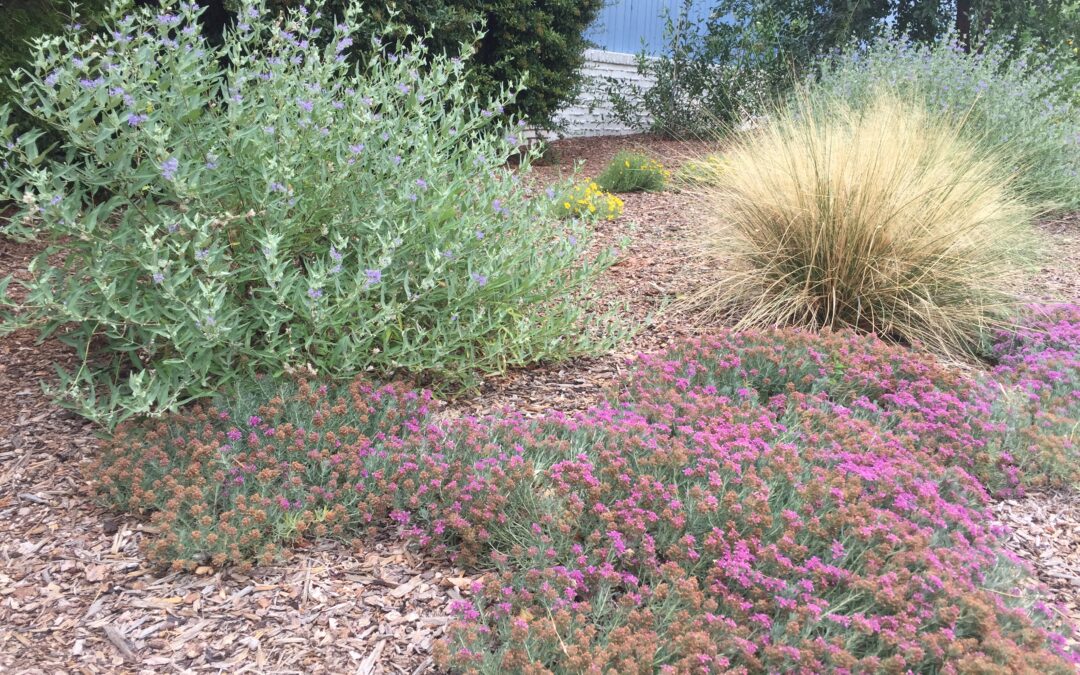
Next, include some plants with light silvery-blue leaves to contrast with the evergreens suggested above. Silvery-blue foliage is a plant adaptation to intense solar radiation, so many mediterranean and locally native plants share this quality. Mediterranean natives with this striking color include lavender, gopher spurge and grey lavender cotton (which actually has yellow flowers), while silver-leafed native plants include sand sage, germander sage and chamisa. There are also many locally native plants with silvery leaves that provide contrasting shape as well as color: Agaves, desert spoon, blue Nolina and yuccas all can accent your landscape beautifully. Of course, these locally native plants will be easier to grow and will provide better pollinator habitat than mediterranean imports.
Edible plants and herbs have always been another important part of Mediterranean gardens. Rosemary, lavender, oregano, thyme, chives and culinary sage all hail from the Mediterranean and do well in Albuquerque. Mediterranean fruit trees, such as fig, pomegranate and apricot can flourish but do require a little extra water. This water need can be met by roof runoff if you plant them in a well-drained rainwater harvesting basin or swale. Fruits and herbs all provide flowers in addition to food. However, if you’re looking for an extra splash of color, red hot poker, moonshine yarrow and Bowle’s mauve are all mediterranean options.
Whatever mediterranean plants you choose, just remember to keep their roots dry when it’s cold out, make sure the soil drains well and give them a nice layer of wood mulch. They will repay you with a beautiful and low water use landscape for years to come.
Mediterranean plant options
Shade tree: Japanese pagoda
Evergreen trees: Keteleeri juniper, escarpment live oak
Small flowering trees: Vitex, crape myrtle
Large plants (5-8' tall/wide): Fernbush, blue Nolina, evergreen sumac
Medium plants (3-5' tall/wide): Rosemary, large agave (americana, ovata, havardiana), lavender, red hot poker, pink muhly grass
When I mention black currants while talking fruit trees and shrubs with people in Albuquerque, I have come to expect that we are often starting the conversation thinking about different things. Most commonly, people have experienced or heard about the European black currant, Ribes nigrum.
They recall an earthy, resinous flavor with nice sweetness and a tart finishing kick. European currants are best reserved for cooking. With their strong flavor, they make incredible sauces and condiments and are equally delicious as preserves and in pies and tarts. These black currants have a devoted following. Because the flavor is very distinct, I have found people often have a binary reaction when I mention the fruit: either pleasurable nostalgia or occasionally disinterest or dislike.
The other thing people confuse for black currants are little dried raisins, similarly dark in color and confusingly sold as “currants.” These fruits are made from “raisins de Corinthe,” Greek grapes grown, dried and shipped for hundreds of years from a port of that name. These are not the black currants I am talking about.
While I do like eating and growing the European black currant here in Albuquerque (mostly as a shady understory plant), I am much more excited about our native black currant — Ribes aureum— the clove currant, aka golden or buffalo currant.
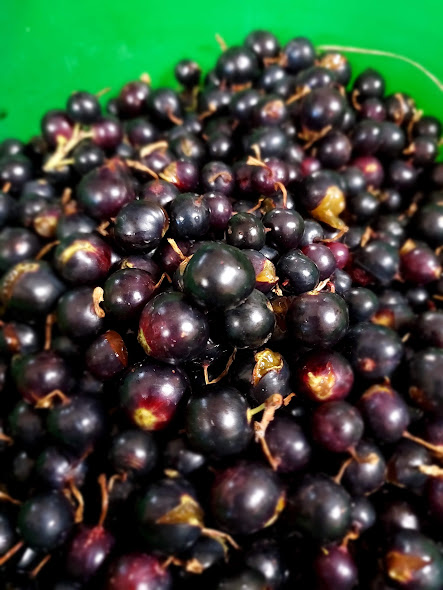
The clove currant is more fruity, less funky and a bit sweeter than its European counterpart. There is still some pleasing complexity and tartness to the fruit, but nothing mouth-puckering. They are perfect for fresh eating — or freeze them so they can be thrown in a smoothie or used as a blueberry replacement in pancakes when the snow flies. The fruits can get nice and large for a currant, from ¼ inch up to ¾ inch in size, with a shiny, blue/black color. Even the shrubs themselves are a bit larger, reaching 5 to 6 feet at maturity.
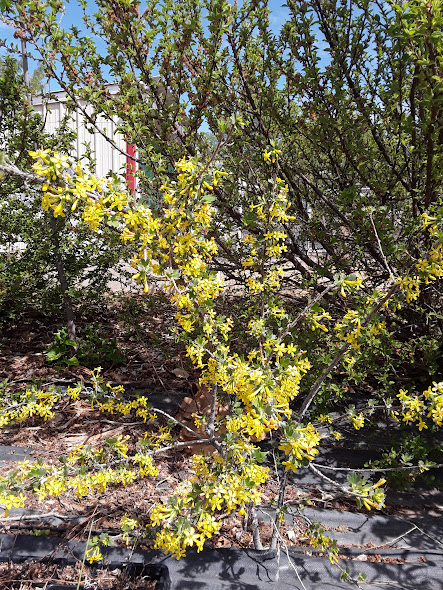
As an ornamental, the clove currant is a bit too floppy for a hedge, and they do send out runners — so consider yourself warned. However, if you give them a little space as a focal point in the garden, you will be rewarded with abundant dangling, bell-shaped yellow flowers in the spring that draw you across the yard with an overpowering vanilla and clove scent and, of course, all the incredible life that visits the flowers for their nectar. You will also get to see them with their dusky-crimson foliage in the fall. For most of the summer, you and the birds can keep eating the fruits as they ripen singly or in small clusters.
Clove currants handle the New Mexico sun and heat with grace, but they are quite adaptable and can do well with partial and even full shade. Along the river, they are only occasionally shaded out by taller thickets. If you’re out wandering in the bosque this spring, keep an eye out (or follow your nose) for these incredible flowers and fruits.
Author: Graeme Davis is an ISA certified arborist and the owner of Flora Fauna Farm, a nursery that focuses on plants that grow well in the high desert. Flora Fauna Farm grows a diversity of edible trees and shrubs, useful native plants and unique landscape plants curiously underrepresented in the urban canopy of Albuquerque. You can see its offerings at www.florafauna.farm.
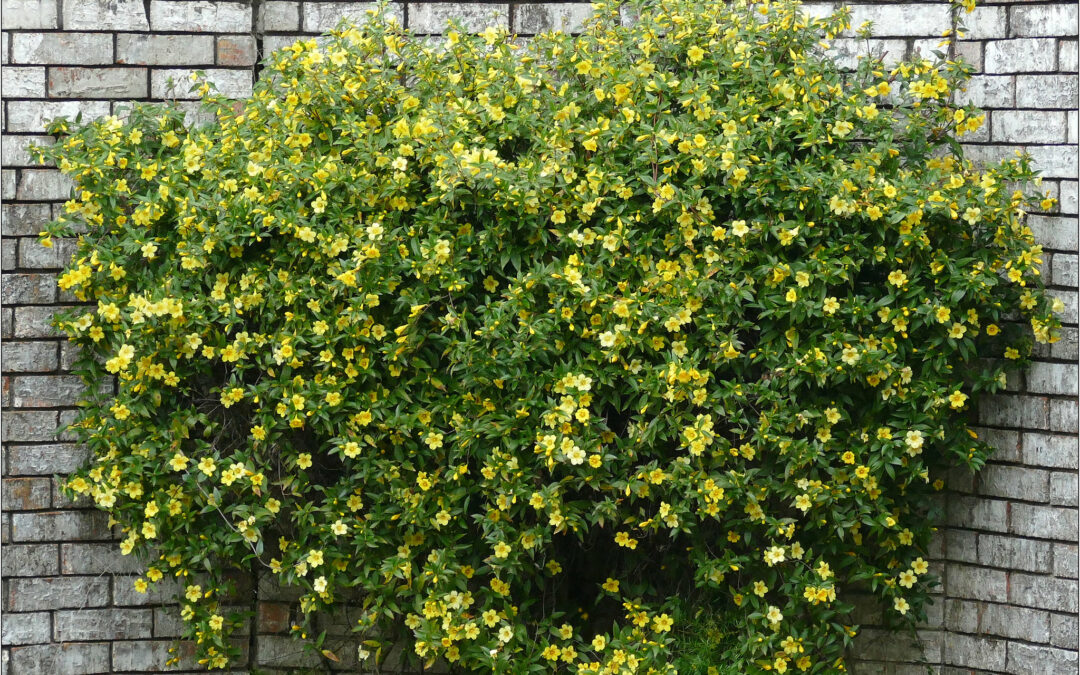
This vine, also known as Carolina jasmine and the state flower of South Carolina, has shiny green leaves growing on reddish brown climbing stems. In early spring, it puts out fragrant yellow blooms. Loosen soil around the planting hole and plant during the warmer months so it will root out quickly. It can take sun but performs best when in afternoon shade. Three to four inches of shredded wood chip mulch keeps the moisture in and this plant’s roots cool.
Being someone so immersed in planting design in my daily life and someone who is so plainly in love with plants, both wild and cultivated, it can be difficult to narrow my focus and play favorites. I owe this relationship with plants unequivocally to my grandmother the rosarian, who, when asked which rose was her favorite, would always reply, “The one that’s in front of me right now.” Therefore, I shall restrain myself for the purpose of this article to the seeded meadow in the high desert. I hope you will find the selections mentioned compelling enough to consider them and possibly experiment a little!
It was actually at my grandmother’s house that, in 2009, a friend and I, fresh out of the landscape architecture program at the University of New Mexico, germinated our first meadow from seed. We had stabilized 99% of the site’s steep grades with retaining walls, but a pesky little 300-square-foot sliver of dead sod at about a 30% slope seemed forever destined to erode out the driveway and down the storm sewer — rats!
There was an existing sprinkler system in place, and we were therefore able to provide timed irrigation to the surface of the soil without having to dig a bunch of new trenches and put a bunch of new plastic piping in the ground. A little idea sparked: Why not just seed a meadow! The cost of ingredients would be relatively low, and, given how cooked our bodies were from the work we’d already invested, a little bit of (somewhat) instant gratification sounded downright appealing.
On a late spring day, we bounced a springy roll of burlap out of the truck bed and onto our shoulders, then tossed the following in a large paper grocery bag:
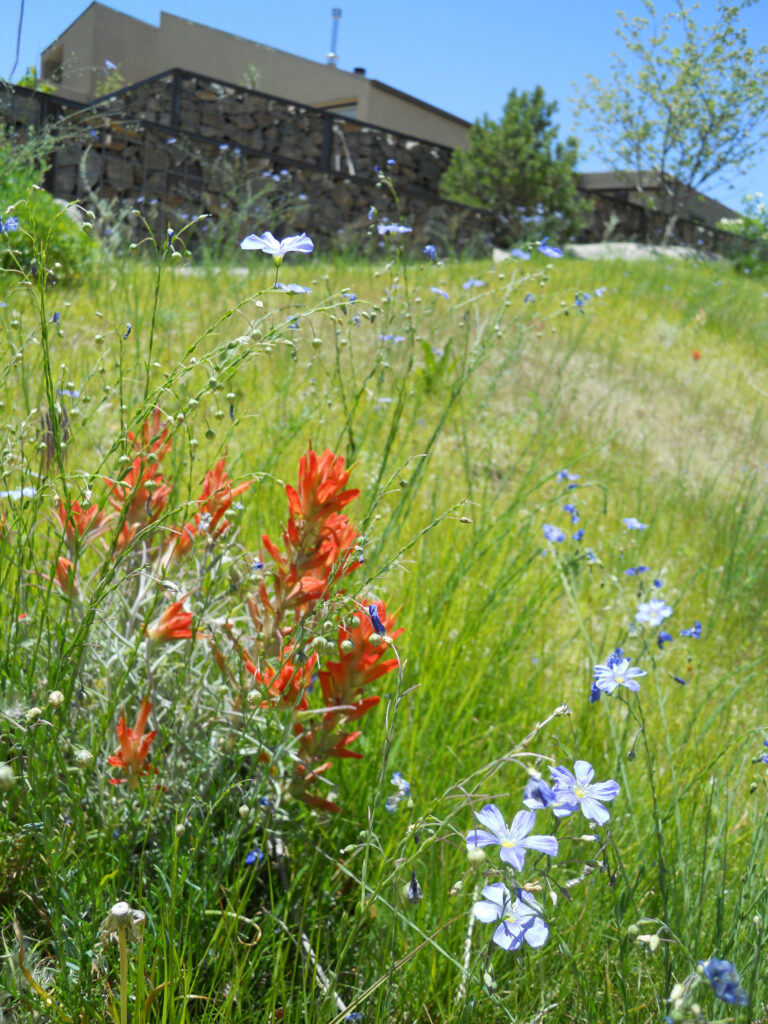
2 small packets of Indian paintbrush (Castileja lanata)
2 small packets of mullein (Verbascum thapsis)
A couple of handfuls of grape hyacinth (Muscari armeniacum) and species tulip bulbs collected from excavation on site
We prepared the soil minimally for the seed mix, scuffing a couple of 2-cubic-foot bags of compost into the top inch or two of soil with a hard rake. We then hand-broadcasted the seed atop the loose dirt, east-west and then north-south, followed by lightly raking the seed and soil together to mix the two. Lastly, using a generous fistful of (100-ish) sod staples, we tightly pinned a single layer of burlap to the surface. The burlap serves as the secret ingredient in the concoction of a high desert meadow, especially on a slope. It serves a couple of purposes: First, it secures the soil and seed mixture, ensuring it doesn’t wash away in rivulets from the sprinklers or get blown away by the wind; it also holds onto a little moisture while allowing the emerging cotyledons — the plants’ first leaves — enough elbow room to squeeze into the sunlight.
Straightening up and drying our foreheads, both a bit chuffed at how easy that’d all been, we started taking wagers. “Which of the wildflower seeds do you think will bloom first?” I asked. “My money’s on the Indian paintbrush,” said my friend, fully aware that Indian paintbrush is hemi-parasitic and relies on blue grama to survive. I cracked up. He cracked up! If there seemed to be a clear underdog in the race, that was it!
We set the sprinklers to run for five minutes twice a day and after a couple weeks had passed, we teased the burlap from the surface, revealing a uniform green carpet. At the margins of the sliver of meadow there was a distinct green border of sprouts ceasing right where the burlap was cut. Neither of us had expected it.
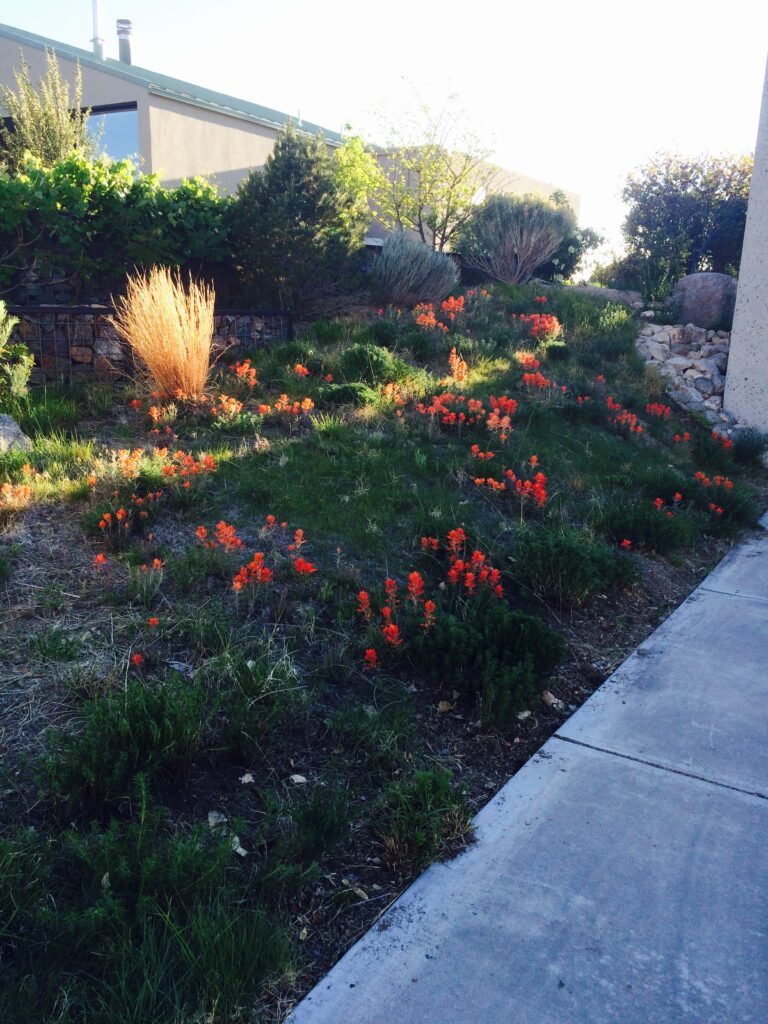
By the end of that summer, we had nearly weaned the meadow off irrigation. The grasses and perennial wildflowers had come in marvelously. Now, as we near the spring season of 2024, and the first winter jasmine shrubs and daffodils are blooming, I drive by that yard in the Sandia foothills and think to myself how one of the best performing landscapes I ever had a hand in was also one of the easiest and least expensive.
Each year, there continues to be a succession of blooms. In springtime, grape hyacinth emerges first, followed by a flush of Indian paintbrush and then purple prairie clover. The grasses green up in May and mature through August, and the little bluestem holds a warm, russet color through the winter.
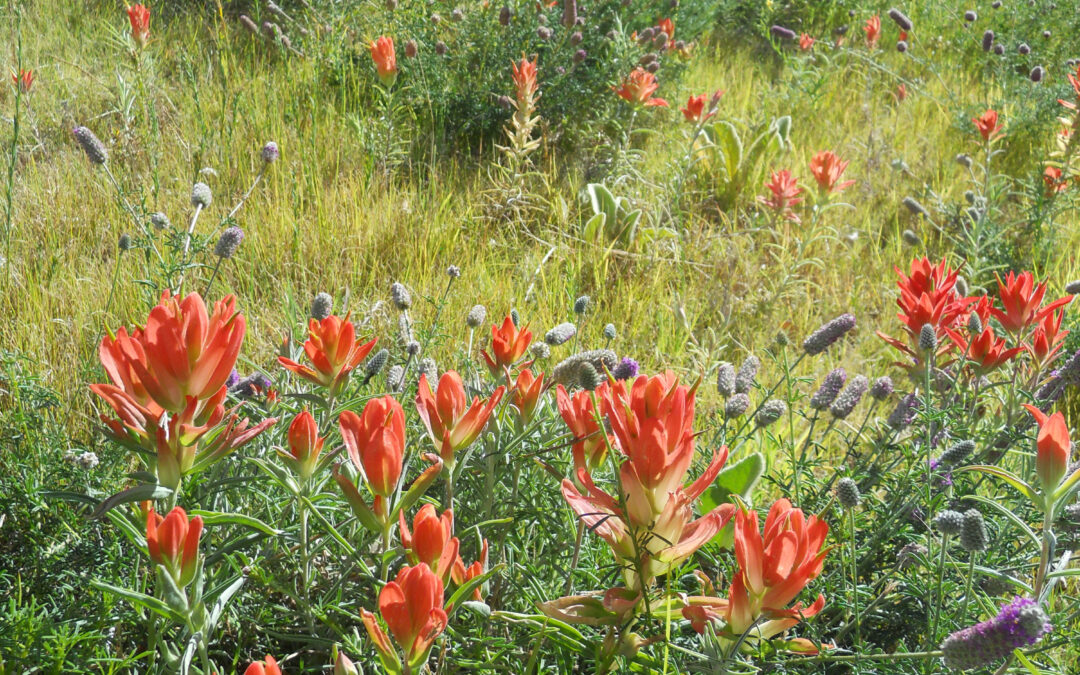
While the flax initially performed well and provided early color, it has had the least longevity of any of the wildflowers. The mullein seeds germinated well and formed soft rosettes, but the current residents of the property sadly weeded it out of the meadow for aesthetic reasons. The purple prairie clover flowers profusely every summer with irrigation once or twice a week. But, the real star of the show, from that first year until this day is — I never thought I’d say it — the underdog, Indian paintbrush.
Learn more about specific types of gardening here:
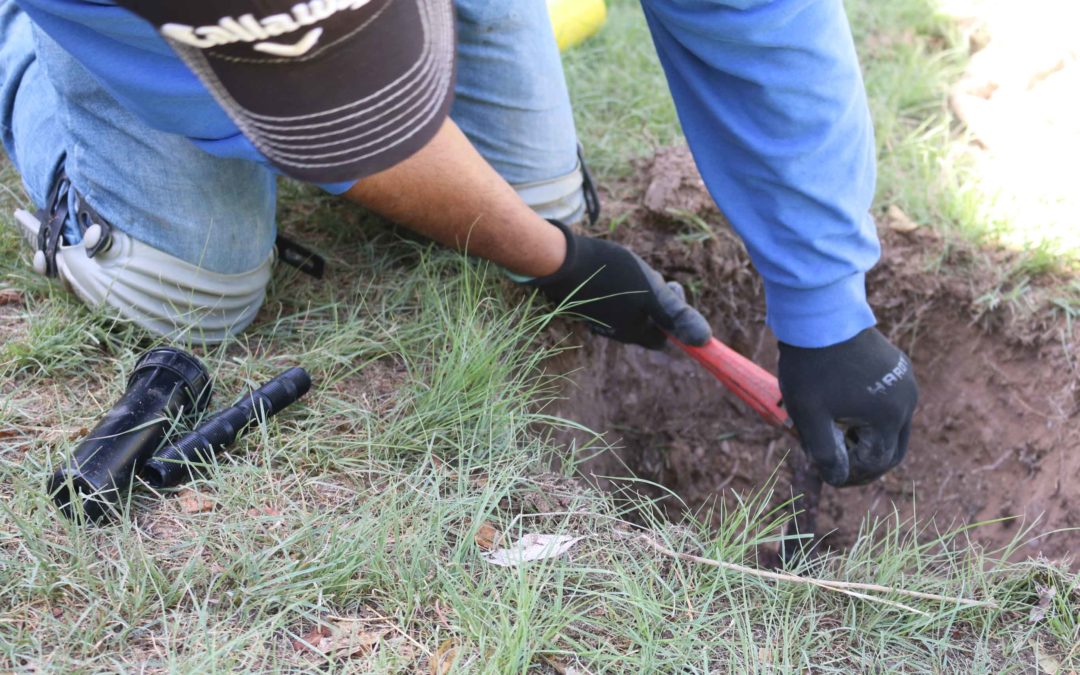
The Water Authority offers several rebates for irrigation efficiency equipment that might help you reduce water use your yard. You also can contact a Water Authority irrigation specialist at [email protected] for a consultation or efficient irrigation advice. Find more information about the rebates here.
WaterSense Smart Irrigation Controller: A WaterSense-labeled controller reduces watering times or the number of days when the system goes on so that less water is delivered to plants during the cooler months or when it has rained recently. Receive a rebate of 25% of purchase and professional installation costs, up to $100. Choose from a list of pre-qualified controllers here.
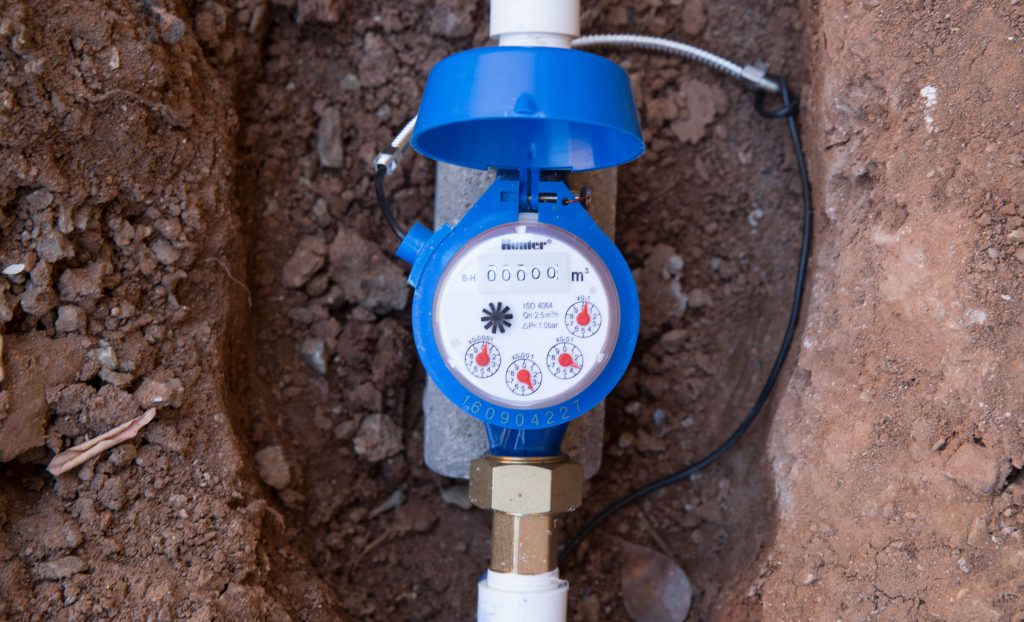
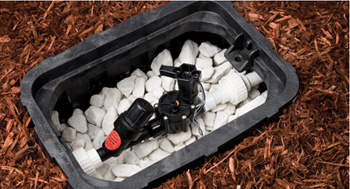
Smart Water Application Technology Flow Sensor: Meant to be used in conjunction with a smart controller, irrigation flow sensors measure the speed at which water is flowing through an irrigation system and then send that information to the smart controller. This helps detect problems and conserve water. For example, if water is flowing at an unusually high rate (such as from a line break or broken sprinkler), a flow sensor works in conjunction with the controller to take corrective action. Receive a rebate of 25% of purchase and professional installation costs, up to $100.
Smart Water Application Technology Pressure Regulators: Pressure regulation devices increase the efficiency and performance of your sprinkler and drip system by reducing the water pressure to a set, optimal rate. This is important to improve water distribution uniformity and avoid underwatering or overwatering. Receive a rebate of 25% of purchase and professional installation costs, up to $100.
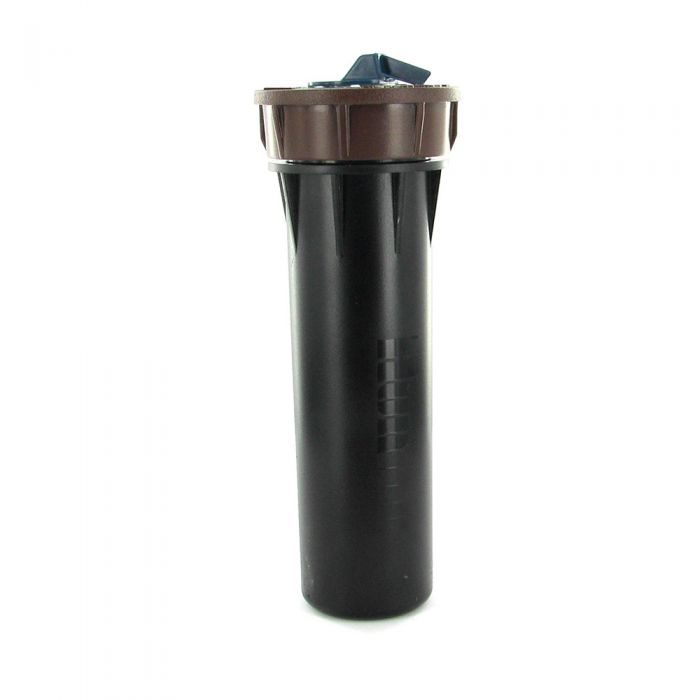
WaterSense Pressure Regulating Spray Sprinkler Bodies:These devices provide pressure regulation at each individual spray head and can reduce water waste by providing a consistent flow at the sprinkler nozzle. Get $4 off each sprinkler body you purchase (no limit).
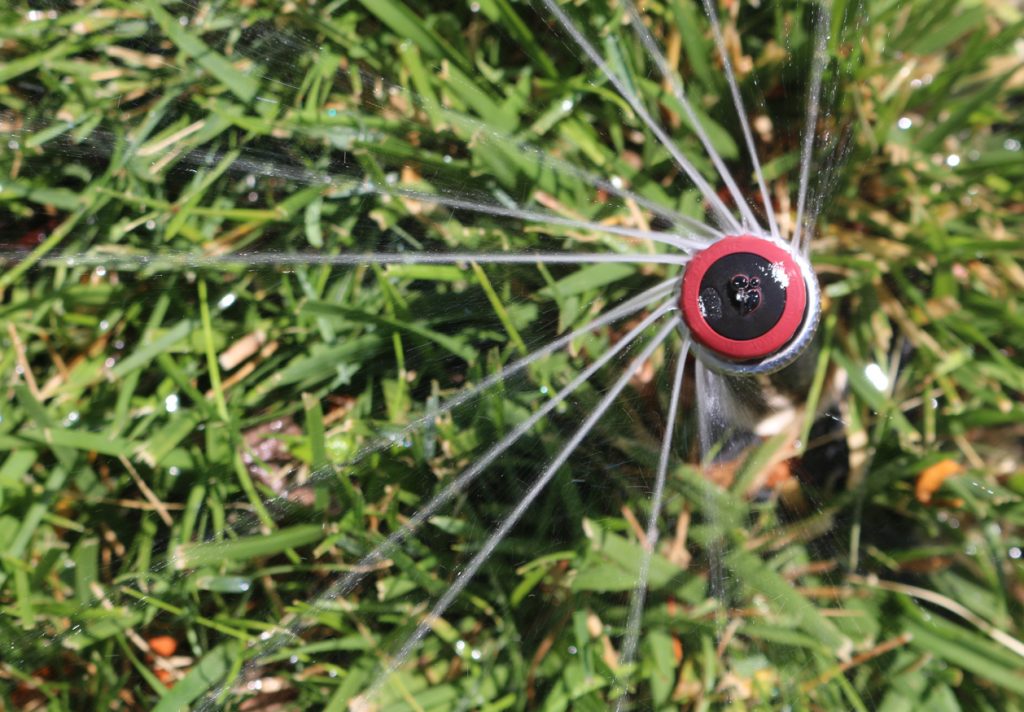
High Efficiency Rotating Sprinkler Nozzles (multi-stream):Use these nozzles to replace the sprinkler head on any conventional spray head body or pop-up sprinkler for water savings of up to 30%. High efficiency sprinkler nozzles are a great solution for upgrading an old and poorly performing system. In most cases, you just remove the old, water wasting spray nozzle and replace it with the new head. You don’t even have to take the main sprinkler body out of the ground. For more information on these nozzles check out this post. Get $2 off each nozzle you purchase (no limit).