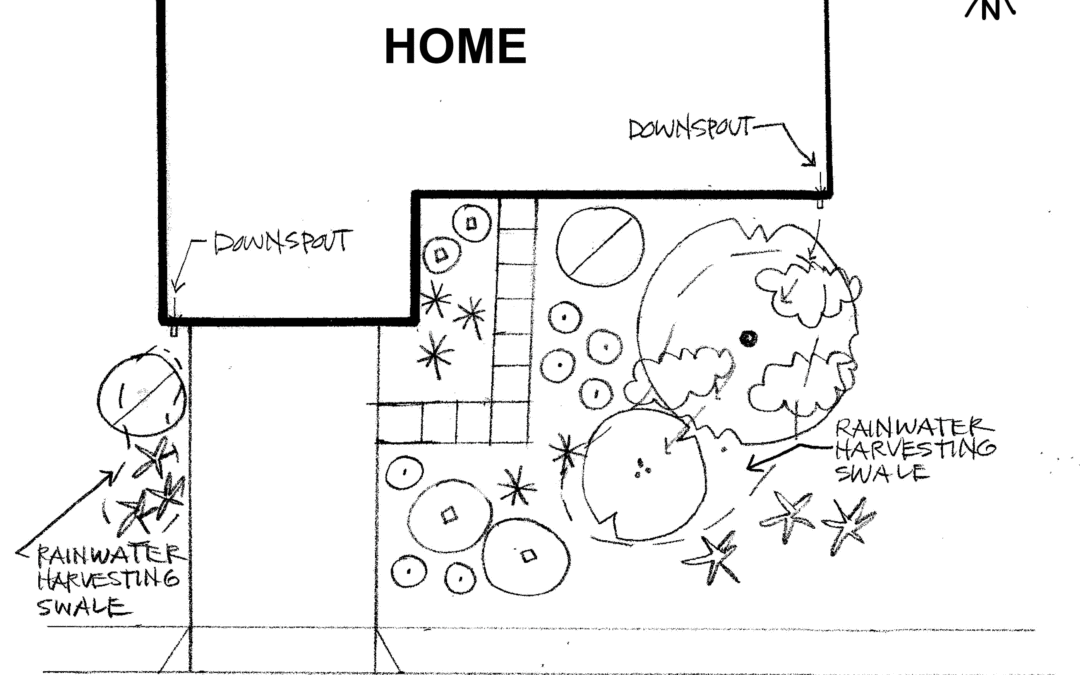
A lot goes into designing a landscape, hence there’s an entire profession called landscape architecture devoted to designing outdoor spaces. A few generous local landscape architects donated their time and put together some Landscape Design templates of a typical front yard for our 505Outside subscribers.
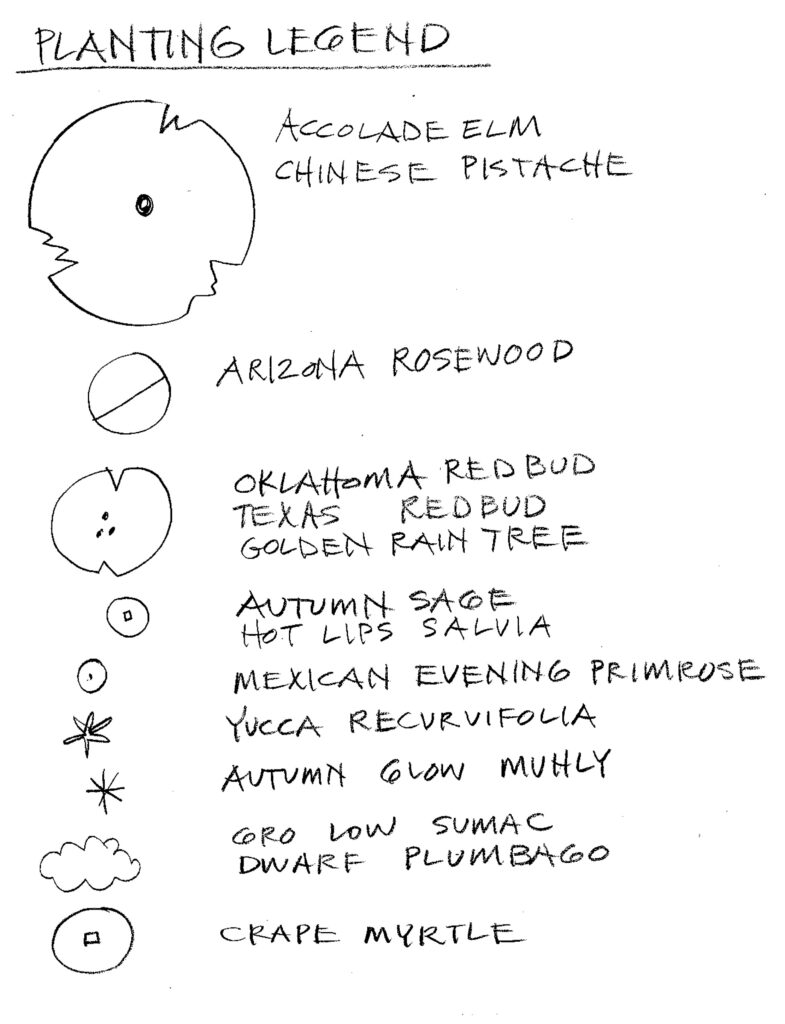
All good things start with a solid plan. Developing a plan saves you not only time and money, but it is more likely to result in a beautiful landscape. Above is a look at an example landscape template for a south facing front yard. This design brings a taste of the East Coast or Midwest to your home in New Mexico. It’s full of leafy green desert friendly plants. Take a look and get inspired to recreate this in your own yard.
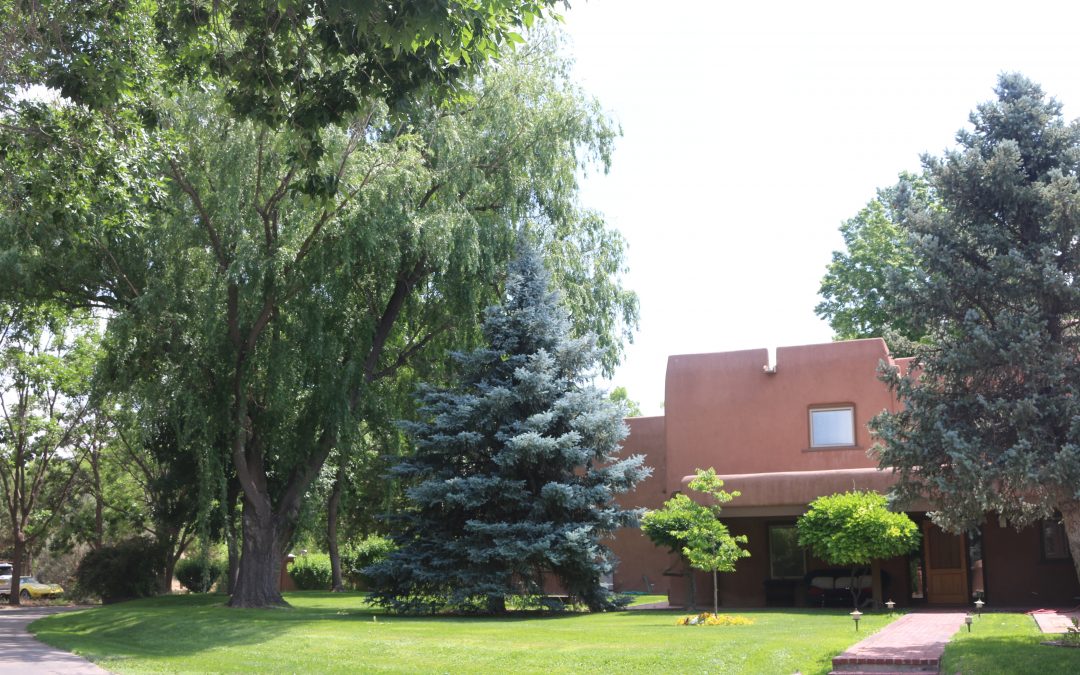
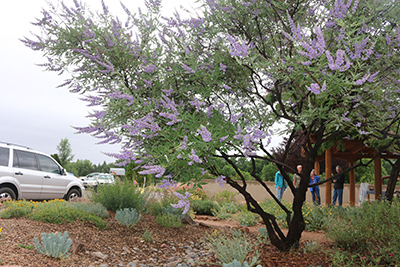
Nothing adds the same quality and value to a landscape as a healthy mature tree. Trees are so important to our community now and for future generations. The benefits include cooler outdoor spaces and homes, aesthetic appeal, carbon capture, stormwater mitigation, and more. There are some key things to think about when it comes to keeping your tree happy.
The two best things we can do for our trees are simple. We can reasonably and regularly irrigate the trees and apply a layer of organic mulch over the root zone.
The roots of our trees lie in the dry desert soil, waiting for water. In the arid Southwest, our soil also lacks living and dead organic matter. The water that falls on our land falls either infrequently, too little or too much all at once. Still, the plants and trees persist. It is up to us, the human caretakers of these places and trees, to do whatever we reasonably can to provide them with what they need to survive.
Watering Trees:
Newly planted trees (planted within one to three years) are more susceptible to damage from dry conditions and should be watered more frequently than established trees. Aim to water them to a depth of 24 inches three times a month in the fall and twice a month in the winter.
Evergreen trees lose water through their needles in the dry winter air. They need more stored water going into the winter season to make up for that. In addition, cold dry winds can strip water from evergreens faster than their roots can absorb it. That’s why it is especially important to provide enough water in the fall and during dry, warm spells in the winter. Water evergreen trees to a depth of 24 inches twice a month during the fall and once a month in the winter.
Even though they lose their leaves, deciduous trees also should not get too dry in the fall and winter. Water acts as an insulator for both the tree and soil. Soil that stays moist will be warmer. Likewise, plant cells that are plump with water will be less susceptible to damage from the cold. Water deciduous trees to a depth of 24 inches twice a month during the fall and once a month in the winter.
When watering any tree, remember to apply water out to the edge of the tree’s canopy drip line. Most established trees have a root spread equal to their height and beyond. Watering to the right depth depends on your specific soils, so you will want to measure how much water it takes to reach 24 inches deep in your soils.
Since every tree in every yard is different, how often you’ll need to water your trees largely depends on how quickly water moves through the soil. In sandy and gravelly areas (Westside and Foothills), the water passes through the soil quickly, moving past the tree roots. These types of soil need watering more often but with less water each time. On the other hand, the best way to water soil that has more clay in it is to irrigate less often but with more water. This kind of soil holds more water, but that water moves slowly. Be careful not to overwater, especially near the trunk.
How cany you tell how deeply you are watering your trees? After a day, when the water has soaked in, the soil should be moistened about 16-24 inches deep. Poke a thin piece of metal (a long screwdriver or something similar will work) into the ground and see how deep you can push it in. That will tell you approximately how deep the water penetrated the soil.
Adding Organic Mulch to Trees:
Shredded wood chips, which can be obtained from a tree service or a local vendor, are the ideal mulch. No matter what soil type and irrigation pattern you have, putting approximately 3 inches of shredded wood chip mulch directly on the soil does wonders for your trees. As with any mulch, wood chips cover and cool the soil and reduce evaporation. They also reduce weed growth. As the chips decay, they foster the development of a forest-like soil ecosystem with minerals and soil fungi, which is just what tree roots really benefit from. Think of the ground surface in a forest — bits and pieces of old trees, slowly decaying at the surface. Adding a thick layer of organic mulch is the only way to replicate those forest conditions in our urban environments.
What harms a tree? Things that harm the root system (soil compaction, drought, heat, chemicals), things that damage the root flare (stem girdling roots, mowers, construction), things that damage the living rind (wire girdling, kids with hatchets, vehicles) and things that damage leaves (over pruning, certain herbicides, heat). There are feedback loops, especially between the roots and the leaves. Root damage that reduces water uptake leads to leaves making less sugar which means fewer resources to grow new roots. Herbicide damage that deforms leaves leads to less sugar feeding root function as well as less pull on the water, both leading to less water and nutrient uptake going back to the leaves. The life for a tree in Albuquerque is difficult and just one of the aforementioned insults can be the small push which sends a tree into a slow death spiral.
How to Avoid Harming Your Tree:
Protect roots by covering the soil with 3 or 4 inches of shredded wood chips. Avoid cutting roots over one inch when possible; when absolutely necessary, use a sharp, sterilized pruning saw to make a clean cup, cut as few as possible and cut as far from the trunk as possible. Don’t compact soil by dumping gravel or parking on the root zone. Don’t apply herbicides to the root zone, which is larger than the canopy above.
Protect the leaves by avoiding over pruning. Most mature trees don’t need regular pruning, and, in fact, that should be avoided. Pruning takes away energy sources (leaves) and creates energy sinks (wounds that must be dealt with). Excessive pruning can send a tree into a starvation spiral. Prune for specific goals. Avoid herbicides like those found in weed-and-feed fertilizers.
Protect the living rind by taking away Junior’s hatchet. More seriously, don’t tie wires, ropes, and holiday lights around the trunk or branches unless you check them every year to make sure they aren’t girdling the tree.
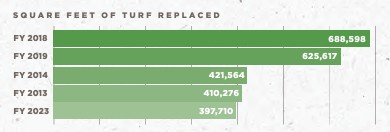
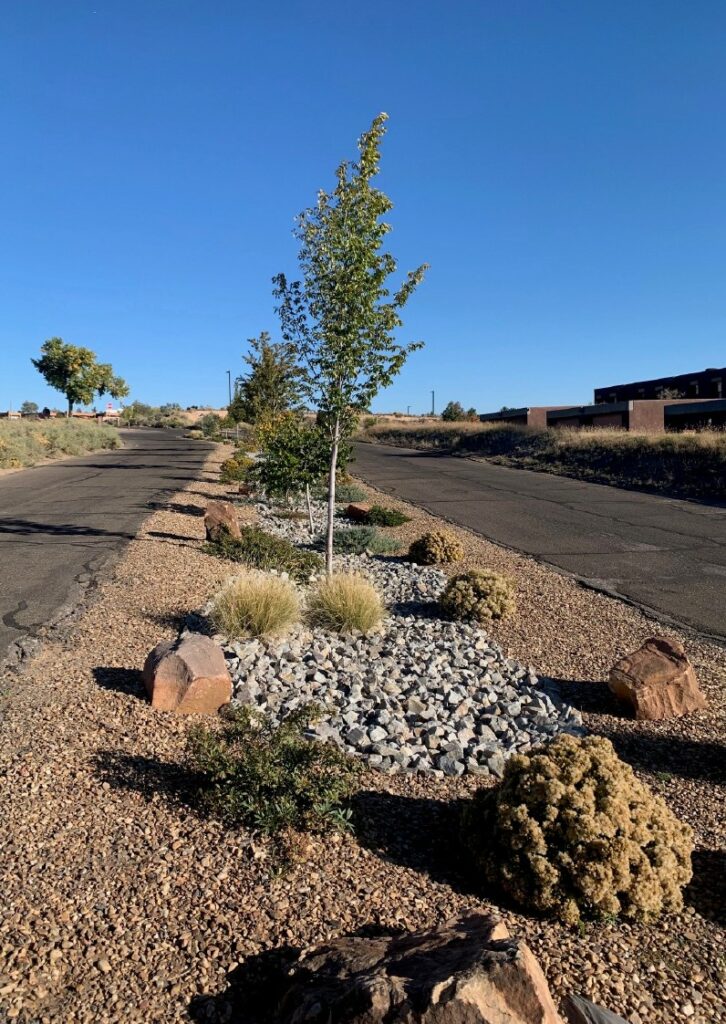
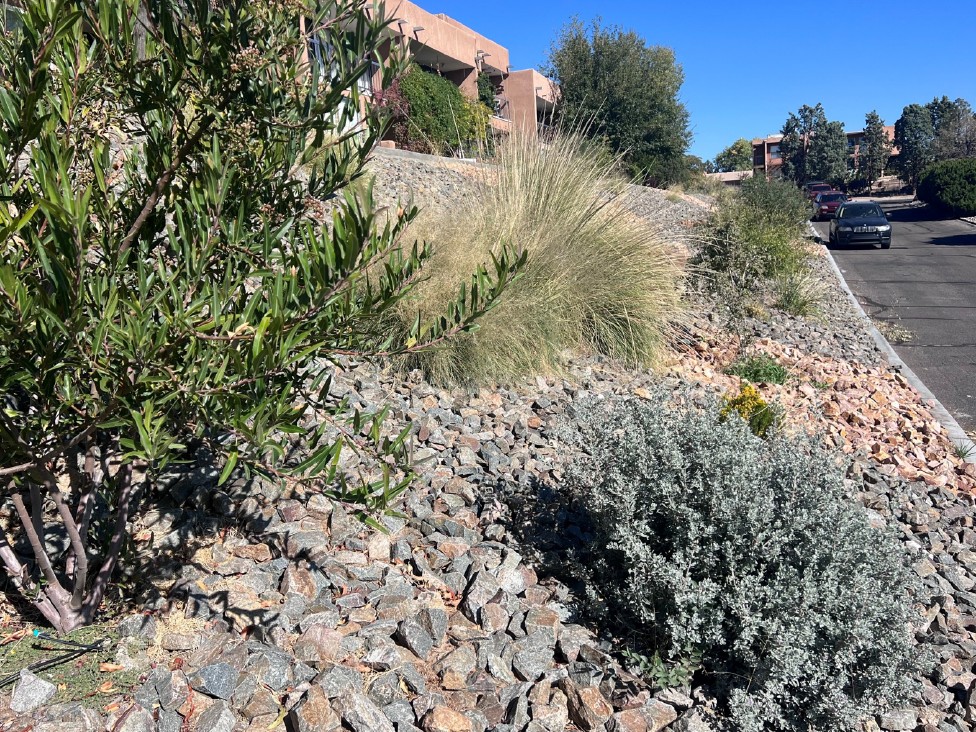
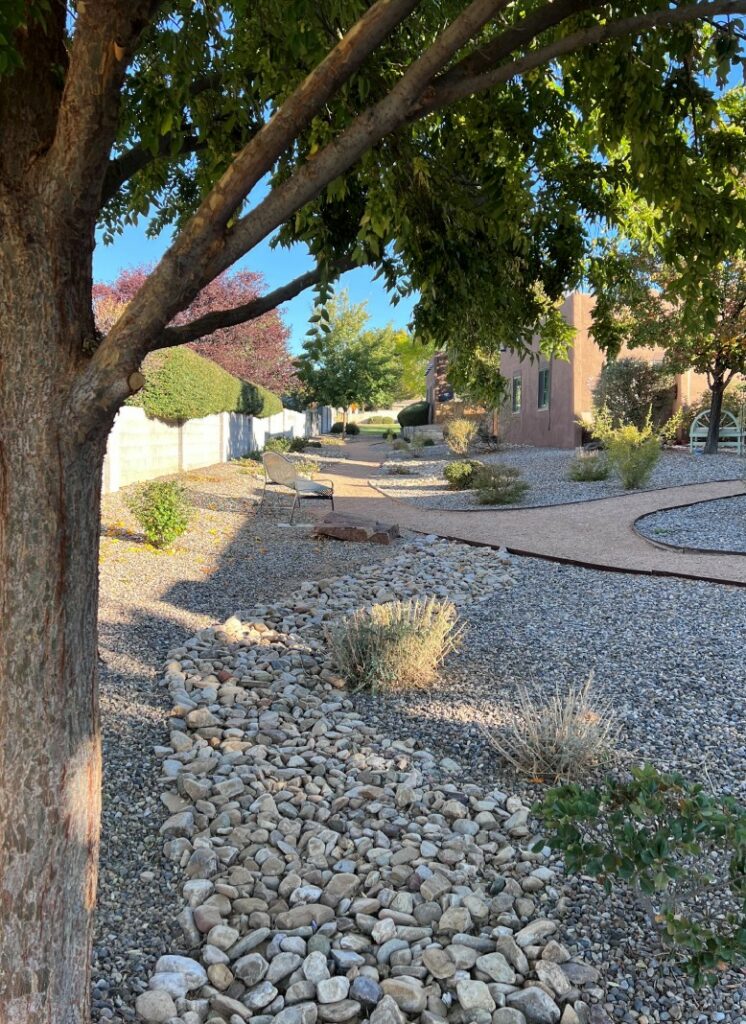
The Water Authority’s xeriscape rebate program, and predecessor programs run by the city of Albuquerque, have seen about 12 million square feet of turf replaced over the past 25 or so years. Since 2009, the top five years for program participation were:
This has contributed to a reduction in daily per capita water consumption from 250+ gallons in the mid-1990s to about 124 today. Replacement of turf with desert-friendly landscapes has always been a key component of Albuquerque’s multidecade conservation drive and of the Water Authority’s 100-year management plan, WATER 2120, which was adopted in 2016. Now, we’ve joined other Western water utilities in committing to pursue removal of 30% of remaining “non-functional” turf in our respective service areas over the next several years. That does NOT mean the wholesale removal of cherished green spaces in the name of saving water. Parks, ballfields and children’s backyard play areas are great places to have grass. Parking lots, median strips and emerald-green front yards are often a different story — and their owners may be able to save water and money by voluntarily exploring xeric alternatives.
To qualify for rebates, those alternatives must include landscape plans that are rich in climate appropriate trees, shrubs and plants. The idea isn’t to just pave over a patch of grass, replace it with gravel or let it revert to unsightly weeds. Plants and trees aren’t just pretty to look at: They create shade that reduces the “heat sink” effect — and the demand for water. So, yes, we want to “get off the lawn.” Doing so will help us meet important conservation goals. But we can do it in a way that preserves the benefits that functional turf and green spaces can offer.
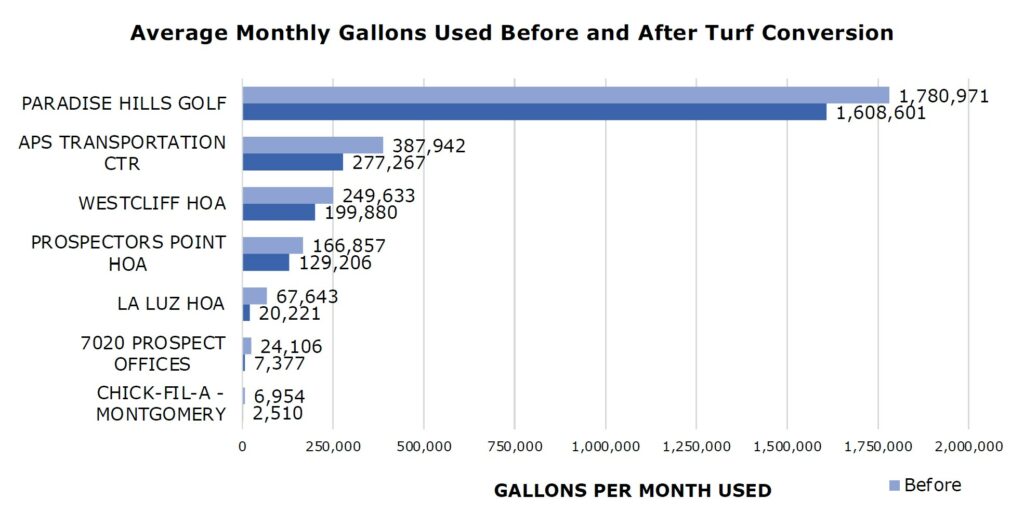
Check out some of our recent projects:
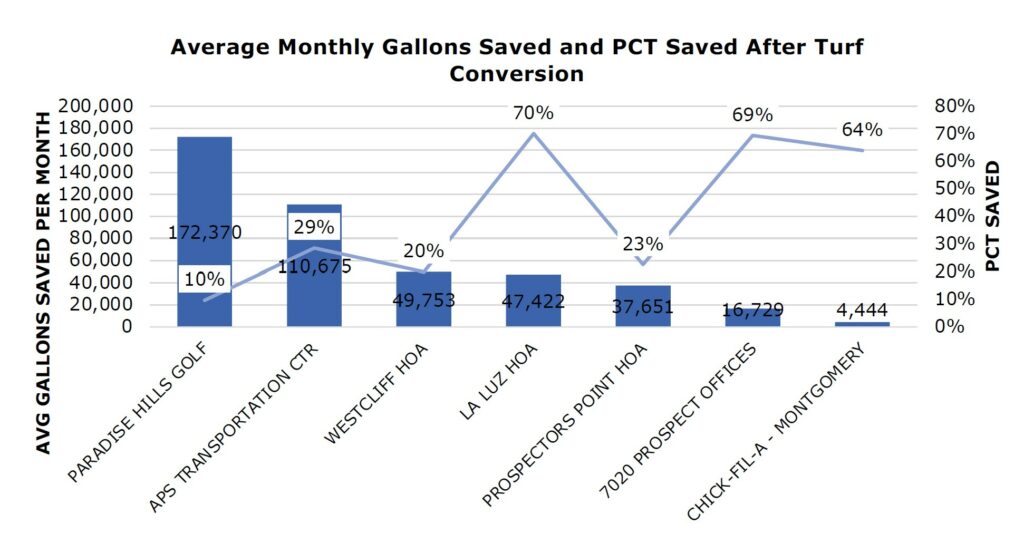
Paradise Hills Golf Course
Project timeline: 2011-2022
Total landscape transformation: 1.4 million sq. ft.
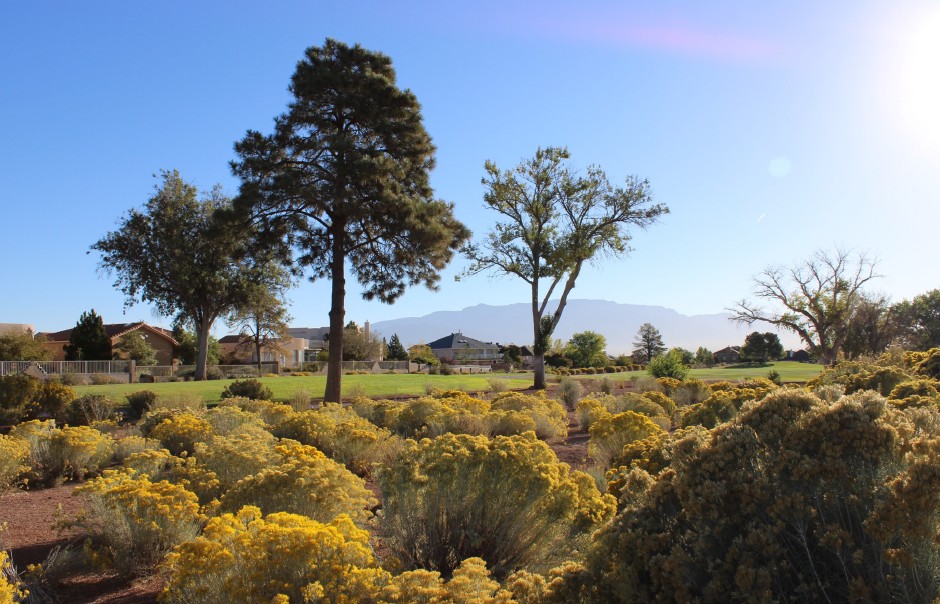
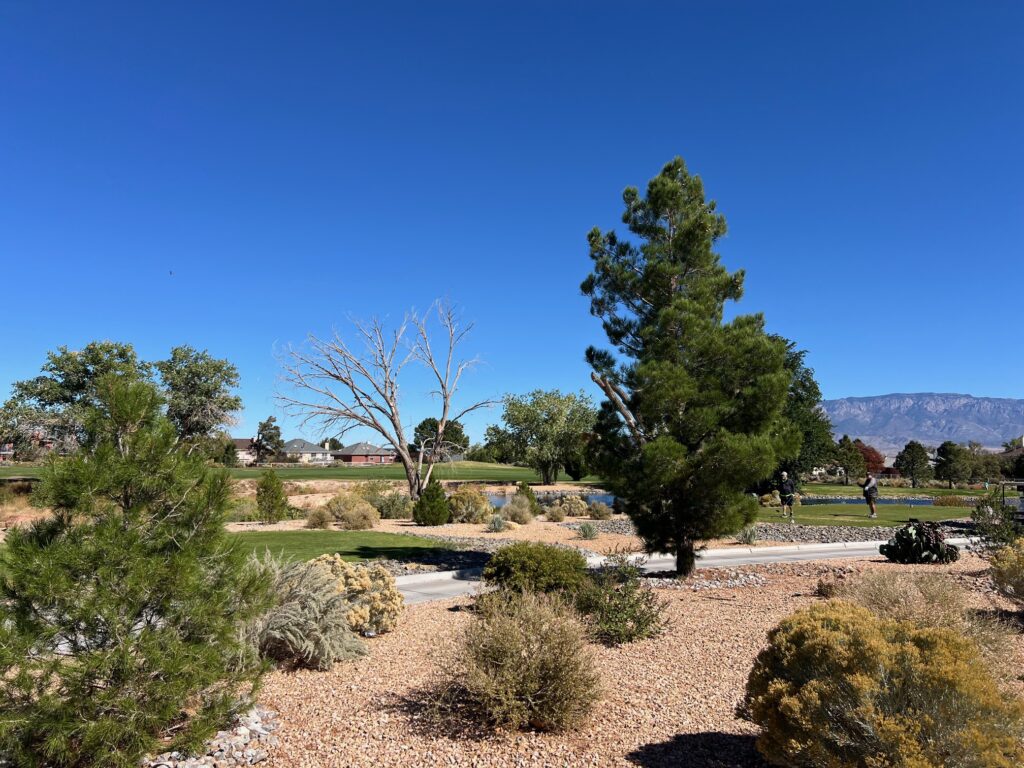
Paradise Hills Golf Course (formerly known as Desert Greens Golf Course), a private country club on Albuquerque’s northwest side, had been served since its construction in 1962 by a private water utility charging artificially low, subsidized rates. When the Water Authority acquired the private utility in 2009 and began charging ordinance-based rates, the course’s operating costs increased significantly. With its business model no longer tenable, Desert Greens was in danger of shutting down. Fortunately, help arrived in the form of the Water Authority’s xeriscape rebate program, which Desert Greens used to finance the removal of turf from non-playable irrigated areas. By 2021, the golf course had transformed nearly 1.4 million square feet of turf into xeric landscapes, conserved more than 350 million gallons of water, and — key to the course’s survival — saved over $2 million in water bills. The end result is an aesthetically pleasing, targeted-play course that patrons love — and which can continue to operate at a profit.
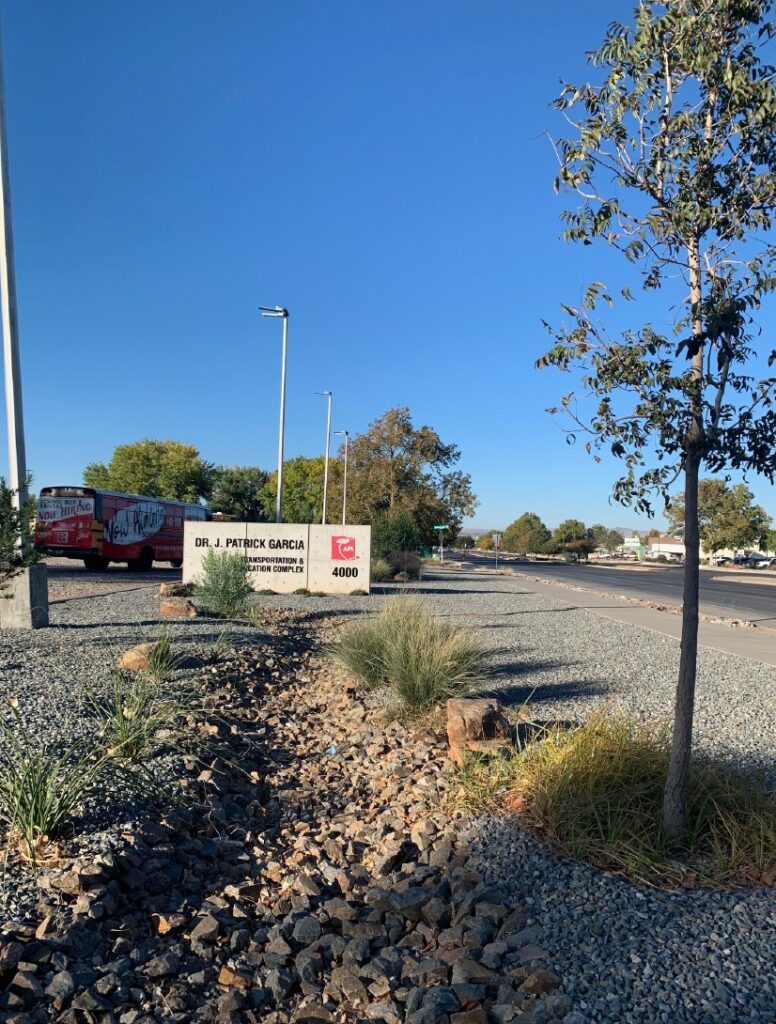
Dr. J. Patrick Garcia (APS) Transportation/Education Complex
Plant types: Lacebark elm, escarpment live oak, frontier elm, Oklahoma redbud, crape myrtle, turpentine bush, blue grama, Chinese pistache, catmint
Commercial Office Park
Project timeline: 2023
Total landscape transformation:1,540 sq. ft.
Water savings to date: 83,645 gallons
Rebate amount: $3,080
Total plants: 134
Plant types: Creeping germander, dwarf plumbago, golden columbine, turpentine bush, little bluestem, English lavender, ornamental pear, London plane tree
Just as we take shelter when the weather turns colder, so do your plants. This time of year, plants store most of their nutrients in their roots and find shelter in the ground. We can support this transition to help plants thrive during the entire winter season.
Also, it is time to give your irrigation system a rest. To avoid damage to your irrigation system we recommend setting it to the OFF position. Your next step will be to wait for a warm day to water deeply one more time and then take steps to winterize your irrigation system.
Follow this advice to ensure landscape success:
Turn off your irrigation system.
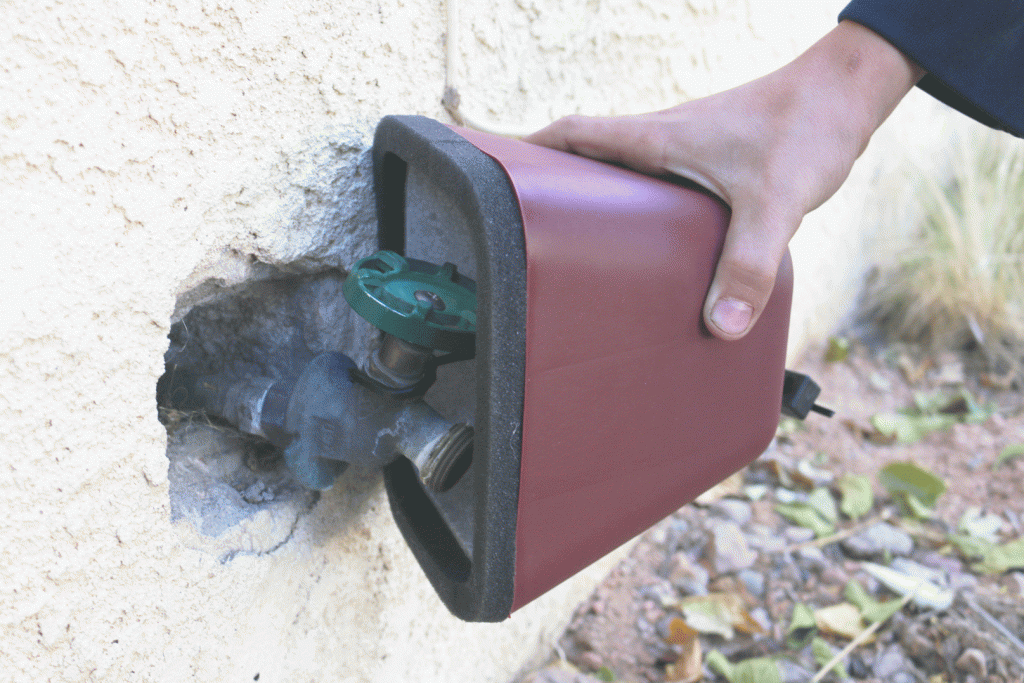
If your irrigation system is attached to an outdoor spigot, you should disconnect it and cover your hose bib using a faucet cover.
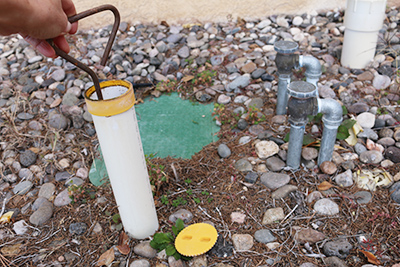
If you have a below-ground irrigation system, locate your shut-off valve (often hidden in a 3” PVC pipe; often with a white or yellow cap, as shown in the photo). Turn it to the right to shut it off. Be careful when turning so you do not break the valve.
Drain the water from all pipes, valves, and sprinkler heads. Learn more about protecting your irrigation system here.
It’s important to make sure your landscape stays healthy in the winter during times of drought. If we don’t get snow or rain, find a warm day once a month and deeply water your plants. After watering, set your system to the OFF position again.
How much should I water this November?
1-2 more times this month
Skip watering if it rains or snows
Give individual trees 100 gallons to a depth of 24 inches at least one time this month
Water turf for 7-10 minutes, to a depth of ½ inch”
Your outdoor water usage should be 80% less than in the summer season
How can I keep my landscape healthy this winter?
Turf
Mow your lawn to 2-2.5 inches tall. Grass left too long over the winter can develop brown patches.
Aerate next time it is warm. Aerating your lawn will give it a chance to breathe before the grass goes completely dormant. This also provides relief from any compaction that has built up during the warmer months.
Rake or blow off the leaves that have fallen on your lawn. Leaves that are left on the lawn could become moldy, which invites disease.
Top dress with compost. Compost acts as a fertilizer, adds moisture retention capacity and improves overall turf health.
Trees
Apply a thin layer of compost, about ½ inch, to provide nutrients.
Add mulch away from the trunk base, about 2 inches thick. Mulch helps maintain your ground at a constant temperature and helps retain moisture.
Water your trees thoroughly once a month, if needed, to support winter hardiness. Withholding water will not help the tree acclimate to winter.
Shrubs
Leave your leaves. Every autumn, leaves fall to the ground, sheltering the soil and beneficial organisms, returning organic matter back to the ground, and perpetuating the nutrient cycling essential for good plant health. This year, think about leaving those leaves in your garden by tucking them in around your shrubs. When we allow leaves to follow their natural life cycle, we can enjoy a colorful tapestry on our landscape as well as all the benefits provided by an organic mulch.
How do I avoid irrigation and other plumbing system damage? To avoid costly repairs, we recommend that homeowners take the following steps:
Find the master shutoff valve The master shutoff valve turns off the water to the entire house. If you have one, learn its location. This could be critical if a pipe bursts. Need an emergency turn-off? Call 842-WATR and select Option 1.
Insulate pipes and faucets in unheated areas Wrap exposed water pipes in unheated areas (such as a garage, basement, crawl space or space beneath your mobile home) with insulation or heat tape. Be sure to follow the manufacturer’s instructions carefully.
Seal off access doors, air vents and cracks Winter winds whistling through overlooked openings can quickly freeze exposed water pipes. DO NOT plug air vents used by your furnace or water heater.
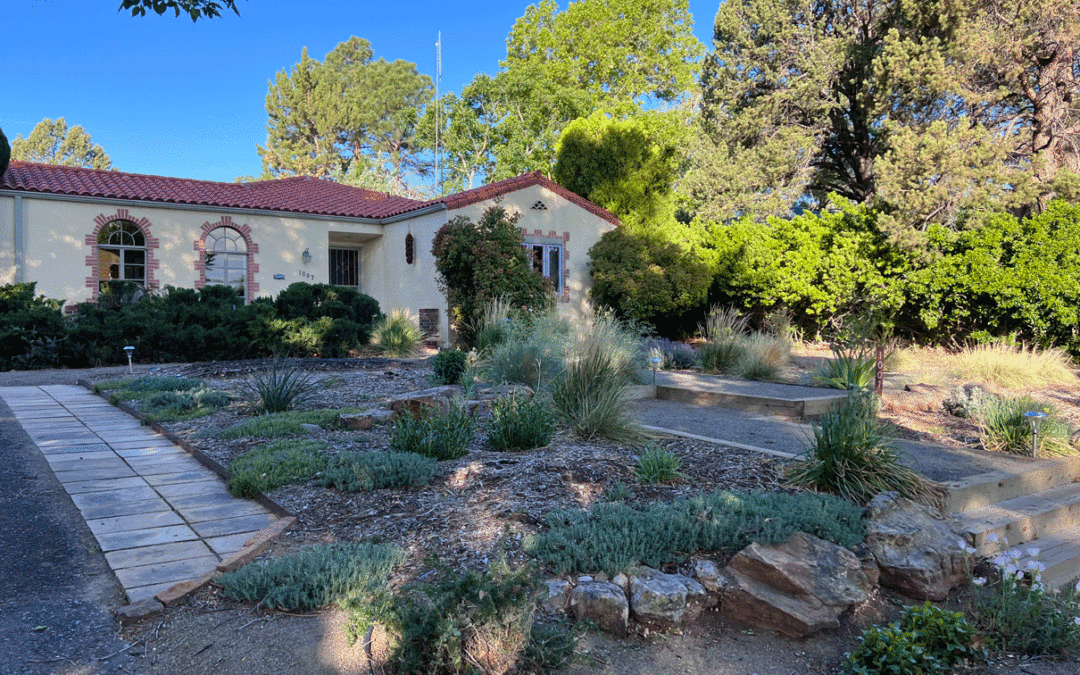
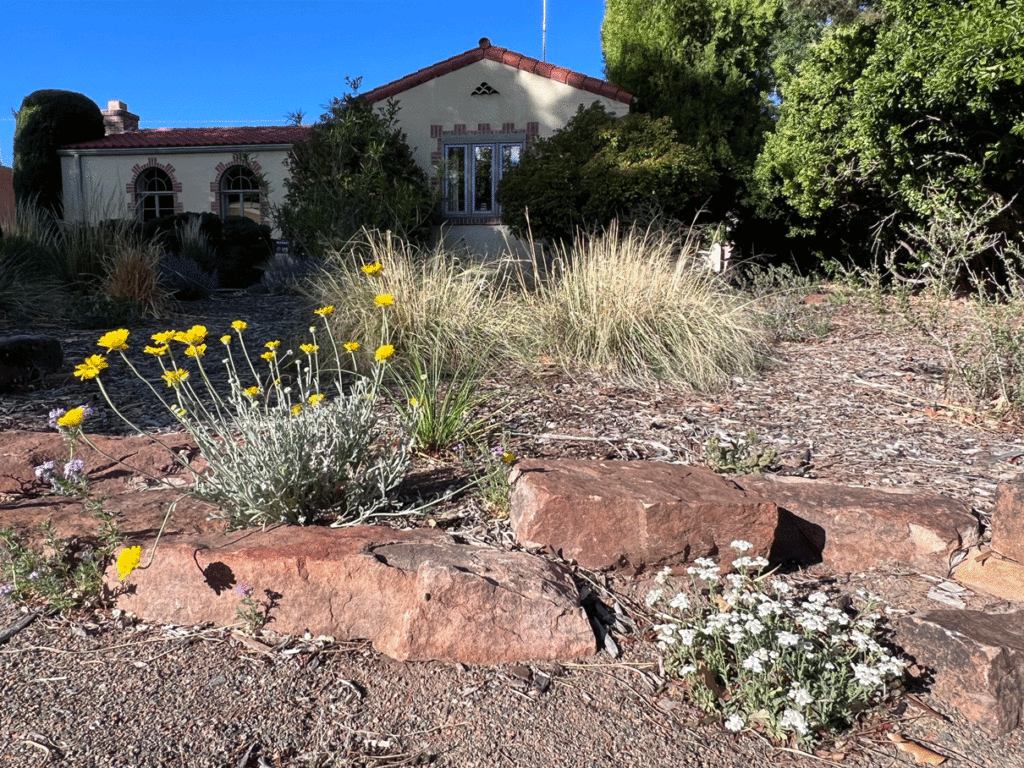
Desert friendly xeriscapes are a great way to replace high-water-use turf grass with something beautiful, low-water-use and wildlife-friendly. Many Albuquerque area homeowners are taking their conversion projects a step further and choosing wood chip mulch over gravel or other aggregate, which can get hot and allow weeds to pop up.
Our featured homeowner replaced 2,000 square feet of high-water-use grass lawn with a xeriscape filled with a variety of local native plants. Their lawn had become too high maintenance to keep up, and they were interested in a more water efficient yard that was pollinator friendly and low maintenance. The shrubs they chose include chamisa, cherry sage and catmint. Flowering plants include Mexican primrose, dwarf plumbago, desert marigold, creeping germander and penstemon. A mix of ornamental grasses such as Karl Forester, blue avena and muhly grass as well as a native desert willow tree round out the landscape.
Additional Facts on Mulches:
Wood chip mulch insulates plant roots from both heat and cold, reducing moisture loss from the soil by evaporation, feeding beneficial soil microorganisms that enhance plant growth and improving soil health. This makes the soil more sponge-like and better able to hold water. By installing 3-4 inches of mulch over bare dirt, weeds are reduced, the soil is enriched and new plants retain more moisture.
Another benefit of organic mulches is that they can visually accommodate a little bit of leaf litter, reducing the need for constant raking and clean-up. A thin top dressing of mulch added every two to three years keeps the landscape looking fresh and replaces the material that has broken down to sustain the soil. Organic mulches are lightweight, making them easy to transport in a wheelbarrow and spread with a rake.
Mulches are available in bags from most local garden centers (avoid the dyed ones as the colors will fade) and in bulk from several retailers in the Albuquerque area. When you buy from local bulk retailers, you are supporting the recycling of local organic materials that may otherwise end up in a landfill and contribute to greenhouse gas emissions. Buying in bulk also means less plastic! Mulch is sometimes available at no cost from local tree trimming companies. In addition, Bernalillo County offers free mulch to residents who load it themselves at the East Mountain Transfer Station. County staff can load the mulch in your vehicle with a tractor for a $5 charge. The county also will deliver 30 cubic yards of mulch for $60, plus $2 a round trip mile for delivery. Mulches are a renewable resource that will improve landscape health and conserve water.
In areas of higher wind exposure or periodic inundation with water, use a wood chip mulch that is irregularly shaped and sized as the pieces will knit together better. This type of mulch can include recycled yard waste and tree trimmings as well as commercially available, locally processed wood products.
Property Data:
Grass converted to desert friendly xeriscape: 2,150 square feet
Total gallons saved in one year since conversion: 10,000 gallons.
Total rebate received: $2,250 (extra $100 bonus for using organic mulch)
Thinking about converting your yard from high-water-use grass to xeriscape? Check out the Desert Friendly Xeriscape Rebate page to learn more about the qualifications, requirements and process to apply for this generous rebate. Additionally, xeriscape rebate participants get 25% off the cost of installing bulk organic mulch, up to $100. If you want to top dress mulch around your trees, take advantage of our Treebates. You are welcome to contact our xeriscape specialist, Carl Christensen, at cwchristensen@abcwua.org or 505-289-3026.
Authors: Amos Arber, Xeriscape Rebate Inspector with the Water Resources Conservation Department for the Water Authority, and landscape architect Jill Brown, ASLA, MyLandscapeCoach.com. Have a question about the article? AskAnExpert@abcwua.or
What is urban heat? Dark surfaces like concrete, asphalt and brick absorb and retain heat from the sun. Little spaces between buildings can create heat canyons that trap this heat, forming “islands” that are warmer than rural or suburban areas.
Urban heat can affect us in many ways, such as increasing heat stroke, heart and lung diseases, energy costs, general discomfort, hyperthermia, and poor air quality. The U.S. Environmental Protection Agency projects that by 2040 Albuquerque will see four times the current annual number of days with temperatures of over 100 degrees.
But trees can help! Trees provide shade to keep us and the ground cool, as well as cooling the air through water loss, or evapotranspiration. Increasing the urban canopy can lower city temperatures.
Let’s Plant Albuquerque is a broad community alliance dedicated to planting 100,000 new trees in the city by 2030. The alliance represents a broad range of civic, government and community organizations dedicated to this goal.
DEVELOP, a NASA Applied Sciences Program, studied Albuquerque’s urban heat. DEVELOP conducts feasibility studies that bridge the gap between Earth science information and society and works with communities and organizations to address environmental and policy concerns.
NASA DEVELOP found that a 30% increase in tree shade can help offset rising temperatures and allow neighborhoods to be cooler. Trees can also increase your body’s “thermal comfort,” how cool and comfortable you feel on hot days.
The city’s parks canopy alone provides many benefits, including energy savings, air quality improvements and increased property values. The nearly 30,000 trees in the city’s public spaces provide:
$1.7 million in carbon monetary benefit
$624,000 in stormwater monetary benefit
$3.6 million in (overall monetary benefit
The Water Authority would like to encourage you to help cool our city by planting trees. The Tree-Bate program helps offset the cost of planting and maintaining trees.
When you buy a new tree, you can receive a rebate equal to 25% of the purchase price up to $100 a year. To help customers narrow down their purchasing decisions, the Water Authority assembled a list of 20 trees that are proven to thrive in our area, are commonly available for purchase, fit a variety of situations and provide numerous environmental benefits. A broader list of more than 160 qualifying trees is in the Water Authority’s Xeriscaping Guide. They include: