Folks, it’s a hot, dry summer here in central New Mexico. No surprise, you say — we live in a desert. Even for our location, though, it’s hot and dry. This creates a little conundrum for us: keeping our landscape plants growing while using water efficiently.
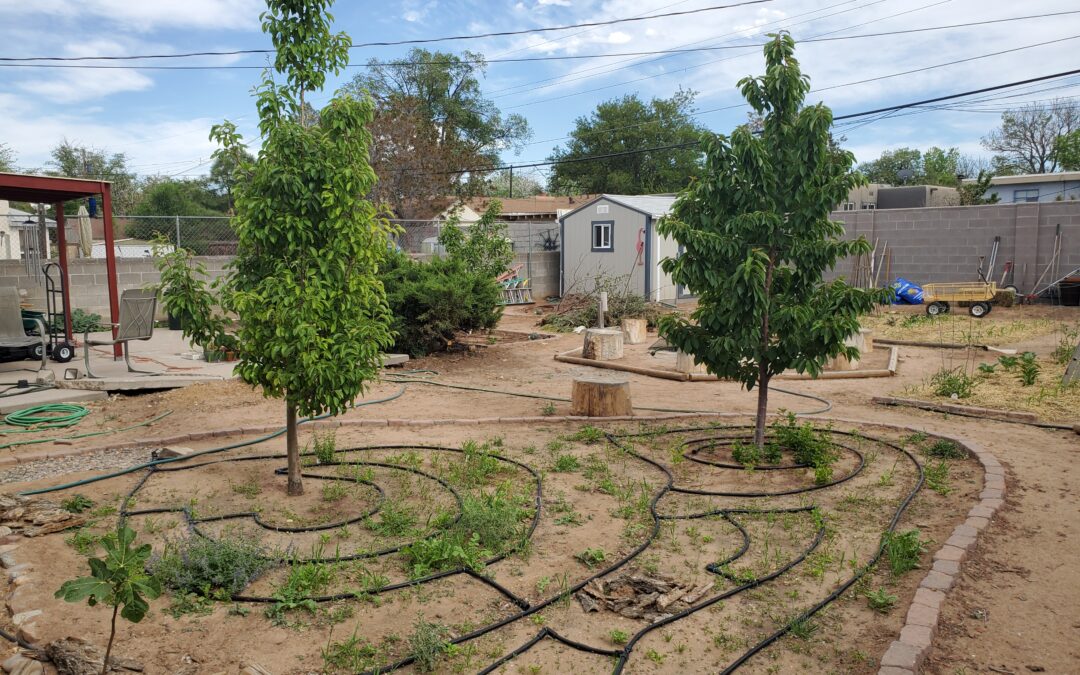
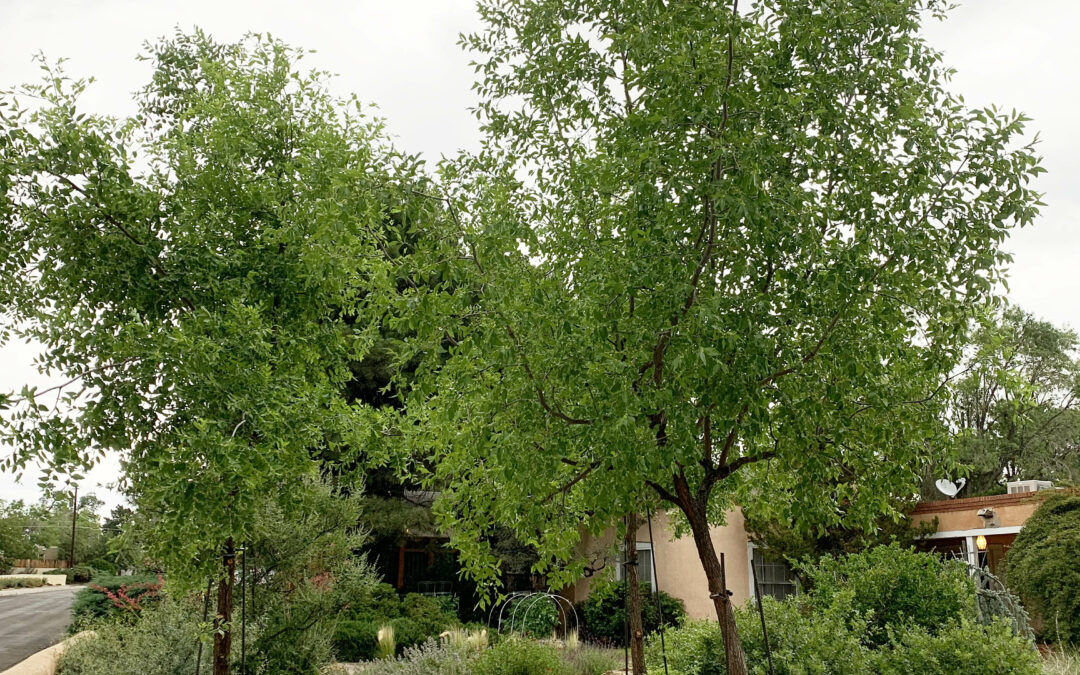
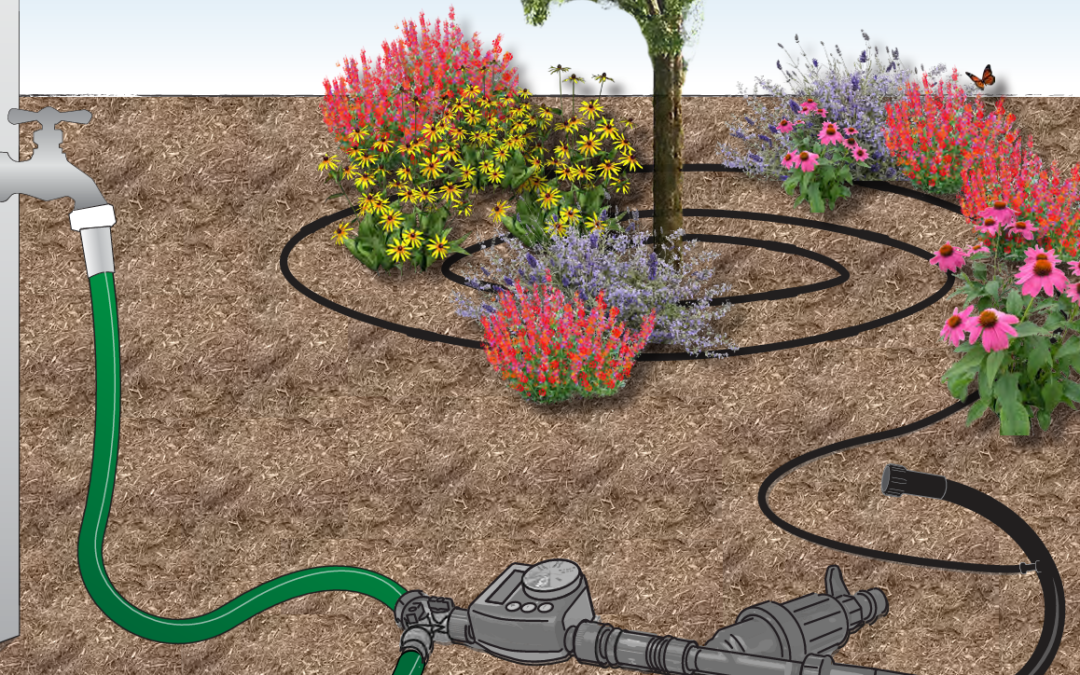
Tree and surrounding plants being watered by inline drip irrigation.
This applies especially to trees because as large plants with lots of leaves, they need regular adequate water for their size and species to remain happy and continue creating positive benefits for your yard and the city as a whole. Call that a biological law and reality. As temperatures go up, trees’ water demand goes up. That is a good starting point to keep in mind — in times of drought, you should water your trees a little more frequently than you would in a year with abundant rainfall.
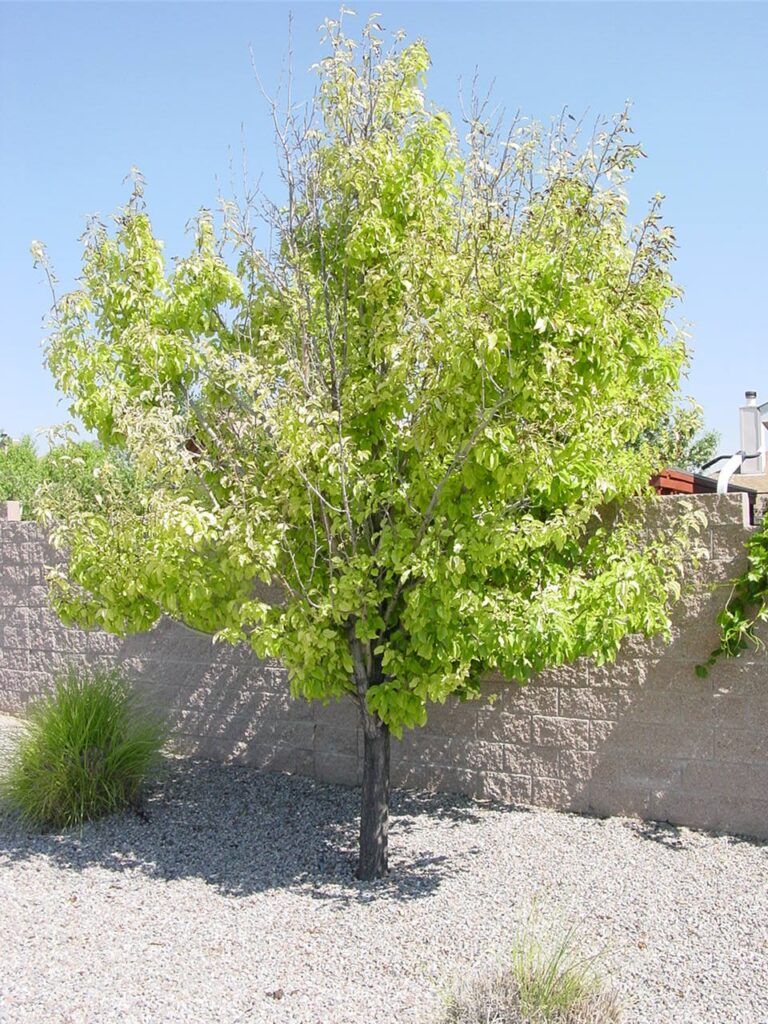
Drought stressed tree showing missing leaves and yellowing.
It turns out that over 90% of the water that comes into a tree simply escapes through the leaves as water vapor; the tree keeps very little water inside to grow. This loss of water vapor provides the “suction” that causes more water to enter the root system. It also cools the leaves and keeps them within comfortable working temperatures. Someone once said trees (and plants generally) have figured out a way to guide the natural movement of water from soil to atmosphere, channeling it through their bodies and using it to grow and function, which is one part of the water cycle. Having trees increases moisture in the air, allowing your swamp cooler to perform better.
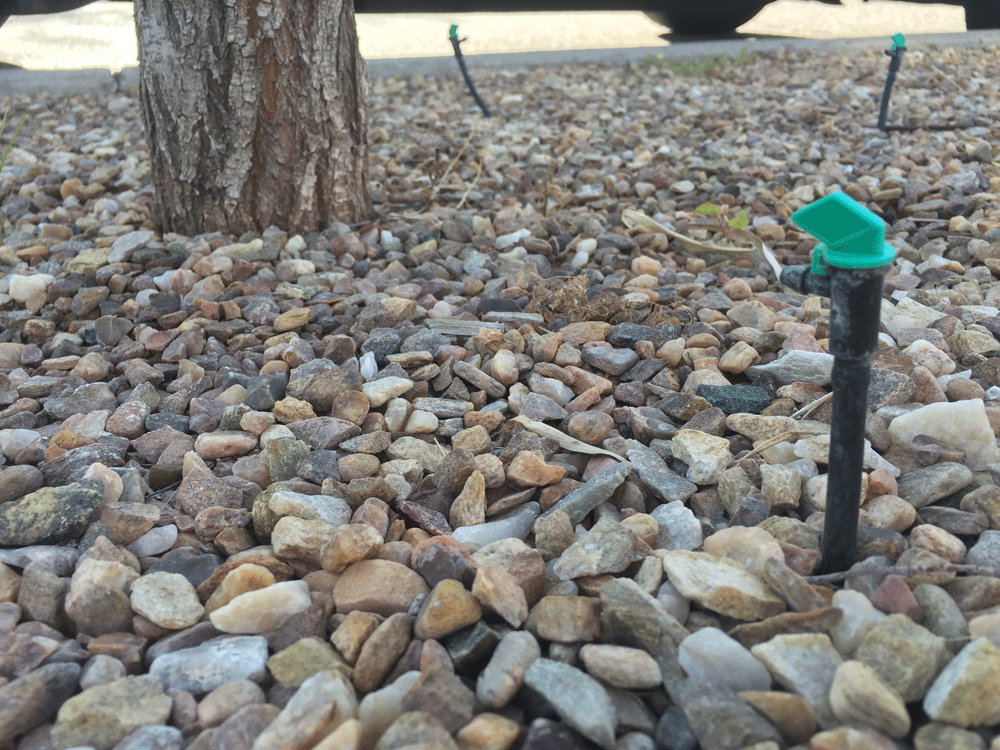
Trees “drink” very differently than you and I. We have one fairly large mouth into which all the water goes. However much we need, we have one target to hit in order to drink that water. Trees, on the other hand, take water in through their tiny, young roots out in the soil. Water has to get to a lot of soil in order to hit enough of those “mouths” to matter. A lot of tree irrigation eventually fails because there are only a few emitters (and those are often too close to the trunk). Those few emitters cannot put out enough water to satisfy the tree’s demand, nor do they wet enough surface area. (See examples in the photos below.)
Drip emitters located very close to the tree trunk.
What matters to a tree is the volume of water it has to work with. That volume is entirely dictated by the volume of soil that is holding water. And THAT volume is dictated by the surface area that received and absorbed water. The key is to disperse the water throughout the main root zone and do it in a way that allows the water to soak in where applied and not flow to low spots on the ground (which often are gutters. Science has found that most tree roots are located within the top three feet of the soil surface and quite likely even more shallow in landscapes that have not been deeply irrigated for the life of the tree, which is a common condition in Albuquerque.
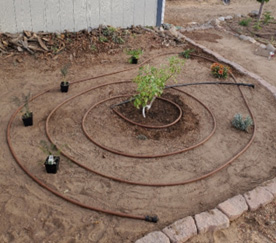
To properly water your trees, you will need some sort of irrigation system. It could be a bucket you fill from the sink or a state-of-the-art sensor-controlled automated drip system. But somehow you need to put water on the soil surface in a slow, controlled manner so that it can soak into the soil where it is applied. While buckets and hoses work, their simplicity makes them very labor intensive. In-line emitter drip tubing, laid out in a spiral or concentric circles, does a much better job. Once in place, these drip systems can be set to run for two to four hours at a time, about once a week during the hottest part of the year and less often during other seasons. Irrigation improvements qualify for the Water Authority Treebate. See our rebates here.
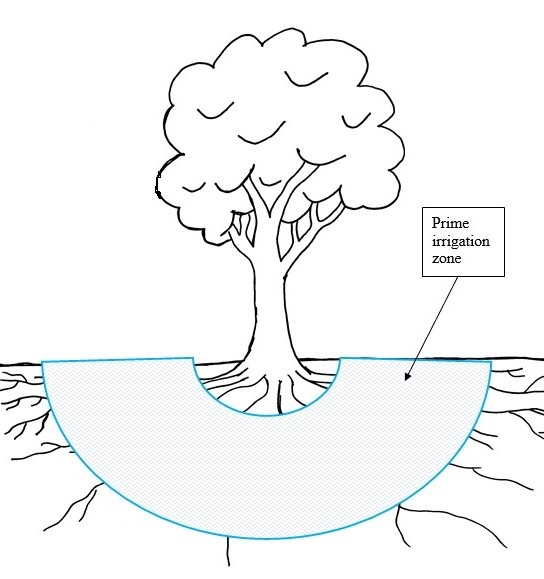
The ideal target area to irrigate is both theoretical and grounded to the reality of the site. Imagine a donut shaped area centered around the tree trunk. The trunk sits in the center of the donut hole. The body of the donut begins halfway between the trunk and the edge of the branch canopy and extends some distance beyond the edge of the canopy. This theoretical donut represents the ideal critical irrigation zone.
Now enters site reality — maybe there is a house or driveway or sidewalk covering part of the donut (or all three, with the tree located in a tiny unpaved space). We don’t want to encourage root growth at the house foundation, so don’t water within a couple of feet of it. Similarly, where concrete or asphalt covers the soil, root growth is moisture-limited and concentrated immediately under the impervious cover and under any planned or accidental cracks that allow rainwater to slip through. Ideally, we don’t want to water next to the pavement. The more of the donut that is unavailable for watering, the more often you may need to water the limited areas of open soil. Even so, it may simply not be enough soil volume to support the tree, which will then decline. In that case, replace it with a nice xeric shrub!
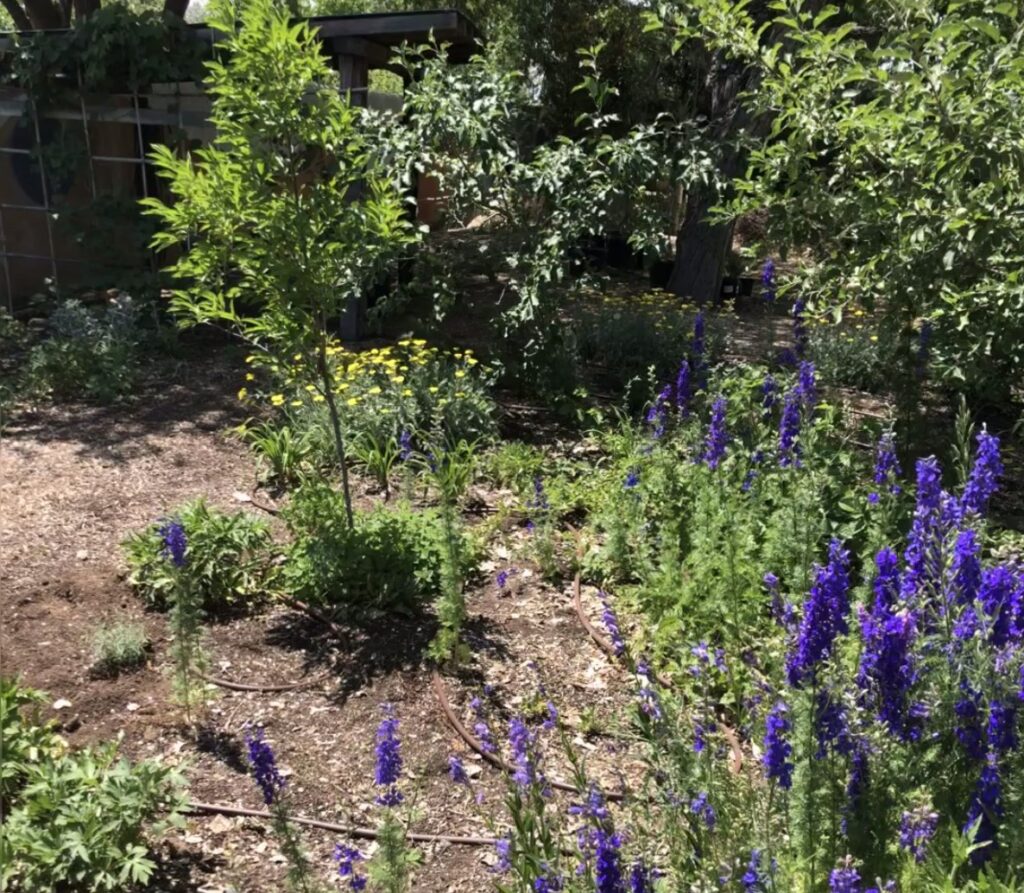
Recently installed drip tubing around a newly planted Mexican elder and some to-be-planted fennel. Both of those plants are excellent pollinator forage. A 4-inch depth of wood chip mulch will be installed over the top.
Author: Joran Viers is an arborist at Legacy Tree Company. Contact him at [email protected]. He’ll be speaking about this topic in greater detail on July 25. Sign up here. Have a question about the article? [email protected]
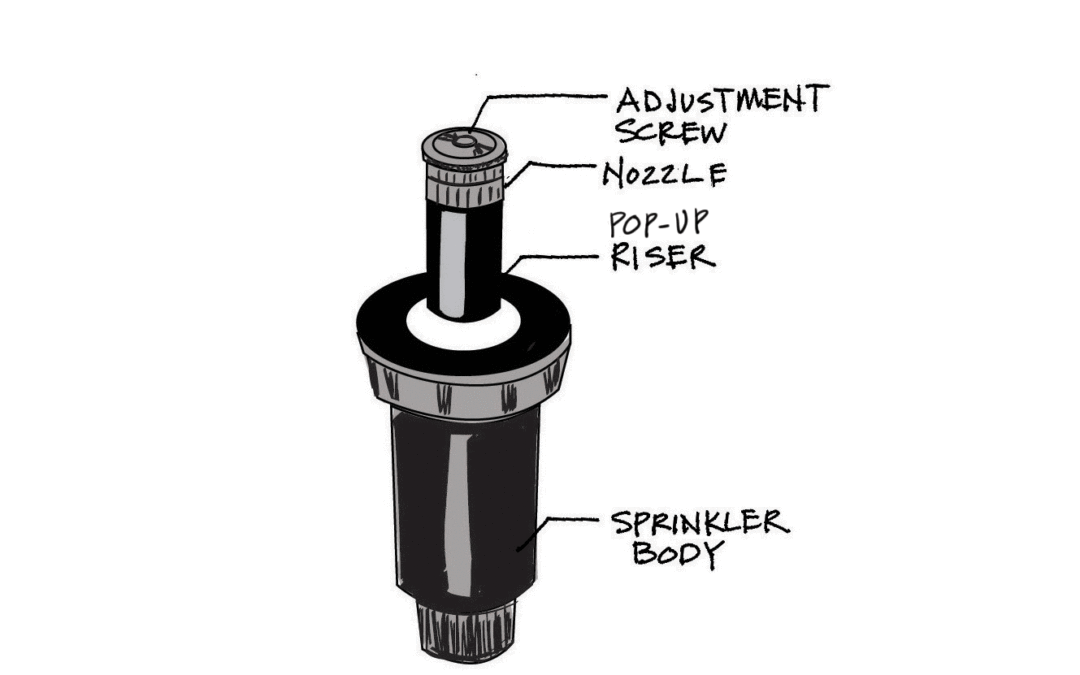
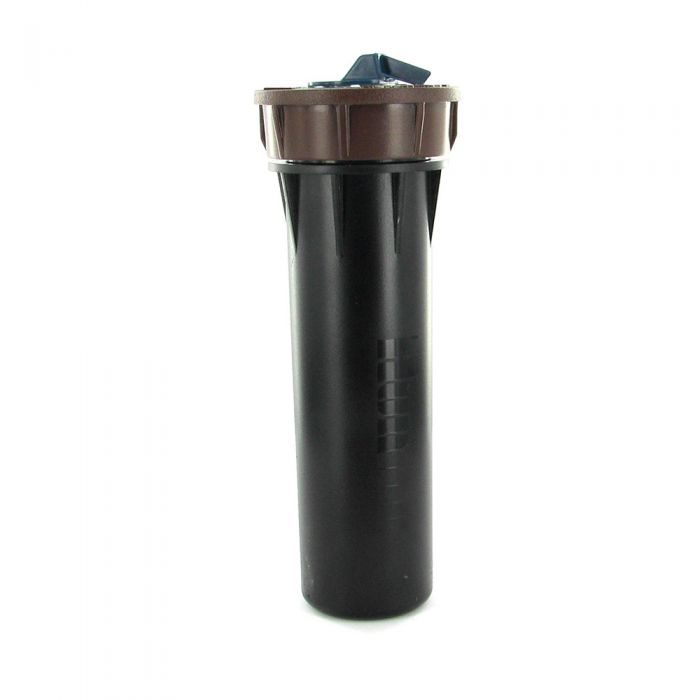
Grass lawns in the greater Albuquerque area need supplemental irrigation to survive our high desert climate. Most residential landscapes are watered by pop-up spray heads that include a sprinkler nozzle set into a spray sprinkler body.
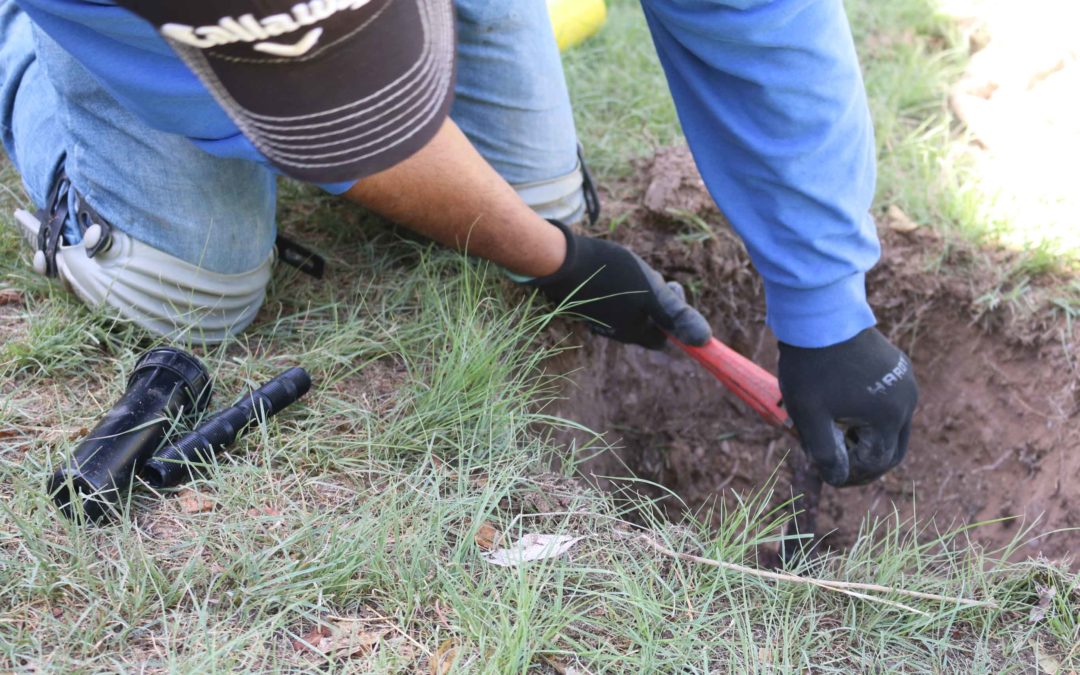
We recommend switching out your older sprinkler nozzles and spray sprinkler bodies for more water efficient ones. Take a look below. They are easy to install; check out the pictures to see how simple it is.
These devices provide pressure regulation at each individual spray head. The sprinkler body is the exterior shell that connects to the irrigation system piping and houses the spray nozzle that applies water to your landscape. WaterSense-labeled spray sprinkler bodies with internal pressure regulation can reduce water waste by providing a consistent flow at the sprinkler nozzle. When the sprinkler body maintains pressure near its optimal operating pressure, the connected nozzle is better able to generate the right amount of water spray and coverage for more uniform distribution of water across the landscape.
Installation is simple. First remove the old spray body by twisting it off and then twist on the new spray body.
High Efficiency Rotating Sprinkler Nozzles (multi-stream)
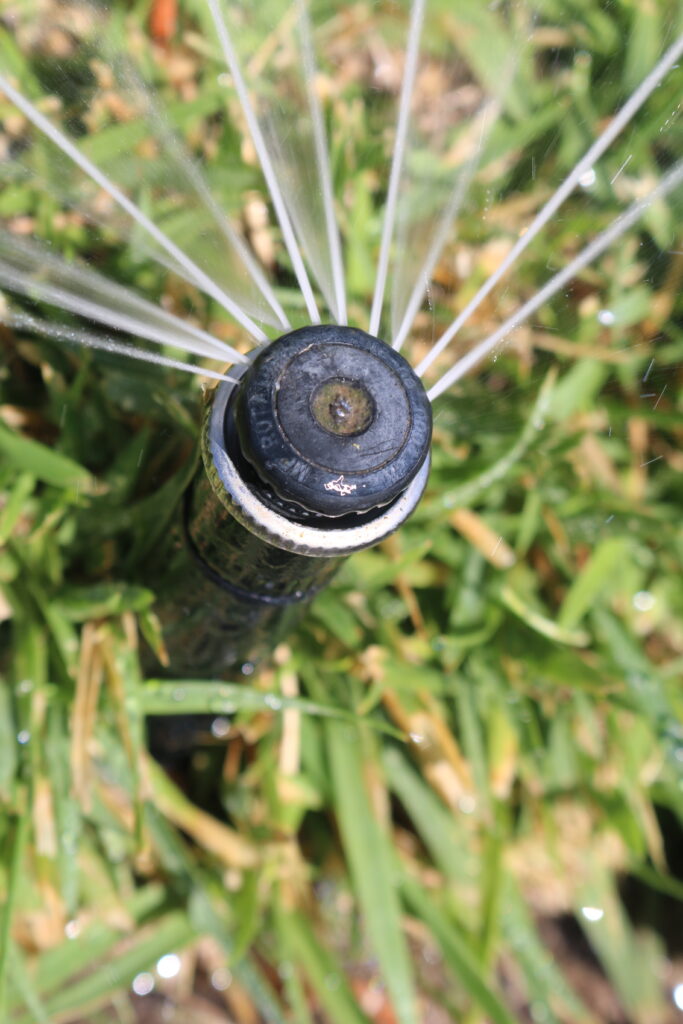
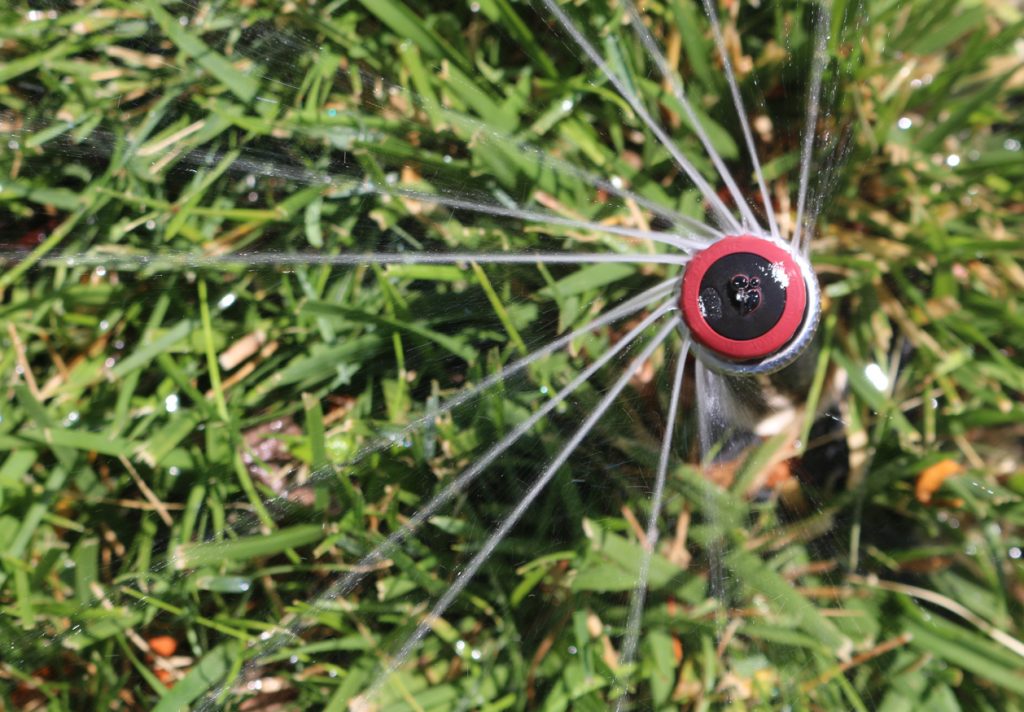
We also encourage you to change your existing spray heads to high efficiency sprinkler nozzles. These nozzles minimize water waste with unique, multi-trajectory rotating streams that deliver water at a steady rate. This slower application rate allows water to gently soak in at rates that soils can absorb. Use these nozzles to replace the sprinkler head on any conventional spray head body or pop-up sprinkler for water savings of up to 30%.
High efficiency sprinkler nozzles are a great solution for upgrading an old and poorly performing sprinkler system. These nozzles create a heavier droplet that is less affected by wind and reduce misting. These nozzles work especially well with pressure regulating bodies. These heads require longer run times. Don't worry it does not use more water, because rotary nozzles deliver water at a slower rate than typical spray nozzles. Therein lies the efficiency: water saturates deep into the root zone rather than running off and evaporating. This can also help reduce the frequency of runs, thereby saving water.
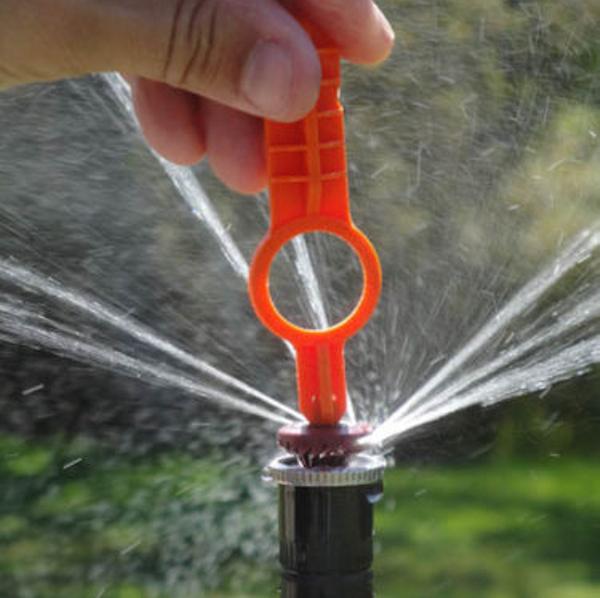
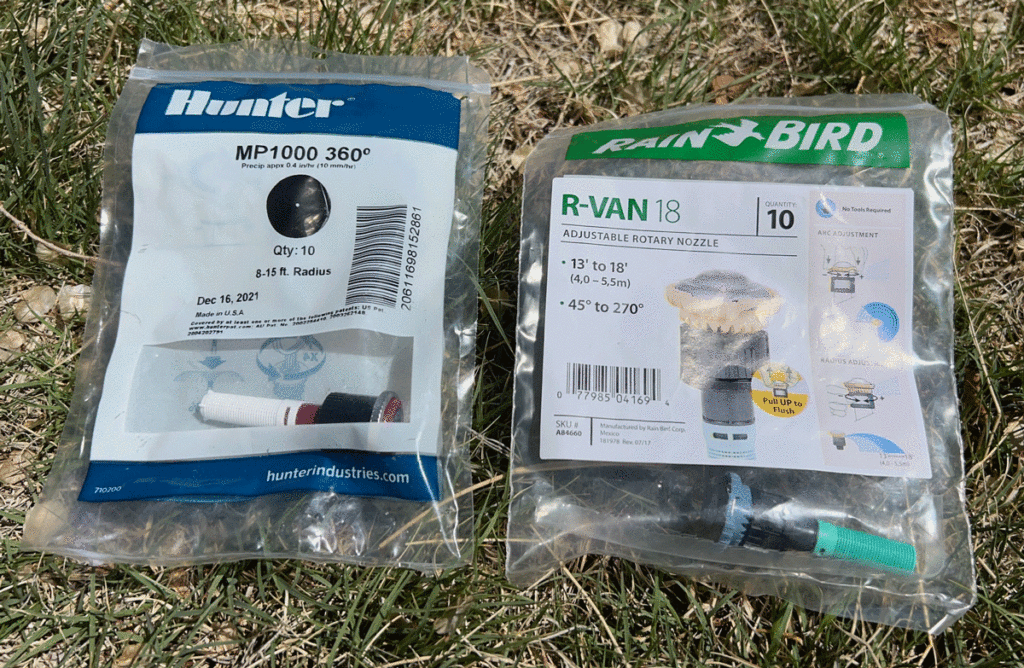
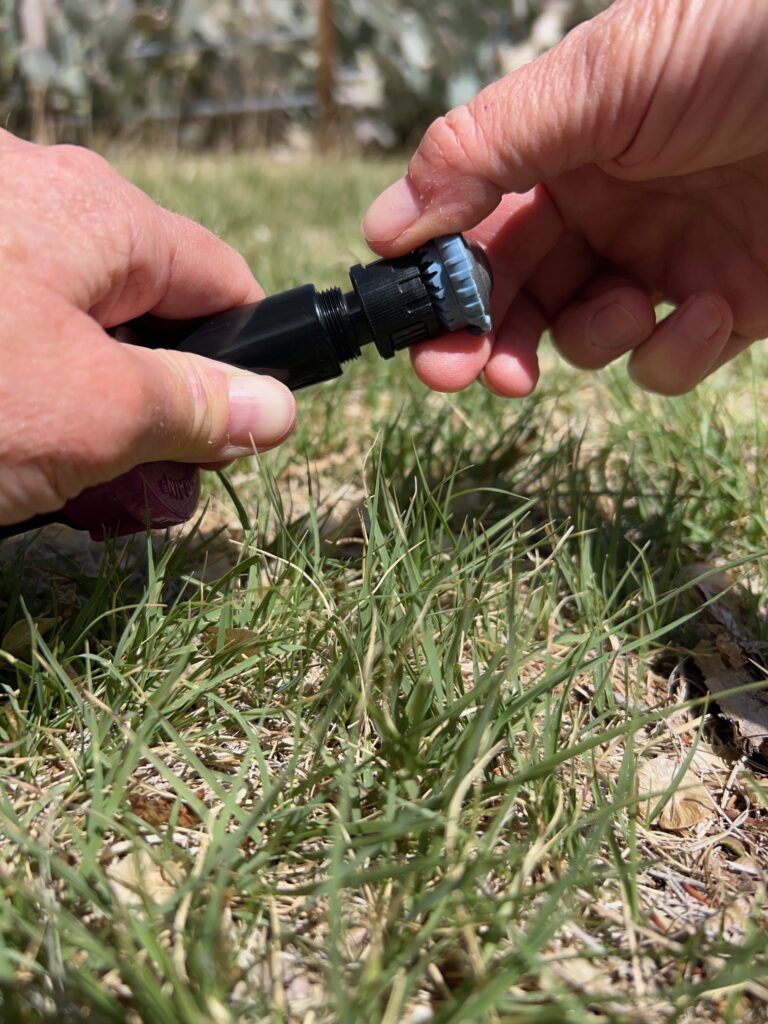
To make the upgrade, carefully pull the riser out of the sprinkler body, it's spring loaded so keep a hold of it while you unscrew the old nozzle and replace it. After you replace the nozzle you may need to turn the system back on and rotate the body slightly to adjust the spray direction. Pull up the existing nozzles in your sprinklers. While holding them, remove the cap from the sprinkler and install the appropriate spray nozzle, as indicated on the plan. If you are using Hunter brand nozzles be sure to also buy this little orange tool to adjust the spray arc. Rainbird nozzles can be adjusted by turning the ridged rings with your fingers.
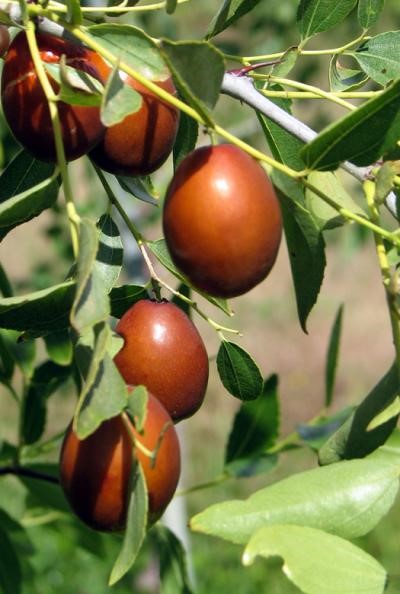
The jujube is just one of those trees that is extra! Extra fruitful, extra nutritious, extra hardy, extra beautiful. This medium sized tree comes in 400 varieties, many of which are being cultivated and taking root in Albuquerque.
The jujube tree, often called Chinese date, has been cultivated for thousands of years around the world, in Albuquerque for nearly 60 years and in the panhandle of Texas since 1875. Its small abundant fruits are high in fiber, vitamin C, potassium, antioxidants and phenolic compounds and have been used to support nervous system, cardiac and digestive health. Medicinally, it is used as a tonic sweetener in many supportive Chinese herbal remedies.
The fruit can be eaten raw, dried or cooked. Fresh from the tree, when they’re mature and a luscious mahogany brown, they have a crunchy refreshing taste, like a cross between an apple and a date. As they dry, they become sweeter and chewy. Dried, they are delicious in oatmeal, cookies, trail mix or anywhere you would use dried fruit. They make an excellent chai — just boil dried pieces with other ingredients, letting the earthy sweet flavor complement ginger, cinnamon, cardamom, pepper and other traditional chai ingredients. You also can find recipes from Korea, China, Vietnam, India, Italy and many Persian cultures that incorporate the jujube for both sweet and savory dishes.
The fruit is very easy to dry and, in fact, many that you miss harvesting will dry right on the tree. However, we do recommend bringing them inside to dry and cutting the pits out before drying so they are easier to eat and enjoy down the road. If you have a dehydrator, that will speed the process, but they will also dry if you place them on cookie sheets in a spare room, on top of a shed in the sun or even in a car and let our New Mexico dry air work its magic. Jujubes don’t bruise and spoil quickly like other stone fruits, so windfalls and bird-pecked fruits don’t make a mess and are still usable.
We love edible landscapes, so we’re naturally drawn to these fabulous trees. But even if you aren’t looking for food, the jujube is a wonderfully hardy tree for Albuquerque. This tough specimen hails from the buckthorn family, Rhamnaceae, and will grow in USDA hardiness zones 6-11, which is an extraordinary range for any tree! At the moment, Albuquerque is generally zone 7, but as we face climate disruption, landscapers and planners are encouraging planting with an eye to zone 8 or 9 so our shade and habitat trees can withstand increasing heat. Jujubes are deeply rooted and can tolerate drought and saline and alkaline soils. Once established they can survive with small amounts of water, though a strategic watering schedule will increase your yield. Because they’re so drought tolerant, we don’t recommend planting a veggie garden under them or they’ll drink up all the water intended for your zucchini. They do well in full sun or light shade. They can handle sustained days and weeks of 100 degree plus heat, 23 below zero in winter and anything in between. They must have a frost to produce fruit, which isn’t a problem here. Jujubes do sucker quite a bit from their roots, and this rootstock, if allowed to sprout, produces very small, almost inedible fruits that are mostly pit. So, we do suggest being vigilant in cutting down the root sprouts as they appear.
Jujubes make a beautiful addition to any landscape. They have an elegant zig zag branch growth pattern and bright green, shiny oval leaves that can even withstand severe hail. They can be trained to a traditional tree structure or allowed to be a little wild and shrubby. They provide cool shade and habitat for birds, pollinators and other wildlife. Speaking of wildlife, one of us has a friend whose small dog Kipper grabs himself a couple from the ground during ripening season, carrying them happily to his bed to snack on … he’s not wildlife, but that little dog seems to love a jujube even above his biscuit treats. These trees benefit from cross pollination so plant yourself two of these beauties!
Planting trees not only gives you the riches of your tree, but it is also a love letter to the future. As gardeners who are tending land and each other in the midst of climate chaos, we have the opportunity to cultivate healing, repair and hope. With every tree we plant, we can try to leave our small patch of earth a little better than how we found it — cooled with shade, brightened with birdsong and providing nutritious food via a resilient, prized and giving tree. The next time you’re sitting in your garden, allow yourself to dream of a future where someone is harvesting jujubes and appreciating the ancestors who cultivated and left these sweet trees for them.
Learn more about specific types of gardening here:
Author: Corva Rose is an arborist and founder of Tree School, and can be reached through treeschoolNM.com, Jennifer Gardner has been gardening in Albuquerque for 30 years, with an emphasis on residential scale food planting. Have a question about the article? [email protected]
Trees are especially important in arid, urban environments like Albuquerque and Bernalillo County. They provide shade, mitigate urban heat, reduce greenhouse gasses and air pollution, and create wildlife habitat, among many other benefits. All trees, even climate-resilient and drought tolerant species, need to be watered adequately.
It’s worth the investment to keep our mature trees healthy. The mature trees on your property are worth much more than the cost of your treasured appliances and, yes, even more than your roof. Keeping our trees healthy and happy over their lifetime is a minimal investment and a valuable contribution to our community urban forest.
In Albuquerque, we tend to overwater our lawns and underwater our trees. It’s important to understand the basics of how best to water trees. For instance, a tree has two different main types of roots. The feeder roots lie within the first 6-24”of the ground, and the stabilizer roots can be at least 3’ deep You may think your trees’ roots can reach the water table, but you should think again — most of Albuquerque has a water table between 20 and 150 feet’ deep. Your roots are never getting that deep.
Due to the importance of our urban forest and how many people are seeking guidance on how to water their trees, the Bernalillo County Water Conservation Program, and Let’s Plant Albuquerque, partners collaborated to create this How to Build an Efficient Tree Watering System guide and the associated workshops.
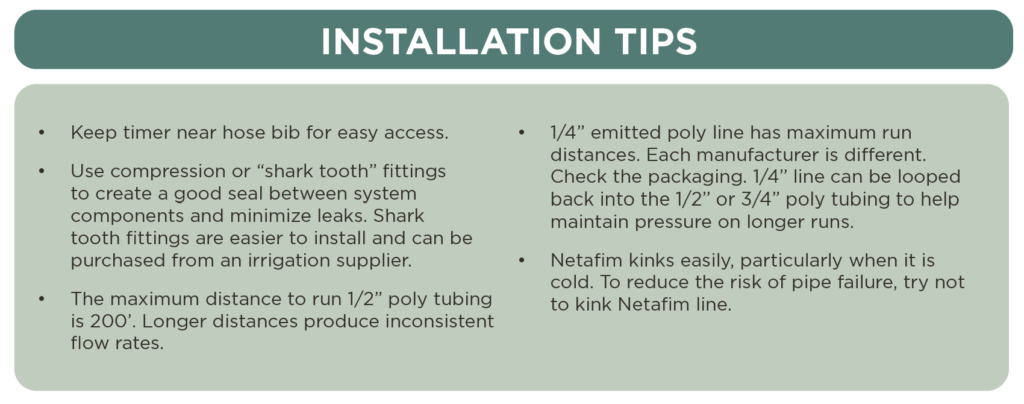
The tree irrigation system is inexpensive, flexible, easy to install and long-lasting. It uses drip irrigation attached to your hose bib and can be easily expanded as your tree matures.
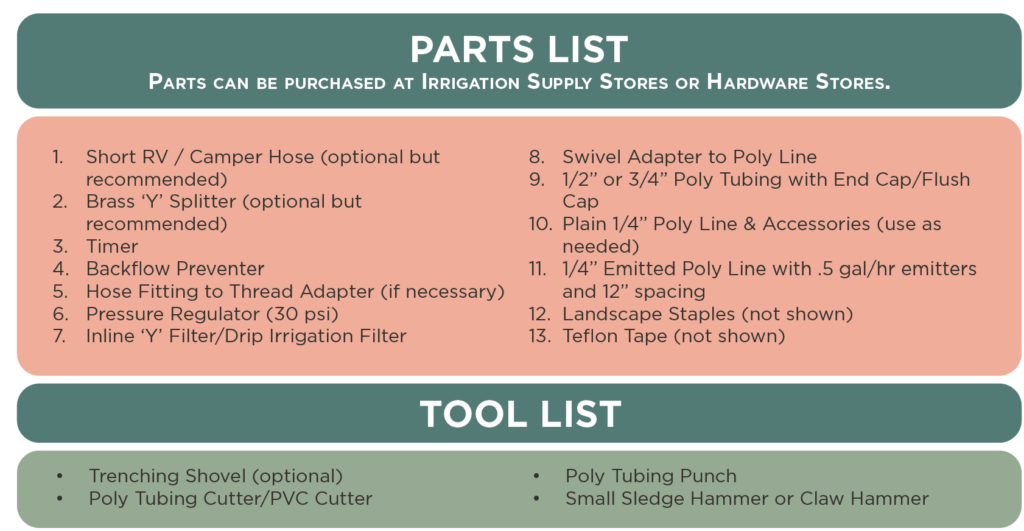
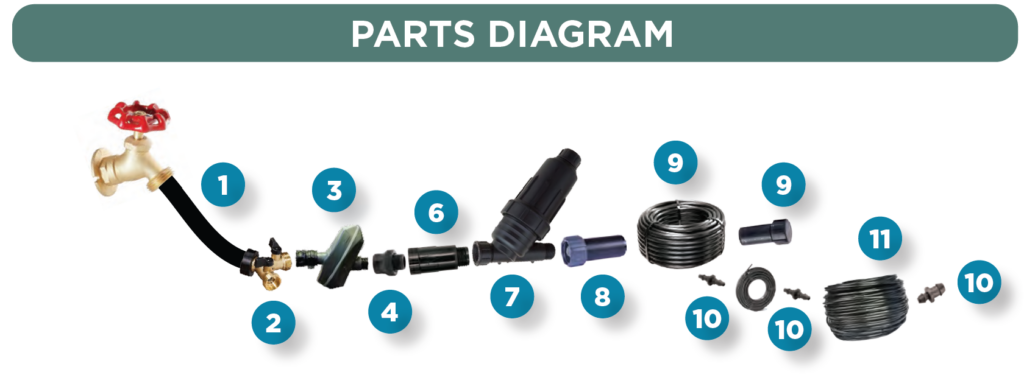
When assembling your system there are a few key parts to consider:
Teflon tape is needed to seal the threads at every connection to prevent water coming through.
Take note of the two different types of threads: hose threads and pipe threads. Hose threads are straight and require a washer to seal. Pipe and coupling threads are tapered for water use and will seal with just the application of Teflon thread seal tape.
Timers should be uninstalled and stored with the batteries removed over the winter. Some people like to install fresh batteries every spring to ensure there is no interruption during the growing season.
A pressure regulator is important for all drip systems due to the high pressure in our Albuquerque water lines. The regulator reduces the water pressure coming in from the main water supply. Then, it creates a constant low water pressure through the system, allowing the drip tubing to put out the correct volume of water per minute.
Distribution (lateral line) drip tubing comes in two general sizes, and each has advantages and limitations:
1/2” tubing is more common, and parts are available at big box stores. The run of distribution tubing must be less than 200 feet.
¾” tubing is available from irrigation supply stores. It holds pressure better, and tubing runs can be up to 600 feet.
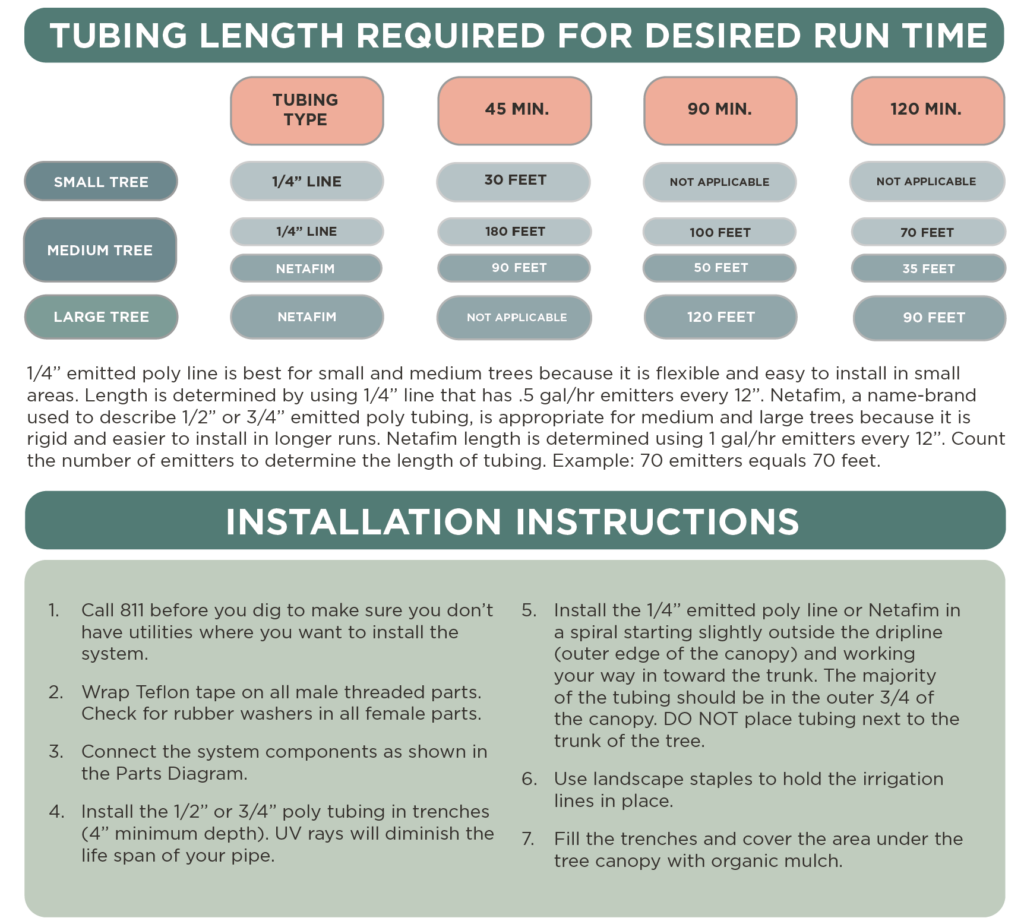
Inline drip line (emitter line) drip tubing comes in two sizes and includes drip emitters pre-installed in the line every 6”, 12” or 18”.
½” Netafim inline dripline tubing for use around medium and large trees. Use 12” emitter spacing.
¼” Netafim inline dripline tubing for use around small trees. Use 6” emitter spacing.
A flush type of end cap is handy for flushing out the system at season start-up or if a break occurs. It is recommended to remove and store flush caps over the winter.
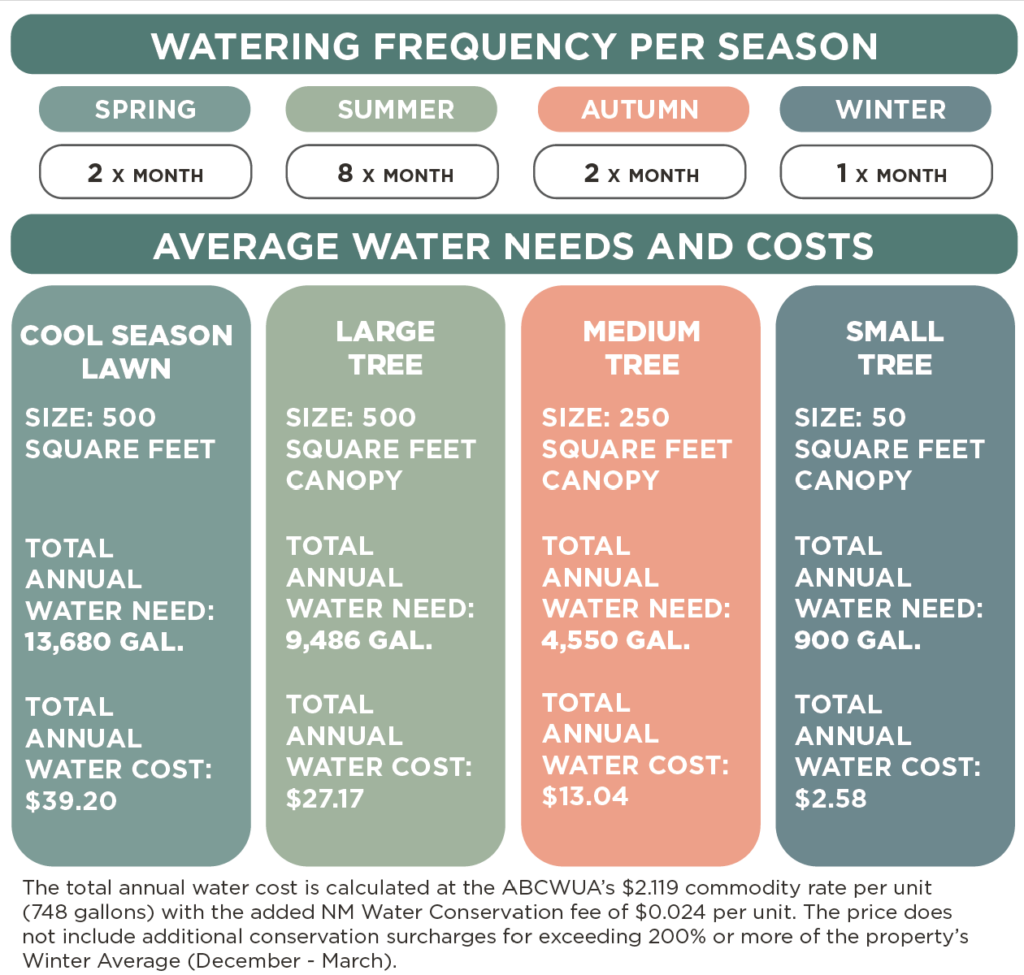
The watering guidance for the system was developed to not under or over water most trees in Albuquerque. However, irrigation is highly dependent on site conditions such as soil type and microclimate as well as the species of tree. This guidance is meant to be a rule of thumb or starting point, and adjustments should be made based on the local conditions and tree species.
Below are some of the factors that should be considered in generating a watering schedule for your yard:
Soils affect how often and how long you need to water — see the Water Authority’s Irrigation Guide for more details. In general, sandy soils require shorter but more frequent run times while clay soils need longer but less frequent run times.
Always check your plants to evaluate irrigation scheduling. Most plants will look a little bedraggled at 3 p.m. during the summer so check in the morning. Do they seem wilted or pale or have cupped leaves? These can be signs your tree needs more water.
Be aware that symptoms of overwatering and underwatering may look similar.
Occasionally, feel the soil the day after irrigating or use a soil probe such as a screwdriver or coat hanger to evaluate the level of moisture in the soil. If the probe is easy to push in and there is a swampy smell, the soil has too much water. If you can’t get the soil probe more than 4” into the soil, it’s too dry. Ideally, the soil probe can be pushed 12”-18” into the soil 24-48 hours after irrigating.
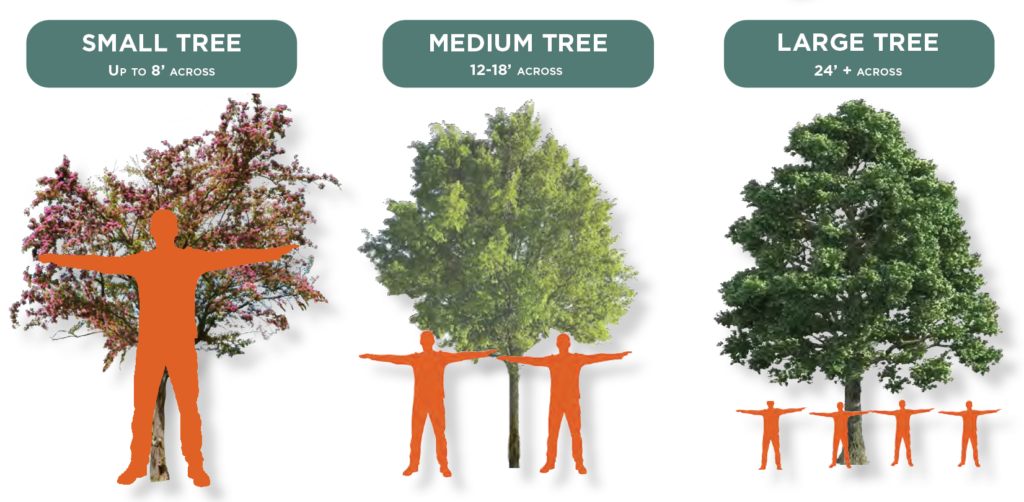
Consider what size tree you are trying to water. Check out the diagrams above and below to determine how much tube length you will need to meet the required water needs of your tree.
Author: Megan Marsee is the Water Conservation Program Lead for Bernalillo County and can be reached at [email protected] Have a question about the article? [email protected]
Nothing adds the same quality and value to a landscape as a healthy mature tree. The benefits include cooler outdoor spaces, cooler homes, aesthetic appeal, carbon capture, stormwater mitigation and more. There are some key things to think about when it comes to keeping your big old tree happy.
What are the key parts of the tree and what do they do? All the parts are important, many are redundant, and how they play together really matters. The redundant parts are leaves, small branches and small roots underground. While critical for tree health, the tree can lose some of any of these without suffering fatal damage; the tree will, with time and to the best of its ability, replace those lost parts with new growth.
The fine roots explore for water and minerals in the soil, hopefully with the help of symbiotic soil fungi. Only the youngest, smallest roots (those that haven’t even grown bark yet) take in water, like tiny sponges. These roots grow when and where soil moisture is available and die off when the soil gets too dry. Trees may have several flushes of absorbing roots growing and dying back over a season. Once in the roots, water moves up successively larger roots as it travels toward the stem.
There is one part of the tree that is not redundant. This is the root crown, or root flare, where the ropy wood of the root system changes into the blocky wood of the stem. The happiest, healthiest trees have a strong root flare visible above the soil line. These root shoulders act like buttress supports for the huge load of wood and foliage being acted on by gravity and wind.
As water moves up the trunk, it travels in sapwood (or xylem) — living wood just underneath the bark layers. Outside the sapwood is a thin ring called the cambium, cells that make new cells that make new cells … for as long as the tree lives. Outside that layer is the inner bark (or phloem), a green spongy layer with many functions, including moving sugars and other metabolites from the leaves to wherever they need to go. These three layers — xylem, cambium and phloem — constitute the “living rind” of the tree and are protected by the dead but intact outer bark layers. The central wood, or heartwood, is dead but intact as well.
Leaves out at the end of the small branches are busy converting sunlight energy into stored chemical energy in the form of sugars. These are then used as fuel and as building blocks for the tree to power its ongoing life functions and make the complex chemicals needed to do so.
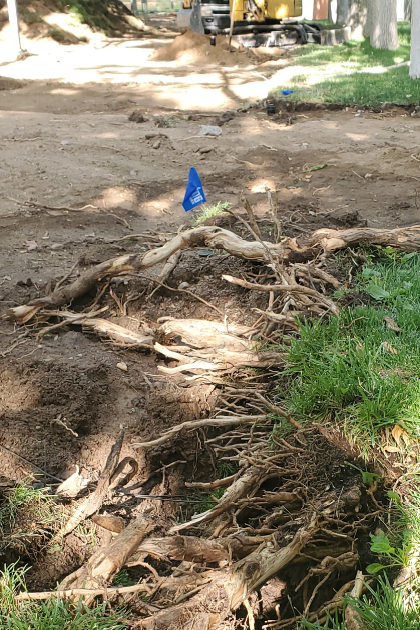
What harms a tree? Things that harm the root system (soil compaction, drought, heat, chemicals), things that damage the root flare (stem girdling roots, mowers, construction), things that damage the living rind (wire girdling, kids with hatchets, vehicles) and things that damage leaves (over pruning, certain herbicides, heat). There are feedback loops, especially between the roots and the leaves. Root damage that reduces water uptake leads to leaves making less sugar which means less resource to grow new roots. Herbicide damage that deforms leaves leads to less sugar feeding root function as well as less pull on the water, both leading to less water and nutrient uptake going back to the leaves.
So, here’s what you do: Avoid those harmful things!
Protect roots by covering the soil with 3 or 4 inches of arborists’ wood chips. This cools soil, reduces soil water loss, cools air above, breaks down and feeds minerals into the soil, and promotes growth of beneficial soil fungi. Avoid cutting roots when possible; when necessary, cut as few as possible and cut as far from the trunk as possible. Don’t compact soil by dumping gravel all over it or parking on it. Don’t apply herbicides to the root zone, which is larger than the canopy above.
Protect the leaves by avoiding over pruning. Most mature trees don’t need regular pruning, and, in fact, that should be avoided. Pruning takes away energy sources (leaves) and creates energy sinks (wounds that must be dealt with). Excessive pruning can send a tree into a starvation spiral. Prune for specific goals. Avoid herbicides like those found in weed-n-feed fertilizers.
Protect the living rind by taking away Junior’s hatchet. More seriously, don’t tie wires or ropes around the trunk and branches unless you check them every year to make sure they aren’t girdling the tree. Lastly, don’t run into them with your car!
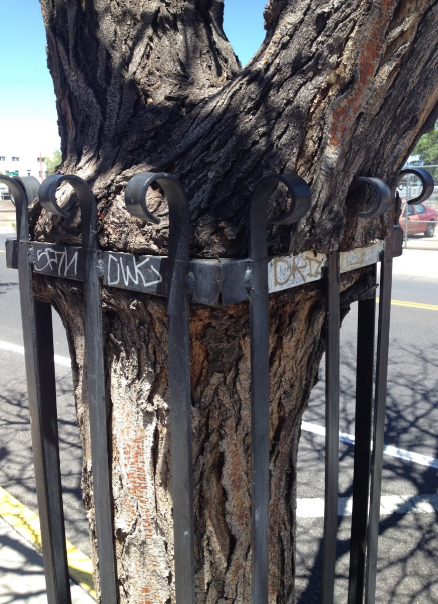
A tree-protection cage which has become a tree strangling cage. Severely stunted growth on an ash tree; imazapyr herbicide damage is likely cause.Construction damage, while often unavoidable, will lead to health decline in mature trees.
The Water Authority offers several rebates for irrigation efficiency equipment that might help you reduce water use your yard. You also can contact a Water Authority irrigation specialist at [email protected] for a consultation or efficient irrigation advice. Find more information about the rebates here.
WaterSense Smart Irrigation Controller: A WaterSense-labeled controller reduces watering times or the number of days when the system goes on so that less water is delivered to plants during the cooler months or when it has rained recently. Receive a rebate of 25% of purchase and professional installation costs, up to $100. Choose from a list of pre-qualified controllers here.
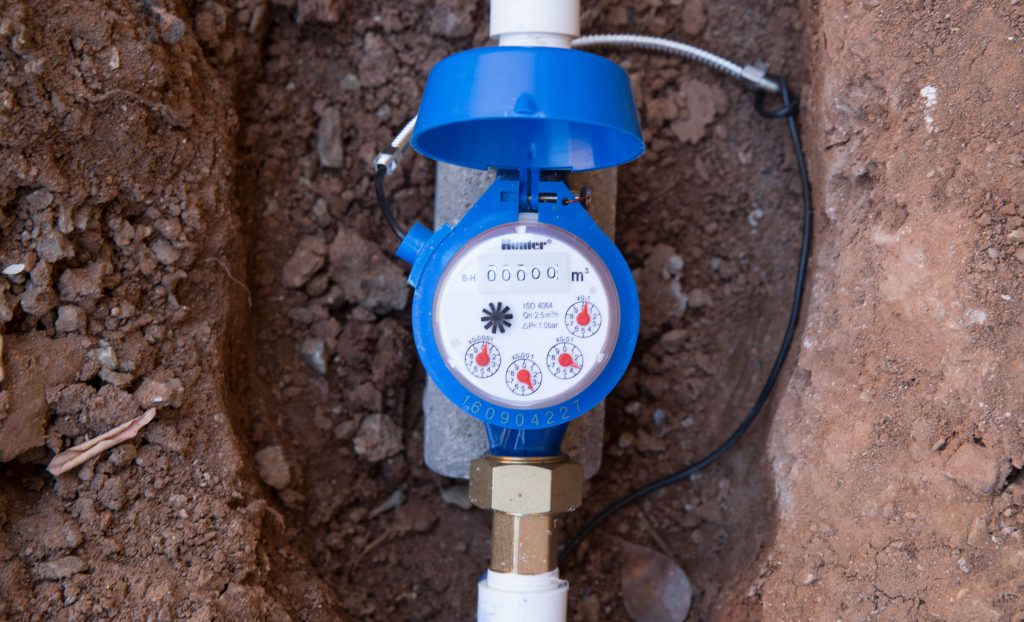
Smart Water Application Technology Flow Sensor: Meant to be used in conjunction with a smart controller, irrigation flow sensors measure the speed at which water is flowing through an irrigation system and then send that information to the smart controller. This helps detect problems and conserve water. For example, if water is flowing at an unusually high rate (such as from a line break or broken sprinkler), a flow sensor works in conjunction with the controller to take corrective action. Receive a rebate of 25% of purchase and professional installation costs, up to $100.
Smart Water Application Technology Pressure Regulators: Pressure regulation devices increase the efficiency and performance of your sprinkler and drip system by reducing the water pressure to a set, optimal rate. This is important to improve water distribution uniformity and avoid underwatering or overwatering. Receive a rebate of 25% of purchase and professional installation costs, up to $100.
WaterSense Pressure Regulating Spray Sprinkler Bodies:These devices provide pressure regulation at each individual spray head and can reduce water waste by providing a consistent flow at the sprinkler nozzle. Get $4 off each sprinkler body you purchase (no limit).
High Efficiency Rotating Sprinkler Nozzles (multi-stream):Use these nozzles to replace the sprinkler head on any conventional spray head body or pop-up sprinkler for water savings of up to 30%. High efficiency sprinkler nozzles are a great solution for upgrading an old and poorly performing system. In most cases, you just remove the old, water wasting spray nozzle and replace it with the new head. You don’t even have to take the main sprinkler body out of the ground. For more information on these nozzles check out this post. Get $2 off each nozzle you purchase (no limit).